Anita Mathias: Dreaming Beneath the Spires

Anita Mathias's Blog on Faith and Art

  • Home
  • My Books
  • Meditations
  • Essays
  • Contact
  • About Me

What Children Know: What it Means to Truly Live (A Guest Post by Laura Boggess)

By Anita Mathias

I am honoured and excited to be hosting Laura Boggess today. I am reading her exquisite book Playdates with God with much delight. Do yourself a favour and buy it too–today!!

laura_boggess_playdates_with_god

Playdates with God

What Children Know: What it Means to Truly Live

A few frail drops of rain fall and I sit at the breakfast table, wondering.

My New Testament reading this morning is on the Year of Jubilee and I am thinking of freedom. I am thinking of a broken figure in a hospital bed—one of the patients in the hospital where I work—held prisoner by a body that once was taken for granted.

I am thinking of brave words uttered from cracked lips, of a story telling long torment in an able body, of abuse and addiction, and how his eyes are opened now. I am thinking about what it takes to realize the gifts we are given each day of our life.

Do you feel like giving up?

It is something I have to ask, part of my job as a therapist.

Do you want to live?

I stare out my window and I ask myself this question:

What does it mean to truly live?

To feel each passing moment in my marrow, detect the pull of gravity on my spirit—measure each turn of the earth with outstretched arms? How can I hear a moment call for calm solitude? How to be present in each heartbeat and feel each wisp of breath travel through my nose—move through my body as it is carries life into my unknown places?

Today, I need a map.  I am lost—all turned about in this thing I call living.

Yesterday, I asked my two boys, “What if today is the best day of your life and you miss it? What if you miss it because you are thinking about tomorrow? Or the next day?”

We were taking our dog, Bonnie, on her evening walk—our constitutional these autumn days. We missed our promise earlier, so we were walking in the dark—light from neighbors’ windows peeking out at us.

Their moon-faces and shadow-mouths shone bright and under cover of night the tide of their laughter swept over me and I knew. I knew they never would miss the best day of their life.

Children have a way of catching joy and carrying it out into their every day—into their walking around life.

Why don’t I?

The Year of Jubilee came after seven years of Sabbaths. Seven times seven years. In the fiftieth year, liberty is proclaimed. Debts were cancelled; land returned to its original owner, countrymen who were slaves were freed…

I know that Jesus is our Jubilee. He came to set the captives free.

But there are no answers for lost days here. Only questions. These empty eyes, these silent muscles do not know about the arcana of Jubilee. What do we miss in our grown-up lives while we wait for the promised freedom.

Isn’t there freedom now? In each moment, if only I choose to see?

I pray for faith like a child. I pray for eyes to see the holy in each moment.

And the Name, whispered, fills the room.

I feel each passing moment in my marrow; detect the pull of gravity on my spirit—stretch arms to feel the earth turning. I hear this moment call to me—it whispers all that is required. Each heartbeat ticks the seconds, each wisp of breath breathes life.

Do you want to live?

The Jubilee is inside of me. Sometimes I give it away.
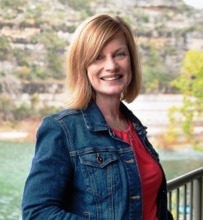
 laura_bogessPhoto of Laura by Fall Meadow Photography.

Author of the newly-released Playdates with God: Having a Childlike Faith in a Grown-up World, Laura Boggess lives in a little valley in West Virginia with her husband and two sons.  She is a content editor for TheHighCalling.org and blogs at lauraboggess.com. Connect with Laura on Facebook and Twitter.
 

Filed Under: In which I proudly introduce my guest posters Tagged With: Laura Boggess, Playdates with God

When, For a Season, God Himself Blocks You

By Anita Mathias

 desert_cactus_flowers
You intended to harm me, but God intended it for good, to save many lives,” Joseph quietly tells his brothers. (Genesis 50:20)

Oh they did; they sure did, first throwing him into a disused well, then uncaringly selling him on for thirty shekels of silver to the Ishmaelites, not caring what became of him.

And what came out of his experience of betrayal, slavery, false accusation, and imprisonment was elevation—promotion—influence–the ability to save many lives.

* * *

I used to feel stressed and a bit hopeless if I had enemies, if I thought there were people with inveterate animosity, jealousy, competitiveness, or malice towards me, who would block me, who might slander me. The thought of such people still does not make my heart sing!

But they are a fact of life. “Some are jealous of your face. Some are jealous of your lace. And some will be jealous of your grace,” as RT Kendall writes in The Anointing.

However, Shakespeare’s young Henry V puts it well, “We are in God’s hands, brothers, not in theirs.”

I sigh if I realize someone is reflexively blocking me or my ideas, putting in a bad word for me, but I am not afraid.

I do not fear them.

Because there are always two stories going on in our lives: the plot we see, and the story God is still writing. There is the story people think they are forcing onto your life–in which you may miss the chance to lead, speak, get the prize, the invitation, because someone feels threatened by you, is jealous of you, or just plain dislikes you.

Often you are unaware of these machinations, and that’s best. When you do know, you wring your hands with a sense of loss.

But all is not lost.

You were not meant to lead at that time. You were meant to quietly follow the One. You were not meant to speak at that time. You were meant to listen.

Sure, it will take you longer to achieve your heart’s desire. The Spirit is taking you on the scenic route. You are in the desert, where all voices are silent, but the voice of God;   Tweet: You are in the desert, where all voices are silent, but the voice of God. rom @AnitaMathias1 http://ctt.ec/ot7J1+ where is no trophy but his companionship; no wine but his spirit; where your progress is not measurable, and, anyway, there’s no one to praise it.

Why, even your prayers aren’t working. Every avenue of showing off is blocked.

Welcome to the desert, fellow pilgrim, where God himself blocks you. Tweet: Welcome to the desert, fellow pilgrim, where God himself blocks you. From @anitamathias1 http://ctt.ec/1AB5R+

* * *

You say: “See here, God, I have wasted my life. Look at me, mid-life and achievement-poor. Remember, God, those years I was promising; remember that award for a writer of unusual promise? Why I was in my twenties then. The snazzy university, the snazzy prizes, the early publications, the blushing peach down of promise, remember?

Well, I’ve failed, and you’ve failed me; we’ve failed together, you and I.

Yeah, you really haven’t managed my life too well, Lord, and neither have I. Let’s just go eat some worms.

My twenties are over, my thirties, my… Let’s just say “my hasting days fly on with full career, but my summer little bud or blossom showeth.”

How can you make up to me, God for the years when I wanted to build much, but instead built little?

You have behaved rather badly towards me, my God, my friend. You have let me down. You are my friend, and so I forgive you, but I am sad about this. I am.

But if I love anyone, I love you. So yes, I will follow you because, you’ve sure ruined my appetite for following other paths of glory.

I believe you can restore the years the locusts have eaten. The prophet Joel said so, and Christians have attested to it. But I don’t see how. Jesus, let’s be honest here, I sometimes feel as if nothing can compensate me for those wasted years, the years in Joseph’s dungeon.

I really do.

Though they were what you gave me, and I accept them because I love and trust you. I accept them from your hands in trust as I accept the full years of your goodness.

* * *

And you, Lord, reply:

“Child, child, friend, beloved, Anita, what you wanted was a lesser good, and so I withheld it.

You saw the success of your writer friends—their whirl of book readings, teaching gigs, speaking gigs, lectures, prizes, prolific writing, book contracts, money, fame, fascinating friends, travel. All the trappings of a career. And you wanted it too.

And I knew you wanted it.

But I also knew you better than you knew yourself. Don’t make that face. I truly do.

You were not ready for the busyness of travel, deadlines, speaking, teaching, crises, midnight oil.

Fame and glory–what made you think it would make you happy? I knew it would not. It would not. Rushing to planes, trains and automobiles has never made you happy. Rush has never makes you happy, or busyness, or deadlines. You love quiet unscheduled days at home, or in your garden.

But I promise you this: You will write the books you want to write. You will not die before your pen has gleaned your teeming brain.

All the things you deeply love and want to explore and preserve in words, I will ensure you explore and preserve them,

All the things I kept from you, I kept not for your harm, but that you might find it in my arms.

You are sad that success came later than you wanted it, but trust me.

The bright lights of the big cities would have obscured me.

The noise would have silenced my whisper.

A hammer had to be taken to all those idols.

There had to be a gotterdamerung, a ragnarok. You wanted to be Ms. Famous Writer, to dazzle the world with your creativity. You wanted fame, glory, money, success, as you saw your friends get it.

I gave you quietness, I wooed you to the desert, and there I showed you my love. Tweet: I gave you quietness, I wooed you to the desert, and there I showed you my love. From @AnitaMathias1 http://ctt.ec/c4e_8+

You had but one shot at investing in your children. I slowed down your career so you could teach them all you had to teach them. And could your marriage have withstood the rush in peace, not pieces? Did you want to be Ms. Divorced Famous Writer? You did not.

You have reached mid life with a full heart and full spirit, into which I have poured and poured and poured myself and my words. And now it is time to write.

* * *

“Oh God, could you not have poured both? Both yourself and the other things I wanted?”

“But then there would not have been room for me. I had to pry your fingers from other things, so they would clasp me. Had to silence other sounds, so you could hear me.

I gave you not what you thought you wanted, but what you love, quiet and peace and silence. And in the quietness of your country garden, I shaped you, I formed you, I made you into a woman of integrity, a woman aligned with me, a woman I can trust.

You sometimes feel you’ve wasted your life.

But child, you’ve given your life to me. It’s now my story, not yours. I am the author, not you.

Accept the plot twist I chose. Forgive me, as I forgive you. It was not time before. It’s time now. It’s time.

* * *

Lord, I accept the plot you chose. I accept my years in the wilderness. I accept your judgement that they were necessary. I forgive you.

And I will go forward in joy, in alignment with you, your joy filling my heart.

* * *

Open your hands wide, and I will fill them. Your heart has been reformed in the silent years.

Now I know, and you know, that while your hands are full of my blessings, your eyes will be on me and your heart will be full of me.

* * *

Tweetables

Welcome to the desert, fellow pilgrim, where God himself blocks you. From @anitamathias1  Tweet: When God stills all the noise, and you say “See here, God. I have wasted my life.” From @anitamathias1 http://ctt.ec/0Icc0+

You are in the desert, where all voices are silent, but the voice of God. From @anitamathias1  Tweet: You are in the desert, where all voices are silent, but the voice of God. From @anitamathias1 http://ctt.ec/5m83M+

There are always two stories going on in our lives, the story we perceive, and the story God is still writing From @anitamathias1 Tweet: There are always two stories going on in our lives, the story we perceive, and the story God is still writing From @anitamathias1 http://ctt.ec/M4v4b+

When God stills all the noise, and you say “See here, God. I have wasted my life.” From @anitamathias1 Tweet: When God stills all the noise, and you say “See here, God. I have wasted my life.” From @anitamathias1 http://ctt.ec/2fI1E+

Questions

Have you experienced a period of great silence? Have you experienced God more deeply as a result?

Image Credit

This post is kindly sponsored by mordocrosswords.com. Thank you for your support.

Filed Under: Field notes from the Land of Suffering, Genesis, In which I explore writing and blogging and creativity, Writing and Blogging Tagged With: blog through the bible, desert, failure, Genesis, Joseph, suffering, writing

In which I am Surprised by “Prophetic Words” (from the Glasgow Prophetic Centre at David’s Tent Worship Festival) 

By Anita Mathias

David's Tent, Sussex, 2014

David's Tent, Sussex, 2014

People from the Glasgow Prophetic Centre were offering “prophetic words” at David’s Tent: An Adventure in Worship, a 72 hour worship festival I went to in August. I signed up for a 15 minute slot.

I am “prophetic” with a very small p. Prophecy, as Paul writes, is a spiritual gift, a little-understood one, though not one to be lightly dismissed, lest we miss surprising blessings. In my case (small p, remember) I often have an accurate intuitive knowledge of what is going to happen in my own life, or the lives of people I care about. It’s a love-gift: providing a little extra time to prepare for adversity, as well as a certainty and reassurance about astonishing and unlikely things that are going to happen. This “prophetic” knowledge, in my case, allows for a lot less worry and a lot more carefreeness.

However, if I took my small measure of supernatural prophetic gifting as the norm, I would be foolish indeed. There are people with great prophetic gifts. Though I don’t understand exactly how these work, they are, again, love gifts, a way for God to tell people something they would never have guessed on their own. They are words of encouragement, edification, and sometimes, warning.

For instance, Patricia Bootsma of the Toronto Airport Fellowship on a visit to Oxford, saw me, asked me if I had daughters, and said she had a word for my older daughter: Satan had brought things against her, but that she would overcome and become a leader in God’s kingdom. The prophecy filled Zoe with confidence. She hadn’t done well in her mocks, but excelled in her year 12 exams, getting 100% in RE, and an offer from Cambridge University in 2013, (though she reapplied to Oxford University in 2014, and is going there next month).

However, Emma Stark of the Glasgow Prophetic Centre had a prophecy not for Zoe, but for me.

It was the absolutely most startling experience I’ve had in many years of chasing the wild goose of the Holy Spirit. My most astonishing experience of the prophetic.

Emma asked my first name, that is all. She instantly started speaking, “seeing” things, things astonishing in their accuracy.

I turned my iPhone on, and recorded the session: 12 minutes. Here’s my transcription.

“Satan has demanded to sift you for a season, but he didn’t realise that he was actually asking for a promotion because you have been found as someone who can be trusted through the previous season.

And the Lord says, “I am about to promote you like you have never been promoted before. I am about you to lift you up into a place because you have been found as someone who can be trusted through the previous season.

And the Lord does not say this to everybody, but he says it to you. “Daughter, in the testing and in the hard places, you have been found trustworthy. I trust you. I trust you. I trust you.”

It’s time to stop cursing yourself for decisions taken in the past. I forgive you and I let you off the hook. It’s time to let these things go, for I do not view them as you view them.

I do not view you as the Sarah who laughs when the angels come. I speak of you as the Sarah of the New Testament. I speak of you as of my faithful ones, and I speak of you as one of my righteous ones. I speak of you as one of my ones of integrity.

And in the mighty name of Jesus, (with hands on my back) I forcibly extract every toxic dart that was thrown into your back, and that criticised you and criticised your reputation, and all the toxicity that came into your flesh and even brought ill-health and insomnia, I utterly break that in the name of Jesus.

(Interestingly, on all except for a handful nights since then, I have slept soundly.)

(Then, placing hands on head) I speak alignment to your sleep patterns. I speak rest to your night. I speak alertness to your day. And I hear the Spirit of the Lord say, “Daughter, you will not even know yourself for I am coming in the night, and I am coming in the day, and I am re-aligning your cycles and your patterns and the Lord says to you, “Daughter there was a day where there was energy and joy and that day is coming back again. And there was a day when there was joy, and that day is coming back again.” And the Lord says, “There was a day when you rose and s. And you found a hop, skip and jump in your step, and that day is coming back to you.

“Daughter, this season is coming to an end, and it will not be like this. And daughter, you will not even recognise yourself in the coming days.”

And the Spirit says “Oh mighty mother, here I am going to give you spiritual children to steward, for I trust you as a mother to the many.”

* * *

And the Lord says, “I have even anointed your voice to speak, and I have even anointed you as a gifted communicator.

And the Lord says, “There is something that has been stolen and lost, and no platform has opened up to you. But the spirit of the Lord says, “I am now opening up a platform for communication in your life, and you are going to be heard, you are going to be heard, you are going to be heard.

And the Lord says, “For the gift I gave you is true. The gift of communication is right, and the Lord says, “You are a woman of truth and a woman of integrity.”

(I have a stack of certificates and prizes for debating, and had done much public speaking, but not for some years.

Interestingly, out of the blue, I was invited to be interviewed by Maria Rodrigues on Premier Radio’s Woman to Woman Show on the 18th Thursday, 20 days later. Listen here. Starts at 34.20).

* * *

 (Then, just as when you are listening to God in writing, you have a first draft, and then get closer and hotter, she suddenly “saw” that I was a writer. Amazing.

She was listening to God, hearing, hearing accurately, speaking what she sensed God saying. An incredible experience to listen to. I imagine it’s as the prophets of old heard and wrote.)

So she continued, even more astonishingly,

“Daughter, I am touching your hands, for in this season, I have called you to write. I am going to bless your writing. I see you up, hidden away, and the Lord says you need to take some time to hide away and write for there is an anointing on you not just for communication that is spoken, but for communication that is written.

 And the Lord says that he wants you to focus on your diary, because it needs shaking up. And there are some things that need to fall out of your diary, and there are some things that need to fall into your dairy, and the Lord says that one of the things that needs to fall into your diary is writing time and creative space. And there is a push on your diary and the Lord is being very clear with you: you are too busy; there is too much.

 And the Lord says, “What you were anointed to do, communication, is being squeezed and squeezed and squeezed, and that’s why you feel in this permanent state of deep frustration. And the Lord says, “I want to take away that frustration that you have hidden deep within you, and the Lord says, ‘Bring your diary to me, and I am going to show you what you need to cut out and what you need to put in.’ There is a great permission from heaven to actually say “No.” I need to fulfil the call of God on my life, and not to plug every gap.”

And so I want you to hear from your heavenly father that He is changing the season and giving you the space to say “Actually this is important, and this is not important.”

Then Emma said, “I am going to put my hands on your hands. I take off writer’s block right now, a stuckness in the gift.

And I bless a new level of creativity in you.

And I am watching angels (if you are okay with that) open the top of your head, and they are just taking out fluff. It looks like fluff! It looks like stuck fluff in your head, wooliness, confusedness, and the Lord is releasing angels to pour glory into your brain.

And the Lord says, “No longer are you going to be in a season of confused thinking. No longer are you going to be in season of writer’s block. No longer are you going to be in a season where you don’t know how to take decisions. But the Lord says, “there was a day when you were able to think fast and take decisions and that the Lord says, “I am going to give you back the ability for fast-paced decision making and for creative thoughts to flow again.”

(I was in tears at the end of all this. Wouldn’t you be?

The moment she said “There are some things that need to fall out of your diary I knew what she meant.” I was going to a Christian activity on a weekday morning, which absorbed more than three hours of my time, but did not inspire or energize me, and, in fact, left me mentally, physically and spiritually and emotionally drained. Increasingly, my heart sunk at the thought of going. A fundamental rule of simplifying your life and managing time well is: Get out of things you dread. However, like many people who’ve moved a lot, I do not easily consider changing–homes, cities, careers, churches or small groups, but in a flash, as she spoke, I felt God release me to step out of that group, to focus on writing, and to trust him to fill the void with something far better of his choosing.

In the Old Testament God spoke through angels, asses–and prophets too. I am so glad he still does so today).

Emma continued, “And I am watching as anointing pours into your head a new colour come all over your body. And the Lord says, “I am even going to change what colours you like, and I am going to add vibrancy. I feel like colours have become stuck, even creatively. It’s actually time for a redecorating of your house because your house has got tired.” And the Lord says, “I am going to enable you financially to start to redecorate the house because the house needs it, and you need it, and more importantly, the colours that God wants to paint around about you in this season, and inside you, are completely different to what they were in the last season, because different colours mean different anointings.”

Emma was accompanied by Leah from Marketplace ministries, who said, “He’s giving you a red rose, and he’s inviting you to dance.” I see healing in deep places of your heart. All the things that are rising up for you, his hand is in that. He just wants you to hand them to him, and to invite him into those things, and really give him your heart over those matters.

He’s going to release dreams of the night and waking visions. He’s releasing a refreshing of your hopes and dreams, the desires of your heart. Your lost hopes and dreams that have been stolen from you, he is restoring those for you, he is bringing them back. So begin to notice and have hope. I break disappointment and despondency off you, and I release a new hope for you, because he’s coming with promises.

I saw a lot of flowers, a garden, with so much nurture and nourishment coming from you.”

And how great the love the Father has for us that he should provide such a specific and loving intervention through a stranger, rescuing me from a time-consuming and draining commitment that I wasn’t enjoying but hadn’t considered leaving.

That he should reassure me about my writing, and anoint me through a stranger, whom I did not even mention my writing to.

Oh how he loves me.
Love is a hurricane
I am a tree
Bending beneath the weight
Of his wind and mercy!

* * *

I have heard about Sozo Healing Ministry from Bill Johnson’s Bethel Church in Redding California, and since David’s Tent was offering 90 minutes Sozo slots, Roy and I signed up.

I brought up three worries, then sat in silence with the two prayer ministers to listen to God speak about them. God speaks through words or images. In this case, interestingly for someone as verbal as I am, He spoke in images.

I asked prayer about a memoir that is taking rather long to finish, and saw an image of snowy-covered mountains. I remembered the words from Psalm 121, “I lift up my eyes to the mountains/where does my help come from? /My help comes from the Lord,/ The Maker of heaven and earth.”

There is help in writing it, I remembered again, from the Lord, the maker of heaven and earth.

I asked for prayer for my battle with health. I have lost about 24 pounds over the last two years, but still use food as a crutch—when I find it hard to settle down to writing, when stressed, tired, bored, despondent, discouraged (though far less than I used to).

I had a powerful image of living water flowing, always flowing. There is always grace to help me in my time of need. I just need to avail myself of it, go to the waterfall of grace, and ask God for help rather than turn to chocolate for the quick blood sugar boost that will make me more resilient to long hours of work, or the sadnesses of life.

(But, chocolate is pretty amazing, let it be said.)

Interestingly, I’ve asked for prayer for both these things here and here. And I have progressed in each, though am not yet “victorious.” Sometimes that is how change happens: the “victorious limp” in Brennan Manning’s phrase.

* * *

David’s Tent was a three day worship festival. In Celebration of Discipline, Richard Foster suggests choosing prayer as a recreational activity. And when I need refreshment, and I am alone, or the rest of the family is busy, I often do.

At David’s Tent, worship was a recreational activity. And perhaps it is the purest recreation there is, the purest self-forgetfulness, forgetting oneself in worshipping God, three days spent worshipping God, an alabaster jar of precious time and energy and potential income smashed on Jesus’ feet. And the tent was filled with the fragrance of the perfume.

* * *

 There were thousands of young people worshipping God. It bodes well for the future of Britain.

The musicians were largely from America; many of the audience came from Scandinavia and Germany, Holland but mainly from the United Kingdom, England, Wales and Scotland.

Several new expressions of Christianity have spread out from England—Anglicanism, of course, Presbyterianism, Methodism, the Baptists, the Quakers, you name it.

Britain is uniquely placed for the re-evangelisation of the world. Her former colonies, America, Canada, Australia, New Zealand, and those in Asia and Africa view her with affection. And Europe views the hobbits from Britain with bemused affection.

Perhaps a new wave of revival will spread out again from these shores, a new wave of love, surrender, worship, and an experience of the fullness of the Spirit.

What is revival? A massive renewed love for God and enjoyment of his presence, a commitment to him that thousands experience in common.

I hear the sounds of distant thunder. I hear the sounds of coming rain. I hear revival blowing in the wind. I smell it.

Maranatha. Come, Lord Jesus!


Filed Under: In which I chase the wild goose of the Holy Spirit, In which I dabble in prophecy and the prophetic Tagged With: David's Tent: An Adventure in Worship, Emma Stark, Glasgow Prophetic Centre, Patricia Bootsma, prophecy, prophetic words, revival, Sozo Prayer, worship

When Christians Behave Badly: Seedlings and Saplings in God’s Kingdom

By Anita Mathias

massive_oak_tree

A friend of mine had once been deeply humiliated by a fellow Christian, a soulful worship leader. She told me the story, then burst into tears, saying, “I don’t even know if she’s a Christian. I cannot bear to watch her lead worship.” My friend left that church.

I often think that when I am shockingly treated by another Christian: “I don’t even know if they are Christians. Perhaps they were Christians. Perhaps they are living on fumes.” And sometimes that is the safest assumption—that the person was a Christian, and has now settled for church position, or power, or prominence, or, perhaps, in Jesus’ language “the cares and worries of the world and the delight in riches” have choked the fragile, beautiful seed of new life in them.

Or sometimes, when I encounter decidedly non-Christian behaviour in Christians, I think of circles of discipleship. Jesus had an innermost circle of people he chose for purity of heart, passion, strength of character: Peter, James and John. Then there were the twelve, the seventy-two, the five hundred, the five thousand plus women and children for whom he multiplied the loaves and fishes; the crowds who followed him on Palm Sunday. All following Jesus, but with varying levels of intensity and commitment. Perhaps the people whose behaviour is unlike Jesus’s have strayed to an outer circle of discipleship, as I myself sometimes do. That’s one way of looking at it!

* * *

In Matthew 13, Jesus talks about the mysterious Kingdom of Heaven, which is here, right now, in which it is possible to live, today, in full communion with the Father, walking step by step with the Son, and experiencing the fullness of the Holy Spirit.

 Jesus’ parable of the mustard seed provides another way of understanding Christians who behave badly. The Kingdom of God in the micro-world of our lives, and the macro-world of the world is “like a mustard tree, which though is the smallest of all seeds, yet when it grows, it is the largest of garden plants and becomes a tree, so that the birds come and perch in its branches.”

And so it is with each individual Christian—we are seedlings and saplings in the Kingdom before we become mighty trees.

Perhaps the Christians whose behaviour puzzles me (as undoubtedly mine sometimes puzzles others) are still saplings, new or distracted in the ways of following Christ. Perhaps the Lord will send them water and sun and good soil, and they will one day grow so astoundingly that what they become bears no resemblance to what they were. And perhaps Jesus shall do the same for me!

* * *

Judging others is a soul-sapping, soul-stunting distraction. I know this because I so often have to rein in and retrieve my falcon -thoughts when they go critically swooping around someone else.

Jesus gives us a way to deal with our natural tendencies to judge. When we find ourselves judging others, we are to immediately check to see if we are guilty of the very same thing that we are judging our brother for, or a closely related thing. For if Freud was right, the traits we most hate in others are those we secretly see and suppress within ourselves.

So Jesus suggests that when we see the bossy Christian, the manipulative Christian, or the over-ambitious Christian, instead of gnashing our teeth at them, we should examine our own souls, remember the times we have used the short cuts of manipulation rather than the slow road of prayer. Have sought the drug of fame or success instead of the new wine of Jesus. And so instead of descending into the bottomless black hole of judgement, we grow, we change! Our judgement of our brother proves a spur for us to grow ourselves.

We pray for our enemies, or those who irritate us. We do dare not assume that they are not in the Kingdom at all. Rather we realise that they may be just saplings in the kingdom as we ourselves might well be in the eternal eyes of him who judges wisely, and we pray that, one day, because of the sunshine of grace, both they and we will become mighty trees, and the birds of the air will come and nest in all our branches.


Filed Under: Matthew Tagged With: Christian growth, degrees of discipleship, Matthew, Parable of the Mustard Seed

Oh, Let it All End in Worship  

By Anita Mathias

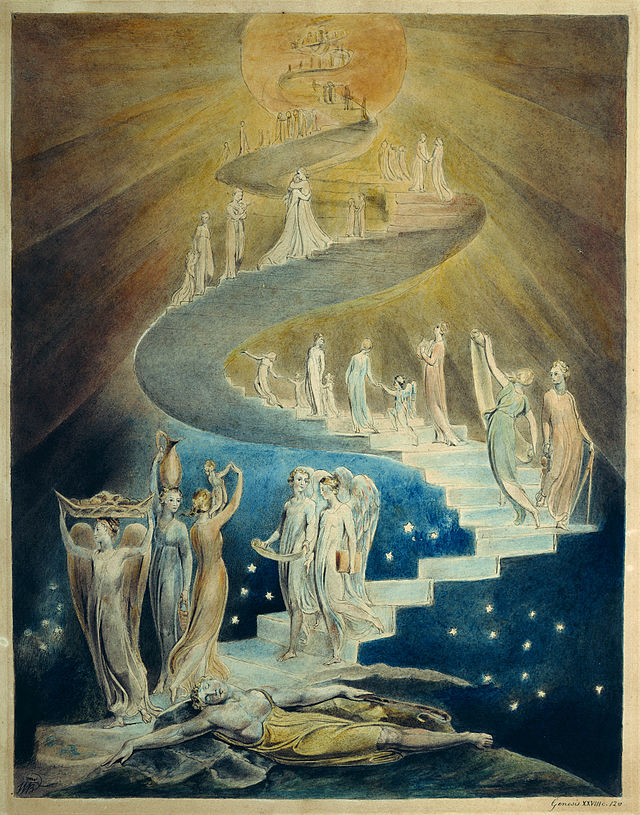
Jacob's Dream, by William Blake

Jacob’s Dream by William Blake

And Jacob worshipped as he leaned on the top of his staff (Gen. 47:31).

 And so it ends, Jacob’s long busy life of intrigue and wrestling.

Ever has he schemed, manipulated and deceived to get the blessings which God intended to give him even before he was born (Gen 25:23).

And his intrigues backfire–disastrously. Quite possibly, they slow down the destiny God had always intended for him. Again and again–as a consequence of his deceitfulness, and his attempts to look after himself–he’s on the road, in flight from Esau, from Laban, from Esau again.

Exploiting Esau’s desperate hunger, he demands his inheritance in exchange for a bowl of lentils. Esau now hates him. Exploiting his blind father, he pretends to be Esau, stealing his blessing. Now Esau’s resolved to murder him and Jacob’s on the road (Gen. 27:41). Never again will he see the mother who adored him.

He flees to a father-in-law fully as deceitful as he was himself. Works seven years to be given a near-sighted bride he never wanted. Has his wages changed seven times. Still, he attempts to look after himself, and does get the better of Laban with his selective breeding. And consequently has to flee again by night. His beloved Rebecca steals her father’s household Gods without Jacob’s knowledge, and dies, falling victim to his rashly invoked curse (Gen 31:32).

As he had deceived his old father, his sons deceive him, breaking his heart with their fabricated account of Joseph’s death. He lives twenty years without his favourite, gifted son. He deceived and was deceived by his three generations of his family. Deceit warps one’s character; the deceivers of the world then practice their evil arts on you without compunction.

On the night before his dreaded meeting with Esau, Jacob wrestles in the darkness with a man by the Jabbok River, who unable to overpower him, casually disables him. Sensing the divine, Jacob declares, “I will not let you go unless you bless me.”

He is blessed.

After that crippling encounter, after he learned his limits, after he sees God, Jacob becomes passive. He gives up his trickiness and scheming, and comes to the end of his life with no more intrigues, no more wrestling. He is now a jellyfish in the stream of God’s will, and God, in painful contorted ways, positions his family smack-dab in the stream of salvation history. Joseph’s son will save his family from famine, will help them become a multitudinous people, and they will return to Canaan with the wealth of the Egyptians.

* * *

 And that long life of wrestling with God and man, all ends well after all. It all ends in worship.

“And Jacob worshipped as he leaned on the top of his staff.”

It ended well because of the mercy of God.

Because what Jacob wanted more than anything was God’s blessing.

Because he had eyes to see the thin veil between the worlds, the ladder between heaven and earth with angels ascending and descending on it. The angels were there all along. It took quiet and spiritual eyes to see them.

Because he had eyes to see that man in the darkness was God. God was there in the darkness for anyone to see; Jacob had the holy night vision to see him.

Because realising that the most precious in life was God’s blessing, he refused to let God go unless he was blessed, even if the cost of that blessing was a limp, a somatic memory of that divine encounter.

God blessed him because Jacob asked him to, because Jacob demanded that he did so, because Jacob would settle for nothing less than God’s blessing, because he physically refused to let him go until he blessed him. As God would have blessed anyone who pursued him with the intensity that Jacob did.

And so it all ends in blessing. It all ends in worship.

* * *

 The irony in Joseph’s story is that God had always intended to bless him. And if he had waited for God, not taking advantage of Esau, not deceiving Isaac, not seizing an advantage over Laban, God would have still blessed him. Almost certainly sooner.

Because God sovereignly chose Jacob seeing in him the toughness, the pertinacity, the God-hunger to be a father of our faith.

He had the character of a man of destiny, a man God could use. Eager, hard-working, imaginative, enterprising, thinking out of the box, with eyes to see the spiritual world, to see angels and God himself as only the seers do.

God honoured Jacob’s numinous sense of God’s sovereignty, his sense that what was really important in life was that one operate under God’s blessing.

* * *

 Oh may it be so for me at the end, after all the excitement and all the grief; the things I succeeded at and the things I failed at; the things I am proud of and the things I cringe at; the relationships which have endured and the relationships which have crumbled; the times I refused to speak to God and the times I spoke to him all the time; when the evening comes and the sun goes down, may I like Jacob, lean on my staff and worship.

Yes, let it all end like this, in worship: I worship you. I worship you because you made me. I worship you because you are infinite, and I love to lose myself in you. I worship you because you are the sea into which I run and sink, tonight and every night, and there I shall find peace, a drop lost in your sea.

Oh at the day’s end, at my life’s end, let it all return to singing

Let it all return to worship.

Whatever may pass, and whatever lies before me
Let me be singing when the evening comes

Filed Under: Genesis, In which I bow my knee in praise and worship Tagged With: blog through the bible, Genesis, Jacob, Trust, worship, Wrestling

Let me be singing when the evening comes

By Anita Mathias

happy

My daughters, Zoe and Irene, returned from a visit to my mother in India moved and struck by a 91 year old childless widow called Jenny.

Jenny lived alone, in a tiny house that a landlord had carved off from his own house. One “room” was a corridor. Her tiny bedroom leaked and the landlord would not fix the roof, so she slept in the minuscule living room.

She owned little, had no income, and meagre savings, but was cheerful and happy. “When I wake up in the morning, I thank Jesus for everything.” “I read my Bible all the time.” She was upbeat and positive, singing them a cheerful song about counting blessings in her quavery old voice. With very little money, a tiny leaky house, and no family. My goodness!

They took her a little box with five Thornton’s chocolates. In return, she gave them five bars of chocolate, and a tiffin of chicken curry she had prepared, keeping only a wing for herself. The next day, out of her generosity, she sent pork curry. Overflowing generosity; overflowing joy. There is a link.

                                                                                                * * *
One of my life’s epiphanic experiences was visiting the Bible teacher Dick Woodward who was paralysed from the neck down and in pain, but ebullient, wise and cheerful. What is inside is everything, I realized. Our attitude is everything. The spiritual life is everything. All the wealth and success in the world cannot give us happiness. The spiritual life, on the other hand, is like magic eyes which bathe everything in rainbows and gold dust.

I have a slight advantage when it comes to happiness stakes, because I am naturally cheerful and high-spirited. “Happy” if you like. Current psychological research suggests a “set-point” for happiness–life events move us a few points up or down, but it’s basically set by our inherited biology.

However, being cheerful and positive is also learned behaviour, a facet of character, and of paramount importance to develop as one ages.

Andrew Solomon in his writing on depression (Noonday Demon) suggests that, as we age, the sheath of myelin around our nerves wears away. Anyone who lives long enough will eventually become clinically depressed (he speculates).

What’s our best defence against becoming a crabby, ungrateful, tiresome, negative old person?

Practising. Practising cheerfulness. Practising gratitude.

Positive psychologist Martin Seligman posits that whose who record the “three blessings” of their day find themselves 25% percent happier in 1-3 months.

Wow!

Thou that has given so much to me,

Give one thing more a grateful heart 

 Not thankful, when it pleaseth me;   

 As if thy blessings had spare days:   

But such a heart,    

Whose pulse may be Thy praise.       (George Herbert, “The Temple”).

That is one of my frequent prayers: Give me a grateful heart. For all the blessings, all the wealth, all the success in the world is of no benefit to us if we do not have a singing heart, thankful for the goodness of the world pouring itself into our very small hands.

Oh, let me be singing when the evening comes!


Image Credit

Filed Under: The Power of Gratitude Tagged With: Andrew Solomon, Dick Woodward, George Herbert, gratitude, Martin Seligman, noonday demon, positive pscyhology, set-point for happiness, thankfulness

17255: Numbering my Days to Learn Wisdom

By Anita Mathias

tumblr_mkdr7qm52F1rqqedro2_r1_1280Joash shooting the arrow of deliverance. William Dyce

 Last week, during a 72 hour worship festival, I found myself thinking of a dominant woman in my life, who apparently delighted in blocking my ideas. Off and on, I mentally composed apparently innocuous emails to her, sardonic and biting in a veiled way, emails I would “accidentally” CC to everyone in the email chain. Completely accidentally, you understand!Yes, in the middle of beautiful soulful worship that thought crossed my mind.We are made of mud and the breath of God, we are told in Genesis. That is the only way to understand us humans.

* * *

And the image I kept “seeing” was of me standing with a great golden bow and arrow, pulling back the bow, the arrow poised at the bow-string, about to shoot my arrow at that uber-annoying woman.

But no, I would not.

I thought of where that image might have come from. The gift of words can be used for a livelihood, as Ishamel kept himself and Hagar alive in the desert with his bow and arrow. It can protect oneself or one’s family, as Elisha instructed the naïve King Jehoash to shoot his arrows, declaring as he did so, “The Lord’s arrow of victory, the arrow of victory over Aram!”

Or we can waste our arrows on sniping, conflict and negativity.

* * *

We are finite beings.  But we find it hard to remember that our time is limited, our energy is limited, and our abilities are limited. We continually believe we can squeeze in one more thing, say one more “yes.”

Then suddenly in middle age, these limitations of energy become very real to us, and realize that we are in the land of trade-offs. If we do A, we will not get to do B: we realize this through bitter experience. We have to choose carefully!

We have a finite number of arrows. Spending our energy in petty hostility and arguments and conflict, whether online, or in real life, means we will have less time and energy to do what we really want to do, the one thing we’ve been put on earth to do with our one wild and precious life.

A limited number of arrows, a limited number of hours. I come from a line of long-lived women on both sides of the family. My grandmother Josephine Mathias died at 98. I remember visiting her mother, my great-grandmother Julianna Lobo who died at 102. My mother’s grandmother, Alice Coelho, also lived to be 100.

If I live to the average age of my grandmothers and great-grandmothers—and I have better medical care, a more careful diet, more exercise, but far more self-imposed stress—I might live for another 17255 days. A lot, but not infinite.

Teach us to number our days, that we may apply our hearts unto wisdom, the Psalmist cried.

* * *

I noticed something else. Each time I thought of writing my silly snarky little email, all peace left my heart, I felt out of alignment with the worship around me. When I decided to send a tactful non-distressing email, peace and joy returned and I could worship. And then the naughty writer in me slyly suggested yet another sardonic wisecrack, and the white dog and the black dog wrestled.

I thought of an overstatement quoted in John Arnott’s excellent book, Grace and Forgiveness.

“Every negative thing and thought is always of the Enemy, and every positive, life-giving, up-lifting thought is always of the Holy Spirit.

“Settle this issue in your heart. The Holy Spirit is always positive, and Satan is always negative.”

*  * *

How will I spend my limited arrows, my limited hours?

I don’t want to waste any of them in conflict, hostility or shooting down enemies, instead of leaving God to deal with them, or (sadly!) to allow them to remain in my life for my growth in strength, patience and wisdom?

I decided. I would send no foolish emails, none at all.

I want to steward my time and energy wisely, using my arrows to open up deep life-giving wells of beauty, wisdom, peace, and joy for myself and for other people. To create something beautiful.

* * *

I no longer live, but Christ lives in me (Gal 2:20). In my early years as a Christian, that statement mystified me. It seemed extreme and theoretical.

I now think it’s a choice. We choose to be aligned with Jesus, we choose to live and move with his grace that so powerfully works in us. When it’s difficult—in diet, or exercise, or writing, or relationships–we rely on his grace to help us, step by step, relying on his benevolent “possession”. And if the very thought of doing something makes us lose our sense of peace and joy, we do not do it.

We choose the positive, and not the negative. We number our days that we might apply our hearts unto wisdom.

Filed Under: Applying my heart unto wisdom Tagged With: Applying our hearts unto wisdom, Black dog and white dog, Counting our days, John Arnott, King Joash, positivity and negativity

Homo Sapiens and Homo Stupidus: On Giftedness and its Price

By Anita Mathias

898px-Vincent_Van_Gogh_0013


I live-blogged in Cambodia recently, fund-raising for a charity. We were to be accompanied by a “Christian celebrity” who had promised to do national talks on her return. The posters had been printed.

Well, she was not at Heathrow. Among several possible forms of ID, she sent off her passport to get her driver’s licence renewed. Had not paid for expedited processing.  So no passport. So despite the charity having paid for her (and ours) ticket, hotel etc., despite extensive logistical planning on the part of charities in Cambodia, she couldn’t fly out!

* * *

Hmm! Clever, successful, achieving, experienced people can do stupid things. It’s part of being human, these flashes of stupidity.

The scientific name for man is “homo sapiens,” literally “wise man.” Our wisdom supposedly distinguishes us from the animals.

However, Linnaeus who first used binomial nomenclature (and whose garden in Uppsala we’ve visited) could just as well have called us homo stupidus, “man the stupid,” for animals are never stupid. They act out of an unwavering instinct for self-preservation, common sense if you like. And their instincts are more reliable than our reason.

* * *

I was surprised at Heathrow. So other adults, sensible, intelligent, achieving adults make such mistakes?

I would have had a disproportionate reaction if it were me—would have felt crushed by shame and guilt and sorrow. I hate to mess up, especially when it messes others up.

Ah, I would show myself and my family grace for occasional flashes of stupidity, I resolved.

Practising… Practising…

* * *

My teenagers, Zoe and Irene, were to fly out to India on the 30th July to stay with my mother.

At midnight on the 29th, the witching hour when one is tempted to throw things, Roy asked, “Don’t they need visas to visit India?”

They didn’t have them.

To my credit, I didn’t throw a thing. Didn’t even say a cross word.  Getting visas didn’t cross his mind, Roy said, though he bought their tickets for them, and went personally to get their visas for their last two visits. How can you blame someone for something that did not cross their minds? Especially when it didn’t cross yours.

They did not fly out. We changed the tickets, and paid a penalty. Ouch!!

* * *

We are homo sapiens and homo stupidus at the same time. They are both equally part of our nature.

As The Book of Job commences, Job has everything: ten children, and thousands of oxen, donkeys, sheep, camels and servants. Then in his Great Depression, he lost everything, even his health.

His wife crumbles. “Curse God and die,” she says.

But Job says, “Shall we accept good from God, and not trouble?’The Lord gave and the Lord has taken away; may the name of the Lord be praised.”

Shall we accept gifts from the Lord, and not the liabilities that are the shadow side of those very gifts?

* * *

The fact that we had overlooked getting visas was, ironically, linked to our strengths, our intensity. We got the tickets to India, got tickets to Helsinki, got tickets to David’s Tent, a Christian worship festival, and then, summer logistics done, (we thought!) turned our thoughts to other things: writing, for me; creating new garden beds and worrying about our family business for Roy.

The intensity caused the forgetfulness.

* * *

 Our marital counselling included a DISC assessment (which showed that Roy and I had diametrically opposed personalities, each on the far ends of the graph) and a psychologist administered IQ test. Both of us had IQ in the “superior” range, in the top 5% of the population. (My verbal IQ was significantly higher than my non-verbal IQ. Which explains why I might get lost on my way to your house, or my cooking can be erratic.)

Anyway, the pastor looked at the scores, and said, “Anita, you are the most gifted person I have every counselled.” (And I looked gloatingly at Roy–God forgive me, so I did!)

The pastor’s wife was doing a Ph.D in gifted and talented education, and he lent me a book on giftedness. Part of giftedness, I read, is intensity: your mind works a little faster; you get impatient with slow-moving, frivolous conversations; small talk bores you; you cut to the chase. Waste of time or money, stupidity or folly can feel like a crisis.

When gifted people marry other gifted people, life can be “crisis squared.” Factor in the gifted children who’ll likely result and family life can be “crisis cubed,” they said. In our case, “crisis quadrupled!”

High IQ makes academic work easier. It’s easier to assess, absorb, collate and retrieve information rapidly, abilities which are the foundations of academic success. And these traits are assets in starting a business from scratch, I discovered.

However I also have a higher degree of forgetfulness when it comes to things my reticular activating system has pegged as irrelevant—my mobile number, say, or driving directions, or transferring the laundry to the dryer…

* * *

 My husband once stayed with a fellow mathematician in Tuscon while at a conference. A fellow guest was the legendary Hungarian mathematician Erdos (who has written so many papers that every mathematician has an Erdos number. If you’ve written a paper with Erdoz, you have an Erdos number of 1. If you written  it with an Erdos collaborator you are Erdos 2. Roy is Erdos 3).

The phone rang at breakfast. It was the neighbour. “Do you have a mathematician staying with you? I have him here.”

Erdos had gone on a morning walk, wandered into the nearest big house, located the coffee maker, made coffee, then settled down at the table, scribbling formulae, not noticing his different surroundings at all.

The abstraction, homo stupidus behaviour, was the shadow side of his genius.

* * *

 The shadow side and difficulties of giftedness is particularly pronounced in school. When I was nine, in my first year at boarding school, I was reading the books in the cupboards for 16 year olds. Sister Josephine, the senior school English teacher, read my essays out to the seniors, I was often told.

However–though I had skipped grades and had been put with the 10 year olds– physically, emotionally and spiritually, I was nine, probably younger, because I had concentrated my energies on reading everything I could get my hands on.

All this made my life turbulent.

* * *

 In Baudelaire’s famous poem about the albatross, the very wings which help it soar effortlessly make it ridiculous when captured by mariners who make it waddle on deck, where its giant wings hinder its walk

The same IQ which was an asset at Oxford University or graduate school often made me feel restless in Bible study and sometimes in church. I moved from small group to small group, and church to church in my first years as a Christian, seeking something focused, meaty, fast-paced and intense.

“You will have to remember that in an average group of 20 people, you may well the smartest person,” the pastor explained, looking at my scores. I stared. I had grumbled to him about a fluffy, vapid Bible study.  Yes, that explained my occasional restlessness and irritation during group Bible study, and boredom during sermons.

I realised then that the purpose of church and small groups was not to stretch my brain, but a far more important organ: my heart. To become a student of the people in the group as much as the Word, to learn to love. The purpose of church was not intellectual stimulation, but to worship God in the anonymous great democracy of the faithful–on earth as it will be in heaven.

* * *

Giftedness is a double-edged sword. Our whole personality leans that way. If our gift is composing or writing or painting, and we do not do it, we feel as psychically crippled as if we were trying to function without an arm or a leg.

However, if we develop our gifts single-mindedly, there will be a price. In the phrase of Greg McKeown of Essentialism, we might not “protect the asset” that enables us to exercise the gift—i.e. our selves. We might pursue our gift at the expense of sleep or exercise or rest, thus affecting our physical health. We might pursue it at the expense of time with family, friends, or paying attention to the inner river of our emotional life . We might pursue it at the expense of our spiritual life.

The personal lives of many gifted people betray the scars of having pursued their gifts, or their career, at the expense of their physical, mental, emotional or spiritual health and their relationships.

* * *

 I don’t want to do this. I want to protect the asset—become physically strong (which I am not, though I am “healthy” as defined by the absence of disease or meds). I want to have good relationships with my family and friends. I want to be healthy, mentally, emotionally and spiritually.

If we led a balanced life, got our sleep and exercise, spent time with family and friends, spent time with God, kept our homes and lives orderly, would we have enough time to make our gifts shine?

Would I have less time to write? In the short run, yes! Balance means we will have less time to nurture our gifts and passions.

In the long run, not necessarily! We might instead burn brightly, though not dazzlingly, throughout our lives, instead of burning out.

* * *

Fortunately, there are ways to be healthy and balanced and still exercise your gift.

A Do-Not-Do list is one. Mine is extensive, and helps provides fallow time to “sit and stare.”

Part of it: No recreational shopping. I don’t clean (we hire someone); we outsource all handy-man type jobs and heavy-duty garden jobs (though I do garden every day). I outsource all techie blog maintenance. I don’t watch TV. I get together with people twice a week, but am picky about social life, preferring encounters which offer meaningful conversation. Essentially, I try to eliminate trivia, to leave room for what interests me.

* * *

Giftedness is fire which can scorch or destroy its possessor, if not well-managed. And it’s fire which can warm, illuminate and comfort many if wisely managed.

How manage it? Surrender it to God, place the gift in the hands of the Giver, seek his wisdom on how to use it, so that your gifts become gifts to you and the world, fire that will light, warm and comfort, not burn and destroy.


Have you ever been Homo Stupidus? Tell me your stories.

Filed Under: In which I explore writing and blogging and creativity Tagged With: balance, Baudelaire Albatross, DISC assessment, Do not do list, Giftedness, Linneaus Uppsala, mental health, Paul Erdos, Shadow side of giftedness, X Greg McKeown "Essentialism"

  • « Previous Page
  • 1
  • …
  • 17
  • 18
  • 19
  • 20
  • 21
  • …
  • 279
  • Next Page »

Sign Up and Get a Free eBook!

Sign up to be emailed my blog posts (one a week) and get the ebook of "Holy Ground," my account of working with Mother Teresa.

Join 536 Other Readers

My Books

Rosaries, Reading, Secrets: A Catholic Childhood in India

Rosaries, Reading Secrets, B&N
USA

UK

Wandering Between Two Worlds: Essays on Faith and Art

Wandering Between Two Worlds
USA

UK

Francesco, Artist of Florence: The Man Who Gave Too Much

Francesco, Artist of Florence
US

UK

The Story of Dirk Willems

The Story of Dirk Willems
US

UK

My Latest Meditation

Anita Mathias: About Me

Anita Mathias

Read my blog on Facebook

Follow me on Twitter

Follow @anitamathias1

Recent Posts

  • At the Cross, God Forgives Us Completely
  • Using God’s Gift of Our Talents: A Path to Joy and Abundance
  • The Kingdom of God is Here Already, Yet Not Yet Here
  • All Those Who Exalt Themselves Will Be Humbled & the Humble Will Be Exalted
  • Christ’s Great Golden Triad to Guide Our Actions and Decisions
  • How Jesus Dealt With Hostility and Enemies
  • Do Not Be Afraid, but Do Be Prudent
  • For Scoundrels, Scallywags, and Rascals—Christ Came
  • How to Lead an Extremely Significant Life
  • Don’t Walk Away From Jesus, but if You Do, He Still Looks at You and Loves You
Premier Digital Awards 2015 - Finalist - Blogger of the year
Runner Up Christian Media Awards 2014 - Tweeter of the year

Categories

What I’m Reading


Wolf Hall
Hilary Mantel

Wolf Hall --  Amazon.com
Amazon.com

Amazon.co.uk

Silence and Honey Cakes:
The Wisdom Of The Desert
Rowan Williams

Silence and Honey Cakes --  Amazon.com
Amazon.com

Amazon.co.uk

The Long Loneliness:
The Autobiography of the Legendary Catholic Social Activist
Dorothy Day

The Long Loneliness --  Amazon.com
Amazon.com

Amazon.co.uk

Country Girl
Edna O'Brien

Country Girl  - Amazon.com
Amazon.com

Amazon.co.uk

Archive by month

My Latest Five Podcast Meditations

INSTAGRAM

anita.mathias

My memoir: Rosaries, Reading, Secrets https://amzn.to/42xgL9t
Oxford, England. Writer, memoirist, podcaster, blogger, Biblical meditation teacher, mum

Well, hello friends! Breaking radio silence to let Well, hello friends! Breaking radio silence to let you know that I have taped a meditation for you on Christ’s famous Parable of the Talents in Matthew 25. https://anitamathias.com/2025/11/05/using-gods-gift-of-our-talents-a-path-to-joy-and-abundance/
Here you are, click the play button in the blog post for a brief meditation, and some moments of peace, and, perhaps, inspiration in your day 🙂
Hi Friends, I have taped a meditation; do listen a Hi Friends, I have taped a meditation; do listen at this link: https://anitamathias.com/2025/04/08/the-kingdom-of-god-is-here-already-yet-not-yet-here-2/
It’s on the Kingdom of God, of which Christ so often spoke, which is here already—a mysterious, shimmering internal palace in which, in lightning flashes, we experience peace and joy, and yet, of course, not yet fully here. We sense the rainbowed presence of Christ in the song which pulses through creation. Christ strolls into our rooms with his wisdom and guidance, and things change. Our prayers are answered; we are healed; our hearts are strangely warmed. Sometimes.
And yet, we also experience evil within & all around us. Our own sin which can shatter our peace and the trajectory of our lives. And the sins of the world—its greed, dishonesty and environmental destruction.
But in this broken world, we still experience the glory of creation; “coincidences” which accelerate once we start praying, and shalom which envelops us like sudden sunshine. The portals into this Kingdom include repentance, gratitude, meditative breathing, and absolute surrender.
The Kingdom of God is here already. We can experience its beauty, peace and joy today through the presence of the Holy Spirit. But yet, since, in the Apostle Paul’s words, we do not struggle only “against flesh and blood, but against the rulers, against the unseen powers of this dark world and against the spiritual forces of evil,” its fullness still lingers…
Our daughter Zoe was ordained into the Church of E Our daughter Zoe was ordained into the Church of England in June. I have been on a social media break… but … better late than never. Enjoy!
First picture has my sister, Shalini, who kindly flew in from the US. Our lovely cousins Anthony and Sarah flank Zoe in the next picture.
The Bishop of London, Sarah Mullaly, ordained Zoe. You can see her praying that Zoe will be filled with the Holy Spirit!!
And here’s a meditation I’ve recorded, which you might enjoy. The link is also in my profile
https://anitamathias.com/2024/11/07/all-those-who-exalt-themselves-will-be-humbled-the-humble-will-be-exalted/
I have taped a meditation on Jesus statement in Ma I have taped a meditation on Jesus statement in Matthew 23, “For those who exalt themselves will be humbled, and those who humble themselves will be exalted.”
Do listen here. https://anitamathias.com/2024/11/07/all-those-who-exalt-themselves-will-be-humbled-the-humble-will-be-exalted/
Link also in bio.
And so, Jesus states a law of life. Those who broadcast their amazingness will be humbled, since God dislikes—scorns that, as much as people do.  For to trumpet our success, wealth, brilliance, giftedness or popularity is to get distracted from our life’s purpose into worthless activity. Those who love power, who are sure they know best, and who must be the best, will eventually be humbled by God and life. For their focus has shifted from loving God, doing good work, and being a blessing to their family, friends, and the world towards impressing others, being enviable, perhaps famous. These things are houses built on sand, which will crumble when hammered by the waves of old age, infirmity or adversity. 
God resists the proud, Scripture tells us—those who crave the admiration and power which is His alone. So how do we resist pride? We slow down, so that we realise (and repent) when sheer pride sparks our allergies to people, our enmities, our determination to have our own way, or our grandiose ego-driven goals, and ambitions. Once we stop chasing limelight, a great quietness steals over our lives. We no longer need the drug of continual achievement, or to share images of glittering travel, parties, prizes or friends. We just enjoy them quietly. My life is for itself & not for a spectacle, Emerson wrote. And, as Jesus advises, we quit sharp-elbowing ourselves to sit with the shiniest people, but are content to hang out with ordinary people; and then, as Jesus said, we will inevitably, eventually, be summoned higher to the sparkling conversation we craved. 
One day, every knee will bow before the gentle lamb who was slain, now seated on the throne. We will all be silent before him. Let us live gently then, our eyes on Christ, continually asking for his power, his Spirit, and his direction, moving, dancing, in the direction that we sense him move.
Link to new podcast in Bio https://anitamathias.co Link to new podcast in Bio https://anitamathias.com/2024/02/20/how-jesus-dealt-with-hostility-and-enemies/
3 days before his death, Jesus rampages through the commercialised temple, overturning the tables of moneychangers. Who gave you the authority to do these things? his outraged adversaries ask. And Jesus shows us how to answer hostile questions. Slow down. Breathe. Quick arrow prayers!
Your enemies have no power over your life that your Father has not permitted them. Ask your Father for wisdom, remembering: Questions do not need to be answered. Are these questioners worthy of the treasures of your heart? Or would that be feeding pearls to hungry pigs, who might instead devour you?
Questions can contain pitfalls, traps, nooses. Jesus directly answered just three of the 183 questions he was asked, refusing to answer some; answering others with a good question.
But how do we get the inner calm and wisdom to recognise
and sidestep entrapping questions? Long before the day of
testing, practice slow, easy breathing, and tune in to the frequency of the Father. There’s no record of Jesus running, rushing, getting stressed, or lacking peace. He never spoke on his own, he told us, without checking in with the Father. So, no foolish, ill-judged statements. Breathing in the wisdom of the Father beside and within him, he, unintimidated, traps the trappers.
Wisdom begins with training ourselves to slow down and ask
the Father for guidance. Then our calm minds, made perceptive, will help us recognise danger and trick questions, even those coated in flattery, and sidestep them or refuse to answer.
We practice tuning in to heavenly wisdom by practising–asking God questions, and then listening for his answers about the best way to do simple things…organise a home or write. Then, we build upwards, asking for wisdom in more complex things.
Listening for the voice of God before we speak, and asking for a filling of the Spirit, which Jesus calls streams of living water within us, will give us wisdom to know what to say, which, frequently, is nothing at all. It will quieten us with the silence of God, which sings through the world, through sun and stars, sky and flowers.
Especially for @ samheckt Some very imperfect pi Especially for @ samheckt 
Some very imperfect pictures of my labradoodle Merry, and golden retriever Pippi.
And since, I’m on social media, if you are the meditating type, here’s a scriptural meditation on not being afraid, while being prudent. https://anitamathias.com/2024/01/03/do-not-be-afraid-but-do-be-prudent/
A new podcast. Link in bio https://anitamathias.c A new podcast. Link in bio
https://anitamathias.com/2024/01/03/do-not-be-afraid-but-do-be-prudent/
Do Not Be Afraid, but Do Be Prudent
“Do not be afraid,” a dream-angel tells Joseph, to marry Mary, who’s pregnant, though a virgin, for in our magical, God-invaded world, the Spirit has placed God in her. Call the baby Jesus, or The Lord saves, for he will drag people free from the chokehold of their sins.
And Joseph is not afraid. And the angel was right, for a star rose, signalling a new King of the Jews. Astrologers followed it, threatening King Herod, whose chief priests recounted Micah’s 600-year-old prophecy: the Messiah would be born in Bethlehem, as Jesus had just been, while his parents from Nazareth registered for Augustus Caesar’s census of the entire Roman world. 
The Magi worshipped the baby, offering gold. And shepherds came, told by an angel of joy: that the Messiah, a saviour from all that oppresses, had just been born.
Then, suddenly, the dream-angel warned: Flee with the child to Egypt. For Herod plans to kill this baby, forever-King.
Do not be afraid, but still flee? Become a refugee? But lightning-bolt coincidences verified the angel’s first words: The magi with gold for the flight. Shepherds
telling of angels singing of coming inner peace. Joseph flees.
What’s the difference between fear and prudence? Fear is being frozen or panicked by imaginary what-ifs. It tenses our bodies; strains health, sleep and relationships; makes us stingy with ourselves & others; leads to overwork, & time wasted doing pointless things for fear of people’s opinions.
Prudence is wisdom-using our experience & spiritual discernment as we battle the demonic forces of this dark world, in Paul’s phrase.It’s fighting with divinely powerful weapons: truth, righteousness, faith, Scripture & prayer, while surrendering our thoughts to Christ. 
So let’s act prudently, wisely & bravely, silencing fear, while remaining alert to God’s guidance, delivered through inner peace or intuitions of danger and wrongness, our spiritual senses tuned to the Spirit’s “No,” his “Slow,” his “Go,” as cautious as a serpent, protected, while being as gentle as a lamb among wolves.
Link to post with podcast link in Bio or https://a Link to post with podcast link in Bio or https://anitamathias.com/2023/09/22/dont-walk-away-from-jesus-but-if-you-do-he-still-looks-at-you-and-loves-you/
Jesus came from a Kingdom of voluntary gentleness, in which
Christ, the Lion of Judah, stands at the centre of the throne in the guise of a lamb, looking as if it had been slain. No wonder his disciples struggled with his counter-cultural values. Oh, and we too!
The mother of the Apostles James and John, asks Jesus for a favour—that once He became King, her sons got the most important, prestigious seats at court, on his right and left. And the other ten, who would have liked the fame, glory, power,limelight and honour themselves are indignant and threatened.
Oh-oh, Jesus says. Who gets five talents, who gets one,
who gets great wealth and success, who doesn’t–that the
Father controls. Don’t waste your one precious and fleeting
life seeking to lord it over others or boss them around.
But, in his wry kindness, he offers the ambitious twelve
and us something better than the second or third place.
He tells us how to actually be the most important person to
others at work, in our friend group, social circle, or church:Use your talents, gifts, and energy to bless others.
And we instinctively know Jesus is right. The greatest people in our lives are the kind people who invested in us, guided us and whose wise, radiant words are engraved on our hearts.
Wanting to sit with the cleverest, most successful, most famous people is the path of restlessness and discontent. The competition is vast. But seek to see people, to listen intently, to be kind, to empathise, and doors fling wide open for you, you rare thing!
The greatest person is the one who serves, Jesus says. Serves by using the one, two, or five talents God has given us to bless others, by finding a place where our deep gladness and the world’s deep hunger meet. By writing which is a blessing, hospitality, walking with a sad friend, tidying a house.
And that is the only greatness worth having. That you yourself,your life and your work are a blessing to others. That the love and wisdom God pours into you lives in people’s hearts and minds, a blessing
https://anitamathias.com/.../dont-walk-away-from-j https://anitamathias.com/.../dont-walk-away-from-jesus.../
Sharing this podcast I recorded last week. LINK IN BIO
So Jesus makes a beautiful offer to the earnest, moral young man who came to him, seeking a spiritual life. Remarkably, the young man claims that he has kept all the commandments from his youth, including the command to love one’s neighbour as oneself, a statement Jesus does not challenge.
The challenge Jesus does offers him, however, the man cannot accept—to sell his vast possessions, give the money to the poor, and follow Jesus encumbered.
He leaves, grieving, and Jesus looks at him, loves him, and famously observes that it’s easier for a camel to squeeze through the eye of a needle than for a rich person to live in the world of wonders which is living under Christ’s kingship, guidance and protection. 
He reassures his dismayed disciples, however, that with God even the treasure-burdened can squeeze into God’s kingdom, “for with God, all things are possible.”
Following him would quite literally mean walking into a world of daily wonders, and immensely rich conversation, walking through Israel, Lebanon, Syria, and Jordan, quite impossible to do with suitcases and backpacks laden with treasure. 
For what would we reject God’s specific, internally heard whisper or directive, a micro-call? That is the idol which currently grips and possesses us. 
Not all of us have great riches, nor is money everyone’s greatest temptation—it can be success, fame, universal esteem, you name it…
But, since with God all things are possible, even those who waver in their pursuit of God can still experience him in fits and snatches, find our spirits singing on a walk or during worship in church, or find our hearts strangely warmed by Scripture, and, sometimes, even “see” Christ stand before us. 
For Christ looks at us, Christ loves us, and says, “With God, all things are possible,” even we, the flawed, entering his beautiful Kingdom.
Follow on Instagram

© 2026 Dreaming Beneath the Spires · All Rights Reserved. · Cookie Policy · Privacy Policy