Anita Mathias: Dreaming Beneath the Spires

Anita Mathias's Blog on Faith and Art

  • Home
  • My Books
  • Meditations
  • Essays
  • Contact
  • About Me

What We Sow, We Reap because God, the Great Mathematician, the Impartial Referee, Keeps Score

By Anita Mathias

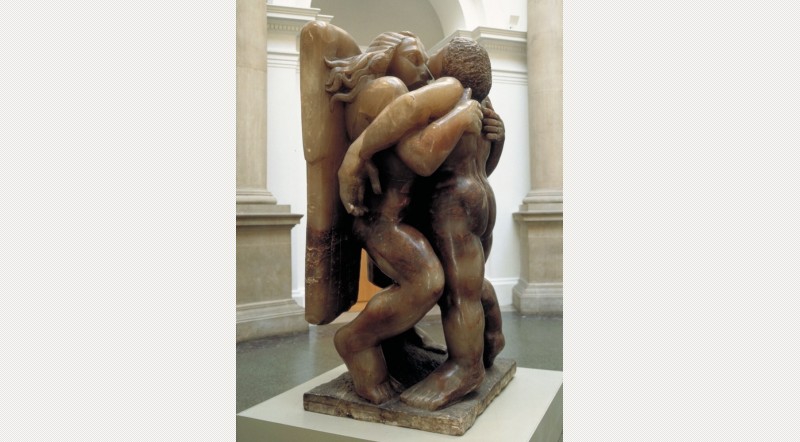
jacob epstein jacob angel

Jacob Epstein, Jacob and the Angel

For in the same way you judge others, you will be judged, and with the measure you use, it will be measured to you. (Matt 7:2).

Blessed are the merciful, for they shall be shown mercy. (Matt 5:7).

As a man sows, so shall he reap. (Gal 6:7).

These principles run though Scripture from Genesis to Revelation.

* * *

I’ve been following Christ with increasing seriousness for 24 years now–but have loved Christ for much longer.

However, I no longer play Scripture roulette—try to find a verse which will tell me what to do and will provide a way out of the maze of decision.

When I don’t know what to do, I seek the face of Jesus and the voice of the Holy Spirit. And then, or concurrently, I look for principles running through scripture.

* * *

And this is one: that what a man sows, he shall reap.

Believing it is a practical version of what Proverbs calls, “the fear of the Lord.” We are careful in our behaviour, especially when no one is watching, when we can get away with things, because God is watching, and what a man sows, he shall reap.

When we have the upper hand, when we can get away with things, when no one will ever know, when we can, with impunity, be mean, cruel or dishonest—the secret good or evil we then do determines the course of our lives, and the sweetness or bitterness of them. It determines the things that happen to us. It determines our destiny.

How so? Because a very good mathematician is keeping score. Because an impartial referee is watching the game.

* * *

Jacob cons Esau out of his birthright and his blessing because he could, because he could get away with it, he thought.

And yes, well, desperate with hunger Esau promises that Jacob could have his birthright as the eldest son (a double share of the inheritance). And Jacob then lies to Isaac, claiming to be Esau, so getting the blessing Isaac intended for Esau.

And God watches it all, and God does not like it. Instead of receiving the blessing Isaac intended for Esau, Jacob goes through 20 years of unhappiness as a hired man, while Esau stays home and becomes very rich, being blessed in exactly the way his father wanted him to be.

* * *

Jacob falls in love with Rachel, “who is lovely and form and beautiful”. Leah, we are told, had weak eyes, which, in the years before corrective lenses, probably affected her facial expression as she scrunched up her eyes to see better, and her posture as she stooped to see.

And Jacob, after serving seven years to pay the bride price for  Rachel, gets Leah, whom he neither loves nor wants.  He then has to serve yet another seven years for Rachel whom he does love and want. Fourteen years to pay bride prices while Esau stayed at home hunting, and marrying a third wife with family wealth, building up a small army of 400 men (Gen. 32:6).

Jacob is tricked in a way ironically parallel to his own deceptions. He who tried to trick his older brother out of his birthright  now is tricked out of seven years salary for a older sister he does not want.

But Laban had no idea of how Jacob had tricked Isaac and Esau. It wasn’t exactly dinner table conversation. But God who watched everything allowed Laban to deceive Jacob as Jacob had deceived Esau and Isaac.

* * *

We reap what we sow because character is destiny, I feel convinced. Have you come across a lovely kind person whom everyone likes? Talking to them you largely hear good things about people, about how people were lovely to him. Were Jacob such a person would Laban have had the heart to trick him so cruelly? Very likely not.

Do you know bitter, abrasive, power-hungry, manipulative people? They are angry about many things, cross with many people. In a weird way, like appears to be attracting like.

The universe reflects your character, measure for measure. Your life often serves up to you what you are, measure for measure. Now, this perhaps sounds like something from The Secret.

But, in fact, it runs through the Bible: what a man sows he shall reap. The measure we give is the measure we shall receive. Measure for measure.

* * *

Jacob whose name means deceiver is deceived and things do not go well for him until he seeks to be blessed by the source of all blessing who blesses him with the ambiguous blessing of a limp, a reminder in his flesh that if he, Jacob, the manipulator, is going to live the rest of life under God’s blessing, he MUST rely on the source of all goodness and blessing for blessing, and not on his own ingenious tricks and stratagems.

Filed Under: Matthew Tagged With: blog through the bible, Genesis, sowing and reaping, the justice of God, Theoldicy

Guilt Causes Paralysis, and Christ’s Forgiveness Rescues us from it

By Anita Mathias


A haunting passage in Carl Gustav Jung’s memoir, Memories, Dreams, and Reflections, describes a woman from whom horses, dogs and people fled, for they sensed dark guilt within her.

“A lady came to my office. It was apparent that she belonged to the upper levels of society. She had been a doctor, she said. What she had to communicate to me was a confession; some twenty years ago she had committed a murder out of jealousy. She had poisoned her best friend because she wanted to marry the friend’s husband. She had thought that if the murder was not discovered, it would not disturb her. She wanted to marry the husband, and the simplest way was to eliminate her friend. Moral considerations were of no importance to her, she thought.

The consequences? She had in fact married the man, but he died soon afterward, relatively young. During the following years a number of strange things happened. The daughter of this marriage endeavoured to get away from her as soon as she was grown up. She married young and vanished from view, drew farther and farther away, and ultimately the mother lost all contact with her.

This lady was a passionate horsewoman and owned several riding horses of which she was extremely fond. One day she discovered that the horses were beginning to grow nervous under her. Even her favourite shied and threw her. Finally she had to give up riding. Thereafter she clung to her dogs. She owned an unusually beautiful wolfhound to which she was greatly attached. As chance would have it, this very dog was stricken with paralysis.

With that, her cup was full; she felt that she was morally done for. She had to confess, and for this purpose she came to me. She was a murderess, but on top of that she had also murdered herself. For one who commits such a crime destroys his own soul. The murderer has already passed sentence on himself.

If someone has committed a crime and is caught, he suffers judicial punishment. If he has done it secretly, without moral consciousness of it, and remains undiscovered, the punishment  can nevertheless be visited upon him, as our case shows. It comes out in the end. Sometimes it seems as if even animals and plants “know” it. As a result of the murder, the woman was plunged into unbearable loneliness. She had even become alienated from animals.

And in order to shake off this loneliness, she had made me share her knowledge. She had to have someone who was not a murderer to share the secret. She wanted to find a person who could accept her confession without prejudice, for by so doing she would achieve once more something resembling a relation-ship to humanity. And the person would have to be a doctor rather than a professional confessor. She would have suspected a priest of listening to her because of his office, and of not accepting the facts for their own sake but for the purpose of moral judgment. She had seen people and animals turn away from her, and had been so struck by this silent verdict that she could not have endured any further condemnation.

Sometimes I have asked myself what might have become of her. For that was by no means the end of her journey. Perhaps she was driven ultimately to suicide. I cannot imagine how she could have gone on living in that utter loneliness.” (Memories Dreams Reflections, Carl Gustav Jung, p 122)

Unconfessed, hidden guilt extracts a terrible psychic price.

* * *

And guilt, unconfessed, unforgiven can lead to terrible paralysis, literally or metaphorically.

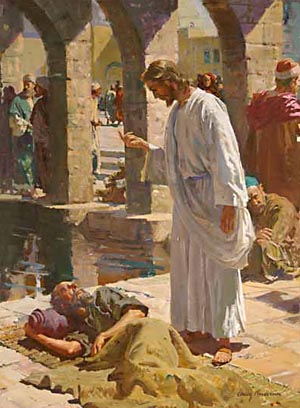
Which brings me to Jesus’ fascinating encounter with the paralytic (Matt 9: 1-8). He says, “Take heart, son. Your sins are forgiven.”

Challenged by the Pharisees, he turns from the root cause to the manifestation and says, “Get up, take up your mat and go home.”

And the man does so.

* * *

A healthy spiritual life requires the daily practice of confession and receiving forgiveness. “Forgive us our sins,” the Lord’s Prayer teaches us to say. And, equally importantly, he teaches us to extend the self-same forgiveness to others.

Otherwise, terrible guilt we have not confessed and asked forgiveness for, or terrible sadness and anger at the effect of others’ sin upon us can leave us “paralysed.”

* * *

Paralysed? There are many 21st century manifestations. A deep sadness or depression or anxiety, that renders it impossible to move on, to pursue meaningful action, to pursue dreams. These mental disorders affect 26.2 of the US population in any given year, according to the National Institutes of Mental Health, and 25% of the British population every year, according to the Mental Health Foundation (to look at stats from the two countries I’ve boomeranged between for the last 29 years).

Eastern State Hospital was a massive psychiatric hospital at the edge of Williamsburg, Virginia, where I lived for 12 years. A Christian psychiatrist, who worked there, famously said that if people would accept God’s forgiveness, and so be absolved from their guilt, Eastern State would be almost empty overnight. I believe it.


* * *

I recently was overwhelmed with sadness and guilt over my actions. A member of my family had wanted something very badly, and I did not support them fully, partly because I was sure they would achieve it without my active hovering, and partly because I was absorbed and abstracted by my own work. And their big break did not initially work out.

I was so sad, so paralysed by guilt and sadness for a few days. Tossing and turning in the night, I “heard” these words, “Your guilt is taken away, and your sin atoned for.” (Isaiah 6:7). (One of the benefits of stocking your mind with Scripture is that it surfaces in your hour of need!)

I sighed with relief. My guilt had indeed been taken away, and my sin atoned for by Jesus, wondrous but true news.

I had to accept this complete forgiveness, akin to the forgiveness a father offers a toddler who smashes a crystal goblet or scribbles on an antique first edition. I had to accept it from God, and from the individual.

And after, again, expressing my sorrow to God and the person whom my actions had affected, it was time to “get up and walk,” smiling as one whose guilt had been taken away and sin atoned for.

Thank you, Jesus.

Filed Under: In which I forgive Aught against Any (Sigh), Matthew Tagged With: blog through the bible, forgiveness, guilt, Matthew, paralysis

You of Little Faith, Why are you so Afraid?

By Anita Mathias

I

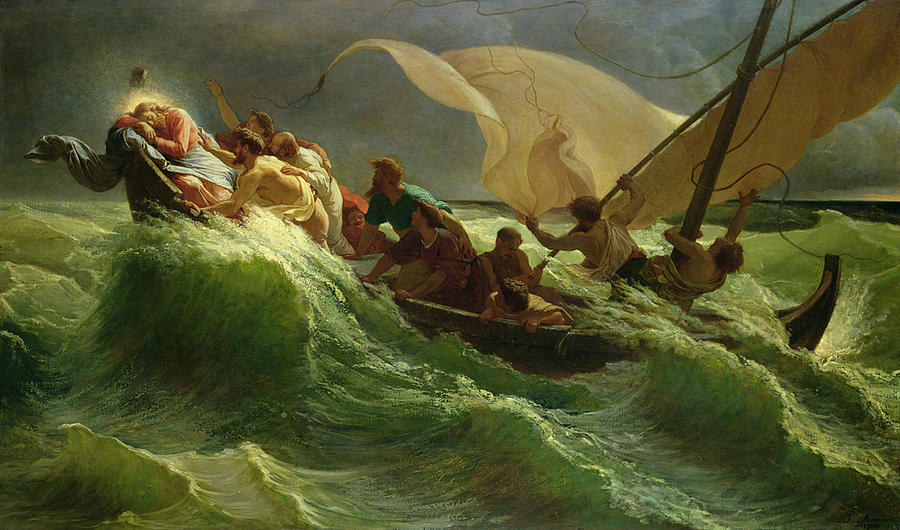
In a familiar, beloved passage, Jesus gets into a boat, and “a furious storm came up, so that the waves swept over the boat.” But Jesus continued sleeping.

The disciples in panic wake him up, “We are going to drown.”

And he replied, ‘You of little faith, why are you so afraid?’ Then he got up and rebuked the winds and the waves and it was completely calm.” (Matt 8:23-27).

* * *

In The Divine Conspiracy, Dallas Willard comments that Jesus probably invented the term  oligopistoi, “little-faiths,” which would have had a little comic tinge to the ears of his hearers. “Oligopistoi, “little-faiths,” seems to have been a nickname that he invented as a way of gently chiding his apprentices for their lack of confidence in God and in himself.”

* * *

I want to live in such a way that Jesus will never have to say to me

“You of little faith, why are you afraid?” Whatever I am, I do not want to be an oligopistos, a little faith! And it lies in my hands.

 I want to be aware of the flow of my thoughts, any anxiety and fear which bubbles up. I want to capture my fears, surrendering them to Jesus.

* * *

I had a serious shock recently in which something big I wanted, and prayed for, and totally believed would happen did not happen.

Ah, I realised again, “Do not put faith in your prayers. Put your faith in God. Put your faith in the goodness of God.”

Your heart’s desire is a million times more likely to materialise if you pray steadfastly for it, (Mark Batterson says it’s partly because prayer activates the reticular activating system) but focusing on the objects of your prayer can, ironically, be a distraction from focusing on God, the tremendous lover.

And because of his goodness, we will not be afraid, whether all our prayers are affirmatively answered, or not.

* * *

What does living with much faith and little fear involve?

Well, here’s a practical  recent example: At the moment, we are earning enough to live on, and I can plough ahead with my writing which is what I have always wanted to do.

However, I sometimes toy with the idea of a specific (and I think) brilliant business venture which would bless many people (but would take time and energy aware from my writing, could be a distraction and source of annoyance and hassle, and potentially “pierce me with many griefs” in Paul’s phrase).

So though I could rationalise this distraction (Stephen Pressfield of The War of Art calls it the resistance) saying, “Well, interest rates may not always be so low; we should bulk up our savings,” I will instead say: “I will not be of little faith.  The God who helps me now will help me if interest rates go up.”

Do you see how faith is a blessing, an immense time-saver, and frees you to live your life aligned with God’s calling on it?

* * *

When I realise I am afraid, or doubt that God will come through for me, I will not look at my fear; I will look at Christ. I will not doubt his goodness.

And as fear rises, I will ignore it, focusing instead on the face of him who can rebuke the wind and the waves so that all is completely calm.

He will calm every storm he chooses, and will sleep in my boat, peaceful and content, though the others.

And I will train myself to remain tranquil through my storms, for my Saviour is in the same boat as I am.


Filed Under: In which I resolve to live by faith, Matthew Tagged With: blog through the bible, Faith, fear, Matthew

“It will be done just as you believed it would”

By Anita Mathias

“It will be done just as you believed it would.” It sounds like some New Age, impossible, airy-fairy, feel-good but not true statement, doesn’t it?

But who said it? Our wise and wonderful Saviour (Matthew 8:13).

Earlier this year, I listened to the whole of Matthew on my long walks, and was forcibly struck by this: the importance of faith.

* * *

A question I’ve pondered all my Christian life is this: What makes the difference between one Christian and another? One answer is: their faith. It is their expectancy that God will answer their prayers.

I once had a Charismatic pastor a few years ago who used to say, “If you can’t see it, you can’t have it.” And I used to think, airy-fairy rubbish.

But, he’s somewhat right, I now thing. If we are working for something, let’s say on finishing a book, or developing a blog so that is will gain as many readers as it is capable of gaining, or in developing a business, we need more than a strategy. We have to someone see each part of the strategy, see it working. Else, we will work half-heartedly, at cross-purposes with ourselves, not really believing that what we hope will happen

If we cannot “see” each element of our strategy ( for instance in blog growth, in writing, business, weight loss)  working, ask yourself why. Perhaps you will uncover areas of self-doubt ; perhaps you will uncover your sense that your plan is too grandiose, is a wish rather than a plan, so that you don’t really believe you can do it or it can be done.

This self-doubt, the sense that what we are working with is a dream rather than a plan can paralyse.

Go back to the drawing board. So, you doubt that you will put in the hours walking to lose 26 pounds a year. Okaay, how about a pound a month, twelve a year?

You doubt you will find the hours to write a page of your book a day? How about 250 words.

I am all for dreaming big, but if I cannot see it happening, I settle for a dream I can believe it.

It will be done just as you believed it would. But yet the power is not in our faith, the power is in God. However, I am too old, too weary, too battered to pray for things I cannot see happen (though I still dream big and wild, I assure you.)

* * *

I have just had a HUGE disappointment. Something huge which I was sure would happen—and so did not pray enough about– did not.

Would prayer have changed the outcome? YES, I believe so, for it would have changed my behaviour, and the role I played in what happened.

The good thing that happens when our prayers are not answered, is that all our theological presuppositions get thrown up into the air. And we realize again that we are dealing with mystery.

The power is not in our faith, the power in in God.

The power is not in the faithfulness of our prayers; the power is in the faithful one.  

And while we definitely want to pray in the way Jesus commended, we understand that prayer is talking to God, and He himself is the land of our heart’s desire, more important, more precious and beautiful than what we say to him.

Filed Under: In which I play in the fields of prayer, In which I resolve to live by faith, Matthew Tagged With: belief, Faith, Prayer, visualization

In which Jesus Commands us Not to Judge

By Anita Mathias


Do not judge because I am the Judge, not you.

Do not judge because your quick judgement cuts you off from my flow of goodness and mercy.

Do not judge because I am the positive, creative one; your negativity cuts you from me.


Do not judge because you are not that smart; you see only in part.

Do not judge because your own experiences colour your sight.

Do not judge because you see men’s public failures, but not their secret victories, the hidden good they did, or the hidden evil they stopped short of.

Do not judge because you know nothing of people’s shaping, crippling childhoods.


Avoid those snap, imperfect judgements.

They shut you off from opportunities to learn, to see and to be kind.

Remain open. Ask me to let you see people as I see them–and as they really are.


Do not judge because your judgement is confining. People will find it hard to transcend it.

Do not judge because Satan is the accuser of the brethren, and you do not want to resemble him.


Do not judge. Keep your mind open in mercy; don’t snap it shut in judgement.


Do not judge, because this is an inexorable law I have set in motion: In the same way you judge others, you will be judged, and with the measure you use, it will be measured to you.

As you wish for mercy, offer it. As you wish to be assessed kindly, do not judge.

* * *

 But Jesus, assessing people is a life-skill. I would be a sheep among wolves if I did not know how to read people.

When you must assess people—look at the fruit of their lives. Their children are a testimonial; how they treat those less important than themselves; the peacefulness of their demeanour; how they respond to reverses, and to their enemies; the things they value; the tensile strength of their relationships.

* * *

 But use your tendency to swift, harsh judgment as a means of growth. See if you do the same thing. When the speck of sawdust in your brother’s eyes bothers you, see if you have a plank in your own eye.

Ask my help to remove it.

So will you use your instinctive tendency to judgement to grow, and to transcend your own weaknesses (which, ironically, will, often be in the very area in which you so swiftly judge).


Invite me into your eyes so that you will be able to see people as I see them. Invite me into your mind, as that you will be able to read people as I do.

Filed Under: In which I celebrate friendship and relationships, Matthew Tagged With: blog through the bible, Do not judge, Matthew, sermon on the mount

The Earth Belongs to Those who Take Time to Enjoy It

By Anita Mathias

 Part II of my extended meditation on The Meek Shall Inherit the Earth. Here’s Part I.

Do the meek really inherit the earth? 

“The earth,” or την γην, ten gen, to the Jewish mind signified the beloved land, Eretz Israel, the promised, longed-for land of Canaan.  It was used “as a proverbial expression to denote any great blessing, perhaps as the sum of all blessings,” (Barnes’ Notes on the Bible).  So the meek inherit it all, the whole enchilada.

Indeed, some Bible commentaries suggest that meekness contributes to success, even economic success. And I believe this paradox is true!

 The value of meekness, even in regard to worldly property and success in life, is often exhibited in the Scriptures. It is also seen in common life that a meek, patient, mild man is the most prospered. An impatient and quarrelsome man raises up enemies; often loses property in lawsuits; spends his time in disputes and broils rather than in sober, honest industry; and is harassed, vexed, and unsuccessful in all that he does. Barnes’ Notes on the Bible.

“These meek ones are happy, even in this world. Meekness promotes wealth, comfort, and safety, even in this world.” Matthew Henry’s Commentary.

Hmm… Are there other benefits of meekness?

Meekness produces peace. It is proof of true greatness of soul. It comes from a heart too great to be moved by little insults. He that is constantly ruffled; that suffers every little insult or injury to throw him off his guard and to raise a storm of passion within, is at the mercy of every mortal that chooses to disturb him. He is like “the troubled sea that cannot rest, whose waters cast up mire and dirt.” Barnes’ Notes on the Bible

Meekness is essential for marital harmony and long continued friendships. A gentle answer turns away wrath, but a harsh word stirs up anger, Prov. 15:1.  I look back and wonder how many of our marital quarrels could have been averted by a mild answer? How many friendships would I have saved?

And Even Fairy Tales Sing It: The Meek Inherit the Earth

The deep wish, or the deep truth, that the meek inherit the earth is embedded in myth and fairy tale: think of Beauty, Cinderella, Snow White or Psyche.

In Scripture, in fairy tales and in real life, there is a special favour and protection extended to the youngest, who is generally the meekest, the gentlest, the least powerful, the most innocent, and the most in need of protection. Kindness to the meek comes instinctively to most human beings and is encoded in our natures (though not in everyone’s: there are bullies, among Christians as well as non-Christians).

In fact, the Earth belongs to those who have time for it

Isaiah saw the Lord, high and lifted up, while the seraphim flew around him and cried, “Holy, holy, holy is the Lord Almighty; the whole earth is full of his glory.”

 It throbs with it. It sings with it.

And to whom does this glorious earth belong?

Not to those who own hundreds of its acres but lack the time to step out in them.

Not to those who are so preoccupied with acquiring or maintaining their possessions that they have no time to enjoy in the great simple gifts given unasked: sunrise and sunset, maples blazing in autumn, the moon sailing through winter skies, daffodils and bluebells in spring, and late summer evenings, when the world is golden.

The earth belongs to those who have the time to enjoy it.

It’s not necessary to own land to enjoy it; you just need to be out in it, with a quiet heart, not one anxious or distracted.

The earth belongs to those who have time for it: to observe it, admire it, love it, and walk out on it.

The earth belongs to those whose heart is calm and stilled so they are able to slow down and appreciate the beauty of the earth, the ever-changing canvas of the skies, which, day by day, hour by hour, silently proclaims the glory of God.

And, mysteriously, Scripture tells us that the meek will inherit this earth. In a way we do not understand, it will be given to them.

                                                                                     * * *

The meek inherit the earth is one of Jesus’s apparently lunatic propositions like “Give and you shall receive, full measure, pressed down, flowing over.”

What kind of math is this? Addition by subtraction, gaining by losing, cracking yourself open like a grain of wheat to gain a mighty harvest.

It is the mysterious mathematics of the Kingdom of God, in which everything happens because of the X Factor, the secret power of God.

And that is the only way these paradoxes work: that in giving, we receive full measure; and that one might be mild and gentle, and still “inherit the earth.”

Religious people are sometimes accused of checking their brains by the front door. In this case, yes, I guess I am doing it.

I am taking it on faith that the meek inherit the earth because Jesus says they do, and whenever I have experimented with his words I have discovered that he is, indeed, absolutely right.

Read Part III here.

An excerpt from my ebook and paperback The Meek Shall Inherit the Earth available on kindle and paperback on

Amazon UK

Amazon.com


Filed Under: Matthew Tagged With: beatitudes, blog through the bible, Matthew, Nature, the meek shall inherit the earth

The Meek Shall Inherit the Earth

By Anita Mathias

I looked at the programme for “The Greenbelt Festival: Where Faith, Arts and Justice” collide, and blinked at the title of a talk: “The Meek Shall Inherit the Earth.” The description read:  Based on the story of Naboth’s vineyard as a perennial tale of land and dispossession. The presentation takes us into the temple with Isaiah as he reaches the depths of despair, to the outer court of the temple as Jeremiah denounces the king, to the Peruvian rainforest as the army confronts indigenous people and to the Scottish Highlands as the people are cleared from the land to make way for sheep. It ends on the hillsides of Galilee”. 

* * *

I was startled: What?

“Does anyone really believe that the meek inherit the earth?” I asked my husband, Roy.

Roy said, “Well, Jesus said they did.  If you believe the words of Jesus, you’d believe it.”

Oh! I see.

These paradoxes are, indeed, a golden thread running through the teaching of Jesus: Those who give -time, energy, money- receive far more than they have given. Seed sown yields an exponential harvest. The greatest is she who blesses other people. Those who exalt themselves will be humbled, and those who can take the lower place will be exalted by God.

* * *

But, you see, I once was young and now am middle-aged, and so my initial reaction is, “What? The meek inherit the earth?”  Well, if that’s true, then perhaps I didn’t understand “meek,” “inherit” or “the earth!”

And so I settled down with a Bible, a journal, and a thermos of green tea for some deadly serious Jesus-and-me time.

Because what I believe about these questions is crucial: Do the meek inherit the earth, or don’t they? Is what Jesus says true, or isn’t it?  My answers will determine the direction of my life and how I live it.

So what is meekness?

Meekness is a quality of soul and character, unrelated to economics, social status or education. The New Testament word “meek,” πραεις, praeis, describes those who have a mild, quiet, gentle spirit, in opposition to the proud and supercilious.

 “The meek are those who quietly submit to God; who can bear insult; are silent, or return a soft answer; who, in their patience, keep possession of their own souls, when they can scarcely keep possession of anything else. These meek ones are happy, even in this world,”  Matthew Henry’s Commentary.

* * *

Roy is a mathematician, and has a more logical mind than I do (or so he tells me!) He pointed out that I was puzzled by Jesus’ statement that the meek inherit the earth because I was instinctively equating the meek with the poor. But this is a false equation.

Poverty does not necessarily bring out meekness and gentleness. Friends who worked with Heidi Baker’s Iris Ministries in the bush of Mozambique wrote that though they had brought enough food to distribute, the desperately hungry people fought “like wolves” for the food, so they moved on, without distributing what they had.

Jan Sassenberg who works in Sierra Leone, one of the poorest countries in the world, wrote in a guest post on my  blog “Dreaming Beneath the Spires” of being “overwhelmed by the vastness of the suffering around us. Children beaten mercilessly and dying needlessly.”  

In contrast, we noticed during a recent holiday in Sweden, one of the richest countries in the world, that children were brought up affectionately and with good humour. (Sweden was, incidentally, in 1979, one of the first countries in the world  to outlaw the spanking of children.)

The poor are not necessarily the meek. These countries lead the world in homicide rates—Honduras, El Salvador, Venezuela, Guatemala, Belize, Columbia, Trinidad, South Africa, and Brazil. The most dangerous countries for women are Afghanistan, The Democratic Republic of Congo, Pakistan, India and Somalia.  And when it comes to physical abuse and economic exploitation of children, the worst countries include India, Nigeria, Zambia, Sri Lanka, Indonesia, Thailand, Cambodia, Myanmar, Vietnam, and Laos. All these countries have a low per capita income.

Poverty can bring stress, anxiety, bitterness, jealousy, and increased temptations to dishonesty. It can also bring empathy, gratitude, an appreciation of simple pleasures, family bonding and closeness.

Some very poor people are meek and gentle, and some are not, just as some rich and successful people are meek and gentle, and some are not. I have met humble, gentle people at High Table in Oxford Colleges and at Oxford’s magical garden parties—as well as, of course, the opposite. And I have met prickly, arrogant poor people—as well as, of course, the opposite.

Why should I be meek?

Because I am a Christian, and Jesus wants to teach us meekness so our souls may find rest. “Come to me, all you who are weary and burdened. Take my yoke upon you and learn from me, for I am meek and humble in heart, and you will find rest for your souls.” (Matt 11 28-30).

And rest is one of the pearls of great price in life. These include: health, love, friendship, fascinating work, and enough money to live a stimulating culture-filled, low-hassle life.  And mental peace, shalom.

Without inner peace and well-being, shalom, one cannot fully enjoy the rest of these.

And Jesus promises–to those who are meek and humble like him–the rest and peace we need to enjoy the earth.

                                                    * * *

Meekness, like humility, is an abstract concept, best understood and  illuminated by its opposite.

The opposite of humility is pride.  Pride steals our rest and peace. It makes entertaining stressful. Wastes time and money in the effort to keep up appearances and impress. Leads to conflict in trivial things. It makes us overwork. It blights creativity with perfectionism instead of making peace with good enough. And adds a special twist of bitterness to failure, making it feel like death.

What’s the opposite of meekness? Being pushy, aggressive, loud and overbearing. Self-centred, manipulative, deceitful and scheming.  Would you want to be like that? To achieve your heart’s desires? To gain the whole earth, so to speak.

I would not.  I would loathe “unmeekness” as a way of life.  The stress would not be worth it.

And people instinctively resist the pushy, aggressive and manipulative. Not only do you not find God on your side—for “God resists the proud,” as the Apostle James writes, you may well find the world of men resisting you.

Besides, it is safe to be meek.

There is really no need to be pushy, scheming, manipulative or aggressive.

Why?

Because we live in a world charged with the power of God, and so don’t need to push and shove, manoeuvre and intrigue our way through life.

Because the earth is the Lord’s and the fullness thereof.

Because the whole earth throbs with his glory.

Because we do not have because we do not ask (James 4:3), and we have but to ask to receive (Matthew 7:7).

Because he can give me what he pleases without my having to scheme how to get or grab it.

Because when I look out for myself, he lets me.

But when I let him look out for me, he lets me, too.

And I know which is better.

* * *

An excerpt from my ebook and paperback The Meek Shall Inherit the Earth available on kindle and paperback on

Amazon UK

Amazon.com

Part II:  The Earth Belongs to Those who Take the Time to Enjoy It.


Filed Under: Matthew Tagged With: beatitudes, blog through the Bible project, Matthew, meek shall inherit the earth, paradoxes

In which Birds Teach us Not to Worry

By Anita Mathias

We can worship God in church, and we can worship God while walking through the spectacular natural world he made, which is full of clues to his character. The heavens declare God’s glory, without words.

Trees, the ocean, the day and the seasons tell of a God who loves beauty, who made all things well, who offers us rhythms as a gift, alternating periods of blazing bright and quiescence, when we gather strength for the next period of full flourishing.

* * *

I think Christ uses examples from the natural world most tenderly when he assures us that the Father feeds the birds of the air, who do not sow or reap or store away in barns, (Matt 6: 25-34).

Or that he clothes in glory the lilies of the field who do not labour and spin. He watches the sparrow, his eyes full of delight.

And we are more valuable.

So do not worry about your life, about the future, Jesus says. Your father is watching you, as you, with delight, watch the finches at your feeder, for whom you’ve laid out food and fat and water.  You are under his protection.

* * *

Do not worry.

Not worrying is a mental discipline we learn with practice, just as writing well, or running fast are creative and physical disciplines we learn with practice.

So I am training myself to be calm, relaxed and super-chilled, to go through my day peacefully.

* * *

Norman Vincent Peale describes, in one of his Positive Thinking books, being hustled from event to event at a conference he was speaking at. He was finally gets to his room, and is told, “Dinner in 10 minutes.” “Yes, yes,” he says nervously, and looks around stressed. Then he realises he doesn’t care if he missed dinner. He could get room service.

He lies down, falls asleep, wakes up twenty minutes later, refreshed, calmly snaps on his bow-tie, and goes to dinner. He had only missed the pre-dinner speaker and the soup, and by all accounts neither was good.

* * *

Kathleen Chesto writes, “A story is told of a safari in the Serengeti. A researcher was rushing to the mating grounds of the African elephant. He had started late and pushed his porters relentlessly to arrive by mating season. On the fourth day, the porters sat down and refused to move. The translator explained they would go no farther until they had given their spirits time to catch up with them.”

Peale waited for his spirit to catch up with him, only missed the soup, and did his evening peacefully

* * *

One thing I have learned from the Peale story, which I think of every time I am running late is that rushing and stress are simply not worth it. If I am running late, I don’t look at the clock at home, or  in the car. I get there when I get there, and enjoy it, and if I’ve missed the soup, so be it.

(Must add though, that having been the girl who always ran late all my life, in mid-life I have realised that being late is a choice, which I don’t need to make. It’s stressful, and a bit rude. Am getting my act together and re-configuring things so that I am late less often.)

* * *

Another area in which I have decided not to worry is my blog. Interestingly, we cannot control the most important factor in the success of our blogs: i.e. how many people read it. Normally, the number of my readers or “Unique Monthly Visitors” in blog and Google parlance rises, month on month. When it drops, in summer or December, I wonder if I should write more.

However, I cannot, at present, see how I could write more, or devote more time to my blog without neglecting the other things God has given me to do—I want to work on a book. I am a wife, and mother, own a house and a garden and a body which I need to exercise. I am a spiritual being, and I need to nurture my relationship with God from which, truly, everything flows.

And so, having spent 30 minutes drafting a blog, I need to lay it aside for the day, and when I am worried that it is static, I need to pray about it as I go about my day.

For it is a Christian blog, and the meat of good Christian writing comes from surrender, from burrowing more deeply into the holy things of God and reporting your findings, and that can be done while gardening or walking.

And so if I find myself worrying if my blog will ever grow, I pray instead that I may know Christ more, and that he may bless my blog, and give me whatever ideas he may have for its growth. For he is kind, and his ideas will lead to energy, not exhaustion.

And so I lean in, and listen instead of worrying–and ideas come.

So that is my rule for myself vis-à-vis my blog: I am not allowed to worry. I am allowed to pray, for blessing, for ideas, for strategy. And, oddly, that simple rule will work for every area of my life.


Filed Under: In which I resolve to live by faith, Matthew Tagged With: birds and lilies, blog through the bible, Norman Vincent Peale, not worrying, sermon on the mount, trusting, trusting God

  • « Previous Page
  • 1
  • 2
  • 3
  • 4
  • 5
  • 6
  • …
  • 20
  • Next Page »

Sign Up and Get a Free eBook!

Sign up to be emailed my blog posts (one a week) and get the ebook of "Holy Ground," my account of working with Mother Teresa.

Join 544 Other Readers

My Books

Rosaries, Reading, Secrets: A Catholic Childhood in India

Rosaries, Reading Secrets, B&N
USA

UK

Wandering Between Two Worlds: Essays on Faith and Art

Wandering Between Two Worlds
USA

UK

Francesco, Artist of Florence: The Man Who Gave Too Much

Francesco, Artist of Florence
US

UK

The Story of Dirk Willems

The Story of Dirk Willems
US

UK

My Latest Meditation

Anita Mathias: About Me

Anita Mathias

Read my blog on Facebook

Follow me on Twitter

Follow @anitamathias1

Recent Posts

  • God’s Complete Forgiveness 
  • Using God’s Gift of Our Talents: A Path to Joy and Abundance
  • The Kingdom of God is Here Already, Yet Not Yet Here
  • All Those Who Exalt Themselves Will Be Humbled & the Humble Will Be Exalted
  • Christ’s Great Golden Triad to Guide Our Actions and Decisions
  • How Jesus Dealt With Hostility and Enemies
  • Do Not Be Afraid, but Do Be Prudent
  • For Scoundrels, Scallywags, and Rascals—Christ Came
  • How to Lead an Extremely Significant Life
  • Don’t Walk Away From Jesus, but if You Do, He Still Looks at You and Loves You
Premier Digital Awards 2015 - Finalist - Blogger of the year
Runner Up Christian Media Awards 2014 - Tweeter of the year

Categories

What I’m Reading


Wolf Hall
Hilary Mantel

Wolf Hall --  Amazon.com
Amazon.com

Amazon.co.uk

Silence and Honey Cakes:
The Wisdom Of The Desert
Rowan Williams

Silence and Honey Cakes --  Amazon.com
Amazon.com

Amazon.co.uk

The Long Loneliness:
The Autobiography of the Legendary Catholic Social Activist
Dorothy Day

The Long Loneliness --  Amazon.com
Amazon.com

Amazon.co.uk

Country Girl
Edna O'Brien

Country Girl  - Amazon.com
Amazon.com

Amazon.co.uk

Archive by month

My Latest Five Podcast Meditations

INSTAGRAM

anita.mathias

My memoir: Rosaries, Reading, Secrets https://amzn.to/42xgL9t
Oxford, England. Writer, memoirist, podcaster, blogger, Biblical meditation teacher, mum

Well, hello friends! Breaking radio silence to let Well, hello friends! Breaking radio silence to let you know that I have taped a meditation for you on Christ’s famous Parable of the Talents in Matthew 25. https://anitamathias.com/2025/11/05/using-gods-gift-of-our-talents-a-path-to-joy-and-abundance/
Here you are, click the play button in the blog post for a brief meditation, and some moments of peace, and, perhaps, inspiration in your day 🙂
Hi Friends, I have taped a meditation; do listen a Hi Friends, I have taped a meditation; do listen at this link: https://anitamathias.com/2025/04/08/the-kingdom-of-god-is-here-already-yet-not-yet-here-2/
It’s on the Kingdom of God, of which Christ so often spoke, which is here already—a mysterious, shimmering internal palace in which, in lightning flashes, we experience peace and joy, and yet, of course, not yet fully here. We sense the rainbowed presence of Christ in the song which pulses through creation. Christ strolls into our rooms with his wisdom and guidance, and things change. Our prayers are answered; we are healed; our hearts are strangely warmed. Sometimes.
And yet, we also experience evil within & all around us. Our own sin which can shatter our peace and the trajectory of our lives. And the sins of the world—its greed, dishonesty and environmental destruction.
But in this broken world, we still experience the glory of creation; “coincidences” which accelerate once we start praying, and shalom which envelops us like sudden sunshine. The portals into this Kingdom include repentance, gratitude, meditative breathing, and absolute surrender.
The Kingdom of God is here already. We can experience its beauty, peace and joy today through the presence of the Holy Spirit. But yet, since, in the Apostle Paul’s words, we do not struggle only “against flesh and blood, but against the rulers, against the unseen powers of this dark world and against the spiritual forces of evil,” its fullness still lingers…
Our daughter Zoe was ordained into the Church of E Our daughter Zoe was ordained into the Church of England in June. I have been on a social media break… but … better late than never. Enjoy!
First picture has my sister, Shalini, who kindly flew in from the US. Our lovely cousins Anthony and Sarah flank Zoe in the next picture.
The Bishop of London, Sarah Mullaly, ordained Zoe. You can see her praying that Zoe will be filled with the Holy Spirit!!
And here’s a meditation I’ve recorded, which you might enjoy. The link is also in my profile
https://anitamathias.com/2024/11/07/all-those-who-exalt-themselves-will-be-humbled-the-humble-will-be-exalted/
I have taped a meditation on Jesus statement in Ma I have taped a meditation on Jesus statement in Matthew 23, “For those who exalt themselves will be humbled, and those who humble themselves will be exalted.”
Do listen here. https://anitamathias.com/2024/11/07/all-those-who-exalt-themselves-will-be-humbled-the-humble-will-be-exalted/
Link also in bio.
And so, Jesus states a law of life. Those who broadcast their amazingness will be humbled, since God dislikes—scorns that, as much as people do.  For to trumpet our success, wealth, brilliance, giftedness or popularity is to get distracted from our life’s purpose into worthless activity. Those who love power, who are sure they know best, and who must be the best, will eventually be humbled by God and life. For their focus has shifted from loving God, doing good work, and being a blessing to their family, friends, and the world towards impressing others, being enviable, perhaps famous. These things are houses built on sand, which will crumble when hammered by the waves of old age, infirmity or adversity. 
God resists the proud, Scripture tells us—those who crave the admiration and power which is His alone. So how do we resist pride? We slow down, so that we realise (and repent) when sheer pride sparks our allergies to people, our enmities, our determination to have our own way, or our grandiose ego-driven goals, and ambitions. Once we stop chasing limelight, a great quietness steals over our lives. We no longer need the drug of continual achievement, or to share images of glittering travel, parties, prizes or friends. We just enjoy them quietly. My life is for itself & not for a spectacle, Emerson wrote. And, as Jesus advises, we quit sharp-elbowing ourselves to sit with the shiniest people, but are content to hang out with ordinary people; and then, as Jesus said, we will inevitably, eventually, be summoned higher to the sparkling conversation we craved. 
One day, every knee will bow before the gentle lamb who was slain, now seated on the throne. We will all be silent before him. Let us live gently then, our eyes on Christ, continually asking for his power, his Spirit, and his direction, moving, dancing, in the direction that we sense him move.
Link to new podcast in Bio https://anitamathias.co Link to new podcast in Bio https://anitamathias.com/2024/02/20/how-jesus-dealt-with-hostility-and-enemies/
3 days before his death, Jesus rampages through the commercialised temple, overturning the tables of moneychangers. Who gave you the authority to do these things? his outraged adversaries ask. And Jesus shows us how to answer hostile questions. Slow down. Breathe. Quick arrow prayers!
Your enemies have no power over your life that your Father has not permitted them. Ask your Father for wisdom, remembering: Questions do not need to be answered. Are these questioners worthy of the treasures of your heart? Or would that be feeding pearls to hungry pigs, who might instead devour you?
Questions can contain pitfalls, traps, nooses. Jesus directly answered just three of the 183 questions he was asked, refusing to answer some; answering others with a good question.
But how do we get the inner calm and wisdom to recognise
and sidestep entrapping questions? Long before the day of
testing, practice slow, easy breathing, and tune in to the frequency of the Father. There’s no record of Jesus running, rushing, getting stressed, or lacking peace. He never spoke on his own, he told us, without checking in with the Father. So, no foolish, ill-judged statements. Breathing in the wisdom of the Father beside and within him, he, unintimidated, traps the trappers.
Wisdom begins with training ourselves to slow down and ask
the Father for guidance. Then our calm minds, made perceptive, will help us recognise danger and trick questions, even those coated in flattery, and sidestep them or refuse to answer.
We practice tuning in to heavenly wisdom by practising–asking God questions, and then listening for his answers about the best way to do simple things…organise a home or write. Then, we build upwards, asking for wisdom in more complex things.
Listening for the voice of God before we speak, and asking for a filling of the Spirit, which Jesus calls streams of living water within us, will give us wisdom to know what to say, which, frequently, is nothing at all. It will quieten us with the silence of God, which sings through the world, through sun and stars, sky and flowers.
Especially for @ samheckt Some very imperfect pi Especially for @ samheckt 
Some very imperfect pictures of my labradoodle Merry, and golden retriever Pippi.
And since, I’m on social media, if you are the meditating type, here’s a scriptural meditation on not being afraid, while being prudent. https://anitamathias.com/2024/01/03/do-not-be-afraid-but-do-be-prudent/
A new podcast. Link in bio https://anitamathias.c A new podcast. Link in bio
https://anitamathias.com/2024/01/03/do-not-be-afraid-but-do-be-prudent/
Do Not Be Afraid, but Do Be Prudent
“Do not be afraid,” a dream-angel tells Joseph, to marry Mary, who’s pregnant, though a virgin, for in our magical, God-invaded world, the Spirit has placed God in her. Call the baby Jesus, or The Lord saves, for he will drag people free from the chokehold of their sins.
And Joseph is not afraid. And the angel was right, for a star rose, signalling a new King of the Jews. Astrologers followed it, threatening King Herod, whose chief priests recounted Micah’s 600-year-old prophecy: the Messiah would be born in Bethlehem, as Jesus had just been, while his parents from Nazareth registered for Augustus Caesar’s census of the entire Roman world. 
The Magi worshipped the baby, offering gold. And shepherds came, told by an angel of joy: that the Messiah, a saviour from all that oppresses, had just been born.
Then, suddenly, the dream-angel warned: Flee with the child to Egypt. For Herod plans to kill this baby, forever-King.
Do not be afraid, but still flee? Become a refugee? But lightning-bolt coincidences verified the angel’s first words: The magi with gold for the flight. Shepherds
telling of angels singing of coming inner peace. Joseph flees.
What’s the difference between fear and prudence? Fear is being frozen or panicked by imaginary what-ifs. It tenses our bodies; strains health, sleep and relationships; makes us stingy with ourselves & others; leads to overwork, & time wasted doing pointless things for fear of people’s opinions.
Prudence is wisdom-using our experience & spiritual discernment as we battle the demonic forces of this dark world, in Paul’s phrase.It’s fighting with divinely powerful weapons: truth, righteousness, faith, Scripture & prayer, while surrendering our thoughts to Christ. 
So let’s act prudently, wisely & bravely, silencing fear, while remaining alert to God’s guidance, delivered through inner peace or intuitions of danger and wrongness, our spiritual senses tuned to the Spirit’s “No,” his “Slow,” his “Go,” as cautious as a serpent, protected, while being as gentle as a lamb among wolves.
Link to post with podcast link in Bio or https://a Link to post with podcast link in Bio or https://anitamathias.com/2023/09/22/dont-walk-away-from-jesus-but-if-you-do-he-still-looks-at-you-and-loves-you/
Jesus came from a Kingdom of voluntary gentleness, in which
Christ, the Lion of Judah, stands at the centre of the throne in the guise of a lamb, looking as if it had been slain. No wonder his disciples struggled with his counter-cultural values. Oh, and we too!
The mother of the Apostles James and John, asks Jesus for a favour—that once He became King, her sons got the most important, prestigious seats at court, on his right and left. And the other ten, who would have liked the fame, glory, power,limelight and honour themselves are indignant and threatened.
Oh-oh, Jesus says. Who gets five talents, who gets one,
who gets great wealth and success, who doesn’t–that the
Father controls. Don’t waste your one precious and fleeting
life seeking to lord it over others or boss them around.
But, in his wry kindness, he offers the ambitious twelve
and us something better than the second or third place.
He tells us how to actually be the most important person to
others at work, in our friend group, social circle, or church:Use your talents, gifts, and energy to bless others.
And we instinctively know Jesus is right. The greatest people in our lives are the kind people who invested in us, guided us and whose wise, radiant words are engraved on our hearts.
Wanting to sit with the cleverest, most successful, most famous people is the path of restlessness and discontent. The competition is vast. But seek to see people, to listen intently, to be kind, to empathise, and doors fling wide open for you, you rare thing!
The greatest person is the one who serves, Jesus says. Serves by using the one, two, or five talents God has given us to bless others, by finding a place where our deep gladness and the world’s deep hunger meet. By writing which is a blessing, hospitality, walking with a sad friend, tidying a house.
And that is the only greatness worth having. That you yourself,your life and your work are a blessing to others. That the love and wisdom God pours into you lives in people’s hearts and minds, a blessing
https://anitamathias.com/.../dont-walk-away-from-j https://anitamathias.com/.../dont-walk-away-from-jesus.../
Sharing this podcast I recorded last week. LINK IN BIO
So Jesus makes a beautiful offer to the earnest, moral young man who came to him, seeking a spiritual life. Remarkably, the young man claims that he has kept all the commandments from his youth, including the command to love one’s neighbour as oneself, a statement Jesus does not challenge.
The challenge Jesus does offers him, however, the man cannot accept—to sell his vast possessions, give the money to the poor, and follow Jesus encumbered.
He leaves, grieving, and Jesus looks at him, loves him, and famously observes that it’s easier for a camel to squeeze through the eye of a needle than for a rich person to live in the world of wonders which is living under Christ’s kingship, guidance and protection. 
He reassures his dismayed disciples, however, that with God even the treasure-burdened can squeeze into God’s kingdom, “for with God, all things are possible.”
Following him would quite literally mean walking into a world of daily wonders, and immensely rich conversation, walking through Israel, Lebanon, Syria, and Jordan, quite impossible to do with suitcases and backpacks laden with treasure. 
For what would we reject God’s specific, internally heard whisper or directive, a micro-call? That is the idol which currently grips and possesses us. 
Not all of us have great riches, nor is money everyone’s greatest temptation—it can be success, fame, universal esteem, you name it…
But, since with God all things are possible, even those who waver in their pursuit of God can still experience him in fits and snatches, find our spirits singing on a walk or during worship in church, or find our hearts strangely warmed by Scripture, and, sometimes, even “see” Christ stand before us. 
For Christ looks at us, Christ loves us, and says, “With God, all things are possible,” even we, the flawed, entering his beautiful Kingdom.
Follow on Instagram

© 2026 Dreaming Beneath the Spires · All Rights Reserved. · Cookie Policy · Privacy Policy