Anita Mathias: Dreaming Beneath the Spires

Anita Mathias's Blog on Faith and Art

  • Home
  • My Books
  • Meditations
  • Essays
  • Contact
  • About Me

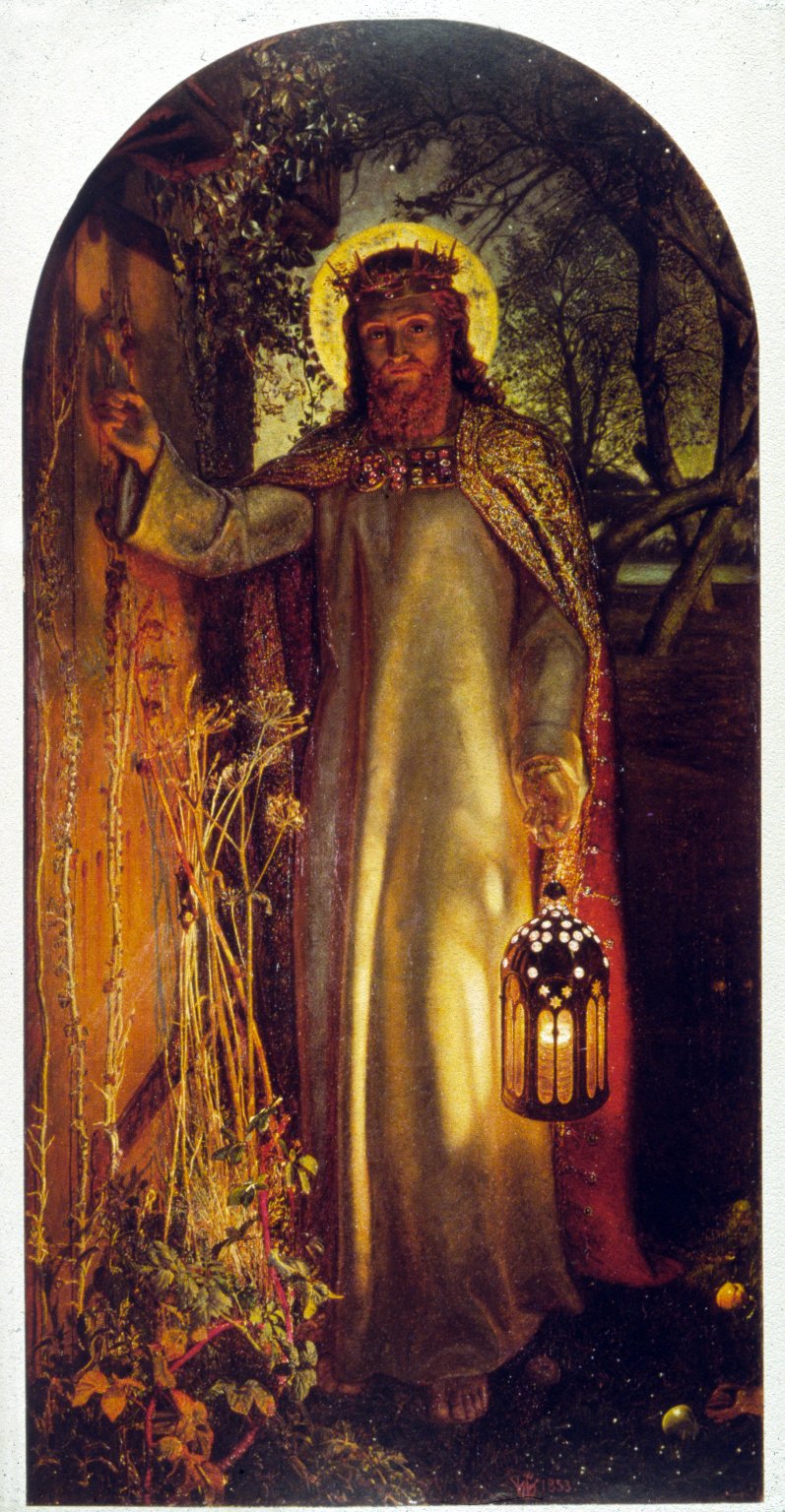
In Which Stars Make News Viral, and We Can Trust our PR to Him

By Anita Mathias

His birth could not have been more humble, more anonymous–in a manger, for there was no room at the inn.

Of their social network, only Elizabeth, Mary’s elderly cousin, confined by pregnancy, and married to the priest Zechariah who was temporarily dumb, had been told.

But everything was in the hands of God who loved Jesus, his son who would teach us to see differently, to think differently, and to live differently.

And so God splashed a new star in the sky, luring Magi, wise men from the east, astrologers and astronomers to Bethlehem, bringing news of the birth to King Herod. Shepherds heard angels sing of it.

The good news crossed national, ethnic and socio-economic boundaries; it reached the rich and the poor, the wise and the powerful. The King heard of it, the priests heard of it, the army heard of it, the scholars heard of it, the shepherds heard of it. While Mary and Joseph quietly went about their own business, telling no one about their marvellous child.

God brought about all the connections Jesus needed.

* * *

Today, as in the Prophet Habakkuk’s day, “The nations exhaust themselves for nothing.”

We live in a harried world of self-reliance, in which we can feel that everything depends on us.

Our world tells us exhausting things like, “It’s not what you know, but whom you know.”

We are told that new media—blogging, tweeting and Facebook– has eliminated the old gatekeepers; that now anyone can socially network their way into success, fame, and influence.

Right! To the old imperative of doing the work, we’ve added the new imperative to network to get our work out there, to get the word out.

And all this makes us busier and more tired.

* * *

But, oh man and woman loved by God, the one whose birth we are celebrating offers us rest.

Do your work peacefully, and leave your PR in the hands of a very clever God, who used stars and angel song so that, within days, the news of the birth of his son went viral.  He will be more creative than you could ever imagine.

Put your hope in him.

* * *

 At the end of this year, we cannot do better than to put our work, our lives, and our futures into his hands who promises us joy, peace, and answered prayer.

And to do so is exciting, for he specialises in surprises.

A new star in the sky: who would have thought of it?

I am entrusting my life to him today.

Join me?


My guest post for Share the Hope UK
Filed Under: In which I stroll through the Liturgical Year, Matthew Tagged With: Advent, the birth of Christ, trusting God

In which Scripture is a Mountain, Not a Plateau, but It is All Treasure

By Anita Mathias

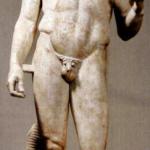
Picture  Michelangelo's David

The Greek Sculpture The Spear Bearer and Michelangelo’s David 

I read Scripture as a mountain with the thirty-nine books of the Old Testament building up to the revelation of Jesus Christ in the Gospels. Acts and the letters of Jesus’s disciples  then grapple with the seismic, big bang revelation of Jesus Christ.

And so our traditional way of reading Scripture, the traditional reading plan, which gives equal weight to every verse and chapter is, ironically, a bit lop-sided. You know…every genealogy, every law, every description of temple worship given equal weight with the Sermon on the Mount and the Upper Room discourse which contains the secrets of the universe.

* * *

However, we need a little bit of Jesus of the Gospels every day, or every week, because our eyes need His corrective vision. Without the continued brain- and heart-washing of the Gospels, we forget what He taught us about how to live.

And so in my reading of the Gospels, I come to Matthew 13, “every scribe who has been instructed about the kingdom of heaven is like the owner of a house who brings out of his storeroom new treasures as well as old.”

* * *

Jesus calls the early revelations of God which culminated in Himself treasure.  And it is treasure because the shimmering brilliance of Jesus’ teaching emerges from it.

Jesus is steeped in the Old Testament and continually quotes it, resisting the temptations of Satan with quotations from Deuteronomy, thereby validating that book. Some of his most memorable sayings, which sound startlingly original are, in fact, quotations from the Old Testament. When he reduces the Law and the Prophets to two commands, he draws on Leviticus 19:18 for “Love your neighbour as yourself” and quotes Psalm 37:11, “the meek inherit the earth”  in the Beatitudes.

* * *

Trying to understand Jesus without understanding the Old Testament is like trying to make sense of Michelangelo’s David without knowing who David the Giant-Killer was, or without knowing how Greco-Roman art inspired artists in the Renaissance (or how the Greek sculpture, “The Spear Bearer,” inspired David.)

Or admiring Raphael’s “School of Athens” without knowing that he depicted Socrates, Plato and Aristotle, Diogenes, and that the surly fellow in boots in the foreground is Michelangelo.

Or reading T.S. Eliot’s beautiful allusive “The Waste Land,” without knowing the title of the long Fire Sermon section is taken from Buddha’s eponymous sermon of the same name in which he advises his followers to give up earthly passion,  or that To Carthage then I came/Burning, burning, burning, is a reference to St. Augustine’s Confessions, when he comes to Carthage, burning with lust. The poem beats upon our pulses, speaks to our ganglia without the scholarship, but knowing its mass of literary allusion only enriches the poem for us.

So of course, the Gospels will speak to one who loves Jesus but has not taken the time to study the Old Testament so as to set him, his quotations, allusions and references in their rich context.

But the Gospels speak more richly and fully when you approach them  with a mind and heart that loves Jesus, but is also steeped in the context of the Old Testament out of which He emerged, and when you understand the 18 Old Testament books which Jesus quoted, and when you understand the old thing to which He continually contrasts the new thing He was doing.

Filed Under: Matthew Tagged With: blog through the Bible project, Matthew, Old Testament, Treasure

In which Christ Desires Mercy, not Sacrifice

By Anita Mathias


Walking through grainfields

Jesus was always getting himself into trouble with the Pharisees, the stern keepers of the law, for his common sense and practicality.

 When his disciples were hungry on the Sabbath, he let them glean. (Matthew 12 :1). When he saw a man with a shrivelled hand in the synagogue on Sunday, he healed him.

Furiously accused for doing what was unlawful on the Sabbath, he answers simply, “ If you had known what these words mean, ‘I desire mercy, not sacrifice,’ you would not have condemned the innocent. For the Son of Man is Lord of the Sabbath.”

“I desire mercy not sacrifice,” God says. He would, wouldn’t he? He does not need our sacrifices, for the cattle on a thousand hills are his.

What he does covet is our hearts, because he loves us.

He wants our hearts to be soft and gentle, because that is what his heart is like.

I desire mercy, God says.

* * *

I am becoming increasingly aware that the real battleground is within. Follow Christ becomes a joy as we increasingly win  interior battles against grumpiness, against meanness, against unforgiveness, against revenge.

On the days when I have woken up too early and am tired, I am astonished at how swiftly my inner stream of thoughts can turn to negativity. I tell Roy, “I need to be alone a bit. I am feeling negative,” to ensure I do not sin, and do harm with my words.

And then, I have to consciously turn that stream of thoughts to praise and thanksgiving.

* * *

It’s October now, autumn in England, and the leaves are falling. But we have clematis still in bloom in our garden, three rose bushes, one yellow buddleia, butterfly bush, a lone cyclamen, and a stray hellebore.

Always beauty, always something to thank God for, though the days grow shorter, and the nights longer.

And if my negative stream of thoughts turn towards other people rather than towards my own failures and struggles, then, Holy Spirit within me, remind me that God desires mercy, not sacrifice. Help me think of other people mercifully, with the same mercy the Lord God Almighty shows me, his child.

Filed Under: Matthew Tagged With: blog through the bible, healing, legalism, Matthew, Mercy, Sabbath

In which his Name is Gentleness

By Anita Mathias

This was prophesied of Christ by the Prophet Isaiah:

He will not quarrel or cry out;

no one will hear his voice in the streets.
A bruised reed he will not break,
and a smouldering wick he will not snuff out,


Are you feeling bruised today? He will not break you.


Is your wick almost extinguished? Ask him. He will relight it.


Filed Under: In Which I am again Amazed by Jesus, Matthew Tagged With: blog through the Bible project, Matthew

The Beatitudes, mostly, are things we do, rather than things we are. There’s hope in that!

By Anita Mathias

The Beatitudes are the blazing heart of everything Jesus taught. Once you’ve got them, once you’re living them, then you’ve begun to  “get” Jesus and the way he thinks.

And I am only beginning to!

For the Beatitudes to travel the longest journey in the world, from the head to the heart, is a life-long endeavour, a matter of stumbling, and getting up again, and I am just learning. I am a disciple, learning cognitively, emotionally, and experientially.

* * *

Mercifully, however, the Beatitudes are not ontological statements of reality. It’s not blessed are the beautiful; blessed are the brilliant; blessed are the bronze-skinned, which you either are, or are not.

Instead, it is blessed are the meek; blessed are the merciful; blessed are the pure-hearted, and these are things we choose to be and become through a series of noble choices.

We become gentle by choosing gentleness, again and again.

We become merciful by choosing to be merciful, again and again.

We develop the purity of heart which helps us see God by repenting of our sin, again and again.

Tiny step by step, we inch towards promised land where the meek inherit the earth, and we are shown mercy, and we see God.

* * *

How practically do we enter the blessedness promised in the Beatitudes? I guess it’s behavioural modification. If we are not merciful, we behave as if we are merciful. If we are not meek, we behave as if we are meek.

Blessed are the merciful for they shall be shown mercy, Jesus says. Tempted not to leave the tip after harried service? Leave it anyway. Tempted to let rip on anonymous feedback. Be merciful. Store up credit, and God, the great mathematician, will ensure that you will have mercy in your time of need.

I shopped at Amazon for years before I ever thought of selling there, and, often, voluntarily removed bad feedback I’d impetuously left, thinking, “Blessed are the merciful.”

When we started our publishing business, with just 1 title, then 5, then, 10,  too few to outsource all customer service (as we now do, of course), I personally sold books on Amazon, and often had to email to get negatives or neutrals removed. My success rate was amazing—as if the Universe, or God remembered all the times I was merciful, realising that mom and pop in their back bedroom wouldn’t be as efficient as Amazon, so why rate them that way. The mercy came back to me.

The Beatitudes are true, objective statements of reality, whether we realise them or not.


Filed Under: Matthew Tagged With: beatitudes, blog through the Bible project, gentleness, Matthew, Meekness, Mercy

In which Jesus Promises Rest to the Meek

By Anita Mathias

I like Jesus’ great invitation at the end of Matthew 11:“Come to me, all you who are weary and burdened, and I will give you rest.Take my yoke upon you and learn from me, for I am gentle and humble in heart, and you will find rest for your souls. For my yoke is easy and my burden is light.”

I like that fact that Jesus suggests we learn meekness by observing and studying him. So, obviously, meekness is not a natural character trait like being sanguine, phlegmatic, melancholic or choleric, but a learned behaviour.

I have various mantras, what Gretchen Rubin calls “splendid truths.” (One of these, adopted from her, calms me down: “There is only love.”) I need to add one more: “I will learn how to be meek and humble of heart from Jesus.” Since, obviously, it does not come naturally!!

* * *

Why would one want to be humble of heart? Because pride is silly, narrow and self-centred. We are not focused on anything important, anything worth having, but merely on self, on how others perceive us, and treat us.

Why would one want to be meek? Because being gentle is the best way to be, rather than being proud and aggressive.

And besides, the meek inherit the earth: The value of meekness, even in regard to worldly property and success in life, is often exhibited in the Scriptures. It is also seen in common life that a meek, patient, mild man is the most prospered. An impatient and quarrelsome man raises up enemies; often loses property in lawsuits; spends his time in disputes and broils rather than in sober, honest industry; and is harassed, vexed, and unsuccessful in all that he does. (Barnes Notes on the Bible.)

* * *

So how does one learn to be meek? Practice. Practice meek practices.

So that is what I am training myself to do.

Let others have the last word. If someone puts you down, let them.

Overlook lots of things. Blow things away with the breath of kindness. When spoken to harshly, you don’t need to retort in kind.   Return a gentle answer or none at all when someone gets irrational through tiredness. This is particularly useful in family life: the blind eye and the deaf ear so that one can get on with one’s work.

Ignore negativity directed at you on social media as much as possible. Block repeat offenders.

Practice, practice, practice, one step after another, until all this becomes second nature!

* * *

Learn from Jesus how to be gentle and humble, and the prize is the rest we seek, as we work–as we sleep–as we relax–as we live.

Our souls are as rested when we work, or hang out at home, as they are after a week of beach and mountain walks, because we are choosing meekness which obviates conflict, and we are choosing humility, daily defining all our grand ambitions, and then placing them in his hands to grant–or not.

Filed Under: In Which I am again Amazed by Jesus, Matthew Tagged With: blog through the Bible project, Jesus, Matthew, Meek, rest

Living in the “Flow” of God’s River

By Anita Mathias

waterfall_davidson_river_lg

Whoever seeks to save their life will lose it, and whoever loses their life for my sake will find it. (Matt 10:39) NIV.
If you cling to your life, you will lose it; but if you give up your life for me, you will find it. (Matt 10:39) New Living Translation. 

* * *

Time cannot be saved; it is a river. It flows, 24 hours a day, 168 hours a week. You cannot save it.

Use the hours well, make them shine, and when you cannot, release them without recrimination into the river of time. Already, the giver of good gifts is sending you more.

* * *

Strength cannot be saved. The more we spend it, the more we exercise, the more our strength grows. Are our bodies telling us something?

* * *

Ideas rust and atrophy when saved. But creativity blooms in the expending of it.

“One of the things I know about writing is this: spend it all, shoot it, play it, lose it, all, right away, every time. Do not hoard what seems good for a later place in the book or for another book; give it, give it all, give it now. The impulse to save something good for a better place later is the signal to spend it now. Something more will arise for later, something better. These things fill from behind, from beneath, like well water. Similarly, the impulse to keep to yourself what you have learned is not only shameful, it is destructive. Anything you do not give freely and abundantly becomes lost to you. You open your safe and find ashes,” Annie Dillard writes in The Writing Life. 

* * *

 I reflect on these things, and squirm, since, for much of my life,  I have been exceedingly precious, careful, indeed stingy with time.

Donald Miller says in Blue Like Jazz, “I believe the greatest trick of the devil is not to get us into some sort of evil, but rather have us wasting time.” I tend to believe him

And so I have been too careful with time, grabbing too much for reading and writing, instead of investing in friendships and activities which would perhaps have brought happiness or health or peace or growth, the rough edges of my character smoothed away.

And I used to burn out with metronomic frequency, growing too tired to read and write.

* * *

Money is the other thing people try to save.

I was relatively relaxed about money as a single woman. When I married and decided not to work for money (except for spells of teaching creative writing at William and Mary and the Loft at Minneapolis), I tried to be careful with money because of guilt over wasting money Roy had earned. And when I was preoccupied about saving and investing–and what a dreadful use of time all that was!!– money was not particularly plentiful.

However, I gradually began to see money as a river from God, some of it flowing to me, giving me the desires of my heart, and some of it flowing through my hands to other people. God was giving me that money to use, or spend, or give away.  This river is not to be dammed up and saved, just enjoyed; held lightly, not held on to–for there is plenty more where that came from.

Sometimes I “lose” money, make unwise decisions; sometimes, I am taken advantage of, and money flows through my hands to someone else. That is okay; it is the nature of the river.

When I relinquished my concern about finances to God and turned my attention to other things, they were no longer a particular concern. There seemed to “always be enough.”

* * *

Hmm. Would this work with time too?

“Wasting time?” My father used to ask me with the expression of greatest disapproval and severity (though most of the time, I wasn’t!), and I turned the same disgust on myself if I judged myself to have wasted time.

But I now see “wasted time” as seeds. It’s inert; it seems nothing good came out of it. But put into God’s hands, who knows what beauty may emerge from those seeds?

* * *

So my time challenge is two-fold. To see time as a sparkling river coming towards me, and seek to use it well, while being totally relaxed when things don’t work out as I hoped, and time, apparently, has been wasted.

More, to learn the habit of surrendering my day and its hours to God, giving them to him, asking him to bless them, and work in them. (I haven’t yet learnt this habit!).

* * *

And—here is the challenging part: deliberately “lose” some time, give some time away for the sake of Jesus.

How can I do this?

Now, because my domestic skills are meagre, and because my husband is practical, I do not do much in the way of cooking, shopping, laundry or housekeeping. We have a cleaner who also does some housekeeping. We have gardening help. And Roy who works from home, keeps it running efficiently.

I have often spent more hours serving my church, in leading Bible Studies and speaking, than in serving my family

But for the sake of Jesus, I am planning to help my family in a tiny specific way.

It probably won’t be noticed, except by Jesus for whose sake I am doing it, but it will bring more peace to my soul, and since Jesus says that he who loses his life for His sake will find it, it will be a counter-intuitive surprising way of “finding” time!

So be it. Amen!

Filed Under: In which I explore Productivity and Time Management and Life Management, Matthew Tagged With: blog through the Bible project, losing your life to find it, Matthew, money, saving, spending, time, wasting

In which Change can come like Magic and Miracles, or through Grace-and-Sweat

By Anita Mathias

                                                                                                                          Image Credit

They had heard of this amazing man who could heal.

And so, giving up a day’s wages, they go off in search of him.

Their mates say, “Heck, if this man were God, he could heal you without you going off to find him. God is everywhere.”

But, half-forgetting they cannot see, they are missing no opportunity to “see God.”

They are not missing their great chance, their big break, oh no, and so they go tap-tapping in search of him, buffeted by unfamiliar crowds, asking directions as they go.

They follow the noise, the shouts.

And as these intensify, they shout, “Have mercy on us, Son of David.”


And they follow him indoors.

Looking at them, he holds their hands, so they know he is talking to them, and asks,

“Do you believe that I am able to do this?” Matt 9 27-31

* * *

“Nobody has ever heard of opening the eyes of a man born blind. Do I believe he can?

He will know if I bullsh*t him.

But I do believe he can, that’s why I have been chasing him all day.”


“Yes, Lord,” they replied.

“Then he touched their eyes and said, “According to your faith will it be done to you,” (Matt 9:29).

And their sight was restored.

According to your faith will it be done to you.

* * *

What would have happened if they had not believed?

It’s chilling to think of it. They would have continued begging for the rest of their lives.

They would not have chased Jesus, being buffeted by the crowds They would not have called out to him loudly, risking people’s sneers and laughter at their outrageous, childlike faith. They would not have followed him indoors.

They would not have answered “Yes, Lord,” when he asked them quietly, seriously, “Do you believe that I am able to do this for you?”

They would not have been healed.

* * *

None of us is entirely sole or whole.

But, by virtue of living in a world in which powers of evil prowl, in which they are people who do not hesitate at evil, in which there is some evil in each of us, we are all in need of healing. We all have areas of dis-ease, and dysfunction, whether physical, emotional, psychological or spiritual.

And what do we do with our areas of brokenness and blindness. How do we change?

* * *

I can tell you one way we are guaranteed NOT to change. And that is business as usual.

Continue doing what you have been doing before. Hope you lose weight, write more, read more, wake earlier, become a little bit tidier, and you have basically guaranteed business as usual.

* * *

How do we change then? How can light shine on our dark spots?

Remember that there is a healer. Go to him for healing. Go every day.

* * *

There are two ways healing comes, multiplication and addition. Magic, or Grace-and-sweat.

Instantly, by a sovereign act of grace, people have been delivered of their addictions to alcohol, or cigarettes or chocolate or coffee.

But healing also comes, slowly, step by step, working with Jesus. When we sense the cue to unhealthy behaviour, chocolate when we are stressed for example, we substitute a healthy behaviour: prayer, or a quick walk. (Read The Power of Habit, by Charles Duhigg on this).

Similarly, poetry can come in a flood, magic, multiplication, or more likely, through mastery of one’s craft, along with a little bit of inspiration (literally, the spirit within you).

* * *

The key question to ask when faced with areas of disease and dysfunction in our lives is this:

Do I believe that Jesus and I together can change this?

* * *

I am battling with changing a lifetime of habits of comfort-eating, and eating what is quick, convenient and tasty rather than what is the greatest blessing to my body. And a lifetime of sedentary habits.

I have lost 13 pounds since I started this adventure. The key question as to whether I will continue losing weight is this:

Do I believe that Jesus and I together are able to do this? Change sloppy eating, and sedentary habits.

If I do believe that change is possible, and I do, I will keep reviewing my simple rules: Eliminate sugar, drastically limit white flour, eat lots of fruit and veggies, go easy on fat. Don’t eat when not hungry. Walk every day.

* * *

Other areas of my life in which I am working for change.

2) Writing, aiming to write 400 words a day on my memoir, in addition to a blog. (This is working!)

3) Reading more, which makes one’s thinking, sensibility and writing style more sophisticated.

Everyone wants to read more, and the key to doing so is to have a plan and believe that you and Jesus together can change your life enough to make space for what you really want to do.  My current plan is to increase a page a day until I am reading 45 pages a day. Also, having started at a book a month, I am aiming at reading each book in one day less, (currently at 18 days a book).

4 Waking early. I am currently waking at 6.40 a.m. and love it. Love getting my quiet time done, important email caught up on, newspaper scanned, and blog posted by 10 or 11 a.m.

I am dreaming of 5 a.m. for both spiritual and literary reasons—both writers and great Christians swear by the benefits of waking at 5!

And I believe that Jesus and I together are able to do this.

* * *

So perhaps these are the steps to health and wholeness

1)   Admit you have a problem, that you are not living the life you want to.

2)   Ask Jesus for help. It may come “magically,” a lifting of the cravings for chocolate and sugar as happened to me. It may come slowly, as in me learning to enjoy long walks.

3)   Have a plan, worked out in consultation with Jesus in prayer

4)   Believe that Jesus and you together are able to do it.

Filed Under: In which I Pursue Personal Transformation or Sanctification, Matthew Tagged With: blog through the bible, healing, Matthew, Miracles, Personal Change, Sancitification

  • « Previous Page
  • 1
  • 2
  • 3
  • 4
  • 5
  • …
  • 20
  • Next Page »

Sign Up and Get a Free eBook!

Sign up to be emailed my blog posts (one a week) and get the ebook of "Holy Ground," my account of working with Mother Teresa.

Join 544 Other Readers

My Books

Rosaries, Reading, Secrets: A Catholic Childhood in India

Rosaries, Reading Secrets, B&N
USA

UK

Wandering Between Two Worlds: Essays on Faith and Art

Wandering Between Two Worlds
USA

UK

Francesco, Artist of Florence: The Man Who Gave Too Much

Francesco, Artist of Florence
US

UK

The Story of Dirk Willems

The Story of Dirk Willems
US

UK

My Latest Meditation

Anita Mathias: About Me

Anita Mathias

Read my blog on Facebook

Follow me on Twitter

Follow @anitamathias1

Recent Posts

  • God’s Complete Forgiveness 
  • Using God’s Gift of Our Talents: A Path to Joy and Abundance
  • The Kingdom of God is Here Already, Yet Not Yet Here
  • All Those Who Exalt Themselves Will Be Humbled & the Humble Will Be Exalted
  • Christ’s Great Golden Triad to Guide Our Actions and Decisions
  • How Jesus Dealt With Hostility and Enemies
  • Do Not Be Afraid, but Do Be Prudent
  • For Scoundrels, Scallywags, and Rascals—Christ Came
  • How to Lead an Extremely Significant Life
  • Don’t Walk Away From Jesus, but if You Do, He Still Looks at You and Loves You
Premier Digital Awards 2015 - Finalist - Blogger of the year
Runner Up Christian Media Awards 2014 - Tweeter of the year

Categories

What I’m Reading


Wolf Hall
Hilary Mantel

Wolf Hall --  Amazon.com
Amazon.com

Amazon.co.uk

Silence and Honey Cakes:
The Wisdom Of The Desert
Rowan Williams

Silence and Honey Cakes --  Amazon.com
Amazon.com

Amazon.co.uk

The Long Loneliness:
The Autobiography of the Legendary Catholic Social Activist
Dorothy Day

The Long Loneliness --  Amazon.com
Amazon.com

Amazon.co.uk

Country Girl
Edna O'Brien

Country Girl  - Amazon.com
Amazon.com

Amazon.co.uk

Archive by month

My Latest Five Podcast Meditations

INSTAGRAM

anita.mathias

My memoir: Rosaries, Reading, Secrets https://amzn.to/42xgL9t
Oxford, England. Writer, memoirist, podcaster, blogger, Biblical meditation teacher, mum

Well, hello friends! Breaking radio silence to let Well, hello friends! Breaking radio silence to let you know that I have taped a meditation for you on Christ’s famous Parable of the Talents in Matthew 25. https://anitamathias.com/2025/11/05/using-gods-gift-of-our-talents-a-path-to-joy-and-abundance/
Here you are, click the play button in the blog post for a brief meditation, and some moments of peace, and, perhaps, inspiration in your day 🙂
Hi Friends, I have taped a meditation; do listen a Hi Friends, I have taped a meditation; do listen at this link: https://anitamathias.com/2025/04/08/the-kingdom-of-god-is-here-already-yet-not-yet-here-2/
It’s on the Kingdom of God, of which Christ so often spoke, which is here already—a mysterious, shimmering internal palace in which, in lightning flashes, we experience peace and joy, and yet, of course, not yet fully here. We sense the rainbowed presence of Christ in the song which pulses through creation. Christ strolls into our rooms with his wisdom and guidance, and things change. Our prayers are answered; we are healed; our hearts are strangely warmed. Sometimes.
And yet, we also experience evil within & all around us. Our own sin which can shatter our peace and the trajectory of our lives. And the sins of the world—its greed, dishonesty and environmental destruction.
But in this broken world, we still experience the glory of creation; “coincidences” which accelerate once we start praying, and shalom which envelops us like sudden sunshine. The portals into this Kingdom include repentance, gratitude, meditative breathing, and absolute surrender.
The Kingdom of God is here already. We can experience its beauty, peace and joy today through the presence of the Holy Spirit. But yet, since, in the Apostle Paul’s words, we do not struggle only “against flesh and blood, but against the rulers, against the unseen powers of this dark world and against the spiritual forces of evil,” its fullness still lingers…
Our daughter Zoe was ordained into the Church of E Our daughter Zoe was ordained into the Church of England in June. I have been on a social media break… but … better late than never. Enjoy!
First picture has my sister, Shalini, who kindly flew in from the US. Our lovely cousins Anthony and Sarah flank Zoe in the next picture.
The Bishop of London, Sarah Mullaly, ordained Zoe. You can see her praying that Zoe will be filled with the Holy Spirit!!
And here’s a meditation I’ve recorded, which you might enjoy. The link is also in my profile
https://anitamathias.com/2024/11/07/all-those-who-exalt-themselves-will-be-humbled-the-humble-will-be-exalted/
I have taped a meditation on Jesus statement in Ma I have taped a meditation on Jesus statement in Matthew 23, “For those who exalt themselves will be humbled, and those who humble themselves will be exalted.”
Do listen here. https://anitamathias.com/2024/11/07/all-those-who-exalt-themselves-will-be-humbled-the-humble-will-be-exalted/
Link also in bio.
And so, Jesus states a law of life. Those who broadcast their amazingness will be humbled, since God dislikes—scorns that, as much as people do.  For to trumpet our success, wealth, brilliance, giftedness or popularity is to get distracted from our life’s purpose into worthless activity. Those who love power, who are sure they know best, and who must be the best, will eventually be humbled by God and life. For their focus has shifted from loving God, doing good work, and being a blessing to their family, friends, and the world towards impressing others, being enviable, perhaps famous. These things are houses built on sand, which will crumble when hammered by the waves of old age, infirmity or adversity. 
God resists the proud, Scripture tells us—those who crave the admiration and power which is His alone. So how do we resist pride? We slow down, so that we realise (and repent) when sheer pride sparks our allergies to people, our enmities, our determination to have our own way, or our grandiose ego-driven goals, and ambitions. Once we stop chasing limelight, a great quietness steals over our lives. We no longer need the drug of continual achievement, or to share images of glittering travel, parties, prizes or friends. We just enjoy them quietly. My life is for itself & not for a spectacle, Emerson wrote. And, as Jesus advises, we quit sharp-elbowing ourselves to sit with the shiniest people, but are content to hang out with ordinary people; and then, as Jesus said, we will inevitably, eventually, be summoned higher to the sparkling conversation we craved. 
One day, every knee will bow before the gentle lamb who was slain, now seated on the throne. We will all be silent before him. Let us live gently then, our eyes on Christ, continually asking for his power, his Spirit, and his direction, moving, dancing, in the direction that we sense him move.
Link to new podcast in Bio https://anitamathias.co Link to new podcast in Bio https://anitamathias.com/2024/02/20/how-jesus-dealt-with-hostility-and-enemies/
3 days before his death, Jesus rampages through the commercialised temple, overturning the tables of moneychangers. Who gave you the authority to do these things? his outraged adversaries ask. And Jesus shows us how to answer hostile questions. Slow down. Breathe. Quick arrow prayers!
Your enemies have no power over your life that your Father has not permitted them. Ask your Father for wisdom, remembering: Questions do not need to be answered. Are these questioners worthy of the treasures of your heart? Or would that be feeding pearls to hungry pigs, who might instead devour you?
Questions can contain pitfalls, traps, nooses. Jesus directly answered just three of the 183 questions he was asked, refusing to answer some; answering others with a good question.
But how do we get the inner calm and wisdom to recognise
and sidestep entrapping questions? Long before the day of
testing, practice slow, easy breathing, and tune in to the frequency of the Father. There’s no record of Jesus running, rushing, getting stressed, or lacking peace. He never spoke on his own, he told us, without checking in with the Father. So, no foolish, ill-judged statements. Breathing in the wisdom of the Father beside and within him, he, unintimidated, traps the trappers.
Wisdom begins with training ourselves to slow down and ask
the Father for guidance. Then our calm minds, made perceptive, will help us recognise danger and trick questions, even those coated in flattery, and sidestep them or refuse to answer.
We practice tuning in to heavenly wisdom by practising–asking God questions, and then listening for his answers about the best way to do simple things…organise a home or write. Then, we build upwards, asking for wisdom in more complex things.
Listening for the voice of God before we speak, and asking for a filling of the Spirit, which Jesus calls streams of living water within us, will give us wisdom to know what to say, which, frequently, is nothing at all. It will quieten us with the silence of God, which sings through the world, through sun and stars, sky and flowers.
Especially for @ samheckt Some very imperfect pi Especially for @ samheckt 
Some very imperfect pictures of my labradoodle Merry, and golden retriever Pippi.
And since, I’m on social media, if you are the meditating type, here’s a scriptural meditation on not being afraid, while being prudent. https://anitamathias.com/2024/01/03/do-not-be-afraid-but-do-be-prudent/
A new podcast. Link in bio https://anitamathias.c A new podcast. Link in bio
https://anitamathias.com/2024/01/03/do-not-be-afraid-but-do-be-prudent/
Do Not Be Afraid, but Do Be Prudent
“Do not be afraid,” a dream-angel tells Joseph, to marry Mary, who’s pregnant, though a virgin, for in our magical, God-invaded world, the Spirit has placed God in her. Call the baby Jesus, or The Lord saves, for he will drag people free from the chokehold of their sins.
And Joseph is not afraid. And the angel was right, for a star rose, signalling a new King of the Jews. Astrologers followed it, threatening King Herod, whose chief priests recounted Micah’s 600-year-old prophecy: the Messiah would be born in Bethlehem, as Jesus had just been, while his parents from Nazareth registered for Augustus Caesar’s census of the entire Roman world. 
The Magi worshipped the baby, offering gold. And shepherds came, told by an angel of joy: that the Messiah, a saviour from all that oppresses, had just been born.
Then, suddenly, the dream-angel warned: Flee with the child to Egypt. For Herod plans to kill this baby, forever-King.
Do not be afraid, but still flee? Become a refugee? But lightning-bolt coincidences verified the angel’s first words: The magi with gold for the flight. Shepherds
telling of angels singing of coming inner peace. Joseph flees.
What’s the difference between fear and prudence? Fear is being frozen or panicked by imaginary what-ifs. It tenses our bodies; strains health, sleep and relationships; makes us stingy with ourselves & others; leads to overwork, & time wasted doing pointless things for fear of people’s opinions.
Prudence is wisdom-using our experience & spiritual discernment as we battle the demonic forces of this dark world, in Paul’s phrase.It’s fighting with divinely powerful weapons: truth, righteousness, faith, Scripture & prayer, while surrendering our thoughts to Christ. 
So let’s act prudently, wisely & bravely, silencing fear, while remaining alert to God’s guidance, delivered through inner peace or intuitions of danger and wrongness, our spiritual senses tuned to the Spirit’s “No,” his “Slow,” his “Go,” as cautious as a serpent, protected, while being as gentle as a lamb among wolves.
Link to post with podcast link in Bio or https://a Link to post with podcast link in Bio or https://anitamathias.com/2023/09/22/dont-walk-away-from-jesus-but-if-you-do-he-still-looks-at-you-and-loves-you/
Jesus came from a Kingdom of voluntary gentleness, in which
Christ, the Lion of Judah, stands at the centre of the throne in the guise of a lamb, looking as if it had been slain. No wonder his disciples struggled with his counter-cultural values. Oh, and we too!
The mother of the Apostles James and John, asks Jesus for a favour—that once He became King, her sons got the most important, prestigious seats at court, on his right and left. And the other ten, who would have liked the fame, glory, power,limelight and honour themselves are indignant and threatened.
Oh-oh, Jesus says. Who gets five talents, who gets one,
who gets great wealth and success, who doesn’t–that the
Father controls. Don’t waste your one precious and fleeting
life seeking to lord it over others or boss them around.
But, in his wry kindness, he offers the ambitious twelve
and us something better than the second or third place.
He tells us how to actually be the most important person to
others at work, in our friend group, social circle, or church:Use your talents, gifts, and energy to bless others.
And we instinctively know Jesus is right. The greatest people in our lives are the kind people who invested in us, guided us and whose wise, radiant words are engraved on our hearts.
Wanting to sit with the cleverest, most successful, most famous people is the path of restlessness and discontent. The competition is vast. But seek to see people, to listen intently, to be kind, to empathise, and doors fling wide open for you, you rare thing!
The greatest person is the one who serves, Jesus says. Serves by using the one, two, or five talents God has given us to bless others, by finding a place where our deep gladness and the world’s deep hunger meet. By writing which is a blessing, hospitality, walking with a sad friend, tidying a house.
And that is the only greatness worth having. That you yourself,your life and your work are a blessing to others. That the love and wisdom God pours into you lives in people’s hearts and minds, a blessing
https://anitamathias.com/.../dont-walk-away-from-j https://anitamathias.com/.../dont-walk-away-from-jesus.../
Sharing this podcast I recorded last week. LINK IN BIO
So Jesus makes a beautiful offer to the earnest, moral young man who came to him, seeking a spiritual life. Remarkably, the young man claims that he has kept all the commandments from his youth, including the command to love one’s neighbour as oneself, a statement Jesus does not challenge.
The challenge Jesus does offers him, however, the man cannot accept—to sell his vast possessions, give the money to the poor, and follow Jesus encumbered.
He leaves, grieving, and Jesus looks at him, loves him, and famously observes that it’s easier for a camel to squeeze through the eye of a needle than for a rich person to live in the world of wonders which is living under Christ’s kingship, guidance and protection. 
He reassures his dismayed disciples, however, that with God even the treasure-burdened can squeeze into God’s kingdom, “for with God, all things are possible.”
Following him would quite literally mean walking into a world of daily wonders, and immensely rich conversation, walking through Israel, Lebanon, Syria, and Jordan, quite impossible to do with suitcases and backpacks laden with treasure. 
For what would we reject God’s specific, internally heard whisper or directive, a micro-call? That is the idol which currently grips and possesses us. 
Not all of us have great riches, nor is money everyone’s greatest temptation—it can be success, fame, universal esteem, you name it…
But, since with God all things are possible, even those who waver in their pursuit of God can still experience him in fits and snatches, find our spirits singing on a walk or during worship in church, or find our hearts strangely warmed by Scripture, and, sometimes, even “see” Christ stand before us. 
For Christ looks at us, Christ loves us, and says, “With God, all things are possible,” even we, the flawed, entering his beautiful Kingdom.
Follow on Instagram

© 2026 Dreaming Beneath the Spires · All Rights Reserved. · Cookie Policy · Privacy Policy