Anita Mathias: Dreaming Beneath the Spires

Anita Mathias's Blog on Faith and Art

  • Home
  • My Books
  • Meditations
  • Essays
  • Contact
  • About Me

Archives for 2015

On Breaking the 22 Minute Mile, and Stumbling on Happiness

By Anita Mathias

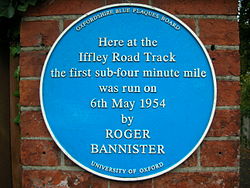
bannister_plaque_and_finish


When I was 12 years old, I read Roger Bannister’s account of breaking the 4 minute mile, pushing himself to the outer limits of human possibility, “collapsing almost unconscious, like an exploded light bulb”. I was inspired–and astonished. Run a mile in four minutes. The thought of it still baffles me!

I walked a mile yesterday, sweat-drenched, heart pounding, lungs aching. My app Runkeeper, informed me that it was my fastest ever. 21 minutes, 15 seconds.

I had broken the 22 minute mile.

And I felt unreasonably happy. I have never been fit, and, after colon cancer surgery, was walking a mile in 33 minutes, then 30, then 26 minutes with pride, 25 minutes with incredulity, a 24 minute mile with dizzy joy.

* * *

George Malkmus’s God’s Way to your Ultimate Health inspired me to decline chemotherapy after Stage III colon cancer to instead strive for super-nutrition to boost my immune system (so as to combat any remaining cancer cells). Malkmus recommends a practice which he says will change your life, and may even save it: Walk a mile as fast as you can, record the speed; continue trying to walk faster until you can walk 1 mile in 15 minutes; then 2 miles in 30 minutes; 3 miles in 45 minutes, and finally 4 miles in 60 minutes.

So here I am shooting for a 15 minute mile, beating my speed most days by a few seconds. My 16 year old Irene speed-walks a mile in 11 minutes. Why should I be happy about walking a 21 minute mile?

Because it is my personal best; because I have worked for it; because I have got better. So much better

That’s one secret of happiness. Let your trajectory bring your joy. Tweet: That’s one secret of happiness. Let your trajectory bring your joy. NEW from @anitamathias1 http://ctt.ec/xSl41+  In my twenties, I read 60 meaty books a year (and was sad that I was not reading more.)  This year, I have read substantially less than that, but instead of allowing it to be a source of deep sadness , I am happy because I am reading more than I did last year.

Take joy in the arc of your improvement—an easy secret of happiness.Tweet: Take joy in the arc of your improvement—an easy secret of happiness. NEW from @anitamathias1 http://ctt.ec/VzTde+

* * *

When my husband Roy took early retirement in 2010, I wanted him to make all my garden dreams come true. Promptly. I wanted him to construct a waterfall, an artificial stream, a herb garden for starters. But he thought he should make us some money.

We had entered a new phase of our lives, with him working from home, and me trying to write. So we wisely sought counsel.

I sadly told the counsellor the garden dreams of my teeming brain, and he, in turn, told us a fable.

“There was once a man whose dream since youth was to be a millionaire. But the years passed, and middle age passed, and it seemed his dream would remain a dream.

Saddened, he thought, “Well, I have always wanted to be a millionaire, and now the end draws nigh, and it looks as if I am to be disappointed. What should I do?”

And then he thought, “Perhaps I could have a little of the millionaire lifestyle? Is there anything a millionaire has that I could have?”

And then he thought: “I bet millionaires change their razor-blades every day. And I can afford to change mine. So while I cannot be a real millionaire, I can be like a millionaire when it comes to razor blades. I can be a razor blade millionaire.”

Silly little story, I know, but I am adopting that way of thinking.

* * *

My garden is huge for England, for anywhere. One and a half acre. I have so many garden dreams. I want edible hedges, an edible lawn and edible inter-planted flower beds. I want to grow all my own fruit and vegetables. A bog garden? A larger rock/alpine garden? Oh, and I want to spend no more than an hour a day doing this, and two hours on Sunday.

We’ve lived in our home for ten years, and in the early years, I was sad at the mismatch between my garden dreams and my garden reality. Frustrated, disappointed and overwhelmed, I would stop gardening for months at a time, and my garden became a shaggy overgrown Sleeping Beauty garden.

It’s still a bit shaggy, let me confess, but what I do now is take joy in each herb, each fruit tree, each little flower that opens, each little bird that sings, admire its beauty. Many of my garden dreams may come to pass; others might not. They may be too wild, impractical, time-consuming or expensive. But I will enjoy my garden such as it is, even though I have planted less than a tenth of what I want to.

* * *

Creativity, creativity… I have so many stories and ideas which I have not yet written down. My writing career, if I have one, will not resemble the one I dreamed of.

But… but… but… creativity is its own reward. The joy of creating things, of making beautiful things, is its own reward. And so I am grateful for what I do write, even if it is in no way as plentiful or as beautiful as I hoped for. I am grateful for those who read.

Happiness partly lies in making peace with the life we have, rejoicing in its beauty. Happiness lies in thanking God for the silver lining in all things. Tweet: Happiness lies in thanking God for the silver lining in all things. NEW from @anitamathias1 http://ctt.ec/6bR74+

Today is the day the Lord has made; I will rejoice and be glad in it: I often tell myself that. This is the life, the marriage, the work, the garden God has given me, and they are all good. And I will rejoice and be glad in them.

* * *

Happiness to me has become the minimum requisite as I go through my day. I often do a spot-check and ask myself, “So Anita, are you feeling happy?” And when the answer is no, it’s often because circumstances, or people, or my writing are not behaving the way I want them to.

But then I think, “Not being happy, that’s nonsense. There is so much good in the very people who are annoying me. There’s so much good in my world—a loving husband and loving children; a large dream house; a large dream garden (in its size and blank canvas-ness); a labradoodle!; health (phew, yes, unexpectedly); friends; work I love, books to read, the time and ability to travel, enough income to be happy; so many interests to make me happy: art, film, architecture, literature, nature, gardening. And I live in a beautiful old God-breathed world full of fascinating history, beauty, culture, good people. I will choose to dwell on beauty. I will choose to be happy.** And because I am naturally sanguine, thank goodness, even in the process of giving myself this pep talk, I become happy again.

* * *

I have a friend who is uncannily like me. He delighted in running faster and faster, beating his personal bests. When his knees went, and he could no longer run, he delighted in walking further and further. As middle age hit, and he maxed out on the distance he could walk in his available time, he bought a treadmill, set it on incline, and walks ever-steeper “hills.”

Ah, I too enjoy quantifying my life. It adds fun to it.

But what happens when we age, and can no longer walk faster, grow stronger, break records in our own personal Olympics? When strength fails, and one can no longer write more words or read more books in a year? What then?

* * *

Well, I thought, when I can no longer crunch personal bests in all my endeavours, I will take joy in the Lord. I will enjoy his goodness, the world he has made, and his love for me. I will enjoy the ever-changing canvas of the skies, the subtle and glorious change of the seasons. I will think of Jesus, and I will enjoy Jesus. I will meditate on scripture, those wonderful words; I will enjoy Scripture. I will enjoy God. I will be happy. Yes, I will be happy.

And then I thought…all these lovely ways in which I intend to find happiness when I am old, and can no longer walk faster, read faster, write faster; when I am totally amused and at peace with my own unimpressiveness—you know what? I can do them right now.

All those ways in which I plan to be happy when I am aged, I will be happy today while I am middle-aged.

Yes, starting today.


Tweetable

Gratitude for the silver lining in all things is the ultimate secret of happiness. NEW from @anitamathias1 Tweet: Gratitude for the silver lining in all things is the ultimate secret of happiness. NEW from @anitamathias1 http://ctt.ec/q0faF+


Filed Under: In which I pursue happiness and the bluebird of joy Tagged With: a 4 minute mile, cancer survival, contentment, Creativity, Gardening, George Malkmus, Happiness, personal bests, Roger Bannister, walking

On being as wise as a serpent and as gentle as a dove

By Anita Mathias

serpent and dove

“I am sending you out as sheep among wolves,” Jesus says.

You would imagine that a sheep among wolves would stand no chance at all. Not for a second!

And that’s how Jesus sees us Christ-followers. As sheep among wolves.

Yes, I have sometimes been a sheep among wolves…in toxic situations where I sense pretty much everyone was lying to me, about me, lying about events, danger I sometimes sensed, and sometimes did not. Where I was innocently in over my head in fraught, loaded situations in a toxic church I was once in; situations to do with business, or money, or in-laws. Experiences in my travels, or dealings with officialdom, where I had no power, and they apparently had it all, and all seems dark and hopeless.

You are in a fog, a fog of minor evil, where you are powerless, you don’t know what the truth is, and few seem to be speaking it.

What do you do in this fog, where everyone has their own agenda, and no one speaks truth to their neighbour? You shut up, as much as you can! You go still. You pray. I love Rumer Godden’s analogy in In This House of Brede—The more a bird caught in a net struggles, the further it gets entangled.

Yes, everything seems dark and hopeless, and then, suddenly, the fog clears, and there is light, and as if by magic, the situation resolves. In ways better than you could have hoped for.

What worked this magic? How does the fog sometimes lift?

 Ah, the great Shepherd had his eye on his sheep all along, it turns out

We are sent out as sheep among wolves since the Great Shepherd knows it is safe to send us out.

What hope has the sheep among wolves? Only that the eye of the good and powerful shepherd is upon it. And that is enough.

* * *

When Jesus sends his disciples out as sheep in the midst of wolves, he offers them just one bit of armour, one bit of protection: Be as wise and shrewd as a serpent, and as innocent as a dove.

Because the life of Jesus is in us, because we are trying to march to a different drummer and do the right thing and obey the voice of Jesus, we are to be careful. We are telling the truth among people who might say whatever is necessary to achieve their objectives. We are trying to remain pure of heart among those playing to win. We are playing by different rules

So we need to be as wise as we possibly can, without sinning.

Oh dear, how can we be as shrewd and wise as a serpent, if we don’t feel very wise as I generally do not? If we despise being tricky?

We ask Jesus, the source of all wisdom for wisdom and guidance, step by step.

* * *

 I love the heart-expanding call to love, to be merciful, to be open, giving to everyone who asks of us, to keep our hearts pure and kind.

I love too the call to wisdom, which is for our protection, we fluffy woolly sheep among wolves.

Be wise as a serpent who keeps its own counsel, who knows how to wait, who listens to signals and instincts deep within its blood and bones, resting in winter, moving fast when it needs to.

Elsewhere Jesus counsels, “Do not cast your pearls before swine, or they will trample them underfoot and then tear you to pieces.”

Be wise as a serpent when we know we are dealing with those who would abuse our generosity and kindness and rend us to pieces, who might twist our words and gossip about us.

It may not be possible to edit them out of our lives; we may belong to the same church or social circle. We may be related to them through blood or marriage, for a man’s enemies are often from his own household, as again Jesus warned us.

So then, heeding our instincts, we limit dealings with the unsafe, dangerous ones to limit the risk of being trampled underfoot and torn to pieces. We are careful about what we say in their presence and we say as little as possible. We avoid them as far as possible as a sheep instinctively avoids a wolf, as wild animals instinctively avoid larger animals and humans.

How grateful I am for these checks and balances. “Give to everyone who asks of you,” “love,” but also “Be wise as a serpent.”

* * *

Following Jesus is a bit like playing chess. There are rules and commandments, but infinite freedom and variations within it. It is not mechanical; what fun would there be in that? We need wisdom; we need guidance; we need to listen to Jesus before we move in fraught situations. We need the Spirit who will teach us what to say in tricky situations.

Ah, learning to follow Jesus…the task of a lifetime…and a rewarding one!

Image Credit


Tweetables

What protection has the sheep among wolves? Only that the eye of the good shepherd is on it. NEW from @anitamathias1 Tweet: What protection has the sheep among wolves? Only that the eye of the good shepherd is on it. NEW from @anitamathias1 http://ctt.ec/F4atN+
How do we become as wise as a serpent. We ask Jesus for wisdom. NEW from @anitamathias1 Tweet: How do we become as wise as a serpent. We ask Jesus for wisdom. NEW from @anitamathias1 http://ctt.ec/3X8Cv+
Filed Under: Applying my heart unto wisdom, Matthew Tagged With: being wise as a serpent, prudence, wisdom

A God’s Eye View of the Migrant Crisis

By Anita Mathias

europe-migrants-hungary-trains

                                                              Migrants outside Keleti Station, Budapest

Over the last month, Europe has been convulsed by a dramatic migration crisis. Thousands of thousands of predominantly Muslim refugees and economic migrants from Syria, Afghanistan, Eritrea, Iraq, Pakistan, Nigeria and Somalia, often armed with Iphone 6+s, marched or were smuggled through Turkey, Greece, Macedonia and Serbia to Hungary, and then on to Austria, Germany, Sweden and other Scandinavian countries.

“This is an invasion,” said Hungarian Catholic Archbishop Laszlo Kiss-Rigo. “They come here with cries of ‘Allahu Akbar. They want to take over. They behave in a way that is very arrogant.”

In Britain, Rev. Ian Paul quotes MEP Daniel Hannan: Should we contract out our immigration policy to people smugglers? Instead of those in the camps who have been classified by the UN as refugees, should we allow a lucky few to jump the queue by breaking the law?

The conservative blogger, Adrian Hilton, Archbishop Cranmer, pointing out that, for the last six years, Mohammed has been the most common name given to British babies, cites Oxford demographer David Coleman: Through immigration and procreation, Britain will be a majority Muslim country by 2050, Which may be precisely what every citizen wants. Or may not.

I then read Rev. Giles Fraser, the Loose Canon, whose hyperbole seems to me to resonate with the heartbeat of God. “Take all of them? Surely that’s the biblical answer to the “how many can we take?” question. Take every single last one. Let’s dig up the greenbelt, turn our Downton Abbeys into flats and churches into temporary dormitories. Yes, it may change the character of this country. But let’s do whatever it takes to open the door of welcome.”

I read Left, Right and Centre, and then, confused, I pray. I ask God “So! What do you want me to think? What is your heartbeat? What do you think about this?

* * *

1 When you fly high, you cannot see borders between nations. Mountain, valley, forest all merge. It’s all one.

God sees a borderless world. His world.

The Biblical writers reiterate that God has compassion on all that he has made, all human beings. He is even concerned about the animals that might perish were he to judge Nineveh.

He loves the Syrians fleeing violence, and the Eritreans fleeing indefinite conscription for both men and women, virtual slavery, with sexual and physical violence, while the family at home struggle. And he loves the coiffed, diamonded European matron who wears the net worth of the Eritean’s entire village on her person. He loves refugees, and he loves economic migrants who subject themselves to danger, hunger and thirst to gain a fulfilling life for themselves and their children.

When he sees his children safe, out of danger, well-fed, well-educated and happy, He is happy.


2 What is the Spirit saying to the church? To Christians?

The great words spoken by angels whenever they encounter mortals, often repeated by Christ: Do not be afraid.

Do not let your hearts be troubled; neither let them be afraid.

Let nothing disturb thee; let nothing affright thee. All things are passing, God never changes.

Whether or not it is clear to you, the universe is unfolding as it should. 

As the BBC economics editor Robert Peston wrote recently, “immigration promotes growth.” Economist Michael Clemens for the Centre for Global Development writes A world without borders makes economic sense. The world impoverishes itself much more through blocking international migration than any other single class of international policy. 40% of adults in the poorest quarter of nations wish to move permanently to another country. Preventing them from doing so causes more than just human harm: it hobbles the global economy, costing the world roughly half its potential economic product.

 The Atlantic: Economists agree immigration is good for a nation. They term it “Immigration surplus:” the positive effect immigration has by creating new demand for goods and services, which encourages employers to hire more people. And if migrants replace incumbent workers, even though wages are lowered, goods and services are produced more cheaply. The winners are broadly distributed and the primary losers are incumbent workers, whose wages fall until the resulting economic growth boosts their wages.

 The Economist: Migrants are net contributors to the public purse. They inject economic dynamism. They are, almost by definition, self-starters.

In the United States, the world’s largest economy and richest country, 12.9% of the population are foreign-born according to the latest census, and 11 million, 3.5% of the population are illegal immigrants. For generations, the US has led the world in the arts, sciences, technology, business, you name it…


2B. I am an immigrant myself, twice over, actually. I became a US citizen while I lived in the US for 17 years, and then a UK citizen when we moved back here 11 years ago. (My husband, Roy, is also a New Zealand citizen!)

Admittedly, we did not enter illegally. I don’t have the stomach for that–though faced with being aerially bombed as the Syrians are, who knows, who knows? My husband who has a BA from Cambridge University, a Ph.D from Johns Hopkins University, and post-docs from Stanford and Cornell entered on a Highly Skilled Workers Visa to a Professorship at the University of Birmingham (though we are now trying our hand at entrepreneurship!!)

Those striving to enter by sea and land, through mountains and rivers, within unventilated vans, on the tops of moving trains and beneath lorries and planes may not bring a fistful of advanced degrees with them, but they bring other things. Gumption, determination, physical strength, endurance, resilience, courage, optimism, hardiness, ambition, wild dreaming, a fierce love for their children. Thinking outside the box! How can these not benefit a society?


3 There is always enough

Be generous and willing to share.

As a road trip through Europe or North America shows, there is enough, there is room, there is room. Whereas people leave places like Gambia for lack of opportunity, the economy of Oxford where I live, and London even more so, is powered by immigrants—the cleaners, builders, house painters, gardeners, nurses, doctors, scientists and academics.

Jesus tells us secrets in the Sermon on the Mount: “Give, and it will be given to you. A good measure, pressed down, shaken together and running over, will be poured into your lap.” It is a little acknowledged secret about how the world works.

What is true for individuals is true for nations. Germany and Sweden have been particularly generous to migrants. Hungary, Estonia, Slovakia, the Czech Republic, Poland Bulgaria and Romania are unwilling to accept non-Christian migrants. Guess which countries will have an increased GDP and increased prosperity ten years from now? Increased international goodwill? Blessing, if a spiritual term can be quantified, as it often can.


4 God works through migration. Judaeo-Christian history commences with Abraham being commanded to leave his country and his people and migrate to the promised land. The Jews migrate to Egypt during famine, return; are forcibly relocated to Babylon, mostly return; are forcibly dispersed during the Diaspora following the destruction of the Temple in 70AD, and go out into all the world, the converted Jews taking the Gospel with them.

Christians are commanded to be a migrant people, to go into all the world, and tell the good news to all people.

Wherever true Christianity spreads, it must cause diligence and frugality, which, in the natural course of things, must beget riches! (John Wesley). Now the Muslim nations– are coming to Europe, a land of milk and honey in every supermarket

 It is the greatest missionary opportunity ever. The nations come to the Christians.

 Should they hear the startlingly good news of Jesus , the secrets of the Universe he shares, hear of the love of God, the power of prayer, the power of grace to change us, amazing grace, on the airwaves, in their new neighbourhoods, in the schools and in refugee centres, and should some of them return with it to their native lands: Wow. It may change the world as dramatically as when the Gospel first went forth to Europe.


6 Mercy and generosity–particularly to the stranger and the alien– are Christian imperatives

If anyone has material possessions and sees a brother or sister in need but has no pity on them, how can the love of God be in that person? asks the Apostle John.

The Hungarian Prime Minister Viktor Orban says: “Europe needs to protect its Christian identity against a Muslim invasion, it’s millions, then tens of millions, because the supply of immigrants is endless.”

In fact, the supply of immigrants is not endless. 60% of adults in the world’s poorest countries have no wish to leave.

What is endless is the capacity of the mind of man to create wealth.

Wealth is infinitely expandable. Some of America’s most valuable companies—Apple, Microsoft, Facebook, and Google are based on ideas incarnated by technology. Amazon now sells more ethereal books on Kindle than real books. Wealth is created from the mind of humankind (especially so, perhaps, when hooked to the mind of God). There is no ceiling. There is always enough.

We already grow enough food to feed everyone. The feeding of the five thousand? I believe it happened; it’s a miracle that has been repeated again and again.

There is enough wealth in this world to share with those fleeing bombs, those fleeing conscription, those fleeing starvation, and those fleeing boredom. Those who have come for safety, for food, for a Ph.D for themselves or their children.

There is enough goodness in the world for the Syrians and the Swiss, for the Afghanistanis and the Austrians, for the Indians and the English

Few brave oceans, mountains, barbed wire, tear gas, police dogs and stun grenades to be on welfare forever. The stranger and alien Judaeo-Christians are commanded to have compassion on will eventually be a dynamic blessing to the societies that offer sanctuary. So it has always been.

There are no borders in heaven. Living like that on earth will be out of everyone’s comfort zone. And in that zone, we change, we grow as we learn to really look, to see people with Jesus’s eyes, giving up prejudice, giving up pre-judging by skin colour, presumed intelligence, culture and education, or the lack of them. Being open-hearted. Obeying Jesus’ command not to judge.

By having mercy on the one in need, we live, as Jesus said in the Parable of the Good Samaritan.


7 When I lived in America, and attended a church which occasionally conflated patriotism with Christianity, we’d sing in church:

This land is your land; this land is my land,

From California, to the Yukon highway.


I imagine that’s what God sings over the world today

This land is your land,

But this land is NOT really your land,

This land is MY land.

From Syria to Sweden

From Eritrea to Germany.


Do not be afraid.

The earth is the Lord’s and everything in it.

Be open-hearted and willing to share.


Tweetables

It is the greatest missionary opportunity ever. NEW from @anitamathias1 on the migrant crisis Tweet: It is the greatest missionary opportunity ever. NEW from @anitamathias1 on the migrant crisis http://ctt.ec/Vfqy5+

The whole earth belongs to the lord. Be generous and willing to share NEW from @anitamathias1 on the migrant crisis Tweet: The whole earth belongs to the lord. Be generous and willing to share NEW from @anitamathias1 on the migrant crisis http://ctt.ec/ze8PW+

There are no borders in heaven. Thy kingdom come on earth as it is in heaven. NEW! @anitamathias1 on the migrant crisis Tweet: There are no borders in heaven. Thy kingdom come on earth as it is in heaven. NEW! @anitamathias1 on the migrant crisis http://ctt.ec/W9fSd+

There is always enough. NEW from @anitamathias1 on the migrant crisis Tweet: There is always enough. NEW from @anitamathias1 on the migrant crisis http://ctt.ec/Dqo07+


Filed Under: Current Affairs Tagged With: Archbishop Cranmer, Giles Fraser, immigration, Immigration is economically beneficial, Mercy, the economics of immigration

When Shackles become Wings: On Domesticity, Creativity, and Me

By Anita Mathias

saxifrage_anita_mathias_com

wedding-1-235x300I was married 25 years ago, while in a Ph.D programme in Creative Writing at the State University of New York Binghamton. I had just earned a BA and an MA in English from Somerville College, Oxford, then an MA in Creative Writing from Ohio State University.

My husband probably hoped for a traditional marriage, though he never actually said so. You know–I would do the dishes, and laundry and shopping and cleaning and cooking, and he would have a career. In the early years, I urged him to try a role reversal; to let me have a try at a career and at supporting us (and to accept the consequent drop in our standard of living), but he would have none of it.

For the first decade or so of our marriage, I bitterly resented domesticity. My mother had a full-time cook, a full-time maid, an “ayah,” and a gardener (whereas my husband’s mother had done everything herself.) Had I gone through all this higher education to become a cook/maid, I’d sign? My husband insisted that a cleaner was a waste of money, saying that he could easily whisk through the house and clean it. Well, I’ll credit him with good intentions!

We feminist writers in graduate school used to tell each other, “The dishes can wait; the poem cannot wait.” And too often the dishes waited, for days and days, and the resultant domestic and marital stress affected the poetry too.

I found it impossible to keep up with housekeeping. The further behind we got, the harder it was to catch up. Which caused stress and chaos and unhappiness which affected my creativity far more than if I took the bit between my teeth, and simply did what had to be done.

* * *

Finally, about 18 years into our marriage, Roy did what I had been urging him to from two years into our marriage—took early retirement, and tried to be a house-husband.

Well, well, well, turns out he was only a wee bit better as a house-husband than I was as a housewife!! He promptly got the cleaner and gardener I had so long desired!

But he does do enough housework so that we do not live in mess and chaos.

* * *

And since, it now takes just an hour or two to get to the reasonably orderly tidy household we both crave, rather than an apparently infinite task, I, ironically, often spend an hour or two in housework and gardening.

And I have discovered a strange thing. The days I do not spend an hour or two around my house and garden, weeding, sorting laundry, tidying up, my spirit feels slightly out of sorts. My mind is active, as I read and write; my spirit, not so much. I feel a bit out of touch with God. A bit unaligned with him. A bit overwound. It’s as if I need the downtime of traditional “women’s work” to really pray.

It as if I needed the things I despised—folding laundry, putting things back in the right place, pulling weeds—to be able to think, to pray, to right myself with God, to position myself in God, to surrender my life to God again, to seek his wisdom.

Breathing place, sanity-savers, time for thinking, time ironically for creativity, time for repentance, time for surrender—gifts offered by the mundane tasks of folding clothes, tidying rooms, prettying a garden.

I wish I had embraced it from the start. I would, ironically, have been a more productive writer.

A house, living in a house, doing some of the work living in a house demands—this is the life God has given me, mountaintops and valleys, and as I embrace it, I find that, like saxifrage, tiny alpine plant that splits rocks, creativity blooms in the apparently unpromising nooks and crannies of duty!


Tweetables

Like saxifrage, tiny alpine that splits rocks, creativity blooms in the rocks of duty! NEW from @anitamathias1 Tweet: Like saxifrage, tiny alpine that splits rocks, creativity blooms in the rocks of duty! NEW from @anitamathias1 http://ctt.ec/SRPbg+

It’s as if I need the downtime of traditional “women’s work” to really pray. NEW from @anitamathias1 Tweet: It’s as if I need the downtime of traditional “women’s work” to really pray. NEW from @anitamathias1 http://ctt.ec/5ig55+

Image Credit


Filed Under: Finding God in Domesticity, In which I explore writing and blogging and creativity, In which I play in the fields of prayer, In which I pursue happiness and the bluebird of joy Tagged With: Creativity, domesticity, duty, Prayer

Honesty Is the Narrow Gate to the Spiritual Life: Learning from My Daughter, Irene

By Anita Mathias

honesty_anita_mathias

So I signed my daughter Irene up for a ministry called “LieBusters” at the David’s Tent worship festival.

Five minutes in, her “LieBuster” asks her, “What is God saying to you?”

Irene sits there, taken aback, and then tears stream down her face.

“Nothing. I can’t hear a thing. I didn’t know it was going to be interactive.”

The leader: “Oh my goodness. What did you expect?”

Irene: “I don’t know. My parents signed me up.”

The leader: “Oh my goodness! Do you know Christ? Or do your parents expect me to bring you to Christ too?”

Irene: “I know Christ.”

Leader: “Well, you never know. Some parents expect me to convert their children. Parents can be mean.”

* * *

The leader then prays for her to be able to hear God’s voice, and reader, she does.

“I heard God loads, mum, in words, and in pictures too. Mainly pictures.”

She was radiant with happiness.

* * *

Now, reader, while Irene was going through her session, I was going through a LieBuster session of my own.

And every few minutes, the leader asked, “What is the Lord saying to you? What do you see?”

And like an eager, overachieving student, I felt an answer was expected of me.

And so I rummaged at the outer rim of consciousness–Had I seen something? Had I heard something? The back of the Lord as he passed, as Moses saw? The hem of his garment? And I shared the vaguest hints of impressions. Sometimes, they were platitudes, oh yes. And sometimes, I clothed in words something nebulous, numinous, that I was just about seeing or hearing.

* * *

I did get something out of my LieBuster session. Yes, I believe I did.

But not as much as if I had, with simple honesty, said, “I don’t hear very much. I don’t see very much. I need more time” and had accepted prayer for my spiritual senses to be sharpened. Or simply waited until I did hear.

* * *

There is magic in honesty, in the spiritual life as in any relationship. There is magic in owning exactly who you are, without pretence, to God, and to another person.

We enter into the spiritual life through a very narrow gate, a low tunnel, and the name of that tunnel is honesty. Never pretending that we feel what we do not feel. That we believe what we do not believe. That we have experienced what we have not, in fact, experienced.

Once we pretend, we are lost in the shadowlands; we join the crowds pretending that the Emperor has clothes, when in fact, as far as we can see, he does not.

And the greatest loss is that we lose the possibility of experiencing the richness of the spiritual life. Lost in our lies, we lose the chance of seeing Jesus.

Honesty, humility, simple words, gateways to the pearl without price.

We need to go low; stop pretending; tell the truth; enter as a child.

And then maybe, like Irene, we will confess that we do not in fact hear God, and we will be prayed for, and then we will indeed “hear God loads.”

Amen


Tweetables

Honesty is the narrow gate into the spiritual life. NEW post from @anitamathias1 Tweet: Honesty is the narrow gate into the spiritual life. NEW post from @anitamathias1 http://ctt.ec/9xe2m+

Honesty, before God and another person, unlocks the doors to the spiritual life. NEW post from @anitamathias1 Tweet: Honesty, before God and another person, unlocks the doors to the spiritual life. NEW post from @anitamathias1 http://ctt.ec/5BAf0+

There is magic in honesty, in the spiritual life, as in any relationship.NEW post from @anitamathias1 Tweet: There is magic in honesty, in the spiritual life, as in any http://ctt.ec/0h4fK+ post from @anitamathias1 http://ctt.ec/w40Ae+


Filed Under: In which I explore the Spiritual Life Tagged With: honesty, honesty is the gateway to the spiritual life, Humility

Mud and the Breath of God: That is What We Are

By Anita Mathias

mud_and_the_breath_of_god_anita_mathias_blog1

Several years ago, I wanted to go through a study on Agape Love, the blazing core of Christianity–but not a particular strength of mine!! And being an extroverted, sort of A type personality, I got permission from my church to organise a Bible Study on the topic under their auspices.

Now, like most everyone, I suppose, I do not like things I do to flop. And I sometimes go to far-fetched lengths to ensure they do not flop. So in organising the study, as when throwing a party, I heeded the internal tick-tock of fear…what if no one showed up?

So I invited, and I invited, and I emailed, and I telephoned… and too many accepted. There were over thirty people in my Bible study, which should have had twelve. Well, my ego was pleased with thirty, though I realized it would therefore be less participatory, less transparent, less transformative.

I looked at the list, and my eyes lingered, exasperated, on a particular name. It wasn’t someone I disliked–I wouldn’t have invited anyone I disliked–but it was someone I was neutral towards. So why had I invited her to my Bible study which I intended to prepare thoroughly; give 110%; pour myself out, body, mind, soul and spirit; teach everything I knew, and no doubt, use deeply personal stories and illustrations?

Fear, I realised. Fear that the Bible study would flop, and it would be one of those dismal things to which only five people show up, including the leader. Pride, for I would have felt shame if only five people showed up. I would have felt ungifted, unpopular, unimportant, insignificant, “nobody.” (I would perhaps be able to smile wryly, shrug and bear it now that I am safely middle-aged…but not then.)

So I invited and invited not because of the love of God overflowing from my heart, not because of a desire to bless people with the overflow of Biblical treasure which had blessed me, but out of pride, fear, shame.

I studied the list again, and I was sad. I had freaked out. One never thinks well or acts wisely when impelled by fear, the seizing up reptile brain.

I had started well. I wanted to study those concepts, and I thought I would study them more deeply if I were teaching them. But then, vanity crept in.

I looked out of my window at the slim fingernail of moon in a dark-sapphire sky. Mixed, mixed; light and darkness, all our motives. Mud and the breath of God, that is what we are, sometimes muddier, sometimes more spirit-filled.

* * *

Yeah, so I acted out of pride, fear and vanity and general freaking out. Not out of the centre of God’s will. Not abandoned to him. Those branches did not spring from the mighty trunk of God. How could I ask him to bless them?

“Oh Lord, oh Lord,” I cried, “I’ve done this all wrong. Look at my silliness and vanity. Can you redeem this?”

* * *

And then I laughed.

And what made me think that grace, and the love of God, and the goodness of God, were only for the times when I was all perfect? That I needed to be perfect to be a child of God, entitled to the goodness of his household?

And the Bible, that document I loved to teach? From first to last, it is the story of God stepping in when we have messed everything up. We eat the only dangerous fruit; we are murderous towards our brothers; we diverge from the beautiful way things could have been in our marriages, in our parenting, in our friendships, in our physical health, in our homes and gardens…

And so often God steps in and surprises everyone, creates a bittersweet yet beautiful thing out of our messes.

The story of lives is not perfect, as it might have been were we perfect people in a perfect world. But neither is it dark as when a fractious child mixes together all the bright colours in her paint-box, reducing the glory to blackness.

Yes, our lives are not the original design—beauty. But neither are they things of entropy and chaos, as would happen if there were no grace, if we consistently reaped what we sowed.

What happens is redemption. God takes our mistakes, our shattered shards, and creates a thing of beauty, windows of stained glass though which his light shines.

* * *

When you are certain you’ve married the wrong person, all is not lost, for you or them.

The Bible has an Open Sesame phrase which pops up when all is dark and hopeless and everything is chaotic and disintegrating.

But God.

Failure seems certain. The future looks bleak. We are all out of options.

But God…


You twist your spouse’s arm to go on a holiday which is too expensive, when you should have been working hard, making money, not spending it. Why should grace strike you on that holiday? But it does.

But God…


When you fear that all your parenting mistakes might add up, and your child may not fulfil her academic potential,

but God, but God…

and that child is now an undergraduate at Oxford University reading Theology.


You let money slip through your fingers in the seven years of plenty, and did not save enough, and now have to work so hard all over again…

How foolish, so foolish, but the story is not yet over, grace strikes you in this period of hard work; your creativity burgeons, and ironically through this spurt of work, you end up with a wee bit more prosperity than if you had never blown your windfalls and then had to refill your barns.

Ah, unfair, you really did not deserve grace, you prodigal…

But God…


When you think of all the time you’ve lost: to arguments, quarrels and conflict, to depression and sluggishness, to burnouts following overwork, and you fear you will never achieve your dreams, grace steps in.

Your mind is burnt out; our nervous system is shot; your body is not as healthy as it was…

You are in no position to do anything by strength, resolve or hard work…


And here you are, forced to rely on a force beyond yourself…

Just the right candidate for grace, in precisely the right place to receive it..


Amazing grace, rescuing what you set out to do with pride, fear and petrified rabbit brain, stepping in, as Jesus told us the Holy Spirit steps in on request, intervening, turning things around

Amazing grace.


Tweetables

Mud and the breath of God…that is what we are. NEW post from @anitamathias1 Tweet: Mud and the breath of God…that is what we are. NEW post from @anitamathias1 http://ctt.ec/8850l+

“Grace strikes us when we are in great pain and restlessness” NEW post from @anitamathias1 Tweet: “Grace strikes us when we are in great pain and restlessness” NEW post from @anitamathias1 http://ctt.ec/5L6Yb+

The Bible has an Open Sesame phrase which appears when all is dark and hopeless. But God. From @anitamathias1 Tweet: The Bible has an Open Sesame phrase which appears when all is dark and hopeless. But God. From @anitamathias1 http://ctt.ec/adK1j+


Filed Under: In which I am Amazed by Grace Tagged With: Amazing Grace, But God, redemption

On Cancer, Declining Chemotherapy, Healing, and Future Plans

By Anita Mathias

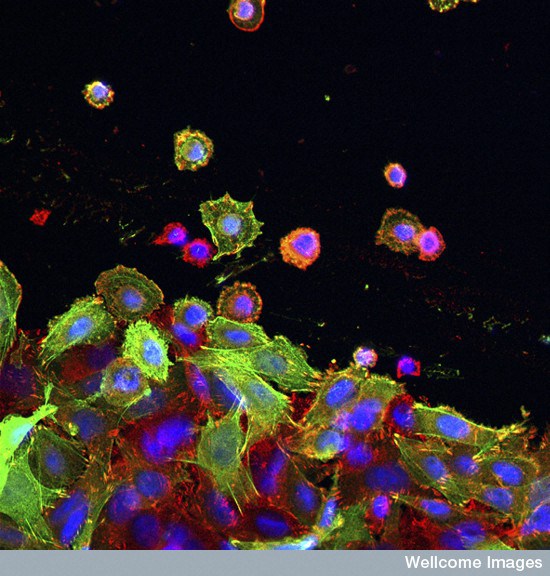
B0006844 Colon cancer cells Credit: Lorna McInroy. Wellcome Images images@wellcome.ac.uk http://images.wellcome.ac.uk Cultured colon cancer cells showing the nuclei stained with DAPI in blue, the actin cytoskeleton in red and plectin (isoform 1k) in green. Plectin interacts with cytoskeletal actin, affecting its behaviour. This subtype of plectin promotes the migration of cells and may affect metastasis. Confocal micrograph 2005 Published:  -  Copyrighted work available under Creative Commons by-nc-nd 2.0 UK, see http://images.wellcome.ac.uk/indexplus/page/Prices.html

Human colon cancer cells 

So hi there, I am back…back to regular blogging, back to health– physically, emotionally, spiritually and creatively.

So, news of my world: I had surgery for colon cancer on November 25th, 2014, which now feels very long ago—like a bad, surreal dream.

I was offered chemotherapy, which would increase my odds of being alive in five years by 10%.  The side effects as explained by my oncologist: Anaemia, progressive tiredness which persists for some weeks after the treatment ends. Depressed immune system and risk of infection: the treatment reduces white blood cell count. Bruising of nerves, peripheral neuropathy, numb hands or feet, which may make typing hard, and which sometimes is permanent. Nausea, diarrhoea, mouth ulcers. Temporary hair loss. Eye problems. Headaches. Muscles, joint and stomach pain. Abdominal pain. Changes in liver function. 1 in 200 die.

The adjuvant chemotherapy recommended supports surgery by killing any cancer cells which may (or may not!) remain. It’s like an insurance policy, and is potentially over-treating, the oncologist explained. Colon cancer does return for 40 to 50% of patients—i.e. hey, cancer is not a joke (or, at least, a very bad one!). Adjuvant chemotherapy reduces recurrences by 10%.

As I prayed, I became convinced that toxic chemotherapy which often causes permanent physical, emotional and intellectual damage was not the path for me. Not the path through the dark woods on which I would meet the Father, Son and Spirit whistling as they stroll.

Might anything besides chemotherapy give me a 10% survival benefit? My oncologist said that research shows that exercise increases survival after colon cancer. As does Vitamin D and aspirin. People know what they know and don’t know what they don’t know. Could there be evidence-based research that my oncologist had not yet looked at, did not know of?

“Oh God!” I prayed. “There are 298,000 species of plants. Surely, surely, some of them would zap any remaining cancer cells without the havoc wrought by toxic chemicals. Is it possible that God who placed dock leaves near stinging nettles did not create even one plant which would bless the body while neutralising cancer cells? Even one plant which would strengthen the immune system to “fight” cancer so that it would not spread? Surely God will lead me to such plants.”

In the Parable of Weeds in Matthew, Jesus recommends leaving enemy-sown weeds in the field lest, in uprooting them, good plants are uprooted as well. When I thought about chemo, there was no light in it. I felt sure chemo, for me, was not the way of the Spirit, that the Spirit would guide me to non-toxic therapies that might strengthen the immune system, rather than weaken me body, mind and soul in the process of zapping renegade demon cells.

* * *

As I called out to the Lord in my distress, the title of a book a friend had recommended popped into my mind: God’s Way to Ultimate Health by George Malkmus, who watched his mother rapidly grow ill and die from toxic cancer treatments rather than the disease. (A common experience, apparently!) Declining chemotherapy, he cured his colon cancer by aggressive doses of nutrients through juicing. A raw food diet. Supplements. Exercise. My friend recommended Chrisbeatcancer.com, who inspired by Malkmus used these strategies to heal his own Stage III colon cancer without chemotherapy.

Diet and exercise had been my Achilles’ heel, and so I had some of the lifestyle risk factors for colon cancer. So while I have not changed as drastically as I would have liked, over the last eight months I have changed what I eat, and I intend to continue, respecting my body as a gift God gave me, which I need to keep healthy for my intellectual, spiritual, emotional and physical life to flourish.

Malkmus recommends a discipline which he says will change your life, and might possibly save it. Walk a mile as fast as you can, write down the speed; then, each day continue walking as fast as you can until you can do a mile in 15 minutes. Then walk two miles as fast as you can, until you can do 2 miles in 30 minutes; then 3 miles in 45 minutes, then 4 miles in an hour. I was walking a mile in 30-33 minutes after surgery, and am now down to a 21 minute mile (and walking 3.5 miles, over 10,000 steps) and am loving the increased fitness—especially because I can now be on my feet, exploring all day on holiday. I still need major improvements in fitness, but am optimistic, since I have been steadily improving my pace.

Other changes: Carrot juice. Green juice. Salads. A lot of vegetables, steamed or roasted. No meat. Less diary. Fish and salmon every day, since Seventh Day Adventist studies show that eating oily fish protects against colon cancer. A handful of supplements, some recommended by my younger sister, Dr. Shalini Cornelio who has worked in cancer research at Sloan-Kettering Memorial Hospital in New York City: Resveratrol (grape seed extract). Sulforaphane (broccoli sprout extract). Turmeric. Aged garlic. Probiotic supplements. Fish oil. Vitamin D. Aspirin. Calcium. Multivits.

So rather than a path of passivity, submitting to a toxic regimen, I took a path of positivity and challenge—exercise, and mega-doses of nutrients through juices, salads, and supplements to strengthen the immune system against errant cells. In eight months, it has left me stronger than I have been for years, perhaps decades, rather than significantly weaker.

* * *

I put out of my mind the fear of death. And any irrational fear of cancer. I told God I was making the best decision I could with the light given to me and if I had mis-read his will, and the days ordained for me were up before I had done my life’s work, well then, okay.  He is the Lord of my cells. I will trust him with cancer and my life and death as with everything else. As I said, “Okay, Lord, I’ll leave the date of my death up to you. You choose,” fear and anxiety drained out of me and I could think clearly.

Chemo? No way.

And, oh me of little faith, after researching natural ways to strengthen my immune system to neutralize cancer cells, I also—repeatedly– asked Jesus to reach out his mighty hands and zap any remaining cancer cells in my blood stream.

Do I believe in the efficacy of prayer for physical healing? That’s one of the frequent questions I’ve been asked as a blogger over the last five years. Of course, I do…just as I believe in the efficacy of any prayer. Physical healing is not a special subset of prayer; miracles occur here, as in any realm we pray for with faith.

I like to read the Gospels taking Jesus at his word. I like to read the Gospels as if Jesus is alive today, and can reach out his hand and heal me as he healed so many two thousand years ago.

I prayed as Jesus commanded with a mighty mustard seed of faith. So why act as if Jesus hadn’t heard me, couldn’t hear me, would meanly not hear me, and take toxic drugs too? What’s the point of praying, and then acting as if God surely has not heard your prayers?

* * *

At my check-up on June 19th, the colonoscopy, blood tests and chest/abdomen/pelvis scan showed no evidence of disease.

In her documentary, “Crazy, Sexy Cancer,” cute presenter Kris Carr says, “I would not call cancer a gift because I would not give it to you, but for me, it has been a gift.”

I would echo that.

I feel like one who has crossed over from death to life.

And I have, physically.

The Apostle John gives us a spiritual sign that we have crossed over from death to life…and it is not the absence of cancer cells. We know that have crossed over from death to life because we love one another, he says

Love, the spiritual gift before which eloquence or tongues, prophecy or scriptural insight, faith or generosity, count for nothing. For too a long a time in my Christian life, I have privileged these–effective prayer, faith, scriptural insight, prophetic gifting. I considered them my spiritual gifts.

I am coming like Christina Rossetti to believe that “all is small save love, for love is all in all.”

* * *

Oh, all sort of gifts came with crabby old cancer.

Living in the moment, free and bird-like. A remarkable diminution of worry. If I cannot control errant cells in my body but have to trust God with them, with the days of my life and the date of my death, why not trust him for everything else?

A freedom, a lightness came as I left my life, finances, career and death in God’s hands. I am practising not worrying about anything at all.

A wry coolness and lightness with whether I achieve my dreams or not.

A greater desire to write beautiful things that might last, things with some significance, that might actually bless people.

Momento Mori. Remembrance of Death. In the Middle Ages and early Renaissance, the thoughtful placed a skull upon their desk as a reminder to focus because life was short and death was certain.

* * *

So here I am, back again. I spent some time deciding whether I wanted to be just a writer of books, or a blogger as well. In the end, I decided that blogging was a calling—yes, a ministry, my ministry–and that I should be faithful to it, so here I am. Back.

* * *

What sort of blogging will I do?

Honest blogging. Life is too short to be anything but honest, in one’s speech, one’s writing, and one’s relationships.

So I will blog honestly about where I am in my Pilgrim’s Progress.

Bunyan’s Pilgrim eventually reaches the Heavenly City. But while he staggers on his pilgrimage through the Slough of Despond, the Hill of Difficulty, Doubting Castle, and Vanity Fair, though he was such a very flawed character, he still had much to teach less-experienced pilgrims who had not yet encountered Giant Despair or Beelezub’s Castle, simply because he had transcended so many obstacles.

And so, though I would like my Christian story to be purely sheerly inspiring, I will tell it honestly to help such as I who struggle with the same temptations, the same spells in Doubting Castle, the same stumbles into the Slough of Despond, the same meanders into Vanity Fair.

Come and read?

Tweetables

I feel like one who has crossed over from death to life. From @anitamathias1 Tweet: I feel like one who has crossed over from death to life. From @anitamathias1 http://ctt.ec/sIRJA+

What’s the point of praying, and then acting as if God surely has not heard your prayers? From @anitamathias1 Tweet: What’s the point of praying, and then acting as if God surely has not heard your prayers? From @anitamathias1 http://ctt.ec/bo84I+

I prayed as Jesus commanded, So why act as if Jesus hadn’t heard, and take toxic drugs too? From @anitamathias1 Tweet: I prayed as Jesus commanded, So why act as if Jesus hadn’t heard, and take toxic drugs too? From @anitamathias1 http://ctt.ec/RUcVF+

“All is small save love, for love is all in all” New post from @anitamathias1Tweet: “All is small save love, for love is all in all.”  From @anitamathias1  http://ctt.ec/6efeW+

“He is the Lord of my cells.” New post from @anitamathias1 Tweet: He is the Lord of my cells. New post from @anitamathias1 http://ctt.ec/1Xn88+

Filed Under: In which I chase the wild goose of the Holy Spirit, In which I get serious about health and diet and fitness and exercise (really), In which I just keep Trusting the Lord Tagged With: cancer, chemotherapy, Chris Wark, exercise, Faith, George Malkmus, God's Way to Ultimate Health, honest blogging, Kris Carr, natural alternatives to chemotherapy, Physical healing, Pilgrim's Progress, Trust

7 things I learned from Simon Vibert’s “Stress: The Path to Peace”

By Anita Mathias

stress

Available on Amazon.com

Available on Amazon.co.uk

Living with high levels of stress can be physically and emotionally dangerous, so much so that stress tests like those by psychiatrists Holmes and Rahe can predict the likelihood of serious illness or an accident in the coming year based an individual’s level of current stress.

1 In his book with Philip Yancey, “Pain: The Gift Nobody Wants,” Dr. Paul Brand describes his work with leprosy patients. The disease attacked their nerves. Unable to feel pain, they cut or burned their feet and hands. The ability to feel pain is a safeguard.

Stress, emotional discomfort, is a similar red light and danger signal— a warning sign that our bodies’ needs must be attended to, a warning to slow down and recalibrate our life, our thinking, and emotions. When heeded, symptoms of stress function as a safeguard.

2 Whereas urbanization, instant communication, and noise pollution are major sources of stress, the best stress-busters, according to a Hoegaarden Beers survey, are contact with nature, the sight of the sea, a walk in the park, hearing birds singing, or smelling freshly cut grass.

Ironically, a balanced life with exercise, rest, relaxation, and time with family and friends makes us more productive.

3 “Planning and making lists removes stress. Noting down everything that needs doing brings huge relief.”

(Both Roy and I have always kept mental lists in our heads—of engagements, parties, things to do…and things do get forgotten–particularly from the To Do list). Whenever I note things down however, I do find a sense of relief. I realize that I have a lot less to do than I thought, and it also motivates me to zip through the list.)

4 Anger increases stress by pumping adrenaline and cortisol around our body, robbing us of tranquillity and sleep.

High-adrenaline physical activity helps to bring our anger under control. As does enough sleep, and trying to see it from the other person’s perspective.

The best way to master anger, however, involves mastering the reflex of dealing with our anger vertically, with God. Telling God about it, and seeking his perspective. Learning to forgive.

5 “The God-given rhythm of rest, time away from our work, is necessary for greater productivity.”

James Crichton-Browne, “We doctors, in the treatment of nervous diseases, are now constantly compelled to prescribe periods of rest. Some periods are only Sundays in arrears.”

A “Sabbath” is good for all human beings. French and Soviet attempts to increase the work-week backfired. Accidents increase and productivity diminishes after about eight hours of work a day, or forty hours a week.

Physician Verna Wright writes, “Just as the body requires its 24 hour cycle, so the one in seven rest day fits perfectly the needs of the body and mind, physically, mentally and spiritually.”

The Sabbath was indeed to be a celebration of freedom from slavery, a gift—a time when humans enjoy the fruit of their labour.

Tim Keller, “God ties the Sabbath to freedom from slavery. Anyone who overworks is a slave. Anyone who cannot rest from work is a slave—to a need for success, to a materialistic culture, to exploitative employers. These slave masters will abuse you if you are not disciplined in the practice of Sabbath rest. Sabbath is a declaration of freedom.”

6 Worry increases stress. Jesus quite clearly tells his disciples not to worry about anything. Again, we can train ourselves to refocus our worry into surrender and trust.

And since, apparently, we control only 8% of the things we worry about, it makes good sense to surrender the outcome of things to God, and to trust his goodness, and his creative ability to work all things out for good.

7 Stress is caused as much by one’s attitude and outlook on life as by external pressures and circumstances.

Once we recalibrate our heart in surrender, and remind ourselves of God’s love for us, and power over our circumstances, and ability to work everything together for good, our stress looks after itself.

By letting God be King, and believing in his power to help us and work together the twists and turns of our lives for good, we begin to learn the secret of being content whatever the circumstances.

I found the earlier, practical chapters more helpful than the later theological ones, though, as Simon points out, while practical lifestyle adjustments certainly reduce stress, facing one’s difficulties as a believer, believing in God’s power to help us, and to work all our difficulties together for good is ultimately the best solution to the problem of stress.

I received Simon Vibert’s Stress: The Path to Peace from Intervarsity Press to review. Available from Amazon.co.uk and Amazon.com.

Filed Under: In which I celebrate books and film and art Tagged With: anger, nature reduces stress, Paul Brand, peace, Philip Yancey, planning, rest, Sabbath, Simon Vibert, Stress

  • « Previous Page
  • 1
  • 2
  • 3
  • 4
  • 5
  • 6
  • Next Page »

Sign Up and Get a Free eBook!

Sign up to be emailed my blog posts (one a week) and get the ebook of "Holy Ground," my account of working with Mother Teresa.

Join 536 Other Readers

My Books

Rosaries, Reading, Secrets: A Catholic Childhood in India

Rosaries, Reading Secrets, B&N
USA

UK

Wandering Between Two Worlds: Essays on Faith and Art

Wandering Between Two Worlds
USA

UK

Francesco, Artist of Florence: The Man Who Gave Too Much

Francesco, Artist of Florence
US

UK

The Story of Dirk Willems

The Story of Dirk Willems
US

UK

My Latest Meditation

Anita Mathias: About Me

Anita Mathias

Read my blog on Facebook

Follow me on Twitter

Follow @anitamathias1

Recent Posts

  • At the Cross, God Forgives Us Completely
  • Using God’s Gift of Our Talents: A Path to Joy and Abundance
  • The Kingdom of God is Here Already, Yet Not Yet Here
  • All Those Who Exalt Themselves Will Be Humbled & the Humble Will Be Exalted
  • Christ’s Great Golden Triad to Guide Our Actions and Decisions
  • How Jesus Dealt With Hostility and Enemies
  • Do Not Be Afraid, but Do Be Prudent
  • For Scoundrels, Scallywags, and Rascals—Christ Came
  • How to Lead an Extremely Significant Life
  • Don’t Walk Away From Jesus, but if You Do, He Still Looks at You and Loves You
Premier Digital Awards 2015 - Finalist - Blogger of the year
Runner Up Christian Media Awards 2014 - Tweeter of the year

Categories

What I’m Reading


Wolf Hall
Hilary Mantel

Wolf Hall --  Amazon.com
Amazon.com

Amazon.co.uk

Silence and Honey Cakes:
The Wisdom Of The Desert
Rowan Williams

Silence and Honey Cakes --  Amazon.com
Amazon.com

Amazon.co.uk

The Long Loneliness:
The Autobiography of the Legendary Catholic Social Activist
Dorothy Day

The Long Loneliness --  Amazon.com
Amazon.com

Amazon.co.uk

Country Girl
Edna O'Brien

Country Girl  - Amazon.com
Amazon.com

Amazon.co.uk

Archive by month

My Latest Five Podcast Meditations

INSTAGRAM

anita.mathias

My memoir: Rosaries, Reading, Secrets https://amzn.to/42xgL9t
Oxford, England. Writer, memoirist, podcaster, blogger, Biblical meditation teacher, mum

Looking at photos from our week in beautiful Sevil Looking at photos from our week in beautiful Seville and Cordoba over New Year with Irene, who had a week off.
And, ICYMI, here’s my latest meditation on the Gospel of Matthew… I’ve recorded it, should you want a few minutes of peace.
https://anitamathias.com/2026/04/29/gods-complete-forgiveness/
Hello Friends, I'm resumed recording my meditation Hello Friends, I'm resumed recording my meditations on the Gospel of Matthew. Do click on this link to listen. 
https://anitamathias.com/.../29/gods-complete-forgiveness/
Christ is the most influential figure in the history of the world, though his life ended in shame, humiliation and failure. But he so completely turned things round in his great reversal that the cross on which he died when all seemed hopeless is now the most common, and revered, symbol in history.
He emerged from and was anchored in Judaism. And as the sins of the people were laid on the scapegoat who was sent into the wilderness to perish, Christ died as the lamb of God voluntarily bearing the guilt of the wrongdoing of the whole world. He paid the price for our forgiveness with his life-blood--in accordance with the iron law of the physical and moral universe, of sowing and reaping, cause and effect. 
And so, God, who appeared as flames of fire to Moses, can now dwell within us, purifying us, whose hearts have darkness and shards of ice. 
And now that Christ was crucified, died, but rose again, His Spirit, no longer contained within his earthly body, is poured out like living water onto all humans, at our humble request. The Spirit pours the love of God into us; he reminds us of the words of Jesus and slowly writes Christ’s sweet law on our hearts. This transfusion of grace helps us do hard things we previously couldn’t do. Our dance with the Spirit gradually breaks the power of sin over us. It transforms us.
Now we, the forgiven, protected by the blood of Jesus poured out over us, and filled with His Spirit, who sings within us, Abba, Father, are adopted by God as his children in his joyful new covenant. We are cells grafted into the vine of our new family--Father, Son, Spirit—who now live in us as we live in them. As we choose by our thoughts and actions to continue living in the vine of Jesus, their energy pulsing through us makes us fruitful. And now, all our prayers which flow in the river of God’s good purposes are kindly heard. Waves of love and power flood from the cross! 
Thank you!
Well, hello friends! Breaking radio silence to let Well, hello friends! Breaking radio silence to let you know that I have taped a meditation for you on Christ’s famous Parable of the Talents in Matthew 25. https://anitamathias.com/2025/11/05/using-gods-gift-of-our-talents-a-path-to-joy-and-abundance/
Here you are, click the play button in the blog post for a brief meditation, and some moments of peace, and, perhaps, inspiration in your day 🙂
Hi Friends, I have taped a meditation; do listen a Hi Friends, I have taped a meditation; do listen at this link: https://anitamathias.com/2025/04/08/the-kingdom-of-god-is-here-already-yet-not-yet-here-2/
It’s on the Kingdom of God, of which Christ so often spoke, which is here already—a mysterious, shimmering internal palace in which, in lightning flashes, we experience peace and joy, and yet, of course, not yet fully here. We sense the rainbowed presence of Christ in the song which pulses through creation. Christ strolls into our rooms with his wisdom and guidance, and things change. Our prayers are answered; we are healed; our hearts are strangely warmed. Sometimes.
And yet, we also experience evil within & all around us. Our own sin which can shatter our peace and the trajectory of our lives. And the sins of the world—its greed, dishonesty and environmental destruction.
But in this broken world, we still experience the glory of creation; “coincidences” which accelerate once we start praying, and shalom which envelops us like sudden sunshine. The portals into this Kingdom include repentance, gratitude, meditative breathing, and absolute surrender.
The Kingdom of God is here already. We can experience its beauty, peace and joy today through the presence of the Holy Spirit. But yet, since, in the Apostle Paul’s words, we do not struggle only “against flesh and blood, but against the rulers, against the unseen powers of this dark world and against the spiritual forces of evil,” its fullness still lingers…
Our daughter Zoe was ordained into the Church of E Our daughter Zoe was ordained into the Church of England in June. I have been on a social media break… but … better late than never. Enjoy!
First picture has my sister, Shalini, who kindly flew in from the US. Our lovely cousins Anthony and Sarah flank Zoe in the next picture.
The Bishop of London, Sarah Mullaly, ordained Zoe. You can see her praying that Zoe will be filled with the Holy Spirit!!
And here’s a meditation I’ve recorded, which you might enjoy. The link is also in my profile
https://anitamathias.com/2024/11/07/all-those-who-exalt-themselves-will-be-humbled-the-humble-will-be-exalted/
I have taped a meditation on Jesus statement in Ma I have taped a meditation on Jesus statement in Matthew 23, “For those who exalt themselves will be humbled, and those who humble themselves will be exalted.”
Do listen here. https://anitamathias.com/2024/11/07/all-those-who-exalt-themselves-will-be-humbled-the-humble-will-be-exalted/
Link also in bio.
And so, Jesus states a law of life. Those who broadcast their amazingness will be humbled, since God dislikes—scorns that, as much as people do.  For to trumpet our success, wealth, brilliance, giftedness or popularity is to get distracted from our life’s purpose into worthless activity. Those who love power, who are sure they know best, and who must be the best, will eventually be humbled by God and life. For their focus has shifted from loving God, doing good work, and being a blessing to their family, friends, and the world towards impressing others, being enviable, perhaps famous. These things are houses built on sand, which will crumble when hammered by the waves of old age, infirmity or adversity. 
God resists the proud, Scripture tells us—those who crave the admiration and power which is His alone. So how do we resist pride? We slow down, so that we realise (and repent) when sheer pride sparks our allergies to people, our enmities, our determination to have our own way, or our grandiose ego-driven goals, and ambitions. Once we stop chasing limelight, a great quietness steals over our lives. We no longer need the drug of continual achievement, or to share images of glittering travel, parties, prizes or friends. We just enjoy them quietly. My life is for itself & not for a spectacle, Emerson wrote. And, as Jesus advises, we quit sharp-elbowing ourselves to sit with the shiniest people, but are content to hang out with ordinary people; and then, as Jesus said, we will inevitably, eventually, be summoned higher to the sparkling conversation we craved. 
One day, every knee will bow before the gentle lamb who was slain, now seated on the throne. We will all be silent before him. Let us live gently then, our eyes on Christ, continually asking for his power, his Spirit, and his direction, moving, dancing, in the direction that we sense him move.
Link to new podcast in Bio https://anitamathias.co Link to new podcast in Bio https://anitamathias.com/2024/02/20/how-jesus-dealt-with-hostility-and-enemies/
3 days before his death, Jesus rampages through the commercialised temple, overturning the tables of moneychangers. Who gave you the authority to do these things? his outraged adversaries ask. And Jesus shows us how to answer hostile questions. Slow down. Breathe. Quick arrow prayers!
Your enemies have no power over your life that your Father has not permitted them. Ask your Father for wisdom, remembering: Questions do not need to be answered. Are these questioners worthy of the treasures of your heart? Or would that be feeding pearls to hungry pigs, who might instead devour you?
Questions can contain pitfalls, traps, nooses. Jesus directly answered just three of the 183 questions he was asked, refusing to answer some; answering others with a good question.
But how do we get the inner calm and wisdom to recognise
and sidestep entrapping questions? Long before the day of
testing, practice slow, easy breathing, and tune in to the frequency of the Father. There’s no record of Jesus running, rushing, getting stressed, or lacking peace. He never spoke on his own, he told us, without checking in with the Father. So, no foolish, ill-judged statements. Breathing in the wisdom of the Father beside and within him, he, unintimidated, traps the trappers.
Wisdom begins with training ourselves to slow down and ask
the Father for guidance. Then our calm minds, made perceptive, will help us recognise danger and trick questions, even those coated in flattery, and sidestep them or refuse to answer.
We practice tuning in to heavenly wisdom by practising–asking God questions, and then listening for his answers about the best way to do simple things…organise a home or write. Then, we build upwards, asking for wisdom in more complex things.
Listening for the voice of God before we speak, and asking for a filling of the Spirit, which Jesus calls streams of living water within us, will give us wisdom to know what to say, which, frequently, is nothing at all. It will quieten us with the silence of God, which sings through the world, through sun and stars, sky and flowers.
Especially for @ samheckt Some very imperfect pi Especially for @ samheckt 
Some very imperfect pictures of my labradoodle Merry, and golden retriever Pippi.
And since, I’m on social media, if you are the meditating type, here’s a scriptural meditation on not being afraid, while being prudent. https://anitamathias.com/2024/01/03/do-not-be-afraid-but-do-be-prudent/
A new podcast. Link in bio https://anitamathias.c A new podcast. Link in bio
https://anitamathias.com/2024/01/03/do-not-be-afraid-but-do-be-prudent/
Do Not Be Afraid, but Do Be Prudent
“Do not be afraid,” a dream-angel tells Joseph, to marry Mary, who’s pregnant, though a virgin, for in our magical, God-invaded world, the Spirit has placed God in her. Call the baby Jesus, or The Lord saves, for he will drag people free from the chokehold of their sins.
And Joseph is not afraid. And the angel was right, for a star rose, signalling a new King of the Jews. Astrologers followed it, threatening King Herod, whose chief priests recounted Micah’s 600-year-old prophecy: the Messiah would be born in Bethlehem, as Jesus had just been, while his parents from Nazareth registered for Augustus Caesar’s census of the entire Roman world. 
The Magi worshipped the baby, offering gold. And shepherds came, told by an angel of joy: that the Messiah, a saviour from all that oppresses, had just been born.
Then, suddenly, the dream-angel warned: Flee with the child to Egypt. For Herod plans to kill this baby, forever-King.
Do not be afraid, but still flee? Become a refugee? But lightning-bolt coincidences verified the angel’s first words: The magi with gold for the flight. Shepherds
telling of angels singing of coming inner peace. Joseph flees.
What’s the difference between fear and prudence? Fear is being frozen or panicked by imaginary what-ifs. It tenses our bodies; strains health, sleep and relationships; makes us stingy with ourselves & others; leads to overwork, & time wasted doing pointless things for fear of people’s opinions.
Prudence is wisdom-using our experience & spiritual discernment as we battle the demonic forces of this dark world, in Paul’s phrase.It’s fighting with divinely powerful weapons: truth, righteousness, faith, Scripture & prayer, while surrendering our thoughts to Christ. 
So let’s act prudently, wisely & bravely, silencing fear, while remaining alert to God’s guidance, delivered through inner peace or intuitions of danger and wrongness, our spiritual senses tuned to the Spirit’s “No,” his “Slow,” his “Go,” as cautious as a serpent, protected, while being as gentle as a lamb among wolves.
Follow on Instagram

© 2026 Dreaming Beneath the Spires · All Rights Reserved. · Cookie Policy · Privacy Policy