Anita Mathias: Dreaming Beneath the Spires

Anita Mathias's Blog on Faith and Art

  • Home
  • My Books
  • Meditations
  • Essays
  • Contact
  • About Me

A Mind of Life and Peace in the Middle of a Global Pandemic

By Anita Mathias

                                        From a walk by the River Thames.

I have been thinking about this sentence in the Book of Romans, “The mind controlled by the sinful nature is death, but the mind controlled by the Spirit is life and peace.”

That’s what I am consciously seeking to maintain in these unusual days… a mind of life and peace.


Many of the social supports of our lives have been stripped away. In my case, gradually then suddenly, culminating on March 23rd, my German classes, Book group, Writers in Oxford meetings, church small groups, supper clubs, yoga classes, personal training, Ramblers walks, parties, lunches with friends, travel, cultural activities, church itself, all stopped.  Of course, we can still talk to our friends and family on the phone, or on video calls, and I do, but it’s not the same…

However, reviewing my list, I see many fun, intellectually, spiritually, emotionally nourishing activities, just too many of them. Lockdown made Roy and me realise that our lives had become too full, too rich, too busy, too fun, too fast-paced. And so I have decided not to clutter up this God-given season of quietness with the many Zoom activities I have been invited to—Bible studies, group catch-ups, writing retreats, yoga classes, prayer meetings… but to have just a few meaningful one-on-one conversations instead. I have decided to embrace this season of quietness, and time, time, all the time I have ever yearned for. 

Of course, this free time is complicated. Following the news and this real-life tragedy unfolding around us is distracting, infuriating and distressing. We read of the suffering of the poor; fulminate at inept leaders, and manipulative ones who squeeze this for political advantage. We feel powerless to stop coronavirus, and powerless over the length of lockdowns. Some of us might wistfully think of the hopey days when Britain decided to go for herd immunity and life continued as normal… but then, who wanted to be in the herd infected by Covid-19, a particularly gruesome infection if you are not fit?

* * *

Britain’s six-week severe lockdown is disorienting for human beings who are social animals, shaped, defined, refined by social interactions.

And in this time, it is important to guard our minds and spirits. To have minds of life and peace.

Many of us embarked on this enforced retreat with enthusiasm. Britain went on a shopping spree…buying fitness, gardening, and DIY stuff and lots of books. Writers hoped to write their best work, their personal King Lear.  Everyone hoped to emerge from quarantine with decluttered homes, pretty gardens, fitter bodies, and finished work.

And, of course, with God’s help, we can achieve these goals, dreams and ambitions, partly or wholly. There is no reason we cannot sleep early and wake very early without the interruptions of social, cultural, intellectual, creative or gym activities on other people’s schedules. Or get stronger as we lift weights. Or declutter. Or write.

In this period of “world enough and time,” it’s the mental game that’s crucially important, as I tell my daughter Irene, who is preparing for her Oxford University finals, in Medicine, taken online.


These are three practices I am finding helpful.

1 Be Mindful of the Mind. Maintain a mind of life and peace. I am using the brilliant Headspace app, which has brief meditations, targeted interventions, when I am aware that I am stressed, distracted, or down-spirited. Meditation can change one’s mood and mental state as effectively as chocolate or sugary treats can while improving one’s health. Phew!

Since I formally learned meditation at first at a  beginners and then at an advanced meditation course at the Oxford Mindfulness Centre, a ten minute meditation almost always suffices to calm, still, and focus my mind.


2 Be Mindful of the Body. Keep your body well-stretched, well-exercised, full of energy. A happy body, a happy mind, and a happy creative spirit are inextricably connected; I wish I’d learned that decades earlier. Scripture interestingly calls our bodies, “The temple of the Holy Spirit.” We experience the shalom, the love and blessing and goodness of the Father not only in our minds, and spirits, but in our well worked-out vibrantly alive bodies.

I walk every day, often 4 to 4.5 miles, either with my husband Roy or alone, praying, and then listening to the Bible or an audiobook.  And because I have so much extra time now, in lockdown, I am alternating periods of sitting (reading, writing, meditating, praying) with physical activity (decluttering, gardening, Yoga with Adriene on YouTube, and Alisa Keeton’s Revelation Wellness workouts, which aim at movement as worship and has dance, weights, HIIT, cardio and flexibility workouts).

And in a life-changing intervention…I started housewalking last autumn, introduced to it by American blogger, Jean Wise, who used it to lose 100 pounds. Though I walk outside whenever possible, in England, in grumpy seasons, it can rain for hours, it gets dark early. And when it does, I download an audiobook onto my phone, and just walk through my house, which is, fortunately, large and rambling, until I have my goal steps (10,000 to 13500)!  If I get bored or tired, I say, “Keep walking. You are actually reading.” Which I am! (I’m currently listening to Hemingway’s memoir A Moveable Feast), not his best work, but I am charmed and engrossed by it.)


3 Be Mindful of Your Emotions.

I am trying to train my thoughts and emotions not to give way to negativity or annoyance or restlessness or down-heartedness or impatience at this lockdown.

Beyond the jokers and movers and shakers and doomsters and gloomsters who make the decisions which govern our lives is God. God who has a purpose for this primitive, medieval quarantine, even if it was imposed by mass hysteria. God who can bring good from the mistakes of governments, as he can from our mistakes.

God who can create good from all things, including a virus–both for our own lives and for the world.  

Our lives are not entirely our own, and we do not control the plot. God does. And lockdown and coronavirus is what God has permitted for this time of our lives. It takes faith to accept it from his hands, and thank him.  Counting blessings on my fingers helps, even the blessing of the longest stretch of free, quiet, uncommitted time that I have had since I was a schoolgirl, and since Puritan ideas of using time well and making each hour golden entered my life.

Living with gratitude in each season for its goodness is perhaps the most important ingredient for a happy life…that, and living with love. I sometimes remind myself, “If you cannot live with appreciation and gratitude, why are you even living?”

** *

And, if you have time  to read my story of a really inspiring life, perhaps check out

 The Story of Dirk Willems: The Man who Died to Save his Enemy on Amazon.com

and on Amazon.co.uk

Images of some walks in Oxford https://www.instagram.com/p/B_w1URkJ8Vy/

https://www.instagram.com/p/B-nIQybJStb/

https://www.instagram.com/p/B_w1URkJ8Vy/

Filed Under: Applying my heart unto wisdom Tagged With: being mindful of emotions, being mindful of the body, being mindful of the mind, Coronavirus, housewalking, peace, quarantine, Trust

Deep peace in times of political turmoil

By Anita Mathias

The Deep Peace of Wild Places (Iceland, August, 2019)

I consciously (though sometimes unsuccessfully) try not to invest emotional energy in politics, just as I try to invest no emotional energy in sports, including the Olympics or the World Cup. Why waste energy on things whose outcome I am unable to influence? (Of course, an individual CAN influence politics, but it takes a calling, and a massive amount of energy, and the time to build a politically-oriented platform… none of which I have.)

British politics is going through a particularly interesting and turbulent week… one of the many particularly interesting and turbulent weeks we’ve had over the last three years.

For all my desire to not be emotionally invested in politics, I had very strong emotions and opinions at the time of the EU Referendum in 2016. I was one of the polarised in this currently polarised country. But over time, I, like many other British citizens, I suspect, found myself mellowing. Many of us began to see the other point of view.

And now, what I now truly believe is best for me, for my family and for the country is the exact opposite of what I thought was the best for the country, and what I really, really wanted to happen three years ago.

And so, I am watching the political circus with a detached interest and, I admit, some amusement. What will happen? You know, I don’t hugely care. I have left it in God’s hands. I own a small business, we export, and for all exporters, Brexit, deal or no-deal, and the consequent weak pound, in the short run, is financially beneficial. However, I travel  frequently, and for frequent travellers, EU membership is great… health insurance when we travel, seamless borders, cheap mobile coverage, cheap airfares, the ability to easily take our Golden Retriever, Pippi, and Labradoodle, Merry, their pet passports with us to Europe…  So I am going to wait and see, without any emotional intensity.

And I wonder, is this what living with trust in God looks like?

Jack Miller of World Harvest Mission, now Serge, used to tell his story

Tom walks down the street and meets Dick, who is smiling delightedly.

Tom, “What are you so happy about?”
Dick, “Well, I’ve met a man who promised to do all my worrying for me for $60,000 a year.”
Tom, “60,000 dollars a year! How are you going to get that?”
Dick, grinning, “That’s HIS worry

None of us learn this level of care-freeness naturally– the carefreeness of the lilies whom Jesus commends, who are relaxed in the natural beauty of creations of God, and so fret not about clothes or whether they are blossoming, flourishing or withering; the carefreeness of the birds who live songfully day by day, and the Father  keeps them alive as long as he wants them to sing… To live carefree, trusting God, takes a constant effort of trust and surrender.

What does living like a lily mean? Jesus said it in the context of clothes. Do not worry about clothes, he says, because you are a child of God, made by him, and who you are, the beauty of your smile and personality, is more important than what you wear. So sally forth as a beloved and unique creation of God, and don’t worry about clothes or how your appearance compares to the other lilies of the field.

What would praying like a lily or like a bird look like? Prayers like this, perhaps…

“I leave Brexit in your hands, and I trust you with it. If it happens and turns out to be financially beneficial for my family and the country, thank you. And if it isn’t, I trust you to lead us to new levels of creativity, ingenuity or simplicity.”

“I place my latent and unused talents in your hands. I will trust you for the time and energy and wisdom to use them well. To have finished the work you have given me to do before I die.”

“I place my body and my health in your hands. Please help me make wise choices so I may be full of energy to serve you and fulfil your call on my life.”

“I place my children, my finances, my creativity, and my future into your hands, and that is a very good place for them to be.”


Difficult prayers need to be re-prayed daily. I try to remember to surrender myself and my day to God every day… and repeat that surrender through the day. When I am stressed, I want to live empty-handed, with all I hold dear in God’s hands. I sometimes take these things back and worry about them myself, instead of letting God do the worrying. Instead of letting go and letting God. But God knows that. He is a Father after all. And then, I just need to take my niggles and worries and put them back in God’s hands… and just keep trusting my Lord.

(P.S. There are times when Christians cannot be passive in politics, but I see Brexit as a political rather than as a moral or Christian issue.  I believe, for instance, that American citizens should add the weight of the snowflake of their voices to a snowball of opinion against the inhumane treatment of migrants from the Americas to the US, just as Dietrich Bonhoeffer and the White Rose group, and Otto and Elise Hampel did the little things they could to oppose the inhumanity of the National Socialist regime during the Second  World War.)

And here’s a song I really like

And what, what if I believed in Your power
And I really lived it
What, what if I believed Christ in me…
I would lay my worries down
See these hills as level ground…

Filed Under: In which I just keep Trusting the Lord, Politics Tagged With: Brexit, deep peace, Deep peace in times of political turmoil, peace, Politics, surrender, Trust

The Life-Changing Practice of Meditation

By Anita Mathias

So, a couple of years ago, almost on a whim, my husband Roy and I took an intensive eight week course in Mindfulness at the Oxford Department of Psychiatry! (and at the famous local psychiatric hospital, the Warneford!!)

I didn’t really know what Mindfulness was, but I “knew,” we should do it. You can imagine how annoyed Roy felt!!

As it turned out, it was an amazing course, filled with many new ways of thinking and being. We learned and practiced different meditations such as the body scan, walking meditation, meditations when experiencing difficult things, and mindful movement (i.e. yoga, “yoga is meditation.”) While, unsurprisingly, not many stuck, those that did were life-changing!

I am learning the art of stopping and taking a breath, though the three step breathing space, a four minute meditation. It sometimes feels as if I am too busy, too stressed, too behind, running too late, to stop and take a few minutes to just breathe for heaven’s sake… but doing that settles my mind and then I am so much more effective. In fact, it is a cure for the racing mind, the busy heart, and the slumbering spirit…stop, breathe, calm the mind.

“Sitting meditation” is what I practice most often. Forty minutes, the optimal meditation session, takes you, your mind, body, and spirit to another, generally peaceful and joyful state, and I aim to spend forty minutes a day on meditation, though I do it according to need—sometimes two sets of twenty minutes which some teachers say yields maximum benefits, sometimes four sets of ten minutes which calms me and gives focus before I work, or deal with difficult tasks, thoughts, and emotions.

I found learning meditation so helpful that Roy and I are currently doing a 12 week advanced course in Mindfulness at the Warneford, led by Willem Kuyken, Oxford Professor of Mindfulness; it’s a mind-changing and joyful experience.

So here are some personal benefits I have experienced over the last two years of regular meditation, some of them accidental and unexpected!

1 Better Sleep

I often listen to a guided meditation by Mark Williams or Jon Kabat-Zinn to calm my mind, which usually has a hundred thoughts, questions, and things to resolve. I am calm and sleepy by the end of it and drift off to sleep easily. Meditation for me is a gateway into sleep.

2 Focus and Creativity

I frequently meditate, just for ten minutes, before beginning to write, and it helps focus my mind. It is a brilliant investment of time. I was interested to read that Juval Noah Harari who condensed the history of humanity into Sapiens, 464 bestselling pages meditates for two hours a day, and says he would not have been able to  focus on the important themes and events in the morass of world history without the practice of meditation.

If my mind is scattered and distracted, meditating before I settle down to write helps me focus, an essential skill for creative work in this culture in which the internet, with its invitations to distraction, its gratification of idle curiosity, and its addictive dopamine surges make focus more difficult.

3 Weight Loss

This is possibly an accidental benefit, a synergistic, serendipitous connection… though perhaps not. But since I started meditation in May 2017, I have lost 30 pounds, over two stone.

One day, I realised that my Fitbit showed that my weight had dropped for each week I had been meditating, and hypothesized a connection. Then I worked with a health coach, who suggested  meditating twice a day for 20 minutes (to lower cortisol, the stress hormone which prevents weight loss) and texting her after each session.

I have now pretty much broken the habit of emotional eating and snacking, and though I have more weight to lose, I am hopeful because your trajectory is more important than where you currently are. And I am trying to eat more mindfully, actually savouring food.

4 Relief of chronic pain

I had crippling, life-affecting pain from sciatica for over a year (and, amazingly, was healed from chronic pain after an Oxford Professor of Orthopaedic Surgery PRAYED for me in church!!!).

I worked with a health coach and got Sports Massages, but then she tried removing the pain without placing her hands on me, but simply by meditating with me… and, lo and behold, it worked.

So I used meditation when pain gripped me. It calmed the mind, it relaxed the body, and, astonishingly, pain left while I focused on my breath. The benefits of meditation for chronic pain have been well-documented by Jon Kabat-Zinn, and in this Atlantic article, for instance.

5 A Pathway into Prayer

For me, meditation is a pathway into prayer. Sometimes, my mind is racing, and my emotions feel turbulent, and I know it would take a long time to settle down to prayer. So I do a ten or twenty minute guided meditation until I am calm enough to enter the presence of Jesus.

I used to calm myself and resolve things through prayer, but prayer for me can be work; it’s conversation; it takes energy, and, at night, it uses the mind which I want to simmer down. Meditation, especially the two practices I use most often, Sitting Meditation, and Lying Down Meditation, calms the mind and body, and creates the necessary conditions for fruitful prayer, which for me happens when I actually “see” the face of Jesus, and am in his presence.

6 Problem-Solving.

I love the “Sitting with Difficulties Meditation.”  You get super-calm through breathing, and then face the difficulty…an emotion, task, person or situation. It is a half an hour meditation, and during the course of it, I usually know exactly what I should do about the difficulty, and what the next steps should be. If it is an inter-personal hassle, sometimes I have a better understanding of the person’s behaviour, and more compassion, and forgiveness comes more easily. Sometimes, I just take the difficulty and leave it in God’s hands to do what he wants with it. It functions as a Serenity Prayer, accepting the things I cannot change, and changing the things I can. And it cuts problems down to size. Some annoying situations and random people one can just blow off.

7 Emotional and Mental Health

Meditation helps me calm my emotions, and achieve a (sometimes temporary) serenity from which productivity flows. It gives me space to confront my thoughts and the emotional niggles and dissatisfactions which otherwise would be shoved underground to emerge in a perhaps harmful form.  When under stress, a 20 minute guided meditation is a way of checking out, like taking a small boat out to sea, and when I return, I am so much calmer.

Emotional health is not something I have focused on… In my teens and twenties, I focused on my intellectual life, reading, reading, reading; in my thirties and forties, I began to focus on my interior and spiritual life. A health breakdown, almost five years ago, made me begin to take my physical health seriously. And now, I am also trying to be more cognisant of my emotional life, not just interrogating what I think about people, situations, projects, commitments, holiday destinations, but also what I feel about them, for emotions, the iceberg beneath the surface, control more of our actions and behaviour than we realise. Our intuition and emotions carry a lot of wisdom, for perhaps the heart, the gut, the unconscious is smarter than our thinking mind.

8 Connecting with the Body

Meditation is teaching me to reconnect with the body, and its wisdom and signals. Hey, Anita, your stomach is tightening, your breath is constricting, be careful of this person, this situation, this commitment, this demand. Hey Anita, your heart is beating faster, your mind is racing. Stop. Meditate. Slow down. Slow down.

Thoughts create actual molecules in our bodies, raising levels of stress hormones like cortisol or adrenaline, bonding hormones like oxytocin, or “happy chemicals” like the neurotransmitters serotonin or dopamine. Just as bodily tension or pain stresses the mind, the mind causes psychosomatic physical pain and tension. Meditation calms both mind and body, increasing both physical and mental health and productivity through the power of the mind.

9 Learning to be Present

This is something I am beginning to learn, but the practice of paying attention, though practices like the body scan teaches me to come into my body and just be present… for instance, when I am physically uncomfortable or bored in Yoga class, or in social or group situations. It is so rare in our distracted age to either listen or be listened to with full attention that increasingly people pay therapists big bucks to do just that.  The practice of meditation is helping me learn to be really present, and really listen to people with my full attention, and, of course, when you do that you learn far more than what they saying, for, unless you are dealing with a practised con-person, the eyes, face, and body speak their own language.

How can you learn to meditate?

I went to classes. However, if you need to learn promptly or haven’t the time or finance right now, I’d suggest

Mark Williams’ wonderful book Mindfulness: A Practical Guide to Finding Peace in a Frantic World which has a meditation CD included, on Amazon.co.uk or Amazon.com.

Or Jon Kabat-Zinn’s great and encyclopaedic book Full Catastrophe Living on Amazon.com or Amazon.co.uk

Or Jon Kabat-Zinn’s magisterial meditation CDs on Amazon.com or on Amazon.co.uk


Filed Under: random Tagged With: Chronic Pain, Creativity, Emotional Health, focus, jon kabat-zinn, Mark Williams, meditation, mental health, Mindfulness, peace, Prayer, Productivity, sleep, weight loss

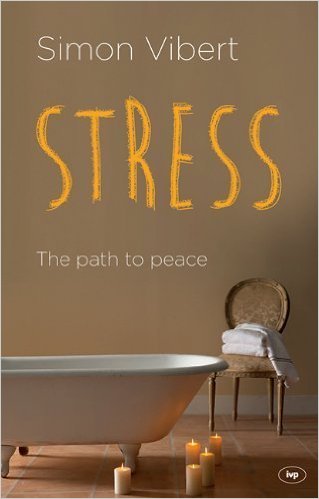
7 things I learned from Simon Vibert’s “Stress: The Path to Peace”

By Anita Mathias

stress

Available on Amazon.com

Available on Amazon.co.uk

Living with high levels of stress can be physically and emotionally dangerous, so much so that stress tests like those by psychiatrists Holmes and Rahe can predict the likelihood of serious illness or an accident in the coming year based an individual’s level of current stress.

1 In his book with Philip Yancey, “Pain: The Gift Nobody Wants,” Dr. Paul Brand describes his work with leprosy patients. The disease attacked their nerves. Unable to feel pain, they cut or burned their feet and hands. The ability to feel pain is a safeguard.

Stress, emotional discomfort, is a similar red light and danger signal— a warning sign that our bodies’ needs must be attended to, a warning to slow down and recalibrate our life, our thinking, and emotions. When heeded, symptoms of stress function as a safeguard.

2 Whereas urbanization, instant communication, and noise pollution are major sources of stress, the best stress-busters, according to a Hoegaarden Beers survey, are contact with nature, the sight of the sea, a walk in the park, hearing birds singing, or smelling freshly cut grass.

Ironically, a balanced life with exercise, rest, relaxation, and time with family and friends makes us more productive.

3 “Planning and making lists removes stress. Noting down everything that needs doing brings huge relief.”

(Both Roy and I have always kept mental lists in our heads—of engagements, parties, things to do…and things do get forgotten–particularly from the To Do list). Whenever I note things down however, I do find a sense of relief. I realize that I have a lot less to do than I thought, and it also motivates me to zip through the list.)

4 Anger increases stress by pumping adrenaline and cortisol around our body, robbing us of tranquillity and sleep.

High-adrenaline physical activity helps to bring our anger under control. As does enough sleep, and trying to see it from the other person’s perspective.

The best way to master anger, however, involves mastering the reflex of dealing with our anger vertically, with God. Telling God about it, and seeking his perspective. Learning to forgive.

5 “The God-given rhythm of rest, time away from our work, is necessary for greater productivity.”

James Crichton-Browne, “We doctors, in the treatment of nervous diseases, are now constantly compelled to prescribe periods of rest. Some periods are only Sundays in arrears.”

A “Sabbath” is good for all human beings. French and Soviet attempts to increase the work-week backfired. Accidents increase and productivity diminishes after about eight hours of work a day, or forty hours a week.

Physician Verna Wright writes, “Just as the body requires its 24 hour cycle, so the one in seven rest day fits perfectly the needs of the body and mind, physically, mentally and spiritually.”

The Sabbath was indeed to be a celebration of freedom from slavery, a gift—a time when humans enjoy the fruit of their labour.

Tim Keller, “God ties the Sabbath to freedom from slavery. Anyone who overworks is a slave. Anyone who cannot rest from work is a slave—to a need for success, to a materialistic culture, to exploitative employers. These slave masters will abuse you if you are not disciplined in the practice of Sabbath rest. Sabbath is a declaration of freedom.”

6 Worry increases stress. Jesus quite clearly tells his disciples not to worry about anything. Again, we can train ourselves to refocus our worry into surrender and trust.

And since, apparently, we control only 8% of the things we worry about, it makes good sense to surrender the outcome of things to God, and to trust his goodness, and his creative ability to work all things out for good.

7 Stress is caused as much by one’s attitude and outlook on life as by external pressures and circumstances.

Once we recalibrate our heart in surrender, and remind ourselves of God’s love for us, and power over our circumstances, and ability to work everything together for good, our stress looks after itself.

By letting God be King, and believing in his power to help us and work together the twists and turns of our lives for good, we begin to learn the secret of being content whatever the circumstances.

I found the earlier, practical chapters more helpful than the later theological ones, though, as Simon points out, while practical lifestyle adjustments certainly reduce stress, facing one’s difficulties as a believer, believing in God’s power to help us, and to work all our difficulties together for good is ultimately the best solution to the problem of stress.

I received Simon Vibert’s Stress: The Path to Peace from Intervarsity Press to review. Available from Amazon.co.uk and Amazon.com.

Filed Under: In which I celebrate books and film and art Tagged With: anger, nature reduces stress, Paul Brand, peace, Philip Yancey, planning, rest, Sabbath, Simon Vibert, Stress

Wriggling towards Shalom

By Anita Mathias

When I find I am stressed, or distressed,  I like to pause there and then instead of going through the day with undefined, subterranean unease.

I take the question to which I do not know the answer–how to be more productive perhaps. How to read more. How to help someone. How to get our business to flourish further–and ask Jesus for the answer. And keep asking the question, sort of saturating the question in prayer.  If any of you lacks wisdom, you should ask God, who gives generously to all without finding fault, and it will be given to you (James 1:15). And I keep asking, and keep asking for God’s answer–his surprising out-of-the-box answers, and eventually, as James promises, guidance, answers and wisdom do come.

  • * * *

Sometimes, I sense a vague fear and unease. Do you? I like to slow down and ask: What is it? What’s bugging me? What is this nebulous dark cloud? Sometimes, the fear, anxiety or annoyance is quite rational, and sometimes not so.

But whether it is a rational fear, or just a vague sense of unease, it does have the same solution.

I mentally put the fear or worry or annoyance into the petri dish of prayer, and invite God’s power to surround, saturate and irradiate it.

I surrender the possible dark outcome I dread to God. Put it in his hands. If it does happen, He will still be there. He will still love me. He will still give me the ability to be happy through it all.

And then I ask him to avert the outcome I dread. Ask him for wisdom for what I am to do today. Ask him for a game plan for the months ahead.

It’s in his hands now, whether things work out just as I prayed for, or just as I dreaded. It’s his worry.

I then just rest in his presence, rest in his love.

It’s not magic, nothing about the spiritual life is …or perhaps everything is!!

But I do get up from the place of prayer so much lighter in my spirit!


Image Credit

Filed Under: In which I play in the fields of prayer, In which I surrender all, The peace that transcends understanding Tagged With: peace, Prayer, Shalom, surrender

“Fine, Let Them Judge Me”: The Peace of Boundaries

By Anita Mathias

OLYMPUS DIGITAL CAMERA

Several years ago now, I was in a Bible study which had some very assertive people who were often unwell. And so there were endless rotas: to take meals around, clean their houses, do their ironing, or give them lifts.

Now, I was over-burdened myself, but I didn’t want the leader to judge me as a pretend Christian,  or a talking head Christian, a chattering class Christian, a  “knows the word but doesn’t do it” Christian, or “a puffed up with knowledge” Christian–oh you know the cruel categories we come up with to judge those whose different gifting threatens us.

And so I signed up for rota upon rota. The leader, who had a lowly job in real life, got a real charge and real energy from dominating this church group, mainly well-paid professionals, as if she were our line manager, and we her unpaid employees; these nagging rotas came around even when the group was not in session.

But for all my signing up, the leader did not really like me and I did not really like her, oh the irony!

* * *

And then—last straw– the leader asked one of the unwell Taker ladies, “What more can we do to help you?” And the lady said, “My children would like fresh-baked caked when they come home from school.” And a fresh baked cake rota was passed around. I jest not!

I thought, “This is ridiculous.  I have never baked a cake in my life, and I am not driving across town—past exquisite bakeries– bearing sugar and white flour which anyway I’ve banished from my own life.

That’s it. I am going to do the work God has given me to do.

And if the work God has given me to do is to write, then I am going to write, not wake early to chauffeur the woman with mild ME who drives herself to work 4 days a week but is too tired to drive to Bible study. Perhaps she could host it instead, or call in a taxi.   I am not going to take my turn of cleaning the house of the lady, who has been feeling too tired to clean, but eats out all the time; she can get a cleaner. I need to stop visiting that negative lady, who said she was lonely and wanted visitors, but depresses me and tears me down. And I am no longer going to drive across town with meals; the supermarkets deliver better meals than I could cook.”

I thought of Rabbi Friedman’s  Parable of the Bridge. Whenever you try to fulfull your destiny, they will be people who will insist they are going to drown unless you hold the rope. You can help them up, but you cannot indefinitely hold the rope.

In this case, none of the people who wanted us to provide cleaning, cooking, ironing, chauffeuring and home-baked cakes would have drowned if I did not provide these services.

All this may be the work God has given the leader to do; it was not the work God has given me to do.

If the leader judges me for not taking my turn on her rotas, she judges me.

Fine. Let her judge me.

So she kept asking me to host fund-raisers, to take my turn providing domestic services (equivalent to a part-time job if I’d agreed to all) and I kept saying No. With a bully as with a toddler and or a puppy, one has to be consistent. No, no, no.

And I was happy with my decision, and I did not sign up to her rotas, and I got even happier.

And I incredibly began to get on far better with the leader, which I did not when I was feeling bullied by her demands, and  was simmering with resentment , and she, on her part, felt the uncertainty and restlessness of the bully who scents blood, has been successful in some thrusts, and wonders how far she could go in manipulating people to do things both she and they knew they did not want to do.

I now had boundaries. She knew I wasn’t going to crumble, and that brought some peace to our relationship. Ah, boundaries, they are good for both parties.

If you are doing things which are not the work God has given you to do out of fear of judgement, or to curry favour, just stop. You will not curry favour. You will just place the mark of a easy mark on your forehead. You will just be used and abused. You will just get angrier.

Figure out the work God has given you to do, and do just that and do no more out of fear of judgement.

Fine. Let them judge me.

How liberating that was. The peace of that: To train myself not fear men’s judgements, but only to care for the judgement of the Lord, the righteous judge.

Filed Under: In which I celebrate friendship and relationships, In which I explore this world called Church Tagged With: Boundaries, peace, The Parable of the Bridge. Judgment

The Prophet Speaks Words Before They are True: Peace! (A Guest Post by Heather Caliri)

By Anita Mathias

I was so pleased when Heather Caliri, author of Dancing Back to Jesus, offered me this beautiful guest post. Thanks so much, Heather!

simeon_1024Bedtime went awry for no very good reason. I was done after a long day. Or: I decided it was a long day, and absolved myself from using kind words and polite questions. As my kids pulled on pajamas and brush teeth, I found myself yelling at someone taking too long to brush their teeth.

Both children asleep and still, I went into my bedroom to quiet my simmering impatience. Settling onto my bed with a pillow at my back, I pulled over the Book of Common Prayer and opened to the devotions for the close of day.

I read the prayers every night. I knew what was coming, and my chest clenched. I hate saying words I can’t live up to. That night, the disconnect was a heavy black underline.

I read the words out loud:

Lord, you now have set your servant free
to go in peace as you have promised.
for these eyes of mine have seen the Savior,
whom you have prepared for all the world to see.

It’s the Song of Simeon, taken from Luke 2. One of the less-familiar Nativity stories, it takes place when the infant Jesus is brought to the temple. Simeon, a prophet that God promised would see the Messiah before he died, comes across the family and praises God.

But as I said them, I thought: Where is my peace? Where is my freedom? Have I seen the Savior today, or closed my eyes to Him? On nights like this Jesus seems hazy and far away, even though his commands are plain: Go and do likewise. Do unto others. Take up your cross.

Simeon’s affirmation needled me. The words tasted of failure.

I know I’m unworthy. But there’s an unworthiness that reaches up to Jesus to be pulled out of the water, and unworthiness that sinks to the bottom of the lake.

The song made me sink.

It’s a pattern I see over and over in my faith, in my pursuit of spiritual disciplines, in my reaching out to God. Sometimes my brokenness brings me to him. Sometimes it does the opposite.

Why does knowledge of my sickness send me running from the one who could heal me?

I read Simeon’s words again because I sensed I needed to be obedient. I needed to say them and ache for healing.

I have seen the Savior, I said. I have seen the Savior.

Here’s what my heart echoed back as I spoke Simeon’s song aloud:

The prophet speaks words before they are true. She is incarnating the possibility. But she lets God do the work of bringing into being.

It is hard for me to believe this no matter how much I know it: God is doing the work for me.

God is providing the peace when I am past the point of feigning it. God is opening the jail doors when I am despairing my captivity. The Savior is, as St. Patrick said, under me, over me, through me, around me, and beside me even when I am blind to His presence.

And what of this peace that Simeon celebrates? It is not the kind we’d see in a soft-focus catalog. I’ve been reading Luke 2 more closely, and seeing this:

Simeon is waiting to die. T.S. Eliot writes that his life is like a feather on the back of a hand, waiting for a breeze to blow it away.

The blessing he gives Mary and Joseph is an unsettling one: their son will cause upheaval. People will speak against him.

And for them: souls pierced by swords.

I imagine them tasting that oddly bittersweet blessing with babe in arms and wondering, again, what they have gotten themselves into.

Here is the truth: my children often pierce my soul. So does my behavior towards them. Reaching out to the Savior who is hazy and clear pierces me, God pierces me, over and over.

It is because I am pierced that I am looking for Him in the first place.

The peace I am given is just right for this complicated world, just right for a mixed-up, broken heart. A heart that waits for God to give the peace, provide the freedom, and make the words come true.

I have seen the Savior, I declare. I am free to go in peace as you have promised.

heather_picHeather Caliri is a writer and mom from San Diego. Two years ago, she started saying little yeses to faith, art, and life. The results shocked her. Get her free e-book, Dancing Back to Jesus: Post-perfectionist faith in five easy verbs, on her blog, A Little Yes.

Filed Under: In which I proudly introduce my guest posters, The peace that transcends understanding Tagged With: peace, Simeon

On Razor-Blade Millionaires; the Moon on a Chain and Being Content with What you Have

By Anita Mathias


 I am listening to Gustave Flaubert’s A Sentimental Education on my iPod as I walk.

It opens with a steamboat journey from Paris:

“The hill on the right bank of the Seine dropped out of sight, and another one loomed closer on the opposite side.

This hill was topped by trees dotted between bungalows with hipped roofs. They had sloping gardens separated by newly built walls, iron gates, lawns, greenhouses, and puts of geraniums set at regular intervals on terraces with parapets to lean on and enjoy the view.

As they caught glimpses of these small country villas, so charming and peaceful, more than one of the passengers thought longingly of owning one, and living out the rest of his days up there, with a nice billiard-room, their own motor launch, a wife, or some such dream.”

* * *

Have you ever dreamed such a dream? I sure have. We have been to Scandinavia for the last three summers—Norway first, then Sweden, then Denmark.

Scandinavians take summer very seriously, because it is so brief. Whenever there is a lake or a river or a fjord, you see these red-roofed houses, with a canoe tied to the mooring pad.

Roy and I look at each other, and we each know we are thinking, “I’d like a little summer house on a large lake, or by the ocean, or by a mountain tarn, and a little canoe to mess about in.”

* * *

When Roy retired early, two summers ago, we got some counselling so two intense people living together 24/7 would not provoke each other to distraction.

The counsellor was good, and offered us much insight into ourselves,though he ultimately drove me to distraction.

One issue which came up was that now that my gifted husband was home, I wanted him to do, well, simply everything.

I had a dream of living near a stream. “Roy, please could you get a water pump, and rocks and concrete, and construct a waterfall,  which will lead to a stream which will go around the garden.” Our garden is 1.5 acre, so this was no small task.

But no, I wasn’t joking, and I bought a whole pile of books which showed how one could construct an artificial waterfall and stream.

Roy got very stressed. He had his own list of Must-Dos, and Would-Love-To-Dos, and could not give me a date for when construction would commence on my waterfall and stream.

I got frustrated. I sulked. I felt a bit outraged. Roy had endless free hours. Why was he saying No to this small matter of a waterfall and stream which he wanted as much as I?

So I brought up his unreasonableness with the counsellor.

* * *

In reply, he told us two stories, which I thought were very foolish, and at which I did not smile.

But I remembered them, and puzzled over them, so, I guess, they were not that foolish after all. More like koan.

* * *

One was a story of man who wanted to be a millionaire. But alas, he realised that he lacked the intelligence, talent, education, drive and resources to become one.

So he thought, “Well, what do millionaires have that I might be able to afford?”

And he thought, “Ah, I bet a millionaire could afford to change his razor blade every day.”

And he resolved, “Well, I realize I am never going to be a millionaire, but I can afford a new razor blade every day. So I am going to be a razor-blade millionaire.”

Moral: Not everyone can achieve their dream. Only one person will be the most famous writer in the world; there will only be one richest man in the world.

However, most of us can achieve some of our dream. We can write, though we may not be wildly successful. We can travel some, even if we do not get to see all the beauty we want to.

                                                       * * *

Story Two was James Thurber’s magical incantatory story Many Moons. Spoiled princess Leonore cries for the moon, but is tricked into happiness by the moon on a necklace around her neck.

Examine the dreams you are convinced will make you happy. Perhaps a simulacrum of them will work just as well. Examine exactly what you want and see if a much simpler, easier thing will make you just as happy.

* * *

I saw magical homes on the Bosphorus Cruise we went on last April, winding between Europe and Asia–beach homes, mountain homes, lake houses. I sort of coveted some of these for the dream or illusion of peace they represent.

But heck, two houses to be furnished, kitted out, made comfortable, and kept clean. One is time-consuming enough.

So, while I have not totally given up the dream of the beach house, I have put on a very distant back-burner. I can be perfectly happy without it, which is, of course, the most persuasive reason not to save up to buy it.

One of the brilliant sentences from Richard Foster’s brilliant book   Celebration of Discipline which have lingered with me is this, We don’t need to possess things to enjoy them.

And now, when material temptation assails, I decide instead to be a razor-blade millionaire, revelling in the sea, and mountains and lakes from the large picture windows of my camper van, and renting the occasional idyllic cottage for a week, wearing the moon on a chain, being contented with all the goodness life offers me, sharp razor-blades, peace around my neck, and eternity in my heart!

Filed Under: random Tagged With: contentment, Happiness, peace

  • 1
  • 2
  • Next Page »

Sign Up and Get a Free eBook!

Sign up to be emailed my blog posts (one a week) and get the ebook of "Holy Ground," my account of working with Mother Teresa.

Join 544 Other Readers

My Books

Rosaries, Reading, Secrets: A Catholic Childhood in India

Rosaries, Reading Secrets, B&N
USA

UK

Wandering Between Two Worlds: Essays on Faith and Art

Wandering Between Two Worlds
USA

UK

Francesco, Artist of Florence: The Man Who Gave Too Much

Francesco, Artist of Florence
US

UK

The Story of Dirk Willems

The Story of Dirk Willems
US

UK

My Latest Meditation

Anita Mathias: About Me

Anita Mathias

Read my blog on Facebook

Follow me on Twitter

Follow @anitamathias1

Recent Posts

  • God’s Complete Forgiveness 
  • Using God’s Gift of Our Talents: A Path to Joy and Abundance
  • The Kingdom of God is Here Already, Yet Not Yet Here
  • All Those Who Exalt Themselves Will Be Humbled & the Humble Will Be Exalted
  • Christ’s Great Golden Triad to Guide Our Actions and Decisions
  • How Jesus Dealt With Hostility and Enemies
  • Do Not Be Afraid, but Do Be Prudent
  • For Scoundrels, Scallywags, and Rascals—Christ Came
  • How to Lead an Extremely Significant Life
  • Don’t Walk Away From Jesus, but if You Do, He Still Looks at You and Loves You
Premier Digital Awards 2015 - Finalist - Blogger of the year
Runner Up Christian Media Awards 2014 - Tweeter of the year

Categories

What I’m Reading


Wolf Hall
Hilary Mantel

Wolf Hall --  Amazon.com
Amazon.com

Amazon.co.uk

Silence and Honey Cakes:
The Wisdom Of The Desert
Rowan Williams

Silence and Honey Cakes --  Amazon.com
Amazon.com

Amazon.co.uk

The Long Loneliness:
The Autobiography of the Legendary Catholic Social Activist
Dorothy Day

The Long Loneliness --  Amazon.com
Amazon.com

Amazon.co.uk

Country Girl
Edna O'Brien

Country Girl  - Amazon.com
Amazon.com

Amazon.co.uk

Archive by month

My Latest Five Podcast Meditations

INSTAGRAM

anita.mathias

My memoir: Rosaries, Reading, Secrets https://amzn.to/42xgL9t
Oxford, England. Writer, memoirist, podcaster, blogger, Biblical meditation teacher, mum

Well, hello friends! Breaking radio silence to let Well, hello friends! Breaking radio silence to let you know that I have taped a meditation for you on Christ’s famous Parable of the Talents in Matthew 25. https://anitamathias.com/2025/11/05/using-gods-gift-of-our-talents-a-path-to-joy-and-abundance/
Here you are, click the play button in the blog post for a brief meditation, and some moments of peace, and, perhaps, inspiration in your day 🙂
Hi Friends, I have taped a meditation; do listen a Hi Friends, I have taped a meditation; do listen at this link: https://anitamathias.com/2025/04/08/the-kingdom-of-god-is-here-already-yet-not-yet-here-2/
It’s on the Kingdom of God, of which Christ so often spoke, which is here already—a mysterious, shimmering internal palace in which, in lightning flashes, we experience peace and joy, and yet, of course, not yet fully here. We sense the rainbowed presence of Christ in the song which pulses through creation. Christ strolls into our rooms with his wisdom and guidance, and things change. Our prayers are answered; we are healed; our hearts are strangely warmed. Sometimes.
And yet, we also experience evil within & all around us. Our own sin which can shatter our peace and the trajectory of our lives. And the sins of the world—its greed, dishonesty and environmental destruction.
But in this broken world, we still experience the glory of creation; “coincidences” which accelerate once we start praying, and shalom which envelops us like sudden sunshine. The portals into this Kingdom include repentance, gratitude, meditative breathing, and absolute surrender.
The Kingdom of God is here already. We can experience its beauty, peace and joy today through the presence of the Holy Spirit. But yet, since, in the Apostle Paul’s words, we do not struggle only “against flesh and blood, but against the rulers, against the unseen powers of this dark world and against the spiritual forces of evil,” its fullness still lingers…
Our daughter Zoe was ordained into the Church of E Our daughter Zoe was ordained into the Church of England in June. I have been on a social media break… but … better late than never. Enjoy!
First picture has my sister, Shalini, who kindly flew in from the US. Our lovely cousins Anthony and Sarah flank Zoe in the next picture.
The Bishop of London, Sarah Mullaly, ordained Zoe. You can see her praying that Zoe will be filled with the Holy Spirit!!
And here’s a meditation I’ve recorded, which you might enjoy. The link is also in my profile
https://anitamathias.com/2024/11/07/all-those-who-exalt-themselves-will-be-humbled-the-humble-will-be-exalted/
I have taped a meditation on Jesus statement in Ma I have taped a meditation on Jesus statement in Matthew 23, “For those who exalt themselves will be humbled, and those who humble themselves will be exalted.”
Do listen here. https://anitamathias.com/2024/11/07/all-those-who-exalt-themselves-will-be-humbled-the-humble-will-be-exalted/
Link also in bio.
And so, Jesus states a law of life. Those who broadcast their amazingness will be humbled, since God dislikes—scorns that, as much as people do.  For to trumpet our success, wealth, brilliance, giftedness or popularity is to get distracted from our life’s purpose into worthless activity. Those who love power, who are sure they know best, and who must be the best, will eventually be humbled by God and life. For their focus has shifted from loving God, doing good work, and being a blessing to their family, friends, and the world towards impressing others, being enviable, perhaps famous. These things are houses built on sand, which will crumble when hammered by the waves of old age, infirmity or adversity. 
God resists the proud, Scripture tells us—those who crave the admiration and power which is His alone. So how do we resist pride? We slow down, so that we realise (and repent) when sheer pride sparks our allergies to people, our enmities, our determination to have our own way, or our grandiose ego-driven goals, and ambitions. Once we stop chasing limelight, a great quietness steals over our lives. We no longer need the drug of continual achievement, or to share images of glittering travel, parties, prizes or friends. We just enjoy them quietly. My life is for itself & not for a spectacle, Emerson wrote. And, as Jesus advises, we quit sharp-elbowing ourselves to sit with the shiniest people, but are content to hang out with ordinary people; and then, as Jesus said, we will inevitably, eventually, be summoned higher to the sparkling conversation we craved. 
One day, every knee will bow before the gentle lamb who was slain, now seated on the throne. We will all be silent before him. Let us live gently then, our eyes on Christ, continually asking for his power, his Spirit, and his direction, moving, dancing, in the direction that we sense him move.
Link to new podcast in Bio https://anitamathias.co Link to new podcast in Bio https://anitamathias.com/2024/02/20/how-jesus-dealt-with-hostility-and-enemies/
3 days before his death, Jesus rampages through the commercialised temple, overturning the tables of moneychangers. Who gave you the authority to do these things? his outraged adversaries ask. And Jesus shows us how to answer hostile questions. Slow down. Breathe. Quick arrow prayers!
Your enemies have no power over your life that your Father has not permitted them. Ask your Father for wisdom, remembering: Questions do not need to be answered. Are these questioners worthy of the treasures of your heart? Or would that be feeding pearls to hungry pigs, who might instead devour you?
Questions can contain pitfalls, traps, nooses. Jesus directly answered just three of the 183 questions he was asked, refusing to answer some; answering others with a good question.
But how do we get the inner calm and wisdom to recognise
and sidestep entrapping questions? Long before the day of
testing, practice slow, easy breathing, and tune in to the frequency of the Father. There’s no record of Jesus running, rushing, getting stressed, or lacking peace. He never spoke on his own, he told us, without checking in with the Father. So, no foolish, ill-judged statements. Breathing in the wisdom of the Father beside and within him, he, unintimidated, traps the trappers.
Wisdom begins with training ourselves to slow down and ask
the Father for guidance. Then our calm minds, made perceptive, will help us recognise danger and trick questions, even those coated in flattery, and sidestep them or refuse to answer.
We practice tuning in to heavenly wisdom by practising–asking God questions, and then listening for his answers about the best way to do simple things…organise a home or write. Then, we build upwards, asking for wisdom in more complex things.
Listening for the voice of God before we speak, and asking for a filling of the Spirit, which Jesus calls streams of living water within us, will give us wisdom to know what to say, which, frequently, is nothing at all. It will quieten us with the silence of God, which sings through the world, through sun and stars, sky and flowers.
Especially for @ samheckt Some very imperfect pi Especially for @ samheckt 
Some very imperfect pictures of my labradoodle Merry, and golden retriever Pippi.
And since, I’m on social media, if you are the meditating type, here’s a scriptural meditation on not being afraid, while being prudent. https://anitamathias.com/2024/01/03/do-not-be-afraid-but-do-be-prudent/
A new podcast. Link in bio https://anitamathias.c A new podcast. Link in bio
https://anitamathias.com/2024/01/03/do-not-be-afraid-but-do-be-prudent/
Do Not Be Afraid, but Do Be Prudent
“Do not be afraid,” a dream-angel tells Joseph, to marry Mary, who’s pregnant, though a virgin, for in our magical, God-invaded world, the Spirit has placed God in her. Call the baby Jesus, or The Lord saves, for he will drag people free from the chokehold of their sins.
And Joseph is not afraid. And the angel was right, for a star rose, signalling a new King of the Jews. Astrologers followed it, threatening King Herod, whose chief priests recounted Micah’s 600-year-old prophecy: the Messiah would be born in Bethlehem, as Jesus had just been, while his parents from Nazareth registered for Augustus Caesar’s census of the entire Roman world. 
The Magi worshipped the baby, offering gold. And shepherds came, told by an angel of joy: that the Messiah, a saviour from all that oppresses, had just been born.
Then, suddenly, the dream-angel warned: Flee with the child to Egypt. For Herod plans to kill this baby, forever-King.
Do not be afraid, but still flee? Become a refugee? But lightning-bolt coincidences verified the angel’s first words: The magi with gold for the flight. Shepherds
telling of angels singing of coming inner peace. Joseph flees.
What’s the difference between fear and prudence? Fear is being frozen or panicked by imaginary what-ifs. It tenses our bodies; strains health, sleep and relationships; makes us stingy with ourselves & others; leads to overwork, & time wasted doing pointless things for fear of people’s opinions.
Prudence is wisdom-using our experience & spiritual discernment as we battle the demonic forces of this dark world, in Paul’s phrase.It’s fighting with divinely powerful weapons: truth, righteousness, faith, Scripture & prayer, while surrendering our thoughts to Christ. 
So let’s act prudently, wisely & bravely, silencing fear, while remaining alert to God’s guidance, delivered through inner peace or intuitions of danger and wrongness, our spiritual senses tuned to the Spirit’s “No,” his “Slow,” his “Go,” as cautious as a serpent, protected, while being as gentle as a lamb among wolves.
Link to post with podcast link in Bio or https://a Link to post with podcast link in Bio or https://anitamathias.com/2023/09/22/dont-walk-away-from-jesus-but-if-you-do-he-still-looks-at-you-and-loves-you/
Jesus came from a Kingdom of voluntary gentleness, in which
Christ, the Lion of Judah, stands at the centre of the throne in the guise of a lamb, looking as if it had been slain. No wonder his disciples struggled with his counter-cultural values. Oh, and we too!
The mother of the Apostles James and John, asks Jesus for a favour—that once He became King, her sons got the most important, prestigious seats at court, on his right and left. And the other ten, who would have liked the fame, glory, power,limelight and honour themselves are indignant and threatened.
Oh-oh, Jesus says. Who gets five talents, who gets one,
who gets great wealth and success, who doesn’t–that the
Father controls. Don’t waste your one precious and fleeting
life seeking to lord it over others or boss them around.
But, in his wry kindness, he offers the ambitious twelve
and us something better than the second or third place.
He tells us how to actually be the most important person to
others at work, in our friend group, social circle, or church:Use your talents, gifts, and energy to bless others.
And we instinctively know Jesus is right. The greatest people in our lives are the kind people who invested in us, guided us and whose wise, radiant words are engraved on our hearts.
Wanting to sit with the cleverest, most successful, most famous people is the path of restlessness and discontent. The competition is vast. But seek to see people, to listen intently, to be kind, to empathise, and doors fling wide open for you, you rare thing!
The greatest person is the one who serves, Jesus says. Serves by using the one, two, or five talents God has given us to bless others, by finding a place where our deep gladness and the world’s deep hunger meet. By writing which is a blessing, hospitality, walking with a sad friend, tidying a house.
And that is the only greatness worth having. That you yourself,your life and your work are a blessing to others. That the love and wisdom God pours into you lives in people’s hearts and minds, a blessing
https://anitamathias.com/.../dont-walk-away-from-j https://anitamathias.com/.../dont-walk-away-from-jesus.../
Sharing this podcast I recorded last week. LINK IN BIO
So Jesus makes a beautiful offer to the earnest, moral young man who came to him, seeking a spiritual life. Remarkably, the young man claims that he has kept all the commandments from his youth, including the command to love one’s neighbour as oneself, a statement Jesus does not challenge.
The challenge Jesus does offers him, however, the man cannot accept—to sell his vast possessions, give the money to the poor, and follow Jesus encumbered.
He leaves, grieving, and Jesus looks at him, loves him, and famously observes that it’s easier for a camel to squeeze through the eye of a needle than for a rich person to live in the world of wonders which is living under Christ’s kingship, guidance and protection. 
He reassures his dismayed disciples, however, that with God even the treasure-burdened can squeeze into God’s kingdom, “for with God, all things are possible.”
Following him would quite literally mean walking into a world of daily wonders, and immensely rich conversation, walking through Israel, Lebanon, Syria, and Jordan, quite impossible to do with suitcases and backpacks laden with treasure. 
For what would we reject God’s specific, internally heard whisper or directive, a micro-call? That is the idol which currently grips and possesses us. 
Not all of us have great riches, nor is money everyone’s greatest temptation—it can be success, fame, universal esteem, you name it…
But, since with God all things are possible, even those who waver in their pursuit of God can still experience him in fits and snatches, find our spirits singing on a walk or during worship in church, or find our hearts strangely warmed by Scripture, and, sometimes, even “see” Christ stand before us. 
For Christ looks at us, Christ loves us, and says, “With God, all things are possible,” even we, the flawed, entering his beautiful Kingdom.
Follow on Instagram

© 2026 Dreaming Beneath the Spires · All Rights Reserved. · Cookie Policy · Privacy Policy