Anita Mathias: Dreaming Beneath the Spires

Anita Mathias's Blog on Faith and Art

  • Home
  • My Books
  • Meditations
  • Essays
  • Contact
  • About Me

Our Unique and Transforming Call and Vocation

By Anita Mathias


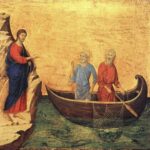
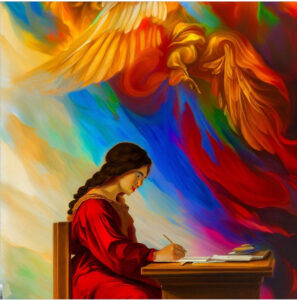
We read in the Gospel of Matthew, that as Jesus walked beside the Sea of Galilee, he saw two brothers, Simon and Andrew, casting a net into the lake, for they were fishermen. “Come, follow me,” Jesus said, “and I will send you out to fish for people.”  At once they left their nets and followed him.

On the same walk, Jesus called two other brothers, James and John, who leave their boat, and their father, and follow him.


God is always speaking

His transforming words into our lives

As we still our hearts and listen.

He is, by his very nature, a God

Who speaks. At the start of his great Gospel,

The Apostle John calls Jesus the Word

Who was God, and became flesh

And lived among us.


And this speaking, communicating, yearning God

Calls each of us to the work he wants us to do in the world.

We are sometimes called at a particular point of time,

Through specific words or images,

Or else, gradually, through an inner conviction

That this is the task we are to embark on

With all our strength, for the rest of our lives.

The call we hear, or sense, is utterly serious.

And if we say “Yes!,” the moment of response

Is among the greatest and most important moments of our lives.


For it is a transforming call.

It changes the whole direction of our lives.

From the day we hear God’s call,

We must begin to restructure our lives

In accordance with this necessity.

What we read, the friendships we invest in,

Our social activities, hobbies, leisure,

Our whole lives…are hitherto

To be shaped in accordance with our calling.


The greatest, kindest person in the whole world,

Jesus Christ, has called you to something you

Are uniquely equipped to do, you

With your strengths and your weaknesses,

You have been called, commissioned

To a task in which you will flourish and find joy.

But not just you.


Jesus said he would give his flesh, sacrifice

His life for the life of the world.

And while what we are called to will make us fully,

Blazingly alive–mentally, emotionally, and spiritually,

What God calls us to do will also contribute

To the life and the flourishing of the world.

* * *

God wastes nothing.

Your call will use the gifts, experiences, and strengths

Formed in you by the circumstances of your life.

Peter, Andrew, James and John were fisherman

Who sometimes worked hard all night and caught nothing,

Who could row three and a half miles out of shore,

Who were caught in perilous storms, in which waves crashed into the boat

And they almost sank.


This hardiness gave them the tough, resilient character of men

Who could not only catch fish to keep themselves alive

But could also persuade humans into a richer,

Deeper, more peaceful and eternal life.

No longer fishermen but fishers of men, punning Jesus said.

The call of God, if obeyed, always leads to a bigger,

Better and more challenging place.

Your call will stretch you, mould you and transform you.

To reject, or to ignore the call is to reject growth.


The call gives us a new identity.

The fisherman became leaders,

Writers of the New Testament, poetic and prophetic.

And sometimes, at the point of the call,

God supernaturally puts into us spiritual gifts, strengths,

And abilities called an anointing (Oh, precious thing!)

Which makes difficult things easier.

If you yearn for that, then pray for it.

* * *


The call will involve sacrifice.

We cannot simply squeeze a new mission into our crowded lives.

If you hear God call you to write, let’s say,

You must immediately ask yourself: “What

Will I stop doing to help this new thing happen?”

Less time reading the news, or on social media?

Releasing outgrown friendships which drag you down?

Eating more simply, more raw foods perhaps?

Buying as few inessential things as possible?


God’s call is benevolent, beneficent, aimed at our flourishing.

And as we begin to obey it, with increasing faithfulness,

Our whole life changes.

It becomes more serious, more purpose-driven.

And purpose is one of the greatest things we humans can have,

(Along with faith, hope and love).

When we have purpose, our eyes are bright with it.

* * *

Having heard a call, you set out in obedience

On a very long journey,

Which will last the rest of your life.

There’s almost always a long gap between hearing a call,

And seeing the fruits of your work.

For God’s call to you is not just for the life and flourishing of the world,

But, also, for your own growth and flourishing.

While you are refining your skills to fulfil your call

God is shaping and refining you–

Your persistence, your ability to follow through,

To get from A to Z, meet deadlines, get organised,

To ask him for guidance, and learn the sound of his voice.

You grow up, you mature, you toughen,

You develop character as you develop your gifts.


The precise call may be revealed progressively.

You can only steer a moving car.

If you hear God’s call to write, say,

Begin today, with the words and ideas which come.

Polish and burnish your craft while awaiting

More precise marching orders,

Which may keep coming over decades.

* * *

Now, here’s the hard part.

Being called, as many are,

Does not guarantee blazing success in the world’s eyes,

Or by human metrics. God decides our platform,

Whether our work will reach dozens, hundreds, thousands, or millions.


In the Parable of the Talents,

God gives some one talent, some two and some five.

The ones with two and five talents each work as hard as they can

And each double their capital.

But still, one ends up with four talents, and the other with ten.

That’s life. If it seems unfair, it’s because we are characters

In a play God has written. He gives us our roles,

And it’s our job to play them as beautifully as we can.


Some writers, for instance, will always have a small audience.

Fact of life.

If that is you, write as truly and beautifully as you can,

With gratitude for your platform, large or small.

But hey, if having many readers or listeners matters to you,

(And it does matter to me!)

Ask God to grant you success,

And trust in his grace to work well, whether

In Milton’s phrase, your success will eventually be

“Less or more, or soon or slow, or mean or high.”

* * *

And what if you have heard a call

But have not been steadily faithful in following it?

And, here, I sadly put up my hand.

Me too.

I have not been single-minded.

I have been distracted.


If you’ve half-heartedly focused on your call,

And wasted time in trivial pursuits,

Sprint after Jesus as he continues walking by the Sea of Galilee.

Repent and promise renewed faithfulness to your call,

Renewed seriousness,

For our life is a short, serious and holy experience.

Recommit, and follow your call as intensely

As you wish you had done at first.

* * *

And what if you haven’t heard a specific call yet?

After all, Peter, Andrew, James and John,

Young working men, earning their living

Had not heard a call until that brilliant, costly, priceless day

When Jesus called them.


If you haven’t heard a specific call,

Then do the next right thing while you await direction.

Never jump into a ministry or your life work for God

Before you have heard God’s crystal-clear directions.

And while he prepares us, God also speaks through our lives.

What happens in the doctor’s office?

Do you leave resolving to exercise more,

To cut back on sugar, caffeine, white carbs? To meditate?

Start small in forming the good habits you’ll need, but start.

Is your house ready to invite friends over

Without a cleaning-up operation that’s like

Hiding the evidence of a crime?

Create time by decluttering everything inessential from your home,

Anything which slows you down as you run your race.

Do you tell yourself you’d love to wake with the sun?

Then recalibrate with night-time go-to-bed alarms and earlier nights.

All this is preparation.


*  * *

So, dear Lord,

Help us to be single-minded and laser-focused,

On being faithful to what you have called us to do.

We love you; increase our love.

We want to always see you before us, Jesus.

Increase our faith.

Amen.

This meditation is inspired by Matthew 4: 18-22

If you haven’t yet discerned your purpose in life, I’d recommend Rick Warren’s The Purpose-Driven Life (UK), or on Amazon.com

If you’d like to read my previous recorded meditations,

5 Change Your Life by Changing Your Thoughts

4 Do not be Afraid–But be as Wise as a Serpent

3 Our Failures are the Cracks Through Which God’s Power Enters our Lives

2 The World is full of the Glory of God

1 Mindfulness is Remembering the Presence of Christ with us.

Please subscribe at Apple podcasts, Spotify, Amazon music, Audible, or wherever you get your podcasts. Thanks!!

And, of course, I would love you to read my memoir, fruit of much “blood, sweat, toil and tears.”

Rosaries, Reading, Secrets: A Catholic Childhood in India in the UK, and in the US, here, well, and widely available, online, worldwide 🙂
Filed Under: Blog Through the Bible Project., In which I explore writing and blogging and creativity, Matthew, Meditation, Vocation, Writing, Writing and Blogging Tagged With: Andrew, call, James, Jesus, John, Peter, vocation, writing

Change your Life by Changing Your Thoughts

By Anita Mathias

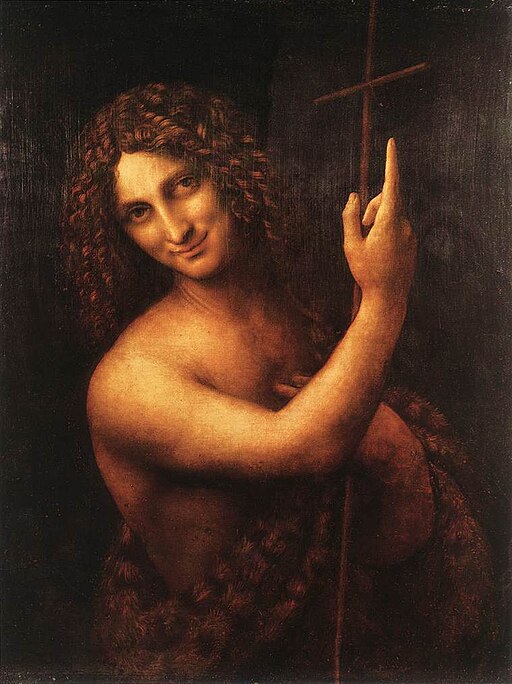
John the Baptist by Leonardo do Vinci

Leonardo da Vinci - St John the Baptist


Today’s meditation is on changing our lives by changing our thinking.


So, just before Jesus bursts on the scene in the Gospel of Matthew

The no-nonsense, utterly serious John the Baptist

Comes with an utterly serious message, Repent

In the Greek, metanoeite,

for the kingdom of heaven has come near.


The Kingdom of Heaven? A new era in history

Has begun: The era of Jesus,

When ordinary, heavy-laden frazzled people can, just like that,

Squeeze through a narrow gate into an inner new world,

The invisible but real Kingdom, described by the Apostle Paul

as righteousness, peace, and joy in the Holy Spirit.


Who would not want this?


What is this narrow door into a bigger, happier life?

It is to repent, in Greek metanoéō. From meta, change, nous, mind

Repenting literally means to change one’s mind, to think differently


And that is the way any real change begins in our lives.

We change how we think about things.

We are “transformed by the renewing of our minds,”

In Paul’s lovely phrase in his letter to the Romans.


It is all gain; it is, seriously, a wiser, better life,

To cultivate what the Apostle Paul calls

“The mind of Christ” as we consider the issues of our lives

(And it’s common sense to cultivate the mind of Christ

Because Christ’s mind is far cleverer, more incisive,

More original and startling than ours could ever be.)


Metanoia, repentance, thinking differently

Can mean mentally seeing Christ standing between us

and the questions, puzzles and uncertainties in our lives.

We see the problem we face bathed in the golden light of Christ,

And we ask him to show us what he thinks about it.


For instance: to take an issue which obsesses many people today:

Conforming to a socially-enviable body shape

Can consume much mental, emotional and physical energy.

But God created both hippopotamuses and cheetahs.

His delight in us, his amusement as he sees us,

Is not dependent on whether our BMI is 18, 25 or 30,

Whether our dress size is 2 or 14. God who made our bodies

Loves and values them more than we do,

Just like as the author of the book loves it more

than the one who bought a copy.

God, who made us, thinks we are fabulous.

So rest in his love.


And so metanoia, a new mind, thinking differently, repentance

Means rejecting vanity-based worries about appearance

While realising, that, of course, God does want us

To do everything we can do

To have a strong, flexible and healthy body,

So as to have the strength and energy

To do the unique work He has called us to do,

For as long as we live on this earth.


So rather than being a reed swaying in the wind

Of the latest dietary pronouncements of the latest self-promoting guru,

Metanoeite, think differently:

Change your mind for the mind of Christ


Put your body, your health and your lifespan

Into God’s hands, and ask him,

And then trust him to guide you beyond

The latest pundit’s latest Noes, Noes

To eat blessing,

To eat the food which will be a blessing

To your individual and unique body, rather than a curse to it.


Jesus says his yoke is easy and his burden is light.

Metanoia, having a new mind, thinking differently, could mean

Asking the Spirit,

Whom Jesus says will teach us all things

To show us the light and easy way

To build joyful movement into our lives

Creating a body that will remain flexible and strong

For the rest of our lives. We must ask Jesus

Who promises us joy to teach us the right,

Most energising movement for us, say, yoga for flexibility,

or hefting weights for strength, or long-distance walking or running,

Flooding the mind with serotonin, and dopamine,

and slowly changing the deep structure of our brains.

We might also ask the Spirit to show us how to get strong and muscly

in a way consistent with love, perhaps incorporating vigorous housework

and gardening into our routines, as well as long walks with family and friends.


Being mindful that Jesus said that those who will not

Deny themselves and take up their cross are not worthy of him.

We remember that Christ says that his future disciples

will fast, and even promises us a reward for it.

(A reward from God!! Wow!)

Fasting, for the right periods of time for each of us,

blesses an overtaxed, overweight body,

and saves both time and money. Far better

than wasting brain space and emotional energy

In dietary obsessions.


And, as we take on the challenges life throws at us,

Like changing our bodies, if need be,

Changing our houses if decluttering or organizing is needed

Or waking earlier as the Spirit leads

We remain aware that we have a tender father looking at us,

Aware that to him we are as beloved toddlers are to a good human parent

Aware that he is a wonderful God

A compassionate and gracious God,

Slow to anger, abounding in love and faithfulness,

As He described himself in his self-revelation to Moses in the Book of Exodus.


Let’s breathe.

Oh God of resurrection, who brings dead things to life

Who can do more in a few minutes of good ideas and multiplication

Than we could in years, we put into your hands,

Our perplexities and ask you for wisdom,

We give you our questions, and ask for your answers.

We love you. Increase our love,

We will trust you. Increase our trust.

Amen.


This meditation is on Matthew 3:2

If you’d like to read my previous recorded meditations,

5 Change Your Life by Changing Your Thoughts

4 Do not be Afraid–But be as Wise as a Serpent

3 Our Failures are the Cracks Through Which God’s Power Enters our Lives

2 The World is full of the Glory of God

1 Mindfulness is Remembering the Presence of Christ with us.

Please subscribe at Apple podcasts, Spotify, Amazon music, Audible, or wherever you get your podcasts. Thanks!!

And, of course, I would love you to read my memoir, fruit of much “blood, sweat, toil and tears.”

Rosaries, Reading, Secrets: A Catholic Childhood in India in the UK, and in the US, here, well, and widely available, online, worldwide 🙂


Filed Under: Matthew, Reptentance Tagged With: body shape, diet, exercise, fasting, metanoia, repentance

Do Not Be Afraid–But Be as Wise as a Serpent

By Anita Mathias

Today’s meditation is on not being afraid, but rather, acting with wisdom.

Do not be afraid, the angel in the dream

tells Joseph: Marry your fiancée, Mary,

who is showing, despite your chaste restraint,

for in our magical world, in which angels

speak to humans, a virgin has conceived

by the Spirit of God, as long foretold, by the prophet Isaiah,

and the child shall be called Jesus, which means The Lord Saves,

and he shall save people from the power of sin.


And Joseph is not afraid and marries Mary.

And the angel’s words are soon confirmed

For a star appeared in the East,

And the astrologers who saw it, followed it to Jerusalem,

Searching for one they knew was born

the King of the Jews (terrifying jealous King Herod!).

And when the star stopped, they worshipped the child

With precious gifts of gold, frankincense and myrrh.


But then, the prophetic dream-angel,

Appeared with a different message:

Flee to Egypt, and stay there “until I tell you to leave,”

For King Herod plans to kill

The child who is to be a forever-King.


What? The dream angel who exhorted, “Do not be afraid?”

Now says, “Escape to Egypt.”

Escape to Egypt? Leave my business, extended family,

Friends, my language? Live among strangers? Become a refugee?

But, oh dream-angel, wasn’t it you who said, “Do not be afraid?”

But the spirit is like the wind, the child Jesus later said.

It sometimes blows new guidance, new directions.

(And, indeed, Herod would soon slaughter every male infant and toddler in Bethlehem.)


God’s Spirit within us teaches us

The difference between acting out of fear

And acting with wisdom.


Scripture repeatedly commands us not to be afraid,

For most things we fear will never happen,

And when trouble comes: They are there–

God our loving Father, Christ our friend,

and the Holy Spirit whom Jesus calls

The Helper, Counsellor, and Comforter.


Fear wastes time, energy and life–

Fear of being judged leads to over-cooking and over-cleaning-up for guests.

Fear of judgement leads overwhelmed you to signing up to all those rotas

While neglecting your own home, family, gifts and calling.

Fear might lead to foolish worrying about your bank balance,

When you know the Lord Jesus Christ who added three zeros

When he multiplied the five loaves.


What then is the wisdom Jesus recommends?

We go out as sheep among wolves, Christ tells us.

And, he adds, dangerously, some wolves are dressed like sheep.

They seem respectable­­­—busy charity volunteers, Church people.

Oh, the noblest sentiments in the noblest words,

But they drain you of money, energy, time, your lifeblood.


How then could a sheep, the most defenceless creature on earth,

Possibly be safe, among wolves,

Particularly wolves disguised in sheep’s clothing?


A sheep among wolves can be safe

if it keeps its eyes on its Shepherd, and listens to him.

Check in with your instincts, and pay attention to them,

for they can be God’s Spirit within you, warning you.

We have too the wisdom of The Good Book.

And, as Jesus cautions, assess people before you trust them,

Not by their words, but by the fruit of their lives

Which says more than words can.

Do things add up? Any red flags?


And Jesus has another memorable piece of advice

For his disciples, those sheep among wolves.

Be as wise, as phronimos as a serpent. The koine Greek word

Phronimos means shrewd, sensible, cautious, prudent.

These traits don’t come naturally to me.

But if Christ commands that we be as wise,

shrewd, sensible, cautious and prudent as a serpent,

His Spirit will empower us to be so.


A serpent is a carnivorous reptile,

But animals, birds and frogs are not easily caught.

So, the snake wastes no energy in bluster or self-promotion.

It does not boast of its plans; it does not show-off.

It is a creature of singular purpose, deliberate and slow-moving

For much of its life, it rests, camouflaged,

soaking in the sun, waiting and planning.

It’s patient, almost invisible, until the time is right

And then, it acts swiftly and decisively.


The wisdom of the snake then is in waiting

For the right time. It conserves energy,

Is warmed by the sun, watches, assesses,

and when the time is right, it moves swiftly

And very effectively.


But what of “two-faced snakes”

Who smile and smile and yet are villains?

Who wait till their Caesar-enemy is down,

Before they strike. God does not bless such lives.

Those who take the sword, perish by the sword, Jesus says,

Unless they repent, and a merciful God forgives.


However, as always, Jesus balances his advice:

Be as wise as a serpent, yes, but also as blameless

akeraios  as a dove. As pure, as guileless, as good.

Be wise, but not only to provide for yourself and family

But, also, to fulfil your calling in the world,

The one task God has given you, and no one else

Which you alone, and no one else, can do,

And which God will increasingly reveal to you,

as you wait and ask.


Today’s meditation was from Matthew Chapter 2.

If you’d like to read my previous recorded meditations,

3 Our Failures are the Cracks Through Which God’s Light Enters

2 The World is full of the Glory of God

1 Mindfulness is Remembering the Presence of Christ with us.

Please subscribe at Apple podcasts, Spotify, Amazon music, or wherever you get your podcasts. Thanks!!

And, of course, I would love you to read my memoir, fruit of much “blood, sweat, toil and tears.”

Rosaries, Reading, Secrets: A Catholic Childhood in India in the UK, and in the US, here, well, and widely available, online, worldwide 🙂

IMAGE: Photo by Bicanski on Pixnio


Filed Under: Blog Through the Bible Project., Matthew, Meditation Tagged With: angels, difference between fear and prudence, dreams, Herod, innocent as a dove, Jesus, Joseph the father of Jesus, Magi, refugee, sheep among wolves, wisdom, wise as a serpent, wolf in sheep's clothing

Our Failures are the Cracks through which God’s Light Enters

By Anita Mathias

The Book of Revelation, the final book of the Bible ends on an ecstatic note,

“The Spirit and the bride say, “Come!” Let the one who is thirsty come; and let the one who wishes take the free gift of the water of life.

Maranatha. Come Lord Jesus.”

Through the day, when you feel distracted, or sense stress rising, or your breathing becoming ragged, try a breathing prayer. Say this ancient Aramaic word to yourself, Maranatha. Four equally stressed syllables which mean Come Lord Jesus.

So as we begin to calm down and enter our bodies, let’s say that, one syllable with each inhale and exhale. Ma-ra-na-tha. Ma-ra-na-tha.  Come Lord Jesus.

And now to today’s meditation on how our very failures are the cracks through which God’s light gets in.

The ancestors of the Lord Jesus Christ

As outlined in the first chapter of the Gospel of Matthew:

The deceiving, scheming younger brother Jacob

Who tricked his elder brother out of his inheritance;

Tamar, who tricked her father-in-law into sex.

Rahab the Canaanite prostitute, mother of the honourable Boaz.

Ruth, the determined and destitute Moabite widow

Who, bathed and perfumed, crept in the dead of night,

To lie beside an inebriated Boaz.

Ruth and Boaz, grandparents of King David

Who spotted beautiful Bathsheba, wife of Uriah the Hittite,

Bathing on a roof, summoned her to bed,

And when she fell pregnant, had her husband

Uriah, who was off fighting for King David, killed.

Bathsheba, mother of Solomon whose “heart was led astray

by his seven hundred wives and three hundred concubines”.

From such, the Lord Jesus Christ came.


And who are the descendants of Jesus,

Grafted into his family by the faith

That Christ, who visited us twenty centuries ago,

was God himself, God who can change

the deep structure of our characters,

and the molecules of our heart and spirit?

Those descendants include us

whose failings may be less spectacular,

but as secret, and as sad.

The one who flogs the dying horse of her exhausted mind

with cups of coffee until it burns out;

Who takes on far too much of the insignificant,

putting neither first things nor first people first.

Who is distracted from distraction by distraction,

While her house gets cluttered and overwhelms her;

Who frets when she should be living by faith and prayer.

The world is too much with her.

For such Jesus came all those centuries ago.

To such, he comes today


And you, when you say, ah, there goes my temper.

I am being that critical, negative person I did not want to be.

For such he came.

And was it you had resolved just this morning, to run 10,000 steps, to burn 2200 calories, do yoga and lift weights? Flexibility, strength, endurance, perfection.

And time slipped away on your phone, Facebook, the Guardian, the New Yorker.

You look at your browser history and wince.

Your one, wild and precious life slipping away,

surfing news that is none of your business

You feel the sting of regret, irreplaceable time, vanished.

For you, who have failed, he came.

You’ve not read as much as you wanted to,

You have not been kind, or written that long-delayed letter.

You have betrayed your gifts and your calling.

And it was for people who fail, people like you that Christ came.

All your failures provide landing places, entry points,

Cracks through his light gets in.


Your pride is cracking, your self-sufficiency is cracking,

And you are ripe for his invasion.

And all you can say is Maranatha. Come Lord Jesus.

And he says,

“I have long stood at your door, and knocked

And now, you hear my voice and open to me,

And so, I will come in and eat with you.”

And you say, again,

“Maranatha.

Come, Lord Jesus.”


This meditation was from Matthew 1

If you’d like to read my previous recorded meditations,

2 The World is full of the Glory of God

1 Mindfulness is Remembering the Presence of Christ with us.

And, of course, i would love you to read my memoir, fruit of much “blood, sweat, toil and tears.”

Rosaries, Reading, Secrets: A Catholic Childhood in India in the UK, and in the US, here, well, and widely available, online, worldwide 🙂


Filed Under: Meditation Tagged With: Bathsheba, Boaz, David, failures, Jacob, Matthew 1, Rahab, Ruth, Tamar

The Whole Earth is Full of God’s Glory

By Anita Mathias


Hello, welcome to the second episode of Christian meditation with Anita Mathias.

Let’s close our eyes, and detach from the world, and begin to enter the inner sanctuary of the soul.
The best way of calming down is by focusing on our breath. Breathe in to the count of five; breathe out. Again.
The Hebrew word for God was Yahweh, which is the sound of breath, I’ve read. Breathe Yah on the in breath. Weh on the outer breath. Yah weh. Yah weh.

Begin to enter your body. Raise your shoulders to your ears. Rotate them clockwise, anti-clockwise.
Tense and wriggle your fingers. And toes.

The prophet Isaiah experienced an ecstatic vision of God. He writes,
I saw the Lord, high and exalted, seated on a throne, and the train of his robe filled the temple. 2 Above him were seraphim flying. And they were calling to one another:
“Holy, holy, holy is the LORD Almighty;
The whole earth is full of his glory.”

And that is the one sentence to take from this meditation, to tuck into your heart, and mind, and spirit and memory and carry with you for your whole life.

The whole earth is full of God’s glory.

Life comes to each of us in waves, ups and downs. At times, we are floating; at times, sadness or depression, which feels like something heavy lodged in our body, seizes us. At those times, movement helps, and also to, as far as possible, in the words of Paul the Apostle, “Rejoice always, pray continually, give thanks in all circumstances.”

And one way to start being grateful for the gift of our lives is by observing the natural world. The movement of clouds in the sky, their ever-changing canvas, the singing birds, which at dusk makes it sound as if the trees are singing, the trees themselves which grow and change in their ancient silent dignity, the green plants and the flowers, each unique. This is a created universe, a made universe, imagined and invented and given to us by God. And the whole earth is full of God’s glory.

If it’s night, or if you are in an institution and cannot look out at God’s sky, use your memories of the natural world, God’s holy earth, with what the poet William Wordsworth calls, “the inward eye which is the bliss of solitude.”

This is our Father’s world, and the whole earth is full of his glory. God stalks this world invisibly, as Christ, in the flesh, walked the hills of Galilee.

And here’s an excerpt from a poem by Coventry Patmore
In No Strange Land

The angels keep their ancient places;—
Turn but a stone and start a wing!
’Tis ye, ’tis your estrangèd faces,
That miss the many-splendoured thing.
But (when so sad thou canst not sadder)
you weep;—then
Shall shine the traffic of Jacob’s ladder
Pitched betwixt Heaven and Charing Cross.
Yea, in the night, my Soul,
Cry,—clinging to Heaven by the hems;
And lo, Christ walking on the water,
Not of Genesareth, but Thames!

Christ is everywhere, stalking the world, walking on the waters not just of Gennesaret, but the Thames, which flows minutes from my own house in England. As we spend more time in the natural world, we realise that we live in a God-haunted world where the wind and trees and storms cry Holy.

“The LORD bless you
and keep you;
25 the LORD make his face shine on you
and be gracious to you;
May the LORD turn his face toward you
and give you peace.”’

Thank you. If you’d like to listen to the previous meditation, here it is https://anitamathias.com/2023/02/20/mindfulness-is-remembering-the-presence-of-christ-with-us/

Filed Under: Meditation

Mindfulness is Remembering the Presence of Christ with Us

By Anita Mathias

Hi Friends, Welcome to a new podcast, Christian Meditation with Anita. This is the first episode.

Over the last four years, meditation has begun to change my life.

A session of meditation before I write calms and focuses my mind and helps me gather my thoughts. It is the most effective way I know to help me settle down and focus.

It is a solution to the turbulence of life. Get very quiet, retreat into yourself, and be alone with your breath and the God who made you.

Meditation calms and rewires the nervous system. It has made me quieter, less reactive, more aware of what I am feeling, and more perceptive of unspoken currents of human interaction, and what other people might be feeling. And as you begin to slow down, to quieten down in the deep heart’s core, over time, you become more able to choose your responses wisely, and kindly.

With its focus on the breath, meditation helps you switch your attention off the hamster wheel of annoying repetitive mosquito thoughts to something else, pretty much at will.

I recently started meditating seriously again, after developing sciatica due to over-exercising on our family holiday in December. The pain can scream for attention, feel excruciating, all-enveloping, and then, after a few minutes of meditation, it begins to subside and, as I switch my focus to my breath and the meditation tape, my whole body relaxes and the pain becomes imperceptible, fades.


So, let’s do some meditation. Let’s give ourselves the gift, the luxury of getting very quiet, of retreating within ourselves to relax, and be with the God who made us.

Close your eyes, sit straight, or cross-legged if that’s comfortable for you, and begin to breathe. A deep breath in. And out. Breathe in deeply. Breathe out fully. A deep breath in. And out. Twice more.


When Jesus gave the Holy Spirit to his disciples as a gift, an inheritance, he breathed on them.

As you relax your body, picture a golden wave of the love of God coursing through it, relaxing it.

If you feel tension in your shoulders, raise them up to your ears, slowly roll them, clockwise, anticlockwise. Repeat.

There is a direct connection between our hips and our emotions, I’ve read. Stressful thoughts,  stressful interactions, unresolved bubbling emotions can trigger the pain of sciatica. Send your breath towards your hips. Breathe in, breathe out.

Let the breath travel to your toes. Clench them, wriggle them, relax. Breathe.


Meditation, focus on the breath, is a tool for calming down right in your body. It teaches us mindfulness, a current buzz word.

But what are we mindful of?


We are mindful of the presence of the God. We are mindful that we are living in a holy experience. We remember that life is a gift given to us by God, and it is short. We must savour it with gratitude.

So anything that will enhance the joy with which we live life, anything that will enhance the gratitude and wonder with which we go through our holy experience, is a blessing. And the first way we begin to appreciate the gift of our lives is by slowing down.

Breathe in to the count of five; breathe out. Take another four deep breaths.


Christian mindfulness is awareness of a presence with us, always with us, the triune God, Father, Son, Spirit. There is another in the room, a source of wisdom in the room, a source of guidance.  You walk into a room; they walk in with you, and are already there. Waiting. Father, Son, Spirit.


We are mindful of the Father’s presence with us, right now.

The Father, into whose lap we can climb into with our needs, our wants, and our questions. If this image resonates with you, visualise yourself climbing into the arms of the Everlasting Father, the Ancient of Days, and whispering your worry to him. Ask him for wisdom.

At some time in your life, you may, in God’s mercy, hit a brick wall. You may know all the good things to do, but struggle to do them. You may struggle with weight loss perhaps, or organised housekeeping, with developing a habit of exercise, with waking early to hang out with God, or with doing disciplined creative work. There may be things you may need to change in your character, a crabby temper, say, which you struggle to change. And you find that you simply do not have the power within yourself to make these changes.  And then, all the Christian cliches you’ve heard, Let go and let God make sense.

In the quietness of this moment, ask God to begin to make those internal changes in the molecules of your soul; ask God to do that thing in you which you cannot do yourself.

.

We are mindful that wherever we are, there is always another presence, the Lord Jesus Christ, our Lord and our God. Our Lord and our God. He walks beside us as he walked with the disciples on the road to Emmaus.

Mindfulness is taking a moment to worship him, seated on the throne.

To trust Jesus means to take him seriously enough to do what he tells us to do. What is one thing you sense Christ asking you to do, or one change he is asking you to make? Ask him for help to do it.


We are mindful of the presence of the Spirit with us, who descended in the New Testament as a peaceful dove, and as tongues of fire. Who is our Counsellor and Comforter. Jesus promised that those who ask for the Spirit will receive him, and that the Spirit will teach us all things. What is the one thing you want the Spirit to teach you?


And that is our meditation for the day. God is with you. You are surrounded by his presence, Father, Son, Spirit. Go today, amid the day’s inevitable ups and downs, remaining aware that the powerful Lord God sits on his throne, in control, and is sovereign over the ebbs and flow of your life, its successes and apparent failures.  There is one with you, walking beside you,  the Lord Jesus Christ, who calls his disciples his friends. And you have the best teacher, the Holy Spirit, the Counsellor and Comforter, who on your request, will descend on you like a dove, and increasingly fill you. Ask him to bless and anoint you for the work which God has called you to do.


“The Lord bless you and keep you;
the Lord make his face shine on you
and be gracious to you;
 May the Lord turn his face toward you
and give you peace.

Filed Under: Meditation

“Rosaries at the Grotto” A Chapter from my newly-published memoir, “Rosaries, Reading, Secrets: A Catholic Childhood in India.”

By Anita Mathias

My First Holy Communion

Rosaries at the Grotto

During May, “The Month of our Lady,” Father Jesus Calvo, the Spanish parish priest, corralled the entire Catholic community of Jamshedpur at the grotto of St. Mary’s Church: a cave constructed of rocks and mortar, overplanted with rambling roses, built because the Virgin appeared to Bernadette at a grotto in Lourdes. There we recited the rosary.

“Hail Mary,” “Holy Mary,” the words rose and fell, hypnotic as the sea, fifty repetitions of Hail Marys punctuated by the mini-relief of the Glory Be, and, at last, the Memorare, signalling the glorious end: “Remember, Oh most gracious Virgin Mary, that never was it known that anyone who fled to thy protection, implored thy help, or sought thy intercession was left unaided.”

My mother bowed over her rosary, her long-lashed eyes closed, an image of fervour. My father prayed rapidly, head down, frowning, as if his rapidity would hasten the conclusion. I suspected he disliked saying the rosary as much as I did.


Decades later, adults reminded me of when I slipped away, climbed to the top of the grotto, and squatted there, like a wise monkey, surveying the crowd. Giggles rose.

On hearing the giggles, my father looked for me. It was a reflex. And there I was, on top of the grotto, the eyes of every Catholic in Jamshedpur on me.

“Anita, come down,” my father hissed. I remained there, grinning. Despite my bravado, I was terrified of heights.


“Anita come down,’ he stage-whispered between clenched teeth as children giggled and adults chanted, laughter in their voices. Finally, my dignified father, senior management in that company town, fifty-two years old to my six, squeezed through the crowd, past the amputee Mrs Watkins, past Mr D’Costa, who owned Boulevard Hotel, and Mrs D’Cruz, who owned a nursery school, scaled the grotto, then inched down, half-carrying me, while around us the chuckle-flecked rosary rose and fell, “Hail Mary, full of grace.”

* * *

My Uncle Father Theo Mathias, S. J., my sister Shalini, me and my father

Catholic social life in Jamshedpur revolved around the Parish Church of St. Mary’s, the Mangalorean-Goan Association, and the Catholic Family Movement, introduced to Jamshedpur by an American Jesuit, appropriately called Father Love. It brought together Catholics of the same socio-economic class, an insular tight-knit group.

There were the Fernandezes, the Saldanhas, and the Diases, who had six children whose names all started with D—Denise, Dany, Diane, Dougie, Denzil, and David. There was an Anglo-Indian family, the Thompsons, whose green-eyed daughter, Paula, my sister Shalini adored down to her freckles, lily-white skin, and long, brown ringlets. My father claimed Shalini’s private litany went “Paula most pure, Paula most amiable, Paula most admirable!” (And when I misbehaved, my father would say of Paula’s handsome brother (who later became a priest), “Anita, Anita, if you’re so naughty, Jeff will never marry you, but he would marry Shalini instantly.”)


The adults gathered for spiritual instruction, about which we felt no curiosity, while the children played in the host child’s bedroom until everyone clustered around the potluck, an innovation of the American priests. The Indian way would have been for the hostess to say, “Oh, please don’t worry about bringing food. I’ll just prepare a little something,” and then spend a week planning, shopping for, and magicking a lavish near-banquet; most women prided themselves on their generosity, hospitality, and culinary repertoire.

Everyone competed to produce the most delectable dishes, savoured the offerings, and then asked for the recipe, ultimate compliment. Unless the dish was brought by Blanche, wife of the local Mangalorean doctor, Bert Lasrado, who, like my father, had been to England for his professional education. Blanche was the first woman in town with a free-standing freezer; its potential exhilarated her. While other women brought freshly cooked aromatic dishes, she gleefully announced the provenance of her offerings–prawn balchow: three months old; chicken indad: six months old; pork vindaloo: eight months old. And appetites withered.

The adults had Bloody Marys, while we had “Virgin Marys”–tomato juice, after which what we considered “western food” was served. As a student in England, to my surprise, I rarely found the supposedly Western food I had grown up with: “potato chops,” mashed potato croquettes stuffed with spicy minced beef, pan-fried in a batter of egg and breadcrumbs, or “cutlets,” large, flat burgers, cooked with onions, green chillis, coriander and mint; or “meat puffs,” crisp hot filo pastry stuffed with spicy curried minced lamb.

After dinner, Dougie Dias or Benny Fernandez produced guitars and led us in “Jamaica Farewell,” “Old Man River,” “Banana Boat Song,” or “Polly-Wolly-Doodle.” How we loved them–“Oh my darling Clementine,” “Silver Dollar,” “Country Roads”, or “Una Paloma Blanca.” The lyrics were mysterious, but we sang along, Hang down your head, Tom Dooley,/ Poor boy you’re gonna die; John Brown’s body is a-mouldering in the grave, or with greater gusto, Oh bloodee, oh blood-dah, that chorus striking us as deliciously naughty. The sun so hot, I froze to death; Susannah, don’t you cry. What did the lyrics mean? Who knew? But it all felt magical…Daylight come, and I wanna go home.

* * *

We once rented a beach house in Puri, Orissa, with the Diases, Thompsons, and other CFMers, one of whom brought his gun and shot doves, pigeons, and even sparrows, which we roasted over an improvised fire of bricks and sticks; the deliciousness lingers in memory. Their young son was allowed to use the shotgun, and I, aged six, seeing it left unattended, picked it up, looked through the sight, and, inspired by books and movies, pulled the trigger. The safety catch was off: Bang! I was startled and thrilled, though I did not shoot a bird (or myself). The father ran out and cuffed his son, and I felt scared, sad, and guilty, for it had all been my fault.

* * *

Shalini and me with our Easter Eggs

The Catholic Diocese of Jamshedpur was a missionary project of the Jesuit Maryland Province in Baltimore; it was run by hearty, good-hearted Irish American priests: Father McGauley, Fr. MacFarland, Fr. Guidera, Fr. Keogh, Fr. Moran, and Fr. O’Leary. There were other priests from the worldwide fraternity of the Jesuits–Father Durt, a Belgian who built St. Mary’s Hindi School for underprivileged children, and, on loan from the Spanish Gujarat Mission in Ahmedabad, Father Arroyo and Father Jesus Calvo, a kindly Spanish priest, who helped me develop a magnificent stamp collection by asking all the Europeans he knew to send me stamps.

The Jesuits were respected, even loved, by Jamshedpurians, both Catholic and non-Catholic, for they ran Loyola School, which turned out achieving boys, as well as the prestigious local Business School, Xavier Labour Relations Institute, XLRI, at which my father later taught, which had sought-after courses in Business Management and Industrial Relations which drew students from all over India, Asia, and the Middle East.

We had the American Jesuits over for meals and parties and were invited to dinners at the Jesuit residence. My father was amused to be told that, among Irish-American Catholics, one son became a priest, one became a cop, and one a criminal! My father marvelled when Father O’Brien told us of his father, the butcher, who distilled and sold moonshine in Baltimore during Prohibition. “Can you imagine, Anita? Father O’Brien is a butcher’s son!” (Indian Jesuits were, then, largely upper-middle or middle-class). “And his father, though a pious Catholic, had no compunction about breaking the law and making bootleg liquor!”

* * *

The priests returned from furlough with American brands—packets of Campbell’s Chicken Noodle soup, Smarties, Betty Crocker cake mixes, Danish Butter Cookies, squeezable tubes of icing sugar, or flavoured Primula cheese, coveted because foreign. These they gave their favourite Catholic housewives who compared their bounty, apparently carelessly, “Oh Father MacFarland is so sweet; he got me lovely Devil’s Food Cake mix,”–happy if their loot was the most bountiful and secretly cross about Lola or Deidre’s Angel Food Cake.

From America, too, came boxes of lightly used clothes collected for “the poor in India.” These the priests sold at jumble sales to middle-class Catholics, using the proceeds for the poor. Some of my favourite clothes came via America—my fuchsia winter coat and a red plaid coat with a fur collar for my Himalayan boarding school; a shimmering white silk blouse with pearl buttons that I passed off as boarding school uniform; a pale blue silk dress, and red goloshes.

From boxes of donated books shipped from America, I acquired books which, in my late teens, changed the course of my faith–and life: Catherine Marshall’s Beyond Ourselves and Something More, David Wilkerson’s The Cross and the Switchblade, and Nicky Cruz’s Run, Baby Run. The American priests, inexplicably, gave us boxes of old American magazines: Chatelaine, McCall’s, Family Home Circle, and Good Housekeeping, in which we found the recipe for brownies, chewy, cocoa-laden, and bursting with walnuts, adding a new much-imitated item on the party circuit. I leafed through the glossy pages, coveting dolls that walked and talked, dollhouses, and walkie-talkie radios that one could receive by just sending in a postcard–glossy magazines of dreams, never gratified, though my Jesuit Uncle, Father Theo Mathias, always bought me a Barbie doll on his annual trip to the States even into my early teens, when makeup was more exciting than dolls!

* * *

Goa and Mangalore, seacoast communities, were colonised by the Portuguese. Four hundred years later, traces endure–in the names: Mathias, Coelho, Lobo, Rebello, Pinto, Saldanha, Mascarenhas; the imported religion: Catholicism; and the language, Konkani: only spoken by Goans and Mangaloreans, a patois of Portuguese and the Kannada and Marathi spoken by the indigenous communities before colonisation. (I have never learnt Konkani, nor did my father who, as the son of an upwardly mobile surgeon in British India, was only taught English.)

Goan-Mangalorean food is distinctive–sarpatel, archetypal Mangalorean delicacy, small pieces of pork beneath inches of fat and chewy, rubbery rind, simmered in a sauce of spices, wine and the pig’s own blood and liver, eaten with sannas: fluffy steamed rice cakes, fermented in toddy. Kube, a curry of clams or cockles, was breakfast at my paternal grandmother’s house. Fish cooked in coconut milk was ubiquitous while, at afternoon tea, people ate patolio and patrade, dumplings and pancakes stuffed with fresh grated coconut and jaggery, unrefined brown sugar, and steamed in plantain leaves.

At the Mangalorean-Goan Association dinners, people danced the waltz, one-two together, one-two together, we murmured under our breaths, or the foxtrot and polka to Engelbert Humperdinck, Elvis Presley, or Jerry Lewis. If I spotted my parents waltzing together, I flung myself between them in a frenzy of jealousy, trying to drag my father away. They continued waltzing…laughing.

  • * * *

The Catholics from Mangalore, Goa, and Bombay traditionally visited all their Catholic friends during the twelve days between Christmas Day and the sixth of January, the feast of the Epiphany, the official end of the season.

Weeks before Christmas, my mother began creating traditional Christmas treats, kushwar in Konkani, offered to visitors, and given in little boxes to my father’s colleagues, nuns, teachers, priests, and friends. We made chocolate nankatis, mouth-meltingly soft, buttery, sugary cookies; light, crisp meringues; and crunchy coconut, chocolate, or cashew nut macaroons. Kulkuls were another Mangalorean speciality, dough curled on the tines of a comb into shells, deep-fried, then dropped into a thick, simmering sugar syrup, which lumpily congealed around them. Sitting together around the dining table, we hand-crafted marzipan fruits and moulded “milk toffee,” made from condensed milk, sugar, and butter in our buttered red rubber seashell mould to create wentletrap, shrimp, cockles, mussels, seahorses, oysters, and snails.

* * *

How foreign Christmas was when I was a child, how imported! We lopped the top off one of the two scraggly fir trees in our garden, hauling it indoors to deck it with cotton wool or popcorn snow, topped with a little pinecone angel with a wooden mothball face, flaxen hair, a gold wire halo, and little gold paper wings that I brought back from boarding school in Nainital, in the Himalayas. (And each year, my mother said of this durable angel, “I can’t believe you paid five rupees at the Fun Fair for that rubbish some child made.”) We sent each other Christmas cards of robins in snowy fields and sleighs in an entranced Snow Queen landscape, though the wintry sun shone all December, as it might have done in Bethlehem. We carolled outside all Catholic homes: “Rudolf the Red-nosed Reindeer;” “Freddy, the Little Fir Tree;” “Little Drummer Boy,” and “Jingle Bells”—a Nordic Christmas transplanted to the tropics.
At midnight mass, congregations, not all of whom spoke fluent English, sang a full-bodied Gloria in Excelsis Deo in Latin. I shivered with pleasure. And then we returned home to eat Christmas fruit cake, crammed with crystallised cherries, candied peel, raisins, and nuts, and to drink the very sweet homemade wine made from Jamun berries and mulberries from our garden that we never considered alcoholic.

And what did all this have to do with the sweet, humble birth in a manger? Generations of Europeans had transported the husk of Christmas to Indian homes while its glory lay obscured here as elsewhere. Still, Glor-ooo-ooo-ooo-reeaa in ex-cel-sis Deo, we sang lustily, though we might have been nonplussed if asked to translate.

Rosaries, Reading, Secrets is available on Amazon.co.uk and on Amazon.com  and wherever Amazon sells books, as well as in most online retailers.

Filed Under: A Catholic Childhood in India, Reading, Rosaries, Secrets, Secrets : A Catholic Childhood in India, Secrets: A Catholic Childhood in India Tagged With: Catholic, Catholic Family Movement, Christmas in India, Goans, Jamshedpur, Kushwar, Mangaloreans, Rosary

An Infallible Secret of Joy

By Anita Mathias

I have always hungrily sought joy–primarily in reading and poetry as a child and teen…  And, having lived in some beautiful places in my life, such as Nainital in the Himalayas during boarding school; and in Norham Gardens, facing the University Parks, for two years as an undergraduate at Oxford, I’ve almost unconsciously relied on natural beauty to lift my mood.


However, the first house that my husband Roy and I bought (in 1992, in cash, since the church we then attended taught, correctly!, that debt was a menace) though rambling and roomy, was in a city street in Minneapolis, close to the University of Minnesota where Roy was a postdoc. Houses to the left and right, in front and behind us. Walking through city streets, I’d wonder if joy was even possible in a busy twentieth-century city cut off from nature.

I asked a speaker at a retreat this question, and it led to a five-year discipling relationship in exchange for editing his first book. (Miller describes this exchange, significant for both of us, in his excellent A Praying Life.) My spiritual life deepened. I found joy in gardening, running, walking or travelling as a family, movies, gazing at art, reading and writing, in prayer and the Bible, in friendships, and the two book groups I run, but still, it was dappled joy as flickers and lightning bolts, rather than as a settled, abiding state.

My Christian book group has just read a brilliant book, The Divine Conspiracy, by Dallas Willard. He elucidates the secret of joy as expressed by New Testament writers. The secret of joy, Willard says, is to accept the life you actually have, with its frustrations, thorns and thistles, “as the place of God’s kingdom and blessing.” Consider trials and suffering pure joy, the Apostle James writes, and even rejoice in them, as the Apostle Paul says, because they develop perseverance, character and maturity. And these we need for a fruitful, happy, and successful life.


Our bodies can only become super-flexible through yoga and stretching; super-strong through lifting weights and resistance exercises; and gain endurance through long-distance runs or walks. Mastery, whether in writing or mathematics, only comes through homoeopathic doses of suffering… the more distractions and low-value activities we sacrifice for our craft, the better we get. And accepting the demands of life cheerfully—the discipline necessary to maintain good health, a tidy home, healthy relationships, and to work well, make money and save money—develops character.


Hassles, failure, illness, injustice, slander and long-deferred dreams are all things we can validly pray to be delivered from; “deliver us from evil,” we implore in the Lord’s Prayer, or as Jabez famously puts it, “Bless me so that I will be free from pain.” But burdens and challenges come as teachers. They tattoo lessons onto our skins and implant them in our brains.

I’ve gained my deepest convictions through failures and mistakes, for instance, reading or working so intensely, for so long, that I burn out.  These convictions include:

  • Get your house tidy before you read or write.
  • Make sure your body is happy before you read or write. Keeping your body happy helps keep your mind, spirit, and emotions happy. Burn off bad moods by running. As Rick Warren writes (in deeply wise daily emails you should subscribe to), If you want to change anything, start by changing your body.
  • Practice intermittent fasting. It will help you lose weight, and remember to pray. (I’ve lost 82 pounds!)
  • Avoid sugar and carbs.
  • Be friends with God. “Abide” in Jesus. If you are stressed, stop; re-establish peace with God before doing anything else.
  • Hey, forgive. Drop things into God’s hands; ask him to bring good from them.
  • Trust God. Drop life’s sadnesses, worries and conundrums into his hands.

And more recent “learnings.”

  • “People are God’s treasures,” in Dallas Willard’s phrase. How you treat people matters to God.
  • Prioritise friendship. Get together with friends twice a week. Have meaningful conversations. Life is too short for “small” talk.
  • All money is God’s money, in Rick Warren’s phrase. Don’t fret about it. God is the giver.
  • Wait twenty-four hours before writing or replying to contentious emails!

This is a secret of joy: “In everything give thanks,” as the Apostle Paul writes, because God, the great artist, can bring extreme goodness out of anything–character flaws, broken relationships, wasted time and effort, financial losses, life’s thousand sadnesses.  He is creative, wily and kind enough to do so. So train yourself to be happy, even grateful, in the murk and mud.

So I preach to myself–Count it all joy: the admin, the tedium, the hassles.  You are becoming strong by hefting the weights of life. Developing the character you’ll need to do what you really want to do with your life. Your failures teach you what you must learn to get good at life. And sometimes you’ll turn to God in desperation, and the Spirit will have his “dark descending,” in Gerard Manley Hopkins’ phrase, and pour God’s love into your heart. You will increasingly experience it—great waves of the love of God, shaking you.

AN OFFER

I have published a memoir recently, Rosaries, Reading, Secrets: A Catholic Childhood in India, which took longer than it reasonably should have done.

Links–UK, US . Available wherever Amazon sells books, and through other online booksellers.

I would love you to read it.

A decade or so ago, the blogger and writer Jeff Goins offered to read a blog post, have a look at one’s blog site, and have a skype chat about both of them with anyone who bought his first book and sent him the receipt. Well, I was just experimenting with blogging, so I did, and he did. And I found it helpful.

So, now that I am figuring out creative ways to get my memoir into the hands of readers, I would like to offer something similar.

1 Buy a copy of the book in whichever country you are,

2A leave me a review on your Amazon site, 2B and pop it over onto Goodreads,

3 then send a screenshot or link to receipt and review to [email protected] and also your WhatsApp number (or we could connect on Facebook Messenger, Skype or Zoom) and we’ll have a 15 minute chat, video or audio as you prefer.

A conversation…about what? Anything you’d like to talk about, ask about, or discuss; anything you think I might be able to help you with. Here are some of my passions and interests: Writing. Reading. Prayer. The Bible. Theology and theological questions. (Hearing the voice of God. Spiritual disciplines like fasting).  The ketogenic diet and exercise (on which I’ve lost 82 pounds). Running book groups. Travel. Gardening. Decluttering. Parenting. Any thorny issues you’d like to talk or pray through.

I will definitely chat to everyone who buys a copy and reviews it, at the rate of one or two people a day, first come, first served, until I’ve chatted with everyone :-). Thank you.


Filed Under: Joy Tagged With: gratitude, joy, rejoice always

  • « Previous Page
  • 1
  • 2
  • 3
  • 4
  • 5
  • 6
  • …
  • 279
  • Next Page »

Sign Up and Get a Free eBook!

Sign up to be emailed my blog posts (one a week) and get the ebook of "Holy Ground," my account of working with Mother Teresa.

Join 536 Other Readers

My Books

Rosaries, Reading, Secrets: A Catholic Childhood in India

Rosaries, Reading Secrets, B&N
USA

UK

Wandering Between Two Worlds: Essays on Faith and Art

Wandering Between Two Worlds
USA

UK

Francesco, Artist of Florence: The Man Who Gave Too Much

Francesco, Artist of Florence
US

UK

The Story of Dirk Willems

The Story of Dirk Willems
US

UK

My Latest Meditation

Anita Mathias: About Me

Anita Mathias

Read my blog on Facebook

Follow me on Twitter

Follow @anitamathias1

Recent Posts

  • At the Cross, God Forgives Us, Completely
  • Using God’s Gift of Our Talents: A Path to Joy and Abundance
  • The Kingdom of God is Here Already, Yet Not Yet Here
  • All Those Who Exalt Themselves Will Be Humbled & the Humble Will Be Exalted
  • Christ’s Great Golden Triad to Guide Our Actions and Decisions
  • How Jesus Dealt With Hostility and Enemies
  • Do Not Be Afraid, but Do Be Prudent
  • For Scoundrels, Scallywags, and Rascals—Christ Came
  • How to Lead an Extremely Significant Life
  • Don’t Walk Away From Jesus, but if You Do, He Still Looks at You and Loves You
Premier Digital Awards 2015 - Finalist - Blogger of the year
Runner Up Christian Media Awards 2014 - Tweeter of the year

Categories

What I’m Reading


Wolf Hall
Hilary Mantel

Wolf Hall --  Amazon.com
Amazon.com

Amazon.co.uk

Silence and Honey Cakes:
The Wisdom Of The Desert
Rowan Williams

Silence and Honey Cakes --  Amazon.com
Amazon.com

Amazon.co.uk

The Long Loneliness:
The Autobiography of the Legendary Catholic Social Activist
Dorothy Day

The Long Loneliness --  Amazon.com
Amazon.com

Amazon.co.uk

Country Girl
Edna O'Brien

Country Girl  - Amazon.com
Amazon.com

Amazon.co.uk

Archive by month

My Latest Five Podcast Meditations

INSTAGRAM

anita.mathias

My memoir: Rosaries, Reading, Secrets https://amzn.to/42xgL9t
Oxford, England. Writer, memoirist, podcaster, blogger, Biblical meditation teacher, mum

Well, hello friends! Breaking radio silence to let Well, hello friends! Breaking radio silence to let you know that I have taped a meditation for you on Christ’s famous Parable of the Talents in Matthew 25. https://anitamathias.com/2025/11/05/using-gods-gift-of-our-talents-a-path-to-joy-and-abundance/
Here you are, click the play button in the blog post for a brief meditation, and some moments of peace, and, perhaps, inspiration in your day 🙂
Hi Friends, I have taped a meditation; do listen a Hi Friends, I have taped a meditation; do listen at this link: https://anitamathias.com/2025/04/08/the-kingdom-of-god-is-here-already-yet-not-yet-here-2/
It’s on the Kingdom of God, of which Christ so often spoke, which is here already—a mysterious, shimmering internal palace in which, in lightning flashes, we experience peace and joy, and yet, of course, not yet fully here. We sense the rainbowed presence of Christ in the song which pulses through creation. Christ strolls into our rooms with his wisdom and guidance, and things change. Our prayers are answered; we are healed; our hearts are strangely warmed. Sometimes.
And yet, we also experience evil within & all around us. Our own sin which can shatter our peace and the trajectory of our lives. And the sins of the world—its greed, dishonesty and environmental destruction.
But in this broken world, we still experience the glory of creation; “coincidences” which accelerate once we start praying, and shalom which envelops us like sudden sunshine. The portals into this Kingdom include repentance, gratitude, meditative breathing, and absolute surrender.
The Kingdom of God is here already. We can experience its beauty, peace and joy today through the presence of the Holy Spirit. But yet, since, in the Apostle Paul’s words, we do not struggle only “against flesh and blood, but against the rulers, against the unseen powers of this dark world and against the spiritual forces of evil,” its fullness still lingers…
Our daughter Zoe was ordained into the Church of E Our daughter Zoe was ordained into the Church of England in June. I have been on a social media break… but … better late than never. Enjoy!
First picture has my sister, Shalini, who kindly flew in from the US. Our lovely cousins Anthony and Sarah flank Zoe in the next picture.
The Bishop of London, Sarah Mullaly, ordained Zoe. You can see her praying that Zoe will be filled with the Holy Spirit!!
And here’s a meditation I’ve recorded, which you might enjoy. The link is also in my profile
https://anitamathias.com/2024/11/07/all-those-who-exalt-themselves-will-be-humbled-the-humble-will-be-exalted/
I have taped a meditation on Jesus statement in Ma I have taped a meditation on Jesus statement in Matthew 23, “For those who exalt themselves will be humbled, and those who humble themselves will be exalted.”
Do listen here. https://anitamathias.com/2024/11/07/all-those-who-exalt-themselves-will-be-humbled-the-humble-will-be-exalted/
Link also in bio.
And so, Jesus states a law of life. Those who broadcast their amazingness will be humbled, since God dislikes—scorns that, as much as people do.  For to trumpet our success, wealth, brilliance, giftedness or popularity is to get distracted from our life’s purpose into worthless activity. Those who love power, who are sure they know best, and who must be the best, will eventually be humbled by God and life. For their focus has shifted from loving God, doing good work, and being a blessing to their family, friends, and the world towards impressing others, being enviable, perhaps famous. These things are houses built on sand, which will crumble when hammered by the waves of old age, infirmity or adversity. 
God resists the proud, Scripture tells us—those who crave the admiration and power which is His alone. So how do we resist pride? We slow down, so that we realise (and repent) when sheer pride sparks our allergies to people, our enmities, our determination to have our own way, or our grandiose ego-driven goals, and ambitions. Once we stop chasing limelight, a great quietness steals over our lives. We no longer need the drug of continual achievement, or to share images of glittering travel, parties, prizes or friends. We just enjoy them quietly. My life is for itself & not for a spectacle, Emerson wrote. And, as Jesus advises, we quit sharp-elbowing ourselves to sit with the shiniest people, but are content to hang out with ordinary people; and then, as Jesus said, we will inevitably, eventually, be summoned higher to the sparkling conversation we craved. 
One day, every knee will bow before the gentle lamb who was slain, now seated on the throne. We will all be silent before him. Let us live gently then, our eyes on Christ, continually asking for his power, his Spirit, and his direction, moving, dancing, in the direction that we sense him move.
Link to new podcast in Bio https://anitamathias.co Link to new podcast in Bio https://anitamathias.com/2024/02/20/how-jesus-dealt-with-hostility-and-enemies/
3 days before his death, Jesus rampages through the commercialised temple, overturning the tables of moneychangers. Who gave you the authority to do these things? his outraged adversaries ask. And Jesus shows us how to answer hostile questions. Slow down. Breathe. Quick arrow prayers!
Your enemies have no power over your life that your Father has not permitted them. Ask your Father for wisdom, remembering: Questions do not need to be answered. Are these questioners worthy of the treasures of your heart? Or would that be feeding pearls to hungry pigs, who might instead devour you?
Questions can contain pitfalls, traps, nooses. Jesus directly answered just three of the 183 questions he was asked, refusing to answer some; answering others with a good question.
But how do we get the inner calm and wisdom to recognise
and sidestep entrapping questions? Long before the day of
testing, practice slow, easy breathing, and tune in to the frequency of the Father. There’s no record of Jesus running, rushing, getting stressed, or lacking peace. He never spoke on his own, he told us, without checking in with the Father. So, no foolish, ill-judged statements. Breathing in the wisdom of the Father beside and within him, he, unintimidated, traps the trappers.
Wisdom begins with training ourselves to slow down and ask
the Father for guidance. Then our calm minds, made perceptive, will help us recognise danger and trick questions, even those coated in flattery, and sidestep them or refuse to answer.
We practice tuning in to heavenly wisdom by practising–asking God questions, and then listening for his answers about the best way to do simple things…organise a home or write. Then, we build upwards, asking for wisdom in more complex things.
Listening for the voice of God before we speak, and asking for a filling of the Spirit, which Jesus calls streams of living water within us, will give us wisdom to know what to say, which, frequently, is nothing at all. It will quieten us with the silence of God, which sings through the world, through sun and stars, sky and flowers.
Especially for @ samheckt Some very imperfect pi Especially for @ samheckt 
Some very imperfect pictures of my labradoodle Merry, and golden retriever Pippi.
And since, I’m on social media, if you are the meditating type, here’s a scriptural meditation on not being afraid, while being prudent. https://anitamathias.com/2024/01/03/do-not-be-afraid-but-do-be-prudent/
A new podcast. Link in bio https://anitamathias.c A new podcast. Link in bio
https://anitamathias.com/2024/01/03/do-not-be-afraid-but-do-be-prudent/
Do Not Be Afraid, but Do Be Prudent
“Do not be afraid,” a dream-angel tells Joseph, to marry Mary, who’s pregnant, though a virgin, for in our magical, God-invaded world, the Spirit has placed God in her. Call the baby Jesus, or The Lord saves, for he will drag people free from the chokehold of their sins.
And Joseph is not afraid. And the angel was right, for a star rose, signalling a new King of the Jews. Astrologers followed it, threatening King Herod, whose chief priests recounted Micah’s 600-year-old prophecy: the Messiah would be born in Bethlehem, as Jesus had just been, while his parents from Nazareth registered for Augustus Caesar’s census of the entire Roman world. 
The Magi worshipped the baby, offering gold. And shepherds came, told by an angel of joy: that the Messiah, a saviour from all that oppresses, had just been born.
Then, suddenly, the dream-angel warned: Flee with the child to Egypt. For Herod plans to kill this baby, forever-King.
Do not be afraid, but still flee? Become a refugee? But lightning-bolt coincidences verified the angel’s first words: The magi with gold for the flight. Shepherds
telling of angels singing of coming inner peace. Joseph flees.
What’s the difference between fear and prudence? Fear is being frozen or panicked by imaginary what-ifs. It tenses our bodies; strains health, sleep and relationships; makes us stingy with ourselves & others; leads to overwork, & time wasted doing pointless things for fear of people’s opinions.
Prudence is wisdom-using our experience & spiritual discernment as we battle the demonic forces of this dark world, in Paul’s phrase.It’s fighting with divinely powerful weapons: truth, righteousness, faith, Scripture & prayer, while surrendering our thoughts to Christ. 
So let’s act prudently, wisely & bravely, silencing fear, while remaining alert to God’s guidance, delivered through inner peace or intuitions of danger and wrongness, our spiritual senses tuned to the Spirit’s “No,” his “Slow,” his “Go,” as cautious as a serpent, protected, while being as gentle as a lamb among wolves.
Link to post with podcast link in Bio or https://a Link to post with podcast link in Bio or https://anitamathias.com/2023/09/22/dont-walk-away-from-jesus-but-if-you-do-he-still-looks-at-you-and-loves-you/
Jesus came from a Kingdom of voluntary gentleness, in which
Christ, the Lion of Judah, stands at the centre of the throne in the guise of a lamb, looking as if it had been slain. No wonder his disciples struggled with his counter-cultural values. Oh, and we too!
The mother of the Apostles James and John, asks Jesus for a favour—that once He became King, her sons got the most important, prestigious seats at court, on his right and left. And the other ten, who would have liked the fame, glory, power,limelight and honour themselves are indignant and threatened.
Oh-oh, Jesus says. Who gets five talents, who gets one,
who gets great wealth and success, who doesn’t–that the
Father controls. Don’t waste your one precious and fleeting
life seeking to lord it over others or boss them around.
But, in his wry kindness, he offers the ambitious twelve
and us something better than the second or third place.
He tells us how to actually be the most important person to
others at work, in our friend group, social circle, or church:Use your talents, gifts, and energy to bless others.
And we instinctively know Jesus is right. The greatest people in our lives are the kind people who invested in us, guided us and whose wise, radiant words are engraved on our hearts.
Wanting to sit with the cleverest, most successful, most famous people is the path of restlessness and discontent. The competition is vast. But seek to see people, to listen intently, to be kind, to empathise, and doors fling wide open for you, you rare thing!
The greatest person is the one who serves, Jesus says. Serves by using the one, two, or five talents God has given us to bless others, by finding a place where our deep gladness and the world’s deep hunger meet. By writing which is a blessing, hospitality, walking with a sad friend, tidying a house.
And that is the only greatness worth having. That you yourself,your life and your work are a blessing to others. That the love and wisdom God pours into you lives in people’s hearts and minds, a blessing
https://anitamathias.com/.../dont-walk-away-from-j https://anitamathias.com/.../dont-walk-away-from-jesus.../
Sharing this podcast I recorded last week. LINK IN BIO
So Jesus makes a beautiful offer to the earnest, moral young man who came to him, seeking a spiritual life. Remarkably, the young man claims that he has kept all the commandments from his youth, including the command to love one’s neighbour as oneself, a statement Jesus does not challenge.
The challenge Jesus does offers him, however, the man cannot accept—to sell his vast possessions, give the money to the poor, and follow Jesus encumbered.
He leaves, grieving, and Jesus looks at him, loves him, and famously observes that it’s easier for a camel to squeeze through the eye of a needle than for a rich person to live in the world of wonders which is living under Christ’s kingship, guidance and protection. 
He reassures his dismayed disciples, however, that with God even the treasure-burdened can squeeze into God’s kingdom, “for with God, all things are possible.”
Following him would quite literally mean walking into a world of daily wonders, and immensely rich conversation, walking through Israel, Lebanon, Syria, and Jordan, quite impossible to do with suitcases and backpacks laden with treasure. 
For what would we reject God’s specific, internally heard whisper or directive, a micro-call? That is the idol which currently grips and possesses us. 
Not all of us have great riches, nor is money everyone’s greatest temptation—it can be success, fame, universal esteem, you name it…
But, since with God all things are possible, even those who waver in their pursuit of God can still experience him in fits and snatches, find our spirits singing on a walk or during worship in church, or find our hearts strangely warmed by Scripture, and, sometimes, even “see” Christ stand before us. 
For Christ looks at us, Christ loves us, and says, “With God, all things are possible,” even we, the flawed, entering his beautiful Kingdom.
Follow on Instagram

© 2026 Dreaming Beneath the Spires · All Rights Reserved. · Cookie Policy · Privacy Policy