Anita Mathias: Dreaming Beneath the Spires

Anita Mathias's Blog on Faith and Art

  • Home
  • My Books
  • Meditations
  • Essays
  • Contact
  • About Me

The Stunning Mosaics at Monreale Cathedral, Palermo, Sicily

By Anita Mathias

A guest post written by my husband, Roy

We had a peaceful afternoon exploring Monreale Cathedral and the adjacent 12th century Benedictine Cloister with its 200 twin columns each with intriguing individually carved  capitols.  Monreale Duomo  is a  12th Century cathedral with some of the world’s best mosaics.   The mosaics are far more extensive than those in St. Mark’s in Venice.  I have only shown a few here.

Christ pantocrator (Monreale Duomo)

The  mosaic of Christ Pantocrator is 20 metres high (Monreale Duomo)

Here is the full view of the apse

Christ Pantcrator (Monreale Duomo)

Altar and Apse (Monreale Duomo)

There are several rows of mosaics, retelling events from the Old and New Testaments.   Here is the section for Noah’s Ark (not usually seen in church art), the tower of Babel and the beginning of Abraham’s story

Noah's Ark (Monreale Duomo)

Noah’s Ark (Monreale Duomo, credit)

and a detail of Noah releasing a dove and a raven eating drowned people

Noah releases a dove. (Monreale Duomo)

Noah releases a dove. (Monreale Duomo)

Here is Jacob’s dream of a ladder to heaven:

Jacob's ladder. (Monreale Duomo)

Jacob’s ladder. (Monreale Duomo)

Here is Paul being lowered out of Damascus in a basket.

Paul lowered in abasket.  (Monreale Duomo)

Paul lowered in a basket. (Monreale Duomo)

Perhaps the most interesting are the artist’s view of heaven.

Angel's offer praise around the throne.  High above the altar.  (Monreale Duomo)

Angels (or winged creatures?) offer praise around the throne. High above the altar. (Monreale Duomo)

The apse also has mosaics of the Virgin, and saints

16-P1050283


14-P1050278

The north transept is rather different, being decorated in marble.


17-P1050288

Decorative pillar, north transept. (Monreale Duomo)


18-P1050296

Crucifix behind the altar in a side chapel off the north transept. (Monreale Duomo)

Here’s Jonah (a little indistinct) being thrown overboard to the whale

1-P1050297


One sees the Arab influence in the floor mosaics

Geometric designs showing Arab influence.  (Monreale Duomo)

Geometric designs showing Arab influence. (Monreale Duomo)

Monastery cloisters are generally very peaceful meditative places, and Monreale’s is no exception.  There main attraction are  the twinned pillars, each pair has individually carved capitols.  Unlike the mosiacs in the duomo which display the progression of Biblical history, there appears to be no pattern in the capitols, each is a surprise.

08-P1040239

Choistro dei Benedettini. (Note Arab influence)

Of course, Adam and Eve were there, but not in any special position:

Adam and Eve.

Adam and Eve.

and here is Samson (identified for us)

Samson

Samson

but most of the capitol sculptures were more obscure scenes of battles, real and mythological creatures

Capitol showing a variety of animal heads.

Capitol showing a variety of animal heads.

An acrobat. (This position, also shown on the body of some of the pillars, clearly signifies something)

05-P1040218

A hapless creature trapped when one of the columns was being positioned

07-P1040228

A assortment of columns in the corner with a fountain.

A assortment of columns in the corner with a fountain.

A final view of the exterior of Monreale Duomo

Monreale Duomo (exterior).

Monreale Duomo (exterior).

Filed Under: In which I Travel and Dream

The Stalingrad Madonna: Life, Love, Light at Christmas

By Anita Mathias

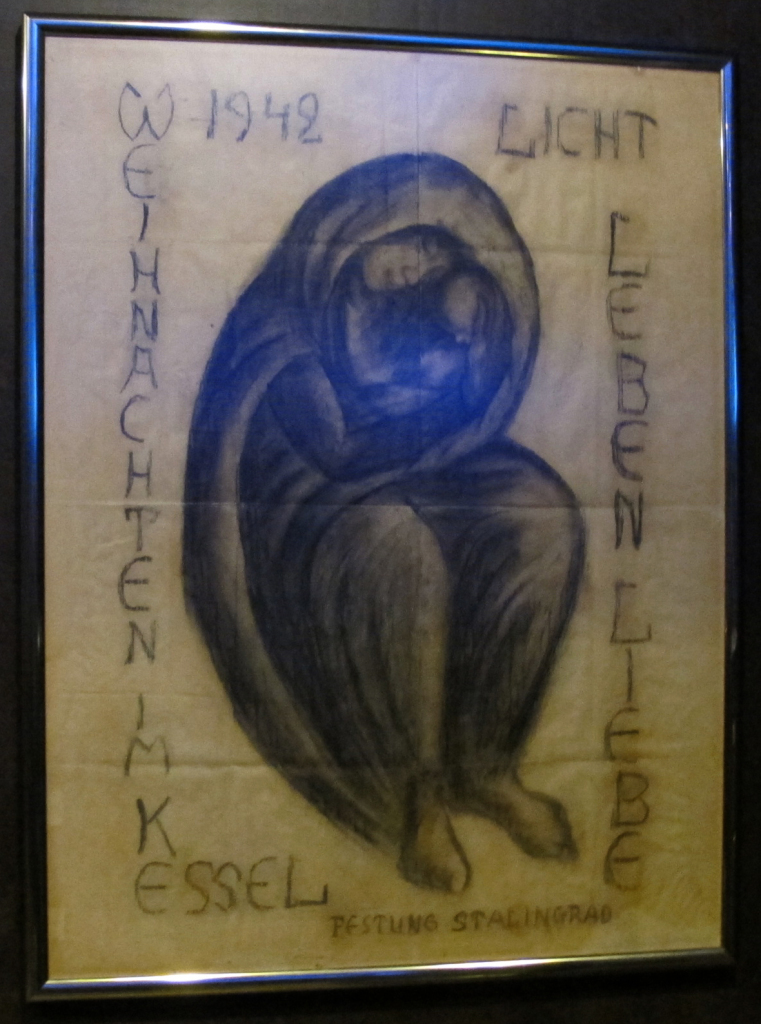
The Madonna of Stalingrad

The   Stalingrad Madonna (credit)

 Translation: Christmas in the Cauldron (German term for Fortress Stalingrad).Light, Life, Love.

Writer Mark Stibbe blogged about the worst moment of the battle of Stalingrad, when 300,000 troops of the German Sixth Army were trapped in the destroyed city of Stalingrad, without adequate winter clothes, almost out of food, fuel and ammunition. The attackers became the besieged; the Red Army surrounded them by Christmas 1942.

At the darkest hour, the soldiers walked into a small underground chamber to pay homage to a picture drawn by Lieutenant Kurt Reuber, Protestant Pastor, artist, staff physician, and Panzer division commander, a friend of Albert Schweitzer who was conscripted into the German Army.

The image, 3 feet by 4 feet,  of the Madonna and Child, entranced the soldiers

One of the only 6000 Sixth Army soldiers who survived later wrote this, For me that Christmas was heavenly. I felt there was a bridge that stretched over the entire earth, the starry sky and the moon, the same moon that my family could see in Germany.”

* * *

Kurt Reuber wrote: I wondered for a long while what I should paint, and in the end I decided on a Madonna, or mother and child. I have turned my hole in the frozen mud into a studio. The space is too small for me to be able to see the picture properly, so I climb on to a stool and look down at it from above, to get the perspective right. Everything is repeatedly knocked over, and my pencils vanish into the mud. There is nothing to lean my big picture of the madonna against, except a sloping, home-made table, past which I can just manage to squeeze. There are no proper materials and I have used a Russian map for paper. But I wish I could tell you how absorbed I have been painting my madonna, and how much it means to me.”

“The picture looks like this: the mother’s head and the child’s lean toward each other, and a large cloak enfolds them both. It is intended to symbolize ‘security’ and ‘mother love.’ I remembered the words of St.John: light, life, and love. What more can I add? I wanted to suggest these three things in the homely and common vision of a mother with her child and the security that they represent. 

 He added  I went to all the bunkers, brought my drawing to the men, and chatted with them. How they sat there! Like being in their dear homes with mother for the holiday.

Later, Reuber hung the drawing in his bunker,

When according to ancient custom I opened the Christmas door, the slatted door of our bunker, and the comrades went in, they stood as if entranced, devout and too moved to speak in front of the picture on the clay wall…The entire celebration took place under the influence of the picture, and they thoughtfully read the words: light, life, love…Whether commander or simple soldier, the Madonna was always an object of outward and inward contemplation.

The Madonna was flown out of Stalingrad by a battalion commander who was one of the last soldiers of the encircled German Sixth Army to be evacuated.

Reuber was taken prisoner, and died of typhus in a Soviet prisoner of war camp in 1944. Of the 95,000 German prisoners of war taken at Stalingrad, only 6000 survived, and returned to Germany.

Kurt Reuberl self prortrait (credit)

Self Portrait Kurt Reuber  (credit)


The Caucasian oilfields of Russia were Hitler’s target, rich and tempting. But it did not make sense to leave a major Russian city unconquered, especially one named after Stalin, whom Hitler despised.

And so Hitler attacked Stalingrad, and, like Napoleon, was defeated by the Russian winter.

Moral: be careful when it comes to attacking others, no matter how much you despise them. Never try to destroy their Stalingrad. Be content with your own oilfields and your own cities, big or little.

* * *

And what when others cast an envious eye on your Stalingrad, and move in to destroy and conquer it?

If you are a follower of Jesus, He has told you what to do. Do not waste time in resistance. “Do not resist one who is evil. If they take your cloak, give them your cloak.”

If they conquer Stalingrad, let them. Do not resist. Do your work elsewhere.

God will not permit evil to prosper for long. Eventually, winter will come. The aggressors will be frozen out and leave.

Normalcy will return, and you will eat the hidden cabbage still fresh beneath the snow in your garden, and go to your secret cellars, to the concealed beets and potatoes, and drink borscht all winter.

And meanwhile, you will have kept doing your work.

Filed Under: In which I stroll through the Liturgical Year Tagged With: Kurt Reuber, Not resisting evil, Stalingrad Madonna, Violence

The Mental Habit That’s Worth a Trillion Dollars

By Anita Mathias

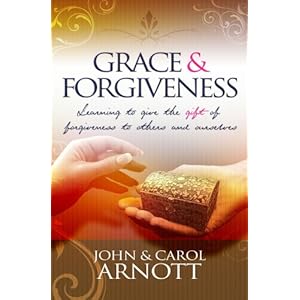
Grace and Forgiveness

I heard Carol Arnott say that her book Grace and Forgiveness is worth a trillion dollars.

Hyperbole, of course, but (Jesus, forgive this crassness!!) if I were to monetize it, learning and practising forgiveness would easily be worth well over £100,000, perhaps £500,000 in a lifetime. No, more!

Speculative, of course, but that’s possibly the monetary value of the immense productivity which would result from keeping one’s mind free of emotional turmoil and the petty resentments and grievances which so distract and drain one.

And imagine the creativity which would result from stepping into the eternal sources of ideas, the energy which would result from not judging other people, not revolving in your mind the sad old tedious tale of sins they have committed against you, but instead focusing on your own life, goals and purposes.

And of course, one would be SO much healthier physically and mentally if one could forgive, and refuse to judge. Some estimate that 60 to 90 percent of illness is psychosomatic, caused by our negative thoughts. Colds, flu, digestive ailments, allergies flaring up, insomnia, exhaustion—most of us have experienced these after emotional upsets; perhaps prolonged emotional strain could lead to more serious conditions.

* * *

Last week, I got so angry with a member of my family that I took to bed at 9 p.m. so that I would not sin with my words, not crush through a strongly worded expression of anger.

But I tossed and turned as I tried to pray in tongues, and pray the Jesus prayer to mitigate my anger and not judge. Some success, much failure!

Well, anger and judgement are not the best way to get to sleep. I was awake much of the night, my muscles stiff and tense, and slept in till 9 a.m. I would normally have slept for 8 hours.

Wow, how much could I have written in the extra 4 hours?

* * *

Forgiveness as a life-style.  Letting injuries go as soon as they surface. I simply must learn it.

For anger is spending your energy in negativity. Judgement is spending our passion in negativity.

If we learned to forgive, we could instead invest that energy and passion in our own lives.

* * *

How do we forgive? The absolute best way is the way Jesus commanded.

We bless the person we are angry with. We pray for them. We ask God to give us a love for them (Luke 6:28) for our sake as well as for theirs, for love is a warmer, lovelier, more energizing thing to have in your heart than prickly, cold hatred.

And “Then your reward will be great, and you will be children of the Most High, because he is kind to the ungrateful and wicked.” (Luke 6:35).

As a child, we will have access to the goodness of God’s household: financial provision, unleashed creativity, protection from our enemies, answered prayer.

We will pray with power for the greatest block to answered prayer will be removed. We will have fulfilled Jesus’ condition for the cleansing of the heart even before we pray, “And when you stand praying, if you hold anything against anyone, forgive them.” (Mark 11:25)

* * *

As Malcolm Gladwell famously noted in Outliers: The Story of Success, it takes 10,000 hours to be a world class expert—in anything.

Prayer takes practice. I pray most effectively (seeing changes in myself, and my life and circumstances) after reading books on prayer and making lists and praying through them. In this respect, the most life-changing books on prayer I’ve read are The Circle Maker and I Will Lift Up Mine Eyes.

Forgiveness too is a learned art. While ultimately, it is a miracle like falling in love, it is also a mental and emotional discipline, which goes through stages, and which we can partly learn from others.

The best books on forgiveness I’ve read are—John and Carol Arnott’s Grace and Forgiveness, and R. T. Kendall’s Total Forgiveness.

* * *

Some things in the spiritual life have disproportionate power; they are the atomic bombs of the spiritual life! Prayer, so quiet, so invisible, makes things happen, in our spirits and in the external world around us. Forgiveness too has disproportionate power.

I have heard Heidi Baker talk about forgiving her daughter’s rapist (an drug addict she had sheltered) and how this forgiveness freed her daughter from nightmares and post-traumatic stress syndrome. If Heidi had not brought herself to do so, she might have continued in ministry, but it would have been a mediocre one, not characterized by miracles and joy as hers is.

For myself, I love it when I come to the point of forgiveness. I love the spiritual power, and the sense of joy and love.  And freedom. And best of all, there is a new unleashing of creative power, ideas, stories and blogs!

Filed Under: In which I forgive Aught against Any (Sigh) Tagged With: Carol Arnott, forgiveness, Forgiveness and Creativity, Heidi Baker, R. T. Kendall

In Which Stars Make News Viral, and We Can Trust our PR to Him

By Anita Mathias

His birth could not have been more humble, more anonymous–in a manger, for there was no room at the inn.

Of their social network, only Elizabeth, Mary’s elderly cousin, confined by pregnancy, and married to the priest Zechariah who was temporarily dumb, had been told.

But everything was in the hands of God who loved Jesus, his son who would teach us to see differently, to think differently, and to live differently.

And so God splashed a new star in the sky, luring Magi, wise men from the east, astrologers and astronomers to Bethlehem, bringing news of the birth to King Herod. Shepherds heard angels sing of it.

The good news crossed national, ethnic and socio-economic boundaries; it reached the rich and the poor, the wise and the powerful. The King heard of it, the priests heard of it, the army heard of it, the scholars heard of it, the shepherds heard of it. While Mary and Joseph quietly went about their own business, telling no one about their marvellous child.

God brought about all the connections Jesus needed.

* * *

Today, as in the Prophet Habakkuk’s day, “The nations exhaust themselves for nothing.”

We live in a harried world of self-reliance, in which we can feel that everything depends on us.

Our world tells us exhausting things like, “It’s not what you know, but whom you know.”

We are told that new media—blogging, tweeting and Facebook– has eliminated the old gatekeepers; that now anyone can socially network their way into success, fame, and influence.

Right! To the old imperative of doing the work, we’ve added the new imperative to network to get our work out there, to get the word out.

And all this makes us busier and more tired.

* * *

But, oh man and woman loved by God, the one whose birth we are celebrating offers us rest.

Do your work peacefully, and leave your PR in the hands of a very clever God, who used stars and angel song so that, within days, the news of the birth of his son went viral.  He will be more creative than you could ever imagine.

Put your hope in him.

* * *

 At the end of this year, we cannot do better than to put our work, our lives, and our futures into his hands who promises us joy, peace, and answered prayer.

And to do so is exciting, for he specialises in surprises.

A new star in the sky: who would have thought of it?

I am entrusting my life to him today.

Join me?


My guest post for Share the Hope UK

Filed Under: In which I stroll through the Liturgical Year, Matthew Tagged With: Advent, the birth of Christ, trusting God

Wandering through a Deserted Garden in Sicily, I Pray to Build Things Which Last

By Anita Mathias

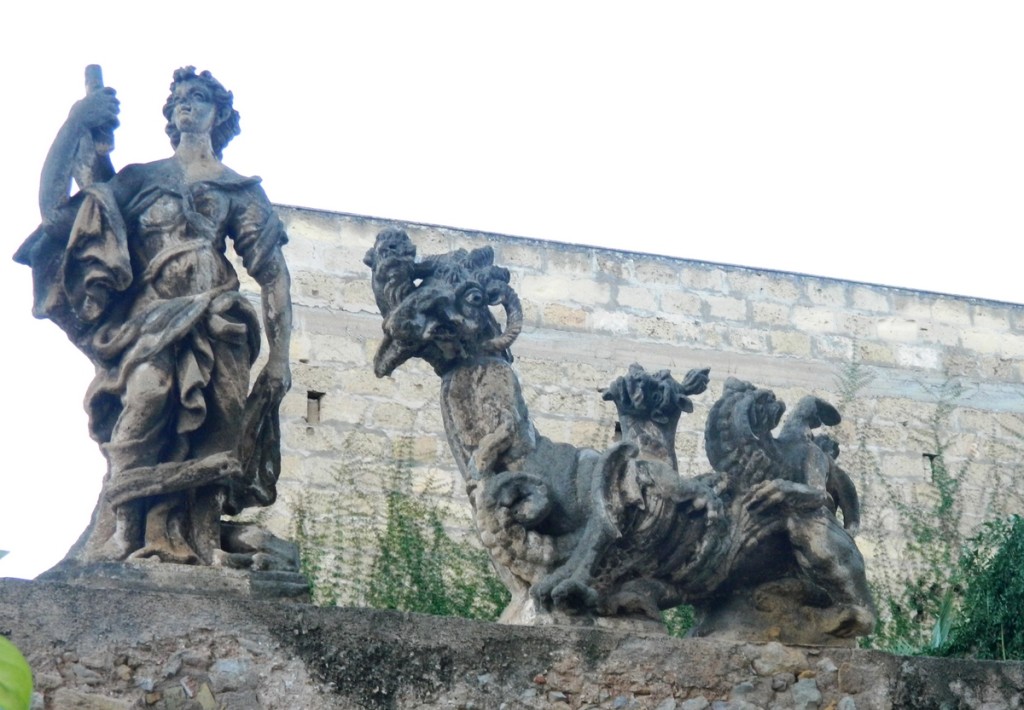
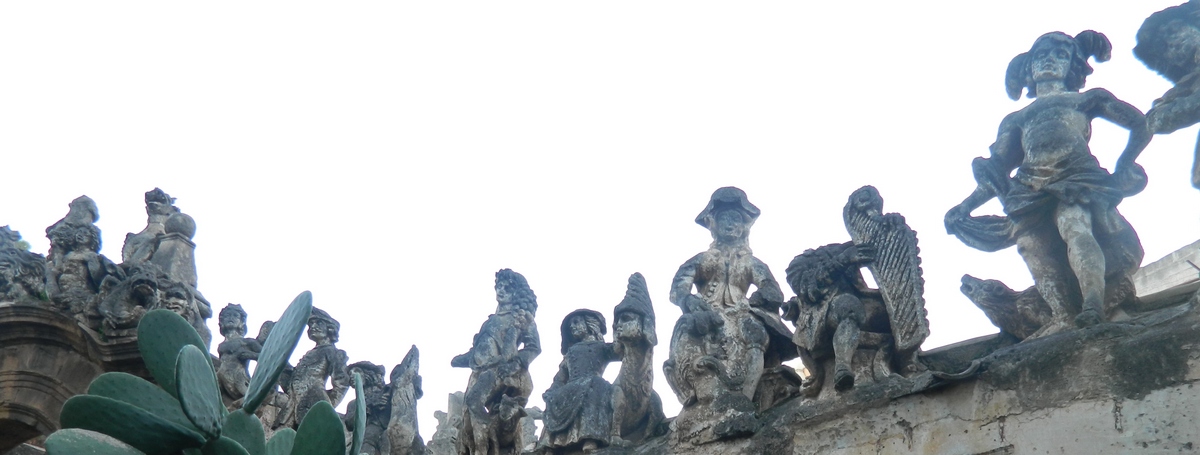
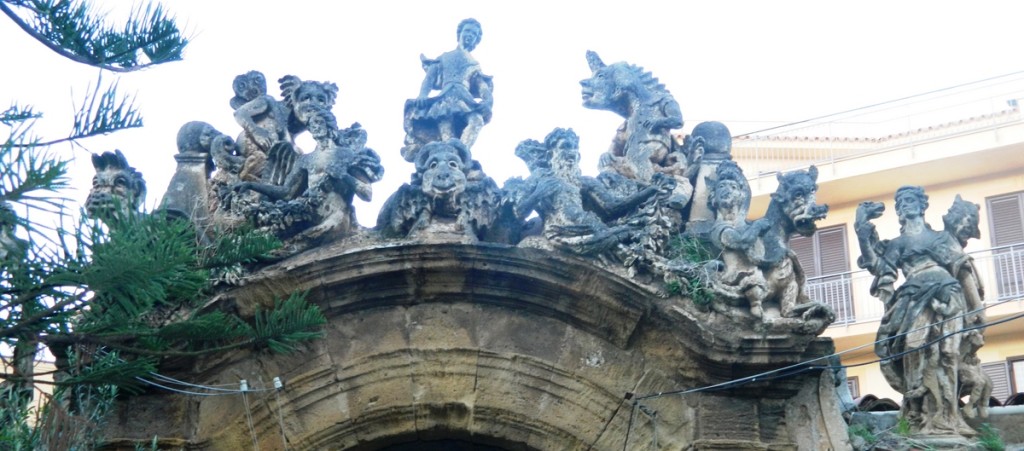
Abandoned garden surround by a wall  topped with grotesque sculptures. (Villa Palagonia)

Villa Palagonia, Bagheria, Sicily

I like wandering around the deserted gardens which sometimes surround palaces and stately homes.

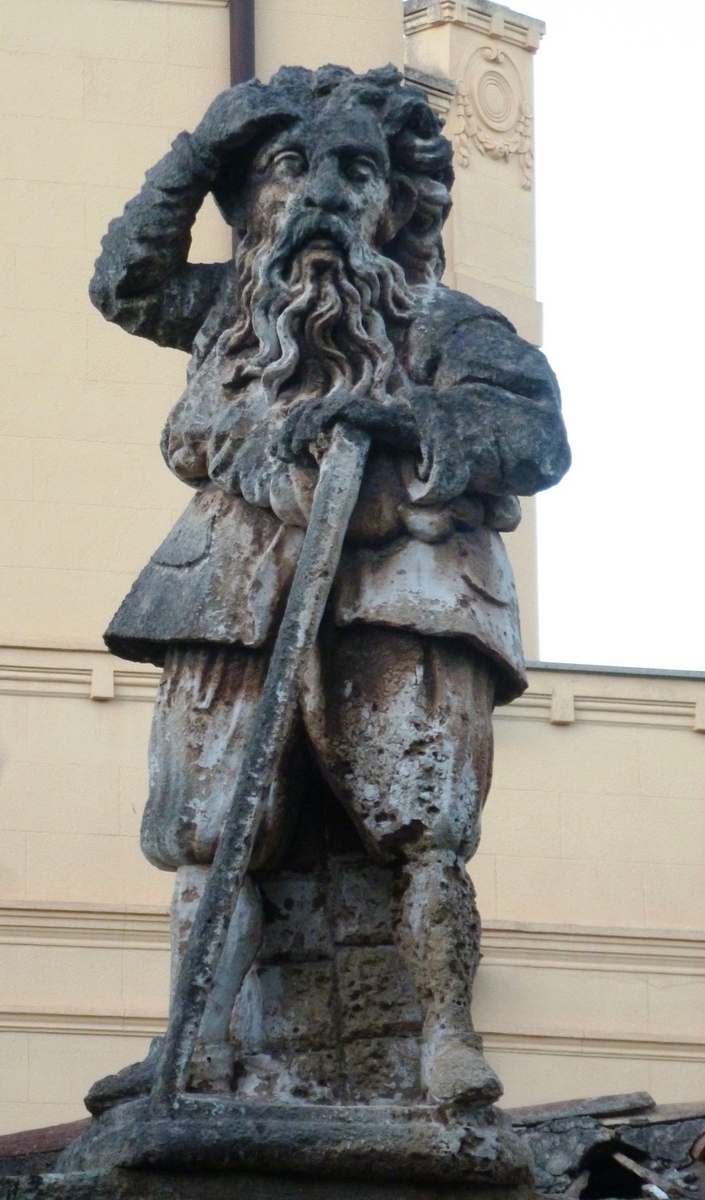
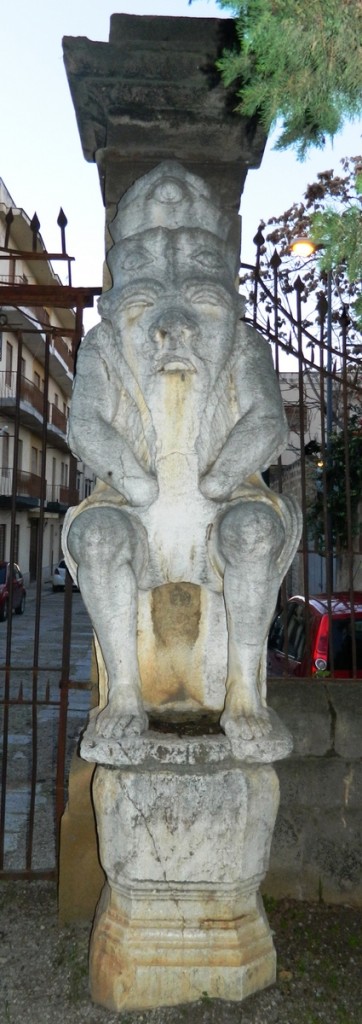
I wandered through the Baroque Villa Palagonia in Bagheria Sicily yesterday, whose grounds host massive grotesque gnomes, giants, gargoyles, mutants, and anthropomorphized monsters.

10-DSCN9818

14-DSCN9836

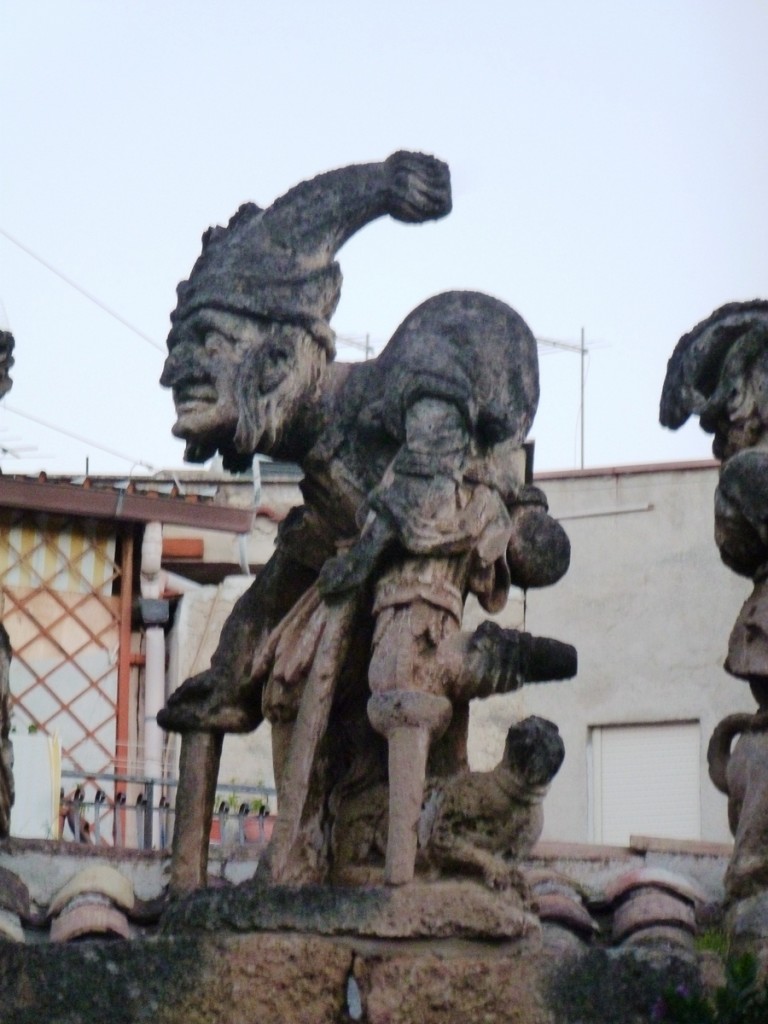
The villa was the home of Ferdinand, Prince of Palagonia, a hunchback, who took revenge on his wife’s lovers by cruelly satirizing them—often depicting them as hunchbacks!!

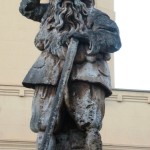
Hunchback (Wall around Villa Palagonia)

Hunchback (Wall around Villa Palagonia)

* * *

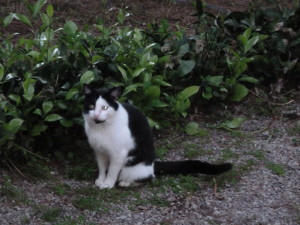
 Oh full of passion and pride and ambition, they built these palaces and gardens, how intensely they lived, and now their gardens are just the habitation of stray cats, and the birds which sing sweetly and loud.

05-P1050082

Cat on the wall of Villa Palagonia

03-P1040082

Cat in the garden of Villa Palagonia

All dead. Him who hated and satirized; him who was hated…

Hating. What a waste of a life!

Walking through the garden, I felt eager to align myself with what matters, for one day through our empty gardens too, stray cats might stroll, and birds sing loud and sweetly, unmindful of all our pride, passion and ambition.

People, despite their wealth, do not endure;
they are like the beasts that perish.

Their forms will decay in the grave,
far from their princely mansions.
16 Do not be overawed when others grow rich,
when the splendour of their houses increases;
17 for they will take nothing with them when they die,
their splendour will not descend with them.
18 Though while they live they count themselves blessed—
and people praise you when you prosper—
19 they will join those who have gone before them,
who will never again see the light of life. Psalm 49

06-DSCN9811

A row of grotesque figures adorns the wall of Villa Palagonia.


01-P1040058

Figure on wall of Villa Palagonia.


16-DSCN9866

Crowned figure guarding the gate of Villa Palagonia.

I thought too of Shelley’s “Ozymandias.”

I met a traveller from an antique land
Who said: “Two vast and trunkless legs of stone
Stand in the desert. Near them on the sand,
Half sunk, a shattered visage lies, whose frown
And wrinkled lip and sneer of cold command
Tell that its sculptor well those passions read
Which yet survive, stamped on these lifeless things,
The hand that mocked them and the heart that fed.
And on the pedestal these words appear:
`My name is Ozymandias, King of Kings:
Look on my works, ye mighty, and despair!’

Nothing beside remains. Round the decay
Of that colossal wreck, boundless and bare,
The lone and level sands stretch far away”. 

I am building things. I have built a small business which now solely supports our family. I am building a book. I am building a blog. I am building a platform on Twitter and Facebook so people read my blog. I am building a family life, and friendships, and a network of warm relationships here in Oxford, and with other writers elsewhere.

* * *

13-DSCN9830

Arch crowned with grotesque figures. (Villa Palagonia)

But…

If the Lord does not build the house,

In vain do the builders labour.

In vain is your earlier rising

Your going later to bed. (Psalm 127)

I want to know what the Lord intends me to build with my life, and I want, oh how desperately I want, to build with Christ, to be aligned with his flow of ideas as I build, so what I build, whether books or a family business or blog may last longer and be more life-giving than the deserted books and palaces and gardens which litter our globe.

Hall of Mirrors, Villa Palagonia.

Hall of Mirrors, Villa Palagonia.


Formal Entrance to Villa Palagonia

Formal Entrance to Villa Palagonia

Filed Under: In which I explore the Spiritual Life, In which I explore writing and blogging and creativity, In which I Travel and Dream, Writing and Blogging Tagged With: Bagheria, building to last, Sicily, Travel

The Words Which Change Everything

By Anita Mathias


Words which take the hard shell of the present

When it feels devoid of nourishment, just hard, just hard

Take it and crack it,

And reveal the sweet meat within it:

Thank you, Thank you, Thank you.


Though my day is not panning out as it should,

Though my work is not panning out as it should,

Though my nerves are fraying,

And energy and love leaks from my heart,

Thank you, thank you, thank you.


For your goodness endures,

For the sun rises painting the sky,

For the sun sets, making it blaze,

For the mind you given me to praise you,

For the people who love me,

For the people I love,

For this world so full of beauty,

Though all is not as I want it to be,

Thank you.


You take the hard shell of your cantankerous heart,

And with the nutcracker of thanks split it open into joy,

Giving thanks for the glad moments and the hard moments,

For there is nothing He cannot redeem.


Thank you that this world is full of goodness.

Though much is taken,

And much may never be as I want it to be,

Much goodness remains,

And for that:

Thank you!


Thank you Jules Middleton for hosting on your blog, Apples of Gold.

Filed Under: In Which I Count my Blessings, The Power of Gratitude Tagged With: The Power of Gratitude

Why I live in a yurt, off the grid, on a mountain in Idaho. A guest post by Esther Emery

By Anita Mathias

A yurt

My yurt

Do you know anybody who lives off the grid? Well, now you do. I do. I live in a yurt, which is a kind of a wonderful round tent, on three acres of wooded Idaho mountainside, with no power and no running water.

Mine is a rich life, full of wild and beauty. It is a planted life, connected to our sloped bit of dirt and all the rhythms of nature. And it is a conscious life, each day revealing the true cost of human existence: what it truly takes to feed us, keep us warm and sheltered, clean.

But I’ll tell you what my life is not. It isn’t easy. Or secure. Or safe. Or glamorous.

Truth be told, I probably wouldn’t do it if something didn’t make me.

It’s too hard. And it’s too hard to justify! Keeping the kids out of school, bathing only once a week, living all in one room – the five of us! Also the cost to relationships, when I have to go to a friend’s house just to make a simple phone call, not to mention how it makes my friends feel that I openly and publicly reject the most basic principles of modern life.

Oh, that Esther, she’s a whole lot of fun to hang out with! Always talking about the cost of our extractive economy, irreversible environmental damage, the profound injustices built into the supply chain…

I can’t help it. I am driven by a ghost.

The ghost was my mother, and in her life I didn’t think much of her. It is the task of adolescent children to fail to take their parents seriously. It wasn’t until after my mother died that I came to know her as having lived a courageous and prophetic life.

Her name was Carla Emery. She was born a farmer’s daughter in Montana, just ahead of the baby boom, and she was born to teach. The way she tells it, she felt sorry for the hippies when they started showing up in rural places with no skills. She wanted to teach them how to get along. In 1974, she showed up at a Seattle craft fair with a self-published manual for living off the land, and her table was mobbed. It was a quick road to celebrity.

But it was a short road, too. By the time I was born, six years later, America had shifted into the dawn of the Reagan era. My mother’s promise of spiritual fulfillment found through animals and muck and laboring to the harvest was more laughable than livable.

America gave up on my mother. But she didn’t give up.

All through the 80’s and the 90’s, my mother was a has-been and a nobody, but still she preached her difficult message to the world. She crisscrossed the country with boxes of books in the back of the van, meeting all her people: tending souls. Where the counterculture had been a forefront press, now it was the fringe of society. All the people on the edges: survivalists, die-hard hippies, drop-outs, and mountain libertarians. My mother met them all. She spoke to them. She gave lectures on “The Modern Homesteading Movement” and “Peak Oil.”

I was mortified. I couldn’t get away from it fast enough. There’s nothing worse than being a teenager whose mom does a public demonstration of how to kill a chicken.

She died when I was 25 years old. It was the year 2004. Like my mother, I am bound to the consciousness of my own time and my own generation. And, lately, we are turning back.

There have been books: in the last decade, a whole genre of exposé revealing the problems with our food supply and food supply chain. There is a deep and underground craving for a better way. Spiritual wholeness. Integrity. Slow food. Resistance to greed and commodification. My mother’s manual for living off the land is popular again.

It was several years ago, convergent with my husband’s desire to use his construction skills to build something of his own, that I began to make the shift myself. I began to drop consumerism. I picked up some gardening gloves. I started looking more and more like my mother every day.

So there you go. Now you know somebody who lives off the grid. I am here, in my woods, living my simple life: strange to society, perhaps, but natural in the most profound way. I live with the land, with the rhythms and the seasons of nature. And I raise my mother’s ghost.

EstherEmerywriter

Esther Emery

Esther Emery used to direct stage plays in Southern California. But that was a long time ago. Now she is pretty much a runaway, living off the grid in a yurt and tending to three acres in the foothills of the Rocky Mountains. She writes about faith and rebellion and trying to live a totally free life at www.estheremery.com. Connect with her on Twitter @EstherEmery.


Filed Under: In which I proudly introduce my guest posters Tagged With: Carla Emery, Esther Emery, Self-sufficiency, Wilderness

If You Should Ever Want My Life, Come and Take It

By Anita Mathias

In Chekhov’s haunting play The Seagull, the beautiful country girl, Nina, who dreams of being an actress, writes to the narcissistic playwright, Trigorian, “If you should ever want my life, come and take it.”

He does; oh he does! He comes; he takes it; he casts it away, a poor discarded thing. Nina returns home, broken. She has failed as an actress, playing second-rate roles in second-rate companies in the provinces. Her true love, the play’s protagonist, Konstantin, unable to cope with Nina’s tragedy, kills himself.

* * *

“If you should ever want my life, come and take it.” That kind of surrender to a human being is never safe. All human beings are capable of betrayal–though not all will betray.

To whom is it safe to say–“If you should want my life, come and take it?” Only to the maker of life, the giver of life, the one who can turn our life around in a moment.

To him is it safe to say, “You do want my life. Take it, take it. Make of it something I have never imagined. Take it.”

* * *

“I have held many things in my hands, and I have lost them all; but whatever I have placed in God’s hands, that I still possess,” Martin Luther wrote.

I too have worked on plans and dreams and schemes which have come to nothing. But increasingly, I am placing everything I do in God’s hands, and there it is safe.

More and more, I find myself saying, “Take it,” as I feel intensity rise. I think of areas of my life in which I struggle, or which are relatively successful. “Take it. This mess I’ve made. This failure. This ambition. This broken dream. This ancient dream. This delicate shimmering dream. This thing which is inexplicably working. This longing. Take it!”

“Take it and make of it something beautiful.”

“For when my dream is in your strong capable hands which begin working on it, shaping it, moulding it, reshaping it, ah, then it is safe.”


Grateful for being hosted on Heather Caliri’s blog—A Little Yes

Filed Under: In which I explore the Spiritual Life, In which I surrender all Tagged With: Absolute Surrender, Chekhov, Seagull

  • « Previous Page
  • 1
  • …
  • 31
  • 32
  • 33
  • 34
  • 35
  • …
  • 279
  • Next Page »

Sign Up and Get a Free eBook!

Sign up to be emailed my blog posts (one a week) and get the ebook of "Holy Ground," my account of working with Mother Teresa.

Join 536 Other Readers

My Books

Rosaries, Reading, Secrets: A Catholic Childhood in India

Rosaries, Reading Secrets, B&N
USA

UK

Wandering Between Two Worlds: Essays on Faith and Art

Wandering Between Two Worlds
USA

UK

Francesco, Artist of Florence: The Man Who Gave Too Much

Francesco, Artist of Florence
US

UK

The Story of Dirk Willems

The Story of Dirk Willems
US

UK

My Latest Meditation

Anita Mathias: About Me

Anita Mathias

Read my blog on Facebook

Follow me on Twitter

Follow @anitamathias1

Recent Posts

  • At the Cross, God Forgives Us Completely
  • Using God’s Gift of Our Talents: A Path to Joy and Abundance
  • The Kingdom of God is Here Already, Yet Not Yet Here
  • All Those Who Exalt Themselves Will Be Humbled & the Humble Will Be Exalted
  • Christ’s Great Golden Triad to Guide Our Actions and Decisions
  • How Jesus Dealt With Hostility and Enemies
  • Do Not Be Afraid, but Do Be Prudent
  • For Scoundrels, Scallywags, and Rascals—Christ Came
  • How to Lead an Extremely Significant Life
  • Don’t Walk Away From Jesus, but if You Do, He Still Looks at You and Loves You
Premier Digital Awards 2015 - Finalist - Blogger of the year
Runner Up Christian Media Awards 2014 - Tweeter of the year

Categories

What I’m Reading


Wolf Hall
Hilary Mantel

Wolf Hall --  Amazon.com
Amazon.com

Amazon.co.uk

Silence and Honey Cakes:
The Wisdom Of The Desert
Rowan Williams

Silence and Honey Cakes --  Amazon.com
Amazon.com

Amazon.co.uk

The Long Loneliness:
The Autobiography of the Legendary Catholic Social Activist
Dorothy Day

The Long Loneliness --  Amazon.com
Amazon.com

Amazon.co.uk

Country Girl
Edna O'Brien

Country Girl  - Amazon.com
Amazon.com

Amazon.co.uk

Archive by month

My Latest Five Podcast Meditations

INSTAGRAM

anita.mathias

My memoir: Rosaries, Reading, Secrets https://amzn.to/42xgL9t
Oxford, England. Writer, memoirist, podcaster, blogger, Biblical meditation teacher, mum

Well, hello friends! Breaking radio silence to let Well, hello friends! Breaking radio silence to let you know that I have taped a meditation for you on Christ’s famous Parable of the Talents in Matthew 25. https://anitamathias.com/2025/11/05/using-gods-gift-of-our-talents-a-path-to-joy-and-abundance/
Here you are, click the play button in the blog post for a brief meditation, and some moments of peace, and, perhaps, inspiration in your day 🙂
Hi Friends, I have taped a meditation; do listen a Hi Friends, I have taped a meditation; do listen at this link: https://anitamathias.com/2025/04/08/the-kingdom-of-god-is-here-already-yet-not-yet-here-2/
It’s on the Kingdom of God, of which Christ so often spoke, which is here already—a mysterious, shimmering internal palace in which, in lightning flashes, we experience peace and joy, and yet, of course, not yet fully here. We sense the rainbowed presence of Christ in the song which pulses through creation. Christ strolls into our rooms with his wisdom and guidance, and things change. Our prayers are answered; we are healed; our hearts are strangely warmed. Sometimes.
And yet, we also experience evil within & all around us. Our own sin which can shatter our peace and the trajectory of our lives. And the sins of the world—its greed, dishonesty and environmental destruction.
But in this broken world, we still experience the glory of creation; “coincidences” which accelerate once we start praying, and shalom which envelops us like sudden sunshine. The portals into this Kingdom include repentance, gratitude, meditative breathing, and absolute surrender.
The Kingdom of God is here already. We can experience its beauty, peace and joy today through the presence of the Holy Spirit. But yet, since, in the Apostle Paul’s words, we do not struggle only “against flesh and blood, but against the rulers, against the unseen powers of this dark world and against the spiritual forces of evil,” its fullness still lingers…
Our daughter Zoe was ordained into the Church of E Our daughter Zoe was ordained into the Church of England in June. I have been on a social media break… but … better late than never. Enjoy!
First picture has my sister, Shalini, who kindly flew in from the US. Our lovely cousins Anthony and Sarah flank Zoe in the next picture.
The Bishop of London, Sarah Mullaly, ordained Zoe. You can see her praying that Zoe will be filled with the Holy Spirit!!
And here’s a meditation I’ve recorded, which you might enjoy. The link is also in my profile
https://anitamathias.com/2024/11/07/all-those-who-exalt-themselves-will-be-humbled-the-humble-will-be-exalted/
I have taped a meditation on Jesus statement in Ma I have taped a meditation on Jesus statement in Matthew 23, “For those who exalt themselves will be humbled, and those who humble themselves will be exalted.”
Do listen here. https://anitamathias.com/2024/11/07/all-those-who-exalt-themselves-will-be-humbled-the-humble-will-be-exalted/
Link also in bio.
And so, Jesus states a law of life. Those who broadcast their amazingness will be humbled, since God dislikes—scorns that, as much as people do.  For to trumpet our success, wealth, brilliance, giftedness or popularity is to get distracted from our life’s purpose into worthless activity. Those who love power, who are sure they know best, and who must be the best, will eventually be humbled by God and life. For their focus has shifted from loving God, doing good work, and being a blessing to their family, friends, and the world towards impressing others, being enviable, perhaps famous. These things are houses built on sand, which will crumble when hammered by the waves of old age, infirmity or adversity. 
God resists the proud, Scripture tells us—those who crave the admiration and power which is His alone. So how do we resist pride? We slow down, so that we realise (and repent) when sheer pride sparks our allergies to people, our enmities, our determination to have our own way, or our grandiose ego-driven goals, and ambitions. Once we stop chasing limelight, a great quietness steals over our lives. We no longer need the drug of continual achievement, or to share images of glittering travel, parties, prizes or friends. We just enjoy them quietly. My life is for itself & not for a spectacle, Emerson wrote. And, as Jesus advises, we quit sharp-elbowing ourselves to sit with the shiniest people, but are content to hang out with ordinary people; and then, as Jesus said, we will inevitably, eventually, be summoned higher to the sparkling conversation we craved. 
One day, every knee will bow before the gentle lamb who was slain, now seated on the throne. We will all be silent before him. Let us live gently then, our eyes on Christ, continually asking for his power, his Spirit, and his direction, moving, dancing, in the direction that we sense him move.
Link to new podcast in Bio https://anitamathias.co Link to new podcast in Bio https://anitamathias.com/2024/02/20/how-jesus-dealt-with-hostility-and-enemies/
3 days before his death, Jesus rampages through the commercialised temple, overturning the tables of moneychangers. Who gave you the authority to do these things? his outraged adversaries ask. And Jesus shows us how to answer hostile questions. Slow down. Breathe. Quick arrow prayers!
Your enemies have no power over your life that your Father has not permitted them. Ask your Father for wisdom, remembering: Questions do not need to be answered. Are these questioners worthy of the treasures of your heart? Or would that be feeding pearls to hungry pigs, who might instead devour you?
Questions can contain pitfalls, traps, nooses. Jesus directly answered just three of the 183 questions he was asked, refusing to answer some; answering others with a good question.
But how do we get the inner calm and wisdom to recognise
and sidestep entrapping questions? Long before the day of
testing, practice slow, easy breathing, and tune in to the frequency of the Father. There’s no record of Jesus running, rushing, getting stressed, or lacking peace. He never spoke on his own, he told us, without checking in with the Father. So, no foolish, ill-judged statements. Breathing in the wisdom of the Father beside and within him, he, unintimidated, traps the trappers.
Wisdom begins with training ourselves to slow down and ask
the Father for guidance. Then our calm minds, made perceptive, will help us recognise danger and trick questions, even those coated in flattery, and sidestep them or refuse to answer.
We practice tuning in to heavenly wisdom by practising–asking God questions, and then listening for his answers about the best way to do simple things…organise a home or write. Then, we build upwards, asking for wisdom in more complex things.
Listening for the voice of God before we speak, and asking for a filling of the Spirit, which Jesus calls streams of living water within us, will give us wisdom to know what to say, which, frequently, is nothing at all. It will quieten us with the silence of God, which sings through the world, through sun and stars, sky and flowers.
Especially for @ samheckt Some very imperfect pi Especially for @ samheckt 
Some very imperfect pictures of my labradoodle Merry, and golden retriever Pippi.
And since, I’m on social media, if you are the meditating type, here’s a scriptural meditation on not being afraid, while being prudent. https://anitamathias.com/2024/01/03/do-not-be-afraid-but-do-be-prudent/
A new podcast. Link in bio https://anitamathias.c A new podcast. Link in bio
https://anitamathias.com/2024/01/03/do-not-be-afraid-but-do-be-prudent/
Do Not Be Afraid, but Do Be Prudent
“Do not be afraid,” a dream-angel tells Joseph, to marry Mary, who’s pregnant, though a virgin, for in our magical, God-invaded world, the Spirit has placed God in her. Call the baby Jesus, or The Lord saves, for he will drag people free from the chokehold of their sins.
And Joseph is not afraid. And the angel was right, for a star rose, signalling a new King of the Jews. Astrologers followed it, threatening King Herod, whose chief priests recounted Micah’s 600-year-old prophecy: the Messiah would be born in Bethlehem, as Jesus had just been, while his parents from Nazareth registered for Augustus Caesar’s census of the entire Roman world. 
The Magi worshipped the baby, offering gold. And shepherds came, told by an angel of joy: that the Messiah, a saviour from all that oppresses, had just been born.
Then, suddenly, the dream-angel warned: Flee with the child to Egypt. For Herod plans to kill this baby, forever-King.
Do not be afraid, but still flee? Become a refugee? But lightning-bolt coincidences verified the angel’s first words: The magi with gold for the flight. Shepherds
telling of angels singing of coming inner peace. Joseph flees.
What’s the difference between fear and prudence? Fear is being frozen or panicked by imaginary what-ifs. It tenses our bodies; strains health, sleep and relationships; makes us stingy with ourselves & others; leads to overwork, & time wasted doing pointless things for fear of people’s opinions.
Prudence is wisdom-using our experience & spiritual discernment as we battle the demonic forces of this dark world, in Paul’s phrase.It’s fighting with divinely powerful weapons: truth, righteousness, faith, Scripture & prayer, while surrendering our thoughts to Christ. 
So let’s act prudently, wisely & bravely, silencing fear, while remaining alert to God’s guidance, delivered through inner peace or intuitions of danger and wrongness, our spiritual senses tuned to the Spirit’s “No,” his “Slow,” his “Go,” as cautious as a serpent, protected, while being as gentle as a lamb among wolves.
Link to post with podcast link in Bio or https://a Link to post with podcast link in Bio or https://anitamathias.com/2023/09/22/dont-walk-away-from-jesus-but-if-you-do-he-still-looks-at-you-and-loves-you/
Jesus came from a Kingdom of voluntary gentleness, in which
Christ, the Lion of Judah, stands at the centre of the throne in the guise of a lamb, looking as if it had been slain. No wonder his disciples struggled with his counter-cultural values. Oh, and we too!
The mother of the Apostles James and John, asks Jesus for a favour—that once He became King, her sons got the most important, prestigious seats at court, on his right and left. And the other ten, who would have liked the fame, glory, power,limelight and honour themselves are indignant and threatened.
Oh-oh, Jesus says. Who gets five talents, who gets one,
who gets great wealth and success, who doesn’t–that the
Father controls. Don’t waste your one precious and fleeting
life seeking to lord it over others or boss them around.
But, in his wry kindness, he offers the ambitious twelve
and us something better than the second or third place.
He tells us how to actually be the most important person to
others at work, in our friend group, social circle, or church:Use your talents, gifts, and energy to bless others.
And we instinctively know Jesus is right. The greatest people in our lives are the kind people who invested in us, guided us and whose wise, radiant words are engraved on our hearts.
Wanting to sit with the cleverest, most successful, most famous people is the path of restlessness and discontent. The competition is vast. But seek to see people, to listen intently, to be kind, to empathise, and doors fling wide open for you, you rare thing!
The greatest person is the one who serves, Jesus says. Serves by using the one, two, or five talents God has given us to bless others, by finding a place where our deep gladness and the world’s deep hunger meet. By writing which is a blessing, hospitality, walking with a sad friend, tidying a house.
And that is the only greatness worth having. That you yourself,your life and your work are a blessing to others. That the love and wisdom God pours into you lives in people’s hearts and minds, a blessing
https://anitamathias.com/.../dont-walk-away-from-j https://anitamathias.com/.../dont-walk-away-from-jesus.../
Sharing this podcast I recorded last week. LINK IN BIO
So Jesus makes a beautiful offer to the earnest, moral young man who came to him, seeking a spiritual life. Remarkably, the young man claims that he has kept all the commandments from his youth, including the command to love one’s neighbour as oneself, a statement Jesus does not challenge.
The challenge Jesus does offers him, however, the man cannot accept—to sell his vast possessions, give the money to the poor, and follow Jesus encumbered.
He leaves, grieving, and Jesus looks at him, loves him, and famously observes that it’s easier for a camel to squeeze through the eye of a needle than for a rich person to live in the world of wonders which is living under Christ’s kingship, guidance and protection. 
He reassures his dismayed disciples, however, that with God even the treasure-burdened can squeeze into God’s kingdom, “for with God, all things are possible.”
Following him would quite literally mean walking into a world of daily wonders, and immensely rich conversation, walking through Israel, Lebanon, Syria, and Jordan, quite impossible to do with suitcases and backpacks laden with treasure. 
For what would we reject God’s specific, internally heard whisper or directive, a micro-call? That is the idol which currently grips and possesses us. 
Not all of us have great riches, nor is money everyone’s greatest temptation—it can be success, fame, universal esteem, you name it…
But, since with God all things are possible, even those who waver in their pursuit of God can still experience him in fits and snatches, find our spirits singing on a walk or during worship in church, or find our hearts strangely warmed by Scripture, and, sometimes, even “see” Christ stand before us. 
For Christ looks at us, Christ loves us, and says, “With God, all things are possible,” even we, the flawed, entering his beautiful Kingdom.
Follow on Instagram

© 2026 Dreaming Beneath the Spires · All Rights Reserved. · Cookie Policy · Privacy Policy