Anita Mathias: Dreaming Beneath the Spires

Anita Mathias's Blog on Faith and Art

  • Home
  • My Books
  • Meditations
  • Essays
  • Contact
  • About Me

Archives for 2013

The Secret of Life (A Guest Post from Kelly Belmonte)

By Anita Mathias

Singing robin

 “The opposite of love is not hate, it’s indifference. The opposite of art is not ugliness, it’s indifference. The opposite of faith is not heresy, it’s indifference. And the opposite of life is not death, it’s indifference.” ― Elie Wiesel

This is what I love about writing. Writers are so greedy for life, they live it three times: the first time in the flesh, the second on paper, and the third when they read what they wrote.

Writing is not only a greedy practice but a generous one. Beyond the third life of words, there ripples a wave of life as other readers take part in your original in-the-flesh moment. The writer’s magnanimity allows for this reliving.

You can’t be indifferent and be a writer. By living (and reliving) this life of words, the writer takes a stand against indifference. Each scribble is claiming, “This matters, and that matters, too.” It matters so much that I’m going to live it over and over again. It matters so much, I hope you live it with me.

***

I woke up on a morning recently when it was still the deep gray of pre-dawn. A nameless bird sang a tuneless melody of five tones: first three the same, followed by two that were both different, ending on the highest note. And then the bird would repeat it, over and over.

I lay there listening, not trying to understand. What’s to understand, except that this is a life and a song? This is not work, it is sabbath. The secret of life is in those sabbath moments of not having to be useful or successful or right or ever planning how not to be thirsty or afraid. It is in being fully alive – and not indifferent – to what is there before me.

I believe the poet e. e. cummings was on to something when he wrote poem number 53 that opens, “may my heart always be open to little / birds who are the secrets of living.”

***

In my non-sabbath time, when I am in full justification mode, having a reason for all my actions, I am what they call a “knowledge worker.” Perhaps that term is passé by now – I hope so. It basically means I get paid to know stuff, to understand stuff, to analyze stuff, and to somehow make decisions based on that stuff. Basically, I get paid to be right.

In the fresh wisdom of cummings – “…for whenever men are right, they are not young” – I get paid to be old.

And in this rightness – this oldness – there is a kind of indifference. We call it objectivity, but it’s a slippery slope to indifference.

By way of clarification, I do not mean to suggest that there is anything wrong with work, with hard work that makes us tired and long for rest, that aches our fingers, that makes us sweat (in mind and body). Such work is redemptive. Such work cracks us open to the secret of life, the meaning behind the job description.

And such work is rare, especially when we are old, or feeling old. It is nearly impossible when everything depends on our being right.

But if I were young (in my spirit, in my mind, my heart), perhaps I’d get paid to be wrong, to fail spectacularly – to make outlandish statements and extreme promises, to go to the edge of a concept and peer over it into unknowable possibility, to a place beyond simple declarations of right and wrong, to sing like a bird on a limb.

Perhaps I would be compensated for not being indifferent.

For me, this would serve as the perfect job description (a la cummings):

“Stroll about hungry and fearless and thirsty and supple.”

***

This noisy bird outside my window matters to me. I want you to hear those five tones. I want you to feel the soft heaviness of the deep gray of pre-dawn beneath flannel sheets.

And I want you to care about it. I want you to be “in on” the secret of life, and to love it.

If I can do that as a writer – care enough to prompt a caring in you – I have lived, and lived again.

***

Kelly Belmonte

Kelly Belmonte

Kelly Belmonte is a poet, blogger, and management consultant with expertise in non-profit organizational development and youth mentoring. She currently serves on the board of directors for Exeter Fine Crafts in Exeter, New Hampshire. Her first published book of poetry, Three Ways of Searching, is available through Finishing Line Press

 Image Credit: BBC

Filed Under: In which I explore writing and blogging and creativity, In which I proudly introduce my guest posters, Writing and Blogging Tagged With: e. e cummings, Guest posts, Kelly Belmonte, living in the present, the secret of living

A City Set on a Hill cannot be Hidden: Focus on Working, not Networking

By Anita Mathias

The-City-on-a-Hill

So you are going to build a city.

Dig its foundations deep. Pour the concrete. Design your buildings. It’s your city: Put in whatever you like—the Alhambra, the Hagia Sophia, the Sagrada Familia, the Parthenon.  Throw in Notre Dame and Westminster Abbey.

Decorate your buildings as you wish—with the mosaics from Ravenna, or from the Topkapi Palacein Istanbul.

It’s your city. Put in the Pre-Raphaelites, the Impressionists, Botticelli and Raphael. Have your floors inlaid marble from Florence. Have indoor fountains and reflecting pools where goldfish glide.

Throw in chandeliers and floor to ceiling windows. Let your city be full of light.

You are building your city on a hill. It cannot be hidden.

* * *

You will, in moments of lesser faith, read blogs on how to hustle, how to promote your city, how to network, make connections, build a platform.

Oh builder of cities, beware. All these things steal time and focus away from learning the art and craft of city building.

Instead, seek God for the perfect blueprint for your city. Seek his inspiration for each tower and spire, each inlaid marble floor, each wall hung with Persian carpets, and each Tiffany lamp through which light glows.

Unless love runs through your city, and the desire to meet people’s needs for beauty, joy, peace, wisdom or rest, all the promotion and hustling you do will be futile. Nobody will long linger there, buy property there, and stroll through the boulevards under shady lime trees, hand in hand with their lovers.

* * *

There is a kind of networking which is sheer joy—if you connect with people whose work you love, if you praise them honestly, interact with their work whole-heartedly, then you make friends, and this whole city-building business become more joyful.

However, flattering people for their attention; making connections for the good things these connections might bring you; befriending people to use them to promote your work—how can one ask God to bless such endeavours? Oh woman of God, flee these things.

There is a sort of hustling and self-promotion that is practical atheism.  We act as if there is no God who can help people notice our city on a hill. We act as if God does not delight in good work and want people to enjoy it. We act as if God cannot even now give us twelve legions of those who will enjoy our work if we ask him. We forget the power of prayer.

And the worst thing about excessive self-promotion and connection-making? It devours the time and energy that should go into making your rare and beautiful city, set on a hill. So beautiful that at night, when the lights are switched on, and coloured fountains play, people cannot but look up and marvel; their feet itch, they yearn to walk up and explore.

And in spring, they will delight in walking through its gardens of cherry blossoms, and will sit under their shade, and look at the fields of daffodils, stretching as far as the eye can see.

* * *

Besides, the connections which matter will arise organically. Other builders of cities on hills will notice yours, and ask you managed that 150 metre spire without visible support, and you will talk about flying buttresses. And you will ask them what pigments they used for those impossibly large stained glass windows which flood their cathedrals with rainbowed light, and they will tell you.

* * *

God delights in your creativity. Build your city under his eye, as your worship to him, seeking his wisdom, in alignment with his stream of thoughts which outnumber the grains of sand on the seashore.

Let him smile, and say it is very good.

And as for the audience you’d love to have?

Remember, a city on a hill cannot be hidden. It glimmers during the day, and its light shines through the land at night.

Filed Under: Applying my heart unto wisdom, In which I explore writing and blogging and creativity, Matthew, Writing and Blogging Tagged With: blog through the bible, blogging, Creativity, Matthew, sermon the mount, worship, writing

When you’re waiting for the lightning and you miss the rain (A guest post from Kelli Woodford)

By Anita Mathias

Today’s guest poster, Kelli Woodford lives in the Midwest, with her husband and her seven blue-eyed children, and in the midst of it quietly chronicles grace on her blog The Chronicles of Grace

peony flower2

Confession: I hate prophetic posts.

My heart yearns for story. The subtlety of its events, the conflict and resolution, the intimacy of character development. Story tugs at the heart in surprising ways. Ways unimagined and unseen. And I would suggest, produces a deeper, lasting change on its hearers than a prophetic, calling-it-out word, because it engages more facets of the intricate design of the human being: it engages the heart. Prophetic posts just can’t touch that.

But I’m about to write one.

Because I need to remember my size.

So often I labor and get weary trying to wrap my mind around a concept. The abstractions of sin and salvation; the depths of human connection and multifaceted relationships; bigger and bigger the questions, rising from a mind filled with all things notional. Everything from law and grace to faith and deeds to mice and men. I read and research, fill my days with ponderings, bounce ideas off whoever comes to mind – and then suddenly the sun goes down (what?!? how did that happen!) and I realize how much I have missed.

It might be part of my personality, it might be an old addiction dying a hard death, it might be that idolatrous yearning for certainty that we all find comfort in. But there is no life like the one at my fingertips.

And By God, I’m going to enjoy it.

So I’ve put my hands in the dirt and wiped bottoms and made delicious pinterest-quality dinners, only to burn the edges. I’ve tossed a wiffle ball to my kids and run and tagged them and tripped on sticks and felt grass coming alive. Felt me coming alive. I’ve thrown open windows and sucked huge lungfuls of summer wind and fresh black earth, turned over in the fields around my house. I’ve sung loud, old hymns and Mumfords, shower water warm enough to ease the ache of holding up more than I can. Believing hard in grace and choice. I’ve scrubbed carpet stains and toilet bowls and felt the dry tightness of my finger tips that lingers after the bleach is back under the sink. And I’ve missed these things.

Oh, don’t get me wrong, I have done them all along. But doing them to get them done is different than doing them to relish the moments.

When my mind is afloat in matters too great for me, then I am not there with my kids in our rag-tag baseball game. I am not there to taste the west wind or hear my own voice off shower walls. I am not present for the moments of my life drifting humbly past while I surf the waves.

But, if there’s anything I hate more than a prophetic post (in which you find yourself elbow deep here), it is a guilt-trip post.

So I’ll not make this into that.

I will readily admit that there are times for big issues. There are moments when all the dailies must be abandoned in favor of the lightning bolt that just seared the snot out of my easy answers and left me scorched and smiling. There are times for study, and for prayer, and for solitude, and for mano-a-mano combat.

And there are times to cease.

For me, now is the latter.

Because when time and God have done their thing and I’m smelling the singe and wishing for more fire? I should hold the ash in my hand and call it a very holy thing. But not a predictable one. Perhaps the kind of dirt that rings a soul after an extended time in an ivory tower is harder to wash than a crusty toilet bowl. Perhaps it can only be sanitized by digging my bare digits into earth and pain and Velveeta and lilacs and the radical romance of everyday hope.

And when it’s time for this kind of soul-cleansing, I should walk into my bathroom, scrub brush in hand. I should walk into my yard, dragging the bat behind me. I should walk even into the church (eek!), armed only with love.

I should leave the wrangling words and the draining discussions and go out and plant a flower.

Then I should watch it grow.

Kelli
Kelli Woodford

I live in the midwestern U.S., surrounded by cornfields and love, with my husband and seven blue-eyed children. We laugh, we play, we fight, we mend; but we don’t do anything that even slightly resembles quiet. Unless it’s listening to our lives, which has proved to be the biggest challenge of them all.

I blog regularly-ish at Chronicles of Grace.  You can also find me on Facebook  and Twitter.

Filed Under: In which I proudly introduce my guest posters Tagged With: Guest posts, Kelli Woodford

The Secret History of Hagar: When God Invisibly Comforts the Oppressed

By Anita Mathias

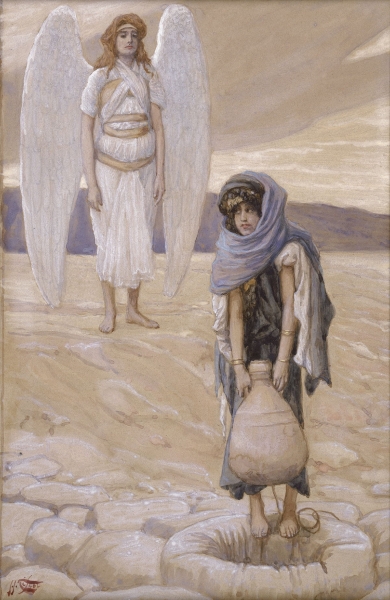
File:Tissot Hagar and the Angel in the Desert.jpg

Image: Tissot, Hagar and the Angel in the Desert


Hagar, Egyptian maidservant of Sarah, has a hard life. Impregnated, basically raped by Abraham, she is bullied and persecuted by a jealous Sarah—so much so that probable death in the desert feels preferable. (Genesis 16)

And in the desert, the runaway slave, with only the clothes on her back, sees the Lord.

And she returns to her mistress, who is “very wealthy in silver and gold, sheep and cattle and male and female donkeys, menservants and maidservants and camels.”

The rich get richer; the poor get poorer. It sure seems as if Sarah has won and Hagar has lost, doesn’t it? Perhaps.

Perhaps not.

* * *

It is Hagar, not Sarah who sees “the Lord who sees me.” It is Hagar He advises. Hagar is promised not only life, but descendants too many to count. She goes back to Sarah, under the Lord’s protection, bearing his promises.

And Sarah knows nothing of this. Her maidservant has returned, that’s all she knows.

“What is essential is invisible to the eye,” Antoine St-Exupery wrote.

Our secret life with the Lord determines our happiness, and the course of our lives. It is, however, invisible.

* * *

I love the Bible, and I love teaching it. Last year, as I led a Bible study I said, “Ask and you shall receive,” “Give and it shall be given you,” nothing radical or reactionary, just word for word  from the Sermon on the Mount. An academic in my group challenged me, “You say that because you live in the West. What about the starving people in Africa?”

And I asked, “Do you think everything Jesus said would not be as true and as valid in Africa as in Oxford, England?”

And an older, wiser woman, who has been to Africa on mission, numerous times, said, “Our African brothers are SO generous, and they have nothing.”

I am silent.

So are the righteous forsaken in Africa?

* * *

I am convinced that the same Gospel, the same promises are true for the world’s poorest as well as the world’s richest, but I am silent, because unlike Heidi Baker, who knows from experience that the same Gospel which is true in Southern California is true in Mozambique, I have not yet worked with the poorest people in Africa (though I have worked with the very poorest in India, with Mother Teresa, full time for 14 months, and hung out a little with the poor in Cambodia).

Hagar, the loser, ran away and came back starving. That’s what Sarah might have thought.

But the truth was that Hagar had been comforted by the pre-incarnate Christ himself, had received his promises, had returned at his command, and under his secret service protection.

We cannot say the Gospel does not work for the poorest because we do not know their secret encounters with God, the way he comforts him, the tenderness with which he looks at them, what he promises them in this life, or beyond. Certainly the way Christ looked at Hagar was so profoundly moving that that became her name for God—“ Lahai Roi. You are the one who sees me.” She is content to return to slavery and abuse because “I have now seen the One who sees me.”

God sees. God knows. At a difficult patch in my thirties, I was mentored by Lolly Dunlap. Discussing something difficult she went through, or I was currently going through, she would say, “God sees. God knows.” And sometimes, as it was with Hagar, that is enough. We are seen by the One who sees us. He has things in hand. He will bring about a kind of justice. The promises to Hagar mirror the promises to Abraham, “I will so increase your descendants that they will be too numerous to count,” (Gen 16:10).

* * *

The apparently forsaken Hagar has seen God, received divine consolation and a divine promise. She returned to abuse, strong in herself. Her eyes had seen God, and were watching God.

It comforts me. There is so much suffering in the world about which I can do little or nothing, so many stranded starfish on the beaches, gasping for the ocean.

Christ comforts us in our afflictions, and sometimes most deeply in our afflictions,

Father and Fondler of Heart Thou has Wrung

Hast thy dark descending and most are merciful then,

Gerard Manley Hopkins writes.

And, perhaps, most probably, just as he has his dark descending of comfort and mercy to Hagar, and to us, so too he descends to all the wretched of the earth.

* * *

At an Oxford party last week, I was talking to a World Vision Jerusalem worker, and mentioned I had been to Israel during the intifada in 1990. He said, “Oh, that was the easy time. The treatment of the Palestinians by the Israelis is profoundly disturbing now. It’s very cruel.” He described it. I was in shock, in tears, in the middle of that 60th birthday party.

Can I do anything about it? Well, yes, a little because I know Someone who can. Lahai Roi, the God who sees: Please comfort those children of Ishmael.

Other situations sadden and disturb me. The treatment of the prisoners in Guantanamo Bay, some of whom have been waterboarded 183 times in one month, and put into inhumane and humiliating stress positions for prolonged hours.

Those in North Korean prisons

The women flogged under Sharia law.

The Indian and Filipina domestic workers in the Gulf, who have their passports confiscated, work long hours, are physically and sexually abused, and are often not paid.

Bonded labourers in India whose debts are transferred from generation to generation at exorbitant interest.

Slaves in Mali or restaveks in Haiti among the 21 million slaves in the world.

The Afghani single women and widows forbidden to work by the Taliban who become almost catatonic in their depression.

Lahai Roi, God who sees, comfort them. Intervene.

While we do need to share our money wisely, (the Biblical suggestion of sharing 10% with priest, widows, orphans and aliens is a good one) and raise awareness, and pray, it is some comfort to me that not a sparrow falls but his eye is on it. Not a human suffers, but his eye is on them. And how he comforts them, what he whispers to them, what promises he makes to them, we do not know.

* * *

Hagar was neither a Christian nor a Jew, but her plight did not escape the eyes of the benevolent one who saw her.  She went back to slavery and abuse apparently unaided, but, in fact, having had a secret encounter, received secret comfort and bearing a secret promise.

And the same God looks on the 21 million languishing in slavery, with the same blazing eyes of love and comfort. He sees. Perhaps he speaks to them in their hearts…

And so we commend the Hagars of this world to his protection, because we cannot do a whole lot more, because as we trust him in our afflictions, we must trust him in theirs, and pray that he will wipe every tear from their eyes, in this world, and in the world to come.

Amen.


Filed Under: Field notes from the Land of Suffering, Genesis Tagged With: abraham, blog through the bible, comfort in afflictions, divine justice, Genesis, hagar, Justice, suffering

In Which Our Lives Are Like Mandalas, a guest post by Holly Grantham

By Anita Mathias

I am so honoured to host Holly Grantham here, whom I first encountered through her gorgeous post, My Broken Hallelujah.

smothers_mandala_image

(Photo credit: Mandala by Luis Argerich on Flickr)

So, I have this son who, from the moment he was born, pulled my heart out into the open and now I walk around hoping and praying that the strings that hold it together, now threadbare and fuzzy, don’t come completely unraveled before each day is done. Mothering will do that to your heart, you know—wear it out and in and all around.

We’ve walked a path, he and I … one rife with curves and twists, shadows and light, knowing and unknowing.

And so, it was no small thing, in recent days, to walk with him to the edge of the forest and uncurl our finger locked hands for the first time. I kissed his dewy head, damp with apprehension and fear and excitement, and I hugged his squishy body, the one that always gives into my embrace like lungs do to air, and I said goodbye.

In that moment, I felt the lifeblood flow right out of me, pooling on the ground, while the sun caught its crimson blush and the light danced like a joy dare.

The days that followed would be more than tests of space and time—they would be like a great awakening … an opening to and an awareness of something deep and long and wide.

In his absence, I continued to walk paths, whether out of habit or compulsion or need, I’m not sure. My walking and my pacing and my fretting wore grooves in the casts of sunlight and pulled taught on strings laced with moonlight. My side of the week became this great carving out, wherein my prayers and fears fashioned a mandala, of sorts, and all of my hopes and worries for my son were drawn in the dust of each day.

In this lengthy separation I couldn’t help but marvel at the way life can surprise us so. That, even as we take clay in our hands and warm it with our touch, as we shape and mold it and dream of the shapes it will take and the forms it will embody, there is something else very much at work.

There is not one artist at work when sculpting a life.

As I wholeheartedly pour myself into my child and as much as that informs many of the lines and perimeters of his person, there is also this great expanse of heart space that is being wrought deep within. There are hidden places that have my fingerprints upon them, yes, but they are still being worked and kneaded and forged.

There are other hands at work.

In the days that came between me and my son, those hands were busy.

They arrived the first night in the middle of a thunderstorm. As the sky burst open in a shower of sparks and the clouds answered with booming shouts, words of peace and comfort found their way to my son’s heart. A hundred miles away, I cowered in the shadows, imagining the fear that might be stomping across the tender ground of his heart, all the while, in a canvas tent supported only by poles and wires, my son nestled down in the comfort of his sleeping bag, his arms encircling his beloved stuffed monkey, valiantly riding out the storm.

Those hands would take other forms throughout the whole of that week.

In a test of strength and endurance, my son would swim with new skill and budding power and his sweet reward would be to score higher than even some of the adults.

His legs would lengthen and his middle slim as he walked, mile upon mile, day after day, into lessons and discoveries and friendships.

But, perhaps, the greatest shaping would be revealed on the night I visited him. Apprehension curled around the edges of my resolve as I anticipated our parting at the end of the evening and the drive between hither and yon was riddled with script writing and the practice of separation, once again.

No one was more surprised than me when, upon seeing the more chiseled features of his face and the inches he had grown, my joy leaked liquid down my cheeks. And that boy of mine? His face simply cracked open and love burst through like glory come down.

For in the days that passed between us, those spaces that I had always taken up in his heart? Well, they had found some breathing room. Time and distance had managed to open windows deep within that had too long been fastened. And now there were fresh breezes where once the air had been stuffy and stale. Evidently, there was enough space for more than one Sun to shine in my sweet boy’s heart.

Our parting that night was bridged by tangled arms and warm embraces, soft kisses and whispered blessings. No, I didn’t want to leave him but I released him to the warm summer night and the twinkling of fireflies and to the faith that just as the moon rose and swelled on that eve of the summer solstice, my son was being rocked in the bosom of One bigger and greater than I.

This motherhood journey has a way of expanding heart space in more than just our children. A mother’s heart breaks open when her children are born and then she spends the rest of eternity trying to stay the love hemorrhage that ensues.

This exercise in letting go of my son has revealed much. I can see more clearly now that this raising of children is very much like a dance. There are steps to be taught and rhythms to learn and many times, there are bruised toes to accompany wounded pride. But there is value in the practice and joy in the twirling and there are few places where I have been more open to the choreography of God.

So, my son and I, we will clasp hands and swing arms, always. I can’t imagine a day when such will not be the case. But perhaps it is now time to let someone else take the lead. There is music playing and the floor is wide open. And we can’t help but step into the light and spin.


Holly SmothersHolly is a wife, very relaxed homeschooling mom of two boys (soon to be three), snapper of photos, coming of age writer and a soul drowning in grace. After years in Atlanta where she attended college, married the love of her life and lived in an intentional community, she found her way back to her home state of Missouri. She now lives in an antebellum stone house, raises chickens (sometimes) and pretends that she lives in the country.

Other places you can find her words are at her blog, A Lifetime of Days, and at SheLoves Magazine, where she is a weekly editor and monthly contributor.

Follow her on Facebook or Twitter.

Filed Under: random

I am from the Sweet, Sour, Salty, Bitter Body of Christ

By Anita Mathias

last_supper_cropped


 I am from the Sweet, Sour, Salty, Bitter Body of Christ

I am from earliest memories of Latin Masses in Jamshedpur, India

not understanding a word, and then, English masses,

I did understand, but was bored by,

and Post-Vatican II vernacular masses,

in Konkani, Kannada, Marathi on our travels,

understanding nothing, but doing our Catholic duty,

and saving our souls from hell.

I am from the painting of the Sacred Heart in the living room,
who followed me with his wistful eyes wherever I hid,
and I somehow knew He liked me, was for me.

And I am from luminous statues of Our Lady,
and Catholicism worn on the body,
scapulars, and medals of the infant Jesus of Prague
and showy rosaries of silver and gold,
and the infinite boredom of the evening family rosary,
and my mother’s eyes growing soulful as she said the “Memorare:” “Never was it known that anyone who fled to thy protection,
implored thy help, or sought thy intercession was left unaided,”
and me, thinking, “Wow, if that is true,
that is amazing, and there must be a God.”

I am from Bible stories from before I could read
Abraham with his knife to Isaac’s heart,
David and Goliath, Daniel in the lion’s den,
and from the stories of the saints, a second language too,
Francis of Assisi, the Little Flower, and Father Damien.

I am apparitions of  the Virgin: at Lourdes,
and Fatima and Velankanni and Guadalupe;
and from the catechism, duly memorized and duly hated,
from imported Easter bonnets and Easter parasols,
and First Holy Communion with a white veil and white shoes,
and chasing George Kuriakose at communion prep.
singing “Georgie, Porgie, pudding and pie,
kissed the girls and made them cry,”

until, ironically, George cried.

I am from the One Holy Catholic Church,
which made my world more cosmopolitan,
with our Parish Priests, Spanish Fr. Calvo,
and Belgian Fr. Durt and American Fr. O’Leary.

And I am from St. Mary’s Convent, Nainital,

my boarding school in the Himalayas,

and being loved by beautiful Irish Sister Josephine,

a Protestant convert who adored Jesus and the Bible,

and was sceptical of all Catholic add-ons,

and taught me to be the same, in a Convent where

we walked to the nuns’ cemetery on All Saint’s Day

holding candles and praying both to and for the dead

in general confusion, and were sentimentally pious

about “Our Lady,” well, had a devotion to her.


And I am from Holy Weeks with the church
shrouded in purple for Maundy Thursday,
and late night prayer vigils because He had said

“Can you not stay awake one hour with me?”
and incense flung in the flames, and following
the Priest and the Paschal candle into the dark church
with our little candles (Careful, don’t burn your hair)
on Easter Saturday as the priest intoned, “Christ our light,”
“Thanks be to God,” we said
and we saved bits of palm as bookmarks
and nervously stuck out our tongue for the host,
sometimes withdrawing it too early,
and, “Oh, you dropped the body and blood of Christ!”


And I am from boarding-school Catholicism which made me cry with boredom, and which I recollect as torture—

Mass five days a week at 6.15 a.m.,

weekends devoured with Benediction, Adoration,

Stations of the Cross, Rosary, Blue Army and Choir practices.


And if any of us are still Catholics, well, that would be a miracle,

Wouldn’t it? And I am not.


And I stopped believing in God for a season,

Of course, I did.


But I am also from knowing the Bible, in and out,

fruit of all that enforced church time,

knowing hundreds of hymns by heart,

and Biblical wisdom surfacing from the depths of memory

when I least expect it.

I am from a religious conversion, straight out of school,
while reading Catherine Marshall’s Beyond Ourselves,
and The Cross and the Switchblade,
and straying into a charismatic meeting
and being baptized in the Holy Spirit
which I asked for, and receiving the gift of tongues
which I specifically asked not to receive.
and deciding that the best way to serve Jesus
was to work with the poor.

So I am from Mother Teresa,
entering her convent as an aspirant at 17,
where I enjoyed adoration and meditation,
and spiritual reading (an introvert’s spirituality,)
but struggled through lauds, none, vespers, compline,
vocal prayer, novenas for “a special intention,”
litanies and rosaries recited while you chopped vegetables.
Oh, the religious noise!

I am from Oxford, England,
revelling in English Literature in Somerville College,
listening to a lecture on how Christ
fit all the hero archetypes in Lord Raglan’s “The Hero,”
and deciding that he was a hero, not God,
and suddenly feeling all alone in the world.

But later, after earning a Masters’ in Creative Writing

in America, I realise that my life, without Christ’s help,

had been pedestrian, uninspired, and unsuccessful

and surely Jesus could have done a better job running it.

At a friend’s suggestion, I systematically try to do what Jesus says,

and faith returns, and how sweet it is.


I am from feeling my way into faith again

at a Pentecostal Holiness church in Williamsburg, Virginia,

where the baptiser insisted we destroy my Father’s copy

of the Bhagvad Gita, and Roy’s grandfather’s snake paperweight.

“Thou shalt have no other Gods before me,” he quotes,

And when he tried to baptise me, I was terrified

to have him push my head beneath water,

–loss of control and all that—

and he thought that the fear was of the devil

and halted the baptism for an exorcism!

And I am from two years in Minnesota,
faith still weak, trying out John Piper’s Bethlehem Baptist
which was too heavily theological:
“The pleasures of God are in bruising his son,”
and how does that get one through from Monday to Saturday
which should be one purpose of a sermon?

And then, back to Williamsburg: Grace Presbyterian Church,

and experiencing “Sonship,” brainchild of Jack Miller

and watching how theology made him come alive,

and made his eyes blaze as he talked about Wesley and Whitfield

my eyes filled with tears, for I realized I loved theology,

and there I was, a secular literary writer, and I had realized

that what I really wanted to do was play in the fields of the Lord.

And I committed to studying my Bible daily, and praying daily,
and I learn theology the best way,
from my own direct encounters with scripture,
not mediated through Calvin, Luther or Piper’s encounters.

And I am from being discipled over five years
by Paul Miller of SeeJesus and learning to ensure
that the rubber of faith hits the road of life.

And I am from St. Andrew’s, Oxford, my current church home,
Book of Common Prayer, liturgy, robed clergy, and Taize.

And I am also from the spiritual discipline of blogging,
asking, “What are you saying today, Lord?”
What is scripture saying?”
and writing it down.

And I am from the international body of Christ.
I learn soaking prayer from the Arnotts of the Toronto Blessing,
which has changed me more than anything else,
resting in the presence of God, receiving revelation,
for God speaks constantly, and is never silent,
and when we are still, we hear.

And I belong to the Wild Goose of the Holy Spirit,

whom I chase at Ffald-y-Brenin, at RiverCamp,

and at the Revival Alliance Conferences.

And I am, more recently, from the revival meetings at Cwmbran.


I am from the body of Christ,

tasted in three continents in all its wild richness,

all its flavours, sweet, sour, salty, bitter,

making me who I am—

a mere Christian.


I am from Christ.

I am in Christ,

a one-finger typist in the body of Christ,

part of it, as it is part of me.


Filed Under: In Which my Blog Morphs into Memoir and Gets Personal

The Will of God Always Leads Us to a Larger Place

By Anita Mathias

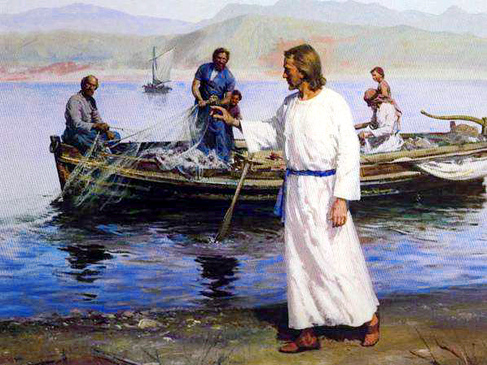
Picture

As Jesus was walking beside the Sea of Galilee, he saw two brothers, Simon called Peter and his brother Andrew. They were casting a net into the lake, for they were fishermen.  “Come, follow me,” Jesus said, “and I will make you fishers of men.” At once they left their nets and followed him. (Matthew 4 18-20) 

So the fishers of fish become halieis anthropon, ἁλιεῖς ἀνθρώπων, fishers of men. The will of God always leads us to a larger place, to an enlarged territory.

Because God’s desire is always for the fullest human flourishing. “The glory of God is man fully alive,” a lovely line credited to St. Irenaeus

And once we have surrendered our lives to him, he keeps moving us, onward and upward to the place where we can both use all our gifts and be a blessing to others. And in general, he takes the moving car of who we are; our gifts, abilities and experience, and steers it higher, stronger, faster.

So Jesus takes physically strong, entrepreneurial fisherman inured to hard work, team work, hardship, disappointment, nights at sea, and gives them the task of fishing men into an eternal kingdom. He applies their natural gifts to eternal, supernatural purposes.

Of course, just as we don’t give our children just one birthday present, once in their lives, so God continually gives us new gifts, abilities, capabilities, insight and new wisdom. But the vocation to which he calls us will be true to who we are, and to our interests and gifts.

* * *

Retreat to advance

In the short run, however, Peter and Andrew, James and John became downwardly mobile. No longer independent businessmen, but vagabonds, with no place to rest their head, dependent on charity.

Their old selves had to be broken, to be reformed like a beautiful mosaic.

John Wimber, founder of the Vineyard Movement, flourished in the music industry. However, on becoming a Christian, he found it incompatible with discipleship. So he left, and found work in a factory. An old colleague came to see him, asking for John Wimber’s office. He found Wimber covered with oil, inside a oil-barrel he was scrubbing out. The musician thought Wimber had gone mad!! (Recounted by Carol Wimber in The Way it Was.)

It required this brokenness for Wimber to be willing to hear when God said, “John, I have seen your work. Now let me show you mine.” And to be open to going with the flow of God’s  eccentric purposes.

And later to be a willing instrument when the Holy Spirit songs kept coming, no longer pop songs popular for a year, but spirit-given songs sung for decades, or longer.

* * *

However, it takes a period of brokenness and withdrawal for a gift to be repurposed, for fishermen to become fishers of men.

He needs our surrender before He can use us to bless others.

And when it happens, it feels like hell.

* * *

I was blocked in 2006 when a literary agent wanted me to make changes in my manuscript. Words dripped like crystallising treacle; I was blocked.

So I took a break, decided to put the kids in private school, founded a small publishing company to pay for that. When Roy could come aboard full time in 2010, and I could “retire,” I felt I no longer knew how to write. I had barely read for 4 years. I had lost writerly confidence.

When I started again, after hearing God suggest blogging, my writing was different. I was singing a new song.

I was more interested in speaking to my readers and blessing them than in a career (though, of course, I still want one) I was more interested in what I said, than in how I said it, which was huge for the girl who had been enamoured with style. I desperate to cut perfectionism off at the neck, and just get my work out there. Ship it! I was writing for the health of my soul, and as an offered gift to my readers, rather than for the glory of a career.

It takes a period of brokenness for the Great Artist to put your gifts together into a glorious mosaic, all hammered gold and gold enamelling, all tesserae and shimmering glass.

* * *

When I first wanted to offer my life to God, I went off to work with Mother Teresa, aged 17. (Having skipped years at school, winning “double promotions,” I was done with Grade 12 by the time I was 16.) I assumed because Jesus said, “Whatever you have done to the least of these…” that surely God’s will for me, and for every Christian was to work with the poor!

However, I am a dreamy and impractical person, and if I were a medieval woman when this was a plausible career choice, I would have become a mystic!

I was no good at Mother Teresa’s, with its packed-like-sardines community life; loud constant, vocal prayer, and lots of practical work. I languished and wilted; I got all sorts of things wrong; life felt like a series of hammer blows to my heart.

But writing–I have always written easily and reasonably well. It has generally been my joy.

Can writing be the way I am to serve God? Can writing be my worship? For years, I didn’t really believe something so lovely could be true

But now I do.

“The place God calls you to is the place where your deep gladness and the world’s deep hunger meet.” (Frederick, Buechner, Wishful Thinking)

Because God is good, pouring perfume can be an act of worship, and so can writing (no longer for fame or money, though few are averse to these things!) but as an act of worship, of pure devotion.

“Child, you have written for ambition,” he says. “Come write for me, as your worship of me.

And I will make you… Ah, wait and see.”

Filed Under: In which I decide to follow Jesus, Matthew Tagged With: Following Christ, John Wimber, Peter and Andrew, vocation

In which Driveness & Scarcity Thinking is the Voice of the Oppressor, & the Enemy of the People

By Anita Mathias

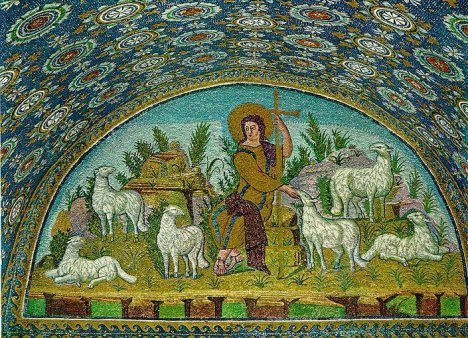
Christ The Good Shepherd

 I am reading Brene Brown’s Daring Greatly. She quotes Global activist Lynne Twist who, in her book The Soul of Money, refers to scarcity as “the great lie”.

Twist writes, “For me, and for many of us, our first waking thought of the day is, “I didn’t get enough sleep.” The next one is “I don’t have enough time.” Whether true or not, that thought of not enough occurs to us automatically before we even think to question or examine it. We spend most of the hours and the days of our lives hearing, explaining, complaining or worrying about what we don’t have enough of.

Before we even sit up in bed, before our feet touch the floor, we’re already inadequate, already behind, already losing, already lacking something. And by the time we go to bed at night, our minds are racing with a litany of what we didn’t get, or didn’t get done, that day. We go to sleep burdened by those thoughts and wake up to that reverie of lack.

This internal condition of scarcity, this mind-set of scarcity, lives at the very heart of our jealousies, our greed, our prejudice, and our arguments with life.”

                                                                                                               * * *

And so we go through life, driven, driven, driven. Rushing like the Gadarene swine, driven by demons they could not see over a cliff to their destruction.

Driven by ambition to the detriment of our health, mental health, emotional health, relationships.

Driven for validation. To prove our intelligence, spirituality, talent, worth…

Forgetting that all drivenness comes from Satan, never from God.

Driveneness comes from the Accuser and Oppressor of the Brethren, never from the Good Shepherd who gently leads us.

We are driven by Satan, but Christ, he leads us on minute by minute, through his gentle Spirit. We have but to follow.

* * *

And in our drivenness to grab the life we dream of through our own hard work, we forget that there is a far better way, without bleeding fingertips and hearts and lives.

The way of prayer, and trust, and leaving room for God to work his miracles.

We forget The One who Makes Dreams Come True, the weaver, who can weave a technicolour dreamcoat from scraps of discarded wool

The one who can give us our wild dreams, and add no sorrow to them.

The one who says, “Come ye apart from them and be separate.”

The one who says, “Honey Child, you are enough.

I like you just as you are.

Brilliant success won’t make me like you more.

Failure will only make me envelop you more.

In me, you are loved, complete.

In me, child, you are enough!

Turn your gaze to me, and let me fill up the hungry holes in your heart.

Eat me, drink me.

Turn to me when you sense Satan driving,

When you are tempted by striving,

And I will give you rest.”

Filed Under: In which I resolve to live by faith Tagged With: daring greatly, Drivenness, rest, scarcity thinking

  • « Previous Page
  • 1
  • …
  • 11
  • 12
  • 13
  • 14
  • 15
  • …
  • 27
  • Next Page »

Sign Up and Get a Free eBook!

Sign up to be emailed my blog posts (one a week) and get the ebook of "Holy Ground," my account of working with Mother Teresa.

Join 536 Other Readers

My Books

Rosaries, Reading, Secrets: A Catholic Childhood in India

Rosaries, Reading Secrets, B&N
USA

UK

Wandering Between Two Worlds: Essays on Faith and Art

Wandering Between Two Worlds
USA

UK

Francesco, Artist of Florence: The Man Who Gave Too Much

Francesco, Artist of Florence
US

UK

The Story of Dirk Willems

The Story of Dirk Willems
US

UK

My Latest Meditation

Anita Mathias: About Me

Anita Mathias

Read my blog on Facebook

Follow me on Twitter

Follow @anitamathias1

Recent Posts

  • At the Cross, God Forgives Us Completely
  • Using God’s Gift of Our Talents: A Path to Joy and Abundance
  • The Kingdom of God is Here Already, Yet Not Yet Here
  • All Those Who Exalt Themselves Will Be Humbled & the Humble Will Be Exalted
  • Christ’s Great Golden Triad to Guide Our Actions and Decisions
  • How Jesus Dealt With Hostility and Enemies
  • Do Not Be Afraid, but Do Be Prudent
  • For Scoundrels, Scallywags, and Rascals—Christ Came
  • How to Lead an Extremely Significant Life
  • Don’t Walk Away From Jesus, but if You Do, He Still Looks at You and Loves You
Premier Digital Awards 2015 - Finalist - Blogger of the year
Runner Up Christian Media Awards 2014 - Tweeter of the year

Categories

What I’m Reading


Wolf Hall
Hilary Mantel

Wolf Hall --  Amazon.com
Amazon.com

Amazon.co.uk

Silence and Honey Cakes:
The Wisdom Of The Desert
Rowan Williams

Silence and Honey Cakes --  Amazon.com
Amazon.com

Amazon.co.uk

The Long Loneliness:
The Autobiography of the Legendary Catholic Social Activist
Dorothy Day

The Long Loneliness --  Amazon.com
Amazon.com

Amazon.co.uk

Country Girl
Edna O'Brien

Country Girl  - Amazon.com
Amazon.com

Amazon.co.uk

Archive by month

My Latest Five Podcast Meditations

INSTAGRAM

anita.mathias

My memoir: Rosaries, Reading, Secrets https://amzn.to/42xgL9t
Oxford, England. Writer, memoirist, podcaster, blogger, Biblical meditation teacher, mum

Looking at photos from our week in beautiful Sevil Looking at photos from our week in beautiful Seville and Cordoba over New Year with Irene, who had a week off.
And, ICYMI, here’s my latest meditation on the Gospel of Matthew… I’ve recorded it, should you want a few minutes of peace.
https://anitamathias.com/2026/04/29/gods-complete-forgiveness/
Hello Friends, I'm resumed recording my meditation Hello Friends, I'm resumed recording my meditations on the Gospel of Matthew. Do click on this link to listen. 
https://anitamathias.com/.../29/gods-complete-forgiveness/
Christ is the most influential figure in the history of the world, though his life ended in shame, humiliation and failure. But he so completely turned things round in his great reversal that the cross on which he died when all seemed hopeless is now the most common, and revered, symbol in history.
He emerged from and was anchored in Judaism. And as the sins of the people were laid on the scapegoat who was sent into the wilderness to perish, Christ died as the lamb of God voluntarily bearing the guilt of the wrongdoing of the whole world. He paid the price for our forgiveness with his life-blood--in accordance with the iron law of the physical and moral universe, of sowing and reaping, cause and effect. 
And so, God, who appeared as flames of fire to Moses, can now dwell within us, purifying us, whose hearts have darkness and shards of ice. 
And now that Christ was crucified, died, but rose again, His Spirit, no longer contained within his earthly body, is poured out like living water onto all humans, at our humble request. The Spirit pours the love of God into us; he reminds us of the words of Jesus and slowly writes Christ’s sweet law on our hearts. This transfusion of grace helps us do hard things we previously couldn’t do. Our dance with the Spirit gradually breaks the power of sin over us. It transforms us.
Now we, the forgiven, protected by the blood of Jesus poured out over us, and filled with His Spirit, who sings within us, Abba, Father, are adopted by God as his children in his joyful new covenant. We are cells grafted into the vine of our new family--Father, Son, Spirit—who now live in us as we live in them. As we choose by our thoughts and actions to continue living in the vine of Jesus, their energy pulsing through us makes us fruitful. And now, all our prayers which flow in the river of God’s good purposes are kindly heard. Waves of love and power flood from the cross! 
Thank you!
Well, hello friends! Breaking radio silence to let Well, hello friends! Breaking radio silence to let you know that I have taped a meditation for you on Christ’s famous Parable of the Talents in Matthew 25. https://anitamathias.com/2025/11/05/using-gods-gift-of-our-talents-a-path-to-joy-and-abundance/
Here you are, click the play button in the blog post for a brief meditation, and some moments of peace, and, perhaps, inspiration in your day 🙂
Hi Friends, I have taped a meditation; do listen a Hi Friends, I have taped a meditation; do listen at this link: https://anitamathias.com/2025/04/08/the-kingdom-of-god-is-here-already-yet-not-yet-here-2/
It’s on the Kingdom of God, of which Christ so often spoke, which is here already—a mysterious, shimmering internal palace in which, in lightning flashes, we experience peace and joy, and yet, of course, not yet fully here. We sense the rainbowed presence of Christ in the song which pulses through creation. Christ strolls into our rooms with his wisdom and guidance, and things change. Our prayers are answered; we are healed; our hearts are strangely warmed. Sometimes.
And yet, we also experience evil within & all around us. Our own sin which can shatter our peace and the trajectory of our lives. And the sins of the world—its greed, dishonesty and environmental destruction.
But in this broken world, we still experience the glory of creation; “coincidences” which accelerate once we start praying, and shalom which envelops us like sudden sunshine. The portals into this Kingdom include repentance, gratitude, meditative breathing, and absolute surrender.
The Kingdom of God is here already. We can experience its beauty, peace and joy today through the presence of the Holy Spirit. But yet, since, in the Apostle Paul’s words, we do not struggle only “against flesh and blood, but against the rulers, against the unseen powers of this dark world and against the spiritual forces of evil,” its fullness still lingers…
Our daughter Zoe was ordained into the Church of E Our daughter Zoe was ordained into the Church of England in June. I have been on a social media break… but … better late than never. Enjoy!
First picture has my sister, Shalini, who kindly flew in from the US. Our lovely cousins Anthony and Sarah flank Zoe in the next picture.
The Bishop of London, Sarah Mullaly, ordained Zoe. You can see her praying that Zoe will be filled with the Holy Spirit!!
And here’s a meditation I’ve recorded, which you might enjoy. The link is also in my profile
https://anitamathias.com/2024/11/07/all-those-who-exalt-themselves-will-be-humbled-the-humble-will-be-exalted/
I have taped a meditation on Jesus statement in Ma I have taped a meditation on Jesus statement in Matthew 23, “For those who exalt themselves will be humbled, and those who humble themselves will be exalted.”
Do listen here. https://anitamathias.com/2024/11/07/all-those-who-exalt-themselves-will-be-humbled-the-humble-will-be-exalted/
Link also in bio.
And so, Jesus states a law of life. Those who broadcast their amazingness will be humbled, since God dislikes—scorns that, as much as people do.  For to trumpet our success, wealth, brilliance, giftedness or popularity is to get distracted from our life’s purpose into worthless activity. Those who love power, who are sure they know best, and who must be the best, will eventually be humbled by God and life. For their focus has shifted from loving God, doing good work, and being a blessing to their family, friends, and the world towards impressing others, being enviable, perhaps famous. These things are houses built on sand, which will crumble when hammered by the waves of old age, infirmity or adversity. 
God resists the proud, Scripture tells us—those who crave the admiration and power which is His alone. So how do we resist pride? We slow down, so that we realise (and repent) when sheer pride sparks our allergies to people, our enmities, our determination to have our own way, or our grandiose ego-driven goals, and ambitions. Once we stop chasing limelight, a great quietness steals over our lives. We no longer need the drug of continual achievement, or to share images of glittering travel, parties, prizes or friends. We just enjoy them quietly. My life is for itself & not for a spectacle, Emerson wrote. And, as Jesus advises, we quit sharp-elbowing ourselves to sit with the shiniest people, but are content to hang out with ordinary people; and then, as Jesus said, we will inevitably, eventually, be summoned higher to the sparkling conversation we craved. 
One day, every knee will bow before the gentle lamb who was slain, now seated on the throne. We will all be silent before him. Let us live gently then, our eyes on Christ, continually asking for his power, his Spirit, and his direction, moving, dancing, in the direction that we sense him move.
Link to new podcast in Bio https://anitamathias.co Link to new podcast in Bio https://anitamathias.com/2024/02/20/how-jesus-dealt-with-hostility-and-enemies/
3 days before his death, Jesus rampages through the commercialised temple, overturning the tables of moneychangers. Who gave you the authority to do these things? his outraged adversaries ask. And Jesus shows us how to answer hostile questions. Slow down. Breathe. Quick arrow prayers!
Your enemies have no power over your life that your Father has not permitted them. Ask your Father for wisdom, remembering: Questions do not need to be answered. Are these questioners worthy of the treasures of your heart? Or would that be feeding pearls to hungry pigs, who might instead devour you?
Questions can contain pitfalls, traps, nooses. Jesus directly answered just three of the 183 questions he was asked, refusing to answer some; answering others with a good question.
But how do we get the inner calm and wisdom to recognise
and sidestep entrapping questions? Long before the day of
testing, practice slow, easy breathing, and tune in to the frequency of the Father. There’s no record of Jesus running, rushing, getting stressed, or lacking peace. He never spoke on his own, he told us, without checking in with the Father. So, no foolish, ill-judged statements. Breathing in the wisdom of the Father beside and within him, he, unintimidated, traps the trappers.
Wisdom begins with training ourselves to slow down and ask
the Father for guidance. Then our calm minds, made perceptive, will help us recognise danger and trick questions, even those coated in flattery, and sidestep them or refuse to answer.
We practice tuning in to heavenly wisdom by practising–asking God questions, and then listening for his answers about the best way to do simple things…organise a home or write. Then, we build upwards, asking for wisdom in more complex things.
Listening for the voice of God before we speak, and asking for a filling of the Spirit, which Jesus calls streams of living water within us, will give us wisdom to know what to say, which, frequently, is nothing at all. It will quieten us with the silence of God, which sings through the world, through sun and stars, sky and flowers.
Especially for @ samheckt Some very imperfect pi Especially for @ samheckt 
Some very imperfect pictures of my labradoodle Merry, and golden retriever Pippi.
And since, I’m on social media, if you are the meditating type, here’s a scriptural meditation on not being afraid, while being prudent. https://anitamathias.com/2024/01/03/do-not-be-afraid-but-do-be-prudent/
A new podcast. Link in bio https://anitamathias.c A new podcast. Link in bio
https://anitamathias.com/2024/01/03/do-not-be-afraid-but-do-be-prudent/
Do Not Be Afraid, but Do Be Prudent
“Do not be afraid,” a dream-angel tells Joseph, to marry Mary, who’s pregnant, though a virgin, for in our magical, God-invaded world, the Spirit has placed God in her. Call the baby Jesus, or The Lord saves, for he will drag people free from the chokehold of their sins.
And Joseph is not afraid. And the angel was right, for a star rose, signalling a new King of the Jews. Astrologers followed it, threatening King Herod, whose chief priests recounted Micah’s 600-year-old prophecy: the Messiah would be born in Bethlehem, as Jesus had just been, while his parents from Nazareth registered for Augustus Caesar’s census of the entire Roman world. 
The Magi worshipped the baby, offering gold. And shepherds came, told by an angel of joy: that the Messiah, a saviour from all that oppresses, had just been born.
Then, suddenly, the dream-angel warned: Flee with the child to Egypt. For Herod plans to kill this baby, forever-King.
Do not be afraid, but still flee? Become a refugee? But lightning-bolt coincidences verified the angel’s first words: The magi with gold for the flight. Shepherds
telling of angels singing of coming inner peace. Joseph flees.
What’s the difference between fear and prudence? Fear is being frozen or panicked by imaginary what-ifs. It tenses our bodies; strains health, sleep and relationships; makes us stingy with ourselves & others; leads to overwork, & time wasted doing pointless things for fear of people’s opinions.
Prudence is wisdom-using our experience & spiritual discernment as we battle the demonic forces of this dark world, in Paul’s phrase.It’s fighting with divinely powerful weapons: truth, righteousness, faith, Scripture & prayer, while surrendering our thoughts to Christ. 
So let’s act prudently, wisely & bravely, silencing fear, while remaining alert to God’s guidance, delivered through inner peace or intuitions of danger and wrongness, our spiritual senses tuned to the Spirit’s “No,” his “Slow,” his “Go,” as cautious as a serpent, protected, while being as gentle as a lamb among wolves.
Follow on Instagram

© 2026 Dreaming Beneath the Spires · All Rights Reserved. · Cookie Policy · Privacy Policy