Anita Mathias: Dreaming Beneath the Spires

Anita Mathias's Blog on Faith and Art

  • Home
  • My Books
  • Meditations
  • Essays
  • Contact
  • About Me

Archives for 2018

In Praise of Desert and Wilderness Experiences

By Anita Mathias

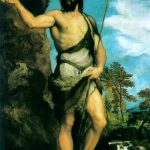
John the Baptist, his heart and mind and spirit filled with the word of God, pregnant with his calling, does not do what we would today if we sense a calling. He does not go to the cities, to Jerusalem; he does not seek a platform; in fact, he initially does not speak at all.

He goes into silence, into solitude and lets the silence and solitude mould him into the Prophet God wants him to be. He does not seek the audience, the ministry, or the influence; he seeks his God, and God brings it all to him–the ministry, the recognition, the influence, the crowds, the “cross”.

He put first things first: He put God first, and the rest came to him.

* * *

John the Baptist’s season in the desert of preparation for his prophetic calling was a period of extreme simplicity–in his clothing…a garment of camel hair with a leather belt, and in the simple eating, locusts and wild honey (protein and simple carbs) which helped him focus on the most important things…

In solitude, he got to know God, to know his voice, to let the Spirit which had filled him from his mother’s womb (Luke 1:15) strengthen him, so that he wasn’t thrown when crowds seeking baptism flocked to him “from Jerusalem and all Judea and the whole region of the Jordan” including tax collectors and soldiers whom he fearlessly challenged. The time in the desert was necessary for him to gain the strength to stand up to the priests and Levites and Pharisees and Sadducees, whom he scathingly labelled “a brood of vipers” (Matt 3:7) and not hesitate to confront Herod, precipitating his own death (Mark 6 14-29).

The time in the desert made John unique (among those born of women there is no one greater than John, Jesus says, Luke 7:28), for in the desert, he had unusual, totally inspiring company. God was in the desert; the Spirit of God hovered over the desert, there were ministering angels in the desert (Matt 4:11), and eventually the Son of God, Jesus himself came there. John the Baptist, “a voice crying in the wilderness,” sounded unique, he sounded like himself. He sounded like God

Thomas Merton writes, “Many poets are not poets for the same reason that many religious men are not saints: they never succeed in being themselves. They never get around to being the particular poet or the particular monk they are intended to be by God. They never become the man or the artist who is called for by all the circumstances of their individual lives. They waste their years in vain efforts to be some other poet, some other saint…They wear out their minds and bodies in a hopeless endeavour to have somebody else’s experiences or write somebody else’s poems, or possess someone else’s spirituality. There can be an intense egoism in following everybody else. People are in a hurry to magnify themselves by imitating what is popular-and too lazy to think of anything better. Hurry ruins saints as well as artists. They want quick success and they are in such a haste to get it that they cannot take time to be true to themselves. (Thomas Merton, New Seeds of Contemplation).

* * *

“God leads everyone he loves into the desert,” Paul Miller, a friend who mentored and “discipled” me for five years writes in his excellent book, A Praying Life, Moses, David, and Elijah among them.

We all have seasons of quietness, when, if we are to do the work involved in fulfilling our call, we must be alone and silent and quiet. God shapes us in that silence with his word, his spirit, and his love, until we are ready for the next season.

But desert seasons can be unendurably quiet. We can feel like failures while we wait.

However, if we try to short-circuit the desert season necessary for us to be shaped in silence into the kind of people who are able to bear the weight of the call of God, then the desert season gets prolonged, for we are not yet ready for our call.

* * *

For me the call to the desert in my life has been to retreat into silence and obscurity and “do the work: write the book.” I admit I have tried to get out of it by social life, volunteering in church, school and the community; teaching Bible studies, travel, adult education courses, films, theatre, money-making, money-saving, hosting and attending parties, “friendships” or small groups in which I did not add something of value to my friends’ life, or they to mine… But trying to get out of your calling, and out of doing what you have to do because of the sacrifices involved is not really satisfying. Ask Jonah. But God uses and shapes even our mistakes into a beautiful and useful story. Read the Book of Jonah.

By refusing to accept the deserts God calls us into, by filling them with noise, distraction, and busyness, we can prolong the season of preparation for our call. And, more chillingly, we may never do the work God has uniquely called us to do. I suspect many people never really step into their calling and vocation, for they are not willing to accept the sacrifice that preparation for it entails.

* * *

If God calls you into the desert, accept it. Do not numb the occasional loneliness and solitude with “crazy-busy, sugar, alcohol, the internet” (from Brene Brown’s list of the way we numb the pain of living, and then grow too numb to experience its joy). Pray, work, grow. Desert seasons end when you are ready for the next stretch of your call.

And the desert is not really a quiet, empty place. It is full of very important, very powerful, influential, and creative people you simply have to get to know to be happy and creative and fulfil your calling. God is in the desert. The Risen Jesus is in the desert. The wind of the Spirit blows and gusts through the desert. The desert is full of angels, to help you withstand the temptations of the desert–to too much food, to wanting power, to showing off. (Matthew 4 1-10).


It’s a quiet and desert season for me at the moment, empty-nesting, and guess what–I rather like it. With God’s grace, I hope not to short-circuit it, but to meet the one who came to the desert to meet John the Baptist, the one who baptises with the Holy Spirit and with fire.


P. S.  I am reading through the Book of Mark, and hope to share a reflection inspired by that great and short book every Sunday. Join me?

Filed Under: Applying my heart unto wisdom, In which I chase the wild goose of the Holy Spirit, In which I dabble in prophecy and the prophetic, Mark Tagged With: brene brown, calling, desert seasons, John the Baptist, Jonah, obscurity, Paul Miller, Prophetic preparation, Prophets, silence, solitude, the Book of Mark, Thomas Merton, vocation

It’s all God’s money: Thoughts on “the Cattle on a Thousand Hills”

By Anita Mathias

The Staffordshire Horde of Angl0-Saxon gold


One of the hardest things to have wise, sane, healthy thoughts about is money–since money is not mere zeroes on a bank statement, but the fruit of our labour, and our luck; a force which affects almost every area of our lives…our housing, surroundings, health, education, friendships, social life, vacations, leisure, thought-life, trust in God, and openness to His generous nudgings… Jesus says “Mammon,” money, is the biggest competitor to the love of God and the joy of God being the predominant force in our lives. It’s not easy to grasp Jesus’s thoroughly sane and foreign perspective on money. But seeing his life— intense, faith-filled, joyous, and infinitely influential, it’s well worth trying.

* * *

“It’s all God’s money,” I frequently repeat this useful mantra. I can be hard on myself, expecting too much wisdom and good sense of myself (and others!). As I tidy my house, and my eyes fall on books I haven’t read, boxed DVD sets I haven’t yet watched, clothes I have barely worn, furniture that I bought quickly and conveniently, rather than carefully and judiciously, I think “Gosh, that was a waste of money.” Sort of!

The only real waste of money, however, is to fling it into the ocean, or to burn a twenty pound note as a Cambridge undergraduate was filmed doing to torment a homeless man. Otherwise, when it comes to wasted purchases, God’s money flowed through my unwise hands into the department stores,’ and if I donate these things to a charity shop, it can flow into yet someone else’s hands, and I will have been a conduit of God’s blessing.

It’s the same with gym memberships, National Trust memberships, or Royal Horticultural Society memberships I haven’t fully used. It wasn’t “wasted;” the money flowed from me to someone else. It’s what I tell myself when I get what I think is a great deal on a airfare or a vacation rental, and my competitively savvy friends tell me of a better one they found: “‘It’s all God’s money.’ It flowed from me to BA rather than EasyJet. So be it.” And I saved time by not interminably shopping around for killer deals.

Making mistakes is part of being human; only God is all-wise. It’s important to accept our mistakes, our limited wisdom, our Pooh-of-Very-Little-Brainness and move on. I have run a small business since 2006, and notice how often people make mistakes. Our products are not the cheapest. But people buy them. Not everyone has the time or spirit or willingness to hound down the best value; I don’t myself. I am in and out of stores at the speed of light. Just as blessing comes to us because not everyone beelines for the cheapest stuff, or the best value, I am learning to offer grace to myself, and my family when other people or businesses profit from our mistakes.

* * *

A single apple seed can produce tens of thousands of apples. We observe this yearly in our small orchard. That is the normal rate of increase in creation. Jesus, it’s recorded, fed five thousand people from five loaves… each loaf multiplied a thousand times. Abundance–our thoughts, our words, our work, our investments, multiplied many times over–is the normal law of creation.

God owns the cattle on a thousand hills, the Psalmist tells us. Yet in his mercy, he only entrusts a few of these flocks to us. God’s material provision for each of us is sufficient, but not infinite. So we should try to make wise use of whatever gifts–of intellect, talent, opportunity or resources–He may have given us, but lightly. We are all limited beings, of limited intelligence, compared to the creator. So while we endeavour to use our talents and resources well, we also need to forgive ourselves, and offer ourselves grace when, through laziness, weakness, or sheer stupidity, we do not. It’s all God’s money; when I made mistakes through laziness or bad judgement, he used it to bless someone else!

And so we can let it all go, the lost or stolen handbags, wallets, phones, jewellery, the burgled cars, and houses. It’s all God’s money. God willing, those lost things were a blessing to someone else, and, mercifully, the river of God’s goodness does continue flowing, bringing to us newness, and more blessing besides.

* * *

So while we should use due diligence, and give to reputable, time-tested charities like Tearfund, we don’t need to torment ourselves about whether every cent is going to our sponsored child, or designated project, or whether it’s being lost to corruption, governmental or internal, or how wisely it’s being spent, or how effectively altruistic we are being. God uses our values, our backgrounds, our life-experiences, and the things that stir our hearts to direct each of us to support different charities. Choose the charities which resonate with your passions, pick the best ones according to your wisdom, intelligence and values, and then release the money to them. It’s all God’s money, anyway.


I love the Parable of Talents, which is incredibly true. To him who uses his “talents” well, more shall be given.

But ultimately, we are definitely not on earth to maximize our gifts and our talents, to explode our businesses, or invest our money with the Midas touch. God created the world from nothing by his mighty word. Jesus fed five thousand with two fish, drew gold coins from the mouths of other fish, and he can provide for us without all our artful schemes, dreams, and dodges.

We are not on earth to hustle, to multiply our words, our talents, and wealth through judicious application of the Protestant work ethic… because God is ace at multiplying and he can direct us to hidden wealth beneath our feet, like the Roman and Anglo-Saxon hordes of gold continually unearthed in Britain, or to herds of cattle waiting to be lassoed in an overlooked hill. We are on earth to learn to love. To love God, and other people. We are on earth to learn to be kind.

* * *


Image: By David Rowan, Birmingham Museum and Art Gallery (Staffordshire hoard) [CC BY 2.0 (http://creativecommons.org/licenses/by/2.0)], via Wikimedia Commons

Filed Under: Applying my heart unto wisdom, In which I decide to follow Jesus Tagged With: Jesus' view on money, Mammon, money, Parable of Talents

Gratitude: A Secret to Happiness

By Anita Mathias

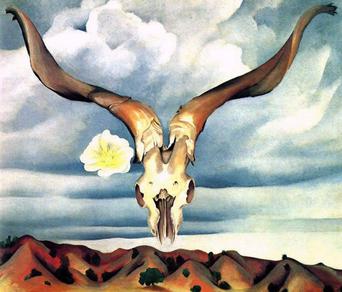
  Georgia O’Keefe

All of us have a negativity bias which makes us more apt to remember one mean comment about our writing, our children, our appearance, or our characters, than dozens of positive ones. It’s true, isn’t it? More disquietingly, I’ve read, in Andrew Solomon’s brilliant The Noonday Demon that the myelin sheath around our nerves wears down as we age, so that, if we live long enough, almost all of us will suffer from depression. And that’s not a happy prospect!

* * *

I want to live with peace in my soul. I want to live with joy, mindfulness, and gratitude, “in the light of his glory and grace.” That phrase is precious to me. I say it to myself, often, when I feel stressed, and my heart and mind race with a hundred thoughts and emotions, and then I remember to pivot, “to turn my eyes on Jesus” once again, “to look full in his wonderful face, until the things of earth grow strangely dim, in the light of his glory and grace,” and sanity and good sense return.

One way of pivoting into the presence of Jesus, and living in the light of his glory and grace, is the practice of gratitude. I do this quite deliberately. When I find myself stressed, or distracted, or discombobulated, I like to do what in mindfulness practice is called a three minute breathing space which, astonishingly, often serves to bring peace and clarity. Another practice I use is “the ten finger gratitude exercise” of Mark Williams, author of Mindfulness: count ten blessings or reasons for gratitude on my fingers. Often, my mood and perspective has shifted, and I am calmer before I got to ten!

For years, I have told one of my daughters who had trouble falling asleep to count a hundred blessings to help her sleep, and I often do myself…both the little unnoticed ones—that by God’s grace, I have never been in an accident, or broken a bone, and have rarely experienced physical pain, and have reasonably good health. I count my favourite gorgeous paintings, and books, and poems, and places, and people. That changes my mood before I get to a hundred.

* * *

Gratitude is the most important ingredient of happiness. Rick Steves who writes wonderful travel guides (and who, a couple of decades ago, converted me to his “Europe by the Backdoor” philosophy, enjoying Europe as many Europeans do, picnic meals in great parks, camper-vanning and campgrounds) writes of a loud disgruntled American eating an expensive meal in an expensive restaurant in a resort which cost five times what Steves recommends spending, loudly grumbling about his life and his taxes; berating his wife, thoroughly miserable through it all. I have often seen that traveller, bringing their internal unhappiness and spoilt-brattiness to exquisite surroundings. On occasion, though rarely, I have been that traveller.

What does it profit you if your business makes, say, a million pounds and you do not have sunshine in your soul? What does it profit you if you seen every beautiful sight in this green planet and have no love in your heart? What does the beautiful home, and garden, and all the beautiful art you seen, and experiences you have had, matter if you do not savour them, at the time, and in memory? Achieving the success of their wildest dreams will not make a person happy unless they are continually grateful for it. I know enough successful, wealthy people to know that this is true.

* * *

Some people are naturally more cheerful, sanguine, optimistic and grateful than others. It has to do with an internal, largely genetic, set-point for happiness which psychologists say is virtually impossible to shift. Some people are just more optimistic and sanguine than others, and luckily, I am naturally Micawberish. But gratitude is also a practice, which we learn by practising–and there is nothing more happy-making to practice.

The magic practice of gratitude can change our memories and perceptions of the past. Hold the picture frame of your dark and traumatic memories to the light. Look for the gold, and there was gold there, for God was there. Look for the light and transformation which flowed from the trauma, or still can flow from it. Thank God for the flashes of brightness and goodness in those dark picture frames… for even in them, God was present, and his story for your life was being written.

Gratitude is the most important ingredient of happiness. And it’s learnt by practice. During daylight, I practise by looking out and thanking God for the ever-changing panorama of the sky, the clouds floating across it. I thank God for the stars so bright in the countryside where I live. I thank God for the people who love me, for the animals who love me, my Golden Retriever, Pippi, and my labradoodle, Merry; for the continuous beauty of nature, so like a Constable painting so often in the Oxford countryside where I live that it takes my breath away. I thank God for the beautiful countries and art I have seen, and the books and poetry I have read, an internal treasure bank, and the leisure to have enjoyed them. I thank God for my love for Scripture, and for knowing Jesus. I thank God for the continuous presence of the Father, the Son, the Spirit, and ministering angels, so that, at present, I can freely choose “the desert,” for I need to get some work done. See, just typing a paragraph like this changes your mood.

Try to count five or ten blessing when you are sad, or stressed, or out of sorts. See if changes your mood. It’s almost magical–though the real magic of the spiritual life is not in our practices, but in the great magician himself, in Jesus.

 And on occasion, you may need another route out of sadness and general malaise. Sometimes you may need a change of scene, the sea. “The cure for anything is salt water — sweat, tears, or the sea.” Isak Dinesen

Sometimes, you may just need a hot bubble bath and a good long nap!

http://https://youtu.be/3Zl9puhwiyw

P.S. My practice of gratitude begins with mindfulness of the sky and the weather after I watched this astonishing video by Benedictine monk, David Steindl-Rast. Do watch it. His narration in his gentle German accent somehow makes it more memorable. Here is the text:

A Good Day, Brother David Steindl-Rast

 You think this is just
another day in your life?

It’s not just another day;
it’s the one day that
is given to you…

today

It’s given to you. It’s a gift.

It’s the only gift that you
have right now, and the
one appropriate response
is gratefulness.

If you do nothing else but to
cultivate that response to the great
gift that this unique day is,

if you learn to respond
as if it were the first day
of your life,

and the very last day,

then you will have spent
this day very well.

Begin by opening your
eyes and be surprised that you
have eyes you can open,

that incredible array of colors

that is constantly offered to
us for pure enjoyment.

Look at the sky.

We so rarely look at the sky.
We so rarely note how different
it is from moment to
moment
 with clouds coming
and going.

We just think of the weather, and
even of the weather we don’t think
of all the many nuances of weather.

We just think of good weather
and bad weather.

This day right now has
unique weather, maybe a
kind that will never exactly
in that form come again.

That formation of clouds in the sky will
never be the same that it is right now.

Open your eyes. Look at that.

Look at the faces 
of people whom you meet.

Each one has an incredible
story 
behind their face, a story
that you could never fully fathom,
not only their own story,
but the story of their ancestors.

We all go back so far.

And in this present
moment 
on this day, all the
people you meet, all that life
from generations and from so
many places all over the world,
flows together and meets you
here like a life-giving
water, if you only open your
heart and drink.

Open your heart
to the incredible gifts that
civilization gives to us.

You flip a switch
and there is
electric light.

You turn a faucet and
there is warm water and cold water—
and drinkable water.

It’s a gift that millions and millions
in the world will never experience.

So these are just a few of
an enormous number
of gifts to which you can
open your heart.

And so I wish for you that
you would open your heart
to all these blessings and let
them flow through you,
that everyone whom you will meet
on this day will be blessed by you;
just by your eyes,
by your smile, by your touch—
just by your presence.

Let the gratefulness overflow
into blessing all around you,

and then it will really be
a good day.


Filed Under: In which I am Amazed by Grace, In which I explore the Spiritual Life, In which I'm amazed by the goodness of God, The Power of Gratitude

The Things Worth Doing Badly

By Anita Mathias

A tyrannical statement we’ve heard as children, and said as exasperated parents: If a thing is worth doing, it’s worth doing well.

Which means we might never learn or do new things, for who has margin for one additional thing?

In fact, the opposite is true…anything worth doing is worth doing badly.

* * *

I discovered this while learning German over the last three years. The pace at the beginning was too fast, so I did not master the absolutely essential foundational grammar, which meant that, for the first two years, I was staggering and stumbling through lessons, which were making me sad. But I prayed about it after each year, and felt clearly, for unclear reasons, that I should continue–and now, in my third year of the six year course, I have a gifted, intelligent teacher who loves language, who speaks slowly, clearly, expressively, and, most importantly, interestingly—and, when I understand her anecdotes, I experience that flash of pure joy as when, after careening and tottering, you are off, skating on ice effortlessly, a joy that would not exist if learning had not been so hard.

When I was an undergraduate at Oxford, I remember the critic Hugh Kenner saying that there was no point in learning foreign languages since we would never learn them well enough to understand the poetry. Well, he’s wrong! It enhances travel to know enough of the language to understand the conversations around you, to communicate in, to be able to read the newspapers, absorbing a different viewpoint, and world-view. There is joy in reading, speaking, and understanding a little German, or Hindi, or French, or English to name some of my languages, or Greek, which I have a reading knowledge of. I listen to an episode of an interesting German podcast every day, Slow German, and, oddly enough, it is among the most enjoyable things in my day.

* * *

In fact, the only way we can begin to shift our lives, and to change the multiple short stories our lives are telling, is to begin doing the good things we want to do…even if badly. “Whatever you want to do or dream you can, begin it,” Goethe. Just five minutes a day of it, if necessary.

I love the Japanese strategy of Kaizen—making major life changes through infinitesimal adjustments. Want to read more. Read a little before you sleep. A little with your morning coffee. A little after dinner. See how long you take to read that book. Set a goal to finish the next book in one day less (which, with the dint of another mini reading or listening session, you can) and so on, until you are reading, say, 52 books a year, which will change your thinking, inner life, and appreciation of life. It’s better to read a little—for the magic carpet ride, interior thinking space, and quiet that it gives you than not to read at all.

* * *

After I had an evil illness, and declined chemotherapy three years ago, I read that walking four miles a day would change one’s life, and perhaps save it. Well, I almost built up to that a couple of times, but not quite. However, a short walk is better than no walk; a few yoga stretches is better than the one hour of yoga I aspire to (but never do, except in a class); lifting a few weights is not as good as the recommended 20 minutes of weights, but better than nothing. “Do not despise the day of small things.” I am not physically strong, sadly, but am committed to becoming stronger and fitter for that greatly increases my enjoyment of life.

Gardening brings me a good deal of joy, aesthetic pleasure, serenity, and thinking time, and also keeps me more flexible and limber. Every year, however, I return from our long summer holiday of two or three weeks, and find that my large garden of an acre and a half is a wilderness, and the pruning and dead-heading and weeding seems so overwhelming that I barely go out again until spring, when nature itself wants to drag you out, and then it’s so much work, and we wonder why we hadn’t put our garden to bed. I’ve decided to do a little and often rather than an hour spring and summer… and then nothing.

* * *

I would love to have a zen interior, a decluttered house, which I am closer to by dint of putting everything I don’t need in the garage, or barn, or detached study, which are now getting cluttered. It feels too soul-killing to take a whole hour to declutter, so I am doing it in tiny increments, 15 minutes a day, which doesn’t seem enough, but a whole lot better than not doing it at all. I’ve read that people hesitate to embark on minimalism because they think they’ll have to shed their most precious thing…which is a poor reason for not shedding your most junky thing.

* * *

The ultimate thing that’s worth doing badly, of course, is being a Christian, and pretty much everyone who’s not Jesus, does it imperfectly (some more imperfectly than others!)

However, it is an honour even to limp in the ways of the brilliant and astonishing Jesus. Because we think we fear doing the hardest thing for us–loving that dark, critical demanding person we find impossible; giving of our time to everyone who demands it of us–does not mean we should not continually travel towards the light, and attempt to conform our lives to Jesus’ teaching in micro-increments.

Following Christ (badly!!) has been the greatest honour and excitement of my life. When I am in a funk, when I feel confused, or angry, or out of sorts, or a teeny bit crazy, I pick up a Gospel, and read it fast, and his counter-intuitive words speak to me. Take up my cross, accept the difficulties of growth, or I am not worthy of him. The democratic life of continual prayer is open to everyone. Trust. “Don’t worry about anything at all.” Jesus’s teachings are like a diamond; there are always new glints.

I am invariably energised again by the call to follow Christ. In tiny steps, for this five minutes, this hour, this day. To think not only of myself, but of the others in my life, and of Him.

The Gospels: treasure you pick up when you are lost, a golden compass, guiding you to the right path, and since your trajectory is more important than where you are, it is better to take a few steps towards Christ, to crawl on the journey than never begin it, but drift towards the dark and hopeless regions of the Slough of Despondency, Doubting Castle, and Vanity Fair.

* * *

And HAPPY NEW YEAR, friends,

Love,

Anita

Image Credit: The wonderful Edward Knippers, on wrestling towards the light

Filed Under: In which I decide to follow Jesus, In which I explore Living as a Christian, In which I explore the Spiritual Life, In which I resolve to revise my life

  • « Previous Page
  • 1
  • 2

Sign Up and Get a Free eBook!

Sign up to be emailed my blog posts (one a week) and get the ebook of "Holy Ground," my account of working with Mother Teresa.

Join 536 Other Readers

My Books

Rosaries, Reading, Secrets: A Catholic Childhood in India

Rosaries, Reading Secrets, B&N
USA

UK

Wandering Between Two Worlds: Essays on Faith and Art

Wandering Between Two Worlds
USA

UK

Francesco, Artist of Florence: The Man Who Gave Too Much

Francesco, Artist of Florence
US

UK

The Story of Dirk Willems

The Story of Dirk Willems
US

UK

My Latest Meditation

Anita Mathias: About Me

Anita Mathias

Read my blog on Facebook

Follow me on Twitter

Follow @anitamathias1

Recent Posts

  • At the Cross, God Forgives Us Completely
  • Using God’s Gift of Our Talents: A Path to Joy and Abundance
  • The Kingdom of God is Here Already, Yet Not Yet Here
  • All Those Who Exalt Themselves Will Be Humbled & the Humble Will Be Exalted
  • Christ’s Great Golden Triad to Guide Our Actions and Decisions
  • How Jesus Dealt With Hostility and Enemies
  • Do Not Be Afraid, but Do Be Prudent
  • For Scoundrels, Scallywags, and Rascals—Christ Came
  • How to Lead an Extremely Significant Life
  • Don’t Walk Away From Jesus, but if You Do, He Still Looks at You and Loves You
Premier Digital Awards 2015 - Finalist - Blogger of the year
Runner Up Christian Media Awards 2014 - Tweeter of the year

Categories

What I’m Reading


Wolf Hall
Hilary Mantel

Wolf Hall --  Amazon.com
Amazon.com

Amazon.co.uk

Silence and Honey Cakes:
The Wisdom Of The Desert
Rowan Williams

Silence and Honey Cakes --  Amazon.com
Amazon.com

Amazon.co.uk

The Long Loneliness:
The Autobiography of the Legendary Catholic Social Activist
Dorothy Day

The Long Loneliness --  Amazon.com
Amazon.com

Amazon.co.uk

Country Girl
Edna O'Brien

Country Girl  - Amazon.com
Amazon.com

Amazon.co.uk

Archive by month

My Latest Five Podcast Meditations

INSTAGRAM

anita.mathias

My memoir: Rosaries, Reading, Secrets https://amzn.to/42xgL9t
Oxford, England. Writer, memoirist, podcaster, blogger, Biblical meditation teacher, mum

Looking at photos from our week in beautiful Sevil Looking at photos from our week in beautiful Seville and Cordoba over New Year with Irene, who had a week off.
And, ICYMI, here’s my latest meditation on the Gospel of Matthew… I’ve recorded it, should you want a few minutes of peace.
https://anitamathias.com/2026/04/29/gods-complete-forgiveness/
Hello Friends, I'm resumed recording my meditation Hello Friends, I'm resumed recording my meditations on the Gospel of Matthew. Do click on this link to listen. 
https://anitamathias.com/.../29/gods-complete-forgiveness/
Christ is the most influential figure in the history of the world, though his life ended in shame, humiliation and failure. But he so completely turned things round in his great reversal that the cross on which he died when all seemed hopeless is now the most common, and revered, symbol in history.
He emerged from and was anchored in Judaism. And as the sins of the people were laid on the scapegoat who was sent into the wilderness to perish, Christ died as the lamb of God voluntarily bearing the guilt of the wrongdoing of the whole world. He paid the price for our forgiveness with his life-blood--in accordance with the iron law of the physical and moral universe, of sowing and reaping, cause and effect. 
And so, God, who appeared as flames of fire to Moses, can now dwell within us, purifying us, whose hearts have darkness and shards of ice. 
And now that Christ was crucified, died, but rose again, His Spirit, no longer contained within his earthly body, is poured out like living water onto all humans, at our humble request. The Spirit pours the love of God into us; he reminds us of the words of Jesus and slowly writes Christ’s sweet law on our hearts. This transfusion of grace helps us do hard things we previously couldn’t do. Our dance with the Spirit gradually breaks the power of sin over us. It transforms us.
Now we, the forgiven, protected by the blood of Jesus poured out over us, and filled with His Spirit, who sings within us, Abba, Father, are adopted by God as his children in his joyful new covenant. We are cells grafted into the vine of our new family--Father, Son, Spirit—who now live in us as we live in them. As we choose by our thoughts and actions to continue living in the vine of Jesus, their energy pulsing through us makes us fruitful. And now, all our prayers which flow in the river of God’s good purposes are kindly heard. Waves of love and power flood from the cross! 
Thank you!
Well, hello friends! Breaking radio silence to let Well, hello friends! Breaking radio silence to let you know that I have taped a meditation for you on Christ’s famous Parable of the Talents in Matthew 25. https://anitamathias.com/2025/11/05/using-gods-gift-of-our-talents-a-path-to-joy-and-abundance/
Here you are, click the play button in the blog post for a brief meditation, and some moments of peace, and, perhaps, inspiration in your day 🙂
Hi Friends, I have taped a meditation; do listen a Hi Friends, I have taped a meditation; do listen at this link: https://anitamathias.com/2025/04/08/the-kingdom-of-god-is-here-already-yet-not-yet-here-2/
It’s on the Kingdom of God, of which Christ so often spoke, which is here already—a mysterious, shimmering internal palace in which, in lightning flashes, we experience peace and joy, and yet, of course, not yet fully here. We sense the rainbowed presence of Christ in the song which pulses through creation. Christ strolls into our rooms with his wisdom and guidance, and things change. Our prayers are answered; we are healed; our hearts are strangely warmed. Sometimes.
And yet, we also experience evil within & all around us. Our own sin which can shatter our peace and the trajectory of our lives. And the sins of the world—its greed, dishonesty and environmental destruction.
But in this broken world, we still experience the glory of creation; “coincidences” which accelerate once we start praying, and shalom which envelops us like sudden sunshine. The portals into this Kingdom include repentance, gratitude, meditative breathing, and absolute surrender.
The Kingdom of God is here already. We can experience its beauty, peace and joy today through the presence of the Holy Spirit. But yet, since, in the Apostle Paul’s words, we do not struggle only “against flesh and blood, but against the rulers, against the unseen powers of this dark world and against the spiritual forces of evil,” its fullness still lingers…
Our daughter Zoe was ordained into the Church of E Our daughter Zoe was ordained into the Church of England in June. I have been on a social media break… but … better late than never. Enjoy!
First picture has my sister, Shalini, who kindly flew in from the US. Our lovely cousins Anthony and Sarah flank Zoe in the next picture.
The Bishop of London, Sarah Mullaly, ordained Zoe. You can see her praying that Zoe will be filled with the Holy Spirit!!
And here’s a meditation I’ve recorded, which you might enjoy. The link is also in my profile
https://anitamathias.com/2024/11/07/all-those-who-exalt-themselves-will-be-humbled-the-humble-will-be-exalted/
I have taped a meditation on Jesus statement in Ma I have taped a meditation on Jesus statement in Matthew 23, “For those who exalt themselves will be humbled, and those who humble themselves will be exalted.”
Do listen here. https://anitamathias.com/2024/11/07/all-those-who-exalt-themselves-will-be-humbled-the-humble-will-be-exalted/
Link also in bio.
And so, Jesus states a law of life. Those who broadcast their amazingness will be humbled, since God dislikes—scorns that, as much as people do.  For to trumpet our success, wealth, brilliance, giftedness or popularity is to get distracted from our life’s purpose into worthless activity. Those who love power, who are sure they know best, and who must be the best, will eventually be humbled by God and life. For their focus has shifted from loving God, doing good work, and being a blessing to their family, friends, and the world towards impressing others, being enviable, perhaps famous. These things are houses built on sand, which will crumble when hammered by the waves of old age, infirmity or adversity. 
God resists the proud, Scripture tells us—those who crave the admiration and power which is His alone. So how do we resist pride? We slow down, so that we realise (and repent) when sheer pride sparks our allergies to people, our enmities, our determination to have our own way, or our grandiose ego-driven goals, and ambitions. Once we stop chasing limelight, a great quietness steals over our lives. We no longer need the drug of continual achievement, or to share images of glittering travel, parties, prizes or friends. We just enjoy them quietly. My life is for itself & not for a spectacle, Emerson wrote. And, as Jesus advises, we quit sharp-elbowing ourselves to sit with the shiniest people, but are content to hang out with ordinary people; and then, as Jesus said, we will inevitably, eventually, be summoned higher to the sparkling conversation we craved. 
One day, every knee will bow before the gentle lamb who was slain, now seated on the throne. We will all be silent before him. Let us live gently then, our eyes on Christ, continually asking for his power, his Spirit, and his direction, moving, dancing, in the direction that we sense him move.
Link to new podcast in Bio https://anitamathias.co Link to new podcast in Bio https://anitamathias.com/2024/02/20/how-jesus-dealt-with-hostility-and-enemies/
3 days before his death, Jesus rampages through the commercialised temple, overturning the tables of moneychangers. Who gave you the authority to do these things? his outraged adversaries ask. And Jesus shows us how to answer hostile questions. Slow down. Breathe. Quick arrow prayers!
Your enemies have no power over your life that your Father has not permitted them. Ask your Father for wisdom, remembering: Questions do not need to be answered. Are these questioners worthy of the treasures of your heart? Or would that be feeding pearls to hungry pigs, who might instead devour you?
Questions can contain pitfalls, traps, nooses. Jesus directly answered just three of the 183 questions he was asked, refusing to answer some; answering others with a good question.
But how do we get the inner calm and wisdom to recognise
and sidestep entrapping questions? Long before the day of
testing, practice slow, easy breathing, and tune in to the frequency of the Father. There’s no record of Jesus running, rushing, getting stressed, or lacking peace. He never spoke on his own, he told us, without checking in with the Father. So, no foolish, ill-judged statements. Breathing in the wisdom of the Father beside and within him, he, unintimidated, traps the trappers.
Wisdom begins with training ourselves to slow down and ask
the Father for guidance. Then our calm minds, made perceptive, will help us recognise danger and trick questions, even those coated in flattery, and sidestep them or refuse to answer.
We practice tuning in to heavenly wisdom by practising–asking God questions, and then listening for his answers about the best way to do simple things…organise a home or write. Then, we build upwards, asking for wisdom in more complex things.
Listening for the voice of God before we speak, and asking for a filling of the Spirit, which Jesus calls streams of living water within us, will give us wisdom to know what to say, which, frequently, is nothing at all. It will quieten us with the silence of God, which sings through the world, through sun and stars, sky and flowers.
Especially for @ samheckt Some very imperfect pi Especially for @ samheckt 
Some very imperfect pictures of my labradoodle Merry, and golden retriever Pippi.
And since, I’m on social media, if you are the meditating type, here’s a scriptural meditation on not being afraid, while being prudent. https://anitamathias.com/2024/01/03/do-not-be-afraid-but-do-be-prudent/
A new podcast. Link in bio https://anitamathias.c A new podcast. Link in bio
https://anitamathias.com/2024/01/03/do-not-be-afraid-but-do-be-prudent/
Do Not Be Afraid, but Do Be Prudent
“Do not be afraid,” a dream-angel tells Joseph, to marry Mary, who’s pregnant, though a virgin, for in our magical, God-invaded world, the Spirit has placed God in her. Call the baby Jesus, or The Lord saves, for he will drag people free from the chokehold of their sins.
And Joseph is not afraid. And the angel was right, for a star rose, signalling a new King of the Jews. Astrologers followed it, threatening King Herod, whose chief priests recounted Micah’s 600-year-old prophecy: the Messiah would be born in Bethlehem, as Jesus had just been, while his parents from Nazareth registered for Augustus Caesar’s census of the entire Roman world. 
The Magi worshipped the baby, offering gold. And shepherds came, told by an angel of joy: that the Messiah, a saviour from all that oppresses, had just been born.
Then, suddenly, the dream-angel warned: Flee with the child to Egypt. For Herod plans to kill this baby, forever-King.
Do not be afraid, but still flee? Become a refugee? But lightning-bolt coincidences verified the angel’s first words: The magi with gold for the flight. Shepherds
telling of angels singing of coming inner peace. Joseph flees.
What’s the difference between fear and prudence? Fear is being frozen or panicked by imaginary what-ifs. It tenses our bodies; strains health, sleep and relationships; makes us stingy with ourselves & others; leads to overwork, & time wasted doing pointless things for fear of people’s opinions.
Prudence is wisdom-using our experience & spiritual discernment as we battle the demonic forces of this dark world, in Paul’s phrase.It’s fighting with divinely powerful weapons: truth, righteousness, faith, Scripture & prayer, while surrendering our thoughts to Christ. 
So let’s act prudently, wisely & bravely, silencing fear, while remaining alert to God’s guidance, delivered through inner peace or intuitions of danger and wrongness, our spiritual senses tuned to the Spirit’s “No,” his “Slow,” his “Go,” as cautious as a serpent, protected, while being as gentle as a lamb among wolves.
Follow on Instagram

© 2026 Dreaming Beneath the Spires · All Rights Reserved. · Cookie Policy · Privacy Policy