Anita Mathias: Dreaming Beneath the Spires

Anita Mathias's Blog on Faith and Art

  • Home
  • My Books
  • Meditations
  • Essays
  • Contact
  • About Me

On Checking In Before you Fly

By Anita Mathias

Thingvellir National Park, Iceland

I am (slowly!) learning to slow down, and say, “So, what should I do, God?” or “What should I do, Spirit?” or “What should do I do, Jesus?”

And often enough, clarity comes, out of the box. I do not send the email I was about to. I change the time on my alarm clock. I re-arrange my day or my schedule or my commitments in a joyful, health-giving, and, often enough, productive way. The Spirit generally guides me in the way of subtraction. In the ways of quietness, by still waters.  In returning and in rest you shall be saved, in quietness and in confidence shall be your strength. (Isaiah 30:15). It has ever been so for me.

Does God always answer my frequent question: “What should I do?” Or does my unconscious provide answers? I don’t know, I lean towards the former. But there have definitely been directions in which I thought I heard God lead which have not been fruitful in the way I thought they would have been. But they have been learning experiences, sometimes baptisms of fire!,  which led on to other fruitful things.

It’s a good practice to check in with the Spirit before we act, even if we get it wrong sometimes. We learn by practice in every area of our lives… and our spiritual lives are no different.

Thomas Merton has a beautiful prayer on this subject.

My Lord God,
I have no idea where I am going.
I do not see the road ahead of me.
I cannot know for certain where it will end.
nor do I really know myself,
and the fact that I think I am following your will
does not mean that I am actually doing so.
But I believe that the desire to please you
does in fact please you.
And I hope I have that desire in all that I am doing.
I hope that I will never do anything apart from that desire.

And I know that if I do this you will lead me by the right road,

though I may know nothing about it.
Therefore will I trust you always though
I may seem to be lost and in the shadow of death.
I will not fear, for you are ever with me,
and you will never leave me to face my perils alone.


Filed Under: In which I chase the wild goose of the Holy Spirit, In which I explore the Spiritual Life, In which I try to discern the Voice and Will of God Tagged With: checking with the Spirit, guidance, Isaiah, The Merton Prayer, Thomas Merton

In Praise of Desert and Wilderness Experiences

By Anita Mathias

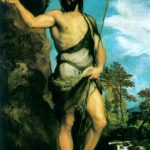
John the Baptist, his heart and mind and spirit filled with the word of God, pregnant with his calling, does not do what we would today if we sense a calling. He does not go to the cities, to Jerusalem; he does not seek a platform; in fact, he initially does not speak at all.
He goes into silence, into solitude and lets the silence and solitude mould him into the Prophet God wants him to be. He does not seek the audience, the ministry, or the influence; he seeks his God, and God brings it all to him–the ministry, the recognition, the influence, the crowds, the “cross”.

He put first things first: He put God first, and the rest came to him.

* * *

John the Baptist’s season in the desert of preparation for his prophetic calling was a period of extreme simplicity–in his clothing…a garment of camel hair with a leather belt, and in the simple eating, locusts and wild honey (protein and simple carbs) which helped him focus on the most important things…

In solitude, he got to know God, to know his voice, to let the Spirit which had filled him from his mother’s womb (Luke 1:15) strengthen him, so that he wasn’t thrown when crowds seeking baptism flocked to him “from Jerusalem and all Judea and the whole region of the Jordan” including tax collectors and soldiers whom he fearlessly challenged. The time in the desert was necessary for him to gain the strength to stand up to the priests and Levites and Pharisees and Sadducees, whom he scathingly labelled “a brood of vipers” (Matt 3:7) and not hesitate to confront Herod, precipitating his own death (Mark 6 14-29).

The time in the desert made John unique (among those born of women there is no one greater than John, Jesus says, Luke 7:28), for in the desert, he had unusual, totally inspiring company. God was in the desert; the Spirit of God hovered over the desert, there were ministering angels in the desert (Matt 4:11), and eventually the Son of God, Jesus himself came there. John the Baptist, “a voice crying in the wilderness,” sounded unique, he sounded like himself. He sounded like God

Thomas Merton writes, “Many poets are not poets for the same reason that many religious men are not saints: they never succeed in being themselves. They never get around to being the particular poet or the particular monk they are intended to be by God. They never become the man or the artist who is called for by all the circumstances of their individual lives. They waste their years in vain efforts to be some other poet, some other saint…They wear out their minds and bodies in a hopeless endeavour to have somebody else’s experiences or write somebody else’s poems, or possess someone else’s spirituality. There can be an intense egoism in following everybody else. People are in a hurry to magnify themselves by imitating what is popular-and too lazy to think of anything better. Hurry ruins saints as well as artists. They want quick success and they are in such a haste to get it that they cannot take time to be true to themselves. (Thomas Merton, New Seeds of Contemplation).

* * *

“God leads everyone he loves into the desert,” Paul Miller, a friend who mentored and “discipled” me for five years writes in his excellent book, A Praying Life, Moses, David, and Elijah among them.

We all have seasons of quietness, when, if we are to do the work involved in fulfilling our call, we must be alone and silent and quiet. God shapes us in that silence with his word, his spirit, and his love, until we are ready for the next season.

But desert seasons can be unendurably quiet. We can feel like failures while we wait.

However, if we try to short-circuit the desert season necessary for us to be shaped in silence into the kind of people who are able to bear the weight of the call of God, then the desert season gets prolonged, for we are not yet ready for our call.

* * *

For me the call to the desert in my life has been to retreat into silence and obscurity and “do the work: write the book.” I admit I have tried to get out of it by social life, volunteering in church, school and the community; teaching Bible studies, travel, adult education courses, films, theatre, money-making, money-saving, hosting and attending parties, “friendships” or small groups in which I did not add something of value to my friends’ life, or they to mine… But trying to get out of your calling, and out of doing what you have to do because of the sacrifices involved is not really satisfying. Ask Jonah. But God uses and shapes even our mistakes into a beautiful and useful story. Read the Book of Jonah.

By refusing to accept the deserts God calls us into, by filling them with noise, distraction, and busyness, we can prolong the season of preparation for our call. And, more chillingly, we may never do the work God has uniquely called us to do. I suspect many people never really step into their calling and vocation, for they are not willing to accept the sacrifice that preparation for it entails.

* * *

If God calls you into the desert, accept it. Do not numb the occasional loneliness and solitude with “crazy-busy, sugar, alcohol, the internet” (from Brene Brown’s list of the way we numb the pain of living, and then grow too numb to experience its joy). Pray, work, grow. Desert seasons end when you are ready for the next stretch of your call.

And the desert is not really a quiet, empty place. It is full of very important, very powerful, influential, and creative people you simply have to get to know to be happy and creative and fulfil your calling. God is in the desert. The Risen Jesus is in the desert. The wind of the Spirit blows and gusts through the desert. The desert is full of angels, to help you withstand the temptations of the desert–to too much food, to wanting power, to showing off. (Matthew 4 1-10).


It’s a quiet and desert season for me at the moment, empty-nesting, and guess what–I rather like it. With God’s grace, I hope not to short-circuit it, but to meet the one who came to the desert to meet John the Baptist, the one who baptises with the Holy Spirit and with fire.


P. S.  I am reading through the Book of Mark, and hope to share a reflection inspired by that great and short book every Sunday. Join me?

Filed Under: Applying my heart unto wisdom, In which I chase the wild goose of the Holy Spirit, In which I dabble in prophecy and the prophetic, Mark Tagged With: brene brown, calling, desert seasons, John the Baptist, Jonah, obscurity, Paul Miller, Prophetic preparation, Prophets, silence, solitude, the Book of Mark, Thomas Merton, vocation

“Thin Places,” Where the Boundaries between the Spiritual and Physical Worlds are Almost Transparent

By Anita Mathias

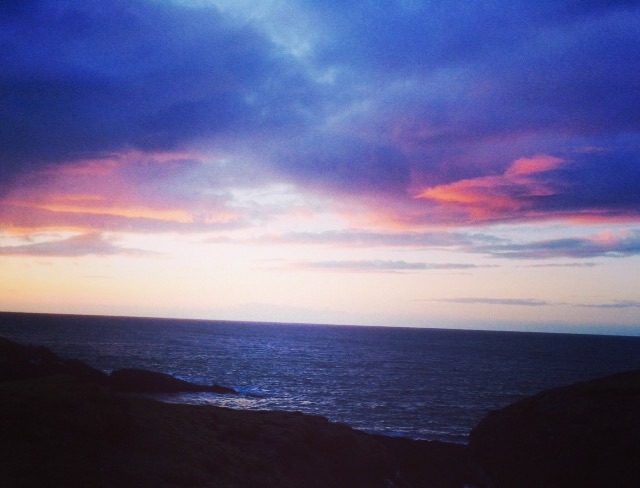
sunset_calf_sound_7Celtic Christians prized “thin places,” where the boundaries between the spiritual and physical world are almost transparent. Where we can sense shimmering in the physical world the just-as-real, invisible, supernatural world, charged with the glory of God, with hills ringed with angels in chariots of fire.

Could God really be more present in one place than in another? I wondered until I slowed down, calmed down, and began to experience the presence of God pushing though, and thin places.

* * *

Thin places—near mountains, rivers, streams, meadows, the sea—are, in fact, often places where people have worshipped and sought God for centuries. The air around beaches, waterfalls and mountains is rich in brain-activity boosting, depression-banishing negative ions.  Benedictines and Trappists often built their monasteries in such places.

Is it fanciful to suppose that places in which thousands have prayed would attract the spirit of God—and angelic presences?

Perhaps what happens in a pilgrimage spot is not that God descends to earth in a shower of radiance and the earth ever after exudes his fragrance. Perhaps it is we who sanctify spots of earth when we bring our weary spirits, our thwarted hopes, the whole human freight of grief, and pray—our eyes grown wide and trusting; our being, a concentrated yearning. Perhaps that yearning, that glimpse of better things, attracts the spirit of God, and traces of that encounter linger in the earth and air and water so that future pilgrims say, “God is here.”

* * *

I felt that when we visited Ffald-y-Brenin. There was a peace and holiness in the air. I could sense the presence of God in the stillness and especially around the high cross, placed on the highest hill of the retreat centre towering over the countryside.

I gave up analysing it after a while. I surrendered to the peace. As Eliot says in “Little Gidding,”

You are not here to verify,
Instruct yourself, or inform curiosity
Or carry report. You are here to kneel
Where prayer has been valid.

That peace, a sudden clarity of thinking and creativity? I guess I could call it the spirit of God.

Healing hung in the air. Looking back at my post written there, I see I was praying for healing from self-induced adrenal fatigue. Well, seven months later, it was completely gone, and I was gulping down books again, and writing a lot.

***

Just being by the ocean, watching it, listening to the roar of the waves quietens me, reminds me of immensity, of God’s infinite power, and opens me up to his spirit. I suddenly find myself praying in tongues. I pick up God’s guidance and directives most clearly on beach walks.

And, as all cultures at all times have noticed, mountains are specially charged with the presence of God. They are places for peace, serenity, and elevated thoughts. In the mountains, my thoughts instinctively gravitate to God.

* * *

And, of course, in our own homes and lives, places become thin because we often pray there.

I pray face down in my bedroom, soaking prayer, and the accustomed place and posture probably more quickly tunes my spirit to peace.

I also enjoy walking and praying in the fields around my house for I live in the country. Again the accustomed routine of walking and praying makes me feel happy and exhilarated and, within a short time, I find myself praying in tongues.

Thomas Merton writes about cultivating routines of prayer at the same place, and at about the same time, “My chief joy is to escape to the attic of the garden house and the little broken window that looks out over the valley.  There in the silence, I love the green grass.  The tortured gestures of the apple trees have become part of my prayer….  So much do I love this solitude that when I walk out along the road to the old barns that stand alone, delight begins to overpower me from head to foot, and peace smiles even in the marrow of my bones.”

* * *

Just we can feel stressed and uneasy by subliminal triggering memories of past trauma in certain places, or in the presence of certain people, our spirits can also swiftly be tuned to peace in places in which we have often experienced God’s spirit, on a particular seat in church, or on a particular country walk.

Working in my own garden is a thin place for me. Sooner or later, joy returns. Sooner or later, I find myself praying, often in tongues.

Another thin place for me is tidying up. I restore my soul as I restore my house. My body works, and feels happy working, but my mind is fallow. Clarity comes as I work, ideas. Peace returns, and I find myself praying…

* * *

Tweetable

“Thin places,” where the boundaries between the spiritual and physical world are almost transparent. From @anitamathias1 Tweet: “Thin places,” where the boundaries between the spiritual and physical world are almost transparent. @anitamathias1 http://ctt.ec/263c0+

Filed Under: spirituality Tagged With: adrenal fatigue, Benedictines, Celtic spirituality, Ffald-y-Brenin, healing, Little Gidding, Mountains, pilgrimage places, T.S. Eliot, the sea, Thomas Merton

Being Authentic Can Be Tricky, But NOT Being Authentic Can Break Your Heart

By Anita Mathias


I read this entry in Emerson’s journal when I was 21.

 Journal, March 29, 1832

 I will not live out of me.
I will not see with others’ eyes.
My good is good, my evil ill.
I would be free— I cannot be
While I take things as others please to rate them.
I dare attempt to lay out my own road.
That which myself delights in shall be Good
That which I do not want— indifferent
That which I hate is Bad. That’s flat.
Henceforth, please God, forever I forego
The yoke of men’s opinions. I will be
Lighthearted as a bird & live with God.

I decided to live like that. Not praising what I don’t like. Not pretending to like it. Not making small talk that bores me. Not smiling at what I don’t consider funny. Being myself

And it proved harder than I imagined, especially—oddly–when it came to writing.

***

Thomas Merton observes in his essay “Integrity,”

“Many poets are not poets for the same reason that many religious men are not saints: they never succeed in being themselves.  They never become the man or the artist who is called for by all the circumstances of their lives.

They waste their years in vain efforts to be some other poet, some other saint.

They wear out their minds and bodies in a hopeless endeavour to write somebody else’s poems or possess someone else’s spirituality.”

There can be an intense egoism in following everybody else. People are in a hurry to magnify themselves by imitating what is popular—and too lazy to think of anything better.

Hurry ruins saints as well as artists. They want quick success and they are in such haste to get it that they cannot take time to be true to themselves.

Masks, pretence and imitation: temptations in writing and blogging—areas in which, ironically, one should be most oneself.

“Every original writer must create the taste by which he is to be relished,” Wordsworth observed. Labouring in obscurity, a writer or blogger finds a voice, fashions a unique poetic style.  Or perfects an expression of outrage at things rotten in the state of Christendom. And becomes hugely popular.

And then there are myriad imitators. But the flourishes, the pretzel sentences, the circuitous locutions–sound distorted in the echo chamber, obscuring rather than clarifying meaning.

However, “Me Too” books and blogs written in the updraft of a successful writer achieve a more rapid success! Of course, they do

In Marlowe’s Doctor Faustus, Mephistopheles offers Faust all the world at the cost of his soul. Faust thought he had a great deal– until he had to pay the price!

The Mephistophelean bargain which faces writers is compromising our one wild and precious life for success.  However, by not writing about what really interests us, in a style we consider beautiful, we, ironically, sacrifice the very joys that attracted us to writing.

And if we write what “the market wants” and get it wrong–ah, the misery!

I was tempted as a younger writer. A memoir of my Indian Catholic childhood was the book I really wanted to write,  but the two chapters I had written about volunteering with Mother Teresa won a Minnesota State Arts Board award; a Jerome Foundation award, and fellowships to Writers’ Conferences, and my professor thought I could find an editor and agent, which I did, but I tried to write the book the editor wanted; an elderly distinguished man who’d discovered several famous writers, writing not what interested me but what I thought would interest him, and in the style I thought he would like.

I spun out what I wanted to be two 30-40 page chapters into a whole book–my short cut to success!! Well, the book, written in blood through my pregnancy and two years of my toddler’s life, was rejected. Of course, it was!  It was written for a career, not to express my soul’s imperatives.

I lay down on the carpet and wanted to die. Crushed!

I gave up writing for a season, became an entrepreneur, founded a small company I still own.

I eventually returned to writing, of course, sadder, wiser–and, in jerks, to drafting the book I really wanted to write.

But I have learnt from my mistakes, and now hope I will be too smart to expend my one wild and precious life writing on things that do not really interest me.

And if success, consequently, eludes me? Well, the internet and democratization of writing has changed things.  Success is now on a continuum, and I am content to take my place on it, be it “high or low or soon or slow” and write for the joy of creating, as birds sing for the joy of singing.

* * *


The first version of this was hosted by Esther Emery on her brilliant blog.


Filed Under: In which I explore writing and blogging and creativity, Writing and Blogging Tagged With: being yourself, blogging, Emerson, imitation, quick success, Thomas Merton, Wordsworth, writing

Sign Up and Get a Free eBook!

Sign up to be emailed my blog posts (one a week) and get the ebook of "Holy Ground," my account of working with Mother Teresa.

Join 536 Other Readers

My Books

Rosaries, Reading, Secrets: A Catholic Childhood in India

Rosaries, Reading Secrets, B&N
USA

UK

Wandering Between Two Worlds: Essays on Faith and Art

Wandering Between Two Worlds
USA

UK

Francesco, Artist of Florence: The Man Who Gave Too Much

Francesco, Artist of Florence
US

UK

The Story of Dirk Willems

The Story of Dirk Willems
US

UK

My Latest Meditation

Anita Mathias: About Me

Anita Mathias

Read my blog on Facebook

Follow me on Twitter

Follow @anitamathias1

Recent Posts

  • At the Cross, God Forgives Us Completely
  • Using God’s Gift of Our Talents: A Path to Joy and Abundance
  • The Kingdom of God is Here Already, Yet Not Yet Here
  • All Those Who Exalt Themselves Will Be Humbled & the Humble Will Be Exalted
  • Christ’s Great Golden Triad to Guide Our Actions and Decisions
  • How Jesus Dealt With Hostility and Enemies
  • Do Not Be Afraid, but Do Be Prudent
  • For Scoundrels, Scallywags, and Rascals—Christ Came
  • How to Lead an Extremely Significant Life
  • Don’t Walk Away From Jesus, but if You Do, He Still Looks at You and Loves You
Premier Digital Awards 2015 - Finalist - Blogger of the year
Runner Up Christian Media Awards 2014 - Tweeter of the year

Categories

What I’m Reading


Wolf Hall
Hilary Mantel

Wolf Hall --  Amazon.com
Amazon.com

Amazon.co.uk

Silence and Honey Cakes:
The Wisdom Of The Desert
Rowan Williams

Silence and Honey Cakes --  Amazon.com
Amazon.com

Amazon.co.uk

The Long Loneliness:
The Autobiography of the Legendary Catholic Social Activist
Dorothy Day

The Long Loneliness --  Amazon.com
Amazon.com

Amazon.co.uk

Country Girl
Edna O'Brien

Country Girl  - Amazon.com
Amazon.com

Amazon.co.uk

Archive by month

My Latest Five Podcast Meditations

INSTAGRAM

anita.mathias

My memoir: Rosaries, Reading, Secrets https://amzn.to/42xgL9t
Oxford, England. Writer, memoirist, podcaster, blogger, Biblical meditation teacher, mum

Looking at photos from our week in beautiful Sevil Looking at photos from our week in beautiful Seville and Cordoba over New Year with Irene, who had a week off.
And, ICYMI, here’s my latest meditation on the Gospel of Matthew… I’ve recorded it, should you want a few minutes of peace.
https://anitamathias.com/2026/04/29/gods-complete-forgiveness/
Hello Friends, I'm resumed recording my meditation Hello Friends, I'm resumed recording my meditations on the Gospel of Matthew. Do click on this link to listen. 
https://anitamathias.com/.../29/gods-complete-forgiveness/
Christ is the most influential figure in the history of the world, though his life ended in shame, humiliation and failure. But he so completely turned things round in his great reversal that the cross on which he died when all seemed hopeless is now the most common, and revered, symbol in history.
He emerged from and was anchored in Judaism. And as the sins of the people were laid on the scapegoat who was sent into the wilderness to perish, Christ died as the lamb of God voluntarily bearing the guilt of the wrongdoing of the whole world. He paid the price for our forgiveness with his life-blood--in accordance with the iron law of the physical and moral universe, of sowing and reaping, cause and effect. 
And so, God, who appeared as flames of fire to Moses, can now dwell within us, purifying us, whose hearts have darkness and shards of ice. 
And now that Christ was crucified, died, but rose again, His Spirit, no longer contained within his earthly body, is poured out like living water onto all humans, at our humble request. The Spirit pours the love of God into us; he reminds us of the words of Jesus and slowly writes Christ’s sweet law on our hearts. This transfusion of grace helps us do hard things we previously couldn’t do. Our dance with the Spirit gradually breaks the power of sin over us. It transforms us.
Now we, the forgiven, protected by the blood of Jesus poured out over us, and filled with His Spirit, who sings within us, Abba, Father, are adopted by God as his children in his joyful new covenant. We are cells grafted into the vine of our new family--Father, Son, Spirit—who now live in us as we live in them. As we choose by our thoughts and actions to continue living in the vine of Jesus, their energy pulsing through us makes us fruitful. And now, all our prayers which flow in the river of God’s good purposes are kindly heard. Waves of love and power flood from the cross! 
Thank you!
Well, hello friends! Breaking radio silence to let Well, hello friends! Breaking radio silence to let you know that I have taped a meditation for you on Christ’s famous Parable of the Talents in Matthew 25. https://anitamathias.com/2025/11/05/using-gods-gift-of-our-talents-a-path-to-joy-and-abundance/
Here you are, click the play button in the blog post for a brief meditation, and some moments of peace, and, perhaps, inspiration in your day 🙂
Hi Friends, I have taped a meditation; do listen a Hi Friends, I have taped a meditation; do listen at this link: https://anitamathias.com/2025/04/08/the-kingdom-of-god-is-here-already-yet-not-yet-here-2/
It’s on the Kingdom of God, of which Christ so often spoke, which is here already—a mysterious, shimmering internal palace in which, in lightning flashes, we experience peace and joy, and yet, of course, not yet fully here. We sense the rainbowed presence of Christ in the song which pulses through creation. Christ strolls into our rooms with his wisdom and guidance, and things change. Our prayers are answered; we are healed; our hearts are strangely warmed. Sometimes.
And yet, we also experience evil within & all around us. Our own sin which can shatter our peace and the trajectory of our lives. And the sins of the world—its greed, dishonesty and environmental destruction.
But in this broken world, we still experience the glory of creation; “coincidences” which accelerate once we start praying, and shalom which envelops us like sudden sunshine. The portals into this Kingdom include repentance, gratitude, meditative breathing, and absolute surrender.
The Kingdom of God is here already. We can experience its beauty, peace and joy today through the presence of the Holy Spirit. But yet, since, in the Apostle Paul’s words, we do not struggle only “against flesh and blood, but against the rulers, against the unseen powers of this dark world and against the spiritual forces of evil,” its fullness still lingers…
Our daughter Zoe was ordained into the Church of E Our daughter Zoe was ordained into the Church of England in June. I have been on a social media break… but … better late than never. Enjoy!
First picture has my sister, Shalini, who kindly flew in from the US. Our lovely cousins Anthony and Sarah flank Zoe in the next picture.
The Bishop of London, Sarah Mullaly, ordained Zoe. You can see her praying that Zoe will be filled with the Holy Spirit!!
And here’s a meditation I’ve recorded, which you might enjoy. The link is also in my profile
https://anitamathias.com/2024/11/07/all-those-who-exalt-themselves-will-be-humbled-the-humble-will-be-exalted/
I have taped a meditation on Jesus statement in Ma I have taped a meditation on Jesus statement in Matthew 23, “For those who exalt themselves will be humbled, and those who humble themselves will be exalted.”
Do listen here. https://anitamathias.com/2024/11/07/all-those-who-exalt-themselves-will-be-humbled-the-humble-will-be-exalted/
Link also in bio.
And so, Jesus states a law of life. Those who broadcast their amazingness will be humbled, since God dislikes—scorns that, as much as people do.  For to trumpet our success, wealth, brilliance, giftedness or popularity is to get distracted from our life’s purpose into worthless activity. Those who love power, who are sure they know best, and who must be the best, will eventually be humbled by God and life. For their focus has shifted from loving God, doing good work, and being a blessing to their family, friends, and the world towards impressing others, being enviable, perhaps famous. These things are houses built on sand, which will crumble when hammered by the waves of old age, infirmity or adversity. 
God resists the proud, Scripture tells us—those who crave the admiration and power which is His alone. So how do we resist pride? We slow down, so that we realise (and repent) when sheer pride sparks our allergies to people, our enmities, our determination to have our own way, or our grandiose ego-driven goals, and ambitions. Once we stop chasing limelight, a great quietness steals over our lives. We no longer need the drug of continual achievement, or to share images of glittering travel, parties, prizes or friends. We just enjoy them quietly. My life is for itself & not for a spectacle, Emerson wrote. And, as Jesus advises, we quit sharp-elbowing ourselves to sit with the shiniest people, but are content to hang out with ordinary people; and then, as Jesus said, we will inevitably, eventually, be summoned higher to the sparkling conversation we craved. 
One day, every knee will bow before the gentle lamb who was slain, now seated on the throne. We will all be silent before him. Let us live gently then, our eyes on Christ, continually asking for his power, his Spirit, and his direction, moving, dancing, in the direction that we sense him move.
Link to new podcast in Bio https://anitamathias.co Link to new podcast in Bio https://anitamathias.com/2024/02/20/how-jesus-dealt-with-hostility-and-enemies/
3 days before his death, Jesus rampages through the commercialised temple, overturning the tables of moneychangers. Who gave you the authority to do these things? his outraged adversaries ask. And Jesus shows us how to answer hostile questions. Slow down. Breathe. Quick arrow prayers!
Your enemies have no power over your life that your Father has not permitted them. Ask your Father for wisdom, remembering: Questions do not need to be answered. Are these questioners worthy of the treasures of your heart? Or would that be feeding pearls to hungry pigs, who might instead devour you?
Questions can contain pitfalls, traps, nooses. Jesus directly answered just three of the 183 questions he was asked, refusing to answer some; answering others with a good question.
But how do we get the inner calm and wisdom to recognise
and sidestep entrapping questions? Long before the day of
testing, practice slow, easy breathing, and tune in to the frequency of the Father. There’s no record of Jesus running, rushing, getting stressed, or lacking peace. He never spoke on his own, he told us, without checking in with the Father. So, no foolish, ill-judged statements. Breathing in the wisdom of the Father beside and within him, he, unintimidated, traps the trappers.
Wisdom begins with training ourselves to slow down and ask
the Father for guidance. Then our calm minds, made perceptive, will help us recognise danger and trick questions, even those coated in flattery, and sidestep them or refuse to answer.
We practice tuning in to heavenly wisdom by practising–asking God questions, and then listening for his answers about the best way to do simple things…organise a home or write. Then, we build upwards, asking for wisdom in more complex things.
Listening for the voice of God before we speak, and asking for a filling of the Spirit, which Jesus calls streams of living water within us, will give us wisdom to know what to say, which, frequently, is nothing at all. It will quieten us with the silence of God, which sings through the world, through sun and stars, sky and flowers.
Especially for @ samheckt Some very imperfect pi Especially for @ samheckt 
Some very imperfect pictures of my labradoodle Merry, and golden retriever Pippi.
And since, I’m on social media, if you are the meditating type, here’s a scriptural meditation on not being afraid, while being prudent. https://anitamathias.com/2024/01/03/do-not-be-afraid-but-do-be-prudent/
A new podcast. Link in bio https://anitamathias.c A new podcast. Link in bio
https://anitamathias.com/2024/01/03/do-not-be-afraid-but-do-be-prudent/
Do Not Be Afraid, but Do Be Prudent
“Do not be afraid,” a dream-angel tells Joseph, to marry Mary, who’s pregnant, though a virgin, for in our magical, God-invaded world, the Spirit has placed God in her. Call the baby Jesus, or The Lord saves, for he will drag people free from the chokehold of their sins.
And Joseph is not afraid. And the angel was right, for a star rose, signalling a new King of the Jews. Astrologers followed it, threatening King Herod, whose chief priests recounted Micah’s 600-year-old prophecy: the Messiah would be born in Bethlehem, as Jesus had just been, while his parents from Nazareth registered for Augustus Caesar’s census of the entire Roman world. 
The Magi worshipped the baby, offering gold. And shepherds came, told by an angel of joy: that the Messiah, a saviour from all that oppresses, had just been born.
Then, suddenly, the dream-angel warned: Flee with the child to Egypt. For Herod plans to kill this baby, forever-King.
Do not be afraid, but still flee? Become a refugee? But lightning-bolt coincidences verified the angel’s first words: The magi with gold for the flight. Shepherds
telling of angels singing of coming inner peace. Joseph flees.
What’s the difference between fear and prudence? Fear is being frozen or panicked by imaginary what-ifs. It tenses our bodies; strains health, sleep and relationships; makes us stingy with ourselves & others; leads to overwork, & time wasted doing pointless things for fear of people’s opinions.
Prudence is wisdom-using our experience & spiritual discernment as we battle the demonic forces of this dark world, in Paul’s phrase.It’s fighting with divinely powerful weapons: truth, righteousness, faith, Scripture & prayer, while surrendering our thoughts to Christ. 
So let’s act prudently, wisely & bravely, silencing fear, while remaining alert to God’s guidance, delivered through inner peace or intuitions of danger and wrongness, our spiritual senses tuned to the Spirit’s “No,” his “Slow,” his “Go,” as cautious as a serpent, protected, while being as gentle as a lamb among wolves.
Follow on Instagram

© 2026 Dreaming Beneath the Spires · All Rights Reserved. · Cookie Policy · Privacy Policy