Anita Mathias: Dreaming Beneath the Spires

Anita Mathias's Blog on Faith and Art

  • Home
  • My Books
  • Meditations
  • Essays
  • Contact
  • About Me

Archives for 2014

In Which I Have Never Been Instantly Healed, But Have Always Been Healed

By Anita Mathias


I have never witnessed a verified physical healing. Never spoken to anyone who had experienced one themselves, following prayer.

And I have never experienced an instantaneous physical or emotional healing as someone prayed for me.

However, I have never yet NOT been at least partially healed of anything I have gone up front to be prayed for.

* * *

Bill Johnson spoke at New Wine 2008 about the miraculous physical healings he’d witness and “performed.” And so, though I had at that point been blessed with good physical health–no chronic illness, hospitalizations, surgeries, broken bones, and normal cholesterol, blood pressure, blood sugar etc.–I joined the throngs, for perfect physical health is rare, and if there was power going forth, well, I wanted to be part of it.

I went forward for a bothersome niggle—itchy ears with fluid drainage, which were irritating and occasionally got painfully infected, so much so that I couldn’t go to parties or sleep well. And a sweet Californian lovingly placed her hands on my ears and prayed. And I thought I would surely be healed—but, alas, I was not.

Three years later though, on reading Rick Warren’s  Daniel Plan, then online, I read that itchy ears, with fluid drainage are a symptom of food toxicity—and can be eliminated by eliminating sugar and white flour. I did. And after 12 years of irritation, pain, doctor visits, meds for ear aches—bingo, healed. (Though it flares up with sugar and wheat, alas).

An answer to my prayer?

Yes, I do believe so.

* * *

In 2008, I was on Prozac. My life felt hard. I had an experience of emotional and spiritual abuse in a charismatic Anglican church, which then had a toxic culture.

Unconsciously numbing myself, I worked obsessively at a family business which wasn’t captivating (though it enabled my husband to retire from being a Maths Professor, and run our home two years later).

Anyone who has been depressed will recognise the vicious circle, which makes me tearful to even think of it. The horror, the horror. My house became cluttered and messy, and I didn’t have the energy to get it together. I wasn’t exercising, and was comfort eating—quick and easy—and rapidly gained weight.

My memoir proposal had been turned down by an agent in 2006, and I got bogged down in revisions, and had lost deep soul-confidence that the book I was writing would be published. I had lost faith, hope and love!

I was suppressing my writing and creativity which were so much a part of me that they were me. Each thing says one thing and the same, what I do is me, for that I came, as Gerard Manley Hopkins put it.

Hello, Prozac my old friend.

I believe in anti-depressants as a step-stool to get out of vicious circles and deep pits. And equally importantly, I believe we should seek cognitive help and continue seeking till we have found adequate help, spiritual help if that is sufficient, and psychotherapy if it isn’t.  I have used both professional and non-professional help, spiritual counselling, friendships and psychotherapy, and benefitted from both, equally.

Anyway, the same sweet Californian told me that she had been depressed, and then was healed, like that–she snapped her fingers– and prayed I too would be healed like that–snap.

Well, how would I know that I was healed, except by going off my anti-depressants? Which I knew one is never supposed to do, cold turkey, but which I did. My brain and emotions now limped like a snail in fog. I was dead inside, dead to all but making money, which I mechanically made, made, made.

The church, which had been so toxic and poisonous for me, had a speaker on depression at a women’s breakfast. Who is depressed? she asked, and scores of hands flew up, some among them the women who had been the nastiest to me. (Wounded people wound—and so, we MUST find help for our woundedness.) I went up for prayer, told the story of going off meds and deeper creative and emotional sadness. Yeah, that whole period was my “great sadness” in the evocative phrase from “The Shack.” Talked to her, decided to go back to Prozac.

Eventually, my self-confidence returned. I became over-confident, confrontational, out-spoken, a bit aggressive, perhaps. But I am nice and sweet, really! I realized that the depression had lifted, and I was now on serotonin overload. And I wanted a few friends left at the end! I tapered off completely–for good I hope. Farewell, Prozac my old friend. Farewell, depression.

That prayer at New Wine was answered—a year later.

* * *

(Which brings me to perhaps the only instantaneous healing I’ve received, though I didn’t realize it at the time. The day I began blogging, April 11th, 2010, I went forward for prayer for adrenal fatigue and exhaustion at a healing service at that charismatic church and the rector laid his hands on my head, and prayed for a revelation of divine love, and I felt something go through my brain, electricity, honey, and I was healed from the adrenal fatigue which had plagued me for years, and could write for hours, longer than ever, ever before. This happy state of affairs has continued. Without that, I might not have been able to muster the considerable and consistent energy it takes to blog successfully.)

* * *

Two more stories. I had a really painful shoulder last autumn, and asked for healing at a Revival Alliance Conference. A group gathered around me, English, as well as West Indian Brits, who sung over me in the most beautiful melodic tones that reduced me to tears, and then asked with absolute faith, “It’s better, isn’t it?”

I assented. Who would have had the heart not to?

But it wasn’t.

I resumed yoga. Yoga increases mobility a micro-millimetre or so each consistent session.

And that shoulder pain? All gone!

* * *

Last story. Until last year, like a child, I had resorted to chocolate, cookies, crisps, or take-away when a family member stressed me, or my writing didn’t go well, or I was bored or sad or stressed-out or happy or  wanted to celebrate. It had become the way I dealt with emotion. And, of course, I steadily gained weight

I went up to request healing in the emotionally charged atmosphere of the Cwmbran Revival. And I heard Jesus say, “Honey, you are in charge of what you put into your mouth. Honey, don’t. Honey, rise, take up your pallet and walk.”

The healing continues. Wounds are healed when exposed to the air and light. So it is with emotional stuff. Name it, analyse it. Sit with the pain, don’t numb it. That’s how healing comes.

Have I been totally healed since that day?

Not completely.

But I am certainly on the journey, breaking the bad habit of emotional eating through many means of grace: prayer, reading, talking to friends and a spiritual director, and strategy.

When I want to eat something sweet or salty but am not physically hungry, I put my timer on for an increasing amount of time, before I do. Generally, the urge passes.

I interrogate my heart, “Oh silly heart, why do you want chocolate? To raise your blood sugar and get your heart beating faster? Will a walk do it? Will prayer for the comfort of the Holy Spirit do it?” That works sometimes.

And sometimes, I have chocolate!

* * *

If anyone is in Christ, she is a new creation. But when Roy and I recommitted our lives to Christ, in our twenties, we struggled with our weaknesses and unhelpful habits, as we still do—(but less so, and many, many have been overcome). However, the new life was within us, growing, growing, stronger and stronger, colonising us, possessing us, gradually changing us.

And that is the way healing works sometimes. God is good and he answers prayer—gradually, sometimes. I have been healed of four of the things I went up in the eager throngs to request prayer for. The last, emotional and comfort eating, I am in the process of being healed of.

* * *

About five months ago, I had surgery for colon cancer, which was perhaps my only instantaneous healing. My physical strength was diminishing day by day, and, more scarily, my concentration, my emotional strength, my sleep, everything. And then I had surgery, and my strength has been steadily increasing over the last five months, as measured by the distance and speed of my walks.

But one day, when I am hundred perhaps, I may request healing for a dodgy heart, and Jesus may smile and say, “No, child. Not this time. It’s time!”

And while I sleep, my heart too shall sleep—forever.

And then, as now, He will be what He has been all my life, the times I have perceived it, and the times I have not—good.

* * *

Have you experienced physical or mental healing following prayer? Tell me your story!


Filed Under: In which I chase the wild goose of the Holy Spirit Tagged With: Bill Johnson, Depression, Healings

How Forgiveness Unlocks the Goodness of Life: A Guest Post by Carmel Thomason

By Anita Mathias

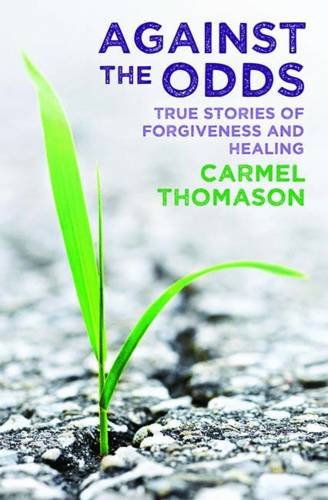
Against the Odds

Against the Odds

As a journalist I meet all kinds of people. I usually want to make people look their best. Sometimes it’s harder, because some people don’t help themselves. They’ve already decided all journalists are sour people who want to focus on the worst aspects of life. There are people who make it clear that they don’t want to talk to me in case I write about them, and then take umbrage when I do what they want and ignore them. Usually these are people who have nothing interesting to say anyway.

And then there are people who have such an amazing story to tell that meeting them has changed my view of the world.

Ray Rossiter is one of those people. I first met Ray when I called him about an exhibition that the Imperial War Museum North was hosting about the experiences of prisoners of the Japanese during World War II. Lots of men were interviewed for that exhibition. They all had fascinating tales to tell, but there was something about Ray that stuck with me. It was in the small things. For example, some men understandably said that they could never eat rice again after their experience. Ray said: “I love rice, it kept me alive.”

When I spoke to Ray he asked if I was going to visit him. Given the time constraints of my news desk I couldn’t. Then he told me that his wife had dementia and he was the sole carer. I realised that he probably wasn’t getting out of the house much at all, so I said that while I couldn’t visit him in work time, I would go to see him. I suppose I went to his house the first time because I felt sorry for him and his situation, but as time went on Ray was to touch my heart in a way that I could never have expected.

As a journalist I was used to people calling me to ask me to fight their corner, seek justice for a wrong done to them, even if it was simply to expose it. I’d hear people describe anything from a cross word between friends to the most heinous of crimes as unforgiveable. Yet, here was a man who had suffered unimaginable wrongs and he carried no bitterness. As Christians we talk about forgiveness all the time, but it can feel quite abstract. When we actually witness it lived out, as Ray is doing, it is life-changing.

When Ray talks about the war he says: ‘I felt that God was there all the time, his love shining through the actions of men, one for another. He was there in every kindness, every act of compassion – it is how we survived. It was often said: “It’s every man for himself in here,” but in reality nothing was further from the truth. We depended so much on one another for encouragement, morale-boosting and in numerous instances for our very survival.’

The friendships Ray forged in those adverse times were ones which were to last a lifetime. The men he knew then, men who could be cheerful under the most appalling circumstances, were not men who could let bitterness eat into their souls and he didn’t like to see hatred consuming them in this way. It was a big ask, Ray more than anyone knew that, but he wanted to encourage them, for their own sake, to forgive.

‘Even years later it was a taboo subject among our fellows and it wasn’t an easy thing to get across because it’s hard to comprehend just how much there was to forgive,’ he says. ‘We came out of captivity breathing fire and vengeance against the whole Japanese race – all of us believed at that time that it would be impossible ever to forgive them. Yet while every instinct may be screaming at us to hate them for what they did, we have to stifle this natural impulse. We can’t go on hating forever. The happiest people are those who can find it in their hearts to forgive.

“Peace within a person is where it all starts, because the actions of nations are merely the actions of men writ large.”

We can speculate forever about why things happen or why some people do terrible things, but we rarely find the answers we seek. Jesus showed us another way and people like Ray are showing it is possible.

* * *

Thankfully, he’s not alone. Since meeting Ray I’ve met many people who have made forgiveness in a reality in their life. All of them share a desire to make the world a better place, one in which these huge wrongs might never happen in the first place.

It’s a vision that is shared by the Restorative Justice Council, which give victims the chance to tell offenders the real impact of their crime, and holds offenders to account for what they have done, enabling everyone affected by a particular incident to play a part in repairing the harm and finding a positive way forward.

It was through the Restorative Justice Process that Joanne Nodding was able to meet and forgive the man who raped her. She says: ‘Did I hate him? For a while afterwards you could probably say that I did, but you can’t go on living with hate in your heart forever. Well, I can’t anyway. I’m not a person who feels hatred. That feeling isn’t me, or it’s not the me I recognise, and it’s not the me I want to be. Besides, hating him is not going to change what happened.

‘I could sit here, thinking, “God, why has this person done this to me?” Or I could say, “God help me to forgive and help him to have a better life”. Everyone can change and everyone deserves a chance to change. As I see it, I could either hate him for the rest of my life or I could forgive him’.

I can’t begin to understand what Ray and Joanne went through, but the goodness they reflect through their capacity for forgiveness makes me want to live a better life. They’ve made me think about how many opportunities I have each day to either forgive or not, to let go of pain or to let it weigh heavy in my heart.

Do I need to focus on a throwaway remark from a stranger so that it spoils the rest of my day? Can I be more loving, grateful and less critical? Can I focus on the good in people? What I’ve learned is that life can be messy, but we are all given choices every day. In choosing to forgive we are choosing a life of love and gratitude.

Against the Odds: True Stories of Healing and Forgiveness by Carmel Thomason is published by the Bible Reading Fellowship.

Carmel Thomason

Carmel Thomason

Carmel Thomason is a Manchester based writer. She has written Every Moment Counts: A Life of Mary Butterwick (DLT); collaborated with the Archbishop of York, writing the stories for John Sentamu’s Faith Stories; and has contributed to The Way, The Truth and The Life series published by the Teacher’s Enterprise in Education.

Filed Under: In which I forgive Aught against Any (Sigh), random Tagged With: Carmel Thomason, forgiveness, Ray Rossiter

In which God Multiplies Our Creativity, Our Time and Our Talents

By Anita Mathias


 Image Credit

I have no difficulty in believing the Gospel accounts of healings, but the feeding of the 5000 leaves me dazzled. Now how exactly did that happen?

However, it’s easier to believe it than to believe that Matthew, Mark, and John, eyewitnesses, were deliberately lying.

So, though my rational mind boggles, yes, I believe it happened– without understanding exactly how it happened.

* * *

There is a similar miracle in the Old Testament, where Elisha feeds 100 with 20 loaves, and there were leftovers–and there are contemporary accounts of similar multiplications.

Heidi Baker (subject of this sensitive and adulatory Christianity Today cover story )says this in an interview.

Q–You’ve seen a type of miracle that is not mentioned in Jesus’ earthly ministry, but He did do something similar – the multiplication of food to feed a crowd.  In your case, you witnessed the multiplication of Christmas presents.  What happened?

Heidi Baker—That only happened once. 

 However, we’ve had the food multiplied many times.  And it’s just super-exciting every time.  We always cry.  And we don’t test God.  We buy as much food as we can.  I knew God would multiply food.  I’d seen him do it.  But I thought it would be a little over the top for Him to multiply presents.  That was my theological background kicking in.

 I love to give gifts.  I was giving out Christmas presents one year in southern Mozambique on a 120-degree day.  I sat on a grass mat, looking each child in the eye, loving and blessing them.  My staff had worked for months on getting all the presents together.  I don’t even know how many we had, maybe a thousand or so gifts.  The homeless were there and the street kids were there and all of our own children were there.

 We were getting to the end of the line and our teenage girls were now in the queue.  A helper, who happened to be a psychiatrist, was next to me. Her name was Brenda.  I was thinking of John 15 and I just looked at one of my own girls and said, “What do you want?”    The psychiatrist really got ticked off and said, “I told you, there are stuffed dogs in the bag.”    I knew the girls didn’t want old second-hand stuffed dogs.  I said to the girl again, “What do you want?”  A couple of the girls yelled out, “Beads.  Beads.” 

 I just prayed, and I looked up to the Lord and said, “Brenda.  They want beads.”  She reached in and started screaming, “There are beads in the bag.”  She started sobbing.  Some people from Argentina, who saw it happen, started jumping and screaming. My Mozambican helpers did the same thing.  We were all sobbing and pulling out beads.  That was a powerful experience.  We had also counted something like 24 wrapped checkerboards and gave out twice that number. 

* * *

 It’s the old Lewisian trilemma again— A man who said the sort of things Jesus said would not be a great moral teacher. He would either be a lunatic–on a level with the man who says he is a poached egg–or else he would be the Devil of Hell. You must make your choice. Either this man was, and is, the Son of God: or else a madman or something worse. You can shut Him up for a fool, you can spit at Him and kill Him as a demon; or you can fall at His feet and call Him Lord and God. (Mere Christianity, Chapter 7).

So perhaps Heidi is a lunatic, but lunatics do not care for 5000 children; or a liar, but someone so radiant with the love of God as Heidi  is unlikely to lie about him. Or the power of God is vaster than I can imagine.

I’m going with that.

* * *

 Actually we see the multiplication of loaves and fishes every day.

We see it in nature, in the bounty from seeds; we see it from animals who are lovingly looked after, 2 chicks multiplying to 50.

We see it from the immense riches which come from a good idea, from Adobe’s InDesign which sells for $700 or Microsoft Word or Matlab which sell for $100. Books, often still in the author’s head, sell for six figures. We see multiplication of the loaves and fishes in eBay, which has no stock, but is basically an idea: that people are basically good, and so strangers can safely enter into transactions.   Facebook, where our relentless activity relentlessly contributes to its valuation, is also just website based on an idea–and is now valued at $250 billion!

The immense wealth, immense abundance in the universe, often comes to people in the form of good ideas.

* * *

 How can we experience creative abundance?

Most bloggers write just a fraction of the blog posts in their heads. Most writers write just a minuscule fraction of all the good books they are capable of writing. In Keats’ phrase, they die, “before their pen has gleaned their teeming brain.”

The air in the room in which I write is full of signals. Signals to my TV, my radio, my iPhone, my laptop. Thousands of ideas in the air of my room, available to me as I switch on a gadget.

And God’s thoughts too are in the air of this room.

How precious to me are your thoughts,God!

How vast is the sum of them!

Were I to count them,

they would outnumber the grains of sand (Ps 139)

God’s thoughts pouring down, shimmering, more of them than every grain of sand on the seashore.

How do I access this infinity of ideas, and more importantly,  find time and energy to write them down?

The short answer, I suspect, is absolute surrender. Giving God the key to every room of the house of our lives.

* * *

As with the Feeding of the Five Thousand, accessing God’s power a mixture of our effort and God’s goodness. The disciples offered their five loaves of bread and two fish. And God did the rest.

It’s a mixture of left-brain strategy and resourcefulness, and a right-brain openness to what God is up to.

I usually have dozens of ideas for blog posts which I have dictated to my phone or noted on my laptop. Finding time and energy to write them down will partly be a matter of revising my life.

* * *

Our lives are a web of hundreds of habits, some helpful, many unhelpful. Becoming more creative and productive will be a matter of revising habits at the micro-level, plugging the micro-leaks of time, the micro-actions in which we have not given Jesus the key to our time and lives, and are therefore acting outside the will of God.

For instance, I am trying to get into the habit of not writing or praying while I have access to Facebook, twitter, email or newspapers on my laptop. I switch them off using the apps SelfControl and StayFocusd. This greatly helps my focus.

I am trying to wake early and sleep early, because odds are I will use early morning time a bit better than late night time.

I write more and sleep better if I exercise, so I am trying to ensure that I weave exercise into my day, and get 10,000 steps on my Fitbit.

The peace and focus that domestic order brings, working in tidy and decluttered surroundings, immensely helps creativity.

Emotional tension drains our focus and energy, so I am doing the work of forgiving the people I need to forgive.  And trying to seek Christ’s eyes and mind about the people I find annoying. And doing the mental and emotional work: forgiveness, perhaps, or realising that God has placed them in my life for a refining reason, for me to learn patience and kindness and empathy and tolerance. To see the good in them, and to practice firmness and saying No if necessary.  To realize that even if someone’s intent towards me is wholly malignant, God can protect me.

There are spiritual practices which help creativity—remembering I am one with Christ, and so have access to the Father’s ideas, and wisdom on how to do a shapely blog, for instance. Mentally positioning and visualizing myself in the force field and waterfall of God’s goodness and power when I start writing.

Living in love not only feeds the emotional needs which make it easier for us to be productive, but is a fast-track into abiding in God, and having Jesus abide in our souls. Jesus replied, “Anyone who loves me will obey my teaching. My Father will love them, and we will come to them and make our home with them. John 14:23. My command is this: Love each other as I have loved you. John 15:12.

In Christ are hidden all the treasures of wisdom and knowledge. (Col 2:3). Hidden.  And as we increasingly align ourselves and our lives with him, and keep seeking him, we begin to hear his answers to all the knotty questions of our lives. How do I lose weight? How do I become more productive?

* * *

 I have not found the answers to increasing my productivity and getting all the ideas in my head onto the page yet—but I am more productive than I was a year ago.

As with many things in life, the answer may come as a process rather than a miracle, but I am on my way, still learning, still seeking, still knocking.


Filed Under: In which I explore writing and blogging and creativity, Matthew Tagged With: blessing, Creativity, Feeding the Five Thousand, Miracles, writing

The Power to Change Comes from Christ in Us, Our Hope of Glory

By Anita Mathias

A mosaic in Ravenna, made of millions of broken tessarae of glass and enamel


The principle runs through all life from top to bottom.

Give up yourself, and you will find your real self.

 Lose your life and you will save it. 

Submit to death, death of your ambitions and favourite wishes every day: submit with every fibre of your being, and you will find eternal life.

Keep back nothing. Nothing that you have not given away will be really yours. 

Nothing in you that has not died will ever be raised from the dead. (C.S. Lewis, Mere Christianity).

* * *

 “Christianity can only be caught, not taught,” they say. I caught a lot while I was discipled from 1997 to 2002 by a spiritually deep Christian writer and leader.

He said that as he found himself becoming intense–a sign that self was on the throne, not Christ–he’d say, “Take that too. I surrender that to you, Jesus,” and so on, until it became a habit to surrender everything precious to him, everything he worried about, to Jesus.

We swapped my editing of his first book for spiritual guidance. He was a naturally gifted writer, and I think I helped him find his natural speaking voice and rhythms in writing. He thanked me in the acknowledgements for teaching him how to write!

Interestingly, he said that he did not own his writing. He had given it to God. And whereas I wasted a lot of time on false starts, he wrote to just three publishers, one of whom took his first book. Several reviewers have said his next book was one of the best books on prayer of all time, and that’s because it sprung from the heart, spirit and experience, not from study, reading or thinking.

What impressed me was that someone who did not seem naturally gifted as a writer could so rapidly write two good books. Was not “owning” his writing a factor? He said he wrote as God provided time, whereas I was then always trying to grab, steal, wrangle and fight for time, which caused me a lot of stress.

Interestingly, he said once that he owned the Christian organisation he founded far more than his writing. And that, 16 years on, has never really taken off, perhaps for this reason.

* * *

I was thinking this morning of the similarity to things in my own life. Things which I do not own, which I have turned over to God, and do reliant on his strength are blessed—things like our family business, my blog or even little things like my Twitter presence where after two years I chosen as a runner-up for the Tweeter of the Year by the Christian New Media awards in 2014, (and was a Finalist for Blogger of the Year in 2015).

The things which I do by worry and self-effort are not so blessed. My attempt to finish my memoir, say.

I am reading a book by Duncan Smith called Consumed by Love. It is about our oneness with Christ, how we are safe in Christ–as an astronaut in his spacesuit is safe from being bumped in a zero gravity spaceship–and how Christ is in us.

And in that lies the power to overcome long-standing battles: Christ in us, the hope of glory. Relying on the guidance and power of Christ, step by step.

Kim Walker Smith of Jesus Culture puts it well:

Where you go I go
What you say I say
What you pray I pray.

Jesus only did, what he saw you do.
He would only say what he heard you speak.
He would only move when he felt you lead.
Following your heart following your spirit.

How could I expect to walk without you

When every move that Jesus made was in surrender?

http://youtu.be/oyBw_DrEv34

Two verses are speaking to me: “You will not have to fight this battle. Stand firm and see the deliverance the Lord will give you.” 2 Chron. 20:17.  And, “The Lord will fight for you. You need only to be still” Exodus 14:14.

So that’s where I am spiritually at present. A disciple, a learner. Turning over these areas of my weakness to him, relying on him for strength and guidance. Letting Christ in me, my hope of glory, act in me, guide me, change my tastes, my habits, my mind and spirit.

Mere Christianity by C. S. Lewis on Amazon.com and on Amazon.co.uk

A Praying Life on Amazon.com and on Amazon.co.uk

Filed Under: In which I Pursue Personal Transformation or Sanctification Tagged With: A Praying Life, C. S. Lewis, Christ in us, Consumed by Love, Duncan Smith, How people change, Mere Christianity, sanctification, the Hope of Glory, transformation

On a Double Portion of the Anointing, and a Secret History with the Lord

By Anita Mathias

 Dreaming With God

When Elijah was about to be taken up to heaven, he asks his acolyte Elisha, “What can I do for you?”

And Elisha, with simple and ambitious faith, asks “Let me inherit a double portion of your spirit,” (2 Kings 2:9).

And so he does.

For the asking, so to say. For the asking took faith, which pleases God.

* * *

This story has sanctified ambition in charismatic circles. People ask successful Christian leaders, Heidi Baker, say, or John Arnott, to pray that they receive a double portion of their anointing (not realising that Elisha’s anointing was received in the context of discipleship: living with, watching, imitating).  My daughter, Zoe, recently gave me Consumed by Love, by Oxfordshire native, Duncan Smith who describes how he desperately coveted “a double portion” of the anointing of Reinhard Bonnke (who generously prayed that he would receive it!).

 * * *

 What is the anointing? R. T. Kendall describes it, “the anointing is when our gift functions easily. It comes with ease. It seems natural. No working it up is needed. If one has to work it up, one has probably gone outside one’s anointing.

 I experience the anointing when blog posts flow easily, and are written quickly almost as if dictated. When I open up a chapter of scripture, and “see” enough in it for three blog posts, and assume that everyone else sees the same riches, but then realise as I lead a Bible study on the topic, that this is not the case.

* * *

And this prayer to receive a double portion of other people’s anointing….?

If the prayer is frivolous, born out of a desire to be more famous, or receive more attention and adulation, God might not answer it—perhaps to protect his sheep from someone with such seriously flawed motives for wanting a platform.

But if you ask for a double portion of a mentor’s anointing with the innocent-heartedness of the child who wants to be famous, or you want fame so as to be a blessing, or as a means to doing your work in the world—well…

Jesus was playful, and encourages a playful spirit in the Christian life. You may ask me for anything in my name, and I will do it. John 14.14 And I will do whatever you ask in my name, so that the Father may be glorified in the Son. John 14:13.

So perhaps it is not ridiculous to ask for a double portion of the spirit of Christian writers and bloggers I admire.

* * *

Bill Johnson is one of my favourite living Christian speaker and writer. He is sensible, reasonable, left-brained–and filled with faith. He opens my eyes to the realities of the spiritual realm, and the power of prayer and makes me excited about them. We just have to read the Gospels–and Jesus’s reiterated statement that all things are possible for them who believe–to realise that, because of our unbelief, we can remain children, spiritually, playing in the sand, while the mighty ocean roars around us

When I read Bill’s many books or hear him speak, I yearn for more of God. I yearn to know God as he does. I yearn for the spiritual experience he has had.

Apparently, I am not alone in being impressed.

I heard Bill say that people frequently come up to him and ask him to pray that they receive “a double portion of his anointing.”

Which seems an awfully cheeky thing to ask someone to pray for—essentially, “Please pray that I become twice as famous and successful as you are!!”

And Bill laughs and says, “Yes, God might give you a double portion of my anointing, but what you can never have is my secret history with the Lord.”

Ah, a secret history with the Lord of Hosts, the most democratic of gifts, open to everyone, and more important than any anointing, for without it, we would not be able to bear the weight of the gifts God gives us!

My secret history with God—it sweetens my life, it fills it with hope, it offers me guidance,  it gives me strength to endure: both reverses, and perhaps even an anointing!!

Anointing, which makes our work quick and easy, is a gift that’s fine to pray for! But great “anointings” are given to the few. A secret history with the Lord, however, is open to each of us, and that is a gift we have the responsibility (which will eventually become a joy) to cultivate.


Dreaming with God on Amazon.com

Dreaming with God: Secrets to Redesigning Your World Through God’s Creative Flow on Amazon.co.uk


Filed Under: In which I chase the wild goose of the Holy Spirit, In which I play in the fields of prayer Tagged With: Bill Johnson, Double Portion of Anointing, Duncan Smith Consumed by Love, Elijah and Elisha, holy spirit, Secret History with God

One Secret of Joy: Be More Dog

By Anita Mathias

https://youtu.be/LB8dD9c5AgA

So what’s the secret of a dog’s wild energy and wagging tail?
Their warm heart, their boundless capacity for love? Their short memories, their natural ability to forgive?
Be more dog.

http://youtu.be/yu9sWjnJFHU

And here is Jake the Collie, in the buttercup meadow behind my house

And me and Merry, my Labradoodle

anita_merry

Filed Under: In which I pursue happiness and the bluebird of joy, pets, simple pleasures Tagged With: Dogs, joy

On How Forgiveness Sets Us as Free as a Falcon

By Anita Mathias

The captive falcon soars, riding the winds, reaching for the clouds, until she reaches the limits of her leash. And then, at the will of the falconer, she is reeled down. Earthbound!

The wild eagle, however, soars high, and higher still, effortlessly, soaring on thermal currents, using even obstruction currents to rise higher.

* * *

What’s the leash which prevents us reaching the spiritual heights? That keeps us earthbound?

It’s often our leaden backpack of grudges, resentments, and injuries. Dislikes born of slights, and slight half-forgotten injuries. An attitude of “just you wait, Henry Higgins.” Stuff we just have to release.

How does one forgive? Let go of anger and deep-rooted injury? Funny, though I have done it again and again, I don’t really know how one lets go of deep-seated anger.

I have images that help me, though. Tearing the check of what people owe me. Tearing up the injury and throwing it away. Cutting the leash that binds me to the person. Switching my focus to the beautiful face of Jesus.

Ultimately, forgiveness is an emotional miracle only accomplished by positioning oneself in the waterfall of God’s love. Letting it course through you, so that it washes away the injury.

Ultimately, I think we cannot forgive on our own. We need God’s help.

We need the power of the Holy Spirit within us.

* * *

 Though there are strategies which help.

Thank God for the good in the person you are struggling to forgive.

Ask God to help you see them as he sees them—with his magic eyes, which see people’s weaknesses and failures, and always forgives and never despises.

Ask God first to make you want to forgive.

And then to give you the ability to forgive.

Maybe, if you choose to—ask God to give you a love for the person you are struggling to forgive.

* * *

For in forgiving, you release a captive, and that captive is you yourself.  Nelson Mandela famously said that resentment is like drinking poison and then waiting for your enemy to die. And from what we now know of the toxicity of negative emotions, holding on to resentments may literally mean drinking poison.

Matthew 18 21-35 explains it best. In anger his master handed him over to the jailers to be tortured, until he should pay back all he owed. The one who will not forgive is thrown into prison and tortured.

True? Oh my goodness, absolutely. Have you had the experience of a beautiful meal out or a lovely hike ruined by an argument over past injuries? Or the bitter memories of past injuries surfaces at a trigger, and you express them, and that forest cat is out of the bag, with its claws, re-injuring you all over again? And the injury is almost as painful at the tenth or twentieth recounting as when it first occurred?

Release the forest cat of other people’s sins against you.

If you seek to forgive, and ask God’s help in forgiving, and forgive again and again as you remember the past injury, eventually you will succeed.

* * *

Grace and Forgiveness, a brief 70 page book by John and Carol Arnott is the best book on forgiveness I have read. The writing is deceptively simple and the content deep and transformative, and so, ironically, it takes 2 or 3 readings for it to traverse “the longest distance in the world,”–the 18 inches from head to heart.

The Arnotts say, “When we choose to stop living in grace, like the unmerciful servant, effectively, we are choosing to step outside of the blessing and protection of God and deliver ourselves to “the torturers.” At all costs, then, we want to continue living in grace.”

They go on in this illuminating passage.

There are many Christians today who wonder, “Why does everything seem to go wrong in my life? Why does there seem to be a curse over my life?” There are trying to work out why there doesn’t seem to be any protection over their life.

Often, this is be because they have made the poor choice in their relationships with others to “bury” the hurt and bitterness of past offenses instead of forgiving and releasing these to God.  By their choices they have made themselves vulnerable to attack by Satan.

By withholding mercy from others and exercising unforgiveness, they have stemmed the flow of God’s blessing and protection over their lives, leaving them open to assault from demonic forces.  Even if someone does the most terrible thing to you, you must never go back to the justice level. It must be grace, grace, grace. Leave justice with God. Do not allow your heart to become hurt, bitter and unforgiving.

Forgive us our debts as we forgive our debtors. Jesus placed the giving and receiving of forgiveness at the absolute center of the Christian life. We simply cannot take forgiveness for ourselves, but withhold it from others. “

* * *

I found this a switching-on-the-lights question to ask myself.

Is there any area of my life in which I am stuck in prison, turned over to the jailors to be tormented? Weight? Household organization? Writing? Waking early?

Is unforgiveness playing a part? Unforgiveness of those who have caused or contributed to the problem? General unforgiveness?

Releasing and forgiving those who have caused or contributed to the areas in which one is stuck may well get me and you unstuck.

And I am off to do it now!!

* * *

Image Credit 

Grace and Forgiveness on Amazon.com

Grace and Forgiveness on Amazon.co.uk

Filed Under: In which I forgive Aught against Any (Sigh) Tagged With: forgiveness, John and Carol Arnott, Nelson Mandela

Les Miserables: The Film Akin to a Spiritual Experience

By Anita Mathias


les misCan watching a film, a mere film, be a spiritual experience?

Well, watching Les Misérables was a spiritual experience for me.

As I watched, I was repenting, recommitting my life to Christ, surrendering to him again, resolving to read the Gospels more, to live by their beautiful way of love and mercy.

* * *

 Under the repressive laws of the time, Jean Valjean is sentenced to 19 years rowing in the galleys for stealing bread for his sister’s starving son–5 years for the theft, 14 for escape attempts. Many convicts were essentially worked to death there, but Jean Valjean’s exceptional physical strength enables him to survive.

When he is released, with papers marking him as an ex-convict, he cannot find work or lodging. When Bishop Myriel offers him a night’s lodging and a meal, he escapes with the Bishop’s silver. He is captured, and was to be returned to the galleys, this time for life.

* * *

Incarnating mercy above the letter of the law—and “sinning”– the Bishop lies. He gave Jean Valjean the stolen silver, he claims, adding, “But you forget the candlesticks, my friend,” handing them over. Jean Valjean is released.

A central theme of the novel: there is no law higher than love, and to this law, all others give way–“the right thing,” “justice,” “what people deserve,” “the good of society.”

In the novel, Hugo’s narrator says of Bishop Myriel “The sadness which reigned everywhere was but an excuse for unfailing kindness. Love each other; he desired nothing further, and that was the whole of his doctrine.”

The Bishop then tells Valjean to use the silver to make himself an honest man. “Forget not, never forget that you have promised me to use this silver to become an honest man…. Jean Valjean, my brother: you belong no longer to evil, but to good. It is your soul that I am buying for you. I withdraw it from dark thoughts and from the spirit of perdition, and I give it to God!”

* * *

Astonishingly, with a hiccup or two, Jean Valjean makes good, becomes the mayor of a small town and an industrialist. Ironically, a good deed—rescuing a man trapped under a cart—brings him to the attention of the Inspector Javert who could recalls only one other man who had such physical strength—the convict Jean Valjean.

Javert, was born in prison to a galley slave and a gypsy fortune-teller, which left him with a “hatred for the race of bohemians whence he was sprung.” He was certain that following and upholding the law was the better path and does so with fanatical devotion.

Javert is convinced that breaking parole is wrong, that people cannot change, that it is best to return Valjean to the galleys, for he was irredeemably wicked, despite the accumulating evidence to the contrary—Valjean’s new, disciplined life; the way he rescues the trapped man; protects Fantine; adopts Cosette; and his kindness to the poor which led to the nickname, “the beggar who gives alms.”

In Javert, we see rigid morality gone bad. Hugo says he represents, “the evil of the good.” He describes the scene in which Javert arrests Valjean:

Probity, sincerity, candor, conviction, the sense of duty, are things which may become hideous when wrongly directed; but which, even when hideous, remain grand: their majesty, the majesty peculiar to the human conscience, clings to them in the midst of horror; they are virtues which have one vice, – error. The honest, pitiless joy of a fanatic in the full flood of his atrocity preserves a certain lugubriously venerable radiance. Without himself suspecting the fact, Javert in his formidable happiness was to be pitied, as is every ignorant man who triumphs. Nothing could be so poignant and so terrible as this face, wherein was displayed all that may be designated as the evil of the good.

* * *

In a novelistic twist, Valjean saves Javert’s life in the Paris Uprising of 1832, knowing that Javert would still hunt him down, because such was his nature.

At the end, Valjean does indeed fall into Javert’s hands, and Javert– to remain true to the rigid moral code by which he has lived his life, and to his respect for the law, and his belief that in respect for the law is salvation from the depravity, dissolution and fecklessness of his parents—must arrest the now aged Valjean who has done only good for years, and, moreover, has saved his, Javert’s, life. Must return him to the galleys for life—that is certain death.

For the first time, he sees that following the law would be immoral. As would, according to his own value system, disobeying it.

The foundations on which he had built his life are crumbling: honouring the law, determination to capture Jean Valjean. Faced with the fact that man whom he pursued for decades as irredeemably evil might be closer to a saint, Javert cannot obey the law. He is too honest to remain a police officer while not doing his duty. Unable to resolve his cognitive dissonance, he leaps into the Seine.

* * *

Jean Valjean is a Christ figure, who reinvents himself by steadfastly doing the right thing, showing mercy as he has received mercy. His life broadens out. He achieves worldly success. He also finds meaning in loving Cosette, and doing good in the world.

The life of Inspector Javert, his antagonist, on the other hand, steadily narrows. His focus on bringing Valjean to justice narrows his life to an essentially ignoble aim.

While Javert represents, in Hugo’s words, the evil in the good, there is another antagonist, the former innkeeper, Thenardier who is entirely self-seeking and evil—greedy, self-seeking, corrupt, and who steadily sinks into a whirlpool of ever greater evil and depravity. He represent what Hannah Arendt at the Eichmann trial calls “the banality of evil.”

* * *

Interestingly, both Jean Valjean and Javert were modelled on Eugène François Vidocq, an ex-convict who became a police official, noted for his ability and photographic memory and, then later, a successful businessman widely noted for his social engagement and philanthropy.

We have them both within us, the white dog and the black dog. Choosing love and mercy gives us a life which broadens and opens out into sunlit paths. Choosing vindictiveness and vengefulness commits us a narrow, narrowing life.

“Choose you this day whom you will serve.” Like Vidocq, we all have some of both Javert and Valjean in us, but I, oh, I want to feed the white dog. I choose mercy.


Les Misérables on Amazon.co.uk

Les Misérables on Amazon.com

Filed Under: In which I celebrate books and film and art Tagged With: Black dog and white dog, Javert, Jean Valjean, Justice and mercy, Les Miserables, Victor Hugo

  • « Previous Page
  • 1
  • …
  • 10
  • 11
  • 12
  • 13
  • 14
  • …
  • 16
  • Next Page »

Sign Up and Get a Free eBook!

Sign up to be emailed my blog posts (one a week) and get the ebook of "Holy Ground," my account of working with Mother Teresa.

Join 536 Other Readers

My Books

Rosaries, Reading, Secrets: A Catholic Childhood in India

Rosaries, Reading Secrets, B&N
USA

UK

Wandering Between Two Worlds: Essays on Faith and Art

Wandering Between Two Worlds
USA

UK

Francesco, Artist of Florence: The Man Who Gave Too Much

Francesco, Artist of Florence
US

UK

The Story of Dirk Willems

The Story of Dirk Willems
US

UK

My Latest Meditation

Anita Mathias: About Me

Anita Mathias

Read my blog on Facebook

Follow me on Twitter

Follow @anitamathias1

Recent Posts

  • At the Cross, God Forgives Us Completely
  • Using God’s Gift of Our Talents: A Path to Joy and Abundance
  • The Kingdom of God is Here Already, Yet Not Yet Here
  • All Those Who Exalt Themselves Will Be Humbled & the Humble Will Be Exalted
  • Christ’s Great Golden Triad to Guide Our Actions and Decisions
  • How Jesus Dealt With Hostility and Enemies
  • Do Not Be Afraid, but Do Be Prudent
  • For Scoundrels, Scallywags, and Rascals—Christ Came
  • How to Lead an Extremely Significant Life
  • Don’t Walk Away From Jesus, but if You Do, He Still Looks at You and Loves You
Premier Digital Awards 2015 - Finalist - Blogger of the year
Runner Up Christian Media Awards 2014 - Tweeter of the year

Categories

What I’m Reading


Wolf Hall
Hilary Mantel

Wolf Hall --  Amazon.com
Amazon.com

Amazon.co.uk

Silence and Honey Cakes:
The Wisdom Of The Desert
Rowan Williams

Silence and Honey Cakes --  Amazon.com
Amazon.com

Amazon.co.uk

The Long Loneliness:
The Autobiography of the Legendary Catholic Social Activist
Dorothy Day

The Long Loneliness --  Amazon.com
Amazon.com

Amazon.co.uk

Country Girl
Edna O'Brien

Country Girl  - Amazon.com
Amazon.com

Amazon.co.uk

Archive by month

My Latest Five Podcast Meditations

INSTAGRAM

anita.mathias

My memoir: Rosaries, Reading, Secrets https://amzn.to/42xgL9t
Oxford, England. Writer, memoirist, podcaster, blogger, Biblical meditation teacher, mum

Looking at photos from our week in beautiful Sevil Looking at photos from our week in beautiful Seville and Cordoba over New Year with Irene, who had a week off.
And, ICYMI, here’s my latest meditation on the Gospel of Matthew… I’ve recorded it, should you want a few minutes of peace.
https://anitamathias.com/2026/04/29/gods-complete-forgiveness/
Hello Friends, I'm resumed recording my meditation Hello Friends, I'm resumed recording my meditations on the Gospel of Matthew. Do click on this link to listen. 
https://anitamathias.com/.../29/gods-complete-forgiveness/
Christ is the most influential figure in the history of the world, though his life ended in shame, humiliation and failure. But he so completely turned things round in his great reversal that the cross on which he died when all seemed hopeless is now the most common, and revered, symbol in history.
He emerged from and was anchored in Judaism. And as the sins of the people were laid on the scapegoat who was sent into the wilderness to perish, Christ died as the lamb of God voluntarily bearing the guilt of the wrongdoing of the whole world. He paid the price for our forgiveness with his life-blood--in accordance with the iron law of the physical and moral universe, of sowing and reaping, cause and effect. 
And so, God, who appeared as flames of fire to Moses, can now dwell within us, purifying us, whose hearts have darkness and shards of ice. 
And now that Christ was crucified, died, but rose again, His Spirit, no longer contained within his earthly body, is poured out like living water onto all humans, at our humble request. The Spirit pours the love of God into us; he reminds us of the words of Jesus and slowly writes Christ’s sweet law on our hearts. This transfusion of grace helps us do hard things we previously couldn’t do. Our dance with the Spirit gradually breaks the power of sin over us. It transforms us.
Now we, the forgiven, protected by the blood of Jesus poured out over us, and filled with His Spirit, who sings within us, Abba, Father, are adopted by God as his children in his joyful new covenant. We are cells grafted into the vine of our new family--Father, Son, Spirit—who now live in us as we live in them. As we choose by our thoughts and actions to continue living in the vine of Jesus, their energy pulsing through us makes us fruitful. And now, all our prayers which flow in the river of God’s good purposes are kindly heard. Waves of love and power flood from the cross! 
Thank you!
Well, hello friends! Breaking radio silence to let Well, hello friends! Breaking radio silence to let you know that I have taped a meditation for you on Christ’s famous Parable of the Talents in Matthew 25. https://anitamathias.com/2025/11/05/using-gods-gift-of-our-talents-a-path-to-joy-and-abundance/
Here you are, click the play button in the blog post for a brief meditation, and some moments of peace, and, perhaps, inspiration in your day 🙂
Hi Friends, I have taped a meditation; do listen a Hi Friends, I have taped a meditation; do listen at this link: https://anitamathias.com/2025/04/08/the-kingdom-of-god-is-here-already-yet-not-yet-here-2/
It’s on the Kingdom of God, of which Christ so often spoke, which is here already—a mysterious, shimmering internal palace in which, in lightning flashes, we experience peace and joy, and yet, of course, not yet fully here. We sense the rainbowed presence of Christ in the song which pulses through creation. Christ strolls into our rooms with his wisdom and guidance, and things change. Our prayers are answered; we are healed; our hearts are strangely warmed. Sometimes.
And yet, we also experience evil within & all around us. Our own sin which can shatter our peace and the trajectory of our lives. And the sins of the world—its greed, dishonesty and environmental destruction.
But in this broken world, we still experience the glory of creation; “coincidences” which accelerate once we start praying, and shalom which envelops us like sudden sunshine. The portals into this Kingdom include repentance, gratitude, meditative breathing, and absolute surrender.
The Kingdom of God is here already. We can experience its beauty, peace and joy today through the presence of the Holy Spirit. But yet, since, in the Apostle Paul’s words, we do not struggle only “against flesh and blood, but against the rulers, against the unseen powers of this dark world and against the spiritual forces of evil,” its fullness still lingers…
Our daughter Zoe was ordained into the Church of E Our daughter Zoe was ordained into the Church of England in June. I have been on a social media break… but … better late than never. Enjoy!
First picture has my sister, Shalini, who kindly flew in from the US. Our lovely cousins Anthony and Sarah flank Zoe in the next picture.
The Bishop of London, Sarah Mullaly, ordained Zoe. You can see her praying that Zoe will be filled with the Holy Spirit!!
And here’s a meditation I’ve recorded, which you might enjoy. The link is also in my profile
https://anitamathias.com/2024/11/07/all-those-who-exalt-themselves-will-be-humbled-the-humble-will-be-exalted/
I have taped a meditation on Jesus statement in Ma I have taped a meditation on Jesus statement in Matthew 23, “For those who exalt themselves will be humbled, and those who humble themselves will be exalted.”
Do listen here. https://anitamathias.com/2024/11/07/all-those-who-exalt-themselves-will-be-humbled-the-humble-will-be-exalted/
Link also in bio.
And so, Jesus states a law of life. Those who broadcast their amazingness will be humbled, since God dislikes—scorns that, as much as people do.  For to trumpet our success, wealth, brilliance, giftedness or popularity is to get distracted from our life’s purpose into worthless activity. Those who love power, who are sure they know best, and who must be the best, will eventually be humbled by God and life. For their focus has shifted from loving God, doing good work, and being a blessing to their family, friends, and the world towards impressing others, being enviable, perhaps famous. These things are houses built on sand, which will crumble when hammered by the waves of old age, infirmity or adversity. 
God resists the proud, Scripture tells us—those who crave the admiration and power which is His alone. So how do we resist pride? We slow down, so that we realise (and repent) when sheer pride sparks our allergies to people, our enmities, our determination to have our own way, or our grandiose ego-driven goals, and ambitions. Once we stop chasing limelight, a great quietness steals over our lives. We no longer need the drug of continual achievement, or to share images of glittering travel, parties, prizes or friends. We just enjoy them quietly. My life is for itself & not for a spectacle, Emerson wrote. And, as Jesus advises, we quit sharp-elbowing ourselves to sit with the shiniest people, but are content to hang out with ordinary people; and then, as Jesus said, we will inevitably, eventually, be summoned higher to the sparkling conversation we craved. 
One day, every knee will bow before the gentle lamb who was slain, now seated on the throne. We will all be silent before him. Let us live gently then, our eyes on Christ, continually asking for his power, his Spirit, and his direction, moving, dancing, in the direction that we sense him move.
Link to new podcast in Bio https://anitamathias.co Link to new podcast in Bio https://anitamathias.com/2024/02/20/how-jesus-dealt-with-hostility-and-enemies/
3 days before his death, Jesus rampages through the commercialised temple, overturning the tables of moneychangers. Who gave you the authority to do these things? his outraged adversaries ask. And Jesus shows us how to answer hostile questions. Slow down. Breathe. Quick arrow prayers!
Your enemies have no power over your life that your Father has not permitted them. Ask your Father for wisdom, remembering: Questions do not need to be answered. Are these questioners worthy of the treasures of your heart? Or would that be feeding pearls to hungry pigs, who might instead devour you?
Questions can contain pitfalls, traps, nooses. Jesus directly answered just three of the 183 questions he was asked, refusing to answer some; answering others with a good question.
But how do we get the inner calm and wisdom to recognise
and sidestep entrapping questions? Long before the day of
testing, practice slow, easy breathing, and tune in to the frequency of the Father. There’s no record of Jesus running, rushing, getting stressed, or lacking peace. He never spoke on his own, he told us, without checking in with the Father. So, no foolish, ill-judged statements. Breathing in the wisdom of the Father beside and within him, he, unintimidated, traps the trappers.
Wisdom begins with training ourselves to slow down and ask
the Father for guidance. Then our calm minds, made perceptive, will help us recognise danger and trick questions, even those coated in flattery, and sidestep them or refuse to answer.
We practice tuning in to heavenly wisdom by practising–asking God questions, and then listening for his answers about the best way to do simple things…organise a home or write. Then, we build upwards, asking for wisdom in more complex things.
Listening for the voice of God before we speak, and asking for a filling of the Spirit, which Jesus calls streams of living water within us, will give us wisdom to know what to say, which, frequently, is nothing at all. It will quieten us with the silence of God, which sings through the world, through sun and stars, sky and flowers.
Especially for @ samheckt Some very imperfect pi Especially for @ samheckt 
Some very imperfect pictures of my labradoodle Merry, and golden retriever Pippi.
And since, I’m on social media, if you are the meditating type, here’s a scriptural meditation on not being afraid, while being prudent. https://anitamathias.com/2024/01/03/do-not-be-afraid-but-do-be-prudent/
A new podcast. Link in bio https://anitamathias.c A new podcast. Link in bio
https://anitamathias.com/2024/01/03/do-not-be-afraid-but-do-be-prudent/
Do Not Be Afraid, but Do Be Prudent
“Do not be afraid,” a dream-angel tells Joseph, to marry Mary, who’s pregnant, though a virgin, for in our magical, God-invaded world, the Spirit has placed God in her. Call the baby Jesus, or The Lord saves, for he will drag people free from the chokehold of their sins.
And Joseph is not afraid. And the angel was right, for a star rose, signalling a new King of the Jews. Astrologers followed it, threatening King Herod, whose chief priests recounted Micah’s 600-year-old prophecy: the Messiah would be born in Bethlehem, as Jesus had just been, while his parents from Nazareth registered for Augustus Caesar’s census of the entire Roman world. 
The Magi worshipped the baby, offering gold. And shepherds came, told by an angel of joy: that the Messiah, a saviour from all that oppresses, had just been born.
Then, suddenly, the dream-angel warned: Flee with the child to Egypt. For Herod plans to kill this baby, forever-King.
Do not be afraid, but still flee? Become a refugee? But lightning-bolt coincidences verified the angel’s first words: The magi with gold for the flight. Shepherds
telling of angels singing of coming inner peace. Joseph flees.
What’s the difference between fear and prudence? Fear is being frozen or panicked by imaginary what-ifs. It tenses our bodies; strains health, sleep and relationships; makes us stingy with ourselves & others; leads to overwork, & time wasted doing pointless things for fear of people’s opinions.
Prudence is wisdom-using our experience & spiritual discernment as we battle the demonic forces of this dark world, in Paul’s phrase.It’s fighting with divinely powerful weapons: truth, righteousness, faith, Scripture & prayer, while surrendering our thoughts to Christ. 
So let’s act prudently, wisely & bravely, silencing fear, while remaining alert to God’s guidance, delivered through inner peace or intuitions of danger and wrongness, our spiritual senses tuned to the Spirit’s “No,” his “Slow,” his “Go,” as cautious as a serpent, protected, while being as gentle as a lamb among wolves.
Follow on Instagram

© 2026 Dreaming Beneath the Spires · All Rights Reserved. · Cookie Policy · Privacy Policy