Anita Mathias: Dreaming Beneath the Spires

Anita Mathias's Blog on Faith and Art

  • Home
  • My Books
  • Meditations
  • Essays
  • Contact
  • About Me

RIP Buttercup Duck! On Accepting Your Actual Life

By Anita Mathias

The tall thin Indian Runner was killed; the fat Aylesbury mourns

  Climbing out of our pond

When I was a child, I had a huge, fat bunny, two hens, two ducks and a dog. We had a large house with an acre around it.

When we bought a house in the English countryside in 2006, one of the first things I did was get two hens, two ducks, two rabbits and a dog. I bought a large house with an acre and a half around it.

Yeah, unconsciously recreating my childhood which sort of ended when I was sent to boarding school when I was nine. When my mother sent pressed flowers from whatever was in bloom, mulberries, mustard…I cried, and I cried when we left that garden when I was 14 for a flat which came with my father’s post-retirement job.  Oddly, I seemed to have missed the garden and its inhabitants more than my family!!

  •                                                                                              * * *

Well, Oxfordshire has perils that Jamshedpur, India did not: foxes.

A fox ate one of our chickens, and the survivor was so traumatised that we gave it away. No more chickens.

The fox kept coming for our ducks—I looked out one evening to see a white duck seemingly levitating in a fox’s jaw. It dragged one away at 11 a.m. and though Roy chased the fox and rescued the duck, it died of shock. Another was mauled once by the fox, nursed by us, but then mauled again, and put down by the vet.

So we gave up on ducks for a while. But, oh, it was an idyllic picture to see them cluck around our yard. Ducks are the dearest birds, always happy, always cheerful, running to see you in a manic, quacking way!!

So after a duckless year or two after the maulings, we got ducks again, vowing to be very careful and put them away before dusk.

* * *

 And then one day, we forget. When we remembered, and searched for them, one was killed by the fox.

The other duck was traumatised, and has spent a day and a half quacking for her friend. Ducks don’t search for a friend; they quack till the friend quacks back.

Unable to stand this desperate, agitated quacking, we have released her—well, put her on a lovely public duck pond on a river in a park, where we can go and see her.  She took to it like, well, a duck to water.

  • * * *

I love ducks, I love watching them run and cluck and quack and eat and live so happily. But it’s really not safe having ducks out in the country—the fox comes even in the day, especially at dusk, and there are always the odd occasions when one forgets to put them away. Though I support Tony Blair’s hunting ban, and feel sorry for the mangy, terrified foxes I often see on my walks, I also hate them for their habit of killing for the sake of it.

I must admit I cried a little. I was very fond of my ducks.

When Job faced far, far more bitter losses, he said, “The Lord gives; the Lord takes away. Blessed by the name of the Lord.”

In the case of Job’s devastating loss of his children, there was no bright side.

In our case, there is. No unsightly duck house and run in our back garden. Ducks are messy critters, their droppings are unsightly, their splashing in their bathtubs we gave them destroyed the lawn. They quack to be let out of their house in the mornings, waking us up. There is a constant stress about remembering to put them away: Many a family dinner has been paused while someone runs out to herd the ducks! And their food attracts garden rats. Yeah, Ratty and Mole, not great friends of the garden.

So give up the dream and idyll of ducks quacking in my garden?? I feel sad to think of it—but yeah, I guess so. I guess having free-range chicken and ducks in fox country is a recipe for stress and failure.

At some point, one just has to accept the life one has and not the idyll we dream of. Foxes are a fact of life if you live in the country, and we will have to give up the dream of free-range poultry, or just-laid-that-morning eggs.

                                             * * *

 I adore the ocean, and often dream of living by the sea. But I have lived in Oxford for a total of 14 years. I have many friends I am fond of here, many friends on whose shoulder I could cry (and vice-versa!). I do not have the energy to move, and start again with friendships which, for me, are a vital part of life. So, maybe a small beach cottage if God provides the money, but no more moves. I am living in my dream house, and so I am going to abandon dreams of something dreamier to focus on my work.

* * *

 Ah, mid-life, the restless season, mimicking our twenties in many ways. In my women’s group, almost every fortnight, someone tells of their friends or family divorcing.

Mid-life: it’s a Reality Show. You realise that barring the intervention of God (and of course, that’s an immense thing to bar) your spouse is unlikely to change. What you see is what you get. WYSIWYG. So you bail–or you accept, or you pray mightily; Roy and I are going for the last two options.

“The great thing, if one can, is to stop regarding all the unpleasant things as interruptions of one’s ‘own,’ or ‘real’ life.  The truth is of course that what one calls the interruptions are precisely one’s real life—the life God is sending one day by day; what one calls one’s ‘real life’ is a phantom of one’s own imagination. —They Stand Together: The Letters of C.S. Lewis to Arthur Greeves (1914-1963) (20 December 1943).

I am tired, and sad, and mourning my duck, and the prospect of a duckless life.

But, in fact, this is my life, and I love it most days, and I will rejoice and be glad in it, in all the many things God has given me. Blessed be His Name!

Our Aylesbury and Indian Runner duck resting in the snow with beaks tucked under their wings.

They Stand Together: The Letters of C.S. Lewis to Arthur Greeves (1914-1963) on Amazon.com

They Stand Together: The Letters of C S Lewis to Arthur Greeves 1914-1963 on Amazon.co.uk

Filed Under: Applying my heart unto wisdom Tagged With: acceptance, Aylesbury Ducks, C. S. Lewis, country life, ducks, foxes, Indian Runners

First Things First, Pomodoros, A Schedule and Progress on New Year’s Goals

By Anita Mathias

Bookshelf BEFORE -- Jan 20, check back on Jan 28

Bookshelf BEFORE — Jan 20


Bookshelf -- AFTER

Bookshelf — AFTER


C. S. Lewis famously said, “When first things are put first, second things don’t diminish, they increase. You can’t get second things by putting them first; you can get second things only by putting first things first.”

Michael Hyatt spells this out this work-life balance.

“I think it is really important that one’s career come after God, self, spouse, and children. I have seen too many people sacrifice the other four on the altar of work. Usually when that happens, their work life crumbles, too.

Work can be a rewarding experience if you keep it from becoming an idol. However, if you don’t put it in its place, it can suck the life out of you.”

 (From Hyatt’s ebook Creating your Personal Life Plan).

* * *

My current challenge is developing my blog while not neglecting the other important components of my life—my marriage, my parenting, my physical fitness and my home. (My spiritual life I rarely neglect for blogging. I cannot do without prayer and scripture—I slip into depression and lose focus.)

I would love beautiful art to spring from a beautiful life, a happy marriage and happy parenting. That not many have managed it is no reason not to try.

So I am planning one walk a week with Roy, usually on Mondays, and one family outing with the girls. We are going to watch The Winter’s Tale at Stratford on Avon this Saturday, and also walk around that beautiful town. And on Friday, Roy, Zoe and I are going to see Mr. Darwin’s Tree, a monologue/ “memoir” of Darwin’s life.

* * *

2 The Pomodoro Technique

Ann Voskamp, that splendidly productive woman, swears by the Pomodoro Technique. Basically, it’s work for 25 minutes by a timer; take a five minute break; repeat 3 times. After the fourth Pomodoro, 100 minutes of work, take a 20 minute break.

I am giving this a trial to see if it might work for me.

Disadvantages—Creatively, it takes me a while to settle down and start writing. I do a bit of reading, both books and online to build up momentum and have words coursing through me before I start. So a break in what I am writing every 25 minutes might be hard.

Advantages—

1. Sitting for long hours slows down your metabolism and your body kind of goes into shut-down, whereas moving every hour raises it.

2. A short break of 5 minutes can break the spell and give you perspective on what you are writing. And new ideas.

3. I might be able to work for longer because of the oxygenation the breaks give me

4. Adherents say the Pomodoro Technique sharpens one’s focus. Heck, anyone can do anything for 25 minutes.

5. It might be a way to get boring tasks like tidying up done without allocating a slot for them

6. It would give me a slot for things like weights and yoga, and apparently even 5 minutes of push-ups or surya namaskar has an incremental effect. You are stronger than if you hadn’t done them!!

7. I could use the 20 minute slot to do things that often drop off my day like gardening, or working on my procrastinated chore it.

So am going to try it. Will let you know how I get on.

Schedule.

Ann Voskamp has written a splendid post —25 ways to save your sanity in 2013—which gives us an insight into her holy, near monastic life!! and how she does it all—runs six children, a blog, writes a beautiful book, and remains a sweet, godly, Scripture-saturated woman. She is my role-model blogger in this respect. (When it comes to leading a disciplined, organized life, my role-model blogger is Michael Hyatt).

Now, if I tried all of Ann’s 25 ways to save sanity this week, I would, well, perhaps not lose my sanity, but certainly, exhaust myself.

But I will slowly work through her list, adapting what’s right for me and my life.

Here’s Ann on the importance of a  schedule

“Forty-five percent of what we do every day is habitual,”

“To sing new songs, we need to pay attention to our rituals, the beat of our days, even more than focusing on self-discipline.”

She suggests thinking of the rhythms and actions of the day as a symphony, established note following note.

“Create your rhythm, a harmony of habits. Living in cacophony is more wearing than the hard work of practicing habits. “Laziness means more work in the long run,” writes C.S. Lewis. Flubbing away at whatever strikes our fancy leaves us in far worse dire straits than applying ourselves to the work of playing concertos.”

Our schedule “becomes our everyday liturgy.”

Incredibly, I don’t really have a fixed schedule, a symphony for my days, though there are things I do most days. But, perhaps, through trial and error, I should develop one which works for me.

Anyway, here’s how I have got on with my New Year’s Goals

Writing

On the first things first principle, I have been working on a little book (first draft done, and the whole book should be done next week) and a little bit on my memoir, and have had a good blogging week.

I usually put the blogging first, afraid that if I do it last, I won’t have the mental energy or focus to see it clearly. But I have realized that I don’t need to blog everyday, that the blog still grows with three posts a week since most readers don’t visit every day.

And yeah, since I started putting first things first, and working on the big book and the little book first, the blog has been growing. I have more time to think about, and more time to write my posts.

Wrote Common Grace: Or, Why God Loves Classical Music, Leo Babuata and Gretchen Rubin

And  The Parable of the Bridge or “When to Say No to Insistent People”

Which did astonishingly well because of this

michael_hyatt_tweet


Wow, the power of the big guys.

Oops, got careless about applying my Triple-Dog Lock to lock myself out of Facebook and Twitter, and sadly Roy showed me a way to subvert AntiSocial by signing in as incognito.
Time/week
Dec. avg. Goal: Jan 21 Achieved Goal: Jan 28 Goal – year end
Writing 7h 10 min  19 hours  9 hrs29 mins  10 hours 35h
Social media 11h 17 min  3 hours 30 min  7 hours54 mins  3 hrs30 min 3h 30min
News, Blogs, Magazines 5h 21 min  3 hours 30 min  5 hrs2 mins  3 hours30 min  3 hours


2 Walking

A second week of ice and snow derailed my plans again, but since the thaw I have been making up for lost time.

Week of Goal Actually done
(km) (km)
Jan 7 29.6
Jan 14 33.6 13.6
Jan 21 14.1 16.4
Jan 28 19.69

I need to build up to 11 miles by September for my walking pilgrimage in Tuscany. Yeah, a bit behind, but using Kaizen, and building time and distance and soon, I hope, speed everyday, I hope to get there

2B Weight

Dreaded plateau, which I hope to break with increased exercise, and watching what I eat! Cumulative loss 3.4 lb

3-DSCN6083_edited

BEFORE- some overstacked


BEFORE- some empty

before- some not

3 Domestic Order

 Here’s the bookshelf I have tidied, and here is the bookshelf I want to work on. Some bookshelves are overstacked, some are understacked, so I guess I’ll have to balance them.

I limit my clothes to whatever fits in two dressers, one tallboy, and one closet. So whenever I buy anything, I get rid of something, what Irene calls, “cutting off my nose to make more room on my face.” Once a year, I purge everything that doesn’t fit, is worn, faded, stained, or that I just don’t like and never wear.

This is the week for my annual purge. Here is my before picture.


Filed Under: random Tagged With: Ann Voskamp, C. S. Lewis, Goals, Michael Hyatt, pomodoro, walkiing

What Christmas Means to Me: By C. S. Lewis

By Anita Mathias

lewis life

C. S. Lewis (credit)

What CHRISTMAS means to me…

(From God in the dock—Essays on Theology and Ethics by C. S. Lewis)

Three things go by the name of Christmas. One is a religious festival. This is important and obligatory for Christians; but as it can be of no interest to anyone else, I shall naturally say no more about it here. The second (it has complex historical connections with the first, but we needn’t go into them) is a popular holiday, an occasion for merry-making and hospitality. If it were my business too have a ‘view’ on this, I should say that I much approve of merry-making. But what I approve of much more is everybody minding his own business. I see no reason why I should volunteer views as to how other people should spend their own money in their own leisure among their own friends. It is highly probable that they want my advice on such matters as little as I want theirs. But the third thing called Christmas is unfortunately everyone’s business.

I mean of course the commercial racket. The interchange of presents was a very small ingredient in the older English festivity. Mr. Pickwick took a cod with him to Dingley Dell; the reformed Scrooge ordered a turkey for his clerk; lovers sent love gifts; toys and fruit were given to children. But the idea that not only all friends but even all acquaintances should give one another presents, or at least send one another cards, is quite modern and has been forced upon us by the shopkeepers. Neither of these circumstances is in itself a reason for condemning it. I condemn it on the following grounds.

1. It gives on the whole much more pain than pleasure. You have only to stay over Christmas with a family who seriously try to ‘keep’ it (in its third, or commercial, aspect) in order to see that the thing is a nightmare. Long before December 25th everyone is worn out — physically worn out by weeks of daily struggle in overcrowded shops, mentally worn out by the effort to remember all the right recipients and to think out suitable gifts for them. They are in no trim for merry-making; much less (if they should want to) to take part in a religious act. They look far more as if there had been a long illness in the house.

2. Most of it is involuntary. The modern rule is that anyone can force you to give him a present by sending you a quite unprovoked present of his own. It is almost a blackmail. Who has not heard the wail of despair, and indeed of resentment, when, at the last moment, just as everyone hoped that the nuisance was over for one more year, the unwanted gift from Mrs. Busy (whom we hardly remember) flops unwelcomed through the letter-box, and back to the dreadful shops one of us has to go?

3. Things are given as presents which no mortal every bought for himself — gaudy and useless gadgets, ‘novelties’ because no one was ever fool enough to make their like before. Have we really no better use for materials and for human skill and time than to spend them on all this rubbish?

4. The nuisance. For after all, during the racket we still have all our ordinary and necessary shopping to do, and the racket trebles the labour of it.

We are told that the whole dreary business must go on because it is good for trade. It is in fact merely one annual symptom of that lunatic condition of our country, and indeed of the world, in which everyone lives by persuading everyone else to buy things. I don’t know the way out. But can it really be my duty to buy and receive masses of junk every winter just to help the shopkeepers? If the worst comes to the worst I’d sooner give them money for nothing and write if off as a charity. For nothing? Why, better for nothing than for a nuisance.


Filed Under: random Tagged With: C. S. Lewis, Christmas

Thoughts on the Puzzling Parable of the Ten Minas

By Anita Mathias

The slothful servant burying his money, from the Parable of the Talents, Flemish, 17th (stained glass) 

 Luke 19 11-271 God gives us almost infinite freedom.

The master says, “Put this money to work until I come back.” How should the servants do that? They are not told.

God leaves us free to choose how we use our gifts, like loving parents leave their children free to follow their own bliss and passions.

It’s the same when it comes to our spiritual questions: How much should I pray? How long should I study Scripture? How much money should I give? In the New Testament, there are no answers. It’s left up to us.

2 We live in an abundant universe in which turning one minas into ten–a staggering rate of return– is quite possible. The master is pleased but not overwhelmed by the servant’s rate of return.

Abundance is encoded in the universe, in the seeds of tomatoes and apples; in the minds of people who can dream up an infinity of good ideas; and buried under the soul which is forever turning dropped leaves and the bones of dead creatures into diamonds, precious stones and fossil fuel.

3 The rewards God offers us are exceedingly abundant, out of all proportion to the good deeds of the servants. A minas was three months salary. He turns, let’s say, 10K into 100K which is stunning. But he is rewarded with ten cities—and the minas of the unfaithful servant.

Because God is good, the benefits of serving him always outweigh the cost. The sense of peace and shalom and provision God offers us is out of all proportion to the little things we might do for the love of him.

Ten cities for ten minas! “If we consider the unblushing promises of reward and the staggering nature of the rewards promised in the Gospels, it would seem that Our Lord finds our desire not too strong, but too weak. We are half-hearted creatures, fooling about with drink and sex and ambition when infinite joy is offered us, we are like ignorant children who want to continue making mud pies in a slum because we cannot imagine what is meant by the offer of a vacation at the sea. We are far too easily pleased.” (C. S. Lewis, “The Weight of Glory”).

Serving God is win-win. The master gets the ten minas; the servant gets the ten cities, and a minas.

4 We are judged fairly, on our effort, not on the outcome.

The ten servants were all given a minas each.

Some things are allocated almost equally. We each have 168 hours a week, a body, a mind, are born into families. But there are, of course, huge variables of talent, opportunity, and nurture, just as the servant who turned a minas into ten may have had more energy, intelligence, business talent and connections than the one who turned it into five.

We are not judged comparatively, but according to what we have done with what we have received. The ones who turned their minas into ten and five are each rewarded, though their rewards differ in accordance with their abilities.

5 The wicked servant is judged harshly for misjudging his master’s character. He wasn’t a hard man, in fact, but an exceedingly generous one.

The servant’s ungenerous stingy calculating spirit was just the opposite of the master’s generous spirit.

A. W. Tozer writes in The Root of the Righteous,

It is most important to our spiritual welfare that we hold in our minds always a right conception of God. If we think of Him as cold and exacting, we shall find it impossible to love Him, and our lives will be ridden with servile fear. If, again, we hold Him to be kind and understanding, our whole inner life will mirror that idea.

The truth is that God is the most winsome of all beings and His service is one of unspeakable pleasure. He is all love, and those who trust Him need never know anything but that love.

Fellowship with God is delightful beyond all telling. He communes with His redeemed ones in an easy, uninhibited fellowship that is restful and healing to the soul.  

6 A principle that’s true in the natural and spiritual worlds: “To everyone who has, more will be given, but as for the one who has nothing, even what he has will be taken away.

That’s just the way the world works: the rich get richer, we live in an increasingly winner-take-all society.

In the spiritual realm, God constantly tests us, and as we pass each test, we are given new opportunities, and new challenges.

“If you do one good deed your reward usually is to be set to do another and harder and better one.” C. S. Lewis in The Horse and His Boy

7 The spiritual life often has tests which we are unaware of.

The servants thought it was just a job: Put the minas to work. In fact, it was their destiny which was being decided. They thought they would have to turn over their profits to the master, and that was that. But those who were conscientious and dutiful were rewarded massively. Those who played safe and shirked ironically lost everything.

Similarly, the trials which come our way are often tests of character–to strengthen it or reveal it. Who hasn’t had the experience of disproportionate suffering or blessing following upon apparently trivial actions?

8 The parable is really about spiritual truth.

Spiritual truth is living and active, sharper than a double-edged sword, alive like a seed, like yeast.

As we obey and share what we have understood, we are given more insight. If we do nothing with our insights, we tend to forget what we have learned, and our insights vanish into the mists.

10 Life is Not Fair but God is Good

“To everyone who has, more will be given, but as for the one who has nothing, even what he has will be taken away,” might not seem entirely fair. The one who turned one minas into ten rather than five may have been cleverer, better connected, more energetic—and then in addition to all these gifts, he get the leadership of ten cities, and the minas of the lazy servant

Ultimately, we have to bow to the sovereignty of God. Life is not fair, but that’s okay for God is good, as Mark Buchanan says in this fabulous essay.

Filed Under: In which I play in the fields of Scripture Tagged With: A.W. Tozer, C. S. Lewis, Luke, Parable of the Talents

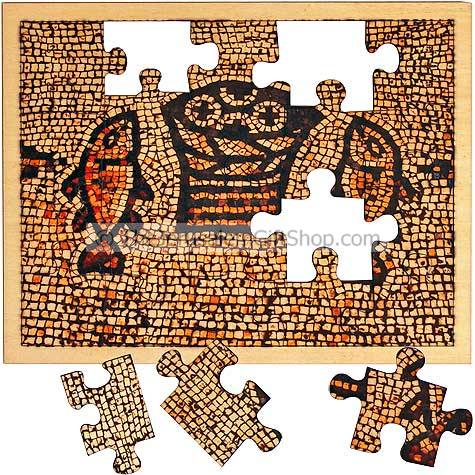
When Faith falls into Place like a Jigsaw, Piece by Piece

By Anita Mathias

Jigsaw Puzzle Tabgha - Bread and Fish Mosaic
 As I was writing on the cosmic significance of the Cross of Christ, I realised that though I was born Catholic, remaining so until I was 21 and was, sometimes, a serious Catholic–even a novice in Mother Teresa’s Convent for 14 months–I had never understood why Jesus had to die. If I committed a mortal sin, I would go to hell–if I had not had the chance to go to confession and be absolved before I died (Do you see how this strengthens the power of the priesthood?)

If I only committed venial sins, I would go to Purgatory, and then after a period there, shortened if people prayed or paid, offering Masses on my behalf, I would go to heaven. Just as if Jesus had not died?

And when–after a six year period in my twenties of not really believing anything very much–I decided to recommit to following Christ, I went to serious Bible-believing Protestant churches.

And when the Atonement was first explained to me, I am afraid I did not really believe it.

Why? Because it could not really be proven.

I had, similarly, not really believed in heaven and hell for those six years, because, for all I knew they were theological inventions, theological fairy tales. I had decided not do anything for desire for heaven or fear of hell, because there was no proof for either of these.

* * *

As an undergraduate at Oxford, I had listened to lectures on Lord Raglan’s The Hero and was struck at the resemblances the life of Jesus bore to these mythical heroes across cultures.

1. Hero’s mother is a royal virgin;
2. His father is a king, and
3 4. The circumstances of his conception are unusual, and
5. He is also reputed to be the son of a god.
6. At birth an attempt is made,   to kill him, but
7. he is spirited away, and
8. Reared by foster -parents in a far country.
9. We are told nothing of his childhood, but
10. On reaching manhood he returns or goes to his future Kingdom.
14. For a time he reigns uneventfully and
15. Prescribes laws, but
16. Later he loses favour with the gods and/or his subjects, and
17. Is driven from the throne and city, after which
18. He meets with a mysterious death,
19. Often at the top of a hill,
20. His children, if any do not succeed him.
21. His body is not buried, but nevertheless
22. He has one or more holy sepulchres.

Numerous heroes fit into this archetype, including Krishna, Moses, Romulus, King Arthur, Perseus, Heracles, Mohammed, Beowulf, Buddha, Zeus, Samson, Achilles, and Odysseus.  

And so I wondered: Was Jesus God? Was there a God?

* * *

When C.S. Lewis was troubled by the same thing, in Oxford, 45 year earlier, Tolkein sorted him out by explaining that Christianity is simply a true myth: a myth working on us in the same way as the others, but with this tremendous difference that it really happened:

Lewis writes to his friend, Arthur Greeves,

  My puzzle was about the whole doctrine of Redemption: in what sense the life and death of Christ “saved” or “opened salvation to” the world. I could see how miraculous salvation might be necessary. What I couldn’t see was how the life and death of Someone Else (whoever he was) two thousand years ago could help us here and now — except in so far as his example helped us.

 And the example business, tho’ true and important, is not Christianity: right in the centre of Christianity, in the Gospels and St Paul, you keep on getting something quite different and very mysterious expressed in those phrases I have so often ridiculed (“propitiation” — “sacrifice” — “the blood of the Lamb”) — expressions which I could only interpret in senses that seemed to me either silly or shocking.

Now what Dyson and Tolkien showed me was this: that if I met the idea of sacrifice in a Pagan story I didn’t mind it at all: again, that if I met the idea of a God sacrificing himself to himself, I liked it very much and was mysteriously moved by it. 

Again, the idea of the dying and reviving god (Balder, Adonis, Bacchus) similarly moved me, provided I met it anywhere except in the Gospels. The reason was that in Pagan stories I was prepared to feel the myth as profound and suggestive of meanings beyond my grasp even tho’ I could not say in cold prose “what it meant.”

Now the story of Christ is simply a true myth: a myth working on us in the same way as the others, but with this tremendous difference that it really happened: and one must be content to accept it in the same way, remembering that it is God’s myth where the others are men’s myths: i.e. the Pagan stories are God expressing Himself through the minds of poets, using such images as He found there, while Christianity is God expressing Himself through what we call “real things”. Therefore it is true, not in the sense of being a “description” of God (that no finite mind could take in) but in the sense of being the way in which God chooses to (or can) appear to our faculties.

 The “doctrines” we get out of the true myth are translations into our concepts and ideas of that wh. God has already expressed in a language more adequate, namely the actual incarnation, crucifixion, and resurrection.  At any rate I am now certain (a) That this Christian story is to be approached, in a sense, as I approached the other myths. (b) That it is the most important and full of meaning. I am also certain that it really happened…  

Ah, but I then had no Tolkein to sort me out!

* * *

In my mid-twenties, I yearned to return to faith because my life was not working elegantly, and I thought I had made rather a mess of it. Surely I would do better if I followed Christ, I thought.

When I longed for faith again a North Star to guide; when, you might say, I missed Jesus; a friend, Peggy Goetz, suggested I try to do what Jesus said, and see if it was true or not.

“If anyone chooses to do God’s will, he will find out whether my teaching comes from God or whether I speak on my own,” John 7:17 was Jesus’s own apologetic, the proof he offered of whether his words were from God, or his own.

So I started giving to everyone who asked of me; lending and not asking back; praying and keeping a list of my prayer requests. And there was a tidal wave of answers, sweeping me into the Kingdom. Little odd things: I had just moved into an unfurnished house for my Ph. D and realized I’d need to buy a mattress. What a hassle without a car! I prayed I’d be given one, and a student returning to Korea offered me hers the next day. Several coincidences like that! Wow!

And so, real faith slowly slipped into place like pieces in a jigsaw.

* * *

Does anyone become a Christian and then instantly believe all its doctrines? Or do they fall into place, step by step as they did for me? Do we construct our creeds gradually? Yeah, I believe in the Resurrection. Yes, I believe in the Atonement. Yeah, I believe in Hell, because Jesus talked so much about it, though I am uncertain of its demographics. Yeah, I believe in Heaven–ditto!!

I believe!


Filed Under: In which I play in the fields of Theology Tagged With: Apologetics, Atonement, C. S. Lewis, Prayer, theology, Tolkein

On “Soaking Prayer”

By Anita Mathias


Four years ago, I went to the grandly titled “International Leaders School of Ministry,” led by John Arnott of Catch the Fire (the new name of the Toronto Airport Fellowship, famous for the Toronto Blessing.)

They taught us a form of prayer called soaking prayer.

Basically: lie down on the floor, often facedown. The position is important; the physical attitude of surrender makes it easier to arrive at the mental attitude of surrender.

In C. S. Lewis’s The Screwtape Letters, Screwtape advises his nephew Wormwood to get the new convert to scorn the importance of physical position in prayer,  to forget that “they are animals and whatever their bodies do affects their souls.”  We were taught to wriggle and squirm until our bodies were comfortable. A comfortable, relaxed body makes it easier to hear God’s voice.

* * *

And then, once comfortable, relaxed, face down on the floor, we do…basically…nothing!

We listen, we rest, we are conscious of our Father’s love for us. If our thoughts wander like wild falcons, then like a falconer, we gently bring them back. God may speak full of directions or wisdom, or he may not. Our prayer is a matter of abiding, of hanging out, rather than a shopping list of requests and queries.  We are in the Presence, resting in the Presence, and what happens there is up to him, not us.

This is how John Arnott describes it:

Soaking is simply spending time in God’s presence, rather than striving. It’s about resting in His Presence, experiencing Him and choosing to be intimate with Him.   While we base our theology on the Bible, our experiences with God make the truth come alive in our hearts. When we soak, we focus on Him. 

Soaking puts us in a position where we are often more able to hear His voice and receive His love. It is also an opportunity for us to pour out our hearts to Him. It’s about living in and enjoying an on-going relationship with our creator. 

As people have soaked in God’s Presence, they have experienced profound heart changes, marriages have been healed, fears dispelled, depression and sickness have left and their lives have been transformed.

Or “Soaking prayer is a modern form of contemplative prayer … People put themselves in an attitude of stillness, focusing on Jesus and open to the Holy Spirit but with no requests or agenda. The aim is to be still in God’s presence, ‘waste time with Jesus.’ The Toronto church sees soaking prayer as one of the main ways in which they encourage people to be open to the Holy Spirit.”  From “Soaking Prayer” by Roger Harper.

* * *

 It is prayer for contemplatives, right-brain peoples, nascent mystics, a different form of prayer from a more activist model.

For me, it involves lying face down, getting physically comfortable, and just relaxing. Doing nothing.  Just being. Being surrendered in the presence of God. Thirsty ground soaking in invisible waves of slow love and grace and Spirit.  Inviting the Father into my heart, to perform his surgery in his time.

No agenda. Nothing as entrepreneurial as prayer lists for my business, or my children, or my marriage or my blog or writing, or my home or garden. Just face down in worship. Or surrender. Or sometimes emptiness.

It is prayer beyond words. It is waiting.  Speak Lord. Thy servant is listening.

Nothing in the realm of the spirit is quantifiable, of course, but this practice of rested, surrendered prayer has changed me.

* * *

I gained a deeper conviction of God’s love for me. Experienced his love far more deeply. Begun to experience deep healing (intellectually, and creatively, interestingly. I was burnt out when I started.) I became aware of a new boldness, and fearlessness, and disregard for what people think of me.

It’s a place of peace.  When the timer goes, it’s a wrench and sadness. For someone as cerebral as me, it’s a surprise to realize that I have been deeply in the presence of God, though nothing much was said, or done, or ostensibly “happened.”

I just love to hang out with you.

Nothing much is said.

Nothing much is done.

Apparently nothing happened.

Yes, somehow, I am different.

Filed Under: In which I play in the fields of prayer Tagged With: C. S. Lewis, Catch the Fire, Contemplative Prayer, John Arnott, Screwtape Letters, soaking prayer, Toronto Blessing, Toronto Revival

There will be the Essence of Dogness in Heaven–C.S. Lewis

By Anita Mathias


Jake, my collie, in a buttercup meadow.

I would have immensely enjoyed hearing the feisty C.S. Lewis preach or lecture.

He was a slave to the dog of Mrs. Moore (the mother of the soldier-friend who died in the First World War, whom he  moved in with to “look after” as per his pact with her son.) His brother, Warnie, sardonically comments on the great things Jack might have achieved if he were not always trotting off to get meat from the butchers for the dog, or to walk him.

When a grieving dog-owner asked him if we would be re-united with our pets in heaven, Lewis did not let his lack of acquaintance with that undiscovered country prevent his  having opinions about it. “No,” he said, “not our dogs.” However, he said, there would be “the essence of dogness” in heaven.

I hope he’s right about the Platonic essence of dogness in heaven. Surely he is.

But though there is nothing in Scripture about the resurrection of the dogs, I would love to believe that my dogs past and present will be there in heaven—Rover, Brutus, Juno, Trooper and Jake. They would make my joy complete.

I love my wonderful dog, Jake, whom I got from a rescue, as I have got every dog I have ever owned as an adult. He fell fast in love with me on the day we brought him home 7 years ago, and has been my constant shadow, sleeping at the foot of our bed, following me everywhere, even to the bathroom, constantly repositioning himself to keep a vigilant eye on me. Though what an active collie and a sedentary writer could have in common is one of the mysteries of the universe!!

Filed Under: In which I play in the fields of Theology Tagged With: C. S. Lewis, Pets in Heaven, The essence of dogness

C.S. Lewis on “The Inner Ring”

By Anita Mathias


This is a brilliant and ultimately heart-breaking essay, which is worth reading in full, reproduced below. I have put the most striking paragraphs in bold.

C. S. Lewis “The Inner Ring”

 May I read you a few lines from Tolstoi’s War and Peace?

When Boris entered the room, Prince Andrey was listening to an old general, wearing his decorations, who was reporting something to Prince Andrey, with an expression of soldierly servility on his purple face. “Alright. Please wait!” he said to the general, speaking in Russian with the French accent which he used when he spoke with contempt. The moment he noticed Boris he stopped listening to the general who trotted imploringly after him and begged to be heard, while Prince Andrey turned to Boris with a cheerful smile and a nod of the head. Boris now clearly understood- what he had already guessed- that side by side with the system of discipline and subordination which were laid down in the Army Regulations, there existed a different and more real system- the system which compelled a tightly laced general with a purple face to wait respectfully for his turn while a mere captain like Prince Andrey chatted with a mere second lieutenant like Boris. Boris decided at once that he would be guided not by the official system but by this other unwritten system.

When you invite a middle-aged moralist to address you, I suppose I must conclude, however unlikely the conclusion seems, that you have a taste for middle-aged moralising. I shall do my best to gratify it. I shall in fact, give you advice about the world in which you are going to live. I do not mean by this that I am going to talk on what are called current affairs. You probably know quite as much about them as I do. I am not going to tell you- except in a form so general that you will hardly recognise it- what part you ought to play in post-war reconstruction.

It is not, in fact, very likely that any of you will be able, in the next ten years, to make any direct contribution to the peace or prosperity of Europe. You will be busy finding jobs, getting married, acquiring facts. I am going to do something more old-fashioned than you perhaps expected. I am going to give advice. I am going to issue warnings. Advice and warnings about things which are so perennial that no one calls them “current affairs.”

And of course everyone knows what a middle-aged moralist of my type warns his juniors against. He warns them against the World, the Flesh, and the Devil. But one of this trio will be enough to deal with today. The Devil, I shall leave strictly alone. The association between him and me in the public mind has already gone quite as deep as I wish: in some quarters it has already reached the level of confusion, if not of identification. I begin to realise the truth of the old proverb that he who sups with that formidable host needs a long spoon. As for the Flesh, you must be very abnormal young people if you do not know quite as much about it as I do. But on the World I think I have something to say.

In the passage I have just read from Tolstoi, the young second lieutenant Boris Dubretskoi discovers that there exist in the army two different systems or hierarchies. The one is printed in some little red book and anyone can easily read it up. It also remains constant. A general is always superior to a colonel, and a colonel to a captain. The other is not printed anywhere. Nor is it even a formally organised secret society with officers and rules which you would be told after you had been admitted. You are never formally and explicitly admitted by anyone. You discover gradually, in almost indefinable ways, that it exists and that you are outside it; and then later, perhaps, that you are inside it.

There are what correspond to passwords, but they are too spontaneous and informal. A particular slang, the use of particular nicknames, an allusive manner of conversation, are the marks. But it is not so constant. It is not easy, even at a given moment, to say who is inside and who is outside. Some people are obviously in and some are obviously out, but there are always several on the borderline. And if you come back to the same Divisional Headquarters, or Brigade Headquarters, or the same regiment or even the same company, after six weeks’ absence, you may find this secondary hierarchy quite altered.

There are no formal admissions or expulsions. People think they are in it after they have in fact been pushed out of it, or before they have been allowed in: this provides great amusement for those who are really inside. It has no fixed name. The only certain rule is that the insiders and outsiders call it by different names. From inside it may be designated, in simple cases, by mere enumeration: it may be called “You and Tony and me.” When is very secure and comparatively stable in membership it calls itself ‘we.’ When it has to be expanded to meet a particular emergency it calls itself “all the sensible people at this place.” From outside, if you have dispaired of getting into it, you call it “That gang” or “they” or “So-and-so and his set” or “The Caucus” or “The Inner Ring.” If you are candidate for admission you probably don’t call it anything. To discuss it with the other outsiders would make you feel outside yourself. And to mention talking to the man who is inside, and who may help you if this present conversation goes well, would be madness.

Badly as I may have described it, I hope you will all have recognised the thing I am describing. Not, of course, that you have been in the Russian Army, or perhaps in any army. But you have met the phenomenon of an Inner Ring. You discovered one in your house at school before the end of the first term. And when you had climbed up to somewhere near it by the end of your second year, perhaps you discovered that within the ring there was a Ring yet more inner, which in its turn was the fringe of the great school Ring to which the house Rings were only satellites. It is even possible that the school ring was almost in touch with a Masters’ Ring. You were beginning, in fact, to pierce through the skins of an onion. And here, too, at your University- shall I be wrong in assuming that at this very moment, invisible to me, there are several rings- independent systems or concentric rings- present in this room? And I can assure you that in whatever hospital, inn of court, diocese, school, business, or college you arrive after going down, you will find the Rings- what Tolstoi calls the second or unwritten systems.

All this is rather obvious. I wonder whether you will say the same of my next step, which is this. I believe that in all men’s’ lives at certain periods, and in many men’s lives at all periods between infancy and extreme old age, one of the most dominant elements is the desire to be inside the local Ring and the terror of being left outside. This desire, in one of its forms, has indeed had ample justice done to it in literature. I mean, in the form of snobbery. Victorian fiction is full of characters who are hag-ridden by the desire to get inside that particular Rind which is, or was, called Society. But it must be clearly understood that “Society,” in that sense of the word, is merely one of a hund
red Rings, and snobbery therefore only one form of the longing to be inside.

People who believe themselves to be free, and indeed are free, from snobbery, and who read satires on snobbery with tranquil superiority, may be devoured by the desire in another form. It may be the very intensity of their desire to enter some quite different Ring which renders them immune from all the allurements of high life. An invitation from a duchess would be very cold comfort to a man smarting under the sense of exclusion from some artistic or communistic côterie. Poor man- it is not large, lighted rooms, or champagne, or even scandals about peers and Cabinet Ministers that he wants: it is the sacred little attic or studio, the heads bent together, the fog of tobacco smoke, and the delicious knowledge that we- we four or five all huddled beside this stove- are the people who know.

Often the desire conceals itself so well that we hardly recognize the pleasures of fruition. Men tell not only their wives but themselves that it is a hardship to stay late at the office or the school on some bit of important extra work which they have been let in for because they and So-and-so and the two others are the only people left in the place who really know how things are run. But it is not quite true. It is a terrible bore, of course, when old Fatty Smithson draws you aside and whispers, “Look here, we’ve got to get you in on this examination somehow” or “Charles and I saw at once that you’ve got to be on this committee.” A terrible bore… ah, but how much more terrible if you were left out! It is tiring and unhealthy to lose your Saturday afternoons: but to have them free because you don’t matter, that is much worse.

Freud would say, no doubt, that the whole thing is a subterfuge of the sexual impulse. I wonder whether the shoe is not sometimes on the other foot. I wonder whether, in ages of promiscuity, many a virginity has not been lost less in obedience to Venus than in obedience to the lure of the caucus. For of course, when promiscuity is the fashion, the chaste are outsiders. They are ignorant of something that other people know. They are uninitiated. And as for lighter matters, the number of people who first smoked or first got drunk for a similar reason is probably very large.

I must now make a distinction. I am not going to say that the existence of Inner Rings is an Evil. It is certainly unavoidable. There must be confidential discussions: and it is not only a bad thing, it is (in itself) a good thing, that personal friendship should grow up between those who work together. And it is perhaps impossible that the official hierarchy of any organisation should coincide with its actual workings. If the wisest and most energetic people held the highest spots, it might coincide; since they often do not, there must be people in high positions who are really deadweights and people in lower positions who are more important than their rank and seniority would lead you to suppose. It is necessary: and perhaps it is not a necessary evil. But the desire which draws us into Inner Rings is another matter. A thing may be morally neutral and yet the desire for that thing may be dangerous. As Byron has said:

Sweet is a legacy, and passing sweet
The unexpected death of some old lady.

The painless death of a pious relative at an advanced age is not an evil. But an earnest desire for her death on the part of her heirs is not reckoned a proper feeling, and the law frowns on even the gentlest attempts to expedite her departure. Let Inner Rings be unavoidable and even an innocent feature of life, though certainly not a beautiful one: but what of our longing to enter them, our anguish when we are excluded, and the kind of pleasure we feel when we get in?

I have no right to make assumptions about the degree to which any of you may already be compromised. I must not assume that you have ever first neglected, and finally shaken off, friends whom you really loved and who might have lasted you a lifetime, in order to court the friendship of those who appeared to you more important, more esoteric. I must not ask whether you have derived actual pleasure from the loneliness and humiliation of the outsiders after you, yourself were in: whether you have talked to fellow members of the Ring in the presence of outsiders simply in order that the outsiders might envy; whether the means whereby, in your days of probation, you propitiated the Inner Ring, were always wholly admirable.

I will ask only one question- and it is, of course, a rhetorical question which expects no answer. In the whole of your life as you now remember it, has the desire to be on the right side of that invisible line ever prompted you to any act or word on which, in the cold small hours of a wakeful night, you can look back with satisfaction? If so, your case is more fortunate than most.

My main purpose in this address is simply to convince you that this desire is one of the great permanent mainsprings of human action. It is one of the factors which go to make up the world as we know it- this whole pell-mell of struggle, competition, confusion, graft, disappointment and advertisement, and if it is one of the permanent mainsprings then you may be quite sure of this. Unless you take measures to prevent it, this desire is going to be one of the chief motives of your life, from the first day on which you enter your profession until the day when you are too old to care. That will be the natural thing- the life that will come to you of its own accord. Any other kind of life, if you lead it, will be the result of conscious and continuous effort. If you do nothing about it, if you drift with the stream, you will in fact be an ‘inner ringer.” I don’t say you’ll be a successful one; that’s as may be. But whether by pining and moping outside Rings that you can never enter, or by passing triumphantly further and further in- one way or the other you will be that kind of man.

I have already made it fairly clear that I think it better for you not to be that kind of man. But you may have an open mind on the question. I will therefore suggest two reasons for thinking as I do.

It would be polite and charitable, and in view of your age reasonable too, to suppose that none of you is yet a scoundrel. On the other hand, by the mere law of averages (I am saying nothing against free will) it is almost certain that at least two or three of you before you die will have become something very like scoundrels. There must be in this room the makings of at least that number of unscrupulous, treacherous, ruthless egotists. The choice is still before you: and I hope you will not take my hard words about your possible future characters as a token of disrespect to your present characters.

And the prophecy I make is this. To nine out of ten of you the choice which could lead to scoundrelism will come, when it does come, in no very dramatic colours. Obviously bad men, obviously threatening or bribing, will almost certainly not appear. Over a drink, or a cup of coffee, disguised as triviality and sandwiched between two jokes, from the lips of a man, or woman, whom you have recently been getting to know rather better and whom you hope to know better still- just at the moment when you are most anxious not to appear crude, or naïf or a prig- the hint will come. It will be the hint of something which the public, the ignorant, romantic public, would never understand: something which even the outsiders in your own profession are apt to make a fuss about: but something, says your new friend, which “we”- and at the word “we” you try not to blush for mere pleasure- something “we always do.”

And you will be d
rawn in, if you are drawn in, not by desire for gain or ease, but simply because at that moment, when the cup was so near your lips, you cannot bear to be thrust back again into the cold outer world. It would be so terrible to see the other man’s face- that genial, confidential, delightfully sophisticated face- turn suddenly cold and contemptuous, to know that you had been tried for the Inner Ring and rejected. And then, if you are drawn in, next week it will be something a little further from the rules, and next year something further still, but all in the jolliest, friendliest spirit. It may end in a crash, a scandal, and penal servitude; it may end in millions, a peerage and giving the prizes at your old school. But you will be a scoundrel.

That is my first reason. Of all the passions, the passion for the Inner Ring is most skillful in making a man who is not yet a very bad man do very bad things.

My second reason is this. The torture allotted to the Danaids in the classical underworld, that of attempting to fill sieves with water, is the symbol not of one vice, but of all vices. It is the very mark of a perverse desire that it seeks what is not to be had. The desire to be inside the invisible line illustrates this rule. As long as you are governed by that desire you will never get what you want. You are trying to peel an onion: if you succeed there will be nothing left. Until you conquer the fear of being an outsider, an outsider you will remain.
This is surely very clear when you come to think of it. If you want to be made free of a certain circle for some wholesome reason- if, say, you want to join a musical society because you really like music- then there is a possibility of satisfaction. You may find yourself playing in a quartet and you may enjoy it. But if all you want is to be in the know, your pleasure will be short lived. The circle cannot have from within the charm it had from outside. By the very act of admitting you, it has lost its magic.

Once the first novelty is worn off, the members of this circle will be no more interesting than your old friends. Why should they be? You were not looking for virtue or kindness or loyalty or humour or learning or wit or any of the things that can really be enjoyed. You merely wanted to be “in.” And that is a pleasure that cannot last. As soon as your new associates have been staled to you by custom, you will be looking for another Ring. The rainbow’s end will still be ahead of you. The old ring will now be only the drab background for your endeavor to enter the new one.
 And you will always find them hard to enter, for a reason you very well know. You yourself, once you are in, want to make it hard for the next entrant, just as those who are already in made it hard for you. Naturally. In any wholesome group of people which holds together for a good purpose, the exclusions are in a sense accidental. Three or four people who are together for the sake of some piece of work exclude others because there is work only for so many or because the others can’t in fact do it. Your little musical group limits its numbers because the rooms they meet in are only so big. But your genuine Inner Ring exists for exclusion. There’d be no fun if there were no outsiders. The invisible line would have no meaning unless most people were on the wrong side of it. Exclusion is no accident; it is the essence.
The quest of the Inner Ring will break your hearts unless you break it. But if you break it, a surprising result will follow. If in your working hours you make the work your end, you will presently find yourself all unawares inside the only circle in your profession that really matters. You will be one of the sound craftsmen, and other sound craftsmen will know it. This group of craftsmen will by no means coincide with the Inner Ring or the Important People or the People in the Know. It will not shape that professional policy or work up that professional influence which fights for the profession as a whole against the public: nor will it lead to those periodic scandals and crises which the Inner Ring produces. But it will do those things which that profession exists to do and will in the long run be responsible for all the respect which that profession in fact enjoys and which the speeches and advertisements cannot maintain.

And if in your spare time you consort simply with the people you like, you will again find that you have come unawares to a real inside: that you are indeed snug and safe at the centre of something which, seen from without, would look exactly like an Inner Ring. But the difference is that the secrecy is accidental, and its exclusiveness a by-product, and no one was led thither by the lure of the esoteric: for it is only four or five people who like one another meeting to do things that they like. This is friendship. Aristotle placed it among the virtues. It causes perhaps half of all the happiness in the world, and no Inner Ringer can ever have it.

  We are told in Scripture that those who ask get. That is true, in senses I can’t now explore. But in another sense there is much truth in the schoolboy’s principle “them as asks shan’t have.” To a young person, just entering on adult life, the world seems full of “insides,” full of delightful intimacies and confidentialities, and he desires to enter them. But if he follows that desire he will reach no “inside” that is worth reaching. The true road lies in quite another direction. It is like the house in Alice Through the Looking Glass.

Filed Under: random Tagged With: C. S. Lewis, The Inner Ring

  • « Previous Page
  • 1
  • 2

Sign Up and Get a Free eBook!

Sign up to be emailed my blog posts (one a week) and get the ebook of "Holy Ground," my account of working with Mother Teresa.

Join 543 Other Readers

My Books

Rosaries, Reading, Secrets: A Catholic Childhood in India

Rosaries, Reading Secrets, B&N
USA

UK

Wandering Between Two Worlds: Essays on Faith and Art

Wandering Between Two Worlds
USA

UK

Francesco, Artist of Florence: The Man Who Gave Too Much

Francesco, Artist of Florence
US

UK

The Story of Dirk Willems

The Story of Dirk Willems
US

UK

My Latest Meditation

Anita Mathias: About Me

Anita Mathias

Read my blog on Facebook

Follow me on Twitter

Follow @anitamathias1

Recent Posts

  • Using God’s Gift of Our Talents: A Path to Joy and Abundance
  • The Kingdom of God is Here Already, Yet Not Yet Here
  • All Those Who Exalt Themselves Will Be Humbled & the Humble Will Be Exalted
  • Christ’s Great Golden Triad to Guide Our Actions and Decisions
  • How Jesus Dealt With Hostility and Enemies
  • Do Not Be Afraid, but Do Be Prudent
  • For Scoundrels, Scallywags, and Rascals—Christ Came
  • How to Lead an Extremely Significant Life
  • Don’t Walk Away From Jesus, but if You Do, He Still Looks at You and Loves You
  • How to Find the Freedom of Forgiveness
Premier Digital Awards 2015 - Finalist - Blogger of the year
Runner Up Christian Media Awards 2014 - Tweeter of the year

Categories

What I’m Reading


Wolf Hall
Hilary Mantel

Wolf Hall --  Amazon.com
Amazon.com

Amazon.co.uk

Silence and Honey Cakes:
The Wisdom Of The Desert
Rowan Williams

Silence and Honey Cakes --  Amazon.com
Amazon.com

Amazon.co.uk

The Long Loneliness:
The Autobiography of the Legendary Catholic Social Activist
Dorothy Day

The Long Loneliness --  Amazon.com
Amazon.com

Amazon.co.uk

Country Girl
Edna O'Brien

Country Girl  - Amazon.com
Amazon.com

Amazon.co.uk

Archive by month

My Latest Five Podcast Meditations

INSTAGRAM

anita.mathias

My memoir: Rosaries, Reading, Secrets https://amzn.to/42xgL9t
Oxford, England. Writer, memoirist, podcaster, blogger, Biblical meditation teacher, mum

Well, hello friends! Breaking radio silence to let Well, hello friends! Breaking radio silence to let you know that I have taped a meditation for you on Christ’s famous Parable of the Talents in Matthew 25. https://anitamathias.com/2025/11/05/using-gods-gift-of-our-talents-a-path-to-joy-and-abundance/
Here you are, click the play button in the blog post for a brief meditation, and some moments of peace, and, perhaps, inspiration in your day 🙂
Hi Friends, I have taped a meditation; do listen a Hi Friends, I have taped a meditation; do listen at this link: https://anitamathias.com/2025/04/08/the-kingdom-of-god-is-here-already-yet-not-yet-here-2/
It’s on the Kingdom of God, of which Christ so often spoke, which is here already—a mysterious, shimmering internal palace in which, in lightning flashes, we experience peace and joy, and yet, of course, not yet fully here. We sense the rainbowed presence of Christ in the song which pulses through creation. Christ strolls into our rooms with his wisdom and guidance, and things change. Our prayers are answered; we are healed; our hearts are strangely warmed. Sometimes.
And yet, we also experience evil within & all around us. Our own sin which can shatter our peace and the trajectory of our lives. And the sins of the world—its greed, dishonesty and environmental destruction.
But in this broken world, we still experience the glory of creation; “coincidences” which accelerate once we start praying, and shalom which envelops us like sudden sunshine. The portals into this Kingdom include repentance, gratitude, meditative breathing, and absolute surrender.
The Kingdom of God is here already. We can experience its beauty, peace and joy today through the presence of the Holy Spirit. But yet, since, in the Apostle Paul’s words, we do not struggle only “against flesh and blood, but against the rulers, against the unseen powers of this dark world and against the spiritual forces of evil,” its fullness still lingers…
Our daughter Zoe was ordained into the Church of E Our daughter Zoe was ordained into the Church of England in June. I have been on a social media break… but … better late than never. Enjoy!
First picture has my sister, Shalini, who kindly flew in from the US. Our lovely cousins Anthony and Sarah flank Zoe in the next picture.
The Bishop of London, Sarah Mullaly, ordained Zoe. You can see her praying that Zoe will be filled with the Holy Spirit!!
And here’s a meditation I’ve recorded, which you might enjoy. The link is also in my profile
https://anitamathias.com/2024/11/07/all-those-who-exalt-themselves-will-be-humbled-the-humble-will-be-exalted/
I have taped a meditation on Jesus statement in Ma I have taped a meditation on Jesus statement in Matthew 23, “For those who exalt themselves will be humbled, and those who humble themselves will be exalted.”
Do listen here. https://anitamathias.com/2024/11/07/all-those-who-exalt-themselves-will-be-humbled-the-humble-will-be-exalted/
Link also in bio.
And so, Jesus states a law of life. Those who broadcast their amazingness will be humbled, since God dislikes—scorns that, as much as people do.  For to trumpet our success, wealth, brilliance, giftedness or popularity is to get distracted from our life’s purpose into worthless activity. Those who love power, who are sure they know best, and who must be the best, will eventually be humbled by God and life. For their focus has shifted from loving God, doing good work, and being a blessing to their family, friends, and the world towards impressing others, being enviable, perhaps famous. These things are houses built on sand, which will crumble when hammered by the waves of old age, infirmity or adversity. 
God resists the proud, Scripture tells us—those who crave the admiration and power which is His alone. So how do we resist pride? We slow down, so that we realise (and repent) when sheer pride sparks our allergies to people, our enmities, our determination to have our own way, or our grandiose ego-driven goals, and ambitions. Once we stop chasing limelight, a great quietness steals over our lives. We no longer need the drug of continual achievement, or to share images of glittering travel, parties, prizes or friends. We just enjoy them quietly. My life is for itself & not for a spectacle, Emerson wrote. And, as Jesus advises, we quit sharp-elbowing ourselves to sit with the shiniest people, but are content to hang out with ordinary people; and then, as Jesus said, we will inevitably, eventually, be summoned higher to the sparkling conversation we craved. 
One day, every knee will bow before the gentle lamb who was slain, now seated on the throne. We will all be silent before him. Let us live gently then, our eyes on Christ, continually asking for his power, his Spirit, and his direction, moving, dancing, in the direction that we sense him move.
Link to new podcast in Bio https://anitamathias.co Link to new podcast in Bio https://anitamathias.com/2024/02/20/how-jesus-dealt-with-hostility-and-enemies/
3 days before his death, Jesus rampages through the commercialised temple, overturning the tables of moneychangers. Who gave you the authority to do these things? his outraged adversaries ask. And Jesus shows us how to answer hostile questions. Slow down. Breathe. Quick arrow prayers!
Your enemies have no power over your life that your Father has not permitted them. Ask your Father for wisdom, remembering: Questions do not need to be answered. Are these questioners worthy of the treasures of your heart? Or would that be feeding pearls to hungry pigs, who might instead devour you?
Questions can contain pitfalls, traps, nooses. Jesus directly answered just three of the 183 questions he was asked, refusing to answer some; answering others with a good question.
But how do we get the inner calm and wisdom to recognise
and sidestep entrapping questions? Long before the day of
testing, practice slow, easy breathing, and tune in to the frequency of the Father. There’s no record of Jesus running, rushing, getting stressed, or lacking peace. He never spoke on his own, he told us, without checking in with the Father. So, no foolish, ill-judged statements. Breathing in the wisdom of the Father beside and within him, he, unintimidated, traps the trappers.
Wisdom begins with training ourselves to slow down and ask
the Father for guidance. Then our calm minds, made perceptive, will help us recognise danger and trick questions, even those coated in flattery, and sidestep them or refuse to answer.
We practice tuning in to heavenly wisdom by practising–asking God questions, and then listening for his answers about the best way to do simple things…organise a home or write. Then, we build upwards, asking for wisdom in more complex things.
Listening for the voice of God before we speak, and asking for a filling of the Spirit, which Jesus calls streams of living water within us, will give us wisdom to know what to say, which, frequently, is nothing at all. It will quieten us with the silence of God, which sings through the world, through sun and stars, sky and flowers.
Especially for @ samheckt Some very imperfect pi Especially for @ samheckt 
Some very imperfect pictures of my labradoodle Merry, and golden retriever Pippi.
And since, I’m on social media, if you are the meditating type, here’s a scriptural meditation on not being afraid, while being prudent. https://anitamathias.com/2024/01/03/do-not-be-afraid-but-do-be-prudent/
A new podcast. Link in bio https://anitamathias.c A new podcast. Link in bio
https://anitamathias.com/2024/01/03/do-not-be-afraid-but-do-be-prudent/
Do Not Be Afraid, but Do Be Prudent
“Do not be afraid,” a dream-angel tells Joseph, to marry Mary, who’s pregnant, though a virgin, for in our magical, God-invaded world, the Spirit has placed God in her. Call the baby Jesus, or The Lord saves, for he will drag people free from the chokehold of their sins.
And Joseph is not afraid. And the angel was right, for a star rose, signalling a new King of the Jews. Astrologers followed it, threatening King Herod, whose chief priests recounted Micah’s 600-year-old prophecy: the Messiah would be born in Bethlehem, as Jesus had just been, while his parents from Nazareth registered for Augustus Caesar’s census of the entire Roman world. 
The Magi worshipped the baby, offering gold. And shepherds came, told by an angel of joy: that the Messiah, a saviour from all that oppresses, had just been born.
Then, suddenly, the dream-angel warned: Flee with the child to Egypt. For Herod plans to kill this baby, forever-King.
Do not be afraid, but still flee? Become a refugee? But lightning-bolt coincidences verified the angel’s first words: The magi with gold for the flight. Shepherds
telling of angels singing of coming inner peace. Joseph flees.
What’s the difference between fear and prudence? Fear is being frozen or panicked by imaginary what-ifs. It tenses our bodies; strains health, sleep and relationships; makes us stingy with ourselves & others; leads to overwork, & time wasted doing pointless things for fear of people’s opinions.
Prudence is wisdom-using our experience & spiritual discernment as we battle the demonic forces of this dark world, in Paul’s phrase.It’s fighting with divinely powerful weapons: truth, righteousness, faith, Scripture & prayer, while surrendering our thoughts to Christ. 
So let’s act prudently, wisely & bravely, silencing fear, while remaining alert to God’s guidance, delivered through inner peace or intuitions of danger and wrongness, our spiritual senses tuned to the Spirit’s “No,” his “Slow,” his “Go,” as cautious as a serpent, protected, while being as gentle as a lamb among wolves.
Link to post with podcast link in Bio or https://a Link to post with podcast link in Bio or https://anitamathias.com/2023/09/22/dont-walk-away-from-jesus-but-if-you-do-he-still-looks-at-you-and-loves-you/
Jesus came from a Kingdom of voluntary gentleness, in which
Christ, the Lion of Judah, stands at the centre of the throne in the guise of a lamb, looking as if it had been slain. No wonder his disciples struggled with his counter-cultural values. Oh, and we too!
The mother of the Apostles James and John, asks Jesus for a favour—that once He became King, her sons got the most important, prestigious seats at court, on his right and left. And the other ten, who would have liked the fame, glory, power,limelight and honour themselves are indignant and threatened.
Oh-oh, Jesus says. Who gets five talents, who gets one,
who gets great wealth and success, who doesn’t–that the
Father controls. Don’t waste your one precious and fleeting
life seeking to lord it over others or boss them around.
But, in his wry kindness, he offers the ambitious twelve
and us something better than the second or third place.
He tells us how to actually be the most important person to
others at work, in our friend group, social circle, or church:Use your talents, gifts, and energy to bless others.
And we instinctively know Jesus is right. The greatest people in our lives are the kind people who invested in us, guided us and whose wise, radiant words are engraved on our hearts.
Wanting to sit with the cleverest, most successful, most famous people is the path of restlessness and discontent. The competition is vast. But seek to see people, to listen intently, to be kind, to empathise, and doors fling wide open for you, you rare thing!
The greatest person is the one who serves, Jesus says. Serves by using the one, two, or five talents God has given us to bless others, by finding a place where our deep gladness and the world’s deep hunger meet. By writing which is a blessing, hospitality, walking with a sad friend, tidying a house.
And that is the only greatness worth having. That you yourself,your life and your work are a blessing to others. That the love and wisdom God pours into you lives in people’s hearts and minds, a blessing
https://anitamathias.com/.../dont-walk-away-from-j https://anitamathias.com/.../dont-walk-away-from-jesus.../
Sharing this podcast I recorded last week. LINK IN BIO
So Jesus makes a beautiful offer to the earnest, moral young man who came to him, seeking a spiritual life. Remarkably, the young man claims that he has kept all the commandments from his youth, including the command to love one’s neighbour as oneself, a statement Jesus does not challenge.
The challenge Jesus does offers him, however, the man cannot accept—to sell his vast possessions, give the money to the poor, and follow Jesus encumbered.
He leaves, grieving, and Jesus looks at him, loves him, and famously observes that it’s easier for a camel to squeeze through the eye of a needle than for a rich person to live in the world of wonders which is living under Christ’s kingship, guidance and protection. 
He reassures his dismayed disciples, however, that with God even the treasure-burdened can squeeze into God’s kingdom, “for with God, all things are possible.”
Following him would quite literally mean walking into a world of daily wonders, and immensely rich conversation, walking through Israel, Lebanon, Syria, and Jordan, quite impossible to do with suitcases and backpacks laden with treasure. 
For what would we reject God’s specific, internally heard whisper or directive, a micro-call? That is the idol which currently grips and possesses us. 
Not all of us have great riches, nor is money everyone’s greatest temptation—it can be success, fame, universal esteem, you name it…
But, since with God all things are possible, even those who waver in their pursuit of God can still experience him in fits and snatches, find our spirits singing on a walk or during worship in church, or find our hearts strangely warmed by Scripture, and, sometimes, even “see” Christ stand before us. 
For Christ looks at us, Christ loves us, and says, “With God, all things are possible,” even we, the flawed, entering his beautiful Kingdom.
Follow on Instagram

© 2025 Dreaming Beneath the Spires · All Rights Reserved. · Cookie Policy · Privacy Policy