Anita Mathias: Dreaming Beneath the Spires

Anita Mathias's Blog on Faith and Art

  • Home
  • My Books
  • Meditations
  • Essays
  • Contact
  • About Me

In which a Single Tweet–140 characters–can make things happen

By Anita Mathias


   Poetry makes nothing happen, Auden wrote despairingly. And can tweets, 140 curt characters, make anything happen?

Yes, they can.

* * *

The precious jewels I hold in my heart, which change the way I see and think and live, are all tweetable.

If one advances confidently in the direction of his dreams, he will meet with a success unexpected in common hours. Thoreau, Walden (134 characters).

Whatever you can do or dream you can, begin it. Boldness has genius, power, and magic in it. Begin it now.  Johann Wolfgang von Goethe (135 characters).

Joy, joy, joy, tears of joy. Blaise Pascal sums up his deepest spiritual experience (31 characters).

An eye for an eye makes the whole world blind. Gandhi, (55 characters).

Or Ann Voskamp writing of Hagar, dying of thirst within a bowshot of a well, There is always a well. All is well. (38 characters).

Nothing that you have not given away will be really yours. C.S. Lewis (66 characters)

“Safe?” said Mr. Beaver.”Who said anything about safe? ‘Course he isn’t safe. But he’s good. He’s the King, I tell you.” C. S. Lewis. 132 characters

* * *

And the ideas of the said King which mean the most to me, and are most life-changing are eminently tweetable.

Anyone who does not take his cross and follow me is not worthy of me. 63 characters.

He who seeks to save his life will lose it, and he who loses his life for my sake and for the gospel will find it. 114 characters.

Give, and it will be given to you. A good measure, pressed down, shaken together and running over, will be measured to you. 125 characters.

Yet to all who received him, who believed in his name, he gave the right to become children of God. 96 characters.

Unless a kernel of wheat falls to the ground and dies, it remains only a single seed. But if it dies, it produces many seeds. 125 characters.

Do not let your hearts be troubled, neither let them be afraid. Trust in the Father, trust also in me. 101 characters.

* * *

Once we have done the hard work of thinking, our brain instinctively sums it up in a memorable “tweet,” I believe. Mottoes, goals, eureka moments, epiphanies: we unconsciously summarize these in epigrams. Short and sweet. Less is more. Brevity is the soul of wit.

Good politicians instinctively realize that “tweets,” aphorisms are the most effective and best-remembered part of speeches.

I have nothing to offer but blood, toil, tears and sweat. Churchill, 61 characters. (I guess that’s what George Osborne’s offering us!)

We shall not flag or fail. We shall go on to the end. We shall fight on the beaches, we shall fight in the hills; we shall never surrender. (140 characters) Churchill, 3rd June, 1940.

And across the pond:

The world will little note, nor long remember what we say here, but it can never forget what they did here. 110 characters Abraham Lincoln, Gettyburg Address

Ask not what your country can do for you – ask what you can do for your country. J.F. Kennedy, Inaugural Addess, 82 characters

Read my lips: no new taxes.  George Bush, 24 characters

Yes, we did. Preisdent Obama, 10 characters

* * *

And today’s tweets? Do they make a difference?

It depends on who you follow. But, I am guessing that a steady drip of tweets of wisdom, encouragement, and a Godward gaze from @nickygumbel, @johnpiper, @annvoskamp, @rickwarren, @maxlucado (to name some prominent tweeters) surely makes a difference to their readers. Or those of @richardrohrofm, whose most recent tweet is

When younger, I praised God as a worthy exercise and song. Now there is a kind of praising that instead–sings me and sings through me.  Wow!

* * *

All these are largely positive tweeters. I wouldn’t long follow a largely negative tweeter: I can generate quite enough negativity for myself, thank you. The thought-provoking, true, optimistic, God-saturated, blood-rosy vision, is just as true as the half-empty glass, so why not contemplate that!

* * *

Our words count. Thinking hard to condense complex thoughts in a couple of sentences is work–and work worthwhile.

Tweeting is good practice for writers. It is training in Orwell’s maxims for good writing:

If it is possible to cut a word out, always cut it out. Never use a long word where a short one will do. (104 characters) and in Virginia Woolf’s

Write in the fewest possible words, as clearly as possible, exactly what one means (83 characters).

It’s encouraging, isn’t it?  We can express substantive thoughts, capable of changing the way we (and perhaps our regular readers) see and live and rejoice and trust and love in two or three sentences of 140 characters! In a tweet!

(Edited archive post)

Filed Under: random Tagged With: brevity, editing, famous speeches, writing

Lead Kindly Light, by John Henry Newman

By Anita Mathias


Lead, kindly Light, amid the encircling gloom
Lead thou me on;
The night is dark, and I am far from home,
Lead thou me on.
Keep thou my feet; I do not ask to see
The distant scene; one step enough for me.

I was not for ever thus, nor prayed that thou
Shouldst lead me on;
I loved to choose and see my path; but now
Lead thou me on,
I loved the garish day, and, spite of fears,
Pride ruled my will: remember not past years.

So long thy power hath blessed me, sure it still
Will lead me on,
O’er moor and fen, o’er crag and torrent, till
The night is gone;
And with the morn those angel faces smile,
Which I have loved long since, and lost awhile.

Filed Under: Writing and Blogging Tagged With: Most Read Posts January 2013

The Process of Sanctification: A Guest Post by Kris Camealy

By Anita Mathias

Holey Wholly Holy

Holey Wholly Holy

I am honoured to host this excerpt from my blogging friend Kris Camealy’s first book, Holey, Wholly, Holy.  The best title of the year, isn’t it?

“We are brought down to the dust; our bodies cling to the ground. Rise up and help us; redeem us because of your unfailing love” (Psalm 44:25-26).

We begin collecting wounds and piling on scars from birth. Ejected from the safety of the womb, we immediately meet with a sinful world ripe with suffering. We grow and endure hardships of varying degrees from the mildly wounding to the most atrocious cruelty. We survive deep cuts and gashes and sometimes, if we can manage, we block the memories, and the pain dulls just enough.

But God has something better in mind. We can do more than simply limp along—His desire is for us to be complete. He longs to restore us, to strengthen us for the call He places on our lives.

In pursuit of life, of our own dreams, of our own magnificent imaginations, we have a knack for running right into the boiling furnace without even seeing it coming—“We sow on bright clear days the seed of our own destruction” (Capon 52).

God’s desire for closer relationship with us requires us to be purified. Though He accepts us as we are, He has even better for us. He loves us too much to leave us in our mess. He collects our broken shards and creates beauty from mere fragments, but the process does not come without pain.

The truth of the Christian life is that we grow most in our faith through adversity. When our faces are pressed against the dirt, that’s when our eyes are most open. The weight of the world presses us lower and it’s there, in the spaces where we can scarcely breathe, that we find He is closest, holding our hands, lifting our spirits, filling up the holes in our cracked-up hearts.

Restoration is a process. It’s not that He doesn’t miraculously heal, certainly there’s plenty of testimony to this kind of miraculous, instant healing. But for most of us, soul healing comes slowly—painfully. You’ll know it when He’s calling you toward His refining fire. The smooth surface you’ve long stretched over, covering the cracks underneath, begins to ripple from the heat. Memories surface, old wounds begin to weep—the cracks widen and hurts spill.

This is not a time to turn and run, though that may be our instinct. This is the time to stand still, to listen to what He’s whispering, and to allow Him to strip you of the covers you’ve been hiding under. Trust me when I say you’ve not got anything He hasn’t seen before. Stand in this fire, let Him purify you—this is how He loves us. This is the process of sanctification.

An excerpt from: Holey, Wholly, Holy: A Lenten Journey of Refinement

* * *

Kris Camealy

Kris Camealy

As a sequin-wearing, homeschooling, mops-coordinating mother of four, Kris Camealy is passionate about Jesus and her family. Her heart beats to share the hard, but glorious truth about life in Christ with anyone who will listen. When she’s not writing, she gobbles up books like they’re going out of print and plays in the kitchen. She’s been known to take gratuitous pictures of her culinary creations, causing mouths to water all across Instagram. Once upon a time, she ran 10 miles for Compassion International, a ministry for which she serves as an advocate. You can read more of her heart-words in her new book, Holey, Wholly, Holy: A Lenten Journey of Refinement, and on her blog Always Alleluia. Find her on Facebook, twitter and Pinterest.

Filed Under: In which I stroll through the Liturgical Year Tagged With: Lent, Lentt, sanctification

Spiritual Gimmes: The Prayer of Bankruptcy

By Anita Mathias

                                                                                    Image: Albrecht Durer’s Praying Hands

Prayer is conversation for all seasons, and in the January season—when the cold and fog and grey have been stealthily trying to sneak into my soul despite my valiant efforts to evict them–my prayer-life becomes a child-like “gimme.”

Oh, pour your love into my heart, for on its own, it’s barren.

Oh, give me love for others, for I have none.

Oh, give me wisdom, for I am quite without it.

Oh, give me grace.

Oh, come into my heart.

Maranatha! Come Lord Jesus!


Filed Under: In which I play in the fields of prayer Tagged With: The prayer of brokenness

RIP Buttercup Duck! On Accepting Your Actual Life

By Anita Mathias

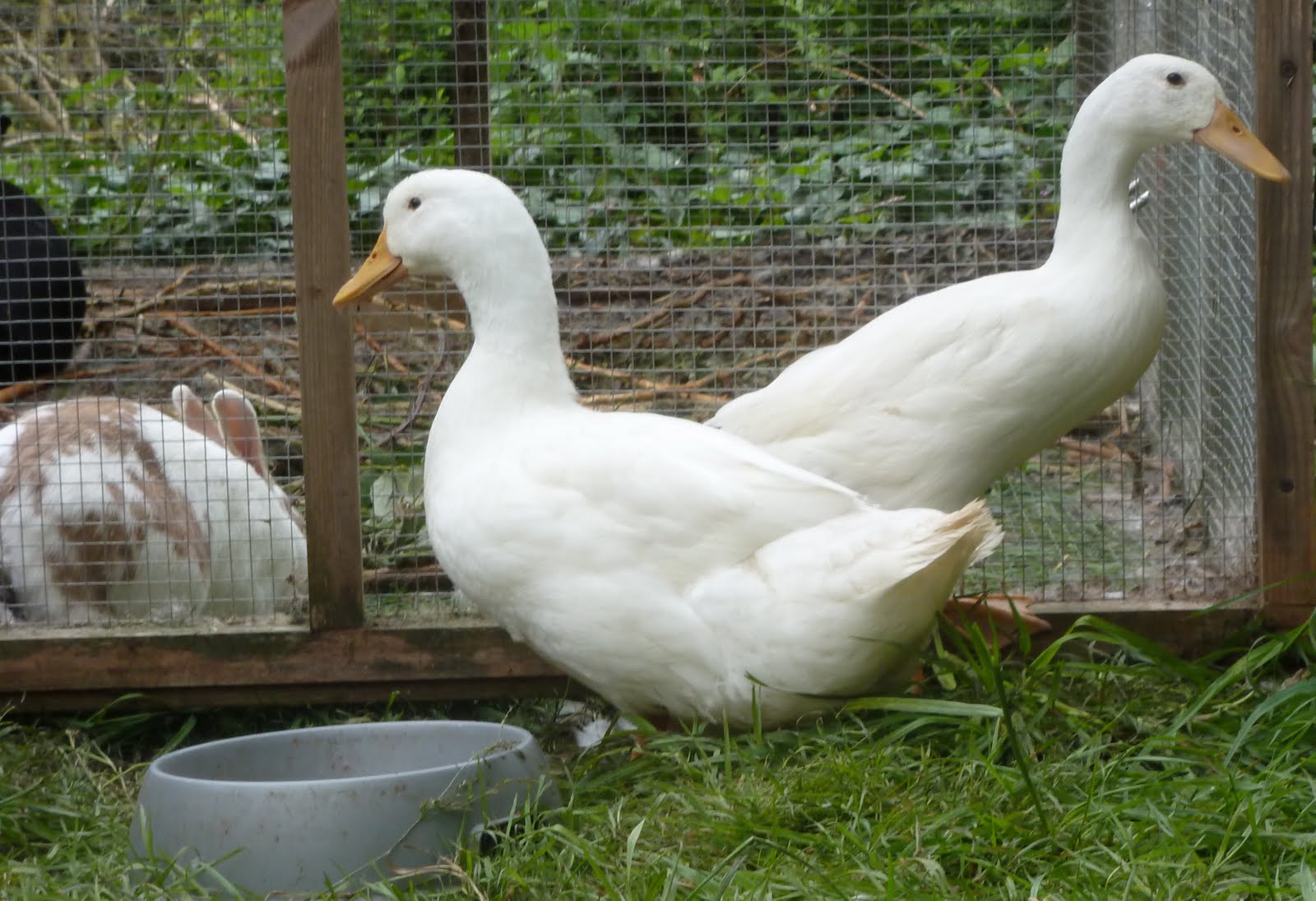
The tall thin Indian Runner was killed; the fat Aylesbury mourns

  Climbing out of our pond

When I was a child, I had a huge, fat bunny, two hens, two ducks and a dog. We had a large house with an acre around it.

When we bought a house in the English countryside in 2006, one of the first things I did was get two hens, two ducks, two rabbits and a dog. I bought a large house with an acre and a half around it.

Yeah, unconsciously recreating my childhood which sort of ended when I was sent to boarding school when I was nine. When my mother sent pressed flowers from whatever was in bloom, mulberries, mustard…I cried, and I cried when we left that garden when I was 14 for a flat which came with my father’s post-retirement job.  Oddly, I seemed to have missed the garden and its inhabitants more than my family!!

  •                                                                                              * * *

Well, Oxfordshire has perils that Jamshedpur, India did not: foxes.

A fox ate one of our chickens, and the survivor was so traumatised that we gave it away. No more chickens.

The fox kept coming for our ducks—I looked out one evening to see a white duck seemingly levitating in a fox’s jaw. It dragged one away at 11 a.m. and though Roy chased the fox and rescued the duck, it died of shock. Another was mauled once by the fox, nursed by us, but then mauled again, and put down by the vet.

So we gave up on ducks for a while. But, oh, it was an idyllic picture to see them cluck around our yard. Ducks are the dearest birds, always happy, always cheerful, running to see you in a manic, quacking way!!

So after a duckless year or two after the maulings, we got ducks again, vowing to be very careful and put them away before dusk.

* * *

 And then one day, we forget. When we remembered, and searched for them, one was killed by the fox.

The other duck was traumatised, and has spent a day and a half quacking for her friend. Ducks don’t search for a friend; they quack till the friend quacks back.

Unable to stand this desperate, agitated quacking, we have released her—well, put her on a lovely public duck pond on a river in a park, where we can go and see her.  She took to it like, well, a duck to water.

  • * * *

I love ducks, I love watching them run and cluck and quack and eat and live so happily. But it’s really not safe having ducks out in the country—the fox comes even in the day, especially at dusk, and there are always the odd occasions when one forgets to put them away. Though I support Tony Blair’s hunting ban, and feel sorry for the mangy, terrified foxes I often see on my walks, I also hate them for their habit of killing for the sake of it.

I must admit I cried a little. I was very fond of my ducks.

When Job faced far, far more bitter losses, he said, “The Lord gives; the Lord takes away. Blessed by the name of the Lord.”

In the case of Job’s devastating loss of his children, there was no bright side.

In our case, there is. No unsightly duck house and run in our back garden. Ducks are messy critters, their droppings are unsightly, their splashing in their bathtubs we gave them destroyed the lawn. They quack to be let out of their house in the mornings, waking us up. There is a constant stress about remembering to put them away: Many a family dinner has been paused while someone runs out to herd the ducks! And their food attracts garden rats. Yeah, Ratty and Mole, not great friends of the garden.

So give up the dream and idyll of ducks quacking in my garden?? I feel sad to think of it—but yeah, I guess so. I guess having free-range chicken and ducks in fox country is a recipe for stress and failure.

At some point, one just has to accept the life one has and not the idyll we dream of. Foxes are a fact of life if you live in the country, and we will have to give up the dream of free-range poultry, or just-laid-that-morning eggs.

                                             * * *

 I adore the ocean, and often dream of living by the sea. But I have lived in Oxford for a total of 14 years. I have many friends I am fond of here, many friends on whose shoulder I could cry (and vice-versa!). I do not have the energy to move, and start again with friendships which, for me, are a vital part of life. So, maybe a small beach cottage if God provides the money, but no more moves. I am living in my dream house, and so I am going to abandon dreams of something dreamier to focus on my work.

* * *

 Ah, mid-life, the restless season, mimicking our twenties in many ways. In my women’s group, almost every fortnight, someone tells of their friends or family divorcing.

Mid-life: it’s a Reality Show. You realise that barring the intervention of God (and of course, that’s an immense thing to bar) your spouse is unlikely to change. What you see is what you get. WYSIWYG. So you bail–or you accept, or you pray mightily; Roy and I are going for the last two options.

“The great thing, if one can, is to stop regarding all the unpleasant things as interruptions of one’s ‘own,’ or ‘real’ life.  The truth is of course that what one calls the interruptions are precisely one’s real life—the life God is sending one day by day; what one calls one’s ‘real life’ is a phantom of one’s own imagination. —They Stand Together: The Letters of C.S. Lewis to Arthur Greeves (1914-1963) (20 December 1943).

I am tired, and sad, and mourning my duck, and the prospect of a duckless life.

But, in fact, this is my life, and I love it most days, and I will rejoice and be glad in it, in all the many things God has given me. Blessed be His Name!

Our Aylesbury and Indian Runner duck resting in the snow with beaks tucked under their wings.

They Stand Together: The Letters of C.S. Lewis to Arthur Greeves (1914-1963) on Amazon.com

They Stand Together: The Letters of C S Lewis to Arthur Greeves 1914-1963 on Amazon.co.uk

Filed Under: Applying my heart unto wisdom Tagged With: acceptance, Aylesbury Ducks, C. S. Lewis, country life, ducks, foxes, Indian Runners

First Things First, Pomodoros, A Schedule and Progress on New Year’s Goals

By Anita Mathias

Bookshelf BEFORE -- Jan 20, check back on Jan 28

Bookshelf BEFORE — Jan 20


Bookshelf -- AFTER

Bookshelf — AFTER


C. S. Lewis famously said, “When first things are put first, second things don’t diminish, they increase. You can’t get second things by putting them first; you can get second things only by putting first things first.”

Michael Hyatt spells this out this work-life balance.

“I think it is really important that one’s career come after God, self, spouse, and children. I have seen too many people sacrifice the other four on the altar of work. Usually when that happens, their work life crumbles, too.

Work can be a rewarding experience if you keep it from becoming an idol. However, if you don’t put it in its place, it can suck the life out of you.”

 (From Hyatt’s ebook Creating your Personal Life Plan).

* * *

My current challenge is developing my blog while not neglecting the other important components of my life—my marriage, my parenting, my physical fitness and my home. (My spiritual life I rarely neglect for blogging. I cannot do without prayer and scripture—I slip into depression and lose focus.)

I would love beautiful art to spring from a beautiful life, a happy marriage and happy parenting. That not many have managed it is no reason not to try.

So I am planning one walk a week with Roy, usually on Mondays, and one family outing with the girls. We are going to watch The Winter’s Tale at Stratford on Avon this Saturday, and also walk around that beautiful town. And on Friday, Roy, Zoe and I are going to see Mr. Darwin’s Tree, a monologue/ “memoir” of Darwin’s life.

* * *

2 The Pomodoro Technique

Ann Voskamp, that splendidly productive woman, swears by the Pomodoro Technique. Basically, it’s work for 25 minutes by a timer; take a five minute break; repeat 3 times. After the fourth Pomodoro, 100 minutes of work, take a 20 minute break.

I am giving this a trial to see if it might work for me.

Disadvantages—Creatively, it takes me a while to settle down and start writing. I do a bit of reading, both books and online to build up momentum and have words coursing through me before I start. So a break in what I am writing every 25 minutes might be hard.

Advantages—

1. Sitting for long hours slows down your metabolism and your body kind of goes into shut-down, whereas moving every hour raises it.

2. A short break of 5 minutes can break the spell and give you perspective on what you are writing. And new ideas.

3. I might be able to work for longer because of the oxygenation the breaks give me

4. Adherents say the Pomodoro Technique sharpens one’s focus. Heck, anyone can do anything for 25 minutes.

5. It might be a way to get boring tasks like tidying up done without allocating a slot for them

6. It would give me a slot for things like weights and yoga, and apparently even 5 minutes of push-ups or surya namaskar has an incremental effect. You are stronger than if you hadn’t done them!!

7. I could use the 20 minute slot to do things that often drop off my day like gardening, or working on my procrastinated chore it.

So am going to try it. Will let you know how I get on.

Schedule.

Ann Voskamp has written a splendid post —25 ways to save your sanity in 2013—which gives us an insight into her holy, near monastic life!! and how she does it all—runs six children, a blog, writes a beautiful book, and remains a sweet, godly, Scripture-saturated woman. She is my role-model blogger in this respect. (When it comes to leading a disciplined, organized life, my role-model blogger is Michael Hyatt).

Now, if I tried all of Ann’s 25 ways to save sanity this week, I would, well, perhaps not lose my sanity, but certainly, exhaust myself.

But I will slowly work through her list, adapting what’s right for me and my life.

Here’s Ann on the importance of a  schedule

“Forty-five percent of what we do every day is habitual,”

“To sing new songs, we need to pay attention to our rituals, the beat of our days, even more than focusing on self-discipline.”

She suggests thinking of the rhythms and actions of the day as a symphony, established note following note.

“Create your rhythm, a harmony of habits. Living in cacophony is more wearing than the hard work of practicing habits. “Laziness means more work in the long run,” writes C.S. Lewis. Flubbing away at whatever strikes our fancy leaves us in far worse dire straits than applying ourselves to the work of playing concertos.”

Our schedule “becomes our everyday liturgy.”

Incredibly, I don’t really have a fixed schedule, a symphony for my days, though there are things I do most days. But, perhaps, through trial and error, I should develop one which works for me.

Anyway, here’s how I have got on with my New Year’s Goals

Writing

On the first things first principle, I have been working on a little book (first draft done, and the whole book should be done next week) and a little bit on my memoir, and have had a good blogging week.

I usually put the blogging first, afraid that if I do it last, I won’t have the mental energy or focus to see it clearly. But I have realized that I don’t need to blog everyday, that the blog still grows with three posts a week since most readers don’t visit every day.

And yeah, since I started putting first things first, and working on the big book and the little book first, the blog has been growing. I have more time to think about, and more time to write my posts.

Wrote Common Grace: Or, Why God Loves Classical Music, Leo Babuata and Gretchen Rubin

And  The Parable of the Bridge or “When to Say No to Insistent People”

Which did astonishingly well because of this

michael_hyatt_tweet


Wow, the power of the big guys.

Oops, got careless about applying my Triple-Dog Lock to lock myself out of Facebook and Twitter, and sadly Roy showed me a way to subvert AntiSocial by signing in as incognito.
Time/week
Dec. avg. Goal: Jan 21 Achieved Goal: Jan 28 Goal – year end
Writing 7h 10 min  19 hours  9 hrs29 mins  10 hours 35h
Social media 11h 17 min  3 hours 30 min  7 hours54 mins  3 hrs30 min 3h 30min
News, Blogs, Magazines 5h 21 min  3 hours 30 min  5 hrs2 mins  3 hours30 min  3 hours


2 Walking

A second week of ice and snow derailed my plans again, but since the thaw I have been making up for lost time.

Week of Goal Actually done
(km) (km)
Jan 7 29.6
Jan 14 33.6 13.6
Jan 21 14.1 16.4
Jan 28 19.69

I need to build up to 11 miles by September for my walking pilgrimage in Tuscany. Yeah, a bit behind, but using Kaizen, and building time and distance and soon, I hope, speed everyday, I hope to get there

2B Weight

Dreaded plateau, which I hope to break with increased exercise, and watching what I eat! Cumulative loss 3.4 lb

3-DSCN6083_edited

BEFORE- some overstacked


BEFORE- some empty

before- some not

3 Domestic Order

 Here’s the bookshelf I have tidied, and here is the bookshelf I want to work on. Some bookshelves are overstacked, some are understacked, so I guess I’ll have to balance them.

I limit my clothes to whatever fits in two dressers, one tallboy, and one closet. So whenever I buy anything, I get rid of something, what Irene calls, “cutting off my nose to make more room on my face.” Once a year, I purge everything that doesn’t fit, is worn, faded, stained, or that I just don’t like and never wear.

This is the week for my annual purge. Here is my before picture.


Filed Under: random Tagged With: Ann Voskamp, C. S. Lewis, Goals, Michael Hyatt, pomodoro, walkiing

My Experience of the Baptism in the Holy Spirit and Speaking in Tongues

By Anita Mathias

And so, I am tired and stressed and overwhelmed. Or anxious, my heart beating faster.  Or I simply don’t know what to do. Or happy and at peace and joyful.

And almost without realizing it, I find myself praying. In tongues.

* * *

How do I find myself in Oxford, England, in the 21st century, praying in tongues, this ancient first century gift vividly described in The Acts of the Apostles?

Well, 30ish years ago, when I was 17, I was visiting my grandmother in Mangalore, a pretty Catholic seacoast town on the west coast of India, where both my grandparents and Roy’s were born.

And there was a visiting Spanish priest called Marcellino Iragui who was running a Charismatic retreat.

It was a little like the Alpha course. We went through forgiveness, repentance, renouncing occult involvements, and on the last evening, the priest was to pray for the Baptism of the Holy Spirit.

Well, I drank it all in like mead. Not so my father, who was amused, and a trifle bored, and flatly refused to take me to the Charismatic Crusade for another day.

* * *

 And so I asked a friend who knew the priest to introduce me, and asked for the Baptism in the Holy Spirit there and then.

(I have an instinctive distaste for rules–Anita Antinomian, my friend Paul calls me–and it amuses me that even in this holy encounter, I sought to jump the queue and do it my own way.)

“Is she hungry?” he asked my friend, Joyce Fernandes. “Yes,” she assured him, having no idea at all. (Indian women can be very nice!)

And so we went through the theory: tongues, gifts of the spirit, fruits of the spirit, and then he laid his hands on me, and prayed for the Baptism of the Spirit, having me repeat after him.

When he came to, “And Lord, please give me the gift of tongues,” I interrupted him.

“I don’t want that,” I said. “It would be too embarrassing. My family would tease me.”

“You can’t pick and choose among the gifts of God,” he said sternly.

And so we prayed. I felt nothing. I guess I was both disappointed and relieved.

I rejoined my father. “So are you now a Charismatic?” he said, amused by the whole business. “Have you the gift of tongues?”

“No,” I assured him.

We returned to my grandmother’s. “Do you have the gift of tongues?” “No,” I said.

* * *

Well, I spoke too soon. I woke that night with rushing, gushing joy, a river threatening to break the bounds of my personality. It was overwhelming: joy so ecstatic, so seismic, it was akin to pain.

I knelt by the side of my bed, and prayed in tongues, praising God for the beauty of the world, for himself, strange, barbarous-sounding unintelligible language bursting out of me.

I prayed in tongues, and I prayed with my mind, in rapture, in sentiments new to me, prayed in English and in the spirit-language, thanking God for his incomprehensible goodness, which I suddenly perceived. “Oh, Lord, I just praise you, I praise you, I praise you.”

* * *

 And well, that language never left me. A month later, I was in Mother Teresa’s convent, as an aspirant, training to be a nun. I asked her in a one-on-one meeting, “Mother, what do you think about speaking in tongues?”

“One tongue is enough for a woman,” she said brusquely.

And that was that!

* * *

Well, but I still prayed in tongues; I couldn’t help it—remember that Anita Antinomian bit?–and have done so for the last 30 years.

Tense: I find myself praying in tongues. Anxious: Are we going to catch the plane, get round the bureaucratic no-men–I find myself praying in tongues.

And when my spirit soars, swells, for no good reason, I find myself again praying in tongues.

When I am unreasonably happy and exhilarated in my garden, or by the seashore, I find myself praying in ecstatic tongues. And, more restrained but slowly coursing into joy, I pray in tongues when I am sad, stressed or overwhelmed.

It is the greatest mood-changer, and wisdom-infuser I know. The greatest shortcut to joy.

* * *

And how did this language of my own come? Out of the blue, hours after I first heard about it–by the laying on of hands.

And sadly, my spirit-tongue hasn’t changed, and sadly, it sounds rather ugly to my years, barbaric even. It’s not Greek, or Latin, or French, languages I love. I heard my pastor sing in tongues once, and it sounded like Persian. Mine, it’s a cave man tongue long forgotten.

And that’s just as well, for if I spoke Old French, I would have been tempted to show off about my lovely spirit language. Instead, I have kept quiet about it, and prayed quietly as God meant, no doubt, for the last thirty years.

Some people say that one’s spirit language develops as we mature spiritually. Well, I have matured spiritually (ask Roy what an angel I can be when he is impossible. Well, sometimes!), but my language has stayed basically static.

And isn’t it strange that the one gift I specifically said I didn’t want was the one gift I got? Though, about 15-20 years, the gift of prophetic knowledge and insight began to manifest itself in me, and slowly be recognized by others, and it is now my most treasured spiritual gift

* * *

Rejoice always, pray constantly, in everything give thanks. How on earth is that possible?

Well, praying in tongues is one way. I pray when I go on a long walk, and soon flag. Or do manual work. Or in the winter when the night finds me too tired to read or write, but not quite tired enough to sleep. Too tired to pray coherently, but not tired enough to fall asleep.

And then the Spirit, left within my spirit as a deposit, guaranteeing my inheritance, prays in sounds without any words I understand, and God hears His intercession, and so I know that all will be well, all will be well, all manner of things will be well.

(Edited archive post)

Image Credit: http://pegponderingagain.files.wordpress.com/

Filed Under: In which I chase the wild goose of the Holy Spirit Tagged With: Baptism in the Holy Spirit, Speaking in Tongues

In Praise of Martin Luther King, Jr. by Walter Brueggemann

By Anita Mathias

Walter Brueggemann.jpg
Walter Brueggemann
 

 Martin Luther King Jr.

Some of us are old enough to remember
the balcony in Memphis,
the sanitation workers’ strike,
the shot that broke flesh,
the loss of Martin,
and then the mule-drawn wagon, and the funeral,
and the riots, the violence, the fear, and the failure.

All of us know the crowd in D.C.
and “I Have a Dream,”
the Birmingham jail,
the broad stream of violence,
and his steadfast nonviolence
in Albany and
in Skokie and
in Selma.

All of us know his awesome, daring speech,
his bravery, his hope, and his generative word.
And we know the relentlessness of our government in pursuit of him
and the endless surveillance and harassment of this drum major for justice.

At this distance, we have little access
to how it was then concerning ambiguity
and fear
and reluctance
and violence
and injustice.

We do not doubt that you have persisted
even beyond Martin’s passion,
even beyond Martin’s brilliance,
even beyond Martin’s fidelity, and his loss.

We do not doubt that through him and beyond him,
you, holy God of the prophets,
are still pledged to justice and
peace and
liberty for all.

We remember Martin in gratitude . . .
and chagrin.
And we pledge, amid our stressed ambiguities,
to dream as he did,
to walk the walk,
and to talk the talk of your coming kingdom.

We pledge, so sure that your truth
will not stop its march
until your will is done on earth as it is in heaven.

From  Prayers for a Privileged People

Filed Under: In Which I celebrate Church History and Great Christians Tagged With: Martin Luther King, theologians, Walter Brueggemann

  • « Previous Page
  • 1
  • …
  • 54
  • 55
  • 56
  • 57
  • 58
  • …
  • 279
  • Next Page »

Sign Up and Get a Free eBook!

Sign up to be emailed my blog posts (one a week) and get the ebook of "Holy Ground," my account of working with Mother Teresa.

Join 536 Other Readers

My Books

Rosaries, Reading, Secrets: A Catholic Childhood in India

Rosaries, Reading Secrets, B&N
USA

UK

Wandering Between Two Worlds: Essays on Faith and Art

Wandering Between Two Worlds
USA

UK

Francesco, Artist of Florence: The Man Who Gave Too Much

Francesco, Artist of Florence
US

UK

The Story of Dirk Willems

The Story of Dirk Willems
US

UK

My Latest Meditation

Anita Mathias: About Me

Anita Mathias

Read my blog on Facebook

Follow me on Twitter

Follow @anitamathias1

Recent Posts

  • At the Cross, God Forgives Us Completely
  • Using God’s Gift of Our Talents: A Path to Joy and Abundance
  • The Kingdom of God is Here Already, Yet Not Yet Here
  • All Those Who Exalt Themselves Will Be Humbled & the Humble Will Be Exalted
  • Christ’s Great Golden Triad to Guide Our Actions and Decisions
  • How Jesus Dealt With Hostility and Enemies
  • Do Not Be Afraid, but Do Be Prudent
  • For Scoundrels, Scallywags, and Rascals—Christ Came
  • How to Lead an Extremely Significant Life
  • Don’t Walk Away From Jesus, but if You Do, He Still Looks at You and Loves You
Premier Digital Awards 2015 - Finalist - Blogger of the year
Runner Up Christian Media Awards 2014 - Tweeter of the year

Categories

What I’m Reading


Wolf Hall
Hilary Mantel

Wolf Hall --  Amazon.com
Amazon.com

Amazon.co.uk

Silence and Honey Cakes:
The Wisdom Of The Desert
Rowan Williams

Silence and Honey Cakes --  Amazon.com
Amazon.com

Amazon.co.uk

The Long Loneliness:
The Autobiography of the Legendary Catholic Social Activist
Dorothy Day

The Long Loneliness --  Amazon.com
Amazon.com

Amazon.co.uk

Country Girl
Edna O'Brien

Country Girl  - Amazon.com
Amazon.com

Amazon.co.uk

Archive by month

My Latest Five Podcast Meditations

INSTAGRAM

anita.mathias

My memoir: Rosaries, Reading, Secrets https://amzn.to/42xgL9t
Oxford, England. Writer, memoirist, podcaster, blogger, Biblical meditation teacher, mum

Well, hello friends! Breaking radio silence to let Well, hello friends! Breaking radio silence to let you know that I have taped a meditation for you on Christ’s famous Parable of the Talents in Matthew 25. https://anitamathias.com/2025/11/05/using-gods-gift-of-our-talents-a-path-to-joy-and-abundance/
Here you are, click the play button in the blog post for a brief meditation, and some moments of peace, and, perhaps, inspiration in your day 🙂
Hi Friends, I have taped a meditation; do listen a Hi Friends, I have taped a meditation; do listen at this link: https://anitamathias.com/2025/04/08/the-kingdom-of-god-is-here-already-yet-not-yet-here-2/
It’s on the Kingdom of God, of which Christ so often spoke, which is here already—a mysterious, shimmering internal palace in which, in lightning flashes, we experience peace and joy, and yet, of course, not yet fully here. We sense the rainbowed presence of Christ in the song which pulses through creation. Christ strolls into our rooms with his wisdom and guidance, and things change. Our prayers are answered; we are healed; our hearts are strangely warmed. Sometimes.
And yet, we also experience evil within & all around us. Our own sin which can shatter our peace and the trajectory of our lives. And the sins of the world—its greed, dishonesty and environmental destruction.
But in this broken world, we still experience the glory of creation; “coincidences” which accelerate once we start praying, and shalom which envelops us like sudden sunshine. The portals into this Kingdom include repentance, gratitude, meditative breathing, and absolute surrender.
The Kingdom of God is here already. We can experience its beauty, peace and joy today through the presence of the Holy Spirit. But yet, since, in the Apostle Paul’s words, we do not struggle only “against flesh and blood, but against the rulers, against the unseen powers of this dark world and against the spiritual forces of evil,” its fullness still lingers…
Our daughter Zoe was ordained into the Church of E Our daughter Zoe was ordained into the Church of England in June. I have been on a social media break… but … better late than never. Enjoy!
First picture has my sister, Shalini, who kindly flew in from the US. Our lovely cousins Anthony and Sarah flank Zoe in the next picture.
The Bishop of London, Sarah Mullaly, ordained Zoe. You can see her praying that Zoe will be filled with the Holy Spirit!!
And here’s a meditation I’ve recorded, which you might enjoy. The link is also in my profile
https://anitamathias.com/2024/11/07/all-those-who-exalt-themselves-will-be-humbled-the-humble-will-be-exalted/
I have taped a meditation on Jesus statement in Ma I have taped a meditation on Jesus statement in Matthew 23, “For those who exalt themselves will be humbled, and those who humble themselves will be exalted.”
Do listen here. https://anitamathias.com/2024/11/07/all-those-who-exalt-themselves-will-be-humbled-the-humble-will-be-exalted/
Link also in bio.
And so, Jesus states a law of life. Those who broadcast their amazingness will be humbled, since God dislikes—scorns that, as much as people do.  For to trumpet our success, wealth, brilliance, giftedness or popularity is to get distracted from our life’s purpose into worthless activity. Those who love power, who are sure they know best, and who must be the best, will eventually be humbled by God and life. For their focus has shifted from loving God, doing good work, and being a blessing to their family, friends, and the world towards impressing others, being enviable, perhaps famous. These things are houses built on sand, which will crumble when hammered by the waves of old age, infirmity or adversity. 
God resists the proud, Scripture tells us—those who crave the admiration and power which is His alone. So how do we resist pride? We slow down, so that we realise (and repent) when sheer pride sparks our allergies to people, our enmities, our determination to have our own way, or our grandiose ego-driven goals, and ambitions. Once we stop chasing limelight, a great quietness steals over our lives. We no longer need the drug of continual achievement, or to share images of glittering travel, parties, prizes or friends. We just enjoy them quietly. My life is for itself & not for a spectacle, Emerson wrote. And, as Jesus advises, we quit sharp-elbowing ourselves to sit with the shiniest people, but are content to hang out with ordinary people; and then, as Jesus said, we will inevitably, eventually, be summoned higher to the sparkling conversation we craved. 
One day, every knee will bow before the gentle lamb who was slain, now seated on the throne. We will all be silent before him. Let us live gently then, our eyes on Christ, continually asking for his power, his Spirit, and his direction, moving, dancing, in the direction that we sense him move.
Link to new podcast in Bio https://anitamathias.co Link to new podcast in Bio https://anitamathias.com/2024/02/20/how-jesus-dealt-with-hostility-and-enemies/
3 days before his death, Jesus rampages through the commercialised temple, overturning the tables of moneychangers. Who gave you the authority to do these things? his outraged adversaries ask. And Jesus shows us how to answer hostile questions. Slow down. Breathe. Quick arrow prayers!
Your enemies have no power over your life that your Father has not permitted them. Ask your Father for wisdom, remembering: Questions do not need to be answered. Are these questioners worthy of the treasures of your heart? Or would that be feeding pearls to hungry pigs, who might instead devour you?
Questions can contain pitfalls, traps, nooses. Jesus directly answered just three of the 183 questions he was asked, refusing to answer some; answering others with a good question.
But how do we get the inner calm and wisdom to recognise
and sidestep entrapping questions? Long before the day of
testing, practice slow, easy breathing, and tune in to the frequency of the Father. There’s no record of Jesus running, rushing, getting stressed, or lacking peace. He never spoke on his own, he told us, without checking in with the Father. So, no foolish, ill-judged statements. Breathing in the wisdom of the Father beside and within him, he, unintimidated, traps the trappers.
Wisdom begins with training ourselves to slow down and ask
the Father for guidance. Then our calm minds, made perceptive, will help us recognise danger and trick questions, even those coated in flattery, and sidestep them or refuse to answer.
We practice tuning in to heavenly wisdom by practising–asking God questions, and then listening for his answers about the best way to do simple things…organise a home or write. Then, we build upwards, asking for wisdom in more complex things.
Listening for the voice of God before we speak, and asking for a filling of the Spirit, which Jesus calls streams of living water within us, will give us wisdom to know what to say, which, frequently, is nothing at all. It will quieten us with the silence of God, which sings through the world, through sun and stars, sky and flowers.
Especially for @ samheckt Some very imperfect pi Especially for @ samheckt 
Some very imperfect pictures of my labradoodle Merry, and golden retriever Pippi.
And since, I’m on social media, if you are the meditating type, here’s a scriptural meditation on not being afraid, while being prudent. https://anitamathias.com/2024/01/03/do-not-be-afraid-but-do-be-prudent/
A new podcast. Link in bio https://anitamathias.c A new podcast. Link in bio
https://anitamathias.com/2024/01/03/do-not-be-afraid-but-do-be-prudent/
Do Not Be Afraid, but Do Be Prudent
“Do not be afraid,” a dream-angel tells Joseph, to marry Mary, who’s pregnant, though a virgin, for in our magical, God-invaded world, the Spirit has placed God in her. Call the baby Jesus, or The Lord saves, for he will drag people free from the chokehold of their sins.
And Joseph is not afraid. And the angel was right, for a star rose, signalling a new King of the Jews. Astrologers followed it, threatening King Herod, whose chief priests recounted Micah’s 600-year-old prophecy: the Messiah would be born in Bethlehem, as Jesus had just been, while his parents from Nazareth registered for Augustus Caesar’s census of the entire Roman world. 
The Magi worshipped the baby, offering gold. And shepherds came, told by an angel of joy: that the Messiah, a saviour from all that oppresses, had just been born.
Then, suddenly, the dream-angel warned: Flee with the child to Egypt. For Herod plans to kill this baby, forever-King.
Do not be afraid, but still flee? Become a refugee? But lightning-bolt coincidences verified the angel’s first words: The magi with gold for the flight. Shepherds
telling of angels singing of coming inner peace. Joseph flees.
What’s the difference between fear and prudence? Fear is being frozen or panicked by imaginary what-ifs. It tenses our bodies; strains health, sleep and relationships; makes us stingy with ourselves & others; leads to overwork, & time wasted doing pointless things for fear of people’s opinions.
Prudence is wisdom-using our experience & spiritual discernment as we battle the demonic forces of this dark world, in Paul’s phrase.It’s fighting with divinely powerful weapons: truth, righteousness, faith, Scripture & prayer, while surrendering our thoughts to Christ. 
So let’s act prudently, wisely & bravely, silencing fear, while remaining alert to God’s guidance, delivered through inner peace or intuitions of danger and wrongness, our spiritual senses tuned to the Spirit’s “No,” his “Slow,” his “Go,” as cautious as a serpent, protected, while being as gentle as a lamb among wolves.
Link to post with podcast link in Bio or https://a Link to post with podcast link in Bio or https://anitamathias.com/2023/09/22/dont-walk-away-from-jesus-but-if-you-do-he-still-looks-at-you-and-loves-you/
Jesus came from a Kingdom of voluntary gentleness, in which
Christ, the Lion of Judah, stands at the centre of the throne in the guise of a lamb, looking as if it had been slain. No wonder his disciples struggled with his counter-cultural values. Oh, and we too!
The mother of the Apostles James and John, asks Jesus for a favour—that once He became King, her sons got the most important, prestigious seats at court, on his right and left. And the other ten, who would have liked the fame, glory, power,limelight and honour themselves are indignant and threatened.
Oh-oh, Jesus says. Who gets five talents, who gets one,
who gets great wealth and success, who doesn’t–that the
Father controls. Don’t waste your one precious and fleeting
life seeking to lord it over others or boss them around.
But, in his wry kindness, he offers the ambitious twelve
and us something better than the second or third place.
He tells us how to actually be the most important person to
others at work, in our friend group, social circle, or church:Use your talents, gifts, and energy to bless others.
And we instinctively know Jesus is right. The greatest people in our lives are the kind people who invested in us, guided us and whose wise, radiant words are engraved on our hearts.
Wanting to sit with the cleverest, most successful, most famous people is the path of restlessness and discontent. The competition is vast. But seek to see people, to listen intently, to be kind, to empathise, and doors fling wide open for you, you rare thing!
The greatest person is the one who serves, Jesus says. Serves by using the one, two, or five talents God has given us to bless others, by finding a place where our deep gladness and the world’s deep hunger meet. By writing which is a blessing, hospitality, walking with a sad friend, tidying a house.
And that is the only greatness worth having. That you yourself,your life and your work are a blessing to others. That the love and wisdom God pours into you lives in people’s hearts and minds, a blessing
https://anitamathias.com/.../dont-walk-away-from-j https://anitamathias.com/.../dont-walk-away-from-jesus.../
Sharing this podcast I recorded last week. LINK IN BIO
So Jesus makes a beautiful offer to the earnest, moral young man who came to him, seeking a spiritual life. Remarkably, the young man claims that he has kept all the commandments from his youth, including the command to love one’s neighbour as oneself, a statement Jesus does not challenge.
The challenge Jesus does offers him, however, the man cannot accept—to sell his vast possessions, give the money to the poor, and follow Jesus encumbered.
He leaves, grieving, and Jesus looks at him, loves him, and famously observes that it’s easier for a camel to squeeze through the eye of a needle than for a rich person to live in the world of wonders which is living under Christ’s kingship, guidance and protection. 
He reassures his dismayed disciples, however, that with God even the treasure-burdened can squeeze into God’s kingdom, “for with God, all things are possible.”
Following him would quite literally mean walking into a world of daily wonders, and immensely rich conversation, walking through Israel, Lebanon, Syria, and Jordan, quite impossible to do with suitcases and backpacks laden with treasure. 
For what would we reject God’s specific, internally heard whisper or directive, a micro-call? That is the idol which currently grips and possesses us. 
Not all of us have great riches, nor is money everyone’s greatest temptation—it can be success, fame, universal esteem, you name it…
But, since with God all things are possible, even those who waver in their pursuit of God can still experience him in fits and snatches, find our spirits singing on a walk or during worship in church, or find our hearts strangely warmed by Scripture, and, sometimes, even “see” Christ stand before us. 
For Christ looks at us, Christ loves us, and says, “With God, all things are possible,” even we, the flawed, entering his beautiful Kingdom.
Follow on Instagram

© 2026 Dreaming Beneath the Spires · All Rights Reserved. · Cookie Policy · Privacy Policy