Anita Mathias: Dreaming Beneath the Spires

Anita Mathias's Blog on Faith and Art

  • Home
  • My Books
  • Meditations
  • Essays
  • Contact
  • About Me

I am from the Sweet, Sour, Salty, Bitter Body of Christ

By Anita Mathias

last_supper_cropped


 I am from the Sweet, Sour, Salty, Bitter Body of Christ

I am from earliest memories of Latin Masses in Jamshedpur, India

not understanding a word, and then, English masses,

I did understand, but was bored by,

and Post-Vatican II vernacular masses,

in Konkani, Kannada, Marathi on our travels,

understanding nothing, but doing our Catholic duty,

and saving our souls from hell.

I am from the painting of the Sacred Heart in the living room,
who followed me with his wistful eyes wherever I hid,
and I somehow knew He liked me, was for me.

And I am from luminous statues of Our Lady,
and Catholicism worn on the body,
scapulars, and medals of the infant Jesus of Prague
and showy rosaries of silver and gold,
and the infinite boredom of the evening family rosary,
and my mother’s eyes growing soulful as she said the “Memorare:” “Never was it known that anyone who fled to thy protection,
implored thy help, or sought thy intercession was left unaided,”
and me, thinking, “Wow, if that is true,
that is amazing, and there must be a God.”

I am from Bible stories from before I could read
Abraham with his knife to Isaac’s heart,
David and Goliath, Daniel in the lion’s den,
and from the stories of the saints, a second language too,
Francis of Assisi, the Little Flower, and Father Damien.

I am apparitions of  the Virgin: at Lourdes,
and Fatima and Velankanni and Guadalupe;
and from the catechism, duly memorized and duly hated,
from imported Easter bonnets and Easter parasols,
and First Holy Communion with a white veil and white shoes,
and chasing George Kuriakose at communion prep.
singing “Georgie, Porgie, pudding and pie,
kissed the girls and made them cry,”

until, ironically, George cried.

I am from the One Holy Catholic Church,
which made my world more cosmopolitan,
with our Parish Priests, Spanish Fr. Calvo,
and Belgian Fr. Durt and American Fr. O’Leary.

And I am from St. Mary’s Convent, Nainital,

my boarding school in the Himalayas,

and being loved by beautiful Irish Sister Josephine,

a Protestant convert who adored Jesus and the Bible,

and was sceptical of all Catholic add-ons,

and taught me to be the same, in a Convent where

we walked to the nuns’ cemetery on All Saint’s Day

holding candles and praying both to and for the dead

in general confusion, and were sentimentally pious

about “Our Lady,” well, had a devotion to her.


And I am from Holy Weeks with the church
shrouded in purple for Maundy Thursday,
and late night prayer vigils because He had said

“Can you not stay awake one hour with me?”
and incense flung in the flames, and following
the Priest and the Paschal candle into the dark church
with our little candles (Careful, don’t burn your hair)
on Easter Saturday as the priest intoned, “Christ our light,”
“Thanks be to God,” we said
and we saved bits of palm as bookmarks
and nervously stuck out our tongue for the host,
sometimes withdrawing it too early,
and, “Oh, you dropped the body and blood of Christ!”


And I am from boarding-school Catholicism which made me cry with boredom, and which I recollect as torture—

Mass five days a week at 6.15 a.m.,

weekends devoured with Benediction, Adoration,

Stations of the Cross, Rosary, Blue Army and Choir practices.


And if any of us are still Catholics, well, that would be a miracle,

Wouldn’t it? And I am not.


And I stopped believing in God for a season,

Of course, I did.


But I am also from knowing the Bible, in and out,

fruit of all that enforced church time,

knowing hundreds of hymns by heart,

and Biblical wisdom surfacing from the depths of memory

when I least expect it.

I am from a religious conversion, straight out of school,
while reading Catherine Marshall’s Beyond Ourselves,
and The Cross and the Switchblade,
and straying into a charismatic meeting
and being baptized in the Holy Spirit
which I asked for, and receiving the gift of tongues
which I specifically asked not to receive.
and deciding that the best way to serve Jesus
was to work with the poor.

So I am from Mother Teresa,
entering her convent as an aspirant at 17,
where I enjoyed adoration and meditation,
and spiritual reading (an introvert’s spirituality,)
but struggled through lauds, none, vespers, compline,
vocal prayer, novenas for “a special intention,”
litanies and rosaries recited while you chopped vegetables.
Oh, the religious noise!

I am from Oxford, England,
revelling in English Literature in Somerville College,
listening to a lecture on how Christ
fit all the hero archetypes in Lord Raglan’s “The Hero,”
and deciding that he was a hero, not God,
and suddenly feeling all alone in the world.

But later, after earning a Masters’ in Creative Writing

in America, I realise that my life, without Christ’s help,

had been pedestrian, uninspired, and unsuccessful

and surely Jesus could have done a better job running it.

At a friend’s suggestion, I systematically try to do what Jesus says,

and faith returns, and how sweet it is.


I am from feeling my way into faith again

at a Pentecostal Holiness church in Williamsburg, Virginia,

where the baptiser insisted we destroy my Father’s copy

of the Bhagvad Gita, and Roy’s grandfather’s snake paperweight.

“Thou shalt have no other Gods before me,” he quotes,

And when he tried to baptise me, I was terrified

to have him push my head beneath water,

–loss of control and all that—

and he thought that the fear was of the devil

and halted the baptism for an exorcism!

And I am from two years in Minnesota,
faith still weak, trying out John Piper’s Bethlehem Baptist
which was too heavily theological:
“The pleasures of God are in bruising his son,”
and how does that get one through from Monday to Saturday
which should be one purpose of a sermon?

And then, back to Williamsburg: Grace Presbyterian Church,

and experiencing “Sonship,” brainchild of Jack Miller

and watching how theology made him come alive,

and made his eyes blaze as he talked about Wesley and Whitfield

my eyes filled with tears, for I realized I loved theology,

and there I was, a secular literary writer, and I had realized

that what I really wanted to do was play in the fields of the Lord.

And I committed to studying my Bible daily, and praying daily,
and I learn theology the best way,
from my own direct encounters with scripture,
not mediated through Calvin, Luther or Piper’s encounters.

And I am from being discipled over five years
by Paul Miller of SeeJesus and learning to ensure
that the rubber of faith hits the road of life.

And I am from St. Andrew’s, Oxford, my current church home,
Book of Common Prayer, liturgy, robed clergy, and Taize.

And I am also from the spiritual discipline of blogging,
asking, “What are you saying today, Lord?”
What is scripture saying?”
and writing it down.

And I am from the international body of Christ.
I learn soaking prayer from the Arnotts of the Toronto Blessing,
which has changed me more than anything else,
resting in the presence of God, receiving revelation,
for God speaks constantly, and is never silent,
and when we are still, we hear.

And I belong to the Wild Goose of the Holy Spirit,

whom I chase at Ffald-y-Brenin, at RiverCamp,

and at the Revival Alliance Conferences.

And I am, more recently, from the revival meetings at Cwmbran.


I am from the body of Christ,

tasted in three continents in all its wild richness,

all its flavours, sweet, sour, salty, bitter,

making me who I am—

a mere Christian.


I am from Christ.

I am in Christ,

a one-finger typist in the body of Christ,

part of it, as it is part of me.


Filed Under: In Which my Blog Morphs into Memoir and Gets Personal

The Will of God Always Leads Us to a Larger Place

By Anita Mathias

Picture

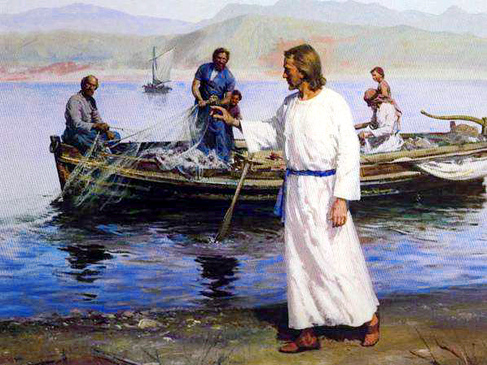
As Jesus was walking beside the Sea of Galilee, he saw two brothers, Simon called Peter and his brother Andrew. They were casting a net into the lake, for they were fishermen.  “Come, follow me,” Jesus said, “and I will make you fishers of men.” At once they left their nets and followed him. (Matthew 4 18-20) 

So the fishers of fish become halieis anthropon, ἁλιεῖς ἀνθρώπων, fishers of men. The will of God always leads us to a larger place, to an enlarged territory.

Because God’s desire is always for the fullest human flourishing. “The glory of God is man fully alive,” a lovely line credited to St. Irenaeus

And once we have surrendered our lives to him, he keeps moving us, onward and upward to the place where we can both use all our gifts and be a blessing to others. And in general, he takes the moving car of who we are; our gifts, abilities and experience, and steers it higher, stronger, faster.

So Jesus takes physically strong, entrepreneurial fisherman inured to hard work, team work, hardship, disappointment, nights at sea, and gives them the task of fishing men into an eternal kingdom. He applies their natural gifts to eternal, supernatural purposes.

Of course, just as we don’t give our children just one birthday present, once in their lives, so God continually gives us new gifts, abilities, capabilities, insight and new wisdom. But the vocation to which he calls us will be true to who we are, and to our interests and gifts.

* * *

Retreat to advance

In the short run, however, Peter and Andrew, James and John became downwardly mobile. No longer independent businessmen, but vagabonds, with no place to rest their head, dependent on charity.

Their old selves had to be broken, to be reformed like a beautiful mosaic.

John Wimber, founder of the Vineyard Movement, flourished in the music industry. However, on becoming a Christian, he found it incompatible with discipleship. So he left, and found work in a factory. An old colleague came to see him, asking for John Wimber’s office. He found Wimber covered with oil, inside a oil-barrel he was scrubbing out. The musician thought Wimber had gone mad!! (Recounted by Carol Wimber in The Way it Was.)

It required this brokenness for Wimber to be willing to hear when God said, “John, I have seen your work. Now let me show you mine.” And to be open to going with the flow of God’s  eccentric purposes.

And later to be a willing instrument when the Holy Spirit songs kept coming, no longer pop songs popular for a year, but spirit-given songs sung for decades, or longer.

* * *

However, it takes a period of brokenness and withdrawal for a gift to be repurposed, for fishermen to become fishers of men.

He needs our surrender before He can use us to bless others.

And when it happens, it feels like hell.

* * *

I was blocked in 2006 when a literary agent wanted me to make changes in my manuscript. Words dripped like crystallising treacle; I was blocked.

So I took a break, decided to put the kids in private school, founded a small publishing company to pay for that. When Roy could come aboard full time in 2010, and I could “retire,” I felt I no longer knew how to write. I had barely read for 4 years. I had lost writerly confidence.

When I started again, after hearing God suggest blogging, my writing was different. I was singing a new song.

I was more interested in speaking to my readers and blessing them than in a career (though, of course, I still want one) I was more interested in what I said, than in how I said it, which was huge for the girl who had been enamoured with style. I desperate to cut perfectionism off at the neck, and just get my work out there. Ship it! I was writing for the health of my soul, and as an offered gift to my readers, rather than for the glory of a career.

It takes a period of brokenness for the Great Artist to put your gifts together into a glorious mosaic, all hammered gold and gold enamelling, all tesserae and shimmering glass.

* * *

When I first wanted to offer my life to God, I went off to work with Mother Teresa, aged 17. (Having skipped years at school, winning “double promotions,” I was done with Grade 12 by the time I was 16.) I assumed because Jesus said, “Whatever you have done to the least of these…” that surely God’s will for me, and for every Christian was to work with the poor!

However, I am a dreamy and impractical person, and if I were a medieval woman when this was a plausible career choice, I would have become a mystic!

I was no good at Mother Teresa’s, with its packed-like-sardines community life; loud constant, vocal prayer, and lots of practical work. I languished and wilted; I got all sorts of things wrong; life felt like a series of hammer blows to my heart.

But writing–I have always written easily and reasonably well. It has generally been my joy.

Can writing be the way I am to serve God? Can writing be my worship? For years, I didn’t really believe something so lovely could be true

But now I do.

“The place God calls you to is the place where your deep gladness and the world’s deep hunger meet.” (Frederick, Buechner, Wishful Thinking)

Because God is good, pouring perfume can be an act of worship, and so can writing (no longer for fame or money, though few are averse to these things!) but as an act of worship, of pure devotion.

“Child, you have written for ambition,” he says. “Come write for me, as your worship of me.

And I will make you… Ah, wait and see.”

Filed Under: In which I decide to follow Jesus, Matthew Tagged With: Following Christ, John Wimber, Peter and Andrew, vocation

In which Driveness & Scarcity Thinking is the Voice of the Oppressor, & the Enemy of the People

By Anita Mathias

Christ The Good Shepherd

 I am reading Brene Brown’s Daring Greatly. She quotes Global activist Lynne Twist who, in her book The Soul of Money, refers to scarcity as “the great lie”.

Twist writes, “For me, and for many of us, our first waking thought of the day is, “I didn’t get enough sleep.” The next one is “I don’t have enough time.” Whether true or not, that thought of not enough occurs to us automatically before we even think to question or examine it. We spend most of the hours and the days of our lives hearing, explaining, complaining or worrying about what we don’t have enough of.

Before we even sit up in bed, before our feet touch the floor, we’re already inadequate, already behind, already losing, already lacking something. And by the time we go to bed at night, our minds are racing with a litany of what we didn’t get, or didn’t get done, that day. We go to sleep burdened by those thoughts and wake up to that reverie of lack.

This internal condition of scarcity, this mind-set of scarcity, lives at the very heart of our jealousies, our greed, our prejudice, and our arguments with life.”

                                                                                                               * * *

And so we go through life, driven, driven, driven. Rushing like the Gadarene swine, driven by demons they could not see over a cliff to their destruction.

Driven by ambition to the detriment of our health, mental health, emotional health, relationships.

Driven for validation. To prove our intelligence, spirituality, talent, worth…

Forgetting that all drivenness comes from Satan, never from God.

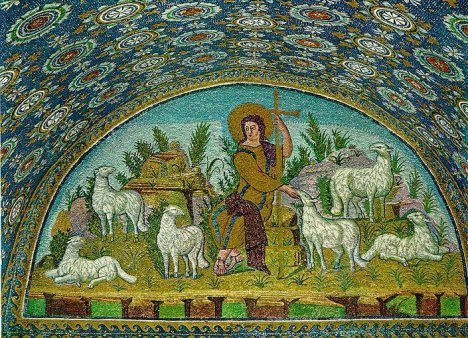
Driveneness comes from the Accuser and Oppressor of the Brethren, never from the Good Shepherd who gently leads us.

We are driven by Satan, but Christ, he leads us on minute by minute, through his gentle Spirit. We have but to follow.

* * *

And in our drivenness to grab the life we dream of through our own hard work, we forget that there is a far better way, without bleeding fingertips and hearts and lives.

The way of prayer, and trust, and leaving room for God to work his miracles.

We forget The One who Makes Dreams Come True, the weaver, who can weave a technicolour dreamcoat from scraps of discarded wool

The one who can give us our wild dreams, and add no sorrow to them.

The one who says, “Come ye apart from them and be separate.”

The one who says, “Honey Child, you are enough.

I like you just as you are.

Brilliant success won’t make me like you more.

Failure will only make me envelop you more.

In me, you are loved, complete.

In me, child, you are enough!

Turn your gaze to me, and let me fill up the hungry holes in your heart.

Eat me, drink me.

Turn to me when you sense Satan driving,

When you are tempted by striving,

And I will give you rest.”

Filed Under: In which I resolve to live by faith Tagged With: daring greatly, Drivenness, rest, scarcity thinking

Julia Cameron’s The Writing Diet

By Anita Mathias

'The Writing Diet'
I am reading Julia Cameron’s The Writing Diet.

Cameron says we over-eat and gain weight when “something is eating us.” A lot of emotion gets displaced onto food. We use food to feed our emotions and our minds and spirits, instead of our physical bodies.

She suggests simple tools to deal with this.

One is Morning Pages, setting the timer for an hour, and writing about your feelings, emotions, and whatever else—anything and everything—that crosses your mind.

The Morning Pages are thus a form of therapy.

Gradually, one “gets current” with one’s emotional life, frustrations, dreams, aspirations, and current failures, and frequently, she says, people actually do something about them.

Her other suggestion is a food journal: writing down everything one eats. Those who record what they eat lose twice as much as those who do not. I have lost 5.5 pounds this year. So if I had recorded it, I would have lost 11. Wow!

More importantly, Cameron suggests we record what we are feeling (other than true hunger) when we want to snack For instance, I’ve just had dinner, and felt the urge to snack right now. I am clearly not hungry. So? I identified the emotion as stress. Stress about what? The answer did not immediately come to mind. I think it’s about some paperwork I need to finish, and that I haven’t yet done any “real” writing today.

Being more mindful, calmer, more current with one’s inner life, writing yourself to the right size. You wouldn’t think a writer would need such admonitions, but this one does.

Filed Under: In which I get serious about health and diet and fitness and exercise (really) Tagged With: Journalling, Julia Cameron's The Writing Diet, Mindfulness, weight loss

A Very Long Pregnancy: Or, How to Live in the Land of Unfulfilled Promises and Deferred Dreams

By Anita Mathias


The Starry Night - Vincent van Gogh

 The early chapters of Abraham’s story make painful reading.

Again and again, through the decades God promises him a child: At the great oak of Moreh at Shechem, when he was 75; at Bethel, when he lets his nephew Lot have the more fertile land; and near the great trees of Mamre at Hebron, where “Abraham believes God, and it was credited to him as righteousness,” and God makes his great covenant with him.

And not just one child.

Abraham is promised descendants more numerous than the stars in the sky, and the sand in the seashore. God promises all the land his eyes can see to Abraham’s offspring.

Which for decades number precisely zero!

* * *

How does Abraham hear God’s great promises? In the same way we do. “The word of the Lord came to him” (Gen 15:4). He heard it in the secret places of his heart, a clear word, a clear certainty and surety.

And meanwhile in the “real” world: nothing happened. 

No pregnancy. Sarah and Abraham just grew older and older. Menopause came and went, and still he heard the insistent promise of descendants, as many as the stars in the sky.

* * *

Are you living in the in-between land of a sensed, longed-for, right destiny deferred? What should you do?

1) Remember God. Keep Believing.

Look up, God seemed to be saying, don’t look down.  Don’t look at your withering body, your declining strength. Look up at the skies, at infinity, which mirrors my power. Look up, for with me anything is possible.

2) Remember the world is full of goodness even while your dream gestates

The dream God has given you is just a sliver of the goodness God showers on you in the land of the living.

Even though Isaac was not born, Abraham had a beautiful wife, and success, which is satisfying: “sheep and cattle and male and female donkeys, menservants and maidservants and camels.” “He had become very wealthy in livestock and in silver and gold.”

While waiting for the sky above you to be filled with the promised stars, never fail daily to taste the goodness of the Lord, and thank him for it. The sea remains full. The palette of the sky changes minute by minute. The world bursts with beauty. People are fun! There is work and food and rest and companionship and friendship.

Never shrink your world to Isaac who will come when the time is right and you are right.

3) Prioritise your dream

The dream God has placed in your heart, and confirmed to you repeatedly in prayer, through the months and years…if you are sure it is of God, then step out in it.

Do what you have to do. Arrange your life in accordance with this dream.

The German poet, Rainer Maria Rilke writes “Ask yourself in the most silent hour of your night: must I write? Dig into yourself for a deep answer. And if this answer rings out in assent, if you meet this solemn question with a strong, simple “I must,” then build your life in accordance with this necessity; your whole life, even into its humblest and most indifferent hour, must become a sign and witness to this impulse. 

 My dream is to write. For me, believing God will mean not looking at my own tiredness, but leaning on him for strength.

Believing God has called me to write, I will need to highly prioritise it, which sadly, I often don’t do.   I will set my face towards my goal.

And this will mean pruning things which are not the work which God has given me to do.

Work on your dreams, believing that you are in the vine, that it sap rushes through you, that God wishes to enlarge your territory.

Work like one flowing in the river of God’s presence and power, relying on the power of the river in you and around you for strength. s

4 Conversely, Just Stand There. Quit Striving. Just Rest.

The work Abraham had to do for Isaac to be born was to believe.

To trust and rest in the goodness of God.

To believe God was powerful and could do what he promised.

To believe God was good and would what he promised

Abraham needed the decades of resting and trusting to be able to do what he had to do—to surrender Isaac to God, so that Isaac was wholly God’s, not Abraham’s at all, so that God could enter human history through this family.

Passive faith, just resting, was what God required of Abraham.

Don’t prematurely grab the ball of the dream out of God’s hands, accuse him of not working on it hard enough and fast enough, and go off and do things in your own power, without checking with him.

Doing things he has never told you to do, things he has never authorised: These are always a bad idea, though they may yield short term apparent fruits, like Ishmael. In the long run, they may delay and damage your dream because you are listening to the voices of fear and your own finite wisdom, instead of listening to God’s infinite wisdom.

How about you? Are you living in the in-between land of dreams deferred? Any survival tips? 


Filed Under: Genesis, In which I play in the fields of Scripture, In which I resolve to live by faith Tagged With: abraham, deferred dreams, dreams, Faith, Genesis, Goals, Isaac

St. Albans Church, Odense, Funen, Denmark.

By Anita Mathias

St. Albans Church, Odense, Denmark

St. Albans Church, Odense, Denmark

Well, Roy is working on the gargantuan task of organising 24 years of photographs of our lives together. Here are some images from a cool Church we visited last summer in Denmark. Irene broke her arm, and was shattered not be going to her Adventure camp in Lymington Rushmore, so, at a day’s notice, we decided to drive to magical Copenhagen. We stopped in Odense on the way. Here’s a companion post to the one on Odense Cathedral.

This lovely Neo-Gothic Catholic church built in the early 20th century is overshadowed by the nearby Odense Cathedral.  The exterior looks like a gingerbread castle, while the interior is in the usual simple white Danish style.  There are unusual decorations inside and outside– see below.  The images are presented in galleries.  To see them in greater detail, click, and use the arrow keys to navigate the gallery.

The Exterior

I was intrigued by the carved wooden panels showing the early history of Christianity in Denmark.  Especially the one illustrating the story of St. Boniface.  In Fritlar, Northern Germany, he started felling “Thor’s oak”, perhaps a site of pagan worship, while the towns people cursed him, threatening him with Thor’s vengeance.  However, after a few blows the mighty tree crashed to the ground, and Boniface was unharmed, the townspeople  were converted. (see wiki) for more details.

St. Alban (St. Alban’s Church, Odense)
Exterior decoration (St. Alban’s Church, Odense)
Murder of King Canute(?) (St. Alban’s Church, Odense)

Murder of St Boniface (?) (St. Alban’s Church, Odense)
St Boniface felling Thor’s oak (?) (St. Alban’s Church, Odense)
Arrival of Christianity to denmark. (St. Alban’s Church, Odense)

St. Alban’s church, showing the ceremonial door with carved panels with the history of Christianity in Denmak.(St. Alban’s Church, Odense)
Spire (St. Alban’s Church, Odense)
Section of spire. (St. Alban’s Church, Odense)

St. Albans Church, Odense, Denmark


Interior

On entering one is surprised at how small the church is.  Most of the exterior grandeur is a facade, with no church behind it. The interior has an unusual stained glass window, showing a crowned eye, above the ceremonial entryway at the back.  Under the crucifix there is a beam across the nave with the words “Christus Vincit. Christus Regnat. Christus Imperator” from the Gregorian Chant.

Interior, St. Albans Church, Odense, Denmark.
Crucifix. (St. Albans Church, Odense, Denmark)
Christus Vincit. Christus Regnat. Christus Imperat. (below the Crucifix)

Altar. (St. Albans Church, Odense, Denmark)
Altar, detail.
Stained glass window with the

Interesting brickwork. (St. Albans Church, Odense, Denmark)
Window above main entrance. (St. Albans Church, Odense, Denmark)
Unusual “crowned eye” stained glass. (St. Albans Church, Odense, Denmark)


Filed Under: In which I Travel and Dream Tagged With: Denmark, Odense, St. Alban's Church, Travel

On the Cwmbran Outpouring (or the 2013 Welsh Revival), The Wild Goose of the Holy Spirit & Waterfalls

By Anita Mathias

Peacock: The classic view.

The Celts called the Holy Spirit “Ah Geadh-Glas,” The Wild Goose.

And if you wanted to encounter this wild goose? Well, you absolutely could stay in your living room, leave the windows open, and hope he’ll fly in. The world (and Scripture) is full of miracles.

Or you could weed your garden, and hope he’ll land beside you. Strange things do happen. It’s an amazing world!

But if you’re desperate to see this wild goose, you’ll go where he is rumoured to be found, as we drove around the South Island of New Zealand to see Little Blue Penguins, Yellow-eyed Penguins, and Crested Penguins, and unforgettable albatrosses, soaring on the wings of the wind.

* * *

God is everywhere, omnipresent. And there is water everywhere, in the earth, in the air. But waterfalls—we don’t find them everywhere. To see them requires a long, generally arduous trek.

Yet, on our travels, I’ve gone out of my way to get to the Niagara Falls, the Rhine Falls in Switzerland, or the Voss Waterfall in Norway. As I have gone out of my way to see the paintings at the Louvre, the Prado, the Uffizi, and the Vatican.

* * *

And if I hear rumours of God manifesting himself in spots of earth, (the Greek word emphanisō ἐμφανίσω is also used of a peacock unfurling its feathers, essentially showing off) should I not travel like the Magi, bringing my gifts of worship, hope and humility? And love. Always love.

The Holy Spirit, a divine contagion, is often transmitted by the laying on of hands. Why he works in this way, I do not know. He’s like the wind: you don’t know where it’s going to blow. It does what it pleases.

I have been to Cwmbran twice and am delighted I went. I received healing from the mild adrenal fatigue which had plagued me (the consequence of overwork) and am reading rapidly again. And the issue of emotional or comfort eating, which has plagued me for decades—all gone. My weight has begun to drop off, relatively easily (though there are stones more to go 🙂 )

* * *

I had arranged to meet up with a journalist my second time at Cwmbran, and found myself thinking like a journalist. Asking myself, “Is this the real thing?”

I watched people swaying in ecstasy, arms in the air. People slain in the spirit (passing out!) as they were prayed for. People lost to the world amid whiffs of nicotine and well, sweet, heady scents reminiscent of the trains around Amsterdam. Drug addicts and former guests of Her Majesty’s Prisons are entering the Kingdom every day.

Yeah, it’s the real thing. And standing in line for prayer, I feel tearful about my stupidity, my supposition that religious experience familiar to me from experience, reading and church is “real,” and the way I wondered if what is wild, weird and from spiritual realms I know not of is not “real,”—a bit like those disciples from Ephesus who told Paul, “No, we have not even heard that there is a Holy Spirit.”

One can often find apt metaphors for spiritual experience from another private and secret realm: sexual experience. When Roy and I married, both old-fashionedly virginal, we bought Joy of Sex and More Joy of Sex. Yeah, that’s the kind of people we are: “Want to learn anything, buy a book.” Looking at some images we were: “Can’t imagine anyone being turned on by that!” And some images, well, turned either or both of us on!

It’s the same with spiritual experience—there’s the Book of Common Prayer; liturgy; sermons dripping with research, stupefying us beneath the weight of the word, and crazy charismatics, dancing in the spirit, slain in the spirit, prophesying in other tongues, or prophesying so wildly in your own that you might as well be speaking in other tongues, or producing wild manifestations of diamonds and angel feathers.  Hey, it’s different strokes for different folks. God made us all different, and just as no two couples share the same varieties of sexual experience, no two individuals share the same varieties of religious experience.

It is true that people eat lions and kangaroos and worms and frogs and dogs and snails, whether I have enjoy them or not. People enjoy God in ways we cannot fathom. Never judge someone else’s spiritual experience.

It’s all real; it’s all good. Come, join the feast. All dietary preferences will be catered for.

* * *

A revival is an amazing thing, God manifesting himself with such power that people come in every evening, as they have been doing at Cwmbran, to praise and worship and hear the word preached, the pleasures of worship and the word trumping television, and the internet.

Revivals die out, because who can sustain going to church six days a week? Pastors cannot; people cannot.

But while it lasts, it’s a beautiful thing.

So what Richard Taylor, Clyde Thomas, Kenny Brandie and all the earnest young pastors at Cwmbran will need to do to keep the glory down as long as possible will be two-fold.

Eat the word; keep close to God in humble repentance. Do not neglect private prayer for public worship.

And the second is counter-intuitive. Learning from the lessons of the past, keep grounded. Sleep well. Go on long walks. Keep physically fit. Take your days off. Don’t neglect family life. Beware of coveteousness.

Wild geese like sedge, aquatic roots, succulents and sprouts. However, if you provide them food they particularly enjoy: corn, rice, wheat and barley, you may tempt them to stay around longer. They may even make their home with you.

The Toronto Blessing began in 1994, the year my daughter Zoe was born; the presence of God is still strong there, 18 years later, and Zoe will be interning at Catch the Fire, Toronto, later this year.

I pray that the Wild Goose of the Holy Spirit may linger long in Cwmbran. Especially because it is so much closer than Toronto!

Filed Under: In which I chase the wild goose of the Holy Spirit Tagged With: 2013 Welsh Revival, cwmbran outpouring, Richard Taylor, Toronto Blessing, Wild Goose of the Holy Spirit

Bodnant Gardens, Wales, on a Perfect Late Spring Day

By Anita Mathias

Bodnant House reflected in the Large Pool.

Bodnant House reflected in the Large Pool.

(Guest post by Roy Mathias)

We were lucky to have perfect weather on our visit to Bodnant Gardens.  Bodnant Garden is on a hill.  At the top is the house, then on the terrace below is the Italian Garden, below that the large pond,  below that the Pin Mill (a smaller pond), and then there is walk through the woodland garden to the Dell, through which runs the river Hiraethlyn.

Here are some pictures organised into galleries. Click on any of the thumbnails to see a larger version, and use the arrows to see the rest of the gallery.

The Large Reflecting Pool [Read more…]

Filed Under: In which I Travel and Dream

  • « Previous Page
  • 1
  • …
  • 43
  • 44
  • 45
  • 46
  • 47
  • …
  • 279
  • Next Page »

Sign Up and Get a Free eBook!

Sign up to be emailed my blog posts (one a week) and get the ebook of "Holy Ground," my account of working with Mother Teresa.

Join 536 Other Readers

My Books

Rosaries, Reading, Secrets: A Catholic Childhood in India

Rosaries, Reading Secrets, B&N
USA

UK

Wandering Between Two Worlds: Essays on Faith and Art

Wandering Between Two Worlds
USA

UK

Francesco, Artist of Florence: The Man Who Gave Too Much

Francesco, Artist of Florence
US

UK

The Story of Dirk Willems

The Story of Dirk Willems
US

UK

My Latest Meditation

Anita Mathias: About Me

Anita Mathias

Read my blog on Facebook

Follow me on Twitter

Follow @anitamathias1

Recent Posts

  • At the Cross, God Forgives Us Completely
  • Using God’s Gift of Our Talents: A Path to Joy and Abundance
  • The Kingdom of God is Here Already, Yet Not Yet Here
  • All Those Who Exalt Themselves Will Be Humbled & the Humble Will Be Exalted
  • Christ’s Great Golden Triad to Guide Our Actions and Decisions
  • How Jesus Dealt With Hostility and Enemies
  • Do Not Be Afraid, but Do Be Prudent
  • For Scoundrels, Scallywags, and Rascals—Christ Came
  • How to Lead an Extremely Significant Life
  • Don’t Walk Away From Jesus, but if You Do, He Still Looks at You and Loves You
Premier Digital Awards 2015 - Finalist - Blogger of the year
Runner Up Christian Media Awards 2014 - Tweeter of the year

Categories

What I’m Reading


Wolf Hall
Hilary Mantel

Wolf Hall --  Amazon.com
Amazon.com

Amazon.co.uk

Silence and Honey Cakes:
The Wisdom Of The Desert
Rowan Williams

Silence and Honey Cakes --  Amazon.com
Amazon.com

Amazon.co.uk

The Long Loneliness:
The Autobiography of the Legendary Catholic Social Activist
Dorothy Day

The Long Loneliness --  Amazon.com
Amazon.com

Amazon.co.uk

Country Girl
Edna O'Brien

Country Girl  - Amazon.com
Amazon.com

Amazon.co.uk

Archive by month

My Latest Five Podcast Meditations

INSTAGRAM

anita.mathias

My memoir: Rosaries, Reading, Secrets https://amzn.to/42xgL9t
Oxford, England. Writer, memoirist, podcaster, blogger, Biblical meditation teacher, mum

Well, hello friends! Breaking radio silence to let Well, hello friends! Breaking radio silence to let you know that I have taped a meditation for you on Christ’s famous Parable of the Talents in Matthew 25. https://anitamathias.com/2025/11/05/using-gods-gift-of-our-talents-a-path-to-joy-and-abundance/
Here you are, click the play button in the blog post for a brief meditation, and some moments of peace, and, perhaps, inspiration in your day 🙂
Hi Friends, I have taped a meditation; do listen a Hi Friends, I have taped a meditation; do listen at this link: https://anitamathias.com/2025/04/08/the-kingdom-of-god-is-here-already-yet-not-yet-here-2/
It’s on the Kingdom of God, of which Christ so often spoke, which is here already—a mysterious, shimmering internal palace in which, in lightning flashes, we experience peace and joy, and yet, of course, not yet fully here. We sense the rainbowed presence of Christ in the song which pulses through creation. Christ strolls into our rooms with his wisdom and guidance, and things change. Our prayers are answered; we are healed; our hearts are strangely warmed. Sometimes.
And yet, we also experience evil within & all around us. Our own sin which can shatter our peace and the trajectory of our lives. And the sins of the world—its greed, dishonesty and environmental destruction.
But in this broken world, we still experience the glory of creation; “coincidences” which accelerate once we start praying, and shalom which envelops us like sudden sunshine. The portals into this Kingdom include repentance, gratitude, meditative breathing, and absolute surrender.
The Kingdom of God is here already. We can experience its beauty, peace and joy today through the presence of the Holy Spirit. But yet, since, in the Apostle Paul’s words, we do not struggle only “against flesh and blood, but against the rulers, against the unseen powers of this dark world and against the spiritual forces of evil,” its fullness still lingers…
Our daughter Zoe was ordained into the Church of E Our daughter Zoe was ordained into the Church of England in June. I have been on a social media break… but … better late than never. Enjoy!
First picture has my sister, Shalini, who kindly flew in from the US. Our lovely cousins Anthony and Sarah flank Zoe in the next picture.
The Bishop of London, Sarah Mullaly, ordained Zoe. You can see her praying that Zoe will be filled with the Holy Spirit!!
And here’s a meditation I’ve recorded, which you might enjoy. The link is also in my profile
https://anitamathias.com/2024/11/07/all-those-who-exalt-themselves-will-be-humbled-the-humble-will-be-exalted/
I have taped a meditation on Jesus statement in Ma I have taped a meditation on Jesus statement in Matthew 23, “For those who exalt themselves will be humbled, and those who humble themselves will be exalted.”
Do listen here. https://anitamathias.com/2024/11/07/all-those-who-exalt-themselves-will-be-humbled-the-humble-will-be-exalted/
Link also in bio.
And so, Jesus states a law of life. Those who broadcast their amazingness will be humbled, since God dislikes—scorns that, as much as people do.  For to trumpet our success, wealth, brilliance, giftedness or popularity is to get distracted from our life’s purpose into worthless activity. Those who love power, who are sure they know best, and who must be the best, will eventually be humbled by God and life. For their focus has shifted from loving God, doing good work, and being a blessing to their family, friends, and the world towards impressing others, being enviable, perhaps famous. These things are houses built on sand, which will crumble when hammered by the waves of old age, infirmity or adversity. 
God resists the proud, Scripture tells us—those who crave the admiration and power which is His alone. So how do we resist pride? We slow down, so that we realise (and repent) when sheer pride sparks our allergies to people, our enmities, our determination to have our own way, or our grandiose ego-driven goals, and ambitions. Once we stop chasing limelight, a great quietness steals over our lives. We no longer need the drug of continual achievement, or to share images of glittering travel, parties, prizes or friends. We just enjoy them quietly. My life is for itself & not for a spectacle, Emerson wrote. And, as Jesus advises, we quit sharp-elbowing ourselves to sit with the shiniest people, but are content to hang out with ordinary people; and then, as Jesus said, we will inevitably, eventually, be summoned higher to the sparkling conversation we craved. 
One day, every knee will bow before the gentle lamb who was slain, now seated on the throne. We will all be silent before him. Let us live gently then, our eyes on Christ, continually asking for his power, his Spirit, and his direction, moving, dancing, in the direction that we sense him move.
Link to new podcast in Bio https://anitamathias.co Link to new podcast in Bio https://anitamathias.com/2024/02/20/how-jesus-dealt-with-hostility-and-enemies/
3 days before his death, Jesus rampages through the commercialised temple, overturning the tables of moneychangers. Who gave you the authority to do these things? his outraged adversaries ask. And Jesus shows us how to answer hostile questions. Slow down. Breathe. Quick arrow prayers!
Your enemies have no power over your life that your Father has not permitted them. Ask your Father for wisdom, remembering: Questions do not need to be answered. Are these questioners worthy of the treasures of your heart? Or would that be feeding pearls to hungry pigs, who might instead devour you?
Questions can contain pitfalls, traps, nooses. Jesus directly answered just three of the 183 questions he was asked, refusing to answer some; answering others with a good question.
But how do we get the inner calm and wisdom to recognise
and sidestep entrapping questions? Long before the day of
testing, practice slow, easy breathing, and tune in to the frequency of the Father. There’s no record of Jesus running, rushing, getting stressed, or lacking peace. He never spoke on his own, he told us, without checking in with the Father. So, no foolish, ill-judged statements. Breathing in the wisdom of the Father beside and within him, he, unintimidated, traps the trappers.
Wisdom begins with training ourselves to slow down and ask
the Father for guidance. Then our calm minds, made perceptive, will help us recognise danger and trick questions, even those coated in flattery, and sidestep them or refuse to answer.
We practice tuning in to heavenly wisdom by practising–asking God questions, and then listening for his answers about the best way to do simple things…organise a home or write. Then, we build upwards, asking for wisdom in more complex things.
Listening for the voice of God before we speak, and asking for a filling of the Spirit, which Jesus calls streams of living water within us, will give us wisdom to know what to say, which, frequently, is nothing at all. It will quieten us with the silence of God, which sings through the world, through sun and stars, sky and flowers.
Especially for @ samheckt Some very imperfect pi Especially for @ samheckt 
Some very imperfect pictures of my labradoodle Merry, and golden retriever Pippi.
And since, I’m on social media, if you are the meditating type, here’s a scriptural meditation on not being afraid, while being prudent. https://anitamathias.com/2024/01/03/do-not-be-afraid-but-do-be-prudent/
A new podcast. Link in bio https://anitamathias.c A new podcast. Link in bio
https://anitamathias.com/2024/01/03/do-not-be-afraid-but-do-be-prudent/
Do Not Be Afraid, but Do Be Prudent
“Do not be afraid,” a dream-angel tells Joseph, to marry Mary, who’s pregnant, though a virgin, for in our magical, God-invaded world, the Spirit has placed God in her. Call the baby Jesus, or The Lord saves, for he will drag people free from the chokehold of their sins.
And Joseph is not afraid. And the angel was right, for a star rose, signalling a new King of the Jews. Astrologers followed it, threatening King Herod, whose chief priests recounted Micah’s 600-year-old prophecy: the Messiah would be born in Bethlehem, as Jesus had just been, while his parents from Nazareth registered for Augustus Caesar’s census of the entire Roman world. 
The Magi worshipped the baby, offering gold. And shepherds came, told by an angel of joy: that the Messiah, a saviour from all that oppresses, had just been born.
Then, suddenly, the dream-angel warned: Flee with the child to Egypt. For Herod plans to kill this baby, forever-King.
Do not be afraid, but still flee? Become a refugee? But lightning-bolt coincidences verified the angel’s first words: The magi with gold for the flight. Shepherds
telling of angels singing of coming inner peace. Joseph flees.
What’s the difference between fear and prudence? Fear is being frozen or panicked by imaginary what-ifs. It tenses our bodies; strains health, sleep and relationships; makes us stingy with ourselves & others; leads to overwork, & time wasted doing pointless things for fear of people’s opinions.
Prudence is wisdom-using our experience & spiritual discernment as we battle the demonic forces of this dark world, in Paul’s phrase.It’s fighting with divinely powerful weapons: truth, righteousness, faith, Scripture & prayer, while surrendering our thoughts to Christ. 
So let’s act prudently, wisely & bravely, silencing fear, while remaining alert to God’s guidance, delivered through inner peace or intuitions of danger and wrongness, our spiritual senses tuned to the Spirit’s “No,” his “Slow,” his “Go,” as cautious as a serpent, protected, while being as gentle as a lamb among wolves.
Link to post with podcast link in Bio or https://a Link to post with podcast link in Bio or https://anitamathias.com/2023/09/22/dont-walk-away-from-jesus-but-if-you-do-he-still-looks-at-you-and-loves-you/
Jesus came from a Kingdom of voluntary gentleness, in which
Christ, the Lion of Judah, stands at the centre of the throne in the guise of a lamb, looking as if it had been slain. No wonder his disciples struggled with his counter-cultural values. Oh, and we too!
The mother of the Apostles James and John, asks Jesus for a favour—that once He became King, her sons got the most important, prestigious seats at court, on his right and left. And the other ten, who would have liked the fame, glory, power,limelight and honour themselves are indignant and threatened.
Oh-oh, Jesus says. Who gets five talents, who gets one,
who gets great wealth and success, who doesn’t–that the
Father controls. Don’t waste your one precious and fleeting
life seeking to lord it over others or boss them around.
But, in his wry kindness, he offers the ambitious twelve
and us something better than the second or third place.
He tells us how to actually be the most important person to
others at work, in our friend group, social circle, or church:Use your talents, gifts, and energy to bless others.
And we instinctively know Jesus is right. The greatest people in our lives are the kind people who invested in us, guided us and whose wise, radiant words are engraved on our hearts.
Wanting to sit with the cleverest, most successful, most famous people is the path of restlessness and discontent. The competition is vast. But seek to see people, to listen intently, to be kind, to empathise, and doors fling wide open for you, you rare thing!
The greatest person is the one who serves, Jesus says. Serves by using the one, two, or five talents God has given us to bless others, by finding a place where our deep gladness and the world’s deep hunger meet. By writing which is a blessing, hospitality, walking with a sad friend, tidying a house.
And that is the only greatness worth having. That you yourself,your life and your work are a blessing to others. That the love and wisdom God pours into you lives in people’s hearts and minds, a blessing
https://anitamathias.com/.../dont-walk-away-from-j https://anitamathias.com/.../dont-walk-away-from-jesus.../
Sharing this podcast I recorded last week. LINK IN BIO
So Jesus makes a beautiful offer to the earnest, moral young man who came to him, seeking a spiritual life. Remarkably, the young man claims that he has kept all the commandments from his youth, including the command to love one’s neighbour as oneself, a statement Jesus does not challenge.
The challenge Jesus does offers him, however, the man cannot accept—to sell his vast possessions, give the money to the poor, and follow Jesus encumbered.
He leaves, grieving, and Jesus looks at him, loves him, and famously observes that it’s easier for a camel to squeeze through the eye of a needle than for a rich person to live in the world of wonders which is living under Christ’s kingship, guidance and protection. 
He reassures his dismayed disciples, however, that with God even the treasure-burdened can squeeze into God’s kingdom, “for with God, all things are possible.”
Following him would quite literally mean walking into a world of daily wonders, and immensely rich conversation, walking through Israel, Lebanon, Syria, and Jordan, quite impossible to do with suitcases and backpacks laden with treasure. 
For what would we reject God’s specific, internally heard whisper or directive, a micro-call? That is the idol which currently grips and possesses us. 
Not all of us have great riches, nor is money everyone’s greatest temptation—it can be success, fame, universal esteem, you name it…
But, since with God all things are possible, even those who waver in their pursuit of God can still experience him in fits and snatches, find our spirits singing on a walk or during worship in church, or find our hearts strangely warmed by Scripture, and, sometimes, even “see” Christ stand before us. 
For Christ looks at us, Christ loves us, and says, “With God, all things are possible,” even we, the flawed, entering his beautiful Kingdom.
Follow on Instagram

© 2026 Dreaming Beneath the Spires · All Rights Reserved. · Cookie Policy · Privacy Policy