Anita Mathias: Dreaming Beneath the Spires

Anita Mathias's Blog on Faith and Art

  • Home
  • My Books
  • Meditations
  • Essays
  • Contact
  • About Me

In Which I Tell You about My Memoir-in-Progress and My Writing Process (Monday Blog Hop)

By Anita Mathias

Displaying 9781781394175_cvr_front_only.jpg

I have been tagged by Claire Musters to write about my work in progress, and my writing process.

What I am working on

I work on my blog, Dreaming Beneath the Spires, on the principle of the Minimum Effective Dose. What is alive grows, so I post just enough to keep my blog growing, month on month. About 2-3 posts a week.

I am wrapping up a memoir—Mind has Mountains which I have worked on sporadically since 1991, but abandoned for months, and sometimes years at a time!!

However, I have a first draft of the entire thing with several chapters published, anthologized even, winning several prizes (including a $20,000 NEA!)

I have had leading editors and agents interested on both sides of the Atlantic, but things fell apart at the stage of the proposal. They did not feel the ones I wrote were saleable.

A savvy New York agent showed a savvy New York editor the book, and they commented,  “It’s as if Anita is at odds with the material. She is fighting the story.” Interestingly, though both were secular, they felt I was fighting the spiritual memoir that my life and spirit were demanding I write so as to write the literary memoir I wanted to write!

I wanted to write a memoir of an Indian Catholic childhood, ending at 18, a memoir inspired by Mary McCarthy’s  Memories of a Catholic Girlhood, Annie Dillard’s  An American Childhood and Patricia Hampl’s A Romantic Education. It had three sections—

I My life as a Catholic child in the Zorashtrian company town of Jamshedpur up to the age of 9 when I was expelled from the local school because of my mischievousness.

(And holidays with grandparents in Catholic enclaves of Bombay and Mangalore).


Aitwal Deepti's photo.

The Chapel at St. Mary’s Convent, Nainital

II Boarding school in St. Mary’s Convent, Nainital in the Himalayas, a boarding school run by Irish and German nuns at which I was rebellious, and an atheist.

III Working with Mother Teresa for two years, after an abrupt religious conversion at 17.

I wanted to write a series of essays on passions and experiences and people, like Vladimir Nabokov’s great memoir Speak, Memory: An Autobiography Revisited but the world has changed, and speeded up. People want story, not literary essays. (Not that I greatly care about literary fashions. I truly believe that self-publishing, in the first instance, is an option for sui generis books, provided one can do some marketing—which perhaps I can with God’s help.)

But I think God loves story–and created us to love good stories. The whole Bible tells a shapely story, of our simultaneous craving for God and desire to do our own thing, and how we needed a Saviour to change our hearts from within, and bear the horrid consequences of the crack in our natures.

The editors and agents who have looked at it had a point. I was stopping the story mid-story.

I talked a bit about my book to editor Amy Boucher Pye last week, and we thought about what the story of my life really was.

I suddenly realized that for me to write a solely literary memoir like Nabokov’s Speak, Memory: An Autobiography Revisited or Annie Dillard’s Pilgrim at Tinker Creek, ending at age 18 would be at odds with my story. It would leave out the two most important directional decisions of my life–deciding my life’s path would be that of a writer (aged 21) and a decision (aged 27) that I was going to align my life with Christ.

Most days I do live in Jesus, am hidden in Jesus.  The story of my life is a spiritual one.

So I need another three chapters: being an undergraduate at Oxford when my faith wobbled to extinction.  Doing an MFA in the US when I tried to do life without God, making a religion of poetry (and achievement), a la James Joyce. Recommitting my life to Jesus, aged 27, when I realized that I realized that I really, really hadn’t made much of my life in the last six years without Jesus.

So the memoir would have more mess, more complication, but also more truth.

While talking to Amy, I came up with a new working strapline: A rebellious girl finds peace in Christ. Ah-ha!

And I thought of another model, C. S. Lewis’s Surprised by Joy: The Shape of My Early Life which takes Lewis up to age 32, when he became “the most dejected and reluctant convert in all England,” (but what creativity and joy his conversion opened up for him!).

So I found a meta-narrative for my story. A full circle narrative: a thoroughly rebellious Catholic believer ends as thoroughly “mere Christian,” at peace–a narrative winding through the Zoroashtrian town of Jamshedpur, boarding school in Nainital; Mother Teresa in Calcutta; Oxford, England; Columbus, Ohio…

How does my work differ from others in its genre?

Well, I am a restless writer and everything I have published is in a different genre.

Wandering Between Two Worlds: Essays on Faith and Art traces my life and the evolution of my faith and struggles in the form of essays. It deals with dichotomies—East and West, Writing and Prayer, Domesticities and Art, Roots and Wings.

Francesco, Artist of Florence: The Man Who Gave Too Much, which has sold the best of all my books, is a children’s book, dealing with art, Florence, The Renaissance, beauty, good-heartedness, weakness, and the importance of forgiving oneself.

The Meek Shall Inherit the Earth is a reflection on that Beatitude, theological writing for everywoman.

The Church That Had Too Much is an odd book, the record of a dream , and I found myself writing it in the shape and rhythms of poetry.

And Mind has Mountains, of course, will be a memoir!

Why do I write what I do?

I write on whatever grabs my interest, and my writing is a way to work out my ideas or share whatever fascinates me.

How does my writing process work?

My writing process with a blog: dictate it to my iPhone when I get the idea. Think out my post. Write it pretty close to its final form. Revise it a couple of times on screen. Print it out. Re-arrange and cut paragraphs. Try to cut at least 10% of the words. Do five iterations from first draft to final draft. Hit publish.

For the memoir, I have been writing thoughts and memories as they surface in thematically organized chapters. I choose the chapter I am longing to write, and then write up episodes in the order of desire to tell about them. I revise each chapter eight times, taking less and less time at each iteration, tightening it each time, cutting a minimum of 10 %, and entire paragraphs which are of interest to me, but perhaps not to you.

I post chapters on my blog as they are done.

When I finish the entire book, I suspect I will revise it another 5-8 times at least until I have shaken off every word I can, until the prose feels as inevitable and flawless as poetry, or least is as good as I can make it.

I am taking the liberty of tagging Carolyn Weber, Amy Boucher Pye and  Michael Wenham  to answer the same three questions.

Filed Under: In which I explore writing and blogging and creativity, random, Writing and Blogging Tagged With: Blogging and book-writing, memoir, writing process

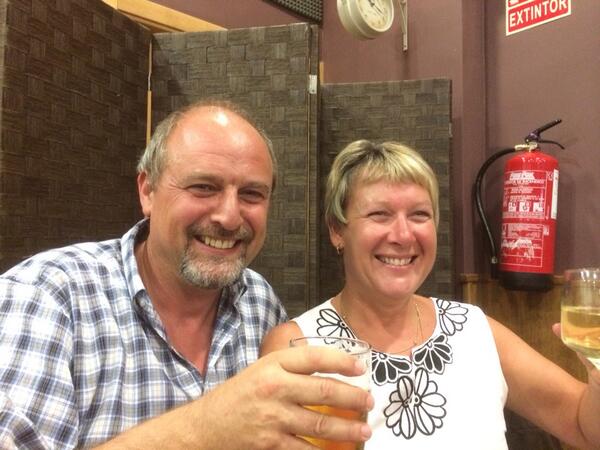
Dear Diary—What I have Done, Learnt, Enjoyed. At El Palmeral Retreat Centre, Costa Blanca, Spain

By Anita Mathias

Embedded image permalink
 El Palmeral Retreat Centre
 Monday 5th May

1 In which Michelle is encouraged by how ordinary I am—“ A year ago my sister, Janae, told me to follow this lady named Anita Mathias on Twitter. My sister is cool, so I did what she said. And I’m glad I did. Anita has been a dependable source of refreshment and peace on my otherwise maniacal Twitter feed. Her writing is filled with spiritual insights and joy — but what I love the most about her is how ordinary she seems. We’re so used to following these wildly hilarious and profoundly daring personalities, none of which are very much like me. That Anita is just herself gives me hope.”

Oh and read on for Michelle Schmidt’s review of my first children’s book, Francesco, Artist of Florence: The Man Who Gave Too Much

Tuesday May 6th

Embedded image permalink

1 Walked yesterday in the Curate’s Garden in Elche–full of date trees, the foundation of many economies from Morocco to North Africa. Apparently, Arab sailors took dates on long sea voyages for vitamin C (as the seaman from Genoa took pesto!).

Amazed at the varieties of cactus plants–God’s beautiful abundance scattered in deserts and mountain valleys whether there is anyone to appreciate them or not.

God creates beauty for the sheer joy of it, because that is his nature.

I now blog like that. There is something mysterious about blogging—one cannot predict the response to a piece, and often the pieces we just toss off do the best. If one senses a call to blog, you just continue faithfully, writing down the vision and making it plain, writing what you hear God say to you, and leave the reception of the work to him.

2 I was dropped off at the garden for two hours. It was relatively small and I walked around it several times. I was going back and forth on several issues, but just walking alone, sitting and thinking–it is amazing how clarity came.

I was inexplicably burnt out last month. Burn-out, like joy, picks its own timetable, but walking alone here, in an arid region of Spain is restoring joy to my heart.  I find myself thinking more clearly, praying spontaneously and joyfully, in tongues.

Wednesday 7th May

1 I have seen the abbreviation IHS on dozens of Catholics cards and bookmarks, and it was embroidered on the altar cloths of the chapel. It’s Greek. It is the first three letters of the Greek spelling of Jesus,   ιησους which is transliterated as “ihsous.” And essentially means Jesus.

2 Paprika, I have just thought of it as a spice, but, apparently, it is powdered red peppers, or chili peppers.

3 Our British hosts told us a chilling story of a car-jacking. They were driving in Valencia, when they suddenly got a flat tire–or so they thought. They pulled to the side of the road, and a couple of men on a motorcycle came up ostensibly to help them. When they got back into the car, her handbag was gone, with her money, credit cards, driving licence, housekeys etc. So if you get a flat in Spain and get help, know where your handbag is.

Embedded image permalink

4 Our host, Julie Jowett, cooks delicious Spanish regional food–which I really enjoy–Patata Bravas, tender Moorish lamb, Cordero Murono, Tortilla Espanola, and  Patatas a lo Pobre 

4 The Costa Blanca is very much British ex-pat country. Our hosts were British, as were their neighbours who are farming a small pomegranate grove. My elderly seatmate on my flight is farming an orange grove. The water table is 8 feet below ground level, and they have been encouraged not to water the orange trees, but let the root delve deep into the water table.

Thursday 8th

1 On earrings and inheritances.

Displaying photo.JPG

We were looking at the Prodigal Son who blew his inheritance.

When he gets back, he gets everything his heart needs–acceptance, belonging, lavishness—a home, a rich robe, a ring, a good meal. What he does not get back is the inheritance he squandered. The Father tells the older son, “Everything I have is yours.” The elder son is not stiffed; the prodigal son does not get the older brother’s share of the inheritance, but still gets all that is necessary for his complete joy.

There is truth to that. The years and time we have blown–through sin, laziness, self-pity, anger–we have blown. But if we turn to God, our hearts can still find the fullness of joy.

I share this thought  with the group, fiddle with my earrings, and realise I have lost my great-grandmother’s earrings, rubies, with a dangly pearl and ruby bit, which I have worn every day for thirty years and never lost. I am upset and retrace my steps, bedroom

God has a sense of humour and he’s a no-bullshit God. I just said that what is lost is lost, but in God we can still find everything our heart desires. Was it theory or do I really believe it?

Life brings reverses, but I really do believe we get to choose how happy we are, or how sad!   After a bit more looking, and a bit of mourning, I decide to join St. Teresa of Avila in her prayer,

Let nothing disturb thee,
Nothing affright thee
All things are passing;
God never changeth;
Who God possesseth
In nothing is wanting;
God alone sufficeth.

A verse which has saved my life a few times is “Do not let your hearts be troubled, neither let them be afraid,” (John 14:27). And each time I reminded myself of this either what I dreaded did not happen (Mark Twain: I’ve had a lot of worries in my life, most of which never happened) –OR it did happen, and I had strength to cope with it, and good came out of that dark plot twist.

 So I decided that I would let nothing disturb me, but continue being happy. And God smiled—and perhaps said, Okay honey, I just wanted to reinforce the lessons I have been teaching you–and soon after that, I found the 3 missing pieces scattered around my large suite. Thank you Jesus.

I had prayed. Yes, and it felt like magic happened. And it would have been magic too if I had felt peace in the loss. God is good like that.

Friday 9th May

We went out for tapas last night—delicious: Fried cubed goat’s cheese, fried mushroom and bacon, grated potatoes and sausage, tender pork, roasted wild garlic…

Filed Under: random Tagged With: Dear Diary, El Palmeral Retreat Centre, Spain

On Extra Baggage, Making Peace with Mistakes and Cutting Emotional Losses

By Anita Mathias

St James the Great

So I fly on EasyJet to the Costa Blanca on a retreat at El Palmeral –though a normal heritage airline like BA would have cost the same, the timings are more convenient.

 Though this may change as I grow older, I normally don’t put a high premium on great comfort for short flights. I am a cat, I find a bubble of internal peace and internal comfort in most circumstances (though I don’t do well with claustrophobic surroundings, or being in the middle seat.)

 So I have the choice of paying £17 to take 3 extra kilos in my checked luggage, or taking a generous carry-on for free. Which I would need to buy. But we already own 4 carry-ons for 4 people, and solving problems and desires by throwing money at them leads to clutter.

 So I pay the £17, but when I pack, it’s over the permissible 23 kg. So I stuff all the extra books into my backpack, books which I treat as road maps in my life’s pilgrimage—a spiritual book I am reading for inspiration; a literary memoir I am reading to write better; a practical memoir I am reading to live better etc.; my Bible, my journal etc. Kilos worth!

It is a cumbersome weight– and I am sad as I stagger through the cavernous halls of Gatwick with my spiritual, literary and intellectual aspirations on my back.

Yeah, I made the wrong decision. The £17 for extra luggage was money thrown away with nothing to show for it. I should have bought the biggest allowable cabin with wheels because we’d eventually wear out our luggage, or give it to the kids, one of whom will be leaving to university this autumn.

I am trying a 12 step programme, Overeaters Anonymous (which I have not yet got the hang of). It includes praying and asking God for wisdom over every decision, eating and otherwise. And I am frustrated because I did pray, but somehow still made the wrong decision!!

My husband Roy and I love to get things right every time, and neither of us are gentle with ourselves or each other when we get things wrong. I reproach myself as I take each heavy step, a mile probably, staggering under the weight of knowledge!

* * *

And then I remember that I had decided to be a positive girl, since life is short.

Mistakes and loss and waste are part of being human—part of being limited finite beings. We will grow wiser, God willing and make better decisions—but since only God is all-wise, all of us will make mistakes, and experience loss and waste  as long as we live. Alas!!

Socrates, who was one of the wisest men ever known, made mistakes. When his enemies–the envious, the ignorant and the threatened—sentenced him to execution by drinking hemlock, his friends pleaded with him to flee.

But he refused. If he fled Athens, he knew he would ask pointed, inconvenient questions wherever he went, and so get into trouble wherever he went. He had voluntarily chosen to live in Athens and submit himself to the social contract. To flee would negate his life’s choices to date. And he was a philosopher, and believed a true philosopher should not fear death.

So despite all his friends weeping around him, he chose physical death rather than a choice which negated all he had taught and valued when physically alive—a choice many martyrs make.

He drank the hemlock. It was an honourable decision, but a wrong one, most people would say–his friends then, and his admirers now.

* * *

Okay, let’s look at a spiritual giant. Luke records “a prophet named Agabus   took Paul’s belt, bound his own hands and feet, and said, “Thus says the Holy Spirit, ‘So shall the Jews at Jerusalem bind the man who owns this belt, and deliver him into the hands of the Gentiles.’”

12 Now when we heard these things, both we and those from that place pleaded with him not to go up to Jerusalem. 13 Then Paul answered, “What do you mean by weeping and breaking my heart? For I am ready not only to be bound, but also to die at Jerusalem for the name of the Lord Jesus”.

Paul does not say that he has prayed and been led to make this decision. It appears to be a unilateral, and perhaps hot-headed decision.

He is indeed arrested, and, I believe mistakenly and impulsively, appeals to Caesar.   Who happened to be Nero. Big mistake. He is confined to the Mamertine Dungeoun. He will never be free again.

Should he have listened to the prophet who gave him a warning from the Holy Spirit; and listened to the counsel of his Christian friends? I believe so.

Spiritual giants can make mistakes.

But in the Mamertine dungeon, he wrote letters which comfort me when I feel a little bit crazy. As they have comforted billions of Christians through the ages.

God can redeem anything. It’s as if God says, “Uh-oh, plot twist. Paul should have listened to wiser counsel. And Anita made a mistake. Now let me take those crooked lines, the shattered pieces of Plan A, and make of them Plan B even more beautiful than Plan A, if they will co-operate. Because I love creating new things.”

* * *

Even  intellectual giants like Socrates and spiritual giants like Paul get things wrong.

So what’s the best course of action once you’ve realized that you have made a mistake?

Cut your emotional losses. Quickly.

Thank God for the good stuff. In this case, for the strength to walk a mile or so with a heavy backpack. For the fact that I’ve learned it’s foolish to pay for extra luggage. Best get the biggest allowable carry-on, and stuff it with books. And, definitely, pack light in future.

* * *

As my life accelerates (two of my prayers for this year were acceleration and exponential—was I crazy?) I am doing more, and am naturally getting busier. Much goes right, but there is a greater potential for mistakes and loss,  just as a car on the motorway is more likely to get scraped than a car in the garage.

And I am learning not to allow what goes wrong to spoil a day or an hour. In Cambodia, as I was rushing, the zip of my suitcase broke, so I left it unlocked in my hotel room, with—yuck, my wallet in it!!– with all my extra cash. I had $70 taken from my wallet, and was annoyed, but decided to shrug it off and not let it spoil a very interesting trip.

 Yes, that’s the way to live, cut your emotional losses if you can’t cut your physical losses, and go through your day smilingly.

* * *

When I was 17, I wanted to be a nun, and joined Mother Teresa’s convent. Her three cardinal spiritual values were absolute surrender, loving trust and cheerfulness.

I keep coming back to them– loving trust and cheerfulness when you make mistakes. Learn what you have to learn, be grateful for the goodness that remains despite your mistakes, and go trudging on–with the biggest smile you can muster!

Filed Under: Applying my heart unto wisdom, In which I Travel and Dream Tagged With: Paul, socrates, Travel, wisdom

Dear Journal:  This week’s amusements, embarrassments, adventures and discoveries. (From El Palmeral Retreat Centre, Costa Blanca, Spain)  

By Anita Mathias

Embedded image permalink
At El Palmeral Retreat Centre, Costa Blanca, Spain, we were invited to help ourselves to fruit from this tree, a cross between an apricot and kiwi fruit (in taste)
Embedded image permalink
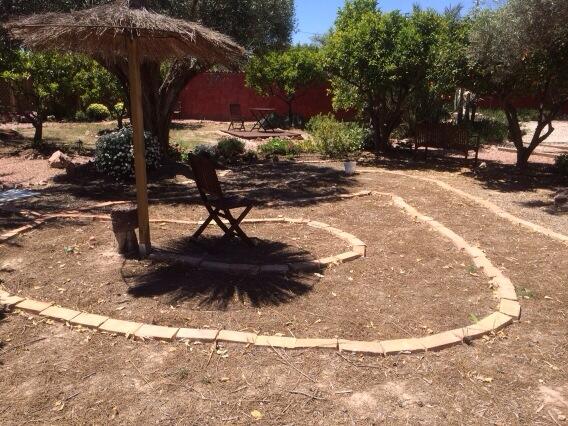
 Labyrinth, El Palmeral Retreat Centre, Costa Blanca, Spain

Wednesday 30th April

1 Micha Boyett asks, “Do we really have something worthwhile to say every day?”

Hmm. I believe God does have something worthwhile to say every day.  A. W. Tozer writes,  “God is forever seeking to speak to His creation. The whole Bible supports the idea. God is speaking. Not God spoke, but God is speaking. He is by His nature continuously articulate. He fills the world with His speaking Voice.”

And I believe God says something worthwhile to us every day. And perhaps if we listen to him, and “write down the vision and make it plain,” we will have something worthwhile to say every day.

Which is not to say that we need to say it!! I aim to blog every second day, or even every third day.

2 I am listening to Galatians as I walk. It takes me half a mile of walking at my puppy’s pace to listen to the entire book. I have listened it to in the New Living Translation a few times, in the NIV a few times, and in the Message. The Message is my favourite translation of Galatians. I have listened to it several times, and can’t get enough of it. So beautiful.

3 George Monbiot on British subsidies under David Cameron for grouse moors and shotguns for pheasant hunts (£50 for a gun licence, while the background checks cost £196). Iniquitous.

Thursday May 1

1 Meaningless said the preacher, all is meaningless. (Ecclesiastes). Except loving God and finding joy in your work, he concludes.

More and more, as I observe things that people lavish their intensity on, I realise that they are simply inconsequential and meaningless.

And I need to remember that about the things I get intense about. Love God and love your work and find joy in it–there is a lot to be said for the solution of the Preacher of Ecclesiastes!

Friday May 2nd

1 This makes me so upset and angry. The true story of Philomena—how Irish nuns sold children to the highest US bidder, without the knowledge or permission of their parents. (From the Guardian)

2 Cool veggies to grow if you have very little space  I have 1.5 acre, but am amazed at how much can be grown compactly!

3 Bible Study with my small group. Jesus and Nicodemus.

In the Old Testament, Isaiah saw a vision of God, high and lifted up and the train of his robe filled the temple with glory.

Jesus was also high and lifted up–in shame, humiliation and disgrace. As he said, like Moses lifted up the bronze serpent, so he had to be lifted up to give life.

One of the many ironies in the Gospel of John–the meaning of what it is to be high and lifted up is changed. The one who serves is high and lifted up, not necessarily in people’s eyes, but in deed and truth.

Jesus was high and lifted up on the cross to bear the punishment for our sins. I believe that, of course.

But was it more? Was he somehow redeeming suffering? Saying it’s part of life. A pathway to truth and reality. No one is as real as one in pain.

For long before the Fall, before sin, there was darkness and chaos, and God created darkness as well as sunshine, and pronounced both good.

Saturday May 3rd

1 My trip to Cambodia, and coming back with a virus took a lot out of me. I was feeling tired, intellectually, spiritually, physically and emotionally. It was hard to settle down and get things done. I realized needed to get away. Just an hour after realizing this,  Amy Boucher Pye had a place available massively discounted on her retreat in Spain. I took it.

2 On my way to Costa Blanca, Spain. I have flown out of Heathrow and Gatwick so often now that I have the routine down pat. Check your luggage. Get asked if you have packed any guns, daggers, bombs, petrol canisters. I switch off and default to my smiley good girl persona, so when she shows me a picture of guns, daggers, bombs and asked if I’ve packed them, with a huge grin, I unthinkingly say “YES.”

She stares. Then laughs. “The correct answer is NO,” she informs me laughing.  Okay, no then. I don’t know if the TSA would be as merciful!

2 Irene used to ask me “Mum, if it turned out I was a cyborg, and you realized you were bringing up a Cyborg all these years, should you still love me?”

 Well, security scanners think I am a cyborg. I have never met one I did not set off. It must be my 3 rings, my dangling earrings, my bangles and necklace. I wear the same inherited jewellery every day and never take it off–or else I would lose it.

An elderly British man is similarly body-searched, I suppose for guns, bombs, daggers and petrol. He sits next to me and says, “They’ve put us through an ordeal and a half.” I am delighted. I haven’t heard the phrase “and a half,” since I was in boarding school, and assumed it was an Indian expression. Apparently not.

3 Talk about Primitive Methodism and Wesleyan Methodism with a Methodist minister here at the retreat centre I am at, El Palmeral, Costa Blanca, Spain.

4 The landscape of the Costa Blanca. Arid chaparral, with groves of pomegranates and lemons, and herds of sheep. It’s a denuded landscape, not much grass to be seen, and that may partly to do with the sheep who, according to George Monbiot cause environmental devastation everywhere by their grazing habits.

Sunday May 4

1 Love the sung liturgy from the Northumbria Community at El Palmeral

2 Funny how I often accentuate words wrongly after 13 years in England! There are five feisty Yorkshire women here, and the talk turned to gardening. I asked them if they knew of Incredible Edible Todmorden, the West Yorkshire town which grows fruit and vegetables in every available bit of land. This is my dream for my own garden, and we will probably gradually achieve some of it, but at the present, my time and energy is going into writing.

Anyway, all of them, keen gardeners, say they have never heard of Todmorden. I frown. Impossible. Describe it, spell it. Oh, they all know it well, but it’s pronounced TodMRDN. I said ToddMorden. We thought you were asking about a person, one said. My bad! 🙂

3 I pray first thing in the morning, and my day feels odd if I do not do so. But several people say, the best time to write is early in the morning. 

Filed Under: random Tagged With: Dear Diary, El Palmeral Retreat Centre, Spain

Praying in Churches, Mosques, Temples and Synagogues

By Anita Mathias

The Blue Mosque, Istanbul


As a curious anthropologist, a photographer, and a discreet and respectful observer, I love visiting mosques, temples, synagogues, and churches, and often use the quietness and sacred space to pray. (And, as a schoolgirl, have not been above accepting the delicious sweets offered by the priests in Hindu temples and Sikh gurudwaras.)

I observed during a holiday in Turkey, the utter devotion with which Muslims bow, pray, prostrate themselves. I have watched Jews bow before the Wailing Wall in Jerusalem, slipping prayer requests into the cracks of the wall. I have seen those same wide, longing, hopeful eyes of faith in Buddhist temples, Sikh gurudwaras, Roman Catholic churches in Italy, and Protestant churches in England.

* * *

What happens when I pray? Well, often–coincidences accelerate; I change; other people change; circumstances change. Sometimes, miracles happen. Magic, an element of surprise and unpredictability, is introduced into dreary, impermeable, hopeless reality. Once I’ve started praying, with faith, hope, love, diligence, persistence (and a list!), I feel that anything can happen—and it often does!!

If I prayed, and nothing happened, ever, would I continue praying? Perhaps not; the cognitive dissonance would be too hard to bear.

And would Muslims, Hindus, Sikhs and Jews continue praying if their prayers were never answered? Perhaps not!

* * *

God, God, the compassionate and gracious God, slow to anger, abounding in love and faithfulness was God’s self-description to Moses (Ex 34:6). And would he only answer the prayers of those whose parents had taught them to call him Jesus, or Jehovah, but not the prayers of those taught to call him Allah, or Krishna or Rama?

I do not believe that. I believe God graciously inclines his heart to all who call upon him whatever name and language they use.

* * *

God has a yearning heart of compassion for all peoples. He feels pride and affection for all creation. “Lift up your eyes and look to the heavens: Who created all these? He who brings out the starry host one by one, and calls each by name.” Isaiah 40:26.

“Alpha Centauri. You’re beautiful. I made you. Twinkle, twinkle, little Sirius. You’re lovely. I made you. And you, Andromeda burning bright in the darkness of the night. I made you,” I can imagine God saying.

And will he not also delight in the humans he has made and fashioned in darkness of their mother’s womb, the area almost out of the control of our hope and ambition? Will he not answer their prayers, whether they think of him as Jesus, Yahweh, Allah or Rama? I believe he will.

* * *

Jonah cannot understand God showing mercy on Nineveh (the capital of Assyria), Israel’s great enemy, whose wickedness and violence has come up before God.

But God replies, “Nineveh has more than a hundred and twenty thousand people who cannot tell their right hand from their left, and many cattle as well. Should I not be concerned about that great city?” (Jonah 4:10).

And will he not be concerned about those who pray to a God they call Yahweh, Allah, Rama, Vishnu, Jesus in synagogues, mosques, temples, gurudwaras, and churches? Does he not often grant their requests?

Is that why prayer has been a feature of every known human civilization, from primitive distant civilizations who build ziggurats, sun temples, Wats and Parthenons to the Unknown God they knew as numinous and beyond our ken to hyper-connected us, who with a million ideas available at our finger-tips, still reach through the heavens to someone beyond ourselves, who knows everything–and everything about us–and still loves us. Whom I call Jesus.

Filed Under: random

Dear Diary: What I’ve Thought, Read, Done, and Been Grateful for This Week

By Anita Mathias

Merry

Merry

Grateful for

Monday

1 Merry, my labradoodle’s  wagging tail and sweet nature.

Jake and Merry

Jake and Merry

2 Jake, my 11 year old Border Collie, tolerating Merry.

3 Blog stats picking up steadily.

4 Seeing a heron on my walk.

5 Three mile walk/run from Sandford on Thames to Iffley Lock and back, barely tired

7 Green and Black Butterscotch chocolate

8 My sponsor at Overeater’s Anonymous, who is, sadly, but naturally, anonymous.

10 The process of trying to surrender my eating and fitness to Christ

11 Christ–how he brings clarity and light to everything.

12 Coconut Curry Lentil Soup made by Roy for lunch, and asparagus soup with coconut milk made by Zoe for dinner

13 Kettle crisps with salt and pepper

14 This: Donald Miller writes

Being known by strangers isn’t going to make anybody fulfilled. In fact, it can make life much more confusing and complicated. But finding a role in life that helps others is actually healing.

Having somebody come up to me and say they loved my book is nice, don’t get me wrong, but having somebody come up and say they sold their house, quit their job or adopted a child because of Creating Your Life Plan is fulfilling to me on a much deeper level.

I wish I would have known that when I was younger.

Here’s a thought: What if our desire to be known and validated and even famous isn’t a misappropriated desire to actually be people of significant impact, which doesn’t require fame at all?

15 Sold 20 copies today of Francesco, Artist of Florence: The Man Who Gave Too Much in the US.

Tuesday

Thought–I was influenced by WHM’s Sonship as a young Christian. World Harvest Mission changes its name to Serge. Why would someone lose 30  years of name-recognition, for an obscure, trendy title that means nothing to most people, and sounds like a clothing store, with no hints of its Christian origins?

Thankful for

1 Image of God as a river of love, flowing through me to others

2 The opulence of our new dinner service, Royal Doulton Old Country Roses

Inline images 2

3 Shelly Miller hosting my piece.

4 Asking Jesus for light on my perennial diet dilemma. What to eat to be strong and healthy and shed some weight? I hear him say that he was an omnivore–eating fish, lamb, wheat, corn. He feasted. So I shall be an omnivore, but mainly eat fruit and vegetables, beans and pulses. And not use food to satisfy emotional needs–just as Jesus did not : “My food is to do the will of God, and to accomplish his purposes.”

Also there is no record of Jesus exercising for the sake of exercise. He got his exercise in the course of ministry. Perhaps I should walk with friends rather than have coffee with them. Yes! And exercise (also) in the course of domestic ministry–gardening, housework…

Jack Deere: The answer to all our struggles is a Person (not a philosophy or a theory or research or method)

4 I am exhausted, but clinging to God as a sea-anemone to a rock in a tidal pool.
5 I am exhausted, but waiting like the eagle on the edge of its nest, for the winds of the spirit to fresh energy into me.
6 What would a woman who is deeply loved by God eat for breakfast? Or lunch, or dinner?
7 My friend, Michael Wenham ponders the thorny issue of Christian gay marriage, and even quotes me!
8 A Simple Habit that Could Change Your Life: I owe my theology & my ministry to this simple habit: Looking at the Book  : John Piper
9 Facebook’s first incarnation was a nasty site called “Hot or Not?” Well, it’s nice there’s a divine trio & a few humans who like us either way.
Wednesday April 30
1 Woke early with (illegal) construction next door + puppy yelping. Too tired to pray so trying what my daughter Zoe calls, “sloaking.” Soaking prayer–resting in the awareness of God’s love for you, surrendering everything to him, and placing it in his hands–and if you fall asleep, you fall asleep. It is sloaking. Woke refreshed from 2 hours of sloaking. Not sure if I did fall asleep or not, but I am refreshed.
2 In which Eric Metaxas, in a dream, experiences Jesus as a gold fish 
This golden fish was ixthys—Jesus Christ Son of God Our Savior. God had something more for me: this was his Son, a living Person, Jesus Christ. And I realized in the dream that he was real and had come from the other side and now I was holding him there in the bright sunlight and at long last my search was over. And I was flooded with joy.

When I went to work the next day, I said that I had accepted Jesus. And when I spoke those words I was flooded with the same joy I had had inside the dream. And I’ve had that joy with me for the past 25 years.

3 Very stimulating coffee with Timothy Willard whose book Home Behind the Sun: Connect with God in the Brilliance of the Everyday is blowing up on Amazon, top 20 Christian books of all time, and top 1000 of all books sold on Amazon!

4 Going to Spain this weekend for a retreat led by Amy Boucher Pye on living as the Beloved. An idea close to my heart!

5 I am writing this “What I am thankful for” post because I have had an episode of low spirits. Not quite depression, just low spirits. And I have learned that depression is a friend. It forces you to burrow ever deeper into Christ for answers. It might force you to revise your life. The low energy forces you to drop accidentals, and concentrate on essentials. I usually come out of a spell of over-work induced burn-out with my faith stronger as I cling more tenaciously to Jesus, and get to know him better.

Filed Under: random Tagged With: Dear Diary

On Trusting our Work to God: Moving Upwards by Standing Still

By Anita Mathias

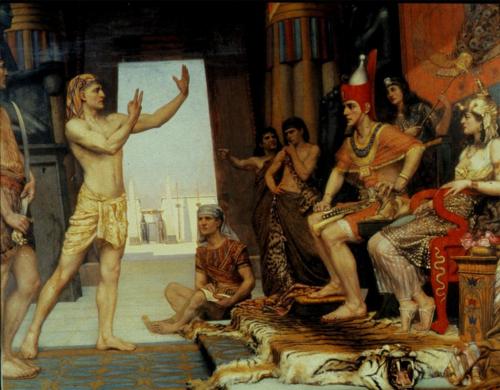
Reginald Arthur, 1893, Joseph before Pharaoh

Joseph is seventeen when he sees his sheaf stand up and his brothers’ sheaves bow down. When he sees the sun, moon and eleven stars bow to him.

* * *

 Interestingly, God shows him his destiny, the end of his days, but not what he needs to do to get there.

And that is because there is nothing Joseph needs to do to get there. God will do it all. Joseph merely needs to cooperate as God forms the character necessary to bear “the weight of glory.”

* * *

 Our lives are full of ironies: There are always two stories going on: what we think is happening, and what God knows is happening, what He is doing.

What Joseph thought was happening was pits and the pits—betrayal, slavery, false accusation, prison, being forgotten by those he helped.

What God knew was happening: Joseph was developing administrative experience, integrity, trustworthiness, gifts of dream interpretation, people skills. He was being prepared for greatness in the very years he thought were wasted.

* * *

 Slavery to Potiphar, Pharaoh’s captain of the guard, leads to Joseph being put in charge of his household, thus developing the extraordinary administrative gifts he probably didn’t even know he possessed.

Unjust accusation and confinement to a dungeon leads to him running the prison, and meeting those in Pharaoh’s circles, learning how Egyptians speak, dress, behave and think.

And what was paramount, he develops character—loyalty, diligence, organization, sexual purity. He sheds self-pity and any pridefulness over his spiritual gifts. He learns the great lesson of trusting God.

And through an improbable series of events—in line with his seminal gift–God moves him upwards.

* * *

 There is so much stress in our world on hustling and networking. Perhaps too much?

Ah, the time we would save if we did our work, our eyes on God, without incessant networking with one another, hoping for a hand up, and a leg up, discovery, and a big break. Cannot God give us all these things as we do the work? I do believe he can and he will, when the time is right.

None of the spiritual giants in the Bible networked and hustled to get the word out about themselves. Can you imagine Jeremiah or Isaiah or Ezekiel making nice so people would put in a good word for them with Ahab or the current wicked king?

And what good would that have done them? Their work, their power, their career, their specialness came from this strange, insistent thing that kept happening to them. They heard God speak. And they wrote with pens of fire: “Thus saith the Lord.”

Transcribing what they heard God say made their words special, and God ensured that their words endured. They kept their eyes on God. God promoted them.

Is it possible today in the twenty-first century to do the work and leave the rest to God? To let God organize our careers?

* * *

All those dreadful things that happened to Joseph were, in fact, God organizing his life. God organized that Joseph was bought by Potiphar and learnt to run a country house. God organized that Joseph was falsely accused and learnt to run a prison. God organized that Joseph met Pharaoh’s cupbearer in prison, and validated Joseph by giving him the correct interpretation of the cupbearer’s dream, thus arranging for him to meet Pharaoh.

I know many people worried about their blogging or writing careers, worried about getting the word out about themselves.

But what if we just did our work, listened to Jesus, and wrote what we heard–could we not trust him to get our words out to whom they might bless? A city set on a hill cannot be hidden.

This is something I am increasingly trying to do.

I have come to the place where I have no energy to network, nor the temperament to flatter, to pretend to like what I do not like, to maintain relationships for what good the other person might do me or my career. And how could God possibly bless such relationships?

I know this is the way the world works, I know this is the way business is done, but might there not be a more excellent way, of loving relationship, not networking; of trust, not hustle? A way of being in which we cannot do better than to leave our careers to him? I do believe it.


I am grateful to Shelly Miller  for hosting the first version of this on “Redemption’s Beauty.”

Filed Under: Genesis Tagged With: career, Genesis, Joseph, Trust, writing

When, After a Long Drought, Words Come like a Sudden Flood: Lessons from Blake, Milton, Rilke, and Julia Ward Howe

By Anita Mathias

File:William Blake Milton in His Old Age 1816-1820.jpg
William Blake, Milton

I love The Battle Hymn of the Republic by Julia Ward Howe. The rhythm, the evocative lyrics, the allusions, the beautiful language create a loveliness greater than the sum of its parts.
Mine eyes have seen the glory of the coming of the Lord:
He is trampling out the vintage where the grapes of wrath are stored;
He hath loosed the fateful lightning of His terrible swift sword:
His truth is marching on.
 Glory, glory, hallelujah!
His truth is marching on.
I have seen Him in the watch-fires of a hundred circling camps,
They have builded Him an altar in the evening dews and damps;
I can read His righteous sentence by the dim and flaring lamps:
His day is marching on.
He has sounded forth the trumpet that shall never call retreat;
He is sifting out the hearts of men before His judgment-seat:
Oh, be swift, my soul, to answer Him! Be jubilant, my feet!
Our God is marching on.
In the beauty of the lilies, Christ was born across the sea,
With a glory in His bosom that transfigures you and me:
As He died to make men holy, let us die to make men free,
While God is marching on.
(Chorus)
He is coming like the glory of the morning on the wave,
He is Wisdom to the mighty, He is Succour to the brave,
So the world shall be His footstool, and the soul of Time His slave,
Our God is marching on.
(Chorus)
On the night of November 18, 1861, Julia Ward Howe awoke with the words of the song in her mind and in near darkness wrote the verses to the “Battle Hymn of the Republic.”
Howe wrote, “I went to bed that night as usual, and slept, according to my wont, quite soundly. I awoke in the gray of the morning twilight; and as I lay waiting for the dawn, the long lines of the desired poem began to twine themselves in my mind. Having thought out all the stanzas, I said to myself, ‘I must get up and write these verses down, lest I fall asleep again and forget them.’ So, with a sudden effort, I sprang out of bed, and found in the dimness an old stump of a pen which I remembered to have used the day before. I scrawled the verses almost without looking at the paper.”
                                                      * * *
Wow! To whom are these mysterious gifts of creativity handed out?
Generally to those who have long trained themselves waiting for the angel. “If the angel comes, it will be because you have wooed him by your grim resolve to be always a beginner,” Rainer Maria Rilke muses.
Rilke suffered for most of his life from torturing writers’ block. Beauty, images, art, ideas, filled his mind. But he was blocked; he was unable to express them in poetry.
Rilke said that as he was walking, depressed, by the cliffs near Duino Castle, he heard a voice call out to him, “Wer, wenn ich schriee, hörte mich denn aus der Engel Ordnungen?” which became his famous Duino Elegy, (Who, if I cried out, would hear me among the angelic orders?).
Who, if I cried out, would hear me among the angels’ hierarchies?
And even if one of them pressed me suddenly against his heart:
I would be consumed in that overwhelming existence.
His writers’ block was broken, and the Duino Elegies flowed forth in a torrent.
* * *
Milton claimed that he was visited nightly by an angel or muse who dictated sections of Paradise Lost to him. In the morning, his daughters found the blind poet, already up, neatly dressed, and waiting to be “milked” of the verses he dictated to them.
At the age of 14, Milton had decided to become one of the great poets in English. His goal: “To write something which the world would not willingly let die.” He spent his youth in arduous preparation, so much so that by the time he began writing Paradise Lost at the age of 50, he was blind (the result of the years from his early teens spent reading late into the night by candlelight); had an brain incomparably stocked with poetry and learning, but had written nothing substantial.
But the angel came, and he did indeed write something that the world would not willingly let die. My father had memorised the opening of Paradise Lost, and I remember the opening sentence with a thrill of pleasure. It’s so beautiful, so majestic, that reading it now, after some years, I almost cry with pleasure,
    Of Man’s first disobedience, and the fruit
    Of that forbidden tree whose mortal taste
    Brought death into the world and all our woe,
    With loss of Eden, till one greater Man
    Restore us and regain the blissful seat,
    Sing, Heav’nly Muse, that on the secret top
    Of Oreb, or of Sinai, didst inspire
    That shepherd who first taught the chosen seed
    In the beginning how the heav’ns and earth
    Rose out of Chaos; or if Sion hill
   Delight thee more, and Siloa’s brook that flow’d
   Fast by the oracle of God, I thence
   Invoke thy aid to my advent’rous song,
   That with no middle flight intends to soar
   Above th’ Aonian mount, while it pursues
   Things unattempted yet in prose or rhyme.
   And chiefly thou, O Spirit, that dost prefer
    Before all temples th’ upright heart and pure,
    Instruct me, for thou know’st; thou from the first
    Wast present, and, with mighty wings outspread,
    Dove-like sat’st brooding on the vast Abyss
    And mad’st it pregnant: what in me is dark
    Illumine, what is low raise and support,
    That to the highth of this great argument
    I may assert Eternal Providence
    And justify the ways of God to men.
Paradise Lost comes as if dictated by an angel, but it comes to the blind poet who had spent his life preparing to write it. The Duino  Elegies were “overheard” by the poet who also spent a life of sacrifice in preparation.
Poetic inspiration comes suddenly, as if the unconscious has suddenly ripened, to those who have laboured long  and hard to receive it.
In contrast is William Blake, an untaught visionary poet who was more in touch with Heaven than with our world.  At the age of four, the young artist “saw God” when God “put his head to the window”, At the age of eight or ten in Peckham, Blake claimed to have seen “a tree filled with angels, bright angelic wings bespangling every bough like stars.”
He wrote prolifically during a brief interlude in Felpham. Blake writes “Felpham is a sweet place for Study, because it is more spiritual than London. Heaven opens here on all sides her golden Gates; her windows are not obstructed by vapours; voices of Celestial inhabitants are more distinctly heard, & their forms more distinctly seen.” (This is also true of the little village outside Oxford, where I live).
It was while he lived in Felpham, Sussex, that Blake wrote the perfect Jerusalem.

And did those feet in ancient time.
Walk upon England’s mountains green:
And was the holy Lamb of God,
On England’s pleasant pastures seen!

And did the Countenance Divine,
Shine forth upon our clouded hills?
And was Jerusalem builded here,
Among these dark Satanic Mills?

Bring me my Bow of burning gold;
Bring me my Arrows of desire:
Bring me my Spear: O clouds unfold!
Bring me my Chariot of fire!

I will not cease from Mental Fight,
Nor shall my Sword sleep in my hand:
Till we have built Jerusalem,

In England’s green & pleasant Land

(


Filed Under: In which I explore writing and blogging and creativity Tagged With: Blake, Creativity, Julia Ward Howe, Milton, Rilke

  • « Previous Page
  • 1
  • …
  • 22
  • 23
  • 24
  • 25
  • 26
  • …
  • 279
  • Next Page »

Sign Up and Get a Free eBook!

Sign up to be emailed my blog posts (one a week) and get the ebook of "Holy Ground," my account of working with Mother Teresa.

Join 536 Other Readers

My Books

Rosaries, Reading, Secrets: A Catholic Childhood in India

Rosaries, Reading Secrets, B&N
USA

UK

Wandering Between Two Worlds: Essays on Faith and Art

Wandering Between Two Worlds
USA

UK

Francesco, Artist of Florence: The Man Who Gave Too Much

Francesco, Artist of Florence
US

UK

The Story of Dirk Willems

The Story of Dirk Willems
US

UK

My Latest Meditation

Anita Mathias: About Me

Anita Mathias

Read my blog on Facebook

Follow me on Twitter

Follow @anitamathias1

Recent Posts

  • At the Cross, God Forgives Us Completely
  • Using God’s Gift of Our Talents: A Path to Joy and Abundance
  • The Kingdom of God is Here Already, Yet Not Yet Here
  • All Those Who Exalt Themselves Will Be Humbled & the Humble Will Be Exalted
  • Christ’s Great Golden Triad to Guide Our Actions and Decisions
  • How Jesus Dealt With Hostility and Enemies
  • Do Not Be Afraid, but Do Be Prudent
  • For Scoundrels, Scallywags, and Rascals—Christ Came
  • How to Lead an Extremely Significant Life
  • Don’t Walk Away From Jesus, but if You Do, He Still Looks at You and Loves You
Premier Digital Awards 2015 - Finalist - Blogger of the year
Runner Up Christian Media Awards 2014 - Tweeter of the year

Categories

What I’m Reading


Wolf Hall
Hilary Mantel

Wolf Hall --  Amazon.com
Amazon.com

Amazon.co.uk

Silence and Honey Cakes:
The Wisdom Of The Desert
Rowan Williams

Silence and Honey Cakes --  Amazon.com
Amazon.com

Amazon.co.uk

The Long Loneliness:
The Autobiography of the Legendary Catholic Social Activist
Dorothy Day

The Long Loneliness --  Amazon.com
Amazon.com

Amazon.co.uk

Country Girl
Edna O'Brien

Country Girl  - Amazon.com
Amazon.com

Amazon.co.uk

Archive by month

My Latest Five Podcast Meditations

INSTAGRAM

anita.mathias

My memoir: Rosaries, Reading, Secrets https://amzn.to/42xgL9t
Oxford, England. Writer, memoirist, podcaster, blogger, Biblical meditation teacher, mum

Well, hello friends! Breaking radio silence to let Well, hello friends! Breaking radio silence to let you know that I have taped a meditation for you on Christ’s famous Parable of the Talents in Matthew 25. https://anitamathias.com/2025/11/05/using-gods-gift-of-our-talents-a-path-to-joy-and-abundance/
Here you are, click the play button in the blog post for a brief meditation, and some moments of peace, and, perhaps, inspiration in your day 🙂
Hi Friends, I have taped a meditation; do listen a Hi Friends, I have taped a meditation; do listen at this link: https://anitamathias.com/2025/04/08/the-kingdom-of-god-is-here-already-yet-not-yet-here-2/
It’s on the Kingdom of God, of which Christ so often spoke, which is here already—a mysterious, shimmering internal palace in which, in lightning flashes, we experience peace and joy, and yet, of course, not yet fully here. We sense the rainbowed presence of Christ in the song which pulses through creation. Christ strolls into our rooms with his wisdom and guidance, and things change. Our prayers are answered; we are healed; our hearts are strangely warmed. Sometimes.
And yet, we also experience evil within & all around us. Our own sin which can shatter our peace and the trajectory of our lives. And the sins of the world—its greed, dishonesty and environmental destruction.
But in this broken world, we still experience the glory of creation; “coincidences” which accelerate once we start praying, and shalom which envelops us like sudden sunshine. The portals into this Kingdom include repentance, gratitude, meditative breathing, and absolute surrender.
The Kingdom of God is here already. We can experience its beauty, peace and joy today through the presence of the Holy Spirit. But yet, since, in the Apostle Paul’s words, we do not struggle only “against flesh and blood, but against the rulers, against the unseen powers of this dark world and against the spiritual forces of evil,” its fullness still lingers…
Our daughter Zoe was ordained into the Church of E Our daughter Zoe was ordained into the Church of England in June. I have been on a social media break… but … better late than never. Enjoy!
First picture has my sister, Shalini, who kindly flew in from the US. Our lovely cousins Anthony and Sarah flank Zoe in the next picture.
The Bishop of London, Sarah Mullaly, ordained Zoe. You can see her praying that Zoe will be filled with the Holy Spirit!!
And here’s a meditation I’ve recorded, which you might enjoy. The link is also in my profile
https://anitamathias.com/2024/11/07/all-those-who-exalt-themselves-will-be-humbled-the-humble-will-be-exalted/
I have taped a meditation on Jesus statement in Ma I have taped a meditation on Jesus statement in Matthew 23, “For those who exalt themselves will be humbled, and those who humble themselves will be exalted.”
Do listen here. https://anitamathias.com/2024/11/07/all-those-who-exalt-themselves-will-be-humbled-the-humble-will-be-exalted/
Link also in bio.
And so, Jesus states a law of life. Those who broadcast their amazingness will be humbled, since God dislikes—scorns that, as much as people do.  For to trumpet our success, wealth, brilliance, giftedness or popularity is to get distracted from our life’s purpose into worthless activity. Those who love power, who are sure they know best, and who must be the best, will eventually be humbled by God and life. For their focus has shifted from loving God, doing good work, and being a blessing to their family, friends, and the world towards impressing others, being enviable, perhaps famous. These things are houses built on sand, which will crumble when hammered by the waves of old age, infirmity or adversity. 
God resists the proud, Scripture tells us—those who crave the admiration and power which is His alone. So how do we resist pride? We slow down, so that we realise (and repent) when sheer pride sparks our allergies to people, our enmities, our determination to have our own way, or our grandiose ego-driven goals, and ambitions. Once we stop chasing limelight, a great quietness steals over our lives. We no longer need the drug of continual achievement, or to share images of glittering travel, parties, prizes or friends. We just enjoy them quietly. My life is for itself & not for a spectacle, Emerson wrote. And, as Jesus advises, we quit sharp-elbowing ourselves to sit with the shiniest people, but are content to hang out with ordinary people; and then, as Jesus said, we will inevitably, eventually, be summoned higher to the sparkling conversation we craved. 
One day, every knee will bow before the gentle lamb who was slain, now seated on the throne. We will all be silent before him. Let us live gently then, our eyes on Christ, continually asking for his power, his Spirit, and his direction, moving, dancing, in the direction that we sense him move.
Link to new podcast in Bio https://anitamathias.co Link to new podcast in Bio https://anitamathias.com/2024/02/20/how-jesus-dealt-with-hostility-and-enemies/
3 days before his death, Jesus rampages through the commercialised temple, overturning the tables of moneychangers. Who gave you the authority to do these things? his outraged adversaries ask. And Jesus shows us how to answer hostile questions. Slow down. Breathe. Quick arrow prayers!
Your enemies have no power over your life that your Father has not permitted them. Ask your Father for wisdom, remembering: Questions do not need to be answered. Are these questioners worthy of the treasures of your heart? Or would that be feeding pearls to hungry pigs, who might instead devour you?
Questions can contain pitfalls, traps, nooses. Jesus directly answered just three of the 183 questions he was asked, refusing to answer some; answering others with a good question.
But how do we get the inner calm and wisdom to recognise
and sidestep entrapping questions? Long before the day of
testing, practice slow, easy breathing, and tune in to the frequency of the Father. There’s no record of Jesus running, rushing, getting stressed, or lacking peace. He never spoke on his own, he told us, without checking in with the Father. So, no foolish, ill-judged statements. Breathing in the wisdom of the Father beside and within him, he, unintimidated, traps the trappers.
Wisdom begins with training ourselves to slow down and ask
the Father for guidance. Then our calm minds, made perceptive, will help us recognise danger and trick questions, even those coated in flattery, and sidestep them or refuse to answer.
We practice tuning in to heavenly wisdom by practising–asking God questions, and then listening for his answers about the best way to do simple things…organise a home or write. Then, we build upwards, asking for wisdom in more complex things.
Listening for the voice of God before we speak, and asking for a filling of the Spirit, which Jesus calls streams of living water within us, will give us wisdom to know what to say, which, frequently, is nothing at all. It will quieten us with the silence of God, which sings through the world, through sun and stars, sky and flowers.
Especially for @ samheckt Some very imperfect pi Especially for @ samheckt 
Some very imperfect pictures of my labradoodle Merry, and golden retriever Pippi.
And since, I’m on social media, if you are the meditating type, here’s a scriptural meditation on not being afraid, while being prudent. https://anitamathias.com/2024/01/03/do-not-be-afraid-but-do-be-prudent/
A new podcast. Link in bio https://anitamathias.c A new podcast. Link in bio
https://anitamathias.com/2024/01/03/do-not-be-afraid-but-do-be-prudent/
Do Not Be Afraid, but Do Be Prudent
“Do not be afraid,” a dream-angel tells Joseph, to marry Mary, who’s pregnant, though a virgin, for in our magical, God-invaded world, the Spirit has placed God in her. Call the baby Jesus, or The Lord saves, for he will drag people free from the chokehold of their sins.
And Joseph is not afraid. And the angel was right, for a star rose, signalling a new King of the Jews. Astrologers followed it, threatening King Herod, whose chief priests recounted Micah’s 600-year-old prophecy: the Messiah would be born in Bethlehem, as Jesus had just been, while his parents from Nazareth registered for Augustus Caesar’s census of the entire Roman world. 
The Magi worshipped the baby, offering gold. And shepherds came, told by an angel of joy: that the Messiah, a saviour from all that oppresses, had just been born.
Then, suddenly, the dream-angel warned: Flee with the child to Egypt. For Herod plans to kill this baby, forever-King.
Do not be afraid, but still flee? Become a refugee? But lightning-bolt coincidences verified the angel’s first words: The magi with gold for the flight. Shepherds
telling of angels singing of coming inner peace. Joseph flees.
What’s the difference between fear and prudence? Fear is being frozen or panicked by imaginary what-ifs. It tenses our bodies; strains health, sleep and relationships; makes us stingy with ourselves & others; leads to overwork, & time wasted doing pointless things for fear of people’s opinions.
Prudence is wisdom-using our experience & spiritual discernment as we battle the demonic forces of this dark world, in Paul’s phrase.It’s fighting with divinely powerful weapons: truth, righteousness, faith, Scripture & prayer, while surrendering our thoughts to Christ. 
So let’s act prudently, wisely & bravely, silencing fear, while remaining alert to God’s guidance, delivered through inner peace or intuitions of danger and wrongness, our spiritual senses tuned to the Spirit’s “No,” his “Slow,” his “Go,” as cautious as a serpent, protected, while being as gentle as a lamb among wolves.
Link to post with podcast link in Bio or https://a Link to post with podcast link in Bio or https://anitamathias.com/2023/09/22/dont-walk-away-from-jesus-but-if-you-do-he-still-looks-at-you-and-loves-you/
Jesus came from a Kingdom of voluntary gentleness, in which
Christ, the Lion of Judah, stands at the centre of the throne in the guise of a lamb, looking as if it had been slain. No wonder his disciples struggled with his counter-cultural values. Oh, and we too!
The mother of the Apostles James and John, asks Jesus for a favour—that once He became King, her sons got the most important, prestigious seats at court, on his right and left. And the other ten, who would have liked the fame, glory, power,limelight and honour themselves are indignant and threatened.
Oh-oh, Jesus says. Who gets five talents, who gets one,
who gets great wealth and success, who doesn’t–that the
Father controls. Don’t waste your one precious and fleeting
life seeking to lord it over others or boss them around.
But, in his wry kindness, he offers the ambitious twelve
and us something better than the second or third place.
He tells us how to actually be the most important person to
others at work, in our friend group, social circle, or church:Use your talents, gifts, and energy to bless others.
And we instinctively know Jesus is right. The greatest people in our lives are the kind people who invested in us, guided us and whose wise, radiant words are engraved on our hearts.
Wanting to sit with the cleverest, most successful, most famous people is the path of restlessness and discontent. The competition is vast. But seek to see people, to listen intently, to be kind, to empathise, and doors fling wide open for you, you rare thing!
The greatest person is the one who serves, Jesus says. Serves by using the one, two, or five talents God has given us to bless others, by finding a place where our deep gladness and the world’s deep hunger meet. By writing which is a blessing, hospitality, walking with a sad friend, tidying a house.
And that is the only greatness worth having. That you yourself,your life and your work are a blessing to others. That the love and wisdom God pours into you lives in people’s hearts and minds, a blessing
https://anitamathias.com/.../dont-walk-away-from-j https://anitamathias.com/.../dont-walk-away-from-jesus.../
Sharing this podcast I recorded last week. LINK IN BIO
So Jesus makes a beautiful offer to the earnest, moral young man who came to him, seeking a spiritual life. Remarkably, the young man claims that he has kept all the commandments from his youth, including the command to love one’s neighbour as oneself, a statement Jesus does not challenge.
The challenge Jesus does offers him, however, the man cannot accept—to sell his vast possessions, give the money to the poor, and follow Jesus encumbered.
He leaves, grieving, and Jesus looks at him, loves him, and famously observes that it’s easier for a camel to squeeze through the eye of a needle than for a rich person to live in the world of wonders which is living under Christ’s kingship, guidance and protection. 
He reassures his dismayed disciples, however, that with God even the treasure-burdened can squeeze into God’s kingdom, “for with God, all things are possible.”
Following him would quite literally mean walking into a world of daily wonders, and immensely rich conversation, walking through Israel, Lebanon, Syria, and Jordan, quite impossible to do with suitcases and backpacks laden with treasure. 
For what would we reject God’s specific, internally heard whisper or directive, a micro-call? That is the idol which currently grips and possesses us. 
Not all of us have great riches, nor is money everyone’s greatest temptation—it can be success, fame, universal esteem, you name it…
But, since with God all things are possible, even those who waver in their pursuit of God can still experience him in fits and snatches, find our spirits singing on a walk or during worship in church, or find our hearts strangely warmed by Scripture, and, sometimes, even “see” Christ stand before us. 
For Christ looks at us, Christ loves us, and says, “With God, all things are possible,” even we, the flawed, entering his beautiful Kingdom.
Follow on Instagram

© 2026 Dreaming Beneath the Spires · All Rights Reserved. · Cookie Policy · Privacy Policy