Anita Mathias: Dreaming Beneath the Spires

Anita Mathias's Blog on Faith and Art

  • Home
  • My Books
  • Meditations
  • Essays
  • Contact
  • About Me

Yes, Praise the Lord Anyway. (Even for Loss and Fleas!)

By Anita Mathias

Betsie, Corrie and Nollie Ten Boom : The Righteous Among the Nations

Praise the Lord anyway, because he is creative. He can create diamonds out of mud, coal, rock and the bones of dead creatures. Brute facts are just inert materials in his hands, and from this unpromising argon, krypton, xenon, he can bring forth goodness and beauty.

* * *

I first encountered the idea of praising the Lord for everything as a teenager in India, in Merlin Carothers’ Prison to Praise.

 And for a while, I praised God for things that worked beautifully, and things that, apparently, did not. I had the sunniness and optimism of youth. I want to start living like that again, with thanksgiving in my heart, praising God for everything.

* * *

I have been reading Ann Voskamp’s One Thousand Gifts. Its insights and style (distinctive, quirky, poetic and aphoristic, so much so that it sometimes reads like a pastiche of one-liners) may well make it one of the spiritual classics of our century.

Her central insight was “Eucharisteo precedes the miracles.”  We give thanks in all things before we see the miracle.

                                                              * * *

I trained myself to praise God for everything as a young Charismatic woman.

When I was 19, I was returning by train from Madras, now Chennai, to Jamshedpur, where my parents then lived, a two day journey. On the morning of my journey, I went shopping in Madras’s tantalising second hand book stores, and spent most of my money, and didn’t have enough to buy another suitcase, and so impulsively bought a bucket to put the books in. (Please don’t laugh. I had tried to become a novice with Mother Teresa, and she refused to let her nuns buy suitcases, which she considered unnecessary and wasteful. They travelled with buckets, which she said were more useful. So that’s the inspiration!)

So I scramble into the station, just as the train is leaving, and with my enormous clutter of  luggage, get into the nearest carriage when happens to be third class. The very poorest people, noisy, crowded, and the cleanliness, well…  And I planned to read Vanity Fair over the two day journey, (the book, not the magazine!)

When the ticket collector comes around, I explain, tremulously, that I almost missed the train, so didn’t even get to buy a ticket (an offence!) and please could I buy a second class one instead. He sells me one, and I move, bucket, suitcases and all. Settle into a bunk with Vanity Fair. Get hungry. Reach for my wallet. I’d dropped it somewhere between the third class compartment and the second.

Now, this wasn’t a through ticket. So I have to get off at Asansol, with my melee of possessions, and not a paise to even make a phonecall.

Cold, clammy, stomach-clenching fear. What am I to do?

Well, I have been training myself to praise the Lord, anyway.

I sit up in my bunk, and say, “Lord, if I leave my stuff here, and try and find that compartment, this may vanish too. And there’s no way I am going to get that wallet back. I don’t know what to do. Don’t know how I am getting home. But I guess we’ll figure something out. And anyway, I will praise you.”

And I praise him in blind faith. Really do! And fall asleep peacefully!!

I am awakened by a rough shaking at my shoulder.

The ticket collector hands me my wallet!

“Thank you, thank you, thank you,” I say, effusively, overwhelmed.

What are the odds of recovering a leather wallet left in a third class compartment in India? Apparently very good!

“You should be careful with your things,” he says gruffly and walks away. I look inside. All the cash was there. And I had had a good night’s sleep.

And learned a lesson. Praise the Lord, anyway!

* * *

Did the praise, the acceptance, set in motion an avalanche of divine intervention which got me back my wallet and the rupees to get a ticket home? I believe so. Would I have got it if I had not prayed? Perhaps not.

Does it even make sense to praise God when things are going badly? I truly believe so.

* * *

Here is the most famous example of someone practising praise. Corrie Ten Boom in “The Hiding Place,” describes praising God in Ravensbruck.

“‘Fleas!’ I cried. ‘Betsie, the place is swarming with them!’

“‘Here! And here another one!’ I wailed. ‘Betsie, how can we live in such a place!’

“‘Show us. Show us how.’ It was said so matter of factly it took me a second to realize she was praying. More and more the distinction between prayer and the rest of life seemed to be vanishing for Betsie.

“‘Corrie!’ she said excitedly. ‘He’s given us the answer! Before we asked, as He always does! In the Bible this morning. Where was it? Read that part again!’

‘It was in First Thessalonians,’ I said

“‘Oh yes:’…”Rejoice always, pray constantly, give thanks in all circumstances; for this is the will of God in Christ Jesus.'”

“‘That’s it, Corrie! That’s His answer. “Give thanks in all circumstances!” That’s what we can do. We can start right now to thank God for every single thing about this new barracks!’ I stared at her; then around me at the dark, foul-aired room.

“‘Such as?’ I said.

“‘Such as being assigned here together.’

“I bit my lip. ‘Oh yes, Lord Jesus!’

“‘Such as what you’re holding in your hands.’ I looked down at the Bible.

“‘Yes! Thank You, dear Lord, that there was no inspection when we entered here! Thank You for all these women, here in this room, who will meet You in these pages.’

“‘Yes,’ said Betsie, ‘Thank You for the very crowding here. Since we’re packed so close, that many more will hear!’ She looked at me expectantly. ‘Corrie!’ she prodded.

“‘Oh, all right. Thank You for the jammed, crammed, stuffed, packed suffocating crowds.’

“‘Thank You,’ Betsie went on serenely, ‘for the fleas and for–‘

“The fleas! This was too much. ‘Betsie, there’s no way even God can make me grateful for a flea.’

“‘Give thanks in all circumstances,’ she quoted. It doesn’t say, ‘in pleasant circumstances.’ Fleas are part of this place where God has put us.

“And so we stood between tiers of bunks and gave thanks for fleas. But this time I was sure Betsie was wrong.”

a small light bulb cast a wan yellow circle on the wall, and here an ever larger group of women gathered.

“They were services like no others, these times in Barracks 28.

“At first Betsie and I called these meetings with great timidity. But as night after night went by and no guard ever came near us, we grew bolder. So many now wanted to join us that we held a second service after evening roll call. There on the Lagerstrasse we were under rigid surveillance, guards in their warm wool capes marching constantly up and down. It was the same in the center room of the barracks: half a dozen guards or camp police always present. Yet in the large dormitory room there was almost no supervision at all. We did not understand it.

“One evening, Betsie was waiting for me . Her eyes were twinkling.

“‘You’re looking extraordinarily pleased with yourself,’ I told her.

“‘You know, we’ve never understood why we had so much freedom in the big room,’ she said. ‘Well–I’ve found out.’

“That afternoon, she said, there’d been confusion in her knitting group about sock sizes and they’d asked the supervisor to come and settle it.

“But she wouldn’t. She wouldn’t step through the door and neither would the guards. And you know why?”

“Betsie could not keep the triumph from her voice: ‘Because of the fleas! That’s what she said, “That place is crawling with fleas!'”

“My mind rushed back to our first hour in this place. I remembered Betsie’s bowed head, remembered her thanks to God for creatures I could see no use for.”

* * *

Betsie praised God for the fleas.

But praise did not keep Betsie alive for a Biblical life span. Betsie died in Ravensbruck, at 59 (exhausted by working 11 hour days as a slave labourer for Siemens, “unloading large metal plates from a boxcar and wheeled them in a heavy handcart to a receiving gate”) perhaps 32 years earlier than she might have. (Corrie died in 1983, aged 91).

However, death comes to all. Perhaps Betsie, who even in this life had “crossed over,” so that, as Corrie says, “More and more the distinction between prayer and the rest of life seemed to be vanishing for Betsie,” would not have resented her death three decades too soon had she seen the fruit that came from her death like a grain of wheat. How the inspiration of her story lives, and shall live for hundreds of years, perhaps

Not just the story of fleas which even today encourages us to praise and thank God in blind faith at all times, but even more this truly remarkable story which flowed from her death. Corrie Ten Boom writes in The Hiding Place,

It was at a church service in Munich that I saw the former S.S. man who had stood guard at the shower room door in the processing center at Ravensbruck. 

He was the first of our actual jailers that I had seen since that time.  And suddenly it was all there – the roomful of mocking men, the heaps of clothing, Betsie’s pain-blanched face.

He came up to me as the church was emptying, beaming and bowing.  “How grateful I am for your message, Fraulein.” he said.  “To think that, as you say, He has washed my sins away!”

His hand was thrust out to shake mine.  And I, who had preached so often to the people in Bloemendaal the need to forgive, kept my hand at my side.

Even as the angry, vengeful thoughts boiled through me, I saw the sin of them.  Jesus Christ had died for this man; was I going to ask for more?  “Lord Jesus, I prayed, forgive me and help me to forgive him.”

I tried to smile, I struggled to raise my hand.  I could not.  I felt nothing, not the slightest spark of warmth or charity.  And so again I breathed a silent prayer.  “Jesus, I cannot forgive him.  Give me Your forgiveness.”

As I took his hand, the most incredible thing happened.  From my shoulder along my arm and through my hand a current seemed to pass from me to him, while into my heart sprang a love for this stranger that almost overwhelmed me.

And so I discovered that it is not on our forgiveness any more than on our goodness that the world’s healing hinges, but on His.  When He tells us to love our enemies, He gives, along with the command, the love itself.”


Filed Under: In which I bow my knee in praise and worship Tagged With: Carotthers, Corrie Ten Boom, Fleas, Praise the Lord Anyway

Narendra Modi, Possible Indian Prime Minister? A Disaster for India’s Religious Minorities  

By Anita Mathias

Indian Muslims shower flower petals on volunteers of Hindu nationalist RSS in a gesture of communal

Narendra Modi’s supporters, Image: The Guardian.

He wakes at 5 a.m. and does yoga for ninety minutes. He is vegetarian. He lives a simple, almost ascetic life. He has vowed celibacy to concentrate his energies on making India great.

In a country in which corruption is endemic in every area of life, Narendra Modi is “clean,” incorruptible.

He is a technocrat, running a well-organised, disciplined government, getting things done.

He has been Chief Minister of Gujarat for 12 years. Without significant natural resources or population hubs like Mumbai or technology hubs like Bangalore, the state has achieved 10% growth annually, India’s highest. Its citizens have a higher per capita income than other Indians. Ahmedabad, its capital, is a boom town, high-rises everywhere, companies moving in, three million private cars for six million people, efficient public transportation, dedicated bus lanes…

(Outside Ahmedabad, however, is the insalubrious Juhapura ghetto where the city’s garbage is dumped and periodically burnt, and the 400, 000 Muslims who fled there after the 2002 religious massacre live in poverty, in dark, overcrowded surroundings, without sewage or municipal water (for which they are, nevertheless billed).

* * *

Modi already a big hit in Meerut


A tough, ruthless, feared leader, Modi has the potential to be the strongest leader in the developing world. To make India a superpower to rival and outstrip China. To restore national pride. To develop India’s considerable human resources. Who knows, to woo back educated Indians from the diaspora perhaps.

Modi will, I suspect, be a boon to India’s economy.

Were I living in India, I would find myself hard-pressed not to vote for him.

But I would resist.

I would not vote for him.

File:Rahul Gandhi 1.jpg

I would vote for Rahul Gandhi, son, grandson, and great-grandson of Indian Prime Ministers, patrician, well-educated (Harvard and Cambridge), and, personally “clean” and incorruptible, I believe.

I would vote for Rahul Gandhi and for Congress, though I believe the more experienced Narendra Modi would be better for the economy.

Because as Chief Minister of Gujarat, Narendra Modi stood by and did nothing while 2000 Muslims were massacred under his watch in 2002, riots his henchmen are widely suspected of fomenting.

Because the sense of pride and belonging to appeals to is Hindu pride, and Hindu identity, not Indian pride and Indian identity.

Because he appeals to the worst, militant elements of the ancient, peaceful, gracious religion of Hinduism.

Because of the destruction of property, burnings, beatings, murder, rape of nuns, and atrocities committed against Catholics and Christians by the some of the violent and militant organizations which form part of the Sangh Parivar, to which his party, the BJP, and his original formative home, the RSS, belong.

Because just as Modi, a polarizing, divisive leader for a vast, increasingly powerful, secular democracy like India, wishes his supporters to vote for what would be best for Hindus, I, a Christian, who belongs to a family and town (Mangalore) converted to Catholicism in the mid-sixteenth century would vote for what is best for Indian Christians and Catholics. (So I must confess my motivation is as communal as the motivations Modi appeals to.)

Though forecasts of the winners in India’s elections have a history of being wrong, I fear Modi, the predicted winner, will indeed win.

* * *

 And what should Christians do? Watch the signs of the times very carefully and get out as soon as they can, if they can. Jews under Hitler could not believe that Kristallnacht would occur until it did. Could not believe in the horrors of Auschwitz until too late.

Emigration, however, is difficult and costly: financially, emotionally, psychologically, practically. But there is something simple and practical that we can do.

Pray. Pray for protection from Narendra Modi and the violent religious nationalism he appeals to.

Pray for Narendra Modi. Prayer is the strong weapon of the weak.

Like Gandhi, Narendra Modi is from Gujarat. Like Gandhi, he is vegetarian, ascetic, experiments with celibacy.

Unlike Gandhi, he has had limited or contact with true Christians. Unlike Gandhi, he is quite uninfluenced by the ideals of Christ.

Introduce Narenda Modi to Christ, and His ideals and what a leader he might be.

Prayer. A weak hope. Prayer, the strongest hope we have.

Pray for India, with a population four times the size of America’s and twice the size of the E.U.’s. A giant rising from torpor. A nation which will be a world leader in my lifetime, whether we like the direction it’s going to take. Or not.

Let us pray that the direction it takes would be one that would make Mahatma Gandhi smile. And even more, make my personal hero, Jesus Christ, smile.

Filed Under: random

How to Evade a Trap. A Short Guide to Wisdom  

By Anita Mathias

Pharisees with Jesus

 Jesus was a truly extraordinary human being. I keep learning from him as I read through the Gospel of Matthew.

 Sometimes I am put on the spot, and asked a question, with hostile intent, by people who do not wish me well, and who, I sense, will use my words against me–people who are wolves in Tolkein’s terms, or “a brood of vipers” in Jesus’s colourful phrase in Matthew 12.

 I often get stressed and answer truthfully, hoping innocence will be protection against evil. And it sometimes is–but sometimes evil proves stronger. In the short run, at least. Good Friday teaches us that.

* * *

  In the Gospels, repeatedly, people try to trap Jesus with his words. Try to make him incriminate himself by what he says. Try to make him say things they can use against him. Interestingly, they never succeeded. He never said a single thing they could use against him in a court of law. The charges which finally led to his execution were fabricated!

He deals with each trap they lay for him differently, but most often, he sidesteps them with the agility of a ballet-dancer.

He is asked “Teacher, we want to see a miraculous sign from you.” (Matt 12:38)

Me, I might have got stressed, and tried to heal someone to disarm them, or provided a miracle in my conceit! Or panicked, and denied my ability to do a miracle. The former response—which would have been a presumptuous showing off– would have been ignored by my enemies. The latter would have been quoted against me.

Jesus, however, refuses to show off, and provide them the sign they desire.

A valid response to hostile questioning: Refuse to answer any questions you do not wish to answer. Refuse to do things your enemies ask you to do which you yourself do not wish to. Slow down enough to know what you really want to do.

Jesus says, “A wicked and adulterous generation asks for a sign! But none will be given it except the sign of the prophet Jonah. For as Jonah was three days and three nights in the belly of a huge fish, so the Son of Man will be three days and three nights in the heart of the earth.” (Matthew 12 39-40).

He answers to their request for a sign so cryptically that they do not dare to question him further for fear of having their own ignorance exposed. And that was the end of that.

* * *

 I am sending you out as sheep among wolves. Therefore, be as wise as a serpent, and as innocent as a dove, Jesus says. (Matt. 10:16).

What protection might a lamb, surrounded by a pack of wolves, have?

Its own innocence and goodness. The wisdom Christ exhorts it to have. And the eyes of the shepherd that are upon it.

And what should one do if one finds oneself surrounded by wolves, whose words are disingenuous, and  cannot be trusted; who lay traps for your feet; who question you with hostile intent, and will use your words against you?

Be wise as a serpent. If possible, avoid them. Avoid getting into conversation with them. Be careful when it’s unavoidable. A mentor once told me that 90 percent of wisdom is saying as little as possible. Do so. Avoid exacerbating their envy by showing off!

When asked a point-blank question, remember that one can refuse to answer.

Or can give an opaque parallel answer like Jesus does. When asked to do a miracle, talk about Jonah and the belly of a whale, and people will be so befuddled by this that they will not press you further.

Tell all the truth but tell it slant,
Success in circuit lies,
Too bright for our infirm delight
The truth’s superb surprise
;  (Emily Dickinson)

Listen to your intuition. When surrounded by those you have reason to believe are hostile, slow down. Be quick to listen, slow to speak. Turn on your supernatural radar. Get real quiet and listen to another voice too, the lover of your soul.

Answer slowly and deliberately and with wisdom. Words will be given you, Jesus promises. “When you are brought before synagogues, rulers and authorities, do not worry about how you will defend yourselves or what you will say, 12 for the Holy Spirit will teach you at that time what you should say.” (Luke 12 11-12). “For I will give you words and wisdom that none of your adversaries will be able to resist or contradict,” (Luke 21:15).

Slow down enough to hear his words.

Filed Under: Matthew Tagged With: evading a trap, Matthew, wisdom

When the Lack of Joy Constitutes an Emergency: Martin Luther on Prayer

By Anita Mathias

martin-luther-04

  Martin Luther’s barber, Peter, asked him how to pray.

 Luther “ without doubt, at the time, one of the busiest and most hard-pressed men in the Electorate of  Saxony, if not in the whole of Europe,” goes home immediately, and replies to this humble, unimportant parishioner.

 Such, such are men and women whom God blesses!

And I love what Luther wrote. When he loses his joy, he treats it very seriously indeed. He treats it like an emergency!!

“First, when I feel that I have become cool and joyless in prayer because of other tasks or thoughts (for the flesh and the devil always impede and obstruct prayer), I take my little psalter, hurry to my room, or, if it be the day and hour for it, to the church where a congregation is assembled and, as time permits, I say quietly to myself and word-for-word the Ten Commandments, the Creed, and, if I have time, some words of Christ or of Paul, or some psalms, just as a child might do.

It is a good thing to let prayer be the first business of the morning and the last at night. Guard yourself carefully against those false, deluding ideas which tell you, “Wait a little while. I will pray in an hour; first I must attend to this or that.” Such thoughts get you away from prayer into other affairs which so hold your attention and involve you that nothing comes of prayer for that day.

It may well be that you may have some tasks which are as good or better than prayer, especially in an emergency. There is a saying ascribed to St. Jerome that everything a believer does is prayer and a proverb, “He who works faithfully prays twice.” 

Yet we must be careful not to break the habit of true prayer and imagine other works to be necessary which, after all, are nothing of the kind. Thus at the end we become lax and lazy, cool and listless toward prayer.

The devil who besets us is not lazy or careless, and our flesh is too ready and eager to sin and is disinclined to the spirit of prayer.”

* * *

 As I grow older, I am finding it more of a necessity for my soul to be happy, joyful and peaceful in Christ. I don’t like to go through my day feeling unhappy. I would rather stop, drop, repent, forgive, whatever is necessary for my soul to be happy is Jesus.

Abiding in Christ is becoming a necessity for me to be able to write, to enjoy the company of my family and friends, to enjoy my day, to be happy!

And over the years, I have been training myself to stop when I find myself stressed, or unhappy or empty, and reorient myself to Christ; repent, if necessary; pray, and read Scripture, so that I can go through my day with a soul full of the Holy Spirit and of joy instead of being restless, stressed—or just plain empty!!


Filed Under: In Which I celebrate Church History and Great Christians, In which I play in the fields of poetry Tagged With: Prayer

A Spiritual Late Bloomer, I Learn from Failure in my Messy Beautiful Life

By Anita Mathias

happy_childWhen my daughter Zoe was born, twenty-one years ago, frazzled between nursing, and impractical plans of still writing, I made a mental prayer list to pray through as I pushed her stroller round our neighbourhood.

And blush: All those items are still on my prayer list.

1 Losing Weight. I still have 12 pounds more to lose of the 20 pounds I gained when pregnant with Zoe. Another pregnancy, with Irene, didn’t help, though that weight I have lost!

2 Running an orderly house. Well, we are now doing so,  though, alas, there’s still clutter. I am doing the hopeful 365 Less Things project—a concrete way of getting rid of things by shedding one thing a day–and am hopeful that I will eventually have nothing in my house that is not both beautiful and useful.

3 I wanted to wake up at 5 a.m. because I have romantic associations with 5 a.m., and am still trying! I now go to bed around 9.35 p.m. so waking earlier will gradually becoming easier

4 I wanted to write a big beautiful book—and I still do!! And though I now write pretty much every day, having so organised my life that I feel sad and uncomfortable on the days that I don’t write : that book, ah!—I work on it in fits and starts.

Ouch! Same goals, 21 years later.

* * *

That’s what life is like for an ordinary Christian.

Oswald Chambers (of My Utmost for His Highest), aged 27; Bill Bright, founder of Campus Crusade for Christ, and Bill Wilson, Founder of Alcoholics Anonymous, absolutely surrendered themselves to God, once and for all.

Jack Miller made fun of Samuel Johnson’s continual efforts to wake early, saying that that was because Dr. Johnson had not learnt to rely on the power of the Holy Spirit.

And Priscilla Shirer writes that a failed diet is “a direct sign that we have not submitted ourselves completely to the Lord.”

Yup, that’s me. Just learning how to lean on the Holy Spirit. I have surrendered myself to Jesus, but then indiscipline gets the better of me, or grumpiness, or laziness, or… most of the deadly seven!

* * *

However, there are many ways of being a Christian, many concentric circles of discipleship. There is John, the beloved disciple who leans on Jesus during the Last Supper, hearing all the secrets of the universe.

There are Peter, James and John whom Jesus took with him at the Mount of Transfiguration, when they saw his glory, and at Gethsemane, when he wanted moral support. Then there were the twelve apostles, the seventy-two, the hundred and twenty, the five hundred and, of course, the 5000 men, in addition to women and children, who listened spellbound to the Sermon on the Mount.

It is possible to walk through the Sinai desert in ten days, I’ve read. It took the Israelites forty years, as they wandered in circles, grumbling, dispirited, losing their bearings. They are ordinary believers. They are our grandfathers and grandmothers in the faith.

* * *

Wandering in circles: That’s true of things people struggle with for forty years.

One could get one’s house decluttered and organised in six months Marie Kondo says; 9 months according to Joshua Becker. Many struggle with this for decades, all their lives.

Most people could lose their surplus weight in a year through healthy eating and exercise. I could do so myself! Yet, many battle with this for decades, or for all their lives.

One could write a book in a couple of years, at 250 words a day. But many…the blushing, flushing woman you see is me!

Mark Batterson writes in his brilliant book, The Circle-Maker, that the biggest factor in spiritual and occupational success is waking early. We all know it’s better to be awake from 6-8 a.m. than from 10 to 12 p.m. Yet, many struggle with staying up too late, and sleeping in too late all their lives. And I am still grasping at 5 a.m.

* * *

There! I now feel thoroughly downcast over issues I have battled with for two decades when perhaps I could have had them sorted in a year.

What beauty could there be in this mess? What gold among the shards?

1) It’s given me patience, compassion and understanding of my own and other people’s struggles.

Two steps forward, 1.9 backwards is progress. Slow, but definite.

It’s made me realistic about how  hard it can be to follow Jesus. And he was realistic about it. Think about his metaphor. Carry your cross and follow him. Walk the narrow path into life.

We are not all fire like Beth Moore or Billy Graham who go for Christ, 100 %, though I’d like to be!

Some of us have feeble arms and weak knees.  But we are still in the fight.

2) I have learned the limits of my will, my resolve. Trying to do life on my own and failing has taught me that I need Jesus. It has taught me that it is hard for me to accomplish my goals without the power of the Holy Spirit.

Becoming a Christian for me was, initially, and for many years, an intellectual decision. I was—and am!!—convinced that Jesus was God, and the Bible inspired, and reorganised my life accordingly. Sweeping changes: tithing, prayer, Bible study, church attendance, trying to obey what Jesus taught, implementing the wisdom of Proverbs in my life, that sort of thing.

The true magic of being a Christian is now rose-tinting everything, like sunrise. I am moving from grammar to poetry, from chords to the symphony.  The magic: That I can ask Jesus to change my heart. To make me love vegetables. To love to walk and run. To love to sleep early and wake early. To love order. To love the discipline it takes to write.

3) We value virtue through experiencing the opposite.  The beauty of domestic order through knowing chaos. The endorphin glow after a run through knowing the misery of physical sluggishness. The joy of writing through knowing the misery of not creating.

4) My failures have given me an increased awareness of the love of God. I have had successes. I opened a letter saying I had been admitted to Oxford University to read English. Opened a letter saying that I had won $20, 000 from the National Endowment for the Arts for my writing!

But I am most conscious of the love of God when I lean into it in failure and low spirits and realise that he loves me anyway. Who knows, perhaps he loves me more fiercely because of my failures and weaknesses, as we fiercely love our toddlers, puppies and old dogs!

5) I note that I have partially failed in all those goals I had as a woozy young mum, pushing my stroller around the neighbourhood, and wryly smile.

Because failure has lost its sting for me. Honestly! My failures make me wryly smile.

Because they are not final.

They are a way of learning. Who I am. What works for me. What does not work. How to pick myself up and go on after “failure.”

I have rarely stumbled on something which has worked for me at the first attempt. It takes trial and error.

And failure has taught me to answer a question of the catechism: Where is God?

God is not over there somewhere, experienced by the perfect and prayerful and good, but right here, in middle of failures; food instead of prayer; newspapers instead of writing; coat dropped on the living room floor; hello, snooze button.

God is not only encountered in prayer and Bible study. He appears, like the beneficent beings of fairy tale, when I most need him. In the trenches of struggle.

* * *

 Yes, taking a lick at a dragon, desultory sword thrust by sword thrust, instead of cutting off his head as I might have done were I St. George or a better girl has taught me many things.

Humility for I am not as A type as I imagine. Mercy with others who struggle. The importance of persisting and continuing looking for solutions.

I see the road out of the messy beautiful desert, and I walk down its zigzag paving stones, less conceited than had I achieved my goals quickly; with more to teach, perhaps; with more inspiration to offer such as I who wander in circles until they find the straight path, but finally leave the desert, radiant, leaning on their beloved.

Carry on, Warrior.

Filed Under: In which I celebrate discipline, In which I explore Living as a Christian, In which I explore the Spiritual Life Tagged With: failure, spiritual growth, the Messy Beautiful

In which Christ can heal the fierce memories of the past

By Anita Mathias

“The past is never dead. It’s not even past.” William Faulkner, Requiem for a Nun.

 Keats, sitting down to read King Lear again, feels torn between anticipation and the dread of immersing himself again  in this scabrous tragedy.

Once again the fierce dispute,

Betwixt damnation and impassion’d clay

Must I burn through; once more humbly assay

The bitter-sweet of this Shakespearian fruit, he writes.

* * *

I feel like that when I work in memoir. Amid the richness of my childhood, amid its intensity, its chockfulness, memories of pain periodically surface, accompanied by pain and anger.

I have a file called “The Dark Side of the Moon,” for the major characters in my story, stuff that will not directly make it into my memoir.  Because the golden rule and all that….

I read this file and feel the intense emotion that surfaces as one strips a scab from a wound.  Anger, rage, fury, and discomfort bubble up. And sometimes I shake my head and smile. And in those cases, the hard work of forgiveness and understanding–hey, everyone in my story is as human and flawed and limited as I am–has been done. I remember as if it were a chapter in Jane Eyre–that I have read and read many times, and so no longer cry over. Once the stories have been processed and healed they no longer feel like my story.

* * *

Once, when I was 11, I woke, and “saw’ a silent figure cloaked in light stand at the foot of my bed. I decided it was my grandfather, who had recently died. I closed my eyes tightly, and he was gone.

Silly me, what if it were Jesus? Why didn’t I grab him and not let him go, as I do now when I “see” Jesus in my room (with the eyes of faith?

For, of course, Jesus was right there, standing there, through everything. The silent compassionate witness who stood there through all the pain and fury and despair, letting it happen, (but surely preventing worse).  He knew that one day, he would take the clay of rage and grief and injustice into his own hands, shaping, shaping, shaping a redemptive jar from what seemed wasted mud.

Providing for those who grieve—
a crown of beauty
instead of ashes,
the oil of joy
instead of mourning,
and a garment of praise
instead of a spirit of despair.
(Isaiah 61:3)

I type out this passage from Isaiah, and I ask myself, severely, “Hey, do you really believe this, Anita? Or are you being poetic?”

And I answer, “Both. For I am healed, aren’t I? I am, indeed, in the process of being healed.”

* * *

God is good. All the time. This I believe. I know it partly from experience. And partly by faith.

And I believe the past is not really past. It is still alive, in memory, in the scars on our brains and spirit. And so, it can still be redeemed; diamonds can appear amidst the mire of the past, as diamonds are continually formed from the muck deep within the earth.

Jesus Christ is the same yesterday and today and forever. All our lives are a continuum in his sight.

And he can today, turn with a smile to the mid-life woman who remembers events from her teens with rage and fury, and pour, pour, pour. Pour healing, pour forgiveness, poor restoration, so that I am entirely a new creation.

Come, Lord Jesus, journey with me into the past, the story of my Indian Catholic childhood which I feel compelled to tell. And as we go through it, pour healing, pour joy.

And when the past stretches out its long fingers, clutching me, preventing me from being who you want me to be, release me, re-shape me.

Healer of my soul, as you will one day make all things new, continue making me new.


Filed Under: In which I am Amazed by Grace, random Tagged With: redemption

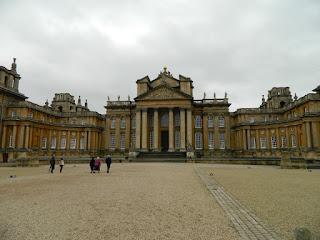
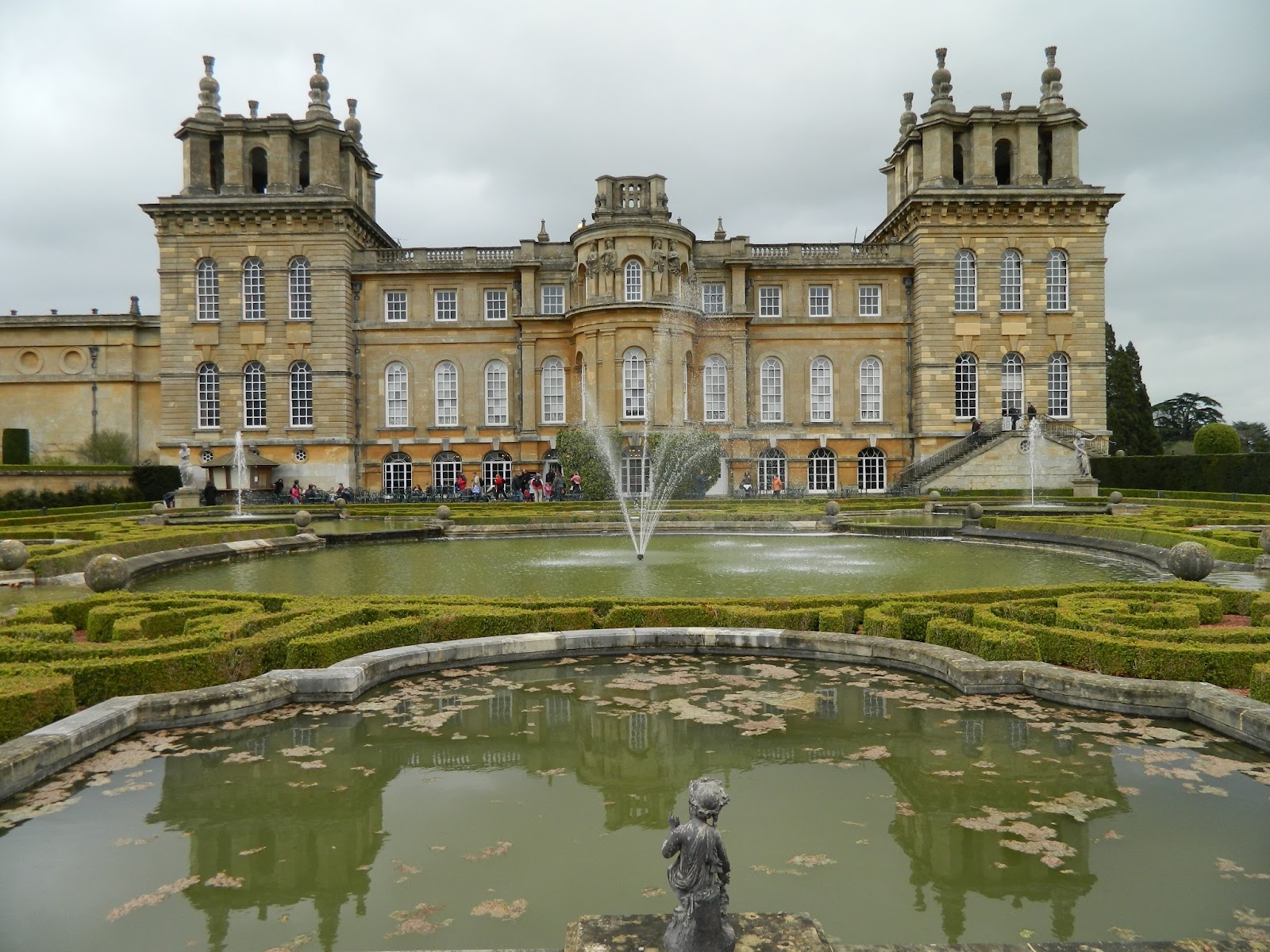
Visiting Blenheim Palace: Thoughts on Creativity, Envy and the Good Life

By Anita Mathias

View from the palace, showing the island.

Image credit.

I’ve lived in Oxford for 14 years now (in two instalments) and try to walk around the Blenheim Gardens and grounds once a year, if not once a season. I love the lakes: they get me.

And, often, when I visit the gorgeous gardens of stately homes, I feel a twinge of envy. I would not feel envy if they had earned them by their labour as Julian Fellowes, creator of Downton Abbey earned his seventeeth century manor house in Dorset. The immense inherited wealth in Britain, as in Blenheim or Chatsworth, sometimes does make me feel envious, though both estates, of course, leverage and make their inherited largesse to make even more money, as is necessary in a country with high taxation, like the UK.

“I am a bit envious,” I tell Roy. “What beauty to enjoy every day! And just to have inherited it!!”

But then, as we walk around, I realise that it would take a particular temperament to live happily in Blenheim Palace, and that I might not have it.

It would, oddly, take much tolerance for imperfection. As I walked through the Secret Garden, my fingers itched as I saw weeds and plants needing dead-heading. And this despite a crew of gardeners.

You have to make peace with a crew of gardeners who cannot keep up with the garden–just as you yourself cannot!

You sacrifice privacy–for running a palace and its grounds must take an veritable armada of cleaners, housekeepers, groundsmen and gardeners.

You are pierced with worries, for the ultimate responsibility of keeping an ageing building and its furnishings shiny ultimately falls on to you.

And in this daily piercing with mundane responsibility, even with the money to throw at each hydra head of things which need to be done, you surely would not have time to be a writer.

So, though living in Blenheim Palace, with its gorgeous grounds, would be many people’s definition of the good life, it would not be the good life for me. Too many worries, and distractions. Too little privacy!

* * *

I read an American survey a decade or so ago which asked people how much money they needed to live happily; the respondents, across the income levels, said $10,000. In other words, everyone wanted just a little bit more money.
Oddly enough though, the really moneyed classes have produced relatively few creative people–writers, artists, film-makers. Keeping up with one’s lifestyle appears to siphon off energy and ambition. Each extra thing you own adds stress and worry and distraction to your life. And, for those artists who eventually became very wealthy, their best work was in the period of relative poverty.

Christianly speaking, envy, I guess, is rebellion against the plan God has chosen for your life… the IQ, family income, gifts, nationality, he has given you. At times, one wishes God had given us more–I have certainly have–but we develop both our characters and our gifts as we seek to work against constraints (of time, of our own talent, of our weakness of character, of the shortage of money or energy or strength).

Envy is wanting to live in someone else’s story–a futile wish!!–instead of trying to write the best story we can with our own life. And one can always revise the story of one’s life to make it read better. Small leveraged changes will inevitably bring about other bigger and bigger changes.

And the gifts and character we develop as we struggle in this “vale of soul-making” are certainly more precious than if we had them handed to us on a platter, like Blenheim Palace is handed down to generation after generation of the Marlboroughs.


Detail of the entrance to Blenheim Palace
The main entrance courtyard to Blenheim Palace
View of the back of palace and water garden


A close up of the mazelike hedges


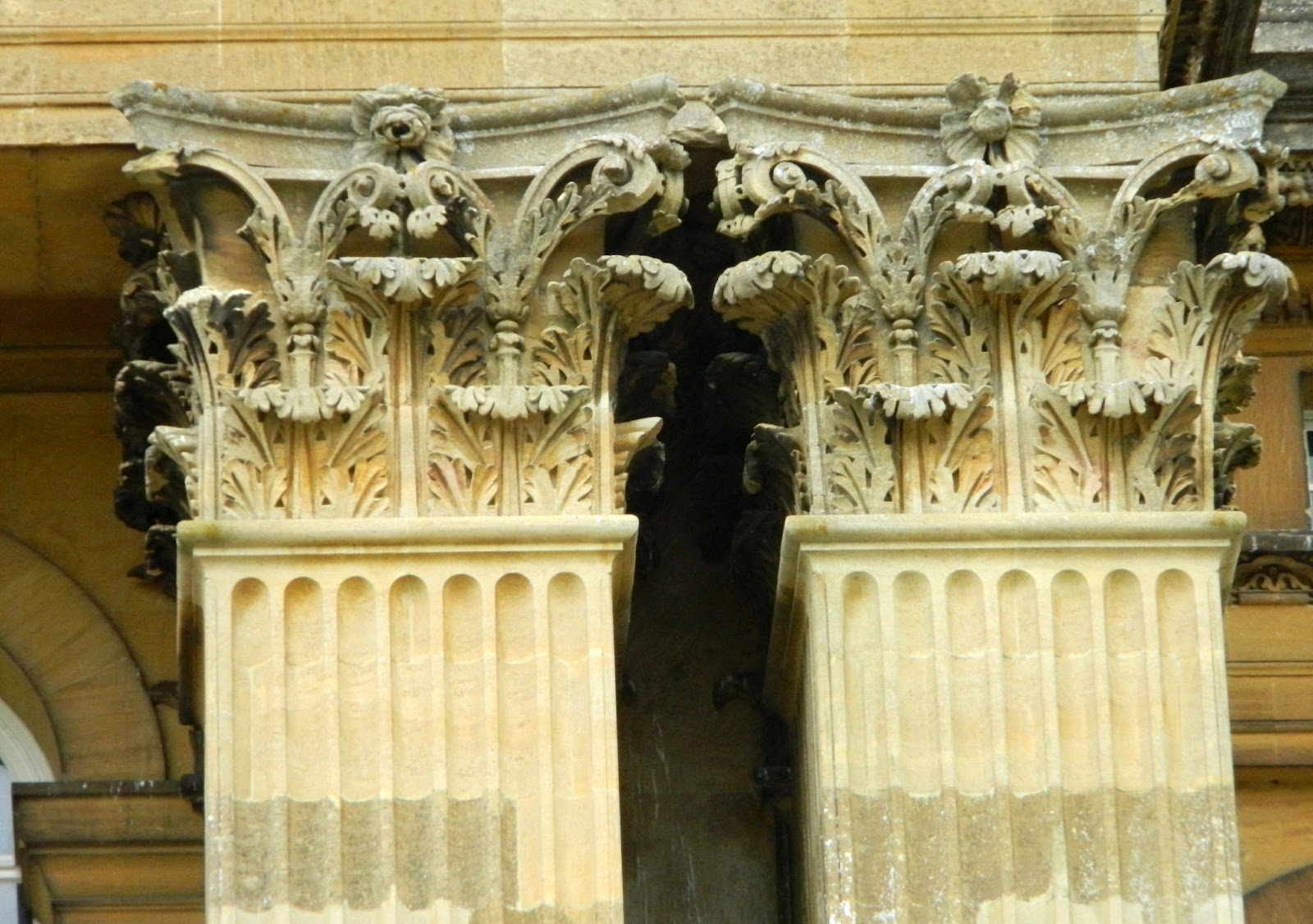
Intricate detail at the top of 40 foot columns


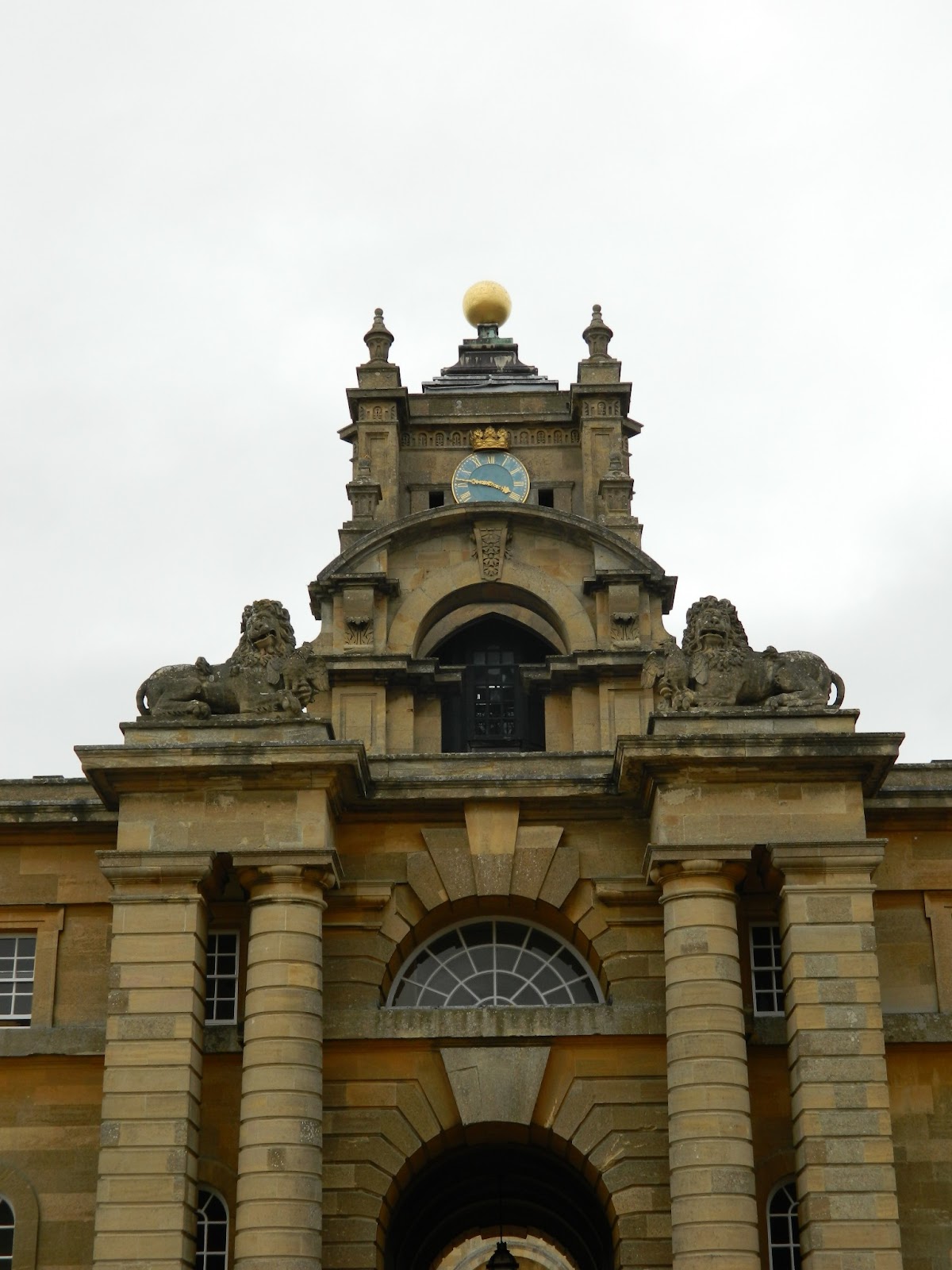
A lion and a hapless rooster (?)
The top of the archway leading out of the palace
An intriguing sculpture at the top of a pair of pillars


A particularly beautiful pheasant

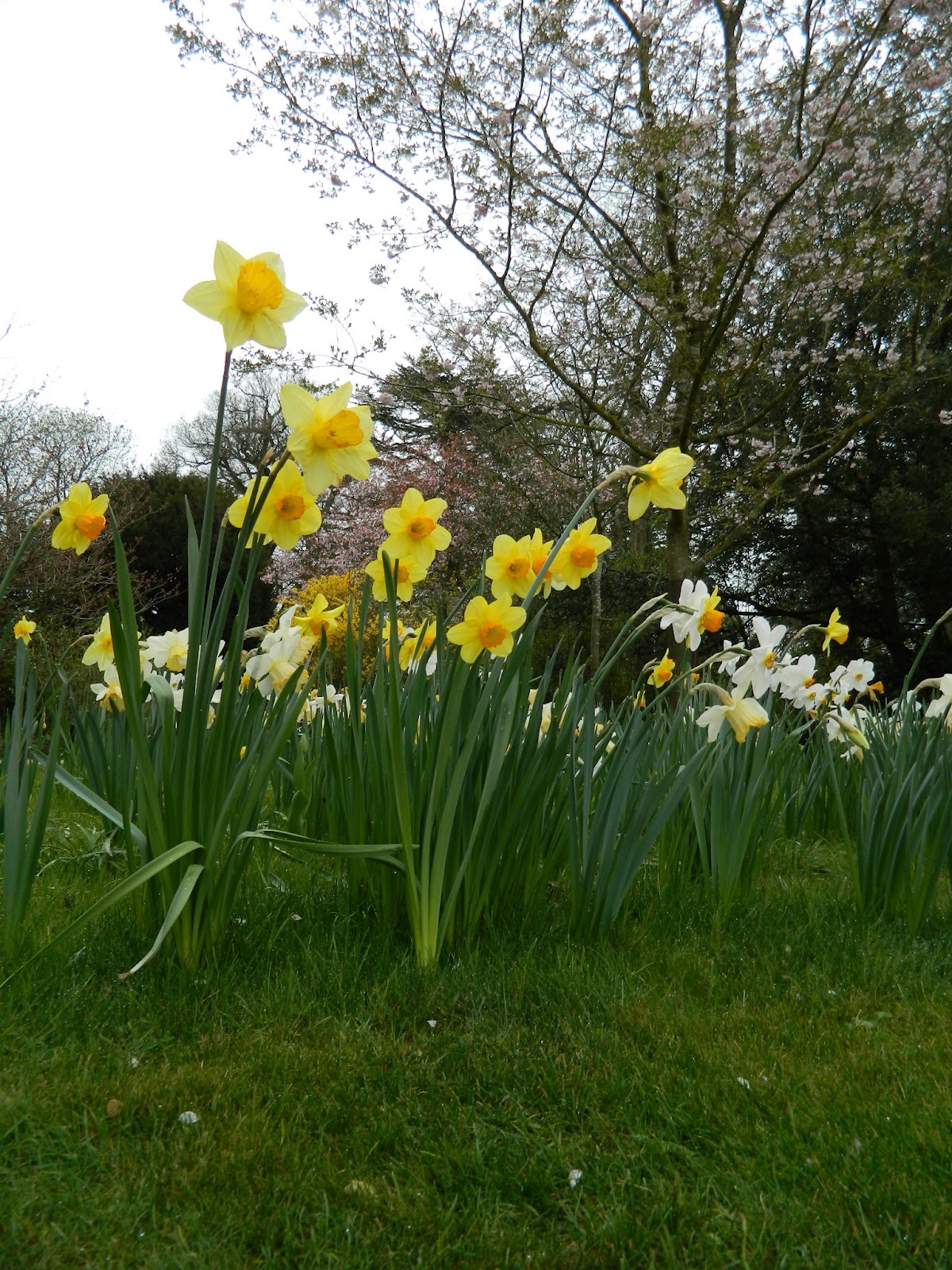
We came to Blenheim to walk in the gardens.  It was daffodil season

This photo shows only a quarter of the field of daffodils
Daffodils as far as the eye can see
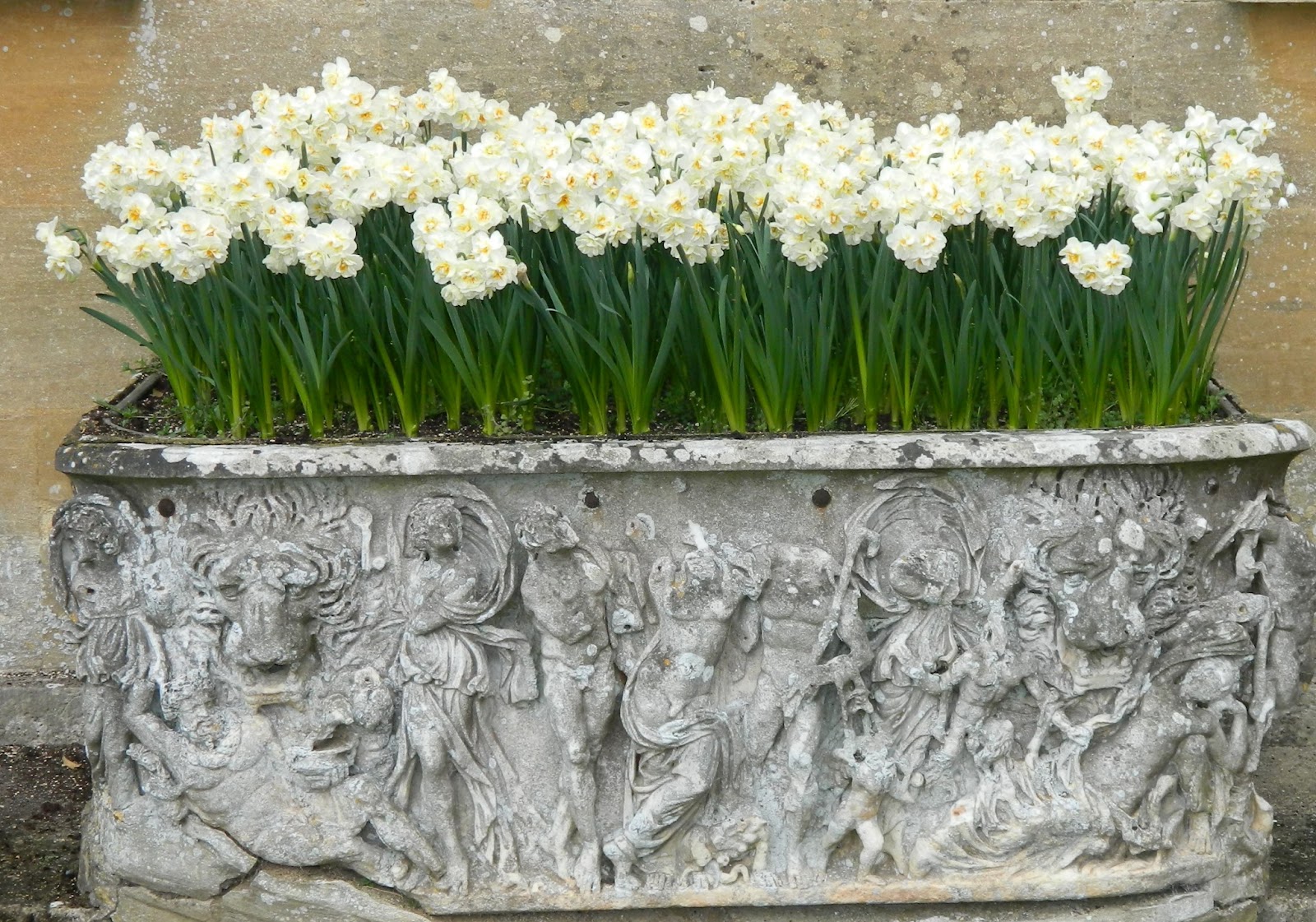
Densely planted containers of daffodils

The Secret Garden, pictured below, was renovated in 2003, and opened to the public in 2004.

Cherry blossoms by a Japanese style pond
with a single mallard
Two maples just coming into leaf:


Ranunculus
Magnolia


Viburnum — very fragrant

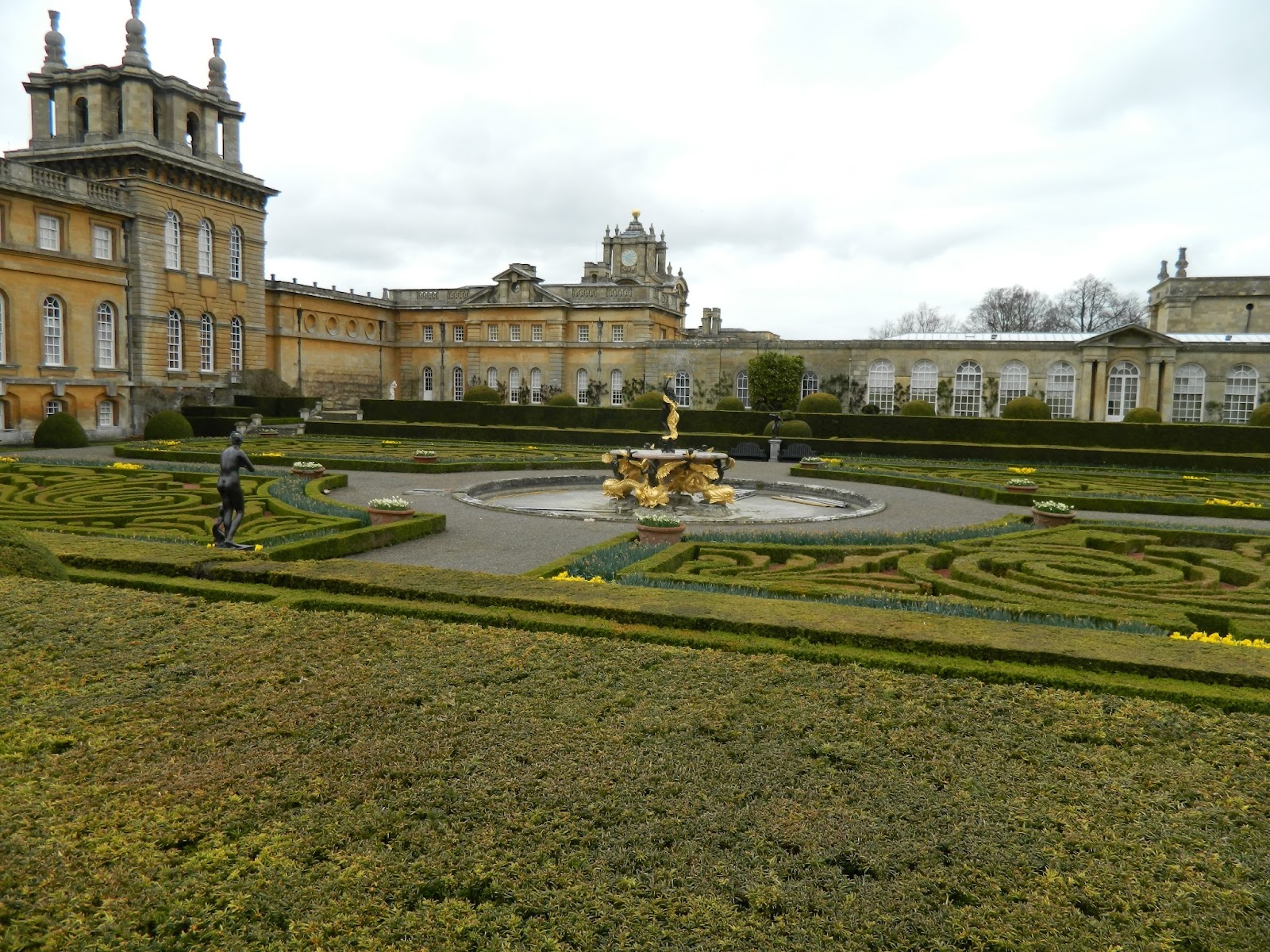
A couple of shots of the Italian garden, which is not open to visitors

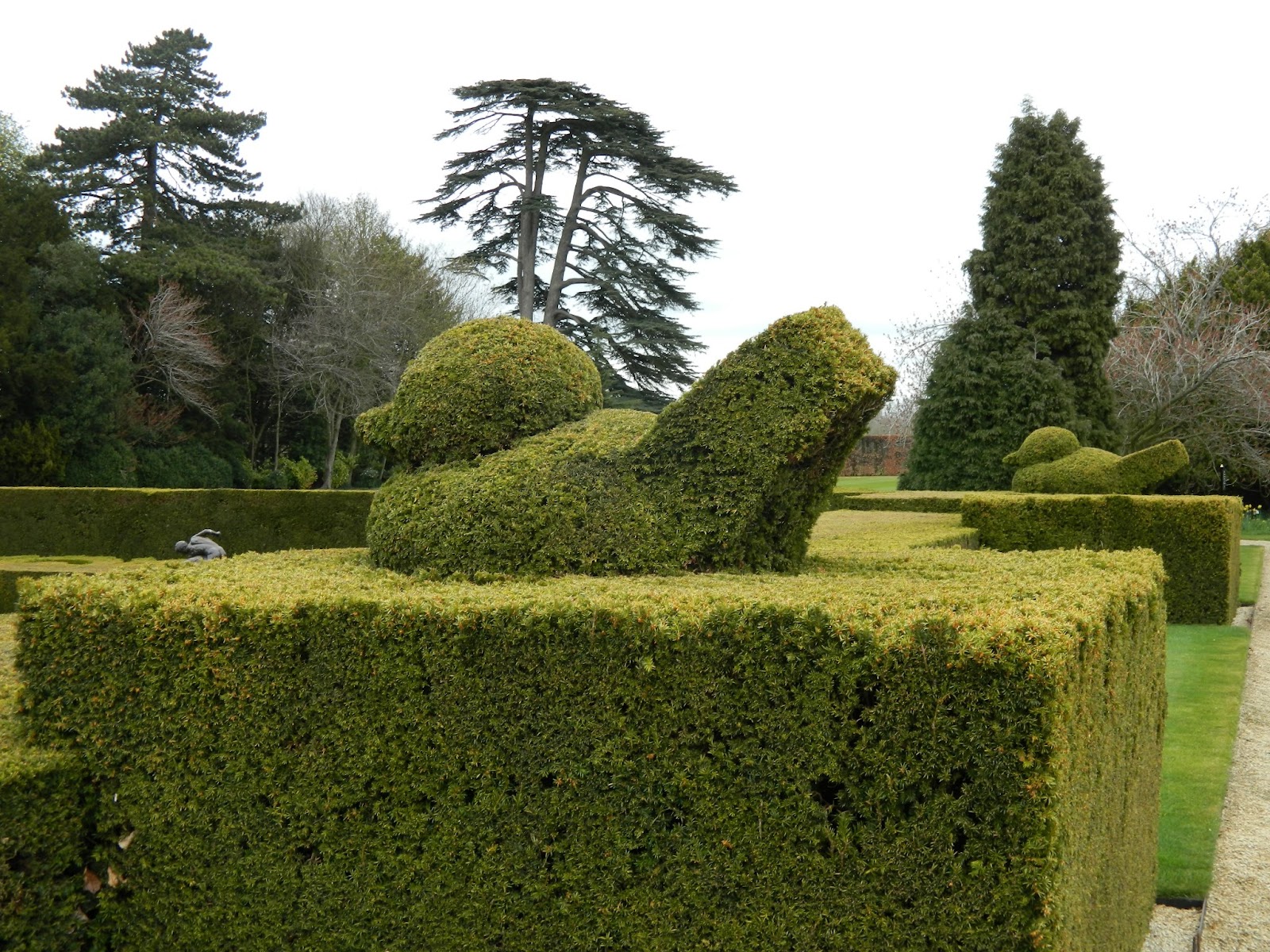
Topiary birds around the edge
Italian Garden, Blenheim Palace

The gardens are filled with statuary.  |Here is one of the smaller ones on the top of a pillar.

Finally, the estate is full of wonderfully gnarled trees:


Filed Under: In which I Dream Beneath the Spires of Oxford, In which I explore writing and blogging and creativity Tagged With: Blenheim Palace, Creativity, Envy, the good life

Introducing My First Children’s Book, “Francesco, Artist of Florence: The Man Who Gave Too Much”

By Anita Mathias

image001

Francesco, Artist of Florence:The Man Who Gave Too Much

The child gazes at the jade parrot on my jewellery box, her eyes bright and fascinated.

I come to look too.

The perky parrot grasps a cherry. He is surrounded by carnations, cosmos and lupins.

I love that little pietre dure jewellery box which I inlaid with semi-precious stones! I thought it would make a good bridal gift.

The little girl stares at it in silence, and glows. She is captivated.

“It’s twenty florins,” I say. It took me three hours to carve it, but the hours were joy.

And Signora Farnese bows, and looks helpless, and the child looks up at her, understands and her face collapses, but they both keep standing there, keep looking at it, the bambina on tiptoes.

image002

And I say gently, “Signora, would you like it?”

She nods.  Her little daughter nods vigorously.

“How much can you afford?” I say, resigned, wishing I had remained silent.

“Seven florins,” she whispers.

I wrap it up, for the bambina has not lifted her eyes from the parrot since she entered the shop, and I would like the little box to go to one who loves it.

And the child goes out, holding it aloft, like the Corpus Christi itself, and I am repaid. image003

My little pietre dure studio in which I “painted” with inlaid precious stones in Marble was always crowded. After Duke Ferdinando I de’ Medici started collecting treasures in pietre dure, every Florentine wanted what the Medici had.

And so they thronged into the Via Ricasoli, coveting my vases, fountains, and the bowls in which I inlaid gems, creating birds which would never cease singing, and flowers which would never fade.image004

And if I could have held out for a good price, perhaps I could have made as much money as it was rumoured Michelangelo did, or Leonardo or Masaccio. Cosimo de’ Medici paid Donatello, Brunelleschi, and Michelozzo 600,000 florins! 600,000 florins!

Perhaps I am lacking in ambition.

But my happiest hours are when I forget everything and time is no more as I work with the wafers of precious gems that the craftsmen from Ferdinand’s laboratory,
Opificio delle Pietre Dure, let me have cheaply–lapis lazuli, jade, moonstone, topaz and amethyst. I feel the smoothness of carnelian and jade beneath my fingers as I carve wild
flowers which will never wilt, and dragonflies that shall never die.

Working with them is my great good luck!

image005

As I carve, beauty appears. Pietre dure–inlaying semi-precious stones in marble–is indeed painting for eternity, as Ghirlandaio says. And so I carve gardens of unfading flowers, in which I place a singing bird on a golden bough to keep a drowsy emperor awake with his eternal songs.

image006

“Francesco, Francesco, stop all this carving. How many days has the shop stayed shut while you carve and carve? Go and sell what you have made.” Elisabetta stands in the doorway of my workshop, her hands on her hips.

image007

I sigh and leave to open up my shop.

And as they see me pull up the shutters, people bustle in from the Piazza del Duomo.

My heart swells when they freeze and point at the clock I placed in the window, black marble inlaid with butterflies that almost flutter.

But why doesn’t somebody buy it?

Me, though Elisabetta calls me an old fool, I never ask people to sell me things for less than they want to. If that is what they want to sell it for, I buy it, if I have the florins.  If not, I bow and leave.


image008

But my customers. Bargaining! Infinite bargaining. And it makes me sad, for I price my treasures so that those who really want them, and are willing to sacrifice for them, can have a little loveliness in their homes: a cameo, a bowl, a table.

For I have longed to work with semi-precious stones I could not afford–with malachite and onyx and jasper. I have yearned to own pietre dure treasures in jade and lapis lazuli which I also could not afford. I cannot bear the thought that anyone should yearn for beauty as I have, and be unable to have it.

And so I price my art so most people can afford it, and our family can have pigeon occasionally, and I can buy Elisabetta a new brooch, and set something aside for Lucia’s dowry, and for old age, when arthritis might stiffen my fingers.

But no matter how low my prices, they are never low enough.image009_jpg

As they throng through, Signora Stallardi says, “Francesco, Caterina will be married at the Duomo next month. She is marrying a Ridolfi. I see you have marked four hundred florins for your marriage chest, but could you let me have it for three hundred?”

Three hundred florins! I smile ruefully. I have probably spent that on the gems which now gleam in the inlaid surface of the chest. However, if I sold it and took home three hundred florins today, perhaps Elisabetta might be happy…

image010_jpg

I run my fingers over the cool stone. I remember melding those precious stones together, my eyes rejoicing in the harmony of colour.

And I remember Caterina as a bambina, her eyes brimming with suppressed laughter; she would love my chest, as would her bambini. And I cannot argue with Signora Stallardi, who played chess against me as we grew up in the Via delle Oche—and  always won!

“Si,” I say.

As she steps out into the street, I hear her say, “Thank goodness Elisabetta wasn’t there. That old fool! He’d agree to anything.”

I bow my head, ashamed.

image011


And so my day goes. Girolamo, who wrestled and played football with me in the Piazza Santa Croce, wants my table, which is exactly like the one in the Palazzo Medici Riccardi. I’ve inlaid all my wafer of semi-precious stones in those intertwined lilies and roses. I had wild hopes for it. image012

“Now, now, Francesco. No more of that; we are old friends,” he stood there, arms akimbo, brushing aside my objections.

“No, not less than a thousand florins, Girolamo,” I say. “It is the most valuable piece in my shop.”

That would cover my costs, and pay all bills for a few weeks.

“Three hundred!” he says.

Would that even cover costs?

My head spins as I try to calculate, but I can see that he will not leave without the table, so I sadly sell it to him for four hundred florins

And I can see from the suppressed glee on his face, that he too believes I have been a fool, and that he will go home and gloat.image013

I go home, my money bag jingling with florins, which I pour onto the sala table. How beautiful is that heap of gold with the gleaming fleur-de-lis. Elisabetta is indeed happy, until I tell her what I sold to bring them in.

“Francesco, Francesco!” she cries,  “You are just recovering the money you put in! This is no way to run a business.”

“But we have enough to pay our bills. We pay our taxes,” I protest.

“The money we spend on marble and gems is flowing back, yes, but we are barely saving anything. Carrara and Pietrasanta are
charging more and more for marble. We cannot afford to do business like this.”

“But we are living, aren’t we?” I falter. We have argued about this before, but it always confuses me.

image014

But I bow my head for I sense she is right. Nobody else runs their business as I do.

However, when I see the eyes, the captivated eyes, the longing eyes, even the shrewd, greedy eyes of those who desperately want what I have made, I forget how much each piece cost. I just see the eyes of those who want my art.

* * *

Continue reading at Amazon.co.uk

Or Amazon.com

I am offering a free ebook of Francesco, Artist of Florence, to anyone who would like to review it on their blog OR on Amazon, + on Facebook/Twitter.  Game? You are my hero/heroine :).  I will link to your review on my blog, and retweet it.

Excerpts from reviews

Jules Middleton at Apples of Gold

Anita has a lovely way with words. One of my favourite things as a child was reading books that captured my imagination as well as my heart. Francesco’s story does both.

I just love the amazing descriptions of semi precious stones, reminding me of biblical descriptions of the temple, so detailed that you can begin to picture them in your own mind. I’m a creative type and these kind of descriptions capture me, leading my imagination in a dance of colour and shape and pattern. But this book is not even really for me, it’s for children who I am sure will be as captivated as I was.

This is one of those books you’ll want to keep forever! One for the grandchildren. Not only is it a lovely story but it’s a book that you will want to keep. A book you will want to read not just to your kids, but to your grandchildren, or maybe, even to yourself.

Angela Shupe at Bella Verita

As you enter into Francesco’s world you get a glimpse of 16th century Florence, an exquisite place of art and beauty through the eyes and hands of one of its struggling artisans, who introduces you to its residents. Reading Francesco’s story is a bit like taking a stroll down one of the cobbled streets of Florence, as you meet his neighbors made up of former schoolmates, children and a mother desiring to provide a worthy dowry for her daughter.

The book includes rich and vibrant illustrations of pietre dure that go hand in hand with Francesco’s story.

Although Francesco is a children’s book, readers of all ages will walk away from Mathias’ tale having had an enjoyable journey into this artisan’s world and experiencing the beauty and artistry of Florence and pietre dure.

Colin Waldock at Pilgrim

This delightful little book is a little gem.

Anita brings us a story that brings a 16th Century Florence Artist and his family to life and takes us on a journey of forgiveness.  Forgiveness for others and most importantly for ourselves.

Hazel Flood

He may be considered weak and a fool, but he is lovely. In part a reminder of Jesus.
When I read the last paragraph aloud I was choked with emotion…honestly Anita, you have written a beauty!

Simon Cutmore— it is a gem of a book and a beautiful parable and I think could be read by you and old alike.

Joanna Mitchell— I thought it was lovely – sweet and true and good — – and a bit like one of Francesco’s jewels.


Filed Under: In which I shyly share my essays and poetry Tagged With: Artist of Florence, Francesco, the Man Who Gave Too Much

  • « Previous Page
  • 1
  • …
  • 23
  • 24
  • 25
  • 26
  • 27
  • …
  • 279
  • Next Page »

Sign Up and Get a Free eBook!

Sign up to be emailed my blog posts (one a week) and get the ebook of "Holy Ground," my account of working with Mother Teresa.

Join 536 Other Readers

My Books

Rosaries, Reading, Secrets: A Catholic Childhood in India

Rosaries, Reading Secrets, B&N
USA

UK

Wandering Between Two Worlds: Essays on Faith and Art

Wandering Between Two Worlds
USA

UK

Francesco, Artist of Florence: The Man Who Gave Too Much

Francesco, Artist of Florence
US

UK

The Story of Dirk Willems

The Story of Dirk Willems
US

UK

My Latest Meditation

Anita Mathias: About Me

Anita Mathias

Read my blog on Facebook

Follow me on Twitter

Follow @anitamathias1

Recent Posts

  • At the Cross, God Forgives Us Completely
  • Using God’s Gift of Our Talents: A Path to Joy and Abundance
  • The Kingdom of God is Here Already, Yet Not Yet Here
  • All Those Who Exalt Themselves Will Be Humbled & the Humble Will Be Exalted
  • Christ’s Great Golden Triad to Guide Our Actions and Decisions
  • How Jesus Dealt With Hostility and Enemies
  • Do Not Be Afraid, but Do Be Prudent
  • For Scoundrels, Scallywags, and Rascals—Christ Came
  • How to Lead an Extremely Significant Life
  • Don’t Walk Away From Jesus, but if You Do, He Still Looks at You and Loves You
Premier Digital Awards 2015 - Finalist - Blogger of the year
Runner Up Christian Media Awards 2014 - Tweeter of the year

Categories

What I’m Reading


Wolf Hall
Hilary Mantel

Wolf Hall --  Amazon.com
Amazon.com

Amazon.co.uk

Silence and Honey Cakes:
The Wisdom Of The Desert
Rowan Williams

Silence and Honey Cakes --  Amazon.com
Amazon.com

Amazon.co.uk

The Long Loneliness:
The Autobiography of the Legendary Catholic Social Activist
Dorothy Day

The Long Loneliness --  Amazon.com
Amazon.com

Amazon.co.uk

Country Girl
Edna O'Brien

Country Girl  - Amazon.com
Amazon.com

Amazon.co.uk

Archive by month

My Latest Five Podcast Meditations

INSTAGRAM

anita.mathias

My memoir: Rosaries, Reading, Secrets https://amzn.to/42xgL9t
Oxford, England. Writer, memoirist, podcaster, blogger, Biblical meditation teacher, mum

Well, hello friends! Breaking radio silence to let Well, hello friends! Breaking radio silence to let you know that I have taped a meditation for you on Christ’s famous Parable of the Talents in Matthew 25. https://anitamathias.com/2025/11/05/using-gods-gift-of-our-talents-a-path-to-joy-and-abundance/
Here you are, click the play button in the blog post for a brief meditation, and some moments of peace, and, perhaps, inspiration in your day 🙂
Hi Friends, I have taped a meditation; do listen a Hi Friends, I have taped a meditation; do listen at this link: https://anitamathias.com/2025/04/08/the-kingdom-of-god-is-here-already-yet-not-yet-here-2/
It’s on the Kingdom of God, of which Christ so often spoke, which is here already—a mysterious, shimmering internal palace in which, in lightning flashes, we experience peace and joy, and yet, of course, not yet fully here. We sense the rainbowed presence of Christ in the song which pulses through creation. Christ strolls into our rooms with his wisdom and guidance, and things change. Our prayers are answered; we are healed; our hearts are strangely warmed. Sometimes.
And yet, we also experience evil within & all around us. Our own sin which can shatter our peace and the trajectory of our lives. And the sins of the world—its greed, dishonesty and environmental destruction.
But in this broken world, we still experience the glory of creation; “coincidences” which accelerate once we start praying, and shalom which envelops us like sudden sunshine. The portals into this Kingdom include repentance, gratitude, meditative breathing, and absolute surrender.
The Kingdom of God is here already. We can experience its beauty, peace and joy today through the presence of the Holy Spirit. But yet, since, in the Apostle Paul’s words, we do not struggle only “against flesh and blood, but against the rulers, against the unseen powers of this dark world and against the spiritual forces of evil,” its fullness still lingers…
Our daughter Zoe was ordained into the Church of E Our daughter Zoe was ordained into the Church of England in June. I have been on a social media break… but … better late than never. Enjoy!
First picture has my sister, Shalini, who kindly flew in from the US. Our lovely cousins Anthony and Sarah flank Zoe in the next picture.
The Bishop of London, Sarah Mullaly, ordained Zoe. You can see her praying that Zoe will be filled with the Holy Spirit!!
And here’s a meditation I’ve recorded, which you might enjoy. The link is also in my profile
https://anitamathias.com/2024/11/07/all-those-who-exalt-themselves-will-be-humbled-the-humble-will-be-exalted/
I have taped a meditation on Jesus statement in Ma I have taped a meditation on Jesus statement in Matthew 23, “For those who exalt themselves will be humbled, and those who humble themselves will be exalted.”
Do listen here. https://anitamathias.com/2024/11/07/all-those-who-exalt-themselves-will-be-humbled-the-humble-will-be-exalted/
Link also in bio.
And so, Jesus states a law of life. Those who broadcast their amazingness will be humbled, since God dislikes—scorns that, as much as people do.  For to trumpet our success, wealth, brilliance, giftedness or popularity is to get distracted from our life’s purpose into worthless activity. Those who love power, who are sure they know best, and who must be the best, will eventually be humbled by God and life. For their focus has shifted from loving God, doing good work, and being a blessing to their family, friends, and the world towards impressing others, being enviable, perhaps famous. These things are houses built on sand, which will crumble when hammered by the waves of old age, infirmity or adversity. 
God resists the proud, Scripture tells us—those who crave the admiration and power which is His alone. So how do we resist pride? We slow down, so that we realise (and repent) when sheer pride sparks our allergies to people, our enmities, our determination to have our own way, or our grandiose ego-driven goals, and ambitions. Once we stop chasing limelight, a great quietness steals over our lives. We no longer need the drug of continual achievement, or to share images of glittering travel, parties, prizes or friends. We just enjoy them quietly. My life is for itself & not for a spectacle, Emerson wrote. And, as Jesus advises, we quit sharp-elbowing ourselves to sit with the shiniest people, but are content to hang out with ordinary people; and then, as Jesus said, we will inevitably, eventually, be summoned higher to the sparkling conversation we craved. 
One day, every knee will bow before the gentle lamb who was slain, now seated on the throne. We will all be silent before him. Let us live gently then, our eyes on Christ, continually asking for his power, his Spirit, and his direction, moving, dancing, in the direction that we sense him move.
Link to new podcast in Bio https://anitamathias.co Link to new podcast in Bio https://anitamathias.com/2024/02/20/how-jesus-dealt-with-hostility-and-enemies/
3 days before his death, Jesus rampages through the commercialised temple, overturning the tables of moneychangers. Who gave you the authority to do these things? his outraged adversaries ask. And Jesus shows us how to answer hostile questions. Slow down. Breathe. Quick arrow prayers!
Your enemies have no power over your life that your Father has not permitted them. Ask your Father for wisdom, remembering: Questions do not need to be answered. Are these questioners worthy of the treasures of your heart? Or would that be feeding pearls to hungry pigs, who might instead devour you?
Questions can contain pitfalls, traps, nooses. Jesus directly answered just three of the 183 questions he was asked, refusing to answer some; answering others with a good question.
But how do we get the inner calm and wisdom to recognise
and sidestep entrapping questions? Long before the day of
testing, practice slow, easy breathing, and tune in to the frequency of the Father. There’s no record of Jesus running, rushing, getting stressed, or lacking peace. He never spoke on his own, he told us, without checking in with the Father. So, no foolish, ill-judged statements. Breathing in the wisdom of the Father beside and within him, he, unintimidated, traps the trappers.
Wisdom begins with training ourselves to slow down and ask
the Father for guidance. Then our calm minds, made perceptive, will help us recognise danger and trick questions, even those coated in flattery, and sidestep them or refuse to answer.
We practice tuning in to heavenly wisdom by practising–asking God questions, and then listening for his answers about the best way to do simple things…organise a home or write. Then, we build upwards, asking for wisdom in more complex things.
Listening for the voice of God before we speak, and asking for a filling of the Spirit, which Jesus calls streams of living water within us, will give us wisdom to know what to say, which, frequently, is nothing at all. It will quieten us with the silence of God, which sings through the world, through sun and stars, sky and flowers.
Especially for @ samheckt Some very imperfect pi Especially for @ samheckt 
Some very imperfect pictures of my labradoodle Merry, and golden retriever Pippi.
And since, I’m on social media, if you are the meditating type, here’s a scriptural meditation on not being afraid, while being prudent. https://anitamathias.com/2024/01/03/do-not-be-afraid-but-do-be-prudent/
A new podcast. Link in bio https://anitamathias.c A new podcast. Link in bio
https://anitamathias.com/2024/01/03/do-not-be-afraid-but-do-be-prudent/
Do Not Be Afraid, but Do Be Prudent
“Do not be afraid,” a dream-angel tells Joseph, to marry Mary, who’s pregnant, though a virgin, for in our magical, God-invaded world, the Spirit has placed God in her. Call the baby Jesus, or The Lord saves, for he will drag people free from the chokehold of their sins.
And Joseph is not afraid. And the angel was right, for a star rose, signalling a new King of the Jews. Astrologers followed it, threatening King Herod, whose chief priests recounted Micah’s 600-year-old prophecy: the Messiah would be born in Bethlehem, as Jesus had just been, while his parents from Nazareth registered for Augustus Caesar’s census of the entire Roman world. 
The Magi worshipped the baby, offering gold. And shepherds came, told by an angel of joy: that the Messiah, a saviour from all that oppresses, had just been born.
Then, suddenly, the dream-angel warned: Flee with the child to Egypt. For Herod plans to kill this baby, forever-King.
Do not be afraid, but still flee? Become a refugee? But lightning-bolt coincidences verified the angel’s first words: The magi with gold for the flight. Shepherds
telling of angels singing of coming inner peace. Joseph flees.
What’s the difference between fear and prudence? Fear is being frozen or panicked by imaginary what-ifs. It tenses our bodies; strains health, sleep and relationships; makes us stingy with ourselves & others; leads to overwork, & time wasted doing pointless things for fear of people’s opinions.
Prudence is wisdom-using our experience & spiritual discernment as we battle the demonic forces of this dark world, in Paul’s phrase.It’s fighting with divinely powerful weapons: truth, righteousness, faith, Scripture & prayer, while surrendering our thoughts to Christ. 
So let’s act prudently, wisely & bravely, silencing fear, while remaining alert to God’s guidance, delivered through inner peace or intuitions of danger and wrongness, our spiritual senses tuned to the Spirit’s “No,” his “Slow,” his “Go,” as cautious as a serpent, protected, while being as gentle as a lamb among wolves.
Link to post with podcast link in Bio or https://a Link to post with podcast link in Bio or https://anitamathias.com/2023/09/22/dont-walk-away-from-jesus-but-if-you-do-he-still-looks-at-you-and-loves-you/
Jesus came from a Kingdom of voluntary gentleness, in which
Christ, the Lion of Judah, stands at the centre of the throne in the guise of a lamb, looking as if it had been slain. No wonder his disciples struggled with his counter-cultural values. Oh, and we too!
The mother of the Apostles James and John, asks Jesus for a favour—that once He became King, her sons got the most important, prestigious seats at court, on his right and left. And the other ten, who would have liked the fame, glory, power,limelight and honour themselves are indignant and threatened.
Oh-oh, Jesus says. Who gets five talents, who gets one,
who gets great wealth and success, who doesn’t–that the
Father controls. Don’t waste your one precious and fleeting
life seeking to lord it over others or boss them around.
But, in his wry kindness, he offers the ambitious twelve
and us something better than the second or third place.
He tells us how to actually be the most important person to
others at work, in our friend group, social circle, or church:Use your talents, gifts, and energy to bless others.
And we instinctively know Jesus is right. The greatest people in our lives are the kind people who invested in us, guided us and whose wise, radiant words are engraved on our hearts.
Wanting to sit with the cleverest, most successful, most famous people is the path of restlessness and discontent. The competition is vast. But seek to see people, to listen intently, to be kind, to empathise, and doors fling wide open for you, you rare thing!
The greatest person is the one who serves, Jesus says. Serves by using the one, two, or five talents God has given us to bless others, by finding a place where our deep gladness and the world’s deep hunger meet. By writing which is a blessing, hospitality, walking with a sad friend, tidying a house.
And that is the only greatness worth having. That you yourself,your life and your work are a blessing to others. That the love and wisdom God pours into you lives in people’s hearts and minds, a blessing
https://anitamathias.com/.../dont-walk-away-from-j https://anitamathias.com/.../dont-walk-away-from-jesus.../
Sharing this podcast I recorded last week. LINK IN BIO
So Jesus makes a beautiful offer to the earnest, moral young man who came to him, seeking a spiritual life. Remarkably, the young man claims that he has kept all the commandments from his youth, including the command to love one’s neighbour as oneself, a statement Jesus does not challenge.
The challenge Jesus does offers him, however, the man cannot accept—to sell his vast possessions, give the money to the poor, and follow Jesus encumbered.
He leaves, grieving, and Jesus looks at him, loves him, and famously observes that it’s easier for a camel to squeeze through the eye of a needle than for a rich person to live in the world of wonders which is living under Christ’s kingship, guidance and protection. 
He reassures his dismayed disciples, however, that with God even the treasure-burdened can squeeze into God’s kingdom, “for with God, all things are possible.”
Following him would quite literally mean walking into a world of daily wonders, and immensely rich conversation, walking through Israel, Lebanon, Syria, and Jordan, quite impossible to do with suitcases and backpacks laden with treasure. 
For what would we reject God’s specific, internally heard whisper or directive, a micro-call? That is the idol which currently grips and possesses us. 
Not all of us have great riches, nor is money everyone’s greatest temptation—it can be success, fame, universal esteem, you name it…
But, since with God all things are possible, even those who waver in their pursuit of God can still experience him in fits and snatches, find our spirits singing on a walk or during worship in church, or find our hearts strangely warmed by Scripture, and, sometimes, even “see” Christ stand before us. 
For Christ looks at us, Christ loves us, and says, “With God, all things are possible,” even we, the flawed, entering his beautiful Kingdom.
Follow on Instagram

© 2026 Dreaming Beneath the Spires · All Rights Reserved. · Cookie Policy · Privacy Policy