Anita Mathias: Dreaming Beneath the Spires

Anita Mathias's Blog on Faith and Art

  • Home
  • My Books
  • Meditations
  • Essays
  • Contact
  • About Me

Generalife in the Alhambra and Granada

By Anita Mathias

A guest post by my husband, Roy Mathias

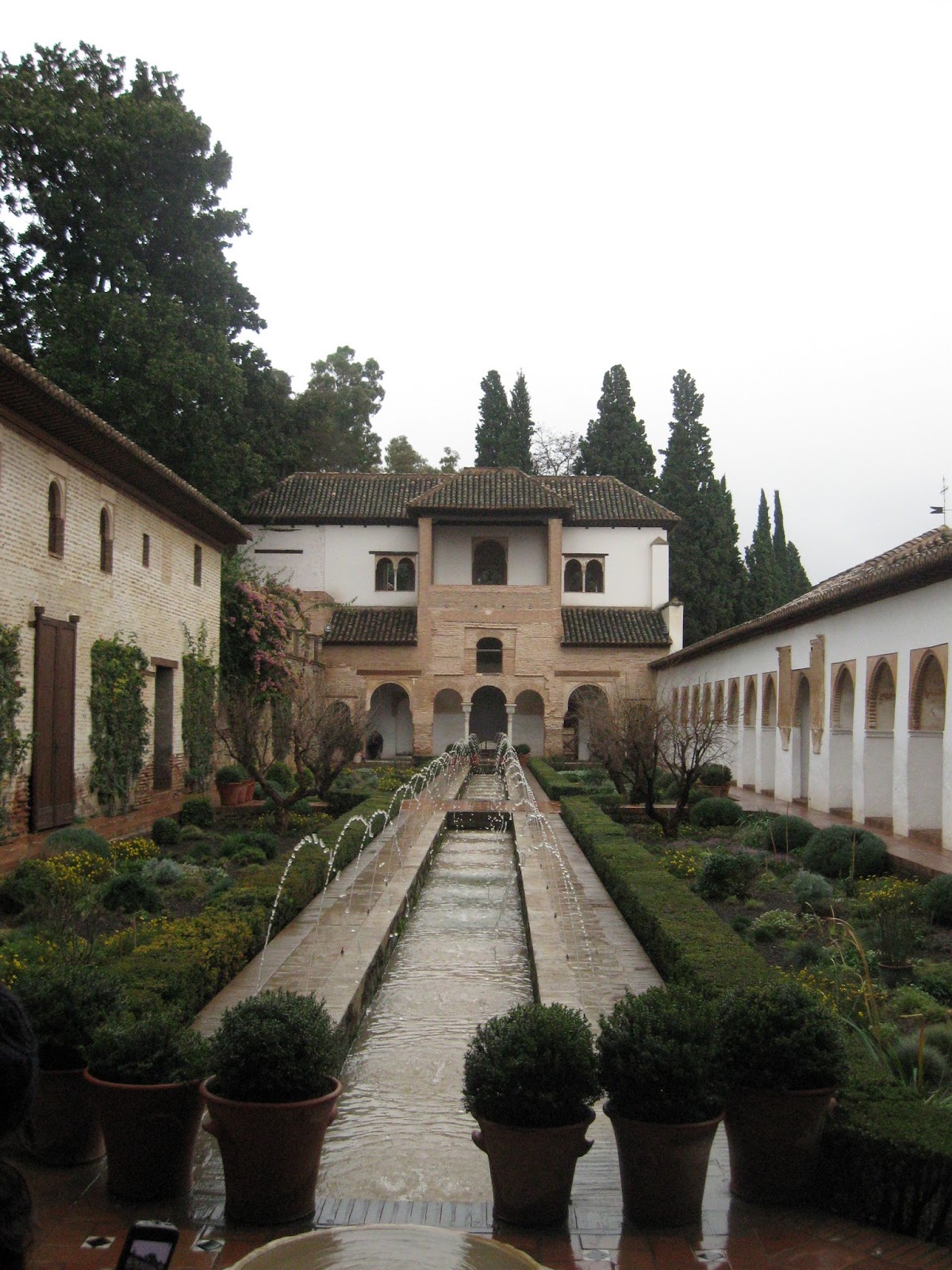
Palacio de Generalife was the Nasrid rulers’ summer palace. When asking for directions, do remember that the “G” is pronounced as an “H”.

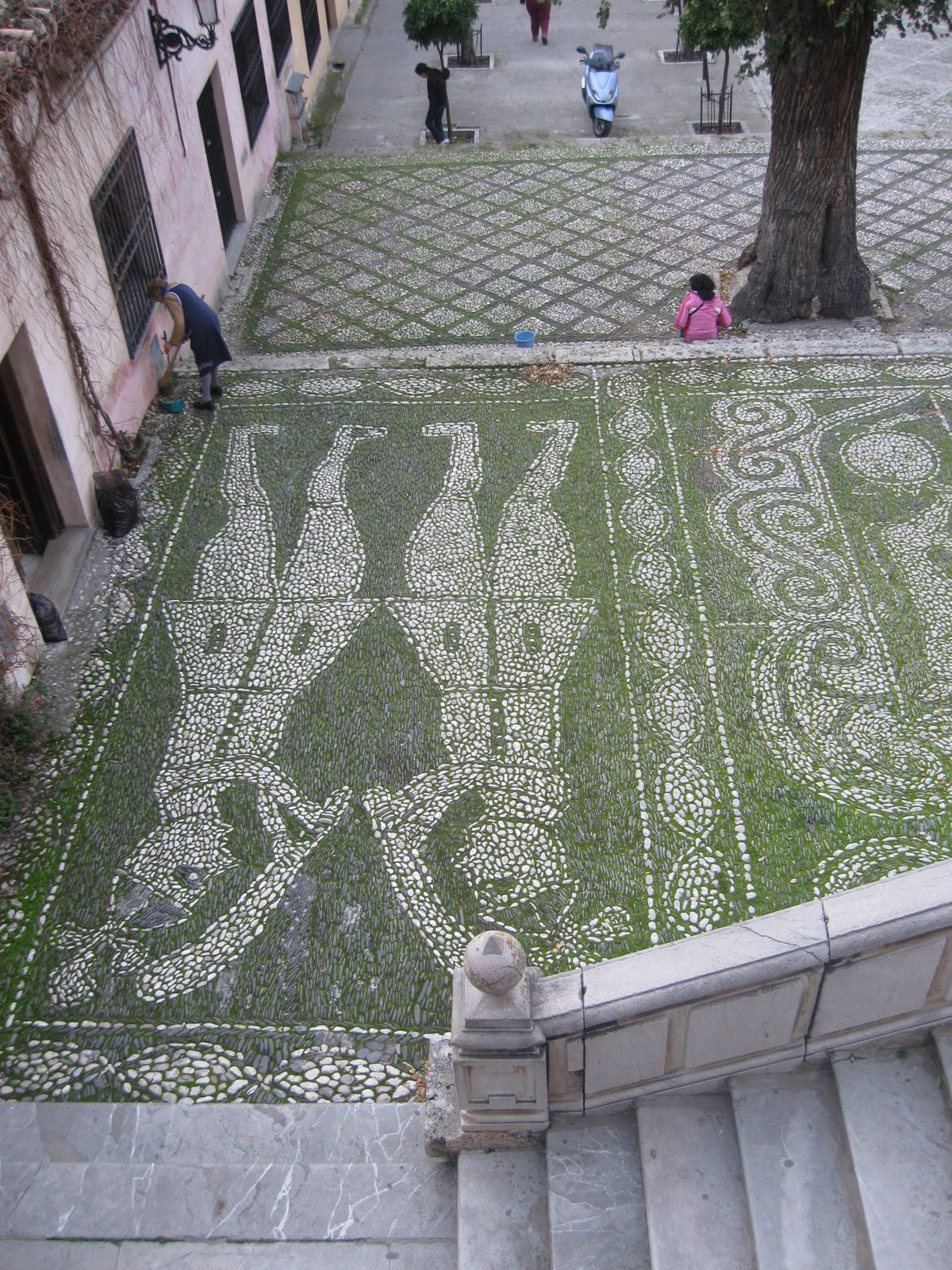
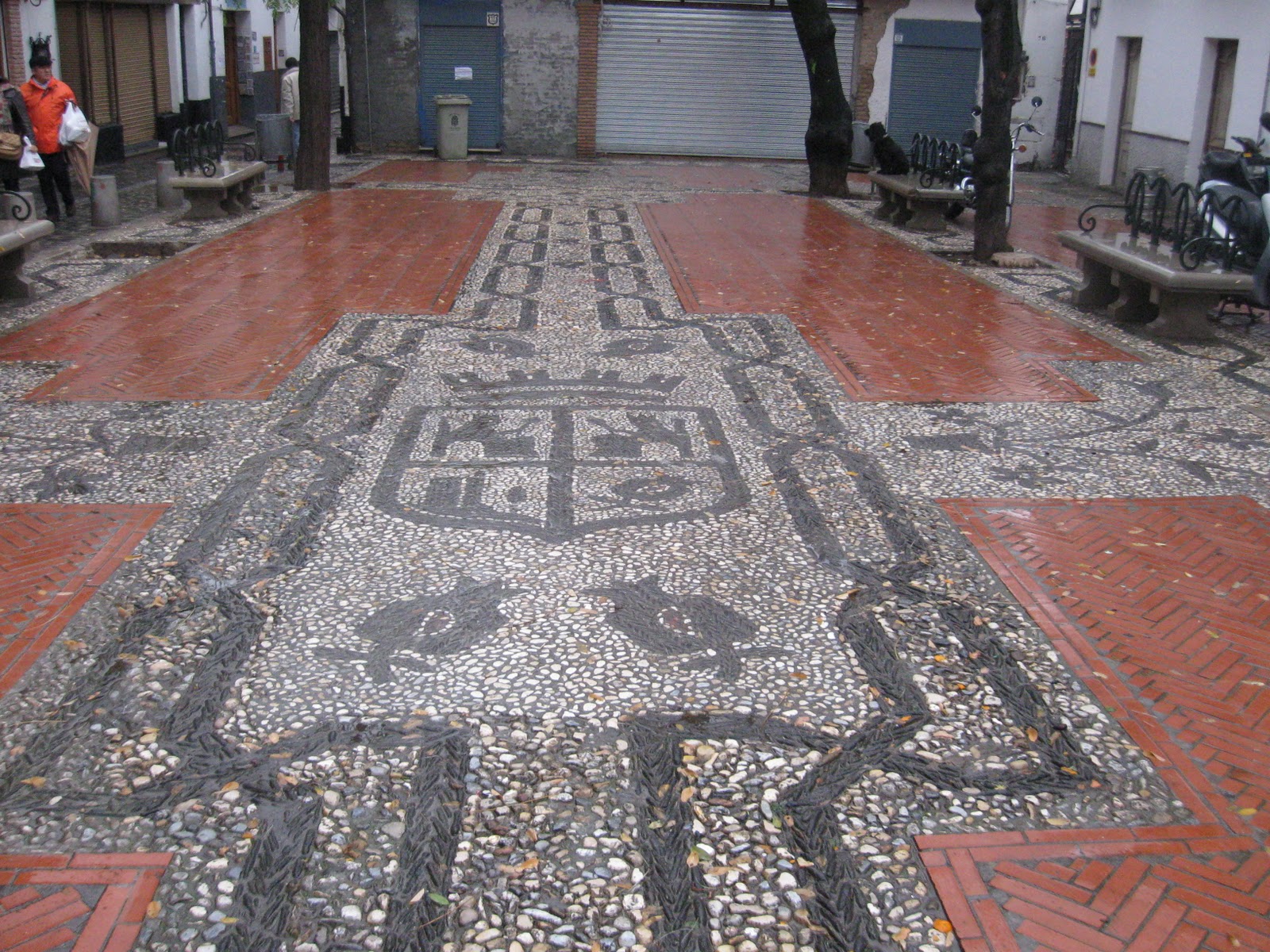
Generalife is literally, “Architect’s Garden”.   Approaching the palace, one passes through extensive formal gardens.  As it was winter, we say only the evergreen hedges that partitioned the garden into rooms, and the wonderful walkways paved in traditional Granadian style with a mosaic of pebbles: white ones from the River Darro and black ones from the River Genil.  These two rivers run on either side of the Alhambra.

Here the black stones are placed on their sides to create the impression of a knotted rope or wood grain.
Here you can see the “rooms”.
This one is from the steps of church in Granada.  The greenish tinge is moss and other plants growing in the cracks.

One inside the palace,  the architecture is similar to the Nasrid palace, though not as spectacular.

Irene in the summer palacePerhaps winter is not the best time to see the summer palace!
View from a room onto the gardens — persimmons in fruit.

Flowing water played a prominent role in the architecture.  There was very steep path, paved in the usual black and white cobbled style.  Enery so ofter there was a wider area with a fountain.  On top of the wall, the “hand rail” is actually a water channel with flowing water.
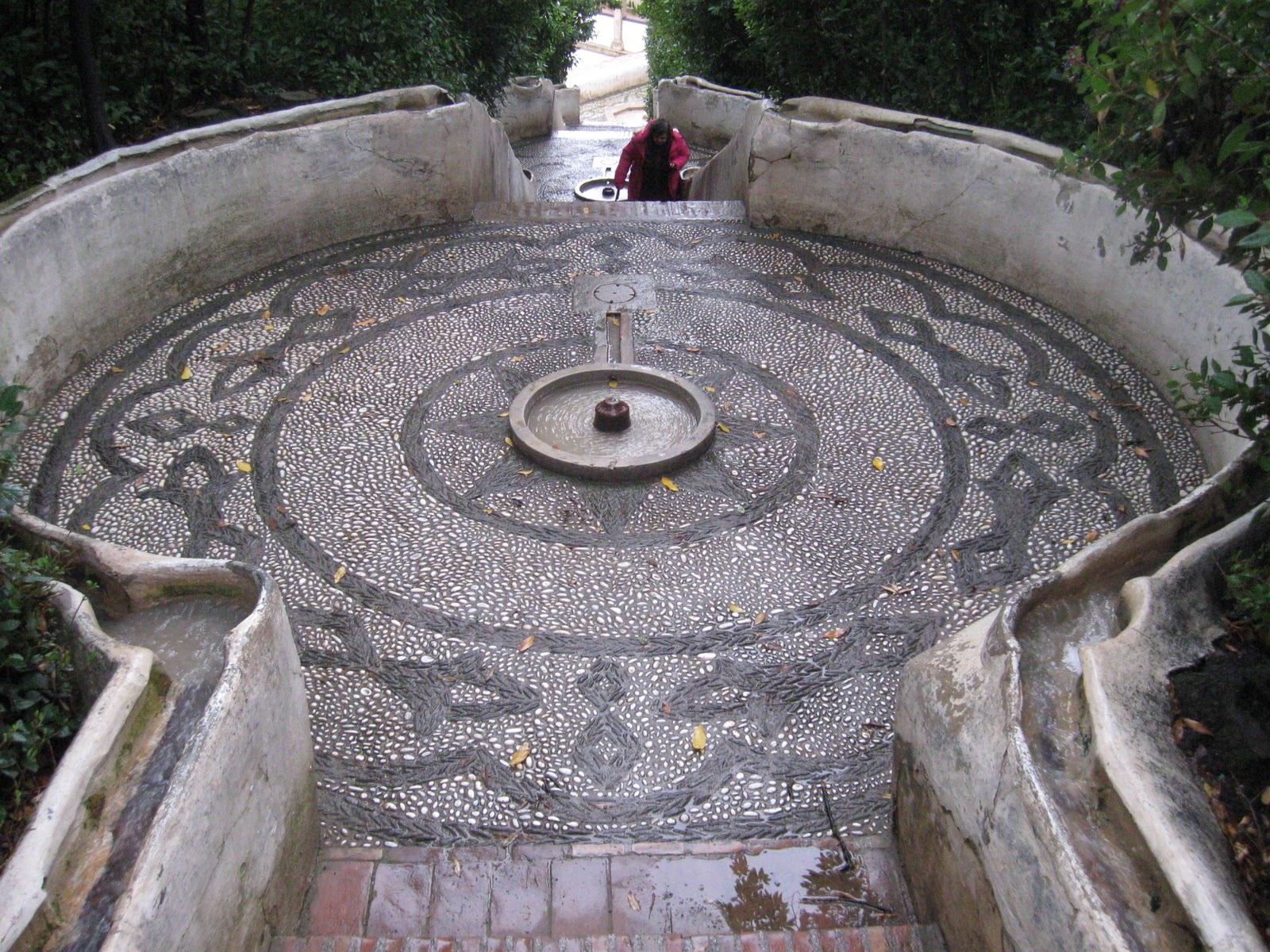
Here you see the cobbles, the fountain, the water flowing in the “hand rail” and the steepness of the path.

Here are some other pictures from Granada.  We stayed  in the Albayzín area, which together with the Alhambra  comprises the UNESCO world heritage site in Granada.  Albayzín is a very very steep, and contains a number of gypsy caves.  In the summer these are a center for flamenco and out door cafes.   Here is  the courtyard from  the pedestrian area at the top of Albayzín.
World heritage or not, you just can’t escape Coke.

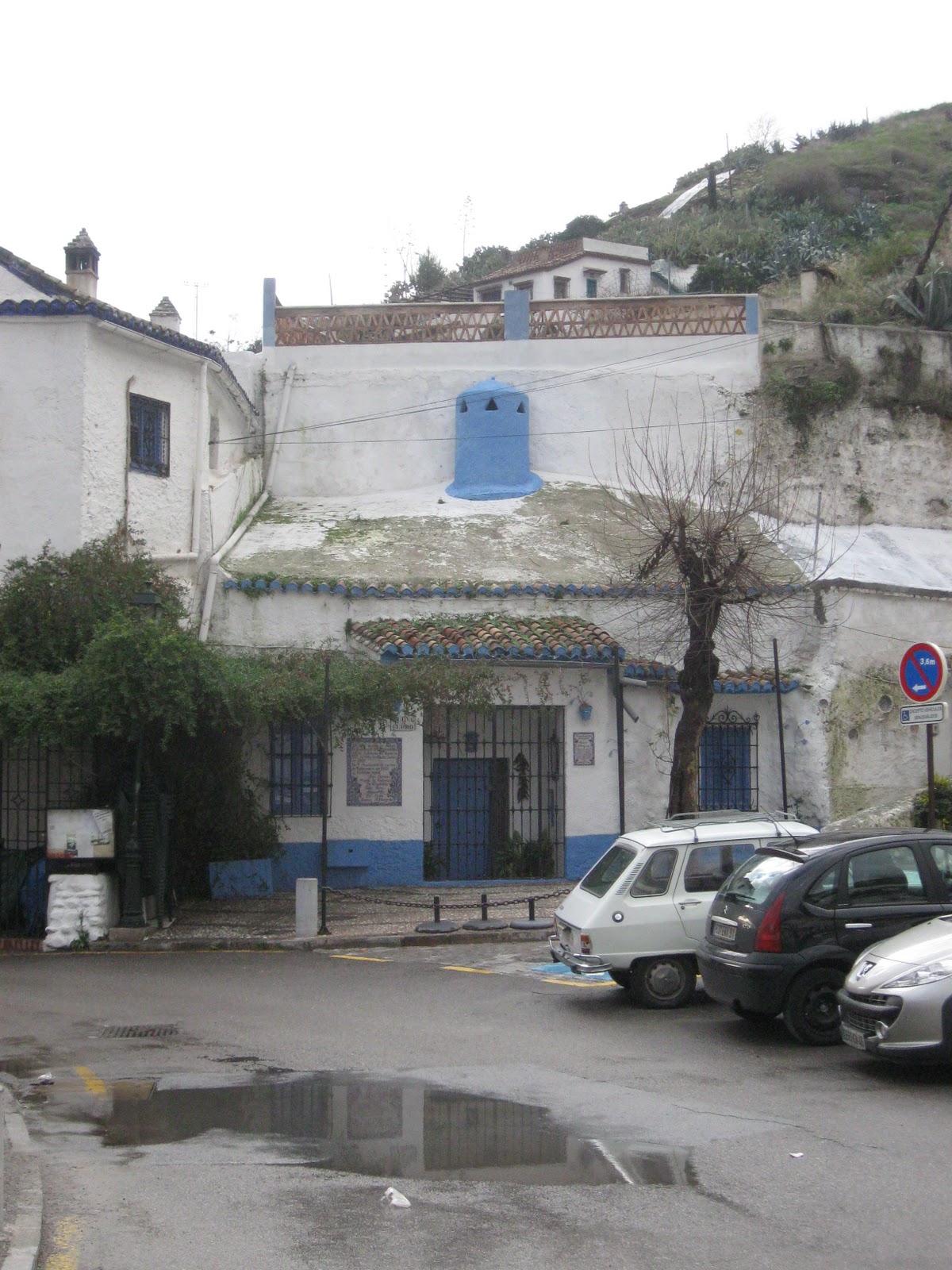
These houses are in the “Gypsy area”.   The so called caves, are now normal houses with electricity and ventilation built into the hillside.

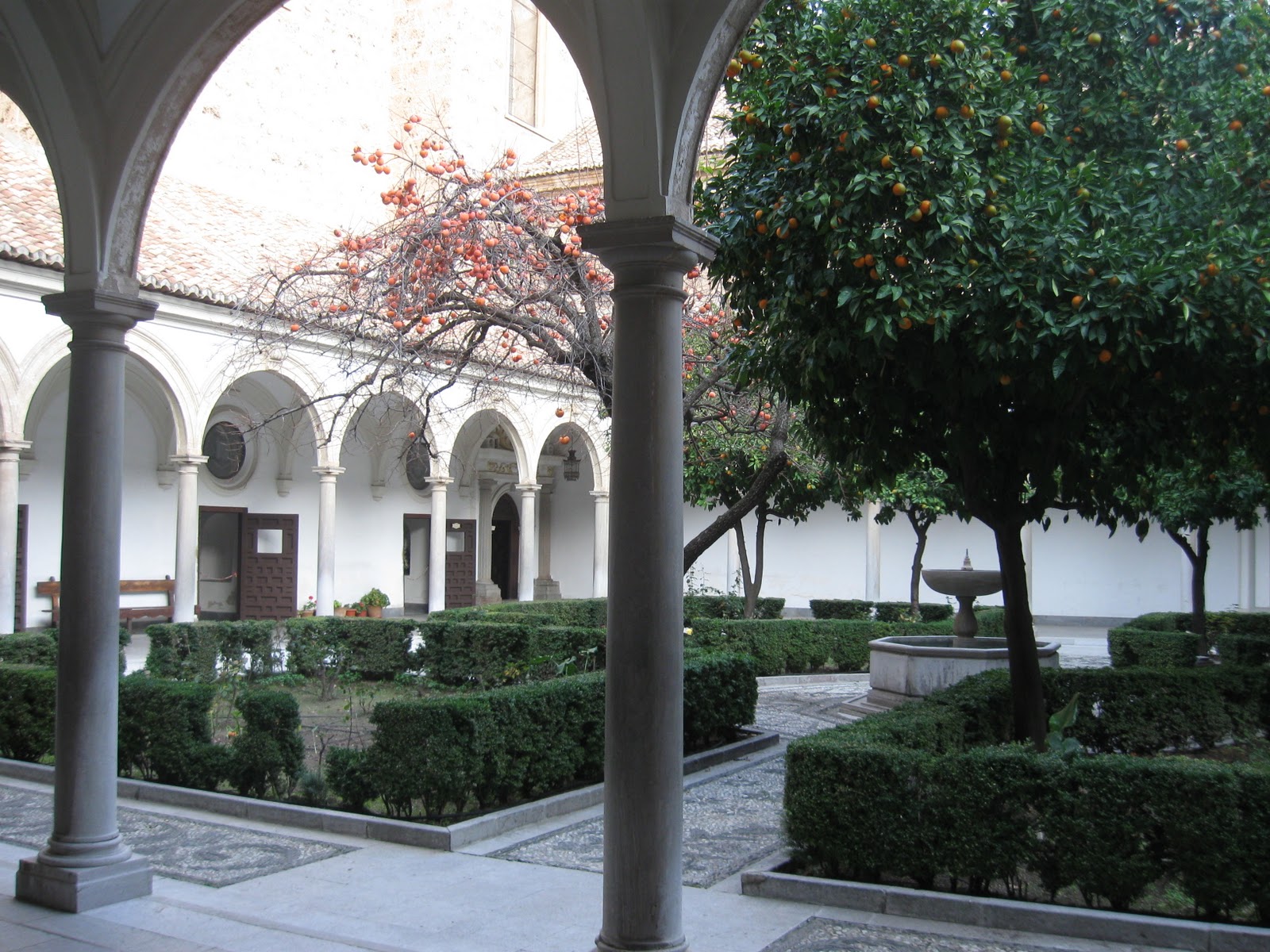
A church courtyard.
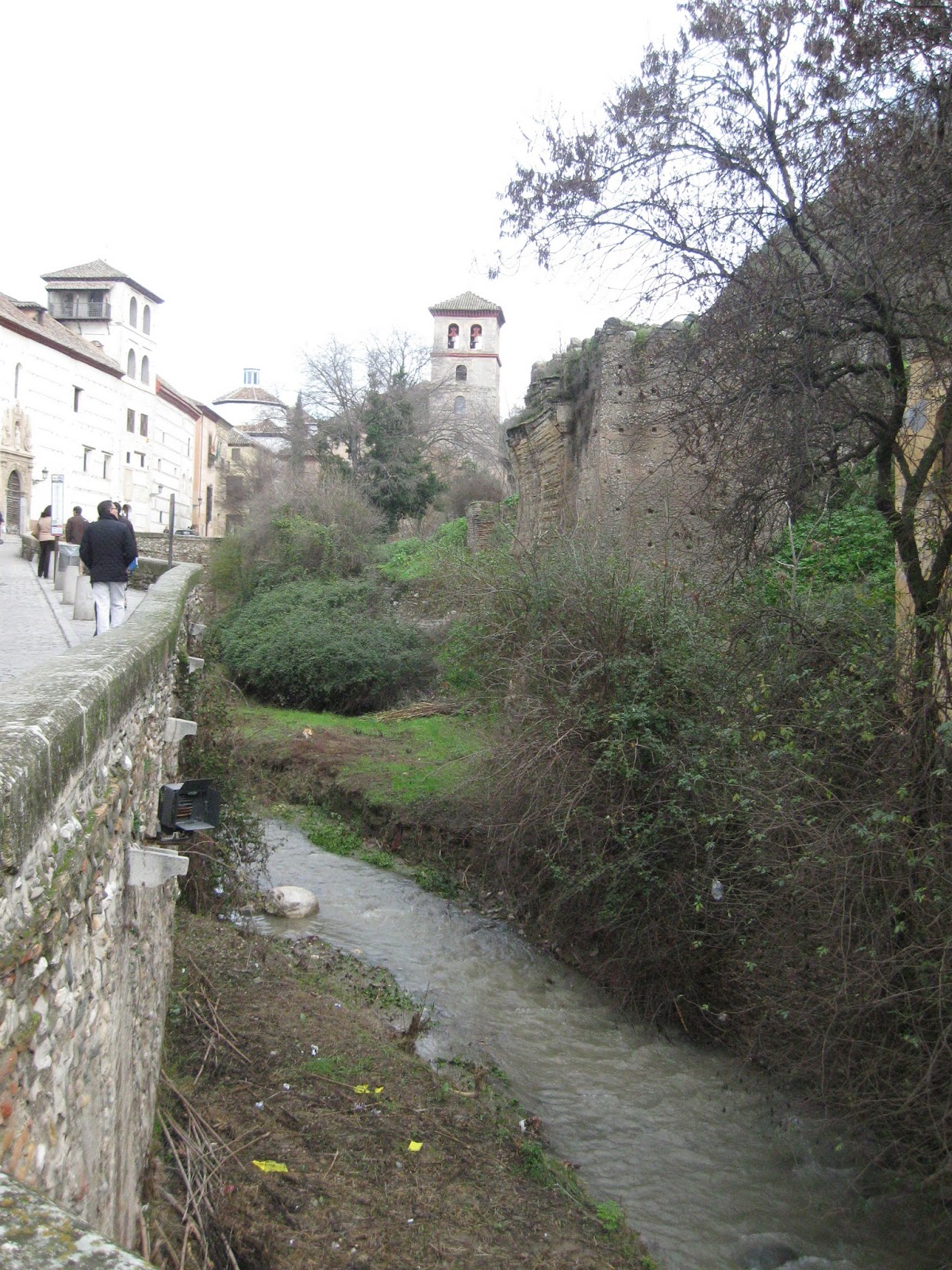
The River Darro is just a scruffy stream, perhaps 10 feet across.
 

Filed Under: In which I Travel and Dream Tagged With: Alhambra, Generalife, Granada Spain

How to Get into the Zone of Writing or Prayer

By Anita Mathias

Mixed Flock of birds flying in a V Formation- Put together- ©Creative Commons

Mixed Flock of birds flying in a V Formation- Put together- ©Creative Commons


I love writing and blogging: watching something shapely, and sometimes beautiful, emerge from a jumble of thoughts.

But there are many times when I just don’t feel like writing. My brain and spirit and fingers feel wooden. It is what Steven Pressfield calls “The Resistance.”

What helps then? Reading, reading a lot, ideally something like what I want to write, until the rhythm of words beats in my bloodstream, and ideas explode in my brain, and I yearn to get them out on the page.

* * *

And what when it comes to prayer, and I feel numb, a lifeless thing without joy, or love, or thought?

But I have made a commitment to pray, so pray I will.

I used to read scripture and read it until my heart said “Amen.”

I now practice eucharisteo–giving thanks for all the beautiful and lovely things in the world, and in my life.

I give thanks, and give thanks while the plane of my emotions slowly slides down the runway, and inches into the blue, sunny skies of praise and joy.

Filed Under: In Which I Count my Blessings, In which I play in the fields of prayer Tagged With: eucharisteo, Prayer, reading, Thanksgiving, writing

I am ultimately on the same side as all Christians

By Anita Mathias


I generally try to avoid controversy, for two reasons.

a) I got involved in a heated church controversy in my early days as a blogger, and the hatred and vituperation which came my way affected my sleep and my emotional health. It convinced me that I do not have the stomach for controversy.

b) and most importantly, as Brennan Manning says, “Many of the burning theological issues in the church today are neither burning nor theological.”
People are free to believe what they wish; they will, anyway, whatever you or I say. And Christ will sort out and correct our thinking, in this life or the next.
                                                                               * * *
However, I tried to sort out my thoughts on an issue in the news: Celebrating Civil Partnerships in churches, which is legal in Britain from today.
Here’s my attempt.  Roy says I could have done better. Essentially, what I was trying to say was who am I, and who are you, to refuse to ask God to bless another individual.

Well: more flak than I’ve ever received from anything except in my early days of blogging. Here are a few tweet and DMs.

Gay stuff is the way to tear apart families and christianity. Has nothing to do with your ‘tolerancy’.

“The spread of an anti-family ideology and the abasement of sexual morality appear interconnected.”

In a healthy society the Christian family reflects the splendor of Christ. In dedication to one another, raising children.

“Family” is not a gay ‘relation’. Church acknowledges marriage between man and woman. People like you are very dangerous.
* * *

Well, a good reminder of why I try to stay out of controversy: The burning theological issues of our day are neither burning, nor theological.
I am not going to waste time, anger or emotion over controversy, nor get annoyed with my opponents.
At the end of the day, all those who love Christ, all those who follow him, or who want to, are on the same side. Whether they are conservative or liberal, Catholic or Protestant, straight or gay.
Maranatha, Come Lord Jesus!

Filed Under: random

Should gay civil partnerships be blessed in Christian Churches?

By Anita Mathias

Who is a Christian?
These are the people Jesus invites to be Christians
Come to me, all you who are weary and heavy-laden.
If anyone is thirsty, let him come to me and drink.
A Christian is anyone who loves Jesus, and comes to him, seeking to follow him.
Who gets to decide if people are indeed Christians?
Two people.
The individual herself, and Jesus Christ.
What about gay Christians?
Well, for almost all my Christian life, I’ve thought the term gay Christian was an oxymoron.
Why? Because of Romans 1: 26-32  Because of this, God gave them over to shameful lusts. Even their women exchanged natural sexual relations for unnatural ones. 27 In the same way the men also abandoned natural relations with women and were inflamed with lust for one another. Men committed shameful acts with other men, and received in themselves the due penalty for their error. 32 Although they know God’s righteous decree that those who do such things deserve death, they not only continue to do these very things but also approve of those who practice them.
How do I read the passage? Straight, I am afraid. Seven year of university study of English literature and writing, and I can’t see any other way to honestly read this passage.   
Kierkegaard said ‘When you read God’s word, you must constantly be saying to yourself “it is talking to me and about me”’
The word of God is living and active, sharper than any double-edged sword, it penetrates even to dividing soul and spirit, joints and marrow; it judges the thoughts and attitudes of the heart.When I read it today, it convicts me of finding solace and comfort in food and work rather than in God alone. It does not speak to me about a desire to sleep with women, because, you see, I have none.
The Bible is a purifying sword to excise our own cancers and gangrene.
It is not to be used as a sword to pierce someone else’s heart.
That is the job of the Holy Spirit, who will lead all of us who seek him, into all truth. We will just have to allow the Spirit to speak through Romans to those he wishes, and in the way he wishes.
If a gay Christian sees a way to be both gay and a Christian, then that is between them and Christ. And the Holy Spirit.
So should Gay Civil Partnerships be blessed in Churches?
Probably not by clergy who are adamantly opposed to homosexuality, no. That would be asking them to act against their consciences, and would be wrong.
But not all clergy are opposed to civil partnerships.
Besides, an individual cannot bestow blessing or curses on another.
God alone can.
When we bless a marriage, or civil partnership, all we are doing is asking God to bless the individuals involved, in whatever way he chooses.
That is after all his very nature. He is a God of love, a waterfall of love, a river of deep love, in which we are all out of our depths. It is God’s nature and desire to bless, and when we ask him to bless individuals, we are asking him to do something in line with his very nature.
If two men or two women come to church, asking for blessing, surely we can find a way to ask God to bless them, which does not violate our own consciences.
Partly, for our own sakes–to prevent the canker of pride, and judgementalism and cruelty from devouring our hearts–we have to stop placing a burden of judgment and shame on gay people which the rest of us would find impossible to bear. We just have to allow people to make the call as to whether they are Christians or not. And ask God to bless those who want his blessing.
According to Jesus, blessing should not be withheld from anyone. We are to love, do good, bless and pray for even our enemies, even the worst people we know (Luke 6:27). Leave alone those who come to church, asking us to ask God to bless them.
Maranatha, Come Lord Jesus. Teach us to think as you do.
·      * *
So how did a good evangelical girl come to write this post?
A process. Read here how I had my mind and experience broadened.
Well, I am giving a 50th birthday party this week, which involved some jitters, and looking critically around me, and seizing the opportunity to do some redecorating.
As I wrote, I bought a beautiful Edwardian solid Cherry Mahogany dining table and chairs.
In the thrill of buying this beautiful antique furniture at a good price, I quite overlook logistics. It’s in Suffolk. Google says that’s five and a half hours away.
11 hours round-trip. I’d be exhausted in an hour’s driving. I’d be nervous if Roy drove for 11 hours in an unfamiliar van.
Hearing me anguish, our sweet Polish cleaner, who works for us a couple of days or so a week, offered to go and fetch it for us. He suggests £100, and petrol, and we gratefully agree.
And then, we overhear him talk on the phone to his English partner. He volunteered because Anita was so worried, but he’s nervous; what if the furniture gets scratched, what if his Polish driving habits take over?
The upshot is that Peter drives him all the way and Suffolk and back. These two very smiley, cheerful gay people arrive on our doorstep early next morning with a breathtakingly beautiful table and chairs—without a single scratch.
I had to laugh. It was so much like Roy and I. My heart is bigger and my tongue quicker than my practical abilities. I am always offering to help people—to take a meal around, to have them over if they are going through a hard time, help with information, contacts…—but the person who actually does the cooking or digs out the information turns out to be Roy, since I’ve generally bitten off far more than I can chew.
And I saw the same love between Peter and Lech, in Peter driving 11 hours with Lech to help him earn £100 and get me my table.
And if Pete and Lech, two sweet, smiley, superlatively kind, helpful men want God to bless them, who am I, and who are you, to refuse to welcome them to the Lord’s Table, and to request that the Lord blesses them?

Filed Under: random

Christ is a Miracle Himself (Philip Schaff, The Person of Christ)

By Anita Mathias


From Philip Schaff, The Person of Christ

“No biographer, moralist, or artist can be satisfied with any attempt of his to set forth the beauty of holiness which shines from the face of Jesus of Nazareth. It is felt to be infinitely greater than any conception or representation of it by the mind, the tongue, or the pencil of man or angel. We might as well attempt to empty the waters of the boundless sea into a narrow well, or to portray the splendor of the risen sun and the starry heavens with ink. No picture of the Saviour, though drawn by the master hand of a Raphael or Drer or Rubens; no epic, though conceived by the genius of a Dante or Milton or Klopstock,—can improve on the artless, narrative of the Gospels, whose only but all-powerful charm is truth. In this case, certainly, truth is stranger than fiction, and speaks best for itself without comment, explanation, or eulogy. Here, and here alone, the highest perfection of art falls short of the historical fact, and fancy finds no room for idealizing the real; for here we have the absolute ideal itself in living reality. It seems to me that this consideration alone should satisfy any reflecting mind that Christ’s character, though truly natural and human, rises far above the ordinary proportions of humanity, and can not be classified with the purest and greatest of our race.

Christ’s person is, indeed, a great but blessed mystery. It can not be explained on purely humanitarian principles, nor derived from any intellectual and moral forces of the age in which he lived. On the contrary, it stands in marked contrast to the whole surrounding world of Judaism and Heathenism, which presents to us the dreary picture of internal decay, and which actually crumbled into ruin before the new moral creation of the crucified Jesus of Nazareth. He is the one absolute and unaccountable exception to the universal experience of mankind. He is the great central miracle of the whole gospel-history. All his miracles are but the natural and necessary manifestations of his miraculous person, and hence they were performed with the same ease with which we perform our ordinary daily works. In the Gospel of St. John, they are simply and justly called his “works.” It would be the greatest miracle indeed, if He, who is a miracle himself, should have performed no miracles.
Here is just the logical inconsistency, contradiction, and absurdity of those unbelievers who admit the extraordinary character of Christ’s person, and yet deny his extraordinary works. They admit a cause without a corresponding effect, and involve the person in conflict with his works, or the works with the person. You may as well expect the sun to send forth darkness as to expect ordinary works from such an extraordinary being. The person of Christ accounts for all the wonderful phenomena in his history, as a sufficient cause for the effect. Such a power over the soul as he possessed, and still exercises from day to day throughout Christendom,—why should it not extend also over the lesser sphere of the body? What was it for him, who is spiritually the Resurrection and the Life of the race, to call forth a corpse from the grave? Could such a heavenly life and heavenly death as his end in any other way than in absolute triumph over death, and in ascension to heaven, its proper origin and home?
The supernatural and miraculous in Christ, let it be borne in mind, was not a borrowed gift or an occasional manifestation, as we find it among the prophets and apostles, but an inherent power in constant silent or public exercise. An inward virtue dwelt in his person, and went forth from him, so that even the fringe of his garment was healing to the touch through the medium of faith which is the bond of union between him and the soul. He was the true Shekinah, and shone in all his glory, not before the multitude or the unbelieving Pharisees and scribes, but when he was alone with his Father, or walked in the dark night over the waves of the sea, calming the storm of nature and strengthening the faith of his timid disciples, or when he stood between Moses and Elijah before his favorite three on the mount of transfiguration.
Thus from every direction we arrive at the conclusion, that Christ, though truly natural and human, was at the same time truly supernatural and divine. The wonderful character of his person forces upon us the inevitable admission of the indwelling of the Divinity in him, as the only rational and satisfactory explanation of this mysterious fact; and this is the explanation which he gives himself.”
                                                                                                        * * *

Filed Under: In Which I am again Amazed by Jesus Tagged With: Jesus Christ, Philip Schaff The Person of Jesus

Handel’s Vision of Heaven and the Composition of the Messiah

By Anita Mathias

 My father had trained and worked as a Chartered Accountant in England in the forties and early fifties. When he returned to India, he brought with him some precious possessions—among them LPs of Beethoven, Mozart….and Handel’s Messiah, conducted by Malcolm Sargent.

He used to sit, rapt, listening to Mozart’s Fortieth Symphony or Beethoven’s Fifth. I enjoy classical music if I can do something physical while listening to it, something like housework. The Messiah, however, is different.

It has always transported me into a state of bliss. It is surely among the most beautiful pieces of art ever produced.

* * *

I decided to research its composition.

The years immediately preceding the composition and premiere of Messiah were artistically and financially disastrous for George Frederic Handel. In 1737 he suffered a stroke but eventually recovered enough so that his playing was unaffected.

However, the grandiose style of Italian opera for which Handel was best known was dwindling in popularity, so much so that after 1741 he stopped composing opera altogether. Meanwhile, he witnessed the bankruptcy and failure of two of his own opera companies in the 1730s.

Handel was a shrewd and practical composer; he saw the public’s waning interest in the musical form that had been his bread and butter for many years and started composing in a format he hoped the public would prefer, the oratorio.

He had written eight oratorios before the Messiah. Then Charles Jennens, a wealthy merchant gave Handel the libretto for a new oratorio that he fashioned from passages taken from the Old and New Testament dealing with Christ’s life on Earth and his sacrifice of his own life.

Jennens’ text caught Handel’s imagination, so he began working on it at a feverish pace, finishing it in twenty-four days. During that time, he never left his house and barely came out of his room. A servant who brought him his meals said, “He was praying, or he was weeping, or he was staring into eternity.”

Just after writing the “Hallelujah Chorus,” Handel said, “I did think I did see all Heaven before me and the great God Himself.”

The Hallelujah Chorus surely provides among the purest five minutes of pleasure that art can provide. See it burst upon tired shoppers in a random act of beauty and generosity.

http://www.youtube.com/watch?v=SXh7JR9oKVE


Sources

http://www.orsymphony.org/concerts/1011/programnotes/cl6.aspx
http://www.deseretnews.com/article/705352553/Hallelujah-Messiah-is-beloved-holiday-tradition.html?pg=2

Filed Under: In Which I celebrate Church History and Great Christians Tagged With: art proceeding from vision, Handel, Messiah

Redigging Ancient Wells

By Anita Mathias

An artesian well

The main thing that Isaac, whose name means laughter, did was re-dig the wells that his father, Abraham, had dug, and which his enemies had blocked out of envy, spite, insecurity, and orneriness.

And once the wells were unblocked, he could settle down, and there was prosperity.

I have blocked wells in my life—I am working on a book which I have long longed to write. Other writing projects are on hold until this one is completed.

And I need to regain my habit of reading, which used to be the great joy of my life, and find slots of time to do so. I need to start gardening again.

The ancient wells, which gave us joy and life are perhaps clues as to the work we are meant to do in the world.

* * *

Isaac re-dug the wells. Three times. It takes effort, energy and persistence.

Apparently, it’s something one must do oneself. (God won’t send an angel to dig the wells for you).

And I have come to a spacious place in my life in terms of time, health and peace to redig the ancient wells.

But, Lord, I pray for strength and soft soil that the flowing artesian well within me might burst forth into beauty.

What are the blocked wells in your life which might need to be re-dug?


Filed Under: Genesis Tagged With: Isaac, redigging old wells, restoring ancient enthusiasms

The Best Writing Advice: Love your Reader

By Anita Mathias

 Undercover Readers
  http://www.flickr.com/photos/lesbryant2/4058975175/

Don Miller says that this is the best writing advice: Love your Reader.The golden rule is also a good blogging precept: Write the kind of posts you would really like to read. Ask yourself: Would I like to read this? What would reading this do to me? If you wouldn’t care to read it on someone else’s blog, chances are nobody will want to read it on yours.

* * *

I can’t get enough of grace, of the deep love and mercy of God. And that’s fortunate—because grace and the love of God are some of the few things I can’t get too much of which are actually good for me. All the others things involve spending too much, or eating too much, or sitting too much, or…you get the picture.

And this is one way to blog daily without exhausting oneself, without boring oneself, without repeating oneself. By dipping one’s cup into the deep wells of the loving creativity of God: God’s stream of thoughts, which outnumbers the stars. (Psalm 139:18).

* * *

How exactly do we love our readers?

Well, for starters, we give them grace, rather than the law. Peter, who knew the disgrace of failing—lying, betraying, being pushy and envious–in public, eventually had little time for the law. Didn’t work for him; won’t work for us.  The question he asks the council of Jerusalem changes the course of church history: Now, therefore, why are you putting God to the test by placing a yoke on the neck of the disciples that neither our fathers nor we have been able to bear? But we believe that we will be saved through the grace of the Lord Jesus, just as they will.” (Acts 15:10).

Grace rather than the law. The positive rather than the negative. There is a place for negativity and opposition, of course. If Christians hadn’t bitterly opposed other Christians, slavery might still exist because of the scriptural injunction, “Slaves, submit to your masters.”  Women would not be ordained because of “I do not permit a woman to teach or exercise authority over a man.” And how unfair for one gender to always be preached at by the other!

* * *

And speaking of preaching: Don’t do it in blogs. People do not come to  blogs to be told what is good to do. They come because they are bored, they feel a little empty, a little depressed, perhaps; they come seeking stimulation and interest, inspiration and fullness.

If they are Christians, they probably have shelves of Bibles and Christian books, telling them what is good to be done. They do not come to your blog for that. They know the many good things they could be doing instead of reading blogs—housework, exercise, Bible study, prayer.

But they come to your blog for a little bit of beauty, a little bit of grace, a little bit of comfort, the energy to go on, perhaps.

So what is this reader offered? Law or grace?  Preaching or the honey of the Holy Spirit? If a reader came to your blog weary and heavy-laden, harassed and helpless, exhausted and overwhelmed, would this be an energizing hope-filled post or make their shoulders sag deeper?

* * *

As I grow older, I dislike what smacks of the law and burden-loading. I dislike preachiness, and tacking-on additional burdens to simple faith and grace.

I like hope-filled blogs, full of the wonder of the spiritual life and spiritual discoveries. Because Christianity is really a hopeful religion, full of Can-do and God’s infinite power, which is available for us who believe. Full of the power of prayer, and the infinity of grace. It’s annoying when it becomes a soul-shrinking, guilt-inducing To Do list.

* * *

Sometimes I feel we need to hear “Relax, God loves you,” in a hundred different ways. Relax, God is your Father. Trust God. Consider the lilies. In everything, give thanks.

Is that all Christianity is? No, of course, not. But if it takes seven compliments to undo one negative word, then we need to hear that God loves us, and delights in us seven times for every time we are reminded of the good Christian things we fail to do.

* * *

There are two yardsticks for our endeavours: temporal and eternal.  One might succeed brilliantly (or not) by temporal measures, which in blogging would be the quality of writing, readers, followers, ranking, and all that jazz.

But there is also an eternal standard. My friend, singer-songwriter Debby Barnes, ends her haunting song, In the End, by asking,

Was there any love there in the end?

And that is a scary and chastening question we will all be asked one day.

* * *


My blog post was first published in the Big Bible’s Digidisciple project.

Filed Under: In which I explore writing and blogging and creativity, Writing and Blogging Tagged With: blogging, Creativity, grace and law, Love your reader, writing advice

  • « Previous Page
  • 1
  • …
  • 110
  • 111
  • 112
  • 113
  • 114
  • …
  • 279
  • Next Page »

Sign Up and Get a Free eBook!

Sign up to be emailed my blog posts (one a week) and get the ebook of "Holy Ground," my account of working with Mother Teresa.

Join 536 Other Readers

My Books

Rosaries, Reading, Secrets: A Catholic Childhood in India

Rosaries, Reading Secrets, B&N
USA

UK

Wandering Between Two Worlds: Essays on Faith and Art

Wandering Between Two Worlds
USA

UK

Francesco, Artist of Florence: The Man Who Gave Too Much

Francesco, Artist of Florence
US

UK

The Story of Dirk Willems

The Story of Dirk Willems
US

UK

My Latest Meditation

Anita Mathias: About Me

Anita Mathias

Read my blog on Facebook

Follow me on Twitter

Follow @anitamathias1

Recent Posts

  • At the Cross, God Forgives Us Completely
  • Using God’s Gift of Our Talents: A Path to Joy and Abundance
  • The Kingdom of God is Here Already, Yet Not Yet Here
  • All Those Who Exalt Themselves Will Be Humbled & the Humble Will Be Exalted
  • Christ’s Great Golden Triad to Guide Our Actions and Decisions
  • How Jesus Dealt With Hostility and Enemies
  • Do Not Be Afraid, but Do Be Prudent
  • For Scoundrels, Scallywags, and Rascals—Christ Came
  • How to Lead an Extremely Significant Life
  • Don’t Walk Away From Jesus, but if You Do, He Still Looks at You and Loves You
Premier Digital Awards 2015 - Finalist - Blogger of the year
Runner Up Christian Media Awards 2014 - Tweeter of the year

Categories

What I’m Reading


Wolf Hall
Hilary Mantel

Wolf Hall --  Amazon.com
Amazon.com

Amazon.co.uk

Silence and Honey Cakes:
The Wisdom Of The Desert
Rowan Williams

Silence and Honey Cakes --  Amazon.com
Amazon.com

Amazon.co.uk

The Long Loneliness:
The Autobiography of the Legendary Catholic Social Activist
Dorothy Day

The Long Loneliness --  Amazon.com
Amazon.com

Amazon.co.uk

Country Girl
Edna O'Brien

Country Girl  - Amazon.com
Amazon.com

Amazon.co.uk

Archive by month

My Latest Five Podcast Meditations

INSTAGRAM

anita.mathias

My memoir: Rosaries, Reading, Secrets https://amzn.to/42xgL9t
Oxford, England. Writer, memoirist, podcaster, blogger, Biblical meditation teacher, mum

Well, hello friends! Breaking radio silence to let Well, hello friends! Breaking radio silence to let you know that I have taped a meditation for you on Christ’s famous Parable of the Talents in Matthew 25. https://anitamathias.com/2025/11/05/using-gods-gift-of-our-talents-a-path-to-joy-and-abundance/
Here you are, click the play button in the blog post for a brief meditation, and some moments of peace, and, perhaps, inspiration in your day 🙂
Hi Friends, I have taped a meditation; do listen a Hi Friends, I have taped a meditation; do listen at this link: https://anitamathias.com/2025/04/08/the-kingdom-of-god-is-here-already-yet-not-yet-here-2/
It’s on the Kingdom of God, of which Christ so often spoke, which is here already—a mysterious, shimmering internal palace in which, in lightning flashes, we experience peace and joy, and yet, of course, not yet fully here. We sense the rainbowed presence of Christ in the song which pulses through creation. Christ strolls into our rooms with his wisdom and guidance, and things change. Our prayers are answered; we are healed; our hearts are strangely warmed. Sometimes.
And yet, we also experience evil within & all around us. Our own sin which can shatter our peace and the trajectory of our lives. And the sins of the world—its greed, dishonesty and environmental destruction.
But in this broken world, we still experience the glory of creation; “coincidences” which accelerate once we start praying, and shalom which envelops us like sudden sunshine. The portals into this Kingdom include repentance, gratitude, meditative breathing, and absolute surrender.
The Kingdom of God is here already. We can experience its beauty, peace and joy today through the presence of the Holy Spirit. But yet, since, in the Apostle Paul’s words, we do not struggle only “against flesh and blood, but against the rulers, against the unseen powers of this dark world and against the spiritual forces of evil,” its fullness still lingers…
Our daughter Zoe was ordained into the Church of E Our daughter Zoe was ordained into the Church of England in June. I have been on a social media break… but … better late than never. Enjoy!
First picture has my sister, Shalini, who kindly flew in from the US. Our lovely cousins Anthony and Sarah flank Zoe in the next picture.
The Bishop of London, Sarah Mullaly, ordained Zoe. You can see her praying that Zoe will be filled with the Holy Spirit!!
And here’s a meditation I’ve recorded, which you might enjoy. The link is also in my profile
https://anitamathias.com/2024/11/07/all-those-who-exalt-themselves-will-be-humbled-the-humble-will-be-exalted/
I have taped a meditation on Jesus statement in Ma I have taped a meditation on Jesus statement in Matthew 23, “For those who exalt themselves will be humbled, and those who humble themselves will be exalted.”
Do listen here. https://anitamathias.com/2024/11/07/all-those-who-exalt-themselves-will-be-humbled-the-humble-will-be-exalted/
Link also in bio.
And so, Jesus states a law of life. Those who broadcast their amazingness will be humbled, since God dislikes—scorns that, as much as people do.  For to trumpet our success, wealth, brilliance, giftedness or popularity is to get distracted from our life’s purpose into worthless activity. Those who love power, who are sure they know best, and who must be the best, will eventually be humbled by God and life. For their focus has shifted from loving God, doing good work, and being a blessing to their family, friends, and the world towards impressing others, being enviable, perhaps famous. These things are houses built on sand, which will crumble when hammered by the waves of old age, infirmity or adversity. 
God resists the proud, Scripture tells us—those who crave the admiration and power which is His alone. So how do we resist pride? We slow down, so that we realise (and repent) when sheer pride sparks our allergies to people, our enmities, our determination to have our own way, or our grandiose ego-driven goals, and ambitions. Once we stop chasing limelight, a great quietness steals over our lives. We no longer need the drug of continual achievement, or to share images of glittering travel, parties, prizes or friends. We just enjoy them quietly. My life is for itself & not for a spectacle, Emerson wrote. And, as Jesus advises, we quit sharp-elbowing ourselves to sit with the shiniest people, but are content to hang out with ordinary people; and then, as Jesus said, we will inevitably, eventually, be summoned higher to the sparkling conversation we craved. 
One day, every knee will bow before the gentle lamb who was slain, now seated on the throne. We will all be silent before him. Let us live gently then, our eyes on Christ, continually asking for his power, his Spirit, and his direction, moving, dancing, in the direction that we sense him move.
Link to new podcast in Bio https://anitamathias.co Link to new podcast in Bio https://anitamathias.com/2024/02/20/how-jesus-dealt-with-hostility-and-enemies/
3 days before his death, Jesus rampages through the commercialised temple, overturning the tables of moneychangers. Who gave you the authority to do these things? his outraged adversaries ask. And Jesus shows us how to answer hostile questions. Slow down. Breathe. Quick arrow prayers!
Your enemies have no power over your life that your Father has not permitted them. Ask your Father for wisdom, remembering: Questions do not need to be answered. Are these questioners worthy of the treasures of your heart? Or would that be feeding pearls to hungry pigs, who might instead devour you?
Questions can contain pitfalls, traps, nooses. Jesus directly answered just three of the 183 questions he was asked, refusing to answer some; answering others with a good question.
But how do we get the inner calm and wisdom to recognise
and sidestep entrapping questions? Long before the day of
testing, practice slow, easy breathing, and tune in to the frequency of the Father. There’s no record of Jesus running, rushing, getting stressed, or lacking peace. He never spoke on his own, he told us, without checking in with the Father. So, no foolish, ill-judged statements. Breathing in the wisdom of the Father beside and within him, he, unintimidated, traps the trappers.
Wisdom begins with training ourselves to slow down and ask
the Father for guidance. Then our calm minds, made perceptive, will help us recognise danger and trick questions, even those coated in flattery, and sidestep them or refuse to answer.
We practice tuning in to heavenly wisdom by practising–asking God questions, and then listening for his answers about the best way to do simple things…organise a home or write. Then, we build upwards, asking for wisdom in more complex things.
Listening for the voice of God before we speak, and asking for a filling of the Spirit, which Jesus calls streams of living water within us, will give us wisdom to know what to say, which, frequently, is nothing at all. It will quieten us with the silence of God, which sings through the world, through sun and stars, sky and flowers.
Especially for @ samheckt Some very imperfect pi Especially for @ samheckt 
Some very imperfect pictures of my labradoodle Merry, and golden retriever Pippi.
And since, I’m on social media, if you are the meditating type, here’s a scriptural meditation on not being afraid, while being prudent. https://anitamathias.com/2024/01/03/do-not-be-afraid-but-do-be-prudent/
A new podcast. Link in bio https://anitamathias.c A new podcast. Link in bio
https://anitamathias.com/2024/01/03/do-not-be-afraid-but-do-be-prudent/
Do Not Be Afraid, but Do Be Prudent
“Do not be afraid,” a dream-angel tells Joseph, to marry Mary, who’s pregnant, though a virgin, for in our magical, God-invaded world, the Spirit has placed God in her. Call the baby Jesus, or The Lord saves, for he will drag people free from the chokehold of their sins.
And Joseph is not afraid. And the angel was right, for a star rose, signalling a new King of the Jews. Astrologers followed it, threatening King Herod, whose chief priests recounted Micah’s 600-year-old prophecy: the Messiah would be born in Bethlehem, as Jesus had just been, while his parents from Nazareth registered for Augustus Caesar’s census of the entire Roman world. 
The Magi worshipped the baby, offering gold. And shepherds came, told by an angel of joy: that the Messiah, a saviour from all that oppresses, had just been born.
Then, suddenly, the dream-angel warned: Flee with the child to Egypt. For Herod plans to kill this baby, forever-King.
Do not be afraid, but still flee? Become a refugee? But lightning-bolt coincidences verified the angel’s first words: The magi with gold for the flight. Shepherds
telling of angels singing of coming inner peace. Joseph flees.
What’s the difference between fear and prudence? Fear is being frozen or panicked by imaginary what-ifs. It tenses our bodies; strains health, sleep and relationships; makes us stingy with ourselves & others; leads to overwork, & time wasted doing pointless things for fear of people’s opinions.
Prudence is wisdom-using our experience & spiritual discernment as we battle the demonic forces of this dark world, in Paul’s phrase.It’s fighting with divinely powerful weapons: truth, righteousness, faith, Scripture & prayer, while surrendering our thoughts to Christ. 
So let’s act prudently, wisely & bravely, silencing fear, while remaining alert to God’s guidance, delivered through inner peace or intuitions of danger and wrongness, our spiritual senses tuned to the Spirit’s “No,” his “Slow,” his “Go,” as cautious as a serpent, protected, while being as gentle as a lamb among wolves.
Link to post with podcast link in Bio or https://a Link to post with podcast link in Bio or https://anitamathias.com/2023/09/22/dont-walk-away-from-jesus-but-if-you-do-he-still-looks-at-you-and-loves-you/
Jesus came from a Kingdom of voluntary gentleness, in which
Christ, the Lion of Judah, stands at the centre of the throne in the guise of a lamb, looking as if it had been slain. No wonder his disciples struggled with his counter-cultural values. Oh, and we too!
The mother of the Apostles James and John, asks Jesus for a favour—that once He became King, her sons got the most important, prestigious seats at court, on his right and left. And the other ten, who would have liked the fame, glory, power,limelight and honour themselves are indignant and threatened.
Oh-oh, Jesus says. Who gets five talents, who gets one,
who gets great wealth and success, who doesn’t–that the
Father controls. Don’t waste your one precious and fleeting
life seeking to lord it over others or boss them around.
But, in his wry kindness, he offers the ambitious twelve
and us something better than the second or third place.
He tells us how to actually be the most important person to
others at work, in our friend group, social circle, or church:Use your talents, gifts, and energy to bless others.
And we instinctively know Jesus is right. The greatest people in our lives are the kind people who invested in us, guided us and whose wise, radiant words are engraved on our hearts.
Wanting to sit with the cleverest, most successful, most famous people is the path of restlessness and discontent. The competition is vast. But seek to see people, to listen intently, to be kind, to empathise, and doors fling wide open for you, you rare thing!
The greatest person is the one who serves, Jesus says. Serves by using the one, two, or five talents God has given us to bless others, by finding a place where our deep gladness and the world’s deep hunger meet. By writing which is a blessing, hospitality, walking with a sad friend, tidying a house.
And that is the only greatness worth having. That you yourself,your life and your work are a blessing to others. That the love and wisdom God pours into you lives in people’s hearts and minds, a blessing
https://anitamathias.com/.../dont-walk-away-from-j https://anitamathias.com/.../dont-walk-away-from-jesus.../
Sharing this podcast I recorded last week. LINK IN BIO
So Jesus makes a beautiful offer to the earnest, moral young man who came to him, seeking a spiritual life. Remarkably, the young man claims that he has kept all the commandments from his youth, including the command to love one’s neighbour as oneself, a statement Jesus does not challenge.
The challenge Jesus does offers him, however, the man cannot accept—to sell his vast possessions, give the money to the poor, and follow Jesus encumbered.
He leaves, grieving, and Jesus looks at him, loves him, and famously observes that it’s easier for a camel to squeeze through the eye of a needle than for a rich person to live in the world of wonders which is living under Christ’s kingship, guidance and protection. 
He reassures his dismayed disciples, however, that with God even the treasure-burdened can squeeze into God’s kingdom, “for with God, all things are possible.”
Following him would quite literally mean walking into a world of daily wonders, and immensely rich conversation, walking through Israel, Lebanon, Syria, and Jordan, quite impossible to do with suitcases and backpacks laden with treasure. 
For what would we reject God’s specific, internally heard whisper or directive, a micro-call? That is the idol which currently grips and possesses us. 
Not all of us have great riches, nor is money everyone’s greatest temptation—it can be success, fame, universal esteem, you name it…
But, since with God all things are possible, even those who waver in their pursuit of God can still experience him in fits and snatches, find our spirits singing on a walk or during worship in church, or find our hearts strangely warmed by Scripture, and, sometimes, even “see” Christ stand before us. 
For Christ looks at us, Christ loves us, and says, “With God, all things are possible,” even we, the flawed, entering his beautiful Kingdom.
Follow on Instagram

© 2026 Dreaming Beneath the Spires · All Rights Reserved. · Cookie Policy · Privacy Policy