Anita Mathias: Dreaming Beneath the Spires

Anita Mathias's Blog on Faith and Art

  • Home
  • My Books
  • Meditations
  • Essays
  • Contact
  • About Me

I Said to the Man who Stood at the Gate of the Year

By Anita Mathias

Image credit

I said to the man who stood at the gate of the year
‘Give me a light that I may tread safely into the unknown.’

And he replied,

‘Go into the darkness and put your hand into the hand of God
That shall be to you better than light and safer than a known way!’
                                                                                                                       * * *

King George VI ended his famous 1939 Christmas message with these words. (Listen here.)

They were written by an unknown poet called Minnie Haskell. She wasn’t credited.

“I read the quotation in a summary of the speech,” she told The Daily Telegraph the following day. “I thought the words sounded familiar and suddenly it dawned on me that they were out of my little book.”

Minnie Haskell published 3 books, none of which were successful. Sadly, even the rest of this poem was not particularly good.

* * *

A lifetime of writing, and you are remembered for 4 lines.

Success or failure?

Success or failure?

* * *

 If you are a writer or an artist and say, “failure,” well, you are in trouble.

Because there is something mysterious about art.

Art is the spark

From stoniest flint

That sings

In the dark and cold, I’m light.

The craft can be learned by study and practice, but the spark in art which speaks to other people–that is a gift from God. It cannot be learned or simulated.

And we, ultimately, cannot control whether our work has that spark that will live longer than we do.

All we can do is tell the truth, as beautifully as we can.

* * *

And that is why these four lines, which are all that Minnie Haskell is remembered for, are apt as we enter a new year we cannot control.

‘Go into the darkness and put your hand into the hand of God
That shall be to you better than light and safer than a known way!’
Filed Under: In which I explore writing and blogging and creativity, In which I stroll through the Liturgical Year, Writing and Blogging Tagged With: Creativity, New Year, writing

Anita’s Christmas Letter

By Anita Mathias

Christ pantocrator (Monreale Duomo)The  mosaic of Christ Pantocrator which we saw last week (Monreale Duomo, Sicily)

Merry Christmas, dear readers, and here’s my short and sweet Christmas letter.

2013 was a full year, and a good one.

We put 2012 to bed in Malta, which we loved. Neolithic temples, Crusader towns, and fabulous beaches.

January

Zoe was accepted by Jesus College, Cambridge to read Theology.

February

We spent a few days in Fflad-y-Brenin, a retreat centre in Wales. Very wet.

Resolve: Do not go on holiday in England in February if you can avoid it.

March

Enjoyed my church’s (St. Andrew’s, Oxford) weekend away.

April

Enjoyed Handel’s Messiah at Good Friday at Royal Albert Hall. Foretaste of heaven.

We spent a week in Corfu—which I loved, gorgeous beaches and mountains.

May

My friend Jules invited me to the revival meetings at Cwmbran, where I experienced God’s presence.

June

Yeah, it’s been quite a year of God-chasing. I went on a retreat at Harnhill Retreat Centre, Gloucestershire, with powerful prayer ministry.

July

Zoe graduates from Oxford High School winning   the Head’s Award for Academic Excellence, her school’s Award for Academic Excellence in Religious Studies, and a Commendation for Achievement in Philosophy and a commendation for progress in French,

Irene visits First World War battlefields; we stay home

Irene, who is growing in her faith, spends a week at Lymington Rushmore Christian Camp. She starts a baking blog, Life Among the Cupcakes.

I voluntarily took part in the Race for Life, first race since forced to run in school.

August.

We visit Switzerland, Italy (Lucca, Pisa and Genoa) and France—Laon, Troyes, all in our trusty campervan, which I love.

September

Roy and I visit the romantic walled cities of Tuscany with Kim and Penelope Swithinbank & their friends, on our first trip away without children in 19 years. Loved San Gimignano, Volterra, and Siena.

 Zoe leaves to the School of Ministry at Catch the Fire, Toronto for her gap year. She has heard excellent speakers; has done some preaching; some prophetic evangelism and outreaches; and discovered nascent spiritual gifts of preaching, prayer ministry and prophetic ministry. She believes she would like to do some form of Christian ministry as her life work.

October

A week in Cornwall, for half term. Loved the beaches, but it was rainy.

Resolve: Do not go on holiday in Britain in October, if you can avoid it.

November

I was nominated for “Tweeter of the Year” and so attended the Christian New Media Awards Conference and dinner in London. Met lots of interesting British social media people.

And heard Heidi Baker in Birmingham. Heidi has made preaching into an art form (listen to her on Youtube), but listening to her is both utterly convicting and inspiring at the same time.

December

Zoe home for a week.

Roy, I and Irene have just returned from a week in Sicily. Enjoyed the ancient Greek Temples, and the nature reserves, and the Byzantine mosaics at Monreale.


Other highlights—I’ve lost 11 pounds this year, by eating a whole lot more vegetables and fruits (discovery: green smoothies!!) and a whole lot less sugar and white flour, and longish walks. Total weight loss since Nov. 2012—16 lb.

Doing a bit better with my perennial struggle to balance blogging with its attendant distractions (Facebook, Twitter, emails, comments) with serious reading and writing. Am getting going with my book.

Spiritually, I have reached a calm, settled place, and am really experiencing the love of God. Blogging with its introspection and encouragement to change has been psychologically and spiritually good for me, though since I am trying to write a book, it’s been more haphazard than I would wish.

Zoe will be volunteering in the Bridge, Gadsden, Alabama, in January. The rest of her gap year is still jelling, but we are sure that she and Roy, Irene and I will taste the goodness of the Lord next year too.

And this is my wish for you, friends—“to see the goodness of the Lord in the land of the living.” (Psalm 27:13)

Happy Christmas, and very happy 2014

Anita

Filed Under: In Which my Blog Morphs into Memoir and Gets Personal Tagged With: Christmas letter

Wandering through a Deserted Garden in Sicily, I Pray to Build Things Which Last

By Anita Mathias

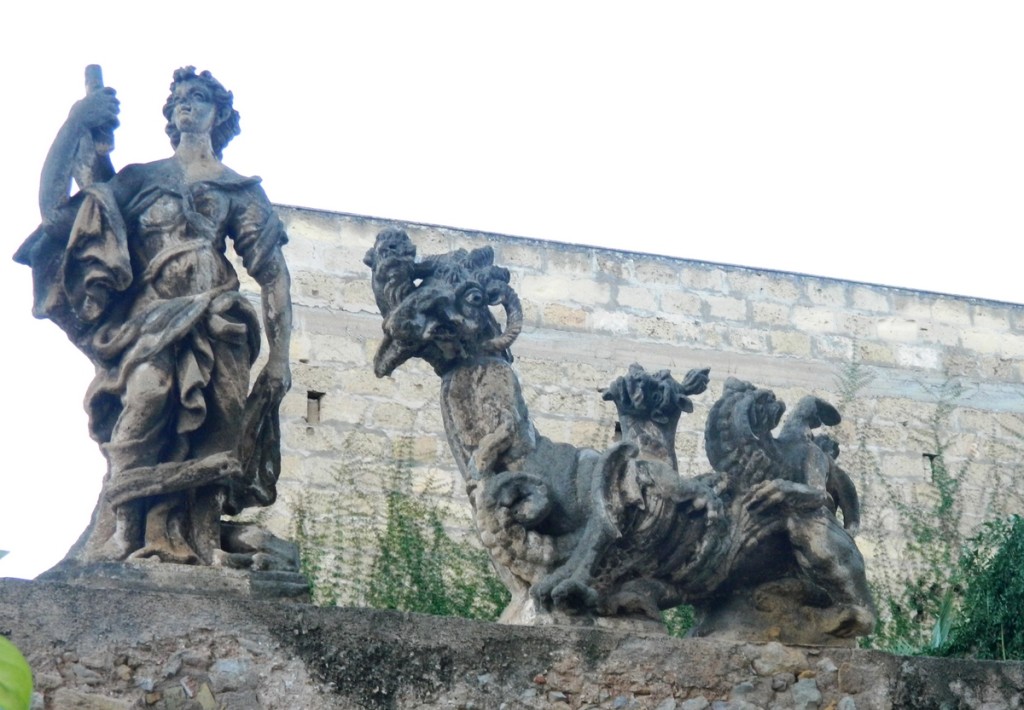
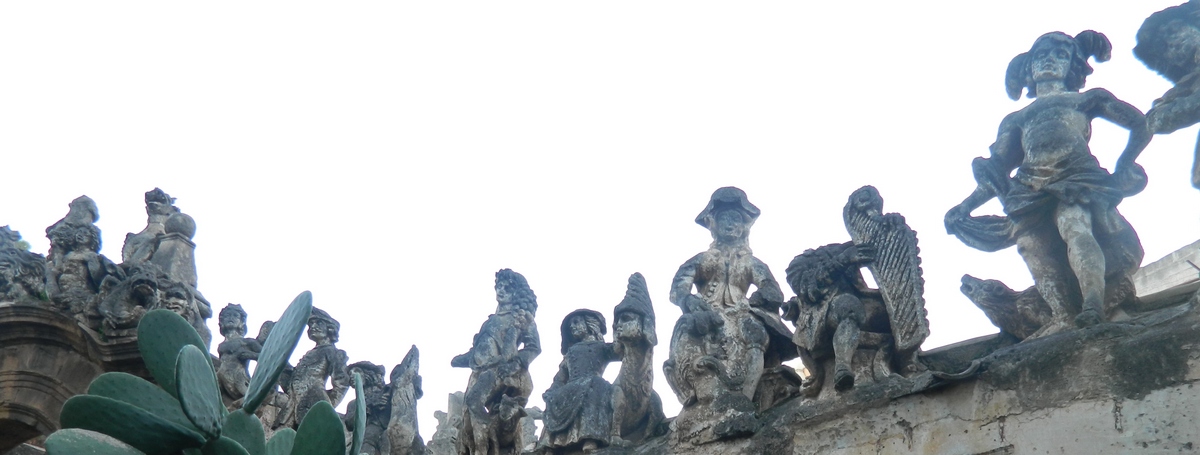
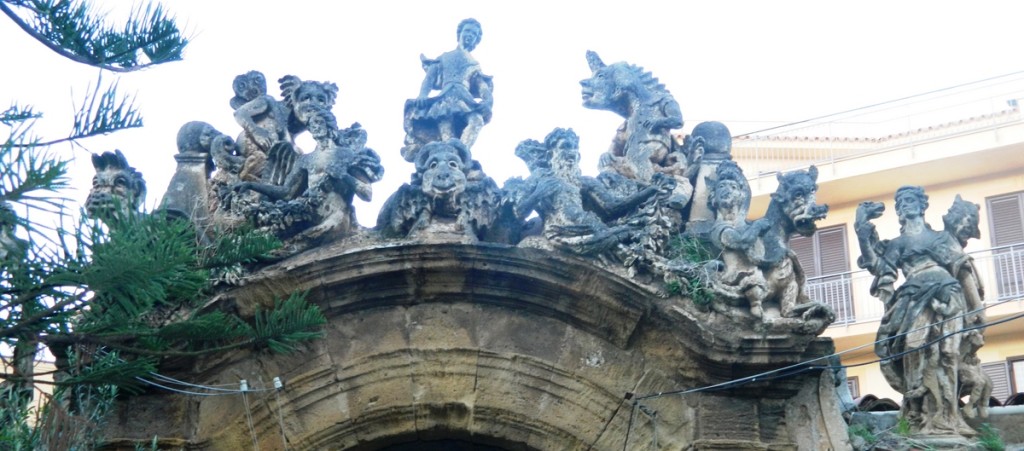
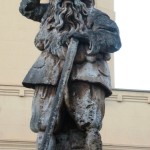
Abandoned garden surround by a wall  topped with grotesque sculptures. (Villa Palagonia)

Villa Palagonia, Bagheria, Sicily

I like wandering around the deserted gardens which sometimes surround palaces and stately homes.

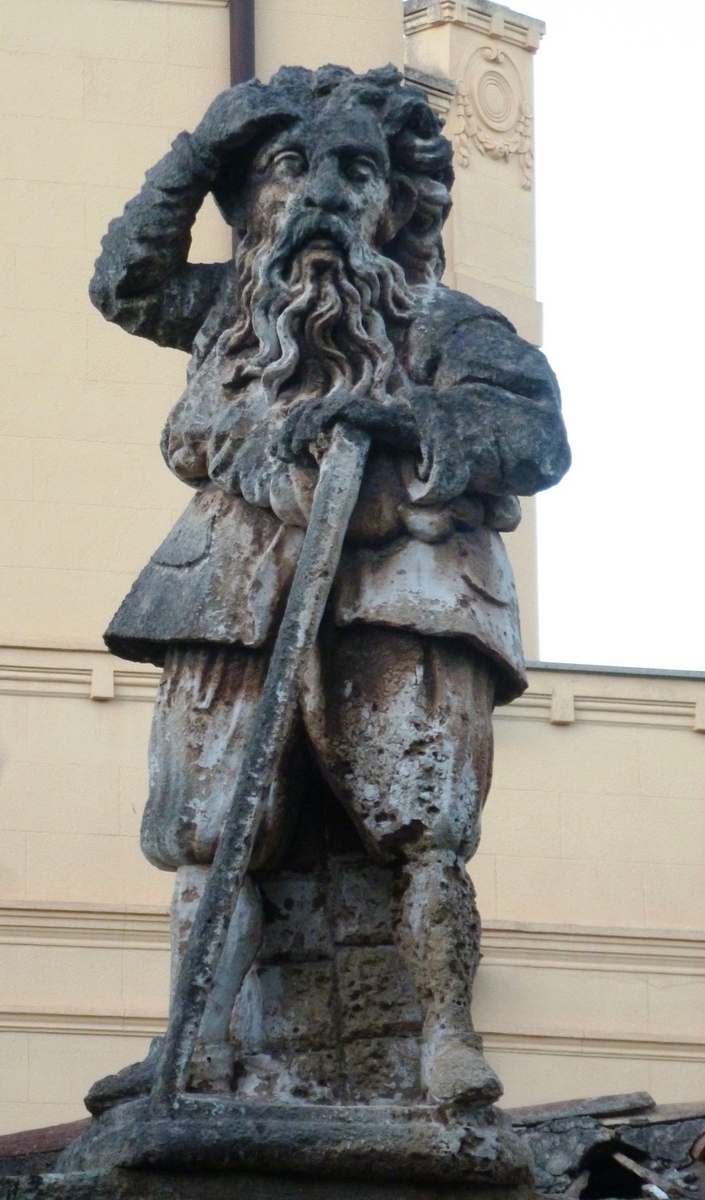
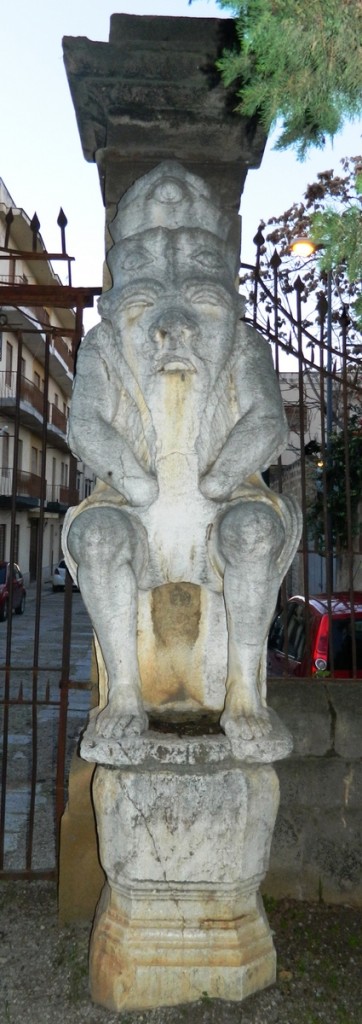
I wandered through the Baroque Villa Palagonia in Bagheria Sicily yesterday, whose grounds host massive grotesque gnomes, giants, gargoyles, mutants, and anthropomorphized monsters.

10-DSCN9818

14-DSCN9836

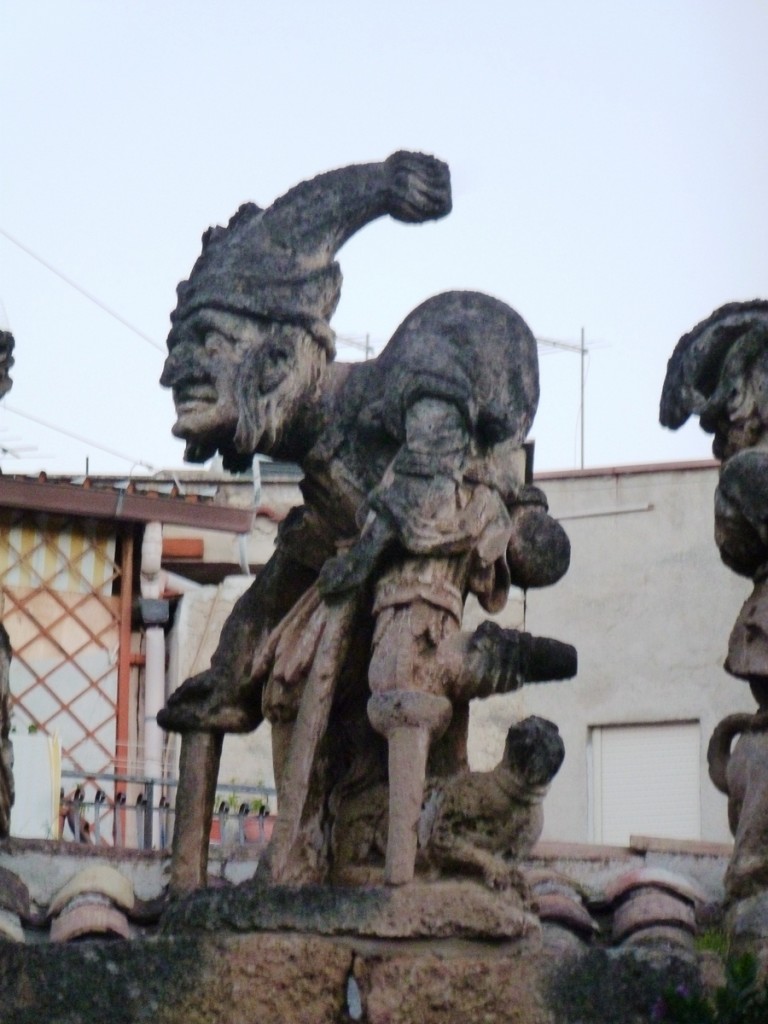
The villa was the home of Ferdinand, Prince of Palagonia, a hunchback, who took revenge on his wife’s lovers by cruelly satirizing them—often depicting them as hunchbacks!!

Hunchback (Wall around Villa Palagonia)

Hunchback (Wall around Villa Palagonia)

* * *

 Oh full of passion and pride and ambition, they built these palaces and gardens, how intensely they lived, and now their gardens are just the habitation of stray cats, and the birds which sing sweetly and loud.

05-P1050082

Cat on the wall of Villa Palagonia

03-P1040082

Cat in the garden of Villa Palagonia

All dead. Him who hated and satirized; him who was hated…

Hating. What a waste of a life!

Walking through the garden, I felt eager to align myself with what matters, for one day through our empty gardens too, stray cats might stroll, and birds sing loud and sweetly, unmindful of all our pride, passion and ambition.

People, despite their wealth, do not endure;
they are like the beasts that perish.

Their forms will decay in the grave,
far from their princely mansions.
16 Do not be overawed when others grow rich,
when the splendour of their houses increases;
17 for they will take nothing with them when they die,
their splendour will not descend with them.
18 Though while they live they count themselves blessed—
and people praise you when you prosper—
19 they will join those who have gone before them,
who will never again see the light of life. Psalm 49

06-DSCN9811

A row of grotesque figures adorns the wall of Villa Palagonia.


01-P1040058

Figure on wall of Villa Palagonia.


16-DSCN9866

Crowned figure guarding the gate of Villa Palagonia.

I thought too of Shelley’s “Ozymandias.”

I met a traveller from an antique land
Who said: “Two vast and trunkless legs of stone
Stand in the desert. Near them on the sand,
Half sunk, a shattered visage lies, whose frown
And wrinkled lip and sneer of cold command
Tell that its sculptor well those passions read
Which yet survive, stamped on these lifeless things,
The hand that mocked them and the heart that fed.
And on the pedestal these words appear:
`My name is Ozymandias, King of Kings:
Look on my works, ye mighty, and despair!’

Nothing beside remains. Round the decay
Of that colossal wreck, boundless and bare,
The lone and level sands stretch far away”. 

I am building things. I have built a small business which now solely supports our family. I am building a book. I am building a blog. I am building a platform on Twitter and Facebook so people read my blog. I am building a family life, and friendships, and a network of warm relationships here in Oxford, and with other writers elsewhere.

* * *

13-DSCN9830

Arch crowned with grotesque figures. (Villa Palagonia)

But…

If the Lord does not build the house,

In vain do the builders labour.

In vain is your earlier rising

Your going later to bed. (Psalm 127)

I want to know what the Lord intends me to build with my life, and I want, oh how desperately I want, to build with Christ, to be aligned with his flow of ideas as I build, so what I build, whether books or a family business or blog may last longer and be more life-giving than the deserted books and palaces and gardens which litter our globe.

Hall of Mirrors, Villa Palagonia.

Hall of Mirrors, Villa Palagonia.


Formal Entrance to Villa Palagonia

Formal Entrance to Villa Palagonia

Filed Under: In which I explore the Spiritual Life, In which I explore writing and blogging and creativity, In which I Travel and Dream, Writing and Blogging Tagged With: Bagheria, building to last, Sicily, Travel

Why I live in a yurt, off the grid, on a mountain in Idaho. A guest post by Esther Emery

By Anita Mathias

A yurt

My yurt

Do you know anybody who lives off the grid? Well, now you do. I do. I live in a yurt, which is a kind of a wonderful round tent, on three acres of wooded Idaho mountainside, with no power and no running water.

Mine is a rich life, full of wild and beauty. It is a planted life, connected to our sloped bit of dirt and all the rhythms of nature. And it is a conscious life, each day revealing the true cost of human existence: what it truly takes to feed us, keep us warm and sheltered, clean.

But I’ll tell you what my life is not. It isn’t easy. Or secure. Or safe. Or glamorous.

Truth be told, I probably wouldn’t do it if something didn’t make me.

It’s too hard. And it’s too hard to justify! Keeping the kids out of school, bathing only once a week, living all in one room – the five of us! Also the cost to relationships, when I have to go to a friend’s house just to make a simple phone call, not to mention how it makes my friends feel that I openly and publicly reject the most basic principles of modern life.

Oh, that Esther, she’s a whole lot of fun to hang out with! Always talking about the cost of our extractive economy, irreversible environmental damage, the profound injustices built into the supply chain…

I can’t help it. I am driven by a ghost.

The ghost was my mother, and in her life I didn’t think much of her. It is the task of adolescent children to fail to take their parents seriously. It wasn’t until after my mother died that I came to know her as having lived a courageous and prophetic life.

Her name was Carla Emery. She was born a farmer’s daughter in Montana, just ahead of the baby boom, and she was born to teach. The way she tells it, she felt sorry for the hippies when they started showing up in rural places with no skills. She wanted to teach them how to get along. In 1974, she showed up at a Seattle craft fair with a self-published manual for living off the land, and her table was mobbed. It was a quick road to celebrity.

But it was a short road, too. By the time I was born, six years later, America had shifted into the dawn of the Reagan era. My mother’s promise of spiritual fulfillment found through animals and muck and laboring to the harvest was more laughable than livable.

America gave up on my mother. But she didn’t give up.

All through the 80’s and the 90’s, my mother was a has-been and a nobody, but still she preached her difficult message to the world. She crisscrossed the country with boxes of books in the back of the van, meeting all her people: tending souls. Where the counterculture had been a forefront press, now it was the fringe of society. All the people on the edges: survivalists, die-hard hippies, drop-outs, and mountain libertarians. My mother met them all. She spoke to them. She gave lectures on “The Modern Homesteading Movement” and “Peak Oil.”

I was mortified. I couldn’t get away from it fast enough. There’s nothing worse than being a teenager whose mom does a public demonstration of how to kill a chicken.

She died when I was 25 years old. It was the year 2004. Like my mother, I am bound to the consciousness of my own time and my own generation. And, lately, we are turning back.

There have been books: in the last decade, a whole genre of exposé revealing the problems with our food supply and food supply chain. There is a deep and underground craving for a better way. Spiritual wholeness. Integrity. Slow food. Resistance to greed and commodification. My mother’s manual for living off the land is popular again.

It was several years ago, convergent with my husband’s desire to use his construction skills to build something of his own, that I began to make the shift myself. I began to drop consumerism. I picked up some gardening gloves. I started looking more and more like my mother every day.

So there you go. Now you know somebody who lives off the grid. I am here, in my woods, living my simple life: strange to society, perhaps, but natural in the most profound way. I live with the land, with the rhythms and the seasons of nature. And I raise my mother’s ghost.

EstherEmerywriter

Esther Emery

Esther Emery used to direct stage plays in Southern California. But that was a long time ago. Now she is pretty much a runaway, living off the grid in a yurt and tending to three acres in the foothills of the Rocky Mountains. She writes about faith and rebellion and trying to live a totally free life at www.estheremery.com. Connect with her on Twitter @EstherEmery.


Filed Under: In which I proudly introduce my guest posters Tagged With: Carla Emery, Esther Emery, Self-sufficiency, Wilderness

In Which We Do not Hear the Cheers of our Invisible Audience

By Anita Mathias

Image by Lize Rixt via stock.xchng

Image by Lize Rixt via stock.xchng

When Beethoven’s Ode to Joy was first performed at  the Theater am Karntnertor in Vienna in 1824, Beethoven conducting for tempo, had his back turned to the audience.

There was a standing ovation, the audience tossed their hats into the air; the applause was thunderous, and the aging exhausted composer knew nothing of it.

When the contralto, Caroline Unger, gently turned him around, he saw the ecstatic audience, on their feet, applauding.

* * *

Mr Holland’s Opus tells the story of an American aspiring composer, who marries too young (an accidental pregnancy), and then teaches music at high school for 31 years, all the while longing to complete his opus, his Great American Symphony.

At his forced retirement after music department budget cuts, the students play the glorious symphony on which he had laboured for all those decades. And as he stands, entranced at the music he had never yet heard, and overwhelmed with emotion, they tell him that they, in fact, are his Opus.  The lives he poured love and music into were his Opus.

* * *

A writer sows into her little patch of earth, and she does not know who, or how many, her words touch, or how.

We sow, we sow, in our little patch of earth, and we hope our words do some good in the world, touch and change other lives, even a little.

We send our words out into the world, to our invisible audience.

And it’s more than an earthly one.

It is, perhaps, at the end of the performance, at the end of our earthly lives, that God will turn us around and show us how the seeds we have planted have bloomed.

* * *

Always the invisible audience.

The other day, a member of our family got upset with another one, who, though upset too, remained silent, until the angst burned out.

And I said gently, “You thought your self-restraint passed unnoticed. But I am sure Someone was very proud of you, and said to the closest bystander, “Do you see my servant? Did you note the overwhelming temptation to yell back and sin? Did you note the self-restraint?”

* * *

 While we live our lives, intensely absorbed in the tempo, we sometimes miss the music our work creates, the reverberations through other people’s lives.

However, when we turn around and  see with eternal eyes, we will see our invisible audience, Christ Jesus himself; and the angels among whom there is joy when we repent; joy when we win the little victories no one else notices; joy at what Wordsworth called, “the best portion of a good man’s life, his little nameless, unremembered deeds of kindness and of love.”


Thank you Kelly Belmonte at , All Nine Muses for hosting me.

Filed Under: In which I explore writing and blogging and creativity, Writing and Blogging Tagged With: audience of one, Beethoven, Creativity, Ode to Joy, Our invisible audience, Wordsworth

When the Bible Makes You Want to Run Away… A Guest Post by Heather Caliri

By Anita Mathias


blurred_bible_pages

(credit Chris Zielecki)

This was going to be a pretty post about God singing back to us.

Zephaniah 3:17 says:

The Lord your God is in your midst,
a mighty one who will save;
he will rejoice over you with gladness;
he will quiet you by his love;
he will exult over you with loud singing.

I love this image of God singing back to us, of the music of the universe originating in the one who is mighty. I love the idea of God standing over us like a mother singing lullabies. I love the closeness, the power and music in this verse.

The only problem is the book that surrounds it.

It’s horrifying.

I don’t like reading about entrails being poured out, or people groping like the blind because they have sinned. I do not like hearing about the Philistines being wiped out completely.

I don’t usually like reading the prophets unedited, because I do not understand them.

I have been afraid of the Bible many times when I read it. Sometimes I read it and its words do not speak to me, or the words they do speak are dark and bloody, like something out of a movie I wouldn’t watch for fear of bad dreams. There is darkness and death in the Bible, and I want to ignore it. There is ugliness and pain and condemnation and I want to run away.

I have been trying, lately, to not run away. I have been trying to take baby steps towards being honest about passages that grieve me. I am trying to trust God with His word.

So, I bring myself back, trembling, to Zephaniah. There the Lord is, singing, and there is the death and destruction alongside him. I wonder: how do these belong together? How are entrails and the quiet love of the Lord not just in the same Bible, but in the same book?

And here’s what I see when I read more carefully, when I look through some commentaries and read a few different translations:

I see the power structures of the ancient Near East exposed and condemned.

The foreign powers: the kings that mock the Israelites and their God, who oppress and exile the people.

But also the powers in Israel: the wealthy, the indifferent, the corrupt.

Zephaniah speaks words of some comfort to the humble in the middle of the book:

Seek the Lord, all you humble of the land,
you who do what he commands.
Seek righteousness, seek humility;
perhaps you will be sheltered
on the day of the Lord’s anger. (2:3)

It is something, especially given the verses that attracted me to Zephaniah in the first place. No, I don’t like that word “perhaps,” but it is something.

I think about those causing pain in our world and I can understand, with an ounce of me, the desire for compensatory suffering.

I sit with that ounce for a moment. Here’s what comes to me.

Compensatory suffering: I see Jesus on the road to Calvary. I see him stumbling as though blind. I see them piercing his side, and the water from his entrails running out.

Did the conflagration come? No, God took it upon himself. Somehow, he swallowed whole that awful prophecy and bore its destruction for us.

The truth is, these words, the awful darkness in the Bible is too much for me, but it is often because I hear it echoed each day in the destructiveness of this world. I do not want it to exist, but it does. I do not want redemption to be needful, but it is.

I would like the darkness to be less obvious in the Bible, because it makes me deeply uncomfortable. But maybe uncomfortable isn’t a terrible reaction. No, I’m learning to sit in my discomfort and my honesty and wait for the song to come.

* * *

Heather Caliri

Heather Caliri

Heather Caliri is a writer and mom from San Diego. Two years ago, she started saying little yeses to faith, art, and life. The results shocked her. Get her free e-book, Dancing Back to Jesus: Post-perfectionist faith in five easy verbs, on her blog, A Little Yes.

Filed Under: In which I proudly introduce my guest posters Tagged With: darkness in the Bible, God sings over us, Guest posts, Heather Caliri, the goodness of God, Zephaniah

Writing in the Cold by Ted Solotaroff, a Brilliant Essay on the Psychology of Writing

By Anita Mathias

“Writing in the Cold,” by Ted Solotaroff from The Pushcart Prize is absolutely the very best and most inspiring essay for late bloomer writers. It’s also the most insightful on the emotional and psychological struggles that are part of becoming a writer.

I met Ted at the Squaw Valley Writers Conference in 1993, and he read my early work, and was most encouraging—which is another reason I love this essay!

Here’s a link to it.


Filed Under: In which I explore writing and blogging and creativity, Writing and Blogging Tagged With: late bloomer writers, Ted Solotaroff, Writing in the Cold

Where Good Stories are to be Found

By Anita Mathias

aboriginal
Image Credit


My tender-hearted children hated sad stories. Neither would let me read Oscar Wilde’s exquisite short stories to them, or even Hans Christian Andersen’s because they were too sad.

When I recommended a book or movie, they wanted to know if it was sad, and especially if it had a sad ending.

But there is no story without sadness, I keep telling them. It’s an old creative writing maxim: No story without conflict.

* * *

Who needs the stress and emotional trauma of conflict with others? And who needs internal conflict—when the self is at war with itself, knowing what is good to do, but doing the very things it hates, punishing itself by over-eating, or over-working, or under-sleeping? By psycho-somatic illness?

But without this internal conflict–this struggle against our very selves: to corral ourselves to rise early, work hard, stay focused, self-educate, eat healthily, exercise, read, write–our lives would be flaccid and formless, with the structure of obstacles, both within and without, to overcome.

And, as Donald Miller writes in A Thousand Miles in a Million Years, dealing with these obstacles head-on (losing 150 pounds in his case, and tracking down the father who abandoned him) gives our lives a shapely story.

Because stories and blogs come out of sadness, and struggle, and failure, and eventual triumph over Resistance.

* * *

And ironically, each failure, and sadness and step backwards gives us more of a story than our successes.

Where are stories found? Not in quiet times, not in scripture study, not in money you gave away, not in fasts, not in the meals you took around, or your turn in the coffee rota, these good, shiny things, which, anyway, by the strictest Scriptural injunction we are commanded to keep secret.

Where are our stories found?

In the places where you learn about yourself, and you learn about God, and you learn about shame and grace and self-forgiveness and God’s forgiveness in the crucible of failure.

When your daughter says, “I don’t want to play scrabble today, Mum, because you get snooty about my words,” and you say “Oh no, of course I won’t get snooty about your words!” and then you do indeed get so snooty!

When the house could so do with some loving up, and indeed, so could those who dwell in it, and you’ve resolved to do both, but words are flowing, and you dance in the flow.

When you had solemnly resolved on that run today and yoga, and weights—you know, flexibility, strength, cardio-vascular, the three elements of fitness!–but an idea presents itself, and you want to explore it, express it,

And the word count may be good at the end of the day, but your Pilgrim’s Progress….well, it hasn’t progressed.

And you wonder why today joy doesn’t throb,

Or peace flow like a river.

And you remember: He who loves his blog more than me is not worthy of me.

She who loves her writing more than me is not worthy of me.

And all you can say is Kyrie Eleison.
Lord, have mercy.


And you kneel down and repent

Till peace flows again.

And you say, “Lord, I am not worthy of you.
But say but the Word
and I shall be healed.”

And he says the Word.

The word like manna,
The word like honey
Coursing through your brain.

And you, the unworthy, are healed

And, again, sing.

* * *
And, besides, you have a story!

Filed Under: In which I explore writing and blogging and creativity, In which I Pursue Personal Transformation or Sanctification, In which I'm amazed by the goodness of God, Writing and Blogging Tagged With: failure, Stories, the goodness of God

  • « Previous Page
  • 1
  • …
  • 3
  • 4
  • 5
  • 6
  • 7
  • …
  • 17
  • Next Page »

Sign Up and Get a Free eBook!

Sign up to be emailed my blog posts (one a week) and get the ebook of "Holy Ground," my account of working with Mother Teresa.

Join 543 Other Readers

My Books

Rosaries, Reading, Secrets: A Catholic Childhood in India

Rosaries, Reading Secrets, B&N
USA

UK

Wandering Between Two Worlds: Essays on Faith and Art

Wandering Between Two Worlds
USA

UK

Francesco, Artist of Florence: The Man Who Gave Too Much

Francesco, Artist of Florence
US

UK

The Story of Dirk Willems

The Story of Dirk Willems
US

UK

My Latest Meditation

Anita Mathias: About Me

Anita Mathias

Read my blog on Facebook

Follow me on Twitter

Follow @anitamathias1

Recent Posts

  • Using God’s Gift of Our Talents: A Path to Joy and Abundance
  • The Kingdom of God is Here Already, Yet Not Yet Here
  • All Those Who Exalt Themselves Will Be Humbled & the Humble Will Be Exalted
  • Christ’s Great Golden Triad to Guide Our Actions and Decisions
  • How Jesus Dealt With Hostility and Enemies
  • Do Not Be Afraid, but Do Be Prudent
  • For Scoundrels, Scallywags, and Rascals—Christ Came
  • How to Lead an Extremely Significant Life
  • Don’t Walk Away From Jesus, but if You Do, He Still Looks at You and Loves You
  • How to Find the Freedom of Forgiveness
Premier Digital Awards 2015 - Finalist - Blogger of the year
Runner Up Christian Media Awards 2014 - Tweeter of the year

Categories

What I’m Reading


Wolf Hall
Hilary Mantel

Wolf Hall --  Amazon.com
Amazon.com

Amazon.co.uk

Silence and Honey Cakes:
The Wisdom Of The Desert
Rowan Williams

Silence and Honey Cakes --  Amazon.com
Amazon.com

Amazon.co.uk

The Long Loneliness:
The Autobiography of the Legendary Catholic Social Activist
Dorothy Day

The Long Loneliness --  Amazon.com
Amazon.com

Amazon.co.uk

Country Girl
Edna O'Brien

Country Girl  - Amazon.com
Amazon.com

Amazon.co.uk

Archive by month

My Latest Five Podcast Meditations

INSTAGRAM

anita.mathias

My memoir: Rosaries, Reading, Secrets https://amzn.to/42xgL9t
Oxford, England. Writer, memoirist, podcaster, blogger, Biblical meditation teacher, mum

Well, hello friends! Breaking radio silence to let Well, hello friends! Breaking radio silence to let you know that I have taped a meditation for you on Christ’s famous Parable of the Talents in Matthew 25. https://anitamathias.com/2025/11/05/using-gods-gift-of-our-talents-a-path-to-joy-and-abundance/
Here you are, click the play button in the blog post for a brief meditation, and some moments of peace, and, perhaps, inspiration in your day 🙂
Hi Friends, I have taped a meditation; do listen a Hi Friends, I have taped a meditation; do listen at this link: https://anitamathias.com/2025/04/08/the-kingdom-of-god-is-here-already-yet-not-yet-here-2/
It’s on the Kingdom of God, of which Christ so often spoke, which is here already—a mysterious, shimmering internal palace in which, in lightning flashes, we experience peace and joy, and yet, of course, not yet fully here. We sense the rainbowed presence of Christ in the song which pulses through creation. Christ strolls into our rooms with his wisdom and guidance, and things change. Our prayers are answered; we are healed; our hearts are strangely warmed. Sometimes.
And yet, we also experience evil within & all around us. Our own sin which can shatter our peace and the trajectory of our lives. And the sins of the world—its greed, dishonesty and environmental destruction.
But in this broken world, we still experience the glory of creation; “coincidences” which accelerate once we start praying, and shalom which envelops us like sudden sunshine. The portals into this Kingdom include repentance, gratitude, meditative breathing, and absolute surrender.
The Kingdom of God is here already. We can experience its beauty, peace and joy today through the presence of the Holy Spirit. But yet, since, in the Apostle Paul’s words, we do not struggle only “against flesh and blood, but against the rulers, against the unseen powers of this dark world and against the spiritual forces of evil,” its fullness still lingers…
Our daughter Zoe was ordained into the Church of E Our daughter Zoe was ordained into the Church of England in June. I have been on a social media break… but … better late than never. Enjoy!
First picture has my sister, Shalini, who kindly flew in from the US. Our lovely cousins Anthony and Sarah flank Zoe in the next picture.
The Bishop of London, Sarah Mullaly, ordained Zoe. You can see her praying that Zoe will be filled with the Holy Spirit!!
And here’s a meditation I’ve recorded, which you might enjoy. The link is also in my profile
https://anitamathias.com/2024/11/07/all-those-who-exalt-themselves-will-be-humbled-the-humble-will-be-exalted/
I have taped a meditation on Jesus statement in Ma I have taped a meditation on Jesus statement in Matthew 23, “For those who exalt themselves will be humbled, and those who humble themselves will be exalted.”
Do listen here. https://anitamathias.com/2024/11/07/all-those-who-exalt-themselves-will-be-humbled-the-humble-will-be-exalted/
Link also in bio.
And so, Jesus states a law of life. Those who broadcast their amazingness will be humbled, since God dislikes—scorns that, as much as people do.  For to trumpet our success, wealth, brilliance, giftedness or popularity is to get distracted from our life’s purpose into worthless activity. Those who love power, who are sure they know best, and who must be the best, will eventually be humbled by God and life. For their focus has shifted from loving God, doing good work, and being a blessing to their family, friends, and the world towards impressing others, being enviable, perhaps famous. These things are houses built on sand, which will crumble when hammered by the waves of old age, infirmity or adversity. 
God resists the proud, Scripture tells us—those who crave the admiration and power which is His alone. So how do we resist pride? We slow down, so that we realise (and repent) when sheer pride sparks our allergies to people, our enmities, our determination to have our own way, or our grandiose ego-driven goals, and ambitions. Once we stop chasing limelight, a great quietness steals over our lives. We no longer need the drug of continual achievement, or to share images of glittering travel, parties, prizes or friends. We just enjoy them quietly. My life is for itself & not for a spectacle, Emerson wrote. And, as Jesus advises, we quit sharp-elbowing ourselves to sit with the shiniest people, but are content to hang out with ordinary people; and then, as Jesus said, we will inevitably, eventually, be summoned higher to the sparkling conversation we craved. 
One day, every knee will bow before the gentle lamb who was slain, now seated on the throne. We will all be silent before him. Let us live gently then, our eyes on Christ, continually asking for his power, his Spirit, and his direction, moving, dancing, in the direction that we sense him move.
Link to new podcast in Bio https://anitamathias.co Link to new podcast in Bio https://anitamathias.com/2024/02/20/how-jesus-dealt-with-hostility-and-enemies/
3 days before his death, Jesus rampages through the commercialised temple, overturning the tables of moneychangers. Who gave you the authority to do these things? his outraged adversaries ask. And Jesus shows us how to answer hostile questions. Slow down. Breathe. Quick arrow prayers!
Your enemies have no power over your life that your Father has not permitted them. Ask your Father for wisdom, remembering: Questions do not need to be answered. Are these questioners worthy of the treasures of your heart? Or would that be feeding pearls to hungry pigs, who might instead devour you?
Questions can contain pitfalls, traps, nooses. Jesus directly answered just three of the 183 questions he was asked, refusing to answer some; answering others with a good question.
But how do we get the inner calm and wisdom to recognise
and sidestep entrapping questions? Long before the day of
testing, practice slow, easy breathing, and tune in to the frequency of the Father. There’s no record of Jesus running, rushing, getting stressed, or lacking peace. He never spoke on his own, he told us, without checking in with the Father. So, no foolish, ill-judged statements. Breathing in the wisdom of the Father beside and within him, he, unintimidated, traps the trappers.
Wisdom begins with training ourselves to slow down and ask
the Father for guidance. Then our calm minds, made perceptive, will help us recognise danger and trick questions, even those coated in flattery, and sidestep them or refuse to answer.
We practice tuning in to heavenly wisdom by practising–asking God questions, and then listening for his answers about the best way to do simple things…organise a home or write. Then, we build upwards, asking for wisdom in more complex things.
Listening for the voice of God before we speak, and asking for a filling of the Spirit, which Jesus calls streams of living water within us, will give us wisdom to know what to say, which, frequently, is nothing at all. It will quieten us with the silence of God, which sings through the world, through sun and stars, sky and flowers.
Especially for @ samheckt Some very imperfect pi Especially for @ samheckt 
Some very imperfect pictures of my labradoodle Merry, and golden retriever Pippi.
And since, I’m on social media, if you are the meditating type, here’s a scriptural meditation on not being afraid, while being prudent. https://anitamathias.com/2024/01/03/do-not-be-afraid-but-do-be-prudent/
A new podcast. Link in bio https://anitamathias.c A new podcast. Link in bio
https://anitamathias.com/2024/01/03/do-not-be-afraid-but-do-be-prudent/
Do Not Be Afraid, but Do Be Prudent
“Do not be afraid,” a dream-angel tells Joseph, to marry Mary, who’s pregnant, though a virgin, for in our magical, God-invaded world, the Spirit has placed God in her. Call the baby Jesus, or The Lord saves, for he will drag people free from the chokehold of their sins.
And Joseph is not afraid. And the angel was right, for a star rose, signalling a new King of the Jews. Astrologers followed it, threatening King Herod, whose chief priests recounted Micah’s 600-year-old prophecy: the Messiah would be born in Bethlehem, as Jesus had just been, while his parents from Nazareth registered for Augustus Caesar’s census of the entire Roman world. 
The Magi worshipped the baby, offering gold. And shepherds came, told by an angel of joy: that the Messiah, a saviour from all that oppresses, had just been born.
Then, suddenly, the dream-angel warned: Flee with the child to Egypt. For Herod plans to kill this baby, forever-King.
Do not be afraid, but still flee? Become a refugee? But lightning-bolt coincidences verified the angel’s first words: The magi with gold for the flight. Shepherds
telling of angels singing of coming inner peace. Joseph flees.
What’s the difference between fear and prudence? Fear is being frozen or panicked by imaginary what-ifs. It tenses our bodies; strains health, sleep and relationships; makes us stingy with ourselves & others; leads to overwork, & time wasted doing pointless things for fear of people’s opinions.
Prudence is wisdom-using our experience & spiritual discernment as we battle the demonic forces of this dark world, in Paul’s phrase.It’s fighting with divinely powerful weapons: truth, righteousness, faith, Scripture & prayer, while surrendering our thoughts to Christ. 
So let’s act prudently, wisely & bravely, silencing fear, while remaining alert to God’s guidance, delivered through inner peace or intuitions of danger and wrongness, our spiritual senses tuned to the Spirit’s “No,” his “Slow,” his “Go,” as cautious as a serpent, protected, while being as gentle as a lamb among wolves.
Link to post with podcast link in Bio or https://a Link to post with podcast link in Bio or https://anitamathias.com/2023/09/22/dont-walk-away-from-jesus-but-if-you-do-he-still-looks-at-you-and-loves-you/
Jesus came from a Kingdom of voluntary gentleness, in which
Christ, the Lion of Judah, stands at the centre of the throne in the guise of a lamb, looking as if it had been slain. No wonder his disciples struggled with his counter-cultural values. Oh, and we too!
The mother of the Apostles James and John, asks Jesus for a favour—that once He became King, her sons got the most important, prestigious seats at court, on his right and left. And the other ten, who would have liked the fame, glory, power,limelight and honour themselves are indignant and threatened.
Oh-oh, Jesus says. Who gets five talents, who gets one,
who gets great wealth and success, who doesn’t–that the
Father controls. Don’t waste your one precious and fleeting
life seeking to lord it over others or boss them around.
But, in his wry kindness, he offers the ambitious twelve
and us something better than the second or third place.
He tells us how to actually be the most important person to
others at work, in our friend group, social circle, or church:Use your talents, gifts, and energy to bless others.
And we instinctively know Jesus is right. The greatest people in our lives are the kind people who invested in us, guided us and whose wise, radiant words are engraved on our hearts.
Wanting to sit with the cleverest, most successful, most famous people is the path of restlessness and discontent. The competition is vast. But seek to see people, to listen intently, to be kind, to empathise, and doors fling wide open for you, you rare thing!
The greatest person is the one who serves, Jesus says. Serves by using the one, two, or five talents God has given us to bless others, by finding a place where our deep gladness and the world’s deep hunger meet. By writing which is a blessing, hospitality, walking with a sad friend, tidying a house.
And that is the only greatness worth having. That you yourself,your life and your work are a blessing to others. That the love and wisdom God pours into you lives in people’s hearts and minds, a blessing
https://anitamathias.com/.../dont-walk-away-from-j https://anitamathias.com/.../dont-walk-away-from-jesus.../
Sharing this podcast I recorded last week. LINK IN BIO
So Jesus makes a beautiful offer to the earnest, moral young man who came to him, seeking a spiritual life. Remarkably, the young man claims that he has kept all the commandments from his youth, including the command to love one’s neighbour as oneself, a statement Jesus does not challenge.
The challenge Jesus does offers him, however, the man cannot accept—to sell his vast possessions, give the money to the poor, and follow Jesus encumbered.
He leaves, grieving, and Jesus looks at him, loves him, and famously observes that it’s easier for a camel to squeeze through the eye of a needle than for a rich person to live in the world of wonders which is living under Christ’s kingship, guidance and protection. 
He reassures his dismayed disciples, however, that with God even the treasure-burdened can squeeze into God’s kingdom, “for with God, all things are possible.”
Following him would quite literally mean walking into a world of daily wonders, and immensely rich conversation, walking through Israel, Lebanon, Syria, and Jordan, quite impossible to do with suitcases and backpacks laden with treasure. 
For what would we reject God’s specific, internally heard whisper or directive, a micro-call? That is the idol which currently grips and possesses us. 
Not all of us have great riches, nor is money everyone’s greatest temptation—it can be success, fame, universal esteem, you name it…
But, since with God all things are possible, even those who waver in their pursuit of God can still experience him in fits and snatches, find our spirits singing on a walk or during worship in church, or find our hearts strangely warmed by Scripture, and, sometimes, even “see” Christ stand before us. 
For Christ looks at us, Christ loves us, and says, “With God, all things are possible,” even we, the flawed, entering his beautiful Kingdom.
Follow on Instagram

© 2025 Dreaming Beneath the Spires · All Rights Reserved. · Cookie Policy · Privacy Policy