Anita Mathias: Dreaming Beneath the Spires

Anita Mathias's Blog on Faith and Art

  • Home
  • My Books
  • Meditations
  • Essays
  • Contact
  • About Me

The Ten Habits of the Happy Christian

By Anita Mathias

Irene Mathias, aged 4

1 Seek Happiness

George Mueller considered happiness the normal emotional state of the Christian.

“I saw more clearly than ever, that the first great and primary business to which I ought to attend every day was to have my soul happy in the Lord.  The first thing to be concerned about was not, how much I might serve the Lord, but how I might get my soul into a happy state, and how my inner man might be nourished.

Martin Luther too took happiness very seriously. Note the urgency with which he deals with unhappiness. “First, when I feel that I have become cool and joyless in prayer because of other tasks or thoughts (for the flesh and the devil always impede and obstruct prayer), I take my little psalter, hurry to my room,  and, as time permits, I say quietly to myself and word-for-word the Ten Commandments, the Creed, and, if I have time, some words of Christ or of Paul, or some psalms, just as a child might do.

2 The Kingdom of God is within you.

Happiness mostly depends on one’s thoughts and attitude, on zapping negativity.

Chuck Swindoll memorably writes:

The longer I live, the more I realize the important of one’s attitude. Attitude, to me, is more important than the past, education, money, than circumstances, than failure, than successes, than what other people think or say or do. It is more important than appearance, giftedness or skill. It will make or break a company…a church…a home.

The remarkable thing is we have a choice everyday regarding the attitude we will embrace for that day. We cannot change our past…we cannot change the fact that people will act in a certain way. We cannot change the inevitable. The only thing we can do is play on the one string we have, and that is our attitude. I am convinced that life is 10% what happens to me and 90% of how I react to it. And so it is with you. We are in charge of our attitudes.

And we need to feed the white dog, not the black dog.

3 The Practice of Gratitude contributes greatly to happiness, as does the habit of praising the Lord, anyway.

For continued joy, we all need ways to process our past, seeing what is redemptive in the negative, and give thanks for both the episodes we have seen God redeem, and those we have not yet watched him redeem.

4 Cultivate Cheerfulness

While we all have a set point for happiness determined by genetics and our experiences in utero and in early childhood, anyone can cultivate the habit of cheerfulness. The cheerful heart has a continual feast (Prov 15:15).

Cheerfulness is a decision which becomes a habit, and then a temperament.

I have discovered that going through one’s day giving thanks for the ever-changing tapestry of the skies, and the day’s little goodnesses makes a perfectly ordinary day magical.

5 Temple Maintenance

We are spiritual beings having a physical experience. Exercising, a healthy diet (minus too much sugar, which is toxic and white carbs, which are unnecessary), enough sleep, and tidy, pretty surroundings enhances happiness. I am working on all of these!

6 Acceptance and Serenity

Holiness is “giving what God takes, and taking what he gives with a big smile,” Mother Teresa said. Yeah, happiness too!

The famous Serenity Prayer attributed to Reinhold Neibuhr captures this best

 God grant me the serenity
to accept the things I cannot change;
courage to change the things I can;
and wisdom to know the difference.

Living one day at a time;
Enjoying one moment at a time;
Accepting hardships as the pathway to peace;
Taking, as He did, this sinful world
as it is, not as I would have it;
Trusting that He will make all things right
if I surrender to His Will;
That I may be reasonably happy in this life
and supremely happy with Him
Forever in the next.
Amen.

7 Prayer and Scripture as anchors for one’s life

For me, joy leaks within hours if I have not prayed. Friendship with Christ, a secret friend always with you, is probably the biggest bringer of contentment.

Besides, God promises us a mysterious, unspecified but tempting and tantalizing reward for spending time with him.

With practice, prayer soon becomes a sweet, silent melody flowing through one’s day, a secret stream beneath its surface.

8 Deal with the Joy-Blockers

Unforgiveness is probably the biggest one, consigning us to continued torment.

We need our own strategies for dealing with inevitable failure, guilt and shame—rapid, thorough repentance and seeking God’s forgiveness (and basking in his love) to help us escape continued patterns and vicious circles of sin.

9 Learn to Convert Worry to Prayer

Worry and anxiety is another joy-devourer. I have been trying to develop the habit of instantly praying about my worries—trying to instinctively convert them to prayer, as a sunflower naturally turns towards the sun and butterflies.

I am learning to rapidly chuck my anxieties and uncertainties into his arms. To let my worries become his worries, as in this lovely little Max Lucado story.

10 Relationships

Friendship causes “perhaps half of all the happiness in the world,” says C. S. Lewis in his brilliant essay, The Inner Ring.  Lewis was a bachelor for most of his life, or he would have certainly added a happy marriage and happy parenthood to life’s joys.

What would you add?
Filed Under: In which I pursue happiness and the bluebird of joy Tagged With: Happiness

One Secret of Joy: Be More Dog

By Anita Mathias

https://youtu.be/LB8dD9c5AgA

So what’s the secret of a dog’s wild energy and wagging tail?
Their warm heart, their boundless capacity for love? Their short memories, their natural ability to forgive?
Be more dog.

http://youtu.be/yu9sWjnJFHU

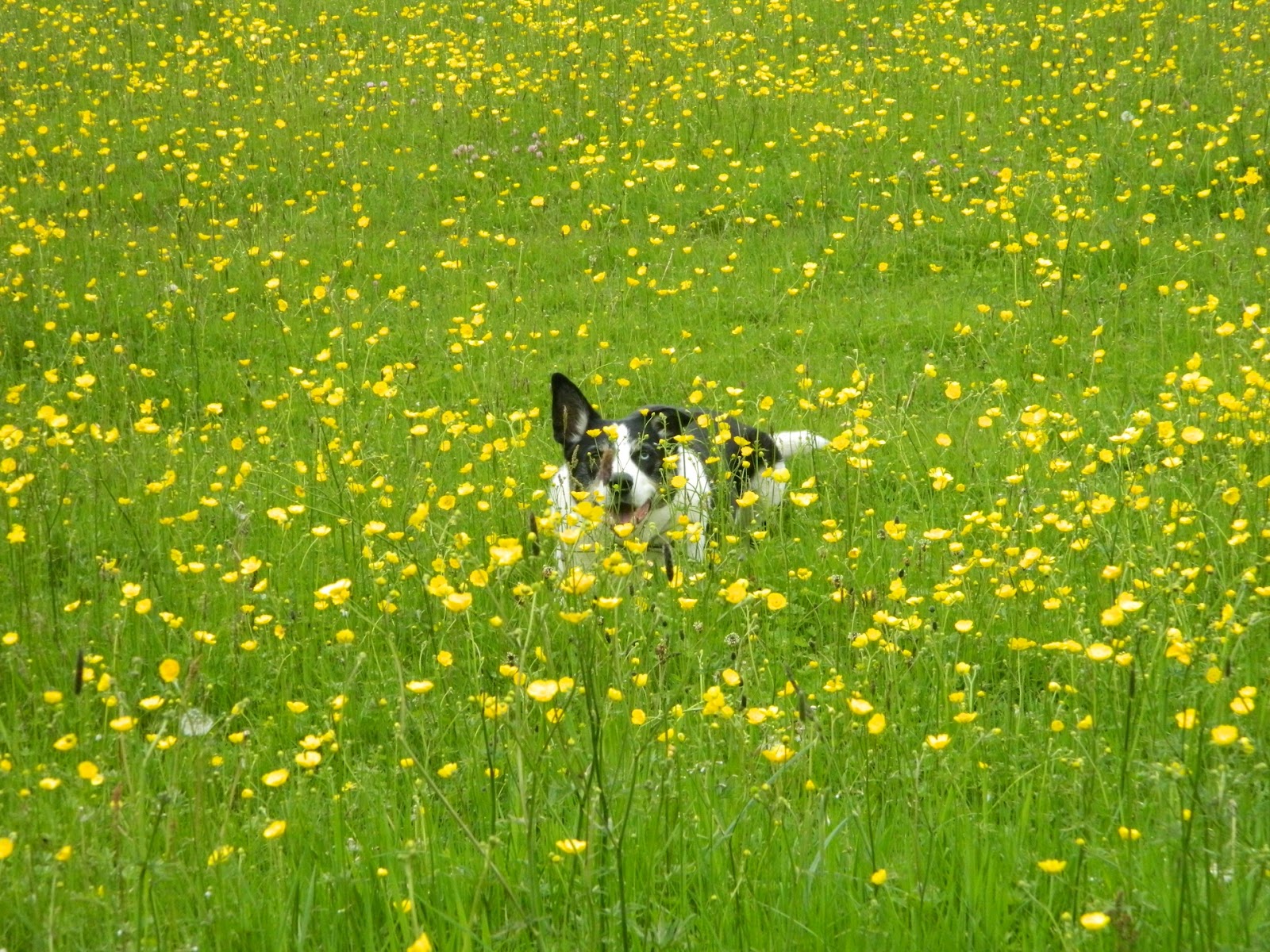
And here is Jake the Collie, in the buttercup meadow behind my house

And me and Merry, my Labradoodle

anita_merry

Filed Under: In which I pursue happiness and the bluebird of joy, pets, simple pleasures Tagged With: Dogs, joy

New Year’s Resolutions, 2014 : A Long Obedience in the Same Direction

By Anita Mathias

Mountain_Path_Stock_by_MirandaRose_Stock

(credit)

“The essential thing “in heaven and in earth” is that there should be long OBEDIENCE in the same direction, there thereby results, and has always resulted in the long run, something which has made life worth living; for instance, virtue, art, music, dancing, reason, spirituality– anything whatever that is transfiguring, refined, foolish, or divine.” Nietzsche, Beyond Good and Evil

29% of people break their New Year’s resolutions by Jan 14th.

I have cunningly beaten those odds by not formulating them until Jan 14th!!

No new projects this year–phew!!–just working on my ongoing goals, but with alignment with God and his power, and hopefully more focus, discipline and wisdom. A long obedience in the same direction.

* * *

So I’m peeking at my 2013 goals and hopes, seeing what worked and what didn’t, and formulating my 2014 goals.

Writing

A) I am hoping to complete and publish my memoir, Mind Has Mountains, this year. Have organized it, and written some chapters.

B) Bible Blogging—I have blogged quite a bit on Genesis and Matthew, and would like to complete my reflections on these books, and publish them.

C) “Little Books: ”What we want is not more little books about Christianity, but more little books by Christians on other subjects–with their Christianity latent.” C. S. Lewis

I wrote a little meditation on the Beatitude “The Meek Inherit the Earth,” and an illustrated picture book, “Francesco: Artist of Florence,” last year. The latter is still being illustrated, but will hopefully be on Amazon within a month.

D) Blogging goals—Post 5-6 days a week, taking Sunday off. Do shorter posts (200-500 words) and do more guest posts for other bloggers.

Try to write evergreen posts which can still be read and enjoyed in a year or five years.

II Health and Weight. Diet and Exercise

I lost 5 pounds in 2012, and 10 in 2013.

I would like to lose 26 in 2014 (but won’t be crushed if I lose 11).

How? Steadily build up endurance, walking at least 10,000 steps every day, and 1-3 longer walks every week.

Am doing Yoga most days, because it induces a “change of state,” like prayer does. It helps me feel calm, clear-headed, mentally fresh, emotionally at peace, tension and conflict resolved with all that stretching, quietness and breathing. The mind and body, well, they are inextricable!!

Diet—I plan to avoid sugar and white flour as much as possible. Limit carbs; increase veggies.

I have been physically healthy this year, just one cold and cough, no flu or other illnesses, no doctor visits. That’s because I have changed my diet, having green smoothies 2-3 times a day, and lots of salad and veggies. I have eccentrically been having a spinach and romaine salad with feta and olives for breakfast along with my green smoothie, and intend to continue this!

Am slowly moving to eating more vegetables and beans and fewer carbs.

Am planning to watch out for emotional eating, and only eat when hungry. And ask, “Is this going to be a blessing to my body?”

A Stickk commitment helped—I handed over $5 to charity every week that I did not achieve my weight loss goal of .5 lb!! It kept me focused on how exactly I was doing, and to see beyond daily fluctuations. It made me 10 pounds thinner, and well–poorer too!

III Waking Early

 In “The Circle-Maker” Mark Batterson, wrote that early rising is the most important predictor of spiritual AND occupational success.

Last year’s goal was 5 a.m., and I reached 6 a.m.  I plan another gradual assault on 5 a.m.

IV Domestic Order

I read once that most gifted under-achievers live in domestic chaos. And I did for a while.

However, since 2008, we’ve had a cleaner once a week, which means we’ve picked everything up for the cleaner once a week. But I haven’t reached William Morris’s and my own domestic ideal of having “nothing in my house that I do not believe to be beautiful or know to be useful.” Or my ideal of having everything in its place.

What’s really helped me since August has been the 365 less things project of getting rid of one thing a day. (Well, okay, I get rid of 7 things the day the cleaner comes).

It’s helped because of the paradigm shift—What am I not using? What can I get rid of? I usually get rid of far more than 7 things. And anticipate having a house with nothing in it that’s neither beautiful nor useful within 1-3 years.

At the moment, I am finishing the decluttering in our bedroom, and working on my study and the library. We bought a romantic, old rambling house, bigger than we needed, which means we have more housework…

V Gardening

I wanted to resume gardening last year, and did so a bit, but then it got dark early, and I got absorbed in writing.

Maybe once I wake earlier, I will have time to do some work in the garden in these short January days.

VI Reading

I so want to recover the girl whose greatest delight was reading, but since I believe in small changes, I will be content if I read one book more than I did last year.

I have started switching off my computer an hour before bedtime to tidy our bedroom, do some yoga, and read myself to sleep, so have that reading slot, and read in the first thing in the morning slot, and a little bit before I write to get the rhythms of good writing into my blood.

The secret of forming a new habit is to find a slot for it, and I am working on that.

So I hope to continue working on these goals, more a long obedience in the same direction, than New Year’s resolutions.


Filed Under: goals, goals Tagged With: 2014, Goals, new year's resolutions

The Last Human Freedom: To Choose One’s Own Attitude in Any Circumstances (From Viktor Frankl, Man’s Search for Meaning)

By Anita Mathias

frankl

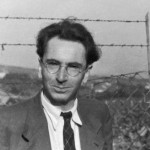
Victor Frankl (credit)

I just stumbled upon a Facebook photograph of an older person I know, in her seventies.  Her face was sad, so sad. It was chilling.

Viktor Frankl, the psychologist who was in a Nazi concentration camp, believed that our last human freedom is that we get to choose the attitude we will adopt in any circumstances. It is our most inalienable human right.

We are practising. Always practising. The attitude we choose now, the “face” we choose now, will be our attitude and face in our seventies, and eighties and nineties.

Okay, then, Anita, I say to myself, where’s that smile?

* * *

 Excerpt from Viktor Frankl, Man’s Search for Meaning

“What about human liberty? Is there no spiritual freedom in regard to behaviour and reaction to any given surroundings?

 Most importantly, do prisoners’ reactions to the singular world of the concentration camp prove that man cannot escape the influences of his surroundings? Does man have no choice of action in the face of such circumstances?

 The experiences of camp life show that man does have a choice of action. There were enough examples, often of a heroic nature, which proved that apathy could be overcome, irritability suppressed. Man can preserve a vestige of spiritual freedom, of independence of mind, even in such terrible conditions of psychic and physical stress.

 We who lived in concentration camps can remember the men who walked through the huts comforting others, giving away their last piece of bread. They may have been few in number, but they offer sufficient proof that everything can be taken from a man but one thing: the last of the human freedoms—to choose one’s attitude in any given set of circumstances, to choose one’s own way.

 And there were always choices to make. Every day, every hour, offered the opportunity to make a decision, a decision which determined whether you would or would not submit to those powers which threatened to rob you of your very self, your inner freedom; which determined whether or not you would become the plaything of circumstance, renouncing freedom and dignity to become moulded into the form of the typical inmate.

 Seen from this point of view, the mental reactions of the inmates of a concentration camp must seem more to us than the mere expression of certain physical and sociological conditions. Even though conditions such as lack of sleep, insufficient food and various mental stresses may suggest that the inmates were bound to react in certain ways, in the final analysis it becomes clear that the sort of person the prisoner became was the result of an inner decision, and not the result of camp influences alone.

 Fundamentally, therefore, any man can, even under such circumstances, decide what shall become of him—mentally and spiritually. He may retain his human dignity even in a concentration camp.  It is this spiritual freedom—which cannot be taken away—that makes life meaningful and purposeful.” 

Filed Under: In which I pursue happiness and the bluebird of joy, random Tagged With: The right to choose one's own attitude, Viktor Frankl

Re-opening the Ancient Wells which will Save our Lives Right Now

By Anita Mathias

Switzerland 2013

In arid ancient Israel, access to artesian wells made all the difference between prosperity, survival, or famine.

And so when God blessed Isaac so that his crops reaped a hundred-fold return (Gen. 26:12) and he became very wealthy, out of envy, his enemies, the Philistines “stopped up all the wells that Abraham had built, filling them with earth.”

Today, there are almost weekly accounts of the Israeli occupation forces destroying Palestinian wells, farms and orchards. Destroying wells, sources of life, is always a very effective enemy action, leaving aridity and poverty.

* * *

 Barbara Brown Taylor popularised this question: What is saving your life, right now?

Prayer and scripture and communal worship is certainly part of it.

But other things are keeping me alive too: long, slow, contemplative walks out of doors with my beloved collie Jake, my body getting into a rhythm of movement, my mind relaxing, still as a pool, until I am no longer thinking, but just being, and then suddenly a golden carp of thought pops up, unexpected and welcome.

And travel, which is complete relaxation. My mind rests from conscious thought, planning, strategizing, worrying. I shrug off my to-do list, and my uneasy Puritan imperative of ambition and must-achieve. I am just am, and am purely happy and relaxed, wandering the streets of a beautifully preserved medieval town like Troyes, France, which we visited last week, just looking, or wandering aimlessly on the alpine meadows of Switzerland, to which we drove earlier this month.

Blogging is saving my life, in that it pushes me to think, to observe, to express, to strive for beauty.

* * *

 But life has blocked up several life-giving wells for me, as for all of us.

And I am opening up these wells.

Before I married, I was a voracious reader. Reading was my escape from the world, and my greatest source of joy, and I felt I needed to be alone to really disappear into a book leaving the world behind me, and I found that hard while living with other people.

I have been steadily reading less through the 23 years of our marriage, though I have recently re-launched a reading recovery programme—reading 1 page more each day than I did the day before, aiming to hit 45 pages a day, or a book a week. Concurrently, as a back-up plan since I have many books on the go, I aim to finish each book in 1 day less–30 days for book 1; 29 days for book 2, etc. This plan gets anyone to reading a book a week in 23 months.

And with reading, I have lost other sources of joy. As a child, I loved myth and legend and fairy tales and children’s stories. Sadly, I have not read much in these genres as an adult, because, well, I was an adult and thought I should be reading serious, grown-up stuff.

It’s strange that I didn’t realize that children’s stories and fairy tales and myths and legends were invented by adults, who were putting themselves back in touch with the sources of joy and delight. And we can step there with them, if we give ourselves permission to.

On holiday earlier this month in Switzerland, Italy and France, it was as if God switched a switch on in my brain, and children’s stories poured out of me, two and three a day. And writing children fiction–ah bliss, gives me “permission” to read it.

* * *

Poetry was something else I loved to read as a child, and the first genre I wrote in as an adult. My masters in creative writing was in poetry.

But then, making the correct or incorrect assessment that I probably would not have a career as a poet, I gave it up in my late twenties. It is something else I would love to resume, first reading it exhaustively, then writing it.

* * *

Our large garden was a huge source of joy as a child. I have a large garden now, even larger than my childhood garden, but in fact, though I write looking at it, it is hard to recover the habit of working in it consistently.

I would like an extraordinary garden, and would love to make time to work in it every day, for an hour, like I used to. But I have made peace with the fact that when it comes to it, I prefer writing to gardening. So, since it is better to take just a few steps in the direction of one’s dreams than none at all—I am gardening just once every few days for now.

* * *

 What will re-open the wells of life and joy for us?

Examine your life. See what you are doing out of duty and habit which is not life-giving for you. (Too much internet usage? On too many rotas at church? Staying up too late doing nothing much?)

Then begin to shoehorn joy into your life, starting small—in the smallest measurable increments, steadily rebuilding

What is saving your life now? Are there wells of joy which have closed for you? Tell us in the comments.

Filed Under: Genesis, In which I pursue happiness and the bluebird of joy Tagged With: blog through the bible, Gardening, Genesis, Happiness, re-opening ancient wells, reading, Travel

Walking Away from the Dreaming Spires; Walking Away from Joy

By Anita Mathias

Dreaming Spires Photo

The Dreaming Spires
(credit)

Well, my daughter Zoe is in Cambridge today for her Entrance interview, and I have been thinking about Oxbridge interviews.

Fielding describes being interviewed to read English at Cambridge by Kingsley Amis, “the world’s greatest satirist,” who had recently written Lucky Jim.

Asked “What novel would you take on a train journey?” he says—no, not Lucky Jim, but Wuthering Heights—“I drone on about pathetic fallacies and thanatoid visions – just the kind of bilious bollocks the world’s greatest satirist needs to hear from a callow wanker on a sofa.”

Amis abruptly and scornfully terminates the interview. “My school is later informed that I am “woeful” and “without obvious potential“.

* * *

Here’s C.S. Lewis’s description from Surprised by Joy of arriving in Oxford for his entrance interview.

My first taste of Oxford was comical enough. I had made no arrangements about quarters and, having no more luggage than I could carry in my hand, I sallied out of the railway station on foot to find either a lodging-house or a cheap hotel; all agog for “dreaming spires” and “last enchantments.”

My first disappointment at what I saw could be dealt with. Towns always show their worst face to the railway. But as I walked on and on I became more bewildered. Could this succession of mean shops really be Oxford? But I still went on, always expecting the next turn to reveal the beauties, and reflecting that it was a much larger town than I had been led to suppose.

Only when it became obvious that there was very little town left ahead of me, that I was in fact getting to open country, did I turn round and look. There behind me, far away, never more beautiful since, was the fabled cluster of spires and towers.

I had come out of the station on the wrong side and been all this time walking into what was even then the mean and sprawling suburb of Botley. I did not see to what extent this little adventure was an allegory of my whole life.” 

Or anyone’s!

I live in Oxford now. It is 97 years since Lewis came up for his interview, but the contrast between the golden, gleaming, dreaming spires, and mean Botley is still striking.

* * *

In the famous Alpha course, leaders often tell this story attributed to a Native American elder,

There are two dogs inside me. The black dog is mean. The white dog is good.
The black dog fights the white dog all day.

When asked which dog wins, the elder reflected for a moment and replied;

The one I feed the most.

* * *

Yeah, it’s another way of gauging our thoughts, actions and choices, isn’t it? Are they leading towards the Heavenly City of the Dreaming Spires in which the Lord, high and exalted, is seated on a throne; and the train of his robe fills the temple with glory, while above him seraphim fly, calling to one another:

“Holy, holy, holy is the Lord Almighty;
the whole earth is full of his glory.” (Isaiah 6)

Or, instead of “the fabled cluster of spires and towers,” are the thoughts and emotions I am harbouring leading to a mean, small-minded suburb of judgements, negativity, jealousy and competitiveness?

On a bad, bored day, I have to check my thoughts many times and ask—Do I want to live here, in this small, claustrophobic negative suburb?

When someone annoys me and my thoughts spiral repetitively, rehearsing the many and manifest failings of this person, as they gradually, in my mind, turn from grey to black to horrible–I need to stop and ask myself,  “Is this the address I want to live at? Obsessing about this silly person’s silly faults? Or do I want to dwell in the secret places of the Most High?

* * *

“Stop, drop and roll,” my kids were taught when in elementary school in America—basic fire safety.

Well, when I find myself spiralling into negativity, or fear or worry, I have my own routine, “Stop, drop, repent.”

A)  Force myself to think about the person’s good points; thank God for the goodness in them,

B)   Meditate on whether I myself have ever been guilty of the annoyingness I see them. And so use this “beam research” as an energizing spur to repentance

C)   Turn to Jesus, the Lord upon the throne. Ask for his Holy Spirit to fill me.

D)  And remember my goals, long and short term, ask him for strength to fulfil them. Move from the negative to the positive; from the mean streets to the golden spires and towers; from a pointless drain on my energy to being re-energized.

* * *

 Yes, turn to Jesus. For there is life

Unless you eat the flesh of the Son of Man and drink his blood, you have no life in you. For my flesh is real food, and my blood is real drink. I give my flesh for the life of the world. (John 6,53, 55).

And I change my address. Whoever eats my flesh and drinks my blood dwells in me, and I in him. (John 6:56). No longer will I dwell in smallness and negativity. I will escape to the secret places of the Most High. Yeah, I will dwell smuggled in the recesses of Jesus, the Rock.

E8PCC7EPSZVE


Filed Under: In which I Dream Beneath the Spires of Oxford, In which I pursue happiness and the bluebird of joy Tagged With: dreaming spires, joy, Oxford, white dog and black dog

Three Brilliant Insights on Happiness from Gretchen Rubin’s The Happiness Project

By Anita Mathias


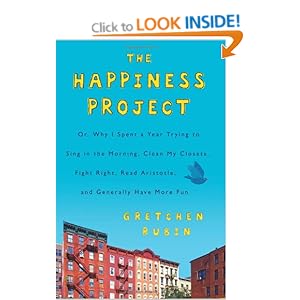
The Happiness Project: Why I Spent a Year Trying to Sing in the Morning, Clean My Closets, Fight Right, Read Aristotle, and Generally Have More Fun
Well, I am only on month three of Gretchen Rubin’s extensively researched The Happiness Project, and love many of her insights.
Here are three which I particularly enjoyed:
1) W. B. Yeats writes, “Happiness is neither virtue, nor pleasure, nor this thing, nor that, but simply growth. We are happy when we are growing.
She goes on to point out that the process of striving after goals—growth—brings more happiness than achieving them.
As we become wealthier or successful, we become used to new comforts, privileges, achievements and respect. It’s “the hedonic treadmill.” You get used to what you have, and want more.
An “atmosphere of growth” on the other hand, provides a more abiding satisfaction. “Tending your garden will give you fresh joy and surprise every spring.” Like the process of writing and thinking, and striving towards excellence in one’s creative work.
·      * *
In my daughters’ school, Oxford High School, they are given only one yardstick for which subjects to choose—what most interests them, what they love best. This can be annoying for parents who want them to pick subjects which will be of the most use to them.
Gretchen shows us why the school’s policy is sensible.  As Malcolm Gladwell points out in Outliers, the most important element in mastery is the 10,000 hours of practice.
So, to quote Rubin, “Enthusiasm is more important to mastery than innate ability, because the single most important element in developing an expertise is your willingness to practice. Therefore, you are better off pursuing a profession that comes easily and that you love, because that’s where you’ll be more eager to practice. Passion is a critical factor in professional success. People who love their work bring an intensity and enthusiasm that’s impossible to match through sheer diligence.”
3) And then, there’s this paragraph which is particularly brilliant and useful. And interesting. Not sure I knew it.
She writes: “I’d always followed the adage, “Don’t let the sun do down on your anger,” which meant, in practical terms, that I scrupulously aired every annoyance as soon as possible to make sure I had my chance to vent my bad feelings before bedtime.
I was surprised to learn from my research, however that the well-known notion of anger catharsis is poppycock. There is no evidence for the belief that “letting off steam” is healthy or constructive. In fact, studies show that aggressively expressing anger doesn’t relieve anger, but amplifies it. On the other hand, not expressing anger often allows it to disappear without leaving ugly traces.”
It’s a very interesting book—well-researched, compendious, but written in an very easy, readable style.


Filed Under: In which I pursue happiness and the bluebird of joy

Time is Better Spent “Earning” Happiness rather than Additional Money

By Anita Mathias

What I read yesterday as I wrote a post on the Prophet Habakkuk:

Has not the Lord Almighty determined
that the people’s labor is only fuel for the fire,
that the nations exhaust themselves for nothing?
14 For the earth will be filled with the knowledge of the glory of the Lord
as the waters cover the sea.
Hab 2 13-14
What I thought yesterday:
Do not work for food that spoils, but for food that endures to eternal life, which the Son of Man will give you. On him God the Father has placed his seal of approval.” John 6:27
Why spend money on what is not bread,
and your labor on what does not satisfy?
Listen, listen to me, and eat what is good,
and you will delight in the richest of fare.
Isaiah 55: 2
What I am reading today: Slow by Carl Honore.
* * *
 My husband and I own a small publishing company which provides our family enough to live on!
But, you know, there is a mortgage, and we have two children. And so we keep wondering if we should expand our business. The law of empires—expand or contract—is the same for businesses: expand your market share, or lose it and contract. So, against our better judgement, we have in fact been slowly expanding the company, in the last 3.5 years since we realised that we had enough to be happy.
We have now caught up with much of our backlog of procrastinated chores built up over a couple of decades of privileging work, and procrastinating everything else. So we were wondering if Roy should throw himself into expanding our business.
* * *
I am reading Gretchen Rubin’s Happiness Project. So thinking about what will make me happier has now begun to enter the equation.
Money can increase happiness up to a point, because it can help you cope with some of life’s problems, so that you are less sad and stressed. However, after your income reached a certain level, more money will not make you happier, according to Nobel prize winning economists Deaton and Kahneman at Princeton.
For me, because I don’t have any particular material thing I’m hankering for, a 10% or even a 50 % percent increase in income will not probably not make me particularly happier, I realized.
What will make me happier is
* To be able to keep up with my 1.5 acre garden, which I am afraid is looking rather shaggy and unkempt with all the rain we’ve had.
* To be have a tidy, organized and decluttered house.
* To eat healthy, body-blessing “Slow Food,” homecooked meals, homemade bread, and homemade stuff like Roy’s delicious salad dressings and dips!
* To exercise everyday.
* To have more time to read.
* More time to write.
* * *
So yet again, we are again putting off the decision to expand the business so as to spend more time in the garden, and kitchen, and in creating domestic order and serenity!!
You know, I think it makes sense. Time spent making extra money is not as well spent as “free time” spent on things which bring you bliss.
I like how Rick Warren puts it,
People are realizing that time is more important than money.  Money is a renewable resource – there are always ways to get more of it.  But time is a limited resource.
You only have a certain allotment of time in your life.  When it’s used up…that’s it!  YOUR TIME IS YOUR LIFE.  When you give someone your money, you’ve given them something that you can replace.  But when you give someone your time, you’ve given them a part of your life.  This means “time management” is really “life management.”
A question to consider as you work this week:  “How much of what I’m doing right now is going to count ten years from now…50 years from now.. or for eternity?”
You have just enough time to fulfill God’s purpose for your life.  If you “can’t get it all done” it means (1) You’re doing things God never intended for you to do, or (2) You’re doing the right thing in the wrong way.
                                             * * *
Time is always more precious than money, because money spent can be earned again, and money earned can be used to buy time (by farming out whatever work can be farmed out, cleaning, housekeeping chores, gardening, business admin.) Time, however, is an irreplaceable, non-renewable resource.
As Michael Hyatt wrote recently: Your time is a zero sum game.  You must say no to good things—worthy things—in order to say yes to your most important priorities.
                                          * * *
To celebrate life together, to be together in community, to simply enjoy the beauty of creation, the love of people, and the goodness of God—these seem faraway ideals. There seem to be a mountain of obstacles preventing people from being where their hearts want to be. It is so painful to watch and experience. The astonishing thing is that the battle for survival has become so “normal” that few people really believe it can be different.” Henri Nouwen, Seeds of Hope
So for a season, a few months, or years, or the rest of the my life, I am going to say No to working additional hours for more money in exchange for more happiness—happiness in my garden, in an orderly house, with more time to read, to write, to exercise, to pray, to read Scripture, to eat slow, home-cooked food, and to cook for and eat with friends and family!!

Filed Under: In which I pursue happiness and the bluebird of joy, In which I resolve to live my life slowly

  • « Previous Page
  • 1
  • 2
  • 3
  • 4
  • …
  • 6
  • Next Page »

Sign Up and Get a Free eBook!

Sign up to be emailed my blog posts (one a week) and get the ebook of "Holy Ground," my account of working with Mother Teresa.

Join 536 Other Readers

My Books

Rosaries, Reading, Secrets: A Catholic Childhood in India

Rosaries, Reading Secrets, B&N
USA

UK

Wandering Between Two Worlds: Essays on Faith and Art

Wandering Between Two Worlds
USA

UK

Francesco, Artist of Florence: The Man Who Gave Too Much

Francesco, Artist of Florence
US

UK

The Story of Dirk Willems

The Story of Dirk Willems
US

UK

My Latest Meditation

Anita Mathias: About Me

Anita Mathias

Read my blog on Facebook

Follow me on Twitter

Follow @anitamathias1

Recent Posts

  • At the Cross, God Forgives Us Completely
  • Using God’s Gift of Our Talents: A Path to Joy and Abundance
  • The Kingdom of God is Here Already, Yet Not Yet Here
  • All Those Who Exalt Themselves Will Be Humbled & the Humble Will Be Exalted
  • Christ’s Great Golden Triad to Guide Our Actions and Decisions
  • How Jesus Dealt With Hostility and Enemies
  • Do Not Be Afraid, but Do Be Prudent
  • For Scoundrels, Scallywags, and Rascals—Christ Came
  • How to Lead an Extremely Significant Life
  • Don’t Walk Away From Jesus, but if You Do, He Still Looks at You and Loves You
Premier Digital Awards 2015 - Finalist - Blogger of the year
Runner Up Christian Media Awards 2014 - Tweeter of the year

Categories

What I’m Reading


Wolf Hall
Hilary Mantel

Wolf Hall --  Amazon.com
Amazon.com

Amazon.co.uk

Silence and Honey Cakes:
The Wisdom Of The Desert
Rowan Williams

Silence and Honey Cakes --  Amazon.com
Amazon.com

Amazon.co.uk

The Long Loneliness:
The Autobiography of the Legendary Catholic Social Activist
Dorothy Day

The Long Loneliness --  Amazon.com
Amazon.com

Amazon.co.uk

Country Girl
Edna O'Brien

Country Girl  - Amazon.com
Amazon.com

Amazon.co.uk

Archive by month

My Latest Five Podcast Meditations

INSTAGRAM

anita.mathias

My memoir: Rosaries, Reading, Secrets https://amzn.to/42xgL9t
Oxford, England. Writer, memoirist, podcaster, blogger, Biblical meditation teacher, mum

Looking at photos from our week in beautiful Sevil Looking at photos from our week in beautiful Seville and Cordoba over New Year with Irene, who had a week off.
And, ICYMI, here’s my latest meditation on the Gospel of Matthew… I’ve recorded it, should you want a few minutes of peace.
https://anitamathias.com/2026/04/29/gods-complete-forgiveness/
Hello Friends, I'm resumed recording my meditation Hello Friends, I'm resumed recording my meditations on the Gospel of Matthew. Do click on this link to listen. 
https://anitamathias.com/.../29/gods-complete-forgiveness/
Christ is the most influential figure in the history of the world, though his life ended in shame, humiliation and failure. But he so completely turned things round in his great reversal that the cross on which he died when all seemed hopeless is now the most common, and revered, symbol in history.
He emerged from and was anchored in Judaism. And as the sins of the people were laid on the scapegoat who was sent into the wilderness to perish, Christ died as the lamb of God voluntarily bearing the guilt of the wrongdoing of the whole world. He paid the price for our forgiveness with his life-blood--in accordance with the iron law of the physical and moral universe, of sowing and reaping, cause and effect. 
And so, God, who appeared as flames of fire to Moses, can now dwell within us, purifying us, whose hearts have darkness and shards of ice. 
And now that Christ was crucified, died, but rose again, His Spirit, no longer contained within his earthly body, is poured out like living water onto all humans, at our humble request. The Spirit pours the love of God into us; he reminds us of the words of Jesus and slowly writes Christ’s sweet law on our hearts. This transfusion of grace helps us do hard things we previously couldn’t do. Our dance with the Spirit gradually breaks the power of sin over us. It transforms us.
Now we, the forgiven, protected by the blood of Jesus poured out over us, and filled with His Spirit, who sings within us, Abba, Father, are adopted by God as his children in his joyful new covenant. We are cells grafted into the vine of our new family--Father, Son, Spirit—who now live in us as we live in them. As we choose by our thoughts and actions to continue living in the vine of Jesus, their energy pulsing through us makes us fruitful. And now, all our prayers which flow in the river of God’s good purposes are kindly heard. Waves of love and power flood from the cross! 
Thank you!
Well, hello friends! Breaking radio silence to let Well, hello friends! Breaking radio silence to let you know that I have taped a meditation for you on Christ’s famous Parable of the Talents in Matthew 25. https://anitamathias.com/2025/11/05/using-gods-gift-of-our-talents-a-path-to-joy-and-abundance/
Here you are, click the play button in the blog post for a brief meditation, and some moments of peace, and, perhaps, inspiration in your day 🙂
Hi Friends, I have taped a meditation; do listen a Hi Friends, I have taped a meditation; do listen at this link: https://anitamathias.com/2025/04/08/the-kingdom-of-god-is-here-already-yet-not-yet-here-2/
It’s on the Kingdom of God, of which Christ so often spoke, which is here already—a mysterious, shimmering internal palace in which, in lightning flashes, we experience peace and joy, and yet, of course, not yet fully here. We sense the rainbowed presence of Christ in the song which pulses through creation. Christ strolls into our rooms with his wisdom and guidance, and things change. Our prayers are answered; we are healed; our hearts are strangely warmed. Sometimes.
And yet, we also experience evil within & all around us. Our own sin which can shatter our peace and the trajectory of our lives. And the sins of the world—its greed, dishonesty and environmental destruction.
But in this broken world, we still experience the glory of creation; “coincidences” which accelerate once we start praying, and shalom which envelops us like sudden sunshine. The portals into this Kingdom include repentance, gratitude, meditative breathing, and absolute surrender.
The Kingdom of God is here already. We can experience its beauty, peace and joy today through the presence of the Holy Spirit. But yet, since, in the Apostle Paul’s words, we do not struggle only “against flesh and blood, but against the rulers, against the unseen powers of this dark world and against the spiritual forces of evil,” its fullness still lingers…
Our daughter Zoe was ordained into the Church of E Our daughter Zoe was ordained into the Church of England in June. I have been on a social media break… but … better late than never. Enjoy!
First picture has my sister, Shalini, who kindly flew in from the US. Our lovely cousins Anthony and Sarah flank Zoe in the next picture.
The Bishop of London, Sarah Mullaly, ordained Zoe. You can see her praying that Zoe will be filled with the Holy Spirit!!
And here’s a meditation I’ve recorded, which you might enjoy. The link is also in my profile
https://anitamathias.com/2024/11/07/all-those-who-exalt-themselves-will-be-humbled-the-humble-will-be-exalted/
I have taped a meditation on Jesus statement in Ma I have taped a meditation on Jesus statement in Matthew 23, “For those who exalt themselves will be humbled, and those who humble themselves will be exalted.”
Do listen here. https://anitamathias.com/2024/11/07/all-those-who-exalt-themselves-will-be-humbled-the-humble-will-be-exalted/
Link also in bio.
And so, Jesus states a law of life. Those who broadcast their amazingness will be humbled, since God dislikes—scorns that, as much as people do.  For to trumpet our success, wealth, brilliance, giftedness or popularity is to get distracted from our life’s purpose into worthless activity. Those who love power, who are sure they know best, and who must be the best, will eventually be humbled by God and life. For their focus has shifted from loving God, doing good work, and being a blessing to their family, friends, and the world towards impressing others, being enviable, perhaps famous. These things are houses built on sand, which will crumble when hammered by the waves of old age, infirmity or adversity. 
God resists the proud, Scripture tells us—those who crave the admiration and power which is His alone. So how do we resist pride? We slow down, so that we realise (and repent) when sheer pride sparks our allergies to people, our enmities, our determination to have our own way, or our grandiose ego-driven goals, and ambitions. Once we stop chasing limelight, a great quietness steals over our lives. We no longer need the drug of continual achievement, or to share images of glittering travel, parties, prizes or friends. We just enjoy them quietly. My life is for itself & not for a spectacle, Emerson wrote. And, as Jesus advises, we quit sharp-elbowing ourselves to sit with the shiniest people, but are content to hang out with ordinary people; and then, as Jesus said, we will inevitably, eventually, be summoned higher to the sparkling conversation we craved. 
One day, every knee will bow before the gentle lamb who was slain, now seated on the throne. We will all be silent before him. Let us live gently then, our eyes on Christ, continually asking for his power, his Spirit, and his direction, moving, dancing, in the direction that we sense him move.
Link to new podcast in Bio https://anitamathias.co Link to new podcast in Bio https://anitamathias.com/2024/02/20/how-jesus-dealt-with-hostility-and-enemies/
3 days before his death, Jesus rampages through the commercialised temple, overturning the tables of moneychangers. Who gave you the authority to do these things? his outraged adversaries ask. And Jesus shows us how to answer hostile questions. Slow down. Breathe. Quick arrow prayers!
Your enemies have no power over your life that your Father has not permitted them. Ask your Father for wisdom, remembering: Questions do not need to be answered. Are these questioners worthy of the treasures of your heart? Or would that be feeding pearls to hungry pigs, who might instead devour you?
Questions can contain pitfalls, traps, nooses. Jesus directly answered just three of the 183 questions he was asked, refusing to answer some; answering others with a good question.
But how do we get the inner calm and wisdom to recognise
and sidestep entrapping questions? Long before the day of
testing, practice slow, easy breathing, and tune in to the frequency of the Father. There’s no record of Jesus running, rushing, getting stressed, or lacking peace. He never spoke on his own, he told us, without checking in with the Father. So, no foolish, ill-judged statements. Breathing in the wisdom of the Father beside and within him, he, unintimidated, traps the trappers.
Wisdom begins with training ourselves to slow down and ask
the Father for guidance. Then our calm minds, made perceptive, will help us recognise danger and trick questions, even those coated in flattery, and sidestep them or refuse to answer.
We practice tuning in to heavenly wisdom by practising–asking God questions, and then listening for his answers about the best way to do simple things…organise a home or write. Then, we build upwards, asking for wisdom in more complex things.
Listening for the voice of God before we speak, and asking for a filling of the Spirit, which Jesus calls streams of living water within us, will give us wisdom to know what to say, which, frequently, is nothing at all. It will quieten us with the silence of God, which sings through the world, through sun and stars, sky and flowers.
Especially for @ samheckt Some very imperfect pi Especially for @ samheckt 
Some very imperfect pictures of my labradoodle Merry, and golden retriever Pippi.
And since, I’m on social media, if you are the meditating type, here’s a scriptural meditation on not being afraid, while being prudent. https://anitamathias.com/2024/01/03/do-not-be-afraid-but-do-be-prudent/
A new podcast. Link in bio https://anitamathias.c A new podcast. Link in bio
https://anitamathias.com/2024/01/03/do-not-be-afraid-but-do-be-prudent/
Do Not Be Afraid, but Do Be Prudent
“Do not be afraid,” a dream-angel tells Joseph, to marry Mary, who’s pregnant, though a virgin, for in our magical, God-invaded world, the Spirit has placed God in her. Call the baby Jesus, or The Lord saves, for he will drag people free from the chokehold of their sins.
And Joseph is not afraid. And the angel was right, for a star rose, signalling a new King of the Jews. Astrologers followed it, threatening King Herod, whose chief priests recounted Micah’s 600-year-old prophecy: the Messiah would be born in Bethlehem, as Jesus had just been, while his parents from Nazareth registered for Augustus Caesar’s census of the entire Roman world. 
The Magi worshipped the baby, offering gold. And shepherds came, told by an angel of joy: that the Messiah, a saviour from all that oppresses, had just been born.
Then, suddenly, the dream-angel warned: Flee with the child to Egypt. For Herod plans to kill this baby, forever-King.
Do not be afraid, but still flee? Become a refugee? But lightning-bolt coincidences verified the angel’s first words: The magi with gold for the flight. Shepherds
telling of angels singing of coming inner peace. Joseph flees.
What’s the difference between fear and prudence? Fear is being frozen or panicked by imaginary what-ifs. It tenses our bodies; strains health, sleep and relationships; makes us stingy with ourselves & others; leads to overwork, & time wasted doing pointless things for fear of people’s opinions.
Prudence is wisdom-using our experience & spiritual discernment as we battle the demonic forces of this dark world, in Paul’s phrase.It’s fighting with divinely powerful weapons: truth, righteousness, faith, Scripture & prayer, while surrendering our thoughts to Christ. 
So let’s act prudently, wisely & bravely, silencing fear, while remaining alert to God’s guidance, delivered through inner peace or intuitions of danger and wrongness, our spiritual senses tuned to the Spirit’s “No,” his “Slow,” his “Go,” as cautious as a serpent, protected, while being as gentle as a lamb among wolves.
Follow on Instagram

© 2026 Dreaming Beneath the Spires · All Rights Reserved. · Cookie Policy · Privacy Policy