Anita Mathias: Dreaming Beneath the Spires

Anita Mathias's Blog on Faith and Art

  • Home
  • My Books
  • Meditations
  • Essays
  • Contact
  • About Me

Spiritual Lessons from Gardening

By Anita Mathias

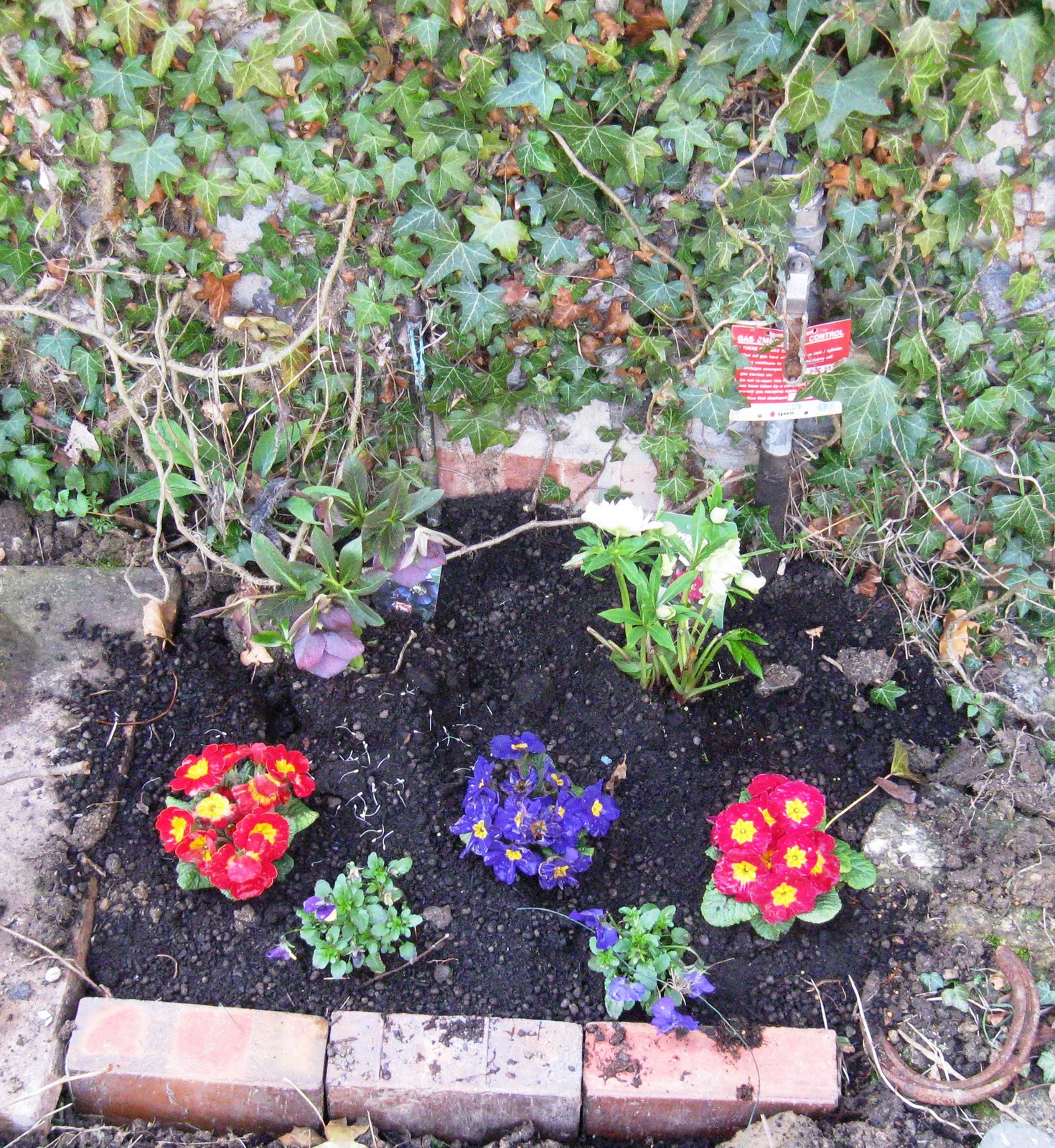
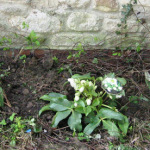
March 2011 bed in front of our dining room, weeded, and planted. 

Okay, this is our sixth year in our garden, and we are finally making it look nice, a bed at a time.


In previous years, I tried to take it on with secaturs and weeding, but as I didn’t immediately put something in as I took something out, weeds took over.


This year as we remove weeds from a bed, we are putting in hellebores, which are my favourite flower, dignified, low-key, restrained, and blooming between December and April, the months when I most need an incentive to get our in the garden.


We will fill the gaps between hellebores with other shade plants–arum, bleeding hearts, heuchera, cyclamen.


Will try and post pictures of our ongoing progress.
                                                                      * * * 

I think I was stymied before because I just tried to remove weeds and overgrowth, but put nothing in its place.


It’s the same with breaking bad habits and addictions. You cannot get rid of a bad temper, or a reliance on chocolate, say, without putting something in its place–a deepened relationship with God, let’s say, or a taste for Scripture.


Jesus has a parable of an evil spirit cast out of a man. When he sees his former habitation all swept and empty, he returns with seven others, more evil than himself, and so the latter condition of the man was worst than the first.


This perhaps explains why at the start of every diet I weigh more than at the start of the previous one, no matter how much I lost on it!!


The lost weight must be replaced with things to fill the void –muscle mass, or interesting things, or spirituality—otherwise one’s latter state can be worse than the first. 
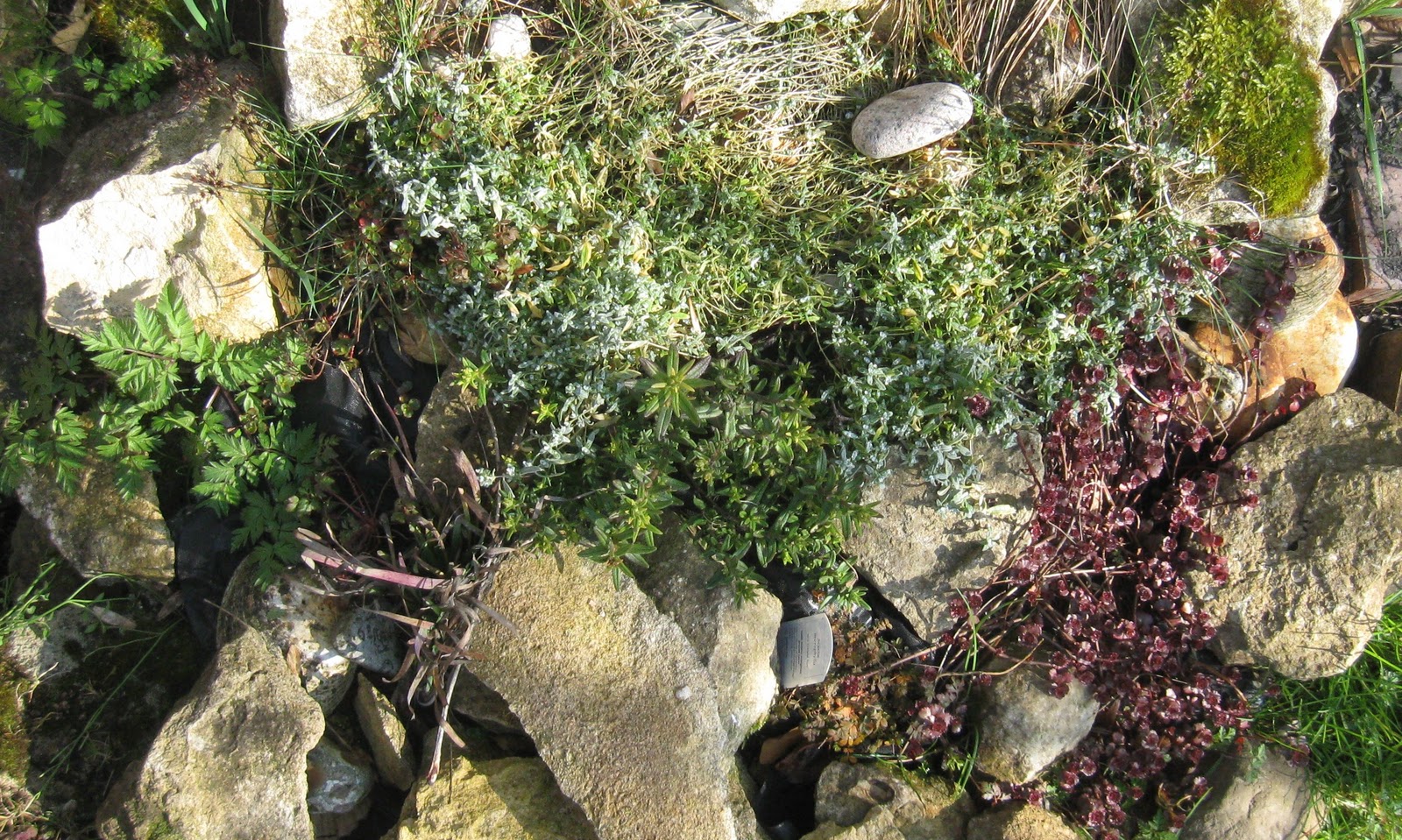
Overgrown rock garden. Needs colour. March 2011.

Share on site of your choice … Wikio

A bed we’ve inherited with hellebores
A bed we haven’t tackled yet. Yeah, lots of work!

Roy’s so proud of this little bed he’s established. 

Filed Under: random

Deep Magic From Before the Dawn of Time

By Anita Mathias

       This is a longer essay I wrote several years ago, which I am posting in installments

  Part I The Magic Kingdom I–The Varieties of Magic
Part II The Magic Worlds of Art and Nature.    

 But the magic of nature pales before the deep magic from the dawn of time.
               I was first struck by its wonder in a train racing through the Indian countryside when I was about ten.  We’d left with our mother to visit her parents in Bombay with the usual flurry and battles about what to pack during which the cook left without carrying the suitcases to the car, and my father carried them.  “Look at the veins bulge on his forehead,” my mother said. “Oh, Pa’s heart; he will die before we reach Bombay.”  The premature death of my father, who was in his late forties when we were born, was an omnipresent specter.
               There were just two people whom I deeply loved then, my father, and an Irish nun at my Catholic boarding school, Sister Josephine, who had “adopted” me, and loved me tenderly, choosing poetry and classics for me to read, discussing literature and theology with me, forcing me to repeatedly recite my elocution pieces to her to master public speaking, and who once claimed with some hubris, “Whatever you are, I’ve made you.”  So I prayed frantically, fearfully, that my father would not die. 
               The astounding, magical premise of prayer then struck me for the first time: that I could sit in a train and think, and a good and mighty God would know exactly what I was thinking, and might give me something just because I asked him to.  I experimentally thought something.  God knew it.  I thought something else.  God knew that too.  And, at the same moment, he knew what the billion other people on the planet were thinking at that very moment.  All through the two day journey, I marveled at that: “You perceive my thoughts from afar.”  If the one who merely asked, received, well then, that was deep magic.  I believed it, I hardly dared believe it, I prayed desperately that my father would not die. (My father, incidentally, is now 87. )  
               “Give me a lever long enough, and I can move the world.”  As a child, that apothegm of Archimedes, like many adult sayings, felt nice-sounding but meaningless.  Actually, that lever, , is prayer.  Ironically, the first “mountain” I moved by prayer was also the largest.  Is “use it or lose it,” “risk or rust” the rule for the muscles of faith as for those of brain and body?
               Restless and bored after my abortive novitiate at Mother Teresa’s convent, soon after graduating from school at 16, I now decided to go to college overseas, and spent a few hours in the libraries of the British Council and the USIS, researching universities in America, England, and even Australia and Canada.  Before I wrote to request application material, however, one odd evening, I heard a quiet, clear voice within me say, “Apply to Oxford.”  I recognized the voice.  “Okay, Lord,” I said, somewhat stunned, “Oxford and Cambridge;” (my first cousin, now my husband, was then at Cambridge.)  “No, just Oxford,” the voice replied.
               Well!  Less than a percent of the far better prepared British population got into Oxford University, I discovered.  It  had two fee structures, modest for British citizens, and exorbitant for overseas students.  And even were I to get in, and find money, I still needed to get permission from the Reserve Bank of India to buy scarce foreign exchange from it, and this was hard to get, especially to study the Arts overseas.  I decided to study English Literature, and, eventually, become a writer.
               One can proceed with doubt and trembling despite a clear directive. But I did proceed–applied to Oxford, wrote my admission essays on Much Ado about Nothing and Marlowe’s Edward II and waited with hope and prayer and anxious impatience.  One heady evening, I opened a letter with an Oxford postmark to find that, incredibly, I had indeed “got in.”  But, as of then, without a scholarship.
               The tuition, a quarter of a million Indian rupees, could buy me an apartment in Bombay, India’s most expensive city, my grandmother, who lived there, repeated ruefully; “you are the kind of fool who goes to Oxford,” she added.  I had prayed before; I prayed desperately now (working out a schedule of prayer seven times a day, like the Psalmist; what’s good enough for him…).  Faith can make of life a fairy tale, but most of a fairy tale, remember, is agonizing; adversity upon adversity, you almost don’t want to continue reading.  But I did continue praying, and money did continue coming in: the Radhakrishnan scholarship for Indians to study anything at Oxford; an Eckersley Foundation grant for anyone to study English at Oxford; interest-free loans from relatives.  One day–after minor miracles–I declared, “I could trust God for ten thousand rupees, but I need a hundred thousand.”  If the fairy tale is God’s favorite genre, irony is a favorite literary device.  That day, along with the award letter, a scholarship check for ten thousand rupees arrived in the mail from an Indian foundation I’d applied to.  “I wish I’d said, ‘I could trust God for a hundred thousand rupees,’” I said mournfully.  Anyway, in drops or showers, all the money I needed came to me.  Even my thousand pound deposit which came due before I got my Reserve Bank permit to convert rupees to pounds was improbably paid by an uncle’s friend in America.  A relative who had impetuously resigned from the Reserve Bank of India in Bombay, went with me to his former subordinates to get the rare, coveted permit.  And the years at Oxford were a happy period of intense growth that, in many ways, made me a different person.         


Share on site of your choice … Wikio

Filed Under: random

Japan’s formal, ritual apology

By Anita Mathias


 Tepco Officials formally apologize for the nuclear accident at Fukushima Daichi.


Japan must be the most fascinating country in the world. It has these formal stylized rituals which are almost medieval. See the formal, ritualized apology of the Tepco officials for the nuclear disaster.


Of course, they were not responsible for a 9.0 earthquake and tsunami, though it is surprising that their nuclear contingency plans did not account for it. 
                                                                              * * *


My father, a Chartered Accountant, who worked at Tatas, India’s largest steel company, was responsible for bringing in the first computers to Tatas. His official designation was “Controller of Accounts, and Manager of Data Processing.” He frequently travelled to Japan and Pittsburg, as well as Europe. 


Japan’s mixture of refined aesthetics, practical ingenuity, discipline, and a society totally opaque to the foreigner fascinated him, and my chess-loving husband too, who bravely did his final year of school in Japan, in a Japanese medium school to improve his Go. (That’s another story!). 


I was fascinated by Japan, the politeness and decency of the people, and its sheer impenetrability and opacity to the foreigner. I felt I would never really understand these people, and what makes them tick.


But it is a wonderful honourable culture, isn’t it?
                                                                                  * * * 


Interestingly, if honour and saving face weren’t so important, I wonder if they would have been more forthcoming about the disaster.


I am troubled about their kamikaze exposure of their workers to what is potentially “lethal” doses of radiation according to Jazko’s testimony to Congress. They have officially reported 20 to the IAEA as having radiation contamination.


 I wonder what the US would have done? Would she have sent workers in knowing that they would be very likely to die. Or ? Evacuate the environs and declare it a wasteland? However, evacuating Tokyo, where a quarter of the country’s population live , 150 miles away from Fukushima is probably unthinkable for the economy. 


Every so often, in the lives of nations as in individual lives, we come to the limits of what human intelligence, ingenuity and discipline can accomplish. I wonder if we are seeing that in Fukushima.

Filed Under: random

What is the Most Important Thing to Look for in a Church?

By Anita Mathias

This is a question!!


I am wondering if I am in the right church for me and our family. Sigh, probably not, or no longer.


What is the most important thing to look for in a church? 


I would be grateful for your answers and perspective. 

Filed Under: random

The Ancient Primal Cry, ” Why?”

By Anita Mathias

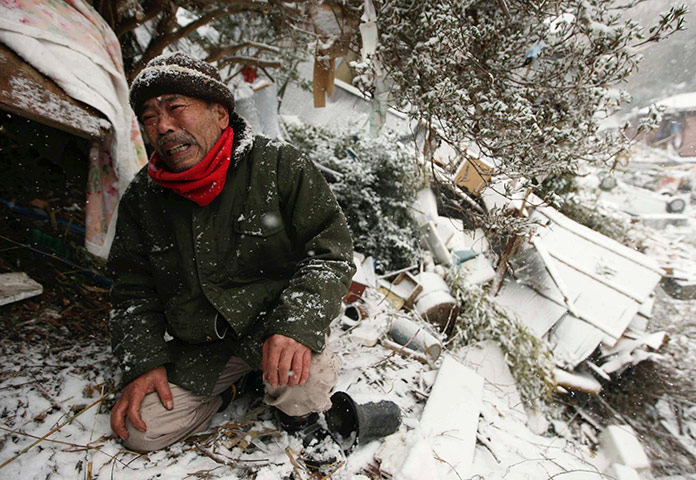
Japan aftermath: A man cries next to his destroyed house in the rubble in Onagawa


 A man cries next to his destroyed house in Onagawa, where his mother is still buried in the rubble h/t The Guardian


Sometimes, a picture gets you more than a thousand words.


Looking at this Japanese man in the snow, crying for his mother, his destroyed house and his lost life, 


you cannot help echoing one of the ancient primal cries of all creation,


“Why?”
                                                                       * * * 


On other days, however, in other circumstances, Creation, of course, sings a different song, no less ancient, no less primal. And the refrain of that song is just as mysterious:


“Glory.”

Filed Under: random

I Arise Today–The Prayer of St. Patrick

By Anita Mathias


I arise today
Through the strength of heaven;
Light of the sun,
Splendor of fire,
Speed of lightning,
Swiftness of the wind,
Depth of the sea,
Stability of the earth,
Firmness of the rock.
I arise today
Through God’s strength to pilot me;
God’s might to uphold me,
God’s wisdom to guide me,
God’s eye to look before me,
God’s ear to hear me,
God’s word to speak for me,
God’s hand to guard me,
God’s way to lie before me,
God’s shield to protect me,
God’s hosts to save me
Afar and anear,
Alone or in a mulitude.
Christ shield me today
Against wounding
Christ with me, Christ before me, Christ behind me,
Christ in me, Christ beneath me, Christ above me,
Christ on my right, Christ on my left,
Christ when I lie down, Christ when I sit down,
Christ in the heart of everyone who thinks of me,
Christ in the mouth of everyone who speaks of me,
Christ in the eye that sees me,
Christ in the ear that hears me.
I arise today
Through the mighty strength
Of the Lord of creation

Filed Under: random

The Magic Kingdom II–Art and Nature

By Anita Mathias

This is a longer essay I wrote a few years ago, which I am posting in installments
  Part I The Magic Kingdom I–The Varieties of Magic

The secret life within paintings brought me back to life when I was depressed that so little writing got done in the maelstrom of life with my exuberant children who, with their toys and friends, daily whirled through the house, disorder in their wake, and considered bedtime a signal for the party to begin.  Whenever we had frequent flier miles or my husband an invitation to speak at conferences near them, we visited great museums.  In those magic kingdoms–cool shadowy galleries full of pure, concentrated loveliness: the Louvre, Prado, Uffizi, Vatican, Rijksmuseum, I felt most alive and peaceful, the brightness and beauty subtly feeding my soul which I could feel spring back to life like the indomitable trodden Thomasinni crocus in our lawn.
               Each exhibition, a bottle from an ancient shore, bore a scrolled message: comfort or hope, inspiration or joy.  The Monet retrospective at the Art Institute at Chicago: the romance of the artist, persisting, developing his craft–over seventy working years–from the undistinguished paintings of his twenties to these rooms full of the colors of magic, white and silver light, bright greens and blues, lilies in shimmering water, and, everywhere, the quiet glory of flowers.  Miro painted the gay, faux naif paintings in the retrospective at the Met until he died at 90, still fresh and green, still bearing fruit.  Art as a staff, adding happiness and excitement to life despite its tumults, and helping you forget them.  The startling, eccentric sculptures in alabaster or veined marble in the Brancusi retrospective at the Philadelphia Museum of Art created right into old age by a man who joyfully woke at 5 a.m. to start creating reminded me of the pleasure and great good fortune it is to make beautiful things.  And the paintings in the rare Vermeer retrospective at the National Gallery breathed peace, the deep peace possible as one goes about the domestic chores that harassed me .
               In intense, blissful concentration at those galleries, I shed myself, becoming “only an eye” (as Cezanne disparagingly said of Monet) and shed time, losing track of it, as when I read, write, hike, garden, pray, study scripture, walk by the sea; (if it helps me lose track of time, it’s probably worth doing!)  I felt again the joy of beauty; I longed to get back home and get writing.
               My older daughter, Zoe, who, from infancy, ensconced in a backpack, stared at art over her father’s shoulder, responded to it early.  She startled us by laughing and clapping at bright paintings when she was seven months old, and reaching out, with delight, to sculpture, especially of children, as a toddler (and has since won several art prizes!)  Every time my youngest daughter Irene entered an art gallery, however, she howled.  Those intense vacations amid the museums, romanesque monasteries, Gothic spires and ancient gardens of France, Italy, Spain, and Holland, when at the work of man’s hands I sung for joy were endangered.  The force of childish discontent drove us into another world for refreshment: the work of His hands.
               And the natural world–with its starbursts of serendipity–is where I increasingly found magic: wonder, awe, astonishment and sheer beauty.  We walked one hot summer day on Jekyll Island off the Georgia coast, hunting for sea turtles, watching pelicans migrate, when suddenly–a splash,  a flipper–a dolphin arced out of the ocean. A love-gift!  For several enchanted minutes, we watched the shoal pass, intermittently hurling themselves into the air  in wild animal joy.
               As I drive to the beach, watching the sky slowly flush pink and peach, and then walk there amid the immensity of the sky, the immensity of the sea, and its ceaseless murmur, I sense this world is indeed God-veined, and throbs with the glory of Him “whose dwelling is the light of setting suns, and the round ocean, and the living air, and the blue sky” and the hills alive with invisible horses and chariots of fire. 

Filed Under: random

The Magic Kingdom–I

By Anita Mathias

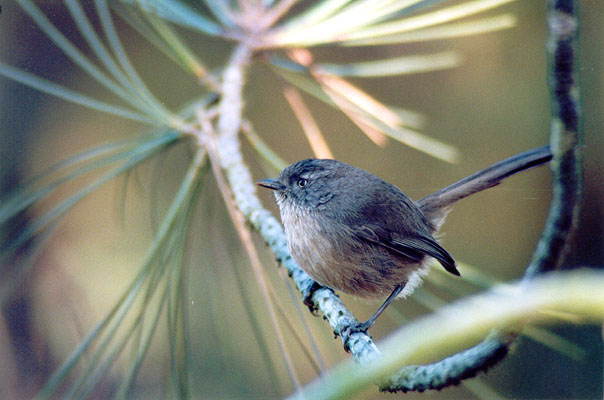
Wren-tit


Hello readers, I had written a long essay called The Magic Kingdom in 2003, and then we moved from the US to the UK, and I never did anything with it. Perhaps I will expand it. Anyway, I am going to post it here over a few days in blog sized bites in the hope that you might fit it interesting.
Comments welcomed

THE MAGIC KINGDOM
           
            In No Strange Land
O world invisible, we view thee,
O world intangible, we touch thee,
O world unknowable, we know thee,
Inapprehensible, we clutch thee.
Does the fish soar to find the ocean,
The eagle plunge to find the air–
That we ask of the stars in motion
If they have rumor of thee there?
Not where the wheeling systems darken,
And our benumbed conceiving soars!–
The drift of pinions, would we hearken,
Beats at our own clay-shuttered doors.
The angels keep their ancient places;
Turn but a stone, and start a wing!
‘Tis ye, tis your estranged faces,
That miss the many-splendored thing.
But, when so sad thou canst not sadder,
Cry;–and upon thy so sore loss
Shall shine the traffic of Jacob’s lader
Pitched between Heaven and Charing Cross.
Yea, in the night, my Soul, my daughter,
Cry,–clinging Heaven by the hems;
And lo, Christ walking on the water
Not of Gennesareth, but Thames.                                          Francis Thompson
“I’m the President of the Soviet Union, but I cannot enjoy the birthright of every American child; I cannot go to Disneyland,” Michal Gorbachev lamented in Time.  When, by virtue of geographical accident, my husband Roy and I produced little Americans, we reluctantly, foolishly, felt we should give them a shot at this birthright.
               It’s the happiest place on earth: the theme song bounced through the Magic Kingdom.  Stoic, serpentine lines waited 75 glum minutes for a 90 second ride.  In elbow-jostling stores, discontented children in a fever of desire coveted, pleaded, got, coveted some more.  Our three year old, Irene, acquired her first Winnie-the-Pooh T-shirt in a moment of rapture.  She beamed beneath her halo of curls, and toddled out, radiating delight.  And then turned, ah fatal turning, a still pillar.   “I don’t have very many Winnie-the-Pooh T-shirts,” she said.  Now sadness veiled that plump face.  “How many Winnie-the-Pooh T-shirts do you want, Irene?” I sighed.  “Four,” she said. 
               Walt Disney coined the phrase “amusement park,” literally, a place without musing, without thought, an escape from one’s life into hyper-reality, a third degree of separation, riding rides based on movies, based on books.  And, everywhere, contrasts: the determined hilarity of the M.B.A.’s and the strained faces rushing to see it all, which insidiously becomes the objective rather than enjoying each other in/and the Magic Kingdom.  Exasperated at their kids for not being happy despite the piratical tickets, parents growl; overwhelmed little ones burst into tears.  People line up two hours early for a parade in honor of Mickey Mouse!  I ruefully thought  of Arnold’s plaint a century ago, “the strange disease of modern life, which, though it gives no peace, yet spoils for rest.”
               The next day, to recover from that wearing magic, we hiked in the Topanga Canyon State Park outside Los Angeles, hoping to add to our life-list the small, secretive wren-tit, “the voice of the chaparral,” often heard, rarely seen, reversing the old definition of a good child.  All day we heard its lovely, liquid song rise into a trill: “peep peep peep-peepeepepeprrr.”  We stalked it, and stalked it, as noiselessly as our two children could stand, but the rustling chaparral betrayed us, and we heard fainter rustles as it hopped away, luring us on.  This was magic, I realized: the high clear notes of this invisible bird floating on the winter air.  The work of his hands! Since I grew up in India, where nature was a matter of sweat, heat, dust, mosquitoes, and monsoons, something to be outwitted, I discovered its nourishment circuitously.

Filed Under: random

  • « Previous Page
  • 1
  • …
  • 61
  • 62
  • 63
  • 64
  • 65
  • …
  • 121
  • Next Page »

Sign Up and Get a Free eBook!

Sign up to be emailed my blog posts (one a week) and get the ebook of "Holy Ground," my account of working with Mother Teresa.

Join 536 Other Readers

My Books

Rosaries, Reading, Secrets: A Catholic Childhood in India

Rosaries, Reading Secrets, B&N
USA

UK

Wandering Between Two Worlds: Essays on Faith and Art

Wandering Between Two Worlds
USA

UK

Francesco, Artist of Florence: The Man Who Gave Too Much

Francesco, Artist of Florence
US

UK

The Story of Dirk Willems

The Story of Dirk Willems
US

UK

My Latest Meditation

Anita Mathias: About Me

Anita Mathias

Read my blog on Facebook

Follow me on Twitter

Follow @anitamathias1

Recent Posts

  • At the Cross, God Forgives Us Completely
  • Using God’s Gift of Our Talents: A Path to Joy and Abundance
  • The Kingdom of God is Here Already, Yet Not Yet Here
  • All Those Who Exalt Themselves Will Be Humbled & the Humble Will Be Exalted
  • Christ’s Great Golden Triad to Guide Our Actions and Decisions
  • How Jesus Dealt With Hostility and Enemies
  • Do Not Be Afraid, but Do Be Prudent
  • For Scoundrels, Scallywags, and Rascals—Christ Came
  • How to Lead an Extremely Significant Life
  • Don’t Walk Away From Jesus, but if You Do, He Still Looks at You and Loves You
Premier Digital Awards 2015 - Finalist - Blogger of the year
Runner Up Christian Media Awards 2014 - Tweeter of the year

Categories

What I’m Reading


Wolf Hall
Hilary Mantel

Wolf Hall --  Amazon.com
Amazon.com

Amazon.co.uk

Silence and Honey Cakes:
The Wisdom Of The Desert
Rowan Williams

Silence and Honey Cakes --  Amazon.com
Amazon.com

Amazon.co.uk

The Long Loneliness:
The Autobiography of the Legendary Catholic Social Activist
Dorothy Day

The Long Loneliness --  Amazon.com
Amazon.com

Amazon.co.uk

Country Girl
Edna O'Brien

Country Girl  - Amazon.com
Amazon.com

Amazon.co.uk

Archive by month

My Latest Five Podcast Meditations

INSTAGRAM

anita.mathias

My memoir: Rosaries, Reading, Secrets https://amzn.to/42xgL9t
Oxford, England. Writer, memoirist, podcaster, blogger, Biblical meditation teacher, mum

Looking at photos from our week in beautiful Sevil Looking at photos from our week in beautiful Seville and Cordoba over New Year with Irene, who had a week off.
And, ICYMI, here’s my latest meditation on the Gospel of Matthew… I’ve recorded it, should you want a few minutes of peace.
https://anitamathias.com/2026/04/29/gods-complete-forgiveness/
Hello Friends, I'm resumed recording my meditation Hello Friends, I'm resumed recording my meditations on the Gospel of Matthew. Do click on this link to listen. 
https://anitamathias.com/.../29/gods-complete-forgiveness/
Christ is the most influential figure in the history of the world, though his life ended in shame, humiliation and failure. But he so completely turned things round in his great reversal that the cross on which he died when all seemed hopeless is now the most common, and revered, symbol in history.
He emerged from and was anchored in Judaism. And as the sins of the people were laid on the scapegoat who was sent into the wilderness to perish, Christ died as the lamb of God voluntarily bearing the guilt of the wrongdoing of the whole world. He paid the price for our forgiveness with his life-blood--in accordance with the iron law of the physical and moral universe, of sowing and reaping, cause and effect. 
And so, God, who appeared as flames of fire to Moses, can now dwell within us, purifying us, whose hearts have darkness and shards of ice. 
And now that Christ was crucified, died, but rose again, His Spirit, no longer contained within his earthly body, is poured out like living water onto all humans, at our humble request. The Spirit pours the love of God into us; he reminds us of the words of Jesus and slowly writes Christ’s sweet law on our hearts. This transfusion of grace helps us do hard things we previously couldn’t do. Our dance with the Spirit gradually breaks the power of sin over us. It transforms us.
Now we, the forgiven, protected by the blood of Jesus poured out over us, and filled with His Spirit, who sings within us, Abba, Father, are adopted by God as his children in his joyful new covenant. We are cells grafted into the vine of our new family--Father, Son, Spirit—who now live in us as we live in them. As we choose by our thoughts and actions to continue living in the vine of Jesus, their energy pulsing through us makes us fruitful. And now, all our prayers which flow in the river of God’s good purposes are kindly heard. Waves of love and power flood from the cross! 
Thank you!
Well, hello friends! Breaking radio silence to let Well, hello friends! Breaking radio silence to let you know that I have taped a meditation for you on Christ’s famous Parable of the Talents in Matthew 25. https://anitamathias.com/2025/11/05/using-gods-gift-of-our-talents-a-path-to-joy-and-abundance/
Here you are, click the play button in the blog post for a brief meditation, and some moments of peace, and, perhaps, inspiration in your day 🙂
Hi Friends, I have taped a meditation; do listen a Hi Friends, I have taped a meditation; do listen at this link: https://anitamathias.com/2025/04/08/the-kingdom-of-god-is-here-already-yet-not-yet-here-2/
It’s on the Kingdom of God, of which Christ so often spoke, which is here already—a mysterious, shimmering internal palace in which, in lightning flashes, we experience peace and joy, and yet, of course, not yet fully here. We sense the rainbowed presence of Christ in the song which pulses through creation. Christ strolls into our rooms with his wisdom and guidance, and things change. Our prayers are answered; we are healed; our hearts are strangely warmed. Sometimes.
And yet, we also experience evil within & all around us. Our own sin which can shatter our peace and the trajectory of our lives. And the sins of the world—its greed, dishonesty and environmental destruction.
But in this broken world, we still experience the glory of creation; “coincidences” which accelerate once we start praying, and shalom which envelops us like sudden sunshine. The portals into this Kingdom include repentance, gratitude, meditative breathing, and absolute surrender.
The Kingdom of God is here already. We can experience its beauty, peace and joy today through the presence of the Holy Spirit. But yet, since, in the Apostle Paul’s words, we do not struggle only “against flesh and blood, but against the rulers, against the unseen powers of this dark world and against the spiritual forces of evil,” its fullness still lingers…
Our daughter Zoe was ordained into the Church of E Our daughter Zoe was ordained into the Church of England in June. I have been on a social media break… but … better late than never. Enjoy!
First picture has my sister, Shalini, who kindly flew in from the US. Our lovely cousins Anthony and Sarah flank Zoe in the next picture.
The Bishop of London, Sarah Mullaly, ordained Zoe. You can see her praying that Zoe will be filled with the Holy Spirit!!
And here’s a meditation I’ve recorded, which you might enjoy. The link is also in my profile
https://anitamathias.com/2024/11/07/all-those-who-exalt-themselves-will-be-humbled-the-humble-will-be-exalted/
I have taped a meditation on Jesus statement in Ma I have taped a meditation on Jesus statement in Matthew 23, “For those who exalt themselves will be humbled, and those who humble themselves will be exalted.”
Do listen here. https://anitamathias.com/2024/11/07/all-those-who-exalt-themselves-will-be-humbled-the-humble-will-be-exalted/
Link also in bio.
And so, Jesus states a law of life. Those who broadcast their amazingness will be humbled, since God dislikes—scorns that, as much as people do.  For to trumpet our success, wealth, brilliance, giftedness or popularity is to get distracted from our life’s purpose into worthless activity. Those who love power, who are sure they know best, and who must be the best, will eventually be humbled by God and life. For their focus has shifted from loving God, doing good work, and being a blessing to their family, friends, and the world towards impressing others, being enviable, perhaps famous. These things are houses built on sand, which will crumble when hammered by the waves of old age, infirmity or adversity. 
God resists the proud, Scripture tells us—those who crave the admiration and power which is His alone. So how do we resist pride? We slow down, so that we realise (and repent) when sheer pride sparks our allergies to people, our enmities, our determination to have our own way, or our grandiose ego-driven goals, and ambitions. Once we stop chasing limelight, a great quietness steals over our lives. We no longer need the drug of continual achievement, or to share images of glittering travel, parties, prizes or friends. We just enjoy them quietly. My life is for itself & not for a spectacle, Emerson wrote. And, as Jesus advises, we quit sharp-elbowing ourselves to sit with the shiniest people, but are content to hang out with ordinary people; and then, as Jesus said, we will inevitably, eventually, be summoned higher to the sparkling conversation we craved. 
One day, every knee will bow before the gentle lamb who was slain, now seated on the throne. We will all be silent before him. Let us live gently then, our eyes on Christ, continually asking for his power, his Spirit, and his direction, moving, dancing, in the direction that we sense him move.
Link to new podcast in Bio https://anitamathias.co Link to new podcast in Bio https://anitamathias.com/2024/02/20/how-jesus-dealt-with-hostility-and-enemies/
3 days before his death, Jesus rampages through the commercialised temple, overturning the tables of moneychangers. Who gave you the authority to do these things? his outraged adversaries ask. And Jesus shows us how to answer hostile questions. Slow down. Breathe. Quick arrow prayers!
Your enemies have no power over your life that your Father has not permitted them. Ask your Father for wisdom, remembering: Questions do not need to be answered. Are these questioners worthy of the treasures of your heart? Or would that be feeding pearls to hungry pigs, who might instead devour you?
Questions can contain pitfalls, traps, nooses. Jesus directly answered just three of the 183 questions he was asked, refusing to answer some; answering others with a good question.
But how do we get the inner calm and wisdom to recognise
and sidestep entrapping questions? Long before the day of
testing, practice slow, easy breathing, and tune in to the frequency of the Father. There’s no record of Jesus running, rushing, getting stressed, or lacking peace. He never spoke on his own, he told us, without checking in with the Father. So, no foolish, ill-judged statements. Breathing in the wisdom of the Father beside and within him, he, unintimidated, traps the trappers.
Wisdom begins with training ourselves to slow down and ask
the Father for guidance. Then our calm minds, made perceptive, will help us recognise danger and trick questions, even those coated in flattery, and sidestep them or refuse to answer.
We practice tuning in to heavenly wisdom by practising–asking God questions, and then listening for his answers about the best way to do simple things…organise a home or write. Then, we build upwards, asking for wisdom in more complex things.
Listening for the voice of God before we speak, and asking for a filling of the Spirit, which Jesus calls streams of living water within us, will give us wisdom to know what to say, which, frequently, is nothing at all. It will quieten us with the silence of God, which sings through the world, through sun and stars, sky and flowers.
Especially for @ samheckt Some very imperfect pi Especially for @ samheckt 
Some very imperfect pictures of my labradoodle Merry, and golden retriever Pippi.
And since, I’m on social media, if you are the meditating type, here’s a scriptural meditation on not being afraid, while being prudent. https://anitamathias.com/2024/01/03/do-not-be-afraid-but-do-be-prudent/
A new podcast. Link in bio https://anitamathias.c A new podcast. Link in bio
https://anitamathias.com/2024/01/03/do-not-be-afraid-but-do-be-prudent/
Do Not Be Afraid, but Do Be Prudent
“Do not be afraid,” a dream-angel tells Joseph, to marry Mary, who’s pregnant, though a virgin, for in our magical, God-invaded world, the Spirit has placed God in her. Call the baby Jesus, or The Lord saves, for he will drag people free from the chokehold of their sins.
And Joseph is not afraid. And the angel was right, for a star rose, signalling a new King of the Jews. Astrologers followed it, threatening King Herod, whose chief priests recounted Micah’s 600-year-old prophecy: the Messiah would be born in Bethlehem, as Jesus had just been, while his parents from Nazareth registered for Augustus Caesar’s census of the entire Roman world. 
The Magi worshipped the baby, offering gold. And shepherds came, told by an angel of joy: that the Messiah, a saviour from all that oppresses, had just been born.
Then, suddenly, the dream-angel warned: Flee with the child to Egypt. For Herod plans to kill this baby, forever-King.
Do not be afraid, but still flee? Become a refugee? But lightning-bolt coincidences verified the angel’s first words: The magi with gold for the flight. Shepherds
telling of angels singing of coming inner peace. Joseph flees.
What’s the difference between fear and prudence? Fear is being frozen or panicked by imaginary what-ifs. It tenses our bodies; strains health, sleep and relationships; makes us stingy with ourselves & others; leads to overwork, & time wasted doing pointless things for fear of people’s opinions.
Prudence is wisdom-using our experience & spiritual discernment as we battle the demonic forces of this dark world, in Paul’s phrase.It’s fighting with divinely powerful weapons: truth, righteousness, faith, Scripture & prayer, while surrendering our thoughts to Christ. 
So let’s act prudently, wisely & bravely, silencing fear, while remaining alert to God’s guidance, delivered through inner peace or intuitions of danger and wrongness, our spiritual senses tuned to the Spirit’s “No,” his “Slow,” his “Go,” as cautious as a serpent, protected, while being as gentle as a lamb among wolves.
Follow on Instagram

© 2026 Dreaming Beneath the Spires · All Rights Reserved. · Cookie Policy · Privacy Policy