Anita Mathias: Dreaming Beneath the Spires

Anita Mathias's Blog on Faith and Art

  • Home
  • My Books
  • Meditations
  • Essays
  • Contact
  • About Me

The Democratization of Blogging–Miltons no longer Mute or Inglorious

By Anita Mathias

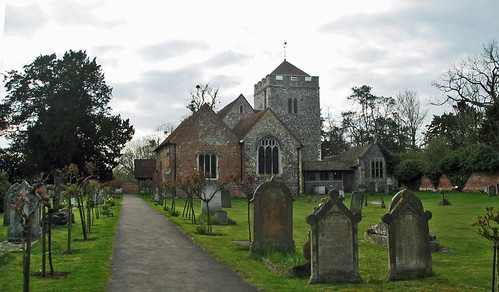
Stoke Poges Churchyard, Buckinghamshire


Thomas Gray who wrote “Elegy Written in a Country Churchyard” was an extremely self-critical poet, paralyzed by the fear of failure. Though he had devoted his life to a self-imposed programme of literary study, and was known as one of the most learned men of his generation, he published a mere 13 poems in his lifetime, 1000 lines, which might be mistaken for “the collected works of a flea,” he said sadly.


In the graveyard of Stoke Poges, Buckinghamshire, he ponders the graves of those whose lives were not blighted by ambition–or thwarted ambition.  


But were they any less gifted then the household names of their generation? Statistically, the inhabitants of Stoke Poges should have had the same probability of producing a genius like Milton, a leader like Cromwell as any other town. They did not. Why? Gray muses


Perhaps in this neglected spot is laid
Some heart once pregnant with celestial fire;
Hands, that the rod of empire might have sway’d,
Or waked to ecstasy the living lyre:

But Knowledge to their eyes her ample page,
Rich with the spoils of time, did ne’er unroll;
Chill Penury repress’d their noble rage,
And froze the genial current of the soul.

Full many a gem of purest ray serene
The dark unfathom’d caves of ocean bear:
Full many a flower is born to blush unseen,
And waste its sweetness on the desert air.

Some village Hampden, that with dauntless breast
The little tyrant of his fields withstood,
Some mute inglorious Milton here may rest,
Some Cromwell, guiltless of his country’s blood.

Th’ applause of list’ning senates to command,
The threats of pain and ruin to despise,
To scatter plenty o’er a smiling land,
And read their history in a nation’s eyes,

Their lot forbad: 

Far from the madding crowd’s ignoble strife,
Their sober wishes never learn’d to stray;
Along the cool sequester’d vale of life
They kept the noiseless tenour of their way.


He mourns these “mute inglorious Miltons,” “born to blush unseen and waste their sweetness on the desert air.” 


Blogging however gives the many Miltons who live far from the madding crowd, a voice–and an audience. The farmer’s wife Ann Voskamp in rural Canada, mother of six children who finds the sacred in the everyday. Or Jen in Oregon who homeschools 4 kids and still finds time to write well, to pick, at random, two blogs I enjoyed this week. Sweetness is no longer wasted on the desert air, in Gray’s phrase. It can be shared. And that is good, for sweetness should be shared. 


Blogging is the greatest democratization of writing the world has seen–and probably its greatest explosion of shared knowledge and experience.


I love it.


And here’s the entire text of “Elegy Written in a Country Churchyard,” commonly considered the greatest elegy written in English.


“ELEGY WRITTEN IN

A COUNTRY CHURCH-YARD”


Thomas Gray

The curfew tolls the knell of parting day,
The lowing herd winds slowly o’er the lea,
The ploughman homeward plods his weary way,
And leaves the world to darkness and to me.

Now fades the glimmering landscape on the sight,
And all the air a solemn stillness holds,
Save where the beetle wheels his droning flight,
And drowsy tinklings lull the distant folds:

Save that from yonder ivy-mantled tower
The moping owl does to the moon complain
Of such as, wandering near her secret bower,
Molest her ancient solitary reign.

Beneath those rugged elms, that yew-tree’s shade,
Where heaves the turf in many a mouldering heap,
Each in his narrow cell for ever laid,
The rude Forefathers of the hamlet sleep.

The breezy call of incense-breathing morn,
The swallow twittering from the straw-built shed,
The cock’s shrill clarion, or the echoing horn,
No more shall rouse them from their lowly bed.

For them no more the blazing hearth shall burn,
Or busy housewife ply her evening care:
No children run to lisp their sire’s return,
Or climb his knees the envied kiss to share,

Oft did the harvest to their sickle yield,
Their furrow oft the stubborn glebe has broke;
How jocund did they drive their team afield!
How bow’d the woods beneath their sturdy stroke!

Let not Ambition mock their useful toil,
Their homely joys, and destiny obscure;
Nor Grandeur hear with a disdainful smile
The short and simple annals of the Poor.

The boast of heraldry, the pomp of power,
And all that beauty, all that wealth e’er gave,
Awaits alike th’ inevitable hour:-
The paths of glory lead but to the grave.

Nor you, ye Proud, impute to these the fault
If Memory o’er their tomb no trophies raise,
Where through the long-drawn aisle and fretted vault
The pealing anthem swells the note of praise.

Can storied urn or animated bust
Back to its mansion call the fleeting breath?
Can Honour’s voice provoke the silent dust,
Or Flattery soothe the dull cold ear of Death?

Perhaps in this neglected spot is laid
Some heart once pregnant with celestial fire;
Hands, that the rod of empire might have sway’d,
Or waked to ecstasy the living lyre:

But Knowledge to their eyes her ample page,
Rich with the spoils of time, did ne’er unroll;
Chill Penury repress’d their noble rage,
And froze the genial current of the soul.

Full many a gem of purest ray serene
The dark unfathom’d caves of ocean bear:
Full many a flower is born to blush unseen,
And waste its sweetness on the desert air.

Some village-Hampden, that with dauntless breast
The little tyrant of his fields withstood,
Some mute inglorious Milton here may rest,
Some Cromwell, guiltless of his country’s blood.

Th’ applause of list’ning senates to command,
The threats of pain and ruin to despise,
To scatter plenty o’er a smiling land,
And read their history in a nation’s eyes,

Their lot forbad: nor circumscribed alone
Their growing virtues, but their crimes confined;
Forbad to wade through slaughter to a throne,
And shut the gates of mercy on mankind,

The struggling pangs of conscious truth to hide,
To quench the blushes of ingenuous shame,
Or heap the shrine of Luxury and Pride
With incense kindled at the Muse’s flame.

Far from the madding crowd’s ignoble strife,
Their sober wishes never learn’d to stray;
Along the cool sequester’d vale of life
They kept the noiseless tenour of their way.

Yet e’en these bones from insult to protect
Some frail memorial still erected nigh,
With uncouth rhymes and shapeless sculpture deck’d,
Implores the passing tribute of a sigh.

Their name, their years, spelt by th’ unletter’d Muse,
The place of fame and elegy supply:
And many a holy text around she strews,
That teach the rustic moralist to die.

For who, to dumb forgetfulness a prey,
This pleasing anxious being e’er resign’d,
Left the warm precincts of the cheerful day,
Nor cast one longing lingering look behind?

On some fond breast the parting soul relies,
Some pious drops the closing eye requires;
E’en from the tomb the voice of Nature cries,
E’en in our ashes live their wonted fires.

For thee, who, mindful of th’ unhonour’d dead,
Dost in these lines their artless tale relate;
If chance, by lonely contemplation led,
Some kindred spirit shall inquire thy fate, —

Haply some hoary-headed swain may say,
Oft have we seen him at the peep of dawn
Brushing with hasty steps the dews away,
To meet the sun upon the upland lawn;

‘There at the foot of yonder nodding beech
That wreathes its old fantastic roots so high.
His listless length at noontide would he stretch,
And pore upon the brook that babbles by.

‘Hard by yon wood, now smiling as in scorn,
Muttering his wayward fancies he would rove;
Now drooping, woeful wan, like one forlorn,
Or crazed with care, or cross’d in hopeless love.

‘One morn I miss’d him on the custom’d hill,
Along the heath, and near his favourite tree;
Another came; nor yet beside the rill,
Nor up the lawn, nor at the wood was he;

‘The next with dirges due in sad array
Slow through the church-way path we saw him borne,-
Approach and read (for thou canst read) the lay
Graved on the stone beneath yon aged thorn.’

The Epitaph

Here rests his head upon the lap of Earth
A youth to Fortune and to Fame unknown.
Fair Science frowned not on his humble birth,
And Melacholy marked him for her own.

Large was his bounty, and his soul sincere,
Heaven did a recompense as largely send:
He gave to Misery all he had, a tear,
He gained from Heaven (’twas all he wish’d) a friend.

No farther seek his merits to disclose,
Or draw his frailties from their dread abode
(There they alike in trembling hope repose),
The bosom of his Father and his God. 

Share on site of your choice … Wikio

Filed Under: random

The Vocation of Christian Blogging

By Anita Mathias


 ‘The place where God calls you is the place where your deep gladness meets the world’s deep hunger.’
                                                                                     Frederick Buechner, Wishful Thinking


That quote always made me sad. Because for a couple of decades, my deep gladness lay in words, in reading and writing. Literature, and literary writing. And how could this possibly meet the world’s deep need?

And what about Christian writing? Well, I felt I needed to have experienced some of the things Jesus promised us–the bread which stills our hunger, the water which slakes our thirst, the peace which transcends understanding, light in our darkness, joy in spite of trouble–before I wrote about them.

And now, in my forties, over the last decade or so, I have tasted all these, not as a permanent settled condition, but in ever-increasing and deepening tastes, glimpses and experiences.
                                                                * * *


Of course, this hurdle–of not wanting to embark on writing about my faith until I was sure the writing would be a blessing–was a self-constructed one. A friend who was a mentor in my thirties, and who I used to show my spiritual journal to, found it hilarious, and thought it could speak to other people. “Publish your spiritual diary,” he’d urge. “Just be bitchy. Write psalms of the every day.”

Well, I haven’t been particularly bitchy in this blog. Maybe my forties have ironed it out of me–or perhaps my residual bitchiness will slowly emerge!
                                                                       * * * 

Christian blogging offers us a place in which our deep gladness might meet the world’s deep need.

A difference between blogging and preaching is that there is no captive audience. A preacher has a captive trustful audience given to him/her by virtue of the theology degree and church position. As such, preachers often share the QED, the proof, without going into the working out of the theorem. Talk about things like trust, praising God anyway, forgiveness, love–without sharing the painful road, and the failures it took to get them where they are.

An entirely inspirational blog won’t ring entirely true. In general, we trust not the blog post, but the blogger. Trust is not had as a gift, but trust is earned, to paraphrase Yeats. Bloggers who are honest about their  lows, failures and sin, earn our belief when they share their mountain-top experiences, revelations and insights. When they attempt to inspire us. 
                                                                               * * * 


A writing teacher of mine, Carol Bly describes “moral fiction” as the kind of writing which if read by someone contemplating suicide would make them decide not to kill themselves after all.


I bravely started this blog with the intention that the posts would be a blessing to anyone surfing the net in the sort of bored, empty, inspiration-seeking mood in which I used to surf it (a habit I believe I have broken once I realized that that was becoming my default way of dealing with emptiness and boredom.)
                                                                               * * * 

I’ve realized that the only way I might be able to be a blessing to as small or as large a readership God might decide to give me is to continually, deliberately turn back to Christ who promised, “If anyone is thirsty, let him come to me and drink.  38 Whoever believes in me, as the Scripture has said, streams of living water will flow from within him.” John 7

                                                                           * * * 

Well, if Jesus were a blogger, rather than an itinerant preacher, what kind of blog would he 
have?


1) It would be unique. It is recorded that people were amazed at his words because he did not teach as the scribes and Pharisees did.

 No man ever spoke the way this man does John 7:46

Thank you very much. And how can I be unique?

By being yourself. 

The more honest you are–the more unusual you are, the more fun you are. 

The more you are yourself, the more original you are.

Each person is unique like each snowflake, rose, fingerprint, zebra’s stripes, or the iris of an eye.

As we grow to utter honesty, we discover in the process–unique blogs.

2 It would be full of grace and truth. 

It would be honest. Honesty was apparently the trait Jesus most respected in people, and hypocrisy the trait he most abhorred.

3 It would be a blessing.There would be life in it, living waters


and nourishment–the bread of life.

4) Would Jesus spend time in gaining readers for his blog, or would he proceed on the “If you build it, they will come?” principle.

Hmm. Primarily, the latter. However, he did approach people–Matthew, Zaccheus, Peter and Andrew…

And the real-life friendships and relationships which grow out of blogging are one of its pleasures. 

If one invests time in blogging, it is perhaps only sensible and responsible to invest some time in finding readers for one’s blog.
                                                                           
Whatever is alive, grows. A healthy blog grows in terms of visitors, commentators, spots on blogrolls, and all the other measures of a blog’s success. 

And if it does not? Time to consider whether pursuing it is indeed God’s will, 

and if it is, 


then how you can change so that it would it be a growing, burgeoning blog. (This blog is growing, albeit very slowly, gaining a few new readers each week. I am, however, content with its rate of growth).


5) Jesus would not embark on or continue a blog without being sure that blogging was his Father’s will for him, what he was called to do. He would also seek to hear God’s voice on the frequency of his posts.

At the end of his life, Jesus informed his Father, “I have done the work you have given me to do.” Those must have been the most satisfying words ever said.

He would not spend too long on his blog, and all the interesting distractions to do with blogging.
                                                                             * * * 

If I never write another book, I will be sad, so I have to be careful not to allow blogging to cut into my writing time. 

I need to maintain a balance between blogging–instant noodles, quick bread–and writing a good book, which is like
“a draught of vintage! that hath been
Cooled a long age in the deep-delved earth,
Tasting of Flora and the country-green,
Dance, and Provencal song, and sunburnt mirth.”

6 A blog written by Jesus.

Wow. What would it be like?

It would be varied, like his teaching ministry, and use a variety of forms. Jesus used parables, exposition, sermons, exhortation, explication, allegory, straight teaching. He was funny. He even used satire.

He never spelled things out too much. He asked questions. He encouraged people to think. His parables could be interpreted in multiple ways. 

                                                   * * * 


 I am not Jesus, but I would like my blog to bear some resemblance to the blog a central figure in my spiritual, emotional, and thought-life might have written.

And how do I do that?

Oddly enough, it begins with slowing down. Spending more time with him–to catch his spirit. To have my soul filled with his living waters, with his bread of life. 


Filed Under: random

God is Enough–Thought for the Day, Henri Nouwen

By Anita Mathias

Female Indian Tiger, Madhya Pradesh state, India

“For as long as you can remember, you have been a pleaser, depending on others to give you an identity. You need not look at that only in a negative way. You wanted to give your heart to others, and you did so quickly and easily. But now you are being asked to let go of all these self-made props and trust that God is enough for you. You must stop being a pleaser and reclaim your identity as a free self. 

Share … Wikio

Filed Under: random

Shade Gardening and Blooming where One is Planted

By Anita Mathias

 
Okay, after 5 years of being busy and preoccupied with other things, we are finally taming our garden. I’ve had gardens in India and in America, but this is my first English garden. Steep learning curve.

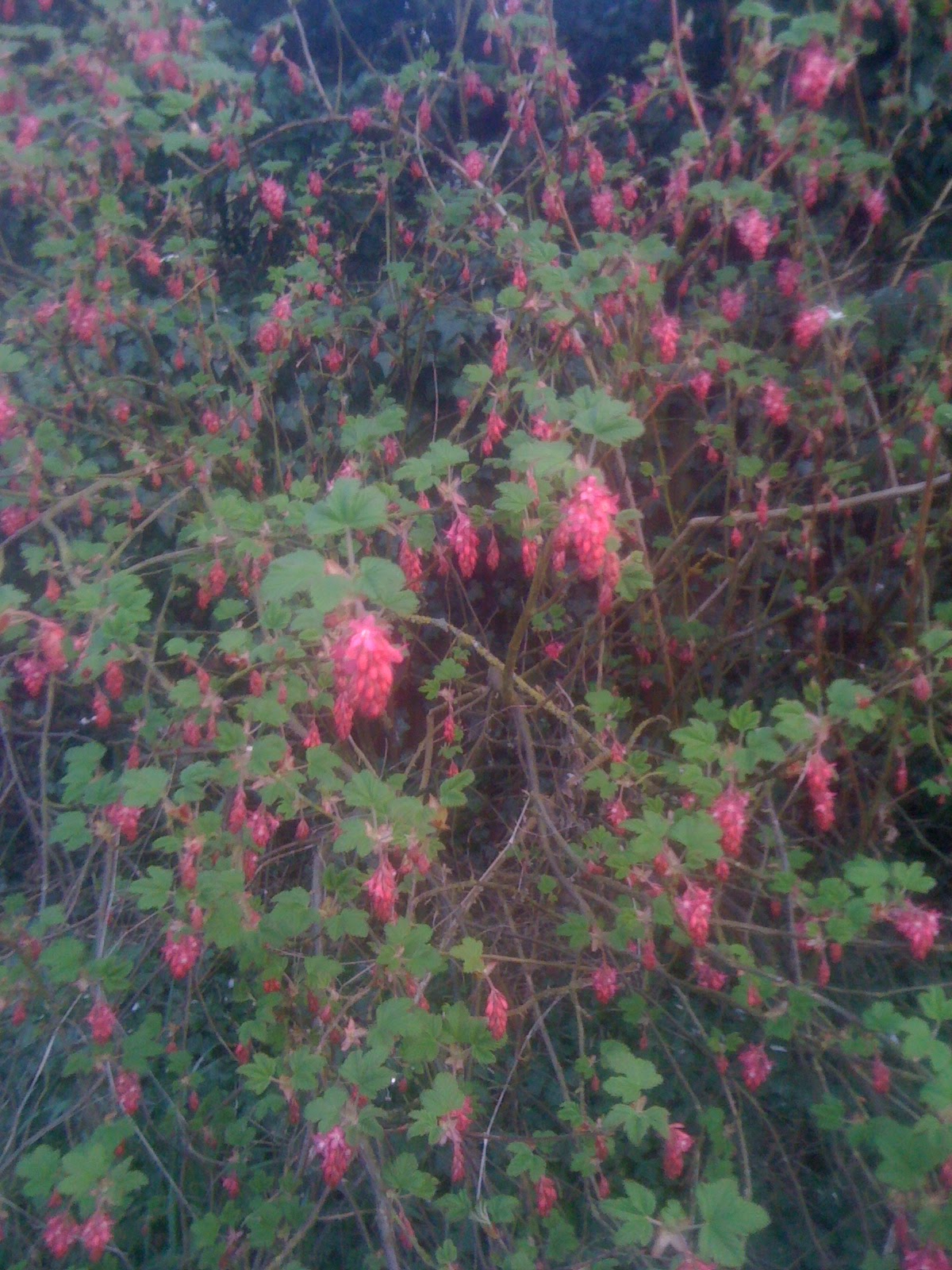
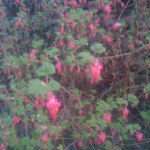
Speaking of which, please could somebody identify this bush with pink blossoms in our driveway

We’ve got 3 beds planted, and are working on the rest. Specializing in hellebores, and other shade plants.

Funny, when we lived in Virginia, our plot was shaded by massive trees. So, perforce, we had to indulge in shade gardening–hellebores, hostas, cyclamen, bleeding hearts, heuchera, solomon’s seal, arum italicum, orchids, trillium etc.

I wanted the flowers that grew in full sun, and was always sadly writing about making a virtue of necessity, blooming where you are planted, learning to love the hand of cards dealt to you. I  bought and studied books on shade gardening, and learnt a lot about woodland, forest and shade plants.

And now, I actually prefer shade plants–their gentleness, mystery, quietness, non-assertiveness, surprises. They are more intriguing to me than their bright, bold cousins. And I am now buying them, though we are not short of sun.

Our plot is an acre and a half. I have been reading a couple of books on the evolution of the English countryside, and about enclosure laws and edible hedges. Our garden was broken down into 6 little bits, each surrounded by a hedge and fence–a huge veg. garden, which we haven’t started using, an orchard, a main garden, divided into two by a fence and hedge, and a little side plot, currently fallow.

Now, this might be heresy to people who like the Sissinghurst and Hidcote style of gardening, but today Roy took his chain saw and sawed down the beech hedges separating them, as I don’t see the point of ruining the perspective with these tiny plots. 

I wonder if the land was subdivided into little plots per family with edible hedges in between them. Our hedges have apple trees and pear trees and blackberries interplanted with the hawthorn, and after researching ancient English edible hedges, we planted one in the middle of the paddock in the winter of 2006. Last year it yielded  plum cherries, and black, yellow and red plums. Really delicious. 
The hedge we planted in our paddock
We only started on March 6th, but we’ve been gardening seriously since then, putting in 2-3 hours of work a day between us.However, the garden ran away with us in America, and we’d spend 3-4 hours there at a stretch in the evenings and weekends. Now I work with a timer, and go in after an hour or so, and if I work longer in the garden, try to put in an equal amount of time on housework and decluttering, so the house does not get out of control.

Beginnings are such hard work, but soon, we will have the pleasure of seeing the plants we’ve planted grow, establish themselves, self-seed and hybridize. 

In any endeavour after the beginning, you get ever-increasing pleasure, leverage and return on your investment. However it takes faith to get past the beginning. 

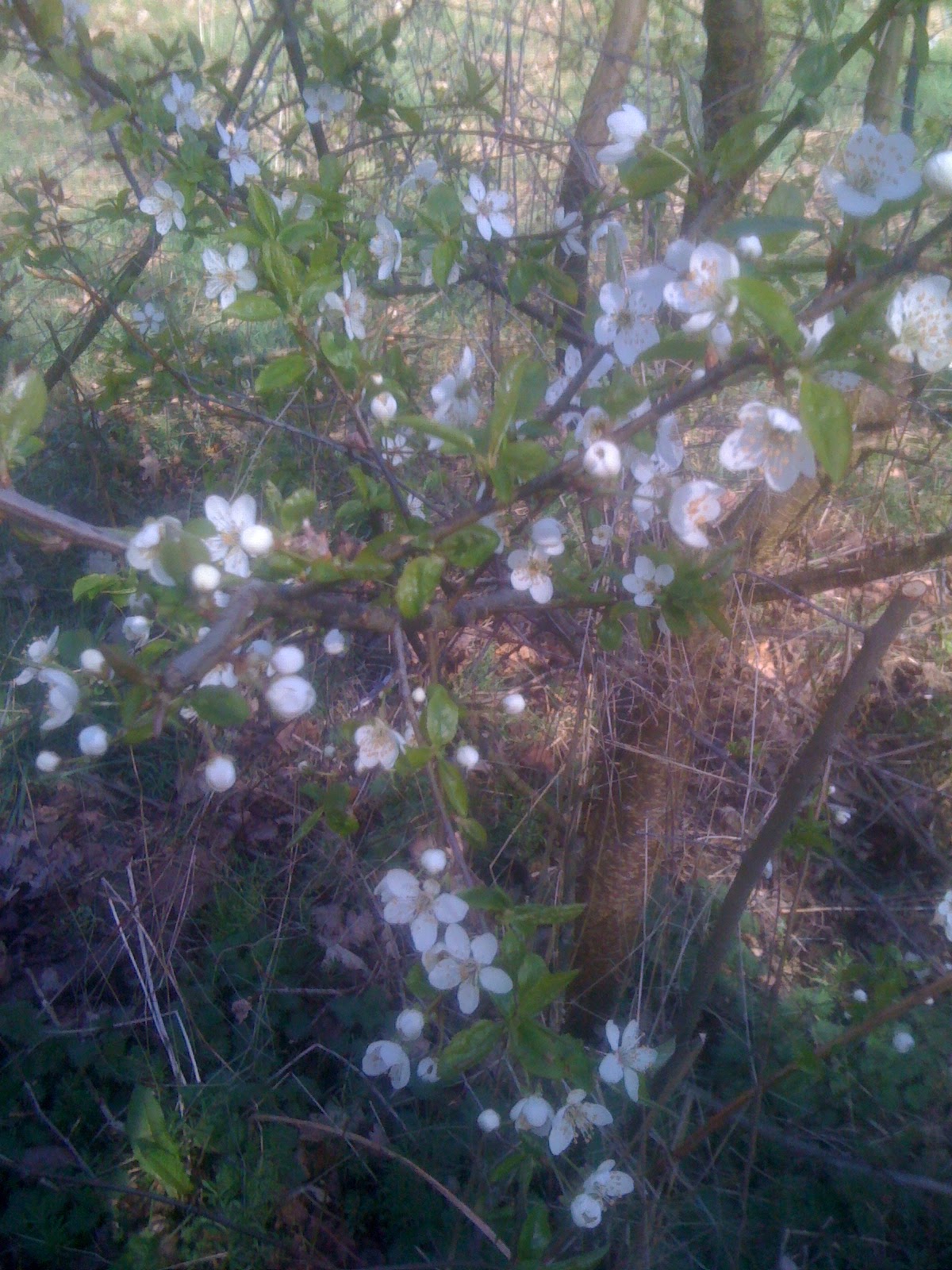
Cherry blossom, in a hedge we planted.
hellobores


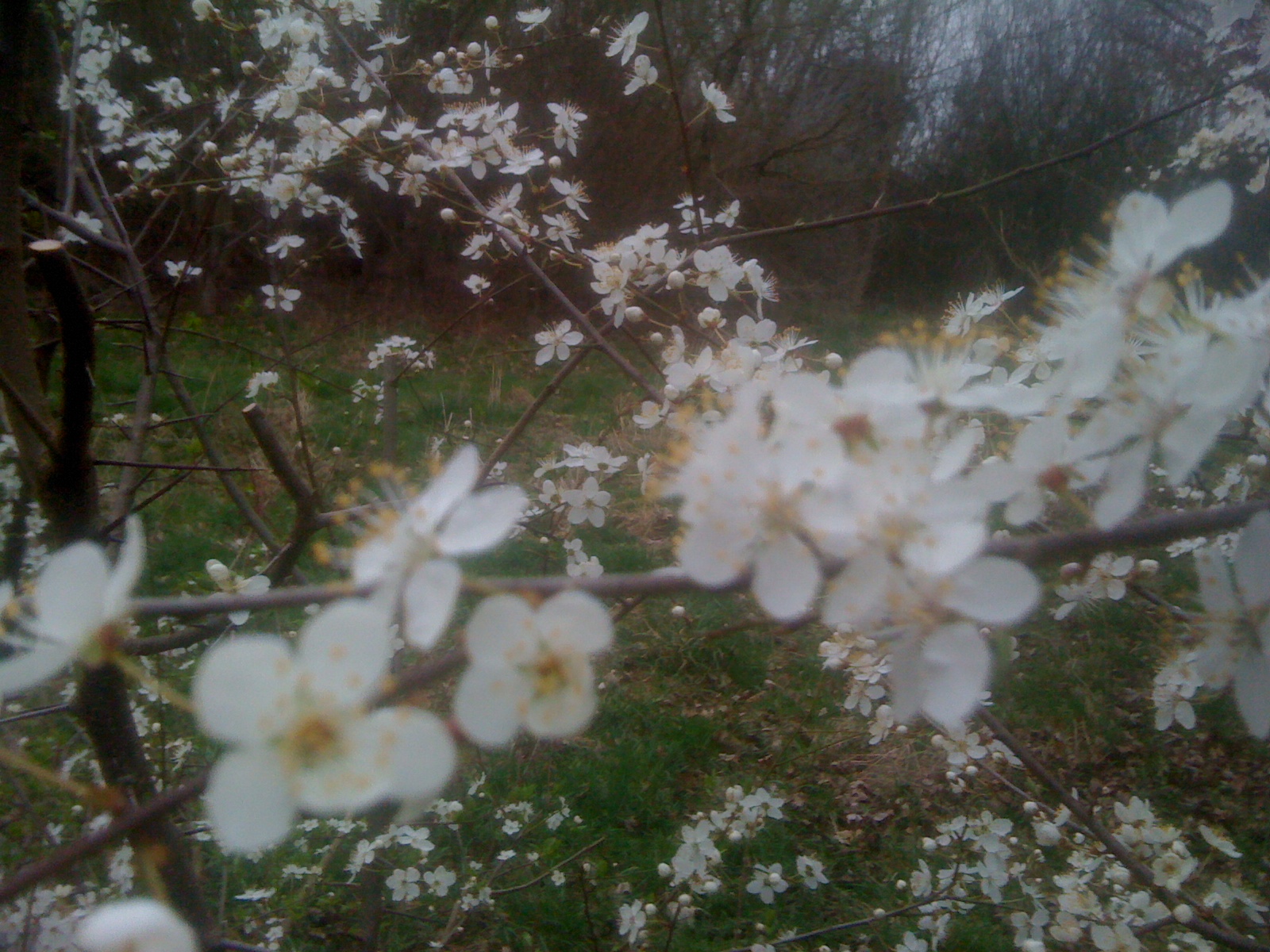
Close up of cherry blossom.

Our willow tree at sunset

Share on site of your choice … Wikio

Filed Under: random

A cure for too much theologizing!

By Anita Mathias

When I heard the learn’d astronomer;
When the proofs, the figures, were ranged in columns before me;
When I was shown the charts and the diagrams, to add, divide, and
measure them;
When I, sitting, heard the astronomer, where he lectured with much
applause in the lecture-room,
How soon, unaccountable, I became tired and sick;
Till rising and gliding out, I wander’d off by myself,
In the mystical moist night-air, and from time to time,
Look’d up in perfect silence at the stars.
-Walt Whitman

Share on site of your choice … Wikio

Filed Under: random

There’s No One as Irish as Barack Obama

By Anita Mathias

The video reminds me of the wave of euphoria and optimism which swept the globe, when, 40 odd years after institutionalized segregation  in the American South–in buses, schools, cafeterias and water fountains–Americans redeemed their dark history of slavery and segregation by electing a black man as their President.

I thought of Wordsworth’s lines on the French Revolution,

          Bliss was it in that dawn to be alive,
          But to be young was very heaven!--Oh! times,
          In which the meagre, stale, forbidding ways
          Of custom, law, and statute, took at once
          The attraction of a country in romance!

P.S. I enjoyed this comment on the Youtube video, “I’m not just as Irish as Barack Obama, I’m even more Irish than him, ’cause I’m actually Irish!”

. So on these pews, inside this very church, the president’s antecedents on his Irish side worshipped here on a regular basis.”

Obama’s links to the Church of Ireland also stretch further south to Kilkenny city, where another branch of the family claims a connection to him. Jane de Montmorency Wright said she had traced Obama to the former Anglican bishop of Kilkenny, John Kearney. “The president’s ancestor was a bishop here in Kilkenny city where he is buried in St Canice’s cathedral, so there will be plenty for him to see,” she said.
Hayes and Moneygall’s other 299 residents are expecting droves of other Americans to follow in the president’s footsteps. A few hours earlier two couples from Chicago, the base from which Obama launched his presidential bid, turned up to have their pictures taken outside the bar.

Share on site of your choice … Wikio

Filed Under: random

The Annunciation

By Anita Mathias

Waterhouse, Annunciation

“Be it done to me according to thy will.”


That is secret of peace, isn’t it?–being able to say that.


That sort of surrender is beautifully expressed in The Imitation of Christ, a classic I came to somewhat circuitously through Maggie Tulliver of The Mill on the Floss. The quietist, pietistic spirituality of The Imitation brings her a kind of peace and radiance when a reverse in her family’s fortunes leaves her life narrow, circumscribed and cut off from all literary or intellectual pursuits. 


I used to pray this at 17, little knowing of what I spake!!


Imitation of Christ, Book III, Chapter 17

ALL OUR CARE IS TO BE PLACED IN GOD

THE VOICE OF CHRIST

MY CHILD, allow me to do what I will with you. I know what is best for you. You think as a man; you feel in many things as human affection persuades.

THE DISCIPLE

Lord, what You say is true. Your care for me is greater than all the care I can take of myself. For he who does not cast all his care upon You stands very unsafely. If only my will remain right and firm toward You, Lord, do with me whatever pleases You. For whatever You shall do with me can only be good.
If You wish me to be in darkness, I shall bless You. And if You wish me to be in light, again I shall bless You. If You stoop down to comfort me, I shall bless You, and if You wish me to be afflicted, I shall bless You forever.

THE VOICE OF CHRIST

My child, this is the disposition which you should have if you wish to walk with Me. You should be as ready to suffer as to enjoy. You should as willingly be destitute and poor as rich and satisfied.

THE DISCIPLE

O Lord, I shall suffer willingly for Your sake whatever You wish to send me. I am ready to accept from Your hand both good and evil alike, the sweet and the bitter together, sorrow with joy; and for all that happens to me I am grateful. Keep me from all sin and I will fear neither death nor hell. Do not cast me out forever nor blot me out of the Book of Life, and whatever tribulation befalls will not harm me.


And here is the same chapter in the older translation in which I first read it,

CHAPTER XVIIThat all care is to be cast upon God


1. “My Son, suffer me to do with thee what I will; I know what is expedient for thee. Thou thinkest as a man, in many things thou judgest as human affection persuadeth thee.”


2. Lord, what Thou sayest is true. Greater is Thy care for me than all the care which I am able to take for myself. For too insecurely doth he stand who casteth not all his care upon Thee. Lord, so long as my will standeth right and firm in Thee, do with me what Thou wilt, for whatsoever Thou shalt do with me cannot be aught but good. Blessed be Thou is Thou wilt leave me in darkness: blessed also be Thou if Thou wilt leave me in light. Blessed be Thou if Thou vouchsafe to comfort me, and always blessed be Thou if Thou cause me to be troubled.


3. “My Son! even thus thou must stand if thou desirest to walk with Me. Thou must be ready alike for suffering or rejoicing. Thou must be poor and needy as willingly as full and rich.”


4. Lord, I will willingly bear for Thee whatsoever Thou wilt have to come upon me. Without choice I will receive from Thy hand good and evil, sweet and bitter, joy and sadness, and will give Thee thanks for all things which shall happen to me. Keep me from all sin, and I will not fear death nor hell. Only cast me not away for ever, nor blot me out of the book of life. Then no tribulation which shall come upon me shall do me hurt.


Share on site of your choice … Wikio

Filed Under: random

A New Name

By Anita Mathias


To the one who is victorious, I will also give a white stone with a new name written on it, known only to the one who receives it. Revelation 2:17


And so we fight the good fight, 

And we overcome temptations and trials we never dreamed we could. 

And somehow we change. 

We are different.


And Jesus sees, 

though no one else might. 


Though everyone else may see the failures, 

Jesus sees the hidden victories.


And he gently opens our palms,

and places in them a stone, 

which has engraved upon it a new name.


And that new name, I believe, 

will astound the one who receives it.


“Moi?” we’ll say in astonishment.

And Jesus will smile, and say, 

“Yes, you!”


What will be written on your stone?

It will surprise you.

It will name the victories you have won,

the way your name has changed

 without your even being aware of it.


What would I like to be written on mine? 

The Loving One, perhaps.

The Gentle One. 

Steady, Strong, Unshakable. 


Names which would surprise me now.
                               * *  *

Thank you to Emma Scrivener for her meditations on A New Name.

Share on site of your choice … Wikio
Filed Under: random

  • « Previous Page
  • 1
  • …
  • 59
  • 60
  • 61
  • 62
  • 63
  • …
  • 121
  • Next Page »

Sign Up and Get a Free eBook!

Sign up to be emailed my blog posts (one a week) and get the ebook of "Holy Ground," my account of working with Mother Teresa.

Join 536 Other Readers

My Books

Rosaries, Reading, Secrets: A Catholic Childhood in India

Rosaries, Reading Secrets, B&N
USA

UK

Wandering Between Two Worlds: Essays on Faith and Art

Wandering Between Two Worlds
USA

UK

Francesco, Artist of Florence: The Man Who Gave Too Much

Francesco, Artist of Florence
US

UK

The Story of Dirk Willems

The Story of Dirk Willems
US

UK

My Latest Meditation

Anita Mathias: About Me

Anita Mathias

Read my blog on Facebook

Follow me on Twitter

Follow @anitamathias1

Recent Posts

  • At the Cross, God Forgives Us Completely
  • Using God’s Gift of Our Talents: A Path to Joy and Abundance
  • The Kingdom of God is Here Already, Yet Not Yet Here
  • All Those Who Exalt Themselves Will Be Humbled & the Humble Will Be Exalted
  • Christ’s Great Golden Triad to Guide Our Actions and Decisions
  • How Jesus Dealt With Hostility and Enemies
  • Do Not Be Afraid, but Do Be Prudent
  • For Scoundrels, Scallywags, and Rascals—Christ Came
  • How to Lead an Extremely Significant Life
  • Don’t Walk Away From Jesus, but if You Do, He Still Looks at You and Loves You
Premier Digital Awards 2015 - Finalist - Blogger of the year
Runner Up Christian Media Awards 2014 - Tweeter of the year

Categories

What I’m Reading


Wolf Hall
Hilary Mantel

Wolf Hall --  Amazon.com
Amazon.com

Amazon.co.uk

Silence and Honey Cakes:
The Wisdom Of The Desert
Rowan Williams

Silence and Honey Cakes --  Amazon.com
Amazon.com

Amazon.co.uk

The Long Loneliness:
The Autobiography of the Legendary Catholic Social Activist
Dorothy Day

The Long Loneliness --  Amazon.com
Amazon.com

Amazon.co.uk

Country Girl
Edna O'Brien

Country Girl  - Amazon.com
Amazon.com

Amazon.co.uk

Archive by month

My Latest Five Podcast Meditations

INSTAGRAM

anita.mathias

My memoir: Rosaries, Reading, Secrets https://amzn.to/42xgL9t
Oxford, England. Writer, memoirist, podcaster, blogger, Biblical meditation teacher, mum

Looking at photos from our week in beautiful Sevil Looking at photos from our week in beautiful Seville and Cordoba over New Year with Irene, who had a week off.
And, ICYMI, here’s my latest meditation on the Gospel of Matthew… I’ve recorded it, should you want a few minutes of peace.
https://anitamathias.com/2026/04/29/gods-complete-forgiveness/
Hello Friends, I'm resumed recording my meditation Hello Friends, I'm resumed recording my meditations on the Gospel of Matthew. Do click on this link to listen. 
https://anitamathias.com/.../29/gods-complete-forgiveness/
Christ is the most influential figure in the history of the world, though his life ended in shame, humiliation and failure. But he so completely turned things round in his great reversal that the cross on which he died when all seemed hopeless is now the most common, and revered, symbol in history.
He emerged from and was anchored in Judaism. And as the sins of the people were laid on the scapegoat who was sent into the wilderness to perish, Christ died as the lamb of God voluntarily bearing the guilt of the wrongdoing of the whole world. He paid the price for our forgiveness with his life-blood--in accordance with the iron law of the physical and moral universe, of sowing and reaping, cause and effect. 
And so, God, who appeared as flames of fire to Moses, can now dwell within us, purifying us, whose hearts have darkness and shards of ice. 
And now that Christ was crucified, died, but rose again, His Spirit, no longer contained within his earthly body, is poured out like living water onto all humans, at our humble request. The Spirit pours the love of God into us; he reminds us of the words of Jesus and slowly writes Christ’s sweet law on our hearts. This transfusion of grace helps us do hard things we previously couldn’t do. Our dance with the Spirit gradually breaks the power of sin over us. It transforms us.
Now we, the forgiven, protected by the blood of Jesus poured out over us, and filled with His Spirit, who sings within us, Abba, Father, are adopted by God as his children in his joyful new covenant. We are cells grafted into the vine of our new family--Father, Son, Spirit—who now live in us as we live in them. As we choose by our thoughts and actions to continue living in the vine of Jesus, their energy pulsing through us makes us fruitful. And now, all our prayers which flow in the river of God’s good purposes are kindly heard. Waves of love and power flood from the cross! 
Thank you!
Well, hello friends! Breaking radio silence to let Well, hello friends! Breaking radio silence to let you know that I have taped a meditation for you on Christ’s famous Parable of the Talents in Matthew 25. https://anitamathias.com/2025/11/05/using-gods-gift-of-our-talents-a-path-to-joy-and-abundance/
Here you are, click the play button in the blog post for a brief meditation, and some moments of peace, and, perhaps, inspiration in your day 🙂
Hi Friends, I have taped a meditation; do listen a Hi Friends, I have taped a meditation; do listen at this link: https://anitamathias.com/2025/04/08/the-kingdom-of-god-is-here-already-yet-not-yet-here-2/
It’s on the Kingdom of God, of which Christ so often spoke, which is here already—a mysterious, shimmering internal palace in which, in lightning flashes, we experience peace and joy, and yet, of course, not yet fully here. We sense the rainbowed presence of Christ in the song which pulses through creation. Christ strolls into our rooms with his wisdom and guidance, and things change. Our prayers are answered; we are healed; our hearts are strangely warmed. Sometimes.
And yet, we also experience evil within & all around us. Our own sin which can shatter our peace and the trajectory of our lives. And the sins of the world—its greed, dishonesty and environmental destruction.
But in this broken world, we still experience the glory of creation; “coincidences” which accelerate once we start praying, and shalom which envelops us like sudden sunshine. The portals into this Kingdom include repentance, gratitude, meditative breathing, and absolute surrender.
The Kingdom of God is here already. We can experience its beauty, peace and joy today through the presence of the Holy Spirit. But yet, since, in the Apostle Paul’s words, we do not struggle only “against flesh and blood, but against the rulers, against the unseen powers of this dark world and against the spiritual forces of evil,” its fullness still lingers…
Our daughter Zoe was ordained into the Church of E Our daughter Zoe was ordained into the Church of England in June. I have been on a social media break… but … better late than never. Enjoy!
First picture has my sister, Shalini, who kindly flew in from the US. Our lovely cousins Anthony and Sarah flank Zoe in the next picture.
The Bishop of London, Sarah Mullaly, ordained Zoe. You can see her praying that Zoe will be filled with the Holy Spirit!!
And here’s a meditation I’ve recorded, which you might enjoy. The link is also in my profile
https://anitamathias.com/2024/11/07/all-those-who-exalt-themselves-will-be-humbled-the-humble-will-be-exalted/
I have taped a meditation on Jesus statement in Ma I have taped a meditation on Jesus statement in Matthew 23, “For those who exalt themselves will be humbled, and those who humble themselves will be exalted.”
Do listen here. https://anitamathias.com/2024/11/07/all-those-who-exalt-themselves-will-be-humbled-the-humble-will-be-exalted/
Link also in bio.
And so, Jesus states a law of life. Those who broadcast their amazingness will be humbled, since God dislikes—scorns that, as much as people do.  For to trumpet our success, wealth, brilliance, giftedness or popularity is to get distracted from our life’s purpose into worthless activity. Those who love power, who are sure they know best, and who must be the best, will eventually be humbled by God and life. For their focus has shifted from loving God, doing good work, and being a blessing to their family, friends, and the world towards impressing others, being enviable, perhaps famous. These things are houses built on sand, which will crumble when hammered by the waves of old age, infirmity or adversity. 
God resists the proud, Scripture tells us—those who crave the admiration and power which is His alone. So how do we resist pride? We slow down, so that we realise (and repent) when sheer pride sparks our allergies to people, our enmities, our determination to have our own way, or our grandiose ego-driven goals, and ambitions. Once we stop chasing limelight, a great quietness steals over our lives. We no longer need the drug of continual achievement, or to share images of glittering travel, parties, prizes or friends. We just enjoy them quietly. My life is for itself & not for a spectacle, Emerson wrote. And, as Jesus advises, we quit sharp-elbowing ourselves to sit with the shiniest people, but are content to hang out with ordinary people; and then, as Jesus said, we will inevitably, eventually, be summoned higher to the sparkling conversation we craved. 
One day, every knee will bow before the gentle lamb who was slain, now seated on the throne. We will all be silent before him. Let us live gently then, our eyes on Christ, continually asking for his power, his Spirit, and his direction, moving, dancing, in the direction that we sense him move.
Link to new podcast in Bio https://anitamathias.co Link to new podcast in Bio https://anitamathias.com/2024/02/20/how-jesus-dealt-with-hostility-and-enemies/
3 days before his death, Jesus rampages through the commercialised temple, overturning the tables of moneychangers. Who gave you the authority to do these things? his outraged adversaries ask. And Jesus shows us how to answer hostile questions. Slow down. Breathe. Quick arrow prayers!
Your enemies have no power over your life that your Father has not permitted them. Ask your Father for wisdom, remembering: Questions do not need to be answered. Are these questioners worthy of the treasures of your heart? Or would that be feeding pearls to hungry pigs, who might instead devour you?
Questions can contain pitfalls, traps, nooses. Jesus directly answered just three of the 183 questions he was asked, refusing to answer some; answering others with a good question.
But how do we get the inner calm and wisdom to recognise
and sidestep entrapping questions? Long before the day of
testing, practice slow, easy breathing, and tune in to the frequency of the Father. There’s no record of Jesus running, rushing, getting stressed, or lacking peace. He never spoke on his own, he told us, without checking in with the Father. So, no foolish, ill-judged statements. Breathing in the wisdom of the Father beside and within him, he, unintimidated, traps the trappers.
Wisdom begins with training ourselves to slow down and ask
the Father for guidance. Then our calm minds, made perceptive, will help us recognise danger and trick questions, even those coated in flattery, and sidestep them or refuse to answer.
We practice tuning in to heavenly wisdom by practising–asking God questions, and then listening for his answers about the best way to do simple things…organise a home or write. Then, we build upwards, asking for wisdom in more complex things.
Listening for the voice of God before we speak, and asking for a filling of the Spirit, which Jesus calls streams of living water within us, will give us wisdom to know what to say, which, frequently, is nothing at all. It will quieten us with the silence of God, which sings through the world, through sun and stars, sky and flowers.
Especially for @ samheckt Some very imperfect pi Especially for @ samheckt 
Some very imperfect pictures of my labradoodle Merry, and golden retriever Pippi.
And since, I’m on social media, if you are the meditating type, here’s a scriptural meditation on not being afraid, while being prudent. https://anitamathias.com/2024/01/03/do-not-be-afraid-but-do-be-prudent/
A new podcast. Link in bio https://anitamathias.c A new podcast. Link in bio
https://anitamathias.com/2024/01/03/do-not-be-afraid-but-do-be-prudent/
Do Not Be Afraid, but Do Be Prudent
“Do not be afraid,” a dream-angel tells Joseph, to marry Mary, who’s pregnant, though a virgin, for in our magical, God-invaded world, the Spirit has placed God in her. Call the baby Jesus, or The Lord saves, for he will drag people free from the chokehold of their sins.
And Joseph is not afraid. And the angel was right, for a star rose, signalling a new King of the Jews. Astrologers followed it, threatening King Herod, whose chief priests recounted Micah’s 600-year-old prophecy: the Messiah would be born in Bethlehem, as Jesus had just been, while his parents from Nazareth registered for Augustus Caesar’s census of the entire Roman world. 
The Magi worshipped the baby, offering gold. And shepherds came, told by an angel of joy: that the Messiah, a saviour from all that oppresses, had just been born.
Then, suddenly, the dream-angel warned: Flee with the child to Egypt. For Herod plans to kill this baby, forever-King.
Do not be afraid, but still flee? Become a refugee? But lightning-bolt coincidences verified the angel’s first words: The magi with gold for the flight. Shepherds
telling of angels singing of coming inner peace. Joseph flees.
What’s the difference between fear and prudence? Fear is being frozen or panicked by imaginary what-ifs. It tenses our bodies; strains health, sleep and relationships; makes us stingy with ourselves & others; leads to overwork, & time wasted doing pointless things for fear of people’s opinions.
Prudence is wisdom-using our experience & spiritual discernment as we battle the demonic forces of this dark world, in Paul’s phrase.It’s fighting with divinely powerful weapons: truth, righteousness, faith, Scripture & prayer, while surrendering our thoughts to Christ. 
So let’s act prudently, wisely & bravely, silencing fear, while remaining alert to God’s guidance, delivered through inner peace or intuitions of danger and wrongness, our spiritual senses tuned to the Spirit’s “No,” his “Slow,” his “Go,” as cautious as a serpent, protected, while being as gentle as a lamb among wolves.
Follow on Instagram

© 2026 Dreaming Beneath the Spires · All Rights Reserved. · Cookie Policy · Privacy Policy