Anita Mathias: Dreaming Beneath the Spires

Anita Mathias's Blog on Faith and Art

  • Home
  • My Books
  • Meditations
  • Essays
  • Contact
  • About Me

Archives for July 2012

On Travel and Copenhagen

By Anita Mathias

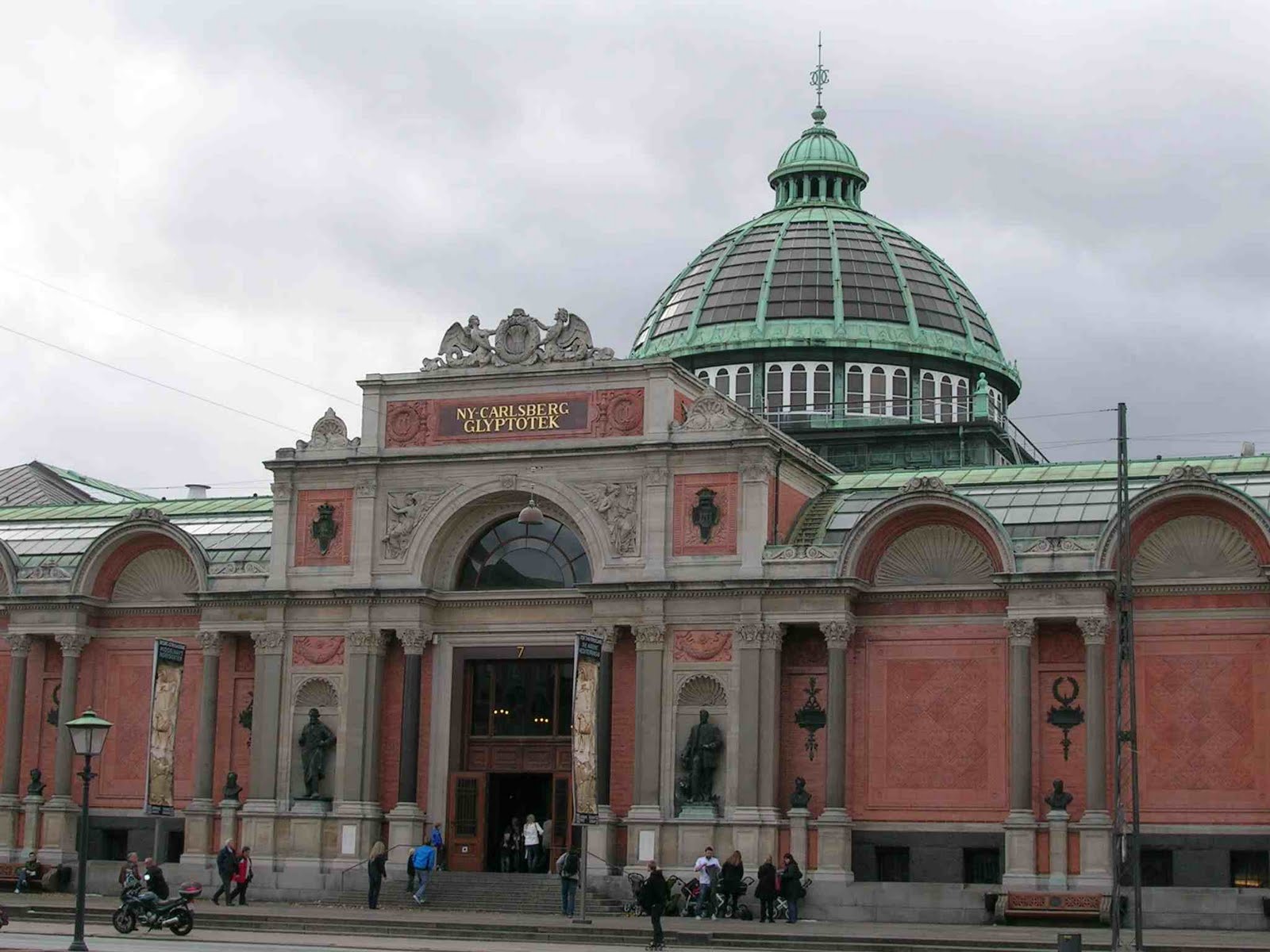
The Carlsberg Glyptotek (Art Museum)

Saint Augustine. The world is a book, and those who do not travel read only a page.


Why do you go away? So that you can come back. So that you can see the place you came from with new eyes and extra colours. And the people there see you differently, too. Coming back to where you started is not the same as never leaving. Terry Pratchett
We shall not cease from exploration
And the end of all our exploring
Will be to arrive where we started
And know the place for the first time. T. S. Eliot
We’ve been in Denmark for a week, and in Copenhagen for 3 days. Since we haven’t bought a return ferry ticket (we drove to Copenhagen from Oxford!!), we are not sure when we’re returning. Thinking in terms of another 3 days here in Copenhagen, one perhaps in Germany, one in Holland. All depends on energy level—and how much we are going to like each other, after being together 24/7 in a camper van for 10 days now!!
Of course, our girls are now 17 and 13, and very adventurous, and well able to do some cooking and shopping and keep things clean and tidy.
                                            * * *
Copenhagen, by the way, is a jewel of a city. Its architecture is vaguely Russian or Baltic, amazing viridian domes and towers.
We wandered the Botanical Gardens and posed besides Andersen’s Little Mermaid, Den Lille Havfrau in Copenhagen Harbour. Spent a day with Impressionists and Rodin at the Jacobsen Art Gallery, and a day in Tivoli Gardens, Copenhagen, the oldest amusement park in Europe. Beautiful landscaping. A lovely aquarium with fish flying through the water like birds, all together in one huge room-sized tank. Enjoyed shopping in Ilium, a Danish Design store, full of beautiful ingenious things which you wonder (falsely!!) how you ever lived without.

Had a traditional Danish lunch in a traditional restaurant, a sort of smorgasbord–pickled herring, herring in a kind of sweet chutney sauce, preserved salmon, smoked salmon, fried fish, meatballs, pork dumplings, roast pork, chicken salad etc. Enjoyed some, was dubious about some offerings!! But the desserts, rum balls, and all manner of chocolate are decadent and spectacular!!

Copenhagen is a beautiful and elegant capital, surrounded by beaches. I love its domes, towers, and clock towers all in gilt or viridian. Scandinavian churches apparently have roosters instead of crosses on their steeples!!

* * *
Our major purchase this year was a camper van. I love travel, and look forward to the break and adventure after the intense school terms with both girls in an academic hothouse school. So we have been going to Europe over school holidays, 5 to 6 times a year, sometimes.
The costs of travel are 1) Airfare 2) Hotel 3) Rental Car 4) Restaurants 5) Entry fees to museums and attractions 6 Highly optional) Shopping.
We figured out that by buying the motor home, we would no longer have to spend on the first four, but instead have picnic lunches or dinners, and buffet style camp breakfasts, eating out only enough to get a flavour of the cuisine. So far, so good—though Scandinavia is generally breathtakingly expensive, we’ve managed to keep costs down by bringing our own kitchen, living room, bedroom and bathroom with us!!
There is nothing more relaxing than camping by a lake or the beach, listening to the sounds of birds, and stepping out into nature in the mornings. I really love this way of travel.
Also, there are many things I do not want to sacrifice when I travel. If I sacrifice prayer or scripture, I soon feel depressed and weary, and so I do not. I do not sacrifice blogging, because it’s healthy for me to process experience in writing, and the quiet hour or so is sanity-saving. I get my exercise by roaming strange cities, and try to get some reading done too.
So I enjoy travelling in my own camper because it is relatively inexpensive, and so I do not feel I have to see everything quickly, but can take things slowly, and enjoy myself slowly, staying in a place until I’ve had enough of it. (The first thing we do in a new country is buy Mobile Broadband, so we can keep our family business running on the hoof!)
      * * *
I would love to find a way to monetize my love of travel, so that it could pay for itself. One day, when life is slower, I am sure I will. At the moment, I find the stimulation so refreshing that in many ways, I feel like a new person when I return, full of enthusiasm again.
The old routines which had become stale are sweet again. I cannot wait to return to my routine of prayer—Bible study—blogging—writing—exercise—gardening and, on my return, feel privileged to lead such a life, even though just two weeks before I felt jaded, and wanted a break.
I sometimes wonder if I am not a “real writer.” The romance of writing has faded me for me a bit, and I cannot take a long period, say 60-90 days, of going up to my study and writing every day. I like to break it up with the adventure and excitement of travel.
But “real” or not, writing is the only work which really interests me, and so I will continue in my “unreal” way, with frequent breaks.

Filed Under: In which I Travel and Dream

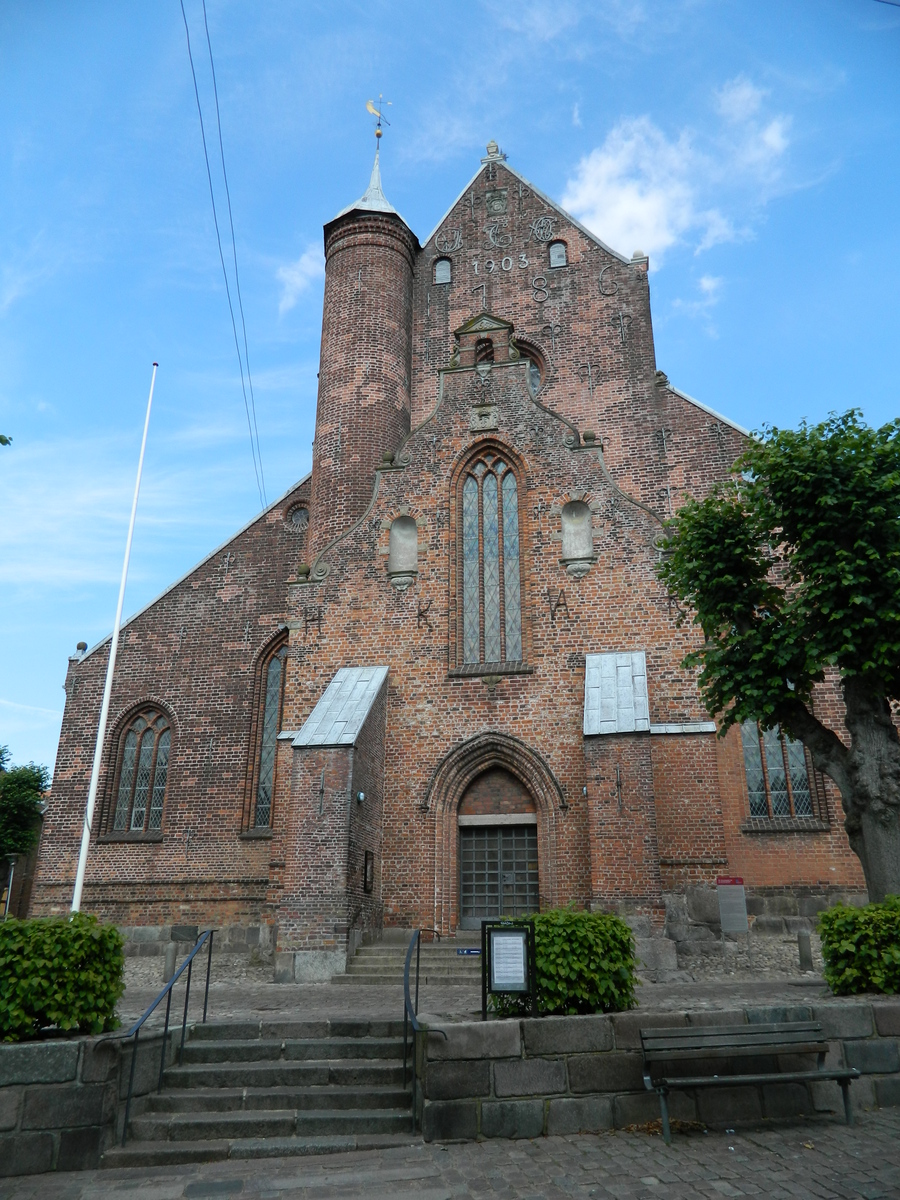
Haderslev Cathedral, Jutland, Denmark: a photoblog

By Anita Mathias

(Guest post by Roy Mathias)

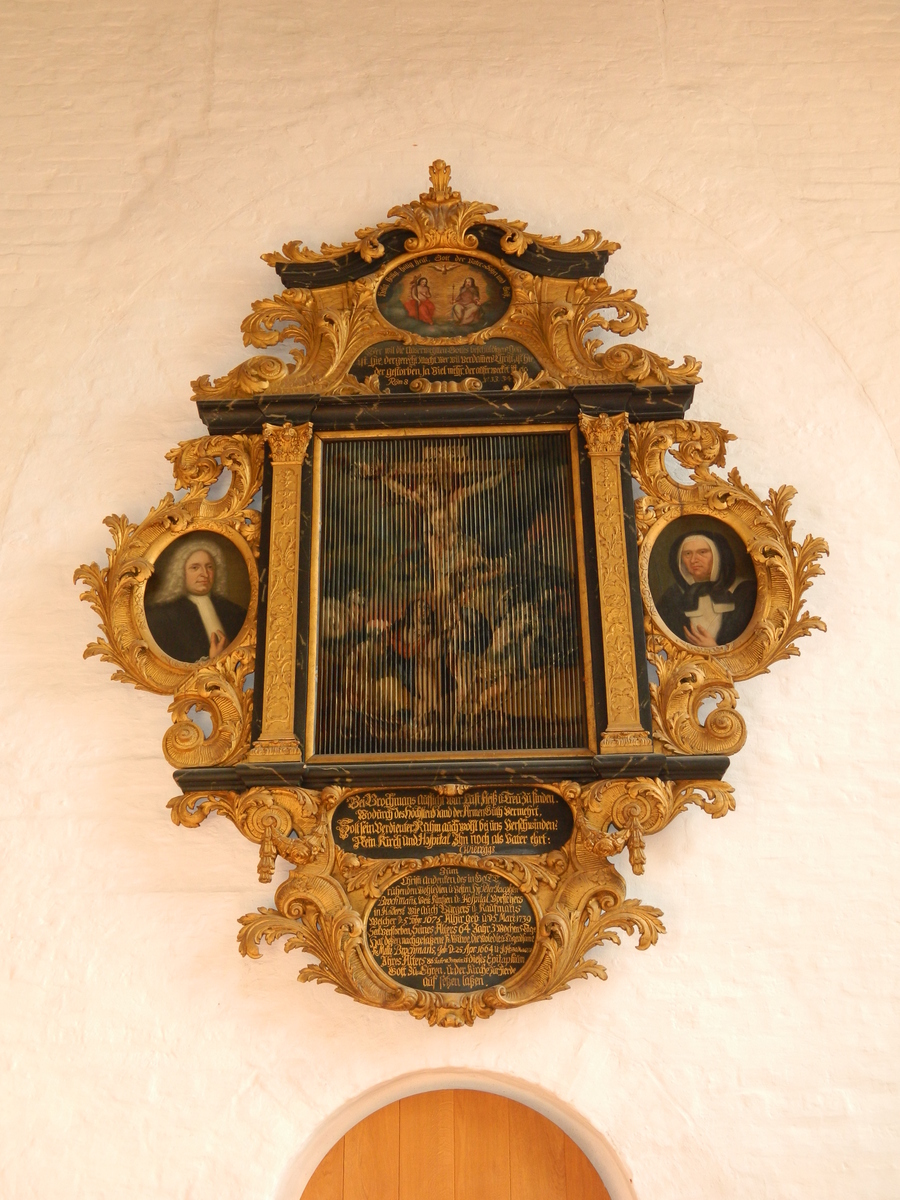
Our first stop in Denmark was Haderslev — a medieval town in Jutland, the peninsula connecting Germany and Denmark.    The first thing that strikes you is the whiteness of the interior:

in contrast to the red brick exterior

As you enter the cathedral, you see this large replica of of a ship, reminding you of the importance of the sea.

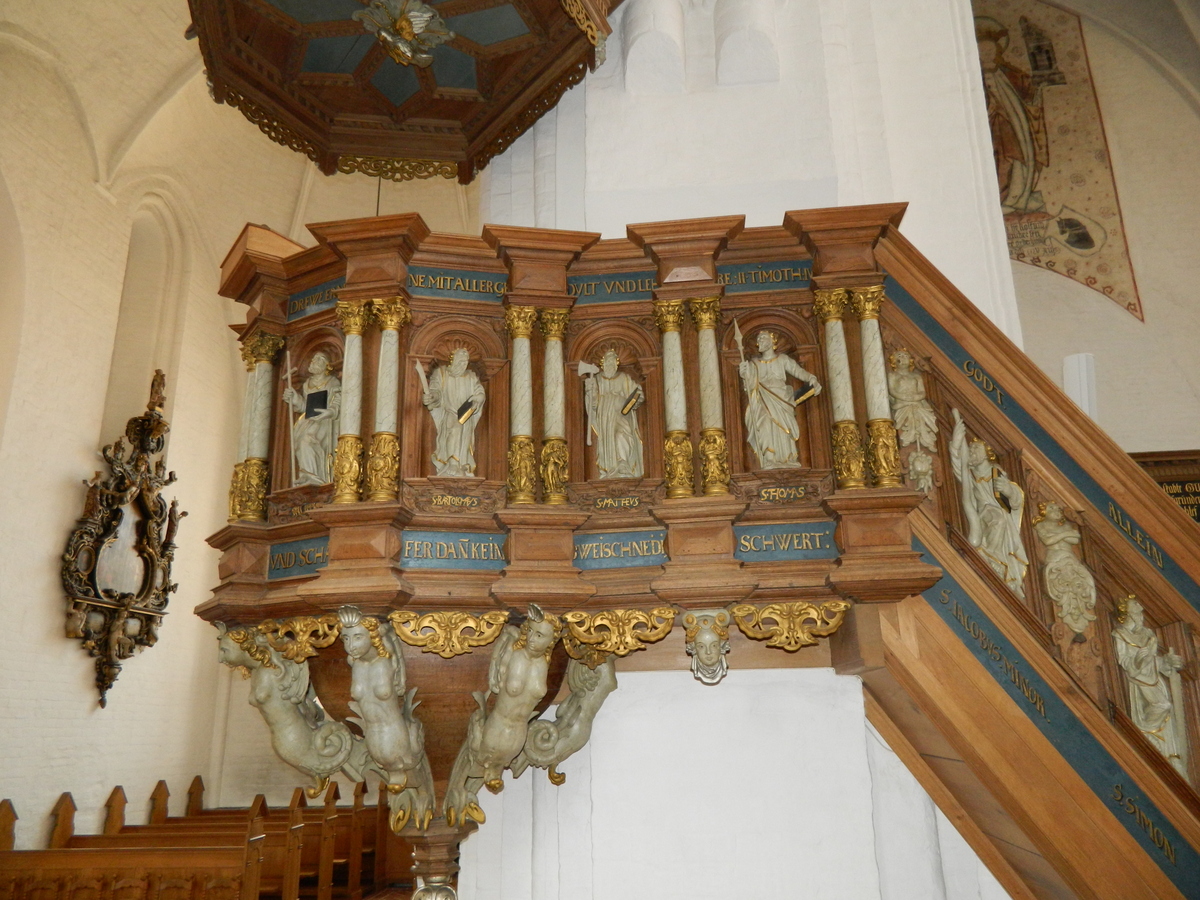
The carved pulpit, with what appears to be a baptismal font in the foreground.

A close up of the figures on the pulpit — apostles and mermaids!

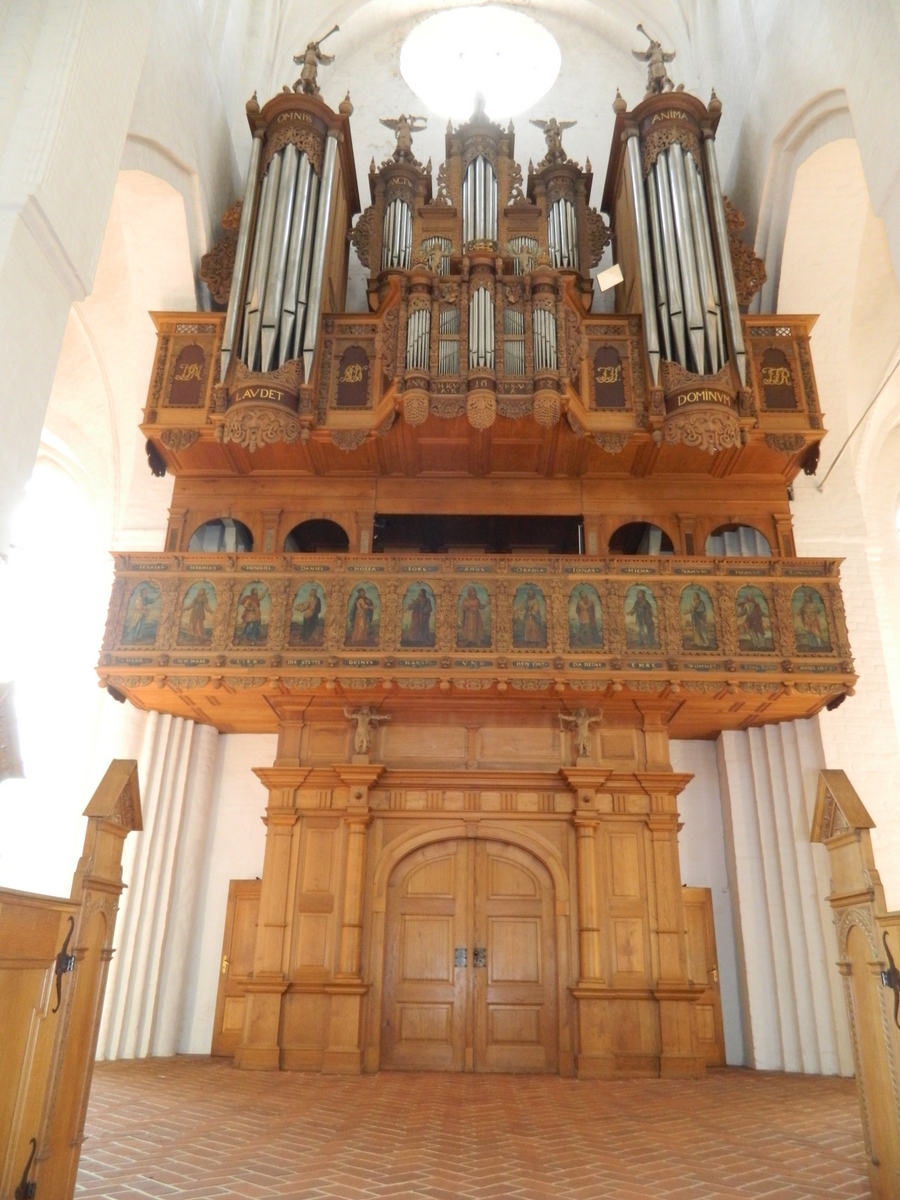
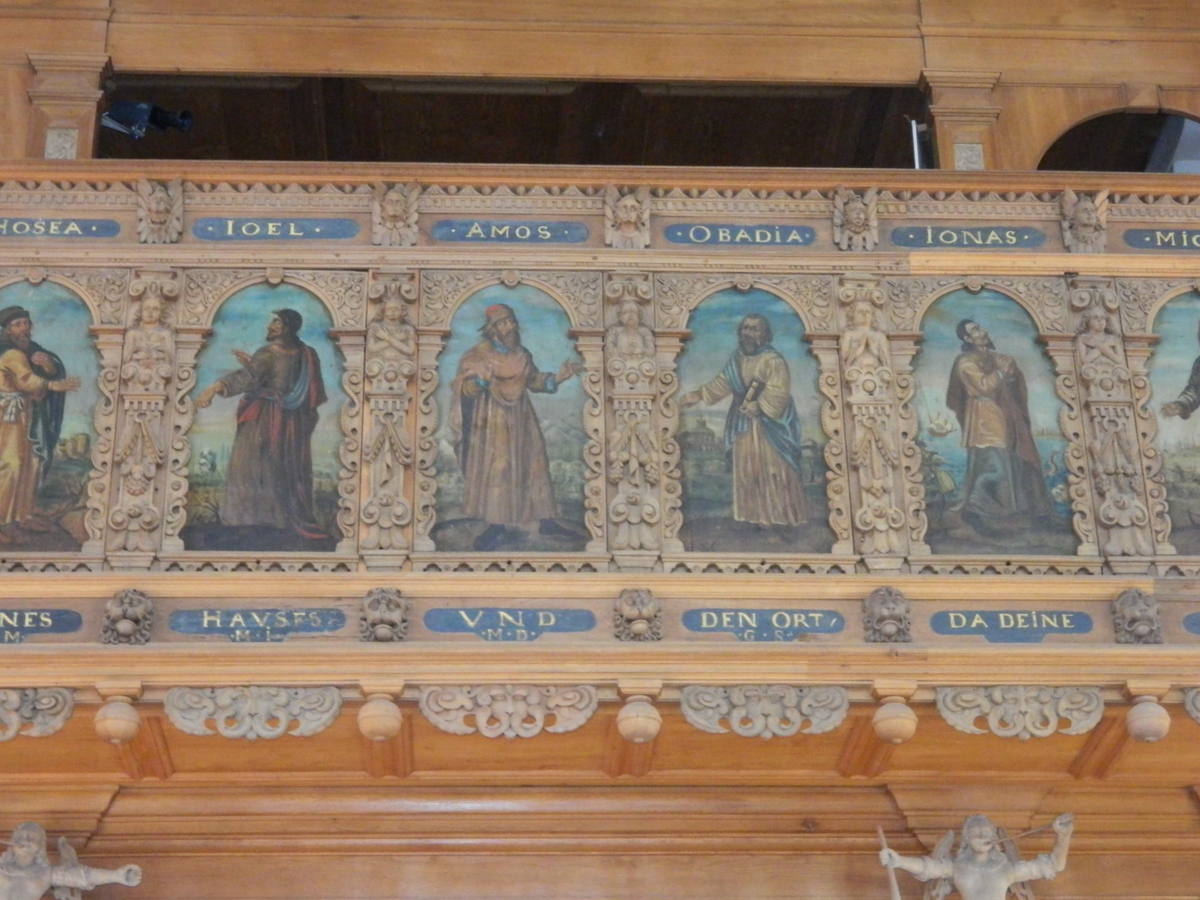
The organ with a row of Old Testament prophets:

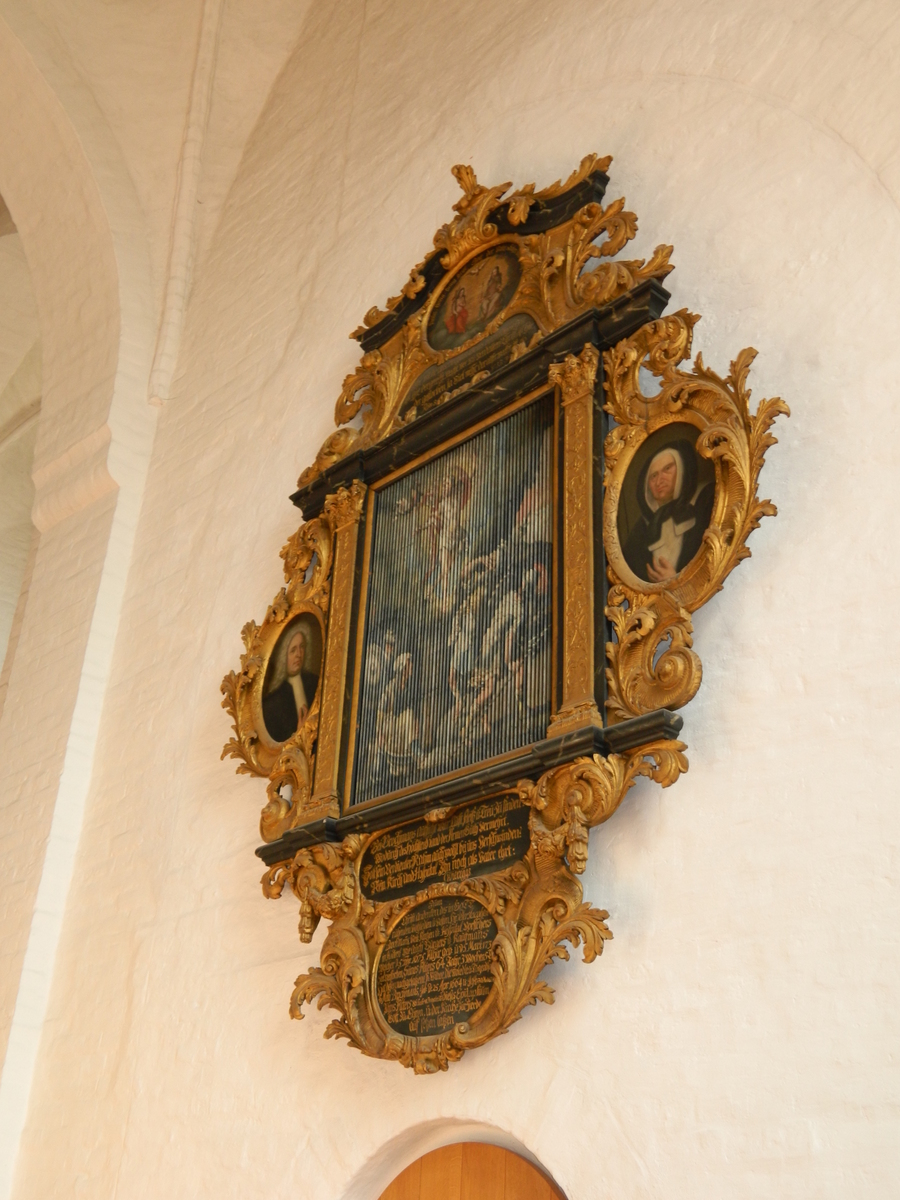
An unusual painting. When viewed from the front or left one sees the crucifixion

however, if you squeeze against the wall to the right one sees the risen Christ.

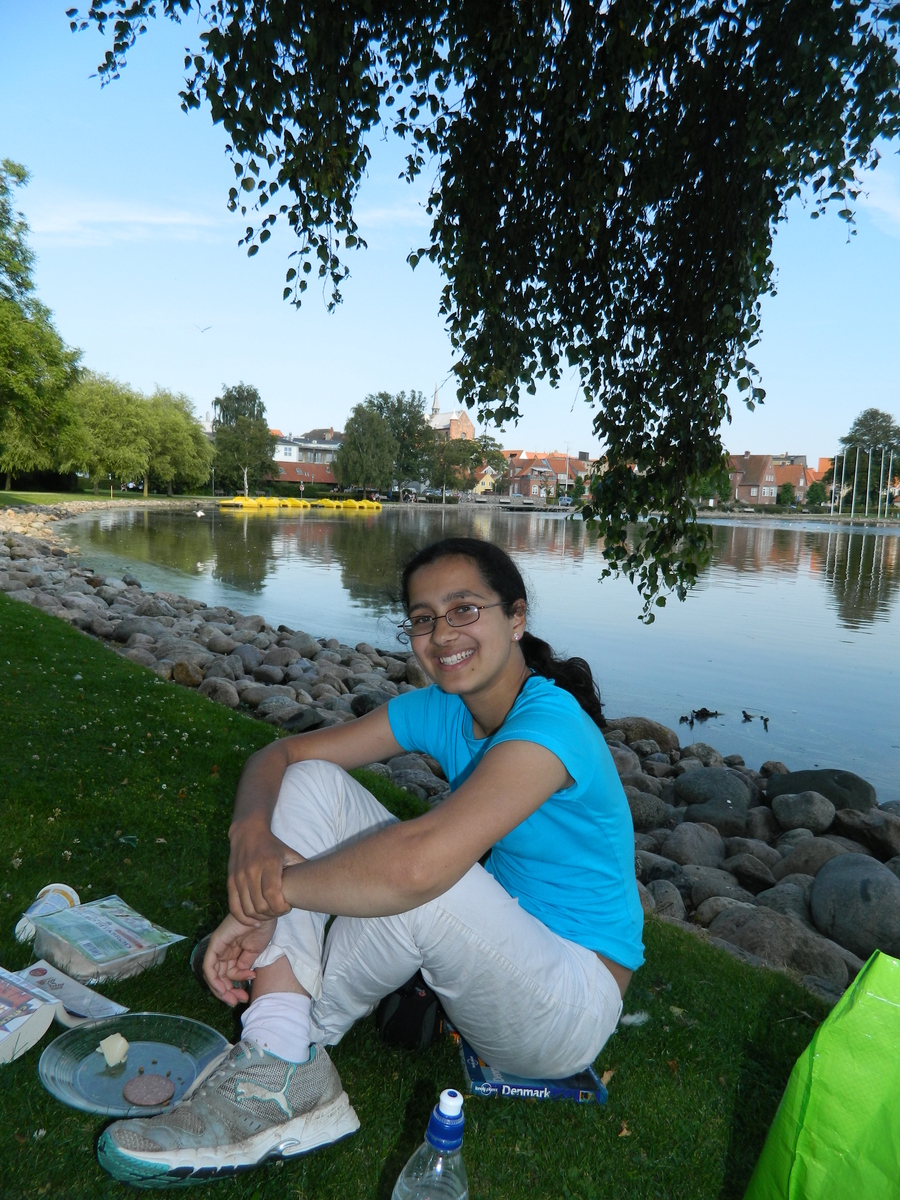
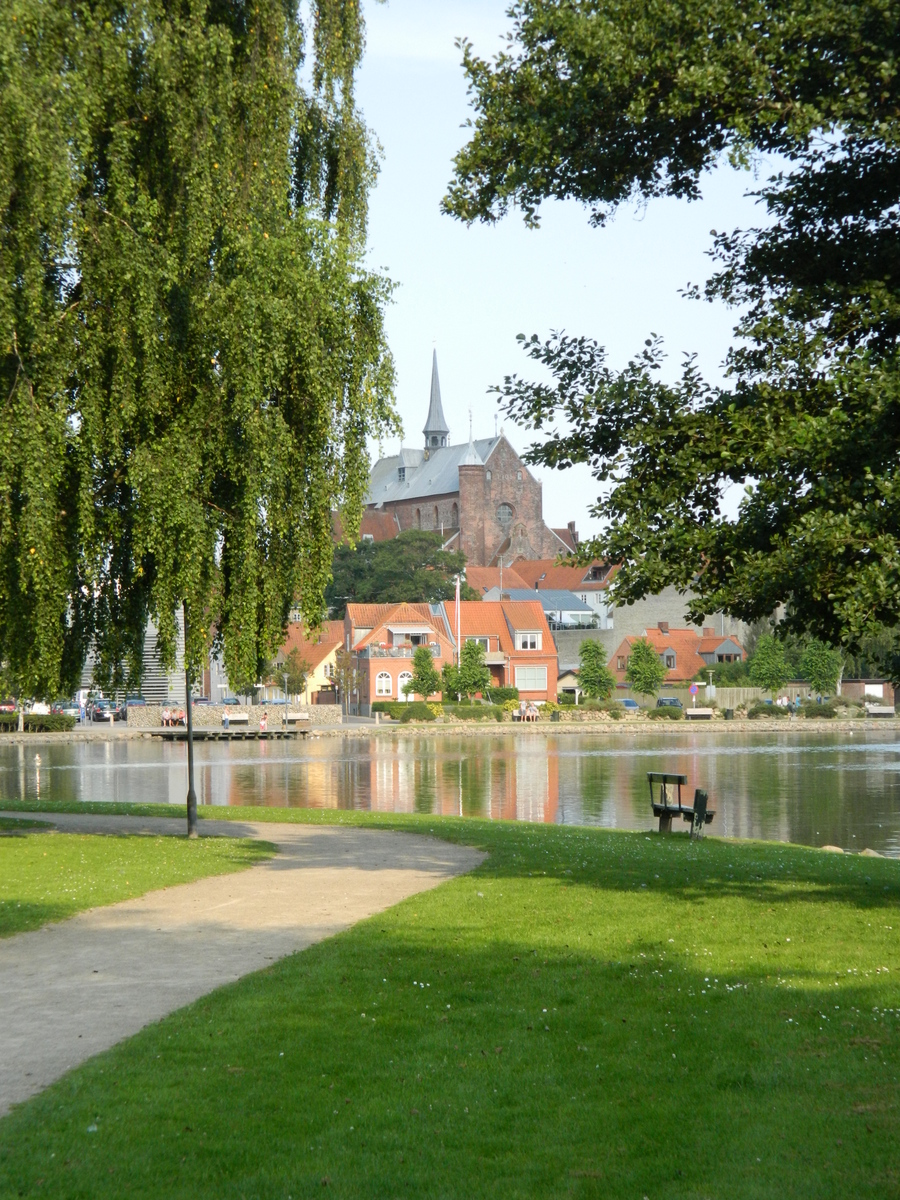
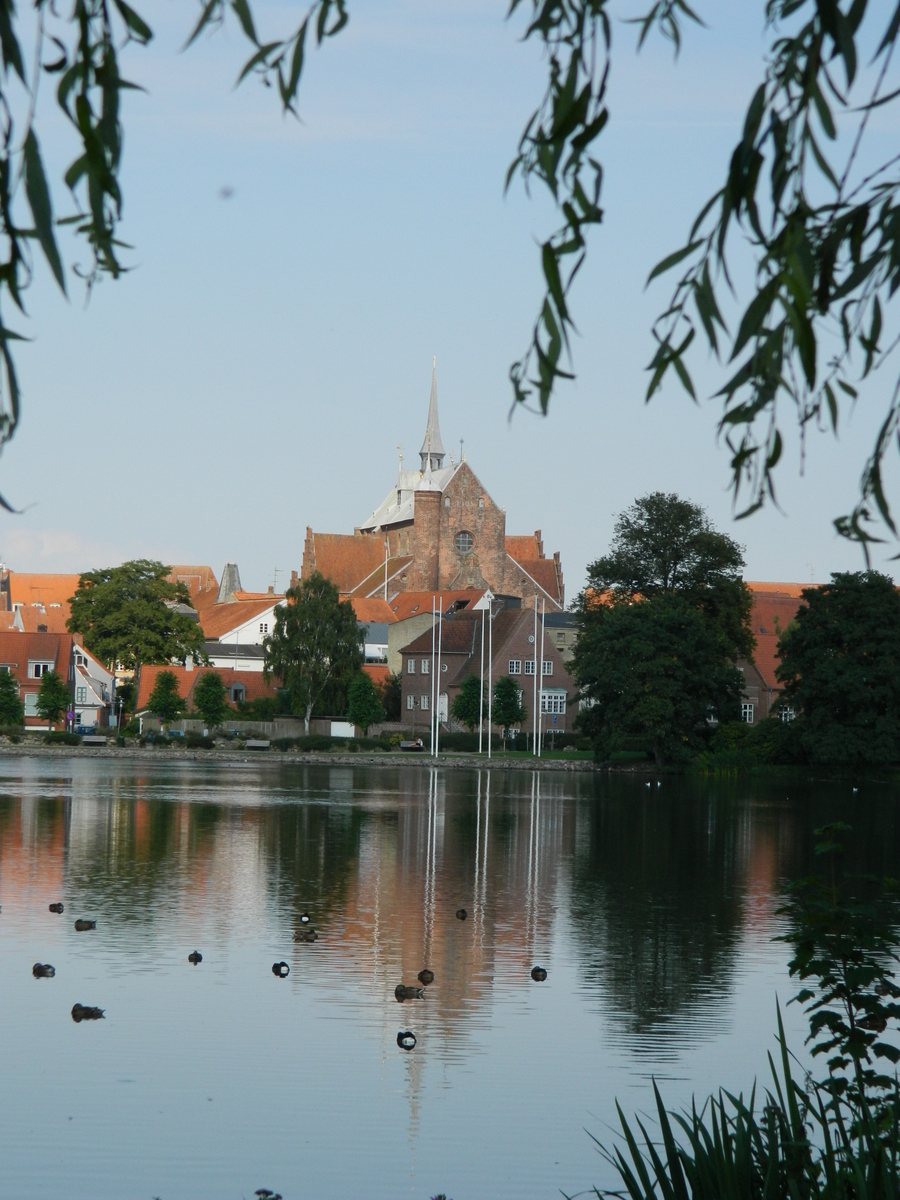
We had a picnic and walk near the cathedral.   In Denmark you are never far from a body of water.  Irene near in front of the lake, with the cathedral and town in the background.

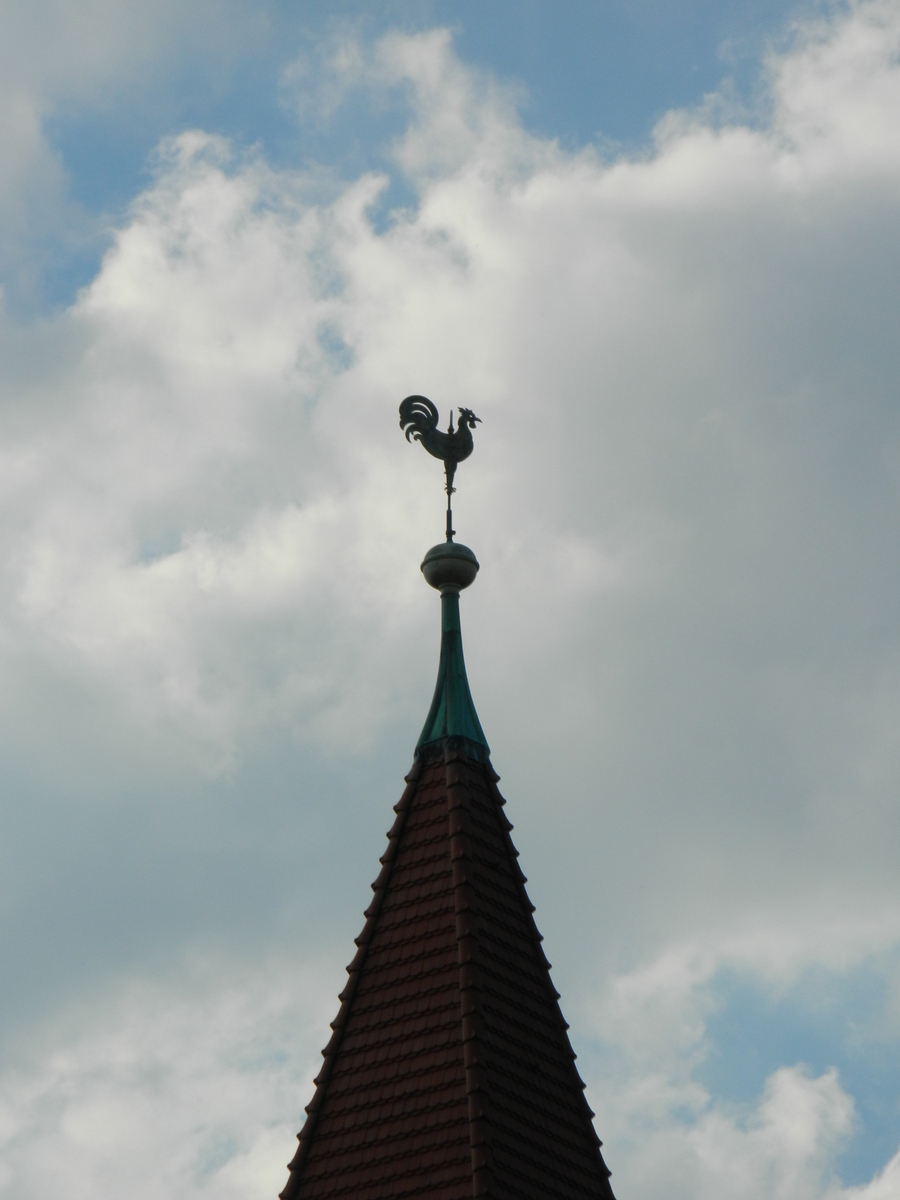
The top of another nearby church, with, yes, a rooster on top!

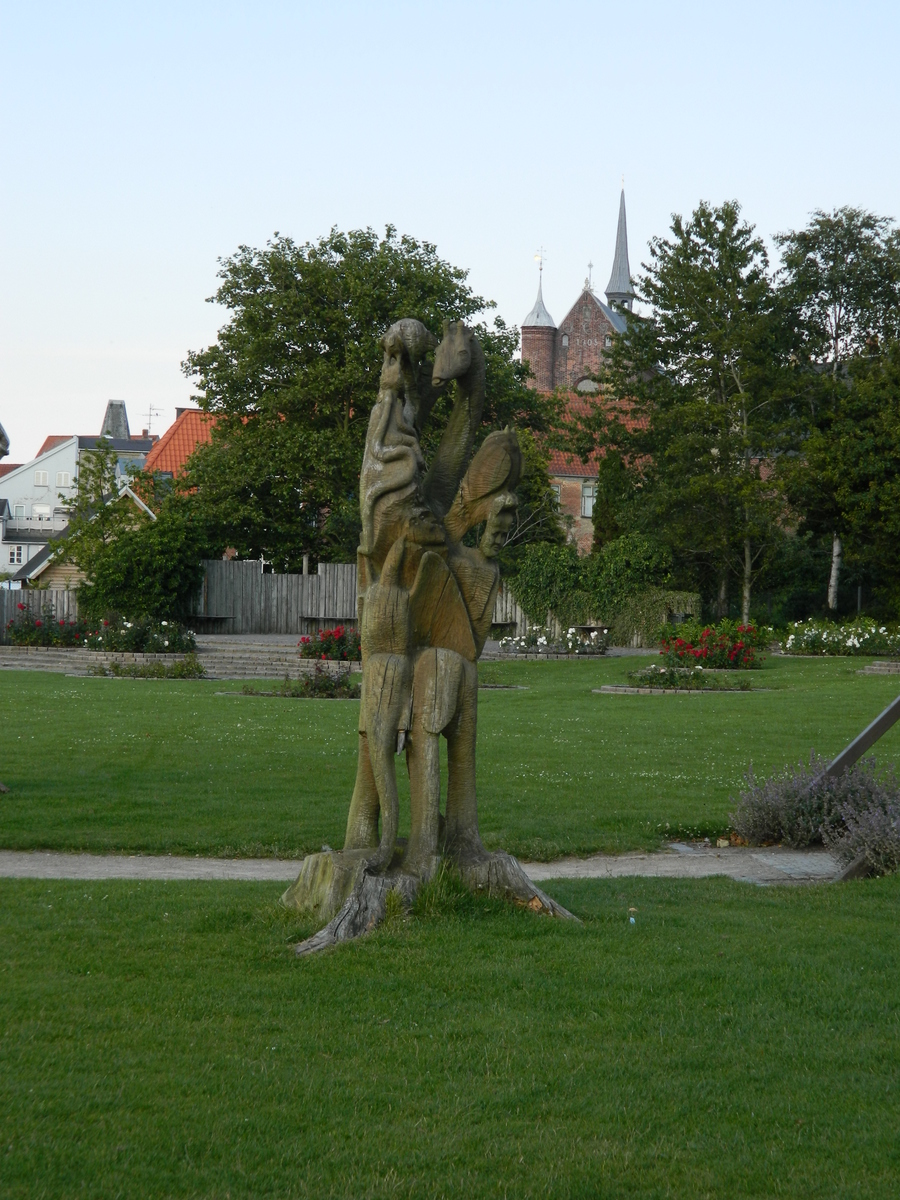
Public spaces in Denmark are an opportunity for sculpture–usually stone or metal.  This one is a the stump of a tree that was already growing in the park carved into a mass of animals.

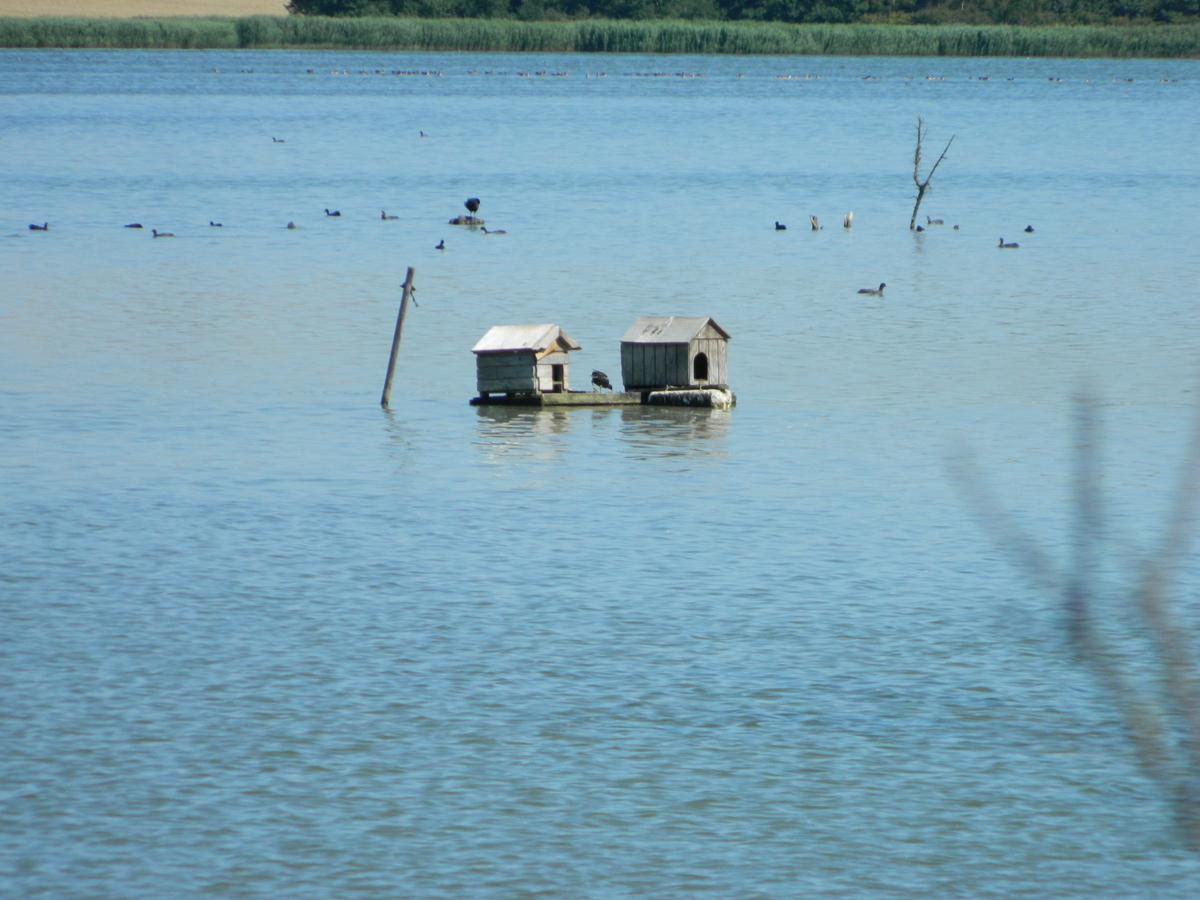
Another lake by the roadside where we had lunch the next day on the island of Funen (Fyn in Danish).  Note the floating bird houses.  We saw numerous coots with young, as well as cormorants and ducks.

Tweet

Filed Under: In which I Travel and Dream

The Tragi-Comic and Glorious Fairy Tale of Hans Christian Andersen

By Anita Mathias

Hans Christian Andersen, Munich, 1860. Photograph by Franz Hanfstaengl.

  Last July, I spent a couple of days in Odense, the birthplace of Hans Christian Andersen–which he left as soon as he could.

Hans Christian Andersen (all three are very common and popular Danish names) was a freak genius, born to a cobbler and a (mildly alcoholic) washerwoman.

Their simple one room cottage had few books–Shakespeare, Grimm and 1001 Nights– but these the pre-teen Andersen soon almost memorized. The inmates of the mental asylum where his grandmother worked told him Danish folk tales.  Even in primary school, he performed Shakespeare plays he’d memorized, with a little toy theatre with puppets, whose clothes he had designed himself. And wrote plays, poems, stories.

School was, nevertheless, full of humiliation because of his ugly, homely appearance, his large nose, and unmasculine pursuits.

His father died when he was eleven and he had to help support the family. He was sent to work in a factory, where he was humiliated by having his trousers pulled down (to check if he was a man) and then apprenticed to a tailor.

At 14, he ran away from home to Copenhagen “to become famous” as he told his mother. He approached the luminaries of the day until a composer, Weyse, who had risen from poverty himself, raised money to enable him to study at the Royal Theatre, though the only role he got was as a troll. He studied at the Ballet School but was told that his ugliness and ungainliness would prevent his getting roles.
He wrote a play, aged 17 (his last hope of having anything to do with the theatre he loved), which brought him to the attention of Jonas Collin, a powerful Court official, and financial director of the Royal Theatre, who realized that Andersen was hampered by his lack of formal education. He arranged an educational fund to be paid by the King of Denmark and sent him to a grammar school in Elsinsore with 11 year olds.

The headmaster was abusive, particularly vicious to Andersen whom he ridiculed and humiliated. Particularly crushingly, he forbade him to write, partly because he was dyslexic, (and so struggled with the long, boring days at school), and partly to crush his literary ambitions which he thought were at odds with his humble origins.  Andersen thought he was going mad because of the abuse, and had nightmares of this headmaster throughout his life.

Andersen persisted for four years, determined to prove worthy of Collins and the King’s interest, but finally wrote a poem “The Dying Child” which became one of the most famous poems of the century. His headmaster pronounced this rubbish, and abused Andersen so vehemently that an alarmed teacher alerted Collin.

Collin arranged for him to return to Copenhagen, where he was given an attic room, and studied with private tutors.

* * *

A year later, aged just 22, he wrote his first book, A Walking Tour from the Holmen Canal to the Eastern Point of Anger. This book, an early Ulysees,  follows a young poet through the streets of Copenhagen over the course of a single night.  Unable to find a publisher, he self-published it, and it was a very successful: every copy sold.

Andersen was a prolific and endlessly creative writer, writing travelogues, fairy tales, novels plays, and three memoirs. He is, of course, best remembered for his  fairy tales which he started writing in high excitement when he was 29.

* * *

Andersen’s Fairy Tales are rich and many-layered, full of humour, satire, wisdom, sharp observation and, above all, poetry. His stories are a literary melange of Danish folk tales, 1001 Nights, Grimm Fairy Tales, but are earthed and anchored in contemporary Copenhagen.  His varied experience in the school of high and low life and hard knocks provided the little intimate realistic detail which make these so charming.

* * *

His writing brought him the things he desired–wealth, the friendship of other writers, entree to high society, travel, and recognition.

There is a bitter-sweet romance and fairy tale about the life of this creator of fairy tales–creative dreams fulfilled, wealth earned, much travel–29 tours of Europe, and the social success and access to high society which Andersen appeared to have craved. He achieved his ambitions and dreams, which so few people do.


“A star of fortune hangs above me,” Andersen once wrote. “Thousands have deserved it more than I; often I cannot understand why this good should have been vouchsafed to me among so many thousands. But if the star should set, even while I am penning these lines, be it so; still I can say it has shone, and I have received a rich portion.” 

The star, of course, shone because of his determination and hard work, as well as his genius.

But the wounds of penury, of rejection, humiliation, abuse and exclusion never fully healed. His love, both heterosexual and homoerotic, was always unreciprocated. He was the little mermaid, (Den Lille Havfrau as signs all over Copenhagen tell us) who achieved his dreams at a high price, and then not completely.

* * *

When I was younger, I might have read his life and resolved to work relentlessly to fulfil my own literary dreams. But I now know that while creative and writing dreams fulfilled have their own sweetness, they cannot fill the heart with joy or peace or contentment. For that, I need more than literary dreams fulfilled. For that, I need the Holy Spirit. For that, I need Jesus. For that, I need God himself.

How do I know this? Because I have realized some of my dreams–I’ve studied in the University I wanted to: Oxford; my writing has won prizes and been published; like Andersen, I’ve visited over 29 countries; my little business has been successful; my little blog is growing; I live in the country outside a city I love, Oxford. I am happily married, and have two sweet, gifted children.  And all these things have been satisfying.

But their satisfactions do not compare to the times of soaking in the presence of God, of revelling in Scripture, of hearing the voice of God, of prayer.

And while these times spent playing in the fields of the Lord–because of the goodness of God–might help one’s life resemble a fairy tale with a happy ending, they are, in fact, a true fairy tale in themselves.

Little Anita hangs out with God; Little Anita reads the words of God; Little Anita talks to God, and God talks back. What greater fairy tale?

Filed Under: In which I celebrate books and film and art

The Cosmic Significance of the Cross of Christ

By Anita Mathias

I can’t precisely date when exactly I realized that God loved me though it is the most life-changing idea I’ve encountered.

Similarly, I can’t quite date when I understood the significance of the death of Jesus. Of the Cross of Jesus. Of the purifying, protecting blood of Jesus.

As I began to understand them, they brought me a sense of protection. I somehow feel safe because I am covered by the blood of Jesus shed for me. I feel safe, because I can hid in Jesus who died for me.

* * *

The birth of Jesus is the central event in the history of the world. It bifurcates history, as recognized in the Gregorian calendar, the only internationally accepted civil calendar.

He died nailed to the beams of a cross. That cross stands out across the world, and its importance steadily deepens as it reverberates through human history, spanning its height and depth, its length and breadth.

In the cross all things hold together.

In the cross of Jesus, Judeo-Christianity makes sense, is a logically satisfying system, the system of sacrifices in atonement for sin ending with one perfect victim.

* * *

We are children of God, made in the image of God. God loves us.  All of us.

Jesus explains that if even bad fathers give good gifts to their children, how much more would our heavenly father give us good gifts.

In fact, just as many parents would instinctively give their lives for their children, God allowed part of himself, his heart of hearts, his son, to volunteer to bear the punishment for humanity’s sins, to redeem us by his blood shed in our stead. The Sinless One suffered an unjust punishment to pay for the sins of the world.

The significance of the death of Jesus, the power of the life-blood of God, of the death and resurrection of God is vaster, deeper and higher than we realize.

Behold the Lamb of God who takes away the sins of the world, John cried. Whose sins did he take away? The world’s.

This is the blood of the new covenant which is shed for the forgiveness of sins. Whose sins? Perhaps anyone who wants his sins to be forgiven. And who does not?

Perhaps the blood of the all-powerful creator God cleanses all who crave for its cleansing, provides a new and living way to God for all who crave God.

Not just Jews, not just Protestants, not just Christians, but all men perhaps, the men of any tribe, and people and language and nation who will praise him they might have never known by the name of Jesus.

* * *

And the Cross changes who I am. There is now a clear pathway between me and God, me and the Spirit.

I am no longer just Anita, shaky little Anita who can be thrown off course by the challenges and demands of success or the slings and arrows of outrageous fortune.

In Jesus, because of the death of Jesus, I am a different, more steely and formidable creature altogether. I am Anita-in- Jesus; Anita, a branch in the vine, with Jesus’s sweet life flowing through her. Anita, reconciled to Jesus by his death, Anita with the sweet spirit of Jesus enabling her to do the difficult.

* * *

God does not show favouritism but accepts men from every nation who fear him and do what is right. (Acts 10:34). And when men from every tribe and tongue and people and nation worship the lamb, it may well include those who worship him they have sensed and loved, whose glory the heavens proclaim, and whose name, they realize at last, is Jesus.

Does that remove the impetus of missions—the possibility that, as in the vision of Peter, God accepts men from every nation who fear him?

Not really. For Jesus is sweet, and lovely and following him is the best way to live, and so he is a secret we should share–even though he is too good to punish the men and woman of Chad and Niger for my failure to go to them and tell them of Him.


Filed Under: random

Jesus, Positive Thinking, and Mental Health

By Anita Mathias

Lion Waterfall 2 Print By Keith Lovejoy

Mental health, like physical health, is on a continuum. When someone totally loses it, and is obviously “mad” enough to be sectioned, we say they’ve lost touch with reality.

But how few of us see reality as it really is.  With a God’s eye view. As Jesus taught us to see it.

If we could train ourselves to see and think the way Jesus taught us to, what splendid mental health we’d have!!

* * *

Jesus’s teaching was strikingly positive. And here are a few ways I am trying to train myself to think the way Jesus taught us to. And better mental health will be a fringe benefit of this.

1 He taught us not to be afraid.

“Do not be afraid,” echoes through the Gospels. Most of our fears never come to pass. And even when our anxious minds help produce the very thing we most dread, God’s help is available to help us deal with it.

There is a difference between prudence (adjusting one’s actions because an adverse outcome is very probable), and fear: irrational dread!

2 Jesus told us not to worry about anything at all.

What a splendid recipe for mental health, freeing us from circular and literally sickening worry. Worry is particularly unproductive, because most of our worries (like most of our fears) don’t come to pass, and, again, God’s help is available in our worst case scenarios.

3 Jesus advises us not to judge.

Judging is like deciding on 360 degrees of someone’s personality based on 10 degrees of information. It leads to a shrivelling of the heart, of emotional intelligence, and of our life-experience because of the habit of rapidly writing people off.

And when in obedience to Jesus, we refuse to judge, but instead remain open, we learn, we learn, we learn!

4 Another startling bit of advice Jesus gives is forgiving if you have aught against any. How sweeping.

When specific grievances surface in my conscious mind, I attempt to dissolve them by thanking God for the good things about the person, by praying for the person as whole-heartedly as I can, and by praying for grace to turn the acid and claws of my feelings towards that person into sweetness.

Any hatred–towards nations, for instance–is as harmful to our mental and emotional health as hated of individuals. I recently talked to a Christian man who was consumed, to the point of mild insanity, with his hatred of the US and the harm its foreign policy has done. Releasing aught against any would require him to release his hatred of the US—not for the sake of the US, but for his own sake.

I similarly know two American Christian men who are consumed by their hatred and dislike of Barack Obama. Gosh, I have never witnessed such hatred towards a politician as many American Christian nurture towards Obama.   If I hated Obama as much as these two friends of mine appear to, I would need to “forgive” him before I stood praying to keep the waterfall of grace between me and God flowing and unclogged.

Far-fetched? I remember Catherine Marshall saying she had to forgive Henry VIII for his desecration of monasteries as part of her releasing aught against any.

5 Another instruction of Jesus which is greatly conducive to mental health is “Do not let your hearts be troubled; neither let them be afraid. Trust in the Father, trust also in me.”

* * *

So many of Paul’s precepts are about following Christ in the secret place of the thoughts.

Rejoice always; in everything give thanks. Believe everything works out for good.

Paul’s life was full of extreme pressures—both glorious preaching, miracles and influence, and imprisonment, solitary confinement, floggings, slander, and disgrace.

The mental health and strength he cultivated in the secret places of his heart kept him sane, productive and creative in the very direst places of his life, such as the dreadful Mamertine Dungeon from which he wrote his most joyful and inspiring letters.

Ah, obeying what Jesus taught us as literally as we can! Mental health flows from it, and creativity too!

Filed Under: In which I decide to follow Jesus Tagged With: following Jesus, forgiveness, mental health, not worrying, Physical health, Trust

In Denmark on our summer holiday

By Anita Mathias

  I will try to keep up my blog, as I enjoy thinking and writing—but… regular service will be irregular!
After much debate, we bought a motorhome. Or, rather, Roy bought it. When it came to it, I couldn’t bring myself to go car-shopping, and Roy has quite successfully bought all our previous cars and mini-vans, so he bought this, and we got a professional to check it out.
We love it, and far prefer the adventure of motor home travel to regular hotel and rental car travel. You can keep going till you find an idyllic spot. In Norway (where there is a law called allemansreit) Switzerland, Scotland, Ireland, New Zealand etc. motor-home camping or wild, free camping is legal in wild areas, in the mountains, by rivers, or by the sea.
We’ve been renting motor homes for over ten years, and some of our favourite travel experiences have been camping in the Alps, doing our washing up in streams; camping on beaches in Ireland; facing fjords and waterfalls and the tarns of the Hardangervida plateau in Norway, or the vast inland lakes Vannern and Vattern in Sweden. To step out into sheer beauty, but still have a good night’s sleep with books, a laptop, and creature comforts is the best of both worlds for me. Our new (to us) motor home has a kitchen, a shower, a loo, huge picture windows, and a little family sitting area. Love it.
                                             * * *
I love Scandinavia in summer. We flew to Norway and Sweden for the last two summers and rented a motorhome there. This year, since we bought our own, we decided to drive from Oxford to Denmark.
It was an epic drive, but we have listened to some of the Narnia books which I last read to the kids over 10 years ago, and which were enchanting and have a travel feel–The Horse and His Boy and Prince Caspian. And slept a lot (well, not the driver) catching up with our sleep lag.
So Oxford—Dover—Dunkirk, where we slept by a canal, through France, Belgium, Holland, where we slept in farm country, through massive Germany, and then into Jutland, which is the only point that Denmark connects to mainland Europe. Slept by a lake, last night. This sort of holiday is cheaper than flying and renting a camper—but it takes a day longer—but you listen to more books on the way, and arrive rested and in a holiday mood. Yeah, I think we will do it again.
As one drives through Europe–I guess we’ve driven through 6 countries in the last couple of days–globalisation, or rather Americanization is evident. KFC, Pizza Hut Burger King and McDonalds’ everywhere!!  I know everyone hates globalisation, but I must confess I do stop into McDonald’s on the way, for the free WiFi, and a mocha caramel Frappe
                                             * * *
The American business model is generosity. McDonald’s throws in free WiFi, and clean loos, and sells many accidental coffees and Big Macs in the bargain.
In Germany, I was struck by the fact that, though it was a great big successful economy, nothing was free. To get “free” WiFi at McDonald’s, you enter your German mobile phone number, and they send a text to your phone with a code. In other countries, like France and Holland, you just enter and use it!! No German phone, no luck. (In fact, a friendly employee logged us in!!). And in Germany, you are automatically logged out after an hour!! No nursing your latte for hours!
To refill water in the camper at rest areas, you put in a 50 c. coin. To use the loo at gas stations, you go through a turnstile with a 70 c. coin. Etc.
And Germany is the most prosperous European country.
I wonder which model is more profitable. Free loos in petrol stations, and the grateful customer might pick up a coffee.  Or a paid loo and you don’t feel you need to buy anything. If the very American story of Wall Drug is universally applicable, the former should be better. Generosity is good for business as well as for personal relationships. But no doubt, number-crunchers in business schools have analysed all this.
Denmark is a very small country. You can drive from one end to another in 3 hours, so we are hoping to see a lot of it.
* * *
Scandinavia, in particular, and Northern Europe in general, is so pleasant. Polite, considerate people, clean surroundings, a high degree of honesty, and everything so efficient, well-organised, and highly innovative. For instance, parking spots in Haderslev were marked 30 minutes, 60 minutes, 3 hours. Danes have a little clock in their cars, and punch in their time of arrival. And if you are a visitor. “Oh, just leave a note saying when you came.”
Cleanliness, tidiness, order, hard work, efficiency, punctuality, consideration, decency, honesty: All these traits have are integral to the ethical system called Christianity.
Jesus, of course, didn’t directly stress the first six virtues, but Northern European Christianity today, as percolated through the Reformation, Luther and Calvin, is a construct which does not closely resemble the simple , revolutionary and wonderful faith Jesus taught.  

Not that I am criticizing the Protestant work ethic, and “cleanliness is next to Godliness”– Reformed Northern Europeans distinctives which have become synonymous with their brand of Christianity. The world might well be a better place if run on the Scandinavian and Northern European model—but with a smile.
Scandinavian and Northern European countries consistently rate among the happiest in the world. The high emphasis on fitness probably plays a part–physical fitness keeps endorphins high, and gives you a positive outlook on life, increased self-confidence, and disease resistance. And increases productivity. Perhaps their is a connection between their love of outdoors sports and the high wealth.

I see the wealth in Scandinavia, generated by hard work, innovation, discipline, honesty, and inherited income. And feel sad for Africans who probably put in as many hours as the Northern Europeans, but who still struggle for subsistence.

Roy reminded me that Jesus said it’s perhaps harder for those who are rich in this world to wriggle  into the Kingdom of Heaven. And that is some comfort for me. I don’t want these strapping Vikings to be out, but I would rather like the smiley cheerful Africans to be in!!

Filed Under: In which I Travel and Dream

Rich Christians and World Poverty. How much should we give?

By Anita Mathias

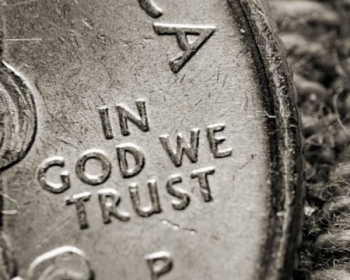
god we trust Tithing and the abundant life

So there is unbelievable poverty in the world. But most of us who live in the West have enough to satisfy all our needs and many of our wants.

And, often, the disparity gnaws at us.

How much should we give away?

We feel sad about the suffering of the poor.  But we live in the West, we take on the coloration of the West, and our needs become Western, including the need to take a break from the pace of life (our children’s frenetic pace of life, if not ours) and escape distraction by distraction, in Eliot’s phrase. For instance, I don’t particularly covet things any more, but I do enjoy working hard/playing hard, and I love travel and exploration.

* * *

To think  what you spend on coffee each  could send an African girl to school; your holiday in Europe could support an African family for a year could poison your life with guilt—particularly if you do not in fact give away the money saved (which, I suspect, is often the case!)

But how much should we give away?

The Apostle Peter asked for a concrete figure to appease his conscience.

“How many times should I forgive my brother if he sins against me. Seven times?” he asks magnanimously.

But Jesus does not fall for this.  When can I stop forgiving? he hears Peter asking

So he gives a rhetorical, hyperbolic figure, impossible to track. 70 times 7.

Infinitely.

(And I must say that I have probably forgiven Roy and my children that often!)

* * *

Giving away a large percentage of our money, something we have toiled for, worried about, and greatly desire because of the worlds and opportunities it opens to us, is as difficult as forgiveness perhaps.

And so those who lived under law were given a convenient, easily calculated figure–ten percent as a minimum. And then something over that, as their conscience led them, “offerings.”

* * *

For us, under grace, no figure has been given. No easy: “Okay then, ten percent is God’s, and 90 percent all mine.”

But giving ten percent is a useful rule, and will probably unleash much blessing in your life. I have read it in biographies, been told so by friends, and most persuasively, giving 10 percent has always unleashed miracles, windfalls, and unexpected blessing in my life.

* * *

I read in late 2003 in the World Vision magazine, about struggling cherry farmers in Washington State, who wanted to do something about world poverty. They decided to tithe to World Vision, though their business was precarious. And then increased it. Soon, the amount they gave away in tithes each year was the same as their annual salary the year they had started giving. Their income had increased ten-fold, and they were giving away substantial sums! God blessed their business because he trusted them to be a conduit of blessing.

I was so inspired by the fact that ordinary individuals could dent poverty on a small scale, that I decided to increase our base tithe by a percentage point each time we got a financial windfall, a grant, a cash prize, a cash gift. So we were giving 16 percent by the time we left America in 2004. The generosity unleashed blessing.

And then we moved to England, and money was tighter—significantly higher house prices, taxes, and we went private for schooling. Though we had tithed for all our Christian lives, we stopped. We gave, of course, but not ten percent. I led Bible studies as my service to the church.

And we financially struggled for the first two and a half years that I ran my small business–and for the only time in our lives. I wonder now what would have happened if we had tithed!! It wouldn’t surprise me if God would have blessed us with good ideas and good luck, and the tide would have turned sooner.

But there is a toughness and tensile strength of character which is best forged in the school of suffering, and so I do not regret its lessons.

* * *

Though the Old Testament tithe is no longer a requirement to us who are redeemed by the blood of Christ, and live under grace, it is a good starting point. Easy to calculate, and not difficult for almost everyone in the West, and many people in the majority world too. And then, offerings over that, as our heart is moved by specific needs.

I think world poverty would be significantly dented if Christians tithed.

* * *

But we do need to tithe way beyond our little church. The Old Testament tithe supported widows, orphans and aliens in addition to the Levites (Deut 14:28).

If we all gave ten percent of our income to the church we attend, we’ll soon have obscenely overpaid fat-cat pastors in affluent areas, and the money would provide a show on Sunday to rival a concert, and the church could become a club with aerobics classes, weight loss classes, coffee mornings and pamper evenings, being ever more appealing and ever richer, while the poor in the majority world become poorer and poorer. As Larry Burkett points out, tithing in rich, inward-focused, growth-focused churches is essentially tithing to yourself and your church family!!

Not every pitch you hear from the pulpit is motivated by real need. Some are motivated by the pastor’s ambition for glory. Learn to distinguish between what pastors legitimately need to preach the gospel, and which appeals are motivated by ambitious profile-boosting and empire-building. For these sort of appeals will never end.

On the other hand, if we followed the Old Testament model and ensured that 2.5 percent of our income goes to support the local church, and 7.5 goes to support the poor, including “aliens,” our economy will be closer to the one God envisioned, and perhaps there would be few poor among us.

* * *

We ourselves, of course, may have less money than if we did not give. Though not necessarily. Gretchen Rubin, a secular writer who writes on happiness, cites studies that the more one gives, the more one’s wealth increases—perhaps because of the positive feelings that  giving and generosity provide, and other people’s respect for the generous. Roy and I first started tithing in 1990, and were amazed at all the little miracles of financial provision which suddenly followed us, seemingly as a consequence.

And if tithing leaves us with less money than we would have had? So what? Less money=less stuff, less distraction, more simple pleasures, and a quieter life. Money truly does not buy happiness beyond a certain point, and most of us, if we track our times of deepest happiness, may discover that they were times of simple pleasures which did not require very much money at all.

Filed Under: random Tagged With: blessing, generosity, giving, tithe

The Blessing of Jabez and Jacob

By Anita Mathias


Jacob wrestling angel
Jacob wrestling with the Angel


When we lived in America around the turn of the century, the Prayer of Jabez was the most lucrative Christian marketing craze: a best-selling book, audio CD, mugs, magnets, t-shirts, books, even a CD of worship music composed around that two line prayer. Some of these might be spotted around my house, I must confess.

The prayer of this new-minted 21st century celebrity came from an obscure sentence in the Book of Chronicles, which contains all we know of Jabez.
Jabez cried out to the God of Israel, “Oh, that you would bless me and enlarge my territory! Let your hand be with me, and keep me from harm so that I will be free from pain.” And God granted his request. 1 Chron 4:10
Nice prayer, inn’t it? Who wouldn’t want to pray it?
And why did God answer this prayer? There is no magic to the formula. Jabez has not serendipitously got all his prayer ducks in a row. God answered because Jabez asked.
* * * 
I have been re-reading the life of Jacob. The one thing Jacob wanted all his life was the blessing of God. The blessing encoded in creation, in the genetic code of corn and cows: abundance from the limited, the miraculous multiplication of one’s feeble efforts, protection. 
He tries to get it by manipulating a ravenous Esau of his birthright (which, as first-born, included the blessing promised to Abraham and his seed), then by mercilessly deceiving the blind Isaac into giving him the blessing he had reserved for his own favourite son, Esau. He flees Laban at night, devises a cunning ruse to pacify Esau who comes to meet him with four hundred fighting men.
* * * 
And then in the night, he encounters a opponent whose magnificent strength tells him he is more than human. He does not let go, even when the opponent, desirous of leaving before dawn  (“because no one can see the face of God and live” Exodus) dislocates Jacob’s hip. 
Jacob says, “I will not let you go unless you bless me.”
And so God does. 
God blesses him because of the strength of his longing for God’s blessing.  He blesses Jacob because what Jacob wanted–for his entire life–even more than he wanted wealth or success, was God’s blessing. 
All his life he has sought it desperately, tricked and manipulated and wrestled to get it.
And now, no scheming, no tricks, no bargaining with God as at Bethel, twenty years earlier. 
He simply asks.
* * *
Though old habits die hard. Jacob still finds it hard to believe that he can have God’s blessing for the asking.
So he informs God that he is certainly not going to let go of him until he has blessed him. And this from a man limping with a dislocated hip!
God is charmed. And probably amused. And so He does what he has always intended to do, even before Jacob had been born, what he had been waiting to do if Jacob had but asked him, instead of defrauding his relations and having to flee from them for 20 years of bitter toil. 
He blesses him. 
And Jacob achieves what he could have had all along for the asking. If he had relied on God rather than on his own stratagems.
Open my eyes, Lord, to see the times when I worry and fret instead of praying; when I quarrel instead of praying; when I work in convoluted, tortuous ways instead of praying.

Open my eyes to the stratagems I use to avoid having to come before you with empty hands, asking for your blessing.  

Filed Under: In which I play in the fields of Scripture

  • 1
  • 2
  • 3
  • …
  • 5
  • Next Page »

Sign Up and Get a Free eBook!

Sign up to be emailed my blog posts (one a week) and get the ebook of "Holy Ground," my account of working with Mother Teresa.

Join 536 Other Readers

My Books

Rosaries, Reading, Secrets: A Catholic Childhood in India

Rosaries, Reading Secrets, B&N
USA

UK

Wandering Between Two Worlds: Essays on Faith and Art

Wandering Between Two Worlds
USA

UK

Francesco, Artist of Florence: The Man Who Gave Too Much

Francesco, Artist of Florence
US

UK

The Story of Dirk Willems

The Story of Dirk Willems
US

UK

My Latest Meditation

Anita Mathias: About Me

Anita Mathias

Read my blog on Facebook

Follow me on Twitter

Follow @anitamathias1

Recent Posts

  • At the Cross, God Forgives Us Completely
  • Using God’s Gift of Our Talents: A Path to Joy and Abundance
  • The Kingdom of God is Here Already, Yet Not Yet Here
  • All Those Who Exalt Themselves Will Be Humbled & the Humble Will Be Exalted
  • Christ’s Great Golden Triad to Guide Our Actions and Decisions
  • How Jesus Dealt With Hostility and Enemies
  • Do Not Be Afraid, but Do Be Prudent
  • For Scoundrels, Scallywags, and Rascals—Christ Came
  • How to Lead an Extremely Significant Life
  • Don’t Walk Away From Jesus, but if You Do, He Still Looks at You and Loves You
Premier Digital Awards 2015 - Finalist - Blogger of the year
Runner Up Christian Media Awards 2014 - Tweeter of the year

Categories

What I’m Reading


Wolf Hall
Hilary Mantel

Wolf Hall --  Amazon.com
Amazon.com

Amazon.co.uk

Silence and Honey Cakes:
The Wisdom Of The Desert
Rowan Williams

Silence and Honey Cakes --  Amazon.com
Amazon.com

Amazon.co.uk

The Long Loneliness:
The Autobiography of the Legendary Catholic Social Activist
Dorothy Day

The Long Loneliness --  Amazon.com
Amazon.com

Amazon.co.uk

Country Girl
Edna O'Brien

Country Girl  - Amazon.com
Amazon.com

Amazon.co.uk

Archive by month

My Latest Five Podcast Meditations

INSTAGRAM

anita.mathias

My memoir: Rosaries, Reading, Secrets https://amzn.to/42xgL9t
Oxford, England. Writer, memoirist, podcaster, blogger, Biblical meditation teacher, mum

Looking at photos from our week in beautiful Sevil Looking at photos from our week in beautiful Seville and Cordoba over New Year with Irene, who had a week off.
And, ICYMI, here’s my latest meditation on the Gospel of Matthew… I’ve recorded it, should you want a few minutes of peace.
https://anitamathias.com/2026/04/29/gods-complete-forgiveness/
Hello Friends, I'm resumed recording my meditation Hello Friends, I'm resumed recording my meditations on the Gospel of Matthew. Do click on this link to listen. 
https://anitamathias.com/.../29/gods-complete-forgiveness/
Christ is the most influential figure in the history of the world, though his life ended in shame, humiliation and failure. But he so completely turned things round in his great reversal that the cross on which he died when all seemed hopeless is now the most common, and revered, symbol in history.
He emerged from and was anchored in Judaism. And as the sins of the people were laid on the scapegoat who was sent into the wilderness to perish, Christ died as the lamb of God voluntarily bearing the guilt of the wrongdoing of the whole world. He paid the price for our forgiveness with his life-blood--in accordance with the iron law of the physical and moral universe, of sowing and reaping, cause and effect. 
And so, God, who appeared as flames of fire to Moses, can now dwell within us, purifying us, whose hearts have darkness and shards of ice. 
And now that Christ was crucified, died, but rose again, His Spirit, no longer contained within his earthly body, is poured out like living water onto all humans, at our humble request. The Spirit pours the love of God into us; he reminds us of the words of Jesus and slowly writes Christ’s sweet law on our hearts. This transfusion of grace helps us do hard things we previously couldn’t do. Our dance with the Spirit gradually breaks the power of sin over us. It transforms us.
Now we, the forgiven, protected by the blood of Jesus poured out over us, and filled with His Spirit, who sings within us, Abba, Father, are adopted by God as his children in his joyful new covenant. We are cells grafted into the vine of our new family--Father, Son, Spirit—who now live in us as we live in them. As we choose by our thoughts and actions to continue living in the vine of Jesus, their energy pulsing through us makes us fruitful. And now, all our prayers which flow in the river of God’s good purposes are kindly heard. Waves of love and power flood from the cross! 
Thank you!
Well, hello friends! Breaking radio silence to let Well, hello friends! Breaking radio silence to let you know that I have taped a meditation for you on Christ’s famous Parable of the Talents in Matthew 25. https://anitamathias.com/2025/11/05/using-gods-gift-of-our-talents-a-path-to-joy-and-abundance/
Here you are, click the play button in the blog post for a brief meditation, and some moments of peace, and, perhaps, inspiration in your day 🙂
Hi Friends, I have taped a meditation; do listen a Hi Friends, I have taped a meditation; do listen at this link: https://anitamathias.com/2025/04/08/the-kingdom-of-god-is-here-already-yet-not-yet-here-2/
It’s on the Kingdom of God, of which Christ so often spoke, which is here already—a mysterious, shimmering internal palace in which, in lightning flashes, we experience peace and joy, and yet, of course, not yet fully here. We sense the rainbowed presence of Christ in the song which pulses through creation. Christ strolls into our rooms with his wisdom and guidance, and things change. Our prayers are answered; we are healed; our hearts are strangely warmed. Sometimes.
And yet, we also experience evil within & all around us. Our own sin which can shatter our peace and the trajectory of our lives. And the sins of the world—its greed, dishonesty and environmental destruction.
But in this broken world, we still experience the glory of creation; “coincidences” which accelerate once we start praying, and shalom which envelops us like sudden sunshine. The portals into this Kingdom include repentance, gratitude, meditative breathing, and absolute surrender.
The Kingdom of God is here already. We can experience its beauty, peace and joy today through the presence of the Holy Spirit. But yet, since, in the Apostle Paul’s words, we do not struggle only “against flesh and blood, but against the rulers, against the unseen powers of this dark world and against the spiritual forces of evil,” its fullness still lingers…
Our daughter Zoe was ordained into the Church of E Our daughter Zoe was ordained into the Church of England in June. I have been on a social media break… but … better late than never. Enjoy!
First picture has my sister, Shalini, who kindly flew in from the US. Our lovely cousins Anthony and Sarah flank Zoe in the next picture.
The Bishop of London, Sarah Mullaly, ordained Zoe. You can see her praying that Zoe will be filled with the Holy Spirit!!
And here’s a meditation I’ve recorded, which you might enjoy. The link is also in my profile
https://anitamathias.com/2024/11/07/all-those-who-exalt-themselves-will-be-humbled-the-humble-will-be-exalted/
I have taped a meditation on Jesus statement in Ma I have taped a meditation on Jesus statement in Matthew 23, “For those who exalt themselves will be humbled, and those who humble themselves will be exalted.”
Do listen here. https://anitamathias.com/2024/11/07/all-those-who-exalt-themselves-will-be-humbled-the-humble-will-be-exalted/
Link also in bio.
And so, Jesus states a law of life. Those who broadcast their amazingness will be humbled, since God dislikes—scorns that, as much as people do.  For to trumpet our success, wealth, brilliance, giftedness or popularity is to get distracted from our life’s purpose into worthless activity. Those who love power, who are sure they know best, and who must be the best, will eventually be humbled by God and life. For their focus has shifted from loving God, doing good work, and being a blessing to their family, friends, and the world towards impressing others, being enviable, perhaps famous. These things are houses built on sand, which will crumble when hammered by the waves of old age, infirmity or adversity. 
God resists the proud, Scripture tells us—those who crave the admiration and power which is His alone. So how do we resist pride? We slow down, so that we realise (and repent) when sheer pride sparks our allergies to people, our enmities, our determination to have our own way, or our grandiose ego-driven goals, and ambitions. Once we stop chasing limelight, a great quietness steals over our lives. We no longer need the drug of continual achievement, or to share images of glittering travel, parties, prizes or friends. We just enjoy them quietly. My life is for itself & not for a spectacle, Emerson wrote. And, as Jesus advises, we quit sharp-elbowing ourselves to sit with the shiniest people, but are content to hang out with ordinary people; and then, as Jesus said, we will inevitably, eventually, be summoned higher to the sparkling conversation we craved. 
One day, every knee will bow before the gentle lamb who was slain, now seated on the throne. We will all be silent before him. Let us live gently then, our eyes on Christ, continually asking for his power, his Spirit, and his direction, moving, dancing, in the direction that we sense him move.
Link to new podcast in Bio https://anitamathias.co Link to new podcast in Bio https://anitamathias.com/2024/02/20/how-jesus-dealt-with-hostility-and-enemies/
3 days before his death, Jesus rampages through the commercialised temple, overturning the tables of moneychangers. Who gave you the authority to do these things? his outraged adversaries ask. And Jesus shows us how to answer hostile questions. Slow down. Breathe. Quick arrow prayers!
Your enemies have no power over your life that your Father has not permitted them. Ask your Father for wisdom, remembering: Questions do not need to be answered. Are these questioners worthy of the treasures of your heart? Or would that be feeding pearls to hungry pigs, who might instead devour you?
Questions can contain pitfalls, traps, nooses. Jesus directly answered just three of the 183 questions he was asked, refusing to answer some; answering others with a good question.
But how do we get the inner calm and wisdom to recognise
and sidestep entrapping questions? Long before the day of
testing, practice slow, easy breathing, and tune in to the frequency of the Father. There’s no record of Jesus running, rushing, getting stressed, or lacking peace. He never spoke on his own, he told us, without checking in with the Father. So, no foolish, ill-judged statements. Breathing in the wisdom of the Father beside and within him, he, unintimidated, traps the trappers.
Wisdom begins with training ourselves to slow down and ask
the Father for guidance. Then our calm minds, made perceptive, will help us recognise danger and trick questions, even those coated in flattery, and sidestep them or refuse to answer.
We practice tuning in to heavenly wisdom by practising–asking God questions, and then listening for his answers about the best way to do simple things…organise a home or write. Then, we build upwards, asking for wisdom in more complex things.
Listening for the voice of God before we speak, and asking for a filling of the Spirit, which Jesus calls streams of living water within us, will give us wisdom to know what to say, which, frequently, is nothing at all. It will quieten us with the silence of God, which sings through the world, through sun and stars, sky and flowers.
Especially for @ samheckt Some very imperfect pi Especially for @ samheckt 
Some very imperfect pictures of my labradoodle Merry, and golden retriever Pippi.
And since, I’m on social media, if you are the meditating type, here’s a scriptural meditation on not being afraid, while being prudent. https://anitamathias.com/2024/01/03/do-not-be-afraid-but-do-be-prudent/
A new podcast. Link in bio https://anitamathias.c A new podcast. Link in bio
https://anitamathias.com/2024/01/03/do-not-be-afraid-but-do-be-prudent/
Do Not Be Afraid, but Do Be Prudent
“Do not be afraid,” a dream-angel tells Joseph, to marry Mary, who’s pregnant, though a virgin, for in our magical, God-invaded world, the Spirit has placed God in her. Call the baby Jesus, or The Lord saves, for he will drag people free from the chokehold of their sins.
And Joseph is not afraid. And the angel was right, for a star rose, signalling a new King of the Jews. Astrologers followed it, threatening King Herod, whose chief priests recounted Micah’s 600-year-old prophecy: the Messiah would be born in Bethlehem, as Jesus had just been, while his parents from Nazareth registered for Augustus Caesar’s census of the entire Roman world. 
The Magi worshipped the baby, offering gold. And shepherds came, told by an angel of joy: that the Messiah, a saviour from all that oppresses, had just been born.
Then, suddenly, the dream-angel warned: Flee with the child to Egypt. For Herod plans to kill this baby, forever-King.
Do not be afraid, but still flee? Become a refugee? But lightning-bolt coincidences verified the angel’s first words: The magi with gold for the flight. Shepherds
telling of angels singing of coming inner peace. Joseph flees.
What’s the difference between fear and prudence? Fear is being frozen or panicked by imaginary what-ifs. It tenses our bodies; strains health, sleep and relationships; makes us stingy with ourselves & others; leads to overwork, & time wasted doing pointless things for fear of people’s opinions.
Prudence is wisdom-using our experience & spiritual discernment as we battle the demonic forces of this dark world, in Paul’s phrase.It’s fighting with divinely powerful weapons: truth, righteousness, faith, Scripture & prayer, while surrendering our thoughts to Christ. 
So let’s act prudently, wisely & bravely, silencing fear, while remaining alert to God’s guidance, delivered through inner peace or intuitions of danger and wrongness, our spiritual senses tuned to the Spirit’s “No,” his “Slow,” his “Go,” as cautious as a serpent, protected, while being as gentle as a lamb among wolves.
Follow on Instagram

© 2026 Dreaming Beneath the Spires · All Rights Reserved. · Cookie Policy · Privacy Policy