Anita Mathias: Dreaming Beneath the Spires

Anita Mathias's Blog on Faith and Art

  • Home
  • My Books
  • Meditations
  • Essays
  • Contact
  • About Me

Archives for July 2012

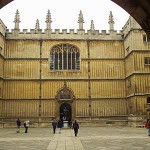
Hamlet in the Bodleian Quad

By Anita Mathias

The quad of the Bodleian Library
Image credit


photo
Image credit

Watched an open-air Hamlet at the Bodleian Library yesterday. Magical! The Quad was a suitable stand-in for Elsinore Castle, all very majestic.


Pigeons flew around to roost as darkness fell, and the setting sun bathed the quad in golden light.
And oh, the poetry! Though I have last studied that play in 1986, I was surprised at how much I remembered, at how gorgeous the language was, and at how many phrases have entered the English language.
If I had not formally studied the play, I would not have enjoyed it as much.
Formal study, or self-study, adds so much depth to our appreciation of the arts, whether painting, architecture, poetry or film.
I was grateful to God for a magical evening.


Filed Under: random

What are your spiritual default settings?

By Anita Mathias

Peace, Be Still

David Foster Wallace in his famous commencement speech refers to the default settings he returns to—self-centredness, negativity, judgmentalism.
What are your default settings? The things your thoughts turn to when your mind is empty, bored or fallow, say on a too-long walk on a circuit, or in a traffic jam, or interminable queue?
When I am bored or tired, my default settings sometimes lapse into paltry concerns. I might wonder about whether our savings plan is on track (it often isn’t J). I might think about ways to fine-tune our family business so that it is more profitable. I think about this blog and how to grow it. I might fret and worry—about my writing, or whichever relationship is currently annoying me, etc.

And so I am trying to change my default settings: the framework through which I see the world, and process experience, to something more energizing, joy-filled, and full of the positivity which radiates through the Sermon on the Mount.
·      * * *
These are the spiritual default settings to which I return to find peace. The God contact lenses I put on to see my life sanely!
1 Praise the Lord anyway.
 Rejoice, always.
In everything give thanks.
There is usually a silver lining in situations which one can thank God for anyway.
And when I cannot see it, I thank God for his power to bring good out of all things, even situations which seem irredeemably bleak, even seeds which seem shrivelled and unpromising.
2 If you have aught against any, forgive. Keep the stream of your inner life positive.
Releasing debts is a quick way of returning to peace
3 Do not worry about anything at all (Matt 6).
4 Do not be afraid (Matt 28:10).
5 Prayer changes things. It is the greatest power in the world. Nothing is impossible with God. Prayer can move our mountains.
These are the core convictions I return to when I am frazzled, stressed, negative, empty and bleak, and are part of my shortcut back to God. And spiritual health and sanity.
How about you? What are your spiritual default settings, or core convictions?

Filed Under: In which I explore the Spiritual Life

On Tiger-Mothers, and Good-Enough Christian Mothers

By Anita Mathias

So I read through Amy Chua’s  article, The Battle Hymn of the Tiger-Mother, and feel I have failed as a mum. (This, of course, is the uneasy reaction the sassy book was intended to evoke.)

“Zoe and Irene,” I say dramatically. “I have failed as a tiger-mother.”
Zoe snorts. “You never were a tiger-mother, Mum. Especially now. You spend too much time with imaginary friends on your blog.”
“Zoe, cyber-friends. NOT imaginary friends.”
She, “Whatever.”
Irene nods absently. She is playing a game on her iPod. Thus highlighting my failure as a tiger mother!!  I have a strict rule: Only educational games, but, apparently, the word educational has multiple meanings. Who would have thought?
* * *
Amy Chua, however, is not a failure as a tiger mother. Her article at The Wall Street Journal subtly and modestly titled, “Why Chinese Mothers are Superior,” commences as it continues,

“Here are some things my daughters, Sophia and Louisa, were never allowed to do: 
 • attend a sleepover
• have a playdate
• be in a school play
• complain about not being in a school play
• watch TV or play computer games
• choose their own extracurricular activities
• get any grade less than an A
• not be the No. 1 student in every subject except gym and drama
• play any instrument other than the piano or violin
• not play the piano or violin.”
                                                                       * * *
Oh dear!
Readers are either impressed or disgusted.
My list would be closer to a Western parents’ than to Chua’s. My kids have certainly done playdates, school plays and sleepovers. They choose their own activities, with input from us, and we don’t require that they be better than other people, which is a wholly unfair requirement, in my opinion.
Irene, my younger one, is chipping away at the strict rules we put in place. We never had TV at home for the first 17 years of Zoe’s life, but watched lots of carefully chosen documentary DVDs, and movies. But since I bought an Ipad last autumn, Irene has started watching what I consider frivolous TV and disapprove of. It’s just hard for me to be constantly vigilant and omnipresent!!
Computer games were banned for Zoe, and reluctantly permitted for Irene, in limited quantities at her persistent insistence. However, her joy in these games equals our joy in our work, and when we retreat into our zones of private joy, she retreats into hers, and plays them more than I approve of.
                                                     * * *
I have often felt that there is a saving grace to ambition. I never wanted to waste my life, and so have never taken drugs, never been really drunk, etc. Irene likes to achieve academically, and this year got an A1:5, the highest possible mark in every subject, and the school’s award for achievement, given to those with the highest marks. And this desire to do well at school has helped her cut back on computer games.
Chua says it is selfish, careless parenting to allow your children to waste time on computer games and Facebook. I agree with her on that. We banned Facebook for Irene until she was 13, and then, blessed decision, she decided she didn’t want it. I think it’s a brilliant decision as the Facebooks of 13 year olds cause more unhappiness than joy, I’ve decided from checking up on my older daughter’s FB in her mid-teens.
                                                  * * *
Chua’s parenting is incredibly unbalanced, as she knows, no doubt. The goal is success. To work very hard as a child to get a pleasant job as an adult later.
This is a common attitude in Asia, and among Africans, and other immigrants to the West.
There is something to it. The Polgar sisters were pulled out from school and made to practice chess for 8 hours a day, 50 hours a week. All of them became grandmasters, I believe. They say “We worked hard as children and now have more leisure and opportunities and fun as adults. Our friends did not work as children, and now work hard as adults.”
Hard work as a child can give you a pleasant, gratifying job with less grind and drudgery and more interesting opportunities as an adult.
                                             * * *
What annoys readers, and the flaw in Chau’s parenting, is its obvious egocentrism. When she won a second prize at a school assembly, her father was furious. “Never ever disgrace me like that again,” he said.
Sorry, disgrace whom? Chua’s parents came to America as poor immigrants; they attempted to achieve their dreams through their children. She says, “Knowing the sacrifices they made for us makes me want to uphold the family name, to make my parents proud.” Was it impossible for Chua’s parents to do something themselves of which they could be proud? Why burden her with having to bring them honour or disgrace?
Chua has been condemned to a treadmill in which she is a disgrace unless she does something spectacular so her parents can be proud. She condemns her children to the same treadmill–20 practice tests every night if they ever get the second highest grade, three hours of violin practice every evening. She condemns them to a life of having to be the best, compensating for any deficiencies in intelligence by hard work, and more hard work.
And what if they encounter another tiger cub, who is naturally smarter, but works equally hard? Sounds like a recipe for a nervous breakdown to me.
The flaw in her plan is that her children, who are not allowed playdates, sleepovers, gym, drama, TV or computer games, will naturally do better than children with equal intelligence who lead a more balanced life. They will therefore get into a better university and get more prestigious jobs than they would have—alongside with smarter, more naturally gifted children, who have led a balanced life. And then, they’ll have to jog very hard on the relentless treadmill of overwork to keep pace.
It seems a pretty pointless life, dominated by fear, pride and competitiveness.
                                                  * * *
All this comes close to the bone with me, as with most mothers who read it.
Roy, my husband, was unusually gifted at math and chess. He was the national high school chess champion in New Zealand where he grew up. Both our daughters are good at both these, as well as being very verbal.
We taught Zoe chess somewhat late, at 8, after she was housebound after breaking her leg in a freak accident. (I believed board games are a waste of time compared to reading, but she was housebound and sad, so we taught her chess.)
Irene at 3 watched us play, played against herself, first, then with us, and emerged as a fairly formidable player by 5. At 6, coaches noticed her talent. She has played at a city, county and national level, and has won prizes in all these, about two shelves of prizes, 50-60 of them. For several years, she was among the top two girl players of her age in the UK, and among the top handful of all players her age.
She loved chess when it was fun, just loved it and lived it. When, however, she reached the stage at which it was estimated to take 1-3 hours a day of practice to be competitive at a national level, and when, 6 or 7 days a week, she was spending her evenings at chess clubs or tournaments, and was away most weekends at tournaments around the country, she began to lose interest. She did not want to practice as much as she needed to.
Chess is brutal. The games were three hours. A momentary flicker of concentration in the end game, and you could lose a game you had so carefully and brilliantly played.
Your opponent can take up to 15 minutes to think–or more–and this is torture for a quick-thinking, mercurial child.
And she loves reading. She has a stable of books she knows almost by heart–the entire Little Women series, the entire Anne of Green Gable series, Harry Potter, Alice, some George Macdonald, Narnia. She has read and re-read them, and listened to them again and again on her iPod. Reading was being compromised for chess. I was sad about that.
We fought epic battles over whether she should continue chess or give it up. I thought she was instinctively preternaturally good at it, judging by her success with very little practice. I thought chess was part of the story God was writing in her life. I did not think an extraordinary talent should be so lightly given up.
We shouted, screamed, cried, both of us. And eventually she won. Because her will was stronger than mine. Because she cried at the thought of day-long tournaments, and said the sight of a chess-board made her feels stressed.
And so with much sadness on my part, and no doubt, some sadness on Irene’s part, we surrendered something which had been part of her identity, life, friendships, self-image for 6 years. And only because that was her desire, I hasten to add, assuaging the last of my tiger-mother guilt.
                                                            * * *
 So, what’s my conclusion? Chua is partly wrong.
Tiger mothering is not a secure foundation to build your life on. It is psychologically dangerous to live your life through your children, forcing achievement for bragging rights, seeking brilliance from your children so as to impress your peers, and be the envy of mouse-mothers. It makes it harder to let your children go, and to recover your own life and interests once they leave.
The best gift we can give our children is not to be the best at whatever they do. They may meet a more naturally gifted Siberian tiger, who also puts in the necessary hours, and so let competitiveness and jealousy poison their existence.
I honestly believe the best thing we can do for our children as Christian parents is to give them a solid, durable faith foundation beneath their feet, and to introduce them to a personal friendship with God.
Apart from that, the best thing we can do is to help them discover their “shape,” and their sweet spot—the things they are naturally interested in and good at.  And this will help them find life-work they love, enjoy and are good at.
And helping them find such work is one of the greatest gifts we can give them. For as the wise King Solomon said, “There is nothing better for a person than to enjoy the work at which he toils at under the son.” (Ecc 3:22).


Filed Under: In which I celebrate friendship and relationships, Marriage and parenting

The Stars Sing of Him who has the Power to Make Dreams Come True

By Anita Mathias

One of the delights of living in the country, in a small village outside Oxford, is returning home at night, stepping out of the car, and looking up at the night sky, so vast and tranquil.

We live at the end of a dirt road, where all houses stop, so there are generally no lights to dim the brightness of the stars.
It is calming to stop and look up at the silent beauty of the stars. “Le silence eternel de ces espaces infinis” as Pascal puts it, the eternal silence of the infinite spaces.

* * *
Abraham, stuck in his tent of impossibility, was told to step out, look at the heavens. And count the stars.
An impossible task.
And a reminder that nothing is impossible for him who made those stars, and called them each by name.
Look up. Count the stars. And when you grow tired, remember the tireless one who made them.

* * *

Don Miller tries to make his book Blue Like Jazz into a movie. He hits obstacles. His life does not have a satisfying plot. He needs to lose 150 pounds, but does not pursue the goal in a consistent way. He would like to trace the father, who abandoned him, but has not pursued that consistently either. He sees these false starts and dead ends destroy the shapely form of the story of his life.

In A Million Miles in a Thousand Years, he describes how he set about changing the story he was writing with his life. He loses the 150 pounds. He finds his father.

* * *

Does your life have dreams long deferred, goals you should have accomplished, but haven’t?

Mine does. One is finishing the memoir on which I worked off and on for 15 years, and which, to be honest, had reached daunting proportions. And the other is reaching optimal health for my age, which includes weight loss. Still another dream is waking at 5 o’clock!

* * *

And the key to accomplishing both these goals will be saturating them in prayer. Placing the petri dish with my prayer requests in the force field of God’s power.

Remembering not to try to accomplish these goals on my own, but through constantly asking for and accessing, “his incomparably great power for us who believe, which is the same as the mighty strength  he exerted when he raised Christ from the dead.”

Living by faith. Continually leaning on God’s power and help and grace and ideas.

Oh, help me, God.


Filed Under: In which I resolve to live by faith

Does worship music provide a short cut into the presence of God?

By Anita Mathias

Are there short cuts into the presence of God? Into the most holy place, between the wings of the cherubim?
Yeah, I think God might provide them, because he is a searching, seeking God, looking for the lost coin, the lost sheep, the lost sinner.
For me, one of the short cuts is worship music.
Not instead of more muscular devotions, like prayer or Bible study. I haven’t yet considered listening to music instead of a set time of prayer, but as an addition to it.
                                                          * * *
My time of listening to music is while doing housework. Or brushing my teeth, because I often start my day spiritually cold and emotionless. Or I take a break when I feel disgruntled, or spiritually bored, and distracted; I tidy my room, while listening to music
The music profoundly affects my brain, liberating oxytocin and endorphins (and occasionally, an adrenalin rush), ushering me into the presence of God, changing my emotions, making me feel devotion. 


Saint Augustine wrote, “He who sings prays two-fold.”
                                                    * * *
Is there any value to emotions initially sluggish, now stirred into devotion by soulful worship music?
As with anything else in the spiritual realm, it depends on the fruit. Mere feelings that bear no fruit in action, or changed thinking or changed emotions are the seed which falls by the wayside. (One could read the Parable of the Sower as saying that the word of God bears no apparent fruit 75% of the times that it falls on our souls!)
However, sometimes, the music, the lyrics convict and soften us. We remember times we have been hard—lacking in mercy, lacking in generosity. We cannot respond fully to “I surrender all,” because we recollect some area in which we have not been surrendered. We surrender it.
As the stream of music, like the spirit of God, flows through our hearts, it might meet obstacles, little pockets of anger, unforgiveness or self-will, and God willing, some of these dissolve.
Yes, music definitely does often melt my heart and usher me more swiftly into the presence of God. The spiritual value of it, of course, depends on what I do with the insights and convictions which spring from my time of listening to the music.
Whom do I like listening to? Michael Card for the lyrics, almost evenly good, and the music. Matt Redman whose lyrics and music are hugely uneven, but who is sublime at his best. Love Rich Mullins, his music, lyrics and heart. Like Stuart Townend. Many of the Vineyard compilations are marvellous.
Since I changed my whole way of praying two years ago, using soaking prayer, I have got interested in a style of music which aims to mimic “the soundscape of heaven,” like Ernesto Rivera, or Misty Edwards, who though uneven, but brilliant at her best.
My favourite classical pieces are the Messiah, and Pachelbel’s Canon. I like Byrd and Tallis too.
I  haven’t been keeping up with worship music of late.
Who do you like listening to? Does worship music usher you more swiftly into the presence of God?

Filed Under: random

“A New Name,” Emma Scrivener on finding healing from an eating disorder

By Anita Mathias


Emma Scrivener was born in Belfast, but now lives with her husband in the south east of England. She suffered from life-threatening anorexia as a child and as an adult. She now speaks and writes about her experiences at www.emmascrivener.net. Her book, ‘A New Name’ is published by IVP (ISBN: 9781844745869, 176 pages, £7.99), and can be ordered at the Emma’s website, Amazon.co.ukand  Amazon.com.


 If you’d met me seven years ago, here’s what you’d have seen:  a ‘successful’ Christian, newly married to a vicar in training. Leader of a thriving children’s ministry. A talented student with a bright future ahead. Someone who seemed to have it all together.
But there’s one part you might have missed: a young woman gripped by an eating disorder that would nearly take her life.
For a long time I hid my obsession. I threw myself into church activities, missions and teaching.  On the outside I looked pretty good – a  dynamo, burning out ‘for the Lord’.  I even believed it myself. But at the heart of my ‘ministry’ beat a commitment to proving – and saving – myself.
So how did I get there – and what has helped to bring me out?
It started when I turned 13. Up until then I’d had an idyllic childhood: I knew who I was and I knew where I belonged.  But almost overnight, that started to change.  My grandfather died.  I moved schools.  My body felt out of control: like a tanker, spilling flesh and hormones.  In search of answers, I even started going to church.
The God I heard about was real and personal, and I resolved to follow Him. But in retrospect, we were never properly intro­duced. You see, my brand of Christianity had space for ‘God’, but not for Jesus. It talked about sin and rules – but less about grace. It paid lip service to his work on my behalf. But, in practice, it was up to me to prove my own worth.
So that’s what I did. I worked hard and won prizes.  I resolved to be smart and pretty and most of all, ‘good’. But nothing – whether clothes or friends or money, was ever enough. Instead of finding satisfaction, I was filled with hungers. I didn’t know what they were called or where to put them. What I did know was this: they were too much.
I was too much – too needy, too intense, too messy, too fat.
So I made a decision. Instead of my desires killing me, I would kill them. I would squash my hungers and I would fix myself. I would be thin.
Instead of a problem, anorexia appeared to be a solution.   A way of negotiating the world and making it ‘safe’. In reality, it almost killed me – not just once, but twice.
The first time, I was a teenager and professionals forced me to eat. I put on weight – but though I looked better on the outside, on the inside I felt the same. Ten years later, my old habits returned. My husband and I were finishing Bible college and I was overwhelmed by the prospect of a new parish and my role as a vicar’s wife. Unable to cope, I stopped eating. By the end I could barely walk: but this time, I was an adult – it seemed that nothing and no-one could help.
Then came the phone-call.  My beloved grandmother had died – but I was too weak to travel to her funeral. That night, faced with the reality of my choices, something in me finally broke. In desperation, I cried out to the God I’d tried to flee:
 ‘I’ve exhausted my own resources’ I said.  ‘But if you want me, you can have what’s left’.
I had always pictured God as a scary headmaster – slightly disapproving and far away.  Someone with rights over my soul – but not my body. Someone who wanted me to perform and keep His rules.  This God would surely strike me down or turn me away. But there was no blinding flash of light. No smoke or lightning.  Instead, I discovered something far more exciting.   As I opened my Bible, I found Jesus.
Instead of the God I thought I knew; in Jesus I met the one who knew me.  This Jesus confronted me, notas a tyrant or heavenly taskmaster, but as a gift. He came offering himself.  On the cross my badness and my goodness were taken away: rendered irrel­evant by his sacrifice.  Jesus didn’t want apologies, resolutions or assurances that I would do better. He wanted me. Instead of making me perform, he lifted me clean out of the arena. In return, he asked only one question: Would I receive him?
I was the girl who always said ‘No’.
‘No’ to people
‘No’ to relationships
‘No’ to marriage and health and family and food
‘No’ to risk and desire and vulnerability and need
But as I looked at Him – the Saviour who knew me and yet loved me – I said ‘Yes.’
And that was when my life and recovery began.


Filed Under: random

Thin Places: Where the veil between the physical and spiritual worlds is almost transparent

By Anita Mathias

The High Cross at Fflad-y-Brenin

sunset_calf_sound_7Celtic Christians prized “thin places,” where the boundaries between the spiritual and physical world are almost transparent. Where we can sense shimmering in the physical world the just-as-real, invisible, supernatural world, charged with the glory of God, with hills ringed with angels in chariots of fire.

Could God really be more present in one place than in another? I wondered until I slowed down, calmed down, and began to experience thin places.

* * *

Thin places—near mountains, rivers, streams, meadows, the sea—are, in fact, often places where people have worshipped and sought God for centuries. Benedictines and Trappists often built their monasteries in such places.

Is it fanciful to suppose that places in which thousands have prayed would attract the spirit of God—and angelic presences?

Perhaps what happens in a pilgrimage spot is not that God descends to earth in a shower of radiance and the earth ever after exudes his fragrance. Perhaps it is we who sanctify spots of earth when we bring our weary spirits, our thwarted hopes, the whole human freight of grief, and pray—our eyes grown wide and trusting; our being, a concentrated yearning. Perhaps that yearning, that glimpse of better things, attracts the spirit of God, and traces of that encounter linger in the earth and air and water so that future pilgrims say, “God is here.”

* * *

I felt that when we visited Ffald-y-Brenin. There was a peace and holiness in the air. I could sense the presence of God in the stillness and especially around the high cross, placed on the highest hill of the retreat centre towering over the countryside.

I gave up analysing it after a while. I surrendered to the peace. As Eliot says in “Little Gidding,”

You are not here to verify,
Instruct yourself, or inform curiosity
Or carry report. You are here to kneel
Where prayer has been valid.

That peace, a sudden clarity of thinking and creativity? I guess I could call it the spirit of God.

Healing hung in the air. Looking back at my post written there, I see I was praying for healing from self-induced adrenal fatigue. Well, seven months later, it was completely gone, and I was gulping down books again, and writing a lot.

***

Just being by the ocean, watching it, listening to the roar of the waves quietens me, reminds me of immensity, of God’s infinite power, and opens me up to his spirit. I suddenly find myself praying in tongues. I pick up God’s guidance and directives most clearly on beach walks.

And, as all cultures at all times have noticed, mountains are specially charged with the presence of God. They are places for peace, serenity, and elevated thoughts. In the mountains, my thoughts instinctively gravitate to God.

* * *

And, of course, in our own homes and lives, places become thin because we often pray there.

I pray face down in my bedroom, soaking prayer, and the accustomed place and posture probably more quickly tunes my spirit to peace.

I also enjoy walking and praying in the fields around my house for I live in the country. Again the accustomed routine of walking and praying makes me feel happy and exhilarated and, within a short time, I find myself praying in tongues.

Thomas Merton writes about cultivating routines of prayer at the same place, and at about the same time, “My chief joy is to escape to the attic of the garden house and the little broken window that looks out over the valley.  There in the silence, I love the green grass.  The tortured gestures of the apple trees have become part of my prayer….  So much do I love this solitude that when I walk out along the road to the old barns that stand alone, delight begins to overpower me from head to foot, and peace smiles even in the marrow of my bones.”

* * *

Just we can feel stressed and uneasy by subliminal triggering memories of past trauma in certain places, or in the presence of certain people, our spirits can also swiftly be tuned to peace in places in which we have often experienced God’s spirit, on a particular seat in church, or on a particular country walk.

Working in my own garden is a thin place for me. Sooner or later, joy returns. Sooner or later, I find myself praying, often in tongues.

Another thin place for me is tidying up. I restore my soul as I restore my house. My body works, and feels happy working, but my mind is fallow. Clarity comes as I work, ideas. Peace returns, and I find myself praying…

* * *

How about you? What are the thin places in which you most powerfully experience God’s spirit?

Tweetable

“Thin places,” where the boundaries between the spiritual and physical world are almost transparent. From @anitamathias1 Tweet: “Thin places,” where the boundaries between the spiritual and physical world are almost transparent. @anitamathias1 http://ctt.ec/263c0+

Filed Under: random Tagged With: Ffald-y-Brenin, Thin Places

Discovering your Unique Voice as a Writer or Blogger; Or, who’s afraid of C.S. Lewis?

By Anita Mathias

Thomas Merton
Thomas Merton
I enjoyed Michael Ward of Planet Narnia’s lecture on C. S. Lewis at Wycliffe College’s Summer School.
Rilke faced with the Archaic Torso of Apollo, with sheer beauty, feels he has wasted his life. His poem ends “You must revise your life.”
I feel like that when I consider that the richness of Lewis’s writing sprang from a lifetime of reading of poetry, myth, literature, the Bible. A life in books.
But then I remember that the world already has a Lewis. That the way for me to find my unique contribution as a writer, “be it less or more, or soon or slow,” is to be myself, to be the woman called forth by the unique circumstances of my life.
                                                   * * *
Thomas Merton writes that many writers fail to be really great for the same reason that many Christians fail to be really great Christians. They imitate other people’s poetry or spirituality instead of being the woman called for by all the unique circumstances of their lives. They compromise their integrity.
Many poets are not poets for the same reason that many religious men are not saints: they never succeed in being themselves. They never get around to being the particular poet or the particular monk they are intended to be by God. They never become the man or the artist who is called for by all the circumstances of their individual lives.

They waste their years in vain efforts to be some other poet, some other saint.

 They wear out their bodies and minds in a hopeless endeavour to have somebody else’s experiences, or write somebody else’s poems, or possess somebody else’s spirituality.
There can be an intense egoism in following everybody else.  People are in a hurry to magnify themselves by imitating what is popular—and too lazy to think of anything better.
Hurry ruins saints as well as artists.  They want quick success and they are in such haste to get it that they cannot take time to be true to themselves.
                         ( Thomas Merton, Integrity, New Seeds of Contemplation).
·      * *
It’s all very counter-intuitive. In the blogosphere, one is tempted to write in the same way and on the same themes as bloggers who are succeeding.
Sometimes, I come across several bloggers who write in the same distinctive style, and on similar subjects. And while fitting in with the cool kids in style or subject matter will give you short term success, it will affect your long term success, because you will be suppressing the real you—your unique take on the world, your beauty and ugliness, the secret little experiences, obsessions, preoccupations and convictions which are shared by no one else.
If I had heard that lecture on the literary influences of C. S. Lewis when I was younger, I would have left on fire to read more and write more. And these are good, but now I do not exhort myself to do these particularly.  Burnouts and middle-age have left me eager to work in a slow and steady sustainable way. I want to finish the work God has given me to do by the end, not necessarily the middle of my life.
So the counter-intuitive way to success as a blogger or writer is to read the great writers, let your thinking be transformed by them, pick up their themes if they resonate deeply with you, but, above all, be yourself.
If you are a kingfisher, flash fire. If you are a dragonfly, draw flame.If you are a writer or a blogger, be yourself.Be the writer or the blogger called forth by all the circumstances of your life. Write in the way that comes naturally to you, about the experiences your life gives you, and your interests and preoccupations. And, to your own surprise perhaps, you will have stumbled upon the secret of originality, even uniqueness.
                                                        * * *
Let me offer you a favourite passage from Rainer Maria Rilke’s Letters to a Young Poet.
Go into yourself. Find out the reason that commands you to write; see whether it has spread its roots into the very depths of your heart; confess to yourself whether you would have to die if you were forbidden to write.
This most of all: ask yourself in the most silent hour of your night: must I write? Dig into yourself for a deep answer. And if this answer rings out in assent, if you meet this solemn question with a strong, simple “I must,” then build your life in accordance with this necessity; your while life, even into its humblest and most indifferent hour, must become a sign and witness to this impulse.
Then come close to Nature. Then, as if no one had ever tried before, try to say what you see and feel and love and lose.   So rescue yourself from general themes and write about what your everyday life offers you; describe your sorrows and desires, the thoughts that pass through your mind and your belief in some kind of beauty – describe all these with heartfelt, silent, humble sincerity and, when you express yourself, use the Things around you, the images from your dreams, and the objects that you remember.
If your everyday life seems poor, don’t blame it; blame yourself; admit to yourself that you are not enough of a poet to call forth its riches; because for the creator there is not poverty and no poor, indifferent place. And even if you found yourself in some prison, whose walls let in none of the world’s sounds – wouldn’t you still have your childhood, that jewel beyond all price, that treasure house of memories? Turn your attentions to it.
Try to raise up the sunken feelings of this enormous past; your personality will grow stronger, your solitude will expand and become a place where you can live in the twilight, where the noise of other people passes by, far in the distance. And if out of this turning-within, out of this immersion in your own world, poems come, then you will not think of asking anyone whether they are good or not. For you will see them as your dear natural possession, a piece of your life, a voice from it. 

Filed Under: In which I explore writing and blogging and creativity, Writing and Blogging

  • « Previous Page
  • 1
  • 2
  • 3
  • 4
  • 5
  • Next Page »

Sign Up and Get a Free eBook!

Sign up to be emailed my blog posts (one a week) and get the ebook of "Holy Ground," my account of working with Mother Teresa.

Join 536 Other Readers

My Books

Rosaries, Reading, Secrets: A Catholic Childhood in India

Rosaries, Reading Secrets, B&N
USA

UK

Wandering Between Two Worlds: Essays on Faith and Art

Wandering Between Two Worlds
USA

UK

Francesco, Artist of Florence: The Man Who Gave Too Much

Francesco, Artist of Florence
US

UK

The Story of Dirk Willems

The Story of Dirk Willems
US

UK

My Latest Meditation

Anita Mathias: About Me

Anita Mathias

Read my blog on Facebook

Follow me on Twitter

Follow @anitamathias1

Recent Posts

  • At the Cross, God Forgives Us Completely
  • Using God’s Gift of Our Talents: A Path to Joy and Abundance
  • The Kingdom of God is Here Already, Yet Not Yet Here
  • All Those Who Exalt Themselves Will Be Humbled & the Humble Will Be Exalted
  • Christ’s Great Golden Triad to Guide Our Actions and Decisions
  • How Jesus Dealt With Hostility and Enemies
  • Do Not Be Afraid, but Do Be Prudent
  • For Scoundrels, Scallywags, and Rascals—Christ Came
  • How to Lead an Extremely Significant Life
  • Don’t Walk Away From Jesus, but if You Do, He Still Looks at You and Loves You
Premier Digital Awards 2015 - Finalist - Blogger of the year
Runner Up Christian Media Awards 2014 - Tweeter of the year

Categories

What I’m Reading


Wolf Hall
Hilary Mantel

Wolf Hall --  Amazon.com
Amazon.com

Amazon.co.uk

Silence and Honey Cakes:
The Wisdom Of The Desert
Rowan Williams

Silence and Honey Cakes --  Amazon.com
Amazon.com

Amazon.co.uk

The Long Loneliness:
The Autobiography of the Legendary Catholic Social Activist
Dorothy Day

The Long Loneliness --  Amazon.com
Amazon.com

Amazon.co.uk

Country Girl
Edna O'Brien

Country Girl  - Amazon.com
Amazon.com

Amazon.co.uk

Archive by month

My Latest Five Podcast Meditations

INSTAGRAM

anita.mathias

My memoir: Rosaries, Reading, Secrets https://amzn.to/42xgL9t
Oxford, England. Writer, memoirist, podcaster, blogger, Biblical meditation teacher, mum

Looking at photos from our week in beautiful Sevil Looking at photos from our week in beautiful Seville and Cordoba over New Year with Irene, who had a week off.
And, ICYMI, here’s my latest meditation on the Gospel of Matthew… I’ve recorded it, should you want a few minutes of peace.
https://anitamathias.com/2026/04/29/gods-complete-forgiveness/
Hello Friends, I'm resumed recording my meditation Hello Friends, I'm resumed recording my meditations on the Gospel of Matthew. Do click on this link to listen. 
https://anitamathias.com/.../29/gods-complete-forgiveness/
Christ is the most influential figure in the history of the world, though his life ended in shame, humiliation and failure. But he so completely turned things round in his great reversal that the cross on which he died when all seemed hopeless is now the most common, and revered, symbol in history.
He emerged from and was anchored in Judaism. And as the sins of the people were laid on the scapegoat who was sent into the wilderness to perish, Christ died as the lamb of God voluntarily bearing the guilt of the wrongdoing of the whole world. He paid the price for our forgiveness with his life-blood--in accordance with the iron law of the physical and moral universe, of sowing and reaping, cause and effect. 
And so, God, who appeared as flames of fire to Moses, can now dwell within us, purifying us, whose hearts have darkness and shards of ice. 
And now that Christ was crucified, died, but rose again, His Spirit, no longer contained within his earthly body, is poured out like living water onto all humans, at our humble request. The Spirit pours the love of God into us; he reminds us of the words of Jesus and slowly writes Christ’s sweet law on our hearts. This transfusion of grace helps us do hard things we previously couldn’t do. Our dance with the Spirit gradually breaks the power of sin over us. It transforms us.
Now we, the forgiven, protected by the blood of Jesus poured out over us, and filled with His Spirit, who sings within us, Abba, Father, are adopted by God as his children in his joyful new covenant. We are cells grafted into the vine of our new family--Father, Son, Spirit—who now live in us as we live in them. As we choose by our thoughts and actions to continue living in the vine of Jesus, their energy pulsing through us makes us fruitful. And now, all our prayers which flow in the river of God’s good purposes are kindly heard. Waves of love and power flood from the cross! 
Thank you!
Well, hello friends! Breaking radio silence to let Well, hello friends! Breaking radio silence to let you know that I have taped a meditation for you on Christ’s famous Parable of the Talents in Matthew 25. https://anitamathias.com/2025/11/05/using-gods-gift-of-our-talents-a-path-to-joy-and-abundance/
Here you are, click the play button in the blog post for a brief meditation, and some moments of peace, and, perhaps, inspiration in your day 🙂
Hi Friends, I have taped a meditation; do listen a Hi Friends, I have taped a meditation; do listen at this link: https://anitamathias.com/2025/04/08/the-kingdom-of-god-is-here-already-yet-not-yet-here-2/
It’s on the Kingdom of God, of which Christ so often spoke, which is here already—a mysterious, shimmering internal palace in which, in lightning flashes, we experience peace and joy, and yet, of course, not yet fully here. We sense the rainbowed presence of Christ in the song which pulses through creation. Christ strolls into our rooms with his wisdom and guidance, and things change. Our prayers are answered; we are healed; our hearts are strangely warmed. Sometimes.
And yet, we also experience evil within & all around us. Our own sin which can shatter our peace and the trajectory of our lives. And the sins of the world—its greed, dishonesty and environmental destruction.
But in this broken world, we still experience the glory of creation; “coincidences” which accelerate once we start praying, and shalom which envelops us like sudden sunshine. The portals into this Kingdom include repentance, gratitude, meditative breathing, and absolute surrender.
The Kingdom of God is here already. We can experience its beauty, peace and joy today through the presence of the Holy Spirit. But yet, since, in the Apostle Paul’s words, we do not struggle only “against flesh and blood, but against the rulers, against the unseen powers of this dark world and against the spiritual forces of evil,” its fullness still lingers…
Our daughter Zoe was ordained into the Church of E Our daughter Zoe was ordained into the Church of England in June. I have been on a social media break… but … better late than never. Enjoy!
First picture has my sister, Shalini, who kindly flew in from the US. Our lovely cousins Anthony and Sarah flank Zoe in the next picture.
The Bishop of London, Sarah Mullaly, ordained Zoe. You can see her praying that Zoe will be filled with the Holy Spirit!!
And here’s a meditation I’ve recorded, which you might enjoy. The link is also in my profile
https://anitamathias.com/2024/11/07/all-those-who-exalt-themselves-will-be-humbled-the-humble-will-be-exalted/
I have taped a meditation on Jesus statement in Ma I have taped a meditation on Jesus statement in Matthew 23, “For those who exalt themselves will be humbled, and those who humble themselves will be exalted.”
Do listen here. https://anitamathias.com/2024/11/07/all-those-who-exalt-themselves-will-be-humbled-the-humble-will-be-exalted/
Link also in bio.
And so, Jesus states a law of life. Those who broadcast their amazingness will be humbled, since God dislikes—scorns that, as much as people do.  For to trumpet our success, wealth, brilliance, giftedness or popularity is to get distracted from our life’s purpose into worthless activity. Those who love power, who are sure they know best, and who must be the best, will eventually be humbled by God and life. For their focus has shifted from loving God, doing good work, and being a blessing to their family, friends, and the world towards impressing others, being enviable, perhaps famous. These things are houses built on sand, which will crumble when hammered by the waves of old age, infirmity or adversity. 
God resists the proud, Scripture tells us—those who crave the admiration and power which is His alone. So how do we resist pride? We slow down, so that we realise (and repent) when sheer pride sparks our allergies to people, our enmities, our determination to have our own way, or our grandiose ego-driven goals, and ambitions. Once we stop chasing limelight, a great quietness steals over our lives. We no longer need the drug of continual achievement, or to share images of glittering travel, parties, prizes or friends. We just enjoy them quietly. My life is for itself & not for a spectacle, Emerson wrote. And, as Jesus advises, we quit sharp-elbowing ourselves to sit with the shiniest people, but are content to hang out with ordinary people; and then, as Jesus said, we will inevitably, eventually, be summoned higher to the sparkling conversation we craved. 
One day, every knee will bow before the gentle lamb who was slain, now seated on the throne. We will all be silent before him. Let us live gently then, our eyes on Christ, continually asking for his power, his Spirit, and his direction, moving, dancing, in the direction that we sense him move.
Link to new podcast in Bio https://anitamathias.co Link to new podcast in Bio https://anitamathias.com/2024/02/20/how-jesus-dealt-with-hostility-and-enemies/
3 days before his death, Jesus rampages through the commercialised temple, overturning the tables of moneychangers. Who gave you the authority to do these things? his outraged adversaries ask. And Jesus shows us how to answer hostile questions. Slow down. Breathe. Quick arrow prayers!
Your enemies have no power over your life that your Father has not permitted them. Ask your Father for wisdom, remembering: Questions do not need to be answered. Are these questioners worthy of the treasures of your heart? Or would that be feeding pearls to hungry pigs, who might instead devour you?
Questions can contain pitfalls, traps, nooses. Jesus directly answered just three of the 183 questions he was asked, refusing to answer some; answering others with a good question.
But how do we get the inner calm and wisdom to recognise
and sidestep entrapping questions? Long before the day of
testing, practice slow, easy breathing, and tune in to the frequency of the Father. There’s no record of Jesus running, rushing, getting stressed, or lacking peace. He never spoke on his own, he told us, without checking in with the Father. So, no foolish, ill-judged statements. Breathing in the wisdom of the Father beside and within him, he, unintimidated, traps the trappers.
Wisdom begins with training ourselves to slow down and ask
the Father for guidance. Then our calm minds, made perceptive, will help us recognise danger and trick questions, even those coated in flattery, and sidestep them or refuse to answer.
We practice tuning in to heavenly wisdom by practising–asking God questions, and then listening for his answers about the best way to do simple things…organise a home or write. Then, we build upwards, asking for wisdom in more complex things.
Listening for the voice of God before we speak, and asking for a filling of the Spirit, which Jesus calls streams of living water within us, will give us wisdom to know what to say, which, frequently, is nothing at all. It will quieten us with the silence of God, which sings through the world, through sun and stars, sky and flowers.
Especially for @ samheckt Some very imperfect pi Especially for @ samheckt 
Some very imperfect pictures of my labradoodle Merry, and golden retriever Pippi.
And since, I’m on social media, if you are the meditating type, here’s a scriptural meditation on not being afraid, while being prudent. https://anitamathias.com/2024/01/03/do-not-be-afraid-but-do-be-prudent/
A new podcast. Link in bio https://anitamathias.c A new podcast. Link in bio
https://anitamathias.com/2024/01/03/do-not-be-afraid-but-do-be-prudent/
Do Not Be Afraid, but Do Be Prudent
“Do not be afraid,” a dream-angel tells Joseph, to marry Mary, who’s pregnant, though a virgin, for in our magical, God-invaded world, the Spirit has placed God in her. Call the baby Jesus, or The Lord saves, for he will drag people free from the chokehold of their sins.
And Joseph is not afraid. And the angel was right, for a star rose, signalling a new King of the Jews. Astrologers followed it, threatening King Herod, whose chief priests recounted Micah’s 600-year-old prophecy: the Messiah would be born in Bethlehem, as Jesus had just been, while his parents from Nazareth registered for Augustus Caesar’s census of the entire Roman world. 
The Magi worshipped the baby, offering gold. And shepherds came, told by an angel of joy: that the Messiah, a saviour from all that oppresses, had just been born.
Then, suddenly, the dream-angel warned: Flee with the child to Egypt. For Herod plans to kill this baby, forever-King.
Do not be afraid, but still flee? Become a refugee? But lightning-bolt coincidences verified the angel’s first words: The magi with gold for the flight. Shepherds
telling of angels singing of coming inner peace. Joseph flees.
What’s the difference between fear and prudence? Fear is being frozen or panicked by imaginary what-ifs. It tenses our bodies; strains health, sleep and relationships; makes us stingy with ourselves & others; leads to overwork, & time wasted doing pointless things for fear of people’s opinions.
Prudence is wisdom-using our experience & spiritual discernment as we battle the demonic forces of this dark world, in Paul’s phrase.It’s fighting with divinely powerful weapons: truth, righteousness, faith, Scripture & prayer, while surrendering our thoughts to Christ. 
So let’s act prudently, wisely & bravely, silencing fear, while remaining alert to God’s guidance, delivered through inner peace or intuitions of danger and wrongness, our spiritual senses tuned to the Spirit’s “No,” his “Slow,” his “Go,” as cautious as a serpent, protected, while being as gentle as a lamb among wolves.
Follow on Instagram

© 2026 Dreaming Beneath the Spires · All Rights Reserved. · Cookie Policy · Privacy Policy