Anita Mathias: Dreaming Beneath the Spires

Anita Mathias's Blog on Faith and Art

  • Home
  • My Books
  • Meditations
  • Essays
  • Contact
  • About Me

Archives for July 2012

When your Theology makes you Cry: Your Theology is Too Small!

By Anita Mathias

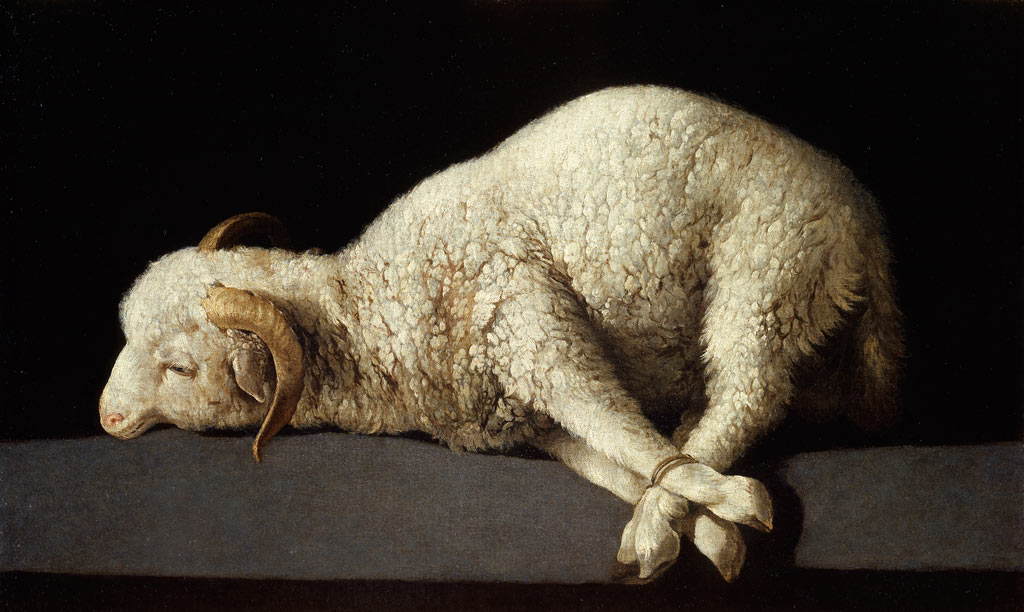
Francisco de Zurbarán's Agnus Dei - a still life of a trussed up lamb

From the early Catholic monks who established Oxford’s oldest colleges; to John Wycliffe, the Morning Star of the Reformation; to Cranmer, Latimer and Ridley burnt at the stake; to John Owen and the Puritans; to Wesley and Whitfield who launched England’s Evangelical Revival from Oxford; the Catholic Oxford Movement in the 19th century; and finally the Inklings, Lewis, Tolkein, Charles Williams in the 20th–Oxford’s social and political history has been intimately allied with the theological struggles of her citizens.
As has the history of England. Or Germany, Switzerland, Holland, Sweden, or Norway, or pretty much any European country.
That is because theology deals with the most important questions. Is there a God? Are we infinite, spiritual beings having a finite experience or finite beings having a finite experience? How can I be happy? What is a good life, and how can I live it?
                                             * * *
But sometimes, our theology makes us cry. ‘Dr Houston,’ who I met last week was convinced of, though troubled by, the fact that all the good Jews, Muslims and Hindus were going to hell while he was going to heaven because he believed the right things. “Don’t be too sure on either count,” I wanted to say.
Rachel Held Evans explores this moral repugnance.
 She sees, on CNN, a woman tortured and killed by the Taliban in Afghanistan.
“Twenty years of Christian education assured me that because Zarmina was a Muslim, she would suffer unending torment in hell for the rest of eternity. How the Taliban punished Zarmina in this life was nothing compared with how God would punish her in the next…the idea that this woman passed from agony to agony, from torture to torture, from a lifetime of pain and sadness to an eternity of pain and sadness, all because she had less information about the gospel than I did, seemed cruel, even sadistic.”
And so Calvinism makes her cry.
                                                     * * *
This is the second course I’ve taken in Christian history. And I realized afresh that all denominational theologies are compilations by powerful, dominant, brilliant people–Augustine, Aquinas Luther, Calvin, John Owen or Jonathan Edwards–of their sincere readings of Scripture. And the different interpretations and emphases owe something to these individual’s biographies, psychological cast, characters, and the period in which they lived.
Now these clever men could not all be right when they hold differing opinions. Probably all of them are right about some things, and wrong about others.
SO… Do we get lazy and just take Luther or Calvin or Piper’s or Aquinas’s or Nicky Gumbel’s reading of Scripture as absolute truth? Or do wrestle with it ourselves, and let the Spirit speak to us, and highlight in gold marker the truths he wants us to learn–the truths which will be important in our own lives?
                                             * * *
I chafe against the harm done to talented women who have not been allowed to teach, preach or lead because of sentences Paul wrote to 1st century women. Women should remain silent in the churches. They are not allowed to speak, but must be in submission. I do not permit a woman to teach or to have authority over a man; she must be silent. These sentences certainly sound misogynistic to 21st century ears, and indeed, in most Western democracies, such attitudes or employment practices are, rightly, illegal!
I do not see that angry, dismissive, contemptuous spirit in Jesus. I asked Are the words of Paul and the words of Jesus equally important?
People commented, “You cannot have a salad bowl approach to Scripture. You cannot pick and choose. The Bible is what it is, not what you would like it to be.”
However, every denomination, including new ones like Calvary Chapel, the Vineyard or the Assemblies of God are based on someone else’s picking and choosing.
So the question is: Do I lazily choose the salad bowl that traditionalist conservative Anglicans, or Chuck Smith at Calvary Chapel or Terry Virgo at New Frontiers have assembled, reflecting their own fears, insecurities, prejudices and scriptural readings?  (New Frontiers, for instance, has no women leaders or preachers or teachers. What a waste of talent and spiritual gifts!)
Or do I engage with Scripture as a mere Christian? Not accepting a denominational position—someone else’s salad bowl—but allowing Scripture to speak afresh to me with its own majesty?
And if I should read Scripture wrongly? Well, salvation is not an IQ test.  And honest intellectual error is not a sin. Laziness, however, is. I believe Christ will commend me for seeking him in the pages of his word, even if I get some things wrong.
* * *
So what should we do when Calvinism makes us cry?
We turn to Scripture. We turn to the merciful Parable of the Sheep and the Goats in which the righteous are judged on the kindness they showed, not on the basis of the kindness they did not show. We should read God “will judge to each person according to what he has done.” Romans 2:6.
We should remember that Jesus is the lamb of God who takes away the sins of the world (John 1:29) not just the sins of those who have made a Reformed profession of faith.
The cosmic significance of Christ and his sacrifice is vaster, deeper and larger than we can comprehend. In him all things hold together!
”See, see where Christ’s blood streams in the firmament!
One drop would save my soul—half a drop! ah, my Christ!— 
The precious, redemptive, atoning blood shed for more than Calvinists, Presbyterians or the Reformed. Shed for all men. And women!
The efficacy of Christ’s sacrifice might stagger us. As a friend said recently, when Calvinists shut the door of heaven in men’s faces, Jesus will run and open the windows and back doors.
                                          * * *
When we hear five points of Calvinism–total depravity, unconditional election, limited atonement, irresistible grace, perseverance of the saints–perhaps alarm bells should ring. It’s clever, but is it Christianity?
Jesus never spoke in language which requires an education to decode. His message could be understood by the children to whom he said the Kingdom belonged, while its riches delights theologians.
He told us that God was our father. A father who is loving, and fair, and seeks every means to advance his sons. Theology that consigns the majority of the population to hell is flawed, simply because it conflicts with the loving, seeking Fatherly heart of God as revealed in Scripture (while delighting its professors with the delicious sense of belonging to an inner ring).
The saved in Revelation cry, “Just and true are all your ways.” We are made in God’s image. If we find the consignment to hell of those who have never compelling heard of Jesus unjust and repugnant, if the unfairness makes us cry–perhaps this theological doctrine will be equally repugnant to God’s great heart.
How much more. If we care, how much more will God care: Scripture consistently uses this argument. If Jonah grieved for a plant–Nineveh has more than a hundred and twenty thousand people who cannot tell their right hand from their left, and many cattle as well. Should I not be concerned about that great city?” Jonah 4:10.
Similarly, Jesus tells us that God yearns over the lost coin, the lost sheep, the lost son.  And so the Son of Man came to seek and to save what was lost (Luke 19:10).
* * *
I do not yet have a fully developed theology of hell. But I am uncomfortable with the unchristian haste to consign the world God loves to hell. Let’s focus on the positive, the carrot—Christ; not the stick, the negative: Hell.
When our theology makes us cry, our theology is too small. We need to return to Christ, and return to Scripture, and read it with a humble, open mind.
Let’s have a more generous Catechism.
Who takes away the sins of the world?
Christ, the Lamb of God does. (John 1:29).
Whose sins does the Lamb of God take away?
The world’s!

Filed Under: In which I play in the fields of Theology

Write, first and foremost, for the joy of it: Lessons from the life of John Owen

By Anita Mathias

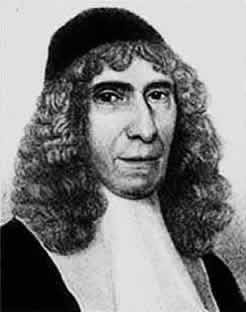
John Owen

A lecture in the course I just attended on Oxford’s Christian history was on John Owen, the Puritan divine who was Vice-Chancellor of Oxford University. Read John Piper’s eloquent tribute to him here.
Owen, despite ill health and personal tragedy (all his 11 children died before him, and only one survived childhood) was unbelievably disciplined and driven. Whether the drive came from the love of God or personal ambition or, most likely, a combination of the two is not clear.
From the age of 12, he disciplined himself to sleep for just 4 hours a night, staying up and studying and later writing late into the night. His health was affected, and later in life, when he was often sick, he regretted the hours of rest he had missed as a youth.
He wrote 22 books. The most famous are The Death of Death in the Death of Christ and The Mortification of Sin in all Believers.
Few read him today. His prose has become impenetrable to the modern ear, unlike his friend and contemporary, John Bunyan’s!
                                           * * *
Was it worth it? All the late nights, the ruined health, the long labours for books which are barely read today.
I personally don’t believe that Christian writing written solely to edify, preach to, or enlighten others is worth it.
Writing should be undertaken first and foremost for the joy of it. Writers should write as birds sing, for joy, and because that is how they were shaped and put together. We write as we work out our thoughts, we write to create shapely and beautiful things, and yes, if others are blessed by it, we rejoice!!
 Our writing should edify–build us up–as well as our readers. I suspect Owen was developing and working out his own theology as he wrote, and his writing probably brought peace and light to his own soul, as well as influencing many theologians, such as Jonathan Edwards, John Piper, Sinclair Fergusson, J I Packer, and Simon Vibert.  He is predominantly a theologian’s theologian!!
                                              * * *
I felt a bit melancholy listening to the lecture on John Owen, all that labour, the 22 books researched and written over 65 years of just 4 hours sleep a night, and few of them read any more.
And I just hoped he enjoyed the writing of them. Because if he did, then the labour was not entirely wasted—if he found joy in it.
Solomon, reputed to be the wisest man who ever lived, condenses wisdom partly into finding joy in one’s work. A man can do nothing better than to eat and drink and find satisfaction in his work. Ecc 2:12
So I saw that there is nothing better for a man than to enjoy his work, because that is his lot. Ecc 3:22.

If, or how long, we will be read, we cannot control. So, let’s work for the joy of it, let’s work because we are followers of Christ, and because, gloriously, mysteriously, he has called us to write, and, in peace and serenity, let’s leave the results of our work in his hands!
                                                   * * *

And here is a wonderful story, taken from John Piper’s essay on Owen.
King Charles II asked Owen one time why he bothered going to hear an uneducated Tinker like Bunyan preach. Owen replied, “Could I posses the tinker’s abilities for preaching, please your majesty, I would gladly relinquish all my learning.”
“Repeatedly when Bunyan was in prison Owen worked for his release with all the strings he could pull. But to no avail. But when John Bunyan came out in 1676 he brought with him a manuscript “the worth and importance of which can scarcely be comprehended” (see note 33). In fact Owen met with Bunyan and recommended his own publisher, Nathaniel Ponder. The partnership succeeded, and the book that has probably done more good, after the Bible, was released to the world—all because Owen failed in his good attempts to get Bunyan released, and because he succeeded in finding him a publisher. The lesson: “Judge not the Lord by feeble sense,/but trust him for his grace;/behind a frowning providence/he hides a smiling face.”

Filed Under: In Which I celebrate Church History and Great Christians

The Best Way to Develop the Virtue of Humility

By Anita Mathias

C. S. Lewis says we develop humility by getting to know God.
 “God wants you to know Him: wants to give you Himself. And He and you are two things of such a kind that if you really get into any kind of touch with Him you will, in fact, be humble – delightedly humble, feeling the infinite relief of having for once got rid of all the silly nonsense about your own dignity which has made you restless and unhappy all your life.
He is trying to make you humble in order to make this moment possible: trying to take off a lot of silly, ugly, fancy-dress in which we have all got ourselves up and are strutting about like the little idiots we are. I wish I had got a bit further with humility myself: if I had, I could probably tell you more about the relief, the comfort, of taking the fancy-dress off – getting rid of the false self, with all its ‘Look at me’ and ‘Aren’t I a good boy?’ and all its posing and posturing. To get even near it, even for a moment, is like a drink of cold water to a man in a desert.

(4) Do not imagine that if you meet a really humble man, he will be what most people call ‘humble’ nowadays: he will not be a sort of greasy, smarmy person, who is always telling you that, of course, he is nobody. Probably all you will think about him is that he seemed a cheerful, intelligent chap who took a real interest in what you said to him. If you do dislike him it will be because you feel a little envious of anyone who seems to enjoy life so easily. He will not be thinking about humility: he will not be thinking about himself at all.”
C.S. Lewis, Mere Christianity
* * *
Pride, unfortunately, is an occupational hazard of bloggers. After a couple of years of blogging, you get used to proclaiming your opinions in a magisterial, vatic style. If you have a “nice” online persona (or, better still, are truly a nice person), you will not attract detractors who shoot you down on a daily basis. The majority of the comments on your blog or on your blog on Facebook or Twitter will be positive, usually in agreement, and occasionally praising you.
All this is not the best soil to develop sweet humility. And there is ultimate freedom and joy in humility because the humble person is free from the burden of self—the need to excessively peacock oneself. “Humility like darkness reveals the heavenly lights.”
                                              * * *
They say pride is like bad breath. You can smell everyone else’s quite distinctly, but are oblivious of your own. Well, I have recently noticed pride, even arrogance in myself, to my own sorrow. Oh dear!! And this is serious. What more certain—and more boring!!—destroyer of joy than pride?
And so I have begun to pray for humility.
Jesus is wonderful. He says he can ask for whatever we wish. And so I am praying NOT to develop humility in the way one usually develops it—by humiliation.
I would rather develop it in the way Lewis points out–by knowing God and enjoying and revelling in God rather than by a stroll through the valley of humiliation (though that, as Bunyan points out, has its own sweetness).
So Lord, please help me to develop humility in the loveliest way—by focusing on you, rather than myself. Amen

Filed Under: In which I explore the Spiritual Life

John Wesley’s Cry: Let’s Stand Apart from a Generation of Triflers

By Anita Mathias

Here is John Wesley’s scathing last sermon to the University of Oxford
“So many of you are a generation of triflers; triflers with God, with one another, and with your own souls? For, how few of you spend, from one week to another, a single hour in private prayer! How few have any thought of God in the general tenor of your conversation! Who of you is in any degree acquainted with the work of his Spirit, his supernatural work in the souls of men? Can you bear, unless now and then in a church, any talk of the Holy Ghost? Would you not take it for granted, if one began such a conversation, that it was hypocrisy? In the name of the Lord God Almighty, I ask, what religion are you of? Even the talk of Christianity, ye cannot, will not bear. O my brethren, what a Christian city is this!
I have just attended a very interesting talk on Wesley and Whitfield in a Summer School I am attending at the Wycliffe College, Oxford University, on the Christian history of Oxford.
Wesley began to be a serious Christian at the age of 22 after reading The Imitation of Christ. He writes, “I began to see that true religion was seated in the heart and that God’s law extended to all our thoughts as well as words and actions. I began to set in earnest upon a new life.
I executed a resolution which I was convinced was of the utmost importance, shaking off at once all my trifling acquaintance, I began to see more and more the value of time.I applied myself closer to study.”Similarly, when Whitfield was converted, he writes that he “put off all trifling conversation, put all trifling books away, and was determined to study to be a saint, and then to be a scholar.”
I love reading about the effects of people’s conversions, and I love the new seriousness which infected Wesley after his conversion. He shakes off all relationships which are trivial and “trifling,”-insignificant. He values his time. He applies himself to study.
It is as if in taking God seriously, he has begun to take himself seriously. In fact, beginning to read is a not infrequent effect of conversion.
Trifler is not a word one hears in England, but when I lived in the American South, older people would call a slight, trivial, unserious person, “a trifling person.” Funny how words persist across the Atlantic, which have died out here.
Wesley greatly stressed reading for Christians. Without reading, your knowledge of God, your fellow men, the spiritual life, Christian history, the Bible and theology will be limited to your own experience and conversations. If you read however, within a couple of hours you are enriched by, possibly, decades of someone else’s thinking, study and experience.
Here’s Wesley scolding a minister who would not read,
What has exceedingly hurt you in time past, nay, and I fear to this day, is want of reading.
I scarce ever knew a preacher read so little. And perhaps, by neglecting it, you have lost the taste for it. Hence your talent in preaching does not increase. It is just the same as it was seven years ago. It is lively, but not deep; there is little variety, there is no compass of thought. Reading only can supply this, with meditation and daily prayer. You wrong yourself greatly by omitting this. You can never be a deep preacher without it, any more than a thorough Christian.
O begin! Fix some part of every day for private exercises. You may acquire the taste which you have not: what is tedious at first, will afterwards be pleasant.
Whether you like it or not, read and pray daily. It is for your life; there is no other way; else you will be a trifler all your days, and a petty, superficial preacher. Do justice to your own soul; give it time and means to grow. Do not starve yourself any longer. Take up your cross and be a Christian altogether. 
·      * *
I wrote yesterday about deciding to take up my calling as a writer with new seriousness. And I guess that means saying goodbye to trifling. Goodbye to spending time on what Wesley calls “trifling acquaintance” and trifling pursuits. Instead, facing my life with a new seriousness and focus which will spring I hope from abiding in Christ.
Ah, a new gauge for whether I read a book, watch a movie, embark on this recreation or social activity. Is it “trifling?” If so, is there a better use of my time—and life?
So help me, God!!

Filed Under: In Which I celebrate Church History and Great Christians, In which I decide to follow Jesus

In Which I Discover that my Calling as a Christian and as a Writer are One and the Same!

By Anita Mathias

University-Oxford-logo.jpg

 For many years, I felt guilty about having a calling which was not directly compatible with motherhood, i.e. being a writer.

This guilt was fomented by some well-meaning, and some envious people. Samples: “Well, I love baking, but my children need a mommy more.” “You can write after they grow up. Babies need mommies.” “Don’t put the caboose before the train.” “Trust God to give you time to write after you’ve done the housework and met the needs of your kids.” (All these while I lived in small-town America).
But, oddly, when I don’t write, I am not a brilliant mother or housewife either. I need to go into a room and be quiet and think and create for my own happiness. And if mama ain’t happy, ain’t nobody happy.
I now see clearly that my quest to be a writer and to follow Christ, are one and the same quest. That writing is my path, my calling, my vocation.
 When I see Christ in my mind’s eye, when I think of pursuing Christ between the wings of the cherubim, I see a book at his heart. With “The Lord is my light,” or perhaps with “In the beginning was the word,” the current and former mottoes of Oxford University respectively.
For me, diving into Christ, and diving into my calling as a writer are becoming one and the same. Because that is what, inexplicably God called me to be and to do—to write.
And the writing is not an easy calling. For me to write well and prolifically will take dedication, discipline and self-denial.
                                             * * *

Gerard Manley Hopkins writes,

As kingfishers catch fire, dragonflies dráw fláme;
As tumbled over rim in roundy wells
Stones ring; like each tucked string tells, each hung bell’s
Bow swung finds tongue to fling out broad its name;
Each mortal thing does one thing and the same:
Deals out that being indoors each one dwells;
Selves—goes itself; myself it speaks and spells,
Crying Whát I do is me: for that I came.

What I do is write; and writing is me.  Focusing on my writing is following God’s will for me.


And at the end of my life, I’d love to be able to say, like Jesus did, “I have finished the work you gave me to do,” (John 17:4).

Filed Under: In which I try to discern the Voice and Will of God

Calvinism is Clever, but Would Jesus Recognise it?

By Anita Mathias

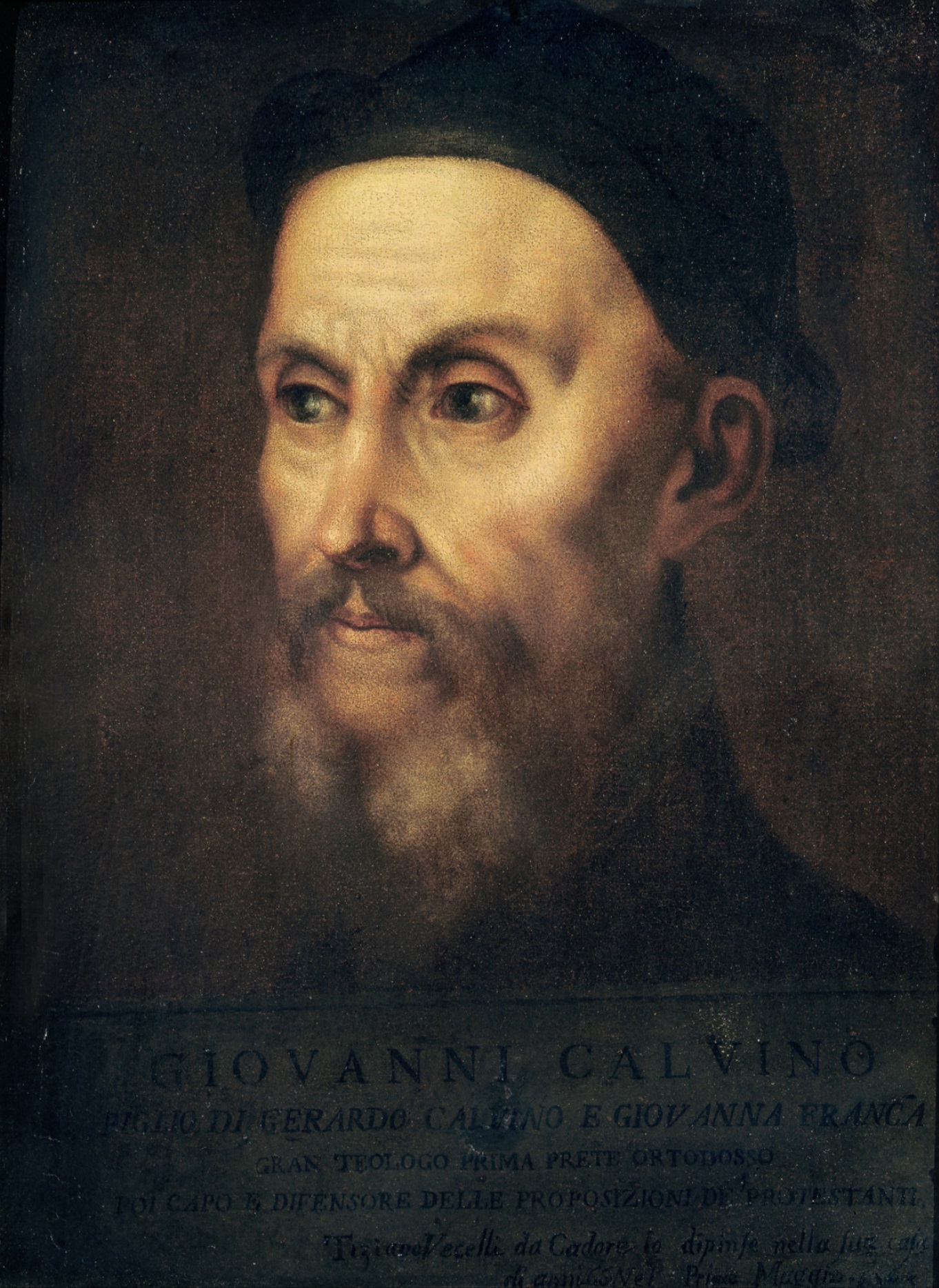
File:John Calvin Titian B.jpg
Calvin, by Titian
Calvin—Okay, I have summarized Christianity: Total depravity, unconditional election, limited atonement, irresistible grace, perseverance of the saints.
Jesus–Excuse me, I am not sure I understand you.
Calvin–You know, TULIP, what you taught.
Jesus—What I taught? I am sorry, but I don’t understand a word of it.
Calvin, scratching head–Stop joking, Jesus. This is serious. Why, haven’t you seen John Piper, my hyper-follower’s brilliant 221 word summary of Christianity—which is all about you, you know?
God is the sovereign, transcendent and personal God who has made the universe, including us, his image-bearers. Our misery lies in our rebellion, our alienation from God, which, despite his forbearance, attracts his implacable wrath. 
But God, precisely because love is of the very essence of his character, takes the initiative and prepared for the coming of his own Son by raising up a people who, by covenantal stipulations, temple worship, systems of sacrifice and of priesthood, by kings and by prophets, are taught something of what God is planning and what he expects. 
In the fullness of time his Son comes and takes on human nature. He comes not, in the first instance, to judge but to save: he dies the death of his people, rises from the grave and, in returning to his heavenly Father, bequeaths the Holy Spirit as the down payment and guarantee of the ultimate gift he has secured for them—an eternity of bliss in the presence of God himself, in a new heaven and a new earth, the home of righteousness. 
The only alternative is to be shut out from the presence of this God forever, in the torments of hell. What men and women must do, before it is too late, is repent and trust Christ; the alternative is to disobey the gospel.
Jesus—I taught all that?
Calvin—Stop it, Jesus. What did you teach then?
Jesus—But why didn’t you read the Gospels, if you wanted to know? Here are 221 words I remember saying,
I came not to call the righteous but sinners; not to judge the world, but to save it. 
Repent and believe the good news.
“Love the Lord your God with all your heart, soul and mind. Love your neighbour as yourself.” All the Law and the Prophets hang on these two commandments.
Don’t be afraid. Do not worry about anything at all.  Peace I give you. Do not let your hearts be troubled. Trust in God; trust also in me. 
I teach so that my joy may be in you, and your joy may be full.
When you stand praying, if you hold anything against anyone, forgive him, so that your Father in heaven may forgive you your sins.
If you have faith as small as a mustard seed, nothing will be impossible for you.
He who eats my flesh and drinks my blood lives in me, and I in him.
Take and drink; this is my blood of the covenant which is poured out for many for the forgiveness of sins. Do this in memory of me.
My Father will give you another counsellor—the Spirit of Truth.  He will be with you and in you. You will receive power when the Holy Spirit comes on you.
Go into all the world and preach the good news to all creation.
Calvin—That’s far too simple. That’s how a blogger would write. But we are theologians, you and I.
Jesus—No, just you. I spoke to be understood.

Filed Under: In which I play in the fields of Theology

They that wait upon the Lord shall renew their strength: Guest Post by Dana Rongione

By Anita Mathias

Today’s guest post is from Dana Rongione who blogs at A Word Fitly Spoken

Why Wait?


But they that wait upon the LORD shall renew their strength; they shall mount up with wings as eagles; they shall run, and not be weary; and they shall walk, and not faint. – Isaiah 40:31 KJV

Without a doubt, Isaiah 40:31 is probably one of the most famous verses of all time. It is quoted in books and from pulpits. It accompanies pictures on artwork and decorations. For it is a passage that offers hope, encouragement and strength. But within that promise is a condition, a contingency upon which the completion of this promise hinges. And at the center of that condition is a four-letter word that causes my knees to shake and heart to quicken—WAIT.


You see, what we often fail to realize is that this promise of strength and stamina is not given to all, but to those that wait upon the Lord. We tend to see the part of the verse that we like and ignore the part we don’t. But in this case, the part that makes us cringe cannot be ignored, for it is the subject of the verse, the center of the promise.

In a way, the verse reminds me of the old saying, “Good things come to those who wait.” Certainly, the things promised in Isaiah are good things. But who wants to wait? With express lanes, drive-thrus and automatic downloads, we are not accustomed to waiting. We want things when we want them, and that means NOW. How often we forget that God’s timing is not our timing? I’ve been reminded of this truth many times in my life, but never more so than when I felt the need to make a change in my career.
After eight years of teaching kindergarten, I was burned out. The days no longer held joy. I dreaded meetings with parents, the never-ending graduation practices and most of all, facing a colleague who had lied about me and gotten me into great trouble with the administration. Each day, it became harder to get out of bed and plaster a smile on my face. I was miserable and sensed that God was trying to tell me something.
Since the majority of my discontentment revolved around my job, I naturally assumed that God was trying to move me to teach in another location. The thought of leaving the security of my present job was terrifying, but no more so than remaining in my state of despair. I contacted schools and sent out resumes, but nothing happened. As time passed, I grew more nervous and agitated, but then I began to pick up on something. There was a common theme running through every song I heard, every sermon that was preached and every devotion that I read. The theme was “wait.”
After a particularly difficult week, my husband and I stayed after church and spoke with our pastor. I told him how I had been feeling. I relayed how I had thought that God was trying to move me, but that every move I made was countered with the reminder to wait. I asked him to help us pray that God would make His will known and that we would understand His directions when the time came. That same evening, we had a guest preacher at our church. As he began preaching on waiting, my pastor turned around to look at me. We shared a laugh.

My waiting was not over. In fact, it was another year before the Lord finally revealed His true plan. At that time, after much prayer, I left my teaching job to pursue my writing ministry. Had I made a change when I first felt the stirrings of my heart, I would have simply moved to another place of teaching. I would have never imagined that God would have called me to do anything else. And to be honest, if He had called me away then, I don’t know that I would have been spiritually mature enough to have obeyed.

I grew a lot during that time of waiting. It was difficult and uncomfortable, but God knew it was something I needed. He used that time of waiting to mold me and make me into what I needed to be in order to take the next steps He had for my life. Waiting time is not wasting time.


Now, when God tells me to wait for something, I try to remind myself of what God can do with me in the stillness. I try to put my impatience aside and instead focus on my longing to become more of what God wants me to be. It doesn’t make it easy, but it does make the waiting bearable.


Dana introduces herself:

“Having been a Christian for nearly 28 years, Dana knows what it is like to experience both joy in the journey and weariness in well-doing. Currently self-employed as a writer and speaker, she struggles (like many other women) to balance the demands of work, family, church, health, chores, etc.

Dana specializes in writing devotionals that will encourage and uplift the weak and weary Christian. Her blog, A Word Fitly Spoken, is currently read in over 15 different countries, allowing her the opportunity to spread the message of hope and joy throughout the world.
Her most recent book, Random Ramblings of a Raving Redhead, will take you on a journey of personal experience combined with heartfelt encouragement and fun-filled observations intended to lift your spirit, lighten your load, and comfort your heart.
You can find out more about Dana and her ministry by visiting her website at DanaRongione.com.“

Thank you, Dana!!

Filed Under: In which I proudly introduce my guest posters

There’s Nought so Queer as Christians

By Anita Mathias

Saint Frideswide's escape - wpe13219.gif (68961 bytes)
Saint Frideswide, Oxford’s First Saint. Burne-Jones window, Christ Church Cathedral

  There’s Nought so Queer as Christians
Old Northern English saying. Well, actually, “There’s nowt so queer as folks.”
I am taking a week-long course on the Christian history of Oxford. We learnt of Oxford’s strong religious underpinnings, and the contributions of the Dominicans, Franciscans, Cistercians, Benedictines, Carmelites and Augustinians to this beautiful city I love, and feel a strong inexplicable connection to.
Interestingly, only about a handful of people taking it were from Oxford or the UK. Most were from across the pond. It’s interesting why people who don’t live here would want to spend a week learning about Oxford’s Christian history. But I guess, “there’s nowt so queer as folk”.
                                                  * * *
We were divided into small groups for one session. There are as many species of Christians as there are mammals, 4360, or perhaps insects, 900,000!!
And in Christian conferences without a strong focus (evangelical, charismatic, arts) you’ll meet many of them.
                                                  * * *
When I first lived in America—late eighties and nineties, Wall Street traders were known as the Masters of the Universe. Well, moth, rush and exogenous events have dented their self-confidence and arrogance, if not their wealth. Are the Masters of the Universe in America currently doctors?
The two most arrogant, full-of-themselves people I’ve met in the last month have both been American Christian doctors. I guess their wealth is immune to economic downturns—if anything might increase if more people get sick from stress and false economies—and then, their intellectual pride makes them sure they have God in their pocket as well as wealth, and the life or death of their patients. I sat next to one at dinner last month, and was appalled by his full-of himself arrogance.
Well, today’s guy–a dermatologist from Houston, who boasts he can diagnose in two seconds– starts, “I am successful,” he says, (I kid you not!!). “I have two houses, and a boat and a stock portfolio. And now I wonder how I can follow Christ. He told his disciples to take nothing for their journeys. He told the rich man to give up everything to follow him. So that’s my first question.”
But this guy from Houston had a problem.
“My second question is,” he continues, “Why am I going to heaven when all the Hindus and Muslims and Jews I am working with are not, when they are better Christians than I am?”
(Now, I am, well, reasonably well-brought-up, so did not say, “Don’t be too sure on either count.”  I just thought it. Well, wrote it!)
                                                    * * *
Next, we get to Dallas. An impeccably turned out matron, who looks like, and is possibly wearing jewels worth, a million dollars, tells us of her life—comfortable, right schools, right universities, social success and prominence (Americans, stop one-upping each other, I think) going to a rich church for 49.5 years before she began to ask questions. Now her husband is terminally ill, and she delicately wipes a tear, and I suddenly feel sorry for her,
“I can’t pray for him to live for myself,” she says. “That would be selfish. But I pray he may live for the sake of the community, for the larger good he may do.”
“Excuse me?” I said. Had I understood?
“I can’t pray for him to live for just my sake,” she said. “How can I? But I pray he may live for our community, for everyone, for everyone’s good.”
That’s too much for me.
“Why should it be selfish to pray for yourself alone? You too are a child of God,” I say. “He loves you too.”
“Well, thank you!” she says, as if I am being nice, rather than truthful.” She cannot believe God loves her, I realise.
“God says nothing is too small to pray about. He cares about sparrows and our falling hair. He taught us to pray for our daily bread and trust our clothing dilemmas to him.” I say passionately, if didactically.
Upon which the doctor from Houston again has a problem.
“That’s an empty prayer,” he says, contemptuously. “Praying for bread and clothing!!”
I was too disgusted to speak.
Fortunately, a Swiss pastor explained, “Well, if you’ve always had enough, perhaps it’s an empty prayer. But Jesus did teach us to pray for our daily bread. And if you don’t have bread, then it’s a real prayer.”
                                                           * * *
How much better to get wisdom than gold, to choose understanding rather than silver! Proverbs 16:6.
I have been teaching the Bible in small groups for over ten years now. When I first started, in Williamsburg, Virginia, I was startled by the number of people, church-goers, who had got the worldly stuff sorted—the trophy husband with the trophy income, the massive house, the swimming pool, the vacation home, the status symbol car and body—but said they were not happy.
And were confused about basic things. I would be asked, “Anita, do you really have peace?” Answer, “Yes, I do. Mostly.” “Anita, are you really happy.” Answer, “Yes, I am. Mostly.” And they’d sigh and say, “I wish I were happy.”
God–even for church-goers, who hadn’t seriously sought him– was a source of more questions than answers, a confusing dark terra incognita.
But it shouldn’t be so.
We really do need to seek God with the same passion with which we seek success or worldly wealth or whatever our idol is, so that we do not arrive at mid-life empty, unhappy, dissatisfied, with more questions than answers.
We seriously need to prioritise the spiritual above anything else. “Do not labour for the food which perishes, but for the food which endures to eternal life,” John 6:27.
And, we need to fill ourselves with this food, with these living waters so that they flow effortlessly out of us to those with more questions than answers, with more sadness than happiness.
                                               * * *
Happiness ultimately flows from our spiritual lives. And so—to be happy– we must put them at the centre of our lives, and find durable answers to the big questions.
1 What is a good life? 2 How can I be happy 3 What is the meaning of life? 4 Is there life beyond death 5 Is there a God and does he care about me 6) Will he guide me minutely in my day to day decisions. Can I hear his voice 7) How do I find peace and joy?
And these questions are more important than how to be successful, or how to manage time, or how to lose weight, or how to save, or how to get organized, or how to make friends—but how often we forget this!!

Over to you? Do you think happiness ultimately flows from our spiritual lives? What would you add to my list of Life’s Big Questions?

Filed Under: random

  • « Previous Page
  • 1
  • 2
  • 3
  • 4
  • 5
  • Next Page »

Sign Up and Get a Free eBook!

Sign up to be emailed my blog posts (one a week) and get the ebook of "Holy Ground," my account of working with Mother Teresa.

Join 536 Other Readers

My Books

Rosaries, Reading, Secrets: A Catholic Childhood in India

Rosaries, Reading Secrets, B&N
USA

UK

Wandering Between Two Worlds: Essays on Faith and Art

Wandering Between Two Worlds
USA

UK

Francesco, Artist of Florence: The Man Who Gave Too Much

Francesco, Artist of Florence
US

UK

The Story of Dirk Willems

The Story of Dirk Willems
US

UK

My Latest Meditation

Anita Mathias: About Me

Anita Mathias

Read my blog on Facebook

Follow me on Twitter

Follow @anitamathias1

Recent Posts

  • At the Cross, God Forgives Us Completely
  • Using God’s Gift of Our Talents: A Path to Joy and Abundance
  • The Kingdom of God is Here Already, Yet Not Yet Here
  • All Those Who Exalt Themselves Will Be Humbled & the Humble Will Be Exalted
  • Christ’s Great Golden Triad to Guide Our Actions and Decisions
  • How Jesus Dealt With Hostility and Enemies
  • Do Not Be Afraid, but Do Be Prudent
  • For Scoundrels, Scallywags, and Rascals—Christ Came
  • How to Lead an Extremely Significant Life
  • Don’t Walk Away From Jesus, but if You Do, He Still Looks at You and Loves You
Premier Digital Awards 2015 - Finalist - Blogger of the year
Runner Up Christian Media Awards 2014 - Tweeter of the year

Categories

What I’m Reading


Wolf Hall
Hilary Mantel

Wolf Hall --  Amazon.com
Amazon.com

Amazon.co.uk

Silence and Honey Cakes:
The Wisdom Of The Desert
Rowan Williams

Silence and Honey Cakes --  Amazon.com
Amazon.com

Amazon.co.uk

The Long Loneliness:
The Autobiography of the Legendary Catholic Social Activist
Dorothy Day

The Long Loneliness --  Amazon.com
Amazon.com

Amazon.co.uk

Country Girl
Edna O'Brien

Country Girl  - Amazon.com
Amazon.com

Amazon.co.uk

Archive by month

My Latest Five Podcast Meditations

INSTAGRAM

anita.mathias

My memoir: Rosaries, Reading, Secrets https://amzn.to/42xgL9t
Oxford, England. Writer, memoirist, podcaster, blogger, Biblical meditation teacher, mum

Looking at photos from our week in beautiful Sevil Looking at photos from our week in beautiful Seville and Cordoba over New Year with Irene, who had a week off.
And, ICYMI, here’s my latest meditation on the Gospel of Matthew… I’ve recorded it, should you want a few minutes of peace.
https://anitamathias.com/2026/04/29/gods-complete-forgiveness/
Hello Friends, I'm resumed recording my meditation Hello Friends, I'm resumed recording my meditations on the Gospel of Matthew. Do click on this link to listen. 
https://anitamathias.com/.../29/gods-complete-forgiveness/
Christ is the most influential figure in the history of the world, though his life ended in shame, humiliation and failure. But he so completely turned things round in his great reversal that the cross on which he died when all seemed hopeless is now the most common, and revered, symbol in history.
He emerged from and was anchored in Judaism. And as the sins of the people were laid on the scapegoat who was sent into the wilderness to perish, Christ died as the lamb of God voluntarily bearing the guilt of the wrongdoing of the whole world. He paid the price for our forgiveness with his life-blood--in accordance with the iron law of the physical and moral universe, of sowing and reaping, cause and effect. 
And so, God, who appeared as flames of fire to Moses, can now dwell within us, purifying us, whose hearts have darkness and shards of ice. 
And now that Christ was crucified, died, but rose again, His Spirit, no longer contained within his earthly body, is poured out like living water onto all humans, at our humble request. The Spirit pours the love of God into us; he reminds us of the words of Jesus and slowly writes Christ’s sweet law on our hearts. This transfusion of grace helps us do hard things we previously couldn’t do. Our dance with the Spirit gradually breaks the power of sin over us. It transforms us.
Now we, the forgiven, protected by the blood of Jesus poured out over us, and filled with His Spirit, who sings within us, Abba, Father, are adopted by God as his children in his joyful new covenant. We are cells grafted into the vine of our new family--Father, Son, Spirit—who now live in us as we live in them. As we choose by our thoughts and actions to continue living in the vine of Jesus, their energy pulsing through us makes us fruitful. And now, all our prayers which flow in the river of God’s good purposes are kindly heard. Waves of love and power flood from the cross! 
Thank you!
Well, hello friends! Breaking radio silence to let Well, hello friends! Breaking radio silence to let you know that I have taped a meditation for you on Christ’s famous Parable of the Talents in Matthew 25. https://anitamathias.com/2025/11/05/using-gods-gift-of-our-talents-a-path-to-joy-and-abundance/
Here you are, click the play button in the blog post for a brief meditation, and some moments of peace, and, perhaps, inspiration in your day 🙂
Hi Friends, I have taped a meditation; do listen a Hi Friends, I have taped a meditation; do listen at this link: https://anitamathias.com/2025/04/08/the-kingdom-of-god-is-here-already-yet-not-yet-here-2/
It’s on the Kingdom of God, of which Christ so often spoke, which is here already—a mysterious, shimmering internal palace in which, in lightning flashes, we experience peace and joy, and yet, of course, not yet fully here. We sense the rainbowed presence of Christ in the song which pulses through creation. Christ strolls into our rooms with his wisdom and guidance, and things change. Our prayers are answered; we are healed; our hearts are strangely warmed. Sometimes.
And yet, we also experience evil within & all around us. Our own sin which can shatter our peace and the trajectory of our lives. And the sins of the world—its greed, dishonesty and environmental destruction.
But in this broken world, we still experience the glory of creation; “coincidences” which accelerate once we start praying, and shalom which envelops us like sudden sunshine. The portals into this Kingdom include repentance, gratitude, meditative breathing, and absolute surrender.
The Kingdom of God is here already. We can experience its beauty, peace and joy today through the presence of the Holy Spirit. But yet, since, in the Apostle Paul’s words, we do not struggle only “against flesh and blood, but against the rulers, against the unseen powers of this dark world and against the spiritual forces of evil,” its fullness still lingers…
Our daughter Zoe was ordained into the Church of E Our daughter Zoe was ordained into the Church of England in June. I have been on a social media break… but … better late than never. Enjoy!
First picture has my sister, Shalini, who kindly flew in from the US. Our lovely cousins Anthony and Sarah flank Zoe in the next picture.
The Bishop of London, Sarah Mullaly, ordained Zoe. You can see her praying that Zoe will be filled with the Holy Spirit!!
And here’s a meditation I’ve recorded, which you might enjoy. The link is also in my profile
https://anitamathias.com/2024/11/07/all-those-who-exalt-themselves-will-be-humbled-the-humble-will-be-exalted/
I have taped a meditation on Jesus statement in Ma I have taped a meditation on Jesus statement in Matthew 23, “For those who exalt themselves will be humbled, and those who humble themselves will be exalted.”
Do listen here. https://anitamathias.com/2024/11/07/all-those-who-exalt-themselves-will-be-humbled-the-humble-will-be-exalted/
Link also in bio.
And so, Jesus states a law of life. Those who broadcast their amazingness will be humbled, since God dislikes—scorns that, as much as people do.  For to trumpet our success, wealth, brilliance, giftedness or popularity is to get distracted from our life’s purpose into worthless activity. Those who love power, who are sure they know best, and who must be the best, will eventually be humbled by God and life. For their focus has shifted from loving God, doing good work, and being a blessing to their family, friends, and the world towards impressing others, being enviable, perhaps famous. These things are houses built on sand, which will crumble when hammered by the waves of old age, infirmity or adversity. 
God resists the proud, Scripture tells us—those who crave the admiration and power which is His alone. So how do we resist pride? We slow down, so that we realise (and repent) when sheer pride sparks our allergies to people, our enmities, our determination to have our own way, or our grandiose ego-driven goals, and ambitions. Once we stop chasing limelight, a great quietness steals over our lives. We no longer need the drug of continual achievement, or to share images of glittering travel, parties, prizes or friends. We just enjoy them quietly. My life is for itself & not for a spectacle, Emerson wrote. And, as Jesus advises, we quit sharp-elbowing ourselves to sit with the shiniest people, but are content to hang out with ordinary people; and then, as Jesus said, we will inevitably, eventually, be summoned higher to the sparkling conversation we craved. 
One day, every knee will bow before the gentle lamb who was slain, now seated on the throne. We will all be silent before him. Let us live gently then, our eyes on Christ, continually asking for his power, his Spirit, and his direction, moving, dancing, in the direction that we sense him move.
Link to new podcast in Bio https://anitamathias.co Link to new podcast in Bio https://anitamathias.com/2024/02/20/how-jesus-dealt-with-hostility-and-enemies/
3 days before his death, Jesus rampages through the commercialised temple, overturning the tables of moneychangers. Who gave you the authority to do these things? his outraged adversaries ask. And Jesus shows us how to answer hostile questions. Slow down. Breathe. Quick arrow prayers!
Your enemies have no power over your life that your Father has not permitted them. Ask your Father for wisdom, remembering: Questions do not need to be answered. Are these questioners worthy of the treasures of your heart? Or would that be feeding pearls to hungry pigs, who might instead devour you?
Questions can contain pitfalls, traps, nooses. Jesus directly answered just three of the 183 questions he was asked, refusing to answer some; answering others with a good question.
But how do we get the inner calm and wisdom to recognise
and sidestep entrapping questions? Long before the day of
testing, practice slow, easy breathing, and tune in to the frequency of the Father. There’s no record of Jesus running, rushing, getting stressed, or lacking peace. He never spoke on his own, he told us, without checking in with the Father. So, no foolish, ill-judged statements. Breathing in the wisdom of the Father beside and within him, he, unintimidated, traps the trappers.
Wisdom begins with training ourselves to slow down and ask
the Father for guidance. Then our calm minds, made perceptive, will help us recognise danger and trick questions, even those coated in flattery, and sidestep them or refuse to answer.
We practice tuning in to heavenly wisdom by practising–asking God questions, and then listening for his answers about the best way to do simple things…organise a home or write. Then, we build upwards, asking for wisdom in more complex things.
Listening for the voice of God before we speak, and asking for a filling of the Spirit, which Jesus calls streams of living water within us, will give us wisdom to know what to say, which, frequently, is nothing at all. It will quieten us with the silence of God, which sings through the world, through sun and stars, sky and flowers.
Especially for @ samheckt Some very imperfect pi Especially for @ samheckt 
Some very imperfect pictures of my labradoodle Merry, and golden retriever Pippi.
And since, I’m on social media, if you are the meditating type, here’s a scriptural meditation on not being afraid, while being prudent. https://anitamathias.com/2024/01/03/do-not-be-afraid-but-do-be-prudent/
A new podcast. Link in bio https://anitamathias.c A new podcast. Link in bio
https://anitamathias.com/2024/01/03/do-not-be-afraid-but-do-be-prudent/
Do Not Be Afraid, but Do Be Prudent
“Do not be afraid,” a dream-angel tells Joseph, to marry Mary, who’s pregnant, though a virgin, for in our magical, God-invaded world, the Spirit has placed God in her. Call the baby Jesus, or The Lord saves, for he will drag people free from the chokehold of their sins.
And Joseph is not afraid. And the angel was right, for a star rose, signalling a new King of the Jews. Astrologers followed it, threatening King Herod, whose chief priests recounted Micah’s 600-year-old prophecy: the Messiah would be born in Bethlehem, as Jesus had just been, while his parents from Nazareth registered for Augustus Caesar’s census of the entire Roman world. 
The Magi worshipped the baby, offering gold. And shepherds came, told by an angel of joy: that the Messiah, a saviour from all that oppresses, had just been born.
Then, suddenly, the dream-angel warned: Flee with the child to Egypt. For Herod plans to kill this baby, forever-King.
Do not be afraid, but still flee? Become a refugee? But lightning-bolt coincidences verified the angel’s first words: The magi with gold for the flight. Shepherds
telling of angels singing of coming inner peace. Joseph flees.
What’s the difference between fear and prudence? Fear is being frozen or panicked by imaginary what-ifs. It tenses our bodies; strains health, sleep and relationships; makes us stingy with ourselves & others; leads to overwork, & time wasted doing pointless things for fear of people’s opinions.
Prudence is wisdom-using our experience & spiritual discernment as we battle the demonic forces of this dark world, in Paul’s phrase.It’s fighting with divinely powerful weapons: truth, righteousness, faith, Scripture & prayer, while surrendering our thoughts to Christ. 
So let’s act prudently, wisely & bravely, silencing fear, while remaining alert to God’s guidance, delivered through inner peace or intuitions of danger and wrongness, our spiritual senses tuned to the Spirit’s “No,” his “Slow,” his “Go,” as cautious as a serpent, protected, while being as gentle as a lamb among wolves.
Follow on Instagram

© 2026 Dreaming Beneath the Spires · All Rights Reserved. · Cookie Policy · Privacy Policy