Anita Mathias: Dreaming Beneath the Spires

Anita Mathias's Blog on Faith and Art

  • Home
  • My Books
  • Meditations
  • Essays
  • Contact
  • About Me

How Forgiveness Unlocks the Goodness of Life: A Guest Post by Carmel Thomason

By Anita Mathias

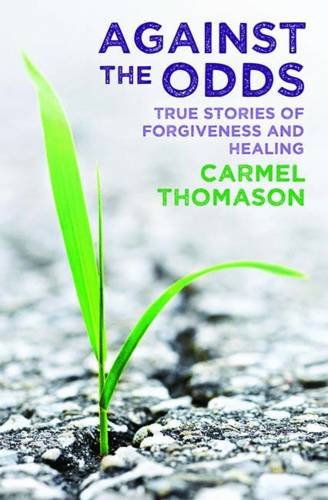
Against the Odds

Against the Odds

As a journalist I meet all kinds of people. I usually want to make people look their best. Sometimes it’s harder, because some people don’t help themselves. They’ve already decided all journalists are sour people who want to focus on the worst aspects of life. There are people who make it clear that they don’t want to talk to me in case I write about them, and then take umbrage when I do what they want and ignore them. Usually these are people who have nothing interesting to say anyway.

And then there are people who have such an amazing story to tell that meeting them has changed my view of the world.

Ray Rossiter is one of those people. I first met Ray when I called him about an exhibition that the Imperial War Museum North was hosting about the experiences of prisoners of the Japanese during World War II. Lots of men were interviewed for that exhibition. They all had fascinating tales to tell, but there was something about Ray that stuck with me. It was in the small things. For example, some men understandably said that they could never eat rice again after their experience. Ray said: “I love rice, it kept me alive.”

When I spoke to Ray he asked if I was going to visit him. Given the time constraints of my news desk I couldn’t. Then he told me that his wife had dementia and he was the sole carer. I realised that he probably wasn’t getting out of the house much at all, so I said that while I couldn’t visit him in work time, I would go to see him. I suppose I went to his house the first time because I felt sorry for him and his situation, but as time went on Ray was to touch my heart in a way that I could never have expected.

As a journalist I was used to people calling me to ask me to fight their corner, seek justice for a wrong done to them, even if it was simply to expose it. I’d hear people describe anything from a cross word between friends to the most heinous of crimes as unforgiveable. Yet, here was a man who had suffered unimaginable wrongs and he carried no bitterness. As Christians we talk about forgiveness all the time, but it can feel quite abstract. When we actually witness it lived out, as Ray is doing, it is life-changing.

When Ray talks about the war he says: ‘I felt that God was there all the time, his love shining through the actions of men, one for another. He was there in every kindness, every act of compassion – it is how we survived. It was often said: “It’s every man for himself in here,” but in reality nothing was further from the truth. We depended so much on one another for encouragement, morale-boosting and in numerous instances for our very survival.’

The friendships Ray forged in those adverse times were ones which were to last a lifetime. The men he knew then, men who could be cheerful under the most appalling circumstances, were not men who could let bitterness eat into their souls and he didn’t like to see hatred consuming them in this way. It was a big ask, Ray more than anyone knew that, but he wanted to encourage them, for their own sake, to forgive.

‘Even years later it was a taboo subject among our fellows and it wasn’t an easy thing to get across because it’s hard to comprehend just how much there was to forgive,’ he says. ‘We came out of captivity breathing fire and vengeance against the whole Japanese race – all of us believed at that time that it would be impossible ever to forgive them. Yet while every instinct may be screaming at us to hate them for what they did, we have to stifle this natural impulse. We can’t go on hating forever. The happiest people are those who can find it in their hearts to forgive.

“Peace within a person is where it all starts, because the actions of nations are merely the actions of men writ large.”

We can speculate forever about why things happen or why some people do terrible things, but we rarely find the answers we seek. Jesus showed us another way and people like Ray are showing it is possible.

* * *

Thankfully, he’s not alone. Since meeting Ray I’ve met many people who have made forgiveness in a reality in their life. All of them share a desire to make the world a better place, one in which these huge wrongs might never happen in the first place.

It’s a vision that is shared by the Restorative Justice Council, which give victims the chance to tell offenders the real impact of their crime, and holds offenders to account for what they have done, enabling everyone affected by a particular incident to play a part in repairing the harm and finding a positive way forward.

It was through the Restorative Justice Process that Joanne Nodding was able to meet and forgive the man who raped her. She says: ‘Did I hate him? For a while afterwards you could probably say that I did, but you can’t go on living with hate in your heart forever. Well, I can’t anyway. I’m not a person who feels hatred. That feeling isn’t me, or it’s not the me I recognise, and it’s not the me I want to be. Besides, hating him is not going to change what happened.

‘I could sit here, thinking, “God, why has this person done this to me?” Or I could say, “God help me to forgive and help him to have a better life”. Everyone can change and everyone deserves a chance to change. As I see it, I could either hate him for the rest of my life or I could forgive him’.

I can’t begin to understand what Ray and Joanne went through, but the goodness they reflect through their capacity for forgiveness makes me want to live a better life. They’ve made me think about how many opportunities I have each day to either forgive or not, to let go of pain or to let it weigh heavy in my heart.

Do I need to focus on a throwaway remark from a stranger so that it spoils the rest of my day? Can I be more loving, grateful and less critical? Can I focus on the good in people? What I’ve learned is that life can be messy, but we are all given choices every day. In choosing to forgive we are choosing a life of love and gratitude.

Against the Odds: True Stories of Healing and Forgiveness by Carmel Thomason is published by the Bible Reading Fellowship.

Carmel Thomason

Carmel Thomason

Carmel Thomason is a Manchester based writer. She has written Every Moment Counts: A Life of Mary Butterwick (DLT); collaborated with the Archbishop of York, writing the stories for John Sentamu’s Faith Stories; and has contributed to The Way, The Truth and The Life series published by the Teacher’s Enterprise in Education.


Filed Under: In which I forgive Aught against Any (Sigh), random Tagged With: Carmel Thomason, forgiveness, Ray Rossiter

On How Forgiveness Sets Us as Free as a Falcon

By Anita Mathias

The captive falcon soars, riding the winds, reaching for the clouds, until she reaches the limits of her leash. And then, at the will of the falconer, she is reeled down. Earthbound!

The wild eagle, however, soars high, and higher still, effortlessly, soaring on thermal currents, using even obstruction currents to rise higher.

* * *

What’s the leash which prevents us reaching the spiritual heights? That keeps us earthbound?

It’s often our leaden backpack of grudges, resentments, and injuries. Dislikes born of slights, and slight half-forgotten injuries. An attitude of “just you wait, Henry Higgins.” Stuff we just have to release.

How does one forgive? Let go of anger and deep-rooted injury? Funny, though I have done it again and again, I don’t really know how one lets go of deep-seated anger.

I have images that help me, though. Tearing the check of what people owe me. Tearing up the injury and throwing it away. Cutting the leash that binds me to the person. Switching my focus to the beautiful face of Jesus.

Ultimately, forgiveness is an emotional miracle only accomplished by positioning oneself in the waterfall of God’s love. Letting it course through you, so that it washes away the injury.

Ultimately, I think we cannot forgive on our own. We need God’s help.

We need the power of the Holy Spirit within us.

* * *

 Though there are strategies which help.

Thank God for the good in the person you are struggling to forgive.

Ask God to help you see them as he sees them—with his magic eyes, which see people’s weaknesses and failures, and always forgives and never despises.

Ask God first to make you want to forgive.

And then to give you the ability to forgive.

Maybe, if you choose to—ask God to give you a love for the person you are struggling to forgive.

* * *

For in forgiving, you release a captive, and that captive is you yourself.  Nelson Mandela famously said that resentment is like drinking poison and then waiting for your enemy to die. And from what we now know of the toxicity of negative emotions, holding on to resentments may literally mean drinking poison.

Matthew 18 21-35 explains it best. In anger his master handed him over to the jailers to be tortured, until he should pay back all he owed. The one who will not forgive is thrown into prison and tortured.

True? Oh my goodness, absolutely. Have you had the experience of a beautiful meal out or a lovely hike ruined by an argument over past injuries? Or the bitter memories of past injuries surfaces at a trigger, and you express them, and that forest cat is out of the bag, with its claws, re-injuring you all over again? And the injury is almost as painful at the tenth or twentieth recounting as when it first occurred?

Release the forest cat of other people’s sins against you.

If you seek to forgive, and ask God’s help in forgiving, and forgive again and again as you remember the past injury, eventually you will succeed.

* * *

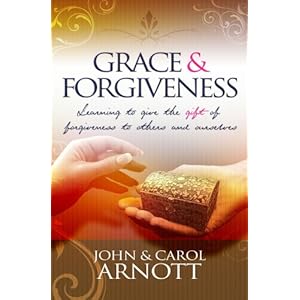
Grace and Forgiveness, a brief 70 page book by John and Carol Arnott is the best book on forgiveness I have read. The writing is deceptively simple and the content deep and transformative, and so, ironically, it takes 2 or 3 readings for it to traverse “the longest distance in the world,”–the 18 inches from head to heart.

The Arnotts say, “When we choose to stop living in grace, like the unmerciful servant, effectively, we are choosing to step outside of the blessing and protection of God and deliver ourselves to “the torturers.” At all costs, then, we want to continue living in grace.”

They go on in this illuminating passage.

There are many Christians today who wonder, “Why does everything seem to go wrong in my life? Why does there seem to be a curse over my life?” There are trying to work out why there doesn’t seem to be any protection over their life.

Often, this is be because they have made the poor choice in their relationships with others to “bury” the hurt and bitterness of past offenses instead of forgiving and releasing these to God.  By their choices they have made themselves vulnerable to attack by Satan.

By withholding mercy from others and exercising unforgiveness, they have stemmed the flow of God’s blessing and protection over their lives, leaving them open to assault from demonic forces.  Even if someone does the most terrible thing to you, you must never go back to the justice level. It must be grace, grace, grace. Leave justice with God. Do not allow your heart to become hurt, bitter and unforgiving.

Forgive us our debts as we forgive our debtors. Jesus placed the giving and receiving of forgiveness at the absolute center of the Christian life. We simply cannot take forgiveness for ourselves, but withhold it from others. “

* * *

I found this a switching-on-the-lights question to ask myself.

Is there any area of my life in which I am stuck in prison, turned over to the jailors to be tormented? Weight? Household organization? Writing? Waking early?

Is unforgiveness playing a part? Unforgiveness of those who have caused or contributed to the problem? General unforgiveness?

Releasing and forgiving those who have caused or contributed to the areas in which one is stuck may well get me and you unstuck.

And I am off to do it now!!

* * *

Image Credit 

Grace and Forgiveness on Amazon.com

Grace and Forgiveness on Amazon.co.uk

Filed Under: In which I forgive Aught against Any (Sigh) Tagged With: forgiveness, John and Carol Arnott, Nelson Mandela

The Mental Habit That’s Worth a Trillion Dollars

By Anita Mathias

Grace and Forgiveness

I heard Carol Arnott say that her book Grace and Forgiveness is worth a trillion dollars.

Hyperbole, of course, but (Jesus, forgive this crassness!!) if I were to monetize it, learning and practising forgiveness would easily be worth well over £100,000, perhaps £500,000 in a lifetime. No, more!

Speculative, of course, but that’s possibly the monetary value of the immense productivity which would result from keeping one’s mind free of emotional turmoil and the petty resentments and grievances which so distract and drain one.

And imagine the creativity which would result from stepping into the eternal sources of ideas, the energy which would result from not judging other people, not revolving in your mind the sad old tedious tale of sins they have committed against you, but instead focusing on your own life, goals and purposes.

And of course, one would be SO much healthier physically and mentally if one could forgive, and refuse to judge. Some estimate that 60 to 90 percent of illness is psychosomatic, caused by our negative thoughts. Colds, flu, digestive ailments, allergies flaring up, insomnia, exhaustion—most of us have experienced these after emotional upsets; perhaps prolonged emotional strain could lead to more serious conditions.

* * *

Last week, I got so angry with a member of my family that I took to bed at 9 p.m. so that I would not sin with my words, not crush through a strongly worded expression of anger.

But I tossed and turned as I tried to pray in tongues, and pray the Jesus prayer to mitigate my anger and not judge. Some success, much failure!

Well, anger and judgement are not the best way to get to sleep. I was awake much of the night, my muscles stiff and tense, and slept in till 9 a.m. I would normally have slept for 8 hours.

Wow, how much could I have written in the extra 4 hours?

* * *

Forgiveness as a life-style.  Letting injuries go as soon as they surface. I simply must learn it.

For anger is spending your energy in negativity. Judgement is spending our passion in negativity.

If we learned to forgive, we could instead invest that energy and passion in our own lives.

* * *

How do we forgive? The absolute best way is the way Jesus commanded.

We bless the person we are angry with. We pray for them. We ask God to give us a love for them (Luke 6:28) for our sake as well as for theirs, for love is a warmer, lovelier, more energizing thing to have in your heart than prickly, cold hatred.

And “Then your reward will be great, and you will be children of the Most High, because he is kind to the ungrateful and wicked.” (Luke 6:35).

As a child, we will have access to the goodness of God’s household: financial provision, unleashed creativity, protection from our enemies, answered prayer.

We will pray with power for the greatest block to answered prayer will be removed. We will have fulfilled Jesus’ condition for the cleansing of the heart even before we pray, “And when you stand praying, if you hold anything against anyone, forgive them.” (Mark 11:25)

* * *

As Malcolm Gladwell famously noted in Outliers: The Story of Success, it takes 10,000 hours to be a world class expert—in anything.

Prayer takes practice. I pray most effectively (seeing changes in myself, and my life and circumstances) after reading books on prayer and making lists and praying through them. In this respect, the most life-changing books on prayer I’ve read are The Circle Maker and I Will Lift Up Mine Eyes.

Forgiveness too is a learned art. While ultimately, it is a miracle like falling in love, it is also a mental and emotional discipline, which goes through stages, and which we can partly learn from others.

The best books on forgiveness I’ve read are—John and Carol Arnott’s Grace and Forgiveness, and R. T. Kendall’s Total Forgiveness.

* * *

Some things in the spiritual life have disproportionate power; they are the atomic bombs of the spiritual life! Prayer, so quiet, so invisible, makes things happen, in our spirits and in the external world around us. Forgiveness too has disproportionate power.

I have heard Heidi Baker talk about forgiving her daughter’s rapist (an drug addict she had sheltered) and how this forgiveness freed her daughter from nightmares and post-traumatic stress syndrome. If Heidi had not brought herself to do so, she might have continued in ministry, but it would have been a mediocre one, not characterized by miracles and joy as hers is.

For myself, I love it when I come to the point of forgiveness. I love the spiritual power, and the sense of joy and love.  And freedom. And best of all, there is a new unleashing of creative power, ideas, stories and blogs!

Filed Under: In which I forgive Aught against Any (Sigh) Tagged With: Carol Arnott, forgiveness, Forgiveness and Creativity, Heidi Baker, R. T. Kendall

Guilt Causes Paralysis, and Christ’s Forgiveness Rescues us from it

By Anita Mathias


A haunting passage in Carl Gustav Jung’s memoir, Memories, Dreams, and Reflections, describes a woman from whom horses, dogs and people fled, for they sensed dark guilt within her.

“A lady came to my office. It was apparent that she belonged to the upper levels of society. She had been a doctor, she said. What she had to communicate to me was a confession; some twenty years ago she had committed a murder out of jealousy. She had poisoned her best friend because she wanted to marry the friend’s husband. She had thought that if the murder was not discovered, it would not disturb her. She wanted to marry the husband, and the simplest way was to eliminate her friend. Moral considerations were of no importance to her, she thought.

The consequences? She had in fact married the man, but he died soon afterward, relatively young. During the following years a number of strange things happened. The daughter of this marriage endeavoured to get away from her as soon as she was grown up. She married young and vanished from view, drew farther and farther away, and ultimately the mother lost all contact with her.

This lady was a passionate horsewoman and owned several riding horses of which she was extremely fond. One day she discovered that the horses were beginning to grow nervous under her. Even her favourite shied and threw her. Finally she had to give up riding. Thereafter she clung to her dogs. She owned an unusually beautiful wolfhound to which she was greatly attached. As chance would have it, this very dog was stricken with paralysis.

With that, her cup was full; she felt that she was morally done for. She had to confess, and for this purpose she came to me. She was a murderess, but on top of that she had also murdered herself. For one who commits such a crime destroys his own soul. The murderer has already passed sentence on himself.

If someone has committed a crime and is caught, he suffers judicial punishment. If he has done it secretly, without moral consciousness of it, and remains undiscovered, the punishment  can nevertheless be visited upon him, as our case shows. It comes out in the end. Sometimes it seems as if even animals and plants “know” it. As a result of the murder, the woman was plunged into unbearable loneliness. She had even become alienated from animals.

And in order to shake off this loneliness, she had made me share her knowledge. She had to have someone who was not a murderer to share the secret. She wanted to find a person who could accept her confession without prejudice, for by so doing she would achieve once more something resembling a relation-ship to humanity. And the person would have to be a doctor rather than a professional confessor. She would have suspected a priest of listening to her because of his office, and of not accepting the facts for their own sake but for the purpose of moral judgment. She had seen people and animals turn away from her, and had been so struck by this silent verdict that she could not have endured any further condemnation.

Sometimes I have asked myself what might have become of her. For that was by no means the end of her journey. Perhaps she was driven ultimately to suicide. I cannot imagine how she could have gone on living in that utter loneliness.” (Memories Dreams Reflections, Carl Gustav Jung, p 122)

Unconfessed, hidden guilt extracts a terrible psychic price.

* * *

And guilt, unconfessed, unforgiven can lead to terrible paralysis, literally or metaphorically.

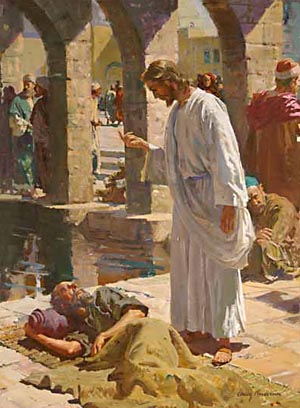
Which brings me to Jesus’ fascinating encounter with the paralytic (Matt 9: 1-8). He says, “Take heart, son. Your sins are forgiven.”

Challenged by the Pharisees, he turns from the root cause to the manifestation and says, “Get up, take up your mat and go home.”

And the man does so.

* * *

A healthy spiritual life requires the daily practice of confession and receiving forgiveness. “Forgive us our sins,” the Lord’s Prayer teaches us to say. And, equally importantly, he teaches us to extend the self-same forgiveness to others.

Otherwise, terrible guilt we have not confessed and asked forgiveness for, or terrible sadness and anger at the effect of others’ sin upon us can leave us “paralysed.”

* * *

Paralysed? There are many 21st century manifestations. A deep sadness or depression or anxiety, that renders it impossible to move on, to pursue meaningful action, to pursue dreams. These mental disorders affect 26.2 of the US population in any given year, according to the National Institutes of Mental Health, and 25% of the British population every year, according to the Mental Health Foundation (to look at stats from the two countries I’ve boomeranged between for the last 29 years).

Eastern State Hospital was a massive psychiatric hospital at the edge of Williamsburg, Virginia, where I lived for 12 years. A Christian psychiatrist, who worked there, famously said that if people would accept God’s forgiveness, and so be absolved from their guilt, Eastern State would be almost empty overnight. I believe it.


* * *

I recently was overwhelmed with sadness and guilt over my actions. A member of my family had wanted something very badly, and I did not support them fully, partly because I was sure they would achieve it without my active hovering, and partly because I was absorbed and abstracted by my own work. And their big break did not initially work out.

I was so sad, so paralysed by guilt and sadness for a few days. Tossing and turning in the night, I “heard” these words, “Your guilt is taken away, and your sin atoned for.” (Isaiah 6:7). (One of the benefits of stocking your mind with Scripture is that it surfaces in your hour of need!)

I sighed with relief. My guilt had indeed been taken away, and my sin atoned for by Jesus, wondrous but true news.

I had to accept this complete forgiveness, akin to the forgiveness a father offers a toddler who smashes a crystal goblet or scribbles on an antique first edition. I had to accept it from God, and from the individual.

And after, again, expressing my sorrow to God and the person whom my actions had affected, it was time to “get up and walk,” smiling as one whose guilt had been taken away and sin atoned for.

Thank you, Jesus.

Filed Under: In which I forgive Aught against Any (Sigh), Matthew Tagged With: blog through the bible, forgiveness, guilt, Matthew, paralysis

In which Creative Blocks Crumble, and I am Set Free.

By Anita Mathias

I went on a retreat at the Harnhill Centre last month with low expectations, and it proved life-changing in the area of food.

The another amazing healing and release I experienced at the Harnhill Centre for Christian Healing was in the creative arena.

I have had a couple of tries at doing book proposals for the memoir I am writing of my Indian Catholic childhood at adolescence. I am from a small, largely Catholic coastal town, Mangalore, converted by the Portuguese in the mid-sixteenth century. I went to boarding school in the Himalayas, run by German and Irish missionary nuns, where I was rebellious and an atheist, and after a religious conversion, I impulsively joined Mother Teresa, wanting to become a nun, lasting 14 months.

I found writing book proposals very difficult, and sweated blood doing them, as my father used to say about writing letters. Because my literary writing is just that, literary, I used to despair of converting something like a book of paintings, or a book of poems into a chapter by chapter outline, a necessary book marketing tool.

But unless I learn the art of writing a good book proposal, I will not have a conventional literary career, my book in bookstores for impulse buyers.

And I want and need one.

* * *

So I tried to do a book proposal, and froze up again as I had in the past, despairing of adequately representing all that richness in a page.

Somewhere, in the process of writing the proposal, I moved from healthy striving, which Brene Brown in Daring Greatly describes as being work-focused, asking “How can I improve the work?” to perfectionism, being “Other-focused” asking “What will they think?”

We discuss this, and I am actually in tears of frustration about this writing block.

And Gary, the South African counsellor, asks, “What does God think about your book?”

I think of my book, chapter by chapter, and I can see God smile. He remembers the richness of the life I was describing. He was right there during it, and he likes the way I am remembering it, celebrating it, re-enjoying it. “God likes my book,” I say happily. “He likes it!”

I suddenly flash back to a beautiful memory. A Swedish YWAM team had come to Minneapolis where we lived in 1991-2, and performed a passionate, graceful dance interpretation of a worship song: “He’s the Lord of creation, and the Lord of my heart; Lord of the land and the sea.”

Their dance was worship. And I saw my writing as a dance of worship. I will worship my Lord with words dancing on the page.

* * *

And when I came home that changed my approach to my book.

I could write more happily, fluently, confidently, writing in the river of God’s power, that river flowing and coursing through me. When I am stressed, I slow down and ask that river to flow through me again.

I forgive whom I have to forgive. I repent of what I have to repent. I want NOTHING blocking the flow of the river of God’s life into me.

When I wrote on my own, I wrote the best I could. Now I write with Jesus’ power in me, with some of the mind of Christ, chatting to Jesus as I write, and knowing he likes what I am describing of the life he has given me, and when I have finished, he will say to me, as we say to our toddlers who have done their very best, very beautiful art, “It is very good.”

I am trying to create beauty, and need to focus on that, not on the gate-keeper’s reactions. The block of fear and paralysis that I could not adequately represent the book in a book proposal has been lifted.

* * *

And, incidentally, part of my trouble with book proposals was that I did them with a bad attitude, resenting the time taken away from literary work by this career necessity.

I received an excellent piece of advice last month from Brandy: the way around the book proposal block is not to grudge the time and effort it takes to create one, but to think of it as art itself and so do it whole-heartedly.

I think blocks are caused by a lack of confidence, by a false belief that we cannot do what, of course, we can jolly well do. And by a fear of adverse judgement.

The prayer minister at Harnhill mentioned that blocks are caused when we cannot forgive ourselves or other people in the area in which we are blocked. Ooh, that’s another can of worms for me to open!!


Filed Under: In which I explore writing and blogging and creativity Tagged With: blocks, Creativity, forgiveness, writing

On Them All Be Peace: The Dragon Nuns and Teachers of my Youth

By Anita Mathias


eustace-dragon-color-pauline-baynes

“Berlin seemed far away, but that was an illusion; for years I would pick fragments of it from my skin as though I had wallowed among shards of broken glass:” the historian Peter Gay writes about his boyhood growing up Jewish in Nazi Germany. (My German Question: Growing up in Nazi Berlin.)

Reviewing Gay’s memoir, the critic Frank Kermode writes “When his anger erupts, and he wishes some ancient enemy disgraced or dead, the effect is particularly surprising, as if such sentiments had no place in the story, though of course they have, and were the main reason for its being written.”

                                                                                                                                                       * * *

I have been looking through probably hundreds of pages of  often reduplicated notes I’ve typed over the years, deciding what will make it into my memoir of my Indian Catholic childhood.

And sometimes, anger erupts, fierce and scalding, and I realize, “Ah-ha, an unhealed memory. Forgiveness work must be done.”

                                                                                                                                                       * * *

There are several dark characters in my story. There was Sister Hyacinth, who made us kneel on gravel for tiny infractions, and when she fell out with other nuns, in an abuse of power, would drag their favourites out of bed into the verandah, pull their pyjamas down and hit them with a brush on their bare bottoms (first-hand experience!). She was probably slightly crazy, I now think.

There was Sister Ancilla who hit me, with a ruler, each time I made the sign of the cross with my left hand (I couldn’t tell left from right). German Sister Mary Joseph who, when I inadvertently entered the confessional when she was there, thought I came to overhear her sins, and clobbered me with her huge black umbrella. The socially insecure wicked Miss Marie Fernandez who mocked my naughty boy shoes, and the pinafore my mother sewed for me. Oh stop, memory!!

Ah, abusing children–who probably will not tell, who will not be believed, who are powerless. It’s the easiest form of abuse.

                                                                                                                                                       * * *

Did the cruel nuns and teachers get away with it? (And there were many many more kind nuns and teachers, I am delighted to report).

Yes, of course, they did.

No, they did not, not really.

I don’t believe people really get away with things.

Who we are shapes our lives. It’s a law inexorable as gravity. Who we are affects the thoughts we think, the words we speak, the books we read, the work and leisure activities we choose, the friends we make, the way we parent, the life-choices we make. We reap what we sow. We reap what we are.

The universe is governed by a just judge. If we do not reap what we sow directly, we do so through the corruption of character which is destiny. Our mean actions shrink, and shrivel and warp character; they change it. We bear traces of the things we have done, the life we have lived, in our faces, our demeanour, our body language. And like attracts like.  A noble person attracts lovely people, whereas the disaffected, perpetual grumblers, internet haters and trolls, and mean people attracts the like characters to them, the like behaviour, the like events, and that is punishment enough.

Also, actions become habit. One might get away with one mean thing, but  one tends to repeat it until, one way or another,  one is tripped up.

                                                                                                                                                * * *

Macbeth is sorely tempted to kill King Duncan, and become King himself. As he hesitates, he muses, strangely, that if there were eternal punishment of this murder, but no temporal punishment, he could deal with it. But we pay in this life, directly or directly, for the evil we have done. And so do our enemies.

 If it were done when ’tis done, then

Here, upon this bank and shoal of time,
We’ld jump the life to come. But in these cases
We still have judgment here; that we but teach
Bloody instructions, which, being taught, return
To plague the inventor: this even-handed justice
Commends the ingredients of our poison’d chalice
To our own lips.

 When I read English at Oxford, a frequent exam question was, “Is character destiny? Discuss with relation to Macbeth. Or Hamlet or Lear.” Would Macbeth’s ambition, unscrupulosity and weakness have destroyed him, even if events had turned out differently. Would Lear have been destroyed by his pride, his wilfulness, his childishness, his hastiness, his poor judgement, his bad temper,  even if all the dreadful and heartbreaking things that happened to him did not happen? Most of us said “Yes.”

Character is destiny.  No one gets away with anything.

                                                                                                                                                 * * *

Our universe is held together by paradoxes—day and night,  summer and winter, sea and land, earth and sky.

 In the internal logic of the narrative of the Scripture story set in motion in Genesis, Christ is the perfect and mysterious combination of perfect justice and perfect mercy. He paid the punishment for the sin of the world. There is justice; there is mercy; mercy triumphs.

So too in life, people don’t really get away with things. Their character tells the tale, and character is destiny, like inexorably attracting like.

But no one, neither me nor you nor our worst enemies, gets exactly what they deserve. Else who could stand? We reap what we sow, but mercy triumphs.

 In John’s vision in Revelation, the redeemed sing

 “Great and marvelous are your deeds,
Lord God Almighty.
Just and true are your ways,
King of the nations.”

                                                                                                                                        * * *

God’s ways are just. No one gets away with anything. But mercy triumphs. For those who have sinned against us. For those we have sinned against. For us.

So peace be on you, dragons of my youth. I forgive you. I chuck into the healing waterfall of God’s grace, and leap in after you.

There is peace there. It feels good.

Filed Under: In which I forgive Aught against Any (Sigh) Tagged With: forgiveness, God's justice and mercy, theodicy

Of Falcons and Forgiveness

By Anita Mathias


The falcon soars, riding the winds, reaching for the clouds, until she reaches the limits of her leash. And then, at the will of the falconer, she is inexorably reeled down. Earthbound!

The eagle soars high, and higher still, effortlessly, soaring on thermal currents, using even obstruction currents to soar free.

* * *

 What’s the leash which keeps us from the heights spiritually? That keeps us earthbound?

It’s often our little backpack of grudges, resentments, and injuries. Dislikes born of slights, and slight half-forgotten injuries. A “just you wait, Henry Higgins,” attitude. Stuff we just have to release.

How does one forgive? Let go of anger and deep-rooted injury? Funny, though I have done it again and again, I don’t really know how one lets go of deep-seated anger.

I have images that help me, though. Tearing the check of what people owe me. Tearing up the injury and throwing it away. Cutting the leash that binds me to the person. Erasing the record of the wrongs they’ve done me.  Switching my focus to the beautiful face of Jesus.

Ultimately, forgiveness is an emotional miracle only accomplished by positioning oneself in the waterfall of God’s love. Letting it course through you so that what the other person did is small in comparison.

Ultimately, I think we cannot forgive on our own. We need God’s help.

* * *

 Though there are strategies which help. Thank God for the good in the person you are struggling to forgive them. Ask God to help you see them as he sees them—with his magic eyes, which see people’s weaknesses and failures and always forgive and never despise. Ask God first to make you want to forgive. And then to give you the ability to forgive. Maybe, and this will be revolutionary—ask God to give you a love for the person you are struggling to forgive.

* * *

 For in forgiving, the captive you set free is yourself. It sounds poetic, and perhaps clichéd, but it is absolutely true.

Matthew 18 21-35 explains it best. In anger his master handed him over to the jailers to be tortured, until he should pay back all he owed. The one who will not forgive is thrown into prison and tortured.

True? Oh my goodness, absolutely. Have you had the experience of a beautiful meal out or a lovely hike ruined by an argument over past injuries? Or the bitter memories of past injuries surfaces, and you express them, and that forest cat is out of the bag, with its claws, reinjuring you all over again? And the injury is almost as painful at the tenth or twentieth recounting as when it first occurred?

Release the forest cat of other people’s sins against you. Release it from your soul. If you seek to forgive, and ask God’s help in forgiving, and forgive again and again as you remember the past injury, eventually you will succeed.

* * *

 Grace and Forgiveness, a brief 70 page book by John and Carol Arnott is the best book on forgiveness I have read. The writing is deceptively simple and the content deep and transformative, and so, ironically, it takes 2 or 3 readings for it to traverse “the longest distance in the world,”–the 18 inches from head to heart.

The Arnotts say, “When we choose to stop living in grace, like the unmerciful servant, effectively, we are choosing to step outside of the blessing and protection of God and deliver ourselves to “the torturers.” At all costs, then, we want to continue living in grace.”

They go on in this illuminating passage.

There are many Christians today who wonder, “Why does everything seem to go wrong in my life? Why does there seem to be a curse over my life?” There are trying to work out why there doesn’t seem to be any protection over their life.

Often, this is be because they have made the poor choice in their relationships with others to “bury,” the hurt and bitterness of past offenses instead of forgiving and releasing these to God.  By their choices they have made themselves vulnerable to attack by Satan. By withholding mercy from others and exercising unforgiveness they have stemmed the flow of God’s blessing and protection over their lives, leaving them open to assault from demonic forces.  Even if someone does the most terrible thing to you, you must never go back to the justice level. It must be grace, grace, grace. Leave justice with God. Do not allow your heart to become hurt, bitter and unforgiving.

Forgive us our debts as we forgive our debtors. Jesus placed the giving and receiving of forgiveness at the absolute center of the Christian life. We simply cannot take forgiveness for ourselves, but withhold it from others. “

* * *

 I found this a switching-on-the-lights question to ask myself and others. Is there any area of my life in which I am stuck in prison, turned over to the jailors to be tormented? Weight? Household organization? Writing? Waking early?

Is unforgiveness playing a part? Unforgiveness of those who have caused or contributed to the problem? General unforgiveness? Releasing and forgiving those who have caused or contributed to the areas in which you are stuck may well help you get unstuck.

And I am off to do it now!!


Filed Under: In which I forgive Aught against Any (Sigh) Tagged With: forgiveness

In Which I Decide to Forgive a Frenemy; For Nothing is as it Seems

By Anita Mathias

16 DSCN5325

The view from my bedroom window: The fields and hills covered with hoar frost.

The snow fell over our Oxford garden and transformed it. I sometimes look at my garden, and think it’s getting rather scruffy, and resolve to get out with shears and secateurs come spring.

But then snow falls, and the garden, a little bit overgrown, much in need of a prune, is transformed. White, magical, still and quiet. Cobwebs, laced in frost, glisten.

Nothing is as it seemed yesterday.

Nothing is as it seems. That’s a great lessons my garden teaches me as it changes from season to season—bulbs burst from the barren ground come spring;  there was rich life beneath the frozen year. The bare branches sing with blossom; where had that been hiding?

The earth suddenly turns rich green and bursts with flower and birdsong in summer. Then it morphs again, gold-vermilion, followed by winter, austere and stark.

‘You thought you knew me; think again. You thought you had me pegged; think again.” We can only understand a fraction of reality.

And we too shall be changed, just as our earth is.  “Our bodies sown in dishonour, shall be raised in glory; sown in weakness, shall be raised in power. We will all be changed— in a flash, in the twinkling of an eye, at the last trumpet. For the trumpet will sound, and we will be changed.” (1 Cor. 15)

DSCN5268

Beads of ice transform a spider’s web

Change, metamorphosis, metanoia, or changing one’s mind. Repentance. For me, these are magical words, full of hope and possibility.

Day by day, we can change the seeds we put into the soil of our lives, resisting negativity, and judgement and meanness, sowing instead mercy, and kindness. And what we sow we reap. And gradually, the very substance of our hearts changes. Because of the mercy of the gardener.

 10 DSCN5291

Icicles on the leaves of a contorted willow.

 Nothing is as it seems. I wrote a harsh email earlier this week to an old frenemy I kind of like whom I first met 18 years, and who has been making a nuisance of himself on my Facebook page, and sometimes blog, leaving several negative, hostile,   almost slanderous comments daily. Replying or deleting; replying or deleting: How time-consuming it all became.

Was it just envy, hostility, insecurity, sadness over his own failures? Relative success reveals whom your true friends are, just as relative failure or poverty. I blocked him, unblocked him at his request, and then when he was back with his undermining, hostile comments, reblocked him.

I wrote a harsh email explaining why (after being patient for months and months), sent it, and then a minute later, as many writers do, saw how I could have said the same thing in a dignified, restrained way in just two or three sentences. And without judgement.

His put-downs and contentious comments sure looked like envy and hostility and malice, but they may not have been. Some people are just nuts, high-functioning nuts perhaps, but nuts, not evil. “Do not judge,” Jesus said, for nothing is as it seems. As adults we can decide whom we want in our lives, and whom we’d rather block, but without withering character judgements as to whether they are mad, bad or merely sad.

I feel too ashamed to re-read that email.  How will my friend, or frenemy feel? I felt dreadful.

07 DSCN5281

Frost on a rose

Oh, there is only one place for such as I to retreat. To the fountain of forgiveness that falls, falls like blood, magic blood that turns its recipients as snow.

Have mercy on me, O God,
according to your unfailing love;
according to your great compassion
blot out my transgressions.
2 Wash away all my iniquity
and cleanse me from my sin.

Cleanse me with hyssop, and I will be clean;
wash me, and I will be whiter than snow.

And so I return again to the cleansing fountains, to the love of Jesus at Calvary when he, inexplicably, heart-rendingly, offered his beautiful life as a payment in full for every sin of mine.

And the mercy from the Great Heart, the life-blood of that Great Heart pours over me, and I feel the sweetness of that great love, and I feel his love and acceptance, and I snuggle into the recesses of the Most High, and there am I safe.

Such forgiveness, for a cranky woman who blew it. Incredible. I am made new, forgiven, washed white as snow.

09 DSCN5290

Ice fingers on the twigs of a contorted willow.

* * *

And I forgive the man whose been trolling my Facebook page so insistently.

And become Facebook friends again? Oh no! He was consistently judging my theology, my reading of the Bible (he has a mercilessly inerrantist reading) and my politics. The continuous contemptuous putdowns were very annoying.  And being exposed to people’s judgements is bad, dangerous and harmful. Judgments can be a self-fulfilling prophecy, and being judged in a heavy weight to bear!! As we are not to judge, we are also not to expose ourselves, our ears, hearts or spirits to other people’s judgements. For nothing is as it seems. They too only see in part.

Envy is dangerous, and the leading, hostile questions he was asking me on my FB page were almost slanderous–“Do you support abortion for any and every reason,” (in response to my posting, without comment, a Guardian article on the medically unnecessary death of Savita Halappanavar)

Anyone  who experiences increasing business success or career success will face putdowns and envy and snideness from old friends, acquaintances or frenemies whose own life has been disappointing. It’s a sad fact of life.

How do we deal with this? Do not boast. Certainly. Disguise your relative success? Perhaps. Drop them? In some instances, where is not much fondness in my heart for them, or vice-versa, and we still meet up out of old habit, this might be  the best solution.

19 DSCN5333

Iced rosehips

I love being a Christian adult. I do not have to act reflexively. I can act with wisdom, after consultation with my Lord. My forgiver.

“When such as I cast out remorse
So great a sweetness flows into the breast
We must laugh and we must sing,
We are blest by everything,
Everything we look upon is blest.”

                                            William Butler Yeats

13 DSCN5302

Frosted fennel in seed

Filed Under: In which I forgive Aught against Any (Sigh), In which I Pursue Personal Transformation or Sanctification Tagged With: facebook, forgiveness, renewal, sanctification, transformation, trolls

  • « Previous Page
  • 1
  • 2
  • 3
  • Next Page »

Sign Up and Get a Free eBook!

Sign up to be emailed my blog posts (one a week) and get the ebook of "Holy Ground," my account of working with Mother Teresa.

Join 536 Other Readers

My Books

Rosaries, Reading, Secrets: A Catholic Childhood in India

Rosaries, Reading Secrets, B&N
USA

UK

Wandering Between Two Worlds: Essays on Faith and Art

Wandering Between Two Worlds
USA

UK

Francesco, Artist of Florence: The Man Who Gave Too Much

Francesco, Artist of Florence
US

UK

The Story of Dirk Willems

The Story of Dirk Willems
US

UK

My Latest Meditation

Anita Mathias: About Me

Anita Mathias

Read my blog on Facebook

Follow me on Twitter

Follow @anitamathias1

Recent Posts

  • At the Cross, God Forgives Us Completely
  • Using God’s Gift of Our Talents: A Path to Joy and Abundance
  • The Kingdom of God is Here Already, Yet Not Yet Here
  • All Those Who Exalt Themselves Will Be Humbled & the Humble Will Be Exalted
  • Christ’s Great Golden Triad to Guide Our Actions and Decisions
  • How Jesus Dealt With Hostility and Enemies
  • Do Not Be Afraid, but Do Be Prudent
  • For Scoundrels, Scallywags, and Rascals—Christ Came
  • How to Lead an Extremely Significant Life
  • Don’t Walk Away From Jesus, but if You Do, He Still Looks at You and Loves You
Premier Digital Awards 2015 - Finalist - Blogger of the year
Runner Up Christian Media Awards 2014 - Tweeter of the year

Categories

What I’m Reading


Wolf Hall
Hilary Mantel

Wolf Hall --  Amazon.com
Amazon.com

Amazon.co.uk

Silence and Honey Cakes:
The Wisdom Of The Desert
Rowan Williams

Silence and Honey Cakes --  Amazon.com
Amazon.com

Amazon.co.uk

The Long Loneliness:
The Autobiography of the Legendary Catholic Social Activist
Dorothy Day

The Long Loneliness --  Amazon.com
Amazon.com

Amazon.co.uk

Country Girl
Edna O'Brien

Country Girl  - Amazon.com
Amazon.com

Amazon.co.uk

Archive by month

My Latest Five Podcast Meditations

INSTAGRAM

anita.mathias

My memoir: Rosaries, Reading, Secrets https://amzn.to/42xgL9t
Oxford, England. Writer, memoirist, podcaster, blogger, Biblical meditation teacher, mum

Looking at photos from our week in beautiful Sevil Looking at photos from our week in beautiful Seville and Cordoba over New Year with Irene, who had a week off.
And, ICYMI, here’s my latest meditation on the Gospel of Matthew… I’ve recorded it, should you want a few minutes of peace.
https://anitamathias.com/2026/04/29/gods-complete-forgiveness/
Hello Friends, I'm resumed recording my meditation Hello Friends, I'm resumed recording my meditations on the Gospel of Matthew. Do click on this link to listen. 
https://anitamathias.com/.../29/gods-complete-forgiveness/
Christ is the most influential figure in the history of the world, though his life ended in shame, humiliation and failure. But he so completely turned things round in his great reversal that the cross on which he died when all seemed hopeless is now the most common, and revered, symbol in history.
He emerged from and was anchored in Judaism. And as the sins of the people were laid on the scapegoat who was sent into the wilderness to perish, Christ died as the lamb of God voluntarily bearing the guilt of the wrongdoing of the whole world. He paid the price for our forgiveness with his life-blood--in accordance with the iron law of the physical and moral universe, of sowing and reaping, cause and effect. 
And so, God, who appeared as flames of fire to Moses, can now dwell within us, purifying us, whose hearts have darkness and shards of ice. 
And now that Christ was crucified, died, but rose again, His Spirit, no longer contained within his earthly body, is poured out like living water onto all humans, at our humble request. The Spirit pours the love of God into us; he reminds us of the words of Jesus and slowly writes Christ’s sweet law on our hearts. This transfusion of grace helps us do hard things we previously couldn’t do. Our dance with the Spirit gradually breaks the power of sin over us. It transforms us.
Now we, the forgiven, protected by the blood of Jesus poured out over us, and filled with His Spirit, who sings within us, Abba, Father, are adopted by God as his children in his joyful new covenant. We are cells grafted into the vine of our new family--Father, Son, Spirit—who now live in us as we live in them. As we choose by our thoughts and actions to continue living in the vine of Jesus, their energy pulsing through us makes us fruitful. And now, all our prayers which flow in the river of God’s good purposes are kindly heard. Waves of love and power flood from the cross! 
Thank you!
Well, hello friends! Breaking radio silence to let Well, hello friends! Breaking radio silence to let you know that I have taped a meditation for you on Christ’s famous Parable of the Talents in Matthew 25. https://anitamathias.com/2025/11/05/using-gods-gift-of-our-talents-a-path-to-joy-and-abundance/
Here you are, click the play button in the blog post for a brief meditation, and some moments of peace, and, perhaps, inspiration in your day 🙂
Hi Friends, I have taped a meditation; do listen a Hi Friends, I have taped a meditation; do listen at this link: https://anitamathias.com/2025/04/08/the-kingdom-of-god-is-here-already-yet-not-yet-here-2/
It’s on the Kingdom of God, of which Christ so often spoke, which is here already—a mysterious, shimmering internal palace in which, in lightning flashes, we experience peace and joy, and yet, of course, not yet fully here. We sense the rainbowed presence of Christ in the song which pulses through creation. Christ strolls into our rooms with his wisdom and guidance, and things change. Our prayers are answered; we are healed; our hearts are strangely warmed. Sometimes.
And yet, we also experience evil within & all around us. Our own sin which can shatter our peace and the trajectory of our lives. And the sins of the world—its greed, dishonesty and environmental destruction.
But in this broken world, we still experience the glory of creation; “coincidences” which accelerate once we start praying, and shalom which envelops us like sudden sunshine. The portals into this Kingdom include repentance, gratitude, meditative breathing, and absolute surrender.
The Kingdom of God is here already. We can experience its beauty, peace and joy today through the presence of the Holy Spirit. But yet, since, in the Apostle Paul’s words, we do not struggle only “against flesh and blood, but against the rulers, against the unseen powers of this dark world and against the spiritual forces of evil,” its fullness still lingers…
Our daughter Zoe was ordained into the Church of E Our daughter Zoe was ordained into the Church of England in June. I have been on a social media break… but … better late than never. Enjoy!
First picture has my sister, Shalini, who kindly flew in from the US. Our lovely cousins Anthony and Sarah flank Zoe in the next picture.
The Bishop of London, Sarah Mullaly, ordained Zoe. You can see her praying that Zoe will be filled with the Holy Spirit!!
And here’s a meditation I’ve recorded, which you might enjoy. The link is also in my profile
https://anitamathias.com/2024/11/07/all-those-who-exalt-themselves-will-be-humbled-the-humble-will-be-exalted/
I have taped a meditation on Jesus statement in Ma I have taped a meditation on Jesus statement in Matthew 23, “For those who exalt themselves will be humbled, and those who humble themselves will be exalted.”
Do listen here. https://anitamathias.com/2024/11/07/all-those-who-exalt-themselves-will-be-humbled-the-humble-will-be-exalted/
Link also in bio.
And so, Jesus states a law of life. Those who broadcast their amazingness will be humbled, since God dislikes—scorns that, as much as people do.  For to trumpet our success, wealth, brilliance, giftedness or popularity is to get distracted from our life’s purpose into worthless activity. Those who love power, who are sure they know best, and who must be the best, will eventually be humbled by God and life. For their focus has shifted from loving God, doing good work, and being a blessing to their family, friends, and the world towards impressing others, being enviable, perhaps famous. These things are houses built on sand, which will crumble when hammered by the waves of old age, infirmity or adversity. 
God resists the proud, Scripture tells us—those who crave the admiration and power which is His alone. So how do we resist pride? We slow down, so that we realise (and repent) when sheer pride sparks our allergies to people, our enmities, our determination to have our own way, or our grandiose ego-driven goals, and ambitions. Once we stop chasing limelight, a great quietness steals over our lives. We no longer need the drug of continual achievement, or to share images of glittering travel, parties, prizes or friends. We just enjoy them quietly. My life is for itself & not for a spectacle, Emerson wrote. And, as Jesus advises, we quit sharp-elbowing ourselves to sit with the shiniest people, but are content to hang out with ordinary people; and then, as Jesus said, we will inevitably, eventually, be summoned higher to the sparkling conversation we craved. 
One day, every knee will bow before the gentle lamb who was slain, now seated on the throne. We will all be silent before him. Let us live gently then, our eyes on Christ, continually asking for his power, his Spirit, and his direction, moving, dancing, in the direction that we sense him move.
Link to new podcast in Bio https://anitamathias.co Link to new podcast in Bio https://anitamathias.com/2024/02/20/how-jesus-dealt-with-hostility-and-enemies/
3 days before his death, Jesus rampages through the commercialised temple, overturning the tables of moneychangers. Who gave you the authority to do these things? his outraged adversaries ask. And Jesus shows us how to answer hostile questions. Slow down. Breathe. Quick arrow prayers!
Your enemies have no power over your life that your Father has not permitted them. Ask your Father for wisdom, remembering: Questions do not need to be answered. Are these questioners worthy of the treasures of your heart? Or would that be feeding pearls to hungry pigs, who might instead devour you?
Questions can contain pitfalls, traps, nooses. Jesus directly answered just three of the 183 questions he was asked, refusing to answer some; answering others with a good question.
But how do we get the inner calm and wisdom to recognise
and sidestep entrapping questions? Long before the day of
testing, practice slow, easy breathing, and tune in to the frequency of the Father. There’s no record of Jesus running, rushing, getting stressed, or lacking peace. He never spoke on his own, he told us, without checking in with the Father. So, no foolish, ill-judged statements. Breathing in the wisdom of the Father beside and within him, he, unintimidated, traps the trappers.
Wisdom begins with training ourselves to slow down and ask
the Father for guidance. Then our calm minds, made perceptive, will help us recognise danger and trick questions, even those coated in flattery, and sidestep them or refuse to answer.
We practice tuning in to heavenly wisdom by practising–asking God questions, and then listening for his answers about the best way to do simple things…organise a home or write. Then, we build upwards, asking for wisdom in more complex things.
Listening for the voice of God before we speak, and asking for a filling of the Spirit, which Jesus calls streams of living water within us, will give us wisdom to know what to say, which, frequently, is nothing at all. It will quieten us with the silence of God, which sings through the world, through sun and stars, sky and flowers.
Especially for @ samheckt Some very imperfect pi Especially for @ samheckt 
Some very imperfect pictures of my labradoodle Merry, and golden retriever Pippi.
And since, I’m on social media, if you are the meditating type, here’s a scriptural meditation on not being afraid, while being prudent. https://anitamathias.com/2024/01/03/do-not-be-afraid-but-do-be-prudent/
A new podcast. Link in bio https://anitamathias.c A new podcast. Link in bio
https://anitamathias.com/2024/01/03/do-not-be-afraid-but-do-be-prudent/
Do Not Be Afraid, but Do Be Prudent
“Do not be afraid,” a dream-angel tells Joseph, to marry Mary, who’s pregnant, though a virgin, for in our magical, God-invaded world, the Spirit has placed God in her. Call the baby Jesus, or The Lord saves, for he will drag people free from the chokehold of their sins.
And Joseph is not afraid. And the angel was right, for a star rose, signalling a new King of the Jews. Astrologers followed it, threatening King Herod, whose chief priests recounted Micah’s 600-year-old prophecy: the Messiah would be born in Bethlehem, as Jesus had just been, while his parents from Nazareth registered for Augustus Caesar’s census of the entire Roman world. 
The Magi worshipped the baby, offering gold. And shepherds came, told by an angel of joy: that the Messiah, a saviour from all that oppresses, had just been born.
Then, suddenly, the dream-angel warned: Flee with the child to Egypt. For Herod plans to kill this baby, forever-King.
Do not be afraid, but still flee? Become a refugee? But lightning-bolt coincidences verified the angel’s first words: The magi with gold for the flight. Shepherds
telling of angels singing of coming inner peace. Joseph flees.
What’s the difference between fear and prudence? Fear is being frozen or panicked by imaginary what-ifs. It tenses our bodies; strains health, sleep and relationships; makes us stingy with ourselves & others; leads to overwork, & time wasted doing pointless things for fear of people’s opinions.
Prudence is wisdom-using our experience & spiritual discernment as we battle the demonic forces of this dark world, in Paul’s phrase.It’s fighting with divinely powerful weapons: truth, righteousness, faith, Scripture & prayer, while surrendering our thoughts to Christ. 
So let’s act prudently, wisely & bravely, silencing fear, while remaining alert to God’s guidance, delivered through inner peace or intuitions of danger and wrongness, our spiritual senses tuned to the Spirit’s “No,” his “Slow,” his “Go,” as cautious as a serpent, protected, while being as gentle as a lamb among wolves.
Follow on Instagram

© 2026 Dreaming Beneath the Spires · All Rights Reserved. · Cookie Policy · Privacy Policy