Anita Mathias: Dreaming Beneath the Spires

Anita Mathias's Blog on Faith and Art

  • Home
  • My Books
  • Meditations
  • Essays
  • Contact
  • About Me

Doctor Zhivago by Boris Pasternak

By Anita Mathias

Today’s Guardian Review of a novel which mesmerized me when I first read it to the exclusion of everything else.  I must re-read it.
   

Rereading: Doctor Zhivago

Boris Pasternak knew that Doctor Zhivago was explosive. But a new translation to mark the 50th anniversary of the author’s death loses much of its force, argues Ann Pasternak Slater
  • Share54
  • Reddit
  • Buzz up
  • Comments (3)
  • Ann Pasternak Slater
  • The Guardian, Saturday 6 November 2010
  • Article history

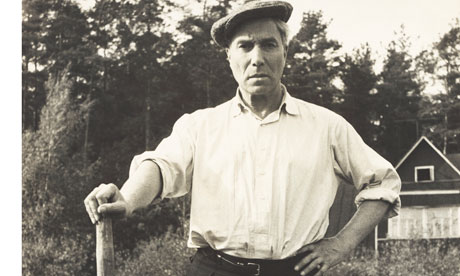
Boris Pasternak outside his home in 1958
Boris Pasternak outside his home in Peredelkino in 1958. Photograph: Jerry Cooke/© Jerry Cooke/CORBIS

The Russian poet Marina Tsvetaeva once said that Boris Pasternaklooked like an Arab and his horse. In the 30s a Soviet cartoon turned him into a long-jawed sphinx, paws curled over a lectern. As a public speaker he was incomprehensible. His work is notoriously hard to translate.

  1. Doctor Zhivago
  2. by Boris Pasternak, translated by Larissa Volokhonsky and Richard Pevear
  3. Buy it from the Guardian bookshop

In his increasingly difficult times, it also became safer not to be easily understood. When Stalin startled the life out of him with a “friendly” midnight phone-call – Well? What can you say about that poem of Mandelstam’s? – Pasternak replied with a deflective discussion of what was, for him, the fundamental issue of human right over life and death. Questioning a homicidal despot’s power to his face carries some risks. Fortunately, Stalin was too impatient to understand, and cut off the call. This time, the sentence for Mandelstam’s anti-Stalinist poem was a mild form of exile – but in the great purge of 1937 he was one of the 44,000 liquidated. Beside Pasternak’s name, Stalin reputedly scribbled the instruction “Don’t touch this cloud-dweller”.
Pasternak’s work is also difficult because his mind-set is unpredictably complex, evocatively associative, synaesthetic and polysemous. His vocabulary is exceptionally wide, and his intellect has a pronounced metaphysical cast. In an uncollected letter to TS Eliot, Pasternak explores their shared aesthetic in ambitiously faulty English. Eliot’s art, he writes, like his own, is “a casually broken off fragment of the density of being itself; of the hylomorphic matter of existence . . .” Pasternak became much more accessible in his later work. Doctor Zhivago was suicidally vivid and forthright. The poems that accompany it are translucent.
From his schooldays, Pasternak tells us, Yury Zhivago had dreamed of writing “a book of impressions of life in which he would conceal, like sticks of dynamite, the most striking things he had so far seen”. Doctor Zhivagowas that book. It was packed with dynamite and, as Pasternak expected, it blew up in his face.
Pasternak was the first writer of the Soviet regime who dared convey the truth about Russia’s recent history. In the space of 40 years the Russians of his generation suffered two world wars; three revolutions; civil war and famine; the disasters of collectivisation and famine; the purges of the intelligentsia, the military, the Soviet political elite and the kulaks. Starvation, cannibalism, murder, reprisals, legitimised slaughter – nothing is glossed over in the novel’s unflinching particularity. It ends with Khruschev’s Thaw, tentatively celebrating “a new freedom of spirit” embodied in the book Zhivago wrote before his death.
Pasternak’s hopes were denied when the forthcoming Russian edition ofZhivago was withdrawn from the Soviet press. In 1958 its publication in the west coincided with the Nobel prize, awarded for Pasternak’s poetic achievements and his work “in the great Russian epic tradition”, clearly linking Doctor Zhivago to Tolstoy’s War and Peace. The Soviet response was to denounce Pasternak as a traitor. He was expelled from the writers’ union, robbed of his livelihood and vilified in the press. He refused to seek exile in the west, and declined the Nobel prize. Within two years he was dead.
Fifty years have passed. Now we have the opportunity to reread – and r
Doctor Zhivago was first translated, at great speed, by Max Hayward and Manya Harari in 1958. I remember Max saying he would read a page in Russian, and then write it down in English, without looking back. This sounds incredible – even though a page of the large-faced Russian typescript they worked from is roughly equivalent to only half a page of their Collins text. I can, though, readily believe that he did this with paragraphs and sentences. Of course both translators then cross-checked and agreed their combined version against the original. Nevertheless, it’s perfectly true that there are negligible omissions which are made good in the Volokhonsky-Pevear translation. This comes at a price.
Max Hayward’s provocatively described practice is actually a difficult and necessary discipline. The translator needs distance. His main pitfall is to drift unconsciously into the linguistic aura of his original – in this case, to write a kind of Russified English. 

Wikio

Delicious Bookmark this on Deliciou

Filed Under: books_blog, Novels, Writers

Woe to you when all men praise you: The Upside of Disapproval

By Anita Mathias

Woe to you when All Men Praise you: The Upside of Disapproval


Woe to you when all men speak well of you, for that is how their fathers treated the false prophets. Whoa! Unintentional homonymic pun!


This is one of Jesus’s harder saying because we humans are social animals, we are gregarious, we instinctively like other people (which is one explanation for the success of Facebook, for instance).  We need approval.  And so much of human endeavour is motivated by the desire for approval.  People at the receiving end of the Amish practice of “shunning” developed depression, mental illness, and died before their time.


The moon has its dark side, and so do most things on earth. People’s approval, for instance. I led women’s groups over a period of seven years. This blog would never have been successful if I had still been leading them. (Is it successful? Well, it’s in the top 25 religion blogs according to Wikio’s rankings released yesterday and it is not yet 7 months old.)


The blog might not have been particularly unique or interesting if I had still been teaching women’s groups. Now I am just a voice crying in the wilderness (sometimes, literally, on both counts!) Some groups I taught had 25 women.  If I were still teaching, I would have been afraid to share my struggles and doubts and sadnesses and failures openly for fear that it may not have been inspiring or edifying, that it may have been discouraging, that it may lead to second-guessing me when I did teach, and so what I taught might have been less effective.


Since churches are lead by human beings (i.e. by sinners), no church gets everything right. I would not have been able to point out where I thought we were deviating from the plumbline if I felt I was leading something and was under authority. There is one issue on which I deviate from orthodox Christian doctrine. I would not have been able to blog about that issue. (And I still haven’t–coward!!–but soon will. I think.)


When everyone approves of you–and I have noticed this in other people as well as in myself–to some extent, you lose yourself. You pretend to be nicer, sweeter, smilier than you really are. My own danger signal that I am acting nicer and sweeter than I really am is when my cheek muscles start hurting. I am smiling so much in a not entirely natural way!


And when I sense disapproval? Well, I return to the healing fountain, to the one who knows the worst and still accepts me. I allow him to cleanse me and fill me. I say, “Well, this is what they 
think of me.  There may well be some truth in it. But what do you think of me? And thank you for loving me, whatever you think of me. Fill me again with your spirit, to overflowing. Help me to follow you.” 

Filed Under: random

The Good Books Blog is #23 in Wikio’s Top UK Literature Blogs, November 2010–down from #16 alas

By Anita Mathias

 The Good Books Blog is #23 in Wikio’s Top UK Literature Blogs, November 2010–down from #16 alas


But given the paucity of my recent posts, I can’t complain!!


Thank you to The Age of Uncertainity

1 Crooked Timber
2 Charlie’s Diary
3 booktwo.org
4 Asylum
5 Cornflower
6 An Awfully Big Blog Adventure
7 Stuck In A Book
8 Savidge Reads
9 Reading Matters
10 BubbleCow
11 Pepys’ Diary
12 A Don’s Life – Times Online WBLG
13 The Book Smugglers
14 Quaerentia
15 Just William’s Luck
16 dovegreyreader scribbles
17 UrbanTick
18 My Favourite Books
19 Book Chick City
20 Elizabeth Baines
21 Vulpes Libris
22 Bookshelf
23 The Good Books Blog
24 The Age of Uncertainty
25 A Common Reader . . .
26 Other Stories
27 Joan Lennon
28 Harriet Devine’s Blog
29 The Book Whisperer
30 Baroque in Hackney

Delicious Bookmark this on Delicious

Filed Under: Blog Rankings, books_blog

Blogs as demanding as toddlers, and monetized blogging

By Anita Mathias

A Blog’s Like a Baby and Monetized blogging

Scary words–“It’s not not fun,” says the editor-in-chief of Jezebel, which today attracts almost ten million hits a month. “But it’s more like the blog is a baby, and it has to be tended to at all times. And the baby might grow up a bit, but it’s never going to get past the age of 2 or 3 in terms of how much it demands of you.”
Anna Holmes of jezebel.com
Being in charge of the sharpest, snarkiest, most popular women’s blog around sounds as if it should be a lot of fun. Anna Holmes pauses and chooses her words.
“It’s not not fun,” says the editor-in-chief of Jezebel, which launched in May 2007 and today attracts almost ten million hits a month. “But it’s more like the blog is a baby, and it has to be tended to at all times. And the baby might grow up a bit, but it’s never going to get past the age of 2 or 3 in terms of how much it demands of you.”
From the spare room of her New York apartment, Holmes oversees blogging on a near-industrial scale as she commissions a team of writers who churn out a new post every 10 minutes for almost 12 hours a day, addressing anything from urinary tract infection vaccines, via dating and stupid celebrities, to the evils of glossy women’s magazines’ airbrushed covers. Typically, a working day will stretch to 11 or 12 hours at her computer.
“I don’t want to say it’s ruined my life – I don’t want to put it that way. But it’s reconfigured it in a way that’s probably extremely unhealthy. A social life? Nah, I don’t have one,” she chuckles. “That’s the problem with the internet: it’s always on.”
MAKING A LIVING BY WRITING ABOUT ONESELF
Heather B. Armstrong
dooce.com 
 Dooce.com was created in 2001 for Armstrong to post musings on pop culture and gleefully acerbic accounts of life as a “recovering Mormon”. When she had her first baby, though, “the blog traffic tripled in one day”: people wanted to know what happened next. So she blogged about everything, from her postpartum depression to mischievous takes on the foibles of daily life.
It was in 2005 that her husband suggested they could make a living if she accepted advertising. “I said, ‘No! No! No!’ I was very scared about the idea of supporting my family with a blog.” But she relented, becoming one of the first professional personal bloggers. Since then, she’s been given a Lifetime Achievement Award at the Weblog Awards, been cited in Forbes’ Most Influential Women in Media list, written books and, now, met the President.
“And some people still reckon, ‘Who does she think she is?’ Which is fair. I was this housewife, and no one in their right mind would have hired me to write about my life,” she says. “So I just did it myself.”

 http://technology.timesonline.co.uk/tol/news/tech_and_web/article7108518.ece
I find this interesting as after turning down the first few offers of sponsored posts, I now do accept sponsorship–mainly from big companies I am comfortable with–Barclays Bank, Paypal, Pizza Hut, Hewlett Packard, and a few advertising campaigns. Basically, I provide advertising space in a blog post, and they pay me–enough for me to keep my blogs running without feeling guilty that I am wasting time on this most pleasurable pursuit. 
I have tried blogging before, but before I monetized my blogs I could not stick it out for more than a week or two. I felt guilty about the time spent on blogging when I could have been doing more lucrative writing. Monetizing my blogs enables me to continue blogging. You were right, Heather Armstrong.

Delicious Bookmark this on Delicious

Filed Under: Blogging, books_blog

The Remains of the Day, Kazuo Ishiguro

By Anita Mathias

The Remains of the Day by Kazuo Ishiguro


This novel is a truly astonishing act of ventriloquism.


 Ishiguro, doomed to be a perpetual outsider in England, by virtue of race, has used the outsider’s gifts of ventriloquism and distance to produce an extraordinary study of aspects of the English.


Stevens, the perfect English butler, looks back on a life he cannot bring himself to admit was wasted. He served, with unwavering devotion, a man whose sympathies were with the Nazis, who inexplicably dismissed the Jewish housemaids, for instance. He struggles to bring himself to admit to himself that he has sacrificed his own chances of happiness on the altar of duty, professionalism and loyalty to a master who deserved none of the above. 


It is an interesting study of painful repression and reserve which has become part of the personality to the detriment of happiness. 


The novel is a remarkably accurate study of an English type from an immigrant, and of an era of history before the author’s birth. When you factor in Ishiguro’s perfect pitch, and the pervading elegaic atmosphere of sadness he admirably conveys, you have, in my opinion, a great novel. 


Delicious Bookmark this on Delicious

Filed Under: Book Reviews, books_blog, Novels

"I care very little if I am judged; indeed, I do not even judge myself"

By Anita Mathias

“I care very little if I am judged; indeed, I do not even judge myself”


 I care very little if I am judged by you or by any human court; indeed, I do not even judge myself. 4 My conscience is clear, but that does not make me innocent. It is the Lord who judges me. 5 Therefore judge nothing before the appointed time; wait until the Lord comes. He will bring to light what is hidden in darkness and will expose the motives of the heart. At that time each will receive their praise from God. I Cor 4


We are listening to the New Living Bible in the car. This passage stood out from 1 Cor.4.


It would be wonderful to truly reach this spiritual level– I care very little if I am judged by you or by any human court; indeed, I do not even judge myself. 4 My conscience is clear, but that does not make me innocent. It is the Lord who judges me.


And when, on occasion, I do reach it, it is a place of freedom and joy. Few people are subtle enough that what they feel or think about another is entirely hidden. We generally instinctively know who likes or respects us–and who does not (though there are always awful revelations–when one suddenly loses power, position, money, one’s faculties etc.).


Being judged by another is painful–because you have been judged in a court of no appeal, and for a crime you do not know. It’s Kafkaesque territory.


What should one do when one senses the weight of not entirely favourable judgement? 


What one should always do: return to the fountain of mercy and acceptance. Cleave to him whether everyone praises you–or no one does.


And what of the painful times when our hearts condemn us (which, interestingly, does not always coincide with external praise or blame).


 19 This is how we set our hearts at rest in his presence: If our hearts condemn us, we know that God is greater than our hearts, and he knows everything.
 1 John 4


We are not our own, we belong to Christ. So we throw ourselves on his mercy, whether we stand or fall, and whether everyone else believes we have stood–or fallen! 

Filed Under: random

Captain Corelli’s Mandolin by Louis Bernieres

By Anita Mathias

Captain Corelli’s Mandolin by Louis Bernieres

We listened to the opening chapters of Captain Corelli’s Mandolin by Louis Bernieres yesterday. What a captivating opening, and how well it drags you into the story.  I was enchanted by the exotic setting, the close attention to character, the wry narratorial humour, the polysyllabic Latinate words which added such an interesting texture to his prose. This is going to be a book which I am so going to enjoy listening to, and then reading. 

Delicious Bookmark this on Delicious

Filed Under: books_blog, Novels

The Royal Hunt of the Sun by Peter Shaffer

By Anita Mathias

The Royal Hunt of the Sun by Peter Shaffer  


I first saw this in the Oxford Playhouse 26 years ago–so long ago that in my memory it was Cortez and Montezuma in Mexico, not Pizzaro and Atahualpa in Peru. Fortunately, my family’s listening abilities are imperfect–and no one called me on my error.


The play has luscious stage directions–“They cross the Andes” and was supposed to be unstageable. However, it was the first British play staged at the National Theatre. The Oxford student group staging it  today, the Acorn group, used a brilliant set–steel chains descending to signify mist and frost; brilliant gold crowns, gold ornaments and jewellery at Atahualpa’s court.


The play was a bit talky, lots of exploration of Pizarro’s psyche to present him as more than a man driven by  greed and glory. I guess he was also a prototype of today’s travellers, of which I am one, impelled by unconquerable travel lust to see and experience new places. Unfortunately, Pizarro was also a poster boy for the spoof US Army poster, “Join the Army! Travel the World, Meet Interesting People, and Kill Them”


The play accurately presents the unimaginable wealth the conquest of Latin America brought Spain that is heart-breakingly presented in Eduardo Galeano’s Century of Wind for instance, as well as the tragedy of priceless intricate gold artwork being melted down for easier transport.


All in all, gripping, through the dialogue could be tedious and repetitive. This was Shaffer’s second play. History evidently proved a rich mother lode for him, for he later wrote Amadeus.


Delicious Bookmark this o”n Delicious

Filed Under: books_blog, Drama

  • « Previous Page
  • 1
  • …
  • 192
  • 193
  • 194
  • 195
  • 196
  • …
  • 279
  • Next Page »

Sign Up and Get a Free eBook!

Sign up to be emailed my blog posts (one a week) and get the ebook of "Holy Ground," my account of working with Mother Teresa.

Join 536 Other Readers

My Books

Rosaries, Reading, Secrets: A Catholic Childhood in India

Rosaries, Reading Secrets, B&N
USA

UK

Wandering Between Two Worlds: Essays on Faith and Art

Wandering Between Two Worlds
USA

UK

Francesco, Artist of Florence: The Man Who Gave Too Much

Francesco, Artist of Florence
US

UK

The Story of Dirk Willems

The Story of Dirk Willems
US

UK

My Latest Meditation

Anita Mathias: About Me

Anita Mathias

Read my blog on Facebook

Follow me on Twitter

Follow @anitamathias1

Recent Posts

  • At the Cross, God Forgives Us Completely
  • Using God’s Gift of Our Talents: A Path to Joy and Abundance
  • The Kingdom of God is Here Already, Yet Not Yet Here
  • All Those Who Exalt Themselves Will Be Humbled & the Humble Will Be Exalted
  • Christ’s Great Golden Triad to Guide Our Actions and Decisions
  • How Jesus Dealt With Hostility and Enemies
  • Do Not Be Afraid, but Do Be Prudent
  • For Scoundrels, Scallywags, and Rascals—Christ Came
  • How to Lead an Extremely Significant Life
  • Don’t Walk Away From Jesus, but if You Do, He Still Looks at You and Loves You
Premier Digital Awards 2015 - Finalist - Blogger of the year
Runner Up Christian Media Awards 2014 - Tweeter of the year

Categories

What I’m Reading


Wolf Hall
Hilary Mantel

Wolf Hall --  Amazon.com
Amazon.com

Amazon.co.uk

Silence and Honey Cakes:
The Wisdom Of The Desert
Rowan Williams

Silence and Honey Cakes --  Amazon.com
Amazon.com

Amazon.co.uk

The Long Loneliness:
The Autobiography of the Legendary Catholic Social Activist
Dorothy Day

The Long Loneliness --  Amazon.com
Amazon.com

Amazon.co.uk

Country Girl
Edna O'Brien

Country Girl  - Amazon.com
Amazon.com

Amazon.co.uk

Archive by month

My Latest Five Podcast Meditations

INSTAGRAM

anita.mathias

My memoir: Rosaries, Reading, Secrets https://amzn.to/42xgL9t
Oxford, England. Writer, memoirist, podcaster, blogger, Biblical meditation teacher, mum

Looking at photos from our week in beautiful Sevil Looking at photos from our week in beautiful Seville and Cordoba over New Year with Irene, who had a week off.
And, ICYMI, here’s my latest meditation on the Gospel of Matthew… I’ve recorded it, should you want a few minutes of peace.
https://anitamathias.com/2026/04/29/gods-complete-forgiveness/
Hello Friends, I'm resumed recording my meditation Hello Friends, I'm resumed recording my meditations on the Gospel of Matthew. Do click on this link to listen. 
https://anitamathias.com/.../29/gods-complete-forgiveness/
Christ is the most influential figure in the history of the world, though his life ended in shame, humiliation and failure. But he so completely turned things round in his great reversal that the cross on which he died when all seemed hopeless is now the most common, and revered, symbol in history.
He emerged from and was anchored in Judaism. And as the sins of the people were laid on the scapegoat who was sent into the wilderness to perish, Christ died as the lamb of God voluntarily bearing the guilt of the wrongdoing of the whole world. He paid the price for our forgiveness with his life-blood--in accordance with the iron law of the physical and moral universe, of sowing and reaping, cause and effect. 
And so, God, who appeared as flames of fire to Moses, can now dwell within us, purifying us, whose hearts have darkness and shards of ice. 
And now that Christ was crucified, died, but rose again, His Spirit, no longer contained within his earthly body, is poured out like living water onto all humans, at our humble request. The Spirit pours the love of God into us; he reminds us of the words of Jesus and slowly writes Christ’s sweet law on our hearts. This transfusion of grace helps us do hard things we previously couldn’t do. Our dance with the Spirit gradually breaks the power of sin over us. It transforms us.
Now we, the forgiven, protected by the blood of Jesus poured out over us, and filled with His Spirit, who sings within us, Abba, Father, are adopted by God as his children in his joyful new covenant. We are cells grafted into the vine of our new family--Father, Son, Spirit—who now live in us as we live in them. As we choose by our thoughts and actions to continue living in the vine of Jesus, their energy pulsing through us makes us fruitful. And now, all our prayers which flow in the river of God’s good purposes are kindly heard. Waves of love and power flood from the cross! 
Thank you!
Well, hello friends! Breaking radio silence to let Well, hello friends! Breaking radio silence to let you know that I have taped a meditation for you on Christ’s famous Parable of the Talents in Matthew 25. https://anitamathias.com/2025/11/05/using-gods-gift-of-our-talents-a-path-to-joy-and-abundance/
Here you are, click the play button in the blog post for a brief meditation, and some moments of peace, and, perhaps, inspiration in your day 🙂
Hi Friends, I have taped a meditation; do listen a Hi Friends, I have taped a meditation; do listen at this link: https://anitamathias.com/2025/04/08/the-kingdom-of-god-is-here-already-yet-not-yet-here-2/
It’s on the Kingdom of God, of which Christ so often spoke, which is here already—a mysterious, shimmering internal palace in which, in lightning flashes, we experience peace and joy, and yet, of course, not yet fully here. We sense the rainbowed presence of Christ in the song which pulses through creation. Christ strolls into our rooms with his wisdom and guidance, and things change. Our prayers are answered; we are healed; our hearts are strangely warmed. Sometimes.
And yet, we also experience evil within & all around us. Our own sin which can shatter our peace and the trajectory of our lives. And the sins of the world—its greed, dishonesty and environmental destruction.
But in this broken world, we still experience the glory of creation; “coincidences” which accelerate once we start praying, and shalom which envelops us like sudden sunshine. The portals into this Kingdom include repentance, gratitude, meditative breathing, and absolute surrender.
The Kingdom of God is here already. We can experience its beauty, peace and joy today through the presence of the Holy Spirit. But yet, since, in the Apostle Paul’s words, we do not struggle only “against flesh and blood, but against the rulers, against the unseen powers of this dark world and against the spiritual forces of evil,” its fullness still lingers…
Our daughter Zoe was ordained into the Church of E Our daughter Zoe was ordained into the Church of England in June. I have been on a social media break… but … better late than never. Enjoy!
First picture has my sister, Shalini, who kindly flew in from the US. Our lovely cousins Anthony and Sarah flank Zoe in the next picture.
The Bishop of London, Sarah Mullaly, ordained Zoe. You can see her praying that Zoe will be filled with the Holy Spirit!!
And here’s a meditation I’ve recorded, which you might enjoy. The link is also in my profile
https://anitamathias.com/2024/11/07/all-those-who-exalt-themselves-will-be-humbled-the-humble-will-be-exalted/
I have taped a meditation on Jesus statement in Ma I have taped a meditation on Jesus statement in Matthew 23, “For those who exalt themselves will be humbled, and those who humble themselves will be exalted.”
Do listen here. https://anitamathias.com/2024/11/07/all-those-who-exalt-themselves-will-be-humbled-the-humble-will-be-exalted/
Link also in bio.
And so, Jesus states a law of life. Those who broadcast their amazingness will be humbled, since God dislikes—scorns that, as much as people do.  For to trumpet our success, wealth, brilliance, giftedness or popularity is to get distracted from our life’s purpose into worthless activity. Those who love power, who are sure they know best, and who must be the best, will eventually be humbled by God and life. For their focus has shifted from loving God, doing good work, and being a blessing to their family, friends, and the world towards impressing others, being enviable, perhaps famous. These things are houses built on sand, which will crumble when hammered by the waves of old age, infirmity or adversity. 
God resists the proud, Scripture tells us—those who crave the admiration and power which is His alone. So how do we resist pride? We slow down, so that we realise (and repent) when sheer pride sparks our allergies to people, our enmities, our determination to have our own way, or our grandiose ego-driven goals, and ambitions. Once we stop chasing limelight, a great quietness steals over our lives. We no longer need the drug of continual achievement, or to share images of glittering travel, parties, prizes or friends. We just enjoy them quietly. My life is for itself & not for a spectacle, Emerson wrote. And, as Jesus advises, we quit sharp-elbowing ourselves to sit with the shiniest people, but are content to hang out with ordinary people; and then, as Jesus said, we will inevitably, eventually, be summoned higher to the sparkling conversation we craved. 
One day, every knee will bow before the gentle lamb who was slain, now seated on the throne. We will all be silent before him. Let us live gently then, our eyes on Christ, continually asking for his power, his Spirit, and his direction, moving, dancing, in the direction that we sense him move.
Link to new podcast in Bio https://anitamathias.co Link to new podcast in Bio https://anitamathias.com/2024/02/20/how-jesus-dealt-with-hostility-and-enemies/
3 days before his death, Jesus rampages through the commercialised temple, overturning the tables of moneychangers. Who gave you the authority to do these things? his outraged adversaries ask. And Jesus shows us how to answer hostile questions. Slow down. Breathe. Quick arrow prayers!
Your enemies have no power over your life that your Father has not permitted them. Ask your Father for wisdom, remembering: Questions do not need to be answered. Are these questioners worthy of the treasures of your heart? Or would that be feeding pearls to hungry pigs, who might instead devour you?
Questions can contain pitfalls, traps, nooses. Jesus directly answered just three of the 183 questions he was asked, refusing to answer some; answering others with a good question.
But how do we get the inner calm and wisdom to recognise
and sidestep entrapping questions? Long before the day of
testing, practice slow, easy breathing, and tune in to the frequency of the Father. There’s no record of Jesus running, rushing, getting stressed, or lacking peace. He never spoke on his own, he told us, without checking in with the Father. So, no foolish, ill-judged statements. Breathing in the wisdom of the Father beside and within him, he, unintimidated, traps the trappers.
Wisdom begins with training ourselves to slow down and ask
the Father for guidance. Then our calm minds, made perceptive, will help us recognise danger and trick questions, even those coated in flattery, and sidestep them or refuse to answer.
We practice tuning in to heavenly wisdom by practising–asking God questions, and then listening for his answers about the best way to do simple things…organise a home or write. Then, we build upwards, asking for wisdom in more complex things.
Listening for the voice of God before we speak, and asking for a filling of the Spirit, which Jesus calls streams of living water within us, will give us wisdom to know what to say, which, frequently, is nothing at all. It will quieten us with the silence of God, which sings through the world, through sun and stars, sky and flowers.
Especially for @ samheckt Some very imperfect pi Especially for @ samheckt 
Some very imperfect pictures of my labradoodle Merry, and golden retriever Pippi.
And since, I’m on social media, if you are the meditating type, here’s a scriptural meditation on not being afraid, while being prudent. https://anitamathias.com/2024/01/03/do-not-be-afraid-but-do-be-prudent/
A new podcast. Link in bio https://anitamathias.c A new podcast. Link in bio
https://anitamathias.com/2024/01/03/do-not-be-afraid-but-do-be-prudent/
Do Not Be Afraid, but Do Be Prudent
“Do not be afraid,” a dream-angel tells Joseph, to marry Mary, who’s pregnant, though a virgin, for in our magical, God-invaded world, the Spirit has placed God in her. Call the baby Jesus, or The Lord saves, for he will drag people free from the chokehold of their sins.
And Joseph is not afraid. And the angel was right, for a star rose, signalling a new King of the Jews. Astrologers followed it, threatening King Herod, whose chief priests recounted Micah’s 600-year-old prophecy: the Messiah would be born in Bethlehem, as Jesus had just been, while his parents from Nazareth registered for Augustus Caesar’s census of the entire Roman world. 
The Magi worshipped the baby, offering gold. And shepherds came, told by an angel of joy: that the Messiah, a saviour from all that oppresses, had just been born.
Then, suddenly, the dream-angel warned: Flee with the child to Egypt. For Herod plans to kill this baby, forever-King.
Do not be afraid, but still flee? Become a refugee? But lightning-bolt coincidences verified the angel’s first words: The magi with gold for the flight. Shepherds
telling of angels singing of coming inner peace. Joseph flees.
What’s the difference between fear and prudence? Fear is being frozen or panicked by imaginary what-ifs. It tenses our bodies; strains health, sleep and relationships; makes us stingy with ourselves & others; leads to overwork, & time wasted doing pointless things for fear of people’s opinions.
Prudence is wisdom-using our experience & spiritual discernment as we battle the demonic forces of this dark world, in Paul’s phrase.It’s fighting with divinely powerful weapons: truth, righteousness, faith, Scripture & prayer, while surrendering our thoughts to Christ. 
So let’s act prudently, wisely & bravely, silencing fear, while remaining alert to God’s guidance, delivered through inner peace or intuitions of danger and wrongness, our spiritual senses tuned to the Spirit’s “No,” his “Slow,” his “Go,” as cautious as a serpent, protected, while being as gentle as a lamb among wolves.
Follow on Instagram

© 2026 Dreaming Beneath the Spires · All Rights Reserved. · Cookie Policy · Privacy Policy