Annie Dillard–An American Childhood
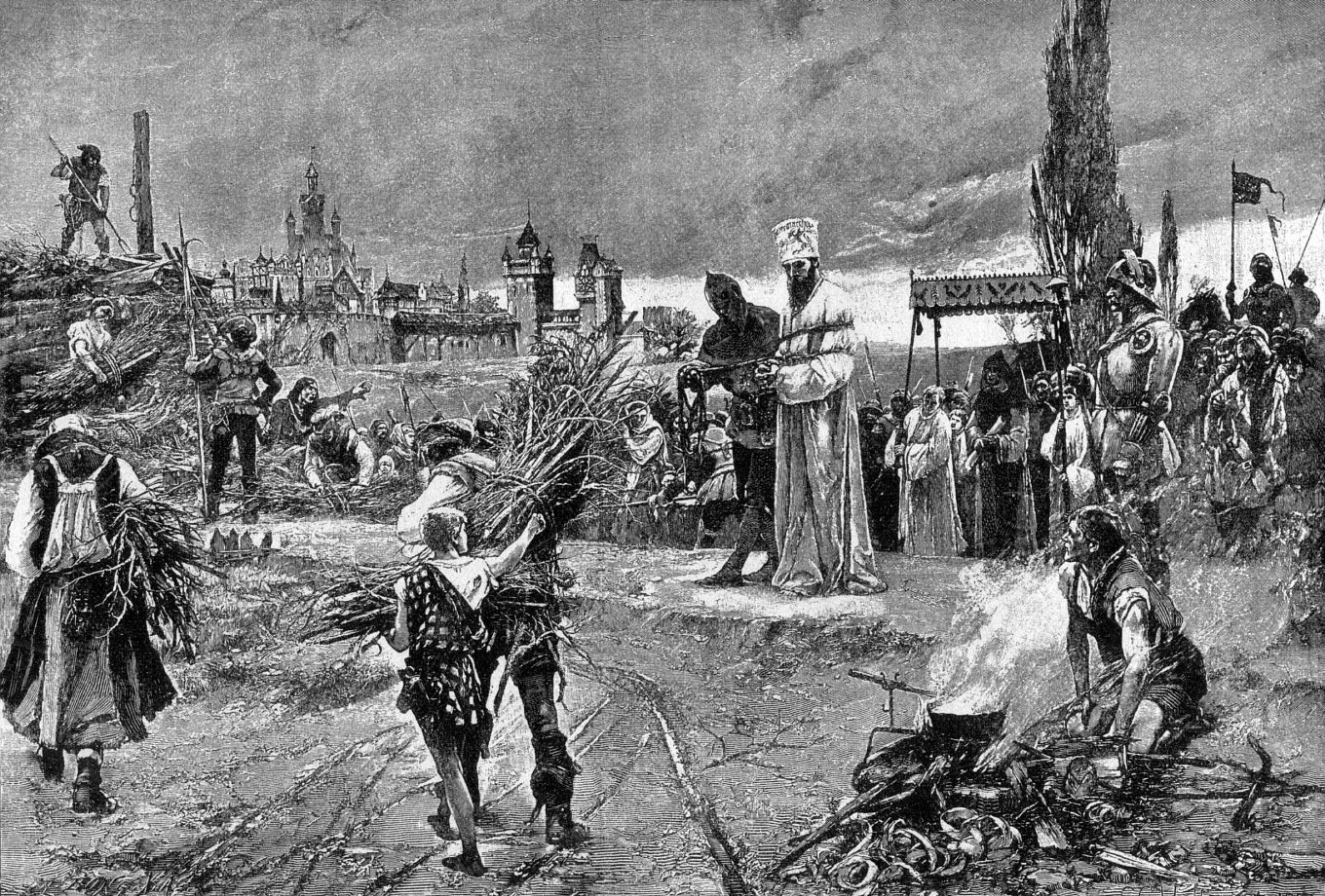
In which Celebrate Jan Hus, The Czech Republic’s Heroic, Naive and Tragic “John Wycliffe”
Jan Hus is an iconic figure in Prague. He was peasant born, but a follower of the John Wycliffe, the English reformer. He preached in the language of the masses (Czech) against the wealth, corruption and hierarchical tendencies within the church. Though a devout, mild-mannered man himself, he become embroiled in the disputes between the conservative clergy backed by the pope and the Wycliffian Czechs at the University of Prague.
King Vaclav IV supported Hus (who was the confessor to his wife, Sophie). However, when Hus broadened his attack on the Church to attack the sale of indulgences to fund the inter-papal wars, he incurred the enmity of the King (who received a percentage of the sales.) In 1412, Hus and his followers were expelled from the University of Prague, excommunicated and banished from Prague. They travelled throughout Bohemia, spreading the ideas of Wycliffe and the reformers.
Hus naively attended the Council of Constance in 1415, believing in the guarantee of safe conduct from the Emperor Sigismund. He was there denounced as a heretic, and, refusing to renounce his ideas, was burnt at the stake in 1415.
Religious disputes, when mixed up with money and power, as, in the last analysis, they often are, can be deadly.
Hus’s most famous dictum was Pravda Vitezi –Truth Prevails–which has been the motto of every Czech revolution since his time. And in the long run, I believe it does!
Patricia Hampl–A Romantic Education.
Patricia Hampl–A Romantic Education
One of the magical moments in a writer’s life is the moment when you read something with a sense of recognition--I can do that too!! Seamus Heaney describes his unpleasant adventures with frog spawn and tadpoles in a poem called “The Death of a Naturalist.” –the naturalist he now knows he will never be.
However, the converse is also true. Anne Sexton writes about how she heard John Berryman read his poems aloud when she was 28, and how she realized in that moment that she was a writer. Marc Chagall tells how he discovered his artistic vocation while watching a fellow student draw. “How do you do that? ” he asked.” It’s easy, you blockhead,” the student replied. (Chagall, a working-class Jew, studied in a school for Russian children because his mother had bribed the headmaster). “Get a book from the library, and copy the pictures.” The library? Chagall persevered, and, well, became Marc Chagall.
One of my own moments of recognition–of reading something which came very close to my own experience, and what I thought were my abilities to render it happened when I read A Romantic Education by Patrica Hampl. The Catholic family united around enormous meals, with food a shorthand for love, power, competition… The childish sense of snugness in such a family. I still remember phrases several years later, “Come Eat,” the cri du couer of middle Europe. Falling asleep watching the talismanic figure of a wizard on a coffee tin.
Trish describes her Catholic upbringing in a convent school, her love of beauty, her attempts at writing poetry, and then a trip to Czechoslakia, where her grandmother, who worked in Minneapolis as a housekeeper was originally from. She renders golden Praha beautifully– I made a mental note to go there one day, and well, I am writing this from Prague.
However, the Iron Curtain has blown away since she wrote her book, and it is a different, plusher Prague. Poverty is not good for the human spirit, and I am glad the genteel older man who picked us up at the airport and drove us to our hotel no longer suffers from it. The Prague Trish describes with women offering to exchange rings with her as a token of friendship–exchanging worthless trash for her grandmother’s garnet ring; women squeezing favours out of her in exchange for promised sausage (which never appears)– has apparently gone with the wind, and good riddance.
Prague–The Fruits of Peace
Prague: The Fruits of Peace
Prague is gorgeous–largely because it escaped bombing in the second world war!
Roy and I are taking a course in Medieval Continental Cathedrals at Oxford University this term. The lecturer, Hubert Pragnell, showed us some absolutely beautiful medieval stained glass windows in French cathedrals, and said it was one of the few instances of medieval stained glass which survived the devastation of the two World Wars.
That’s all that war and conflict does: destroys. And that is, sadly, the work of Satan–pulling down, destroying, undoing.
Creativity and beauty flourish in times of peace. In peace, humans can display some of God’s endless creativity.
War and conflict just leave wreckage–emotional, spiritual, and physical. The winners often are left with a hollow victory, and the losers lose, but get the best poetry and stories!!
What about righteous conflict? Is it an oxymoron? Of course not, because we live in a fallen world–of sin, greed and unrighteousness.
It is probably only to be embarked on when all else has failed, if mediation through righteous channels has not worked. I guess one needs patience and determination if one is to righteously challenge unrighteousness. And, thank goodness, not everyone is called to do this, all the time. I guess now and again, one has a Joan of Arc moment–when one has to confront what is wrong, as cannily as one can. But for the most part, God spreads the burden of seeing justice done around–so that generally one just has one Ahab or Pharaoh to confront in a lifetime–unless you are the wonderful Baroness Caroline Cox!
The Village of Ewelme, Oxfordshire

The Village of Ewelme, Oxfordshire
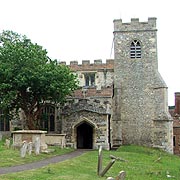
We had an idyllic wander last weekend, though Ewelme, Oxfordshire, which must be one of the world's most beautiful villages, though not as celebrated as Bruges and Ghent, for instance.
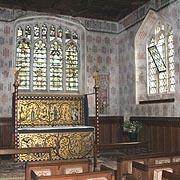
There was a charming medieval church, unchanged since it was reordered in 1437. We are taking a course in Medieval cathedrals at Oxford University and have learnt that the reason there are relatively few medieval cathedrals in England, (as opposed to Europe) was because they built in wood. It was a late medieval church, and pretty much changed since it was reordered in 1436, by Alice de la Pole, granddaughter of Geoffrey Chaucer!!

I loved the massive East stained glass window, a Crucifixion, with the bystanders wearing doublet and hose, bright red and bright green. An amusing failure of the historic imagination, but it certainly helped ours, as we tried to imagine the late medieval men and women who had built this church.

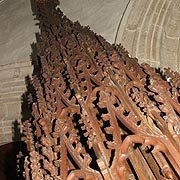
There was an impressive eagle pulpit and brass lectern.

I love wandering around graveyards, and have done so since I was a child. This was a particularly interesting one. We met a middle-aged sprightly villager, with bright blue eyes, and a cheerful birdlike manner, who escorted us to Jerome K. Jerome's grave and said "Do you know what K. stands for? You will never guess. Let me show you," and then, triumphantly, showing us "Klapka." Goodness! We photographed the grave near him, that of a "Seller of Books, Soldier, Actor, and Sportman." Goodness again–the English sure are a nation of charming and self-confident dilettantes!!
We snooped around the school, founded in 1437, as a free grammar school, and which is the oldest continuously operating free school in England, probably in the world!! Mullioned windows, massive roof beams, very picturesque. Hard to imagine ICT being taught in this medieval building.
Between the church and school were cloisters, originally almhouses for poor men. The foundation still has money, and so they house 12 men and women of reduced means for a pittance. What lovely surroundings to live in if you are of reduced means!!
Ewelme also has medieval scholarships for clever children, one of which my daughter holds–which is why we were particularly interested in exploring the village.
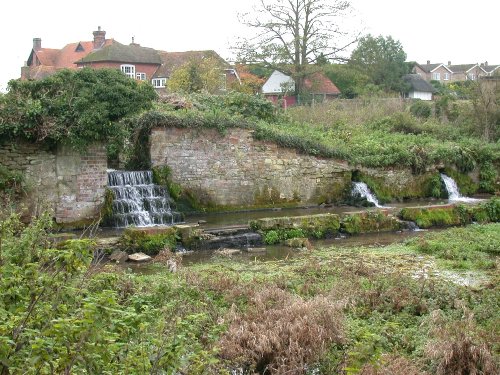
The other curiosity of this charming medieval village– a charming willow-draped duck pond, and water-cress beds, 6 acres of them running the length of the village. I wanted to take a handful for our salad, but was dissuaded since it is now a nature reserve.

After a day exploring on foot we asked "Where Pizza Hut?" to enjoy the Kids eat free deal

This offer has been extended until Jan 9, 2011. The details are: For every adult main course or adult lunchtime buffet purchased, an accompanying child can choose from either a FREE 2 course kids meal (includes a drink) or a FREE kids lunchtime buffet (includes pizza, pasta and salad). For more information see

John McPhee on Writing Creative Nonfiction
John McPhee, The Art of Nonfiction No. 3
Alva Johnston. Wolcott Gibbs—I loved reading Wolcott Gibbs. He was acerbic. And E. B. White, of course.
Creating the Taste by Which You are Enjoyed (T.S. Eliot)
Creating the Taste by Which You Are Enjoyed
I love T.E. Eliot’s poetry and prose–well as much as I understand of them. He did a genuinely new thing. One of the perceptive things he said is that the original writer must create the taste by which he is enjoyed.
Blogging is such a new field. I come rather late to the party, just 6 months ago. I first started hearing about blogs about 6 years ago, and made various attempts to keep a blog. It was an uphill job: I was truly concerned about revealing my life and thoughts, and spilling my guts on the world wide web, not to mention the time it took from real writing. And at first I thought I needed to be interesting. (Now, I think I just need to be myself!!). What helped me to develop the habit of pretty much daily blogging was, oddly, monetizing my 3 blogs. Getting a little bit of income every day shortens the gap between work and payday, and helps me feel that this is not entirely a self-indulgent endeavour.
Since blogging is a new genre, compared to say poetry which is thousands of years old, it is still very much being defined. You can do anything you like. If it takes, and you gain readers, then you are, as T.S. Eliot said all writers should, creating the taste by which you are enjoyed. The immense variety of successful blogs, the wide open field of possiblities are very exciting!!
Prophets, Deserts and Alternative Power
Prophets, Deserts and Alternative Power Sources
I was thinking last evening of prophets. It is interesting how many of them had to go out into the Judean desert to hear the word of God.
Why? I used to wonder. Why did one need to go into the desert–outside, often in opposition to the traditional power structures of the day–why did one need to be powerless, lonely, quiet, possibly hungry and thirsty, and sensorily deprived to hear God?
I now realize that, of course, one has to. It is the best, if not the only, way. The voice of God, a well-bred, considerate, gentle voice for the most part–a gentle whisper, Scripture calls it–is not easily heard amid the noise and clamour of popularity, friendship, social life–all good things, all good things. Except they do militate against the solitude one needs to hear God. Almost to a man, prophets don’t choose the desert. They are only human. God has to call–sometimes push–them into the desert. Because it is in the desert that a prophet develops his greatest and priceless gift: his ability to hear the voice of God.
Let’s consider Moses. An interesting part of his story is that he did not choose to go into the desert, nor does he go there in obedience to the voice of God. He is pushed there by his own sin. He loses his temper, takes the law into his own hands, kills a man, and flees to the desert in terror when this is discovered.
And in the desert, outside the court to which he had once belonged, and its power and pomp, he experiences God, and in a dramatic way that could only have happened in the desert. A fire that steadily burned and was not consumed. Continually renewed energy. A manifestation of infinite Power. And with it, a simple new name for God, I AM WHO I AM.
And in contradistinction to the power of Pharaoh, Moses is given power, a shadow of God’s power. He can turn sticks to snakes, turn the Nile bloody, summon locusts and frogs and pests, turn the land dark at noon. He is a man to be listened to–and he finally is.
* * *
Elijah also operated outside, and in opposition to, the normal centres of power–Kings, who were anointed, but who, continuing in sin, had lost their ability to hear the word of God. Ahab interestingly calls him, “You troubler of Israel.”
He is given power of his own. He can command the rain. He can command fire. He can do what 400 false “prophets” could not.
David, Daniel, the list goes on. Men formed in the desert, operating outside normal locii of power, often in opposition to them, yet gifted by God with such extraordinary and startling power that people had to sit up and pay attention.
Because power eventually comes from God. Comes from the Lamb who has all “power and wealth and wisdom and strength and honour and glory and praise.” Comes when the Holy Spirit comes upon us.
And, interestingly, looking at prophets from both Old Testament and the New (John the Baptist, and later Paul and John who both had amazing Christophanies) this divine power always, I think, falls on the powerless who operate apart from and often in opposition to the normal locii of power. It falls on those who have learnt to hear God’s voice in the solitude and loneliness of the desert.
- « Previous Page
- 1
- …
- 194
- 195
- 196
- 197
- 198
- …
- 279
- Next Page »