Anita Mathias: Dreaming Beneath the Spires

Anita Mathias's Blog on Faith and Art

  • Home
  • My Books
  • Meditations
  • Essays
  • Contact
  • About Me

Archives for March 2013

Our Garden on Easter Sunday

By Anita Mathias

The wintry weather has delayed the daffodils, so we have mainly Hellebores.

Crocus Pickwick (?)

Crocus Pickwick (?)


Bed of Helbores

Bed of Helbores


Yellow spotted Heleborus. (Yellow is the rarest colour or Hellebore)

Yellow spotted Heleborus. (Yellow is the rarest colour of Hellebore)


Heleborus Purpurescens (?)

Heleborus Purpurescens (?)


Close up

Close up


14-DSCN6543


Helleborus Foetidus.

Helleborus Foetidus. They self=seed freely, and we have lots.


A closer view of the flowers that usually face down.

A closer view of the flowers that usually face down.

12-DSCN6541

Fritillaria imperilais lutea, emerging from underground.

Fritillaria imperialis lutea, emerging from underground.

Waterperry gardens, the snow looks like crests on the sea (at least to me)

Waterperry gardens, the snow looks like crests on the sea (at least to me)

Saxifrage (from Waterperry's national collection of saxifrages)

Saxifrage (from Waterperry’s national collection of saxifrages)

Saxifrage (from Waterperry's national collection of saxifrages)

Saxifrage (from Waterperry’s national collection of saxifrages)
Filed Under: In which I dream in my garden

In which Heaven will be like Handel’s Messiah on Good Friday at the Royal Albert Hall

By Anita Mathias

photo
 Image Credit

Yesterday, on Good Friday, I listened to the Royal Choral Society sing Handel’s Messiah at the Royal Albert Hall.

Gorgeous, glorious, a worship experience in itself. I sat still for most of it tears streaming down my face, as I listened to prophecies of the gentle lamb that was slain, who before his shearers was dumb, who becomes the lamb upon the throne hailed by ecstatic choirs:

Blessing and honour, glory and power
Be unto Him, be unto Him
That sits upon the throne, and unto the Lamb

 Worthy is the Lamb that was slain

And has redeemed us to God, by His blood
To receive power and riches, and wisdom
And strength, and honour, and glory, and blessing

And who, as the Kingdom of this world becomes the Kingdom of our Lord, and of his Christ, in the ultimate triumph of meekness and gentleness, is worshipped as the King of Kings, and Lord of Lords who shall reign forever and ever.

* * *

Tradition has it that moved by the majesty of the music, King George II stood as the Hallelujah Chorus began, and remained standing. And following the custom of standing when the King stood, the entire audience stood too.

Certainly, everyone in the Royal Albert Hall stood yesterday–the music was too majestic not to!!–though, in America, some in audiences insist on remaining seated through it.

* * *

Legend has it too that Handel’s servant came upon soon after he composed the Hallelujah Chorus and reported him saying, “I did think I saw heaven open, and saw the very face of God.” I don’t doubt it. The music is divine!

And if the music in heaven is anything like The Hallelujah Chorus, my, what a treat we have in store for us.


Linking with Laura Boggess http://www.lauraboggess.com/


Filed Under: random Tagged With: Great Christian music, Handel's Messiah, heaven

In which God Chose to Let There Be Darkness as Well as Light–and Pronounced Them Both Good

By Anita Mathias

Beautiful~<br /><br /><br />
cupcakemugshot: Let there be light (via Christolakis)
 Image Credit


Now the earth was formless and empty, darkness was over the surface of the deep, and the Spirit of God was hovering over the waters.

And God said, “Let there be light,” and there was light. 4 God saw that the light was good, and he separated the light from the darkness. 5 God called the light “day,” and the darkness he called “night.” 

31 God saw all that he had made, and it was very good. (Gen 1: 2-31)

* * *

Darkness and formlessness were the natural state of things. But God loves order and light.

And with four words God created light out of the darkness and formlessness in which he did not delight.

Dawn, sunrise, sunlight, blazing sunsets.

All good.

And he could have given us a world of these, of sunrise and sunset and sunny days.

But he chose to leave darkness. For rest.

And for his own mysterious purposes.

And God pronounced this world, of light and darkness, of birth and death, of babyhood and old age, of beginnings and ends, very good.

* * *

In that beautiful Last Supper, Jesus sits with John, who adored him, practically draped on him. And on the other side, Judas. Sweet love and bitter hate on either side. And, in front of him, his father, on whom the eyes of his heart were ever fixed.

While they were eating, Jesus took bread, and when he had given thanks, he broke it. (Matt 26:26)

Within a day, he would be dead, and he knew it. And he gave thanks before the brokenness.

For this is the world the Lord has made, there is light, and there is darkness, and God pronounced it very good.

Darkness will turn to light again and again, and one day we will leave this earth we so love, and this life we so love, and be with him who is all “light, and in whom there is no darkness at all.” (1 John 1:5).

* * *

The Spirit of God hovers over the world, insistently hovers, and so we can forth into it knowing that God, the great alchemist can bring good out of everything, all the darkness that sometimes oppresses us.


Filed Under: Genesis Tagged With: blog through the Bible project, darkness, Genesis, Light

“Acting Justly, Loving Mercy and Walking Humbly”: a guest post by Matthew Currey of Tearfund

By Anita Mathias

matt-currey

Matthew Currey

I am honoured to host this guest post from Matthew Currey of Tearfund. 

Matt Currey is a disciple seeking to follow Jesus. He works for the charity Tearfund as part of the IMPACT UK team, seeking to play a part in bringing hope and transformation to those living in poverty in the UK.

He lives in West London, and loves music, food, film, reading, writing, volunteering, good coffee, local parks, exploring life and playing with his amazing family.

He also blog/engages through The Breathe Network  and is part of St John’s Church in Southall 

* * *

“Jesus’ existence made it undeniably clear that changing the human heart and changing human society are not separate tasks” Henri Nouwen

I was inspired, heartened and challenged by Anita’s post and subsequent discussions last week to Remember the Poor. As someone who works for the charity Tearfund and who has a passion for issues of poverty and injustice it’s encouraging to see people really engaging, exploring and taking action in this area. For me, beyond any professional/work capacity, as a Christian the issue of Justice and God’s heart for the poor, the broken, the marginalised is something that in my view should be at the heartbeat and forefront of the outworking of our discipleship. It is integral to our whole life and an expression of our worship.

The writer Brian Draper this week helpfully reminded me of a poem called A Future not our own.

33 years ago this week, on the 24th March 1980, Archbishop Oscar Romero was gunned down by a government-backed death squad, while he was saying Mass in San Salvador. As Simon Barrow, director of the think-tank Ekklesia, writes, “Romero was a remarkable and brave champion of the poor. But his background was not in the least radical. Far from it. It was exposure to the reality and human cost of injustice that converted him to an understanding of the Gospel that has peace and justice at his core. He has inspired millions of people – Catholic and otherwise, religious and non-religious, across the world.”

Poverty is not a statistic or an issue. Poverty is personal. Poverty has a name, the names of people who live in poverty are real people and not statistics. People who have a story, who have hopes, dreams and fears just like you and me. I am thankful and mindful of how important it is to keep being reminded of this. Because I know that it is possible that we ‘Remember the Poor’ but do we really know the poor and get really involved in the lives and stories of the poor?

I am very mindful of the times I have had the privilege of travelling overseas with Tearfund and each time the opportunity to encounter and live with others who materially may have much less than I do but who have a richness of hospitality and community that I often lack. These experiences can be overwhelming. I am thankful for the people, stories and lives of hope that I have connected with on these trips. They are humbling and inspiring.

In an age of hyper individualism and hyper communication it can be easy to be both overwhelmed or conversely overly cynical or overly able to hibernate from the horrors all around us. I’ve done both and keep repeating that pattern. I wish I didn’t but I do. Learning can take time, for I am slow and also if I am honest I crave my comforts and my safety.

We cannot do everything
and there is a sense of liberation in realising that.
This enables us to do something,
and to do it very well.

Last year I embarked upon a series of 9 themed journeys throughout 2012, with each one lasting for 40 days. It was a really great experience and I am glad that I did it. However my reflection was that in being intentional we also have to be full of grace. In being passionate and compassionate we need to be shaped by Love, Mercy and Humility, not false humility, but characteristics that keep our service and our journey fresh, real and honest. I came to the conclusion, with thanks for the help from the brilliant book by Mark Powley called Consumer Detox, that less really is more.

It’s amazing what can be achieved when we focus on one thing and do it well. I love this film that is based on a modern day outworking of The Parable of the Great Banquet (Luke 14: 15-24). In it the two people who are set the challenge have to focus and do the one thing well.

What is the one thing that we might be being stirred or encouraged to do? How could we use our gifts to practice generosity, hospitality, creativity or something else entirely?


Filed Under: random Tagged With: activism, Justice, Making poverty history, Tearfund

One Way of Seizing Happiness

By Anita Mathias

Post image for Enjoy The Strawberry

A famous Zen koan

A man walking across a field encounters a bear. He fled, the bear chasing after him.

Coming to a cliff, he caught hold of a wild vine and swung himself over the edge. The bear sniffed at him from above.

Terrified, the man looked down to where, far below, a tiger had come, waiting to eat him.

Two mice, one white and one black, little by little began to gnaw away at the vine.

The man saw a luscious strawberry near him. Grasping the vine in one hand, he plucked the strawberry with the other. How sweet it tasted! “Ah,” he said. “Delicious.”

 Rejoice always, 17 pray without ceasing, 18 in everything give thanks; for this is the will of God in Christ Jesus for you. (1 Thess 5 16-18)

Image credit

Filed Under: random

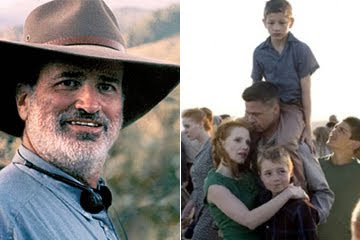
Terrence Malick’s The Tree of Life: A Visually Splendid, Deeply Philosophical AND Christian film.

By Anita Mathias


I loved Terrence Malick’s The Tree of Life. It’s the only film that I’ve watched, dazzled—and then immediately watched again.

Terrence Malick, the auteur–who studied Philosophy at Harvard; was a Rhodes Scholar at Magdalen College, Oxford translated Heidegger; taught philosopher at MIT; wrote for the New Yorker; and directed six visionary films–is  a modern America genius, apparently as immersed in philosophy as in the Bible.

The Tree of Life is a modern Book of Job, an exploration of why bad things happen to good people, a Miltonic attempt to justify the ways of God to man–and probably the most theological film I’ve seen.

The film explores dualistic ways to live—selfishness and love; “nature” and “grace,” or theologically, as a son of God, entitled to all the goodness of his household, or an orphan who must scavenge, scheme and grab.

* * *

Mrs O’Brien,  an ethereal woman,(a luminous Jessica Chastain) opens the film with a close quotation from the Imitation of Christ contrasting the way of nature and the way of love and grace. “We have to choose which we will follow.”  The way of “nature” or unredeemed man “finds reasons to be unhappy when all the world is shining around it, and love is smiling through all things.” “The nuns taught us that no one who loves the way of grace ever comes to a bad end,” her opening monologue concludes.

This belief is instantly challenged through the death of her youngest son, R.L. who represents the way of grace and goodness, in contrast to his conflicted elder brother Jack, who is singled out for his father’s bullying.  R. L., for instance, in a pregnant wordless scene, gently and beautifully forgives Jack, who shot him with a BB gun. “I do not do the good I want, but I do the very thing I hate,” Jack explains in one of the Biblical riffs from Job, or Psalms or Romans which punctuate the film.

* * *

The Tree of Life is the story of a mismatched couple, Mrs O’Brien, committed to love, grace and gentleness, and the unpleasant, extremely hardworking Mr. O’Brien (Brad Pitt), who gave up his dream of being a musician to become an engineer, but who is dogged by failure: none of his 21 patents he filed for while moonlighting make money; his business schemes fail.

Such a life makes for bitterness, and bitter he is—especially against anyone who has money or success. Men frustrated at work can be splenetic at home, and so he is. In this little sphere in which he can maintain control, he does—a slammed door has to be reclosed quietly 50 times. Jack, his elder son is upbraided for grass which does not grow in dense shade. Jack must spend his evening turning the pages while Dad plays Brahms. Unsurprisingly, Jack grows up hating his father, praying for his death, sorely tempted to bring it about!

* * *

The Tree of Life deflates the American dream which works for some, does not for most, and for pretty much everyone is simply not worth it. It misses the joy and glory of life in the struggle to get ahead in a race which doesn’t matter.

Mr O’Brien’s rage and bafflement at how his own life turned out morphs into a determination that his boys will be tough, will persist, will win.  “It takes fierce will to get ahead in this world,” he says. “If you are good, people will take advantage of you.” “The world lives by trickery. If you want to succeed, you can’t be too good.” “You make yourself what you are; you can take control of your own destiny.  “Don’t say ‘I can’t.’ Say I am having trouble; I am not done yet.”

Eventually, Mr. O’Brien loses his job. Broken and heartbroken, in a scene which must speak to many in the Great Recession, he muses, “I wanted to be loved because I was great, a big man, but I am nothing. The glory around us, the trees, the birds: I dishonoured it all &  didn’t notice the glory. I am a foolish man. I wanted so much, and what have I got for my life’s work? Zero. Zilch. You boys are all I have. All I want.” He laments, in anguish, the simply glory of the three childhoods which passed him by while he chased chimeral success. Mr. O’Brien has his own Jobian question of the universe: Why? “I never missed a day of work, tithed every Sunday?”

* * *

“What are we to you?” the grieving mother asks at the start of the film when a telegram announces the death of her son. “Do you even care what happens to us?” This is the central question of the film.

When Job questions God, God silences him with his questions, one of which is the epigraph of The Tree of Life.

“Where were you when I laid the earth’s foundation?

while the morning stars sang together
and all the angels shouted for joy?

And God’s “show-don’t-tell” answer in the film, as in the Book of Job is a stunning peacock-display of the wonders of creation. Like the ways of God. Fittingly, a sermon from Job provides a lengthy voice-over.

We see as Anthony Lane writes in the New Yorker, “glimmers of unfathomable light, vast interstellar conflagrations, drifting throngs of stars, planets in their formless infancy, sun and moon occluded by dark storms, energizing jolts of lightning, gulping primordial pools, early plants, early creatures, slow-dancing jellyfish, hammerhead sharks, a dinosaur lounging on the shore, an embryo’s eye.”

The film’s title refers to Darwin’s Tree of Life, of course, to a relentless, but mainly benevolent and beautiful evolution, not accomplished without tears. In a surreal sequence, a dinosaur dispassionately places his mighty paw on a wounded dinosaur’s neck—and then darts off. A meteor eliminates them all. R.L. dies. The ways of God transcend our understanding.

* * *

The Tree of Life is a cinematic Ulysses, ethereal, beautiful, bewildering, using a Joycean stream of consciousness, interior monologues, or whispered prayers, as a broken-hearted, now middle-aged Jack (Sean Penn) and his mother contend with God.

I have never seen a movie in which the characters pray quite so much, except the sublime Des Hommes et Des Dieux, Of Gods and Men. “Mother, brother, it was they who led me to your door. You spoke to me though her. You spoke to me from the sky, the trees before I knew I loved you, believed in you,” Jack says. The film, a passionate dialogue with God, is reminiscent too of Augustine’s Confessions, also a love letter to God.

* * *

The motifs in this allusory film are  literary and Biblical, as well as autobiographical. Characters walk through a succession of open doors set in barren landscapes. There are Narnia-reminiscent lampposts. There are many motifs of transition—bridges, corridors–and ascent: elevators, stairways, ladders, domes, spirals. Venetian masks drift away as we will know fully as we are fully known.  Oh and the landscapes!–Moab, Yellowstone, Iceland, Antarctica, Niagara, The Great Barrier Reef and its jellyfish: all the gorgeousness of the world compacted into one film.

* * *

The Tree of Life is set in a Fifties America, in Waco, Texas, where Malick grew up, “idyllic” some reviewers say, but in which I am glad I did not live. Boys on the loose during the long summer vacation behave, unfortunately, like boys—frogs are let loose in rockets; bloodied dogs creep away; houses are vandalized and broken into; the crippled are mimicked. Neighbourhood boys follow trucks spraying DDT, dancing in the fumes.

It’s a deeply autobiographical film. The gentle brother who plays guitar  recalls Malick’s youngest brother Larry, who went to Spain to study with Andres Segovia, but frustrated with his lack of progress deliberately broke both his hands, and later committed suicide. The boy who dies in a burning house, and the scarred friend represent coded memories of Malick’s middle brother Chris, who was badly burned in a car accident which killed his wife and left him scarred for life.

* * *

The lyrical final sequence takes place on the far shore of the world beyond ours.  The middle-aged Jack, stumbles through a lunar landscape of weird rock formations and infinite oceans in which he is reconciled to all those he has loved, adored, contended with and lost—his beautiful mother and brothers, his hurt, baffled father, and even the lost angry boy he once was!

On and on, he sleepwalks through open doors, and bridges, through a landscape a bit like a Greek underworld, through a wandering crowd of familiar people looking for and finding all they have loved and lost. His family discover each other, embrace ecstatically, and walk together through the sea, in “reconciliation, word over all, beautiful as the sky” as every tear is wiped away. And, in the background, glorious Gregorian chant: Sanctus, Sanctus, Sanctus. Amen.

The mother has the last word, “The only way to be happy is to love. Unless you love, your life will flash by.”

Amen.

Filed Under: In which I celebrate books and film and art Tagged With: Christian films, Terrence Malick, The Tree of Life

The Root of Peace (from Brennan Manning’s “Ragamuffin Gospel”)

By Anita Mathias

Philosopher Jacques Maritain once said that the culmination of knowledge is not conceptual but experiential: I feel God. Such is the promise of the Scriptures: Be still and know (experience) that I am God.

My own journey bears witness to that. I mean simply that a living, loving God can and does make his presence felt, can and does speak to us in the silence of our hearts, can does warm and caress us till we no longer doubt that he is near, that he is here.

Such experience is pure grace to the poor, the children, and the sinners, the privileged types in the gospel of grace. It cannot be forced from God. He gives it freely, but he does give it, and has given it to such as Moses and Matthew, to Roslyn and me.

In fact, there is no one to whom God denies it. Ignatius of Loyola said, “The direct experience of God is grace indeed, and basically, there is no one to whom it is refused.”

In essence, there is only one thing God asks of us—that we be men and women of prayer, people who live close to God, people for whom God is everything, and for whom God is enough. That is the root of peace.

When we start seeking something besides him, we lose it. As Thomas Merton said in the last public address before his death, “That is his call to us—simply to be people who are content to live close to him to renew that kind of life in which the closeness is felt and experienced.”

Filed Under: In which I am Amazed by Grace, In which I am amazed by the love of the Father Tagged With: brennan manning, grace

Remember the Poor

By Anita Mathias

Brother Sun, Sister Moon

Image: Francis of Assisi in Franco Zefferelli’s gorgeous film, “Brother Sun, Sister Moon”

“All they asked was that we should continue to remember the poor,”         Galatians 2:10

Jorge Bergoglio, Pope Francis describes how, during the conclave, as it became evident that the voting was swinging his way, Cardinal Cláudio Hummes of Brazil, “a great friend, hugged me, he kissed me and he said, ‘Remember the poor!’ And that way the name  came into my heart: Francis of Assisi.” The saint who loved the poor.

Canadian songwriter and church planter David Ruis, whom I heard speak at a New Wine Conference has a tattoo on his arm which says, “Remember the Poor.” Except it starts at the wrist, and travels up his elbow, and his shirt covers the last letter, the joke goes.

* * *

So how do we remember the poor?

Well, we share our wealth. How much? The Old Testament figure of 10% remains a good yardstick, in my opinion, though this sum should be governed by grace and the spirit, not law.

Just 10%? Not “sell all you have and give to the poor?” (Matt 19:21). Well, I have noticed both when I lived in small town Williamsburg, VA and in Oxford, that God places Christians at every level of society from the highest, right down. In the Gospels, the people attracted to Jesus included rich members of the Sanhedrin like Joseph of Arimathea and Nicodemus as well as fisherman.

At my evangelical church in Oxford, my small group and spouses includes two Principals of Oxford Colleges, ministry heads, doctors, professors and successful business people. To be realistic, if these people did not dress, drive cars, entertain and live in houses that befit their “station in life,” to use a Catholic phrase, they would be written off as weird and different, and their ability to be the fragrance of Christ, to present Christ and faith in him as attractive would be severely compromised.  For that is one way of winning people to Christ—lifestyle evangelism, being the fragrance of Christ, attracting people long before important conversations ever take place.

* * *

Hmm. So remember the poor without necessarily giving away so much money that you are one of the poor. How do you do that?

Here are some ways I can think of, which I mostly practice.

1 Give. Of course. Many (most?) Christians in the first world could increase their giving without feeling the pinch, I suspect!

2 Even if the money you saved is not necessarily given away, and even if you are not yourself poor, act in your choices as if you remember that you live in a world in which there is extreme poverty.

Don’t necessarily treat yourself to the best of everything, even if you can sometimes afford to. It’s a small way of maintaining solidarity with the poor.

Some practical ways:

a)   Restraint in clothing—not buying too many clothes which are overpriced, will rarely be worn, or are whimsically fashionable and will soon date—even if one can afford to.

b)   Restraint in food choices—not necessarily buying the most expensive items in the store or in a restaurant menu, even if one can afford to. Being content with simplicity

c)   Interior decoration. I used to upgrade when furniture looked a bit worn, but now I often say, “So what? It’s a bit old and a bit worse for wear, but so what?”

d)   Not having the best you can afford in things which tend to be status symbols (houses, cars, holidays) frees you from caring what people think, or how they assess your income or net worth.

For instance, we bought our family car, a Chrysler Town and Country minivan (called a Dodge people-carrier here, in the UK) in 2001. It’s now 13 years old, but is running well, and so we haven’t replaced it!

e) On the other hand, avoid false economies whenever you can afford to. These waste both time and money. Though, of course, you will pay more at the outset, buying high quality furniture, clothing, appliances and cars which you can use for many years makes perfect sense even in a world of poverty (rather than buying cheap computers, shoes, toasters and clothes which you will always be replacing).

* * *

Oh, I am just a novice at this. What is the best way to “remember the poor?”

Filed Under: random Tagged With: Remember the Poor

  • 1
  • 2
  • 3
  • Next Page »

Sign Up and Get a Free eBook!

Sign up to be emailed my blog posts (one a week) and get the ebook of "Holy Ground," my account of working with Mother Teresa.

Join 543 Other Readers

My Books

Rosaries, Reading, Secrets: A Catholic Childhood in India

Rosaries, Reading Secrets, B&N
USA

UK

Wandering Between Two Worlds: Essays on Faith and Art

Wandering Between Two Worlds
USA

UK

Francesco, Artist of Florence: The Man Who Gave Too Much

Francesco, Artist of Florence
US

UK

The Story of Dirk Willems

The Story of Dirk Willems
US

UK

My Latest Meditation

Anita Mathias: About Me

Anita Mathias

Read my blog on Facebook

Follow me on Twitter

Follow @anitamathias1

Recent Posts

  • Using God’s Gift of Our Talents: A Path to Joy and Abundance
  • The Kingdom of God is Here Already, Yet Not Yet Here
  • All Those Who Exalt Themselves Will Be Humbled & the Humble Will Be Exalted
  • Christ’s Great Golden Triad to Guide Our Actions and Decisions
  • How Jesus Dealt With Hostility and Enemies
  • Do Not Be Afraid, but Do Be Prudent
  • For Scoundrels, Scallywags, and Rascals—Christ Came
  • How to Lead an Extremely Significant Life
  • Don’t Walk Away From Jesus, but if You Do, He Still Looks at You and Loves You
  • How to Find the Freedom of Forgiveness
Premier Digital Awards 2015 - Finalist - Blogger of the year
Runner Up Christian Media Awards 2014 - Tweeter of the year

Categories

What I’m Reading


Wolf Hall
Hilary Mantel

Wolf Hall --  Amazon.com
Amazon.com

Amazon.co.uk

Silence and Honey Cakes:
The Wisdom Of The Desert
Rowan Williams

Silence and Honey Cakes --  Amazon.com
Amazon.com

Amazon.co.uk

The Long Loneliness:
The Autobiography of the Legendary Catholic Social Activist
Dorothy Day

The Long Loneliness --  Amazon.com
Amazon.com

Amazon.co.uk

Country Girl
Edna O'Brien

Country Girl  - Amazon.com
Amazon.com

Amazon.co.uk

Archive by month

My Latest Five Podcast Meditations

INSTAGRAM

anita.mathias

My memoir: Rosaries, Reading, Secrets https://amzn.to/42xgL9t
Oxford, England. Writer, memoirist, podcaster, blogger, Biblical meditation teacher, mum

Well, hello friends! Breaking radio silence to let Well, hello friends! Breaking radio silence to let you know that I have taped a meditation for you on Christ’s famous Parable of the Talents in Matthew 25. https://anitamathias.com/2025/11/05/using-gods-gift-of-our-talents-a-path-to-joy-and-abundance/
Here you are, click the play button in the blog post for a brief meditation, and some moments of peace, and, perhaps, inspiration in your day 🙂
Hi Friends, I have taped a meditation; do listen a Hi Friends, I have taped a meditation; do listen at this link: https://anitamathias.com/2025/04/08/the-kingdom-of-god-is-here-already-yet-not-yet-here-2/
It’s on the Kingdom of God, of which Christ so often spoke, which is here already—a mysterious, shimmering internal palace in which, in lightning flashes, we experience peace and joy, and yet, of course, not yet fully here. We sense the rainbowed presence of Christ in the song which pulses through creation. Christ strolls into our rooms with his wisdom and guidance, and things change. Our prayers are answered; we are healed; our hearts are strangely warmed. Sometimes.
And yet, we also experience evil within & all around us. Our own sin which can shatter our peace and the trajectory of our lives. And the sins of the world—its greed, dishonesty and environmental destruction.
But in this broken world, we still experience the glory of creation; “coincidences” which accelerate once we start praying, and shalom which envelops us like sudden sunshine. The portals into this Kingdom include repentance, gratitude, meditative breathing, and absolute surrender.
The Kingdom of God is here already. We can experience its beauty, peace and joy today through the presence of the Holy Spirit. But yet, since, in the Apostle Paul’s words, we do not struggle only “against flesh and blood, but against the rulers, against the unseen powers of this dark world and against the spiritual forces of evil,” its fullness still lingers…
Our daughter Zoe was ordained into the Church of E Our daughter Zoe was ordained into the Church of England in June. I have been on a social media break… but … better late than never. Enjoy!
First picture has my sister, Shalini, who kindly flew in from the US. Our lovely cousins Anthony and Sarah flank Zoe in the next picture.
The Bishop of London, Sarah Mullaly, ordained Zoe. You can see her praying that Zoe will be filled with the Holy Spirit!!
And here’s a meditation I’ve recorded, which you might enjoy. The link is also in my profile
https://anitamathias.com/2024/11/07/all-those-who-exalt-themselves-will-be-humbled-the-humble-will-be-exalted/
I have taped a meditation on Jesus statement in Ma I have taped a meditation on Jesus statement in Matthew 23, “For those who exalt themselves will be humbled, and those who humble themselves will be exalted.”
Do listen here. https://anitamathias.com/2024/11/07/all-those-who-exalt-themselves-will-be-humbled-the-humble-will-be-exalted/
Link also in bio.
And so, Jesus states a law of life. Those who broadcast their amazingness will be humbled, since God dislikes—scorns that, as much as people do.  For to trumpet our success, wealth, brilliance, giftedness or popularity is to get distracted from our life’s purpose into worthless activity. Those who love power, who are sure they know best, and who must be the best, will eventually be humbled by God and life. For their focus has shifted from loving God, doing good work, and being a blessing to their family, friends, and the world towards impressing others, being enviable, perhaps famous. These things are houses built on sand, which will crumble when hammered by the waves of old age, infirmity or adversity. 
God resists the proud, Scripture tells us—those who crave the admiration and power which is His alone. So how do we resist pride? We slow down, so that we realise (and repent) when sheer pride sparks our allergies to people, our enmities, our determination to have our own way, or our grandiose ego-driven goals, and ambitions. Once we stop chasing limelight, a great quietness steals over our lives. We no longer need the drug of continual achievement, or to share images of glittering travel, parties, prizes or friends. We just enjoy them quietly. My life is for itself & not for a spectacle, Emerson wrote. And, as Jesus advises, we quit sharp-elbowing ourselves to sit with the shiniest people, but are content to hang out with ordinary people; and then, as Jesus said, we will inevitably, eventually, be summoned higher to the sparkling conversation we craved. 
One day, every knee will bow before the gentle lamb who was slain, now seated on the throne. We will all be silent before him. Let us live gently then, our eyes on Christ, continually asking for his power, his Spirit, and his direction, moving, dancing, in the direction that we sense him move.
Link to new podcast in Bio https://anitamathias.co Link to new podcast in Bio https://anitamathias.com/2024/02/20/how-jesus-dealt-with-hostility-and-enemies/
3 days before his death, Jesus rampages through the commercialised temple, overturning the tables of moneychangers. Who gave you the authority to do these things? his outraged adversaries ask. And Jesus shows us how to answer hostile questions. Slow down. Breathe. Quick arrow prayers!
Your enemies have no power over your life that your Father has not permitted them. Ask your Father for wisdom, remembering: Questions do not need to be answered. Are these questioners worthy of the treasures of your heart? Or would that be feeding pearls to hungry pigs, who might instead devour you?
Questions can contain pitfalls, traps, nooses. Jesus directly answered just three of the 183 questions he was asked, refusing to answer some; answering others with a good question.
But how do we get the inner calm and wisdom to recognise
and sidestep entrapping questions? Long before the day of
testing, practice slow, easy breathing, and tune in to the frequency of the Father. There’s no record of Jesus running, rushing, getting stressed, or lacking peace. He never spoke on his own, he told us, without checking in with the Father. So, no foolish, ill-judged statements. Breathing in the wisdom of the Father beside and within him, he, unintimidated, traps the trappers.
Wisdom begins with training ourselves to slow down and ask
the Father for guidance. Then our calm minds, made perceptive, will help us recognise danger and trick questions, even those coated in flattery, and sidestep them or refuse to answer.
We practice tuning in to heavenly wisdom by practising–asking God questions, and then listening for his answers about the best way to do simple things…organise a home or write. Then, we build upwards, asking for wisdom in more complex things.
Listening for the voice of God before we speak, and asking for a filling of the Spirit, which Jesus calls streams of living water within us, will give us wisdom to know what to say, which, frequently, is nothing at all. It will quieten us with the silence of God, which sings through the world, through sun and stars, sky and flowers.
Especially for @ samheckt Some very imperfect pi Especially for @ samheckt 
Some very imperfect pictures of my labradoodle Merry, and golden retriever Pippi.
And since, I’m on social media, if you are the meditating type, here’s a scriptural meditation on not being afraid, while being prudent. https://anitamathias.com/2024/01/03/do-not-be-afraid-but-do-be-prudent/
A new podcast. Link in bio https://anitamathias.c A new podcast. Link in bio
https://anitamathias.com/2024/01/03/do-not-be-afraid-but-do-be-prudent/
Do Not Be Afraid, but Do Be Prudent
“Do not be afraid,” a dream-angel tells Joseph, to marry Mary, who’s pregnant, though a virgin, for in our magical, God-invaded world, the Spirit has placed God in her. Call the baby Jesus, or The Lord saves, for he will drag people free from the chokehold of their sins.
And Joseph is not afraid. And the angel was right, for a star rose, signalling a new King of the Jews. Astrologers followed it, threatening King Herod, whose chief priests recounted Micah’s 600-year-old prophecy: the Messiah would be born in Bethlehem, as Jesus had just been, while his parents from Nazareth registered for Augustus Caesar’s census of the entire Roman world. 
The Magi worshipped the baby, offering gold. And shepherds came, told by an angel of joy: that the Messiah, a saviour from all that oppresses, had just been born.
Then, suddenly, the dream-angel warned: Flee with the child to Egypt. For Herod plans to kill this baby, forever-King.
Do not be afraid, but still flee? Become a refugee? But lightning-bolt coincidences verified the angel’s first words: The magi with gold for the flight. Shepherds
telling of angels singing of coming inner peace. Joseph flees.
What’s the difference between fear and prudence? Fear is being frozen or panicked by imaginary what-ifs. It tenses our bodies; strains health, sleep and relationships; makes us stingy with ourselves & others; leads to overwork, & time wasted doing pointless things for fear of people’s opinions.
Prudence is wisdom-using our experience & spiritual discernment as we battle the demonic forces of this dark world, in Paul’s phrase.It’s fighting with divinely powerful weapons: truth, righteousness, faith, Scripture & prayer, while surrendering our thoughts to Christ. 
So let’s act prudently, wisely & bravely, silencing fear, while remaining alert to God’s guidance, delivered through inner peace or intuitions of danger and wrongness, our spiritual senses tuned to the Spirit’s “No,” his “Slow,” his “Go,” as cautious as a serpent, protected, while being as gentle as a lamb among wolves.
Link to post with podcast link in Bio or https://a Link to post with podcast link in Bio or https://anitamathias.com/2023/09/22/dont-walk-away-from-jesus-but-if-you-do-he-still-looks-at-you-and-loves-you/
Jesus came from a Kingdom of voluntary gentleness, in which
Christ, the Lion of Judah, stands at the centre of the throne in the guise of a lamb, looking as if it had been slain. No wonder his disciples struggled with his counter-cultural values. Oh, and we too!
The mother of the Apostles James and John, asks Jesus for a favour—that once He became King, her sons got the most important, prestigious seats at court, on his right and left. And the other ten, who would have liked the fame, glory, power,limelight and honour themselves are indignant and threatened.
Oh-oh, Jesus says. Who gets five talents, who gets one,
who gets great wealth and success, who doesn’t–that the
Father controls. Don’t waste your one precious and fleeting
life seeking to lord it over others or boss them around.
But, in his wry kindness, he offers the ambitious twelve
and us something better than the second or third place.
He tells us how to actually be the most important person to
others at work, in our friend group, social circle, or church:Use your talents, gifts, and energy to bless others.
And we instinctively know Jesus is right. The greatest people in our lives are the kind people who invested in us, guided us and whose wise, radiant words are engraved on our hearts.
Wanting to sit with the cleverest, most successful, most famous people is the path of restlessness and discontent. The competition is vast. But seek to see people, to listen intently, to be kind, to empathise, and doors fling wide open for you, you rare thing!
The greatest person is the one who serves, Jesus says. Serves by using the one, two, or five talents God has given us to bless others, by finding a place where our deep gladness and the world’s deep hunger meet. By writing which is a blessing, hospitality, walking with a sad friend, tidying a house.
And that is the only greatness worth having. That you yourself,your life and your work are a blessing to others. That the love and wisdom God pours into you lives in people’s hearts and minds, a blessing
https://anitamathias.com/.../dont-walk-away-from-j https://anitamathias.com/.../dont-walk-away-from-jesus.../
Sharing this podcast I recorded last week. LINK IN BIO
So Jesus makes a beautiful offer to the earnest, moral young man who came to him, seeking a spiritual life. Remarkably, the young man claims that he has kept all the commandments from his youth, including the command to love one’s neighbour as oneself, a statement Jesus does not challenge.
The challenge Jesus does offers him, however, the man cannot accept—to sell his vast possessions, give the money to the poor, and follow Jesus encumbered.
He leaves, grieving, and Jesus looks at him, loves him, and famously observes that it’s easier for a camel to squeeze through the eye of a needle than for a rich person to live in the world of wonders which is living under Christ’s kingship, guidance and protection. 
He reassures his dismayed disciples, however, that with God even the treasure-burdened can squeeze into God’s kingdom, “for with God, all things are possible.”
Following him would quite literally mean walking into a world of daily wonders, and immensely rich conversation, walking through Israel, Lebanon, Syria, and Jordan, quite impossible to do with suitcases and backpacks laden with treasure. 
For what would we reject God’s specific, internally heard whisper or directive, a micro-call? That is the idol which currently grips and possesses us. 
Not all of us have great riches, nor is money everyone’s greatest temptation—it can be success, fame, universal esteem, you name it…
But, since with God all things are possible, even those who waver in their pursuit of God can still experience him in fits and snatches, find our spirits singing on a walk or during worship in church, or find our hearts strangely warmed by Scripture, and, sometimes, even “see” Christ stand before us. 
For Christ looks at us, Christ loves us, and says, “With God, all things are possible,” even we, the flawed, entering his beautiful Kingdom.
Follow on Instagram

© 2025 Dreaming Beneath the Spires · All Rights Reserved. · Cookie Policy · Privacy Policy