
Here are some interesting quotes from the book Grace and Forgiveness by John and Carol Arnott. I am mulling them over
“Every negative thing and thought is always of the Enemy, and every positive, life-giving, up-lifting thought is always of the Holy Spirit.”
” When we judge others, it almost always comes out as an accusation. We judge and accuse others and unwittingly find ourselves in agreement with the “accuser of the brethren.”
“Instead we need to take our speech in the opposite direction. Instead of judging and accusing others, we need to build others up, encourage and edify them. We must bless and not curse, forgive and not accuse.”
“Settle this issue in your heart. The Holy Spirit is always positive, and Satan is always negative.”
“Even when God brings discipline and correction to our lives, He does so to save us from ruin. His intent is always life-giving and redemptive.”
Carol Arnott, same book
” A man reaps what he sows.” In the natural realm, if we plant one seed in the ground, we expect to reap a multiplied harvest. If we plant a single seed of corn, and only reap back one or two seeds, that is a terrible harvest. We expect lots of kernels to grow from that single seed. That is God’s law of increase.
“Similarly, in the spiritual realm, if you sow seeds of love, joy, generosity, kindness, goodness, forgiveness and mercy, we will reap an abundance of those things back. But if we sow seeds of anger, judgment, bitterness, gossip and violence, we will reap those things, but in increasing intensity, like a crop of weeds.”
Archives for January 2012
Equal Opportunity Blessings which Persist when all else is Lost

The Letter to the Ephesians opens with rapturous praise to God who has blessed us with every spiritual blessing in Christ. Who has lavished the riches of God’s grace on us.
Reading it in a modern paraphrase like The Message or The New Living Bible captures Paul’s ecstatic gratitude and thanksgiving–for what remains when everything is lost
Astonishingly, Paul wrote the Letter to the Ephesians from prison.
Let’s imagine ourselves in a primitive prison, bereft of everything all material and tangible blessings, save life.
* We have lost all the money we ever had.
* Own no home
* Have lost the possessions of a lifetime
* Are separated from all our friends and family
* Our books are taken away; we have little mental stimulation.
* Not only do we have no power or influence over others, but our life and comfort is totally in other people’s power.
* Even our health is no longer under our control—we eat what, and how much we are given; cannot control the temperature, our bedding, sleep, routine, or the cleanliness of our surroundings or even our access to fresh air and pure water or food. We probably have no access to exercise
We have nothing.
Or to read the Letter to the Ephesians: We have everything. Every spiritual blessing in Christ (Eph 1:3). The riches of God’s grace which he lavishes on us (Eph 1:7).
What are these riches lavished on the one who had nothing?
The “every spiritual blessing” given to the one who had few visible earthly blessings?
What might we find to be grateful about if we were in prison, like Paul, bereft of all earthly goods?
1) We would have the presence of the Holy Spirit, the joy-giver, who gives us joy better than corn or new wine. (Ps 4:7). We would have his comfort.
2) Christ shed his blood, sacrificially, to redeem us; we are now the adopted children of the Most High God.
And so we would have hope. Hope that our present sufferings might end, but we would also know that he has put eternity in our hearts, and that we will be with him in eternity
3) As he is with us here. We would know that Christ was intimately present with us, in prison. In fact, we would have a best friend with us in solitary confinement.
4) We would have someone to talk to and we would have the gift of prayer. The Spirit himself would help us in our weakness, and we would be able to talk to Christ in tongues, if we were Paul. When we were bored, or sleepless, we would pray, and we would know our prayers are heard. We would be comforted.
4B) We would have the great gift of worshipping God even in prison.
5) And what would we pray about?
We would thank God for his past goodness to us, his present presence with us; we would thank him for all that was good in our present straitened circumstances, and for the character he was forging in us.
6)We would have faith and trust, that God would give us the grace we needed in our hour of need, and that we could trust him for our future.
7) We would have the gift of the teaching of the Lord Jesus, statements like
· * Do not worry about anything at all. God will care for me like he cares for the lilies
· * Do not let your hearts be troubled
· * Forgive, and do not resist evil.
· * Do not fear him who destroys the body, but cannot touch the soul.
· These teachings would be an antidote against anxiety
8 ) We should have the spirit-enabled gift of forgiveness and the deep relief it brings. This would help safe-guard our souls against bitterness.
9) We would have the peace of God, which transcends understanding guarding our hearts and minds in Christ Jesus.
These spiritual gifts were enough for Paul to write, “Rejoice in the Lord always, again I say Rejoice.” (Phil 4:4)
Is all this theological? Yes. Abstract, yes
As Christians down the ages have found, when you have little else, when all other idols fail, theology becomes exceedingly real.
Spiritual life and real life merge and become one, as in fact they always are. Our spiritual blessings are the realest blessings.
Let me never forget to pray for earthly temporal blessings, and to thank you for them, Lord, but let me not forget the realest blessings are those which endure when the music fades, and all is stripped away.
Then we return to the heart of worship, in a mansion or a dungeon. And it’s all about you Jesus.
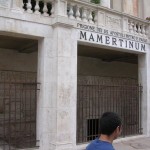
And since, in fact, I am not in prison, but am surrounded by the goodness and mercy of God, oh Lord help me to be as joyful, as peaceful, and as grateful as Paul was in the Mamertine Dungeon.
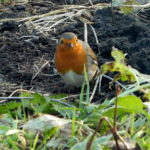
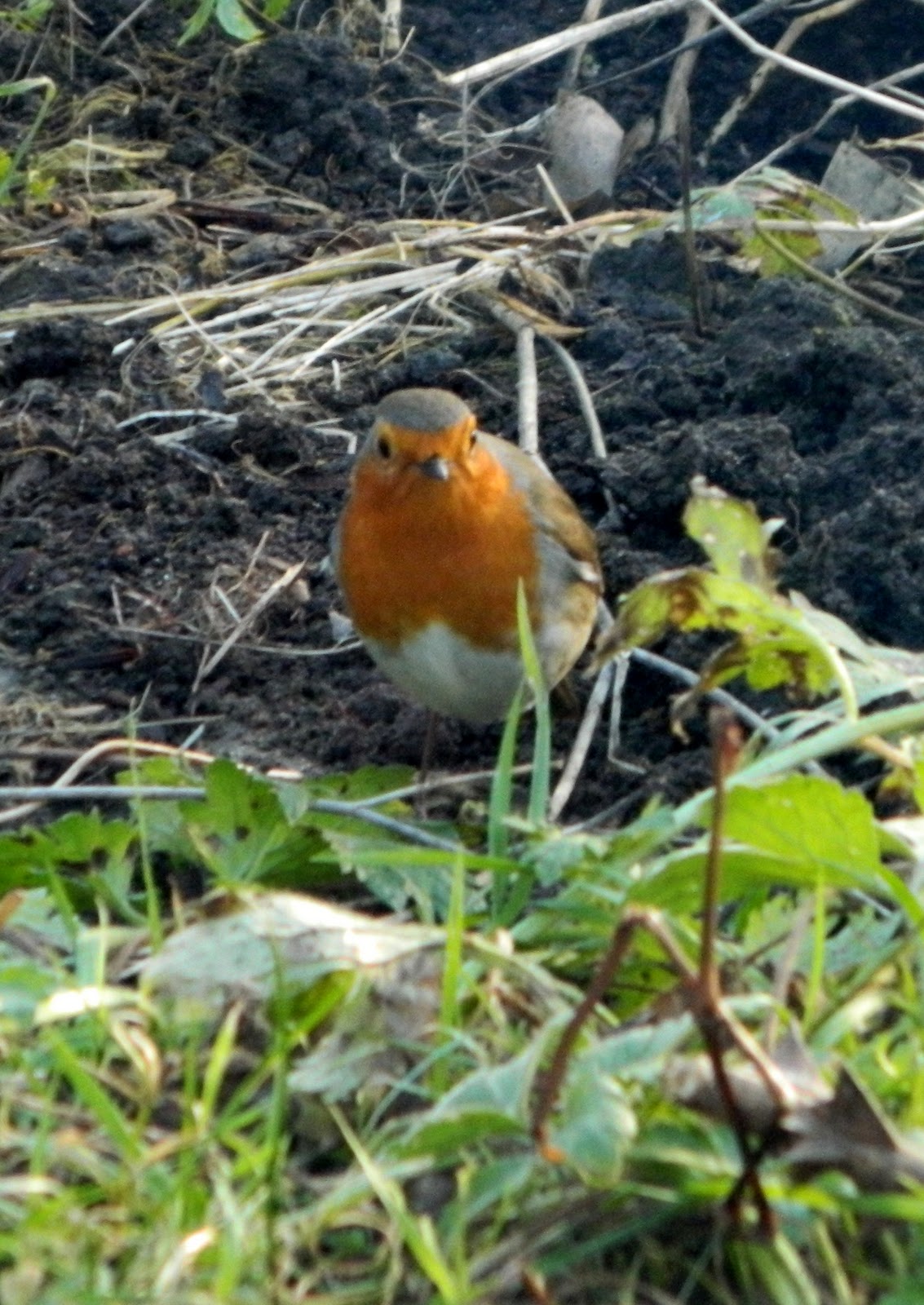
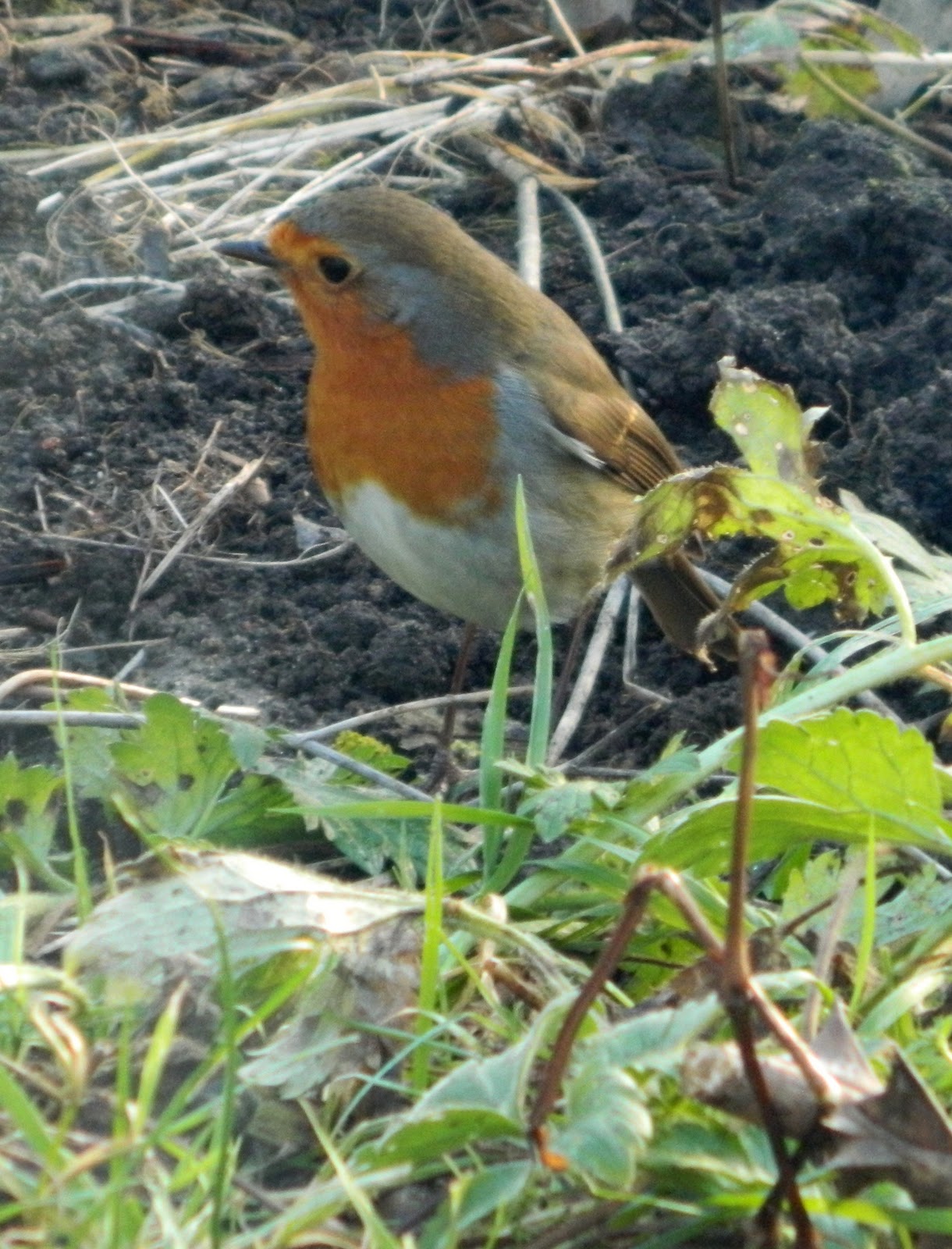
365 Project: A Friendly Little Robin in the remains of my herb garden
In Which Jesus Says That, For Our Sakes, He’s Glad About the Grief Which Deepens Our Faith


“Lazarus is dead, and for your sake, I am glad I was not there, so that you may believe.” John 11
What?
So you considered it worth it?
That grief so shattering that we wished we too could just die.
That emptiness, life robbed of its point,
You were glad all that happened
Just so we could believe?
Is faith then truly the pearl of great price,
Worth anything
The golden key to your wonderland?
The only way we can step over
Into your kingdom, live in your sunshine?
Yes, for faith sets you free
to laugh, to live, to trust
to skip from day to day happily
Knowing
All things are in my hands.”
Faith sets you free
to sing like the birds of the air,
Bloom like a lily,
Laugh as a child
Knowing her father’s eyes are on her,
And they have a gleam in them.
Oh Lord, I choose faith today,
I choose to believe what you say.
Lord, I believe.
Help thou my unbelief.
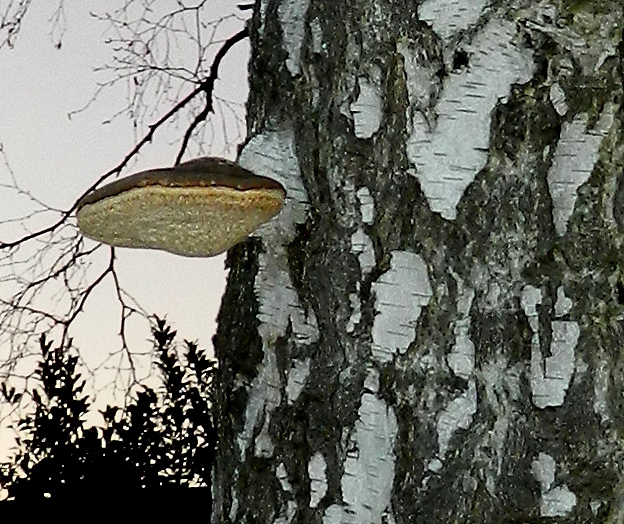
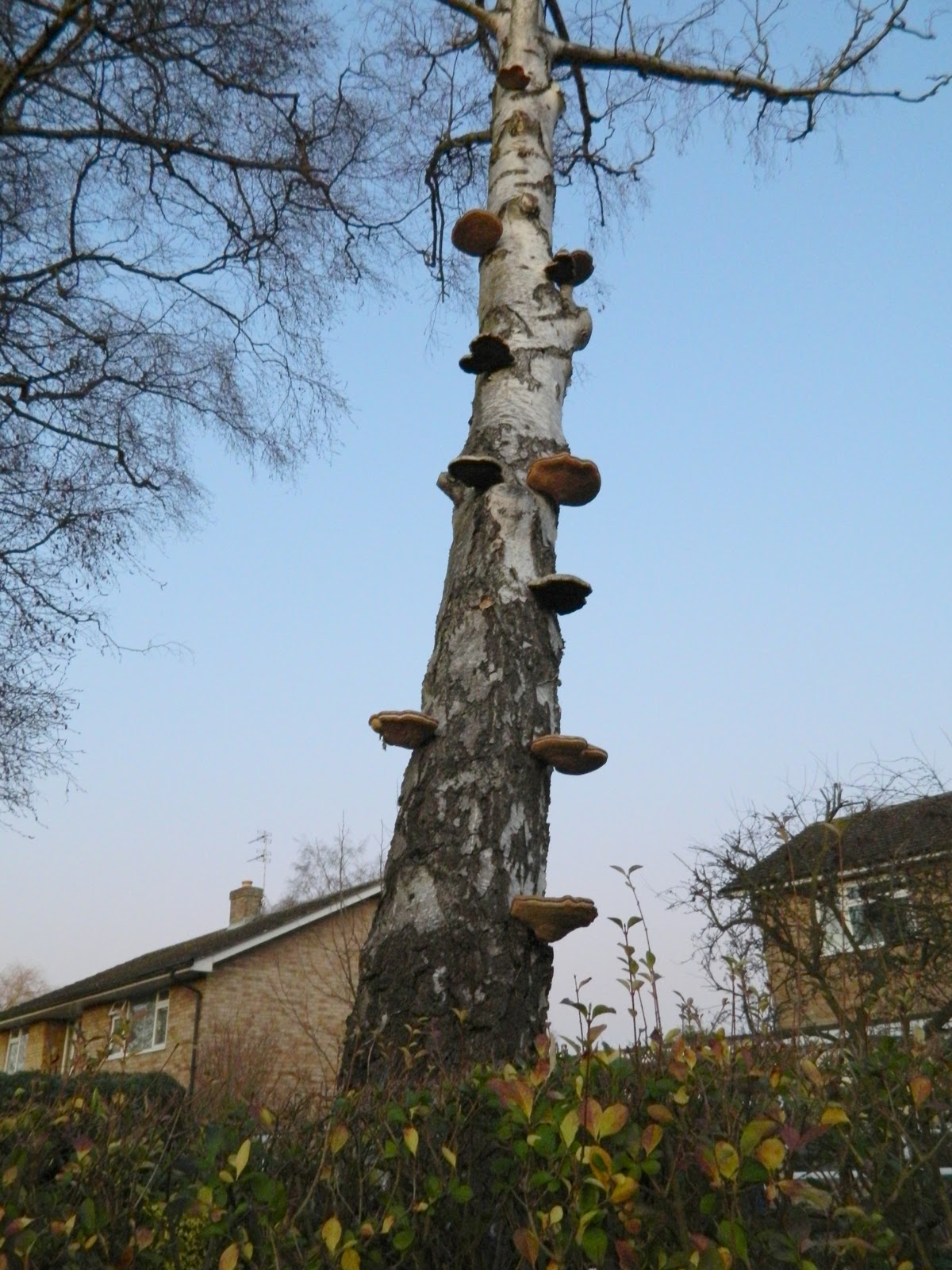
A Bracket Fungus Ladder on a Silver Birch Tree outside C.S. Lewis’ House, the Kilns

This interesting silver birch on the street outside C. S. Lewis’ house has a “ladder” of bracket fungi growing up it. This photo is taken with a flash.

A detail of the bracket fungus, and another shot of the tree without a flash.
365 Project: Oxford Houses of the Good and Great

A crisp clear January day in North Oxford. A perfect day to explore. These houses are all within a quarter of a mile of the dome of St. Hugh’s College:
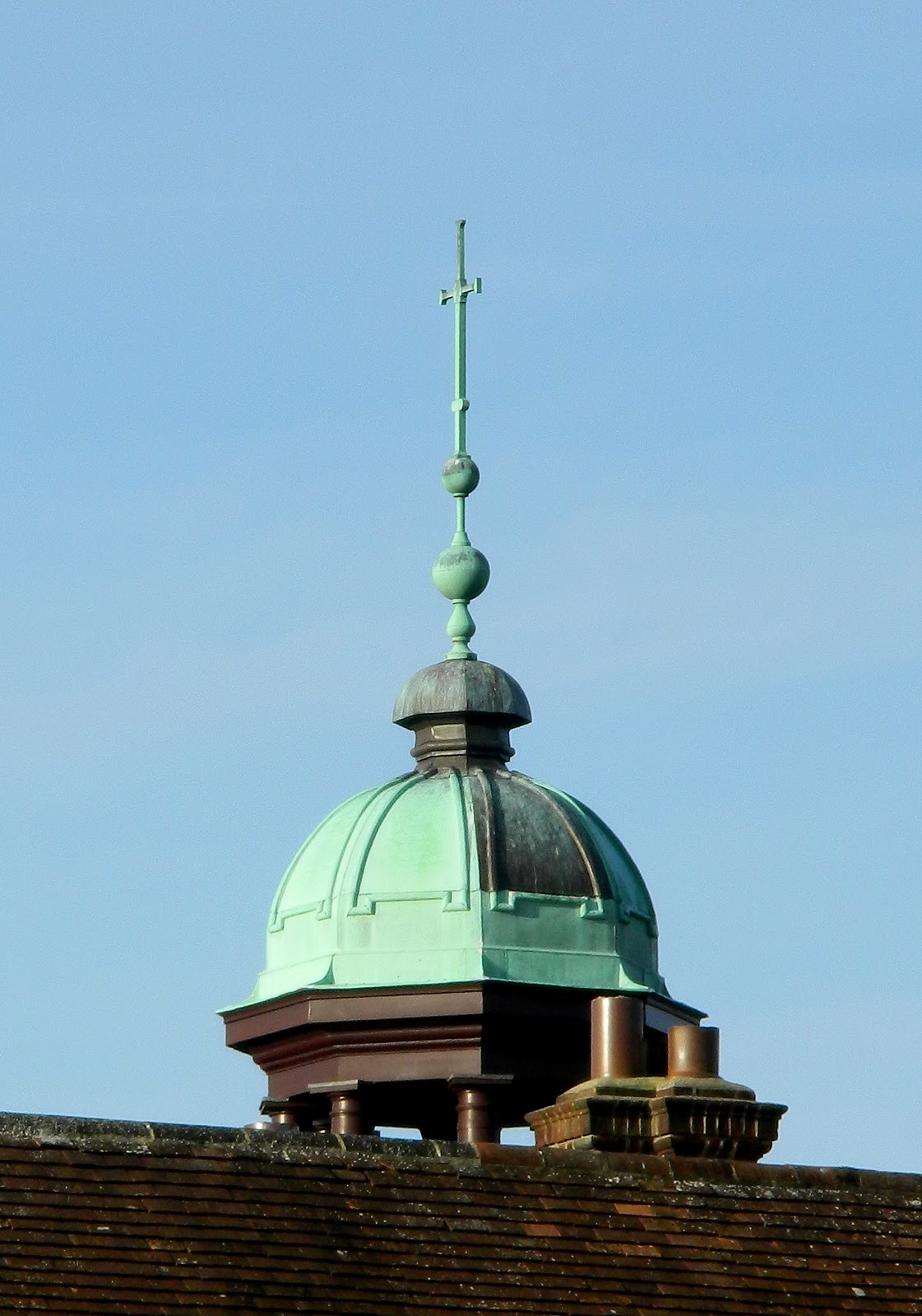 |
| The dome on St. Hugh’s College |
John Ronald Reuel TOLKIEN (1892–1973), author and scholar, 20 Northmoor Road, Oxford
 |
| Blue Plaque on J. R. R. Tolkien’s House |
The house
 |
| J. R. R. Tolkien’s House |
Tolkien also lived at 99 Holywell Street, very close to the Bodleian Library, from 1950 – 1953. Zoe had been to Tolkien’s Holywell Street house numerous times as one of her friends lives there.
Nirad C. CHAUDHURI (1897–1999), writer, 20 Lathbury Road, Oxford
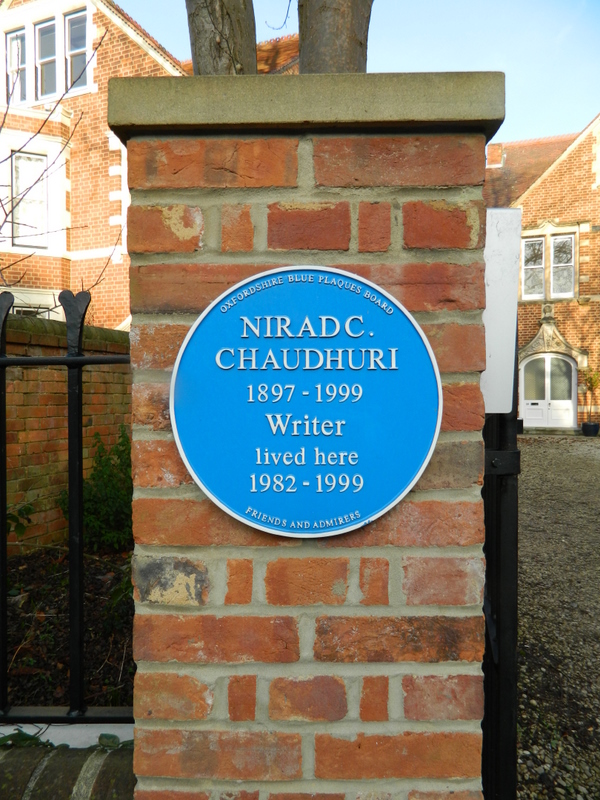
and here’s the house
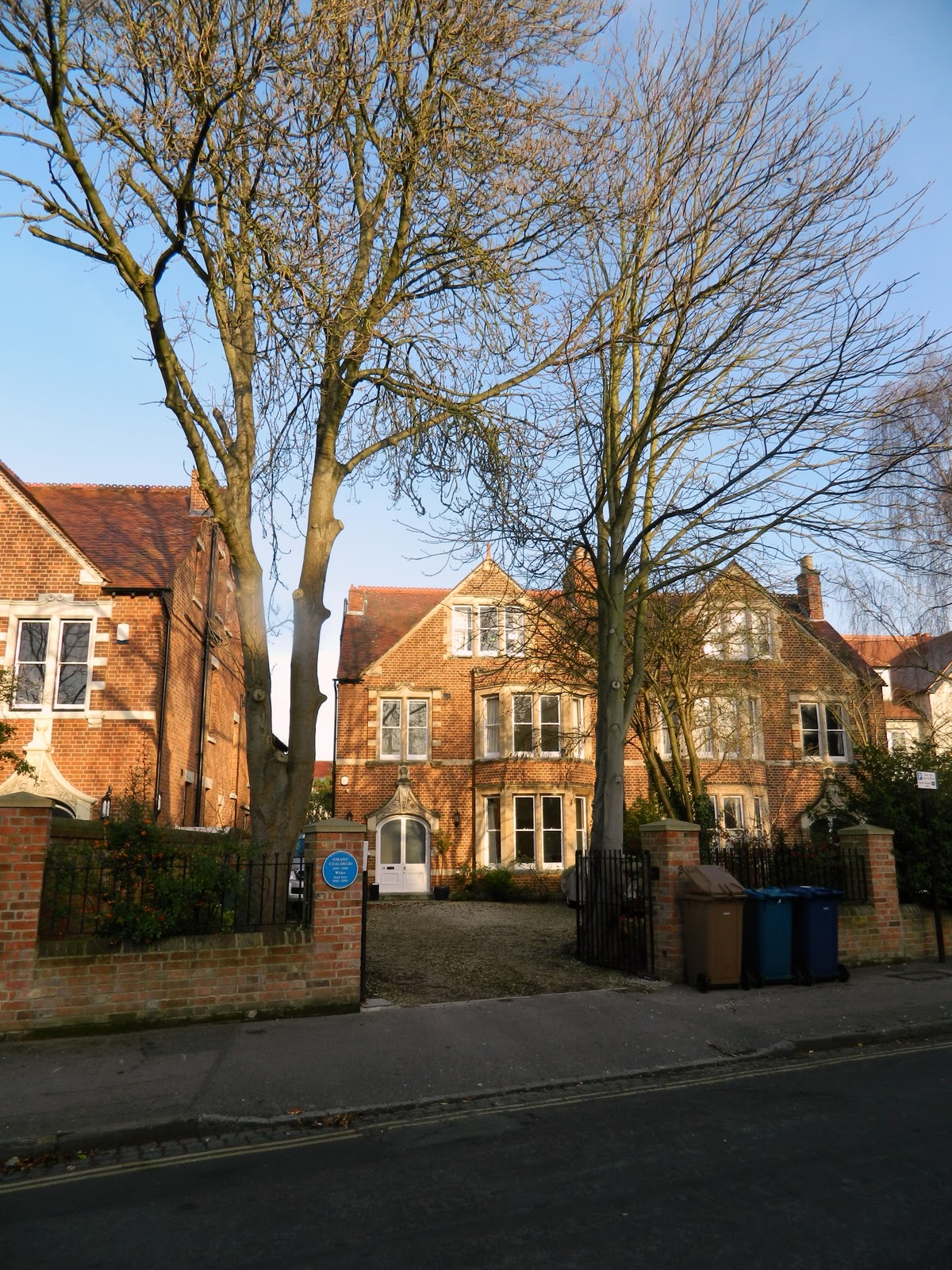 |
| Nirad Chaudhuri’s house |
Paul NASH (1889–1946), artist, 106 Banbury Road, Oxford
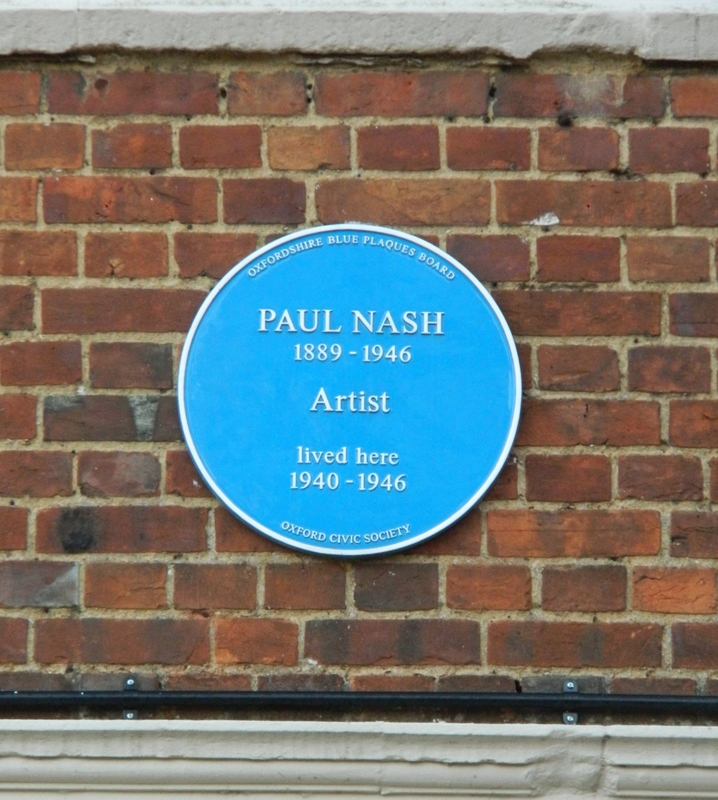 |
| Blue Plaque on Paul Nash’s house |
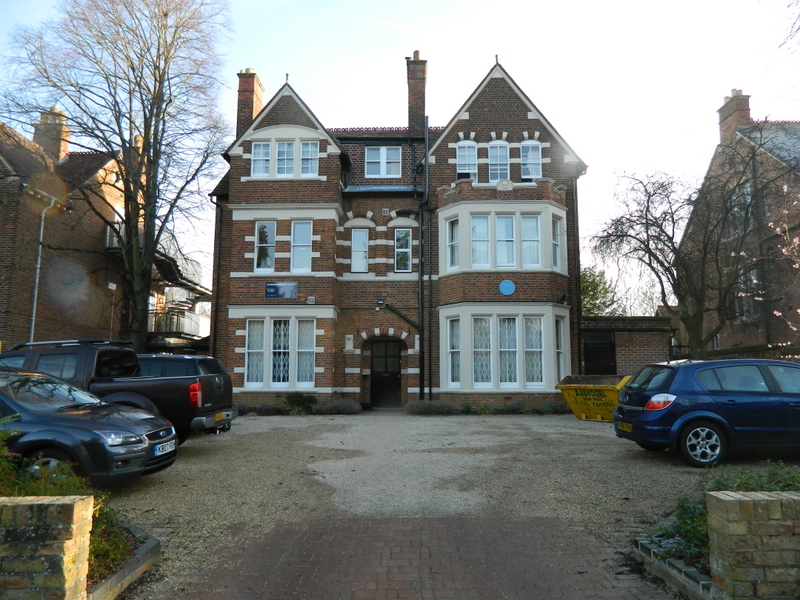 |
| Paul Nash’s House. |
The house is now one of may houses that make up d’Overbroeck’s College, which is not a Oxford college, but a secondary school
Sir James MURRAY (1837–1915), Lexicographer and Editor of the OED, 78 Banbury Road, Oxford
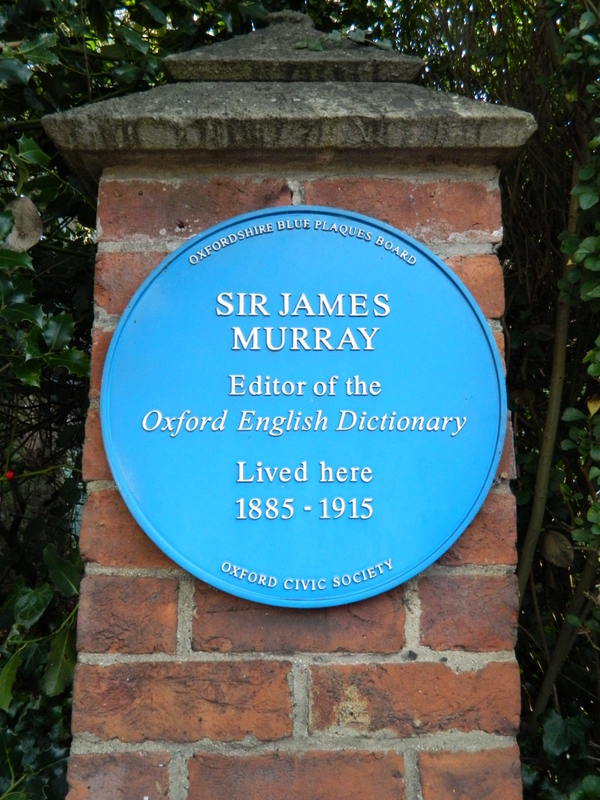
 |
| Plaque and pillar box infrom of Sir James Murray’s house |
No, Sir James Murray did not live in the pillar box, but
Anything addressed to ‘Mr Murray, Oxford’ would always find its way to him, and such was the volume of post sent by Murray and his team that the Post Office erected a special post box outside Murray’s house. (Wikipedia)
and a bit about James Murray
Some idea of the depth and range of his linguistic erudition may be gained from a letter of application he wrote to Thomas Watts, Keeper of Printed Books at the British Museum, in which he claimed an ‘intimate acquaintance’ with Italian, French, Catalan, Spanish and Latin, and ‘to a lesser degree’ Portuguese, Vaudois, Provençal & various dialects’. In addition, he was ‘tolerably familiar’ with Dutch, German and Danish. His studies of Anglo-Saxon and Mœso-Gothic had been ‘much closer’, he knew ‘a little of the Celtic’ and was at the time ‘engaged with the Slavonic, having obtained a useful knowledge of the Russian’. He had ‘sufficient knowledge of Hebrew & Syriac to read at sight the Old Testament and Peshito’ and to a lesser degree he knew Aramaic, Arabic, Coptic and Phoenician. However, he did not get the job. (Wikipedia)
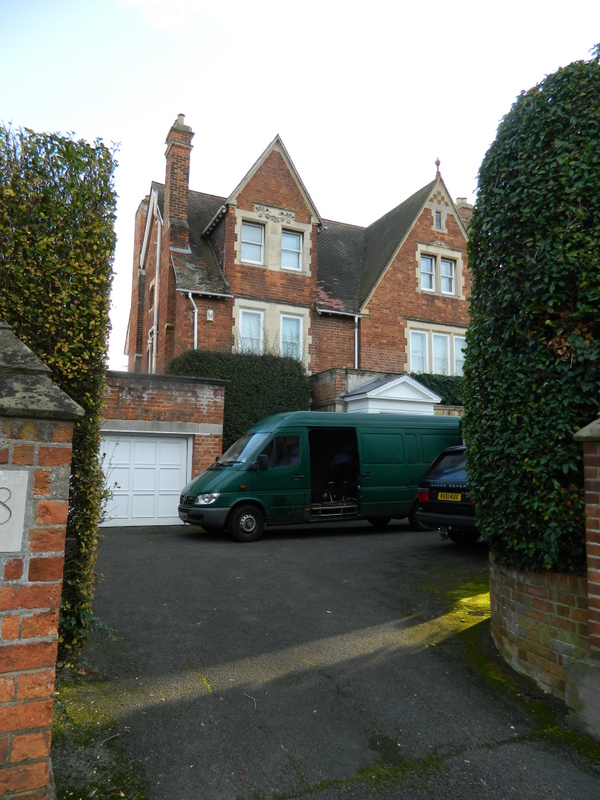 |
| Sir James Murrary’s House |
A passer by told me that while the above house was Murray’s house, the block of flats below, now called Murray Court, is build on what was his rambling grden where he build sheds for his daughters to work on the OED.
 |
| Murray Court |
A little further south in picturesque Park Town I found the house of
William Richard MORFILL (1834–1909), first Professor of Russian and Slavonic Languages, 42 Park Town, Oxford
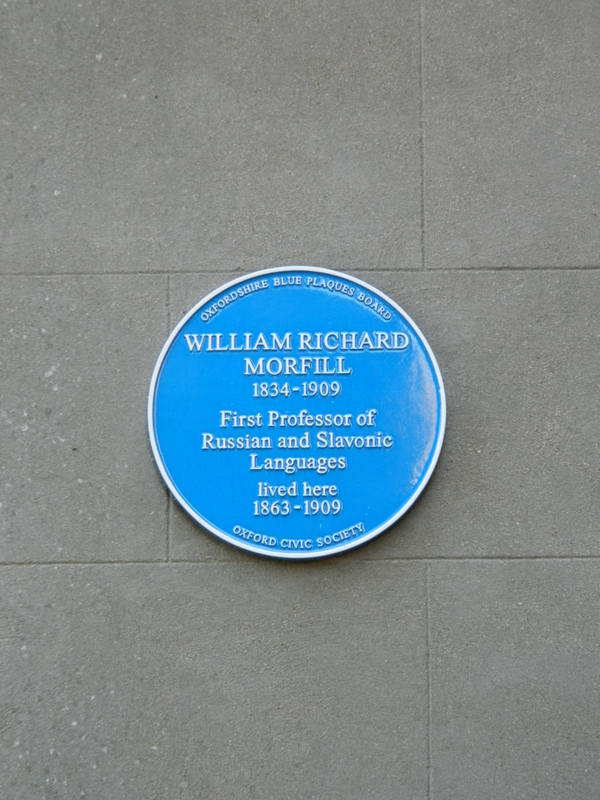 |
| Blue Plaque on William Morfill’s house |
 |
| William Morfill’s house |
and even further south, almost at the University Parks, the home of Walter PATER (1838–1894), author and scholar, and his younger sister Clara Pater (1841–1910), pioneer of women’s education, 2 Bradmore Road, Oxford.
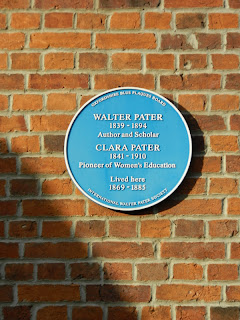 |
| Blue Plaque on the Pater’s house |
The front door — with gables looking rather old and ornate hinges.
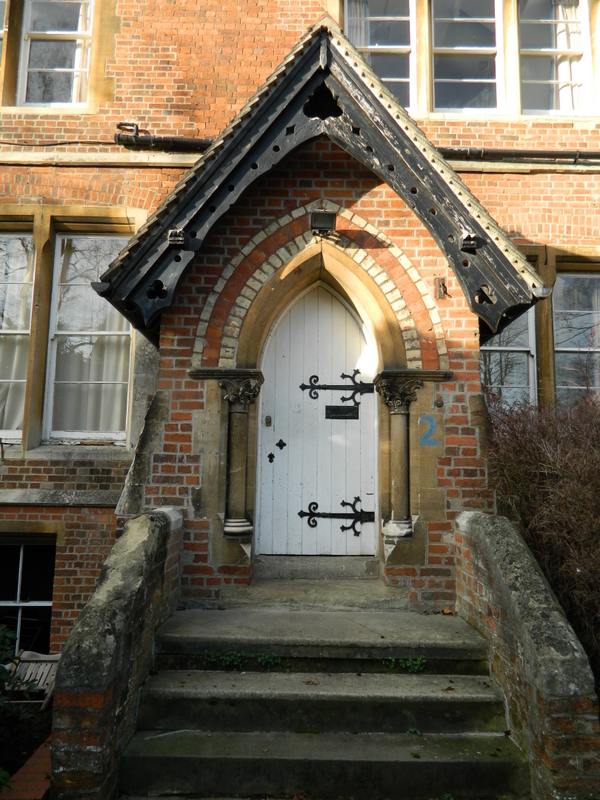
The whole building. The right half was the Paters.
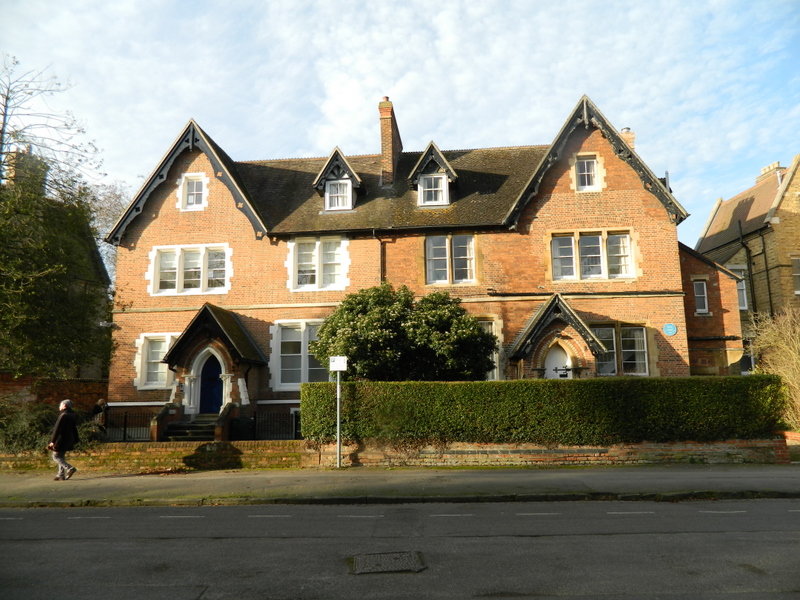 |
| Walter and Clara Pater’s House |
and I couldn’t resist including these even more ornate hinges on a door across the road, but of no known historical value.

T. E Lawrence’s house (Lawrence of Arabia) is a little way away at 2 Polstead Road
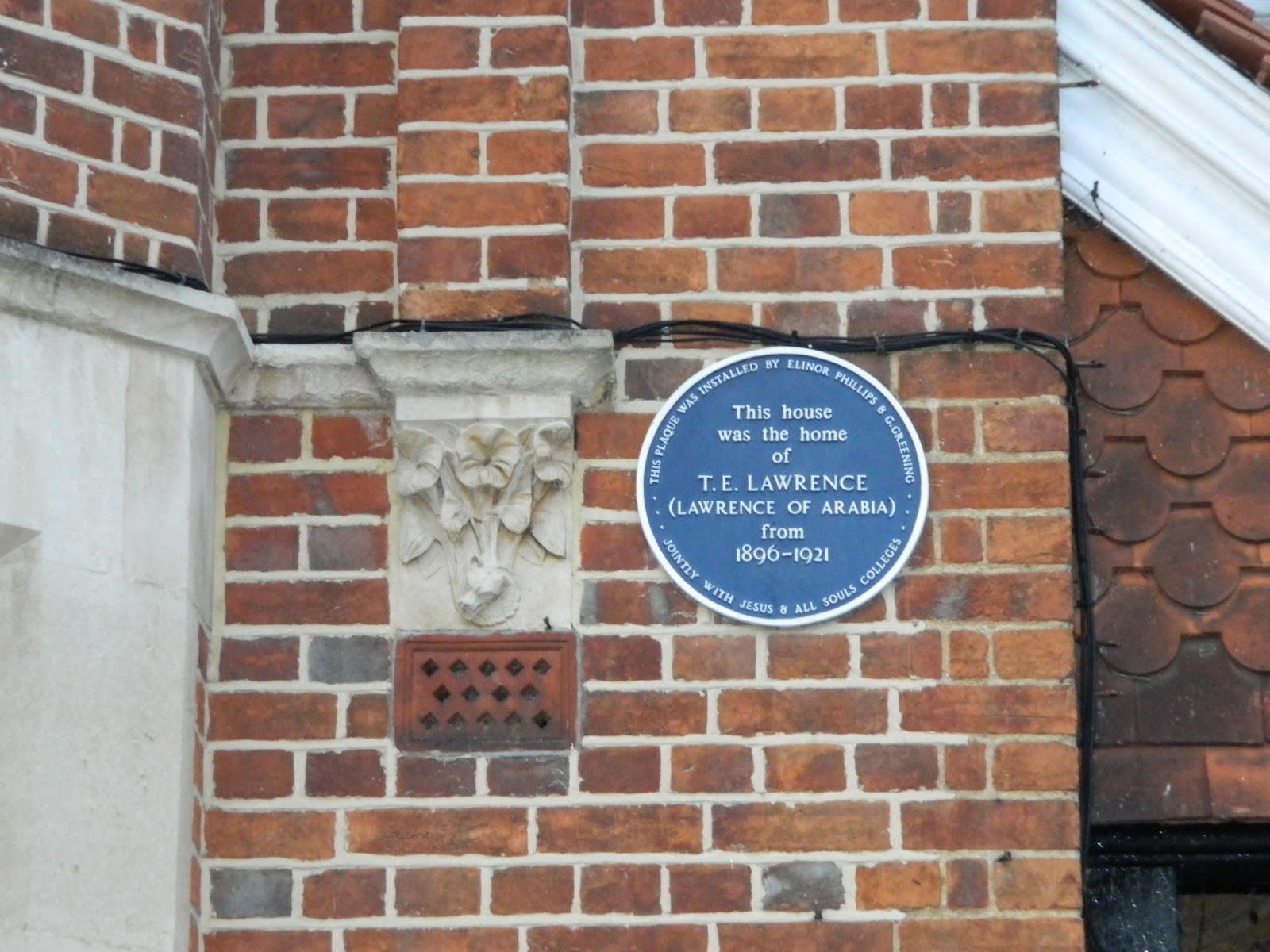 |
| Blue Plaque on T. E Lawrence’s House |
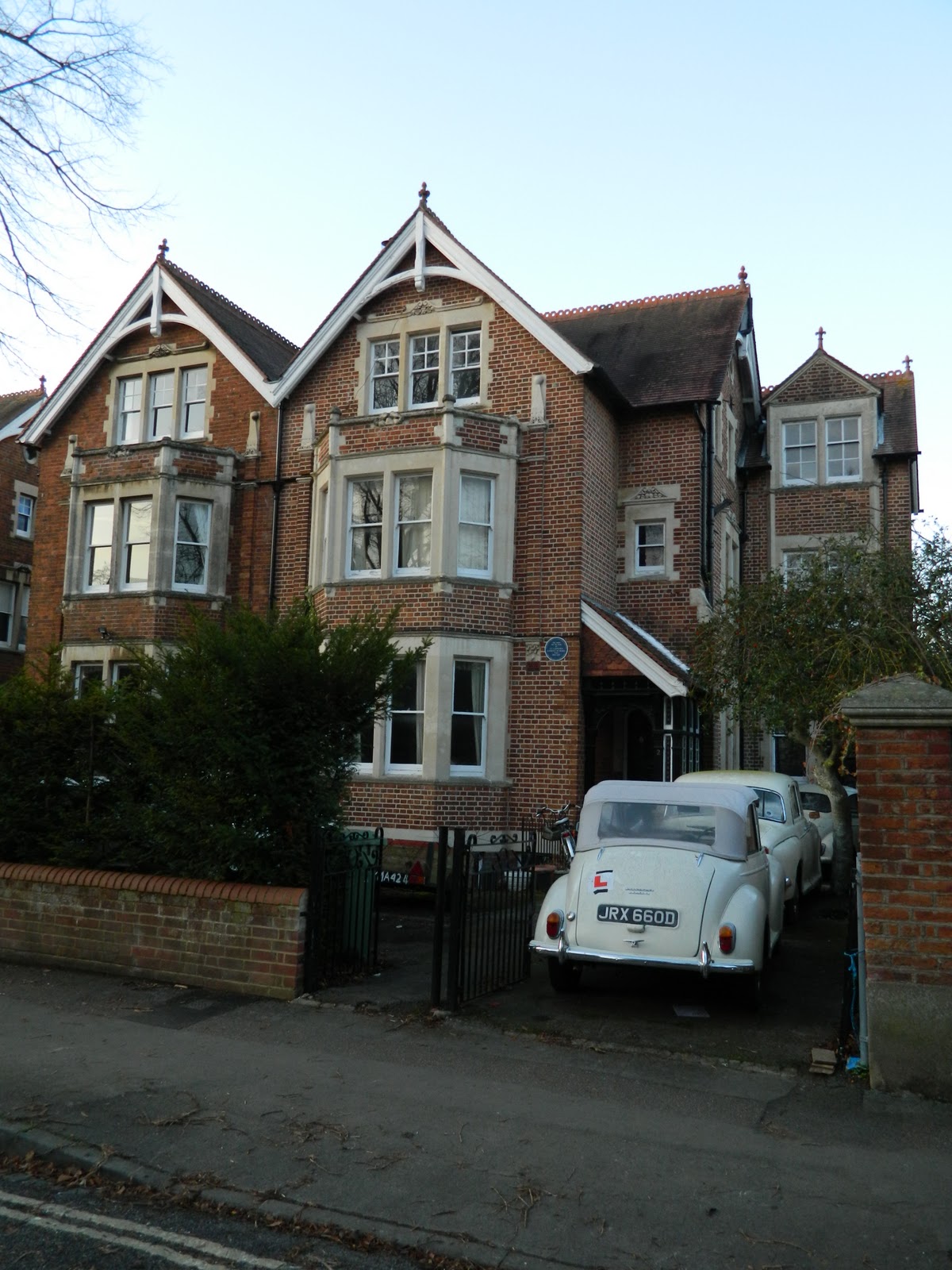 |
| T. E Lawrence’s House |
On the way home, we stopped at C. S Lewis’s house — The Kilns, on what is now called Lewis Close, in Risinghurst in Headington. The plaque is on the door nearest the road; formerly the tradesmen’s entrance.
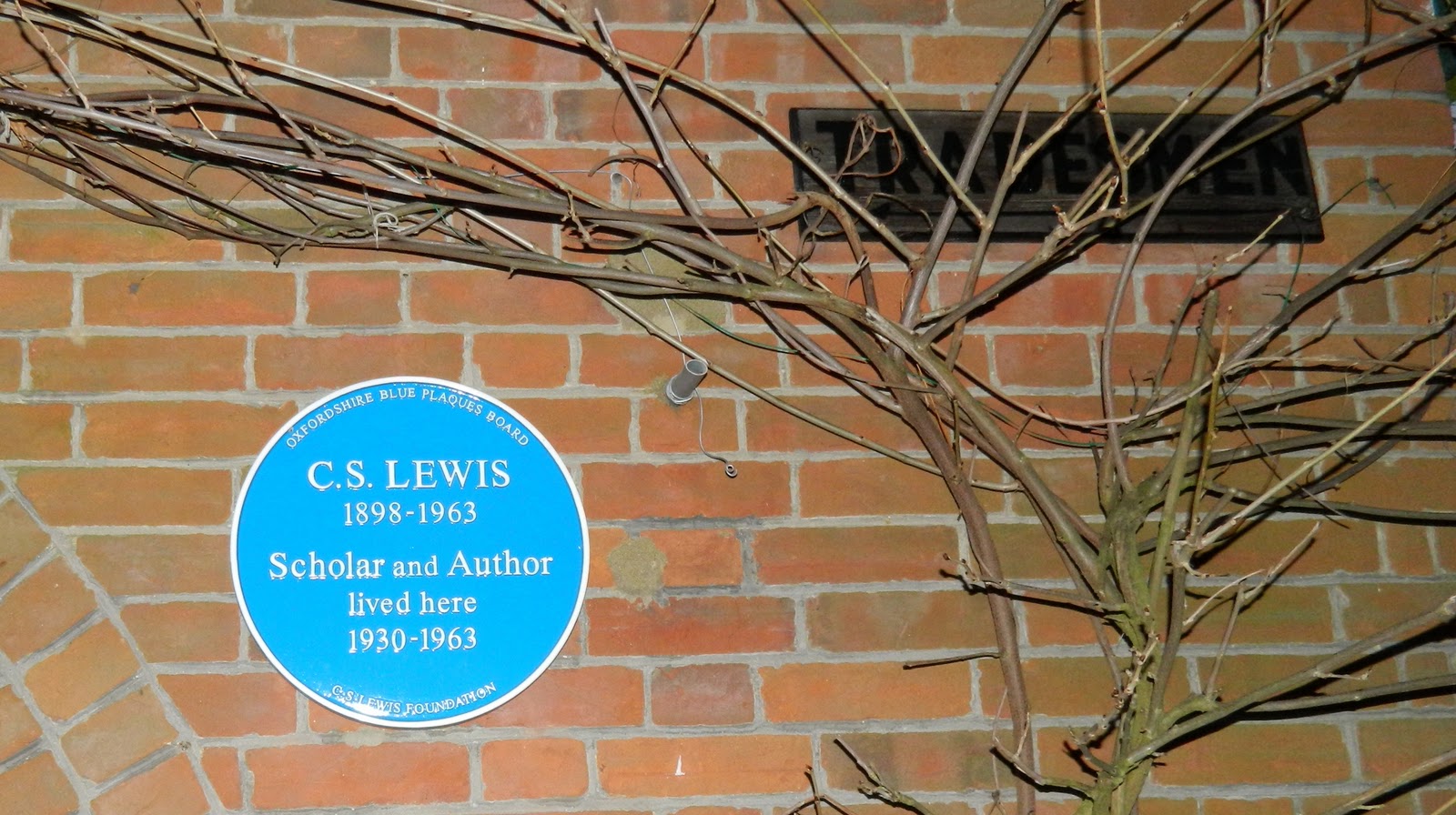 |
| Blue Plaque on C. S. Lewis’ House |
A view from just outside the gate
 |
| C. S. Lewis’ house |
A view from the car park
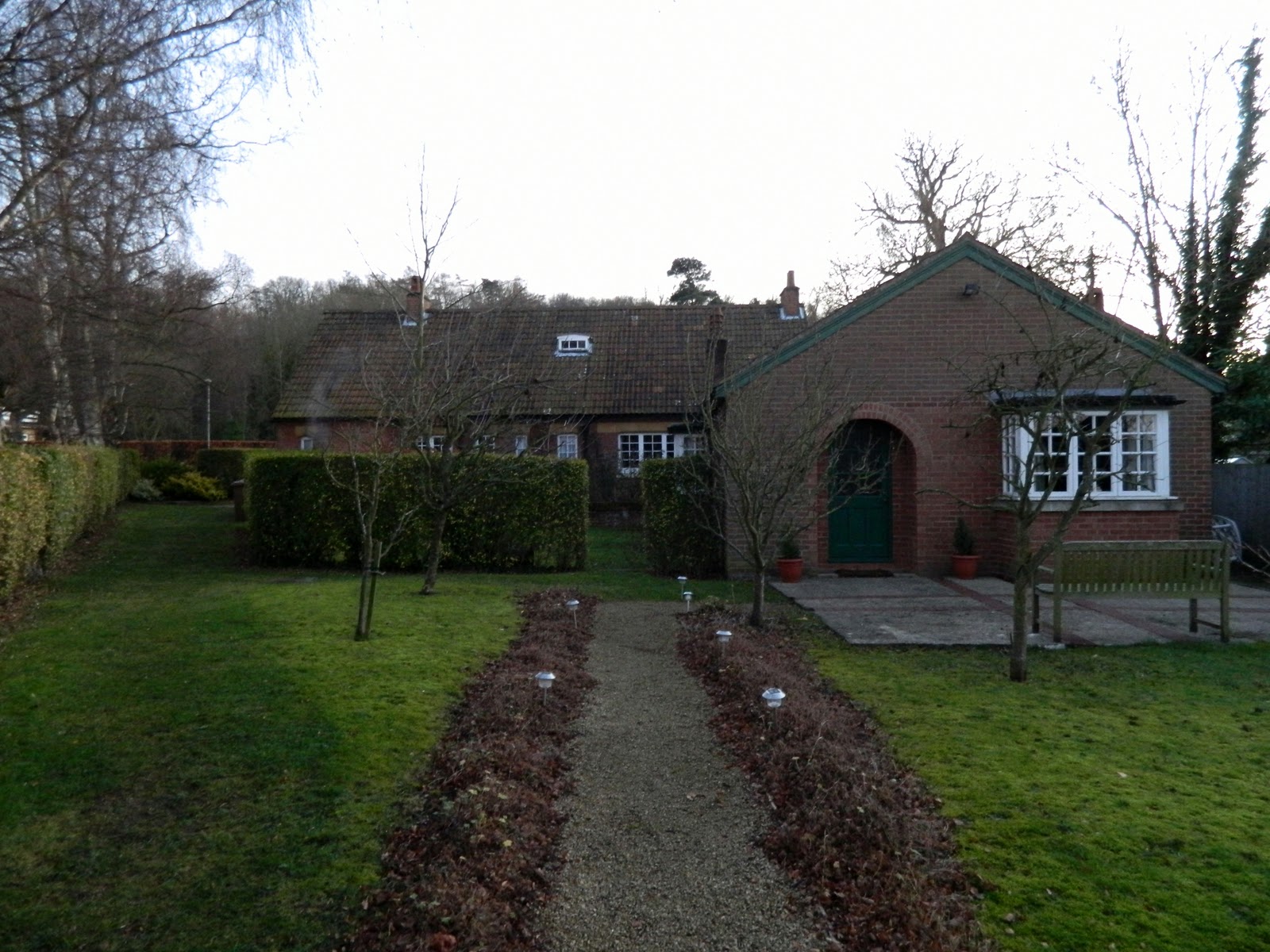 |
| C. S. Lewis’ house |
and a view of the opposite side
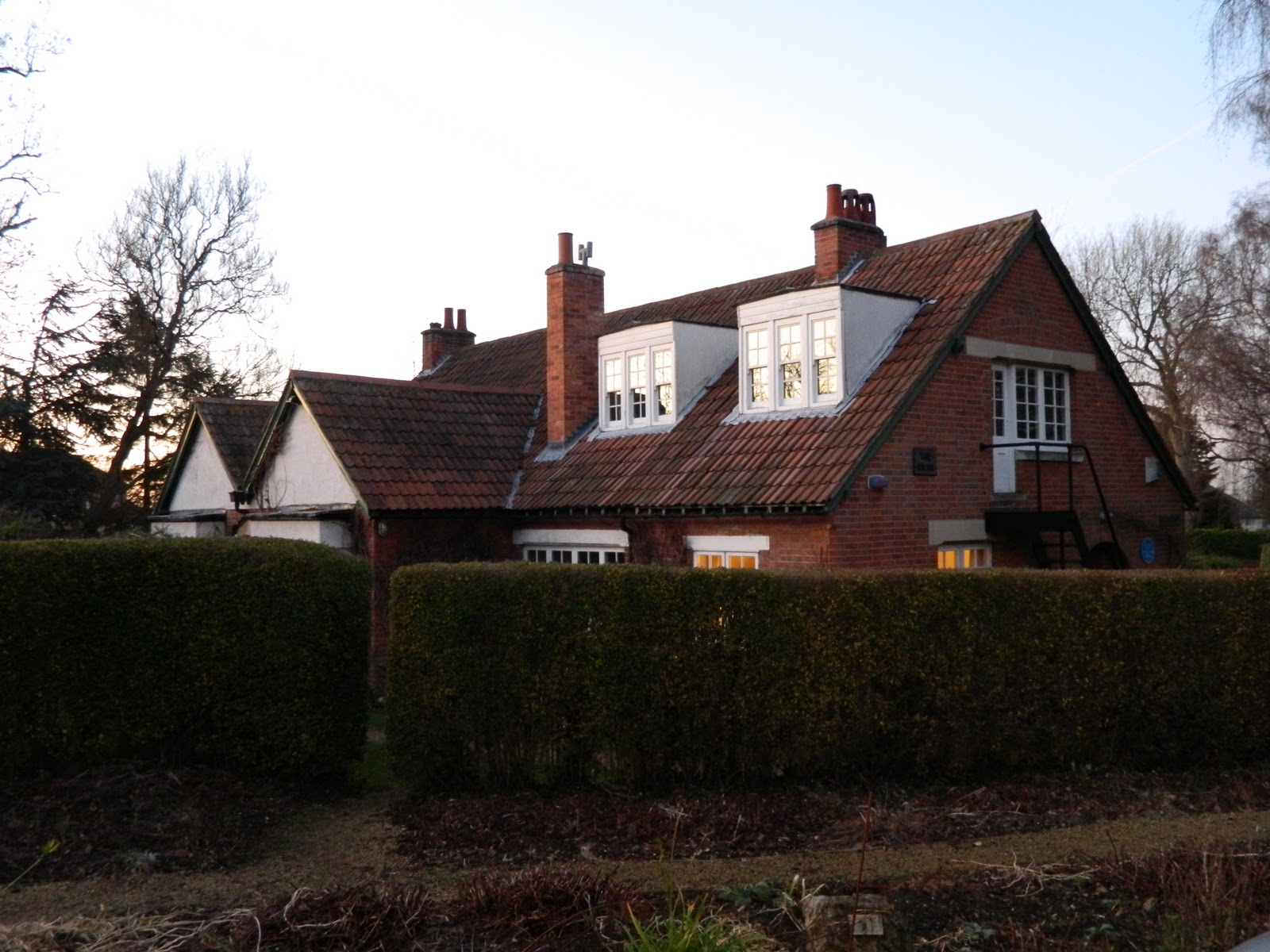 |
| C. S. Lewis’ house |
Certainly a large house, but quite plain. Lewis bought it sight unseen, because it had eight acres of woods, now the C. S. Lewis Nature Reserve.
Finally, Dorothy Sayers was born in a house on the very narrow Brewer’s Street backing onto Pembroke College, and opposite Christchurch, and near St. Aldate’s Church.
 |
| Blue plaque marking Dorothy Sayers birthplace |
How To Turn a Salty Heart Sweet Again
With the tongue we praise our Lord and Father, and with it we curse men, who have been made in God’s likeness. Out of the same mouth come praise and cursing. My brothers, this should not be. Can both fresh water and saltwater flow from the same spring? My brothers, can a fig tree bear olives, or a grapevine bear figs? Neither can a salt spring produce fresh water. (James 3)
* * *
So how can fresh living water flow from our restless tongues?
Oh Lord, who alone can change the molecular structure of our hearts,
From whose sanctuary, water flows into the swamps of our hearts
Turning the salt water fresh, (Ezekiel 47:9)
The wood of whose cross turns our bitter water sweet, (Exodus 15:25)
Change the springs of my heart from whence my words flow.
Make them sweet.
Put your words into my mouth, (Jer 1:9)
Let me be aligned with you.
How Blogging Connects me to the Church’s Liturgical Year


Years ago, a friend of mine, married to a pastor, said happily, “Oh, I love Advent.” Advent? Christmas was all that concerned me—cards, letters, presents, parties.
One of the things I have enjoyed about Christian blogging is being connected to the church’s liturgical year. Several of my fellow Christian bloggers in England are Anglican clergy-people ; their blog posts, many of which are trial runs or second helpings of sermons —steadily troll through the church year: Advent, Christmas, Epiphany, the Annunciation, Easter, the Transfiguration, Pentecost, as well as the feasts of Saints, from Scripture and real life.
A true communion of saints.
The Cambridge poet, pastor and theologian Malcolm Guite goes even further. In a series of brilliant, luscious sonnets, he sonnetizes through the liturgical year; no, I am not kidding! Check out his multi-media blog posts: he reads his wonderful sonnets, which are accompanied by thoughtful text and images.
The liturgical calendar brings balance to one’s engagement with Christ. We are continually considering him from different angles—in the powerlessness of infancy; the obscurity of childhood and young adulthood in which his character was forged; his brief meteoric years of fame and celebrity; his tragic, unbearably painful death; his glorious resurrection, and his gentle empowering post-resurrection ministry.
While, sadly, I find liturgy itself boring, and my mind wanders while we recite those ancient words, the liturgical year is different. It provides new subjects for meditation or contemplation, and thus serves to broaden a spiritual life which might otherwise narrow into a celestial shopping list, or a dry trolling through Adoration-Contrition-Thanksgiving-Supplication.