Anita Mathias: Dreaming Beneath the Spires

Anita Mathias's Blog on Faith and Art

  • Home
  • My Books
  • Meditations
  • Essays
  • Contact
  • About Me

Should we pay taxes? Matthew 17, Blog through the Bible Project

By Anita Mathias

Jesus Predicts His Death a Second Time

 22 When they came together in Galilee, he said to them, “The Son of Man is going to be delivered into the hands of men. 23 They will kill him, and on the third day he will be raised to life.” And the disciples were filled with grief.

The Temple Tax

 24 After Jesus and his disciples arrived in Capernaum, the collectors of the two-drachma temple tax came to Peter and asked, “Doesn’t your teacher pay the temple tax?”

 25 “Yes, he does,” he replied.
   When Peter came into the house, Jesus was the first to speak. “What do you think, Simon?” he asked.
Jesus frequently asks this question in Matthew’s Gospel. Note the Socratic teaching method Jesus employs. He does not just tell Peter the answer. He asks a question.
“From whom do the kings of the earth collect duty and taxes—from their own children or from others?”
 26 “From others,” Peter answered.
   “Then the children are exempt,” Jesus said to him.
The children of the King are exempt from taxes, Jesus seems to say?? 
ESV note–Jesus signals that with the coming of the Kingdom, believers are no longer under OT law, but the law of Christ.
27 “But so that we may not cause offense, go to the lake and throw out your line. Take the first fish you catch; open its mouth and you will find a four-drachma coin. Take it and give it to them for my tax and yours.”
But we should pay them so that we may not cause offense
And if you pay them, so as not to cause offence, money to pay them will be provided by the Lord.
NIV note. Jesus did not want to let an inconsequential matter provide an obstacle to faith in him on the part of the Jews.
Filed Under: Matthew

Should we pay taxes? Matthew 17, Blog through the Bible Project

By Anita Mathias


Jesus Predicts His Death a Second Time

 22 When they came together in Galilee, he said to them, “The Son of Man is going to be delivered into the hands of men. 23 They will kill him, and on the third day he will be raised to life.” And the disciples were filled with grief.

The Temple Tax

 24 After Jesus and his disciples arrived in Capernaum, the collectors of the two-drachma temple tax came to Peter and asked, “Doesn’t your teacher pay the temple tax?”

 25 “Yes, he does,” he replied.
   When Peter came into the house, Jesus was the first to speak. “What do you think, Simon?” he asked.
Jesus frequently asks this question in Matthew’s Gospel. Note the Socratic teaching method Jesus employs. He does not just tell Peter the answer. He asks a question.
“From whom do the kings of the earth collect duty and taxes—from their own children or from others?”
 26 “From others,” Peter answered.
   “Then the children are exempt,” Jesus said to him.
The children of the King are exempt from taxes, Jesus seems to say?? 
ESV note–Jesus signals that with the coming of the Kingdom, believers are no longer under OT law, but the law of Christ.
27 “But so that we may not cause offense, go to the lake and throw out your line. Take the first fish you catch; open its mouth and you will find a four-drachma coin. Take it and give it to them for my tax and yours.”
But we should pay them so that we may not cause offense
And if you pay them, so as not to cause offence, money to pay them will be provided by the Lord.
NIV note. Jesus did not want to let an inconsequential matter provide an obstacle to faith in him on the part of the Jews.
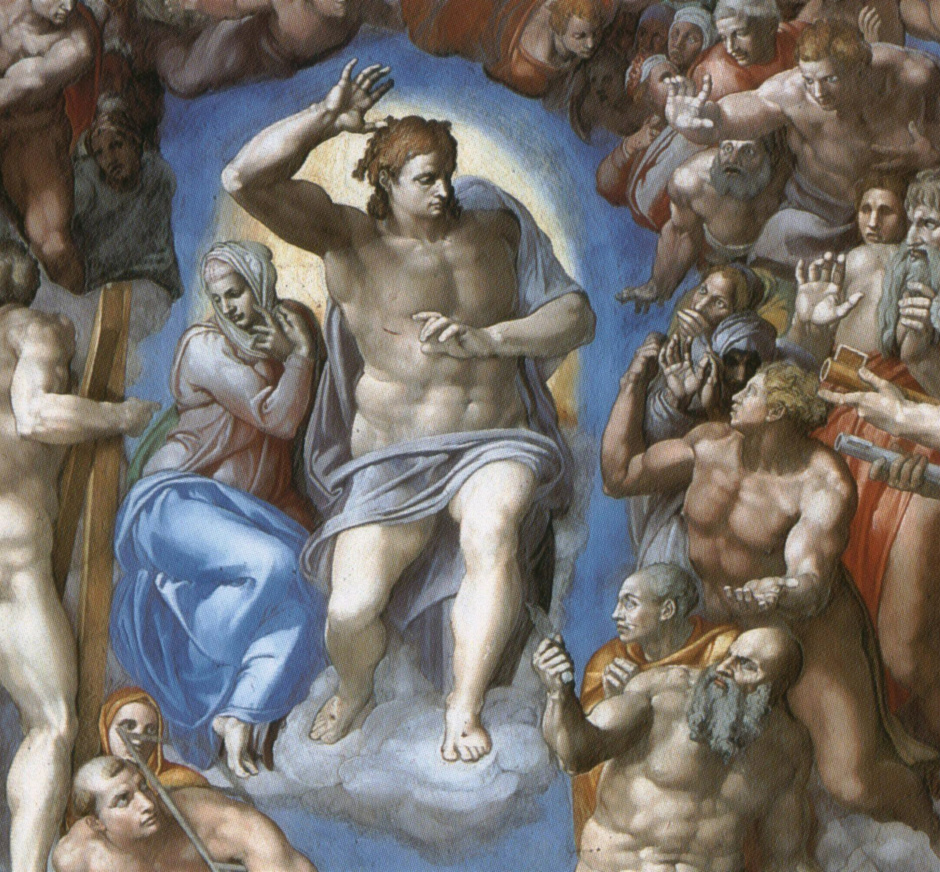
The Brothers Become Brothers, Gen. 44, Day 54, Feb 23, Blog Through the Bible Project.

Peter Von Cornelius

People do grow and change. In the process of maturation is hope for our world.

Genesis 44

A Silver Cup in a Sack

 1 Now Joseph gave these instructions to the steward of his house: “Fill the men’s sacks with as much food as they can carry, and put each man’s silver in the mouth of his sack. 2 Then put my cup, the silver one, in the mouth of the youngest one’s sack, along with the silver for his grain.” And he did as Joseph said.

 3 As morning dawned, the men were sent on their way with their donkeys. 4 They had not gone far from the city when Joseph said to his steward, “Go after those men at once, and when you catch up with them, say to them, ‘Why have you repaid good with evil? 5 Isn’t this the cup my master drinks from and also uses for divination? This is a wicked thing you have done.’”
Joseph is human, after all. Is he exacting a tiny bit of revenge here?
 6 When he caught up with them, he repeated these words to them. 7 But they said to him, “Why does my lord say such things? Far be it from your servants to do anything like that! 8 We even brought back to you from the land of Canaan the silver we found inside the mouths of our sacks. So why would we steal silver or gold from your master’s house? 9 If any of your servants is found to have it, he will die; and the rest of us will become my lord’s slaves.”
 10 “Very well, then,” he said, “let it be as you say. Whoever is found to have it will become my slave; the rest of you will be free from blame.”
 11 Each of them quickly lowered his sack to the ground and opened it. 12 Then the steward proceeded to search, beginning with the oldest and ending with the youngest. And the cup was found in Benjamin’s sack. 13 At this, they tore their clothes. Then they all loaded their donkeys and returned to the city.
 14 Joseph was still in the house when Judah and his brothers came in, and they threw themselves to the ground before him. 
Fulfilling his dream.
15 Joseph said to them, “What is this you have done? Don’t you know that a man like me can find things out by divination?”
 16 “What can we say to my lord?” Judah replied. “What can we say? How can we prove our innocence? God has uncovered your servants’ guilt. We are now my lord’s slaves—we ourselves and the one who was found to have the cup.”
 17 But Joseph said, “Far be it from me to do such a thing! Only the man who was found to have the cup will become my slave. The rest of you, go back to your father in peace.”
He is testing his brothers to see if they have become brothers.
 18 Then Judah went up to him and said: “Pardon your servant, my lord, let me speak a word to my lord. Do not be angry with your servant, though you are equal to Pharaoh himself. 19 My lord asked his servants, ‘Do you have a father or a brother?’ 20 And we answered, ‘We have an aged father, and there is a young son born to him in his old age. His brother is dead, and he is the only one of his mother’s sons left, and his father loves him.’
 21 “Then you said to your servants, ‘Bring him down to me so I can see him for myself.’ 22 And we said to my lord, ‘The boy cannot leave his father; if he leaves him, his father will die.’ 23 But you told your servants, ‘Unless your youngest brother comes down with you, you will not see my face again.’ 24 When we went back to your servant my father, we told him what my lord had said.
 25 “Then our father said, ‘Go back and buy a little more food.’ 26 But we said, ‘We cannot go down. Only if our youngest brother is with us will we go. We cannot see the man’s face unless our youngest brother is with us.’
 27 “Your servant my father said to us, ‘You know that my wife bore me two sons. 28 One of them went away from me, and I said, “He has surely been torn to pieces.” And I have not seen him since. 29 If you take this one from me too and harm comes to him, you will bring my gray head down to the grave in misery.’
 30 “So now, if the boy is not with us when I go back to your servant my father, and if my father, whose life is closely bound up with the boy’s life, 31 sees that the boy isn’t there, he will die. Your servants will bring the gray head of our father down to the grave in sorrow. 32 Your servant guaranteed the boy’s safety to my father. I said, ‘If I do not bring him back to you, I will bear the blame before you, my father, all my life!’
 33 “Now then, please let your servant remain here as my lord’s slave in place of the boy, and let the boy return with his brothers. 34 How can I go back to my father if the boy is not with me? No! Do not let me see the misery that would come on my father.”
The brothers have grown, they have matured. They are now men of conscience and kindness. Judah, in particular, shows why his tribe was Israel’s preeminent tribe, and why he was chosen to be an ancestor of the Messiah.
Conscience-stricken over the grief the selling of Joseph brought Jacob, Judah offers himself in stead of Benjamin–as centuries later, Jesus will offer himself as a willing victim in our stead. Judah’s character has significantly changed from the man who suggested selling Joseph into slavery, uncaring of the emotional effect this would have on Jacob.


The Lord is my Shield. Psalm 18, Day 53, Feb 22, Blog Through the Bible Project

Psalm 18

 For the director of music. Of David the servant of the LORD. He sang to the LORD the words of this song when the LORD delivered him from the hand of all his enemies and from the hand of Saul. He said:

 1 I love you, LORD, my strength.

The opening verses sum up the theme of the Psalms, that David has found the Lord a reliable defender against his enemies.
 2 The LORD is my rock, my fortress and my deliverer;
   my God is my rock, in whom I take refuge,
   my shield and the horn of my salvation, my stronghold.
David describes the protection to be found in God in many images–God is his rock, on which he is firmly grounded, a fortress or stronghold of protection, a shield, a deliverer.
NIV. 
Rock, a common poetic metaphor for God was particularly appropriate to David’s experience for the Lord was his true security.
 3 I called to the LORD, who is worthy of praise,
   and I have been saved from my enemies.
4 The cords of death entangled me;
   the torrents of destruction overwhelmed me.
5 The cords of the grave coiled around me;
   the snares of death confronted me.
 6 In my distress I called to the LORD;
   I cried to my God for help.
From his temple he heard my voice;
   my cry came before him, into his ears.
7 The earth trembled and quaked,
   and the foundations of the mountains shook;
   they trembled because he was angry.
8 Smoke rose from his nostrils;
   consuming fire came from his mouth,
   burning coals blazed out of it.
9 He parted the heavens and came down;
   dark clouds were under his feet.
10 He mounted the cherubim and flew;
   he soared on the wings of the wind.
11 He made darkness his covering, his canopy around him—
   the dark rain clouds of the sky.
12 Out of the brightness of his presence clouds advanced,
   with hailstones and bolts of lightning.
13 The LORD thundered from heaven;
   the voice of the Most High resounded.d]”>[d]
14 He shot his arrows and scattered the enemy,
   with great bolts of lightning he routed them.
15 The valleys of the sea were exposed
   and the foundations of the earth laid bare
at your rebuke, LORD,
   at the blast of breath from your nostrils.
The turning point for David, as for many of God’s people through the ages was this: In this distress, he called to the Lord. And the Lord comes to his assistance, in a fearsome theophany
 16 He reached down from on high and took hold of me;
   he drew me out of deep waters.
17 He rescued me from my powerful enemy,
   from my foes, who were too strong for me.
18 They confronted me in the day of my disaster,
   but the LORD was my support.
19 He brought me out into a spacious place;
   he rescued me because he delighted in me.
God’s unexpected protection that astounds you when you experience it. 
The opposite of being hemmed in by threats and dangers.

 20 The LORD has dealt with me according to my righteousness;
   according to the cleanness of my hands he has rewarded me.
21 For I have kept the ways of the LORD;
   I am not guilty of turning from my God.
22 All his laws are before me;
   I have not turned away from his decrees.
23 I have been blameless before him
   and have kept myself from sin.
24 The LORD has rewarded me according to my righteousness,
   according to the cleanness of my hands in his sight.
This is generally the way God deals with his people.
 25 To the faithful you show yourself faithful,
   to the blameless you show yourself blameless,
26 to the pure you show yourself pure,
   but to the devious you show yourself shrewd.
27 You save the humble
   but bring low those whose eyes are haughty.
This eventually proves true.
28 You, LORD, keep my lamp burning;
God helps David’s life and undertakings to flourish.
   my God turns my darkness into light.
29 With your help I can advance against a troop;
   with my God I can scale a wall.
How can we know this is true? We act with the confidence that God is with us. And if what we are doing is the right thing, in accordance with his will, then, of course, he is.
 30 As for God, his way is perfect:
   The LORD’s word is flawless;
   he shields all who take refuge in him.
31 For who is God besides the LORD?
   And who is the Rock except our God?
32 It is God who arms me with strength
   and keeps my way secure.
33 He makes my feet like the feet of a deer;
   he causes me to stand on the heights.
34 He trains my hands for battle;
   my arms can bend a bow of bronze.
35 You make your saving help my shield,
   and your right hand sustains me;
   your help has made me great.
36 You provide a broad path for my feet,
   so that my ankles do not give way.
Having had a life-changing (in terms of loss of fitness) serious ankle sprain, this is something I often pray.
 37 I pursued my enemies and overtook them;
   I did not turn back till they were destroyed.
38 I crushed them so that they could not rise;
   they fell beneath my feet.
39 You armed me with strength for battle;
   you humbled my adversaries before me.
40 You made my enemies turn their backs in flight,
   and I destroyed my foes.
41 They cried for help, but there was no one to save them—
   to the LORD, but he did not answer.
42 I beat them as fine as windblown dust;
   I trampled them like mud in the streets.
43 You have delivered me from the attacks of the people;
   you have made me the head of nations.
People I did not know now serve me,
 44 foreigners cower before me;
   as soon as they hear of me, they obey me.
45 They all lose heart;
   they come trembling from their strongholds.
 46 The LORD lives! Praise be to my Rock!
   Exalted be God my Savior!
47 He is the God who avenges me,
   who subdues nations under me,
 48 who saves me from my enemies.
You exalted me above my foes;
   from a violent man you rescued me.
49 Therefore I will praise you, LORD, among the nations;
   I will sing the praises of your name.
 50 He gives his king great victories;
   he shows unfailing love to his anointed,
   to David and to his descendants forever.
NIV note–What David claims in this grand conclusion, and indeed in the whole psalm has been and is being fulfilled in Jesus Christ, David’s great descendant. 

Click button to share on Facebook, Twitter, Digg, Delicious, Reddit … Wikio

Filed Under: Genesis, Matthew, Psalms

Jesus Heals, Matthew 17, Day 52, Feb 21st, Blog Through the Bible Project

By Anita Mathias

Matthew 17
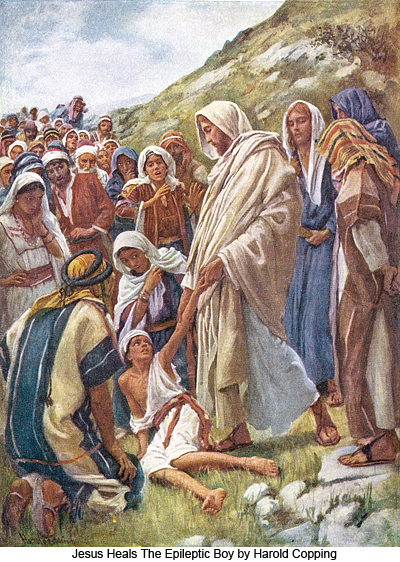
Jesus Heals a Demon-Possessed Boy

 14 When they came to the crowd, a man approached Jesus and knelt before him. 15 “Lord, have mercy on my son,” he said. “He has seizures and is suffering greatly. He often falls into the fire or into the water. 16 I brought him to your disciples, but they could not heal him.”

   17 “You unbelieving and perverse generation,” Jesus replied, “how long shall I stay with you? How long shall I put up with you? Bring the boy here to me.” 18 Jesus rebuked the demon, and it came out of the boy, and he was healed at that moment.
Jesus was always truthful. He was not always “nice.” He just said it as it was. 
The faith of those who had walked with Jesus, and seen his glory wavered.
To think and act with faith: That is one of my life’s endeavours. And to realize when I am not thinking and acting with faith.
19 Then the disciples came to Jesus in private and asked, “Why couldn’t we drive it out?”
 20 He replied, “Because you have so little faith. Truly I tell you, if you have faith as small as a mustard seed, you can say to this mountain, ‘Move from here to there,’ and it will move. Nothing will be impossible for you.” 
Jesus often uses rhetorical figures of speech–chiefly hyperbole– to make a point. For instance, when he says that faith as small as a mustard seed can move a mountain.
Though I myself have moved some hills in my own life, though prayer and faith. And I have some more to move. 
Jesus says if we act in faith, in step with God, nothing will be impossible to us. I believe that. 
What is the biggest mountain you need to move right now? Stop and pray for it to move. Think how you would move it if you had faith that God would help you to do that. And then, begin. Left foot, right foot. Left foot, right foot. 

Okay, trying to sort out my thoughts. If one has a big project, like, say, paying off a mortgage, or finishing a big book–You pray. You believe God will help you. You ask him for what steps you should take. And then you take them. Left foot, right foot, march.
The disciples were not devoid of faith. Their faith was just not strong enough to heal the boy.

How do other people interpret this?
ESV notes–Moving a mountain was a common metaphor in Jewish literature for doing what is impossible.

Filed Under: Matthew

Jesus Heals, Matthew 17, Day 52, Feb 21st, Blog Through the Bible Project

By Anita Mathias


Matthew 17
Jesus Heals a Demon-Possessed Boy

 14 When they came to the crowd, a man approached Jesus and knelt before him. 15 “Lord, have mercy on my son,” he said. “He has seizures and is suffering greatly. He often falls into the fire or into the water. 16 I brought him to your disciples, but they could not heal him.”

   17 “You unbelieving and perverse generation,” Jesus replied, “how long shall I stay with you? How long shall I put up with you? Bring the boy here to me.” 18 Jesus rebuked the demon, and it came out of the boy, and he was healed at that moment.
Jesus was always truthful. He was not always “nice.” He just said it as it was. 
The faith of those who had walked with Jesus, and seen his glory wavered.
To think and act with faith: That is one of my life’s endeavours. And to realize when I am not thinking and acting with faith.
19 Then the disciples came to Jesus in private and asked, “Why couldn’t we drive it out?”
 20 He replied, “Because you have so little faith. Truly I tell you, if you have faith as small as a mustard seed, you can say to this mountain, ‘Move from here to there,’ and it will move. Nothing will be impossible for you.” 
Jesus often uses rhetorical figures of speech–chiefly hyperbole– to make a point. For instance, when he says that faith as small as a mustard seed can move a mountain.
Though I myself have moved some hills in my own life, though prayer and faith. And I have some more to move. 
Jesus says if we act in faith, in step with God, nothing will be impossible to us. I believe that. 
What is the biggest mountain you need to move right now? Stop and pray for it to move. Think how you would move it if you had faith that God would help you to do that. And then, begin. Left foot, right foot. Left foot, right foot. 

Okay, trying to sort out my thoughts. If one has a big project, like, say, paying off a mortgage, or finishing a big book–You pray. You believe God will help you. You ask him for what steps you should take. And then you take them. Left foot, right foot, march.
The disciples were not devoid of faith. Their faith was just not strong enough to heal the boy.

How do other people interpret this?
ESV notes–Moving a mountain was a common metaphor in Jewish literature for doing what is impossible.

You might also

Click button to share on Facebook, Twitter, Digg, Delicious, Reddit … Wikio

Filed Under: Matthew

Transfiguration, Jesus Reveals his Glory, Matthew 17, Day 39, Feb 18th, Blog Through the Bible Project.

By Anita Mathias

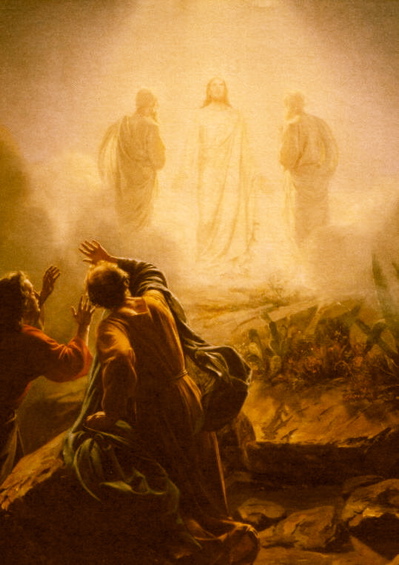
Carl Bloch, Tranfiguration

Matthew 16
Jesus Predicts His Death
 21 From that time on Jesus began to explain to his disciples that he must go to Jerusalem and suffer many things at the hands of the elders, the chief priests and the teachers of the law, and that he must be killed and on the third day be raised to life.
 22 Peter took him aside and began to rebuke him. “Never, Lord!” he said. “This shall never happen to you!”
Peter, swollen headed from his previous commendations, takes charge.
NIV notes, The beginning of a new phase in Jesus ministry. Instead of teaching the crowd in parables, he now concentrates on preparing the disciples for his coming suffering and death.
 23 Jesus turned and said to Peter, “Get behind me, Satan! You are a stumbling block to me; you do not have in mind the concerns of God, but merely human concerns.”
Lol! What is amusing is that, just in the previous paragraph, Peter had been told that the Father had revealed the truth of Jesus’ identity to him, and that he was the rock on which Jesus would build his church.
Now, he is rebuked as Satan, a stumbling block, who did not have in mind the concerns of God, but human concerns.
And that is what we humans are. At one moment, we are filled with revelation and insight, and realize we are blessed. The next moment we are impetuous and presumptuous, and have in mind human concerns, not the concerns of God, and are very like Satan in the things we prize. 
ESV notes–In the context of the Jewish master-disciple relationship, it would have been audacious for a disciple to correct his master, let alone rebuke him. Peter, like most of his fellow Jews, resisted the idea that the Messiah must suffer, even though it is found in the OT, Psalms, Isaiah, Zechariah.
Satan, a loan word from Hebrew, meaning adversary or accuser.

24 Then Jesus said to his disciples, “Whoever wants to be my disciple must deny themselves and take up their cross and follow me.
For me, the hardest sentence in Scripture.
 Saying No to self, shouldering the instrument of the death of the insistent demanding rowdy self and its desires is the only way to follow Christ.
The cross you carry is that of your own death, of doing exactly what you feel like (in terms of, let’s say, eating, control of temper, use of free time, use of money…)
This verse is one I need to be reminded of every day. 
And that is why it is good to read and study Scripture. Because, left to ourselves, we forget.
ESV notes–Satan attempts to hinder Jesus mission through Peter who does not understand that Jesus’ messianic role must include suffering and death.
25 For whoever wants to save their life will lose it, but whoever loses their life for me will find it.
Those who want to ensure the pleasantness of their lives in every detail, in fact, lose the pleasantness of it.
Those who lose their rights to the gratification of every desire for the sake of following the teachings of Jesus, in fact, find life.
ESV notes–Verses 25-27 each beginning with For (Greek Gar) provide three related reasons why a disciple must let go of his earthly life, and take up his cross. 
26 For what good will it be for someone to gain the whole world, yet forfeit their soul? Or what can anyone give in exchange for their soul?
 27 For the Son of Man is going to come in his Father’s glory with his angels, and then he will reward each person according to what they have done.
We will be rewarded or ACCORDING TO WHAT WE HAVE DONE. Or so this verse says. And so, it profits us nothing to gain everything for a finite time, and then lose our souls for eternity.

   28 “Truly I tell you, some who are standing here will not taste death before they see the Son of Man coming in his kingdom.”

Matthew 17

The Transfiguration
 1 After six days Jesus took with him Peter, James and John the brother of James, and led them up a high mountain by themselves. 2 There he was transfigured before them. His face shone like the sun, and his clothes became as white as the light.
This is the vision I would love to see. Jesus transfigured before me. His face shining like the sun. His clothes as white as the light.
Jesus, both our friend, the lamb of God, and the radiant one, whose face shines like the son, clothed in light.
His transfiguration was a reminder of the glory he had before he became man, and a preview of his future exaltation.

 3 Just then there appeared before them Moses and Elijah, talking with Jesus.
 4 Peter said to Jesus, “Lord, it is good for us to be here. If you wish, I will put up three shelters—one for you, one for Moses and one for Elijah.”
I love this–Peter is somebody who first talks, then thinks. Impulsive, impetuous, him with his foot in his mouth. His first reaction to the revelation of the glory of Christ is to say something, do something. And so, he reassures Christ that it is good that he is there to take charge at this critical juncture. And then offers to build shelters for these spiritual beings. 
ESV notes–Moses and Elijah represent the law and the prophets, which witness to Jesus as the Messaih, the one which fulfills the Old Testament.
5 While he was still speaking, a bright cloud covered them, and a voice from the cloud said, “This is my Son, whom I love; with him I am well pleased. Listen to him!”
The words which change everything. When we hear the father say, This is my daughter, whom I love. With her, I am well pleased.
And why does he say these words over us? Because we belong to Christ. We are grafted into Christ. We are in Christ, molecules in his bloodstream.
ESV notes–The bright cloud is reminscent of the cloud of God’s presence and glory in the OT, Exodus, and 1 Kings 8, 10-13
God the Father’s public endorsement of Jesus, his beloved son, echoes that given at Jesus’ baptism.
 6 When the disciples heard this, they fell facedown to the ground, terrified. 7 But Jesus came and touched them. “Get up,” he said. “Don’t be afraid.” 8 When they looked up, they saw no one except Jesus.
Terrified with a sense of awe at the presence and majesty of God.
And these are the great words which Jesus always speaks to us. Get up, don’t be afraid. 

 9 As they were coming down the mountain, Jesus instructed them, “Don’t tell anyone what you have seen, until the Son of Man has been raised from the dead.”
The Messianic secret. There is in Jesus, a continual waiting for the right time, the kairos time–the appointed moment in the purposes of God–rather than the chronos time, time as we know it. 

 10 The disciples asked him, “Why then do the teachers of the law say that Elijah must come first?”
They understand spiritual things literally, not metaphorically, a continual risk when dealing with the things of God.

 11 Jesus replied, “To be sure, Elijah comes and will restore all things. 12 But I tell you, Elijah has already come, and they did not recognize him, but have done to him everything they wished. In the same way the Son of Man is going to suffer at their hands.” 13 Then the disciples understood that he was talking to them about John the Baptist.
ESV–Understanding is a key theme of Matthew’s Gospel. 

Click button to share on Facebook, Twitter, Digg, Delicious, Reddit … Wikio

Filed Under: Matthew

Transfiguration, Jesus Reveals his Glory, Matthew 17, Day 39, Feb 18th, Blog Through the Bible Project.

By Anita Mathias

Carl Bloch, Tranfiguration
Matthew 16
Jesus Predicts His Death

 21 From that time on Jesus began to explain to his disciples that he must go to Jerusalem and suffer many things at the hands of the elders, the chief priests and the teachers of the law, and that he must be killed and on the third day be raised to life.

 22 Peter took him aside and began to rebuke him. “Never, Lord!” he said. “This shall never happen to you!”
Peter, swollen headed from his previous commendations, takes charge.
NIV notes, The beginning of a new phase in Jesus ministry. Instead of teaching the crowd in parables, he now concentrates on preparing the disciples for his coming suffering and death.
 23 Jesus turned and said to Peter, “Get behind me, Satan! You are a stumbling block to me; you do not have in mind the concerns of God, but merely human concerns.”
Lol! What is amusing is that, just in the previous paragraph, Peter had been told that the Father had revealed the truth of Jesus’ identity to him, and that he was the rock on which Jesus would build his church.
Now, he is rebuked as Satan, a stumbling block, who did not have in mind the concerns of God, but human concerns.
And that is what we humans are. At one moment, we are filled with revelation and insight, and realize we are blessed. The next moment we are impetuous and presumptuous, and have in mind human concerns, not the concerns of God, and are very like Satan in the things we prize. 
ESV notes–In the context of the Jewish master-disciple relationship, it would have been audacious for a disciple to correct his master, let alone rebuke him. Peter, like most of his fellow Jews, resisted the idea that the Messiah must suffer, even though it is found in the OT, Psalms, Isaiah, Zechariah.
Satan, a loan word from Hebrew, meaning adversary or accuser.

24 Then Jesus said to his disciples, “Whoever wants to be my disciple must deny themselves and take up their cross and follow me.
For me, the hardest sentence in Scripture.
 Saying No to self, shouldering the instrument of the death of the insistent demanding rowdy self and its desires is the only way to follow Christ.
The cross you carry is that of your own death, of doing exactly what you feel like (in terms of, let’s say, eating, control of temper, use of free time, use of money…)
This verse is one I need to be reminded of every day. 
And that is why it is good to read and study Scripture. Because, left to ourselves, we forget.
ESV notes–Satan attempts to hinder Jesus mission through Peter who does not understand that Jesus’ messianic role must include suffering and death.

25 For whoever wants to save their life will lose it, but whoever loses their life for me will find it.

Those who want to ensure the pleasantness of their lives in every detail, in fact, lose the pleasantness of it.
Those who lose their rights to the gratification of every desire for the sake of following the teachings of Jesus, in fact, find life.
ESV notes–Verses 25-27 each beginning with For (Greek Gar) provide three related reasons why a disciple must let go of his earthly life, and take up his cross. 
26 For what good will it be for someone to gain the whole world, yet forfeit their soul? Or what can anyone give in exchange for their soul?
 27 For the Son of Man is going to come in his Father’s glory with his angels, and then he will reward each person according to what they have done.
We will be rewarded or ACCORDING TO WHAT WE HAVE DONE. Or so this verse says. And so, it profits us nothing to gain everything for a finite time, and then lose our souls for eternity.

   28 “Truly I tell you, some who are standing here will not taste death before they see the Son of Man coming in his kingdom.”

Matthew 17

The Transfiguration

 1 After six days Jesus took with him Peter, James and John the brother of James, and led them up a high mountain by themselves. 2 There he was transfigured before them. His face shone like the sun, and his clothes became as white as the light.
This is the vision I would love to see. Jesus transfigured before me. His face shining like the sun. His clothes as white as the light.
Jesus, both our friend, the lamb of God, and the radiant one, whose face shines like the son, clothed in light.
His transfiguration was a reminder of the glory he had before he became man, and a preview of his future exaltation.


 3 Just then there appeared before them Moses and Elijah, talking with Jesus.

 4 Peter said to Jesus, “Lord, it is good for us to be here. If you wish, I will put up three shelters—one for you, one for Moses and one for Elijah.”
I love this–Peter is somebody who first talks, then thinks. Impulsive, impetuous, him with his foot in his mouth. His first reaction to the revelation of the glory of Christ is to say something, do something. And so, he reassures Christ that it is good that he is there to take charge at this critical juncture. And then offers to build shelters for these spiritual beings. 
ESV notes–Moses and Elijah represent the law and the prophets, which witness to Jesus as the Messaih, the one which fulfills the Old Testament.
5 While he was still speaking, a bright cloud covered them, and a voice from the cloud said, “This is my Son, whom I love; with him I am well pleased. Listen to him!”
The words which change everything. When we hear the father say, This is my daughter, whom I love. With her, I am well pleased.
And why does he say these words over us? Because we belong to Christ. We are grafted into Christ. We are in Christ, molecules in his bloodstream.
ESV notes–The bright cloud is reminscent of the cloud of God’s presence and glory in the OT, Exodus, and 1 Kings 8, 10-13
God the Father’s public endorsement of Jesus, his beloved son, echoes that given at Jesus’ baptism.
 6 When the disciples heard this, they fell facedown to the ground, terrified. 7 But Jesus came and touched them. “Get up,” he said. “Don’t be afraid.” 8 When they looked up, they saw no one except Jesus.
Terrified with a sense of awe at the presence and majesty of God.
And these are the great words which Jesus always speaks to us. Get up, don’t be afraid. 

 9 As they were coming down the mountain, Jesus instructed them, “Don’t tell anyone what you have seen, until the Son of Man has been raised from the dead.”
The Messianic secret. There is in Jesus, a continual waiting for the right time, the kairos time–the appointed moment in the purposes of God–rather than the chronos time, time as we know it. 

 10 The disciples asked him, “Why then do the teachers of the law say that Elijah must come first?”
They understand spiritual things literally, not metaphorically, a continual risk when dealing with the things of God.

 11 Jesus replied, “To be sure, Elijah comes and will restore all things. 12 But I tell you, Elijah has already come, and they did not recognize him, but have done to him everything they wished. In the same way the Son of Man is going to suffer at their hands.” 13 Then the disciples understood that he was talking to them about John the Baptist.
ESV–Understanding is a key theme of Matthew’s Gospel. 

Click button to share on Facebook, Twitter, Digg, Delicious, Reddit … Wikio

Filed Under: Matthew

You are the Christ, Matthew 16, Day 46, Feb 16, Blog Through the Bible Project

By Anita Mathias

Raphael, Christ and Peter
Matthew 16
The Demand for a Sign

 1 The Pharisees and Sadducees came to Jesus and tested him by asking him to show them a sign from heaven.
Oh Lord, give us your wisdom in the time of testing.
ESV Notes, they came to test him. They were seeking a sign or miracle which they could use against him.

 2 He replied, “When evening comes, you say, ‘It will be fair weather, for the sky is red,’ 3 and in the morning, ‘Today it will be stormy, for the sky is red and overcast.’ You know how to interpret the appearance of the sky, but you cannot interpret the signs of the times. 4 A wicked and adulterous generation looks for a sign, but none will be given it except the sign of Jonah.” Jesus then left them and went away.
His death and resurrection will be the sign.
The Yeast of the Pharisees and Sadducees

 5 When they went across the lake, the disciples forgot to take bread. 6 “Be careful,” Jesus said to them. “Be on your guard against the yeast of the Pharisees and Sadducees.”

 7 They discussed this among themselves and said, “It is because we didn’t bring any bread.”
 8 Aware of their discussion, Jesus asked, “You of little faith, why are you talking among yourselves about having no bread? 9 Do you still not understand? Don’t you remember the five loaves for the five thousand, and how many basketfuls you gathered? 10 Or the seven loaves for the four thousand, and how many basketfuls you gathered? 11 How is it you don’t understand that I was not talking to you about bread? But be on your guard against the yeast of the Pharisees and Sadducees.” 12Then they understood that he was not telling them to guard against the yeast used in bread, but against the teaching of the Pharisees and Sadducees.

Jesus is speaking metaphorically, The yeast of the Pharisees can infiltrate and ruin what is good. But the disciples are preoccupied with their physical needs.
An amazing passage. A very short time after the feeding of four thousand from a few loaves, they have totally forgotten it, and are again concerned about the lack of bread.
Faith can waver, can fail. We continually forget the mighty works of God. That is why the word of God is likened to food, which we need to eat again and again so that it provides stable and reliable nourishment. 
We can see mighty miracles and be full of fear and unbelief at the next crisis. Lord, strengthen our faith.

How many questions does Jesus ask in a row? Five. He is cross. These are important passages for a full understanding of Jesus. He can get cross and impatient. He does not tolerate spiritual foolishness of slowness of heart gladly.

 13 When Jesus came to the region of Caesarea Philippi, he asked his disciples, “Who do people say the Son of Man is?”

 14 They replied, “Some say John the Baptist; others say Elijah; and still others, Jeremiah or one of the prophets.”
   15 “But what about you?” he asked. “Who do you say I am?”
 16 Simon Peter answered, “You are the Messiah, the Son of the living God.”
Peter is intuitive, right-brained, impulsive. As such, he comes to the truth more swiftly than the others.
NIV notes, The word Messiah, Anointed One was originally used of anyone who was anointed with holy oil such as the priests and kings of Israel. The word contained the idea of being chosen by God, consecrated to his service, and enjoyed with his power to accomplish the assigned tasks. 
 Towards the end of the OT period, the word Messiah assumed a special meaning. It denoted the ideal ideal king anointed and empowered by God to rescue his people from their enemies and establish his righteous kingdom. The ideas that clustered around the title Messiah tended to be political and national in nature. So, Jesus seldom used the term. 
ESV Jesus is is the fulfillment of the OT promise of a divine son as anointed King. 

 17 Jesus replied, “Blessed are you, Simon son of Jonah, for this was not revealed to you by flesh and blood, but by my Father in heaven. 
Blessed, Greek Makarios. Jesus is not conferring blessing so much as acknowledging Peter’s condition of being privileged to benefit from God’s personal revelation.


18 And I tell you that you are Peter, and on this rock I will build my church, and the gates of Hades will not overcome it. 19 I will give you the keys of the kingdom of heaven;
NIV note–Perhaps Peter used these keys on the day of Pentecost, when he announced that the door of the kingdom was unlocked to Jews and proselytes, and later when he acknowledged that it was also opened to Gentiles.
Peter is given the authority to admit entrance into the kingdom through preaching the Gospel.


 whatever you bind on earth will be bound in heaven, and whatever you loose on earth will be loosed in heaven.” 
NIV note–Authority not to determine but to announce guilt or innocence. 


20 Then he ordered his disciples not to tell anyone that he was the Messiah.
Because of the false concepts of the Jews who looked for an exclusively national and political Messiah, Jesus didn’t want to precipitate a revolution against Rome.

Filed Under: Matthew

You are the Christ, Matthew 16, Day 46, Feb 16, Blog Through the Bible Project

By Anita Mathias

Raphael, Christ and Peter
Matthew 16
The Demand for a Sign

 1 The Pharisees and Sadducees came to Jesus and tested him by asking him to show them a sign from heaven.
Oh Lord, give us your wisdom in the time of testing.
ESV Notes, they came to test him. They were seeking a sign or miracle which they could use against him.

 2 He replied, “When evening comes, you say, ‘It will be fair weather, for the sky is red,’ 3 and in the morning, ‘Today it will be stormy, for the sky is red and overcast.’ You know how to interpret the appearance of the sky, but you cannot interpret the signs of the times. 4 A wicked and adulterous generation looks for a sign, but none will be given it except the sign of Jonah.” Jesus then left them and went away.
His death and resurrection will be the sign.
The Yeast of the Pharisees and Sadducees

 5 When they went across the lake, the disciples forgot to take bread. 6 “Be careful,” Jesus said to them. “Be on your guard against the yeast of the Pharisees and Sadducees.”

 7 They discussed this among themselves and said, “It is because we didn’t bring any bread.”
 8 Aware of their discussion, Jesus asked, “You of little faith, why are you talking among yourselves about having no bread? 9 Do you still not understand? Don’t you remember the five loaves for the five thousand, and how many basketfuls you gathered? 10 Or the seven loaves for the four thousand, and how many basketfuls you gathered? 11 How is it you don’t understand that I was not talking to you about bread? But be on your guard against the yeast of the Pharisees and Sadducees.” 12Then they understood that he was not telling them to guard against the yeast used in bread, but against the teaching of the Pharisees and Sadducees.

Jesus is speaking metaphorically, The yeast of the Pharisees can infiltrate and ruin what is good. But the disciples are preoccupied with their physical needs.
An amazing passage. A very short time after the feeding of four thousand from a few loaves, they have totally forgotten it, and are again concerned about the lack of bread.
Faith can waver, can fail. We continually forget the mighty works of God. That is why the word of God is likened to food, which we need to eat again and again so that it provides stable and reliable nourishment. 
We can see mighty miracles and be full of fear and unbelief at the next crisis. Lord, strengthen our faith.

How many questions does Jesus ask in a row? Five. He is cross. These are important passages for a full understanding of Jesus. He can get cross and impatient. He does not tolerate spiritual foolishness of slowness of heart gladly.

 13 When Jesus came to the region of Caesarea Philippi, he asked his disciples, “Who do people say the Son of Man is?”

 14 They replied, “Some say John the Baptist; others say Elijah; and still others, Jeremiah or one of the prophets.”
   15 “But what about you?” he asked. “Who do you say I am?”
 16 Simon Peter answered, “You are the Messiah, the Son of the living God.”
Peter is intuitive, right-brained, impulsive. As such, he comes to the truth more swiftly than the others.
NIV notes, The word Messiah, Anointed One was originally used of anyone who was anointed with holy oil such as the priests and kings of Israel. The word contained the idea of being chosen by God, consecrated to his service, and enjoyed with his power to accomplish the assigned tasks. 
 Towards the end of the OT period, the word Messiah assumed a special meaning. It denoted the ideal ideal king anointed and empowered by God to rescue his people from their enemies and establish his righteous kingdom. The ideas that clustered around the title Messiah tended to be political and national in nature. So, Jesus seldom used the term. 
ESV Jesus is is the fulfillment of the OT promise of a divine son as anointed King. 

 17 Jesus replied, “Blessed are you, Simon son of Jonah, for this was not revealed to you by flesh and blood, but by my Father in heaven. 
Blessed, Greek Makarios. Jesus is not conferring blessing so much as acknowledging Peter’s condition of being privileged to benefit from God’s personal revelation.


18 And I tell you that you are Peter, and on this rock I will build my church, and the gates of Hades will not overcome it. 19 I will give you the keys of the kingdom of heaven;
NIV note–Perhaps Peter used these keys on the day of Pentecost, when he announced that the door of the kingdom was unlocked to Jews and proselytes, and later when he acknowledged that it was also opened to Gentiles.
Peter is given the authority to admit entrance into the kingdom through preaching the Gospel.


 whatever you bind on earth will be bound in heaven, and whatever you loose on earth will be loosed in heaven.” 
NIV note–Authority not to determine but to announce guilt or innocence. 


20 Then he ordered his disciples not to tell anyone that he was the Messiah.
Because of the false concepts of the Jews who looked for an exclusively national and political Messiah, Jesus didn’t want to precipitate a revolution against Rome.

Filed Under: Matthew

  • « Previous Page
  • 1
  • …
  • 14
  • 15
  • 16
  • 17
  • 18
  • …
  • 20
  • Next Page »

Sign Up and Get a Free eBook!

Sign up to be emailed my blog posts (one a week) and get the ebook of "Holy Ground," my account of working with Mother Teresa.

Join 536 Other Readers

My Books

Rosaries, Reading, Secrets: A Catholic Childhood in India

Rosaries, Reading Secrets, B&N
USA

UK

Wandering Between Two Worlds: Essays on Faith and Art

Wandering Between Two Worlds
USA

UK

Francesco, Artist of Florence: The Man Who Gave Too Much

Francesco, Artist of Florence
US

UK

The Story of Dirk Willems

The Story of Dirk Willems
US

UK

My Latest Meditation

Anita Mathias: About Me

Anita Mathias

Read my blog on Facebook

Follow me on Twitter

Follow @anitamathias1

Recent Posts

  • At the Cross, God Forgives Us Completely
  • Using God’s Gift of Our Talents: A Path to Joy and Abundance
  • The Kingdom of God is Here Already, Yet Not Yet Here
  • All Those Who Exalt Themselves Will Be Humbled & the Humble Will Be Exalted
  • Christ’s Great Golden Triad to Guide Our Actions and Decisions
  • How Jesus Dealt With Hostility and Enemies
  • Do Not Be Afraid, but Do Be Prudent
  • For Scoundrels, Scallywags, and Rascals—Christ Came
  • How to Lead an Extremely Significant Life
  • Don’t Walk Away From Jesus, but if You Do, He Still Looks at You and Loves You
Premier Digital Awards 2015 - Finalist - Blogger of the year
Runner Up Christian Media Awards 2014 - Tweeter of the year

Categories

What I’m Reading


Wolf Hall
Hilary Mantel

Wolf Hall --  Amazon.com
Amazon.com

Amazon.co.uk

Silence and Honey Cakes:
The Wisdom Of The Desert
Rowan Williams

Silence and Honey Cakes --  Amazon.com
Amazon.com

Amazon.co.uk

The Long Loneliness:
The Autobiography of the Legendary Catholic Social Activist
Dorothy Day

The Long Loneliness --  Amazon.com
Amazon.com

Amazon.co.uk

Country Girl
Edna O'Brien

Country Girl  - Amazon.com
Amazon.com

Amazon.co.uk

Archive by month

My Latest Five Podcast Meditations

INSTAGRAM

anita.mathias

My memoir: Rosaries, Reading, Secrets https://amzn.to/42xgL9t
Oxford, England. Writer, memoirist, podcaster, blogger, Biblical meditation teacher, mum

Looking at photos from our week in beautiful Sevil Looking at photos from our week in beautiful Seville and Cordoba over New Year with Irene, who had a week off.
And, ICYMI, here’s my latest meditation on the Gospel of Matthew… I’ve recorded it, should you want a few minutes of peace.
https://anitamathias.com/2026/04/29/gods-complete-forgiveness/
Hello Friends, I'm resumed recording my meditation Hello Friends, I'm resumed recording my meditations on the Gospel of Matthew. Do click on this link to listen. 
https://anitamathias.com/.../29/gods-complete-forgiveness/
Christ is the most influential figure in the history of the world, though his life ended in shame, humiliation and failure. But he so completely turned things round in his great reversal that the cross on which he died when all seemed hopeless is now the most common, and revered, symbol in history.
He emerged from and was anchored in Judaism. And as the sins of the people were laid on the scapegoat who was sent into the wilderness to perish, Christ died as the lamb of God voluntarily bearing the guilt of the wrongdoing of the whole world. He paid the price for our forgiveness with his life-blood--in accordance with the iron law of the physical and moral universe, of sowing and reaping, cause and effect. 
And so, God, who appeared as flames of fire to Moses, can now dwell within us, purifying us, whose hearts have darkness and shards of ice. 
And now that Christ was crucified, died, but rose again, His Spirit, no longer contained within his earthly body, is poured out like living water onto all humans, at our humble request. The Spirit pours the love of God into us; he reminds us of the words of Jesus and slowly writes Christ’s sweet law on our hearts. This transfusion of grace helps us do hard things we previously couldn’t do. Our dance with the Spirit gradually breaks the power of sin over us. It transforms us.
Now we, the forgiven, protected by the blood of Jesus poured out over us, and filled with His Spirit, who sings within us, Abba, Father, are adopted by God as his children in his joyful new covenant. We are cells grafted into the vine of our new family--Father, Son, Spirit—who now live in us as we live in them. As we choose by our thoughts and actions to continue living in the vine of Jesus, their energy pulsing through us makes us fruitful. And now, all our prayers which flow in the river of God’s good purposes are kindly heard. Waves of love and power flood from the cross! 
Thank you!
Well, hello friends! Breaking radio silence to let Well, hello friends! Breaking radio silence to let you know that I have taped a meditation for you on Christ’s famous Parable of the Talents in Matthew 25. https://anitamathias.com/2025/11/05/using-gods-gift-of-our-talents-a-path-to-joy-and-abundance/
Here you are, click the play button in the blog post for a brief meditation, and some moments of peace, and, perhaps, inspiration in your day 🙂
Hi Friends, I have taped a meditation; do listen a Hi Friends, I have taped a meditation; do listen at this link: https://anitamathias.com/2025/04/08/the-kingdom-of-god-is-here-already-yet-not-yet-here-2/
It’s on the Kingdom of God, of which Christ so often spoke, which is here already—a mysterious, shimmering internal palace in which, in lightning flashes, we experience peace and joy, and yet, of course, not yet fully here. We sense the rainbowed presence of Christ in the song which pulses through creation. Christ strolls into our rooms with his wisdom and guidance, and things change. Our prayers are answered; we are healed; our hearts are strangely warmed. Sometimes.
And yet, we also experience evil within & all around us. Our own sin which can shatter our peace and the trajectory of our lives. And the sins of the world—its greed, dishonesty and environmental destruction.
But in this broken world, we still experience the glory of creation; “coincidences” which accelerate once we start praying, and shalom which envelops us like sudden sunshine. The portals into this Kingdom include repentance, gratitude, meditative breathing, and absolute surrender.
The Kingdom of God is here already. We can experience its beauty, peace and joy today through the presence of the Holy Spirit. But yet, since, in the Apostle Paul’s words, we do not struggle only “against flesh and blood, but against the rulers, against the unseen powers of this dark world and against the spiritual forces of evil,” its fullness still lingers…
Our daughter Zoe was ordained into the Church of E Our daughter Zoe was ordained into the Church of England in June. I have been on a social media break… but … better late than never. Enjoy!
First picture has my sister, Shalini, who kindly flew in from the US. Our lovely cousins Anthony and Sarah flank Zoe in the next picture.
The Bishop of London, Sarah Mullaly, ordained Zoe. You can see her praying that Zoe will be filled with the Holy Spirit!!
And here’s a meditation I’ve recorded, which you might enjoy. The link is also in my profile
https://anitamathias.com/2024/11/07/all-those-who-exalt-themselves-will-be-humbled-the-humble-will-be-exalted/
I have taped a meditation on Jesus statement in Ma I have taped a meditation on Jesus statement in Matthew 23, “For those who exalt themselves will be humbled, and those who humble themselves will be exalted.”
Do listen here. https://anitamathias.com/2024/11/07/all-those-who-exalt-themselves-will-be-humbled-the-humble-will-be-exalted/
Link also in bio.
And so, Jesus states a law of life. Those who broadcast their amazingness will be humbled, since God dislikes—scorns that, as much as people do.  For to trumpet our success, wealth, brilliance, giftedness or popularity is to get distracted from our life’s purpose into worthless activity. Those who love power, who are sure they know best, and who must be the best, will eventually be humbled by God and life. For their focus has shifted from loving God, doing good work, and being a blessing to their family, friends, and the world towards impressing others, being enviable, perhaps famous. These things are houses built on sand, which will crumble when hammered by the waves of old age, infirmity or adversity. 
God resists the proud, Scripture tells us—those who crave the admiration and power which is His alone. So how do we resist pride? We slow down, so that we realise (and repent) when sheer pride sparks our allergies to people, our enmities, our determination to have our own way, or our grandiose ego-driven goals, and ambitions. Once we stop chasing limelight, a great quietness steals over our lives. We no longer need the drug of continual achievement, or to share images of glittering travel, parties, prizes or friends. We just enjoy them quietly. My life is for itself & not for a spectacle, Emerson wrote. And, as Jesus advises, we quit sharp-elbowing ourselves to sit with the shiniest people, but are content to hang out with ordinary people; and then, as Jesus said, we will inevitably, eventually, be summoned higher to the sparkling conversation we craved. 
One day, every knee will bow before the gentle lamb who was slain, now seated on the throne. We will all be silent before him. Let us live gently then, our eyes on Christ, continually asking for his power, his Spirit, and his direction, moving, dancing, in the direction that we sense him move.
Link to new podcast in Bio https://anitamathias.co Link to new podcast in Bio https://anitamathias.com/2024/02/20/how-jesus-dealt-with-hostility-and-enemies/
3 days before his death, Jesus rampages through the commercialised temple, overturning the tables of moneychangers. Who gave you the authority to do these things? his outraged adversaries ask. And Jesus shows us how to answer hostile questions. Slow down. Breathe. Quick arrow prayers!
Your enemies have no power over your life that your Father has not permitted them. Ask your Father for wisdom, remembering: Questions do not need to be answered. Are these questioners worthy of the treasures of your heart? Or would that be feeding pearls to hungry pigs, who might instead devour you?
Questions can contain pitfalls, traps, nooses. Jesus directly answered just three of the 183 questions he was asked, refusing to answer some; answering others with a good question.
But how do we get the inner calm and wisdom to recognise
and sidestep entrapping questions? Long before the day of
testing, practice slow, easy breathing, and tune in to the frequency of the Father. There’s no record of Jesus running, rushing, getting stressed, or lacking peace. He never spoke on his own, he told us, without checking in with the Father. So, no foolish, ill-judged statements. Breathing in the wisdom of the Father beside and within him, he, unintimidated, traps the trappers.
Wisdom begins with training ourselves to slow down and ask
the Father for guidance. Then our calm minds, made perceptive, will help us recognise danger and trick questions, even those coated in flattery, and sidestep them or refuse to answer.
We practice tuning in to heavenly wisdom by practising–asking God questions, and then listening for his answers about the best way to do simple things…organise a home or write. Then, we build upwards, asking for wisdom in more complex things.
Listening for the voice of God before we speak, and asking for a filling of the Spirit, which Jesus calls streams of living water within us, will give us wisdom to know what to say, which, frequently, is nothing at all. It will quieten us with the silence of God, which sings through the world, through sun and stars, sky and flowers.
Especially for @ samheckt Some very imperfect pi Especially for @ samheckt 
Some very imperfect pictures of my labradoodle Merry, and golden retriever Pippi.
And since, I’m on social media, if you are the meditating type, here’s a scriptural meditation on not being afraid, while being prudent. https://anitamathias.com/2024/01/03/do-not-be-afraid-but-do-be-prudent/
A new podcast. Link in bio https://anitamathias.c A new podcast. Link in bio
https://anitamathias.com/2024/01/03/do-not-be-afraid-but-do-be-prudent/
Do Not Be Afraid, but Do Be Prudent
“Do not be afraid,” a dream-angel tells Joseph, to marry Mary, who’s pregnant, though a virgin, for in our magical, God-invaded world, the Spirit has placed God in her. Call the baby Jesus, or The Lord saves, for he will drag people free from the chokehold of their sins.
And Joseph is not afraid. And the angel was right, for a star rose, signalling a new King of the Jews. Astrologers followed it, threatening King Herod, whose chief priests recounted Micah’s 600-year-old prophecy: the Messiah would be born in Bethlehem, as Jesus had just been, while his parents from Nazareth registered for Augustus Caesar’s census of the entire Roman world. 
The Magi worshipped the baby, offering gold. And shepherds came, told by an angel of joy: that the Messiah, a saviour from all that oppresses, had just been born.
Then, suddenly, the dream-angel warned: Flee with the child to Egypt. For Herod plans to kill this baby, forever-King.
Do not be afraid, but still flee? Become a refugee? But lightning-bolt coincidences verified the angel’s first words: The magi with gold for the flight. Shepherds
telling of angels singing of coming inner peace. Joseph flees.
What’s the difference between fear and prudence? Fear is being frozen or panicked by imaginary what-ifs. It tenses our bodies; strains health, sleep and relationships; makes us stingy with ourselves & others; leads to overwork, & time wasted doing pointless things for fear of people’s opinions.
Prudence is wisdom-using our experience & spiritual discernment as we battle the demonic forces of this dark world, in Paul’s phrase.It’s fighting with divinely powerful weapons: truth, righteousness, faith, Scripture & prayer, while surrendering our thoughts to Christ. 
So let’s act prudently, wisely & bravely, silencing fear, while remaining alert to God’s guidance, delivered through inner peace or intuitions of danger and wrongness, our spiritual senses tuned to the Spirit’s “No,” his “Slow,” his “Go,” as cautious as a serpent, protected, while being as gentle as a lamb among wolves.
Follow on Instagram

© 2026 Dreaming Beneath the Spires · All Rights Reserved. · Cookie Policy · Privacy Policy