Anita Mathias: Dreaming Beneath the Spires

Anita Mathias's Blog on Faith and Art

  • Home
  • My Books
  • Meditations
  • Essays
  • Contact
  • About Me

Christians, Quit Being so Oppositional!

By Anita Mathias

Image Credit

 So, on the 1st of August, on Chick-Fil-A Appreciation Day hundreds of thousands of Americans bought sandwiches from the popular fast food chain. Chick-Fil-A made $30 million on that day, to be donated to anti-gay groups.


Dan Cathy and his chain were being appreciated because they were “guilty as charged” of donating a cumulative $5 million dollars of corporate money to anti-gay groups, including the Family Research Council, called a Hate Group by the Southern Poverty Law Centre.
And in my mind’s eye, I watch Jesus watch these snaking queues of Christians identify with him by buying these sandwiches, and I believe he is very sad. 
Why do I believe this?
Because it makes me and so many other Christianscry. And Jesus when he sees us care—enough to give good gifts to our children, to look for a lost coin, or sheep or son–uses the same phrase, how much more would his father care.
5 million dollars for the project of changing people’s sexuality, a project with limited and dubious success, and to oppose  gay marriage and gay rights!! 
Oh, how has the overwhelmingly positive message of Jesus—love one another; trust God; don’t worry, the Father cares; there is true life only in God; forgive aught against any—got reduced to being against gay marriage, against abortion, against gun control, against immigration, against Barack Obama, against the democrats?  Oh my fingers hurt just typing all this!
* * *
Five million dollars is both pocket change to God which he can give those who ask with a single good idea–and a significant sum of money.
It could sponsor 11,904 children for a year, providing them with food, education and clothing through World Vision at $35 a month. It can provide clean water to 250,000 people who might otherwise die young from preventable water-borne diseases, or spend many hours a day hauling water, exposing themselves to violence and sexual assault in the process. Nine year old Rachel Beckwith raised $1.2 million, providing clean water for 60,000 people in Ethiopa.
Because of early and unassisted childbirth, two million people suffer from fistulas.  “Women and girls with fistulas become pariahs. Their husbands divorce them, and they are moved to a hut at the edge of the village. They lie there in pools of their waste, feeling deeply ashamed, trying to avoid food and water because of the shame of incontinence, and eventually they die of an infection or simple starvation,” according to The New York Times.   Dr Steve Arrowsmith and volunteer doctors who work with the Fistula Foundation could heal 11,111 women for 5 million dollars
And if you believe, as I do, that man does not live by bread alone, but also by every word from the mouth of God, 5 millions dollars will pay for the translation of the entire Bible into 6.15 languages through Wycliffe Bible Translators’ The Seed Company (at $26 for a verse, painstakingly checked through a rigorous six step process). We’ve supported a small part of the Seed Company’s translations, and it’s very satisfying.
* * *
Which of these activities do you think is closer to the heart of Jesus?
Will funding anti-gay organizations make a gay person straight? Sexual desire stems from our unconscious limbic system and the autonomic nervous system. Attempting to change these is fraught with failure. Exodus International, (supported by Chik-fil-A) which attempts reparative, conversion therapy on gays, recently admitted that 99.9% of conversion therapy participants do not experience any change to their sexuality
And if they did? Is that what Jesus primarily came for? Called us to? To make gay people straight?
Or is his mandate that we follow him?
And, perhaps, in the process of following Christ some gay people might marry a heterosexual partner. And some might remain gay, but still love Christ.
 Lonnie Frisbee who was instrumental in the founding and flourishing of the Calvary Chapel Movement, and instrumental in the founding of the Vineyard when the spirit fell on hundreds of young peopleas he prayed, Come Holy Spirit was gay, despite his struggles, and died of AIDS.
The remarkable and saintly William Stringfellow was gay, and memorably wroteCan a Homosexual be a Christian? One might as well ask, can an ecclesiastical bureaucrat be a Christian? Can a rich man be a Christian?    Can anybody be a Christian? Can a human being be a Christian? All such questions are theologically absurd.
To be a Christian does not have anything essentially to do with conduct or station or repute. To be a Christian does not have anything to do with the common pietisms of ritual, dogma or morals in and of themselves. To be a Christian has, rather, to do with that peculiar state of being bestowed upon men by God….
Can a homosexual be a Christian? Yes: if his sexuality is not an idol.
                                           * * *
 
And when did following Jesus become synonymous with defending “traditional marriage?” Or disapproving of gays?
What did Jesus say for–or against gays? Nothing!!
His message was love. His message was Himself. Come to me. Eat me. Drink me. Abide in me.
And what happens when we do so? That’s his business. He will take each of us through different paths.
And so there will be rich Christians and poor Christians.
Republican Christians and Democratic Christians.
Christians who are pro-life, and Christians like Ann Lamott who believe, to quote “there are two lives involved in an abortion — one born (the pregnant woman) and one not (the fetus) — but that the born person must be allowed to decide what is right.”
Christians who cheered on George Bush as he bombed Afghanistan and Iraq, and people like our family who were so distressed by it that we immediately started applying for jobs in other countries.
Gay Christians perhaps, and straight Christians.
Christ is too wonderful a treasure, too rich a feast to limit himself or be limited to straight people.
Christianity is a relationship, not a cultural statement.  God will call Christians to be salt and light and sweetness in every area of society, among the rich and among the poor; among the highly educated intelligentsia, and those who follow the crowd;  among conservatives and among liberals; among the gay and among the straight.
                                               * * *
So what stand would Jesus take on gay marriage, and gay ordination, these schismatic issues?  We don’t know, but we can surmise from the four loving detailed biographies we have of him.
Above all things, he hated hypocrisy. He hated self-righteousness and holier-than-thouness. He opposed the unthinking group mind. When the Pharisees of his day all clung together, clucking their tongues, Jesus was on the outside with the least and the last.
And these were the people he sided with, reached out to, spent his time with: Zacchaeus, who was notoriously dishonest. A woman caught in adultery. A woman who had led a sinful life. A woman who had been serially married and now lived “in sin”. A hot-tempered, violent Peter. A friend of prostitutes and sinners, he was called.
And if he met a gay man or woman? He would have preached the gospel to him, as he would to anyone else. He would have loved them, overwhelmingly. And they might in response have adopted traditional marriage. Or perhaps, might not have. That is between them, Jesus, and his Spirit.
Being is a Christians is not about making gay people straight or picketing abortion clinics or defending the intent of the American Founding Fathers or American values.
It is about a relationship with a person. A relationship which turned the world upside down in the first century (Acts 17:6) and will, infallibly turn our world upside down if we let it have its way with us. 

Filed Under: random

His Grace is Sufficient in the Pursuit of Excellence

By Anita Mathias


 This has been a big year for sport in the UK. Andy Murray was the first Brit in the men’s singles in 74 years.
When we entered our church, St. Andrew’s, Oxford on July 8th, Wimbledon was on the big screen rather than Christian graphics.
Our sports-mad Vicar, Andrew Wingfield-Digby, was founder and National Director of Christians in Sport, chaplain at the Seoul and London Olympics, and chaplain to the England National Cricket Team. So we watched Murray  play Federer while the worship leaders strummed  worship songs. Very surreal!!
Everyone was gripped, so Andrew democratically asked for the vote as to who wanted to watch the final set at Wimbledon and who wanted to worship God. Wimbledon won (our family voted with the victors), so the worship leaders looking grumpy and resigned, continued strumming Be Thou My Vision, and I Surrender All, while we watched the screen, the sound now turned on, and church started at 6.20 p.m. instead of 6, with the TV switched off just as Andy Murray broke down.
I think crying is a natural, and not unmanly response to a loss made more terrible by the fact the hopes of a nation are pinned on you.
Loss in the Olympics are even sadder. Years and years of training and it’s all over in a few minutes, sometimes seconds. And only one gets the gold. 3 get medals. The rest have lost.
Is it worth it?
                                                     * * *
Yes, because the one loss at Wimbledon or the Olympics is preceded by a thousand victories. An elite athlete probably begins excelling in Kindergarten, winning numerous events in PE, for her house, her school, her town, her country, her country, internationally… Many successes for each big failure.
And so it is in anything competitive: we win some, we lose some, and when we do, we have to decide whether we are going to focus on the heartbreak of the loss or failure or rejection, or the joy of the thousand little successes that got us to the point of the big failure.
I was crushed by the rejection of a book manuscript I had written at great cost about 16 years ago. I told a kind lady who was mentoring me that I felt I was a failure. She reminded me of all my little achievements, the prizes I had won, the publications. “Many people would be green with envy to have achieved what you have,” she said kindly, but  it didn’t  help.
Now, years later, I have decided that, when I meet a setback, I’ll remember all the little successes which got me to the stage at which I credibly hoped for the prize, the acceptance letter. And thank God for them instead of sinking into despair.
And continue striving for excellence. For there is as much joy in the quest for excellence as attaining it.
Here’s a poem by Robert Francis called Excellence:
Excellence is millimeters and not miles.
From poor to good is great. From good to best is small.
From almost best to best sometimes not measurable.
The man who leaps the highest leaps perhaps an inch
Above the runner-up. How glorious the inch
and that split-second longer in the air before the fall.
* * *
 And another thing now keeps me light-hearted. I have given my writing and blogging to God and so do not feel that I own my writing, or that it is entirely my own responsibility. I am in Jesus, a branch in the vine, and will write as his sap and juice flow through me. His grace is sufficient for me.
Here’s my favourite Max Lucado story: 
Tom walks down the street and meets Dick, who is grinning from ear to ear.

Tom, “What are you so happy about?”

Dick, “Well, I’ve met a man who promised to do all my worrying for me for $80,000 a year.”

Tom, “$80,000 a year. How are you going to get that?”
Dick, grinning, “That’s HIS worry!”

This helped me hugely in my approach to money. Travel is expensive because it is all unfamiliar. One thing is guaranteed: mistakes. In the past, when I felt money haemorrhaging because of my mistakes or because I was ripped off, I would feel sad or annoyed. If it was Roy’s fault, I’d engage in mild recrimination.
Now I feel relaxed about it. I try to be wise, but have realized that stupidity is not a sin, and mistakes are part of being human. And it’s not really my money. It is God’s abundance temporarily in my hands. I am but a temporary conduit, and try to act wisely, but he will not hold mistakes and misjudgements against me.
And just as I have been blessed by other people’s errors (I own a publishing company, and people buy our books every day even though we are rarely the cheapest!) it’s okay if money flows through my hands to other people, willingly or unwittingly.  It’s not really my money, but God’s and he will look after it.  And me.
                                                  * * *
On this holiday, I made another cognitive shift which I sense will be important in my life.
I have unsuccessfully battled with weight for most of my life. And so, I made the sort of bargain with God which has transformed so many areas of my life. Somewhat as alcoholics say at AA, I said, “Lord, I have failed to eat healthily and exercise enough to be really fit. Lord, you step in and take over. Lord, empower and enable me to be healthy.”
And I know he’s heard my prayer, and so I am waiting to see how he will answer it.
His grace is sufficient.

Filed Under: random

The Cosmic Significance of the Cross of Christ

By Anita Mathias

I can’t precisely date when exactly I realized that God loved me though it is the most life-changing idea I’ve encountered.

Similarly, I can’t quite date when I understood the significance of the death of Jesus. Of the Cross of Jesus. Of the purifying, protecting blood of Jesus.

As I began to understand them, they brought me a sense of protection. I somehow feel safe because I am covered by the blood of Jesus shed for me. I feel safe, because I can hid in Jesus who died for me.

* * *

The birth of Jesus is the central event in the history of the world. It bifurcates history, as recognized in the Gregorian calendar, the only internationally accepted civil calendar.

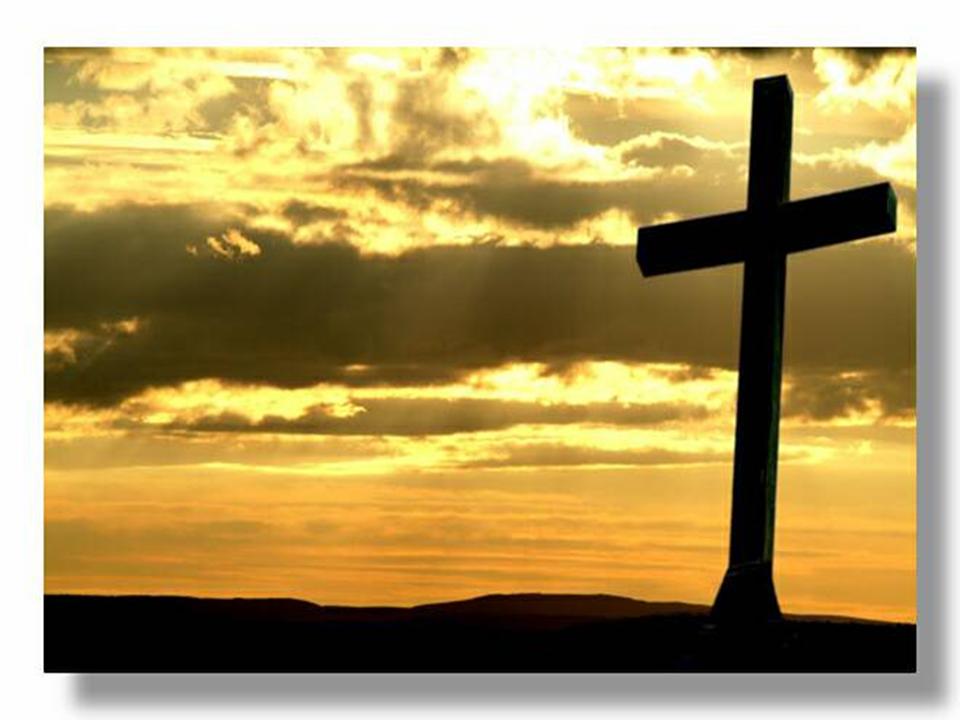
He died nailed to the beams of a cross. That cross stands out across the world, and its importance steadily deepens as it reverberates through human history, spanning its height and depth, its length and breadth.

In the cross all things hold together.

In the cross of Jesus, Judeo-Christianity makes sense, is a logically satisfying system, the system of sacrifices in atonement for sin ending with one perfect victim.

* * *

We are children of God, made in the image of God. God loves us.  All of us.

Jesus explains that if even bad fathers give good gifts to their children, how much more would our heavenly father give us good gifts.

In fact, just as many parents would instinctively give their lives for their children, God allowed part of himself, his heart of hearts, his son, to volunteer to bear the punishment for humanity’s sins, to redeem us by his blood shed in our stead. The Sinless One suffered an unjust punishment to pay for the sins of the world.

The significance of the death of Jesus, the power of the life-blood of God, of the death and resurrection of God is vaster, deeper and higher than we realize.

Behold the Lamb of God who takes away the sins of the world, John cried. Whose sins did he take away? The world’s.

This is the blood of the new covenant which is shed for the forgiveness of sins. Whose sins? Perhaps anyone who wants his sins to be forgiven. And who does not?

Perhaps the blood of the all-powerful creator God cleanses all who crave for its cleansing, provides a new and living way to God for all who crave God.

Not just Jews, not just Protestants, not just Christians, but all men perhaps, the men of any tribe, and people and language and nation who will praise him they might have never known by the name of Jesus.

* * *

And the Cross changes who I am. There is now a clear pathway between me and God, me and the Spirit.

I am no longer just Anita, shaky little Anita who can be thrown off course by the challenges and demands of success or the slings and arrows of outrageous fortune.

In Jesus, because of the death of Jesus, I am a different, more steely and formidable creature altogether. I am Anita-in- Jesus; Anita, a branch in the vine, with Jesus’s sweet life flowing through her. Anita, reconciled to Jesus by his death, Anita with the sweet spirit of Jesus enabling her to do the difficult.

* * *

God does not show favouritism but accepts men from every nation who fear him and do what is right. (Acts 10:34). And when men from every tribe and tongue and people and nation worship the lamb, it may well include those who worship him they have sensed and loved, whose glory the heavens proclaim, and whose name, they realize at last, is Jesus.

Does that remove the impetus of missions—the possibility that, as in the vision of Peter, God accepts men from every nation who fear him?

Not really. For Jesus is sweet, and lovely and following him is the best way to live, and so he is a secret we should share–even though he is too good to punish the men and woman of Chad and Niger for my failure to go to them and tell them of Him.


Filed Under: random

Rich Christians and World Poverty. How much should we give?

By Anita Mathias

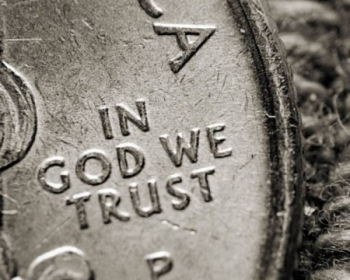
god we trust Tithing and the abundant life

So there is unbelievable poverty in the world. But most of us who live in the West have enough to satisfy all our needs and many of our wants.

And, often, the disparity gnaws at us.

How much should we give away?

We feel sad about the suffering of the poor.  But we live in the West, we take on the coloration of the West, and our needs become Western, including the need to take a break from the pace of life (our children’s frenetic pace of life, if not ours) and escape distraction by distraction, in Eliot’s phrase. For instance, I don’t particularly covet things any more, but I do enjoy working hard/playing hard, and I love travel and exploration.

* * *

To think  what you spend on coffee each  could send an African girl to school; your holiday in Europe could support an African family for a year could poison your life with guilt—particularly if you do not in fact give away the money saved (which, I suspect, is often the case!)

But how much should we give away?

The Apostle Peter asked for a concrete figure to appease his conscience.

“How many times should I forgive my brother if he sins against me. Seven times?” he asks magnanimously.

But Jesus does not fall for this.  When can I stop forgiving? he hears Peter asking

So he gives a rhetorical, hyperbolic figure, impossible to track. 70 times 7.

Infinitely.

(And I must say that I have probably forgiven Roy and my children that often!)

* * *

Giving away a large percentage of our money, something we have toiled for, worried about, and greatly desire because of the worlds and opportunities it opens to us, is as difficult as forgiveness perhaps.

And so those who lived under law were given a convenient, easily calculated figure–ten percent as a minimum. And then something over that, as their conscience led them, “offerings.”

* * *

For us, under grace, no figure has been given. No easy: “Okay then, ten percent is God’s, and 90 percent all mine.”

But giving ten percent is a useful rule, and will probably unleash much blessing in your life. I have read it in biographies, been told so by friends, and most persuasively, giving 10 percent has always unleashed miracles, windfalls, and unexpected blessing in my life.

* * *

I read in late 2003 in the World Vision magazine, about struggling cherry farmers in Washington State, who wanted to do something about world poverty. They decided to tithe to World Vision, though their business was precarious. And then increased it. Soon, the amount they gave away in tithes each year was the same as their annual salary the year they had started giving. Their income had increased ten-fold, and they were giving away substantial sums! God blessed their business because he trusted them to be a conduit of blessing.

I was so inspired by the fact that ordinary individuals could dent poverty on a small scale, that I decided to increase our base tithe by a percentage point each time we got a financial windfall, a grant, a cash prize, a cash gift. So we were giving 16 percent by the time we left America in 2004. The generosity unleashed blessing.

And then we moved to England, and money was tighter—significantly higher house prices, taxes, and we went private for schooling. Though we had tithed for all our Christian lives, we stopped. We gave, of course, but not ten percent. I led Bible studies as my service to the church.

And we financially struggled for the first two and a half years that I ran my small business–and for the only time in our lives. I wonder now what would have happened if we had tithed!! It wouldn’t surprise me if God would have blessed us with good ideas and good luck, and the tide would have turned sooner.

But there is a toughness and tensile strength of character which is best forged in the school of suffering, and so I do not regret its lessons.

* * *

Though the Old Testament tithe is no longer a requirement to us who are redeemed by the blood of Christ, and live under grace, it is a good starting point. Easy to calculate, and not difficult for almost everyone in the West, and many people in the majority world too. And then, offerings over that, as our heart is moved by specific needs.

I think world poverty would be significantly dented if Christians tithed.

* * *

But we do need to tithe way beyond our little church. The Old Testament tithe supported widows, orphans and aliens in addition to the Levites (Deut 14:28).

If we all gave ten percent of our income to the church we attend, we’ll soon have obscenely overpaid fat-cat pastors in affluent areas, and the money would provide a show on Sunday to rival a concert, and the church could become a club with aerobics classes, weight loss classes, coffee mornings and pamper evenings, being ever more appealing and ever richer, while the poor in the majority world become poorer and poorer. As Larry Burkett points out, tithing in rich, inward-focused, growth-focused churches is essentially tithing to yourself and your church family!!

Not every pitch you hear from the pulpit is motivated by real need. Some are motivated by the pastor’s ambition for glory. Learn to distinguish between what pastors legitimately need to preach the gospel, and which appeals are motivated by ambitious profile-boosting and empire-building. For these sort of appeals will never end.

On the other hand, if we followed the Old Testament model and ensured that 2.5 percent of our income goes to support the local church, and 7.5 goes to support the poor, including “aliens,” our economy will be closer to the one God envisioned, and perhaps there would be few poor among us.

* * *

We ourselves, of course, may have less money than if we did not give. Though not necessarily. Gretchen Rubin, a secular writer who writes on happiness, cites studies that the more one gives, the more one’s wealth increases—perhaps because of the positive feelings that  giving and generosity provide, and other people’s respect for the generous. Roy and I first started tithing in 1990, and were amazed at all the little miracles of financial provision which suddenly followed us, seemingly as a consequence.

And if tithing leaves us with less money than we would have had? So what? Less money=less stuff, less distraction, more simple pleasures, and a quieter life. Money truly does not buy happiness beyond a certain point, and most of us, if we track our times of deepest happiness, may discover that they were times of simple pleasures which did not require very much money at all.

Filed Under: random Tagged With: blessing, generosity, giving, tithe

Hamlet in the Bodleian Quad

By Anita Mathias

The quad of the Bodleian Library
Image credit


photo
Image credit

Watched an open-air Hamlet at the Bodleian Library yesterday. Magical! The Quad was a suitable stand-in for Elsinore Castle, all very majestic.


Pigeons flew around to roost as darkness fell, and the setting sun bathed the quad in golden light.
And oh, the poetry! Though I have last studied that play in 1986, I was surprised at how much I remembered, at how gorgeous the language was, and at how many phrases have entered the English language.
If I had not formally studied the play, I would not have enjoyed it as much.
Formal study, or self-study, adds so much depth to our appreciation of the arts, whether painting, architecture, poetry or film.
I was grateful to God for a magical evening.

Filed Under: random

Does worship music provide a short cut into the presence of God?

By Anita Mathias

Are there short cuts into the presence of God? Into the most holy place, between the wings of the cherubim?
Yeah, I think God might provide them, because he is a searching, seeking God, looking for the lost coin, the lost sheep, the lost sinner.
For me, one of the short cuts is worship music.
Not instead of more muscular devotions, like prayer or Bible study. I haven’t yet considered listening to music instead of a set time of prayer, but as an addition to it.
                                                          * * *
My time of listening to music is while doing housework. Or brushing my teeth, because I often start my day spiritually cold and emotionless. Or I take a break when I feel disgruntled, or spiritually bored, and distracted; I tidy my room, while listening to music
The music profoundly affects my brain, liberating oxytocin and endorphins (and occasionally, an adrenalin rush), ushering me into the presence of God, changing my emotions, making me feel devotion. 


Saint Augustine wrote, “He who sings prays two-fold.”
                                                    * * *
Is there any value to emotions initially sluggish, now stirred into devotion by soulful worship music?
As with anything else in the spiritual realm, it depends on the fruit. Mere feelings that bear no fruit in action, or changed thinking or changed emotions are the seed which falls by the wayside. (One could read the Parable of the Sower as saying that the word of God bears no apparent fruit 75% of the times that it falls on our souls!)
However, sometimes, the music, the lyrics convict and soften us. We remember times we have been hard—lacking in mercy, lacking in generosity. We cannot respond fully to “I surrender all,” because we recollect some area in which we have not been surrendered. We surrender it.
As the stream of music, like the spirit of God, flows through our hearts, it might meet obstacles, little pockets of anger, unforgiveness or self-will, and God willing, some of these dissolve.
Yes, music definitely does often melt my heart and usher me more swiftly into the presence of God. The spiritual value of it, of course, depends on what I do with the insights and convictions which spring from my time of listening to the music.
Whom do I like listening to? Michael Card for the lyrics, almost evenly good, and the music. Matt Redman whose lyrics and music are hugely uneven, but who is sublime at his best. Love Rich Mullins, his music, lyrics and heart. Like Stuart Townend. Many of the Vineyard compilations are marvellous.
Since I changed my whole way of praying two years ago, using soaking prayer, I have got interested in a style of music which aims to mimic “the soundscape of heaven,” like Ernesto Rivera, or Misty Edwards, who though uneven, but brilliant at her best.
My favourite classical pieces are the Messiah, and Pachelbel’s Canon. I like Byrd and Tallis too.
I  haven’t been keeping up with worship music of late.
Who do you like listening to? Does worship music usher you more swiftly into the presence of God?

Filed Under: random

“A New Name,” Emma Scrivener on finding healing from an eating disorder

By Anita Mathias


Emma Scrivener was born in Belfast, but now lives with her husband in the south east of England. She suffered from life-threatening anorexia as a child and as an adult. She now speaks and writes about her experiences at www.emmascrivener.net. Her book, ‘A New Name’ is published by IVP (ISBN: 9781844745869, 176 pages, £7.99), and can be ordered at the Emma’s website, Amazon.co.ukand  Amazon.com.


 If you’d met me seven years ago, here’s what you’d have seen:  a ‘successful’ Christian, newly married to a vicar in training. Leader of a thriving children’s ministry. A talented student with a bright future ahead. Someone who seemed to have it all together.
But there’s one part you might have missed: a young woman gripped by an eating disorder that would nearly take her life.
For a long time I hid my obsession. I threw myself into church activities, missions and teaching.  On the outside I looked pretty good – a  dynamo, burning out ‘for the Lord’.  I even believed it myself. But at the heart of my ‘ministry’ beat a commitment to proving – and saving – myself.
So how did I get there – and what has helped to bring me out?
It started when I turned 13. Up until then I’d had an idyllic childhood: I knew who I was and I knew where I belonged.  But almost overnight, that started to change.  My grandfather died.  I moved schools.  My body felt out of control: like a tanker, spilling flesh and hormones.  In search of answers, I even started going to church.
The God I heard about was real and personal, and I resolved to follow Him. But in retrospect, we were never properly intro­duced. You see, my brand of Christianity had space for ‘God’, but not for Jesus. It talked about sin and rules – but less about grace. It paid lip service to his work on my behalf. But, in practice, it was up to me to prove my own worth.
So that’s what I did. I worked hard and won prizes.  I resolved to be smart and pretty and most of all, ‘good’. But nothing – whether clothes or friends or money, was ever enough. Instead of finding satisfaction, I was filled with hungers. I didn’t know what they were called or where to put them. What I did know was this: they were too much.
I was too much – too needy, too intense, too messy, too fat.
So I made a decision. Instead of my desires killing me, I would kill them. I would squash my hungers and I would fix myself. I would be thin.
Instead of a problem, anorexia appeared to be a solution.   A way of negotiating the world and making it ‘safe’. In reality, it almost killed me – not just once, but twice.
The first time, I was a teenager and professionals forced me to eat. I put on weight – but though I looked better on the outside, on the inside I felt the same. Ten years later, my old habits returned. My husband and I were finishing Bible college and I was overwhelmed by the prospect of a new parish and my role as a vicar’s wife. Unable to cope, I stopped eating. By the end I could barely walk: but this time, I was an adult – it seemed that nothing and no-one could help.
Then came the phone-call.  My beloved grandmother had died – but I was too weak to travel to her funeral. That night, faced with the reality of my choices, something in me finally broke. In desperation, I cried out to the God I’d tried to flee:
 ‘I’ve exhausted my own resources’ I said.  ‘But if you want me, you can have what’s left’.
I had always pictured God as a scary headmaster – slightly disapproving and far away.  Someone with rights over my soul – but not my body. Someone who wanted me to perform and keep His rules.  This God would surely strike me down or turn me away. But there was no blinding flash of light. No smoke or lightning.  Instead, I discovered something far more exciting.   As I opened my Bible, I found Jesus.
Instead of the God I thought I knew; in Jesus I met the one who knew me.  This Jesus confronted me, notas a tyrant or heavenly taskmaster, but as a gift. He came offering himself.  On the cross my badness and my goodness were taken away: rendered irrel­evant by his sacrifice.  Jesus didn’t want apologies, resolutions or assurances that I would do better. He wanted me. Instead of making me perform, he lifted me clean out of the arena. In return, he asked only one question: Would I receive him?
I was the girl who always said ‘No’.
‘No’ to people
‘No’ to relationships
‘No’ to marriage and health and family and food
‘No’ to risk and desire and vulnerability and need
But as I looked at Him – the Saviour who knew me and yet loved me – I said ‘Yes.’
And that was when my life and recovery began.


Filed Under: random

Thin Places: Where the veil between the physical and spiritual worlds is almost transparent

By Anita Mathias

The High Cross at Fflad-y-Brenin

sunset_calf_sound_7Celtic Christians prized “thin places,” where the boundaries between the spiritual and physical world are almost transparent. Where we can sense shimmering in the physical world the just-as-real, invisible, supernatural world, charged with the glory of God, with hills ringed with angels in chariots of fire.

Could God really be more present in one place than in another? I wondered until I slowed down, calmed down, and began to experience thin places.

* * *

Thin places—near mountains, rivers, streams, meadows, the sea—are, in fact, often places where people have worshipped and sought God for centuries. Benedictines and Trappists often built their monasteries in such places.

Is it fanciful to suppose that places in which thousands have prayed would attract the spirit of God—and angelic presences?

Perhaps what happens in a pilgrimage spot is not that God descends to earth in a shower of radiance and the earth ever after exudes his fragrance. Perhaps it is we who sanctify spots of earth when we bring our weary spirits, our thwarted hopes, the whole human freight of grief, and pray—our eyes grown wide and trusting; our being, a concentrated yearning. Perhaps that yearning, that glimpse of better things, attracts the spirit of God, and traces of that encounter linger in the earth and air and water so that future pilgrims say, “God is here.”

* * *

I felt that when we visited Ffald-y-Brenin. There was a peace and holiness in the air. I could sense the presence of God in the stillness and especially around the high cross, placed on the highest hill of the retreat centre towering over the countryside.

I gave up analysing it after a while. I surrendered to the peace. As Eliot says in “Little Gidding,”

You are not here to verify,
Instruct yourself, or inform curiosity
Or carry report. You are here to kneel
Where prayer has been valid.

That peace, a sudden clarity of thinking and creativity? I guess I could call it the spirit of God.

Healing hung in the air. Looking back at my post written there, I see I was praying for healing from self-induced adrenal fatigue. Well, seven months later, it was completely gone, and I was gulping down books again, and writing a lot.

***

Just being by the ocean, watching it, listening to the roar of the waves quietens me, reminds me of immensity, of God’s infinite power, and opens me up to his spirit. I suddenly find myself praying in tongues. I pick up God’s guidance and directives most clearly on beach walks.

And, as all cultures at all times have noticed, mountains are specially charged with the presence of God. They are places for peace, serenity, and elevated thoughts. In the mountains, my thoughts instinctively gravitate to God.

* * *

And, of course, in our own homes and lives, places become thin because we often pray there.

I pray face down in my bedroom, soaking prayer, and the accustomed place and posture probably more quickly tunes my spirit to peace.

I also enjoy walking and praying in the fields around my house for I live in the country. Again the accustomed routine of walking and praying makes me feel happy and exhilarated and, within a short time, I find myself praying in tongues.

Thomas Merton writes about cultivating routines of prayer at the same place, and at about the same time, “My chief joy is to escape to the attic of the garden house and the little broken window that looks out over the valley.  There in the silence, I love the green grass.  The tortured gestures of the apple trees have become part of my prayer….  So much do I love this solitude that when I walk out along the road to the old barns that stand alone, delight begins to overpower me from head to foot, and peace smiles even in the marrow of my bones.”

* * *

Just we can feel stressed and uneasy by subliminal triggering memories of past trauma in certain places, or in the presence of certain people, our spirits can also swiftly be tuned to peace in places in which we have often experienced God’s spirit, on a particular seat in church, or on a particular country walk.

Working in my own garden is a thin place for me. Sooner or later, joy returns. Sooner or later, I find myself praying, often in tongues.

Another thin place for me is tidying up. I restore my soul as I restore my house. My body works, and feels happy working, but my mind is fallow. Clarity comes as I work, ideas. Peace returns, and I find myself praying…

* * *

How about you? What are the thin places in which you most powerfully experience God’s spirit?

Tweetable

“Thin places,” where the boundaries between the spiritual and physical world are almost transparent. From @anitamathias1 Tweet: “Thin places,” where the boundaries between the spiritual and physical world are almost transparent. @anitamathias1 http://ctt.ec/263c0+

Filed Under: random Tagged With: Ffald-y-Brenin, Thin Places

  • « Previous Page
  • 1
  • …
  • 14
  • 15
  • 16
  • 17
  • 18
  • …
  • 121
  • Next Page »

Sign Up and Get a Free eBook!

Sign up to be emailed my blog posts (one a week) and get the ebook of "Holy Ground," my account of working with Mother Teresa.

Join 536 Other Readers

My Books

Rosaries, Reading, Secrets: A Catholic Childhood in India

Rosaries, Reading Secrets, B&N
USA

UK

Wandering Between Two Worlds: Essays on Faith and Art

Wandering Between Two Worlds
USA

UK

Francesco, Artist of Florence: The Man Who Gave Too Much

Francesco, Artist of Florence
US

UK

The Story of Dirk Willems

The Story of Dirk Willems
US

UK

My Latest Meditation

Anita Mathias: About Me

Anita Mathias

Read my blog on Facebook

Follow me on Twitter

Follow @anitamathias1

Recent Posts

  • At the Cross, God Forgives Us Completely
  • Using God’s Gift of Our Talents: A Path to Joy and Abundance
  • The Kingdom of God is Here Already, Yet Not Yet Here
  • All Those Who Exalt Themselves Will Be Humbled & the Humble Will Be Exalted
  • Christ’s Great Golden Triad to Guide Our Actions and Decisions
  • How Jesus Dealt With Hostility and Enemies
  • Do Not Be Afraid, but Do Be Prudent
  • For Scoundrels, Scallywags, and Rascals—Christ Came
  • How to Lead an Extremely Significant Life
  • Don’t Walk Away From Jesus, but if You Do, He Still Looks at You and Loves You
Premier Digital Awards 2015 - Finalist - Blogger of the year
Runner Up Christian Media Awards 2014 - Tweeter of the year

Categories

What I’m Reading


Wolf Hall
Hilary Mantel

Wolf Hall --  Amazon.com
Amazon.com

Amazon.co.uk

Silence and Honey Cakes:
The Wisdom Of The Desert
Rowan Williams

Silence and Honey Cakes --  Amazon.com
Amazon.com

Amazon.co.uk

The Long Loneliness:
The Autobiography of the Legendary Catholic Social Activist
Dorothy Day

The Long Loneliness --  Amazon.com
Amazon.com

Amazon.co.uk

Country Girl
Edna O'Brien

Country Girl  - Amazon.com
Amazon.com

Amazon.co.uk

Archive by month

My Latest Five Podcast Meditations

INSTAGRAM

anita.mathias

My memoir: Rosaries, Reading, Secrets https://amzn.to/42xgL9t
Oxford, England. Writer, memoirist, podcaster, blogger, Biblical meditation teacher, mum

Looking at photos from our week in beautiful Sevil Looking at photos from our week in beautiful Seville and Cordoba over New Year with Irene, who had a week off.
And, ICYMI, here’s my latest meditation on the Gospel of Matthew… I’ve recorded it, should you want a few minutes of peace.
https://anitamathias.com/2026/04/29/gods-complete-forgiveness/
Hello Friends, I'm resumed recording my meditation Hello Friends, I'm resumed recording my meditations on the Gospel of Matthew. Do click on this link to listen. 
https://anitamathias.com/.../29/gods-complete-forgiveness/
Christ is the most influential figure in the history of the world, though his life ended in shame, humiliation and failure. But he so completely turned things round in his great reversal that the cross on which he died when all seemed hopeless is now the most common, and revered, symbol in history.
He emerged from and was anchored in Judaism. And as the sins of the people were laid on the scapegoat who was sent into the wilderness to perish, Christ died as the lamb of God voluntarily bearing the guilt of the wrongdoing of the whole world. He paid the price for our forgiveness with his life-blood--in accordance with the iron law of the physical and moral universe, of sowing and reaping, cause and effect. 
And so, God, who appeared as flames of fire to Moses, can now dwell within us, purifying us, whose hearts have darkness and shards of ice. 
And now that Christ was crucified, died, but rose again, His Spirit, no longer contained within his earthly body, is poured out like living water onto all humans, at our humble request. The Spirit pours the love of God into us; he reminds us of the words of Jesus and slowly writes Christ’s sweet law on our hearts. This transfusion of grace helps us do hard things we previously couldn’t do. Our dance with the Spirit gradually breaks the power of sin over us. It transforms us.
Now we, the forgiven, protected by the blood of Jesus poured out over us, and filled with His Spirit, who sings within us, Abba, Father, are adopted by God as his children in his joyful new covenant. We are cells grafted into the vine of our new family--Father, Son, Spirit—who now live in us as we live in them. As we choose by our thoughts and actions to continue living in the vine of Jesus, their energy pulsing through us makes us fruitful. And now, all our prayers which flow in the river of God’s good purposes are kindly heard. Waves of love and power flood from the cross! 
Thank you!
Well, hello friends! Breaking radio silence to let Well, hello friends! Breaking radio silence to let you know that I have taped a meditation for you on Christ’s famous Parable of the Talents in Matthew 25. https://anitamathias.com/2025/11/05/using-gods-gift-of-our-talents-a-path-to-joy-and-abundance/
Here you are, click the play button in the blog post for a brief meditation, and some moments of peace, and, perhaps, inspiration in your day 🙂
Hi Friends, I have taped a meditation; do listen a Hi Friends, I have taped a meditation; do listen at this link: https://anitamathias.com/2025/04/08/the-kingdom-of-god-is-here-already-yet-not-yet-here-2/
It’s on the Kingdom of God, of which Christ so often spoke, which is here already—a mysterious, shimmering internal palace in which, in lightning flashes, we experience peace and joy, and yet, of course, not yet fully here. We sense the rainbowed presence of Christ in the song which pulses through creation. Christ strolls into our rooms with his wisdom and guidance, and things change. Our prayers are answered; we are healed; our hearts are strangely warmed. Sometimes.
And yet, we also experience evil within & all around us. Our own sin which can shatter our peace and the trajectory of our lives. And the sins of the world—its greed, dishonesty and environmental destruction.
But in this broken world, we still experience the glory of creation; “coincidences” which accelerate once we start praying, and shalom which envelops us like sudden sunshine. The portals into this Kingdom include repentance, gratitude, meditative breathing, and absolute surrender.
The Kingdom of God is here already. We can experience its beauty, peace and joy today through the presence of the Holy Spirit. But yet, since, in the Apostle Paul’s words, we do not struggle only “against flesh and blood, but against the rulers, against the unseen powers of this dark world and against the spiritual forces of evil,” its fullness still lingers…
Our daughter Zoe was ordained into the Church of E Our daughter Zoe was ordained into the Church of England in June. I have been on a social media break… but … better late than never. Enjoy!
First picture has my sister, Shalini, who kindly flew in from the US. Our lovely cousins Anthony and Sarah flank Zoe in the next picture.
The Bishop of London, Sarah Mullaly, ordained Zoe. You can see her praying that Zoe will be filled with the Holy Spirit!!
And here’s a meditation I’ve recorded, which you might enjoy. The link is also in my profile
https://anitamathias.com/2024/11/07/all-those-who-exalt-themselves-will-be-humbled-the-humble-will-be-exalted/
I have taped a meditation on Jesus statement in Ma I have taped a meditation on Jesus statement in Matthew 23, “For those who exalt themselves will be humbled, and those who humble themselves will be exalted.”
Do listen here. https://anitamathias.com/2024/11/07/all-those-who-exalt-themselves-will-be-humbled-the-humble-will-be-exalted/
Link also in bio.
And so, Jesus states a law of life. Those who broadcast their amazingness will be humbled, since God dislikes—scorns that, as much as people do.  For to trumpet our success, wealth, brilliance, giftedness or popularity is to get distracted from our life’s purpose into worthless activity. Those who love power, who are sure they know best, and who must be the best, will eventually be humbled by God and life. For their focus has shifted from loving God, doing good work, and being a blessing to their family, friends, and the world towards impressing others, being enviable, perhaps famous. These things are houses built on sand, which will crumble when hammered by the waves of old age, infirmity or adversity. 
God resists the proud, Scripture tells us—those who crave the admiration and power which is His alone. So how do we resist pride? We slow down, so that we realise (and repent) when sheer pride sparks our allergies to people, our enmities, our determination to have our own way, or our grandiose ego-driven goals, and ambitions. Once we stop chasing limelight, a great quietness steals over our lives. We no longer need the drug of continual achievement, or to share images of glittering travel, parties, prizes or friends. We just enjoy them quietly. My life is for itself & not for a spectacle, Emerson wrote. And, as Jesus advises, we quit sharp-elbowing ourselves to sit with the shiniest people, but are content to hang out with ordinary people; and then, as Jesus said, we will inevitably, eventually, be summoned higher to the sparkling conversation we craved. 
One day, every knee will bow before the gentle lamb who was slain, now seated on the throne. We will all be silent before him. Let us live gently then, our eyes on Christ, continually asking for his power, his Spirit, and his direction, moving, dancing, in the direction that we sense him move.
Link to new podcast in Bio https://anitamathias.co Link to new podcast in Bio https://anitamathias.com/2024/02/20/how-jesus-dealt-with-hostility-and-enemies/
3 days before his death, Jesus rampages through the commercialised temple, overturning the tables of moneychangers. Who gave you the authority to do these things? his outraged adversaries ask. And Jesus shows us how to answer hostile questions. Slow down. Breathe. Quick arrow prayers!
Your enemies have no power over your life that your Father has not permitted them. Ask your Father for wisdom, remembering: Questions do not need to be answered. Are these questioners worthy of the treasures of your heart? Or would that be feeding pearls to hungry pigs, who might instead devour you?
Questions can contain pitfalls, traps, nooses. Jesus directly answered just three of the 183 questions he was asked, refusing to answer some; answering others with a good question.
But how do we get the inner calm and wisdom to recognise
and sidestep entrapping questions? Long before the day of
testing, practice slow, easy breathing, and tune in to the frequency of the Father. There’s no record of Jesus running, rushing, getting stressed, or lacking peace. He never spoke on his own, he told us, without checking in with the Father. So, no foolish, ill-judged statements. Breathing in the wisdom of the Father beside and within him, he, unintimidated, traps the trappers.
Wisdom begins with training ourselves to slow down and ask
the Father for guidance. Then our calm minds, made perceptive, will help us recognise danger and trick questions, even those coated in flattery, and sidestep them or refuse to answer.
We practice tuning in to heavenly wisdom by practising–asking God questions, and then listening for his answers about the best way to do simple things…organise a home or write. Then, we build upwards, asking for wisdom in more complex things.
Listening for the voice of God before we speak, and asking for a filling of the Spirit, which Jesus calls streams of living water within us, will give us wisdom to know what to say, which, frequently, is nothing at all. It will quieten us with the silence of God, which sings through the world, through sun and stars, sky and flowers.
Especially for @ samheckt Some very imperfect pi Especially for @ samheckt 
Some very imperfect pictures of my labradoodle Merry, and golden retriever Pippi.
And since, I’m on social media, if you are the meditating type, here’s a scriptural meditation on not being afraid, while being prudent. https://anitamathias.com/2024/01/03/do-not-be-afraid-but-do-be-prudent/
A new podcast. Link in bio https://anitamathias.c A new podcast. Link in bio
https://anitamathias.com/2024/01/03/do-not-be-afraid-but-do-be-prudent/
Do Not Be Afraid, but Do Be Prudent
“Do not be afraid,” a dream-angel tells Joseph, to marry Mary, who’s pregnant, though a virgin, for in our magical, God-invaded world, the Spirit has placed God in her. Call the baby Jesus, or The Lord saves, for he will drag people free from the chokehold of their sins.
And Joseph is not afraid. And the angel was right, for a star rose, signalling a new King of the Jews. Astrologers followed it, threatening King Herod, whose chief priests recounted Micah’s 600-year-old prophecy: the Messiah would be born in Bethlehem, as Jesus had just been, while his parents from Nazareth registered for Augustus Caesar’s census of the entire Roman world. 
The Magi worshipped the baby, offering gold. And shepherds came, told by an angel of joy: that the Messiah, a saviour from all that oppresses, had just been born.
Then, suddenly, the dream-angel warned: Flee with the child to Egypt. For Herod plans to kill this baby, forever-King.
Do not be afraid, but still flee? Become a refugee? But lightning-bolt coincidences verified the angel’s first words: The magi with gold for the flight. Shepherds
telling of angels singing of coming inner peace. Joseph flees.
What’s the difference between fear and prudence? Fear is being frozen or panicked by imaginary what-ifs. It tenses our bodies; strains health, sleep and relationships; makes us stingy with ourselves & others; leads to overwork, & time wasted doing pointless things for fear of people’s opinions.
Prudence is wisdom-using our experience & spiritual discernment as we battle the demonic forces of this dark world, in Paul’s phrase.It’s fighting with divinely powerful weapons: truth, righteousness, faith, Scripture & prayer, while surrendering our thoughts to Christ. 
So let’s act prudently, wisely & bravely, silencing fear, while remaining alert to God’s guidance, delivered through inner peace or intuitions of danger and wrongness, our spiritual senses tuned to the Spirit’s “No,” his “Slow,” his “Go,” as cautious as a serpent, protected, while being as gentle as a lamb among wolves.
Follow on Instagram

© 2026 Dreaming Beneath the Spires · All Rights Reserved. · Cookie Policy · Privacy Policy