

Anita Mathias: Dreaming Beneath the Spires

Anita Mathias's Blog on Faith and Art

  • Home
  • My Books
  • Meditations
  • Essays
  • Contact
  • About Me

Habakkuk: An Old Testament Prophet Moves from Questions and Anger to Peace

By Anita Mathias

tree

I dislike conflict, which means I used stuff resentment until I explode.

And I have trouble doing conflict with God too. I was introduced to the Charismatic Movement when I was 17, and truly do believe that one should try to praise the Lord, anyway.

Though that doesn’t preclude having it out with Him. But conflict with God is painful, because when I am angry with him, when I question and doubt him, I feel as if I have lost my last friend in the world.

And so sometimes, my heart is sad and cold and angry, while I say, most spiritually, “Well, I am sure God has a purpose in this. I am sure it will work out for good.” Which, well, yes, is true, but perhaps the heart needs to cry and cry, before it reaches “calm of mind, all passion spent” in Milton’s phrase.

                                           * * *

I just read the little book of Habakkuk. Habakkuk reaches peace and confidence, but not before puzzled and outraged questioning! Not before lamenting!!

He is disgusted by the injustice and violence he sees among God’s people, Israel.

Why do you make me look at injustice?
Why do you tolerate wrongdoing?
Destruction and violence are before me;
there is strife, and conflict abounds.
4 Therefore the law is paralyzed,
and justice never prevails.
The wicked hem in the righteous,
so that justice is perverted. 
(Hab 1 1-4).

God tells him that is justice will be done, through a new superpower he is raising up, the Babylonians. (An aside: Can we read China today?)

* * *


Habakkuk is even more outraged. The cruel Babylonians?

As men before and after him, he attempts to reason God into sense.

Your eyes are too pure to look on evil;
you cannot tolerate wrongdoing.
Why then do you tolerate the treacherous?
Why are you silent while the wicked
swallow up those more righteous than themselves?

* * *

 Catherine Marshall said, in the probably the first Christian book I ever read, Beyond Ourselves, that when we ask God to guide us we have to accept by faith that he is doing so. Similarly, when we ask God a question we need to remember we are not speaking into a void, but instead should remain attentive to what answer he might choose to give.

Habakkuk does that:

I will stand at my watch
and station myself on the ramparts;
I will look to see what he will say to me.

And the Lord tells him to write down the vision, and make it plain.

“Oh the Babylonians are merely my instrument of discipline for Israel,” the Lord replies, coolly. “But they too will suffer the consequences of their wrong-doing.”

Has not the Lord Almighty determined

That the people’s labour is only fuel for the fire

That the nations exhaust themselves for nothing?


And that’s the end of the story. All this heaping and gathering and spending will come to nothing, and “the earth will be full of the knowledge of the glory of God, as the waters cover the sea.”  Completely full, as the waters cover the sea!!

The Lord ends by reassuring his prophet,

“But the Lord is in his holy temple;

Let all the earth be silent before him.”

* * *

And then Habakkuk remembers: God! How the Lord rescued Israel from Pharaoh. How the Red Sea parted. How the sun stood still at Joshua’s command.

The Lord is in control, he realizes, and so he will wait for wicked Babylon to be judged just as wicked Israel will be. He decides to wait for God’s timing.

Yet I will wait patiently for the day of calamity
to come on the nation invading us
.

There are going to be dreadful times. Even though the Babylonians will devastate Israel, God is permitting it for a reason, as discipline. God is still in control. So he will rejoice in God by faith.

Though the fig tree does not bud
and there are no grapes on the vines,
though the olive crop fails
and the fields produce no food,
though there are no sheep in the pen
and no cattle in the stalls,
18 yet I will rejoice in the Lord,
I will be joyful in God, my Savior.

                                                                                                                    * * *

I LOVE this—that we can choose to rejoice in the Lord, and be joyful in God, our saviour despite our circumstances. For always, though much is taken, much remains.

And, interestingly, when I remember to praise God by faith for the very things in my life or my family’s life which are difficult, it’s as if all the lights come on, and the sun shines!!

* * *

And here is the other reason Habakkuk resolves to rejoice through it.

The Sovereign LORD is my strength;

he makes my feet like the feet of a deer,

he enables me to go on the heights. 

Whatever happens, God will give him strength, nimbleness and agility to go through it. Will take him to the spiritual (or worldly) heights, and strengthen him while he is there.

* * *

And this too is a movement in prayer, from restlessness, stress and discontent to peace and surrender. “Calm of mind, all passion spent.”

And perhaps we need to ask the honest, angry questions to hear the true answers, and move to a deeper faith.
Filed Under: Old Testament Prophets Tagged With: anger, doubt, Faith, Habakkuk, peace, Prophets, questioning, resolution, strength

Enter by the Narrow Gate

By Anita Mathias


 I have had a busy, very extroverted, though lovely month, and so it’s been more difficult to enter the healing, renewing, transforming silences of God, as in soaking prayer.
When I do enter it, I feel as if I am in a boat, pushing far away from shore, and all the busyness and happenings of the day and week seem distant, as in a far country, and I am now entering holy wilds, where I am slowly healed, and made new.
                                                * * *
As you wander around Oxford, you often see these tantalizing, impossibly narrow, wrought iron or wooden gates, offering glimpses of a magical garden beyond them.
And to me, entering into the presence of God is like squeezing through one of those narrow gates.
I have to leave all my baggage behind. Give him my worries, and trust him to multiply my few loaves of time, talent, and energy.
Give him my grievances, new and old, and allow the blood of Christ to pour over the old wounds, and heal them, and the Holy Spirit to pour the water of his grace over the slights and annoyances, so nothing festers.
When I can’t yet forgive, I give him my heart, point out the black spots, and ask for them to be purified by the blood and water which flowed from the side of the Lovely One, crucified for me. For how could I possibly heal myself or purify myself?
I just give it all to him—the ambitions of a restless mind, the things I want to accomplish, the places I want to go, all my plans and desires for my house and garden and children and life.
Leave it all there, dreams and schemes and hopes—leave it with him, and enter the quietness.
I don’t know what my life will hold, but I will trust his grace to see me through.
For me, this surrender, this giving him everything–even, especially my weaknesses–is the way to enter the narrow gate—with empty hands, no hand luggage.
* * *
I am not athletic. At all! During a family trip to the Dunes du Pyla near Bordeaux, the largest sand dune in Europe, I sat on the sand, watching my family climb it, and enjoy the views up the sand-mountain. Later, I was sad that I did not put myself through the exertion of climbing the steps up the dune for the sake of the views.   

I have stood at edge of rinks, and watched Roy ice-skate; swum lazily in pools, and watched Zoe and Irene dive. One Christmas, I stood on the beach in Gisborne, New Zealand, while Zoe swam up and touched an almost tame dolphin called Moko.  


This is an extended metaphor for the Christian life without absolute surrender to God. You can get to the dune, the ocean, the ice-rink but not really experience the joy and thrill of the views, the ocean waves, the dolphin, unless you enter in through the narrow gate.


Which for me is surrendering to the will of God. Saying, “Okay, then, let’s do this your way.” Which I might need to say several times in a day, as the day presents its pressures!

For me, this surrender, this saying “Yes, have it your way!!” is the narrow gate into life.  

Filed Under: In which I explore the Spiritual Life

The 20 Best Ways to Rapidly Develop your Blog

By Anita Mathias

Dreaming Beneath The Spires


 1  Read a good blogging book
 Darren Rowse’s 31 Days to a Better Blog is excellent.  
Bryan Allain’s ebook on blogging is worth scanning.
Judging by Jeff Goins’ other material, his Intentional Blogging Course should be good.
2 Post every day
In my opinion.
Firstly, you will get into the habit of daily writing, which is the most useful habit a writer can have.
Secondly, after a year or two, you will find writing becomes swift and easy. After two years of daily blogging, I can get a first draft of a post in 20 minutes, and get it revised and posted with an image and links within an hour. Not always, but very often.
Thirdly, the surest way to get loyal readers is if people can come to your blog daily, knowing there will be something somewhat interesting and thought-provoking. I get irritated when I visit blogs which are irregularly updated, and get out of the habit of visiting.
3 Write as well as you can
Not as well as you can’t. One learns to write by writing and reading, and by daily writing, you will soon become a whole lot better. When I look back to last year’s posts, I am surprised at how much better I’ve become, over a year of daily “publishing” posts!
4 What should you write about?
Follow your bliss. Choose something you can write about every day without getting bored. I tried 3 blogs: a literary blog, a “life, love, culture and the universe” blog, and a Christian blog. The latter was the most absorbing, so I incorporated the other two into it.
However, while everything I write is from the point of view of a Christian, I do have occasional “secular” posts like this one, or updates on my family, our travels, my reading, and myself!! And a few photo-essays.
The ideal post length is 250 to 800 words, to which I mostly adhere. If the subject is important to me, however, I make the post as long as it needs to be!
4 Blogging is a new form. It is capacious, and as varied as bloggers are. Read other blogs in your niche to find out what the form can do.
5 Comments  
 Leaving comments on other is the best way for a new blogger to introduce herself and build blogging relationships.
For the first two years, I visited the blog of everyone who left me a comment, and left one in turn.
I can no longer do this, alas, partly because I started doing “real” writing in addition to blogging. And partly because of my limitations of organization and energy. And besides, blogging is busy!!
5B Responding to Comments is Sheer Good Manners!
I have neglected responding to comments when too many came at once, and I was busy, and then I fell further behind, while hoping to catch up with the old ones. Some of those commentators have never returned.
I myself never comment again and often won’t revisit a blog if I have left a long, carefully thought out, deeply felt comment, and the author does not respond.
So respond to comments, as long as you possibly can. It’s just good manners!
(Though, as blogs grow, this may not always be possible!)
 6 Twitter and Facebook
I haven’t figured out what I am doing on my Twitter, and just hope I am not annoying people!!  So the only authoritative thing I have to say about Twitter is that I enjoy it!
However, engaging on twitter has been responsible for my blog readership’s tripling in six months.
And it has introduced me to several bloggers, and several interesting people. And I hope to “learn” it.
Facebookis another nice way to meet and keep in touch with bloggers.
Ah, do you see the black hole of the blogosphere opening before you? Seek God as to how much time you should spend reading blogs. I used to limit it to 30 minutes, but now read my favourite blogs as they pop up on Facebook.
Your blog probably needs a Facebook fanpage for the increasingly number of people, who, like me, only read blogs on Facebook.
8 Give and you shall receive.
If you want links, give links. If you want comments, leave comments. If you want page views, read blogs. If you want retweets, retweet. 
I say this shame-facedly, again, as because of limitations of energy and organisation and absorption in my own writing, I am failing on all these counts. When I remember, I try to be generous
9 The Best Blogging Advice: Love your Readers.
Give value. Be a blessing to your readers.
I sometimes write a post for the pleasure of writing and sharing experience and ideas or working something out.
However, I often ask myself: Is this going to help my readers? Be a benefit to them? Inspire them? Do some good?
If not, I put it on the back burner (unless I feel a silly broody love for the idea).
I truly like my readers, those I have met in real life, and those I have met in cyberspace, and want to write things which might be a blessing to them.
10  The greatest pleasure of blogging is the community.
When I come across a blogger on the same wavelength, who writes on the same subjects in the same way, I put them on my “radar,” read their blog, and if possible, try to meet up in real life.
Many writers whose books I have loved have been disappointments in real life. But I have met, oh, at least 20 bloggers in real life, and all of them have been as I imagined from their blogs, lovely, or, in one case, not-lovely but as I expected! Perhaps with daily blogging, it’s harder to keep a mask in place.
The friends I have made through blogging have been one of the best things about blogging!
And, of course, some blogging friendships will help your blog; some will be a delight, though not directly helpful for your writing; and some friends you will be able to help. But, all that is secondary to the joy of friendship!
11 Honest blogging grows your blog most rapidly.
Don’t bother to appear nicer than you are, or more spiritual. It will ring false, and be less interesting. A) People will smell a rat; b) Blogging will no longer be a joy!
Our hearts hunger for truth. To really know people. Their real lives and emotional contours. Memoir is one of the fastest growing genres. An honest blog is captivating. Be yourself, be real, and the note of raw undefended honesty and immediacy will shine through and captivate readers.
It’s important spiritually and for your writing to be honest and real, even if you sometimes disappoint your core audience. I am trying to push through barriers of propriety, and fear of alienating my audience to be more honest.
I am sometimes told, “Anita, this post does not show you in a good light.” And I leave it up, thinking, “Why should I give the impression that I am perfect? It is showing me in an honest light, if not a flattering one!”
Because one person who will not be alienated, but in fact, will be rather pleased by my honesty will be the Lord Jesus (even when I have got my thinking wrong!)
12 Controversy, negativity and attacks get more page views than positivity and inspiration—but at a (too) high price
I occasionally write negative posts for the therapeutic value as I work something out; or because I feel angry and indignant about something. Or because I truly believe hypocrisy or injustice or abuse should be exposed,
Doing negative posts is not wrong. Jesus said lots of negative things about the religious hypocrites of his day, for instance.
But negativity extracts a cost from the blogger, in terms of one’s own mental state and happiness. So I try to minimize them.
I also ignore hostile comments, and try not to get sucked into fruitless arguments and controversies in which I have little interest.
Attack is a double-edged sword. Only use it when it needs to be used!!
Remember what Jesus said about those who take up the sword…
But remember too that he can heal wounds inflicted by swords!
Incidentally, I no longer follow predominantly negative blogs, twitter streams or facebook feeds. I want to keep my thinking as positive as possible. You too will be happier if you do not follow predominantly negative, sarcastic or “bad news” blogs.
13 Track your page views and analytics daily. Understand your audience
Use Google Analytics, and track your stats everyday. The most important metric is Unique Monthly Visitors. Then, when your stats drop, you can use some of these suggestions or Pro-blogger’s suggestions to keep growing.
Also track the page views each post receives. That way, you will understand your audience.
Negativity, attack and scandal always get views, but I attempt to minimize such posts them for the sake of my own soul.
My theological posts surprisingly get a lot of views, perhaps because I tackle theology in a layperson’s language and style. So I am going to do more of them.
Gardening and travel are popular, as well as time and life management and some embarrassingly personal posts.
Monitoring your stats will let you know what your audience loves, and what makes them yaaaaawn!
It will tell you when your titles let you down and sink an otherwise good post. The title is the most important line in the post. Many a good post has vanished because of a boring, non-descriptive title chosen at the last minute. And has been resuscitated with a good title.
14 Design Matters

Everyone likes pretty things.
My blog’s appearance was a weakness for a long time. I am kind of fond of it now, though it can do with improvement.
Please give me some feedback on its appearance!
15 Your Archive will be your Best Friend.
If your blog grows, most of today’s readers will not have heard of you a year ago.
It’s wasteful to write a long beautiful post which will languish unread in your archives. After my second year of blogging, I have started posting about three archive posts each week, which I have freshly edited. I zero in on the main point, cut the fluff and add value. The end result is always a better post, since it retains what has stood the test of a year’s thinking.
Not every post, of course, is worth reposting. I probably repost the best 5 or 10%.
Use Link Within to increase your page views.
 16 Guest Posts grow your blog.
They do take energy and organisation and correspondence (and ironically, for me, more work than writing out my own post!!) and I haven’t done one for a while, but probably will return to them.
I use them when I have a question I want answered. Do the meek inherit the earth? Can the years the locusts have eaten be restored? Can the Lord really renew our strength so that we soar on wings like eagles? Or I have done series on my interests like favourite books or Christian heroes.
17 Pray before you write. Read Scripture before you write.
Doing the former will save you immense time. Your unconscious, or God’s spirit in your unconscious will give you ideas, and sort out the post in the most logical and effective fashion.
Reading Scripture gives me ideas for what to write, and sometimes condemns what I had been planning to write!!
19 I believe a worker is worthy of a hire, and a blogger should earn something from her labours.
I have barely monetized my blog, though have had cheques from Google Adsense, and sold some of my own books through my blog.
I will probably explore ways to monetize my blog.
I would be grateful for your ideas on monetization.
19 All that is alive grows. Beware of plateaus.
Last August, I realized that I had to increase my readership, or I was wasting my time blogging.
And so applied some of these tips. My blog tripled to 15,000 page views a month (according to Blogger stats) within six months. Since mid-Feb, however, I have plateaued.
So if the Lord gives me strength and energy, I will soon make another push.
And I welcome your ideas on how to grow my blog.
20 Have fun.
Blogging is life-enhancing, and has many benefits. And it should be fun.
Don’t hesitate to write the bad posts to get them out of the way, for the good posts to come. The niggling small posts sometimes need to be written to get the skill to think about and write the big posts. And sometimes what we thought was a trivial idea was just the tip of the iceberg of an important post.
If you don’t love it, and are not enjoying it, just stop!! Blogging should be a joy, not a misery.
Though please don’t stop reading my blog.
So, what have I omitted? Please share your tips.

Filed Under: random

Evangelism should begin with Jesus, and with the Gospel as He presented it

By Anita Mathias

Evangelism should begin not with abstract theory, but with Jesus, and the the Gospel as he presented it. “The Gospel according to Jesus”
Here is a summary of the Bible in 221 words according to DA Carson.
God is the sovereign, transcendent and personal God who has made the universe, including us, his image-bearers. Our misery lies in our rebellion, our alienation from God, which, despite his forbearance, attracts his implacable wrath. 
But God, precisely because love is of the very essence of his character, takes the initiative and prepared for the coming of his own Son by raising up a people who, by covenantal stipulations, temple worship, systems of sacrifice and of priesthood, by kings and by prophets, are taught something of what God is planning and what he expects. 
In the fullness of time his Son comes and takes on human nature. He comes not, in the first instance, to judge but to save: he dies the death of his people, rises from the grave and, in returning to his heavenly Father, bequeaths the Holy Spirit as the down payment and guarantee of the ultimate gift he has secured for them—an eternity of bliss in the presence of God himself, in a new heaven and a new earth, the home of righteousness. 
The only alternative is to be shut out from the presence of this God forever, in the torments of hell. What men and women must do, before it is too late, is repent and trust Christ; the alternative is to disobey the gospel.
Yeah, I believe it (though I strongly question “the only alternative” bit). But it does extract all poetry from our faith.
E. M. Forster says, “Yes, oh dear, yes, the novel tells a story.” For, as Woolf and Joyce began to experiment with stream of consciousness novels, the novel became capable of doing so much more.
So too, yes, oh dear yes, these summaries of the Gospel– as John Piper’s shorter summary here the gospel: the good news of Christ crucified in our place to remove the wrath of God and provide forgiveness of sins and power for sanctification– are accurate.
But they are the gospel for intellectuals, the gospel for those who think abstractly, for those with a sufficient theological vocabulary or cast of thought. I confess they do not send my pulses racing.
A far more effective way of presenting the Gospel—the Good News–is to present it in the way Jesus did, with an appeal to the emotions and imagination. It should be presented as the satisfaction for our deepest needs—as bread, water, wine, light–all metaphors Jesus used. It should use metaphor, imagery, parables, and story.
When we present it in the simple way Jesus did, the Gospel has an immediate appeal to the mind as well as to the emotions. It is capable of being understood by a 5 year old child and a 50 year old academic, and speaking to both of them, stirring both their emotions and spirits. It can appeal to the learned in Oxford or Harvard, as well as to people in, let’s say, Chad, Afghanistan or Belize, who might not have the same formal education but have the same human heart.
Evangelism should not start with theory and abstractions, even simplified ones like the four spiritual laws. Presentations of the Gospel should start with Jesus, and present the Gospel the way he did.
 Okay, let’s try. Is it possible to condense the Gospel, the Good News as presented by Jesus in 221 words?
I came not to call the righteous but sinners; not to judge the world, but to save it. 
Repent and believe the good news.
“Love the Lord your God with all your heart, soul and mind. Love your neighbour as yourself.”All the Law and the Prophets hang on these two commandments.
Don’t be afraid. Do not worry about anything at all.  Peace I give you. Do not let your hearts be troubled. Trust in God; trust also in me. 
I teach so that my joy may be in you, and your joy may be full.
When you stand praying, if you hold anything against anyone, forgive him, so that your Father in heaven may forgive you your sins.
If you have faith as small as a mustard seed, nothing will be impossible for you.
He who eats my flesh and drinks my blood lives in me, and I in him.
Take and drink; this is my blood of the covenant which is poured out for many for the forgiveness of sins. Do this in memory of me.
My Father will give you another counsellor—the Spirit of Truth.  He will be with you and in you. You will receive power when the Holy Spirit comes on you.
Go into all the world and preach the good news to all creation.

Filed Under: random

Faith like a Tardis

By Anita Mathias

frontsidePierre 300x225 Rickety Gothic Architecture   the Cathedral of Beauvais

We almost decide to pass it up,

this drab French cathedral encased in scaffolding.

But inside.  Inside, it is different


Enormous,

full of light glowing in

from stained glass windows.


So too the ancient

faith in the Lord Jesus,

from the outside

is grimy, disused,

the province of rules,

and prissy people,

dusty with the accretion of centuries

from whose who haven’t quite

got it right or tended it with due diligence

and humility.


Inside it glows,

saying “Trust me,

your life is in my hands.

Ask me to satisfy your needs.

Love me,

and I will fill your hungry heart.

Come to me, all who are thirsty,

And I will pour my living waters

into your soul.

Come, eat me, drink me,

and I will give you peace.”

Filed Under: In which I shyly share my essays and poetry

Experiencing God Through an Experience of Spiritual Abuse

By Anita Mathias

  Cleopas and his friend walk to Emmaus. They had hoped that Jesus was going to redeem Israel; instead he was ignominiously crucified.

So they walk, their faces downcast, while all along, the risen Christ walks beside them.
                                                 * * *
God comes in many guises, in a bush which burns and is not consumed. Jacob marvels, “Surely the Lord is in this place, and I was not aware of it.”
And when are we most unaware of the one walking beside us?
When he comes in the guise of suffering! We cannot see why he need weave this plot element into the story of our lives; we cannot see how he could bear to do such a thing.
                                               * * *
I was listening to Luke 24, the disciples not recognizing Jesus on the road to Emmaus, on my iPhone as I walked today in the rain and mud. I was almost in tears as I confessed and apologized to God for not having seen his hand at a difficult juncture of my life, and instead having been filled with bitterness, unforgiveness, self-pity, anger, and the longing to see justice down visited on those who had harmed me.
                                                  * * *
I have led small groups, mainly women’s small groups over the last 11 years. During one of these, I and my co-leader (who was a good friend then) found co-leading difficult. She wanted more Spirit-led Charismatic stuff, which I then thought flaky, though I would be more open to it now. I wanted more of the Word, which she thought was boring!
And so, possibly to tip the balance her way, my co-leader asked another woman, an African immigrant, to join the leadership. Three leaders is a crowd. I’d read of the phenomenon of immigrants being competitive and jealous of each other; now I experienced it.
And here’s something else I’ve observed in churches. The smaller and less significant the prize—in this case, leading a small group of women for two hours a week—the more bitterly people can contend for it.
Lesson One: I resolved because of that experience: Never contend for church status. If I feel anonymous, I will seek to be known in the way Jesus suggested–that the greatest will be those who serve. I will seek out those I can be a blessing to, and be a blessing, quietly, privately, one on one.
                                                 * * *
This was four years ago, we were all in our mid-forties, and yet, there was childishness and pettiness, telling tales, forwarding private emails to the Vicar’s wife, who annoyingly shared a name with me. The new co-leader fabricated an account of a conversation with me. I was shocked then, as I would be today, though less so.
Yeah, Lesson 2. Be shock-proof in church. Tragically, Christians are capable of behaving as badly as non-Christians. Capable of contending for power, prominence and status. And in a toxic church, they will drop those who are out of favour and so can’t help them upwards; they will toady up to those on the way “up”.
When, after leading large Bible studies, like one for young mums, I fell out with the vicar’s wife, I suddenly became anonymous to the ecclesiastical social climbers. People who had enthusiastically smiled and cooed at me now passed by me in church and mysteriously didn’t see me. They unfriended me on Facebook!
(And, of course, in the long run, how fortunate to be shot of such people!)
                                                        * * *
The vicar’s wife had recently been asked to step down from the leadership of an international prayer ministry, the Lydia Fellowship. The tendency of those who have suffered from perceived abuse and injustice to inflict this on others has been well-documented.
Soon after that (an ego-boosting muscle-flexing??), several of the staff were dismissed. The parish vicar’s wife, who had an international speaking ministry, was asked not to speak in church because she made the vicar’s wife feel threatened (and she was honest enough to confess this). The parish vicar got his contract terminated. Threatened legal action; got a large payout from people’s tithes.
Then this woman, untrained, unqualified, and not the brightest spark either, started on small group leaders. Being the vicar’s wife made her pretty much unaccountable. What could we do? Complain to the henpecked vicar about his wife who publicly described herself as “a rhino?”
She asked a good friend of mine to step down from another group that she had led, and I had done the teaching for. This caused serious health consequences for my friend, then pregnant, who, in an additional twist of cruelty, was told not to attend the group she had been leading. “What have I done wrong?” my friend asked. “Oh, the Holy Spirit told me to do this,” the vicar’s wife answered airily.
Moral: Churches, beware of giving too much power to your leader’s spouse. Unless you want ultimate unaccountability, that is.
Finally, when the tension, difference of opinion and tale bearing in the group I was leading got too much, I resigned. After writing a caustic hurtful email detailing the reasons why.
And then, in a conversation full of cruel personal criticism of me, I too was asked not to go to the group I had led, on the grounds that it might unsettle them. And then, her trademark, “Don’t tell anyone.”
I was appalled. This was an injustice I found it hard to cope with—that someone could one moment be the leader of a group, and then not be permitted to attend it.
She wouldn’t allow me to go to another group too. She had bitterly said, “Everyone, almost without exception, said you were brilliant” of the last Bible study I’d led. It’s possible she just didn’t want other women around who were gifted in the areas she imagined herself gifted in. Who knows the contortions of the heart.
And so for the last three years in that church I did not attend a women’s group. But I was newish in town. I hadn’t yet built up extensive social networks. So those years were a difficult desert experience for me.
Resolution Three—The abused become abusers unless they make a conscious decision not to. I decided then that I myself would never exclude or reject people from any group I lead. I later lead a Bible-study (in another church) with people who’ve been Christians for a couple of decades or more, and one non-Christian with loads of questions. I normally would have suggested that she find another group, but did not do so.
                                                 * * *
At a point of difficulty, I asked the associate vicar for advice and he helped me with overflowing kindness and wisdom.
And when he was fired—he was among the 15-20 staff, many of them ordained, this couple had let go over six years, if there was any dissension and they were not putty– I wrote a blog in support of him, which had 1500 page views within days, led the PCC (equivalent to elders, for non-Anglicans) to circulate a letter of protest which was widely signed by staff, lay leaders and parishioners.
And I wrote a series of satire on a paranoid, controlling, power-hungry, almost wicked style of church leadership, based on what I observed called “The Screwtape Lectures.” They had hundreds of views within hours.
And then….
Ooh, I have never lived in a police state, but this was my closest experience of persecution.
A woman kept calling and emailing me almost daily to find out what was on my heart. She succeeded. Reported it to the Rector.
The Rector arrived at my house with a witness to get me to take down the blogs. (He succeeded).
I was in a women’s prayer group. He got two of them, one of whom he had a financial hold on because he paid her husband to be a Missioner (though what he did was unclear) to say they couldn’t pray with me because it may get on my blog. One cried as she said this. She later said that the rector had instructed them to say this, and was waiting at her house to hear how the meeting went.
He wouldn’t let me or my children go on a church short-term missions trip to Mozambique to work with Heidi Baker.
The wife wouldn’t let me go to a women’s group.
When I wanted to go to on the church retreat, the Rector reminded me of how my children had been blessed at the last one, and wanted permission to stand up and tell the church I had repented of these blogs which had been so widely read.
He asked me to sign a letter and asked me to submit to him AND to his wife, unordained, untrained, and inexperienced if I wanted to stay in the church. Submit to a couple I lacked respect for? My allegiance was to Christ, not to that paranoid and power-hungry duo.
They were obviously trying to isolate me so that I would have no influence, and would eventually leave.
I did. They won.
And then I laughed.
Was that what they entered ministry for—to harass people so that they did to come to their church to listen to their sermons or give to the church?
The events to do with the associate vicar’s firing led over a hundred people to leave the church, led to a serious drop in income, and then a “staff redundancy program” a pretext for firing those who did not support him over the last crisis. Once he got rid of them, the hiring started again.
Should I keep this story of spiritual abuse secret? But what could be gained by that? Stories exist to be told. We learn from other people’s stories, as they learn from ours.
Why blog? As my friend Lesley says, It’s cheaper than therapy!!  The act of story-telling is therapeutic—but there should be an expiry date. I have not told this story before in writing. I will now—largely for therapy, to see it clearly in the telling and sharing.
Because I need to tell it. But then, it’s “an expired story.” Told out. Torn up. And I will move on.
And what if telling it makes my spiritual abuser look bad? Well, shielding abusers perpetuates abuse. One secret you should never keep is abuse you’ve experienced. As Ann Lamott pithily put it, You own everything that happened to you. Tell your stories. If people wanted you to write warmly about them, they should’ve behaved better!
                                                     * * *
So I then had a desert experience.
Chuck Swindoll says that our life is ten percent what happens to us, and 90 % our attitude to it. The way we react to it.
And I, alas, felt bitter. I was full of self-pity. I so wanted to see justice done to those who had lied about me, who had excluded me, to the woman who had asked me and other spiritually gifted women in the church to step down and not exercise our teaching ministries because giftedness threatened her mediocrity. And I wasted three years in anger.
* * *
And so, the desert, what was the reason for it? What good came out of it?
Well, at a John Arnott conference in 2010, I had an encounter with the love of God, and discovered soaking prayer, a  resting in the love of God beyond asking, beyond thinking, beyond words, just being.
This became a daily discipline, and I gradually became a different woman–stronger, bolder and quieter. The negative and critical things that woman had said to me, attempting consciously or unconsciously  to destroy my self-confidence, well, I didn’t care any more. I had a confidence from beyond myself, a God-confidence. As Samuel tells Saul, The spirit of the Lord will fall upon you, and you will become a different person.
                                                  * * *
Ah, in the desert one hears God’s voice more clearly, one grows most swiftly. But few go there of their own accord—too hot, too lonely, little food or water, too boring!! We have to be pushed there.
In the quietness and extra time that not leading or even attending groups added to my life, I threw myself into establishing our family business. My creativity flowed into it. While some creativity and energy was flowing into teaching Bible studies, the business struggled. Now, within a year of full-time and over-time work, it flourished, and two years later in 2010, it made enough for Roy to retire early, and run it full time.
And then I again had free and quiet time. I do love God, and I love Scripture, and I love experimenting with prayer. Ideas, insights, enthusiasm flowed out of me, like a river of living waters, and I had no group to share them with.
And so, I started blogging. And blogging has been one of the best things which have ever happened to me. It has vastly expanded my world, socially, through meeting new people; intellectually, through the exposure to new ideas; creatively, through daily finding the right form for my ideas, and spiritually, though exploring new spiritual ideas and insights.
So, God’s hand was with me and over me all along.  I just couldn’t see it!
And then, I left that formerly excellent church which Macbethian leaders had turned toxic. And it was like walking out from darkness into radiant sunlight.
I found a new church, a healthy one. Within six months, I was asked to lead a Bible study. So obviously God wanted me to share my love and enthusiasm for him and for Scripture.
God’s gifts and his call are irrevocable. The spring of God’s gifts within you cannot be dammed by the envy of men. Think of how Joseph exercised his gift of interpreting dreams in prison, as far as possible from Pharaoh, the court and influence.
                                                 * * *
William Law writes “If anyone would tell you the shortest, surest way to all perfection and happiness, he must tell you to make it a rule to yourself to thank and praise God for everything that happens to you.”
And oh, if I had said–“Thank you for the desert, thank you for grounding me, thank you for giving me the quietness to seek you, thank you for the additional time gained by NOT leading Bible studies, thank you because I trust you anyway. Thank you for this quiet interlude,”–how different would it have been. How much less bitterness, anger, and self-pity!
Lord, like the disciples on the road to Emmaus, give me eyes to see Him who walks always beside me, that there’s always another one walking beside me, even in the valley of darkness.

Filed Under: Field notes from the Land of Suffering

The Arithmetic of Counting Blessings

By Anita Mathias

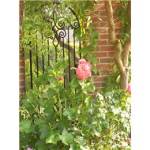
 I have started to keep a gratitude journal, noting five things a day I am grateful for. Like the hawk I saw float over the fields of Garsington. My pink rose bush in prolific blossom.

And the very fact of slowing down and giving thanks, even, especially, when I am stressed or sad, does induce what Michael Hyatt calls “a change of state.”

* * *

I picked up Selwyn Hughes, The 7 Laws of Spiritual Success from one of George Verwer of Operation Mobilization’s “Take what you want; Give what you want” book tables, which generally have excellent books.

The rest of this post consists of notes I’ve speed-typed from Hughes’ excellent chapter, “Counting Blessings.”

“Thou hast given so much to me

Give me one thing more

A grateful heart.”  George Herbert

                                                                                                       * * *

Sir John Templeton, financier and philanthropist who gives away millions of dollars every year says that when he awakes, he lies quietly on his bed, and thinks of five new ways in which he has been blessed. He believes is this one of the chief reasons why peace and contentment flood his life.

John Templeton–For every problem people have, there are at least 10 blessings.

* * *

Charles Spurgeon–”It is a delightful and profitable occupation to mark the hand of God in the lives of His ancient saints and to observe his goodness in delivering them, His mercy in pardoning them, and His faithfulness in keeping his covenant with them. But would it not be more interesting and profitable for us to notice the hand of God in our own lives?”

* * *

“Count your blessings.” Impossible advice. Our arithmetic is not good enough.

When we exhort our soul to praise the Lord, our emotions follow. A law of the personality and of life: what we think about will soon affect the way we feel. Rational Emotive Therapy is based on this idea–“Change your thinking, and you change your feelings, and the next consequence is a change in behaviour.”

We would be much calmer and more confident in the presence of new troubles if we remembered vividly the old deliverances; if we had kept them fresh in mind, and been able to say, “The God who delivered me then will not desert me now.”

John Newton:

“His love in times past forbids me to think,

He’ll leave me at last in trouble to sink.”

Auden–“Let your last thinks be all thanks.”

William Law, “If anyone would tell you the shortest, surest way to all perfection and happiness, he must tell you to make it a rule to yourself to thank and praise God for everything that happens to you. For it is certain that, whatever seeming calamity happens to you, if you thank and praise God for it, you turn it into a blessing.”

In everything give thanks–for everything works out for good. “God can take the worst thing that has happened to you, and turn it into the best thing that has ever happened to you.” 

The risen Christ is the greatest reminder that even the evil of the cross can be transformed into a new and exalted life.

It is a law of the soul that the more we focus on what we have rather than what we don’t, the more the soul begins to thrive.

Filed Under: random Tagged With: gratitude, Happiness, thankfulness

The Dance of Intimacy and the Dance of Anger

By Anita Mathias


About twenty years ago, when we were newly-weds, Harriet Lerner’s books, The Dance of Intimacy and The Dance of Anger were recommended to us.

Essentially–it’s been a while since I read them–the books view relationships as a dance.
You each have your steps. If you work together in creative, productive ways, the relationship flourishes.
But we also have less creative, stylized, conditioned ways of dancing. You know: boring, predictable. She passive-aggressively pushes his buttons. He explodes. And so on.
And then, a week later, the same, boring, sordid dancing. Getting nowhere. Spinning round and round the dance floor in circles.

The good news is that it takes two to tango. Two to continue in a frustrating, unsatisfying, unproductive dance. 

And either one can just change the steps.

                                                 * * * 

I am slowing down in numerous ways. One way is that I try not to react instinctively. I try to be quiet and think. In fact, if possible, I try not to react at all in heated moments, until I have had time to think and pray, and my emotions settle, and I can act rationally.
Jesus is a great role model for “giving no answer.” Not everything needs to be answered. One can simply be silent.
I am learning—and for a formerly hot-tempered, high-spirited woman like me, this is an amazing realization—that I do not need to answer anger with anger, a harsh word with a harsh word. I can simply be silent. I can change the steps of the dance.

Yes, that is an amazing realization for me–that at any time, even in middle age, we can change what we thought were our personalities or characters. We can give a gentle answer, or no answer. We can learn to be gentle and silent, instead of dancing in the exhausting, consuming dance of anger.
In Christ, we are free—and empowered–at any stage of our lives, to change our habitual actions. And thus to change our characters, for character is the result of habitual actions.

Filed Under: random

  • « Previous Page
  • 1
  • …
  • 77
  • 78
  • 79
  • 80
  • 81
  • …
  • 279
  • Next Page »

Sign Up and Get a Free eBook!

Sign up to be emailed my blog posts (one a week) and get the ebook of "Holy Ground," my account of working with Mother Teresa.

Join 536 Other Readers

My Books

Rosaries, Reading, Secrets: A Catholic Childhood in India

Rosaries, Reading Secrets, B&N
USA

UK

Wandering Between Two Worlds: Essays on Faith and Art

Wandering Between Two Worlds
USA

UK

Francesco, Artist of Florence: The Man Who Gave Too Much

Francesco, Artist of Florence
US

UK

The Story of Dirk Willems

The Story of Dirk Willems
US

UK

My Latest Meditation

Anita Mathias: About Me

Anita Mathias

Read my blog on Facebook

Follow me on Twitter

Follow @anitamathias1

Recent Posts

  • At the Cross, God Forgives Us Completely
  • Using God’s Gift of Our Talents: A Path to Joy and Abundance
  • The Kingdom of God is Here Already, Yet Not Yet Here
  • All Those Who Exalt Themselves Will Be Humbled & the Humble Will Be Exalted
  • Christ’s Great Golden Triad to Guide Our Actions and Decisions
  • How Jesus Dealt With Hostility and Enemies
  • Do Not Be Afraid, but Do Be Prudent
  • For Scoundrels, Scallywags, and Rascals—Christ Came
  • How to Lead an Extremely Significant Life
  • Don’t Walk Away From Jesus, but if You Do, He Still Looks at You and Loves You
Premier Digital Awards 2015 - Finalist - Blogger of the year
Runner Up Christian Media Awards 2014 - Tweeter of the year

Categories

What I’m Reading


Wolf Hall
Hilary Mantel

Wolf Hall --  Amazon.com
Amazon.com

Amazon.co.uk

Silence and Honey Cakes:
The Wisdom Of The Desert
Rowan Williams

Silence and Honey Cakes --  Amazon.com
Amazon.com

Amazon.co.uk

The Long Loneliness:
The Autobiography of the Legendary Catholic Social Activist
Dorothy Day

The Long Loneliness --  Amazon.com
Amazon.com

Amazon.co.uk

Country Girl
Edna O'Brien

Country Girl  - Amazon.com
Amazon.com

Amazon.co.uk

Archive by month

My Latest Five Podcast Meditations

INSTAGRAM

anita.mathias

My memoir: Rosaries, Reading, Secrets https://amzn.to/42xgL9t
Oxford, England. Writer, memoirist, podcaster, blogger, Biblical meditation teacher, mum

Well, hello friends! Breaking radio silence to let Well, hello friends! Breaking radio silence to let you know that I have taped a meditation for you on Christ’s famous Parable of the Talents in Matthew 25. https://anitamathias.com/2025/11/05/using-gods-gift-of-our-talents-a-path-to-joy-and-abundance/
Here you are, click the play button in the blog post for a brief meditation, and some moments of peace, and, perhaps, inspiration in your day 🙂
Hi Friends, I have taped a meditation; do listen a Hi Friends, I have taped a meditation; do listen at this link: https://anitamathias.com/2025/04/08/the-kingdom-of-god-is-here-already-yet-not-yet-here-2/
It’s on the Kingdom of God, of which Christ so often spoke, which is here already—a mysterious, shimmering internal palace in which, in lightning flashes, we experience peace and joy, and yet, of course, not yet fully here. We sense the rainbowed presence of Christ in the song which pulses through creation. Christ strolls into our rooms with his wisdom and guidance, and things change. Our prayers are answered; we are healed; our hearts are strangely warmed. Sometimes.
And yet, we also experience evil within & all around us. Our own sin which can shatter our peace and the trajectory of our lives. And the sins of the world—its greed, dishonesty and environmental destruction.
But in this broken world, we still experience the glory of creation; “coincidences” which accelerate once we start praying, and shalom which envelops us like sudden sunshine. The portals into this Kingdom include repentance, gratitude, meditative breathing, and absolute surrender.
The Kingdom of God is here already. We can experience its beauty, peace and joy today through the presence of the Holy Spirit. But yet, since, in the Apostle Paul’s words, we do not struggle only “against flesh and blood, but against the rulers, against the unseen powers of this dark world and against the spiritual forces of evil,” its fullness still lingers…
Our daughter Zoe was ordained into the Church of E Our daughter Zoe was ordained into the Church of England in June. I have been on a social media break… but … better late than never. Enjoy!
First picture has my sister, Shalini, who kindly flew in from the US. Our lovely cousins Anthony and Sarah flank Zoe in the next picture.
The Bishop of London, Sarah Mullaly, ordained Zoe. You can see her praying that Zoe will be filled with the Holy Spirit!!
And here’s a meditation I’ve recorded, which you might enjoy. The link is also in my profile
https://anitamathias.com/2024/11/07/all-those-who-exalt-themselves-will-be-humbled-the-humble-will-be-exalted/
I have taped a meditation on Jesus statement in Ma I have taped a meditation on Jesus statement in Matthew 23, “For those who exalt themselves will be humbled, and those who humble themselves will be exalted.”
Do listen here. https://anitamathias.com/2024/11/07/all-those-who-exalt-themselves-will-be-humbled-the-humble-will-be-exalted/
Link also in bio.
And so, Jesus states a law of life. Those who broadcast their amazingness will be humbled, since God dislikes—scorns that, as much as people do.  For to trumpet our success, wealth, brilliance, giftedness or popularity is to get distracted from our life’s purpose into worthless activity. Those who love power, who are sure they know best, and who must be the best, will eventually be humbled by God and life. For their focus has shifted from loving God, doing good work, and being a blessing to their family, friends, and the world towards impressing others, being enviable, perhaps famous. These things are houses built on sand, which will crumble when hammered by the waves of old age, infirmity or adversity. 
God resists the proud, Scripture tells us—those who crave the admiration and power which is His alone. So how do we resist pride? We slow down, so that we realise (and repent) when sheer pride sparks our allergies to people, our enmities, our determination to have our own way, or our grandiose ego-driven goals, and ambitions. Once we stop chasing limelight, a great quietness steals over our lives. We no longer need the drug of continual achievement, or to share images of glittering travel, parties, prizes or friends. We just enjoy them quietly. My life is for itself & not for a spectacle, Emerson wrote. And, as Jesus advises, we quit sharp-elbowing ourselves to sit with the shiniest people, but are content to hang out with ordinary people; and then, as Jesus said, we will inevitably, eventually, be summoned higher to the sparkling conversation we craved. 
One day, every knee will bow before the gentle lamb who was slain, now seated on the throne. We will all be silent before him. Let us live gently then, our eyes on Christ, continually asking for his power, his Spirit, and his direction, moving, dancing, in the direction that we sense him move.
Link to new podcast in Bio https://anitamathias.co Link to new podcast in Bio https://anitamathias.com/2024/02/20/how-jesus-dealt-with-hostility-and-enemies/
3 days before his death, Jesus rampages through the commercialised temple, overturning the tables of moneychangers. Who gave you the authority to do these things? his outraged adversaries ask. And Jesus shows us how to answer hostile questions. Slow down. Breathe. Quick arrow prayers!
Your enemies have no power over your life that your Father has not permitted them. Ask your Father for wisdom, remembering: Questions do not need to be answered. Are these questioners worthy of the treasures of your heart? Or would that be feeding pearls to hungry pigs, who might instead devour you?
Questions can contain pitfalls, traps, nooses. Jesus directly answered just three of the 183 questions he was asked, refusing to answer some; answering others with a good question.
But how do we get the inner calm and wisdom to recognise
and sidestep entrapping questions? Long before the day of
testing, practice slow, easy breathing, and tune in to the frequency of the Father. There’s no record of Jesus running, rushing, getting stressed, or lacking peace. He never spoke on his own, he told us, without checking in with the Father. So, no foolish, ill-judged statements. Breathing in the wisdom of the Father beside and within him, he, unintimidated, traps the trappers.
Wisdom begins with training ourselves to slow down and ask
the Father for guidance. Then our calm minds, made perceptive, will help us recognise danger and trick questions, even those coated in flattery, and sidestep them or refuse to answer.
We practice tuning in to heavenly wisdom by practising–asking God questions, and then listening for his answers about the best way to do simple things…organise a home or write. Then, we build upwards, asking for wisdom in more complex things.
Listening for the voice of God before we speak, and asking for a filling of the Spirit, which Jesus calls streams of living water within us, will give us wisdom to know what to say, which, frequently, is nothing at all. It will quieten us with the silence of God, which sings through the world, through sun and stars, sky and flowers.
Especially for @ samheckt Some very imperfect pi Especially for @ samheckt 
Some very imperfect pictures of my labradoodle Merry, and golden retriever Pippi.
And since, I’m on social media, if you are the meditating type, here’s a scriptural meditation on not being afraid, while being prudent. https://anitamathias.com/2024/01/03/do-not-be-afraid-but-do-be-prudent/
A new podcast. Link in bio https://anitamathias.c A new podcast. Link in bio
https://anitamathias.com/2024/01/03/do-not-be-afraid-but-do-be-prudent/
Do Not Be Afraid, but Do Be Prudent
“Do not be afraid,” a dream-angel tells Joseph, to marry Mary, who’s pregnant, though a virgin, for in our magical, God-invaded world, the Spirit has placed God in her. Call the baby Jesus, or The Lord saves, for he will drag people free from the chokehold of their sins.
And Joseph is not afraid. And the angel was right, for a star rose, signalling a new King of the Jews. Astrologers followed it, threatening King Herod, whose chief priests recounted Micah’s 600-year-old prophecy: the Messiah would be born in Bethlehem, as Jesus had just been, while his parents from Nazareth registered for Augustus Caesar’s census of the entire Roman world. 
The Magi worshipped the baby, offering gold. And shepherds came, told by an angel of joy: that the Messiah, a saviour from all that oppresses, had just been born.
Then, suddenly, the dream-angel warned: Flee with the child to Egypt. For Herod plans to kill this baby, forever-King.
Do not be afraid, but still flee? Become a refugee? But lightning-bolt coincidences verified the angel’s first words: The magi with gold for the flight. Shepherds
telling of angels singing of coming inner peace. Joseph flees.
What’s the difference between fear and prudence? Fear is being frozen or panicked by imaginary what-ifs. It tenses our bodies; strains health, sleep and relationships; makes us stingy with ourselves & others; leads to overwork, & time wasted doing pointless things for fear of people’s opinions.
Prudence is wisdom-using our experience & spiritual discernment as we battle the demonic forces of this dark world, in Paul’s phrase.It’s fighting with divinely powerful weapons: truth, righteousness, faith, Scripture & prayer, while surrendering our thoughts to Christ. 
So let’s act prudently, wisely & bravely, silencing fear, while remaining alert to God’s guidance, delivered through inner peace or intuitions of danger and wrongness, our spiritual senses tuned to the Spirit’s “No,” his “Slow,” his “Go,” as cautious as a serpent, protected, while being as gentle as a lamb among wolves.
Link to post with podcast link in Bio or https://a Link to post with podcast link in Bio or https://anitamathias.com/2023/09/22/dont-walk-away-from-jesus-but-if-you-do-he-still-looks-at-you-and-loves-you/
Jesus came from a Kingdom of voluntary gentleness, in which
Christ, the Lion of Judah, stands at the centre of the throne in the guise of a lamb, looking as if it had been slain. No wonder his disciples struggled with his counter-cultural values. Oh, and we too!
The mother of the Apostles James and John, asks Jesus for a favour—that once He became King, her sons got the most important, prestigious seats at court, on his right and left. And the other ten, who would have liked the fame, glory, power,limelight and honour themselves are indignant and threatened.
Oh-oh, Jesus says. Who gets five talents, who gets one,
who gets great wealth and success, who doesn’t–that the
Father controls. Don’t waste your one precious and fleeting
life seeking to lord it over others or boss them around.
But, in his wry kindness, he offers the ambitious twelve
and us something better than the second or third place.
He tells us how to actually be the most important person to
others at work, in our friend group, social circle, or church:Use your talents, gifts, and energy to bless others.
And we instinctively know Jesus is right. The greatest people in our lives are the kind people who invested in us, guided us and whose wise, radiant words are engraved on our hearts.
Wanting to sit with the cleverest, most successful, most famous people is the path of restlessness and discontent. The competition is vast. But seek to see people, to listen intently, to be kind, to empathise, and doors fling wide open for you, you rare thing!
The greatest person is the one who serves, Jesus says. Serves by using the one, two, or five talents God has given us to bless others, by finding a place where our deep gladness and the world’s deep hunger meet. By writing which is a blessing, hospitality, walking with a sad friend, tidying a house.
And that is the only greatness worth having. That you yourself,your life and your work are a blessing to others. That the love and wisdom God pours into you lives in people’s hearts and minds, a blessing
https://anitamathias.com/.../dont-walk-away-from-j https://anitamathias.com/.../dont-walk-away-from-jesus.../
Sharing this podcast I recorded last week. LINK IN BIO
So Jesus makes a beautiful offer to the earnest, moral young man who came to him, seeking a spiritual life. Remarkably, the young man claims that he has kept all the commandments from his youth, including the command to love one’s neighbour as oneself, a statement Jesus does not challenge.
The challenge Jesus does offers him, however, the man cannot accept—to sell his vast possessions, give the money to the poor, and follow Jesus encumbered.
He leaves, grieving, and Jesus looks at him, loves him, and famously observes that it’s easier for a camel to squeeze through the eye of a needle than for a rich person to live in the world of wonders which is living under Christ’s kingship, guidance and protection. 
He reassures his dismayed disciples, however, that with God even the treasure-burdened can squeeze into God’s kingdom, “for with God, all things are possible.”
Following him would quite literally mean walking into a world of daily wonders, and immensely rich conversation, walking through Israel, Lebanon, Syria, and Jordan, quite impossible to do with suitcases and backpacks laden with treasure. 
For what would we reject God’s specific, internally heard whisper or directive, a micro-call? That is the idol which currently grips and possesses us. 
Not all of us have great riches, nor is money everyone’s greatest temptation—it can be success, fame, universal esteem, you name it…
But, since with God all things are possible, even those who waver in their pursuit of God can still experience him in fits and snatches, find our spirits singing on a walk or during worship in church, or find our hearts strangely warmed by Scripture, and, sometimes, even “see” Christ stand before us. 
For Christ looks at us, Christ loves us, and says, “With God, all things are possible,” even we, the flawed, entering his beautiful Kingdom.
Follow on Instagram

© 2026 Dreaming Beneath the Spires · All Rights Reserved. · Cookie Policy · Privacy Policy