Anita Mathias: Dreaming Beneath the Spires

Anita Mathias's Blog on Faith and Art

  • Home
  • My Books
  • Meditations
  • Essays
  • Contact
  • About Me

Genesis 1 and Genesis 2, Day 1. Jan Ist

By Anita Mathias

Genesis 1

The Beginning

 1 In the beginning God created the heavens and the earth. 2 Now the earth was formless and empty, darkness was over the surface of the deep, and the Spirit of God was hovering over the waters.


It sounds like the creative process, doesn’t it? You have nothing, everything is formless and empty and covered by darkness. There is but one thing in your favour.

The Spirit of God hovering over you.

So a reminder as we start this year, perhaps feeling empty and dark and uncertain: God’s Spirit hovers longingly over you.

Come Sweet Spirit fill us.


 3 And God said, “Let there be light,” and there was light. 


It’s amazing–what can happen at the word of God. Light comes from darkness. 

Lord, when you speak, things happen. Just like that.You say it, and it is done. Things can change in a moment, when you say the word

You know where I need light, Lord. Speak the word. Speak creativity over me.


4 God saw that the light was good, and he separated the light from the darkness. 

And it is good, your light.

Help me Lord this year to make the most of the hours of daylight, your lovely light. Help me to rise with the sun, and to sleep early and well.

Sin, interestingly, is known by Paul as the deeds of darkness.


5 God called the light “day,” and the darkness he called “night.” And there was evening, and there was morning—the first day.

 6 And God said, “Let there be a vault between the waters to separate water from water.” 7 So God made the vault and separated the water under the vault from the water above it. And it was so. 8 God called the vault “sky.” And there was evening, and there was morning—the second day.

 9 And God said, “Let the water under the sky be gathered to one place, and let dry ground appear.” And it was so. 10 God called the dry ground “land,” and the gathered waters he called “seas.” And God saw that it was good.
    11 Then God said, “Let the land produce vegetation: seed-bearing plants and trees on the land that bear fruit with seed in it, according to their various kinds.” And it was so. 12 The land produced vegetation: plants bearing seed according to their kinds and trees bearing fruit with seed in it according to their kinds. And God saw that it was good. 13 And there was evening, and there was morning—the third day.

Look at the immense creativity and activity of God. And, we as Christians, and as human being, share God’s nature.
The logical order of creation. Food for animals and humans—even before they are created! The providence of God in action!


 14 And God said, “Let there be lights in the vault of the sky to separate the day from the night, and let them serve as signs to mark sacred times, and days and years, 15 and let them be lights in the vault of the sky to give light on the earth.” And it was so. 16 God made two great lights—the greater light to govern the day and the lesser light to govern the night. He also made the stars. 17 God set them in the vault of the sky to give light on the earth, 18 to govern the day and the night, and to separate light from darkness. And God saw that it was good. 19 And there was evening, and there was morning—the fourth day.

Order, rhythms, are built into creation. No wonder part of our very natures crave order, predictability, routines, sacred times and days and years, the days governed, the night governed. 

 20 And God said, “Let the water teem with living creatures, and let birds fly above the earth across the vault of the sky.” 21 So God created the great creatures of the sea and every living thing with which the water teems and that moves about in it, according to their kinds, and every winged bird according to its kind. And God saw that it was good. 22 God blessed them and said, “Be fruitful and increase in number and fill the water in the seas, and let the birds increase on the earth.” 23And there was evening, and there was morning—the fifth day.

Beauty, creativity, abundance, this is so part of God’s very nature. Come Holy Spirit, fill our hearts with God’s very nature—creativity, ideas teeming, flying, living, fruitful and increasing.


 24 And God said, “Let the land produce living creatures according to their kinds: the livestock, the creatures that move along the ground, and the wild animals, each according to its kind.” And it was so. 25 God made the wild animals according to their kinds, the livestock according to their kinds, and all the creatures that move along the ground according to their kinds. And God saw that it was good.
    26 Then God said, “Let us make mankind in our image, in our likeness, so that they may rule over the fish in the sea and the birds in the sky, over the livestock and all the wild animals,[a] and over all the creatures that move along the ground.”

 27 So God created mankind in his own image,
   in the image of God he created them;
   male and female he created them.


And that is why we need despair of no man. Because we are made of mud and the breath of God. Made in the image of God!! That is why human goodness will always surprise us.


And so it is never absolutely futile to appeal to someone’s better nature. For we all have it.


And when all appeals to someone’s better nature fail, there is yet one supreme court, prayer, which might move God to file an appeal on your behalf.


Because we are made in the image of God, no one is so impervious to the movement of God that prayer cannot change him or her.


 28 God blessed them and said to them, “Be fruitful and increase in number; fill the earth and subdue it. Rule over the fish in the sea and the birds in the sky and over every living creature that moves on the ground.”
 29 Then God said, “I give you every seed-bearing plant on the face of the whole earth and every tree that has fruit with seed in it. They will be yours for food. 30And to all the beasts of the earth and all the birds in the sky and all the creatures that move along the ground—everything that has the breath of life in it—I give every green plant for food.” And it was so. 


Interesting—the animals were vegetarian, people were vegetarian. We lived without suffering being involved in our food.

I still think that the best diet might be one which stays as close to vegetarianism and fruitarianism as possible, though I find it hard to do without meat.  So I stick to free-range, organic meat. If I have to eat animals, I want at least to ensure that they have suffered as little as possible in the process.
    31 God saw all that he had made, and it was very good. And there was evening, and there was morning—the sixth day.

Genesis 2

 1 Thus the heavens and the earth were completed in all their vast array.

Completed: That’s God. What he begins, he finishes. How beautiful are the last words of Jesus on the Cross: It is finished. The blessed relief of those words.

He similarly tells his father, “I have completed the work you have given me to do.
Both Roy and I have pretty mercurial minds, our interests shift, new projects claim our attention. We are both trying to train ourselves to finish what we have started (provided it is worth finishing) before turning our attention to fresh fields and pastures new.

in all their vast array

That’s God for you. Plenitude, abundance. Variety and lots of it. The God of generosity. He’s a great God, and worth serving.


 2 By the seventh day God had finished the work he had been doing; so on the seventh day he rested from all his work. 3 Then God blessed the seventh day and made it holy, because on it he rested from all the work of creating that he had done.


The seventh day, is built into creation, in lunar months, which are roughly 28 days, and in the moon itself which enters into a new phase every 7 days–waxing crescent, waxing gibbous, waning gibbous, waning crescent.
One of the best flippant tags I have come across on Sabbath observance is “To get the best results, obey the manufactor’s instructions.” I burn out before the end of the week if I have either work or stress on Sundays, and conversely, thoroughly resting, even catching up on sleep, keeps me fresh and green through the week. 


Adam and Eve

 4 This is the account of the heavens and the earth when they were created, when the LORD God made the earth and the heavens.

 5 Now no shrub had yet appeared on the earth[a] and no plant had yet sprung up, for the LORD God had not sent rain on the earth and there was no one to work the ground, 6 but streams[b] came up from the earth and watered the whole surface of the ground. 

That’s God for you—life, abundance, it cannot help but spring up.


 Then the LORD God formed a man[c] from the dust of the ground and breathed into his nostrils the breath of life, and the man became a living being.

And there in a sentence is a complete understanding of human beings—a mixture of dust and clay—fallibility, impermanence, fickleness,  dirt,  we are friable, mouldable, have an immense capacity for ugliness, we are nothing.

We are everything—for God has breathed into us–the breath of God, beauty, permanence, inspiration, loveliness, creative abilities

All men are capable of infinite goodness, kindness and decency—and infinite cruelty and sadism,

Mud and the breath of God. That is what we are.


 8 Now the LORD God had planted a garden in the east, in Eden;

I think it charming that one of God’s first activities was to plant a garden.

Thought and work, the sacred combination.

God thought things into being. But he also chose to work physically for the healthy, happy feeling of sweat and fatigue on brow. He could have thought that garden into being, as today, I could afford to hire a gardener and be an imagineer rather than a gardener. But that would be boring. We would rather work the ground ourselves. So with the ability to think infinite wealth into being, God still chose to labour–for the joy of work.


and there he put the man he had formed. 9 The LORD God made all kinds of trees grow out of the ground—trees that were pleasing to the eye and good for food.

The perfection of art, things both beautiful and useful. Pleasing to the senses, and good for the body.

Isn’t that still our desideratum for food—that it should be attractive and delicious.


In the middle of the garden were the tree of life and the tree of the knowledge of good and evil.

 10 A river watering the garden flowed from Eden; from there it was separated into four headwaters. 11 The name of the first is the Pishon; it winds through the entire land of Havilah, where there is gold. 12 (The gold of that land is good; aromatic resin[d] and onyx are also there.) 13 The name of the second river is the Gihon; it winds through the entire land of Cush.[e] 14 The name of the third river is the Tigris; it runs along the east side of Ashur. And the fourth river is the Euphrates.

 15 The LORD God took the man and put him in the Garden of Eden to work it and take care of it. 

Man’s first task—to make the earth even more fruitful. And to take care of the earth.


16 And the LORD God commanded the man, “You are free to eat from any tree in the garden; 17 but you must not eat from the tree of the knowledge of good and evil, for when you eat from it you will certainly die.”

There are boundaries and prohibitions around any decent life. Without them, nothing gets done. And so one boundary, just one was placed for man—you must not eat from the tree of the knowledge of good and evil.


 18 The LORD God said, “It is not good for the man to be alone. I will make a helper suitable for him.”

It is not good for the man to be alone. A stark, bare uncompromising statement.

So it is not good for us to accept aloneness. It is important for us to seek friendship, even community if it can be found.

I see friendship as a web of concentric circles around the secret heart of an individual. When you are first getting to know someone else they are somewhere on the outermost circles, and they and you gradually move closer to each other’s true hearts. So friendship is a process one needs to be patient with.


 19 Now the LORD God had formed out of the ground all the wild animals and all the birds in the sky. He brought them to the man to see what he would name them; and whatever the man called each living creature, that was its name. 20 So the man gave names to all the livestock, the birds in the sky and all the wild animals.

Naming seems to be an essential function of the human mind, the way we take in and absorb reality. In a sense we possess or become friends with something once we know its name.
 I have lived in three continents for at least 10 years each. On each, once I knew the names of the birds, plants, trees and butterflies and foods, I began to feel more at home.


   But for Adam no suitable helper was found.
Stark sad words.

 21 So the LORD God caused the man to fall into a deep sleep; and while he was sleeping, he took one of the man’s ribs and then closed up the place with flesh. 22 Then the LORD God made a woman from the rib he had taken out of the man, and he brought her to the man.

 23 The man said,

   “This is now bone of my bones
   and flesh of my flesh;
she shall be called ‘woman,’
   for she was taken out of man.”

 24 That is why a man leaves his father and mother and is united to his wife, and they become one flesh.

I have been married for 21 years; this is a beautiful description of the bonding in marriage.

Though bone of my bone, and flesh of my flesh should really be applied to one’s children, it is interestingly applied to one’s spouse—so deep is the knitting in marriage.

 25 Adam and his wife were both naked, and they felt no shame.

The happiness of marriage—a private kingdom of total acceptance and relaxation.

Filed Under: Genesis

Inteview with Julian Barnes

By Anita Mathias

Julian Barnes, The Art of Fiction No. 165

Interviewed by Shusha Guppy
The Paris Review 
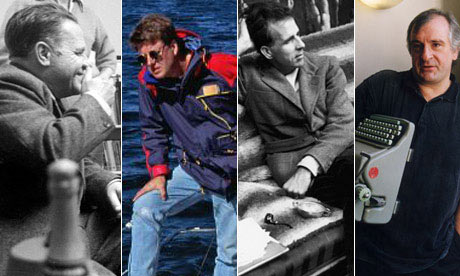
Julian Barnes lives with his wife Pat Kavanagh, a literary agent, in an elegant house with a beautiful garden in north London. The long library where the interview was conducted is spacious and quiet. Overlooking the garden, it has floor-to-ceiling bookshelves, a comfortable sofa and chairs, an exercise bike in a corner (“for the winter”), and a huge billiard table. On the walls are a series of cartoon portraits of writers by Mark Boxer—Philip Larkin, Graham Greene, Philip Roth, V. S. Pritchett, among others— “some because they are very good cartoons, others because I admire the writers.” There is a superb photograph of George Sand in middle age, taken by Nadar in 1862, and a short original letter by Flaubert, a present from Barnes’s publishers when they had sold one million copies of his books in paperback. Barnes works down the corridor in a yellow-painted study with an enormous three-sided desk, which holds his typewriter, word processor, books, files, and other necessities, all of which he can reach with a swivel of his chair.
Barnes was born in Leicester in 1946 and soon after the family moved to London, where he has lived ever since. He was educated at the City of London School and Magdalen College, Oxford. After university he worked as a lexicographer for the Oxford English Dictionary and then read for the bar, while writing and reviewing for various publications. His first novel, Metroland, was well received when it was published in 1980, but it was his third book,Flaubert’s Parrot (1984), that established his reputation as an original and powerful novelist. Since then he has produced six novels, including A History of the World in 10 1/2 Chapters (1989) and The Porcupine (1992); a collection of short stories, Cross Channel(1996); and Letters from London (written when he was The New Yorker’s London correspondent). At the time of the interview his latest novel, Love, etc. had just been published in England to good reviews; it will be published in the States in February of 2001.
Tall and handsome and very fit, Barnes looks ten years younger than his fifty-four years. His well-known courtesy and charm are enhanced by acute intelligence and mordant wit. From the beginning, a passionate love of France and French literature, specifically Flaubert, has informed his work. Reciprocally, he is one of the best-loved English writers in France, where he has won several literary prizes, including the Prix Médicis for Flaubert’s Parrot, and the Prix Femina for Talking It Over. He is an officer of L’Ordre des Arts et des Lettres.
INTERVIEWER
You are very European, which is unusual for an English writer, but also very English, especially to a foreigner. In France, for example, they think of you as quintessentially English. Where do you place yourself?
JULIAN BARNES
I think you are right. In Britain I’m sometimes regarded as a suspiciously Europeanized writer, who has this rather dubious French influence. But if you try that line in Europe, especially in France, they say, Oh, no! You’re so English! I think I’m probably anchored somewhere in the Channel.
INTERVIEWER
Sartre wrote an essay called “Qu’est-ce que la littérature?” What is literature for you?
BARNES
There are many answers to that question. The shortest is that it’s the best way of telling the truth; it’s a process of producing grand, beautiful, well-ordered lies that tell more truth than any assemblage of facts. Beyond that, literature is many things, such as delight in, and play with, language; also, a curiously intimate way of communicating with people whom you will never meet. And being a writer gives you a sense of historical community, which I feel rather weakly as a normal social being living in early twenty-first-century Britain. For example, I don’t feel any particular ties with the world of Queen Victoria, or the participants of the Civil War or the Wars of the Roses, but I do feel a very particular tie to various writers and artists who are contemporaneous with those periods and events.
INTERVIEWER
What do you mean by “telling the truth”?
BARNES
I think a great book—leaving aside other qualities such as narrative power, characterization, style, and so on—is a book that describes the world in a way that has not been done before; and that is recognized by those who read it as telling new truths—about society or the way in which emotional lives are led, or both—such truths having not been previously available, certainly not from official records or government documents, or from journalism or television. For example, even people who condemned Madame Bovary, who thought that it ought to be banned, recognized the truth of the portrait of that sort of woman, in that sort of society, which they had never encountered before in literature. That is why the novel was so dangerous. I do think that there is this central, groundbreaking veracity in literature, which is part of its grandeur. Obviously it varies according to the society. In an oppressive society the truth-telling nature of literature is of a different order, and sometimes valued more highly than other elements in a work of art.
INTERVIEWER
Literature, then, can take a lot of forms—essays, poetry, fiction, journalism, all of which endeavor to tell the truth. You already were a very good essayist and journalist before you started to write fiction. Why did you choose fiction?
BARNES
Well, to be honest I think I tell less truth when I write journalism than when I write fiction. I practice both those media, and I enjoy both, but to put it crudely, when you are writing journalism your task is to simplify the world and render it comprehensible in one reading; whereas when you are writing fiction your task is to reflect the fullest complications of the world, to say things that are not as straightforward as might be understood from reading my journalism and to produce something that you hope will reveal further layers of truth on a second reading.
INTERVIEWER
Did you want to be a writer at an early age?
BARNES
Not at all. It is an abnormal thing to want to be an artist, to practice an art. It is comparatively normal to practice an interpretative art. But to actually make things up is not something that, well, usually runs in families or is the recommendation of a career master.
INTERVIEWER
Yet England has produced some of the greatest writers, and perhaps the greatest literature, of the world.
BARNES
That is a separate truth. But there is nothing when you are growing up, even as a reasonably well-educated person, to suggest that you have an authority to be more than, say, a reader, an interpreter, a consumer of art—not a producer of it. When I became a passionate reader in my teens I thought writing was something that other people did. In the same way, when I was four or five I wanted to be an engine driver, but I knew that this was something other people did. I come from a family of schoolteachers—both my parents were teachers—so there were books in our house, the word was respected, but there was no notion that one should ever aspire to write, not even a textbook. My mother once had a letter published in the London Evening Standard and that was the maximum literary output in our family.
INTERVIEWER
What about the Amises, the Waughs . . .?
BARNES
They are self-evident abnormalities, like Fanny and Anthony Trollope. Writers are not like royal pastry chefs, handing down their talent and their badge of office from generation to generation.
INTERVIEWER
You say that you read voraciously; whom did you read?
BARNES
When I was fourteen or fifteen I was just beginning to read in French, but the first time I read Madame Bovary it was certainly in English—the consequence of our English teacher giving us a reading list that consisted mainly of the classics of European literature, many of which I had never heard of. At the time we were obliged once a week to put on army uniform and play at soldiers in something called the Combined Cadet Force. I have a vivid memory of pulling out Crime and Punishment along with my sandwiches on a field day; it felt properly subversive. This was the time when I did the basic spade work of my reading. I suppose it would consist of the great Russians, the French, the English. So it would be Tolstoy, Dostoyevsky, Pushkin, Goncharov, Lermontov, Turgenev; and Voltaire, Montaigne, Flaubert, Baudelaire, Verlaine, Rimbaud. In English I read more modern fiction—Evelyn Waugh, Graham Greene, Aldous Huxley. T. S. Eliot, of course, Hardy, Hopkins, Donne.
INTERVIEWER
What about the English classic novelists—George Eliot, Jane Austen, Dickens.
BARNES
They came later. I didn’t read English at university and still haven’t read the full canon. George Eliot came a bit later, and Austen has always been a bit hit-or-miss with me, I must say. Middlemarch is probably the greatest English novel.
INTERVIEWER
So when did you think, Maybe I can be on the other side and write those books that others would like to read?
BARNES
I think in my early twenties. I was working on the Oxford English Dictionary and I was very bored. So I tried to write and did produce a literary guidebook to Oxford, an account of every writer who had passed through the city and university. Happily it was never published, though it was bought. After I had done that, when I was twenty-five, I started trying to write a novel, but it was a long and greatly interrupted process, full of doubt and demoralization, which finally turned into my first novel, Metroland, published when I was thirty-four. So it was an eight- or nine-year process, and of course I shelved the book for long periods of time. I had absolutely no confidence in it. Nor was I convinced of myself. I didn’t see that I had any right to be a novelist.
INTERVIEWER
Any contributions to the OED?
BARNES
I was an editorial assistant on that four-volume supplement, writing definitions and researching the history of words, looking for early usages. So I spent three professional years with the language post-1880, in letters c to g. I doubt it shows through in my fiction.
INTERVIEWER
As an undergraduate at Oxford you wrote essays, like everyone else. Did any tutor detect a special talent in you and try to encourage it?
BARNES
Special talent? I don’t think I had one that was detectable. When I had a viva for my finals one of the examiners, who was a rather stern Pascal scholar at Christ Church called Krailsheimer, said to me—looking at my papers—What do you want to do after you’ve got your degree? and I said, Well, I thought I might become one of you. I said that partly because my brother had got a first and had gone on to become a philosophy don; also because I had no real notion about what to do. Krailsheimer toyed with my papers again and said, Have you thought about journalism? which was of course the most contemptuous thing he could have said—from his point of view. He doubtless suspected a glibness inappropriate for a serious scholar. In the end I got a second and had no chance of staying on at Oxford anyway.
INTERVIEWER
Why did you get a second?
BARNES
I didn’t work hard enough. I changed subject twice. I started with French and Russian, then changed to PPP (philosophy, politics, psychology) and then changed back to read French. It was hardly a glittering academic progress.
INTERVIEWER
Do you think that one year in PPP has marked your mode of thinking, and therefore your work, in any way?
BARNES
Not really. You see, I wasn’t very good at it. I chose PPP because I thought reading literature was a bit frivolous. I had been well taught at school and I decided I didn’t need to go on doing French and refining my French prose and my views on Racine for another three years. I felt I needed something to get my teeth into and I thought philosophy and psychology were proper subjects. Of course they are, but I didn’t seem to be the right student for them; I don’t have that sort of mind. All those genes went to my brother. And I was frustrated to keep finding that philosophy seemed to consist of telling you one week why the philosophy you had studied the previous week was entirely wrong.
INTERVIEWER
Yet there is a good deal of philosophy, and of course psychology, in some great writers. Schopenhauer said that he learned more psychology from Dostoyevsky than from all the books he had read on the subject.
BARNES
Quite. And that is why the novel is not likely to die. There is no substitute, at least so far, that can handle psychological complexity and inwardness and reflection in the way that the novel can. The cinema’s talents are quite other.
We have a great friend who is a clinical psychiatrist in Sydney; he’s always maintained that Shakespeare’s descriptions of madness were absolutely perfect accounts from a clinical point of view.
INTERVIEWER
So you chose novel writing as a profession.
BARNES
Oh, I didn’t choose it as a profession—I didn’t have the vanity to choose it. I can perhaps now state that I am at last a novelist, and think of myself as a novelist, and can afford to do journalism when it pleases me. But I was never one of those insufferable children who at the age of seven is writing stories under the bedclothes or one of those cocky young wordsmiths who imagine the world awaits their prose. I spent a long time acquiring enough confidence to imagine that I could be some sort of novelist.
INTERVIEWER
Metroland was clearly autobiographical, as most first attempts are. Did you set out to do it in that way?
BARNES
I’m not sure. Certainly the first third of the book is close to my own adolescence, the topography and the psychology especially. Then I began to invent, and I realized that I could. The second and third parts are largely invented. When the book was published in France about five years ago, one of the most gratifying moments was being taken by a French television team to somewhere in northern Paris. They sat me on a park bench—I think it was Parc de Montsouris, at least it was somewhere unfamiliar. So I asked them, Why are you interviewing me here? and they said, Because just over there, according to your book, is where you lost your virginity. Very French! But I made it up, I said, and they were very shocked. That was quite nice, because it meant that what had begun in largely autobiographical mode had shifted into the invented without anyone noticing it.
INTERVIEWER
What did you hope to accomplish with this shift into invention? What did you want to convey in that novel?
BARNES
Metroland was about defeat. I wanted to write about youthful aspiration coming to a compromised end. I wanted to write a novel that was un-Balzacian, in that, instead of ending with the hero looking down from a hill onto a city that he knows, or at least believes, he is going to take, it ended with the nonhero not having taken the city, and accepting the city’s terms.
The central metaphor works like this: Metroland was a residential area laid out in the wake of the London underground system, which was developed at the end of the nineteenth century. The idea then was that there would be a Channel tunnel, and pan-European trains would run from Manchester and Birmingham, pick up passengers in London, and continue through to the great cities of the Continent. So this London suburb where I grew up was conceived in the hope, the anticipation, of great horizons, great journeys. But in fact that never came to pass. Such is the background metaphor of disappointment for the life of Chris, the hero, and of others too.
INTERVIEWER
By the way, not many of Balzac’s heroes are like Rastignac and “take the city.
BARNES
But they think they are going to. They are allowed to stand on the hill and look down on the city
INTERVIEWER
Balzac is not one of your heroes. There seems to be this choice between Balzac and Flaubert, rather like that between Tolstoy and Dostoyevsky. Alain Robbe-Grillet dislikes Balzac, because he thinks that his world is too ordered, cohesive; whereas Flaubert’s work reflects the chaotic, unpredictable nature of the world. Do you feel the same?
BARNES
If the world has to be divided between Balzacians and Flaubertians, then I belong to the latter. Partly because there is more art in Flaubert. Balzac is in some ways a premodern novelist. Madame Bovary is the first truly modern novel, by which I mean the first through-composed novel. In the nineteenth century, many novels, especially in England, were published as they were written in serial parts in magazines; novelists wrote with the printer’s boy tugging their sleeve for copy. The equivalent English novel to Madame Bovary would be Middlemarch, which in terms of structure and composition is more primitive—partly, I believe, because of its serial composition. I’m sure that in terms of the description of society Balzac is Flaubert’s equal. But, in terms of artistic control—the control of narrative voice and the use of style indirecte libre—Flaubert shows a new line and says, Now we are starting again. And if Madame Bovary is the start of the modern novel, then his unfinished novelBouvard et Pécuchet, which was published posthumously in 1881, is the start of the modernist novel. It is interesting that, according to Cyril Connolly, Bouvard et Pécuchetwas Joyce’s favorite novel. I asked Richard Ellmann about this and he said it was probably the case, even if there was no documentary proof. Bouvard et Pécuchet—a novel about two earnest, illusion-filled clerks who try to understand the whole of human striving and the whole of human knowledge, who are defeated and then go back to being copyists—is extraordinarily modern. And the second part of the book, the thought of simply giving the reader an accumulated heap of rubbish that the two heroes decide to copy down, is a phenomenally advanced idea for 1880; it is amazingly bold.
INTERVIEWER
What about other novels, like Salammbô, which Flaubert himself didn’t like?
BARNES
Oh, he did! But he said a lot of contradictory things about his work, as we all do. For instance, he said he wanted to buy up every copy of Madame Bovary and destroy it because he thought that it had overshadowed the rest of his work. In fact Salammbô was a great success—it was a social success as well as a literary success. I think the Trois Contes are among the greatest short stories ever written. L’Education sentimentale is fascinating but possibly a hundred pages too long. Salammbô is what it is—a jeweled contraption that draws you in, and which you have to accept on its own terms. There is no point as a reader trying to compromise. Then there are the letters, which are instructively marvelous.
INTERVIEWER
The correspondence with George Sand, especially. Nobody reads George Sand now, but in those letters she comes across as wise and compassionate and lucid.
BARNES
I’m sure she was. When you read that correspondence you often feel that Flaubert is right, but that George Sand is nicer. Sometimes she is also right—it depends partly on your temperament. I’m more convinced by Flaubert’s aesthetic arguments; on human psychology I think the match ends in a tie.
INTERVIEWER
The correspondence with Louise Colet is very illuminating too. There is this courageous woman who holds a salon with no money, who is so hard up that she has to dry the tea leaves used at one reception to serve at the next, yet keeps soldiering on; while Flaubert, who has a much easier life, constantly whinges and is full of complaints and self-pity.
BARNES
Flaubert was a great artist, George Sand a very good novelist, and Louise Colet a minor poet. He reflects incessantly about art. The strange thing about the exchange with Louise Colet is that Flaubert is instructing her, page after page, on the grandeur and intricacy of art. Yet he is an unpublished novelist and she is the star of the Paris salons who has affairs with famous artists and so forth. In that sense, among many, Flaubert is not at all like me; I certainly would not have had the nerve to instruct Louise Colet before I had published a novel.
INTERVIEWER
Going back to your own work: after Metroland and the good reviews it received, were you more confident?
BARNES
Seeing the book in physical form and reading some good reviews was reassuring. But then, such is my nature—and I assume I share this with lots of other writers—I thought, What if I only have one book in me? So the second novel is always harder, though in my case it was at least quicker. I still find myself thinking, Well, I may have written seven or eight or nine novels, but can I do it again the next time? But I’m convinced that a high anxiety level is the novelist’s normal condition.
INTERVIEWER
Of course, some novelists have produced only one great book—Dr. Zhivago, The Leopard. In fact, should one be a sort of jobbing novelist and produce lots of books at regular intervals? Why shouldn’t one great book suffice?
BARNES
Absolutely right. No reason at all why one should go on writing just for the sake of it. I think it is very important to stop when you haven’t got anything to say. But novelists sometimes stop for the wrong reasons—Barbara Pym gave up because she was discouraged by her publisher, who said that her books had become flat. I’m not much of an E. M. Forster fan, but he stopped when he thought he had nothing more to say. That is admirable. Perhaps he should have stopped even earlier. But is any novelist going to recognize the moment when he or she has nothing more to say? It is a brave thing to admit. And since as a professional writer you are full of anxiety anyway, you could easily misread the signs. But I’m with you about the quality of the two novels you mention, especially Lampedusa’s The Leopard, which is a key book. Pasternak was always known as a poet, who then wrote one novel, which became a cause célèbre, but Lampedusa was thought of as this irrelevant Sicilian aristocrat who gave English courses and ate pastries; then he came up with this masterpiece, which was only published posthumously.
I think you hope, broadly, that your best work will survive, but how you produce your best work is perhaps a mystery— even to you. There are writers who are enormously prolific, like John Updike, whom I revere, and who has produced fifty, sixty books. The Rabbit quartet is clearly one of the great postwar American novels. But you can’t say to him, Look, would you please write the Rabbit quartet and leave it at that. Some writers are like cacti—every seven years here comes a glorious flower; then there’s another seven years of hibernation. Others can’t work like that; temperamentally they have to be writing.
INTERVIEWER
Then there are various literary genres that produce a crop of writers and books and then fade. For example, magic realism, which has worked well in South America and in third-world countries generally. It has fared less well in the West and seems to be fading away.
BARNES
Yes. But magic realism is part of a much longer and wider tradition—think of Bulgakov. And he—I may be wrong—seems to come out of Russian painting as much as anything else. It’s a complex imaginative tradition that existed long before the label was applied. The argument against magic realism, to put it crudely, is that if anything can happen, then why does it matter if this happens rather than that happens? Some people think it’s a justification for indulging in hallucinatory fantasy. But that is bad magic realism. Those who write good books in the genre know that magic realism has to have structure and logic and cohesion just as much as normal realism or anything else. The quality of product varies as in any other genre.
INTERVIEWER
The new fashionable form is to take an historical character or event and build a fictional edifice around it. For example, Penelope Fitzgerald’s The Blue Flower, which is based on the life of Novalis, or last year’s Prix Goncourt, La Bataille, based on Napoleon’s battle of Eyleu. Maybe you started it with Flaubert’s Parrot?
BARNES
Or maybe Flaubert started it with Salammbô? Or Walter Scott. Penelope Fitzgerald is an excellent novelist. I think she won the Booker for the wrong book, and her last four novels, which are her best, are still underrated. But, to answer your question, I didn’t fictionalize Flaubert. I tried to be as truthful about him as I could.
The novel based on a true historical event is certainly one current literary trend at the moment. But it’s not especially new. John Banville was writing about Kepler years ago. More recently Peter Ackroyd has written about Chatterton, Hawksmoor, and Blake. Blake Morrison has just published a novel about Gutenberg. I think this is partly a question of filling a vacuum. Much history writing strikes the general reader as theoretical and overly academic. Historians like Simon Schama, who believe in the fictional virtues of narrative, character, style and so on, are rarities. Straight narrative biography is also very popular. That is probably where most nonfiction readers tend to go at the moment; so the biographical novelist hangs about the street corner, hoping to seduce a few clients away from the straight and narrow.
INTERVIEWER
Yet the traditional historical novel—Mary Renault’s The King Must Die, to give a quality example—is looked down upon as being rather lowbrow.
BARNES
I suppose because the old historical novel, which tried to recreate mimetically the life and times of a character, was essentially conservative, whereas the new historical novel goes into the past with deliberate awareness of what has happened since, and tries to make a more obvious connection to the reader of today.
INTERVIEWER
Would you say that you belong to the straight realist tradition?
BARNES
I’ve always found labels rather pointless and irritating—and, in any case, we seem to have run out of them in the wake of postmodernism. A critic once called me a “pre-postmodernist”—neither lucid nor helpful in my view. The novel is essentially a realist form, even when interpreted in the most phantasmagoric manner. A novel can’t be abstract, like music. Perhaps if the novel becomes obsessed with theory (see the nouveau roman) or linguistic play (see Finnegans Wake) it may cease to be realistic; but then it also ceases to be interesting.
INTERVIEWER
Which brings us to the question of form. You once said that you try to make every work different. Once you have broken the mold of the traditional narrative, it seems to me that you have to keep changing—you can’t go on, say, finding new historical characters and events to build stories around.
BARNES
You could. I remember at school in the sixties we were being taught Ted Hughes by our English master, who was a bright young man just down from Cambridge. (He was the one who gave me the reading list.) He said, Of course everyone’s worried about what happens when Ted Hughes runs out of animals. We thought it was the wittiest thing we had ever heard. But of course Ted Hughes never did run out of animals; he may have run out of other things, but not animals. If people want to go on writing about historical figures, they can always find some.
INTERVIEWER
But don’t people always like to try something new?
BARNES
It doesn’t work quite like that. I don’t feel constrained by what I have written in the past. I don’t feel, to put it crudely, that because I’ve written Flaubert’s Parrot I have to write “Tolstoy’s Gerbil.” I’m not shut in a box of my own devising. When I wrote The Porcupine I deliberately used a traditional narrative because I felt that any sort of tricksiness would distract from the story I was trying to tell. A novel only really begins for a writer when he finds the form to match the story. Of course you could play around and say, I wonder what new forms I can find for a novel, but that’s an empty question until that proper idea comes along, and those crossing wires of form and content spark. For instance, Talking It Over was distantly based on a story that I’d been told five or six years previously. But it was no more than an anecdote, a possibility, an idea for an idea, until I apprehended the intimate form necessary for this intimate story.
INTERVIEWER
What about England, England, which is a political novel about a tycoon? How did you find the form for that?
BARNES
The tycoon was based to some extent on Robert Maxwell, the press baron, who was a grotesque rogue. England, England is my idea-of-England novel. That and Porcupine are my two novels that overtly treat political matters.
INTERVIEWER
What do you mean by “my idea-of-England novel”? Can you differentiate it from the state-of-England novel, of which there have been a few infelicitous examples lately?
BARNES
England as a functioning economy is comparatively rich and healthy; many elements of society are comparatively happy. That may be the state of England; but, whether it is or not, what is the idea of England? What has become of it? The English are not very self-conscious the way the French are, so I wanted to consider the idea of England as the millennium turned. England as an idea has become somewhat degraded and I was interested in what would happen if you pushed that, fictionally, to an extreme. You take some of the tendencies that are implicit in contemporary Britain, like the complete dominance of the free market, the tendency of the country to sell itself and parody itself for the consumption of others, the increasing dependence on tourist dollars; then you add in one of my favorite historical notions, the invention of tradition. You take all this and push it as far as it can go and set it in the future. It’s a garish, farcical, extremist version of what the country seems to be getting like now. But that’s one advantage of fiction, you can speed up time.
INTERVIEWER
Perhaps because of your preoccupation with form, some critics have compared you to Nabokov and Calvino, writers who have played with form to invent their own prose space. Were they among your influences?
BARNES
Influence is hard to define. I’ve read most Nabokov and some Calvino. I can say two things: First, that you tend to deny influence. In order to write the novel I’m committed to, I have to pretend that it’s not only separate from everything I’ve written before, but also separate from anything anyone in the history of the universe has written. This is a grotesque delusion and a crass vanity, but also a creative necessity. The second thing is that when asked about influence, a writer tends to give a reading list and then it’s pick-and-mix time as to whoever the reader or the critic decides has influenced you. That’s understandable. But it also seems to me that you can be influenced by a book you haven’t read, by the idea of something you’ve merely heard of. You can be influenced at second hand, or even be influenced by a writer you don’t admire, if they’re doing something sufficiently bold. For example, I have read novels and thought, This doesn’t really work, or, This is actually a bit boring; but maybe its ferocity of attack or audacity of form suggests that such a thing—or a variant of it—could work.
INTERVIEWER
But there is always one writer, a grand progenitor, who really does mark you. For you it was Flaubert. Were you conscious of his impact?
BARNES
Yet I don’t write Flaubertian novels. It is the safest thing to have a progenitor who is not just foreign and dead, but preferably long dead. I admire his work absolutely and read his correspondence as if it were written to me personally and posted only yesterday. His concerns with what the novel can do and how it can do it, with the interrelationship between art and society are timeless; he poses all the main aesthetic and professional questions—and answers them loudly. I agree with many of his answers. But when, as a twenty-first-century English novelist, I sit down in front of my IBM 196c, I don’t allude in any direct or conscious way to a great nineteenth-century Frenchman who wrote with a goose quill. The novel, like the technology, has moved on. Besides, Flaubert wrote like Flaubert—what would be the use of anyone else doing so?
INTERVIEWER
Apart from Flaubert, were there others, closer to our time, whose books you thought on reading them, Ah! That’s it! That’s the stuff!?
BARNES
Not exactly. What I think when I read a great novel, for example Ford Madox Ford’s The Good Soldier, which I think is one of the great novels of the twentieth century, a greatEnglish novel—although Americans admire it too—when I read something like that, I do, to a certain extent, absorb various technical things, for example about how far one can push an unreliable narrator. But the main lesson would be a general one: to take the idea you have for a novel and push it with passion, sometimes to the point of recklessness, regardless of what people are going to say—that is the way to do your best work. So The Good Soldierwould be a parallel example rather than anything you might set out to copy. Anyway, again, what would be the point? Ford’s done it already. The true influence of a great novel is to say to a subsequent novelist, Go thou and do otherwise.
INTERVIEWER
What about American literature? You have already mentioned Updike. Did you read them early on? I mean particularly the greats—Melville, Hawthorne, etcetera.
BARNES
Sure. Hawthorne particularly, then Fitzgerald, Hemingway, James, Wharton—I’m a great admirer of hers—and Cheever, Updike, Roth, Lorrie Moore, who I think is the best short-story writer in America since Carver. But American novelists are so different from English novelists. They really are. No point trying to write like them. I sometimes think Updike is as good as the American novel can get, especially, as I said, in the Rabbit books.
INTERVIEWER
How exactly are American novelists different from English novelists?
BARNES
Language, primarily; also vernacular (as opposed to academic) form; democracy of personnel; nowness. On top of this, contemporary American literature can’t not be affected (as was British Victorian literature) by coming from a world-dominant nation—though also one noted for historical amnesia and where only a small percentage of citizens own passports. Its virtues and vices are inevitably linked. The best American fiction displays scope, audacity, and linguistic vigor; the worst suffers from solipsism, parochialism, and dull elephantiasis.
INTERVIEWER
What about contemporaries, both continental and English?
BARNES
It is difficult with your contemporaries; you know them, and/or you know too much about them. The other thing is that past the age of fifty, you realize that you last read some of those great writers mentioned earlier when you were seventeen or eighteen and you want—and need—to reread them. So when faced with the latest fashionable novel of several hundred pages I think, Have I read all of Turgenev? And if I have, then why not rereadFathers and Sons? Now I am in a rereading stage. In France not much seems to be happening. Michel Tournier still seems to me their greatest living novelist. No one else comes to mind. But I wouldn’t claim to be keeping up as much as I should.
INTERVIEWER
People say nothing much is happening in France, but French novels aren’t any more trivial than what is published here. And intellectually France is still very influential, particularly in philosophy and critical theory. It has conquered American universities, from Levi-Strauss to Derrida.
BARNES
That’s true. A lot of their literature’s energy has gone into theory and psychology; but apart from Tournier they haven’t really produced anything substantial since the death of Camus. I thought Camus’s posthumous Le Premier homme made you realize what’s been missing in the French novel. Recently there was The Elementary Particles by Michel Houellebecq. It is a rough, insolent book, deeply unpleasant in many ways, but definitely touched with some sort of genius.
INTERVIEWER
What about up-and-coming novelists? If you believe the reviews, we seem to have a huge number of first-rate budding novelists. Foreigners envy the health of the English novel.
BARNES
In England I can’t think of anybody in the next generation following mine whom I look at with particular envy. Short-story writers, perhaps. In Britain, Helen Simpson; in America, Lorrie Moore—I’ve mentioned before, a terrific talent. My own generation is as talented as you can get—Ishiguro, Ian McEwan, and others. But I would say that, wouldn’t I? I suppose I’m slightly impatient with the lack of ambition in the next generation coming along. I don’t hold it against them wanting to make money—novelists have spent a long time not making any money—and I don’t resent any twenty-five year old who gets offered a hundred thousand pounds for a first novel and takes it. What I do resent is that they mostly turn out something entirely conventional, like the story of a bunch of twenty-somethings living in a flat together, the ups and downs of their emotional lives, all narrated in a way that will easily and immediately transfer into film. It is not very interesting. Show me more ambition! Show me some interest in form! Show me why this stuff is best dealt with in novel form. Oh yes, and please show me some awe at the work of the great novelists of the past. Still, I was greatly cheered by Zadie Smith’s recent first novel, White Teeth, which had both high ambition and bristling talent.
INTERVIEWER
Your own book Talking It Over, about a triangular love affair, was made into a movie; was it good?
BARNES
It was made into a French film called Love, etc. with Charlotte Gainsbourg and Charles Berling. It lasted one week at the Curzon Cinema. Yes, it was rather good. It was a proper film in its own right, rather than a dutiful book adaptation.
INTERVIEWER
Talking It Over was in the form of a few characters talking to camera, so to speak, taking it in turn, letting the story emerge that way. Nearly ten years and several books later you have gone back and taken up the story again, with the same central characters. And you’ve used the title of the film, Love etc. The end of the story leaves the reader wondering what will happen next. It seems to be the second panel of a triptych. Will there be a third panel?
BARNES
I don’t know. I never thought I’d write a continuation of Talking It Over. You’re right that Love, etc. ends with several of the characters at a point of crisis, which must be resolved one way or the other very soon. Obviously, I could sit down tomorrow and work out those resolutions. But that would only take me a few chapters into a new novel. What happens after that? I have to allow my characters additional years of life so that they can provide me with the material; that’s what it feels like at the moment, anyway.
INTERVIEWER
How do you create your characters? Are they roughly based on people you know or encounter? Or do you invent them from scratch? How do they develop in the course of the narrative?
BARNES
Very few of my characters are based on people I’ve known. It is too constricting. A couple are based—distantly—on people I’ve never met. Petkanov in The Porcupine is clearly related in some way to Todor Zhivkov, former boss of Bulgaria, and Sir Jack Pitman inEngland, England to Robert Maxwell. But I never dreamed of researching Maxwell—that wouldn’t have helped my novel at all. At most you take a trait here, a trait there anyway. Maybe minor characters—who are only a trait here and a trait there in the first place—can be taken wholly from life; but I’m not aware of doing so. Creation of character is, like much of fiction writing, a mixture of subjective feel and objective control. Nabokov boasted that he whipped his characters like galley slaves; popular novelists sometimes boast (as if it proved them artists) that such-and-such a character “ran away with them” or “took on a life of his/her own.” I’m of neither school; I keep my characters on a loose rein, but a rein nonetheless.
INTERVIEWER
You are very good at women characters—they seem true. How does a man get into the skin of a woman?
BARNES
I have a Handelsman cartoon on my wall of a mother reading a bedtime story to her little daughter, who’s clutching a teddy bear. The book in the mother’s hand is Madame Bovary, and she’s saying, “The surprising thing is that Flaubert, who was a man, actually got it.” Writers of either gender ought to be able to do the opposite sex—that’s one basic test of competence, after all. Russian male writers—think of Turgenev, Chekhov—seem exceptionally good at women. I don’t know how, as a writer, you understand the opposite sex except in the same way as you seek to understand any other sort of person you are not, whether you are separated from them by age, race, creed, color or sex. You pay the closest attention you can, you look, you listen, you ask, you imagine. But that’s what you do—what you should do—as a normal member of society anyway.
INTERVIEWER
Jealousy seems to be an important theme in your work, for example, in Before She Met Me, in Talking It Over, and in Love, etc. Is this part of the French influence also? Jealousy is a great theme in French literature—from Racine’s tragedies to airport novels.
BARNES
I don’t think my preoccupation with jealousy is French or French influenced. I frequently write about love and therefore about jealousy. It’s part of the deal; it’s what comes with love, for most people, in most societies. Of course, it’s also dramatic, and therefore novelistically attractive, because it’s frequently irrational, unfair, boundless, obsessing and horrible for all parties. It’s the moment when something deeply primitive breaks the surface of our supposedly grown-up lives—the crocodile’s snout in the lily pond. Irresistible.
INTERVIEWER
You are one of the few writers who are genuinely interested in sports. What do you play? How keen are you in following these sports?
BARNES
As a boy I captained my school rugby team until the age of about fifteen. I’ve also played soccer, cricket, tennis, snooker (if you call it a sport), squash, badminton, table tennis, and a bit of golf. I was the school’s under-twelve, under-six-stone boxing champion. That was a mixture of luck and calculation. I’d never boxed before, but noticed the day before registration closed that no one else had entered this category, so I’d get a walkover. Unfortunately, someone else had the same brilliant idea at roughly the same time, so we were obliged to fight. He was marginally more scared than I was. That was my first and last bout. I still follow most sports—it would be easier to list the sports I don’t follow, like formation swimming and carpet bowls; though late at night, glass in hand, televised carpet bowls can prove strangely attractive. As for participation, nowadays I prefer to go walking—daylong tramps in Britain, weeklong tramps in France and Italy. The only rule is that the luggage has to be sent on ahead. You can’t enjoy the landscape if you’re weighed down like a Sherpa. As for writers and sport, male writers anyway, I think they are more interconnected than you allow. Think of Hemingway—boxing, bullfighting; Jarrell and Nabokov—tennis; Updike—golf; Stoppard and Pinter—cricket. For a start.
INTERVIEWER
In Cross Channel, the old man in the story “Tunnel” says that in order to be a writer you need in some sense to decline life. Do you think you have to choose between literature and life?
BARNES
No, I don’t think we do or can. “Perfection of the life, or of the work”—that’s always struck me as Yeatsian posing. Of course artists make sacrifices—so do politicians, cheesemakers, parents. But art comes out of life—how can the artist continue to exist without a constant reimmersion in the normality of living? There’s a question of how far you plunge. Flaubert said that an artist should wade into life as into the sea but only up to the belly button. Others swim so far out that they forget their primary intention of being artists. Self-evidently, being a writer involves spending a lot of time on your own, and being a novelist demands longer periods of isolation than does being a poet or a playwright. The creative to-and-fro of the collaborative arts has to happen internally for a novelist. But at the same time it’s to fiction that we regularly and gratefully turn for the truest picture of life, isn’t it?
INTERVIEWER
How do you work? Are you disciplined? Do you keep regular hours?
BARNES
I’m disciplined over a long stretch. That is to say, I know when I start a novel that it will work best if I write it in eighteen months, or two or three years, depending how complicated it is, and nowadays I usually hit that rough target date. I’m disciplined by the pleasure that the work gives me; I look forward to doing it. I also know that I work best at certain hours, normally between ten in the morning and one in the afternoon. Those are the hours when my mental capacity is at its fullest. Other times of the day will be fine for revising, or writing journalism, or paying bills. I work seven days a week; I don’t think in terms of normal office hours—or rather, normal office hours for me include the weekends. Weekends are a good working time because people think you’ve gone away and don’t disturb you. So is Christmas. Everyone’s out shopping and no one phones. I always work on Christmas morning—it’s a ritual.
INTERVIEWER
Is writing easy for you? Perelman said that there are two kinds of writers: those to whom it comes easily and those for whom every word is a drop of blood being sucked out. He put himself in the second category. What is it like for you?
BARNES
I’m not very sympathetic to the bloodsucking complaint, because no one ever asked a writer to be a writer. I’ve heard people say, Oh, it’s so lonely! Well, if you don’t like the solitude, don’t do it. Most writers when they complain are just showboating in my opinion. Of course it’s hard work—so it should be. But would you swap it for child-minding hyperactive twins, for instance?
INTERVIEWER
One can like the result but not necessarily the process, don’t you think?
BARNES
I think you should like the process. I would imagine that a great pianist would enjoy practicing because, after you’ve technically mastered the instrument, practicing is about testing interpretation and nuance and everything else. Of course, the satisfaction, the pleasure of writing varies; the pleasure of the first draft is quite different from that of revision.
INTERVIEWER
The first draft is fraught with difficulty. It’s like giving birth, very painful, but after that taking care of and playing with the baby is full of joy.
BARNES
Ah! But sometimes it isn’t a baby, it’s something hideous and malformed; it doesn’t look like a baby at all. I tend to write quickly when I’m on the first draft, and then just revise and revise.
INTERVIEWER
So you rewrite a lot?
BARNES
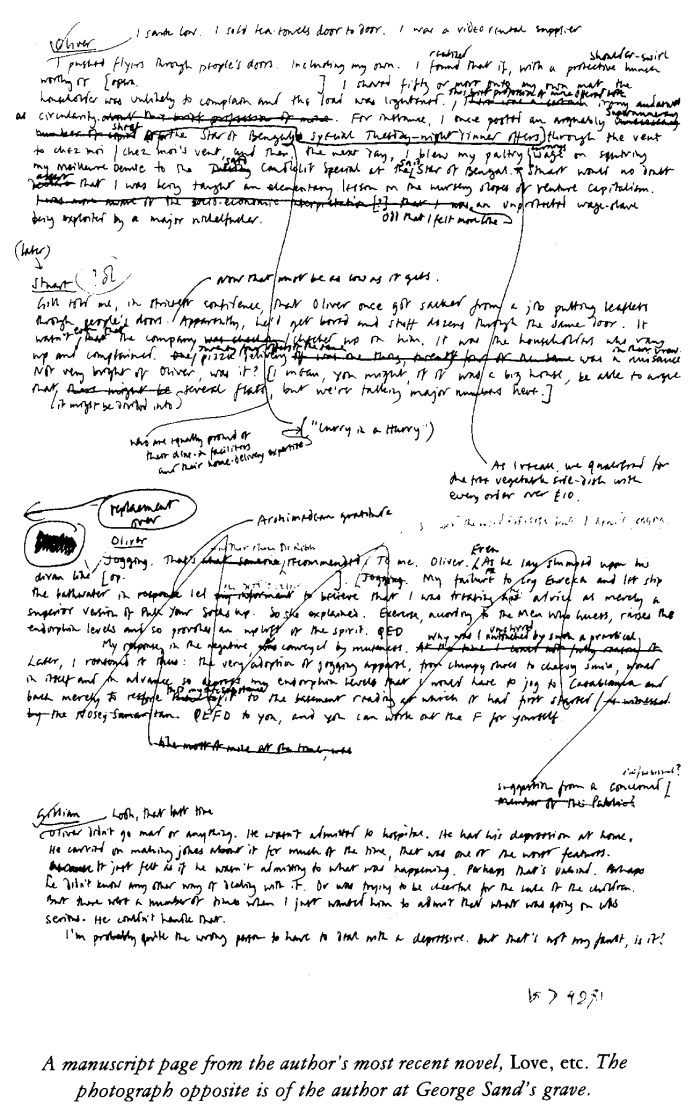
All the time. That’s when the real work begins. The pleasure of the first draft lies in deceiving yourself that it is quite close to the real thing. The pleasure of the subsequent drafts lies partly in realizing that you haven’t been gulled by the first draft. Also in realizing that quite substantial things can be changed, changed even quite late in the day, that the book can always be improved. Even after it’s published, for that matter. This is partly why I’m against word processors, because they tend to make things look finished sooner than they are. I believe in a certain amount of physical labor; novel-writing should feel like a version—however distant—of traditional work.
INTERVIEWER
So you write by hand?
BARNES
I wrote Love, etc. by hand. But normally I type on an IBM 196c, then hand correct again and again until it’s virtually illegible, then clean type it, then hand correct again and again. And so on.
INTERVIEWER
When do you let go? What makes you feel it is ready?
BARNES
When I find that the changes I’m making are dis-improving my text as much as improving it. Then I know it’s time to wave good-bye.
INTERVIEWER
What do you use your computer for, then?
BARNES
I use it for e-mail and shopping.
INTERVIEWER
What are your plans for the future?
BARNES
I’m not going to tell you! I’m a bit superstitious. Actually it is not so much superstitious as practical. The last piece of journalism I wrote was for The New Yorker about the Tour de France. Much of it was about drug use in professional cycling. I did a lot of research, and I found myself—unusually for me—talking about the research to people. When I came to write the piece I was a bit flat. I found it very difficult to write. I’d come back from having talked to, say, a Dutch sociologist of cycling about the history of drug taking back in the 1890s, and I’d spill it all out to everyone I met—because it’s quite fascinating—and then I’d sit down to write it, and I’d think, Is this really so interesting? That was confirmation of a lesson I’d learned long ago but momentarily forgotten: don’t talk it all away. It’s a matter of self-preservation. I’m retentive by nature anyway. But there will be other books, don’t worry.
PRINT|TWITTER|FACEBOOK|MORE|

Wikio

Delicious Bookmark this on Delicious

Filed Under: books_blog, Interviews with Writers

The Christian's First Duty: Being Happy in Christ—George Mueller

By Anita Mathias

George Mueller


Hmm. I find this passage really interesting. I encountered it probably a few years ago, and legalistically followed it. 


Then, I thought it was a man-made rule not God’s, and went back to prayer before Scripture. But as Mueller observes, prayer can take up one’s entire allotted quiet time, and also, as Mueller says, it can take 10, 15, even 30 minutes before the mind stops wandering and begins to pray.

So, though my spirit often longs to pray and hear God’s voice “as the deer thirsts for living waters,” I think I am going to reverse the order, and begin with meditation on God’s word.

And next year, God willing, is going to be the year of God’s word for me, since I am starting a new big project–blogging through the entire Bible in a year. I start on Jan 1st. So help me, God!!

Food For the Inner Man – George Mueller

by George Mueller (1805-1898)

While I was staying at Nailsworth, it pleased the Lord to teach me a truth, irrespective of human instrumentality, as far as I know, the benefit of which I have not lost, though now…more than forty years have since passed away.
The point is this: I saw more clearly than ever, that the first great and primary business to which I ought to attend every day, to have MY SOUL HAPPY IN THE LORD. The first thing to be concerned about was not, how much I might serve the Lord, how I might glorify the Lord; but how I might get my soul into a happy state, and how my inner man might be nourished. For I might seek to set the truth before the unconverted, I might seek to benefit believers, I might seek to behave myself as it becomes a child of God in this world; and yet, not being happy in the Lord, and not being nourished and strengthened in my inner man day by day, all this might not be attended to in a right spirit.
Before this time my practice had been, at least for ten years previously, as a habitual thing, to give myself to prayer, after having dressed in the morning. Now I saw, that the most important thing I had to do was to give myself to the reading of the Word of God and to meditation on it, that thus my heart may be comforted, encouraged, warned, reproved, instructed; and that thus, whilst meditating, my heart might be brought into experimental communion with the Lord. I began therefore, to meditate on the New Testament, from the beginning, early in the morning.
The first thing I did, after having asked in a few words the Lord’s blessing upon His precious Word, was to begin to meditate on the Word of God; searching, as it were, into every verse, to get blessings out of it; not for the sake of the public ministry of the Word; not for the sake of preaching on what I had meditated upon; but for the sake of obtaining food for my own soul. The result I have found to be almost invariably this, that after a very few minutes my soul has been led to confession, or to thanksgiving, or to intercession, or to supplication; so that though I did not, as it were, give myself to prayer, but to meditation, yet it turned almost immediately more or less into prayer.
When thus I have been for awhile making confession, or intercession, or supplication, or have given thanks, I go on to the next words or verse, turning all, as I go on, into prayer for myself or others, as the Word may lead to it; but still continually keeping before me, that food for my own soul is the object of my meditation. The result of this is, that there is always a good deal of confession, my soul invariably is even sensibly nourished and strengthened and that by breakfast time, with rare exceptions, I am in a peaceful if not happy state of heart. Thus also the Lord is pleased to communicate unto me that which, very soon after, I have found to become food for other believers, though it was not for the sake of the public ministry of the Word that I gave myself to meditation, but for the profit of my own inner man.
The difference between my former practice and my present one is this. Formerly, when I rose, I began to pray as soon as possible, and generally spent all my time till breakfast in prayer, or almost all the time. At all events I almost invariably began with prayer. But what was the result? I often spent a quarter of an hour, or even an hour on my knees, before being conscious to myself of having derived comfort, encouragement, humbling of soul, etc.; and often after having suffered much from wandering of mind of the first ten minutes, or a quarter of an hour, or even half an hour, I only then began really to pray.
I scarcely ever suffer now in this way. For my heart being nourished by the truth, being brought into experimental fellowship with God, I speak to my Father, and to my Friend (vile though I am, and unworthy of it!) about the things that He has brought before me in His precious Word.
It often now astonishes me that I did not sooner see this. In no book did I ever read about it. No public ministry ever brought the matter before me. No private intercourse with a brother stirred me up to this matter. And yet now, since God has taught me this point, it is a plain to me as anything that the first thing the child of God has to do morning by morning is to obtain food for his inner man.
As the outward man is not fit for work for any length of time, except we take food, and as this is one of the first things we do in the morning, so it should be with the inner man. We should take food for that, as every one must allow. Now what is the food for the inner man: not prayer, but the Word of God: and here again not the simple reading of the Word of God, so that it only passes through our minds, just as water runs through a pipe, but considering what we read, pondering over it, and applying it to our hearts.
I dwell so particularly on this point because of the immense spiritual profit and refreshment I am conscious of having derived from it myself, and I affectionately and solemnly beseech all my fellow-believers to ponder this matter. By the blessing of God I ascribe to this mode the help and strength which I have had from God to pass in peace through deeper trials in various ways than I had ever had before; and after having now above forty years tried this way, I can most fully, in the fear of God, commend it. How different when the soul is refreshed and made happy early in the morning, from what it is when, without spiritual preparation, the service, the trials and the temptations of the day come upon one!
-George Mueller 

Filed Under: random

Robert Haas reads “Envy of Other People’s Poems”

By Anita Mathias

Envy of Other People’s Poems

In one version of the legend the sirens couldn’t sing.
It was only a sailor’s story that they could.
So Odysseus, lashed to the mast, was harrowed
By a music that he didn’t hear—plungings of sea,
Wind-sheer, the off-shore hunger of the birds—
And the mute women gathering kelp for garden mulch,
Seeing him strain against the cordage, seeing
The awful longing in his eyes, are changed forever
On their rocky waste of island by their imagination
Of his imagination of the song they didn’t sing.

By Robert Hass

Wikio
Delicious Bookmark this on Delicious

Filed Under: books_blog, Poetry

On a LifeStyle of Forgiveness

By Anita Mathias

The Giant Red Star Mira


“A Lifestyle of Forgiveness.” I owe this phrase to Jack Miller, father of our friend Paul. Jack, a pastor, writer, theologian, founder of World Harvest Mission etc. etc. wrote a moving book called Come Back Barbara. 
Barbara, his daughter, was an angry renegade and prodigal, moved in with a druggie, as I remember from the book (I hope correctly.) No matter what Barbara did, Jack forgave her, as instantly as he could, and just resolved to love her more heartily. He developed a remarkable “lifestyle of forgiveness” in his phrase, letting things go, responding to insult with the determination to love in return.

Wow!  Forgiveness can have as dramatic an effect on your spiritual life, as cutting all sugar and white flour, white rice, pasta etc can have on your health, mental health, energy levels, emotional well-being, and intellectual ability. (This cutting is a recent experiment for a season, and after the first 2-3 days, I feel great).

As I have written on this  blog, I had a transformational spiritual experience in New Zealand last year. I stood transfixed by a waterfall rushing on, and saw a little pile of sticks, stones, leaves and creatures, that remained stuck behind a rock. If one does not forgive, one remained stuck behind a rock, not rushing on in the waterfall of God.

I had been treated unfairly a couple of years before this experience, and keenly felt the injustice. I brooded, probably got a bit bitter, and unhappy, and was stuck. Now I forgave totally and rushed on. And words came. I had been in the throes of a long winter of writers’ block, and now began to write easily, fluently and in a new style.
* * *

God must have really, really wanted me to learn forgiveness because I have had a lot to forgive this year!! I blogged about decisions made in the Christian community I belong to, actions and decisions which had left half the community seething and simmering. I blogged about these things in a series of outspoken posts called “The Screwtape Lectures” which left the other half of the congregation seething and simmering. Oh dear!

Tentacles of bitterness which defile many. People said and did things to me as a result of these outspoken, though honest, blog posts (now deleted, dear reader!). Oh dear, more things to forgive.

When I left for Spain on the 16th December, I had a LOT to process. Anger, hurt, desire for justice, annoyance at seeing injustice triumph, desire to see God vindicate me against my adversaries, and sheer mixed-upedness about whether God wanted me to continue the Screwtape Letters (and I’ve had an answer from him, a complex carbohydrate answer), some repentance, and sadness over the people I unwittingly hurt.

One of them, a woman I liked a lot, came over to chat about those blogs. I got tearful, as I do when overwrought. Seeing me cry, she got red, and started crying. Wow! Talk about weeping with those who weep.
* * *

There is nothing like travel when you are overwrought, when there are dozens of ideas racing through your head, when your emotions are unsettled.

In Spain, I tasted again the goodness of God. Sheer, unmerited mysterious goodness. I felt peace settle over my spirit again. Deep peace. The peace that, Paul says, transcends understanding because why should I be experiencing the peace of God’s love and God’s shalom, when I was not without sin in what I did, and when the road ahead was unclear? But there it settled in my soul, sweet honey. Shalom, well-being.

I loved God, and he loved me. He healed me. Set me back on my feet. Renewed me. Made me new.

I slept long and well and dreamed. In my dream, I felt again this honey of peace and joy slowly seep through my soul. Woke with incredible peace and joy. I said to myself, “I forgive everyone.” And then, my left-brain said to me, “Wait a minute, Anita. You forgive everyone? Don’t you need to go through the everyone and the aught and any and forgive them one by one.”

And so, like a good rationalist, I went through the people. A bit of mild annoyance remained at some particular bits of untruthfulness, deceit and perfidy, but basically, I had let things go. God had worked on my sleeping spirit. I felt amusement rather than anger at some things people had said and done to me, and just shook my head at them. Oh blessed relief!

God healed me, and put me together in those 9 days in Granada, when I slept a lot, and prayed a lot, and rested a lot, and listened to him a lot. He restored my soul. Restored energy, optimism, and joy. A sense of anticipation. The joy of life!
* * * 

I am reading the early chapters of Matthew about the Magi following the star.

Star of wonder, star of light, star of royal beauty bright, where are you leading? It is definitely, but infinitesimally moving.

Oddly enough, for someone who has always believed that Christians need as much of koinonia, Christian fellowship, as they can get, I feel the star moving away. I have heard entirely too much anger-producing gossip by Christians about other Christians, and my soul needs to hear less. I have got too enmeshed in a smoke-and-mirrors, fear-filled, gossipy, internecine situation–where people are far more concerned about how other people perceive, value and rate them, rather than about what God thinks of them– and I need a short break from it, not from attending church, but from being quite so enmeshed in it. I need to move outwards. Where? Towards the edges of the congregation for now. And then? I am following the star.
* * *

Small ponds are unhealthy for fish and Christians. My Christian life in my church now feels like an unhealthy small pond.

I need a bigger pond.

Luckily, my life in Oxford has another centre of gravity. The very first month I arrived here, January 2006, I joined three groups to which I still belong. I joined a church, St. Aldate’s. I joined a home group, Headington. And I joined a writer’s society, an invitation only group, which now has about 160 members. We have made many friends there, genial, clever, well-read, often erudite people. So on my calendar
, for the next couple of months, I have dinners and lunches with fellow-writers, individuals and couples. It will be good to branch out into the wider world, to truly be quiet, gentle loving salt and light in another sphere.

I feel God saying I need to withdraw slightly from my church for the health of my soul. But I am steadily making Christian friends through my blogging, and that’s good too. Fresh air, a bigger pond!

Tomorrow to fresh woods, and pastures new. 


Filed Under: random

Magpie Inspiration

By Anita Mathias

“Nothing is oNothtN


Magpie Inspiration


Nothing is original. 
Steal from anywhere that resonates with inspiration or fuels your imagination. 
Devour old films, new films, music, books, paintings, photographs, poems, dreams, random conversations, architecture, bridges, street signs, trees, clouds, bodies of water, light and shadows. 
Select only things to steal from that speak directly to your soul. If you do this, your work (and theft) will be authentic.
 Authenticity is invaluable; originality is non-existent.
 And don’t bother concealing your thievery—celebrate it if you feel like it.
 In any case, always remember what Jean-Luc Godard said: ‘It’s not where you take things from—it’s where you take them to.'”
 —Jim Jarmusch


Wikio

Delicious Bookmark this on Delicious

Filed Under: books_blog, Literary Inspiration

Books for Christmas?

By Anita Mathias


This reminds me of when Zoe was 3, and we too only gave her books. She opened them, and said sadly, “Why Santa only brought me book presents?”
Roy dashed out on Christmas Day to the first store he found open, and bought a Barbie doll, and bubble bath with a Micky Mouse Lid, which pleased her more than ALL her books!

Wikio

Delicious Bookmark this on Delicious

Filed Under: Books, books_blog

Books Quiz of 2010

By Anita Mathias

Books quiz of 2010

How much attention were you paying to literary developments this year? Anwer these questions and find out if you’re a chump or a champion
    • Share80
    • Reddit
    • Buzz up
  • guardian.co.uk, Friday 24 December 2010 10.13 GMT

Lawrence Durrell, Stieg Larsson, Mervyn Peak and Douglas Adams

Reanimated? Lawrence Durrell, Stieg Larsson, Mervyn Peak and Douglas Adams (See question two). Photograph: Getty/PA/Hulton/David Sillitoe
  1. 1.Celebrated literary recluse JD Salinger passed away in January 2010, at what age?
  2. 2.To which famous sequence of novels was it announced in February that a further book would be added, compiled by the author’s widow from notes left by her husband?
  3. 3.To which classical figure did poet laureate Carol Ann Duffy compare footballer David Beckham, in a poem written in March following the heel injury that took him out of the running (literally) for the World Cup?
  4. 4.Which author won the Arthur C Clarke award for science fiction an unprecedented third time in April?
  5. 5.As announced in May, which thriller writer has been commissioned by the Fleming Estate to write the next new Bond novel, following Sebastian Faulks’s Devil May Care?
  6. 6.Previously unknown work by each of these authors – bar one – appeared this year. Which is the fake?
  7. 7.Which high-profile crime author was aboard the Gaza flotilla stormed by Israeli troops in May?
  8. 8.What is the theme of controversial Australian novel The Slap, one of this year’s popular hits, by writer Christos Tsiolkas?
  9. 9.Which author was accused this summer of “waging war on Christianity” by a Jesuit priest?
  10. 10.Which author attacked the New York Times in August for favouring “white male literary darlings” in its books coverage, particularly in relation to Jonathan Franzen’s novel Freedom?
  11. 11.What was the title originally planned for Tony Blair’s memoir, A Journey, published in September?
  12. 12.What new book did President Obama publish this year?
  13. 13.What personal accessory was purloined from literary star Jonathan Franzen at the London launch party for his novel Freedom in October?
  14. 14.In October, Howard Jacobson’s The Finkler Question won the Man Booker prize. How much money did he win?
  15. 15.Why did JK Rowling text Harry Potter actor Daniel Radcliffe on the film release of Harry Potter and the Deathly Hallows this autumn?
  16. 16.After weeks of speculation about the contenders, who was it who eventually won this year’s Nobel prize for literature in October?
  17. 17.Which book, by academic Alexandra Harris, won the Guardian first book award in November?
  18. 18.Which book is 2010’s Christmas number one bestseller in the UK?

Wikio

Delicious Bookmark this on Delicious

Filed Under: Books, books_blog

  • « Previous Page
  • 1
  • …
  • 184
  • 185
  • 186
  • 187
  • 188
  • …
  • 279
  • Next Page »

Sign Up and Get a Free eBook!

Sign up to be emailed my blog posts (one a week) and get the ebook of "Holy Ground," my account of working with Mother Teresa.

Join 536 Other Readers

My Books

Rosaries, Reading, Secrets: A Catholic Childhood in India

Rosaries, Reading Secrets, B&N
USA

UK

Wandering Between Two Worlds: Essays on Faith and Art

Wandering Between Two Worlds
USA

UK

Francesco, Artist of Florence: The Man Who Gave Too Much

Francesco, Artist of Florence
US

UK

The Story of Dirk Willems

The Story of Dirk Willems
US

UK

My Latest Meditation

Anita Mathias: About Me

Anita Mathias

Read my blog on Facebook

Follow me on Twitter

Follow @anitamathias1

Recent Posts

  • At the Cross, God Forgives Us Completely
  • Using God’s Gift of Our Talents: A Path to Joy and Abundance
  • The Kingdom of God is Here Already, Yet Not Yet Here
  • All Those Who Exalt Themselves Will Be Humbled & the Humble Will Be Exalted
  • Christ’s Great Golden Triad to Guide Our Actions and Decisions
  • How Jesus Dealt With Hostility and Enemies
  • Do Not Be Afraid, but Do Be Prudent
  • For Scoundrels, Scallywags, and Rascals—Christ Came
  • How to Lead an Extremely Significant Life
  • Don’t Walk Away From Jesus, but if You Do, He Still Looks at You and Loves You
Premier Digital Awards 2015 - Finalist - Blogger of the year
Runner Up Christian Media Awards 2014 - Tweeter of the year

Categories

What I’m Reading


Wolf Hall
Hilary Mantel

Wolf Hall --  Amazon.com
Amazon.com

Amazon.co.uk

Silence and Honey Cakes:
The Wisdom Of The Desert
Rowan Williams

Silence and Honey Cakes --  Amazon.com
Amazon.com

Amazon.co.uk

The Long Loneliness:
The Autobiography of the Legendary Catholic Social Activist
Dorothy Day

The Long Loneliness --  Amazon.com
Amazon.com

Amazon.co.uk

Country Girl
Edna O'Brien

Country Girl  - Amazon.com
Amazon.com

Amazon.co.uk

Archive by month

My Latest Five Podcast Meditations

INSTAGRAM

anita.mathias

My memoir: Rosaries, Reading, Secrets https://amzn.to/42xgL9t
Oxford, England. Writer, memoirist, podcaster, blogger, Biblical meditation teacher, mum

Looking at photos from our week in beautiful Sevil Looking at photos from our week in beautiful Seville and Cordoba over New Year with Irene, who had a week off.
And, ICYMI, here’s my latest meditation on the Gospel of Matthew… I’ve recorded it, should you want a few minutes of peace.
https://anitamathias.com/2026/04/29/gods-complete-forgiveness/
Hello Friends, I'm resumed recording my meditation Hello Friends, I'm resumed recording my meditations on the Gospel of Matthew. Do click on this link to listen. 
https://anitamathias.com/.../29/gods-complete-forgiveness/
Christ is the most influential figure in the history of the world, though his life ended in shame, humiliation and failure. But he so completely turned things round in his great reversal that the cross on which he died when all seemed hopeless is now the most common, and revered, symbol in history.
He emerged from and was anchored in Judaism. And as the sins of the people were laid on the scapegoat who was sent into the wilderness to perish, Christ died as the lamb of God voluntarily bearing the guilt of the wrongdoing of the whole world. He paid the price for our forgiveness with his life-blood--in accordance with the iron law of the physical and moral universe, of sowing and reaping, cause and effect. 
And so, God, who appeared as flames of fire to Moses, can now dwell within us, purifying us, whose hearts have darkness and shards of ice. 
And now that Christ was crucified, died, but rose again, His Spirit, no longer contained within his earthly body, is poured out like living water onto all humans, at our humble request. The Spirit pours the love of God into us; he reminds us of the words of Jesus and slowly writes Christ’s sweet law on our hearts. This transfusion of grace helps us do hard things we previously couldn’t do. Our dance with the Spirit gradually breaks the power of sin over us. It transforms us.
Now we, the forgiven, protected by the blood of Jesus poured out over us, and filled with His Spirit, who sings within us, Abba, Father, are adopted by God as his children in his joyful new covenant. We are cells grafted into the vine of our new family--Father, Son, Spirit—who now live in us as we live in them. As we choose by our thoughts and actions to continue living in the vine of Jesus, their energy pulsing through us makes us fruitful. And now, all our prayers which flow in the river of God’s good purposes are kindly heard. Waves of love and power flood from the cross! 
Thank you!
Well, hello friends! Breaking radio silence to let Well, hello friends! Breaking radio silence to let you know that I have taped a meditation for you on Christ’s famous Parable of the Talents in Matthew 25. https://anitamathias.com/2025/11/05/using-gods-gift-of-our-talents-a-path-to-joy-and-abundance/
Here you are, click the play button in the blog post for a brief meditation, and some moments of peace, and, perhaps, inspiration in your day 🙂
Hi Friends, I have taped a meditation; do listen a Hi Friends, I have taped a meditation; do listen at this link: https://anitamathias.com/2025/04/08/the-kingdom-of-god-is-here-already-yet-not-yet-here-2/
It’s on the Kingdom of God, of which Christ so often spoke, which is here already—a mysterious, shimmering internal palace in which, in lightning flashes, we experience peace and joy, and yet, of course, not yet fully here. We sense the rainbowed presence of Christ in the song which pulses through creation. Christ strolls into our rooms with his wisdom and guidance, and things change. Our prayers are answered; we are healed; our hearts are strangely warmed. Sometimes.
And yet, we also experience evil within & all around us. Our own sin which can shatter our peace and the trajectory of our lives. And the sins of the world—its greed, dishonesty and environmental destruction.
But in this broken world, we still experience the glory of creation; “coincidences” which accelerate once we start praying, and shalom which envelops us like sudden sunshine. The portals into this Kingdom include repentance, gratitude, meditative breathing, and absolute surrender.
The Kingdom of God is here already. We can experience its beauty, peace and joy today through the presence of the Holy Spirit. But yet, since, in the Apostle Paul’s words, we do not struggle only “against flesh and blood, but against the rulers, against the unseen powers of this dark world and against the spiritual forces of evil,” its fullness still lingers…
Our daughter Zoe was ordained into the Church of E Our daughter Zoe was ordained into the Church of England in June. I have been on a social media break… but … better late than never. Enjoy!
First picture has my sister, Shalini, who kindly flew in from the US. Our lovely cousins Anthony and Sarah flank Zoe in the next picture.
The Bishop of London, Sarah Mullaly, ordained Zoe. You can see her praying that Zoe will be filled with the Holy Spirit!!
And here’s a meditation I’ve recorded, which you might enjoy. The link is also in my profile
https://anitamathias.com/2024/11/07/all-those-who-exalt-themselves-will-be-humbled-the-humble-will-be-exalted/
I have taped a meditation on Jesus statement in Ma I have taped a meditation on Jesus statement in Matthew 23, “For those who exalt themselves will be humbled, and those who humble themselves will be exalted.”
Do listen here. https://anitamathias.com/2024/11/07/all-those-who-exalt-themselves-will-be-humbled-the-humble-will-be-exalted/
Link also in bio.
And so, Jesus states a law of life. Those who broadcast their amazingness will be humbled, since God dislikes—scorns that, as much as people do.  For to trumpet our success, wealth, brilliance, giftedness or popularity is to get distracted from our life’s purpose into worthless activity. Those who love power, who are sure they know best, and who must be the best, will eventually be humbled by God and life. For their focus has shifted from loving God, doing good work, and being a blessing to their family, friends, and the world towards impressing others, being enviable, perhaps famous. These things are houses built on sand, which will crumble when hammered by the waves of old age, infirmity or adversity. 
God resists the proud, Scripture tells us—those who crave the admiration and power which is His alone. So how do we resist pride? We slow down, so that we realise (and repent) when sheer pride sparks our allergies to people, our enmities, our determination to have our own way, or our grandiose ego-driven goals, and ambitions. Once we stop chasing limelight, a great quietness steals over our lives. We no longer need the drug of continual achievement, or to share images of glittering travel, parties, prizes or friends. We just enjoy them quietly. My life is for itself & not for a spectacle, Emerson wrote. And, as Jesus advises, we quit sharp-elbowing ourselves to sit with the shiniest people, but are content to hang out with ordinary people; and then, as Jesus said, we will inevitably, eventually, be summoned higher to the sparkling conversation we craved. 
One day, every knee will bow before the gentle lamb who was slain, now seated on the throne. We will all be silent before him. Let us live gently then, our eyes on Christ, continually asking for his power, his Spirit, and his direction, moving, dancing, in the direction that we sense him move.
Link to new podcast in Bio https://anitamathias.co Link to new podcast in Bio https://anitamathias.com/2024/02/20/how-jesus-dealt-with-hostility-and-enemies/
3 days before his death, Jesus rampages through the commercialised temple, overturning the tables of moneychangers. Who gave you the authority to do these things? his outraged adversaries ask. And Jesus shows us how to answer hostile questions. Slow down. Breathe. Quick arrow prayers!
Your enemies have no power over your life that your Father has not permitted them. Ask your Father for wisdom, remembering: Questions do not need to be answered. Are these questioners worthy of the treasures of your heart? Or would that be feeding pearls to hungry pigs, who might instead devour you?
Questions can contain pitfalls, traps, nooses. Jesus directly answered just three of the 183 questions he was asked, refusing to answer some; answering others with a good question.
But how do we get the inner calm and wisdom to recognise
and sidestep entrapping questions? Long before the day of
testing, practice slow, easy breathing, and tune in to the frequency of the Father. There’s no record of Jesus running, rushing, getting stressed, or lacking peace. He never spoke on his own, he told us, without checking in with the Father. So, no foolish, ill-judged statements. Breathing in the wisdom of the Father beside and within him, he, unintimidated, traps the trappers.
Wisdom begins with training ourselves to slow down and ask
the Father for guidance. Then our calm minds, made perceptive, will help us recognise danger and trick questions, even those coated in flattery, and sidestep them or refuse to answer.
We practice tuning in to heavenly wisdom by practising–asking God questions, and then listening for his answers about the best way to do simple things…organise a home or write. Then, we build upwards, asking for wisdom in more complex things.
Listening for the voice of God before we speak, and asking for a filling of the Spirit, which Jesus calls streams of living water within us, will give us wisdom to know what to say, which, frequently, is nothing at all. It will quieten us with the silence of God, which sings through the world, through sun and stars, sky and flowers.
Especially for @ samheckt Some very imperfect pi Especially for @ samheckt 
Some very imperfect pictures of my labradoodle Merry, and golden retriever Pippi.
And since, I’m on social media, if you are the meditating type, here’s a scriptural meditation on not being afraid, while being prudent. https://anitamathias.com/2024/01/03/do-not-be-afraid-but-do-be-prudent/
A new podcast. Link in bio https://anitamathias.c A new podcast. Link in bio
https://anitamathias.com/2024/01/03/do-not-be-afraid-but-do-be-prudent/
Do Not Be Afraid, but Do Be Prudent
“Do not be afraid,” a dream-angel tells Joseph, to marry Mary, who’s pregnant, though a virgin, for in our magical, God-invaded world, the Spirit has placed God in her. Call the baby Jesus, or The Lord saves, for he will drag people free from the chokehold of their sins.
And Joseph is not afraid. And the angel was right, for a star rose, signalling a new King of the Jews. Astrologers followed it, threatening King Herod, whose chief priests recounted Micah’s 600-year-old prophecy: the Messiah would be born in Bethlehem, as Jesus had just been, while his parents from Nazareth registered for Augustus Caesar’s census of the entire Roman world. 
The Magi worshipped the baby, offering gold. And shepherds came, told by an angel of joy: that the Messiah, a saviour from all that oppresses, had just been born.
Then, suddenly, the dream-angel warned: Flee with the child to Egypt. For Herod plans to kill this baby, forever-King.
Do not be afraid, but still flee? Become a refugee? But lightning-bolt coincidences verified the angel’s first words: The magi with gold for the flight. Shepherds
telling of angels singing of coming inner peace. Joseph flees.
What’s the difference between fear and prudence? Fear is being frozen or panicked by imaginary what-ifs. It tenses our bodies; strains health, sleep and relationships; makes us stingy with ourselves & others; leads to overwork, & time wasted doing pointless things for fear of people’s opinions.
Prudence is wisdom-using our experience & spiritual discernment as we battle the demonic forces of this dark world, in Paul’s phrase.It’s fighting with divinely powerful weapons: truth, righteousness, faith, Scripture & prayer, while surrendering our thoughts to Christ. 
So let’s act prudently, wisely & bravely, silencing fear, while remaining alert to God’s guidance, delivered through inner peace or intuitions of danger and wrongness, our spiritual senses tuned to the Spirit’s “No,” his “Slow,” his “Go,” as cautious as a serpent, protected, while being as gentle as a lamb among wolves.
Follow on Instagram

© 2026 Dreaming Beneath the Spires · All Rights Reserved. · Cookie Policy · Privacy Policy