Anita Mathias: Dreaming Beneath the Spires

Anita Mathias's Blog on Faith and Art

  • Home
  • My Books
  • Meditations
  • Essays
  • Contact
  • About Me

Archives for 2013

Drowning my Sorrows in Art—but is it Idolatry?

By Anita Mathias

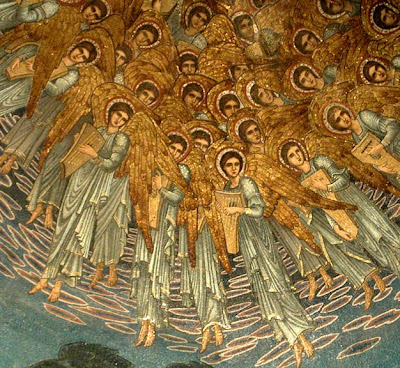
Angelic Choir, Burne-Jones, St. Paul Within the Walls, Rome

For decades now, when I have felt bored or sad or troubled or angry, when I have any sense, I pray…but also I read a book, or listen to it as I walk. I watch a movie. I try to get to an art gallery. And in the book, or the film, or the paintings, I forget my troubles.

Is this idolatry? I know Christ is the ultimate answer, that God is the sea in which the river of my life will find rest.

But just as YES is a great theological word, the word in which all God’s promises end in Christ, so too is AND.

Yes, Jesus is balm and the panacea for our spirits.

But Art too is a staff that helps us bear the ills of life


Art is the spark

From stoniest flint

That sings

“In the dark

And cold,

I’m light.”
Filed Under: random Tagged With: Art

“How is it possible to be a Christian and an Alcoholic?” (From Brennan Manning’s “Ragamuffin Gospel)”

By Anita Mathias


Image Credit

“Often I have been asked, “Brennan, how is it possible that you became an alcoholic after you got saved?”

“It is possible because I got battered and bruised by loneliness and failure, because I got discouraged, uncertain, guilt-ridden, and took my eyes off Jesus. Because the Christ-encounter did not transfigure me into an angel.

There is a myth flourishing in the church today that has caused incalculable harm—once converted, fully converted. In other words, once I accept Jesus Christ as my Lord and Saviour, an irreversible, sinless future beckons. Discipleship will be an untarnished success story; life will be an unbroken spiral towards holiness. Tell that to poor Peter who, after three times professing his love for Jesus on the beach, and after receiving the fullness of the Spirit at Pentecost, was still jealous of Paul’s apostolic success.”

Filed Under: random Tagged With: brokenness, eyes on Jesus, failure

Paul Tillich on Grace

By Anita Mathias

“Grace strikes us when we are in great pain and restlessness. It strikes us when we walk through the empty valley of a meaningless and empty life. It strikes us when, year after year, the longed for perfection does not appear, when the old compulsions reign within us as they have for decades, when despair destroys all joy and courage.

Sometimes, at that moment, a wave of light breaks into our darkness, and it is as though a voice were saying, “You are accepted. You are accepted, accepted by that which is greater than you, and the name of which you do not know. Do not ask for the name now; perhaps you will find it later. Do not try to do anything now, perhaps later you will do much. Do not seek for anything, do not perform anything, do not intend anything. Simply accept that fact that you are accepted.” If that happens to us, we experience grace.”

(Paul Tillich, Shaking the Foundations)

Filed Under: In which I am Amazed by Grace

Living in the Updraft of the Wild Goose of the Holy Spirit

By Anita Mathias

Wild Geese fly in a V formation. The lead goose reduces the wind resistance; the others glide, almost effortlessly, in the currents she has created.

During a storm, the eagle waits perched on the edge of its nest for the wind to gain sufficient velocity. And then it spreads its wings wide and effortlessly glides into the winds of the storm.

* * *

 Have you ever seen hawks or eagles soar, wings outstretched, rising without a single beat of their enormous, magnificent wings, soaring, soaring? They are soaring on thermal currents—masses of air that rise when the ground rapidly warms up.

And sometimes, they soar on obstruction currents, when wind currents are deflected by mountains, cliffs or tall buildings. The resulting updraft lifts them to high altitudes at which they can glide.

* * *

 The Wild Goose was an emblem of the Holy Spirit in Celtic tradition. And the eagle, in Scripture, is a symbol both of God, and God’s people.

Eagles rarely waste their energy flapping their enormous wings—they soar on thermal currents, obstruction currents, and on the wings of the wind…

I have been reading about “the anointing,” in R. T. Kendall’s splendid book, “The Anointing.”

He writes: “the anointing is when our gift functions easily. It comes with ease. It seems natural. No working it up is needed. If one has to work it up, one has probably gone outside one’s anointing. If one goes outside one’s anointing, the result is often fatigue, that is weariness or spiritual lethargy that has been described as ‘dying inside.’”

* * *

 I find that with my writing on my blog, and indeed all writing. If I listen to what the Spirit is saying to me through the events of my life, record the mini-revelation or “revelations” given to me each day by the God who speaks continuously and is never silent (God is speaking. Not God spoke, but God is speaking. He is by His nature continuously articulate. A W Tozer) then blogging is quick, easy and delightful. And what’s more, it very often speaks to people.

But when I look at other people’s important mandarin posts, strategic posts that capture the zeitgeist and echo what everyone else is writing about, and wonder if I should go and do likewise that blogging feels heavy, a chore, work rather than play. Why? Because the wind of the Spirit is not helping me soar; I have to expend scarce energy with a mighty, exhausting flapping of wings.

There is a lightness to God’s work, an abounding creativity–tossing off creating zebras, giraffes, toucans, morpho butterflies or orchids. It is not fanciful to suppose that God was at play as these beautiful things came into being, step by step through the mighty forces of evolution. Work merging into delightful play.

* * *

 In his book, Homo Ludens, or Man the Player, the Dutch historian and cultural theorist, Johan Huizinga, suggests that culture stems from man at play, man simply playing with words, or music or paint or the sketches of mighty cathedrals.
And when I record the whispers of the spirit, write in the updraft of the wild goose of the Holy Spirit, blogging is easy, light and delightful. And I am playing in the fields of the Lord, thinking aloud, possibly, probably making mistakes–but oh, it is all such fun!!


Filed Under: In which I chase the wild goose of the Holy Spirit, In which I explore writing and blogging and creativity, Writing and Blogging Tagged With: blogging, Creativity, eagles, R. T. Kendall, writing

The Best Two Word Definition of Love

By Anita Mathias


There was a prophetically poignant moment in the otherwise fairytale romance of Prince Charles and Lady Diana.

Interviewer: Are you in love?

Diana, instantly, “Of course.”

Charles, qualifying, “Whatever in love means.”

Probably every marriage goes through “Do you love each other?” “Of course.” “Whatever love means…” seasons.

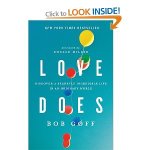
And then it helps to remember the best definition of love I know: Love Does. It is not just a feeling, an abstract noun, but a verb.

So, this Valentine’s Day week, I have been considering what Love Does, and how to make tiny changes in my relationship with Roy.

Well, a walking date together each week, and I will help clear the dishes after meals. Normally, he has been doing that while I deal with the email, tweets, Facebook messages and blog comments which have invariably accumulated during the meal. Yeah, social media is time-consuming!! And so is love!

Filed Under: random Tagged With: Love, love does, marriage

“One Way to Find God” : A Guest Post by Penelope Swithinbank

By Anita Mathias

I am honoured to host this guest post from Penelope Swithinbank. I will be joining her on her pilgrimage along the Via Francigena in Tuscany in September. Might you come too?

ONE WAY TO FIND GOD BY PENELOPE SWITHINBANK

Complete wholeness – of stillness and silence.

As in the absence of interruption or invasion by iphones or imaginations. We stand, gazing at the beauty spread before us, hardly daring to breathe.

This is what we came for, this is what we saved for and trained for. This is the vacation with a difference for which we had dreamed and yearned.

A Pilgrimage.

A long walk with a difference because it is a long walk with God. Intentionally wanting to find Him.

And find Him we did –  in the glories of creation, in one another, in our uplifted hearts.

p1

And we found the gift of TIME.

Time to be, time to be with God.

p2

Isn’t that what so many of us crave? Time out, we call it.

Time to do something different, BE something different, in some place different.

Pilgrimage has been part of the Christian tradition for centuries. It’s not always been a part of mine, until some 10 years ago, when I was asked to lead one. I discovered that the daily walking, the lack of distraction, the determination to keep going, opens up opportunities for the still small Voice in ways I could not have found elsewhere.  I’ve led many since then, and each one has had its ups and downs, literally and metaphorically. Each one has been special. Sometimes the sun has shone, sometimes it has almost snowed.

On one occasion, we plodded along, one foot then another, one foot and then another. It was hailing, cold wet hard hailing. “All hail King Jesus …” someone began to sing. There were giggles and groans. One foot in front of the next foot.  Onwards and upwards. We had walked a mere 17 miles the previous day. 83 more to go to reach our destination.  One foot then another. The hail turned to sleety rain and tried to invade the scarf wound around my neck.  It was June, it was England, it was Pilgrimage at its worst. And maybe at its best too, for we spurred one another on, sang to God in spite of the cold, and appreciated even more the day when the sun finally emerged.

p3

A mere 100 miles, each of the weeks of Pilgrimage in England, walking the ancient pilgrim paths and sheep-herding byways, from Chipping Campden to Bath Abbey. Some 60 miles in Tuscany, along the Via Francigena, from San Gimignano to Montalcino.  (Those names, they roll romantically round the tongue, inviting and enticing!)

Sometimes in silence, sometimes in prayer; sometimes singing, often laughing; taking time out from daily lived busy-ness, purposely spending time waiting to hear God speak into the rhythm of walking.

Nothing else to do – suitcases moved by unseen angels, meals awaiting us at the next destination along the way. An evening time of devotions – a short thought; some worship; prayers. Maybe Compline. Sharing our journeys, helping each other along.

p4

Pilgrimage is a time of challenge – physically and spiritually.

It is a leaving behind – of daily routine, of family and friends, of expectations.

It is a purpose filled week of deliberately stepping aside and stepping out, in faith, to find God in ways never previously experienced.

p5

It can be a difficult time. No good to pretend it’s easy, however much one has tried to get fit, practice, walk the extra mile.

It’s not the usual walking.

p6

And yet, into this challenge, this sacrifice of normality and time and effort, God speaks. Whether it’s the chill of an English summer or the heat of an Italian one, there is something unusual, something special, something incredible, about this intentionality. So often we don’t know God, don’t hear His voice, because we don’t take the time to stop – really stop, or step out of our comfort zone and wait.

Wait for Him to speak into our hearts.

p7

The Pilgrims are always amazing people. On each Pilgrimage I’ve led there have been people in pain – pain from living, pain from past wounding, pain in this journey. But they keep walking.

1-p8

And each time, God has stepped into people’s lives – sometimes right then and there, sometimes later when reflecting. But God always speaks – if we take time and trust Him to do so.

“It truly was a life changing experience for me; and I met with God in a way I’d never done before.”

2-p9The Via Frangicena is another ancient Pilgrim route – from Canterbury to Rome. I Pelligrini (the pilgrims) walked it as an act of devotion to God, as an act of contrition. They carried little other than the walking stick, the hat, the cloak and the backpack.

Sometimes they ‘walked’ on their knees. They had no idea when they set out as to whether they would ever return, after such a long and dangerous journey. But their contrition and devotion drove them out and on, dependent totally on God, their fellow pilgrims and the people they met along the way.

When we first walked a part of it (Tuscany in July) the sun beat down mercilessly, our skins scorched and our tongues stuck with thirst. Yet we gave up relatively little compared to I Pelligrini of old.

And what of us? You and me?

How far would you be prepared to walk in order to empty your life of its everyday busy-ness, its tests and trials, its screaming loud insistence?

What do we need to sacrifice in order to hear that still small Voice?

This is what the Lord says: “Stand at the crossroads and look; ask for the ancient paths, ask where the good way is and walk in it, and you will find rest for your souls.” Jer. 6:16

How much do you yearn for the rest, the silence, the stillness, in which to hear God?

What might you do in order to take time to hear that still small voice?

3-p10The Revd Penelope Swithinbank is an international speaker and leader for Christian conferences, Pilgrimages, Retreats, Quiet Days and women’s events. She loves hiking, reading and travelling.  Author of ‘Women By Design,’ she is a Spiritual Director, blogger, wife, mother and grandmother, and is currently renovating an old Cotswold farmhouse to be a place of spiritual sanctuary for those who need time away, especially those in Christian leadership. 

Website/Blog/next ITALY Pilgrimage details: www.ministriesbydesign.org

Filed Under: In which I chase the wild goose of the Holy Spirit Tagged With: fitness, holy spirit, Penelope Swithinbank, Pilgrimage, tuscany, walking, wild goose

Moses and the Uses of Failure and Brokenness

By Anita Mathias

Moses  and  the Burning Bush, Pluchart, wikipedia

Moses and the Burning Bush, Pluchart, wikipedia

Moses was remarkable. Brought up at court as Pharaoh’s grandson, he had the confidence, courage, boldness and the physical strength to kill an Egyptian he saw oppressing his countrymen (Ex 2:11), sort out two Hebrews fighting with each other, (Ex 2:13) and chase away the shepherds bullying Midian’s daughters.

But his privileged upbringing in Pharaoh’s court and his own giftedness brought him a desert exile of 40 years.

He has failed. He became a nobody.  His self-confidence vanished.

However, the desert was the right place at the right time. To see the bush which burned and was not consumed. To ask the right question when given a stupendous commission.

 “Who am I?” (Exodus 3:11)

God replies, “I will be with you.” And that is enough.

God’s answer essentially is: “Who you are does not matter. What matters is that you learn to listen, learn to lean, learn to rely on my strength.”

* * *

God commands Moses to command Pharaoh to let the entire work force of Egypt go into the desert to worship God.

“I will be with you,” is the only guarantee of safe-conduct Moses gets when commissioned to confront the Pharaoh from whom he had fled–with this preposterous demand.

Moses pleads, “I have never been eloquent, neither in the past nor since you have spoken to your servant. I am slow of speech and tongue.”

But God tells him, “Do not rely on yourself. Rely on me.” “Who gave human beings their mouths? Who makes them deaf or mute? Who gives them sight or makes them blind? Is it not I, the Lord? 12 Now go; I will help you speak and will teach you what to say.” (Ex 4 11-12).

* * *

In his great poem, “The Hound of Heaven,” Francis Thompson bitterly asks

Ah! must —

Designer Infinite —

Ah! must thou char the wood ‘ere thou canst limn with it ?

Brokenness reveals beauty. A principle encoded in creation. The green inedible rind of watermelon–who would suspect it conceals red sweet lusciousness? Or guess at the chewy flesh and honeyed water inside a coconut? Or the succulent sweetness inside a leechi or a custard apple?

The fruits themselves, were they sentient, might not suspect it.

They must be broken, smashed, cracked open to reveal their true selves, their sweetness and usefulness.

So too, after a long experience of being baffled, bewildered, broken, discover in ourselves a sweetness we had not suspected. And, as we learn to lean, we discover in ourselves gifts, abilities and strengths which surprise us.

And God recasts the talent which he has broken into something more beautiful than before. Think of a mosaic; think of a stained glass window.

* * *

Moses had all the traits of a natural leader. He was self-confident, quick-thinking, decisive, dominant. He naturally took charge. But he needed to be broken to learn to rely on God, so that he could lead his people into bigger adventures that he would ever have dreamed of.

Once we have surrendered our lives to God, even unpromising “plodders” like William Carey can do staggering things. An old man, hiding out as a shepherd for forty years, can unleash plagues against a great empire and almost single-handedly persuade them to emancipate their slaves.

Relying on oneself, on the other hand, leads to fear, anxiety and second-guessing which saps our strength far more than work. However, figuring out God’s unique mandate for us and obeying it, while relying on him, sets us free because we know he has our back.

* * *

For myself, writing was my forte. It took a long period of failure, exhaustion and incomplete projects for me to learn  to lean on God, to try to catch his whispers, his words, his ideas, his feelings, and the music of his voice. “I will help you speak and will teach you what to say.”

And writing is becoming so much easier, reaches more people and takes a fraction of the time.

* * *

 Listen, Christian, if life is grinding you down, driving you into the desert, be of good cheer.

The fire which burns and is not consumed cannot be seen amid “the bright lights, big city.”

It cannot be seen if you are rushing around the King’s court or slaying Egyptians.

Do not resist the period of obscurity and silence in which you learn to see the burning bush, and hear the one who assures you, “I am with you.”

For once you have learnt to lean, and learnt to hear, your words won’t be just words, but will have a power beyond themselves. For the Lord may help you speak and teach you what to say.

Filed Under: random

Thinking About Darwin, and What he Lost as He Moved from Theism to Agnosticism

By Anita Mathias

File:Darwins tree of life 1859.gif

The Tree of Life in Darwin’s 1859 Origin of Species

I loved Mr Darwin’s Tree, a one act play by Murray Watts, a sort of “memoir” of Darwin–much of it quoted from Darwin’s own letters, journals and books–verbally lovely, rich and bursting with energy, poetic and full of pathos.

Darwin introduced a Copernican revolution into the all-or-nothing theological thinking of the age, which still prevails today in America’s Bible Belt, and among some evangelicals: Scripture is either all true, every word of it, or not true at all. If species gradually evolved, then the account of a six day creation was not true. Ergo, Scripture was not true. This crumbling of ancient foundations caused much anguish to Christian Victorians—and throbs through the poetry of Matthew Arnold and Tennyson, for instance.

But for me, the fact that God made the world in six aeons, that the finches and giant tortoises of the Galapagos evolved in response to environmental pressures rather than being created “as is” does not detract from the moral beauty and sublimity of the message of Jesus. One cannot sit and read or listen to the Gospels for hour  after hour, and not feel convinced that Jesus is more than human, has wisdom beyond ours.

* * *

 Darwin’s theory of evolution in a nutshell is: There is competition for limited resources. Better adapted individuals (the “fit enough”) within each species have heritable traits—which can be passed on to their offspring—which make them better adapted to survive and reproduce, passing on their genes to the next generations. Species whose individuals are best adapted to their environment survive; others become extinct.

Over aeons, the adaption of species amounts to a new species being created. In Darwin’s words, “being well prepared to appreciate the struggle for existence which everywhere goes on from long-continued observation of the habits of animals and plants, it at once struck me that under these circumstances favourable variations would tend to be preserved, and unfavourable ones to be destroyed. The result of this would be the formation of new species.” 

* * *

 Darwin’s wife, Emma Wedgwood Darwin was a faithful evangelical Christian, and it was partly in deference to her that he delayed publishing the Origin of Species. With his Cambridge theology degree, he foresaw how going public with his ideas would cause great upset. “It is like confessing a murder,” he wrote.

And cause upset it did. Edmund Gosse’s heartbreakingly beautiful memoir, Father and Son, describes how his father, the naturalist Philip Gosse was thrilled when Darwin published The Origin of Species. His intellect and careful studies told him that it was true. Then he realized that it conflicted with Scripture which was true, so it could not be true. Gosse published Omphalos, a fanciful attempt to reconcile geological discoveries with Genesis (postulating that God instantly formed the fossil record at the moment of creation) which made him the laughing stock of the scientific community.

* * *

 Darwin’s wife, Emma, loved Christ, and talked to him as a friend, writing to Charles, “Will you do me a favour?  It is to read our Saviour’s farewell discourse to his disciples which begins at the end of the 13th Chap of John. It is so full of love to them & devotion & every beautiful feeling.”

But this did not convert Charles. Sadly, “the ways he evaluated evidence led him to exclude God and religion because he could only accept what could be proved in a laboratory and scientifically demonstrated.”

In 1876 Darwin described his agnosticism: “Formerly I was led… to the firm conviction of the existence of God and the immortality of the soul. In my Journal I wrote that whilst standing in the midst of the grandeur of a Brazilian forest, ‘it is not possible to give an adequate idea of the higher feelings of wonder, admiration, and devotion, which fill and elevate the mind.’ I well remember my conviction that there is more in man than the mere breath of his body. But now the grandest scenes would not cause any such convictions and feelings to rise in my mind.”

He lost faith in a beneficent creator. “I own that I cannot see as plainly as others do, and as I should wish to do, evidence of design and beneficence on all sides of us. There seems to me too much misery in the world. I cannot persuade myself that a beneficent and omnipotent God would have designedly created the Ichneumonidae with the express intention of their feeding within the living bodies of Caterpillars, or that a cat should play with mice.”

(Well, wasps control pests. Nearly every pest insect on Earth is preyed upon by a wasp species, either for food or as a host for its parasitic larvae.

However, whenever I try to teach myself about the natural world—the size of the universe, the expanding universe, the big bang theory, the theory of relativity, the mysteries of the tides—my mind boggles. I realize I am but a child at the shore of the wide world, and why should I hope to understand it all?  I believe God is good because Jesus says he was, and what Jesus says, I believe.

* * *

 Losing faith in God—losing faith in a good universe, governed by a good omnipotent Creator, brings other losses with it. In his Autobiography, Darwin plaintively spells these out.

In one respect my mind has changed during the last twenty or thirty years. Up to the age of thirty, or beyond it, poetry of many kinds, such as the works of Milton, Gray, Byron, Wordsworth, Coleridge, and Shelley, gave me great pleasure, and even as a schoolboy I took intense delight in Shakespeare, especially in the historical plays.

I have also said that formerly pictures gave me considerable, and music very great delight. But now for many years I cannot endure to read a line of poetry: I have tried lately to read Shakespeare, and found it so intolerably dull that it nauseated me.

I have also almost lost my taste for pictures or music. Music generally sets me thinking too energetically on what I have been at work on, instead of giving me pleasure. I retain some taste for fine scenery, but it does not cause me the exquisite delight which it formerly did.  

This curious and lamentable loss of the higher æsthetic tastes is all the odder, as books on history, biographies, and travels (independently of any scientific facts which they may contain), and essays on all sorts of subjects interest me as much as ever they did.

My mind seems to have become a kind of machine for grinding general laws out of large collections of facts, but why this should have caused the atrophy of that part of the brain alone, on which the higher tastes depend, I cannot conceive.

If I had to live my life again, I would have made a rule to read some poetry and listen to some music at least once every week; for perhaps the parts of my brain now atrophied would thus have been kept active through use. The loss of these tastes is a loss of happiness, and may possibly be injurious to the intellect, and more probably to the moral character, by enfeebling the emotional part of our nature.

* * *

Despite the challenge by the evangelicals of his day, such as at the 1860 Oxford Evolution Debate, Darwin’s ideas gradually gained acceptability, and he received a hero’s burial in Westminster Abbey.

Catch “Mr. Darwin’s Tree” if you can. It’s wonderful.


Filed Under: random Tagged With: Darwin, evolution, loss of faith

  • « Previous Page
  • 1
  • …
  • 21
  • 22
  • 23
  • 24
  • 25
  • …
  • 27
  • Next Page »

Sign Up and Get a Free eBook!

Sign up to be emailed my blog posts (one a week) and get the ebook of "Holy Ground," my account of working with Mother Teresa.

Join 536 Other Readers

My Books

Rosaries, Reading, Secrets: A Catholic Childhood in India

Rosaries, Reading Secrets, B&N
USA

UK

Wandering Between Two Worlds: Essays on Faith and Art

Wandering Between Two Worlds
USA

UK

Francesco, Artist of Florence: The Man Who Gave Too Much

Francesco, Artist of Florence
US

UK

The Story of Dirk Willems

The Story of Dirk Willems
US

UK

My Latest Meditation

Anita Mathias: About Me

Anita Mathias

Read my blog on Facebook

Follow me on Twitter

Follow @anitamathias1

Recent Posts

  • At the Cross, God Forgives Us Completely
  • Using God’s Gift of Our Talents: A Path to Joy and Abundance
  • The Kingdom of God is Here Already, Yet Not Yet Here
  • All Those Who Exalt Themselves Will Be Humbled & the Humble Will Be Exalted
  • Christ’s Great Golden Triad to Guide Our Actions and Decisions
  • How Jesus Dealt With Hostility and Enemies
  • Do Not Be Afraid, but Do Be Prudent
  • For Scoundrels, Scallywags, and Rascals—Christ Came
  • How to Lead an Extremely Significant Life
  • Don’t Walk Away From Jesus, but if You Do, He Still Looks at You and Loves You
Premier Digital Awards 2015 - Finalist - Blogger of the year
Runner Up Christian Media Awards 2014 - Tweeter of the year

Categories

What I’m Reading


Wolf Hall
Hilary Mantel

Wolf Hall --  Amazon.com
Amazon.com

Amazon.co.uk

Silence and Honey Cakes:
The Wisdom Of The Desert
Rowan Williams

Silence and Honey Cakes --  Amazon.com
Amazon.com

Amazon.co.uk

The Long Loneliness:
The Autobiography of the Legendary Catholic Social Activist
Dorothy Day

The Long Loneliness --  Amazon.com
Amazon.com

Amazon.co.uk

Country Girl
Edna O'Brien

Country Girl  - Amazon.com
Amazon.com

Amazon.co.uk

Archive by month

My Latest Five Podcast Meditations

INSTAGRAM

anita.mathias

My memoir: Rosaries, Reading, Secrets https://amzn.to/42xgL9t
Oxford, England. Writer, memoirist, podcaster, blogger, Biblical meditation teacher, mum

Looking at photos from our week in beautiful Sevil Looking at photos from our week in beautiful Seville and Cordoba over New Year with Irene, who had a week off.
And, ICYMI, here’s my latest meditation on the Gospel of Matthew… I’ve recorded it, should you want a few minutes of peace.
https://anitamathias.com/2026/04/29/gods-complete-forgiveness/
Hello Friends, I'm resumed recording my meditation Hello Friends, I'm resumed recording my meditations on the Gospel of Matthew. Do click on this link to listen. 
https://anitamathias.com/.../29/gods-complete-forgiveness/
Christ is the most influential figure in the history of the world, though his life ended in shame, humiliation and failure. But he so completely turned things round in his great reversal that the cross on which he died when all seemed hopeless is now the most common, and revered, symbol in history.
He emerged from and was anchored in Judaism. And as the sins of the people were laid on the scapegoat who was sent into the wilderness to perish, Christ died as the lamb of God voluntarily bearing the guilt of the wrongdoing of the whole world. He paid the price for our forgiveness with his life-blood--in accordance with the iron law of the physical and moral universe, of sowing and reaping, cause and effect. 
And so, God, who appeared as flames of fire to Moses, can now dwell within us, purifying us, whose hearts have darkness and shards of ice. 
And now that Christ was crucified, died, but rose again, His Spirit, no longer contained within his earthly body, is poured out like living water onto all humans, at our humble request. The Spirit pours the love of God into us; he reminds us of the words of Jesus and slowly writes Christ’s sweet law on our hearts. This transfusion of grace helps us do hard things we previously couldn’t do. Our dance with the Spirit gradually breaks the power of sin over us. It transforms us.
Now we, the forgiven, protected by the blood of Jesus poured out over us, and filled with His Spirit, who sings within us, Abba, Father, are adopted by God as his children in his joyful new covenant. We are cells grafted into the vine of our new family--Father, Son, Spirit—who now live in us as we live in them. As we choose by our thoughts and actions to continue living in the vine of Jesus, their energy pulsing through us makes us fruitful. And now, all our prayers which flow in the river of God’s good purposes are kindly heard. Waves of love and power flood from the cross! 
Thank you!
Well, hello friends! Breaking radio silence to let Well, hello friends! Breaking radio silence to let you know that I have taped a meditation for you on Christ’s famous Parable of the Talents in Matthew 25. https://anitamathias.com/2025/11/05/using-gods-gift-of-our-talents-a-path-to-joy-and-abundance/
Here you are, click the play button in the blog post for a brief meditation, and some moments of peace, and, perhaps, inspiration in your day 🙂
Hi Friends, I have taped a meditation; do listen a Hi Friends, I have taped a meditation; do listen at this link: https://anitamathias.com/2025/04/08/the-kingdom-of-god-is-here-already-yet-not-yet-here-2/
It’s on the Kingdom of God, of which Christ so often spoke, which is here already—a mysterious, shimmering internal palace in which, in lightning flashes, we experience peace and joy, and yet, of course, not yet fully here. We sense the rainbowed presence of Christ in the song which pulses through creation. Christ strolls into our rooms with his wisdom and guidance, and things change. Our prayers are answered; we are healed; our hearts are strangely warmed. Sometimes.
And yet, we also experience evil within & all around us. Our own sin which can shatter our peace and the trajectory of our lives. And the sins of the world—its greed, dishonesty and environmental destruction.
But in this broken world, we still experience the glory of creation; “coincidences” which accelerate once we start praying, and shalom which envelops us like sudden sunshine. The portals into this Kingdom include repentance, gratitude, meditative breathing, and absolute surrender.
The Kingdom of God is here already. We can experience its beauty, peace and joy today through the presence of the Holy Spirit. But yet, since, in the Apostle Paul’s words, we do not struggle only “against flesh and blood, but against the rulers, against the unseen powers of this dark world and against the spiritual forces of evil,” its fullness still lingers…
Our daughter Zoe was ordained into the Church of E Our daughter Zoe was ordained into the Church of England in June. I have been on a social media break… but … better late than never. Enjoy!
First picture has my sister, Shalini, who kindly flew in from the US. Our lovely cousins Anthony and Sarah flank Zoe in the next picture.
The Bishop of London, Sarah Mullaly, ordained Zoe. You can see her praying that Zoe will be filled with the Holy Spirit!!
And here’s a meditation I’ve recorded, which you might enjoy. The link is also in my profile
https://anitamathias.com/2024/11/07/all-those-who-exalt-themselves-will-be-humbled-the-humble-will-be-exalted/
I have taped a meditation on Jesus statement in Ma I have taped a meditation on Jesus statement in Matthew 23, “For those who exalt themselves will be humbled, and those who humble themselves will be exalted.”
Do listen here. https://anitamathias.com/2024/11/07/all-those-who-exalt-themselves-will-be-humbled-the-humble-will-be-exalted/
Link also in bio.
And so, Jesus states a law of life. Those who broadcast their amazingness will be humbled, since God dislikes—scorns that, as much as people do.  For to trumpet our success, wealth, brilliance, giftedness or popularity is to get distracted from our life’s purpose into worthless activity. Those who love power, who are sure they know best, and who must be the best, will eventually be humbled by God and life. For their focus has shifted from loving God, doing good work, and being a blessing to their family, friends, and the world towards impressing others, being enviable, perhaps famous. These things are houses built on sand, which will crumble when hammered by the waves of old age, infirmity or adversity. 
God resists the proud, Scripture tells us—those who crave the admiration and power which is His alone. So how do we resist pride? We slow down, so that we realise (and repent) when sheer pride sparks our allergies to people, our enmities, our determination to have our own way, or our grandiose ego-driven goals, and ambitions. Once we stop chasing limelight, a great quietness steals over our lives. We no longer need the drug of continual achievement, or to share images of glittering travel, parties, prizes or friends. We just enjoy them quietly. My life is for itself & not for a spectacle, Emerson wrote. And, as Jesus advises, we quit sharp-elbowing ourselves to sit with the shiniest people, but are content to hang out with ordinary people; and then, as Jesus said, we will inevitably, eventually, be summoned higher to the sparkling conversation we craved. 
One day, every knee will bow before the gentle lamb who was slain, now seated on the throne. We will all be silent before him. Let us live gently then, our eyes on Christ, continually asking for his power, his Spirit, and his direction, moving, dancing, in the direction that we sense him move.
Link to new podcast in Bio https://anitamathias.co Link to new podcast in Bio https://anitamathias.com/2024/02/20/how-jesus-dealt-with-hostility-and-enemies/
3 days before his death, Jesus rampages through the commercialised temple, overturning the tables of moneychangers. Who gave you the authority to do these things? his outraged adversaries ask. And Jesus shows us how to answer hostile questions. Slow down. Breathe. Quick arrow prayers!
Your enemies have no power over your life that your Father has not permitted them. Ask your Father for wisdom, remembering: Questions do not need to be answered. Are these questioners worthy of the treasures of your heart? Or would that be feeding pearls to hungry pigs, who might instead devour you?
Questions can contain pitfalls, traps, nooses. Jesus directly answered just three of the 183 questions he was asked, refusing to answer some; answering others with a good question.
But how do we get the inner calm and wisdom to recognise
and sidestep entrapping questions? Long before the day of
testing, practice slow, easy breathing, and tune in to the frequency of the Father. There’s no record of Jesus running, rushing, getting stressed, or lacking peace. He never spoke on his own, he told us, without checking in with the Father. So, no foolish, ill-judged statements. Breathing in the wisdom of the Father beside and within him, he, unintimidated, traps the trappers.
Wisdom begins with training ourselves to slow down and ask
the Father for guidance. Then our calm minds, made perceptive, will help us recognise danger and trick questions, even those coated in flattery, and sidestep them or refuse to answer.
We practice tuning in to heavenly wisdom by practising–asking God questions, and then listening for his answers about the best way to do simple things…organise a home or write. Then, we build upwards, asking for wisdom in more complex things.
Listening for the voice of God before we speak, and asking for a filling of the Spirit, which Jesus calls streams of living water within us, will give us wisdom to know what to say, which, frequently, is nothing at all. It will quieten us with the silence of God, which sings through the world, through sun and stars, sky and flowers.
Especially for @ samheckt Some very imperfect pi Especially for @ samheckt 
Some very imperfect pictures of my labradoodle Merry, and golden retriever Pippi.
And since, I’m on social media, if you are the meditating type, here’s a scriptural meditation on not being afraid, while being prudent. https://anitamathias.com/2024/01/03/do-not-be-afraid-but-do-be-prudent/
A new podcast. Link in bio https://anitamathias.c A new podcast. Link in bio
https://anitamathias.com/2024/01/03/do-not-be-afraid-but-do-be-prudent/
Do Not Be Afraid, but Do Be Prudent
“Do not be afraid,” a dream-angel tells Joseph, to marry Mary, who’s pregnant, though a virgin, for in our magical, God-invaded world, the Spirit has placed God in her. Call the baby Jesus, or The Lord saves, for he will drag people free from the chokehold of their sins.
And Joseph is not afraid. And the angel was right, for a star rose, signalling a new King of the Jews. Astrologers followed it, threatening King Herod, whose chief priests recounted Micah’s 600-year-old prophecy: the Messiah would be born in Bethlehem, as Jesus had just been, while his parents from Nazareth registered for Augustus Caesar’s census of the entire Roman world. 
The Magi worshipped the baby, offering gold. And shepherds came, told by an angel of joy: that the Messiah, a saviour from all that oppresses, had just been born.
Then, suddenly, the dream-angel warned: Flee with the child to Egypt. For Herod plans to kill this baby, forever-King.
Do not be afraid, but still flee? Become a refugee? But lightning-bolt coincidences verified the angel’s first words: The magi with gold for the flight. Shepherds
telling of angels singing of coming inner peace. Joseph flees.
What’s the difference between fear and prudence? Fear is being frozen or panicked by imaginary what-ifs. It tenses our bodies; strains health, sleep and relationships; makes us stingy with ourselves & others; leads to overwork, & time wasted doing pointless things for fear of people’s opinions.
Prudence is wisdom-using our experience & spiritual discernment as we battle the demonic forces of this dark world, in Paul’s phrase.It’s fighting with divinely powerful weapons: truth, righteousness, faith, Scripture & prayer, while surrendering our thoughts to Christ. 
So let’s act prudently, wisely & bravely, silencing fear, while remaining alert to God’s guidance, delivered through inner peace or intuitions of danger and wrongness, our spiritual senses tuned to the Spirit’s “No,” his “Slow,” his “Go,” as cautious as a serpent, protected, while being as gentle as a lamb among wolves.
Follow on Instagram

© 2026 Dreaming Beneath the Spires · All Rights Reserved. · Cookie Policy · Privacy Policy