Anita Mathias: Dreaming Beneath the Spires

Anita Mathias's Blog on Faith and Art

  • Home
  • My Books
  • Meditations
  • Essays
  • Contact
  • About Me

Archives for June 2012

The Arithmetic of Counting Blessings

By Anita Mathias

 I have started to keep a gratitude journal, noting five things a day I am grateful for. Like the hawk I saw float over the fields of Garsington. My pink rose bush in prolific blossom.

And the very fact of slowing down and giving thanks, even, especially, when I am stressed or sad, does induce what Michael Hyatt calls “a change of state.”

* * *

I picked up Selwyn Hughes, The 7 Laws of Spiritual Success from one of George Verwer of Operation Mobilization’s “Take what you want; Give what you want” book tables, which generally have excellent books.

The rest of this post consists of notes I’ve speed-typed from Hughes’ excellent chapter, “Counting Blessings.”

“Thou hast given so much to me

Give me one thing more

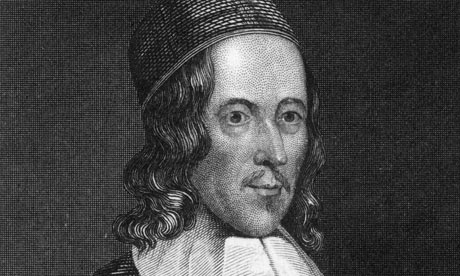
A grateful heart.”  George Herbert

                                                                                                       * * *

Sir John Templeton, financier and philanthropist who gives away millions of dollars every year says that when he awakes, he lies quietly on his bed, and thinks of five new ways in which he has been blessed. He believes is this one of the chief reasons why peace and contentment flood his life.

John Templeton–For every problem people have, there are at least 10 blessings.

* * *

Charles Spurgeon–”It is a delightful and profitable occupation to mark the hand of God in the lives of His ancient saints and to observe his goodness in delivering them, His mercy in pardoning them, and His faithfulness in keeping his covenant with them. But would it not be more interesting and profitable for us to notice the hand of God in our own lives?”

* * *

“Count your blessings.” Impossible advice. Our arithmetic is not good enough.

When we exhort our soul to praise the Lord, our emotions follow. A law of the personality and of life: what we think about will soon affect the way we feel. Rational Emotive Therapy is based on this idea–“Change your thinking, and you change your feelings, and the next consequence is a change in behaviour.”

We would be much calmer and more confident in the presence of new troubles if we remembered vividly the old deliverances; if we had kept them fresh in mind, and been able to say, “The God who delivered me then will not desert me now.”

John Newton:

“His love in times past forbids me to think,

He’ll leave me at last in trouble to sink.”

Auden–“Let your last thinks be all thanks.”

William Law, “If anyone would tell you the shortest, surest way to all perfection and happiness, he must tell you to make it a rule to yourself to thank and praise God for everything that happens to you. For it is certain that, whatever seeming calamity happens to you, if you thank and praise God for it, you turn it into a blessing.”

In everything give thanks–for everything works out for good. “God can take the worst thing that has happened to you, and turn it into the best thing that has ever happened to you.” 

The risen Christ is the greatest reminder that even the evil of the cross can be transformed into a new and exalted life.

It is a law of the soul that the more we focus on what we have rather than what we don’t, the more the soul begins to thrive.

Filed Under: random Tagged With: gratitude, Happiness, thankfulness

The Dance of Intimacy and the Dance of Anger

By Anita Mathias


About twenty years ago, when we were newly-weds, Harriet Lerner’s books, The Dance of Intimacy and The Dance of Anger were recommended to us.

Essentially–it’s been a while since I read them–the books view relationships as a dance.
You each have your steps. If you work together in creative, productive ways, the relationship flourishes.
But we also have less creative, stylized, conditioned ways of dancing. You know: boring, predictable. She passive-aggressively pushes his buttons. He explodes. And so on.
And then, a week later, the same, boring, sordid dancing. Getting nowhere. Spinning round and round the dance floor in circles.

The good news is that it takes two to tango. Two to continue in a frustrating, unsatisfying, unproductive dance. 

And either one can just change the steps.

                                                 * * * 

I am slowing down in numerous ways. One way is that I try not to react instinctively. I try to be quiet and think. In fact, if possible, I try not to react at all in heated moments, until I have had time to think and pray, and my emotions settle, and I can act rationally.
Jesus is a great role model for “giving no answer.” Not everything needs to be answered. One can simply be silent.
I am learning—and for a formerly hot-tempered, high-spirited woman like me, this is an amazing realization—that I do not need to answer anger with anger, a harsh word with a harsh word. I can simply be silent. I can change the steps of the dance.

Yes, that is an amazing realization for me–that at any time, even in middle age, we can change what we thought were our personalities or characters. We can give a gentle answer, or no answer. We can learn to be gentle and silent, instead of dancing in the exhausting, consuming dance of anger.
In Christ, we are free—and empowered–at any stage of our lives, to change our habitual actions. And thus to change our characters, for character is the result of habitual actions.

Filed Under: random

George Herbert. Love

By Anita Mathias

     LOVE (III)
        by George Herbert

Love bade me welcome, yet my soul drew back,
        Guilty of dust and sin.
But quick-ey’d Love, observing me grow slack
        From my first entrance in,
Drew nearer to me, sweetly questioning
        If I lack’d anything.
“A guest,” I answer’d, “worthy to be here”;
        Love said, “You shall be he.”
“I, the unkind, the ungrateful? ah my dear,
        I cannot look on thee.”
Love took my hand and smiling did reply,
        “Who made the eyes but I?”
“Truth, Lord, but I have marr’d them; let my shame
        Go where it doth deserve.”
“And know you not,” says Love, “who bore the blame?”
        “My dear, then I will serve.”
“You must sit down,” says Love, “and taste my meat.”
        So I did sit and eat.


Share on site of your choice … Wikio

Filed Under: random

Antaeus and Strength from the Earth and Being Down to Earth

By Anita Mathias


 Antaeus, in Greek mythology, was a Libyan giant, the son of Gaia, the Earth Goddess. He was invincible because when thrown to the ground, he derived strength from the earth, his mother, and returned stronger than before.
And that too is a secret of strength.
When under stress, I tend to “run” (metaphorically speaking!)—to travel, to take a day out in a National Trust or RHS garden, or just sleep.
Nothing wrong with that, but “down to earth” ways of decompressing are often surprisingly healing and refreshing. A landmark UCLA study, which looks at women under stress observes that the first thing women under stress do is clean (followed by making coffee, and bonding with other women).
And oddly, for both me and Roy, tidying up is one of our most therapeutic activities. There is something so peaceful about order gradually emerging, and the gentle movement involved in it, especially if one has worship music on the stereo. It’s actually restful, provided there is no time pressure, and one has not allowed one’s surroundings to get too out of control.
Gardeningtoo is an immensely peaceful activity, restful, therapeutic, an opportunity for quiet contemplation. Just the sound of bird song, and the gentle activity calms me. Similarly, the gentle walk, and the natural sounds of the wind and birds settles the spirit. 
As Gretchen Rubin writes in her Happiness Project, the endorphins generated during exercise help people think clearly. Even ten minutes of daylight stimulates production of serotonin and dopamine, brain chemicals that improve mood. And a ten minute walk clarifies thinking and boosts energy.
 The rate of depression in the West has increased ten fold in two generations, partly because of the increased time spent indoors, and the light deprivation and sedentary hours.
And Scripture mentions the best source of energy. This is what the Sovereign LORD, the Holy One of Israel, says: “In returning and rest is your salvation, in quietness and trust is your strength,” (Is. 30:15).
 * * *
I have had a very busy fortnight—with some lovely things, a couple of parties, one of which I hosted, hosting people for lunch, coffee with others; and some stressful things, buying a motor home, which is out of our area of expertise, and a family member who is in a very bad mood!!
But there have been more positive than negative things (as there generally are in life!) Irene my 13 year old won two end-of-year prizes: one for Achievement (given to those with the highest marks in the year end exams) and one in a Speech Contest. She spoke on the importance and loveliness of chocolate!!—not on reading or exercise or healthy eating or any of the subjects I helpfully suggested.
Anyway, I am slightly off keel and stressed, so I guess I need to practice some of Antaeus’s stress reduction strategies—keep close to the earth, tidy up, garden, walk (and pray)!!

Filed Under: In which I explore Living as a Christian

Chronos and Kairos–The Mysterious Right Time

By Anita Mathias


Koine Greek has two words for time, Kairos and Chronos. Chronos was clock time, chronological time. Kairos was special: “the right time,” God’s Time.

Jesus highlights the difference when he tells his disciples.  “The right time for me has not yet come; for you any time is right,” John 7.6. In fact, there are constant references throughout the Gospel to his kairos time, as when Mary tries to hurry her miraculous baby into action in the marriage of Cana, and he restrains her, “My time has not come.”
Kairos. Chronos. I have many ideas, many things I want to do. I can’t do all of them right now. So, I am learning to wait for Kairos, the right time, God’s time.
How? Hands wide open, ready to receive, ready to work.


But not fists closed in the act of grabbing.
                                            ~ ~ ~
Roy and I own a small business. We are champing at the bit to expand it as we have lots of exciting ideas, but though the kairos time to expand is very close, each time, I pray about it, I sense it is not yet at hand.  
Roy took early retirement in August 2010, after 21 years as a mathematician–all-consuming work. We are still recovering: there is still some sorting out in the garage; still about ten boxes not unpacked since we moved here from America in 2004. Our investments should be looked at; the house could do with a bit more organizing and decluttering. A little more work will make the garden truly a pleasure. The business has some nuts and bolts to be tightened. Roy wants to see to all this…
We talked over our lives with an older and wiser friend, a vicar, who, somewhat to my surprise, said that when one establishes the Kingdom of God (order, tidiness, serenity) in one’s external surroundings, other things fall into place. It resonated with me. First things first. External peace and order facilitates, enables and eases internal peace and order (though it cannot create it).
 So it’s not yet kairos time to expand our business. Soon, however–in a matter of weeks–it will be.
                                                               ~ ~ ~
When it is God’s time, it’s amazing how everything falls into place. Finance connections, friends appear, out of the blue, to help you; there are numerous coincidences–God-incidences.
So it is best to wait for kairos time before you force something through.
And the idea of kairos time explains why sometimes one might wait  and pray a very long time for something to happen–with no apparent results–and then it happens very quickly. For me, the times when things fall into place very rapidly, efficiently, almost magically is a hallmark of God’s activity.
                                    ~ ~ ~
I think of a reflection by Bob Pierce, founder of World Vision.


God answers all prayer.  He does not answer our selfish, materialistic begging.  He does not move into our sinful situation.  He moves us out of our sinful situation into Himself.  God sometimes moves slowly.  Sometimes we don’t lack faith, but patience.  Wait patiently for Him, and He will give you your heart’s desire.

1) If the request is not right, He will answer, “No.”
2) If the time is not right, He will answer, “Slow.”
3) When you are not right, He will answer, “Grow.”
4) When the request, the time and you are right, God will say, “Go.”
That’s when miracles happen.  
                                      ~ ~ ~

 When the girls were young, I desperately wanted to write, and trying to do so with young children, exhausted me, and not that much got read, or written. The state of the house was a constant source of irritation and contention, and in retrospect, I should have prioritized getting the house together, and put my writing on the slow track, as life had decreed it should be.
Now, however, is the kairos time to write. I don’t have many other  demands on me; the girls are quite independent; Roy does not need support from me in what he does; in fact, having retired early, he is able to run the house and the girls, and even help me.

So now, in the kairos time to write–I just have to shrug off distraction–and get down to it.
                                                                                               * * *
So how does one know if it’s the kairos time, the right time to pursue or achieve one’s heart’s desire?
You put first things first. You seek the kingdom of God in your life—what your life would look like if God were ruling it. If your heart’s desire is not appearing, you accept that it is not yet the right time for it, and continuing preparing, and waiting and praying and working towards–patiently.

And give us grace, Lord, for this is easier said than done!!

Filed Under: In which I explore Living as a Christian

Are the Words of Paul and the Words of Jesus Equally Important?

By Anita Mathias

David O’Connell

Are the Words of Paul and the Words of Jesus Equally Important?
Were we baptised in the name of Paul? Did Paul die for us?
Would Paul, who called himself a bondservant of Jesus Christ, be horrified to find that his words were given equal weight with his Master’s?
Or in some circles, greater. For the words of Jesus cause little controversy. They are just death to obey.
But all our bitter theological disputes, today and through the centuries—whether women and gays today, or disputes over infant baptism, justification by faith alone etc.–are over the words of Paul, never the words of Jesus.
When there is a conflict between the words of Paul and the spirit of Jesus, what should we do?
                                                  * * *
                  
Paul says, I do not permit a woman to teach or to have authority over a man; she must be silent. (1 Tim 2:12).
 
He speaks about women in harsh, misogynistic, almost contemptuous terms. Women should remain silent in the churches. They are not allowed to speak, but must be in submission, as the law says.  If they want to inquire about something, they should ask their own husbands at home; for it is disgraceful for a woman to speak in the church.  Or did the word of God originate with you? Or are you the only people it has reached?  But if anyone ignores this, they will themselves be ignored. (1 Cor 14 34-38).
  
 But Jesus’s ministry was an inclusive one.  After this, Jesus traveled about from one town and village to another, proclaiming the good news of the kingdom of God. The Twelve were with him, 2 and also some women who had been cured of evil spirits and diseases: Mary (called Magdalene) from whom seven demons had come out; 3 Joanna the wife of Chuza, the manager of Herod’s household; Susanna; and many others. These women were helping to support them out of their own means. (Luke 8 1-3)
We always see Jesus take the side of women. “Leave her alone,” said Jesus as the woman impulsively spent a fortune in anointing his feet. “Why are you bothering her? Wherever this gospel is preached throughout the world, what she has done will also be told, in memory of her” (Matt 26:13). He takes the part of the woman who has led a sinful life (Luke 7:50). He finds a way to save the woman caught in adultery (John 8). And tells the outcast woman at the well the way to be permanently spirit-filled (John 4 13-14).
Jesus does not rebuke Martha who gently reproached him, “Lord if you had been here, my brother would not have died.” Mary received more thorough commendation than any of the disciples, “Mary has taken the better part.”  
Women stood by him at the cross, buried him. And after his resurrection, he appears first to women, before he appears to his beloved disciples.
Can you imagine Jesus speaking in the harsh dismissive tone of 1 Cor 14 34-38? Me neither. I believe he would wince.
                                                       * * *
Jesus is silent on homosexuality. How would he have treated homosexuals? We do not know, but can make an educated guess based on the way he treated other folk whom the religious people of his day considered outcasts–tax collectors, prostitutes, sinners, the woman caught in adultery, the woman at the well, or embezzlers like Zaccheus.
So this issue which is splitting denominations was never mentioned by Jesus, but largely by Paul!
                                                       * * *
Was every word that Paul wrote in his letters personally dictated by the Spirit of God? Could there have been occasional errors in the transmission? Could he have been certain that he was discerning the mind and will of God—and simply have been wrong—as every human before and after him was?
While he was mostly in step with the Spirit, was he capable of interjecting his own opinion, prejudices, anger, harshness, and misogyny into his letters, just as no matter how much we have prayed, human personality, prejudices and preconceptions creep into our blogs, books and sermons?
Were his instructions to women to cover their heads in church dictated by God? We now read it as a directive to first century women. As we should read his directives that women do not speak or teach or lead in church.
He split with Barnabas rather than give Mark a second chance. Later in his life, Mark became invaluable to him.
Could he not have been wrong about other things?
                                                   * * *
I believe that Paul’s letters were inspired by God. But I  do not believe that every syllable Paul wrote was personally dictated by God. For instance, did the Holy Spirit, for instance, dictate, Watch out for those dogs, those men who do evil, those mutilators of the flesh. Phil 3:2 Or “I wish those troublemakers would castrate themselves.” Gal 5:12.
When there are contradictions between harsh Pauline statements, and the gentleness of Jesus, isn’t it wise to go with the spirit and practice of Jesus, rather than the letter of Paul’s letters?
                                                           * * *

Paul had an intense experience of Christ on the road to Damascus. He spent fourteen years in the desert getting to know him better. He had visions and revelations. He knew the love of Christ deeply, and discovered joy in appalling circumstances, for instance in the Mamertine dungeon. I have the deepest respect for Paul, and love for almost all his writings.

But Paul was a human being. He was not God. Jesus was.
It is when we take his words addressed to first century churches as normative for twenty-first century churches–his instruction to slave to submit to their masters; to women to submit to their husbands in “everything;” to cover their heads in church; to be silent; to not teach or have authority over men–that we get ourselves in a tangle.

For these are letters addressed to particular first century churches, not normative for all Christians for all time.
                                                      * * *
 People say, “How do you know which directives were addressed to the Ephesians and which to women of all time?”
People say, “Oh, will you pick and choose what to believe?”
People say, “Beware of the slippery slope.”
But Jesus says, “Do not be afraid.”
I trust the Holy Spirit who led me to love and revere Christ and Scripture will enable me to read it accurately
And if—after sincere prayer and diligent study–I get it wrong? Well, intellectual error is not an unforgiveable sin.
There was grace for the Prodigal Son, and there will be grace for the stupid daughter.
As there will be grace for the Women who Dare to Speak in Church.

Filed Under: In which I play in the fields of Scripture

Your Trajectory is What Matters, Not Where you Currently Are

By Anita Mathias

I love King David. Who doesn’t?

I spoke about Saul and David to my small group, five years ago, and loved preparing the talk from Samuel and Kings.  One of the things which struck me was that your trajectory is far more important than where you currently are.

* * *

Saul, to all appearances, was at the top of the heap. He had power, prestige, wealth, good looks, a large family, kingship and a palace.

And yet… and yet. Instead of enjoying what he had, he was, almost incredibly, tormented by jealousy and insecurity, by the fear of losing it, the fear that someone would come up from behind and take what he had.

He could see clearly that God’s favour and blessing was increasingly on David, and not on himself. He could presciently see what God was doing and did not like it one bit. Being aligned with God’s purposes was all very well when it exalted him, but he could not face the fact that his time in the sun was coming to its natural conclusion.

And so he tries to block what God is doing. Saul hounds David, and, in the short run, is triumphant. David is on the run. He hides in caves, afraid, cold and hungry.

While Saul is at the very top of the heap, David, declared the enemy of the King of Israel–and without resources, patrons, wealth, power or position–is at the very bottom of the heap.

As we read Kings, we realise that, in the long run, where Saul and David currently stood meant nothing. What mattered was their trajectory–where they were going.

David: consistently growing in inner strength, as he learns to strengthen himself in the Lord, and eventually in obvious strength.

Saul: consistently losing, first, inner strength, and eventually obvious strength.

* * *

Two phrases often repeated in the Book of Samuel and the Book of Kings give us an insight into why David’s life was successful in the eyes of God and man, and why he eventually was blessed in his military, political, administrative, literary and spiritual endeavours: “God was with David.” ” David walked with the Lord.”

And because of that, we also read this frequently repeated phrase, ”the House of David grew stronger and stronger, and the House of Saul grew weaker and weaker.”

The house of the down and out, the man who had no wealth or  political support, nothing but the Lord, grew stronger and stronger, while the house of the King, with wealth, power,  courtiers, an army, sycophants and tax revenue grows weaker and weaker.

Because David walked with God. Because God was with David.

* * *

I was electrified by the study. I was depressed when I prepared the study, creatively blocked, not writing at all, miserable in the large charismatic, rather toxic, Oxford church I then attended, and overworking at my own business which was suddenly and overwhelmingly taking off.

I wasn’t where I wanted to be in external, visible terms. Inwardly though, I was seeking God, seeking to hear his voice, to rest in his presence and love, to grow fat on his word, and to align my life with him. And I realised forcibly that what matters is your trajectory, where you are going, not where you currently are.    

As long as I was walking with God in humility and repentance, seeking his blessing, trying to do his will, continually revising my life when I realised I was not aligned with him, then, if it pleased him, “my house” like David’s, would “grow stronger and stronger.”

So be it, Lord. Amen.

* * *

When we play the deadly, destructive, dispiriting game of comparisons, we often compare our beginning or mid games, let’s say in blogging or writing, with other people’s end games and feel dissatisfied.

But what we really need to look at is our trajectory. If it’s healthy, we will eventually, inevitably, be okay. And if it is not satisfactory, we need to seek God. Repent where we need to repent, change where we need to change. And walk with God upwards into the light.

Whether we are seeking to lose weight, or to establish a blog, or a business, don’t get discouraged about where you are. Look at your trajectory. It’s that’s good, you’ll be okay. If your trajectory is disheartening, but you are walking with God, you will be okay too.

* * *

Wherever you are today in your life and career, walk with God. Ask him to reveal his ideas, plans and strategy to you, and align your writing, your blogging, your finances and your life with his ideas. And then, as you walk with God, you too will grow stronger and stronger, because you will be walking with God, and God with you.

Filed Under: In which I play in the fields of Scripture Tagged With: David, Saul, Trajectories

Must Love Always Trump Inerrancy?

By Anita Mathias


Most burning theological issues are neither burning, nor theological, Brennan Manning. 

When John Piper resigns because his son was unbelieving,

When leading churches lose all their assets to leave denominations too liberal on gays

When theological colleges lose their faculty over the issue of women teaching men,

And dissentient clergy need their own flying Bishops,

Let us remember that inerrancy is not as important as love.


Christ never commanded us to believe in the inerrancy of Scripture.

He did command us to love.


When theology births self-righteousness,

And we judge those more liberal then ourselves,

And we judge those more conservative than ourselves,

And we judge those more Words-Visions-Tongues-Prophecy than ourselves,

And we judge those less spirit-propelled than ourselves,

And we get so intense about our ideas that we forget the One we are following

Help us remember,

It’s not about theology.


There will be no theology exam when we meet you,

You will not ask if we have got our beliefs right,

You will—you have told us—welcome us if we have loved

And believed.

Filed Under: In which I play in the fields of Theology

  • « Previous Page
  • 1
  • 2
  • 3
  • 4
  • Next Page »

Sign Up and Get a Free eBook!

Sign up to be emailed my blog posts (one a week) and get the ebook of "Holy Ground," my account of working with Mother Teresa.

Join 536 Other Readers

My Books

Rosaries, Reading, Secrets: A Catholic Childhood in India

Rosaries, Reading Secrets, B&N
USA

UK

Wandering Between Two Worlds: Essays on Faith and Art

Wandering Between Two Worlds
USA

UK

Francesco, Artist of Florence: The Man Who Gave Too Much

Francesco, Artist of Florence
US

UK

The Story of Dirk Willems

The Story of Dirk Willems
US

UK

My Latest Meditation

Anita Mathias: About Me

Anita Mathias

Read my blog on Facebook

Follow me on Twitter

Follow @anitamathias1

Recent Posts

  • At the Cross, God Forgives Us Completely
  • Using God’s Gift of Our Talents: A Path to Joy and Abundance
  • The Kingdom of God is Here Already, Yet Not Yet Here
  • All Those Who Exalt Themselves Will Be Humbled & the Humble Will Be Exalted
  • Christ’s Great Golden Triad to Guide Our Actions and Decisions
  • How Jesus Dealt With Hostility and Enemies
  • Do Not Be Afraid, but Do Be Prudent
  • For Scoundrels, Scallywags, and Rascals—Christ Came
  • How to Lead an Extremely Significant Life
  • Don’t Walk Away From Jesus, but if You Do, He Still Looks at You and Loves You
Premier Digital Awards 2015 - Finalist - Blogger of the year
Runner Up Christian Media Awards 2014 - Tweeter of the year

Categories

What I’m Reading


Wolf Hall
Hilary Mantel

Wolf Hall --  Amazon.com
Amazon.com

Amazon.co.uk

Silence and Honey Cakes:
The Wisdom Of The Desert
Rowan Williams

Silence and Honey Cakes --  Amazon.com
Amazon.com

Amazon.co.uk

The Long Loneliness:
The Autobiography of the Legendary Catholic Social Activist
Dorothy Day

The Long Loneliness --  Amazon.com
Amazon.com

Amazon.co.uk

Country Girl
Edna O'Brien

Country Girl  - Amazon.com
Amazon.com

Amazon.co.uk

Archive by month

My Latest Five Podcast Meditations

INSTAGRAM

anita.mathias

My memoir: Rosaries, Reading, Secrets https://amzn.to/42xgL9t
Oxford, England. Writer, memoirist, podcaster, blogger, Biblical meditation teacher, mum

Looking at photos from our week in beautiful Sevil Looking at photos from our week in beautiful Seville and Cordoba over New Year with Irene, who had a week off.
And, ICYMI, here’s my latest meditation on the Gospel of Matthew… I’ve recorded it, should you want a few minutes of peace.
https://anitamathias.com/2026/04/29/gods-complete-forgiveness/
Hello Friends, I'm resumed recording my meditation Hello Friends, I'm resumed recording my meditations on the Gospel of Matthew. Do click on this link to listen. 
https://anitamathias.com/.../29/gods-complete-forgiveness/
Christ is the most influential figure in the history of the world, though his life ended in shame, humiliation and failure. But he so completely turned things round in his great reversal that the cross on which he died when all seemed hopeless is now the most common, and revered, symbol in history.
He emerged from and was anchored in Judaism. And as the sins of the people were laid on the scapegoat who was sent into the wilderness to perish, Christ died as the lamb of God voluntarily bearing the guilt of the wrongdoing of the whole world. He paid the price for our forgiveness with his life-blood--in accordance with the iron law of the physical and moral universe, of sowing and reaping, cause and effect. 
And so, God, who appeared as flames of fire to Moses, can now dwell within us, purifying us, whose hearts have darkness and shards of ice. 
And now that Christ was crucified, died, but rose again, His Spirit, no longer contained within his earthly body, is poured out like living water onto all humans, at our humble request. The Spirit pours the love of God into us; he reminds us of the words of Jesus and slowly writes Christ’s sweet law on our hearts. This transfusion of grace helps us do hard things we previously couldn’t do. Our dance with the Spirit gradually breaks the power of sin over us. It transforms us.
Now we, the forgiven, protected by the blood of Jesus poured out over us, and filled with His Spirit, who sings within us, Abba, Father, are adopted by God as his children in his joyful new covenant. We are cells grafted into the vine of our new family--Father, Son, Spirit—who now live in us as we live in them. As we choose by our thoughts and actions to continue living in the vine of Jesus, their energy pulsing through us makes us fruitful. And now, all our prayers which flow in the river of God’s good purposes are kindly heard. Waves of love and power flood from the cross! 
Thank you!
Well, hello friends! Breaking radio silence to let Well, hello friends! Breaking radio silence to let you know that I have taped a meditation for you on Christ’s famous Parable of the Talents in Matthew 25. https://anitamathias.com/2025/11/05/using-gods-gift-of-our-talents-a-path-to-joy-and-abundance/
Here you are, click the play button in the blog post for a brief meditation, and some moments of peace, and, perhaps, inspiration in your day 🙂
Hi Friends, I have taped a meditation; do listen a Hi Friends, I have taped a meditation; do listen at this link: https://anitamathias.com/2025/04/08/the-kingdom-of-god-is-here-already-yet-not-yet-here-2/
It’s on the Kingdom of God, of which Christ so often spoke, which is here already—a mysterious, shimmering internal palace in which, in lightning flashes, we experience peace and joy, and yet, of course, not yet fully here. We sense the rainbowed presence of Christ in the song which pulses through creation. Christ strolls into our rooms with his wisdom and guidance, and things change. Our prayers are answered; we are healed; our hearts are strangely warmed. Sometimes.
And yet, we also experience evil within & all around us. Our own sin which can shatter our peace and the trajectory of our lives. And the sins of the world—its greed, dishonesty and environmental destruction.
But in this broken world, we still experience the glory of creation; “coincidences” which accelerate once we start praying, and shalom which envelops us like sudden sunshine. The portals into this Kingdom include repentance, gratitude, meditative breathing, and absolute surrender.
The Kingdom of God is here already. We can experience its beauty, peace and joy today through the presence of the Holy Spirit. But yet, since, in the Apostle Paul’s words, we do not struggle only “against flesh and blood, but against the rulers, against the unseen powers of this dark world and against the spiritual forces of evil,” its fullness still lingers…
Our daughter Zoe was ordained into the Church of E Our daughter Zoe was ordained into the Church of England in June. I have been on a social media break… but … better late than never. Enjoy!
First picture has my sister, Shalini, who kindly flew in from the US. Our lovely cousins Anthony and Sarah flank Zoe in the next picture.
The Bishop of London, Sarah Mullaly, ordained Zoe. You can see her praying that Zoe will be filled with the Holy Spirit!!
And here’s a meditation I’ve recorded, which you might enjoy. The link is also in my profile
https://anitamathias.com/2024/11/07/all-those-who-exalt-themselves-will-be-humbled-the-humble-will-be-exalted/
I have taped a meditation on Jesus statement in Ma I have taped a meditation on Jesus statement in Matthew 23, “For those who exalt themselves will be humbled, and those who humble themselves will be exalted.”
Do listen here. https://anitamathias.com/2024/11/07/all-those-who-exalt-themselves-will-be-humbled-the-humble-will-be-exalted/
Link also in bio.
And so, Jesus states a law of life. Those who broadcast their amazingness will be humbled, since God dislikes—scorns that, as much as people do.  For to trumpet our success, wealth, brilliance, giftedness or popularity is to get distracted from our life’s purpose into worthless activity. Those who love power, who are sure they know best, and who must be the best, will eventually be humbled by God and life. For their focus has shifted from loving God, doing good work, and being a blessing to their family, friends, and the world towards impressing others, being enviable, perhaps famous. These things are houses built on sand, which will crumble when hammered by the waves of old age, infirmity or adversity. 
God resists the proud, Scripture tells us—those who crave the admiration and power which is His alone. So how do we resist pride? We slow down, so that we realise (and repent) when sheer pride sparks our allergies to people, our enmities, our determination to have our own way, or our grandiose ego-driven goals, and ambitions. Once we stop chasing limelight, a great quietness steals over our lives. We no longer need the drug of continual achievement, or to share images of glittering travel, parties, prizes or friends. We just enjoy them quietly. My life is for itself & not for a spectacle, Emerson wrote. And, as Jesus advises, we quit sharp-elbowing ourselves to sit with the shiniest people, but are content to hang out with ordinary people; and then, as Jesus said, we will inevitably, eventually, be summoned higher to the sparkling conversation we craved. 
One day, every knee will bow before the gentle lamb who was slain, now seated on the throne. We will all be silent before him. Let us live gently then, our eyes on Christ, continually asking for his power, his Spirit, and his direction, moving, dancing, in the direction that we sense him move.
Link to new podcast in Bio https://anitamathias.co Link to new podcast in Bio https://anitamathias.com/2024/02/20/how-jesus-dealt-with-hostility-and-enemies/
3 days before his death, Jesus rampages through the commercialised temple, overturning the tables of moneychangers. Who gave you the authority to do these things? his outraged adversaries ask. And Jesus shows us how to answer hostile questions. Slow down. Breathe. Quick arrow prayers!
Your enemies have no power over your life that your Father has not permitted them. Ask your Father for wisdom, remembering: Questions do not need to be answered. Are these questioners worthy of the treasures of your heart? Or would that be feeding pearls to hungry pigs, who might instead devour you?
Questions can contain pitfalls, traps, nooses. Jesus directly answered just three of the 183 questions he was asked, refusing to answer some; answering others with a good question.
But how do we get the inner calm and wisdom to recognise
and sidestep entrapping questions? Long before the day of
testing, practice slow, easy breathing, and tune in to the frequency of the Father. There’s no record of Jesus running, rushing, getting stressed, or lacking peace. He never spoke on his own, he told us, without checking in with the Father. So, no foolish, ill-judged statements. Breathing in the wisdom of the Father beside and within him, he, unintimidated, traps the trappers.
Wisdom begins with training ourselves to slow down and ask
the Father for guidance. Then our calm minds, made perceptive, will help us recognise danger and trick questions, even those coated in flattery, and sidestep them or refuse to answer.
We practice tuning in to heavenly wisdom by practising–asking God questions, and then listening for his answers about the best way to do simple things…organise a home or write. Then, we build upwards, asking for wisdom in more complex things.
Listening for the voice of God before we speak, and asking for a filling of the Spirit, which Jesus calls streams of living water within us, will give us wisdom to know what to say, which, frequently, is nothing at all. It will quieten us with the silence of God, which sings through the world, through sun and stars, sky and flowers.
Especially for @ samheckt Some very imperfect pi Especially for @ samheckt 
Some very imperfect pictures of my labradoodle Merry, and golden retriever Pippi.
And since, I’m on social media, if you are the meditating type, here’s a scriptural meditation on not being afraid, while being prudent. https://anitamathias.com/2024/01/03/do-not-be-afraid-but-do-be-prudent/
A new podcast. Link in bio https://anitamathias.c A new podcast. Link in bio
https://anitamathias.com/2024/01/03/do-not-be-afraid-but-do-be-prudent/
Do Not Be Afraid, but Do Be Prudent
“Do not be afraid,” a dream-angel tells Joseph, to marry Mary, who’s pregnant, though a virgin, for in our magical, God-invaded world, the Spirit has placed God in her. Call the baby Jesus, or The Lord saves, for he will drag people free from the chokehold of their sins.
And Joseph is not afraid. And the angel was right, for a star rose, signalling a new King of the Jews. Astrologers followed it, threatening King Herod, whose chief priests recounted Micah’s 600-year-old prophecy: the Messiah would be born in Bethlehem, as Jesus had just been, while his parents from Nazareth registered for Augustus Caesar’s census of the entire Roman world. 
The Magi worshipped the baby, offering gold. And shepherds came, told by an angel of joy: that the Messiah, a saviour from all that oppresses, had just been born.
Then, suddenly, the dream-angel warned: Flee with the child to Egypt. For Herod plans to kill this baby, forever-King.
Do not be afraid, but still flee? Become a refugee? But lightning-bolt coincidences verified the angel’s first words: The magi with gold for the flight. Shepherds
telling of angels singing of coming inner peace. Joseph flees.
What’s the difference between fear and prudence? Fear is being frozen or panicked by imaginary what-ifs. It tenses our bodies; strains health, sleep and relationships; makes us stingy with ourselves & others; leads to overwork, & time wasted doing pointless things for fear of people’s opinions.
Prudence is wisdom-using our experience & spiritual discernment as we battle the demonic forces of this dark world, in Paul’s phrase.It’s fighting with divinely powerful weapons: truth, righteousness, faith, Scripture & prayer, while surrendering our thoughts to Christ. 
So let’s act prudently, wisely & bravely, silencing fear, while remaining alert to God’s guidance, delivered through inner peace or intuitions of danger and wrongness, our spiritual senses tuned to the Spirit’s “No,” his “Slow,” his “Go,” as cautious as a serpent, protected, while being as gentle as a lamb among wolves.
Follow on Instagram

© 2026 Dreaming Beneath the Spires · All Rights Reserved. · Cookie Policy · Privacy Policy