Archives for May 2012
1001 Gifts #8–A May Walk around my Garden, and the fields around my house
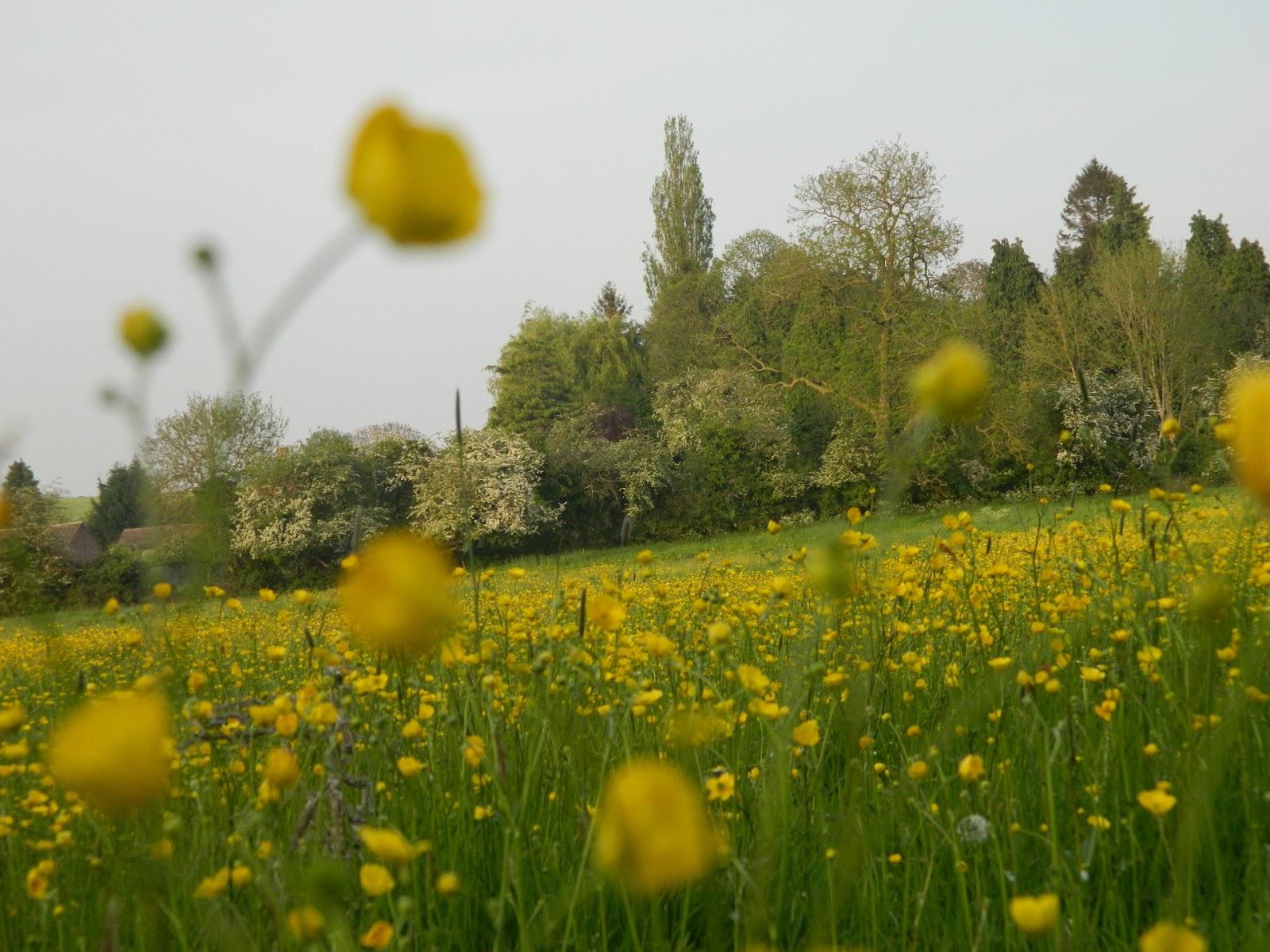
| Jake, my collie, in the buttercup meadow. |
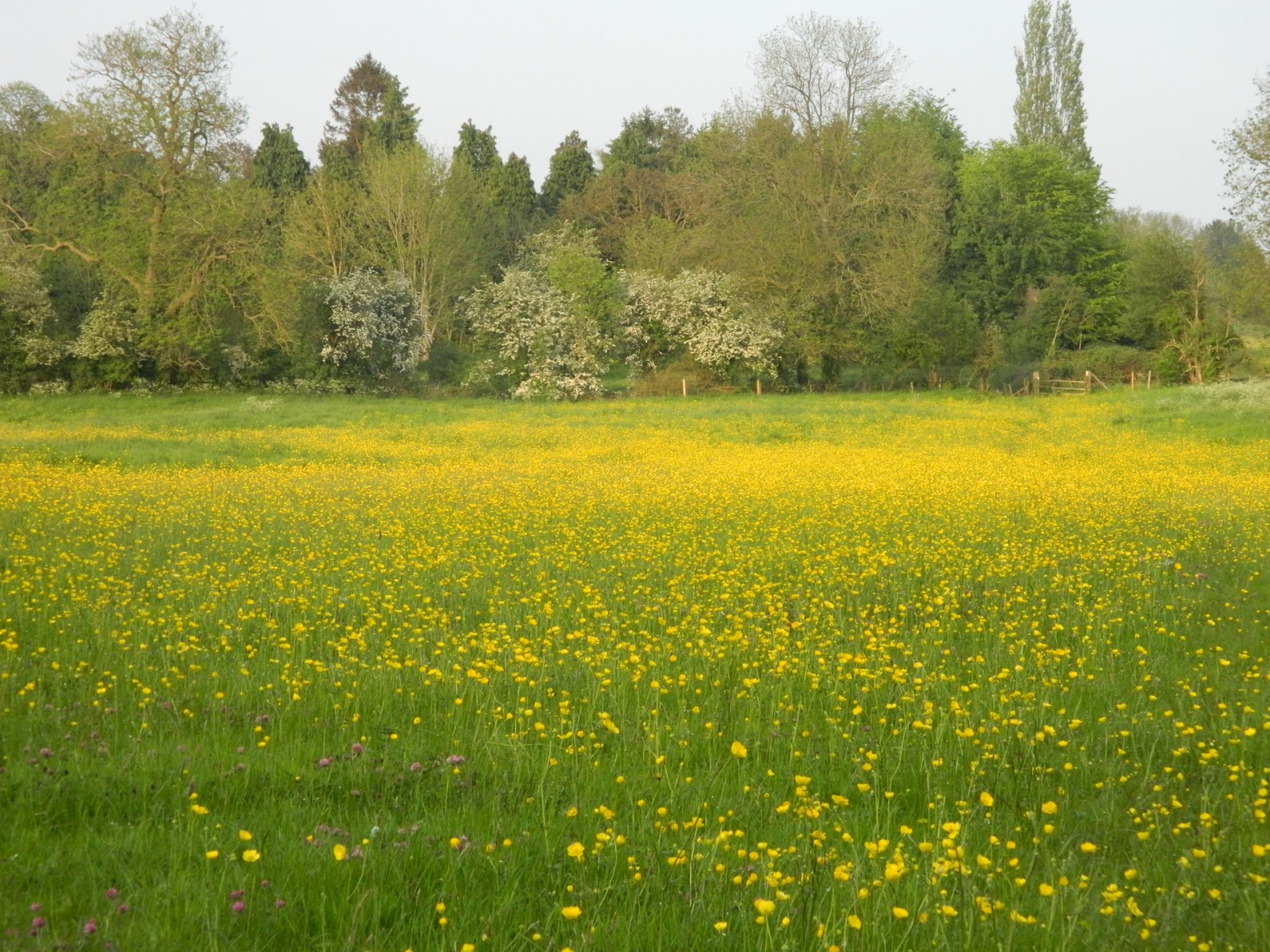
| Buttercups with a flowering hawthorn hedge in the background |
| Looking down at the buttercups |
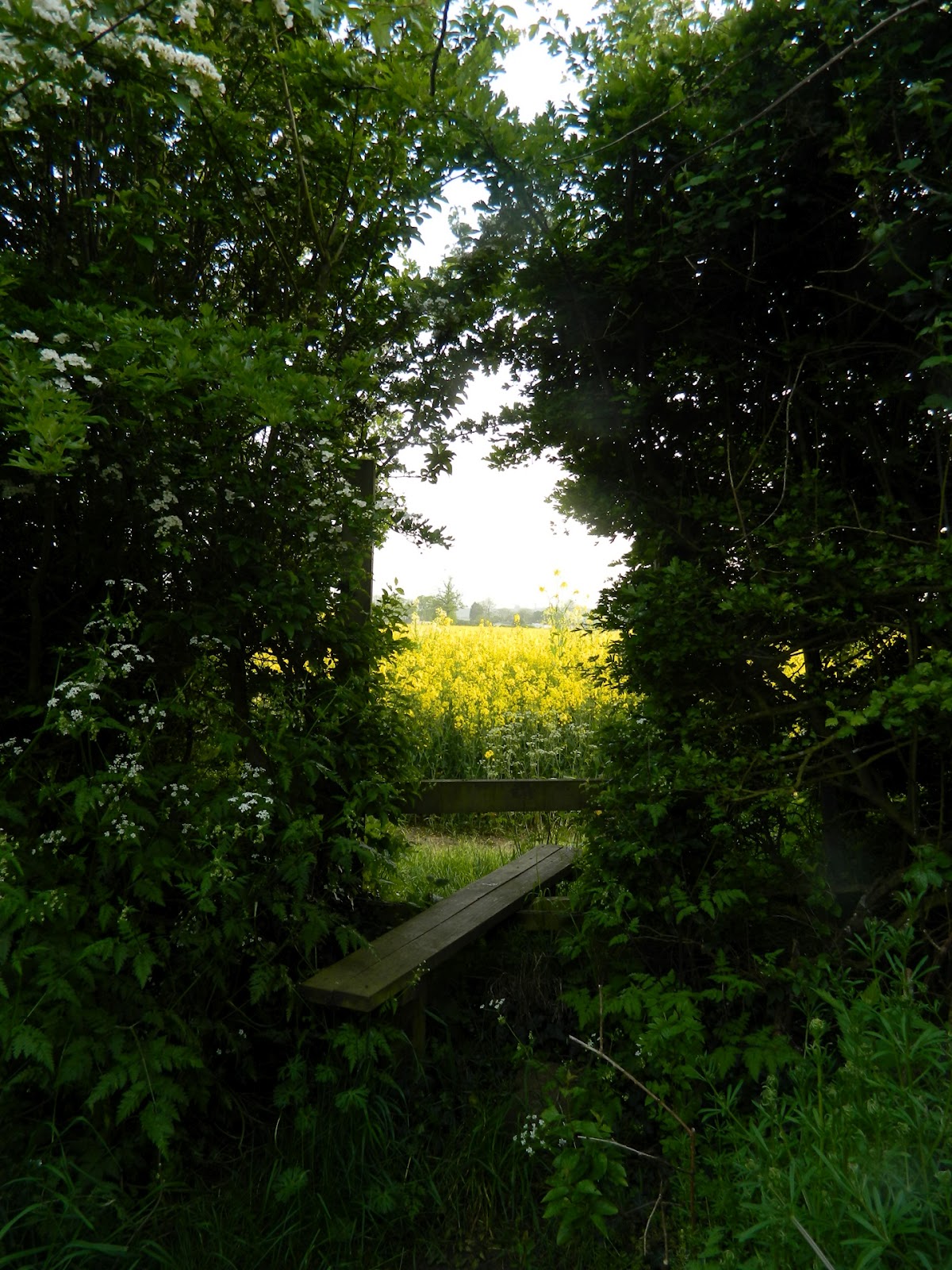
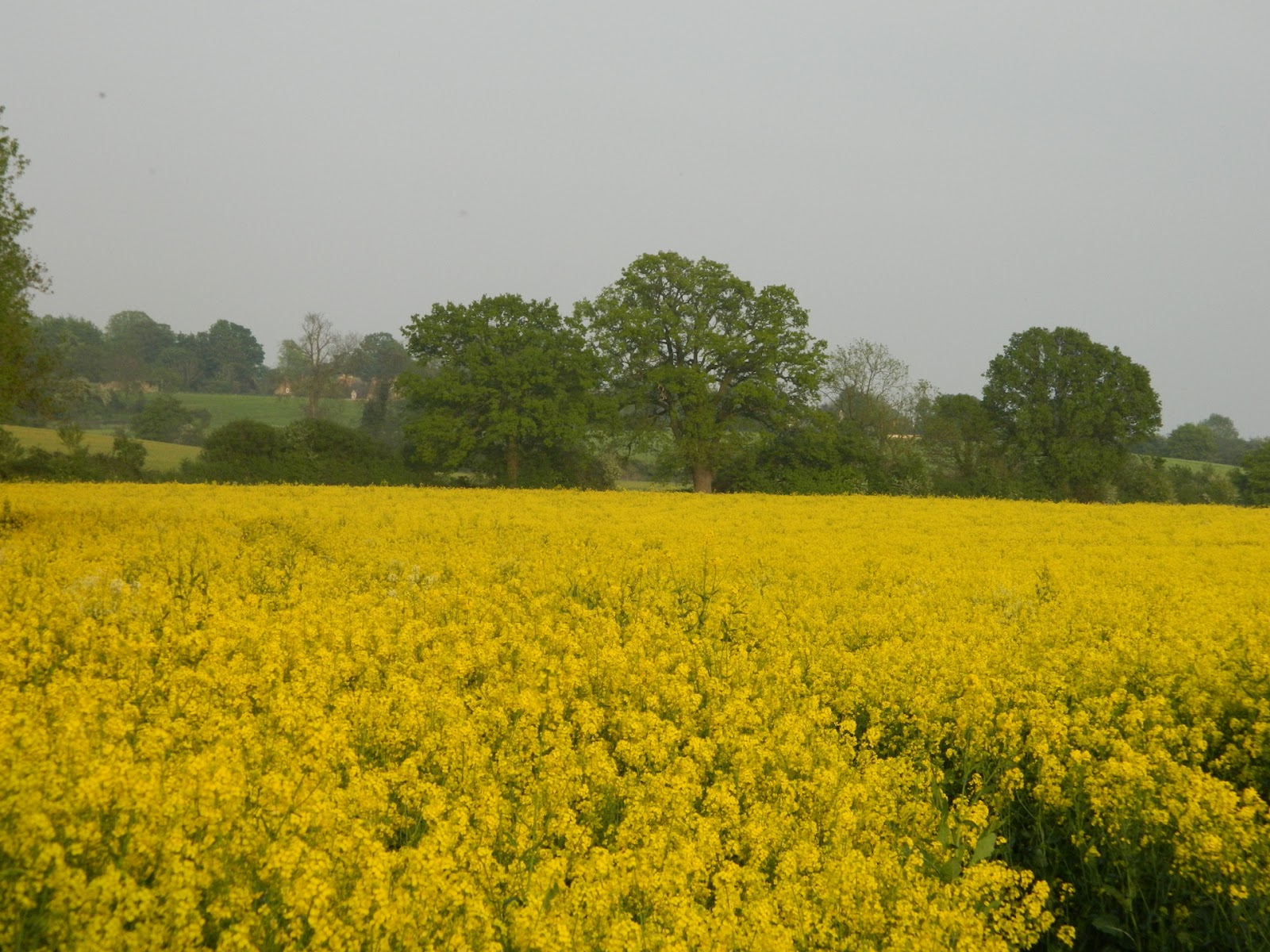
| A glimpse of the rape seed field |
| another view from our balcony |
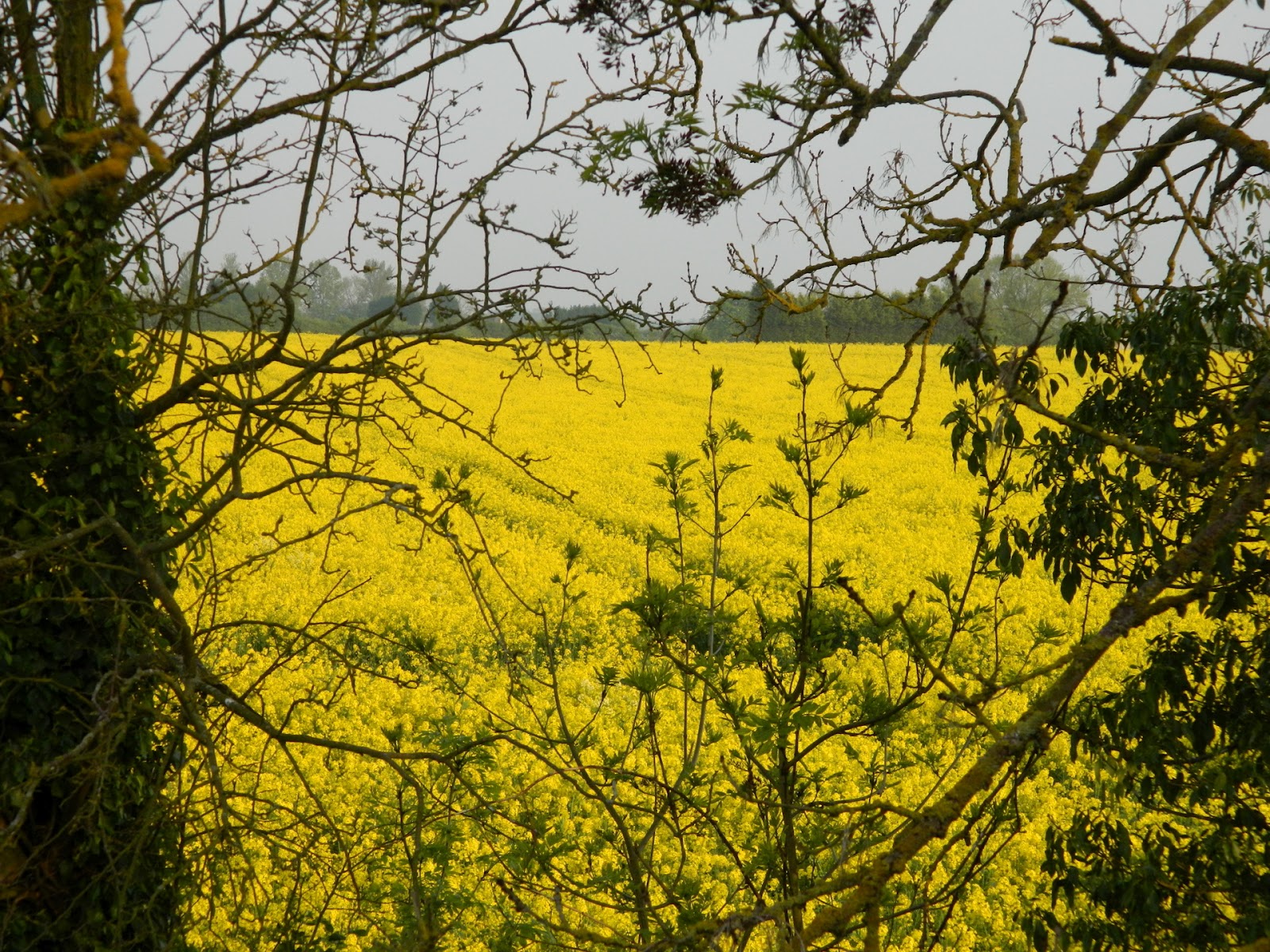
| field of rape seed |
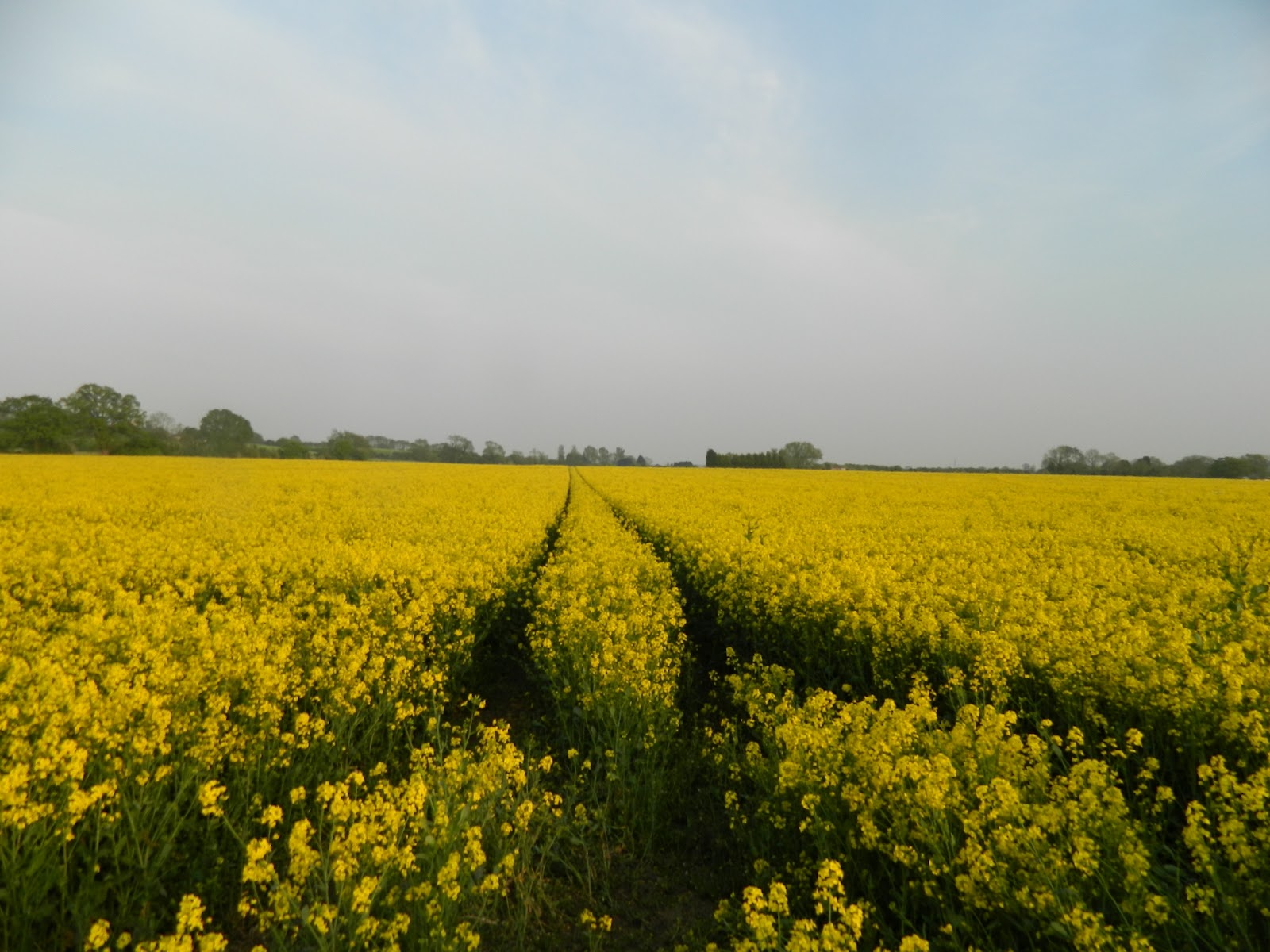
| Tractor tracks left by the farmer when spraying |
| close up of the rape flowers |
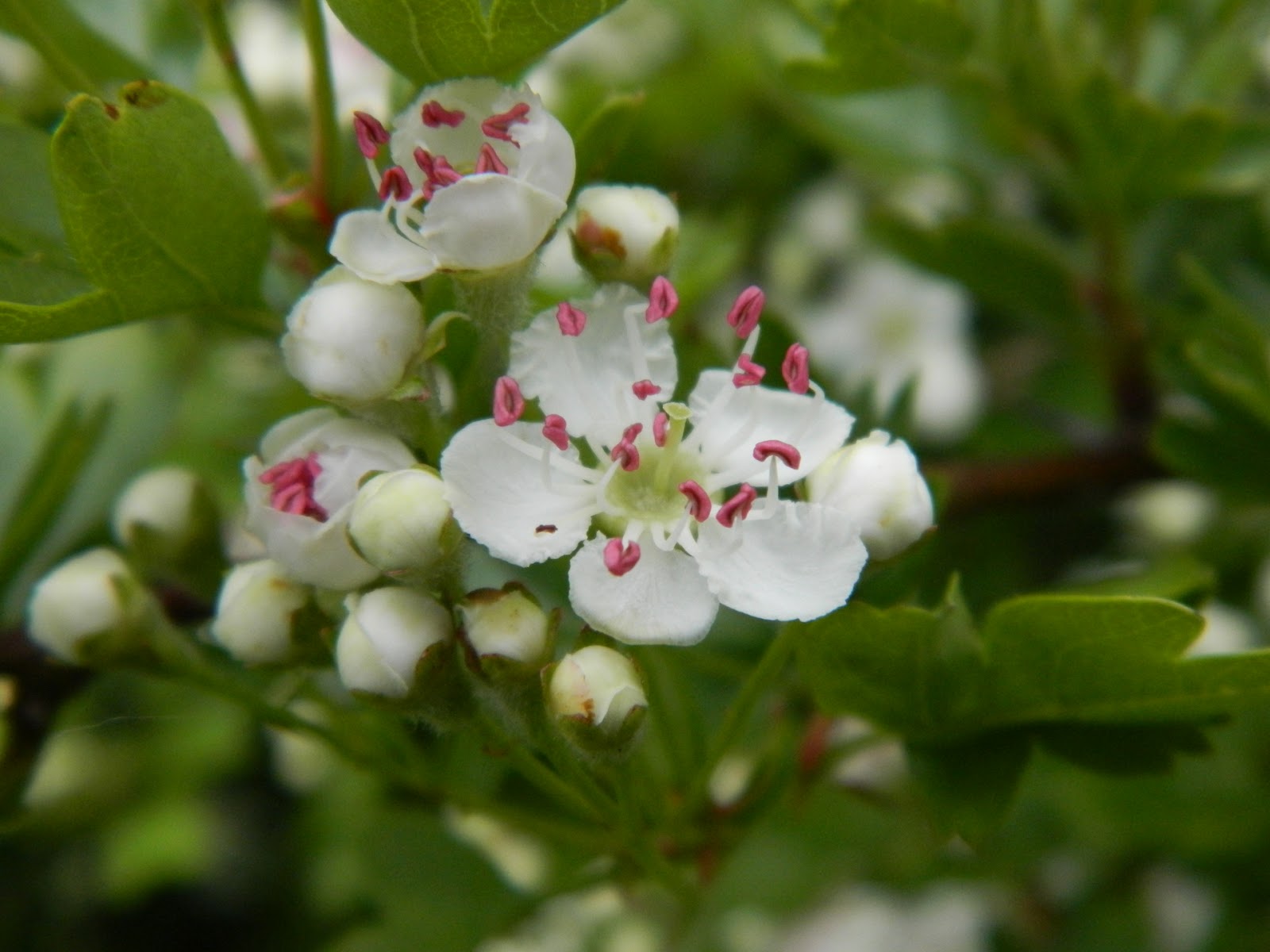
Three views of the hawthorn hedge
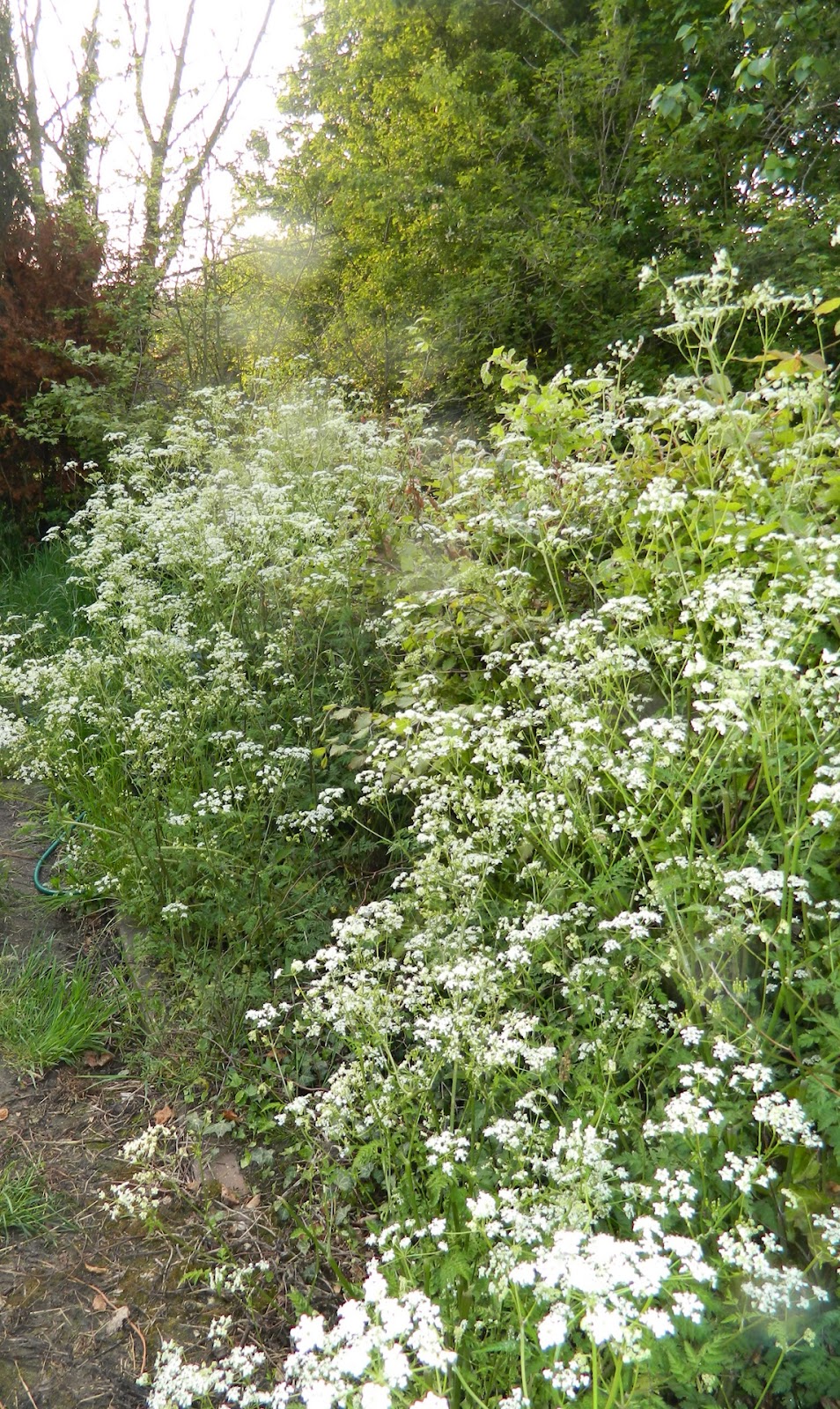
| Queens Anne’s lace by the vegetable garden |
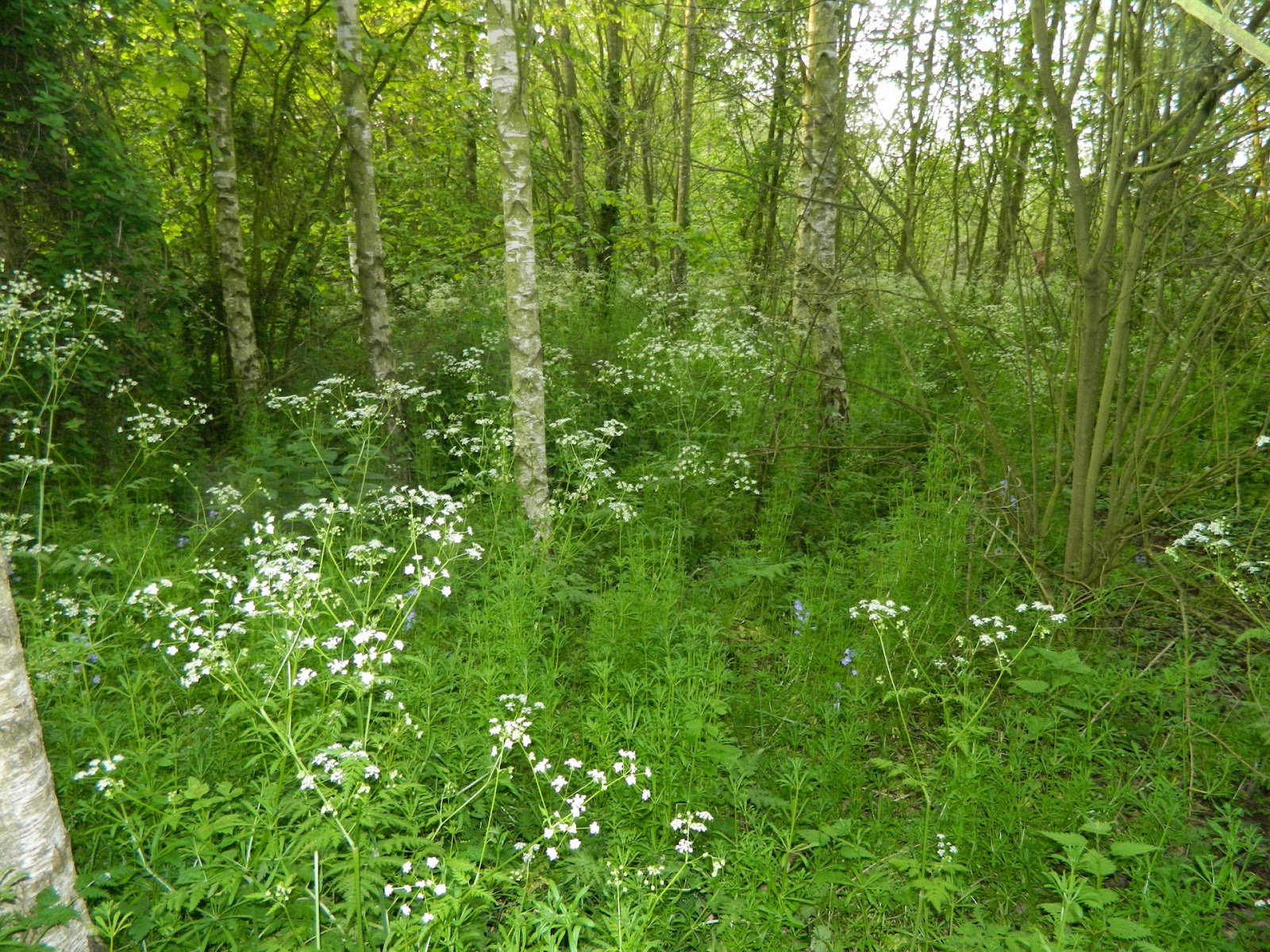
| Queen Anne’s lace, sticky weed (Galium aparine), and a few bluebells in the woods under the birches |
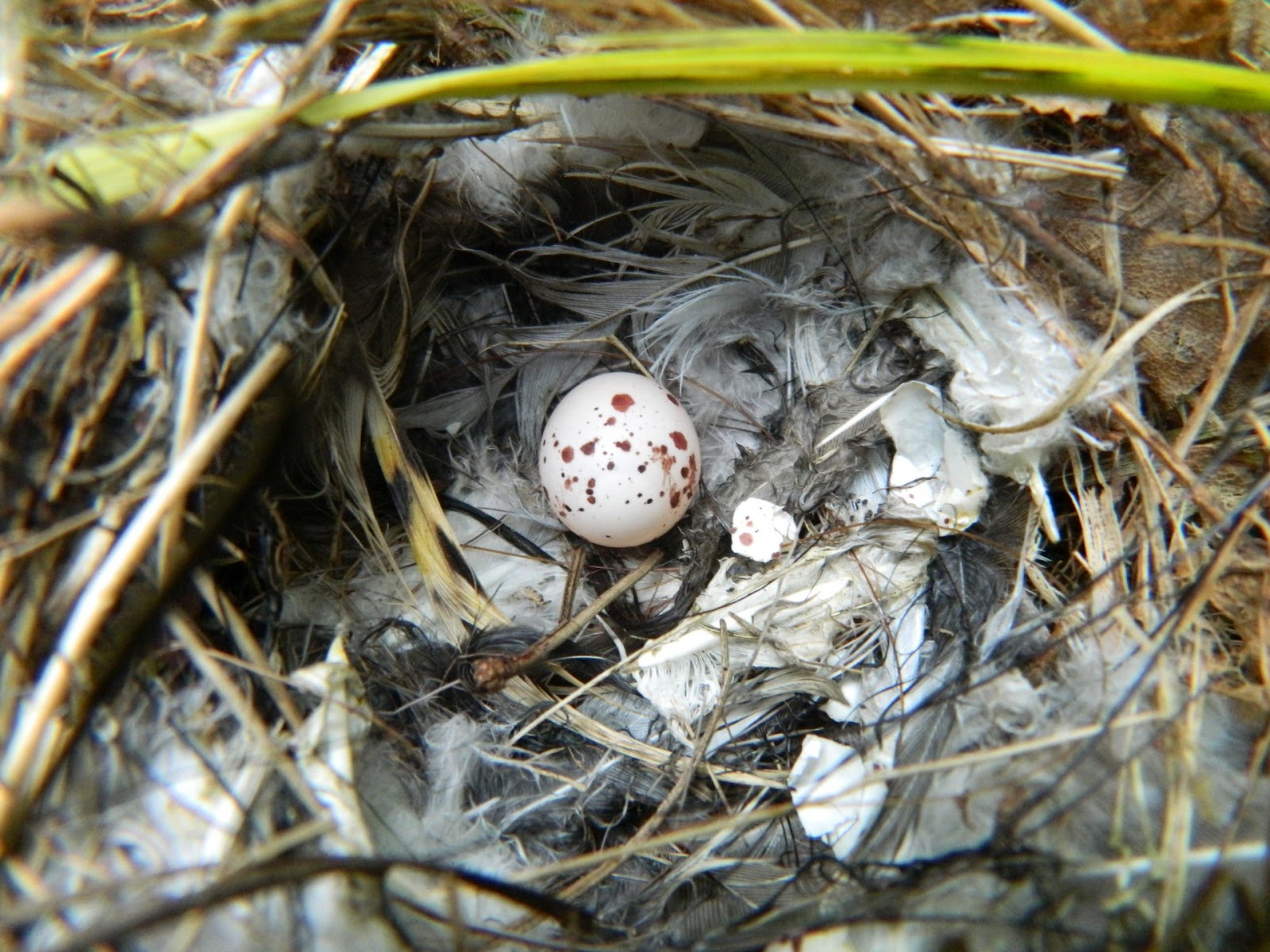
| A fallen nest |
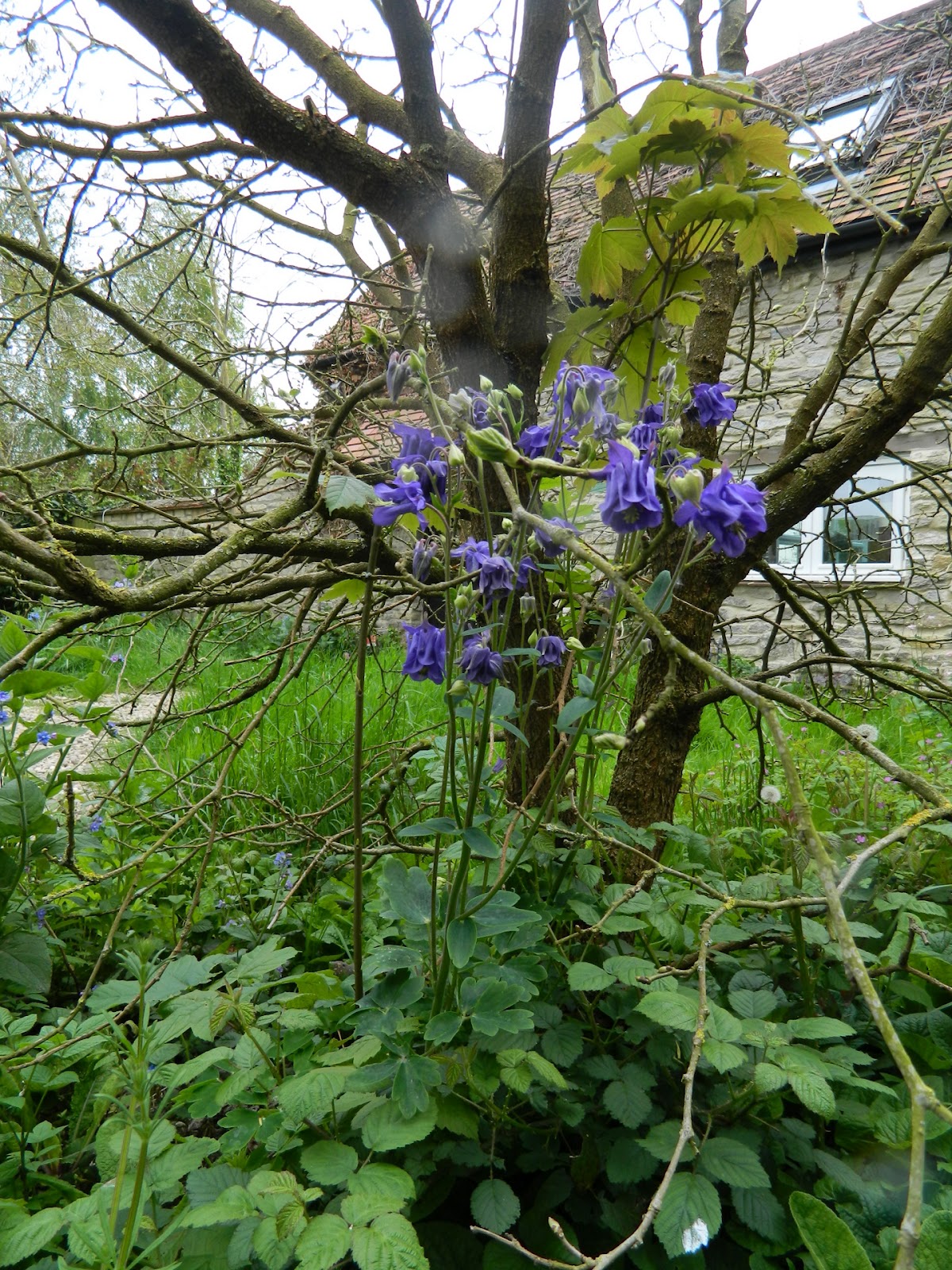
| Columbine under a still dormant mulberry |
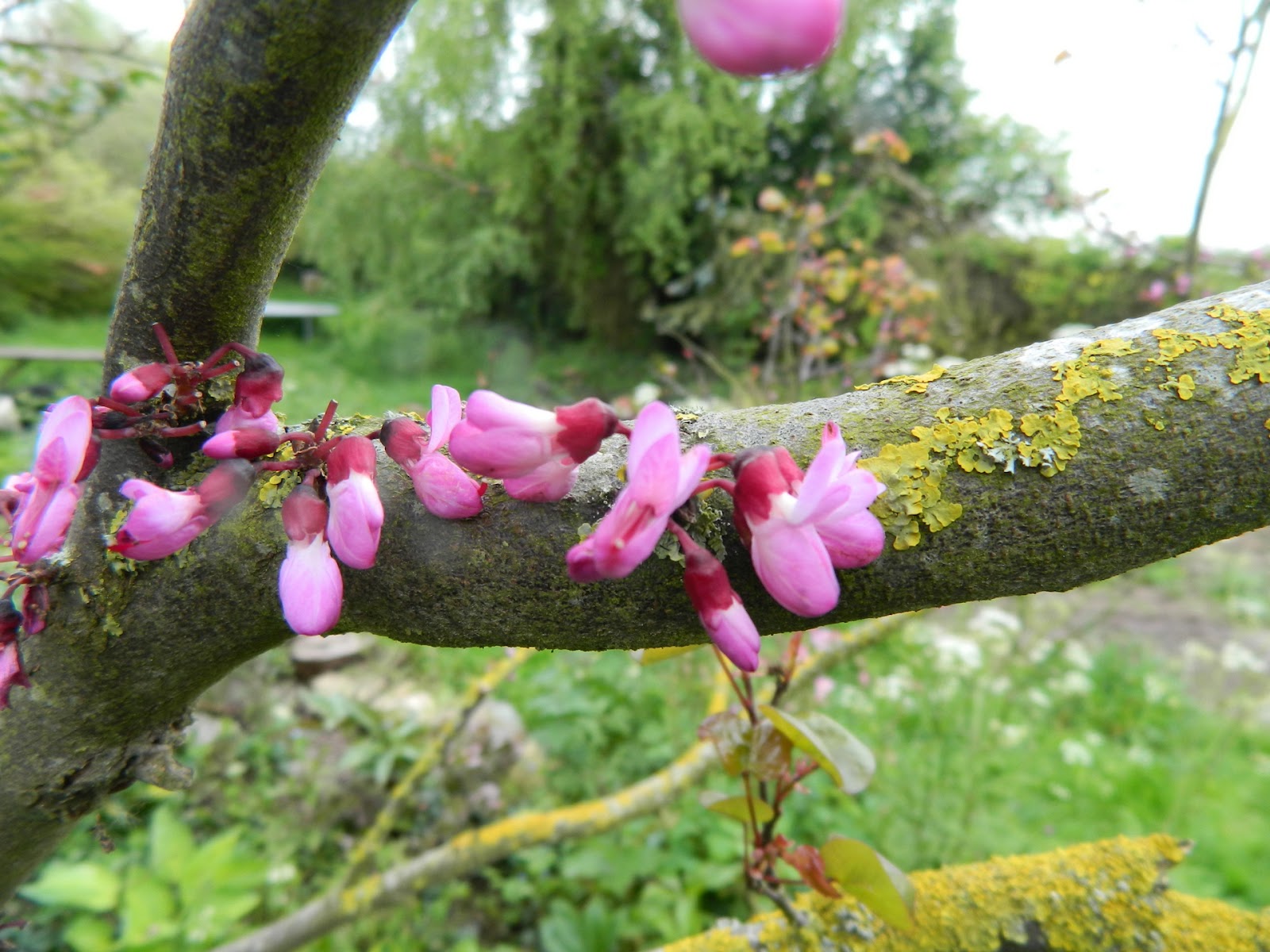
| Judas tree (I think) |
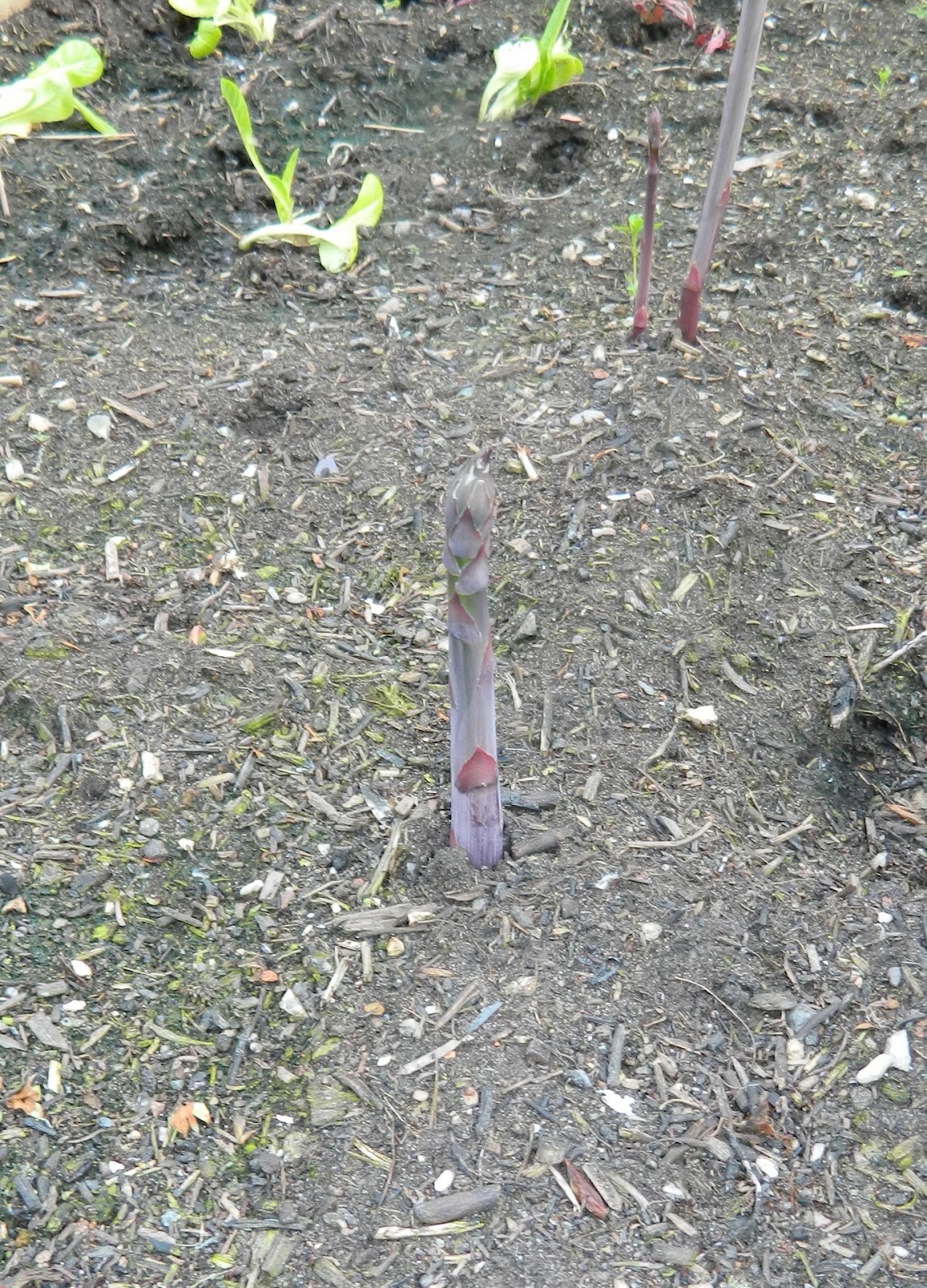
| Purple asparagus, almost the same color as the soil, sprouting. |
| A shady nook with giant solomon’s seal |
Blogging: The Greatest Democratisation of Writing the World Has Seen.
![]() |
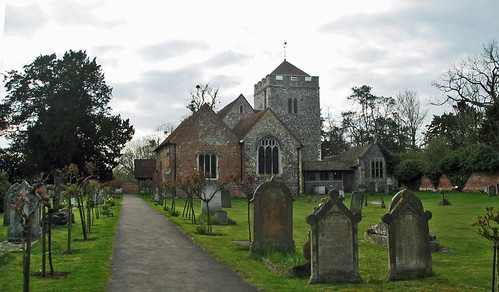
| Stoke Poges Churchyard, Buckinghamshire |
Thomas Gray who wrote “Elegy Written in a Country Churchyard” was an extremely self-critical poet, paralyzed by the fear of failure. Though he had devoted his life to a self-imposed programme of literary study, and was known as one of the most learned men of his generation, he published a mere 13 poems in his lifetime, 1000 lines, which might be mistaken for “the collected works of a flea,” he said sadly.
In the graveyard of Stoke Poges, Buckinghamshire, he ponders the graves of those whose lives were not blighted by ambition–or thwarted ambition.
But were they any less gifted then the household names of their generation? Statistically, the inhabitants of Stoke Poges should have had the same probability of producing a genius like Milton, a leader like Cromwell as any other town. They did not. Why? Gray muses
Perhaps in this neglected spot is laid
Some heart once pregnant with celestial fire;
Hands, that the rod of empire might have sway’d,
Or waked to ecstasy the living lyre:
But Knowledge to their eyes her ample page,
Rich with the spoils of time, did ne’er unroll;
Chill Penury repress’d their noble rage,
And froze the genial current of the soul.
Full many a gem of purest ray serene
The dark unfathom’d caves of ocean bear:
Full many a flower is born to blush unseen,
And waste its sweetness on the desert air.
Some village Hampden, that with dauntless breast
The little tyrant of his fields withstood,
Some mute inglorious Milton here may rest,
Some Cromwell, guiltless of his country’s blood.
Th’ applause of list’ning senates to command,
The threats of pain and ruin to despise,
To scatter plenty o’er a smiling land,
And read their history in a nation’s eyes,
Their lot forbad:
Far from the madding crowd’s ignoble strife,
Their sober wishes never learn’d to stray;
Along the cool sequester’d vale of life
They kept the noiseless tenour of their way.
He mourns these “mute inglorious Miltons,” “born to blush unseen and waste their sweetness on the desert air.”
However, with the explosion of blogging, the gatekeepers are losing their power, and anyone with a winsome voice who speaks to people can eventually find her audience, though she might live far from urban literary hubs. Miltons, particularly female ones, are no longer mute or inglorious!
In fact, “Miltons”, who live far from the madding crowd, find a voice–and an audience. The farmer’s wife Ann Voskamp in rural Canada, mother of six children who finds the sacred in the everyday. Or the nomadic Jessica Bowman, to mention at random, two blogs I enjoyed this week. Sweetness is no longer wasted on the desert air, in Gray’s phrase. It can be shared. And that is good, for sweetness should be shared.
Blogging is the greatest democratization of writing the world has seen–and probably its greatest explosion of shared knowledge and experience. That’s not to say an audience comes immediately—it still takes time, and application. However, one can gain one’s audience unmediated, based on whether your writing speaks to head, spirit and heart, without needing to convince a gatekeeper.
And that is one of the many reasons I love blogging.
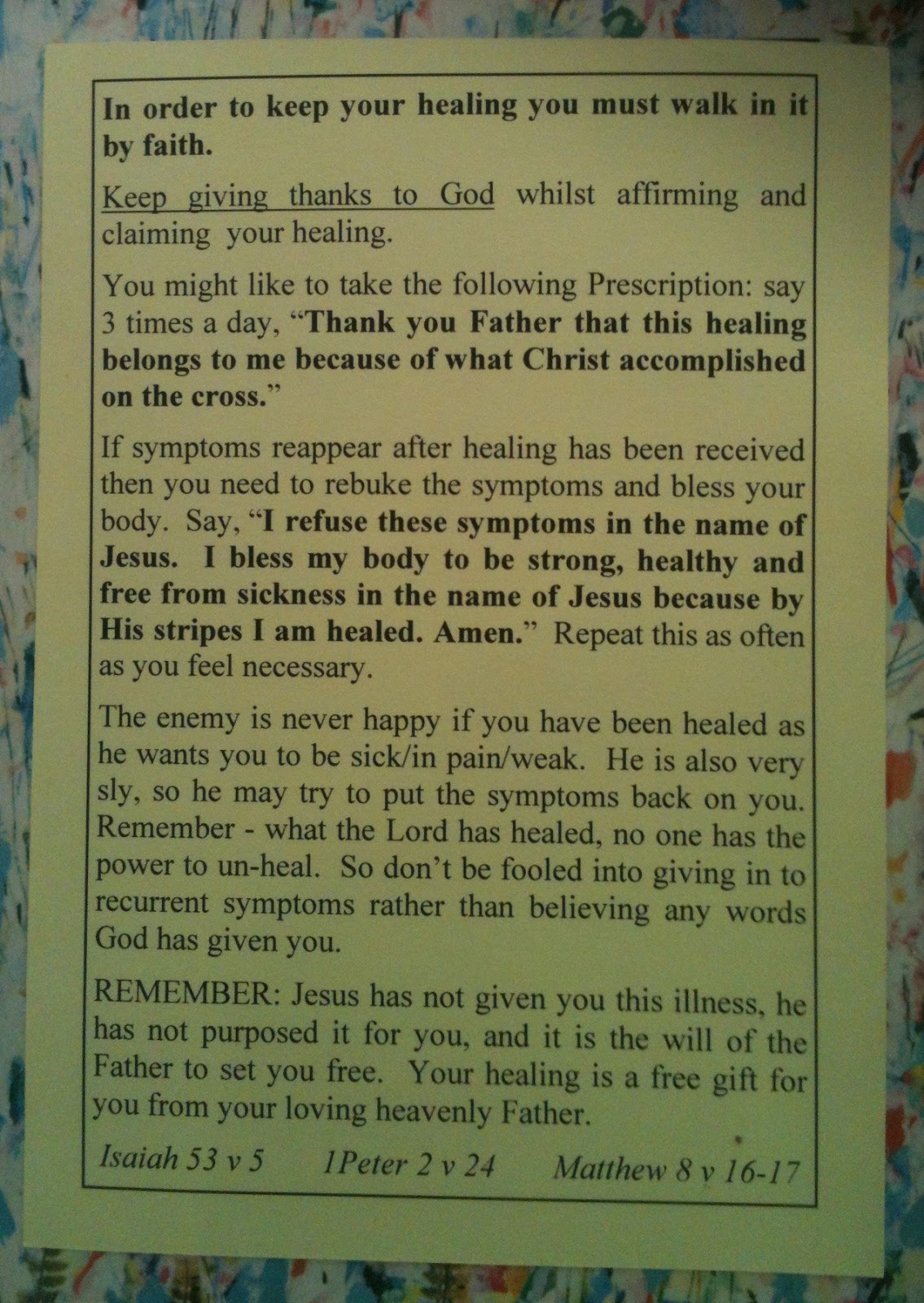
God can’t keep his hands off us when we ask for healing, because that is his nature. It takes faith to receive it, though

![]() |
| by Sharon George From Ffald-y-Brenin |
|
|
Enough: A Magic Word at the Root of Peace

John Bogle, founder of the mutual fund, Vanguard, writes in his book, Enough, “not knowing what is enough leads us astray in life leading to the subversion of our character and values.”
* * *
So what does Scripture have to say about when enough is enough?
Jesus cautions, “Be on your guard against all kinds of greed.”
And then there’s Jesus’s wonderful parable of the fool who built bigger barns!! He lives in the future tense. “I will build bigger barns. And then, I will say to myself, take life easy, eat, drink and be merry.
God calls him a fool, because in fact, death overtakes him before he does any of these things. And God interrogates him, “All these things you have stored for yourself, whose then will they be?”
I liked the New Yorker cartoon which shows vulturous relatives gathered as a will is read. The will says simply, “Being of sound mind, I have decided to spend it all now.”
There is something sane and healthy about that, though I would not like to die with my finances quite so neatly balanced. “
A good man leaves an inheritance for his children’schildren,” Proverbs 13:22 An inheritance is a sweet and magical thing–goodness one hasn’t earned!!–and to bless your children with it that plays a part in people working for longer than they need to.* * *
And learning the meaning of enough opens up many things–time for relaxation, time for friends, time for hobbies. Time to simply be.
The concept of enough has a particular piquancy for me because I find it hard to know when enough is enough, whether it is with buying books, or plants for my garden, or laying off the chocolate, or stopping work on something which fascinates me, or placing boundaries, or …. whatever…
Fortunately, for those born restless, like I am, there is a source of Enough.
“Thou hast made us for thyself, Oh Lord, and our hearts are restless until they find their rest in you,” Augustine wrote.
There is rest, there is enough, in Infinity, in God, who has Enough, and Enough and Enough for even the most restless spirit.
* * *
What Kind of Blog would Jesus have Written?
![]() |
| A few words Jesus wrote |
Well, if Jesus were a blogger, rather than an itinerant preacher, what kind of blog would he have?
1) It would be unique. It’s recorded that people were amazed at his words. No man ever spoke the way this man does (John 7:46).
Oh great. That’s a tall order. And how do I be unique?
By being myself.
Since no two people see the world in the same way, by being honest, we stumble upon the secret of being original, of being unusual.
Each person is unique, as unique as each snowflake, rose, fingerprint, zebra’s stripes, the iris of an eye, or the dots on a penguin’s chest.
As we grow to utter honesty, we discover in the process–unique blogs.
2) It would be full of grace and truth.
Full of graciousness, of course, but it would be honest too. Hypocrisy was the trait Jesus most abhorred in the Pharisees, “who did everything to be seen by men” (Matt. 23:5) and honesty was the trait he adored, for instance, in his foot-in-the mouth, speak-first-and-then-think disciples.
3) It would be a blessing.
There would be life in it, living waters, and nourishment–the bread of life.
4) Would Jesus spend time in gaining readers for his blog, or would he proceed on the “If you build it, they will come?” principle?
Both. He sees Philip and Matthew and invites them to follow him. He invites himself to Zaccheus’s house for a meal.
And the real-life friendships which grow out of blogging is one of its great pleasures.
But I get the impression that Jesus went about his Father’s business and drew people to him because there was life in his words. That he would have delivered the Sermon on the Mount if there were five people there, instead of five thousand.
If one invests time in blogging, it is perhaps only sensible and responsible to invest some time in finding readers for one’s blog. And I do far too little of that…
5) Jesus would not embark on or continue a blog without being sure that blogging was his Father’s will for him, what he was called to do.
He said, “I do nothing on my own.” I think he would be continually checking in with his Father on what to write, and how much to write, and how.
6 A blog written by Jesus would be somehow prophetic.
He would listen to his Father until he heard him speak. He would record what he heard.
6 A blog written by Jesus would be varied, like his teaching ministry.
Jesus used parables and sermons, exhortation and admonition. He taught his disciples spiritual lessons from their everyday experiences. He used metaphor and allegory, humour and satire.
He loved pithy aphorisms—oh how he would have loved Twitter—and stories which, twenty centuries later, reveal fresh depths of meaning each time we ponder them.
He loved questions. His favourite answer, in common with many Jewish rabbis was a question, which silenced his questioners.
* * *
I would love my blog to bear some resemblance to the blog a central figure in my spiritual, emotional, and thought-life might have written.
And how do I do that?
Oddly enough, it begins with relaxing. Slowing down.
Spending more time with him–to catch his spirit. To have my soul filled with his bread of life, and with the living waters He said would flow from those who believe in him.
In Which He Loves Me, Anyway

Listening to Isabel Allum in London. Chasing the Wild Goose of the Holy Spirit. Part II

* * *
But yet, there is a time for learn, and a time to be inspired.
When we lived in Williamsburg, Virginia, I worked before a large picture window facing our backyard. Giant iridescent dragonflies flitted around our pond. Monarch butterflies fluttered in their mating dance. Ruby-throated hummingbirds came to our feeders. There were brilliant cardinals and cheeky blue jays.
And I, nose in book, was often oblivious to this world humming with life and colour. Until I looked up.
* * *
So too, spiritually, I can plod. Not in distress, but not on the heights. Not unhappy, but not filled to overflowing with the joy of the Lord either.
But there is so much more. And when you listen to speakers who have scaled higher altitudes of joy or peace or hearing God’s voice, or experiencing miracles, you feel, “Okay, girl, there’s immensity around you. Keep climbing.” And this great cloud of witnesses spurs you on.
* * *
I am chasing the wild goose of the Holy Spirit, and the best thing about this chase is: I am guaranteed to succeed. On the most sacred promise. If you then, though you are evil, know how to give good gifts to your children, how much more will your Father in heaven give the Holy Spirit to those who ask him!” Luke 11:13.
“Everyone can play,” as John Wimber famously said. And everyone who asks for the Spirit receives. It’s a democracy. Like the great democratic marriage feast of the Lamb.
How much of the Holy Spirit will I receive? As much as I am willing to make room by daily repentance. By making time and clearing room. By inviting him to come.
Will everyone who asks receive the same amount? Nope. But that’s more or less okay with me, because I know the King, and I trust him, and know he’s fond of me.
And he will give me as much of the Spirit as I can stand at any given time and as I make room for by repentance, surrender and decluttering my heart and life to make room for him.
* * *
Healthwise, I’d had an awful week or so. A cough. Feeling feverish. Sleeping badly. Exhausted during the day.
So when I saw Isabel Allum was speaking in London, I thought, “Why not go?” I am low-spirited because I am feeling so grotty, and it will be refreshing.
And so I went.
And it was interesting enough.
* * *
A critique of the Toronto Blessing, and the Charismatic Movement is its similarity to magic. I recently chatted to a lovely new committed Christian about how she renounced the occult, including an addiction to fortune-tellers and clairvoyants, which was escalating financial problems, since she was contacting them several times a day, sometimes. Why? I asked. “The hope that something good might happen. The need to know,” she said.
And so, Isabel Allum packed out a hall, because she has a reputation as a prophetess. And what did people hope to hear? Predictions of destiny, greatness, “favour,” “plunder,” becoming famous, receiving the nations as an inheritance?
And I? As I said, I wanted to relax in the presence of God, soak in the things of God. And yes, I wasn’t averse to a prophecy. A confirmation of destiny, though I do have a good idea of what God is planning to do, and is doing in my life. He spoke to me when I was 21, on the day he unleashed my writing gift, out of the blue, and confirmed it last summer. So, I am a bit embarrassed that I wanted a prophetic word, such as was given to me for my daughter Zoe by Patricia Bootsma, but, hey, I did.
By the grace of God, however, I have had very clear direction for the rest of my life, of the path I should take, and now–all I need to do is take it, which is not the easiest thing. Steady step by step, and Paradise Lost gets written, and you reach your Promised Land. A thousand prophecies or none, it would still take obedience. It would still take work. It would still take sacrifice.
* * *
A lot of things Isabel was talking about were I guess “magical.” Stories of lost satnavs, medicines, diamond earrings, tools, appearing. She was like a jazz artist, one riff generating another.
It struck me that we each have faith for different things. For instance, I have faith in God’s financial provision. I pray with faith, and over the years, have experienced many miracles in this realm.
Bill Johnson has faith in God’s “creative miracles”—growing new limbs and new organs. And so he sees that happen. And Isabel magically retrieves lost objects.
I love the rich concept of the Kingdom, a mansion with many rooms. And it means different things to different people. Heidi and Rolland Baker’s concept of the Kingdom is probably closest to Jesus’s—the blind see, the deaf hear, the dead are raised to life, and the good news is preached everywhere.
But there are other aspects of the Kingdom. It is joy. It is peace. It is serenity. It is, as Ann Voskamp paraphrases Paul, being, “worried-full for nothing, thank-full for everything, prayer-full in all things.”
* * *
Isabel talked about a young girl working with her, who went to work in an organic greenhouse, and prayed in tongues all day. And the business boomed, and the plants throve, and the profits rose. The simple act of prayer brought the Kingdom into the greenhouse. I have heard the same stories come out out of Ffald-y-Brenin, once they started praying blessing on neighbouring farms and businesses.
And that too is the Kingdom. Praying through your day. Seeing God’s hand in little things (Isabel gives examples of parking spaces, and things being marked down in the grocery store just before you get to that aisle. Seeing it as God’s provision fills our life with joy.) Being thankful. Praying big prayers.
* * *
The medium is often the message. Isabel, a Costa Rican, whose Hispanic accent I often had trouble following, spoke childlikely with a continuous smile. The joy seemed real.
Ah, what prevents me living like that, praying through my day, thanking God for his goodness to me, both evident goodness and goodness I accept by faith? Rejoicing always, praying constantly, in everything giving things. Nothing stops me from trying to live like that! And so I will.
And for that inspiration, I am happy I looked up from my books, and saw a bright ruby-throated hummingbird flutter through an English May; iridescent dragonflies sweep, and monarch butterflies on their prophetic migration.