This reminds me of when Zoe was 3, and we too only gave her books. She opened them, and said sadly, “Why Santa only brought me book presents?”
Roy dashed out on Christmas Day to the first store he found open, and bought a Barbie doll, and bubble bath with a Micky Mouse Lid, which pleased her more than ALL her books!
Books Quiz of 2010

Books quiz of 2010
How much attention were you paying to literary developments this year? Anwer these questions and find out if you’re a chump or a champion


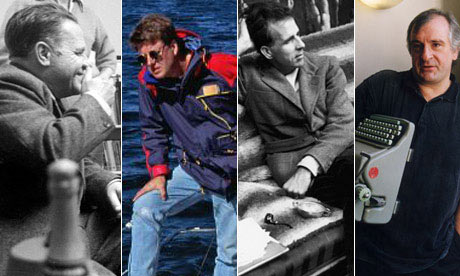
Inkheart: The Movie
We watched this movie–part of Irene’s Christmas present–tonight. Faster moving than the book, and satisfying to those who have read the book. It’s like watching how someone else’s imagination has conceived and incarnated the book.
Having enjoyed the books, I loved seeing Dustfinger, Farid, and the scene in which Meggie calls forth the shadow. Was delighted to see Fenoglio. I loved the scenes set in the Italian countryside.
.
I loved too the central conceit: the power of the imagination and words to make things seem real. A wonderful celebration of the power of the written word and of the imagination.
The Mill on the Floss by George Eliot
It’s one of my very favourite novels, which I have loved for most of my life.
I first encountered it when I was very little in an anthology my grandfather gave me, and instantly identified with Maggie of the rough unkempt hair who cuts her hair off when she’s criticized. I was so taken with the Apocrypha she mentions that I put it on my birthday wish list, not realizing that the Apocrypha was in the Bible.
I really loved the Mill on the Floss when I was 15 and 16 and read it several times. I so identified with Maggie, tortured, sensitive misfit, too clever, too unusual for her small pond who grows into a beautiful and intelligent woman. Her hot-headed father loses his temper, his health and his fortune, and the family is reduced to poverty.
She find relief during this period of poverty in spiritual adventure. She reads The Imitation of Christ, and becomes a withdrawn pietist, finding real thrill in prayer and scripture study and meditation. Which, oddly, and perhaps this is a romantic idea, makes her attractive to men, especially since she blossoms into a beauty.
I remember crying over the scene in which Stephen Guest, a rich young man, who is engaged to Maggie’s rich cousin Lucy falls in love with her. They row downstream, losing track of time, and spend the night together (in separate rooms, which no one believes.) When they return, Maggie is ostracised. Stephen begs her to marry him, but she refuses. I was full of admiration for Maggie. Most young women in her place would have escaped poverty with a young man they were fond of.
Her beloved, narrow-minded unimaginative brother Tom also shuns her. Maggie dies rescuing him during a flood.
The characters are so vividly drawn that they will stay with me forever. Her weepy Aunt Pullet, her pushy, stingy Aunt Glegg, her scaredy cat mother, her pompous brother Tom, her hot-headed doting father, her first lover, Philip Wakeham, her unbelievably sweet cousin, Lucy.
A wonderful novel, everyone, every girl in particular, should read. Somewhat autobiographical in both the period of religiosity, and the period of shocking society as George Eliot had a long and happy “marriage” with a married man. And this was the Victorian era!!
Wikio
Evolving English: One Language, Many Voices


The British Library is hosts the first ever exhibition exploring the English language from Anglo-Saxon runes to regional dialects and modern day rap. This will explore the English language– one of the most talked and talked about languages in the world– in all its national and international diversity.
Evolving English will place iconic books and manuscripts–the only surviving manuscript of Beowulf, Shakespeare ‘quartos’, the King James Bible, Dr Johnson’s dictionary– alongside everyday texts and media to show the many social, cultural and historical strands from which the language has been woven.
My father had immigrated to English in the forties and fifties to train and work as a Chartered Accountant after which he returned to India, to work at Controller of Accounts at Tatas, one of India’s largest companies. He often told me about the cockney greeting, “Nice day, inn’t ?” and how people called him “my love,” or “darling”. I was delighted to be similarly greeted by total strangers when I moved to England, 30 years after he left it, experiencing the continuity of the English language.
Though the language Chaucer and Shakespeare wrote is still understandable to us today, English is continuously evolving. People are reading more than ever—though not necessarily books or traditional media. Facebook, blogs and twitter mean that a new idea or phrase permeates the collective consciousness in days or weeks rather than years.
As such, English, our most hospitable language has adopted popular phrases such as Stephen Covey’s “Paradigm Shift,” Malcolm Gladwell’s “Tipping Point” or “Outliers,” Nassim Nicholas Taleb‘s “Black Swan Events” or even “the credit crunch,” once an arcane term only used by economists, according to The Times. I, as the owner of a small publishing company use and see the phrase “the long tail” weekly, though in fact Chris Anderson first used in in 2004. The word “snarky” entered the English language through a Heidi Julavits essay, also of 2004. I write this article for another neologism, a blog, “weblog.”
In fact, each sub-group and sub-culture have their own jargon, which is often incomprehensible to outsiders. See the amusing video How to Speak Christianese http://theoxfordchristian.blogspot.com/2010/12/how-to-speak-christianese.html.
Visit the website. It includes a quiz which I played at the Egghead level, getting 5 out of 6, though I admit some answers were guesswork. Do play it and tell me your score. http://www.bl.uk/evolvingenglish/quiz.html
Here are the facts about the exhibition:
- Evolving English: One Language, Many Voices opens at the British Library on 12 November and is open until 3 April
- Cost: free
- While at the exhibition you can record your voice to add to the collection preserved for future study and analysis.
- The URL is www.bl.uk/evolvingenglish
- Tweet using
The Curious Incident of the Dog in the Night-Time,
The Curious Incident of the Dog in the Night-Time
We are listening to this in the car with a good deal of pleasure and laughter. It is eerily familiar. Now none of us are autistic or have aspergers. However, we are pretty logical, and intellect-dominated rather than emotion-dominated. For instance, we would probably all be T on the Myers-Briggs for Thinking, rather than F for feeling.
So we couldn’t help laughing when Christopher’s father tells him that his mother died of a heart attack. Christopher asks, “What kind of heart attack?” His father, infuriated says, “Christopher, this is not the time to be asking that sort of question!” But Christopher wants to know if it was an aneurysm, or embolism, or just a regular heart-attack. We laughed because it is the kind of question that 3 out of the 4 of us at least would ask in a similar situation.
An autistic savant, Christopher offers a combination of a relentlessly logical mind with very little understanding of how society or the adult work operates. Many children are like this. Most learn; some do not.
Postscript. Now finished listening to it. Though bits are tedious–how Christopher gets to London etc–it is a most moving book.
I like his parents’ care and concern for someone who apparently has no feelings for them, nor any concern beyond himself and self-protectiveness. He does not some ethical concerns like “It is not good to kill dogs” and “one should not tell lies,” but no understanding of love for others. When he describes what love is, for instance his father’s love for him, he says, “Love is when you cook someone’s food, and wash someone’s clothes, and tell them the truth.” His parents are nevertheless fond of him, as one is fond of a totally selfish toddler. Christopher is now 15, but since he has not grown up morally or imaginatively, they are as fond of him as when he was three.
Interestingly, people who behave like Christopher does would have been institutionalized in the past before they was much understanding of autism. Christopher is an autistic savant. I wonder if tuning out so much of reality enables an intense focus on aspects of it. Christopher is very good at both maths, physics and chess like my husband and one of my daughters. Extreme excellence in one sphere always comes at the cost of other spheres being underdeveloped, I think. The question is how excellent, how underdeveloped.
The book is probably so successful because autism or extreme neuroses are probably on a continuum and many people will find echoes of their own neuroses and hang-ups or those of their family in Christopher.
If nothing else, the combination of extreme cleverness and extreme naivete does make you laugh.
Wikio
 Bookmark this on Delicious
Giveaway of 1 Million Free Books–World Book Night

Here are the books.
Kate Atkinson – Case Histories
Margaret Atwood – The Blind Assassin
Alan Bennett – A Life Like Other People’s
John le Carré – The Spy Who Came in From the Cold
Lee Child – Killing Floor
Carol Ann Duffy – The World’s Wife
Mark Haddon – The Curious Incident of the Dog in the Night-Time
Seamus Heaney – Selected Poems
Marian Keyes – Rachel’s Holiday
Mohsin Hamid – The Reluctant Fundamentalist
Ben Macintyre – Agent Zigzag
Gabriel García Márquez – Love in the Time of Cholera
Yann Martel – Life of Pi
Alexander Masters – Stuart: A Life Backwards
Rohinton Mistry – A Fine Balance
David Mitchell – Cloud Atlas
Toni Morrison – Beloved
Chimamanda Ngozi Adichie – Half of a Yellow Sun
David Nicholls – One Day
Philip Pullman – Northern Lights
Margaret Atwood – The Blind Assassin
Alan Bennett – A Life Like Other People’s
John le Carré – The Spy Who Came in From the Cold
Lee Child – Killing Floor
Carol Ann Duffy – The World’s Wife
Mark Haddon – The Curious Incident of the Dog in the Night-Time
Seamus Heaney – Selected Poems
Marian Keyes – Rachel’s Holiday
Mohsin Hamid – The Reluctant Fundamentalist
Ben Macintyre – Agent Zigzag
Gabriel García Márquez – Love in the Time of Cholera
Yann Martel – Life of Pi
Alexander Masters – Stuart: A Life Backwards
Rohinton Mistry – A Fine Balance
David Mitchell – Cloud Atlas
Toni Morrison – Beloved
Chimamanda Ngozi Adichie – Half of a Yellow Sun
David Nicholls – One Day
Philip Pullman – Northern Lights
Erich Maria Remarque – All Quiet on the Western Front
CJ Sansom – Dissolution
Nigel Slater – Toast
Muriel Spark – The Prime of Miss Jean Brodie
Sarah Waters – Fingersmith
CJ Sansom – Dissolution
Nigel Slater – Toast
Muriel Spark – The Prime of Miss Jean Brodie
Sarah Waters – Fingersmith
Gosh, I’ve just read the 5 in bold. Lots of reading to do, Anita. And here’s the skinny on it.
World Book Night to give away 1m free books
Readers in the UK and Ireland can choose books to give away to people they think will enjoy them


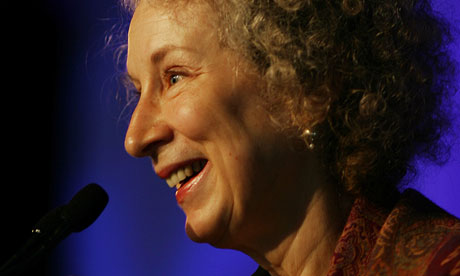
Night follows day with the launch of World Book Night, as publishers look to inspire adults to read by giving away 1m free books. Inspired by the success of World Book Day, which last year saw schoolchildren cash in tokens for more than 600,000 specially-published titles, this new initiative aims to put “an accessible work of enduring quality” in the hands of adult readers in the UK and Ireland on the evening of 5 March 2011.
Participating authors Margaret Atwood and John le Carré welcomed World Book Night with great enthusiasm, with Atwood saying she was “amazed by its magnitude” and Le Carré calling it “beyond his most ambitious dreams”.
Key to the event is the concept of enthusiastic readers giving away their favourite book to people they think might love it too. Anyone can apply to be one of the 20,000 givers, choosing the title they most want to give away from a list selected by a panel including booksellers, authors and librarians, including novels by Sarah Waters and David Mitchell, poetryfrom Carol Ann Duffy, and memoirs from Alan Bennett and Nigel Slater. The 20,000 chosen to give will be able to donate 48 copies of their much-loved book.
An eclectic roster of high-profile patrons have stepped forward to back the event, including writers JK Rowling, Dave Eggers and Seamus Heaney, musicians Damon Albarn and David Gilmour, actors Colin Firth and Tilda Swinton, cookery queen Nigella Lawson and sculptor Anthony Gormley. BBC creative director Alan Yentob is also a supporter, and the event will be covered on BBC2. Stephen Fry, Lemn Sissay, DBC Pierre, Kamila Shamsie and Bidisha are also on the editorial committee, chaired by broadcaster James Naughtie.
Atwood, whose novel The Blind Assassin is among those on offer for donation, said that when she first heard of the event she was “amazed not only by its magnitude but by its simplicity. The love of writing, the love of reading – these are huge gifts. To be able to give someone else a book you treasure widens the gift circle.”
Le Carré, whose The Spy Who Came in from the Cold is another book that will be given away on World Book Night, said: “No writer can ask more than this: that his book should be handed in thousands to people who might otherwise never get to read it, and who will in turn hand it to thousands more. That his book should also pass from one generation to another as a story to challenge and excite each reader in his time -that is beyond his most ambitious dreams.”
Artist Antony Gormley, who is a patron of the event, also offered a cheer, saying: “Hooray for World Book Night, a truly wonderful celebration of reading, writing, and sharing! When the joy of giving and receiving is added to the fruit of the imagination, something big, lovely and generous can happen: for a book allows us to hold the experience of another in our hands and absorb it in our minds.”
Jamie Byng, chief of publisher Canongate and the chairman of World Book Night, predicted that the event would have “an enormously positive impact on books and reading” because of the sheer power of personal recommendation. “Having 1m books given to one million different people on one night in this way is both unprecedented and hugely exciting,” he said.
While the vast majority of the books will be given away by individual members of the public, 40,000 will be distributed by WBN itself to people who might not otherwise be able to participate.
Organisers hope to extend the promotion to meet the global reach of its title in future, but for the moment it is limited to the UK and Ireland
Interesting Margaret Atwood Interview
Margaret Atwood interview: ‘Go three days without water and you don’t have any human rights. Why? Because you’re dead’
With almost 50 books to her name, the formidably intelligent Margaret Atwood is a force to be reckoned with. But one year on from the Copenhagen Summit, not even her dark imagination could have predicted the bleak situation the world now faces. Here, she talks about cowardly politicians, her love of birds and why she’s joined the Twitterati



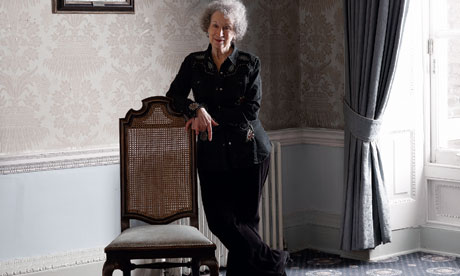
It’s 25 years since the publication of The Handmaid’s Tale, her dystopic masterpiece, but Margaret Atwood firmly resists the suggestion that she might be an icon of Canadian literature. “What does that mean?” she counters in her distinctive prairie monotone, somewhere between a drone and a drawl. “I don’t like being an icon.” A thin ironic smile. “It invites iconoclasm. Canada is a balloon-puncturing country. You are not really allowed to be an icon unless you also make an idiot of yourself.”
Now no one has ever dared suggest that Margaret Atwood, a famously scary and prodigiously gifted Canadian intellectual with nearly 50 books to her name – poetry, fiction, critical essays, books for children, radio and film scripts, anthologies and collections of short stories – would ever willingly make an idiot of herself in public. But here’s the big surprise: lately she’s become game for a laugh. “If you want to see me make an idiot of myself in public,” she goes on in that inimitably dry timbre, “you can look it up. Margaret Atwood + goalie + Rick Mercer.”
It turns out Mercer is an entertainer who performed this national service when he insisted that the author of The Edible Woman, Alias Grace andThe Blind Assassin (which won the Booker Prize in 2000) should get kitted up as an ice-hockey goalie for television in an item entitled “How to Stop a Puck”. At first Ms Atwood demurred. No, said Mercer. You’ve got to be a goalie. Why, she asked. Because it will be funny, he said. Repeating this story against herself, Atwood whispers an aside: “He’s from Newfoundland”, as if this explains everything.
Mercer was right. It is funny. Not hilarious, but weird. And here’s the kicker, which seems to give Atwood a surprising amount of satisfaction. “So I was a goalie,” she concludes. “And it went viral on the internet.” Cyberspace, it seems, is where she is most at home these days.
A long time ago, in fact less than a year – “but time goes all stretchy in the Twittersphere, just as it does in those folk songs in which the hero spends a night with the queen of the faeries and then returns to find that 100 years have passed and all his friends are dead” – Atwood was advised by the people who were building the website to promote her new novel, The Year of the Flood (2009), that it should include a Twitterfeed. “‘A what?’ I said, innocent as an egg unboiled. Should I know of Twitter? I thought it was for kiddies.”
She can come across as humourless and severe, but I think her deadpan manner is just the shell with which she protects her fierce, inquisitive intelligence. “So I plunged in and set up a Twitter account.” Her first problem was that there were already two Margaret Atwoods, one of them with her picture. Eventually these impostors “disappeared”. She’s the kind of woman who you imagine generally gets her own way like that.
Next she was told she should collect “followers”. No problem. There’s something contagious about Atwood’s imagination: her tweets went viral, too. A few months back she had 33,500 followers. Now she has 97,500, a community of literati, techno geeks, greens, gawkers and thrill seekers, ie pretty much anyone who might pick up an Atwood novel. “There’s a whole world out there of which we know nothing,” she says. If ever there was an incitement to her imagination, it is the mystery of the world wide web. “You could not make it up,” she concludes.
Atwood has just turned 71. After a career that began in a university library and was then spent hunched over a keyboard, she finds the new electronic world “an odd and uncanny place”, but plainly relishes it. Just before she met the Observer in central London, she caused a momentary, quasi-literary frisson by contacting two of her followers, a clinical neurologist from Detroit and an Atlanta writer suffering from an autoimmune disease, offering to design “superhero comix costumes” for their avatar alter egos “Kidneyboy” and “Dr Snit”.
Characteristically, she was inspired by a mixture of language, science, fantasy and sheer make-believe. “I thought it would be fun,” she said. “Their names were so evocative, I asked them what magic powers they would like to have.” And then she went one better. Exploiting Twitpic, Atwood posted her designs on the internet, with cartoons of Dr Snit trampling “her arch-enemy”, the Paniac, underfoot.
If this also seems weird, in Atwood’s mind it connects directly to her childhood. “I grew up in the woods. Don’t even think rural. That implies farms. No, we’re talking” – a dramatic downshift in tone – “in the woods. A settlement of about six houses [a research station] with no access by car. No electricity. No running water.” Young Peggy put this remoteness to good use. “Reading and writing are connected,” she explains. “I learned to read very early so I could read the comics, which I then started to draw.”
Atwood breaks off here with a scholarly aside about Captain Marvel, Superman and the origin of “Shazam!” (formed from the initial letters of classical gods, as Z for Zeus etc). She and her older brother “had a whole galaxy going”, she remembers. “Our superheroes were flying rabbits. His came fully equipped with spaceships and weaponry. My rabbits were more frivolous. They were keen on balloons and did a lot of twirling about in the air. The pictures I have of them [which she’s kept] show these rather eerie smiles.”
At this point, with her own eerie smile, the childhood memories stop and we return abruptly to her work. Fiercely committed to her art, she draws a distinction between science fiction (not for her) and what she calls “speculative fiction” (The Handmaid’s Tale and its successors, Oryx and Crake and The Year of The Flood). “I don’t do flying rabbits any more. I’ve never done other planets, except as one thread in The Blind Assassin.” Still, the novel won the first Arthur C Clarke award in 1987, though she was promptly disowned by the SF community after she had disparaged “talking squids in outer space”.
Atwood’s pressing interest, as the daughter of an eminent Canadian entomologist, is our planet and its future. Nothing seems more important to her, and since this concern animates almost everything she does, her conversation segues as easily into global warming as Canadian literature: “The threat to the planet is us. It’s actually not a threat to the planet – it’s a threat to us.”
She goes on: “The planet will be OK in its own way. No matter what we do to it, we won’t eliminate every last life form from it.” As evidence of this, there’s the Canadian city of Sudbury, a favourite of Atwood’s. When she was growing up in the 1940s, the place was as “barren as the moon” through overlogging, forest fires and relentless mining. “All the rain was acid,” she says. It was so bad that “a Sudbury” became a unit of pollution. But then a volunteer programme of regeneration was launched. Earth and seeds were painstakingly stuffed into the cracks between the rocks. Now, “Sudbury has forests again, birds in the trees and fish in the streams.” For her, Sudbury, “a symbol of hope”, offers a paradigm for the planet.
And so, Atwood continues, with rather bracing realism, “some form of life will remain after us. We shouldn’t be saying ‘Save the planet’; we should be saying: ‘Save viable conditions in which people can live.’ That’s what we’re dealing with here.”
Atwood likes to tell the Amoeba’s Tale as an illustration of the “magic moment” at which planet earth now finds itself. There’s this test tube, and it’s full of amoeba food. You put one amoeba in at 12 noon. The amoeba divides in two every minute. At 12 midnight the test tube is full of amoebas – and there’s no food left. Question: at what moment in time is the tube half full? Answer: one minute to midnight. That’s where we are apparently. That’s when all the amoebas are saying: “We are fine. There’s half a tube of food left.”
“If you don’t believe me,” Atwood persists, “look at the proposed heat maps for 20, 30, 50 years from now, and see what’s drying up. Quite a lot, actually, especially in the equatorial regions and the Middle East, which will be like a raisin. It’s become a race against time and we are not doing well. The trouble with politicians [at events like the Copenhagen summit of 2009] is that no one wants to go first, go skinny dipping and take the plunge. Oh, and then you have people arguing about fatuous things like the environment and human rights. Go three days without water and you don’t have any human right. Why? Because you’re dead. Physics and chemistry are things you just can’t negotiate with. These,” she concludes with a kind of grim relish, “these are the laws of the physical world.”
Atwood’s love for, and understanding of, the world about us comes from her childhood in the woods and her lifelong passion for birdwatching(more tweets). She is the honorary president of the Rare Bird Club and when she took her novel The Year of the Flood on a book tour across the UK and Canada – a trip that was “like setting fire to myself and shooting myself out of a cannon” – it became an all-blogging multimedia green circus that was also fundraising for the RSPB, and rooted in the natural as much as the literary world. “There’s nothing,” she says, “like squelching through the drizzle after watching the release of the young white-tailed eagles that RSPB Scotland is reintroducing into their once-native territory.”
As well as raising awareness of rare-bird vulnerability, she also champions “virtuous coffee consumption”. As a result she’s had a coffee bean named after her, Balzac’s Atwood Blend, which is part of a fundraiser for the Peelee Island Trust (pibo.ca). Spend any time with Atwood and, as well as the flow of compelling, sardonic commentary on the state of the world, and any number of fictional characters from Becky Sharp to Dan Dare, you’ll be assaulted by an extraordinary number of Good Causes.
Is she, I wondered, not something of a Victorian in her prodigious output and range of interests? “Oh yes,” she replies unfazed. “Victorian literature was my subject at Harvard.” Now, finally, we are beginning to approach the origins of her best work.
The Handmaid’s Tale is the embodiment of Atwood’s aesthetic approach, in which she places “science” as much as “fiction” at the heart of an urgent creative matrix. In the first place, she does not make a fetish of literature. “Human creativity,” she instructs, “is not confined to just a few areas of life. The techno-scientific world has some of the most creative people you’ll ever meet. When I was growing up, I never saw a division. For instance, my brother [a senior neurophysiologist specialising in the synapse] and I both have the same marks in English and in the sciences.”
When Atwood slips unconsciously into the present tense it’s as if she is once again an overachieving high-school kid competing for the glittering prizes. “My brother could have gone in the writing direction. And I could have been a scientist.” It takes very little effort of the imagination to picture Atwood in a lab coat, supervising a team of cutting-edge researchers.
It’s sometimes said that Atwood started out as a poet, and there are plenty of Atwood readers in Canada who prefer her poetry (collections such as The Door and Morning in the Burned House) to her fiction. She insists that this is so only because “I got the poetry published first”. She has always been a literary polymath. “I began as all of the things that I currently do: fiction, poetry and non-fiction.”
The turning point in her creative fortunes occurred when she took a graduate course in American literature at Harvard. “I’m the only person you’ve ever met who has read Longfellow.” Her interest in the puritan prose of the pre-American revolutionary period comes from her family. Some of her ancestors “were puritan New Englanders”, and she puts The Handmaid’s Tale firmly in this context: “Nothing comes from nothing.” Long before the revolution, she goes on, “the Salem witch trials provide a template that continues to recur in America. That’s why I set The Handmaid’s Tale in Cambridge, Massachusetts” and borrowed several recognisable features of the university landscape. “Harvard was sniffy about it at first.” Another thin smile of caustic satisfaction. “But they’ve come round.”
The Handmaid’s Tale is set in the near future, in the Republic of Gilead, a country coterminous with the former USA in which a group of radical chauvinists has seized control. The story of a person named Offred (Of Fred) is the bleak tale of a woman kept as a reproductive concubine of a member of the ruling class. More Huxley than Orwell, Atwood riffs on feminist motifs with a fierce ingenuity that still seems as dateless yet topical as when it first appeared.
One strand in the evolution of her dystopic vision derives from her (unfinished) graduate thesis on the “English Metaphysical Romance”, which somehow took in the work of George MacDonald through Rider Haggard, CS Lewis and JRR Tolkien. “I was always very interested in supernatural female figures,” she says. Still, it was a long journey to the speculative vision that characterises Atwood’s work today. First of all, there was the small matter of establishing a distinctive Canadian literary voice. The making of a Canadian identity is, she says, part of all Canadians’ struggle for survival. The theme of overcoming the odds in a hostile natural world runs through many of her books.
When Atwood started to write there was virtually no Canadian literature, apart from commercial fiction such as LM Montgomery’s wildly popularAnne of Green Gables. “When they tried to put together an Oxford Book of Canadian Literary Anecdotes,” she reports with a mischievous expression, “they couldn’t do it. There were simply not enough dead people.” In 1960, for example, there were just five novels by Canadian writers published by Canadian publishers in Canada. “When you talk about my generation,” she says, “I am that generation.
“When I started in Canada it was very hard to be a writer. Very few Canadian writers were published, even in Canada. If you wrote a novel you were told that there weren’t enough readers in Canada, you must get a publisher in Britain, or the US. Then – Catch 22 – you were told your work was too Canadian.”
Perhaps only the Margaret Atwood who sees science and literature as twins, and who began to write far out “in the woods”, someone who has forged an identity for herself far from the metropolitan ivory towers of the English literary tradition, could have come up with perhaps her most innovative literary creation, the Long Pen, a remote signature device conceived to enable her to sign copies of her books for the fans without leaving home.
It was launched, disastrously, at the London Book Fair four years ago. “Now it has gone,” she says mysteriously, “in other directions, which I will be promoting in March 2011. The original idea six years ago, before the advent of ebooks, was that the publishing industry could not afford to send writers out on tour, but there was an appetite for signed books.” She drops into a characteristic moment of pedagogy: “Canada has always been interested in communications networks. Why? Because it’s so big. Alexander Graham Bell was no accident. It was not surprising, really, that we were the most wired country in the world first. We addressed the question of how to be in a place you’re not.
“So we invented a remote, web-based signature. Handwriting is complex. Now we can go to any country, and so long as they have a reasonable internet connection we can reproduce handwriting by remote signal.”
Did she have the vision of the Long Pen on her own? Not exactly. “Well, I was the one who had the initial, idiotic aperçu. Then the people with propellers on their heads developed it. Apparently we have been trying to do this since the 19th century.” Atwood’s luck was to have the idea “at the same time as the software existed. The g-forces involved in handwriting turn out to be incredibly strong. So the technology has to be durable, flexible and accurate – and now it exists.” The passion with which she discusses her invention far outruns her enthusiasm for her own work. In no time she begins to describe the non-literary applications of the Long Pen.
“There are a lot of things that cannot be verified by digital codes. Your will, for instance, has to be signed. It can’t be a copy to be legal. The point is,” she instructs, “that ‘Let’s get people to think like machines’ has evolved into ‘Let’s get machines to think like people’.” Part of her enthusiasm is commercial. Atwood has a stake in the success of the Long Pen. She will be a formidable advocate for its development, when the commercial launch occurs next year.
“Your writing is you,” she says. “Your fingerprints can be detached. I learned that from Sherlock Holmes. Holmes was my hero.” Off we go down another path. Conan Doyle turns out to be “a real model of how to kill off your main character and bring him back life”. From Conan Doyle the conversation swings through HG Wells to Huxley, to Nineteen Eighty-Four. So I wonder: does she choose Huxley or Orwell?
“We may get both at once. As William Gibson says: ‘The future is already here, but it’s unevenly distributed.’ It’s a race against time, because we’re already overloaded with nine billion people. At what point do the people with pitchforks and torches come and burn down your lab?”
She drops into a stage whisper. “Physics and chemistry. [The world] can’t be sustained. The world is this big, and we can’t make it any bigger. You can’t put any more unrenewable resources on to it. There’s a lot of hi-tech thinking going on. It’s that trend versus Famine, Flood, Drought.” Listening to Atwood’s litany of despair, it’s hard not to conclude that the future offers a bleak picture. “Well, it is…” says Atwood. Then suddenly she brightens up, like one of her cartoon characters. “And it isn’t. Let’s just say it’s… a super-challenge.”
- « Previous Page
- 1
- 2
- 3
- 4
- 5
- 6
- …
- 22
- Next Page »