Anita Mathias: Dreaming Beneath the Spires

Anita Mathias's Blog on Faith and Art

  • Home
  • My Books
  • Meditations
  • Essays
  • Contact
  • About Me

Money and Happiness

By Anita Mathias

MONEY MADE BY PLAYING IS SWEET

That money can’t buy happiness is an old, sage, and utterly true aphorism. Of course, of course!

However, there is one sort of money, which at least initially does buy happiness. At least, in both my experience and Roy’s. At least initially.

And that is (since one does need money to live, unless you have the balls to live like Thoreau or the Moneyless Man http://www.guardian.co.uk/environment/blog/2010/jun/02/mark-boyle-moneyless-man-food-for-free) when one makes money by doing something one so enjoys that is is more play than work.

Making money by writing.
By blogging.
By following a business hunch that proves  profitable.

And oddly, the few quid made from google adsense on a blog post one had so much fun writing can give one more happiness that a grander paycheck from work that was toil, sweat, tears and thorns.

Filed Under: random

Experiencing the Love of God in the Desert

By Anita Mathias

The Desert

Who would want to live there? Little food, water, noise, distraction, companionship, colour.

Just the vast starry skies, the sun by day, the moon by night.
And God.

And God.

And because no one would choose to live there, God sometimes forcibly herds us there, to reveal himself to us in that atmosphere so devoid of sensory stimulation.

I have not always lived in the desert.
I have had years of full diaries, every social invitation accepted,   my head echoing with happy conversation.

This is a quiet period.
I could escape it, fill with it noise and activity, but I will not.

* * *

Who is this coming up from the desert leaning on her lover? (Song of Solomon 8:5)
When we are in the desert, we get to know God. We learn to lean on him because there is little else to lean on.

In Hosea 2, God allegorically talks about an unfaithful and distracted worshipper.

“Therefore I will block her path with thorn bushes;
I will wall her in so that she cannot find her way.

“Therefore I am now going to allure her;
I will lead her into the desert
and speak tenderly to her.
15 There I will give her back her vineyards,
and will make the Valley of Achor (Trouble) a door of hope.
There she will sing as in the days of her youth.”

Or, as it says in another translation, “Into the desert, I will lure her. There I will show her my love.”

So okay, Lord, I will willingly be lured into the desert. Dance with me there. Show me your love.

Filed Under: random

To whom do words belong? Plagiarism and the Creative Process.

By Anita Mathias

SOMETHING BORROWED
Should a charge of plagiarism ruin your life?
by Malcolm GladwellNOVEMBER 22, 2004
LARGE TEXT

One day this spring, a psychiatrist named Dorothy Lewis got a call from her friend Betty, who works in New York City. Betty had just seen a Broadway play called “Frozen,” written by the British playwright Bryony Lavery. “She said, ‘Somehow it reminded me of you. You really ought to see it,’ ” Lewis recalled. Lewis asked Betty what the play was about, and Betty said that one of the characters was a psychiatrist who studied serial killers. “And I told her, ‘I need to see that as much as I need to go to the moon.’ ”
Lewis has studied serial killers for the past twenty-five years. With her collaborator, the neurologist Jonathan Pincus, she has published a great many research papers, showing that serial killers tend to suffer from predictable patterns of psychological, physical, and neurological dysfunction: that they were almost all the victims of harrowing physical and sexual abuse as children, and that almost all of them have suffered some kind of brain injury or mental illness. In 1998, she published a memoir of her life and work entitled “Guilty by Reason of Insanity.” She was the last person to visit Ted Bundy before he went to the electric chair. Few people in the world have spent as much time thinking about serial killers as Dorothy Lewis, so when her friend Betty told her that she needed to see “Frozen” it struck her as a busman’s holiday.
But the calls kept coming. “Frozen” was winning raves on Broadway, and it had been nominated for a Tony. Whenever someone who knew Dorothy Lewis saw it, they would tell her that she really ought to see it, too. In June, she got a call from a woman at the theatre where “Frozen” was playing. “She said she’d heard that I work in this field, and that I see murderers, and she was wondering if I would do a talk-back after the show,” Lewis said. “I had done that once before, and it was a delight, so I said sure. And I said, would you please send me the script, because I wanted to read the play.”
The script came, and Lewis sat down to read it. Early in the play, something caught her eye, a phrase: “it was one of those days.” One of the murderers Lewis had written about in her book had used that same expression. But she thought it was just a coincidence. “Then, there’s a scene of a woman on an airplane, typing away to her friend. Her name is Agnetha Gottmundsdottir. I read that she’s writing to her colleague, a neurologist called David Nabkus. And with that I realized that more was going on, and I realized as well why all these people had been telling me to see the play.”
Lewis began underlining line after line. She had worked at New York University School of Medicine. The psychiatrist in “Frozen” worked at New York School of Medicine. Lewis and Pincus did a study of brain injuries among fifteen death-row inmates. Gottmundsdottir and Nabkus did a study of brain injuries among fifteen death-row inmates. Once, while Lewis was examining the serial killer Joseph Franklin, he sniffed her, in a grotesque, sexual way. Gottmundsdottir is sniffed by the play’s serial killer, Ralph. Once, while Lewis was examining Ted Bundy, she kissed him on the cheek. Gottmundsdottir, in some productions of “Frozen,” kisses Ralph. “The whole thing was right there,” Lewis went on. “I was sitting at home reading the play, and I realized that it was I. I felt robbed and violated in some peculiar way. It was as if someone had stolen—I don’t believe in the soul, but, if there was such a thing, it was as if someone had stolen my essence.”

Lewis never did the talk-back. She hired a lawyer. And she came down from New Haven to see “Frozen.” “In my book,” she said, “I talk about where I rush out of the house with my black carry-on, and I have two black pocketbooks, and the play opens with her”—Agnetha—“with one big black bag and a carry-on, rushing out to do a lecture.” Lewis had written about biting her sister on the stomach as a child. Onstage, Agnetha fantasized out loud about attacking a stewardess on an airplane and “biting out her throat.” After the play was over, the cast came onstage and took questions from the audience. “Somebody in the audience said, ‘Where did Bryony Lavery get the idea for the psychiatrist?’ ” Lewis recounted. “And one of the cast members, the male lead, said, ‘Oh, she said that she read it in an English medical magazine.’ ” Lewis is a tiny woman, with enormous, childlike eyes, and they were wide open now with the memory. “I wouldn’t have cared if she did a play about a shrink who’s interested in the frontal lobe and the limbic system. That’s out there to do. I see things week after week on television, on ‘Law & Order’ or ‘C.S.I.,’ and I see that they are using material that Jonathan and I brought to light. And it’s wonderful. That would have been acceptable. But she did more than that. She took things about my own life, and that is the part that made me feel violated.”
At the request of her lawyer, Lewis sat down and made up a chart detailing what she felt were the questionable parts of Lavery’s play. The chart was fifteen pages long. The first part was devoted to thematic similarities between “Frozen” and Lewis’s book “Guilty by Reason of Insanity.” The other, more damning section listed twelve instances of almost verbatim similarities—totalling perhaps six hundred and seventy-five words—between passages from “Frozen” and passages from a 1997 magazine profile of Lewis. The profile was called “Damaged.” It appeared in the February 24, 1997, issue of The New Yorker. It was written by me.

Words belong to the person who wrote them. There are few simpler ethical notions than this one, particularly as society directs more and more energy and resources toward the creation of intellectual property. In the past thirty years, copyright laws have been strengthened. Courts have become more willing to grant intellectual-property protections. Fighting piracy has become an obsession with Hollywood and the recording industry, and, in the worlds of academia and publishing, plagiarism has gone from being bad literary manners to something much closer to a crime. When, two years ago, Doris Kearns Goodwin was found to have lifted passages from several other historians, she was asked to resign from the board of the Pulitzer Prize committee. And why not? If she had robbed a bank, she would have been fired the next day.
I’d worked on “Damaged” through the fall of 1996. I would visit Dorothy Lewis in her office at Bellevue Hospital, and watch the videotapes of her interviews with serial killers. At one point, I met up with her in Missouri. Lewis was testifying at the trial of Joseph Franklin, who claims responsibility for shooting, among others, the civil-rights leader Vernon Jordan and the pornographer Larry Flynt. In the trial, a videotape was shown of an interview that Franklin once gave to a television station. He was asked whether he felt any remorse. I wrote:

“I can’t say that I do,” he said. He paused again, then added, “The only thing I’m sorry about is that it’s not legal.” 
“What’s not legal?” 
Franklin answered as if he’d been asked the time of day: “Killing Jews.” 


That exchange, almost to the word, was reproduced in “Frozen.”
Lewis, the article continued, didn’t feel that Franklin was fully responsible for his actions. She viewed him as a victim of neurological dysfunction and childhood physical abuse. “The difference between a crime of evil and a crime of illness,” I wrote, “is the difference between a sin and a symptom.” That line was in “Frozen,” too—not once but twice. I faxed Bryony Lavery a letter:

I am happy to be the source of inspiration for other writers, and had you asked for my permission to quote—even liberally—from my piece, I would have been delighted to oblige. But to lift material, without my approval, is theft. 


Almost as soon as I’d sent the letter, though, I began to have second thoughts. The truth was that, although I said I’d been robbed, I didn’t feel that way. Nor did I feel particularly angry. One of the first things I had said to a friend after hearing about the echoes of my article in “Frozen” was that this was the only way I was ever going to get to Broadway—and I was only half joking. On some level, I considered Lavery’s borrowing to be a compliment. A savvier writer would have changed all those references to Lewis, and rewritten the quotes from me, so that their origin was no longer recognizable. But how would I have been better off if Lavery had disguised the source of her inspiration?
Dorothy Lewis, for her part, was understandably upset. She was considering a lawsuit. And, to increase her odds of success, she asked me to assign her the copyright to my article. I agreed, but then I changed my mind. Lewis had told me that she “wanted her life back.” Yet in order to get her life back, it appeared, she first had to acquire it from me. That seemed a little strange.
Then I got a copy of the script for “Frozen.” I found it breathtaking. I realize that this isn’t supposed to be a relevant consideration. And yet it was: instead of feeling that my words had been taken from me, I felt that they had become part of some grander cause. In late September, the story broke. The Times, theObserver in England, and the Associated Press all ran stories about Lavery’s alleged plagiarism, and the articles were picked up by newspapers around the world. Bryony Lavery had seen one of my articles, responded to what she read, and used it as she constructed a work of art. And now her reputation was in tatters. Something about that didn’t seem right.

   
Bryony Lavery came to see me in early October. It was a beautiful Saturday afternoon, and we met at my apartment. She is in her fifties, with short tousled blond hair and pale-blue eyes, and was wearing jeans and a loose green shirt and clogs. There was something rugged and raw about her. In the Times the previous day, the theatre critic Ben Brantley had not been kind to her new play, “Last Easter.” This was supposed to be her moment of triumph. “Frozen” had been nominated for a Tony. “Last Easter” had opened Off Broadway. And now? She sat down heavily at my kitchen table. “I’ve had the absolute gamut of emotions,” she said, playing nervously with her hands as she spoke, as if she needed a cigarette. “I think when one’s working, one works between absolute confidence and absolute doubt, and I got a huge dollop of each. I was terribly confident that I could write well after ‘Frozen,’ and then this opened a chasm of doubt.” She looked up at me. “I’m terribly sorry,” she said.
Lavery began to explain: “What happens when I write is that I find that I’m somehow zoning on a number of things. I find that I’ve cut things out of newspapers because the story or something in them is interesting to me, and seems to me to have a place onstage. Then it starts coagulating. It’s like the soup starts thickening. And then a story, which is also a structure, starts emerging. I’d been reading thrillers like ‘The Silence of the Lambs,’ about fiendishly clever serial killers. I’d also seen a documentary of the victims of the Yorkshire killers, Myra Hindley and Ian Brady, who were called the Moors Murderers. They spirited away several children. It seemed to me that killing somehow wasn’t fiendishly clever. It was the opposite of clever. It was as banal and stupid and destructive as it could be. There are these interviews with the survivors, and what struck me was that they appeared to be frozen in time. And one of them said, ‘If that man was out now, I’m a forgiving man but I couldn’t forgive him. I’d kill him.’ That’s in ‘Frozen.’ I was thinking about that. Then my mother went into hospital for a very simple operation, and the surgeon punctured her womb, and therefore her intestine, and she got peritonitis and died.”
When Lavery started talking about her mother, she stopped, and had to collect herself. “She was seventy-four, and what occurred to me is that I utterly forgave him. I thought it was an honest mistake. I’m very sorry it happened to my mother, but it’s an honest mistake.” Lavery’s feelings confused her, though, because she could think of people in her own life whom she had held grudges against for years, for the most trivial of reasons. “In a lot of ways, ‘Frozen’ was an attempt to understand the nature of forgiveness,” she said.
Lavery settled, in the end, on a play with three characters. The first is a serial killer named Ralph, who kidnaps and murders a young girl. The second is the murdered girl’s mother, Nancy. The third is a psychiatrist from New York, Agnetha, who goes to England to examine Ralph. In the course of the play, the three lives slowly intersect—and the characters gradually change and become “unfrozen” as they come to terms with the idea of forgiveness. For the character of Ralph, Lavery says that she drew on a book about a serial killer titled “The Murder of Childhood,” by Ray Wyre and Tim Tate. For the character of Nancy, she drew on an article written in the Guardian by a woman named Marian Partington, whose sister had been murdered by the serial killers Frederick and Rosemary West. And, for the character of Agnetha, Lavery drew on a reprint of my article that she had read in a British publication. “I wanted a scientist who would understand,” Lavery said—a scientist who could explain how it was possible to forgive a man who had killed your daughter, who could explain that a serial killing was not a crime of evil but a crime of illness. “I wanted it to be accurate,” she added.
So why didn’t she credit me and Lewis? How could she have been so meticulous about accuracy but not about attribution? Lavery didn’t have an answer. “I thought it was O.K. to use it,” she said with an embarrassed shrug. “It never occurred to me to ask you. I thought it was news.”
She was aware of how hopelessly inadequate that sounded, and when she went on to say that my article had been in a big folder of source material that she had used in the writing of the play, and that the folder had got lost during the play’s initial run, in Birmingham, she was aware of how inadequate that sounded, too.
But then Lavery began to talk about Marian Partington, her other important inspiration, and her story became more complicated. While she was writing “Frozen,” Lavery said, she wrote to Partington to inform her of how much she was relying on Partington’s experiences. And when “Frozen” opened in London she and Partington met and talked. In reading through articles on Lavery in the British press, I found this, from the Guardian two years ago, long before the accusations of plagiarism surfaced:

Lavery is aware of the debt she owes to Partington’s writing and is eager to acknowledge it. 

“I always mention it, because I am aware of the enormous debt that I owe to the generosity of Marian Partington’s piece … . You have to be hugely careful when writing something like this, because it touches on people’s shattered lives and you wouldn’t want them to come across it unawares.” 


Lavery wasn’t indifferent to other people’s intellectual property, then; she was just indifferent to my intellectual property. That’s because, in her eyes, what she took from me was different. It was, as she put it, “news.” She copied my description of Dorothy Lewis’s collaborator, Jonathan Pincus, conducting a neurological examination. She copied the description of the disruptive neurological effects of prolonged periods of high stress. She copied my transcription of the television interview with Franklin. She reproduced a quote that I had taken from a study of abused children, and she copied a quotation from Lewis on the nature of evil. She didn’t copy my musings, or conclusions, or structure. She lifted sentences like “It is the function of the cortex—and, in particular, those parts of the cortex beneath the forehead, known as the frontal lobes—to modify the impulses that surge up from within the brain, to provide judgment, to organize behavior and decision-making, to learn and adhere to rules of everyday life.” It is difficult to have pride of authorship in a sentence like that. My guess is that it’s a reworked version of something I read in a textbook. Lavery knew that failing to credit Partington would have been wrong. Borrowing the personal story of a woman whose sister was murdered by a serial killer matters because that story has real emotional value to its owner. As Lavery put it, it touches on someone’s shattered life. Are boilerplate descriptions of physiological functions in the same league?
It also matters how Lavery chose to use my words. Borrowing crosses the line when it is used for a derivative work. It’s one thing if you’re writing a history of the Kennedys, like Doris Kearns Goodwin, and borrow, without attribution, from another history of the Kennedys. But Lavery wasn’t writing another profile of Dorothy Lewis. She was writing a play about something entirely new—about what would happen if a mother met the man who killed her daughter. And she used my descriptions of Lewis’s work and the outline of Lewis’s life as a building block in making that confrontation plausible. Isn’t that the way creativity is supposed to work? Old words in the service of a new idea aren’t the problem. What inhibits creativity is new words in the service of an old idea.
And this is the second problem with plagiarism. It is not merely extremist. It has also become disconnected from the broader question of what does and does not inhibit creativity. We accept the right of one writer to engage in a full-scale knockoff of another—think how many serial-killer novels have been cloned from “The Silence of the Lambs.” Yet, when Kathy Acker incorporated parts of a Harold Robbins sex scene verbatim in a satiric novel, she was denounced as a plagiarist (and threatened with a lawsuit). When I worked at a newspaper, we were routinely dispatched to “match” a story from the Times: to do a new version of someone else’s idea. But had we “matched” any of the Times’ words—even the most banal of phrases—it could have been a firing offense. The ethics of plagiarism have turned into the narcissism of small differences: because journalism cannot own up to its heavily derivative nature, it must enforce originality on the level of the sentence.
Dorothy Lewis says that one of the things that hurt her most about “Frozen” was that Agnetha turns out to have had an affair with her collaborator, David Nabkus. Lewis feared that people would think she had had an affair with her collaborator, Jonathan Pincus. “That’s slander,” Lewis told me. “I’m recognizable in that. Enough people have called me and said, ‘Dorothy, it’s about you,’ and if everything up to that point is true, then the affair becomes true in the mind. So that is another reason that I feel violated. If you are going to take the life of somebody, and make them absolutely identifiable, you don’t create an affair, and you certainly don’t have that as a climax of the play.”
It is easy to understand how shocking it must have been for Lewis to sit in the audience and see her “character” admit to that indiscretion. But the truth is that Lavery has every right to create an affair for Agnetha, because Agnetha is not Dorothy Lewis. She is a fictional character, drawn from Lewis’s life but endowed with a completely imaginary set of circumstances and actions. In real life, Lewis kissed Ted Bundy on the cheek, and in some versions of “Frozen” Agnetha kisses Ralph. But Lewis kissed Bundy only because he kissed her first, and there’s a big difference between responding to a kiss from a killer and initiating one. When we first see Agnetha, she’s rushing out of the house and thinking murderous thoughts on the airplane. Dorothy Lewis also charges out of her house and thinks murderous thoughts. But the dramatic function of that scene is to make us think, in that moment, that Agnetha is crazy. And the one inescapable fact about Lewis is that she is not crazy: she has helped get people to rethink their notions of criminality because of her unshakable command of herself and her work. Lewis is upset not just about how Lavery copied her life story, in other words, but about how Lavery changed her life story. She’s not merely upset about plagiarism. She’s upset about art—about the use of old words in the service of a new idea—and her feelings are perfectly understandable, because the alterations of art can be every bit as unsettling and hurtful as the thievery of plagiarism. It’s just that art is not a breach of ethics.
When I read the original reviews of “Frozen,” I noticed that time and again critics would use, without attribution, some version of the sentence “The difference between a crime of evil and a crime of illness is the difference between a sin and a symptom.” That’s my phrase, of course. I wrote it. Lavery borrowed it from me, and now the critics were borrowing it from her. The plagiarist was being plagiarized. In this case, there is no “art” defense: nothing new was being done with that line. And this was not “news.” Yet do I really own “sins and symptoms”? There is a quote by Gandhi, it turns out, using the same two words, and I’m sure that if I were to plow through the body of English literature I would find the path littered with crimes of evil and crimes of illness. The central fact about the “Phantom” case is that Ray Repp, if he was borrowing from Andrew Lloyd Webber, certainly didn’t realize it, and Andrew Lloyd Webber didn’t realize that he was borrowing from himself. Creative property, Lessig reminds us, has many lives—the newspaper arrives at our door, it becomes part of the archive of human knowledge, then it wraps fish. And, by the time ideas pass into their third and fourth lives, we lose track of where they came from, and we lose control of where they are going. The final dishonesty of the plagiarism fundamentalists is to encourage us to pretend that these chains of influence and evolution do not exist, and that a writer’s words have a virgin birth and an eternal life. I suppose that I could get upset about what happened to my words. I could also simply acknowledge that I had a good, long ride with that line—and let it go.
“It’s been absolutely bloody, really, because it attacks my own notion of my character,” Lavery said, sitting at my kitchen table. A bouquet of flowers she had brought were on the counter behind her. “It feels absolutely terrible. I’ve had to go through the pain for being careless. I’d like to repair what happened, and I don’t know how to do that. I just didn’t think I was doing the wrong thing … and then the article comes out in the New York Times and every continent in the world.” There was a long silence. She was heartbroken. But, more than that, she was confused, because she didn’t understand how six hundred and seventy-five rather ordinary words could bring the walls tumbling down. “It’s been horrible and bloody.” She began to cry. “I’m still composting what happened. It will be for a purpose … whatever that purpose is.” ♦

Filed Under: books_blog

Second Acts

By Anita Mathias

Second-Act Aces

By TIMOTHY EGAN
Timothy EganTimothy Egan on American politics and life, as seen from the West.

TAGS:

ALAN FURST, CLINT EASTWOOD, HERMAN MELVILLE, HILLARY CLINTON, JAMIE MOYER,JOHN HUSTON, LATE BLOOMERS, MARK TWAIN,NORMAN MACLEAN
I used to be a connoisseur of stories about young, doomed geniuses: the F. Scott Fitzgeralds or Vincent van Goghs who died early, broke and crushed, going to their graves before anyone appreciated them. Doomed alcoholic youth were even better, an added edge to their stunted nobility.
A few weeks ago, my colleague Sam Tanenhaus wrote about young writers doomed in another way: those who never lived up to the promise of their early years. Perhaps many young writers now seen as ascendant have actually peaked. He mentioned Herman Melville, delivering “Moby-Dick” at age 32, and the 27-year-old author of “The Sun Also Rises,” Ernest Hemingway.
But those stories, like the doomed youth parables, no longer hold any inspiration for me. I now look to the late bloomer, somebody who kicks around in frustration and misdirection for decades before going on a brilliant late-innings streak.
When does creativity peak? The second-act aces make a case for middle to late age. Take a look at some of the people who have not simply performed well but done their best work in their later years.
Jamie MoyerBarton Silverman/The New York TimesJamie Moyer
For an athlete who must innovate with age, time is rarely an asset. The 40-year-old Ken Griffey Jr., struggling to keep his batting average above .200 this year just before he retired, was a pathetic sight. And Brett Favre, even with the feat of being the first starting quarterback to win an N.F.L. playoff game at the age of 40, looks time-worn and sluggish when compared to his younger self.
But then there is Jamie Moyer, the slow-throwing tosser for the Philadelphia Phillies who at 47 this year became the oldest pitcher ever to beat the Yankees. Almost 20 years ago, Moyer was told he was through — to get out of baseball. That was followed by 10 productive years in Seattle, where I watched the ageless Moyer befuddle the steroid-bulked behemoths of the performance-enhancing-drug age.
His advantages were experience, deception, guile — skills that usually come with added years on the odometer. He could be the athletic prototype for the kind of late-season bloomer that Malcolm Gladwell described in a New Yorker piece on great second acts. For endeavors that require knowledge of craft, and constant experimenting to get it right, age may actually be a benefit, Gladwell said.
You can see that in certain filmmakers. Much as I loved John Huston’s early work — “The Maltese Falcon” and “The Treasure of Sierra Madre” are superb entertainments — the last film of his life, an adaptation of the James Joyce story “The Dead,” is cinematic art of the highest form. At the age of 80, Huston directed the picture from a wheelchair, with oxygen tubes running up his nose.
Clint EastwoodArmando Arorizo/European Pressphoto AgencyClint Eastwood holding his Oscars for Best Director and Best Picture for “Million Dollar Baby.”
The king of geriatric film genius has to be Clint Eastwood, who turned 80 in May. Starting with “Unforgiven,” when he was 62, Eastwood created at least five masterpieces (my favorite is “Mystic River”), including two that won the Academy Award for Best Picture. And his films are popular, as well. With “Gran Torino” he became at 78 the oldest leading man to reach number one in weekend box office.
In politics, experience often makes for better, more creative leaders. The Hillary Clinton who roams the globe as Secretary of State at 62 is a much better politician, and diplomat, than the policy-making 40-something who had trouble controlling her temper, or getting the results she wanted. Her best work would seem to be ahead of her.
Mark TwainAssociated PressMark Twain
Teddy Kennedy at 70 was a master of the Senate, and light years in legislative creativity ahead of the callow youth who entered the chamber back in 1964. Because the Senate can be a pampered nursing home, many politicians go the other way. Think of John McCain, once the great maverick, becoming ever more cranky, partisan, narrow-minded and petty with every passing day.
Writers are a tough call. For every J.D. Salinger, who published “The Catcher in the Rye” when he was 32, there is a Mark Twain, who brought out “The Adventures of Huckleberry Finn” at 49. “Huck Finn,” Hemingway said, is the foundation for all modern American fiction, and I agree.
Alan Furst, the literary spy writer who produces atmospheric thrillers every other year or so, is at the top of his game at 69. When he moved to France in 1987 he had yet to make a mark. “I was going to be the best failed novelist in Paris,” he told John Marshall in a Daily Beast piece last year.
Nobody was a better American essayist in the 1970s and 80s than Joan Didion. But the writerly sprint culminating in her late-years memoir “The Year of Magical Thinking” was breathtaking. She finished the book just days after her 70th birthday.
My favorite septuagenarian inspiration is Norman Maclean, who published the most beautiful, word-perfect novel of the American West, “A River Runs Through It,” when he was 74. And then he had a second book in him, “Young Men and Fire,” published after his death at 87. Old, seemingly doomed, and brilliant — a role model for all second-act aces.

Filed Under: books_blog, Literary Inspiration

Late Bloomers by Malcolm Gladwell

By Anita Mathias

NNALS OF CULTURE

LATE BLOOMERS

Why do we equate genius with precocity?

by Malcolm GladwellOCTOBER 20, 2008

TEXT SIZE:
SMALL TEXT
MEDIUM TEXT
LARGE TEXT
PRINT E-MAIL FEEDS
Picasso
Picasso’s greatest works came early; Cézanne’s came late.

RELATED LINKS
Audio: Malcolm Gladwell on artists’ gifts.
What I.Q. doesn’t tell you about race.
Criminal profiling made easy.
Should a charge of plagiarism ruin your life?

KEYWORDS
Late Bloomers;


Fountain, Ben;


Foer, Jonathan Safran;


Writers;


Picasso, Pablo;


Cézanne, Paul;


Galenson, David
en Fountain was an associate in the real-estate practice at the Dallas offices of Akin, Gump, Strauss, Hauer & Feld, just a few years out of law school, when he decided he wanted to write fiction. The only thing Fountain had ever published was a law-review article. His literary training consisted of a handful of creative-writing classes in college. He had tried to write when he came home at night from work, but usually he was too tired to do much. He decided to quit his job.
“I was tremendously apprehensive,” Fountain recalls. “I felt like I’d stepped off a cliff and I didn’t know if the parachute was going to open. Nobody wants to waste their life, and I was doing well at the practice of law. I could have had a good career. And my parents were very proud of me—my dad was so proud of me. . . . It was crazy.”
He began his new life on a February morning—a Monday. He sat down at his kitchen table at 7:30 A.M. He made a plan. Every day, he would write until lunchtime. Then he would lie down on the floor for twenty minutes to rest his mind. Then he would return to work for a few more hours. He was a lawyer. He had discipline. “I figured out very early on that if I didn’t get my writing done I felt terrible. So I always got my writing done. I treated it like a job. I did not procrastinate.” His first story was about a stockbroker who uses inside information and crosses a moral line. It was sixty pages long and took him three months to write. When he finished that story, he went back to work and wrote another—and then another.
In his first year, Fountain sold two stories. He gained confidence. He wrote a novel. He decided it wasn’t very good, and he ended up putting it in a drawer. Then came what he describes as his dark period, when he adjusted his expectations and started again. He got a short story published in Harper’s. A New York literary agent saw it and signed him up. He put together a collection of short stories titled “Brief Encounters with Che Guevara,” and Ecco, a HarperCollins imprint, published it. The reviews were sensational. The Times Book Review called it “heartbreaking.” It won the Hemingway Foundation/PEN award. It was named a No. 1 Book Sense Pick. It made major regional best-seller lists, was named one of the best books of the year by the San Francisco Chronicle, the Chicago Tribune, and Kirkus Reviews, and drew comparisons to Graham Greene, Evelyn Waugh, Robert Stone, and John le Carré.
Ben Fountain’s rise sounds like a familiar story: the young man from the provinces suddenly takes the literary world by storm. But Ben Fountain’s success was far from sudden. He quit his job at Akin, Gump in 1988. For every story he published in those early years, he had at least thirty rejections. The novel that he put away in a drawer took him four years. The dark period lasted for the entire second half of the nineteen-nineties. His breakthrough with “Brief Encounters” came in 2006, eighteen years after he first sat down to write at his kitchen table. The “young” writer from the provinces took the literary world by storm at the age of forty-eight.
  • FROM THE ISSUE
  • CARTOON BANK
  • E-MAIL THIS
enius, in the popular conception, is inextricably tied up with precocity—doing something truly creative, we’re inclined to think, requires the freshness and exuberance and energy of youth. Orson Welles made his masterpiece, “Citizen Kane,” at twenty-five. Herman Melville wrote a book a year through his late twenties, culminating, at age thirty-two, with “Moby-Dick.” Mozart wrote his breakthrough Piano Concerto No. 9 in E-Flat-Major at the age of twenty-one. In some creative forms, like lyric poetry, the importance of precocity has hardened into an iron law. How old was T. S. Eliot when he wrote “The Love Song of J. Alfred Prufrock” (“I grow old . . . I grow old”)? Twenty-three. “Poets peak young,” the creativity researcher James Kaufman maintains. Mihály Csíkszentmihályi, the author of “Flow,” agrees: “The most creative lyric verse is believed to be that written by the young.” According to the Harvard psychologist Howard Gardner, a leading authority on creativity, “Lyric poetry is a domain where talent is discovered early, burns brightly, and then peters out at an early age.”
A few years ago, an economist at the University of Chicago named David Galenson decided to find out whether this assumption about creativity was true. He looked through forty-seven major poetry anthologies published since 1980 and counted the poems that appear most frequently. Some people, of course, would quarrel with the notion that literary merit can be quantified. But Galenson simply wanted to poll a broad cross-section of literary scholars about which poems they felt were the most important in the American canon. The top eleven are, in order, T. S. Eliot’s “Prufrock,” Robert Lowell’s “Skunk Hour,” Robert Frost’s “Stopping by Woods on a Snowy Evening,” William Carlos Williams’s “Red Wheelbarrow,” Elizabeth Bishop’s “The Fish,” Ezra Pound’s “The River Merchant’s Wife,” Sylvia Plath’s “Daddy,” Pound’s “In a Station of the Metro,” Frost’s “Mending Wall,” Wallace Stevens’s “The Snow Man,” and Williams’s “The Dance.” Those eleven were composed at the ages of twenty-three, forty-one, forty-eight, forty, twenty-nine, thirty, thirty, twenty-eight, thirty-eight, forty-two, and fifty-nine, respectively. There is no evidence, Galenson concluded, for the notion that lyric poetry is a young person’s game. Some poets do their best work at the beginning of their careers. Others do their best work decades later. Forty-two per cent of Frost’s anthologized poems were written after the age of fifty. For Williams, it’s forty-four per cent. For Stevens, it’s forty-nine per cent.
The same was true of film, Galenson points out in his study “Old Masters and Young Geniuses: The Two Life Cycles of Artistic Creativity.” Yes, there was Orson Welles, peaking as a director at twenty-five. But then there was Alfred Hitchcock, who made “Dial M for Murder,” “Rear Window,” “To Catch a Thief,” “The Trouble with Harry,” “Vertigo,” “North by Northwest,” and “Psycho”—one of the greatest runs by a director in history—between his fifty-fourth and sixty-first birthdays. Mark Twain published “Adventures of Huckleberry Finn” at forty-nine. Daniel Defoe wrote “Robinson Crusoe” at fifty-eight.
The examples that Galenson could not get out of his head, however, were Picasso and Cézanne. He was an art lover, and he knew their stories well. Picasso was the incandescent prodigy. His career as a serious artist began with a masterpiece, “Evocation: The Burial of Casagemas,” produced at age twenty. In short order, he painted many of the greatest works of his career—including “Les Demoiselles d’Avignon,” at the age of twenty-six. Picasso fit our usual ideas about genius perfectly.
Cézanne didn’t. If you go to the Cézanne room at the Musée d’Orsay, in Paris—the finest collection of Cézannes in the world—the array of masterpieces you’ll find along the back wall were all painted at the end of his career. Galenson did a simple economic analysis, tabulating the prices paid at auction for paintings by Picasso and Cézanne with the ages at which they created those works. A painting done by Picasso in his mid-twenties was worth, he found, an average of four times as much as a painting done in his sixties. For Cézanne, the opposite was true. The paintings he created in his mid-sixties were valued fifteen times as highly as the paintings he created as a young man. The freshness, exuberance, and energy of youth did little for Cézanne. He was a late bloomer—and for some reason in our accounting of genius and creativity we have forgotten to make sense of the Cézannes of the world.
he first day that Ben Fountain sat down to write at his kitchen table went well. He knew how the story about the stockbroker was supposed to start. But the second day, he says, he “completely freaked out.” He didn’t know how to describe things. He felt as if he were back in first grade. He didn’t have a fully formed vision, waiting to be emptied onto the page. “I had to create a mental image of a building, a room, a façade, haircut, clothes—just really basic things,” he says. “I realized I didn’t have the facility to put those into words. I started going out and buying visual dictionaries, architectural dictionaries, and going to school on those.”
He began to collect articles about things he was interested in, and before long he realized that he had developed a fascination with Haiti. “The Haiti file just kept getting bigger and bigger,” Fountain says. “And I thought, O.K., here’s my novel. For a month or two I said I really don’t need to go there, I can imagine everything. But after a couple of months I thought, Yeah, you’ve got to go there, and so I went, in April or May of ’91.”
He spoke little French, let alone Haitian Creole. He had never been abroad. Nor did he know anyone in Haiti. “I got to the hotel, walked up the stairs, and there was this guy standing at the top of the stairs,” Fountain recalls. “He said, ‘My name is Pierre. You need a guide.’ I said, ‘You’re sure as hell right, I do.’ He was a very genuine person, and he realized pretty quickly I didn’t want to go see the girls, I didn’t want drugs, I didn’t want any of that other stuff,” Fountain went on. “And then it was, boom, ‘I can take you there. I can take you to this person.’ ”
Fountain was riveted by Haiti. “It’s like a laboratory, almost,” he says. “Everything that’s gone on in the last five hundred years—colonialism, race, power, politics, ecological disasters—it’s all there in very concentrated form. And also I just felt, viscerally, pretty comfortable there.” He made more trips to Haiti, sometimes for a week, sometimes for two weeks. He made friends. He invited them to visit him in Dallas. (“You haven’t lived until you’ve had Haitians stay in your house,” Fountain says.) “I mean, I was involved. I couldn’t just walk away. There’s this very nonrational, nonlinear part of the whole process. I had a pretty specific time era that I was writing about, and certain things that I needed to know. But there were other things I didn’t really need to know. I met a fellow who was with Save the Children, and he was on the Central Plateau, which takes about twelve hours to get to on a bus, and I had no reason to go there. But I went up there. Suffered on that bus, and ate dust. It was a hard trip, but it was a glorious trip. It had nothing to do with the book, but it wasn’t wasted knowledge.”
In “Brief Encounters with Che Guevara,” four of the stories are about Haiti, and they are the strongest in the collection. They feel like Haiti; they feel as if they’ve been written from the inside looking out, not the outside looking in. “After the novel was done, I don’t know, I just felt like there was more for me, and I could keep going, keep going deeper there,” Fountain recalls. “Always there’s something—always something—here for me. How many times have I been? At least thirty times.”
Prodigies like Picasso, Galenson argues, rarely engage in that kind of open-ended exploration. They tend to be “conceptual,” Galenson says, in the sense that they start with a clear idea of where they want to go, and then they execute it. “I can hardly understand the importance given to the word ‘research,’ ” Picasso once said in an interview with the artist Marius de Zayas. “In my opinion, to search means nothing in painting. To find is the thing.” He continued, “The several manners I have used in my art must not be considered as an evolution or as steps toward an unknown ideal of painting. . . . I have never made trials or experiments.”
But late bloomers, Galenson says, tend to work the other way around. Their approach is experimental. “Their goals are imprecise, so their procedure is tentative and incremental,” Galenson writes in “Old Masters and Young Geniuses,” and he goes on:


The imprecision of their goals means that these artists rarely feel they have succeeded, and their careers are consequently often dominated by the pursuit of a single objective. These artists repeat themselves, painting the same subject many times, and gradually changing its treatment in an experimental process of trial and error. Each work leads to the next, and none is generally privileged over others, so experimental painters rarely make specific preparatory sketches or plans for a painting. They consider the production of a painting as a process of searching, in which they aim to discover the image in the course of making it; they typically believe that learning is a more important goal than making finished paintings. Experimental artists build their skills gradually over the course of their careers, improving their work slowly over long periods. These artists are perfectionists and are typically plagued by frustration at their inability to achieve their goal. 

Where Picasso wanted to find, not search, Cézanne said the opposite: “I seek in painting.”
An experimental innovator would go back to Haiti thirty times. That’s how that kind of mind figures out what it wants to do. When Cézanne was painting a portrait of the critic Gustave Geffroy, he made him endure eighty sittings, over three months, before announcing the project a failure. (The result is one of that string of masterpieces in the Musée d’Orsay.) When Cézanne painted his dealer, Ambrose Vollard, he made Vollard arrive at eight in the morning and sit on a rickety platform until eleven-thirty, without a break, on a hundred and fifty occasions—before abandoning the portrait. He would paint a scene, then repaint it, then paint it again. He was notorious for slashing his canvases to pieces in fits of frustration.
Mark Twain was the same way. Galenson quotes the literary critic Franklin Rogers on Twain’s trial-and-error method: “His routine procedure seems to have been to start a novel with some structural plan which ordinarily soon proved defective, whereupon he would cast about for a new plot which would overcome the difficulty, rewrite what he had already written, and then push on until some new defect forced him to repeat the process once again.” Twain fiddled and despaired and revised and gave up on “Huckleberry Finn” so many times that the book took him nearly a decade to complete. The Cézannes of the world bloom late not as a result of some defect in character, or distraction, or lack of ambition, but because the kind of creativity that proceeds through trial and error necessarily takes a long time to come to fruition.
One of the best stories in “Brief Encounters” is called “Near-Extinct Birds of the Central Cordillera.” It’s about an ornithologist taken hostage by the FARC guerrillas of Colombia. Like so much of Fountain’s work, it reads with an easy grace. But there was nothing easy or graceful about its creation. “I struggled with that story,” Fountain says. “I always try to do too much. I mean, I probably wrote five hundred pages of it in various incarnations.” Fountain is at work right now on a novel. It was supposed to come out this year. It’s late.
alenson’s idea that creativity can be divided into these types—conceptual and experimental—has a number of important implications. For example, we sometimes think of late bloomers as late starters. They don’t realize they’re good at something until they’re fifty, so of course they achieve late in life. But that’s not quite right. Cézanne was painting almost as early as Picasso was. We also sometimes think of them as artists who are discovered late; the world is just slow to appreciate their gifts. In both cases, the assumption is that the prodigy and the late bloomer are fundamentally the same, and that late blooming is simply genius under conditions of market failure. What Galenson’s argument suggests is something else—that late bloomers bloom late because they simply aren’t much good until late in their careers.
“All these qualities of his inner vision were continually hampered and obstructed by Cézanne’s incapacity to give sufficient verisimilitude to the personae of his drama,” the great English art critic Roger Fry wrote of the early Cézanne. “With all his rare endowments, he happened to lack the comparatively common gift of illustration, the gift that any draughtsman for the illustrated papers learns in a school of commercial art; whereas, to realize such visions as Cézanne’s required this gift in high degree.” In other words, the young Cézanne couldn’t draw. Of “The Banquet,” which Cézanne painted at thirty-one, Fry writes, “It is no use to deny that Cézanne has made a very poor job of it.” Fry goes on, “More happily endowed and more integral personalities have been able to express themselves harmoniously from the very first. But such rich, complex, and conflicting natures as Cézanne’s require a long period of fermentation.” Cézanne was trying something so elusive that he couldn’t master it until he’d spent decades practicing.
This is the vexing lesson of Fountain’s long attempt to get noticed by the literary world. On the road to great achievement, the late bloomer will resemble a failure: while the late bloomer is revising and despairing and changing course and slashing canvases to ribbons after months or years, what he or she produces will look like the kind of thing produced by the artist who will never bloom at all. Prodigies are easy. They advertise their genius from the get-go. Late bloomers are hard. They require forbearance and blind faith. (Let’s just be thankful that Cézanne didn’t have a guidance counsellor in high school who looked at his primitive sketches and told him to try accounting.) Whenever we find a late bloomer, we can’t but wonder how many others like him or her we have thwarted because we prematurely judged their talents. But we also have to accept that there’s nothing we can do about it. How can we ever know which of the failures will end up blooming?
Not long after meeting Ben Fountain, I went to see the novelist Jonathan Safran Foer, the author of the 2002 best-seller “Everything Is Illuminated.” Fountain is a graying man, slight and modest, who looks, in the words of a friend of his, like a “golf pro from Augusta, Georgia.” Foer is in his early thirties and looks barely old enough to drink. Fountain has a softness to him, as if years of struggle have worn away whatever sharp edges he once had. Foer gives the impression that if you touched him while he was in full conversational flight you would get an electric shock.
“I came to writing really by the back door,” Foer said. “My wife is a writer, and she grew up keeping journals—you know, parents said, ‘Lights out, time for bed,’ and she had a little flashlight under the covers, reading books. I don’t think I read a book until much later than other people. I just wasn’t interested in it.”
Foer went to Princeton and took a creative-writing class in his freshman year with Joyce Carol Oates. It was, he explains, “sort of on a whim, maybe out of a sense that I should have a diverse course load.” He’d never written a story before. “I didn’t really think anything of it, to be honest, but halfway through the semester I arrived to class early one day, and she said, ‘Oh, I’m glad I have this chance to talk to you. I’m a fan of your writing.’ And it was a real revelation for me.”
Oates told him that he had the most important of writerly qualities, which was energy. He had been writing fifteen pages a week for that class, an entire story for each seminar. “Why does a dam with a crack in it leak so much?” he said, with a laugh. “There was just something in me, there was like a pressure.”
As a sophomore, he took another creative-writing class. During the following summer, he went to Europe. He wanted to find the village in Ukraine where his grandfather had come from. After the trip, he went to Prague. There he read Kafka, as any literary undergraduate would, and sat down at his computer.
“I was just writing,” he said. “I didn’t know that I was writing until it was happening. I didn’t go with the intention of writing a book. I wrote three hundred pages in ten weeks. I really wrote. I’d never done it like that.”
It was a novel about a boy named Jonathan Safran Foer who visits the village in Ukraine where his grandfather had come from. Those three hundred pages were the first draft of “Everything Is Illuminated”—the exquisite and extraordinary novel that established Foer as one of the most distinctive literary voices of his generation. He was nineteen years old.
Foer began to talk about the other way of writing books, where you painstakingly honed your craft, over years and years. “I couldn’t do that,” he said. He seemed puzzled by it. It was clear that he had no understanding of how being an experimental innovator would work. “I mean, imagine if the craft you’re trying to learn is to be an original. How could you learn the craft of being an original?”
He began to describe his visit to Ukraine. “I went to the shtetl where my family came from. It’s called Trachimbrod, the name I use in the book. It’s a real place. But you know what’s funny? It’s the single piece of research that made its way into the book.” He wrote the first sentence, and he was proud of it, and then he went back and forth in his mind about where to go next. “I spent the first week just having this debate with myself about what to do with this first sentence. And once I made the decision, I felt liberated to just create—and it was very explosive after that.”
If you read “Everything Is Illuminated,” you end up with the same feeling you get when you read “Brief Encounters with Che Guevara”—the sense of transport you experience when a work of literature draws you into its own world. Both are works of art. It’s just that, as artists, Fountain and Foer could not be less alike. Fountain went to Haiti thirty times. Foer went to Trachimbrod just once. “I mean, it was nothing,” Foer said. “I had absolutely no experience there at all. It was just a springboard for my book. It was like an empty swimming pool that had to be filled up.” Total time spent getting inspiration for his novel: three days.
en Fountain did not make the decision to quit the law and become a writer all by himself. He is married and has a family. He met his wife, Sharon, when they were both in law school at Duke. When he was doing real-estate work at Akin, Gump, she was on the partner track in the tax practice at Thompson & Knight. The two actually worked in the same building in downtown Dallas. They got married in 1985, and had a son in April of 1987. Sharie, as Fountain calls her, took four months of maternity leave before returning to work. She made partner by the end of that year.
“We had our son in a day care downtown,” she recalls. “We would drive in together, one of us would take him to day care, the other one would go to work. One of us would pick him up, and then, somewhere around eight o’clock at night, we would have him bathed, in bed, and then we hadn’t even eaten yet, and we’d be looking at each other, going, ‘This is just the beginning.’ ” She made a face. “That went on for maybe a month or two, and Ben’s like, ‘I don’t know how people do this.’ We both agreed that continuing at that pace was probably going to make us all miserable. Ben said to me, ‘Do you want to stay home?’ Well, I was pretty happy in my job, and he wasn’t, so as far as I was concerned it didn’t make any sense for me to stay home. And I didn’t have anything besides practicing law that I really wanted to do, and he did. So I said, ‘Look, can we do this in a way that we can still have some day care and so you can write?’ And so we did that.”
Ben could start writing at seven-thirty in the morning because Sharie took their son to day care. He stopped working in the afternoon because that was when he had to pick him up, and then he did the shopping and the household chores. In 1989, they had a second child, a daughter. Fountain was a full-fledged North Dallas stay-at-home dad.
“When Ben first did this, we talked about the fact that it might not work, and we talked about, generally, ‘When will we know that it really isn’t working?’ and I’d say, ‘Well, give it ten years,’ ” Sharie recalled. To her, ten years didn’t seem unreasonable. “It takes a while to decide whether you like something or not,” she says. And when ten years became twelve and then fourteen and then sixteen, and the kids were off in high school, she stood by him, because, even during that long stretch when Ben had nothing published at all, she was confident that he was getting better. She was fine with the trips to Haiti, too. “I can’t imagine writing a novel about a place you haven’t at least tried to visit,” she says. She even went with him once, and on the way into town from the airport there were people burning tires in the middle of the road.
“I was making pretty decent money, and we didn’t need two incomes,” Sharie went on. She has a calm, unflappable quality about her. “I mean, it would have been nice, but we could live on one.”
Sharie was Ben’s wife. But she was also—to borrow a term from long ago—his patron. That word has a condescending edge to it today, because we think it far more appropriate for artists (and everyone else for that matter) to be supported by the marketplace. But the marketplace works only for people like Jonathan Safran Foer, whose art emerges, fully realized, at the beginning of their career, or Picasso, whose talent was so blindingly obvious that an art dealer offered him a hundred-and-fifty-franc-a-month stipend the minute he got to Paris, at age twenty. If you are the type of creative mind that starts without a plan, and has to experiment and learn by doing, you need someone to see you through the long and difficult time it takes for your art to reach its true level.
This is what is so instructive about any biography of Cézanne. Accounts of his life start out being about Cézanne, and then quickly turn into the story of Cézanne’s circle. First and foremost is always his best friend from childhood, the writer Émile Zola, who convinces the awkward misfit from the provinces to come to Paris, and who serves as his guardian and protector and coach through the long, lean years.
Here is Zola, already in Paris, in a letter to the young Cézanne back in Provence. Note the tone, more paternal than fraternal:


You ask me an odd question. Of course one can work here, as anywhere else, if one has the will. Paris offers, further, an advantage you can’t find elsewhere: the museums in which you can study the old masters from 11 to 4. This is how you must divide your time. From 6 to 11 you go to a studio to paint from a live model; you have lunch, then from 12 to 4 you copy, in the Louvre or the Luxembourg, whatever masterpiece you like. That will make up nine hours of work. I think that ought to be enough. 

Zola goes on, detailing exactly how Cézanne could manage financially on a monthly stipend of a hundred and twenty-five francs:


I’ll reckon out for you what you should spend. A room at 20 francs a month; lunch at 18 sous and dinner at 22, which makes two francs a day, or 60 francs a month. . . . Then you have the studio to pay for: the Atelier Suisse, one of the least expensive, charges, I think, 10 francs. Add 10 francs for canvas, brushes, colors; that makes 100. So you’ll have 25 francs left for laundry, light, the thousand little needs that turn up. 

Camille Pissarro was the next critical figure in Cézanne’s life. It was Pissarro who took Cézanne under his wing and taught him how to be a painter. For years, there would be periods in which they went off into the country and worked side by side.
Then there was Ambrose Vollard, the sponsor of Cézanne’s first one-man show, at the age of fifty-six. At the urging of Pissarro, Renoir, Degas, and Monet, Vollard hunted down Cézanne in Aix. He spotted a still-life in a tree, where it had been flung by Cézanne in disgust. He poked around the town, putting the word out that he was in the market for Cézanne’s canvases. In “Lost Earth: A Life of Cézanne,” the biographer Philip Callow writes about what happened next:


Before long someone appeared at his hotel with an object wrapped in a cloth. He sold the picture for 150 francs, which inspired him to trot back to his house with the dealer to inspect several more magnificent Cézannes. Vollard paid a thousand francs for the job lot, then on the way out was nearly hit on the head by a canvas that had been overlooked, dropped out the window by the man’s wife. All the pictures had been gathering dust, half buried in a pile of junk in the attic. 

All this came before Vollard agreed to sit a hundred and fifty times, from eight in the morning to eleven-thirty, without a break, for a picture that Cézanne disgustedly abandoned. Once, Vollard recounted in his memoir, he fell asleep, and toppled off the makeshift platform. Cézanne berated him, incensed: “Does an apple move?” This is called friendship.
Finally, there was Cézanne’s father, the banker Louis-Auguste. From the time Cézanne first left Aix, at the age of twenty-two, Louis-Auguste paid his bills, even when Cézanne gave every indication of being nothing more than a failed dilettante. But for Zola, Cézanne would have remained an unhappy banker’s son in Provence; but for Pissarro, he would never have learned how to paint; but for Vollard (at the urging of Pissarro, Renoir, Degas, and Monet), his canvases would have rotted away in some attic; and, but for his father, Cézanne’s long apprenticeship would have been a financial impossibility. That is an extraordinary list of patrons. The first three—Zola, Pissarro, and Vollard—would have been famous even if Cézanne never existed, and the fourth was an unusually gifted entrepreneur who left Cézanne four hundred thousand francs when he died. Cézanne didn’t just have help. He had a dream team in his corner.
This is the final lesson of the late bloomer: his or her success is highly contingent on the efforts of others. In biographies of Cézanne, Louis-Auguste invariably comes across as a kind of grumpy philistine, who didn’t appreciate his son’s genius. But Louis-Auguste didn’t have to support Cézanne all those years. He would have been within his rights to make his son get a real job, just as Sharie might well have said no to her husband’s repeated trips to the chaos of Haiti. She could have argued that she had some right to the life style of her profession and status—that she deserved to drive a BMW, which is what power couples in North Dallas drive, instead of a Honda Accord, which is what she settled for.
But she believed in her husband’s art, or perhaps, more simply, she believed in her husband, the same way Zola and Pissarro and Vollard and—in his own, querulous way—Louis-Auguste must have believed in Cézanne. Late bloomers’ stories are invariably love stories, and this may be why we have such difficulty with them. We’d like to think that mundane matters like loyalty, steadfastness, and the willingness to keep writing checks to support what looks like failure have nothing to do with something as rarefied as genius. But sometimes genius is anything but rarefied; sometimes it’s just the thing that emerges after twenty years of working at your kitchen table.
“Sharie never once brought up money, not once—never,” Fountain said. She was sitting next to him, and he looked at her in a way that made it plain that he understood how much of the credit for “Brief Encounters” belonged to his wife. His eyes welled up with tears. “I never felt any pressure from her,” he said. “Not even covert, not even implied.” ♦


Read more: http://www.newyorker.com/reporting/2008/10/20/081020fa_fact_gladwell?currentPage=all#ixzz0sRjsEfjV

Filed Under: books_blog, Literature inspiration

How the Personal Magnetism of Jesus Reverberates Through the Centuries

By Anita Mathias

One of my sweet memories is John Arnott showing clips from “The Passion of the Christ” at his School of Ministry week, and people sobbing. There was a middle-aged man behind us who was sobbing heart-brokenly, as he gazed at the screen with stricken eyes.

Such is the power of Jesus’s force of character and personality that 2000 years later, people are stricken by the thought of his innocent suffering

Filed Under: random

Philip Melanchton, Sweet-tempered Renaissance Reformer

By Anita Mathias


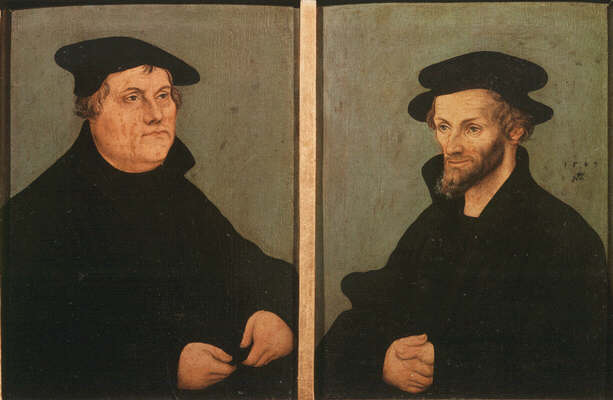
Portrait of Philip Melanchthon

I was reading today about the sweet Renaissance Reformer, Philip Melanchthon.

As much as Luther, he is the primary founder of Lutheranism.
Melanchthon made the distinction between law and gospel central. By the “law” he meant the Papacy and rigid rituals controlled by priests; the “gospel” meant an individual directly confronting Christ through Bible reading, hymns and prayer.
Urged to marry (the daughter of the Mayor of Wittenberg) by Luther, (no doubt, partly to cement his ties to Wittenberg), he proved a loving husband and father.
His domestic life was happy. He called his home “a little church of God,” always found peace there, and showed a tender solicitude for his wife and children. To his great astonishment, a French scholar found him rocking the cradle with one hand, and holding a book in the other.
Melanchthon was dwarfish, misshapen, and physically weak, although he is said to have had a bright and sparkling eye, which kept its color till the day of his death. He was never in perfectly sound health, and managed to perform as much work as he did only by reason of the extraordinary regularity of his habits and his great temperance.
And here he is, with Martin Luther. Whom would you rather be friends with?
Lukas Cranach the Elder: Picture of Martin Luther and Philipp Melanchthon - Uffizi Gallery, Florence
Portrait of Phillip Melanchton and Martin Luther

Filed Under: random

Gustav Vigeland and Vigelanda Sculpture Park, Oslo, Norway

By Anita Mathias

One of the most memorable things from our trip to Oslo last year was the Vigelanda Sculpture Park, 212 massive bronze and granite figures, all designed by Gustav Vigeland. What a joy that flow of creativity, and creating them must have been.

Humanity in all its many phases and stages!
Stock Photo of  norway oslo frogner figures sculpture park gustav vigeland

Gustav Vigeland, Monolith


Filed Under: In which I Travel and Dream

  • « Previous Page
  • 1
  • …
  • 224
  • 225
  • 226
  • 227
  • 228
  • …
  • 279
  • Next Page »

Sign Up and Get a Free eBook!

Sign up to be emailed my blog posts (one a week) and get the ebook of "Holy Ground," my account of working with Mother Teresa.

Join 536 Other Readers

My Books

Rosaries, Reading, Secrets: A Catholic Childhood in India

Rosaries, Reading Secrets, B&N
USA

UK

Wandering Between Two Worlds: Essays on Faith and Art

Wandering Between Two Worlds
USA

UK

Francesco, Artist of Florence: The Man Who Gave Too Much

Francesco, Artist of Florence
US

UK

The Story of Dirk Willems

The Story of Dirk Willems
US

UK

My Latest Meditation

Anita Mathias: About Me

Anita Mathias

Read my blog on Facebook

Follow me on Twitter

Follow @anitamathias1

Recent Posts

  • At the Cross, God Forgives Us Completely
  • Using God’s Gift of Our Talents: A Path to Joy and Abundance
  • The Kingdom of God is Here Already, Yet Not Yet Here
  • All Those Who Exalt Themselves Will Be Humbled & the Humble Will Be Exalted
  • Christ’s Great Golden Triad to Guide Our Actions and Decisions
  • How Jesus Dealt With Hostility and Enemies
  • Do Not Be Afraid, but Do Be Prudent
  • For Scoundrels, Scallywags, and Rascals—Christ Came
  • How to Lead an Extremely Significant Life
  • Don’t Walk Away From Jesus, but if You Do, He Still Looks at You and Loves You
Premier Digital Awards 2015 - Finalist - Blogger of the year
Runner Up Christian Media Awards 2014 - Tweeter of the year

Categories

What I’m Reading


Wolf Hall
Hilary Mantel

Wolf Hall --  Amazon.com
Amazon.com

Amazon.co.uk

Silence and Honey Cakes:
The Wisdom Of The Desert
Rowan Williams

Silence and Honey Cakes --  Amazon.com
Amazon.com

Amazon.co.uk

The Long Loneliness:
The Autobiography of the Legendary Catholic Social Activist
Dorothy Day

The Long Loneliness --  Amazon.com
Amazon.com

Amazon.co.uk

Country Girl
Edna O'Brien

Country Girl  - Amazon.com
Amazon.com

Amazon.co.uk

Archive by month

My Latest Five Podcast Meditations

INSTAGRAM

anita.mathias

My memoir: Rosaries, Reading, Secrets https://amzn.to/42xgL9t
Oxford, England. Writer, memoirist, podcaster, blogger, Biblical meditation teacher, mum

Looking at photos from our week in beautiful Sevil Looking at photos from our week in beautiful Seville and Cordoba over New Year with Irene, who had a week off.
And, ICYMI, here’s my latest meditation on the Gospel of Matthew… I’ve recorded it, should you want a few minutes of peace.
https://anitamathias.com/2026/04/29/gods-complete-forgiveness/
Hello Friends, I'm resumed recording my meditation Hello Friends, I'm resumed recording my meditations on the Gospel of Matthew. Do click on this link to listen. 
https://anitamathias.com/.../29/gods-complete-forgiveness/
Christ is the most influential figure in the history of the world, though his life ended in shame, humiliation and failure. But he so completely turned things round in his great reversal that the cross on which he died when all seemed hopeless is now the most common, and revered, symbol in history.
He emerged from and was anchored in Judaism. And as the sins of the people were laid on the scapegoat who was sent into the wilderness to perish, Christ died as the lamb of God voluntarily bearing the guilt of the wrongdoing of the whole world. He paid the price for our forgiveness with his life-blood--in accordance with the iron law of the physical and moral universe, of sowing and reaping, cause and effect. 
And so, God, who appeared as flames of fire to Moses, can now dwell within us, purifying us, whose hearts have darkness and shards of ice. 
And now that Christ was crucified, died, but rose again, His Spirit, no longer contained within his earthly body, is poured out like living water onto all humans, at our humble request. The Spirit pours the love of God into us; he reminds us of the words of Jesus and slowly writes Christ’s sweet law on our hearts. This transfusion of grace helps us do hard things we previously couldn’t do. Our dance with the Spirit gradually breaks the power of sin over us. It transforms us.
Now we, the forgiven, protected by the blood of Jesus poured out over us, and filled with His Spirit, who sings within us, Abba, Father, are adopted by God as his children in his joyful new covenant. We are cells grafted into the vine of our new family--Father, Son, Spirit—who now live in us as we live in them. As we choose by our thoughts and actions to continue living in the vine of Jesus, their energy pulsing through us makes us fruitful. And now, all our prayers which flow in the river of God’s good purposes are kindly heard. Waves of love and power flood from the cross! 
Thank you!
Well, hello friends! Breaking radio silence to let Well, hello friends! Breaking radio silence to let you know that I have taped a meditation for you on Christ’s famous Parable of the Talents in Matthew 25. https://anitamathias.com/2025/11/05/using-gods-gift-of-our-talents-a-path-to-joy-and-abundance/
Here you are, click the play button in the blog post for a brief meditation, and some moments of peace, and, perhaps, inspiration in your day 🙂
Hi Friends, I have taped a meditation; do listen a Hi Friends, I have taped a meditation; do listen at this link: https://anitamathias.com/2025/04/08/the-kingdom-of-god-is-here-already-yet-not-yet-here-2/
It’s on the Kingdom of God, of which Christ so often spoke, which is here already—a mysterious, shimmering internal palace in which, in lightning flashes, we experience peace and joy, and yet, of course, not yet fully here. We sense the rainbowed presence of Christ in the song which pulses through creation. Christ strolls into our rooms with his wisdom and guidance, and things change. Our prayers are answered; we are healed; our hearts are strangely warmed. Sometimes.
And yet, we also experience evil within & all around us. Our own sin which can shatter our peace and the trajectory of our lives. And the sins of the world—its greed, dishonesty and environmental destruction.
But in this broken world, we still experience the glory of creation; “coincidences” which accelerate once we start praying, and shalom which envelops us like sudden sunshine. The portals into this Kingdom include repentance, gratitude, meditative breathing, and absolute surrender.
The Kingdom of God is here already. We can experience its beauty, peace and joy today through the presence of the Holy Spirit. But yet, since, in the Apostle Paul’s words, we do not struggle only “against flesh and blood, but against the rulers, against the unseen powers of this dark world and against the spiritual forces of evil,” its fullness still lingers…
Our daughter Zoe was ordained into the Church of E Our daughter Zoe was ordained into the Church of England in June. I have been on a social media break… but … better late than never. Enjoy!
First picture has my sister, Shalini, who kindly flew in from the US. Our lovely cousins Anthony and Sarah flank Zoe in the next picture.
The Bishop of London, Sarah Mullaly, ordained Zoe. You can see her praying that Zoe will be filled with the Holy Spirit!!
And here’s a meditation I’ve recorded, which you might enjoy. The link is also in my profile
https://anitamathias.com/2024/11/07/all-those-who-exalt-themselves-will-be-humbled-the-humble-will-be-exalted/
I have taped a meditation on Jesus statement in Ma I have taped a meditation on Jesus statement in Matthew 23, “For those who exalt themselves will be humbled, and those who humble themselves will be exalted.”
Do listen here. https://anitamathias.com/2024/11/07/all-those-who-exalt-themselves-will-be-humbled-the-humble-will-be-exalted/
Link also in bio.
And so, Jesus states a law of life. Those who broadcast their amazingness will be humbled, since God dislikes—scorns that, as much as people do.  For to trumpet our success, wealth, brilliance, giftedness or popularity is to get distracted from our life’s purpose into worthless activity. Those who love power, who are sure they know best, and who must be the best, will eventually be humbled by God and life. For their focus has shifted from loving God, doing good work, and being a blessing to their family, friends, and the world towards impressing others, being enviable, perhaps famous. These things are houses built on sand, which will crumble when hammered by the waves of old age, infirmity or adversity. 
God resists the proud, Scripture tells us—those who crave the admiration and power which is His alone. So how do we resist pride? We slow down, so that we realise (and repent) when sheer pride sparks our allergies to people, our enmities, our determination to have our own way, or our grandiose ego-driven goals, and ambitions. Once we stop chasing limelight, a great quietness steals over our lives. We no longer need the drug of continual achievement, or to share images of glittering travel, parties, prizes or friends. We just enjoy them quietly. My life is for itself & not for a spectacle, Emerson wrote. And, as Jesus advises, we quit sharp-elbowing ourselves to sit with the shiniest people, but are content to hang out with ordinary people; and then, as Jesus said, we will inevitably, eventually, be summoned higher to the sparkling conversation we craved. 
One day, every knee will bow before the gentle lamb who was slain, now seated on the throne. We will all be silent before him. Let us live gently then, our eyes on Christ, continually asking for his power, his Spirit, and his direction, moving, dancing, in the direction that we sense him move.
Link to new podcast in Bio https://anitamathias.co Link to new podcast in Bio https://anitamathias.com/2024/02/20/how-jesus-dealt-with-hostility-and-enemies/
3 days before his death, Jesus rampages through the commercialised temple, overturning the tables of moneychangers. Who gave you the authority to do these things? his outraged adversaries ask. And Jesus shows us how to answer hostile questions. Slow down. Breathe. Quick arrow prayers!
Your enemies have no power over your life that your Father has not permitted them. Ask your Father for wisdom, remembering: Questions do not need to be answered. Are these questioners worthy of the treasures of your heart? Or would that be feeding pearls to hungry pigs, who might instead devour you?
Questions can contain pitfalls, traps, nooses. Jesus directly answered just three of the 183 questions he was asked, refusing to answer some; answering others with a good question.
But how do we get the inner calm and wisdom to recognise
and sidestep entrapping questions? Long before the day of
testing, practice slow, easy breathing, and tune in to the frequency of the Father. There’s no record of Jesus running, rushing, getting stressed, or lacking peace. He never spoke on his own, he told us, without checking in with the Father. So, no foolish, ill-judged statements. Breathing in the wisdom of the Father beside and within him, he, unintimidated, traps the trappers.
Wisdom begins with training ourselves to slow down and ask
the Father for guidance. Then our calm minds, made perceptive, will help us recognise danger and trick questions, even those coated in flattery, and sidestep them or refuse to answer.
We practice tuning in to heavenly wisdom by practising–asking God questions, and then listening for his answers about the best way to do simple things…organise a home or write. Then, we build upwards, asking for wisdom in more complex things.
Listening for the voice of God before we speak, and asking for a filling of the Spirit, which Jesus calls streams of living water within us, will give us wisdom to know what to say, which, frequently, is nothing at all. It will quieten us with the silence of God, which sings through the world, through sun and stars, sky and flowers.
Especially for @ samheckt Some very imperfect pi Especially for @ samheckt 
Some very imperfect pictures of my labradoodle Merry, and golden retriever Pippi.
And since, I’m on social media, if you are the meditating type, here’s a scriptural meditation on not being afraid, while being prudent. https://anitamathias.com/2024/01/03/do-not-be-afraid-but-do-be-prudent/
A new podcast. Link in bio https://anitamathias.c A new podcast. Link in bio
https://anitamathias.com/2024/01/03/do-not-be-afraid-but-do-be-prudent/
Do Not Be Afraid, but Do Be Prudent
“Do not be afraid,” a dream-angel tells Joseph, to marry Mary, who’s pregnant, though a virgin, for in our magical, God-invaded world, the Spirit has placed God in her. Call the baby Jesus, or The Lord saves, for he will drag people free from the chokehold of their sins.
And Joseph is not afraid. And the angel was right, for a star rose, signalling a new King of the Jews. Astrologers followed it, threatening King Herod, whose chief priests recounted Micah’s 600-year-old prophecy: the Messiah would be born in Bethlehem, as Jesus had just been, while his parents from Nazareth registered for Augustus Caesar’s census of the entire Roman world. 
The Magi worshipped the baby, offering gold. And shepherds came, told by an angel of joy: that the Messiah, a saviour from all that oppresses, had just been born.
Then, suddenly, the dream-angel warned: Flee with the child to Egypt. For Herod plans to kill this baby, forever-King.
Do not be afraid, but still flee? Become a refugee? But lightning-bolt coincidences verified the angel’s first words: The magi with gold for the flight. Shepherds
telling of angels singing of coming inner peace. Joseph flees.
What’s the difference between fear and prudence? Fear is being frozen or panicked by imaginary what-ifs. It tenses our bodies; strains health, sleep and relationships; makes us stingy with ourselves & others; leads to overwork, & time wasted doing pointless things for fear of people’s opinions.
Prudence is wisdom-using our experience & spiritual discernment as we battle the demonic forces of this dark world, in Paul’s phrase.It’s fighting with divinely powerful weapons: truth, righteousness, faith, Scripture & prayer, while surrendering our thoughts to Christ. 
So let’s act prudently, wisely & bravely, silencing fear, while remaining alert to God’s guidance, delivered through inner peace or intuitions of danger and wrongness, our spiritual senses tuned to the Spirit’s “No,” his “Slow,” his “Go,” as cautious as a serpent, protected, while being as gentle as a lamb among wolves.
Follow on Instagram

© 2026 Dreaming Beneath the Spires · All Rights Reserved. · Cookie Policy · Privacy Policy