The Comfort of Good Men (and Women!)
“It is true, indeed, that good men are seen to be the sources of no small comfort to others in this world. For if we be harassed by poverty, or saddened by bereavement, or disquieted by bodily pain, or pining in exile, or vexed by any kind of calamity, let good men visit us, men who can not only rejoice with them that rejoice, but also weep with them that weep, and who know how to give profitable counsel, and win us to express our feelings in conversation: the effect is, that rough things become smooth, heavy burdens are lightened, and difficulties vanquished most wonderfully. But this is done in and through them by Him who has made them good by His Spirit.” Letter 130 to Proba (St. Augustine of Hippo)
Archives for November 2010
Doctor Zhivago by Boris Pasternak

Rereading: Doctor Zhivago
Boris Pasternak knew that Doctor Zhivago was explosive. But a new translation to mark the 50th anniversary of the author’s death loses much of its force, argues Ann Pasternak Slater


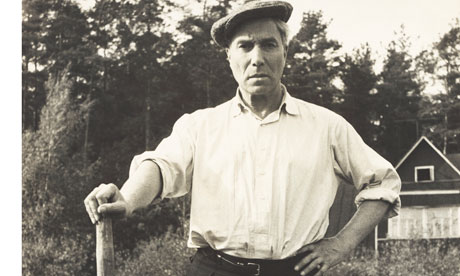
The Russian poet Marina Tsvetaeva once said that Boris Pasternaklooked like an Arab and his horse. In the 30s a Soviet cartoon turned him into a long-jawed sphinx, paws curled over a lectern. As a public speaker he was incomprehensible. His work is notoriously hard to translate.

In his increasingly difficult times, it also became safer not to be easily understood. When Stalin startled the life out of him with a “friendly” midnight phone-call – Well? What can you say about that poem of Mandelstam’s? – Pasternak replied with a deflective discussion of what was, for him, the fundamental issue of human right over life and death. Questioning a homicidal despot’s power to his face carries some risks. Fortunately, Stalin was too impatient to understand, and cut off the call. This time, the sentence for Mandelstam’s anti-Stalinist poem was a mild form of exile – but in the great purge of 1937 he was one of the 44,000 liquidated. Beside Pasternak’s name, Stalin reputedly scribbled the instruction “Don’t touch this cloud-dweller”.
Pasternak’s work is also difficult because his mind-set is unpredictably complex, evocatively associative, synaesthetic and polysemous. His vocabulary is exceptionally wide, and his intellect has a pronounced metaphysical cast. In an uncollected letter to TS Eliot, Pasternak explores their shared aesthetic in ambitiously faulty English. Eliot’s art, he writes, like his own, is “a casually broken off fragment of the density of being itself; of the hylomorphic matter of existence . . .” Pasternak became much more accessible in his later work. Doctor Zhivago was suicidally vivid and forthright. The poems that accompany it are translucent.
From his schooldays, Pasternak tells us, Yury Zhivago had dreamed of writing “a book of impressions of life in which he would conceal, like sticks of dynamite, the most striking things he had so far seen”. Doctor Zhivagowas that book. It was packed with dynamite and, as Pasternak expected, it blew up in his face.
Pasternak was the first writer of the Soviet regime who dared convey the truth about Russia’s recent history. In the space of 40 years the Russians of his generation suffered two world wars; three revolutions; civil war and famine; the disasters of collectivisation and famine; the purges of the intelligentsia, the military, the Soviet political elite and the kulaks. Starvation, cannibalism, murder, reprisals, legitimised slaughter – nothing is glossed over in the novel’s unflinching particularity. It ends with Khruschev’s Thaw, tentatively celebrating “a new freedom of spirit” embodied in the book Zhivago wrote before his death.
Pasternak’s hopes were denied when the forthcoming Russian edition ofZhivago was withdrawn from the Soviet press. In 1958 its publication in the west coincided with the Nobel prize, awarded for Pasternak’s poetic achievements and his work “in the great Russian epic tradition”, clearly linking Doctor Zhivago to Tolstoy’s War and Peace. The Soviet response was to denounce Pasternak as a traitor. He was expelled from the writers’ union, robbed of his livelihood and vilified in the press. He refused to seek exile in the west, and declined the Nobel prize. Within two years he was dead.
Fifty years have passed. Now we have the opportunity to reread – and r
Doctor Zhivago was first translated, at great speed, by Max Hayward and Manya Harari in 1958. I remember Max saying he would read a page in Russian, and then write it down in English, without looking back. This sounds incredible – even though a page of the large-faced Russian typescript they worked from is roughly equivalent to only half a page of their Collins text. I can, though, readily believe that he did this with paragraphs and sentences. Of course both translators then cross-checked and agreed their combined version against the original. Nevertheless, it’s perfectly true that there are negligible omissions which are made good in the Volokhonsky-Pevear translation. This comes at a price.
Max Hayward’s provocatively described practice is actually a difficult and necessary discipline. The translator needs distance. His main pitfall is to drift unconsciously into the linguistic aura of his original – in this case, to write a kind of Russified English.
Woe to you when all men praise you: The Upside of Disapproval
Woe to you when All Men Praise you: The Upside of Disapproval
Woe to you when all men speak well of you, for that is how their fathers treated the false prophets. Whoa! Unintentional homonymic pun!
This is one of Jesus’s harder saying because we humans are social animals, we are gregarious, we instinctively like other people (which is one explanation for the success of Facebook, for instance). We need approval. And so much of human endeavour is motivated by the desire for approval. People at the receiving end of the Amish practice of “shunning” developed depression, mental illness, and died before their time.
The moon has its dark side, and so do most things on earth. People’s approval, for instance. I led women’s groups over a period of seven years. This blog would never have been successful if I had still been leading them. (Is it successful? Well, it’s in the top 25 religion blogs according to Wikio’s rankings released yesterday and it is not yet 7 months old.)
The blog might not have been particularly unique or interesting if I had still been teaching women’s groups. Now I am just a voice crying in the wilderness (sometimes, literally, on both counts!) Some groups I taught had 25 women. If I were still teaching, I would have been afraid to share my struggles and doubts and sadnesses and failures openly for fear that it may not have been inspiring or edifying, that it may have been discouraging, that it may lead to second-guessing me when I did teach, and so what I taught might have been less effective.
Since churches are lead by human beings (i.e. by sinners), no church gets everything right. I would not have been able to point out where I thought we were deviating from the plumbline if I felt I was leading something and was under authority. There is one issue on which I deviate from orthodox Christian doctrine. I would not have been able to blog about that issue. (And I still haven’t–coward!!–but soon will. I think.)
When everyone approves of you–and I have noticed this in other people as well as in myself–to some extent, you lose yourself. You pretend to be nicer, sweeter, smilier than you really are. My own danger signal that I am acting nicer and sweeter than I really am is when my cheek muscles start hurting. I am smiling so much in a not entirely natural way!
And when I sense disapproval? Well, I return to the healing fountain, to the one who knows the worst and still accepts me. I allow him to cleanse me and fill me. I say, “Well, this is what they
think of me. There may well be some truth in it. But what do you think of me? And thank you for loving me, whatever you think of me. Fill me again with your spirit, to overflowing. Help me to follow you.”
The Good Books Blog is #23 in Wikio’s Top UK Literature Blogs, November 2010–down from #16 alas
The Good Books Blog is #23 in Wikio’s Top UK Literature Blogs, November 2010–down from #16 alas
But given the paucity of my recent posts, I can’t complain!!
Thank you to The Age of Uncertainity
Blogs as demanding as toddlers, and monetized blogging
A Blog’s Like a Baby and Monetized blogging
Scary words–“It’s not not fun,” says the editor-in-chief of Jezebel, which today attracts almost ten million hits a month. “But it’s more like the blog is a baby, and it has to be tended to at all times. And the baby might grow up a bit, but it’s never going to get past the age of 2 or 3 in terms of how much it demands of you.”
Anna Holmes of jezebel.com
Being in charge of the sharpest, snarkiest, most popular women’s blog around sounds as if it should be a lot of fun. Anna Holmes pauses and chooses her words.
Being in charge of the sharpest, snarkiest, most popular women’s blog around sounds as if it should be a lot of fun. Anna Holmes pauses and chooses her words.
“It’s not not fun,” says the editor-in-chief of Jezebel, which launched in May 2007 and today attracts almost ten million hits a month. “But it’s more like the blog is a baby, and it has to be tended to at all times. And the baby might grow up a bit, but it’s never going to get past the age of 2 or 3 in terms of how much it demands of you.”
From the spare room of her New York apartment, Holmes oversees blogging on a near-industrial scale as she commissions a team of writers who churn out a new post every 10 minutes for almost 12 hours a day, addressing anything from urinary tract infection vaccines, via dating and stupid celebrities, to the evils of glossy women’s magazines’ airbrushed covers. Typically, a working day will stretch to 11 or 12 hours at her computer.
“I don’t want to say it’s ruined my life – I don’t want to put it that way. But it’s reconfigured it in a way that’s probably extremely unhealthy. A social life? Nah, I don’t have one,” she chuckles. “That’s the problem with the internet: it’s always on.”
MAKING A LIVING BY WRITING ABOUT ONESELF
Heather B. Armstrong
dooce.com
dooce.com
Dooce.com was created in 2001 for Armstrong to post musings on pop culture and gleefully acerbic accounts of life as a “recovering Mormon”. When she had her first baby, though, “the blog traffic tripled in one day”: people wanted to know what happened next. So she blogged about everything, from her postpartum depression to mischievous takes on the foibles of daily life.
It was in 2005 that her husband suggested they could make a living if she accepted advertising. “I said, ‘No! No! No!’ I was very scared about the idea of supporting my family with a blog.” But she relented, becoming one of the first professional personal bloggers. Since then, she’s been given a Lifetime Achievement Award at the Weblog Awards, been cited in Forbes’ Most Influential Women in Media list, written books and, now, met the President.
“And some people still reckon, ‘Who does she think she is?’ Which is fair. I was this housewife, and no one in their right mind would have hired me to write about my life,” she says. “So I just did it myself.”
I find this interesting as after turning down the first few offers of sponsored posts, I now do accept sponsorship–mainly from big companies I am comfortable with–Barclays Bank, Paypal, Pizza Hut, Hewlett Packard, and a few advertising campaigns. Basically, I provide advertising space in a blog post, and they pay me–enough for me to keep my blogs running without feeling guilty that I am wasting time on this most pleasurable pursuit.
I have tried blogging before, but before I monetized my blogs I could not stick it out for more than a week or two. I felt guilty about the time spent on blogging when I could have been doing more lucrative writing. Monetizing my blogs enables me to continue blogging. You were right, Heather Armstrong.
The Remains of the Day, Kazuo Ishiguro
The Remains of the Day by Kazuo Ishiguro
This novel is a truly astonishing act of ventriloquism.
Ishiguro, doomed to be a perpetual outsider in England, by virtue of race, has used the outsider’s gifts of ventriloquism and distance to produce an extraordinary study of aspects of the English.
Stevens, the perfect English butler, looks back on a life he cannot bring himself to admit was wasted. He served, with unwavering devotion, a man whose sympathies were with the Nazis, who inexplicably dismissed the Jewish housemaids, for instance. He struggles to bring himself to admit to himself that he has sacrificed his own chances of happiness on the altar of duty, professionalism and loyalty to a master who deserved none of the above.
It is an interesting study of painful repression and reserve which has become part of the personality to the detriment of happiness.
The novel is a remarkably accurate study of an English type from an immigrant, and of an era of history before the author’s birth. When you factor in Ishiguro’s perfect pitch, and the pervading elegaic atmosphere of sadness he admirably conveys, you have, in my opinion, a great novel.
 Bookmark this on Delicious
"I care very little if I am judged; indeed, I do not even judge myself"
“I care very little if I am judged; indeed, I do not even judge myself”
I care very little if I am judged by you or by any human court; indeed, I do not even judge myself. 4 My conscience is clear, but that does not make me innocent. It is the Lord who judges me. 5 Therefore judge nothing before the appointed time; wait until the Lord comes. He will bring to light what is hidden in darkness and will expose the motives of the heart. At that time each will receive their praise from God. I Cor 4
We are listening to the New Living Bible in the car. This passage stood out from 1 Cor.4.
It would be wonderful to truly reach this spiritual level– I care very little if I am judged by you or by any human court; indeed, I do not even judge myself. 4 My conscience is clear, but that does not make me innocent. It is the Lord who judges me.
And when, on occasion, I do reach it, it is a place of freedom and joy. Few people are subtle enough that what they feel or think about another is entirely hidden. We generally instinctively know who likes or respects us–and who does not (though there are always awful revelations–when one suddenly loses power, position, money, one’s faculties etc.).
Being judged by another is painful–because you have been judged in a court of no appeal, and for a crime you do not know. It’s Kafkaesque territory.
What should one do when one senses the weight of not entirely favourable judgement?
What one should always do: return to the fountain of mercy and acceptance. Cleave to him whether everyone praises you–or no one does.
And what of the painful times when our hearts condemn us (which, interestingly, does not always coincide with external praise or blame).
19 This is how we set our hearts at rest in his presence: If our hearts condemn us, we know that God is greater than our hearts, and he knows everything.
1 John 4
We are not our own, we belong to Christ. So we throw ourselves on his mercy, whether we stand or fall, and whether everyone else believes we have stood–or fallen!
- « Previous Page
- 1
- …
- 4
- 5
- 6