Anita Mathias: Dreaming Beneath the Spires

Anita Mathias's Blog on Faith and Art

  • Home
  • My Books
  • Meditations
  • Essays
  • Contact
  • About Me

Archives for October 2010

Creating the Taste by Which You are Enjoyed (T.S. Eliot)

By Anita Mathias

Creating the Taste by Which You Are Enjoyed 

I love T.E. Eliot’s poetry and prose–well as much as I understand of them. He did a genuinely new thing. One of the perceptive things he said is that the original writer must create the taste by which he is enjoyed.


Blogging is such a new field. I come rather late to the party, just 6 months ago. I first started hearing about blogs about 6 years ago, and made various attempts to keep a blog. It was an uphill job: I was truly concerned about revealing my life and thoughts, and spilling my guts on the world wide web, not to mention the time it took from real writing. And at first I thought I needed to be interesting. (Now, I think I just need to be myself!!). What helped me to develop the habit of pretty much daily blogging was, oddly, monetizing my 3 blogs. Getting a little bit of income every day shortens the gap between work and payday, and helps me feel that this is not entirely a self-indulgent endeavour. 


Since blogging is a new genre, compared to say poetry which is thousands of years old, it is still very much being defined. You can do anything you like. If it takes, and you gain readers, then you are, as T.S. Eliot said all writers should, creating the taste by which you are enjoyed. The immense variety of successful blogs, the wide open field of possiblities are very exciting!!

Delicious Bookmark this on Delicious

Filed Under: books_blog, Writing and Blogging

Prophets, Deserts and Alternative Power

By Anita Mathias

Prophets, Deserts and Alternative Power Sources


I was thinking last evening of prophets. It is interesting how many of them had to go out into the Judean desert to hear the word of God.


Why? I used to wonder. Why did one need to go into the desert–outside, often in opposition to the traditional power structures of the day–why did one need to be powerless, lonely, quiet, possibly hungry and thirsty, and sensorily deprived to hear God?


I now realize that, of course, one has to. It is the best, if not the only, way. The voice of God, a well-bred, considerate, gentle voice for the most part–a gentle whisper, Scripture calls it–is not easily heard amid the noise and clamour of popularity, friendship, social life–all good things, all good things. Except they do militate against the solitude one needs to hear God. Almost to a man, prophets don’t choose the desert. They are only human. God has to call–sometimes push–them into the desert.  Because it is in the desert that a prophet develops his greatest and priceless gift: his ability to hear the voice of God. 


Let’s consider Moses. An interesting part of his story is that he did not choose to go into the desert, nor does he go there in obedience to the voice of God. He is pushed there by his own sin. He loses his temper, takes the law into his own hands, kills a man, and flees to the desert in terror when this is discovered.


And in the desert, outside the court  to which he had once belonged, and its power and pomp, he experiences God, and in a dramatic way that could only have happened in the desert. A fire that steadily burned and was not consumed. Continually renewed energy. A manifestation of infinite Power. And with it, a simple new name for God, I AM WHO I AM.


And in contradistinction to the power of Pharaoh, Moses is given power, a shadow of God’s power. He can turn sticks to snakes, turn the Nile bloody, summon locusts and frogs and pests, turn the land dark at noon. He is a man to be listened to–and he finally is. 
                                                                      * * * 


Elijah also operated outside, and in opposition to, the normal centres of power–Kings, who were anointed, but who, continuing in sin, had lost their ability to hear the word of God. Ahab interestingly calls him, “You troubler of Israel.”


He is given power of his own. He can command the rain. He can command fire. He can do what 400 false “prophets” could not.


David, Daniel, the list goes on. Men formed in the desert, operating outside normal locii of power, often in opposition to them, yet gifted by God with such extraordinary and startling power that people had to sit up and pay attention. 


Because power eventually comes from God. Comes from the Lamb who has all “power and wealth and wisdom and strength and honour and glory and praise.” Comes when the Holy Spirit comes upon us.


And, interestingly, looking at prophets from both Old Testament and the New (John the Baptist, and later Paul and John who both had amazing Christophanies) this divine power always, I think, falls on the powerless who operate apart from and often in opposition to the normal locii of power. It falls on those who have learnt to hear God’s voice in the solitude and loneliness of the desert. 

Filed Under: In which I chase the wild goose of the Holy Spirit, In which I play in the fields of Scripture

Father and Son by Edmund Gosse: a Memoir of Science and Faith

By Anita Mathias

Father and Son by Edmund Gosse, a Memoir of Science and Faith.


Father and Son by Edmund Gosse is a deeply moving Victorian memoir, full of Devon, the sea, tidal pools, and religion!

Gosse’s father Philip was a distinguished naturalist. (One finds traces of Gosse as Oscar in Carey’s Oscar and Lucinda, while Oscar’s father is most certainly modelled on Philip). He had a childhood split between two enthusiams–tidepooling, and the Devon beach, and Christianity, a narrow, sectarian, relatively joyless version of it–that of the Plymouth Brethren.

Gosse was a type of a Eminent Victorian, who lives in and for science, science and faith. He writes in his journal of his beloved wife–“E. delivered of a son. Received green swallow from Jamaica”—an amusing conjunction which Edmund described as demonstrating only the order of events: the boy had arrived first.

Gosse movingly describes the rapture with which his father greeted Charles Darwin’s newly published theories. They made perfect sense to his mind, and his scientific instincts. It was like all the pieces of a jigsaw falling into place. But then he realizes the contradictions with Genesis. He decided if what there is a contradiction between what his knowledge of science tells him is true, and what his knowledge of scripture tells him is true, the former must be wrong. Making himself the laughing stock of the Royal Society, he argues against the theory of evolution. 

Gosse, a sensitive, literary teen and his father are increasingly at odds as it becomes clear that Gosse will never follow in his father’s steps and become a lay preacher. Gosse eventually becomes a distinguished literary critic, while, movingly, maintaining cordial relationships with his father, obeying the ancient law of that the bonds of close family relationship are not lightly to be broken, as he puts it.

A charming memoir, and the first psychological memoir to be written, where the main action and drama is within. As such, it is still a very interesting exemplar of the genre of the memoir, the genre of little things lovingly backlit (as opposed to the autobiography). 


Delicious Bookmark this on Delicious

Filed Under: Book Reviews, books_blog, Reviews of Memoirs

The End of the Story: The Lamb upon the Throne

By Anita Mathias

The End of the Story: The Lamb upon the Throne


At my boarding school, St. Mary’s Convent, Nainital, we Catholic girls had to go to Mass five days a week, go to Benediction (sung worship) once a week, Adoration (personal prayer) once a month, and choir practice once a week. These were the minimal devotional requirements! A LOT of singing. I decided, as a school girl, that if I did not mean the words, did not understand what they meant in practice, had no experience of them, I would not sing them. That is what I now tell one of my daughters, who is most rational in her approach, to faith to do.


Therefore, I do not sing, 
Let the streets resound with singing,
Dancers who dance upon injustice. 


Or,
These are the days of Elijah
Declaring the Word of the Lord
And these are the days of Your servant Moses
Righteousness being restored


These are the days of Ezekiel
The dry bones becoming as flesh
And these are the days
Of your servant David
Rebuilding a temple of praise 


Oh, come on! I’ve been singing that for 15 years. Whose days are these? Make up your mind.


So, what do I do while the hypnotic music whips the young and emotional into a frenzy as they sing “dancers dance upon injustice.” Can’t very well sleep: music too loud. As I advise my daughter who finds worship a trial, think of God. Have an alternative image in your mind. Meditate on it.


Here’s the image I meditate on most often during worship when they are singing something I do not connect with. (The songwriters at St. Aldate’s are in their twenties, and love to bounce songs they have written off the congregation at Sunday worship.) I flick forward to the end of the story, and the lovely image of the lamb upon his throne. 


Revelation 5
 Then I saw in the right hand of him who sat on the throne a scroll with writing on both sides and sealed with seven seals. And I saw a mighty angel proclaiming in a loud voice, “Who is worthy to break the seals and open the scroll?” But no one in heaven or on earth or under the earth could open the scroll or even look inside it. I wept and wept because no one was found who was worthy to open the scroll or look inside. 


Then one of the elders said to me, “Do not weep! See, the Lion of the tribe of Judah, the Root of David, has triumphed. He is able to open the scroll and its seven seals.”

 Then I saw a Lamb, looking as if it had been slain, standing in the center of the throne, encircled by the four living creatures and the elders. He came and took the scroll from the right hand of him who sat on the throne. And when he had taken it, the four living creatures and the twenty-four elders fell down before the Lamb. Each one had a harp and they were holding golden bowls full of incense, which are the prayers of the saints. And they sang a new song:


   “You are worthy to take the scroll
      and to open its seals,
   because you were slain,
      and with your blood you purchased men for God
      from every tribe and language and people and nation.
 10You have made them to be a kingdom and priests to serve our God,
      and they will reign on the earth.”

 Then I looked and heard the voice of many angels, numbering thousands upon thousands, and ten thousand times ten thousand. They encircled the throne and the living creatures and the elders. In a loud voice they sang:


   “Worthy is the Lamb, who was slain,
   to receive power and wealth and wisdom and strength
   and honor and glory and praise!”

 Then I heard every creature in heaven and on earth and under the earth and on the sea, and all that is in them, singing:


   “To him who sits on the throne and to the Lamb
   be praise and honor and glory and power,
         for ever and ever!” 


The four living creatures said, “Amen,” and the elders fell down and worshipped.”


Isn’t that something lovely to meditate on? What a perfectly lovely end of the story! 

Filed Under: random

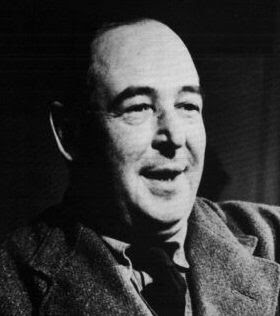
C.S. Lewis’s Discovery/ Recovery of Creativity, Magic and the Imagination in the Depths of Christianity

By Anita Mathias

C.S. Lewis’s Discovery/ Recovery of Creativity, Magic and the Imagination in the Depths of Christianity
Owen Barfield noted that there were three Lewises–Lewis, the scholar, whose critical books are still read today; Lewis, beloved children’s and science fiction writer;  and Lewis, the Christian writer and apologist. That is astonishing. Lewis also wrote a beloved memoir, Surprised by Joy which reveals all these aspects of his personality. 
In Surprised by Joy, we read that becoming a Christian for Lewis, was essentially a recovery of the imagination and creativity, a recovery of the child-like sense of wonder at beauty, a recovery of joy. He describes the cold wind which blew from the North, the “strange cold air” of Norse mythology that captivated him (and totally captivated me as a child.) 
 
    I had become fond of Longfellow’s “Saga of King Olaf”: fond of it in a casual, shallow way for its story and vigorous rhythms. But then, and quite different from such pleasures, and like a voice from far more distant regions, there came a moment when I idly turned the pages of the book and found the unrhymed translation of “Tegner’s Drapa”, and read:
        I heard a voice that cried
        Balder the beautiful
        Is dead, is dead,
    I knew nothing about Balder; but instantly I was uplifted into huge regions of the northern sky; I desired with almost sickening intensity something never to be described (except that it is cold, spacious, severe, pale and remote) and then…found myself at the very same moment already falling out of that desire and wishing I were back in it.
In becoming a Christian, he recovers the things which were most precious to him– imagination, creativity, wonder, beauty, poetry, literature, mythology—all enhanced.
                          All which I took from thee I did but take,
                         Not for thy harms.
                        But just that thou might’st seek it in my arms.
                       All which thy child’s mistake
                      Fancies as lost, I have stored for thee at home”
                                                                                Francis Thompson, The Hound of Heaven.
W.B. Yeats observes in his autobiography that when he wanted to know if a man could be trusted he watched to see if he associated with his betters (by which Yeats meant his intellectual and creative superiors). That is one yardstick I use to gauge people (do they surround themselves with people who challenge them, or those who uncritically admire them?). However, one of the things which most interests me about people is whether they believe in God—or not. And if so, to what extent and how it affects their lives. And also how they came to faith.
Lewis’s spiritual journey, as befits a bookish man, much of whose life was lived in, and mediated and refracted through books was through reading and other writers. What a melange of writers brought him to faith—Plotinius!!, Phantastes, by George Macdonald, which baptized his imagination, and introduced him to the feel of “holiness,” and G.K. Chesterton’s “The Everlasting Man” a portrait of the central position of Christ in human history, which baptized his intellect.  “In reading Chesterton, as in reading MacDonald, I did not know what I was letting myself in for. A young man who wishes to remain a sound Atheist cannot be too careful of his reading. . . . God is, if I may say it, very unscrupulous.” Lewis comments.

And then, he was a man most blessed in his friends.  Owen Barfield, who rids him of his “chronological snobbery,” the “uncritical acceptance of the intellectual climate common to our age and the assumption that whatever has gone out of date is on that count discredited;” Tolkein and Dyson convince him that Christianity had elements of the myths he loved, the God who died to redeem, except it was a true myth, the ultimate story in which alone the longings and tales of redemption in all great myths were historically realized.  “The story of Christ is simply a true myth,” he says he discovered that night, “a myth working on us in the same way as the others, but with this tremendous difference that it really happened.”
As Adam Gopnik says in The New Yorker, “This was a new turn in the history of religious conversion. Where for millennia the cutting edge of faith had been the difference between pagan myth and Christian revelation, Lewis was drawn in by the likeness of the Christian revelation to pagan myth. Even Victorian conversions came, in the classic Augustinian manner, out of an overwhelming sense of sin. Cardinal Manning agonized over eating too much cake, and was eventually drawn to the Church of Rome to keep himself from doing it again. Lewis didn’t embrace Christianity because he had eaten too much cake; he embraced it because he thought that it would keep the cake coming, that the Anglican Church was God’s own bakery.”
Faith for Lewis was a recovery of the sense of childlike joy and possibility, of infinite worlds within worlds. I must say it feels the same to me. As a believer, he can go back to the magical lands of his childhood, and in a sense see them for the first time. As he writes in “Surprised by Joy” “My first taste of Oxford was comical enough. I had made no arrangements about quarters and, having no more luggage than I could carry in my hand, I sallied out of the railway station on foot to find either a lodging-house or a cheap hotel; all agog for “dreaming spires” and “last enchantments.” My first disappointment at what I saw could be dealt with. Towns always show their worst face to the railway. But as I walked on and on I became more bewildered. Could this succession of mean shops really be Oxford? But I still went on, always expecting the next turn to reveal the beauties, and reflecting that it was a much larger town than I had been led to suppose.
Only when it became obvious that there was very little town left ahead of me, that I was in fact getting to open country, did I turn round and look. There behind me, far away, never more beautiful since, was the fabled cluster of spires and towers. I had come out of the station on the wrong side and been all this time walking into what was even then the mean and sprawling suburb of Botley. I did not see to what extent this little adventure was an allegory of my whole life.  
Gopnik goes on to say that his new-found faith got Lewis “to write inspired scholarship, and then inspired fairy tales. The two sides of his mind started working at the same time and together.” And that is always how it is when one finds a voice, or finds oneself as a writer. Things one has thought, and felt, and read, and learned, and suffered and dreamed suddenly coalesce in a magical amalgam.
And in his forties, Lewis begins to work in fantasy, first science fiction, and then in his late forties, he begins to write very quickly and “almost carelessly” about the magic world of Narnia, which, as Gopnik puts it, “includes, encyclopedically, everything he feels most passionate about: the nature of redemption, the problem of pain, the Passion and the Resurrection, all set in his favored mystical English winter-and-spring landscape.”
New writing, a new thing, in one’s late forties, forged through a combination of one’s natural intelligence, gifts and interests, touched and sanctified by religious faith and love. What a very, very inspiring story!

Delicious Bookmark this on Delicious

Filed Under: books_blog, Christian writing, Creativity

His Conversion Made C.S. Lewis Come Alive Creatively & Baptised his Imagination

By Anita Mathias

 
 Owen Barfield noted that there were three Lewises–Lewis, the scholar, whose critical books are still read today; Lewis, beloved children’s and science fiction writer;  and Lewis, the Christian writer and apologist. So multi-sided a writer: it’s astonishing. Lewis also wrote a beloved memoir, Surprised by Joy entwining all these aspects of his personality.

In Surprised by Joy, we read that becoming a Christian for Lewis, was essentially a recovery of the imagination and creativity, a recovery of the child-like sense of wonder at beauty, a recovery of joy. He describes the cold wind which blew from the North, the “strange cold air” of Norse mythology that captivated him (and totally captivated me as a child.)

I had become fond of Longfellow’s “Saga of King Olaf”: fond of it in a casual, shallow way for its story and vigorous rhythms. But then, and quite different from such pleasures, and like a voice from far more distant regions, there came a moment when I idly turned the pages of the book and found the unrhymed translation of “Tegner’s Drapa”, and read:

        I heard a voice that cried
Balder the beautiful
Is dead, is dead,

    I knew nothing about Balder; but instantly I was uplifted into huge regions of the northern sky; I desired with almost sickening intensity something never to be described (except that it is cold, spacious, severe, pale and remote) and then…found myself at the very same moment already falling out of that desire and wishing I were back in it.

* * *

In becoming a Christian, he recovers the things which were most precious to him– imagination, creativity, wonder, beauty, poetry, literature, mythology—all enhanced.

                          All which I took from thee I did but take,

                         Not for thy harms.

                        But just that thou might’st seek it in my arms.

                       All which thy child’s mistake

                      Fancies as lost, I have stored for thee at home”

                                Francis Thompson, The Hound of Heaven.

 W.B. Yeats observes in his autobiography that when he wanted to know if a man could be trusted he watched to see if he associated with his betters (his intellectual and creative superiors).

Lewis’s road to faith–as befits a bookish man, much of whose life was lived in, and mediated and refracted through books– was through the ivory tower of  reading and other writers. What a melange of writers brought him to faith—Plotinius!!, Phantastes by George Macdonald, which baptized his imagination, and introduced him to the feel of “holiness,” and G.K. Chesterton’s The Everlasting Man, a portrait of the central position of Christ in human history, which baptized his intellect.  “In reading Chesterton, as in reading MacDonald, I did not know what I was letting myself in for. A young man who wishes to remain a sound Atheist cannot be too careful of his reading. . . . God is, if I may say it, very unscrupulous.” Lewis comments.

He was a man most blessed in his friends.  Owen Barfield rids him of his “chronological snobbery,” the “uncritical acceptance of the intellectual climate common to our age and the assumption that whatever has gone out of date is on that count discredited.”

During a now-famous all night walk, Tolkein and Dyson convince him that Christianity had elements of the myths he loved, the God who died to redeem, except it was a true myth, the ultimate story in which alone the longings and tales of redemption in all great myths were historically realized.  “The story of Christ is simply a true myth,” he says he discovered that night, “a myth working on us in the same way as the others, but with this tremendous difference that it really happened.”

As Adam Gopnik says in The New Yorker, “This was a new turn in the history of religious conversion. Where for millennia the cutting edge of faith had been the difference between pagan myth and Christian revelation, Lewis was drawn in by the likeness of the Christian revelation to pagan myth. Even Victorian conversions came, in the classic Augustinian manner, out of an overwhelming sense of sin. Cardinal Manning agonized over eating too much cake, and was eventually drawn to the Church of Rome to keep himself from doing it again. Lewis didn’t embrace Christianity because he had eaten too much cake; he embraced it because he thought that it would keep the cake coming, that the Anglican Church was God’s own bakery.”

 Faith for Lewis was a recovery of the sense of childlike joy and possibility, of infinite worlds within worlds. I must say it feels the same to me.

As a believer, he can return to the magical lands of his childhood, and in a sense see them for the first time. As he writes in “Surprised by Joy” “My first taste of Oxford was comical enough. I had made no arrangements about quarters and, having no more luggage than I could carry in my hand, I sallied out of the railway station on foot to find either a lodging-house or a cheap hotel; all agog for “dreaming spires” and “last enchantments.” My first disappointment at what I saw could be dealt with. Towns always show their worst face to the railway. But as I walked on and on I became more bewildered. Could this succession of mean shops really be Oxford? But I still went on, always expecting the next turn to reveal the beauties, and reflecting that it was a much larger town than I had been led to suppose.

Only when it became obvious that there was very little town left ahead of me, that I was in fact getting to open country, did I turn round and look. There behind me, far away, never more beautiful since, was the fabled cluster of spires and towers. I had come out of the station on the wrong side and been all this time walking into what was even then the mean and sprawling suburb of Botley. I did not see to what extent this little adventure was an allegory of my whole life.  

He looks back and recovers joy. In fact, I believe the things we loved and which turned us on as children are treasure-hunt clues hidden in our childhood by a good God–clues to the destiny and life’s work he has planned for us.

Gopnik goes on to say that his new-found faith got Lewis “to write inspired scholarship, and then inspired fairy tales. The two sides of his mind started working at the same time and together.”

And that is always how it is when one finds a voice, or finds oneself as a writer. Things one has thought, and felt, and read, and learned, and suffered and dreamed suddenly coalesce in a magical amalgam.

And in his forties, Lewis begins to work in fantasy, first science fiction, and then in his late forties, he begins to write very quickly and “almost carelessly” about the magic world of Narnia, which, as Gopnik puts it, “includes, encyclopaedically, everything he feels most passionate about: the nature of redemption, the problem of pain, the Passion and the Resurrection, all set in his favoured mystical English winter-and-spring landscape.”

New writing, a new thing, in one’s late forties, forged through a combination of one’s natural intelligence, gifts and interests, touched and sanctified by religious faith and love. What a very, very inspiring story!


Filed Under: random

"Roots of Bitterness" and Water from the Sanctuary

By Anita Mathias

  “Roots of Bitterness” and Water from the Sanctuary


Hebrews 12 14-15
Make every effort to live in peace with all men
 and to be holy; 
without holiness no one will see the Lord.
 15See to it that no one misses the grace of God 
and that no bitter root grows up
 to cause trouble
 and defile many.


Here is a beautiful verse I have been thinking about for the last few weeks. 


Make every effort to live in peace with all men.


Interesting. Not “live in peace with all men,” but “make every effort to live in peace with all men.”


There is a time for confrontation when necessary. When? When someone else’s sin is affecting you, for one. What about on a larger sphere, in a church, for instance, or an organization? Sometimes–and one needs to make doubly sure that this is indeed the case–one is picked to be the one to say something. By and large, the prophets in the Old Testament who were picked to say something could have done without the responsibility: Moses, Jeremiah, Isaiah, for instance. They were scared. So make every effort to live in peace with all men. When something is patently wrong, and everyone seems to be silent, IF you hear the Lord’s voice telling you that you are the one to speak up, and see a change happen, then it would be disobedience not to speak.
                                                   * * * 


And to be HOLY. Without holiness, no one will see the Lord.
Holiness, a beautiful and old-fashioned word. Can one handle confrontation with holiness? Gosh, it’s difficult, it’s beautiful when one manages it, and one can only do with a lot of prayer.


 See to it that no bitter root grows up
 to cause trouble
 and defile many.

This is where we need to pray with David,
Search me, oh Lord,
And know my heart,
Try me and know my anxious thoughts,
See if there be any wicked way in me.
                                                   * * *

My strong emotions, where are they coming from? Is there a bitter root beneath my anger? What is it?

Is there an unforgiven injury? Then I need to stop, drop everything, and forgive those who hurled me into a pit (to use the metaphor from Joseph) because standing over them, looking at me with sad eyes of love, stood One who saw, who allowed this to happen, because He had lessons to teach me, that I could only learn in the silence, solitude, obscurity, time for concentrated thought and prayer and the sensory deprivation of the pit. The pit was part of the blueprint all along. He permitted it. So I forgive, tear up the You-Owe-Me cheque, owed me by those who wilfully hurled me into the pit of suffering, because I am turning my eyes from them to Him who stood and watched, with sad, tear-filled eyes, and let it happen, because it was the only way the beautiful story he had outlined for me could be written.
                                                    * * * 


Bitter roots of unforgiveness not dealt with defile many.
                                                
I have been thinking of bitter roots because of a sad unfolding situation I have been observing in a community I belong to, with little filaments of bitterness  spreading and spreading. Two leaders publicly wronged another leader. The community took sides, most on the side of the individual who was, as far as one can tell, patently wronged (this is England, after all, and there is the great British tradition of fair play, and sympathy for the underdog). People who had been friends for years found their relationships strained as they took opposite sides. “Those who take the sword will perish by the sword, those who sow the wind will reap the whirlwind”–these scriptural principles will work themselves out, sooner or later. Suddenly, many stories of similar spiritual and emotional abuse on the part of this duo spread around the community–reaching people who had never guessed at them,  me including me. Defilement spreads, for we might never again listen to these individuals or read their words with the same innocent spirit.

What is the Spirit saying to the Church? What are we to learn from this? What am I to learn? One thing is to recognize and deal with bitterness within oneself immediately, so that it does not spread and defile many. Who knows what the roots were of this sad action which has divided the community. Bitterness?

                                                        * * *

                                                     
And how does one change a bitter heart? How does one uproot bitterness from the deep and secret places of one’s own heart?

I have one answer. Come with me to the sublime Ezekiel 47. The prophet, in a vision, sees water flowing from the sanctuary, steadily increasing in power, until it becomes a river that no one could cross. 

What is the water? Among other things, the Holy Spirit in an increasing revelation–both historically to the church, and individually in the lives of desperate seekers.

And it is magic water. It changes the chemical properties of the hearts it irrigates. When it empties into the Sea, the water there becomes fresh. Wow, the sea, the epitome of saltiness, becomes fresh and sweet again. The bitter heart, the world-weary heart, the angry heart, the disappointed heart, the frustrated heart can again become fresh and sweet and childlike. Wow!!

Swarms of living creatures will live wherever the river flows. There will be large numbers of fish, because this water flows there and makes the salt water fresh; so where the river flows, everything will live. 

I have read this passage so many times this year, and it still makes me cry. It is so beautiful and so full of promise. 

 Fruit trees of all kinds will grow on both banks of the river. Their leaves will not wither, nor will their fruit fail. Every month they will bear, because the water from the sanctuary flows to them. Their fruit will serve for food and their leaves for healing.” 

Creativity. Creativity that can only come from the Holy Spirit. < i>Every month they will bear. Creativity from the Creator,  freed from the normal cycles of the seasons (bud-flowers-fruit). Creativity of the  fruitful trees whose leaves never wither, but are always green, and who never fail to bear fruit because they are planted in streams of living water, trees described in Psalm 1, and Jeremiah 17. Creativity that is God’s gift, and the sign of his presence as in Aaron’s rod which budded, blossomed and bore fruit, all in a night.


Come Holy Spirit, flood this heart. Let me walk in your ways. Let your waters make the salty waters of my heart fresh again. Let me bear fruit every month. And let the fruit serve for food, and the leaves for healing. Amen. 

Filed Under: In which I play in the fields of Scripture

Wikio: The top 20 UK literature blogs – October 2010

By Anita Mathias


Wikio: The top 20 UK literature blogs – October


I–and this blog!!–are pleased to be in at 17, albeit down a place.

1   Charlie’s Diary
2   Cornflower Books
3   Savidge Reads
4   The BookDepository.uk news feed
5   booktwo.org
6   Stuck In A Book
7   Reading Matters
8   Asylum
9   Pepys’ Diary
10 dovegreyreader scribbles
11 Just William’s Luck
12 A Don’s Life – Times Online WBLG
13 An Awfully Big Blog Adventure
14 The Book Smugglers
15 A Common Reader . . .
16 Other Stories
17 The Good Books Blog
18 Harriet Devine’s Blog
19 Elizabeth Baines
20 My Favourite Books
Ranking made by Wikio
Thank you, Cornflower for sharing this list!!

Delicious Bookmark this on Delicious

Filed Under: Blog Rankings, books_blog

  • « Previous Page
  • 1
  • 2
  • 3
  • 4
  • Next Page »

Sign Up and Get a Free eBook!

Sign up to be emailed my blog posts (one a week) and get the ebook of "Holy Ground," my account of working with Mother Teresa.

Join 536 Other Readers

My Books

Rosaries, Reading, Secrets: A Catholic Childhood in India

Rosaries, Reading Secrets, B&N
USA

UK

Wandering Between Two Worlds: Essays on Faith and Art

Wandering Between Two Worlds
USA

UK

Francesco, Artist of Florence: The Man Who Gave Too Much

Francesco, Artist of Florence
US

UK

The Story of Dirk Willems

The Story of Dirk Willems
US

UK

My Latest Meditation

Anita Mathias: About Me

Anita Mathias

Read my blog on Facebook

Follow me on Twitter

Follow @anitamathias1

Recent Posts

  • At the Cross, God Forgives Us Completely
  • Using God’s Gift of Our Talents: A Path to Joy and Abundance
  • The Kingdom of God is Here Already, Yet Not Yet Here
  • All Those Who Exalt Themselves Will Be Humbled & the Humble Will Be Exalted
  • Christ’s Great Golden Triad to Guide Our Actions and Decisions
  • How Jesus Dealt With Hostility and Enemies
  • Do Not Be Afraid, but Do Be Prudent
  • For Scoundrels, Scallywags, and Rascals—Christ Came
  • How to Lead an Extremely Significant Life
  • Don’t Walk Away From Jesus, but if You Do, He Still Looks at You and Loves You
Premier Digital Awards 2015 - Finalist - Blogger of the year
Runner Up Christian Media Awards 2014 - Tweeter of the year

Categories

What I’m Reading


Wolf Hall
Hilary Mantel

Wolf Hall --  Amazon.com
Amazon.com

Amazon.co.uk

Silence and Honey Cakes:
The Wisdom Of The Desert
Rowan Williams

Silence and Honey Cakes --  Amazon.com
Amazon.com

Amazon.co.uk

The Long Loneliness:
The Autobiography of the Legendary Catholic Social Activist
Dorothy Day

The Long Loneliness --  Amazon.com
Amazon.com

Amazon.co.uk

Country Girl
Edna O'Brien

Country Girl  - Amazon.com
Amazon.com

Amazon.co.uk

Archive by month

My Latest Five Podcast Meditations

INSTAGRAM

anita.mathias

My memoir: Rosaries, Reading, Secrets https://amzn.to/42xgL9t
Oxford, England. Writer, memoirist, podcaster, blogger, Biblical meditation teacher, mum

Hello Friends, I'm resumed recording my meditation Hello Friends, I'm resumed recording my meditations on the Gospel of Matthew. Do click on this link to listen. 
https://anitamathias.com/.../29/gods-complete-forgiveness/
Christ is the most influential figure in the history of the world, though his life ended in shame, humiliation and failure. But he so completely turned things round in his great reversal that the cross on which he died when all seemed hopeless is now the most common, and revered, symbol in history.
He emerged from and was anchored in Judaism. And as the sins of the people were laid on the scapegoat who was sent into the wilderness to perish, Christ died as the lamb of God voluntarily bearing the guilt of the wrongdoing of the whole world. He paid the price for our forgiveness with his life-blood--in accordance with the iron law of the physical and moral universe, of sowing and reaping, cause and effect. 
And so, God, who appeared as flames of fire to Moses, can now dwell within us, purifying us, whose hearts have darkness and shards of ice. 
And now that Christ was crucified, died, but rose again, His Spirit, no longer contained within his earthly body, is poured out like living water onto all humans, at our humble request. The Spirit pours the love of God into us; he reminds us of the words of Jesus and slowly writes Christ’s sweet law on our hearts. This transfusion of grace helps us do hard things we previously couldn’t do. Our dance with the Spirit gradually breaks the power of sin over us. It transforms us.
Now we, the forgiven, protected by the blood of Jesus poured out over us, and filled with His Spirit, who sings within us, Abba, Father, are adopted by God as his children in his joyful new covenant. We are cells grafted into the vine of our new family--Father, Son, Spirit—who now live in us as we live in them. As we choose by our thoughts and actions to continue living in the vine of Jesus, their energy pulsing through us makes us fruitful. And now, all our prayers which flow in the river of God’s good purposes are kindly heard. Waves of love and power flood from the cross! 
Thank you!
Well, hello friends! Breaking radio silence to let Well, hello friends! Breaking radio silence to let you know that I have taped a meditation for you on Christ’s famous Parable of the Talents in Matthew 25. https://anitamathias.com/2025/11/05/using-gods-gift-of-our-talents-a-path-to-joy-and-abundance/
Here you are, click the play button in the blog post for a brief meditation, and some moments of peace, and, perhaps, inspiration in your day 🙂
Hi Friends, I have taped a meditation; do listen a Hi Friends, I have taped a meditation; do listen at this link: https://anitamathias.com/2025/04/08/the-kingdom-of-god-is-here-already-yet-not-yet-here-2/
It’s on the Kingdom of God, of which Christ so often spoke, which is here already—a mysterious, shimmering internal palace in which, in lightning flashes, we experience peace and joy, and yet, of course, not yet fully here. We sense the rainbowed presence of Christ in the song which pulses through creation. Christ strolls into our rooms with his wisdom and guidance, and things change. Our prayers are answered; we are healed; our hearts are strangely warmed. Sometimes.
And yet, we also experience evil within & all around us. Our own sin which can shatter our peace and the trajectory of our lives. And the sins of the world—its greed, dishonesty and environmental destruction.
But in this broken world, we still experience the glory of creation; “coincidences” which accelerate once we start praying, and shalom which envelops us like sudden sunshine. The portals into this Kingdom include repentance, gratitude, meditative breathing, and absolute surrender.
The Kingdom of God is here already. We can experience its beauty, peace and joy today through the presence of the Holy Spirit. But yet, since, in the Apostle Paul’s words, we do not struggle only “against flesh and blood, but against the rulers, against the unseen powers of this dark world and against the spiritual forces of evil,” its fullness still lingers…
Our daughter Zoe was ordained into the Church of E Our daughter Zoe was ordained into the Church of England in June. I have been on a social media break… but … better late than never. Enjoy!
First picture has my sister, Shalini, who kindly flew in from the US. Our lovely cousins Anthony and Sarah flank Zoe in the next picture.
The Bishop of London, Sarah Mullaly, ordained Zoe. You can see her praying that Zoe will be filled with the Holy Spirit!!
And here’s a meditation I’ve recorded, which you might enjoy. The link is also in my profile
https://anitamathias.com/2024/11/07/all-those-who-exalt-themselves-will-be-humbled-the-humble-will-be-exalted/
I have taped a meditation on Jesus statement in Ma I have taped a meditation on Jesus statement in Matthew 23, “For those who exalt themselves will be humbled, and those who humble themselves will be exalted.”
Do listen here. https://anitamathias.com/2024/11/07/all-those-who-exalt-themselves-will-be-humbled-the-humble-will-be-exalted/
Link also in bio.
And so, Jesus states a law of life. Those who broadcast their amazingness will be humbled, since God dislikes—scorns that, as much as people do.  For to trumpet our success, wealth, brilliance, giftedness or popularity is to get distracted from our life’s purpose into worthless activity. Those who love power, who are sure they know best, and who must be the best, will eventually be humbled by God and life. For their focus has shifted from loving God, doing good work, and being a blessing to their family, friends, and the world towards impressing others, being enviable, perhaps famous. These things are houses built on sand, which will crumble when hammered by the waves of old age, infirmity or adversity. 
God resists the proud, Scripture tells us—those who crave the admiration and power which is His alone. So how do we resist pride? We slow down, so that we realise (and repent) when sheer pride sparks our allergies to people, our enmities, our determination to have our own way, or our grandiose ego-driven goals, and ambitions. Once we stop chasing limelight, a great quietness steals over our lives. We no longer need the drug of continual achievement, or to share images of glittering travel, parties, prizes or friends. We just enjoy them quietly. My life is for itself & not for a spectacle, Emerson wrote. And, as Jesus advises, we quit sharp-elbowing ourselves to sit with the shiniest people, but are content to hang out with ordinary people; and then, as Jesus said, we will inevitably, eventually, be summoned higher to the sparkling conversation we craved. 
One day, every knee will bow before the gentle lamb who was slain, now seated on the throne. We will all be silent before him. Let us live gently then, our eyes on Christ, continually asking for his power, his Spirit, and his direction, moving, dancing, in the direction that we sense him move.
Link to new podcast in Bio https://anitamathias.co Link to new podcast in Bio https://anitamathias.com/2024/02/20/how-jesus-dealt-with-hostility-and-enemies/
3 days before his death, Jesus rampages through the commercialised temple, overturning the tables of moneychangers. Who gave you the authority to do these things? his outraged adversaries ask. And Jesus shows us how to answer hostile questions. Slow down. Breathe. Quick arrow prayers!
Your enemies have no power over your life that your Father has not permitted them. Ask your Father for wisdom, remembering: Questions do not need to be answered. Are these questioners worthy of the treasures of your heart? Or would that be feeding pearls to hungry pigs, who might instead devour you?
Questions can contain pitfalls, traps, nooses. Jesus directly answered just three of the 183 questions he was asked, refusing to answer some; answering others with a good question.
But how do we get the inner calm and wisdom to recognise
and sidestep entrapping questions? Long before the day of
testing, practice slow, easy breathing, and tune in to the frequency of the Father. There’s no record of Jesus running, rushing, getting stressed, or lacking peace. He never spoke on his own, he told us, without checking in with the Father. So, no foolish, ill-judged statements. Breathing in the wisdom of the Father beside and within him, he, unintimidated, traps the trappers.
Wisdom begins with training ourselves to slow down and ask
the Father for guidance. Then our calm minds, made perceptive, will help us recognise danger and trick questions, even those coated in flattery, and sidestep them or refuse to answer.
We practice tuning in to heavenly wisdom by practising–asking God questions, and then listening for his answers about the best way to do simple things…organise a home or write. Then, we build upwards, asking for wisdom in more complex things.
Listening for the voice of God before we speak, and asking for a filling of the Spirit, which Jesus calls streams of living water within us, will give us wisdom to know what to say, which, frequently, is nothing at all. It will quieten us with the silence of God, which sings through the world, through sun and stars, sky and flowers.
Especially for @ samheckt Some very imperfect pi Especially for @ samheckt 
Some very imperfect pictures of my labradoodle Merry, and golden retriever Pippi.
And since, I’m on social media, if you are the meditating type, here’s a scriptural meditation on not being afraid, while being prudent. https://anitamathias.com/2024/01/03/do-not-be-afraid-but-do-be-prudent/
A new podcast. Link in bio https://anitamathias.c A new podcast. Link in bio
https://anitamathias.com/2024/01/03/do-not-be-afraid-but-do-be-prudent/
Do Not Be Afraid, but Do Be Prudent
“Do not be afraid,” a dream-angel tells Joseph, to marry Mary, who’s pregnant, though a virgin, for in our magical, God-invaded world, the Spirit has placed God in her. Call the baby Jesus, or The Lord saves, for he will drag people free from the chokehold of their sins.
And Joseph is not afraid. And the angel was right, for a star rose, signalling a new King of the Jews. Astrologers followed it, threatening King Herod, whose chief priests recounted Micah’s 600-year-old prophecy: the Messiah would be born in Bethlehem, as Jesus had just been, while his parents from Nazareth registered for Augustus Caesar’s census of the entire Roman world. 
The Magi worshipped the baby, offering gold. And shepherds came, told by an angel of joy: that the Messiah, a saviour from all that oppresses, had just been born.
Then, suddenly, the dream-angel warned: Flee with the child to Egypt. For Herod plans to kill this baby, forever-King.
Do not be afraid, but still flee? Become a refugee? But lightning-bolt coincidences verified the angel’s first words: The magi with gold for the flight. Shepherds
telling of angels singing of coming inner peace. Joseph flees.
What’s the difference between fear and prudence? Fear is being frozen or panicked by imaginary what-ifs. It tenses our bodies; strains health, sleep and relationships; makes us stingy with ourselves & others; leads to overwork, & time wasted doing pointless things for fear of people’s opinions.
Prudence is wisdom-using our experience & spiritual discernment as we battle the demonic forces of this dark world, in Paul’s phrase.It’s fighting with divinely powerful weapons: truth, righteousness, faith, Scripture & prayer, while surrendering our thoughts to Christ. 
So let’s act prudently, wisely & bravely, silencing fear, while remaining alert to God’s guidance, delivered through inner peace or intuitions of danger and wrongness, our spiritual senses tuned to the Spirit’s “No,” his “Slow,” his “Go,” as cautious as a serpent, protected, while being as gentle as a lamb among wolves.
Link to post with podcast link in Bio or https://a Link to post with podcast link in Bio or https://anitamathias.com/2023/09/22/dont-walk-away-from-jesus-but-if-you-do-he-still-looks-at-you-and-loves-you/
Jesus came from a Kingdom of voluntary gentleness, in which
Christ, the Lion of Judah, stands at the centre of the throne in the guise of a lamb, looking as if it had been slain. No wonder his disciples struggled with his counter-cultural values. Oh, and we too!
The mother of the Apostles James and John, asks Jesus for a favour—that once He became King, her sons got the most important, prestigious seats at court, on his right and left. And the other ten, who would have liked the fame, glory, power,limelight and honour themselves are indignant and threatened.
Oh-oh, Jesus says. Who gets five talents, who gets one,
who gets great wealth and success, who doesn’t–that the
Father controls. Don’t waste your one precious and fleeting
life seeking to lord it over others or boss them around.
But, in his wry kindness, he offers the ambitious twelve
and us something better than the second or third place.
He tells us how to actually be the most important person to
others at work, in our friend group, social circle, or church:Use your talents, gifts, and energy to bless others.
And we instinctively know Jesus is right. The greatest people in our lives are the kind people who invested in us, guided us and whose wise, radiant words are engraved on our hearts.
Wanting to sit with the cleverest, most successful, most famous people is the path of restlessness and discontent. The competition is vast. But seek to see people, to listen intently, to be kind, to empathise, and doors fling wide open for you, you rare thing!
The greatest person is the one who serves, Jesus says. Serves by using the one, two, or five talents God has given us to bless others, by finding a place where our deep gladness and the world’s deep hunger meet. By writing which is a blessing, hospitality, walking with a sad friend, tidying a house.
And that is the only greatness worth having. That you yourself,your life and your work are a blessing to others. That the love and wisdom God pours into you lives in people’s hearts and minds, a blessing
Follow on Instagram

© 2026 Dreaming Beneath the Spires · All Rights Reserved. · Cookie Policy · Privacy Policy