Anita Mathias: Dreaming Beneath the Spires

Anita Mathias's Blog on Faith and Art

  • Home
  • My Books
  • Meditations
  • Essays
  • Contact
  • About Me

Blogs and the marginalia of old

By Anita Mathias

“Blogs are the new marginalia, our annotated lives, riffs on our cultural and political patrimony (like this post), asides on the political drama of the day, knowing winks at perpetuity…” from [email protected]


The contribution to civilization of the Irish  “was the preservation of Roman and Greek texts amid the collapse of the Roman empire. The Irish had replaced the Christian tradition of martyrdom with that of “green martyrs,” or monks, whose own recent Celtic roots made them receptive to pagan literature. These monks set about collecting and copying such manuscripts — without censorship — in their remote Irish monasteries, while the barbarians thoroughly brutalized the continent.
These copyists acted as meme-promoters, keeping classical ideas alive until they could once again be let loose on a critical mass of fertile minds in the next renaissance. This is how the memes at the foundation of modern western thought skirted extinction — our knowledge of Plato comes to us through the ages via a thin but sinewy thread that extends through Ireland. Eventually, the Irish monks re-evangelized the continent, and made sure to take the classics with them. By the time the Vikings were raiding monasteries on Ireland, the texts were being kept safe by Irish monks as far afield as Italy.
And while copying was their main task, these monks could not help but populate the margins with annotations, comments, approval or mockery. Cahill writes (in 1995) about what might have motivated them:

[The monks] did not see themselves as drones. Rather, they engaged the text they were working on, tried to comprehend it after their fashion, and, if possible, add to it, even improve on it. In this dazzling new culture, a book was not an isolated document on a dusty shelf; book truly spoke to book, and writer to scribe, and scribe to reader, from one generation to the next. These books were, as we would say in today’s jargon, open, interfacing, and intertextual — glorious literary smorgasbords in which the scribe often tried to include a bit of everything, from every era, language, and style known to him.

That was, effectively, blogging, circa 700 A.D.
Of course, today, we bloggers have been relieved of the task of manually copying the memes we deem worthy of promotion (and disparagement); the cost of copying information is now negligibleIt is even more efficient merely to refer to the texts in question with a link (although at the risk of the link going bad).. Blogs are the new marginalia, our annotated lives, riffs on our cultural and political patrimony (like this post), asides on the political drama of the day, knowing winks at perpetuity…”

BLOG@STEFANGEENS.COM


http://www.stefangeens.com/2003/07/how-the-irish-s.html

Filed Under: Blogging, books_blog

Books now available as Iphone Apps, with extras (chapters, character sketches..)

By Anita Mathias

The iPhone apps throwing light on best-selling books

Authors such as Iain Banks and Martina Cole are increasingly supplementing book releases with apps full of bonus material
  • Alison Flood
  • The Guardian, Monday 28 June 2010
  •  larger | smaller
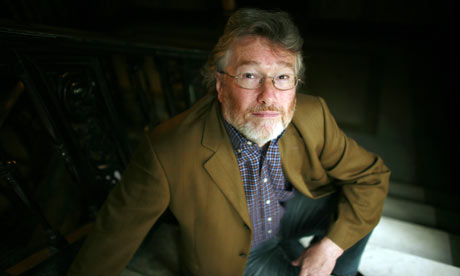
Iain Banks
Novelist Iain Banks has an iPhone app to accompany his latest book, Transition. Photograph: Christopher Thomond
The way the books industry is interacting with digital media is developing faster than many had foreseen, with the latest example an attempt to offer fans of author Iain M Banks exclusive unseen chapters, his original notes and commentary for his latest novel.
Mobile software company TradeMobile has worked with Banks’s publisher Little, Brown to develop the free application for the iPhone, which launches this Thursday (1 July). Readers who have bought the paperback of Banks’s latest novel, Transition, will be able to scan a unique barcode on their edition with their iPhone, and companion features for the novel will be transmitted to their screen.
A best-selling author, the publishers also hope the new app may entice readers uninitiated into his complicated universe of difference worlds and civilisations. “For something as complicated as Transition it makes sense,” said Banks. “It’s very much like a DVD extras.”
The app also includes character biographies; after a “slightly anguished” email from his German translator, Banks realised that a character called Bisquitine might need her language and cultural references explaining.
“She appears toward the end of the novel and has an important part to play, and a very eccentric way of expressing herself,” says the author. “It took half a day to write and three to explain.”
Kirk Bowe at TradeMobile says: “You’re able to tap in a page number and get back all the characters, scenes and locations which may be relevant to that page.”
Beyond the iPhone
TradeMobile is currently in talks with Little, Brown about extending the application to other handsets as well as the iPhone. “This helps people who aren’t particularly familiar with an author, especially an author like Iain whom they might not have approached before … it will fill in the blanks that may sometimes scare people away.”
In March the number of books available as iPhone apps passed the number of games for the first time. “It was a tipping point,” says digital editor Dan Franklin at rival publisher Canongate. “The plan is now to be creating something you can only experience digitally” — something which, he admits, defies the instincts of a publisher. “It’s our next challenge [but] it’s difficult,” he says.
TradeMobile’s Bowe feels the “companion” approach works particularly well for fiction. “Tolkien for example would be amazing,” he says. “Really for authors with rich, detailed characters and locations it’s great.”
Banks agrees. “It works well for science fiction, especially when you have a universe or place you go back to. These places gradually build up.
“It’s there if you want it – and that’s the beauty of it, it’s an opt-in thing. It’s not being forced down your neck; if you just want the story, you can have it,” says the author. “We’ll see how it does with the science-fiction stuff – if it’s successful it’s the obvious thing to do to extend it to my other novels.”
Added value
Little, Brown is part of the UK’s largest publishing conglomerate, Hachette UK, which has already launched a similar app for popular crime novelist Martina Cole, and has apps in development for authors including Stephenie Meyer, Patrick Holford and Ian Rankin.
“Anyone can replicate the experience of reading a physical book in an app. Our feeling is that just isn’t very exciting,” says head of digital George Walkley. “With Iain Banks and Martina Cole we’ve tried to provide added value and extra material for authors who have very passionate followings.”
At Canongate, Franklin is impressed with Little, Brown’s new app. “What is cool is that they’re getting it to directly interact with a print edition,” he says. “It’s very clever and something we’re looking to do.”
Canongate is no slouch in the digital department itself, however, launching a (paid-for) enhanced iPhone app for Nick Cave’s novel The Death of Bunny Munro in September, complete with videos of Cave and an audio version synched to the text of the book, scored by Cave himself. The app won second place in MediaGuardian’s own innovation awards, the Megas, earlier this year. And in May, it brought out an enhanced app for David Eagleman’s short story collection Sum: Tales from the Afterlives, featuring videos of Eagleman discussing the book, and a synched audio version read by the likes of Jarvis Cocker, Stephen Fry and Noel Fielding.
Like Walkley, Eagleman believes it is important for an app to be more than just an electronic version of a book. “An electronic version of a book merely grants portability. But a thoughtful app can open new inroads to explore the material, as well as ways to keep the material updated and fresh,” he says.
“By having the option to explore a book beyond the original text — by dint of videos, living links, and so on — it becomes a living, breathing, updating organism, just like the rest of our technology.”
Banks adds: “Everyone’s feeling around – no one knows what’s going to work. It’s quite a nervous time to be a publisher. They’re trying to do what they can to keep books interesting. We will just see how it goes.”
Eagleman agrees. “We’re at an exploratory period now, and no one knows where it’s going. If you imagine yourself 100 years from now looking back, it’s clear that apps are in their infancy and just learning how to crawl. Once they become adults, they might offer such a different experience of the material that they will speciate into an entirely different storytelling animal — as has happened, for example, with movies.”

Filed Under: books_blog, Literature and technology

The Style of Philip Roth

By Anita Mathias

When Roth “talks about getting a story right he does so, like any craftsman, with a practical understanding of the materials he uses and the techniques needed to get the job done. In The Ghost Writer, the ageing writer, EI Lonoff, tells 23-year-old Nathan Zuckerman, the most disabused of Roth’s stand-ins, that he “has the most compelling voice I’ve encountered in years. I don’t mean style… I mean voice: something that begins at around the back of the knees and reaches well above the head.” Voice in this sense is the vehicle by which a writer expresses his aliveness and Roth himself is all voice. Style, in the formal, flowery sense, bores him; he has, he once wrote, “a resistance to plaintive metaphor and poeticised analogy”. His prose is immaculate yet curiously plain and unostentatious, as natural as breathing. Reading him, it’s always the story that’s in your face, never the style.
His voice sounds so spontaneous that the lazy reader might suppose he is listening to confession rather than reading a work of fiction.”
Al Alvarez, The Guardian

Filed Under: books_blog, Style

Philip Pullman, On being found by your Muse

By Anita Mathias


Philip Pullman, On being found by your Muse


Philip Pullman, “If you want your muse to find you, make sure you’re at your desk.” 

Filed Under: books_blog

Geraldine McCaughrean on Retellings

By Anita Mathias


I also do lots of retellings… because what’s the point in keep inventing new stories when there are terrific ones already out there which people have been enjoying for centuries but which are getting forgotten? Myths, legends, folk and fairy stories, famous books (made easier)

Filed Under: books_blog, Writing

Parties–and the Writers’ Life

By Anita Mathias

A writers’ party, or even an Oxford Uni party is as stimulating, refreshing and motivating for me as a complete break. Came back from today’s Society of Author’s party at Freud’s and started writing.
Asked Geraldine McCaughrean, who has written 151 children’s books what her schedule was. She said, settling down to writing was never a problem for her. Being a good wife and mother was. Remembering to pick up her children for instance.
Amen

Filed Under: books_blog, Writing

A writer’s daemon: A magpie, according to Philip Pullman

By Anita Mathias

Philip Pullman said his daemon would be a magpie, because they steal bright shiny things.  Writers pick up ideas anywhere and everywhere, and they don’t really believe in ownership.

Filed Under: books_blog, Writing

Society of Authors

By Anita Mathias

Back from a interesting Society of Authors party at Freuds, a beautiful converted church on Walton Street. Talked to Sharon Dogar, villianness of the week after her book on Anne Frank “Annexed” has caused outrage, Geraldine McCaughrean, the children’s writer whose 151 books my children loved, Mari Prichard, (widow of Humphrey Carpenter, Mr. Majeika, widow), poet Bernard Donoghue, whose wife Heather taught me Middle English. And now to write!

Filed Under: books_blog

  • « Previous Page
  • 1
  • …
  • 18
  • 19
  • 20
  • 21
  • 22
  • Next Page »

Sign Up and Get a Free eBook!

Sign up to be emailed my blog posts (one a week) and get the ebook of "Holy Ground," my account of working with Mother Teresa.

Join 544 Other Readers

My Books

Rosaries, Reading, Secrets: A Catholic Childhood in India

Rosaries, Reading Secrets, B&N
USA

UK

Wandering Between Two Worlds: Essays on Faith and Art

Wandering Between Two Worlds
USA

UK

Francesco, Artist of Florence: The Man Who Gave Too Much

Francesco, Artist of Florence
US

UK

The Story of Dirk Willems

The Story of Dirk Willems
US

UK

My Latest Meditation

Anita Mathias: About Me

Anita Mathias

Read my blog on Facebook

Follow me on Twitter

Follow @anitamathias1

Recent Posts

  • God’s Complete Forgiveness 
  • Using God’s Gift of Our Talents: A Path to Joy and Abundance
  • The Kingdom of God is Here Already, Yet Not Yet Here
  • All Those Who Exalt Themselves Will Be Humbled & the Humble Will Be Exalted
  • Christ’s Great Golden Triad to Guide Our Actions and Decisions
  • How Jesus Dealt With Hostility and Enemies
  • Do Not Be Afraid, but Do Be Prudent
  • For Scoundrels, Scallywags, and Rascals—Christ Came
  • How to Lead an Extremely Significant Life
  • Don’t Walk Away From Jesus, but if You Do, He Still Looks at You and Loves You
Premier Digital Awards 2015 - Finalist - Blogger of the year
Runner Up Christian Media Awards 2014 - Tweeter of the year

Categories

What I’m Reading


Wolf Hall
Hilary Mantel

Wolf Hall --  Amazon.com
Amazon.com

Amazon.co.uk

Silence and Honey Cakes:
The Wisdom Of The Desert
Rowan Williams

Silence and Honey Cakes --  Amazon.com
Amazon.com

Amazon.co.uk

The Long Loneliness:
The Autobiography of the Legendary Catholic Social Activist
Dorothy Day

The Long Loneliness --  Amazon.com
Amazon.com

Amazon.co.uk

Country Girl
Edna O'Brien

Country Girl  - Amazon.com
Amazon.com

Amazon.co.uk

Archive by month

My Latest Five Podcast Meditations

INSTAGRAM

anita.mathias

My memoir: Rosaries, Reading, Secrets https://amzn.to/42xgL9t
Oxford, England. Writer, memoirist, podcaster, blogger, Biblical meditation teacher, mum

Well, hello friends! Breaking radio silence to let Well, hello friends! Breaking radio silence to let you know that I have taped a meditation for you on Christ’s famous Parable of the Talents in Matthew 25. https://anitamathias.com/2025/11/05/using-gods-gift-of-our-talents-a-path-to-joy-and-abundance/
Here you are, click the play button in the blog post for a brief meditation, and some moments of peace, and, perhaps, inspiration in your day 🙂
Hi Friends, I have taped a meditation; do listen a Hi Friends, I have taped a meditation; do listen at this link: https://anitamathias.com/2025/04/08/the-kingdom-of-god-is-here-already-yet-not-yet-here-2/
It’s on the Kingdom of God, of which Christ so often spoke, which is here already—a mysterious, shimmering internal palace in which, in lightning flashes, we experience peace and joy, and yet, of course, not yet fully here. We sense the rainbowed presence of Christ in the song which pulses through creation. Christ strolls into our rooms with his wisdom and guidance, and things change. Our prayers are answered; we are healed; our hearts are strangely warmed. Sometimes.
And yet, we also experience evil within & all around us. Our own sin which can shatter our peace and the trajectory of our lives. And the sins of the world—its greed, dishonesty and environmental destruction.
But in this broken world, we still experience the glory of creation; “coincidences” which accelerate once we start praying, and shalom which envelops us like sudden sunshine. The portals into this Kingdom include repentance, gratitude, meditative breathing, and absolute surrender.
The Kingdom of God is here already. We can experience its beauty, peace and joy today through the presence of the Holy Spirit. But yet, since, in the Apostle Paul’s words, we do not struggle only “against flesh and blood, but against the rulers, against the unseen powers of this dark world and against the spiritual forces of evil,” its fullness still lingers…
Our daughter Zoe was ordained into the Church of E Our daughter Zoe was ordained into the Church of England in June. I have been on a social media break… but … better late than never. Enjoy!
First picture has my sister, Shalini, who kindly flew in from the US. Our lovely cousins Anthony and Sarah flank Zoe in the next picture.
The Bishop of London, Sarah Mullaly, ordained Zoe. You can see her praying that Zoe will be filled with the Holy Spirit!!
And here’s a meditation I’ve recorded, which you might enjoy. The link is also in my profile
https://anitamathias.com/2024/11/07/all-those-who-exalt-themselves-will-be-humbled-the-humble-will-be-exalted/
I have taped a meditation on Jesus statement in Ma I have taped a meditation on Jesus statement in Matthew 23, “For those who exalt themselves will be humbled, and those who humble themselves will be exalted.”
Do listen here. https://anitamathias.com/2024/11/07/all-those-who-exalt-themselves-will-be-humbled-the-humble-will-be-exalted/
Link also in bio.
And so, Jesus states a law of life. Those who broadcast their amazingness will be humbled, since God dislikes—scorns that, as much as people do.  For to trumpet our success, wealth, brilliance, giftedness or popularity is to get distracted from our life’s purpose into worthless activity. Those who love power, who are sure they know best, and who must be the best, will eventually be humbled by God and life. For their focus has shifted from loving God, doing good work, and being a blessing to their family, friends, and the world towards impressing others, being enviable, perhaps famous. These things are houses built on sand, which will crumble when hammered by the waves of old age, infirmity or adversity. 
God resists the proud, Scripture tells us—those who crave the admiration and power which is His alone. So how do we resist pride? We slow down, so that we realise (and repent) when sheer pride sparks our allergies to people, our enmities, our determination to have our own way, or our grandiose ego-driven goals, and ambitions. Once we stop chasing limelight, a great quietness steals over our lives. We no longer need the drug of continual achievement, or to share images of glittering travel, parties, prizes or friends. We just enjoy them quietly. My life is for itself & not for a spectacle, Emerson wrote. And, as Jesus advises, we quit sharp-elbowing ourselves to sit with the shiniest people, but are content to hang out with ordinary people; and then, as Jesus said, we will inevitably, eventually, be summoned higher to the sparkling conversation we craved. 
One day, every knee will bow before the gentle lamb who was slain, now seated on the throne. We will all be silent before him. Let us live gently then, our eyes on Christ, continually asking for his power, his Spirit, and his direction, moving, dancing, in the direction that we sense him move.
Link to new podcast in Bio https://anitamathias.co Link to new podcast in Bio https://anitamathias.com/2024/02/20/how-jesus-dealt-with-hostility-and-enemies/
3 days before his death, Jesus rampages through the commercialised temple, overturning the tables of moneychangers. Who gave you the authority to do these things? his outraged adversaries ask. And Jesus shows us how to answer hostile questions. Slow down. Breathe. Quick arrow prayers!
Your enemies have no power over your life that your Father has not permitted them. Ask your Father for wisdom, remembering: Questions do not need to be answered. Are these questioners worthy of the treasures of your heart? Or would that be feeding pearls to hungry pigs, who might instead devour you?
Questions can contain pitfalls, traps, nooses. Jesus directly answered just three of the 183 questions he was asked, refusing to answer some; answering others with a good question.
But how do we get the inner calm and wisdom to recognise
and sidestep entrapping questions? Long before the day of
testing, practice slow, easy breathing, and tune in to the frequency of the Father. There’s no record of Jesus running, rushing, getting stressed, or lacking peace. He never spoke on his own, he told us, without checking in with the Father. So, no foolish, ill-judged statements. Breathing in the wisdom of the Father beside and within him, he, unintimidated, traps the trappers.
Wisdom begins with training ourselves to slow down and ask
the Father for guidance. Then our calm minds, made perceptive, will help us recognise danger and trick questions, even those coated in flattery, and sidestep them or refuse to answer.
We practice tuning in to heavenly wisdom by practising–asking God questions, and then listening for his answers about the best way to do simple things…organise a home or write. Then, we build upwards, asking for wisdom in more complex things.
Listening for the voice of God before we speak, and asking for a filling of the Spirit, which Jesus calls streams of living water within us, will give us wisdom to know what to say, which, frequently, is nothing at all. It will quieten us with the silence of God, which sings through the world, through sun and stars, sky and flowers.
Especially for @ samheckt Some very imperfect pi Especially for @ samheckt 
Some very imperfect pictures of my labradoodle Merry, and golden retriever Pippi.
And since, I’m on social media, if you are the meditating type, here’s a scriptural meditation on not being afraid, while being prudent. https://anitamathias.com/2024/01/03/do-not-be-afraid-but-do-be-prudent/
A new podcast. Link in bio https://anitamathias.c A new podcast. Link in bio
https://anitamathias.com/2024/01/03/do-not-be-afraid-but-do-be-prudent/
Do Not Be Afraid, but Do Be Prudent
“Do not be afraid,” a dream-angel tells Joseph, to marry Mary, who’s pregnant, though a virgin, for in our magical, God-invaded world, the Spirit has placed God in her. Call the baby Jesus, or The Lord saves, for he will drag people free from the chokehold of their sins.
And Joseph is not afraid. And the angel was right, for a star rose, signalling a new King of the Jews. Astrologers followed it, threatening King Herod, whose chief priests recounted Micah’s 600-year-old prophecy: the Messiah would be born in Bethlehem, as Jesus had just been, while his parents from Nazareth registered for Augustus Caesar’s census of the entire Roman world. 
The Magi worshipped the baby, offering gold. And shepherds came, told by an angel of joy: that the Messiah, a saviour from all that oppresses, had just been born.
Then, suddenly, the dream-angel warned: Flee with the child to Egypt. For Herod plans to kill this baby, forever-King.
Do not be afraid, but still flee? Become a refugee? But lightning-bolt coincidences verified the angel’s first words: The magi with gold for the flight. Shepherds
telling of angels singing of coming inner peace. Joseph flees.
What’s the difference between fear and prudence? Fear is being frozen or panicked by imaginary what-ifs. It tenses our bodies; strains health, sleep and relationships; makes us stingy with ourselves & others; leads to overwork, & time wasted doing pointless things for fear of people’s opinions.
Prudence is wisdom-using our experience & spiritual discernment as we battle the demonic forces of this dark world, in Paul’s phrase.It’s fighting with divinely powerful weapons: truth, righteousness, faith, Scripture & prayer, while surrendering our thoughts to Christ. 
So let’s act prudently, wisely & bravely, silencing fear, while remaining alert to God’s guidance, delivered through inner peace or intuitions of danger and wrongness, our spiritual senses tuned to the Spirit’s “No,” his “Slow,” his “Go,” as cautious as a serpent, protected, while being as gentle as a lamb among wolves.
Link to post with podcast link in Bio or https://a Link to post with podcast link in Bio or https://anitamathias.com/2023/09/22/dont-walk-away-from-jesus-but-if-you-do-he-still-looks-at-you-and-loves-you/
Jesus came from a Kingdom of voluntary gentleness, in which
Christ, the Lion of Judah, stands at the centre of the throne in the guise of a lamb, looking as if it had been slain. No wonder his disciples struggled with his counter-cultural values. Oh, and we too!
The mother of the Apostles James and John, asks Jesus for a favour—that once He became King, her sons got the most important, prestigious seats at court, on his right and left. And the other ten, who would have liked the fame, glory, power,limelight and honour themselves are indignant and threatened.
Oh-oh, Jesus says. Who gets five talents, who gets one,
who gets great wealth and success, who doesn’t–that the
Father controls. Don’t waste your one precious and fleeting
life seeking to lord it over others or boss them around.
But, in his wry kindness, he offers the ambitious twelve
and us something better than the second or third place.
He tells us how to actually be the most important person to
others at work, in our friend group, social circle, or church:Use your talents, gifts, and energy to bless others.
And we instinctively know Jesus is right. The greatest people in our lives are the kind people who invested in us, guided us and whose wise, radiant words are engraved on our hearts.
Wanting to sit with the cleverest, most successful, most famous people is the path of restlessness and discontent. The competition is vast. But seek to see people, to listen intently, to be kind, to empathise, and doors fling wide open for you, you rare thing!
The greatest person is the one who serves, Jesus says. Serves by using the one, two, or five talents God has given us to bless others, by finding a place where our deep gladness and the world’s deep hunger meet. By writing which is a blessing, hospitality, walking with a sad friend, tidying a house.
And that is the only greatness worth having. That you yourself,your life and your work are a blessing to others. That the love and wisdom God pours into you lives in people’s hearts and minds, a blessing
https://anitamathias.com/.../dont-walk-away-from-j https://anitamathias.com/.../dont-walk-away-from-jesus.../
Sharing this podcast I recorded last week. LINK IN BIO
So Jesus makes a beautiful offer to the earnest, moral young man who came to him, seeking a spiritual life. Remarkably, the young man claims that he has kept all the commandments from his youth, including the command to love one’s neighbour as oneself, a statement Jesus does not challenge.
The challenge Jesus does offers him, however, the man cannot accept—to sell his vast possessions, give the money to the poor, and follow Jesus encumbered.
He leaves, grieving, and Jesus looks at him, loves him, and famously observes that it’s easier for a camel to squeeze through the eye of a needle than for a rich person to live in the world of wonders which is living under Christ’s kingship, guidance and protection. 
He reassures his dismayed disciples, however, that with God even the treasure-burdened can squeeze into God’s kingdom, “for with God, all things are possible.”
Following him would quite literally mean walking into a world of daily wonders, and immensely rich conversation, walking through Israel, Lebanon, Syria, and Jordan, quite impossible to do with suitcases and backpacks laden with treasure. 
For what would we reject God’s specific, internally heard whisper or directive, a micro-call? That is the idol which currently grips and possesses us. 
Not all of us have great riches, nor is money everyone’s greatest temptation—it can be success, fame, universal esteem, you name it…
But, since with God all things are possible, even those who waver in their pursuit of God can still experience him in fits and snatches, find our spirits singing on a walk or during worship in church, or find our hearts strangely warmed by Scripture, and, sometimes, even “see” Christ stand before us. 
For Christ looks at us, Christ loves us, and says, “With God, all things are possible,” even we, the flawed, entering his beautiful Kingdom.
Follow on Instagram

© 2026 Dreaming Beneath the Spires · All Rights Reserved. · Cookie Policy · Privacy Policy