![]() |
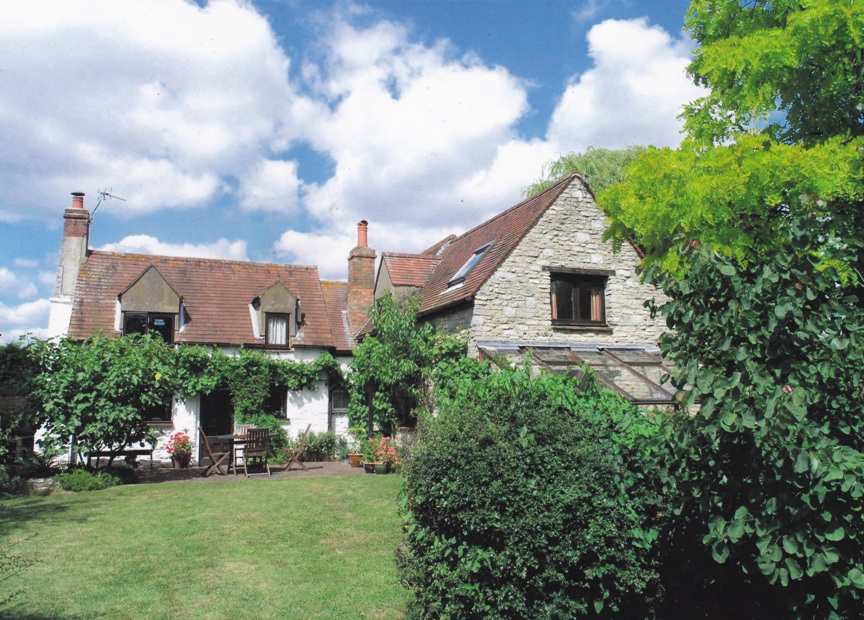
| An older picture of our house on an Indian summer day. Except we now have a 30 sq. m conservatory in front of the white wall. |
Anita Mathias: Dreaming Beneath the Spires
Anita Mathias's Blog on Faith and Art
![]() |
| An older picture of our house on an Indian summer day. Except we now have a 30 sq. m conservatory in front of the white wall. |

Satan’s first attack on the human race was his sly effort to destroy Eve’s confidence in the kindness of God. Unfortunately for her and for us, he succeeded too well. From that day, men have had a false conception of God, and it is exactly this that has cut from under them the ground of righteousness and driven them to reckless and destructive living…
…The God of the Pharisee was not a God easy to live with, so his religion became grim and hard and loveless…
…The truth is that God is the most winsome of all beings and His service one of unspeakable pleasure…
…How good it would be if we could learn that God is easy to live with. He remembers our frame and knows that we are dust. He may sometimes chasten us, it is true, but even this He does with a smile, the proud tender smile of a Father who is bursting with pleasure over an imperfect but promising son who is coming every day to look more and more like the One whose child he is…
from the The Best of Tozer, Baker 1978 edition, pp. 120-122
Certainly not all of the mystery of the Godhead can be known by man–but just as certainly, all that men can know of God in this life is revealed in Jesus Christ! When the Apostle Paul said with yearning, “That I may know Him,” he was not speaking of intellectual knowledge. Paul was speaking of the reality of an experience of knowing God personally and consciously, spirit touching spirit and heart touching heart. We know that people spend a lot of time talking about a deeper Christian life–but few seem to want to know and love God for Himself. The precious fact is that God is the deeper life! Jesus Christ Himself is the deeper life. And as I plunge on into the knowledge of the triune God, my heart moves on into the blessedness of His fellowship. This means that there is less of me and more of God–thus my spiritual life deepens and I am strengthened in the knowledge of His will.
–A.W. Tozer
Thank you to Paul at Thinking out Loud for these lovely excerpts from Tozer’s work.
And how does one become less busy. In the Biblical phrase, “Enquire of the Lord” before you commit to doing things, choose a book to read, choose a project to commit to, write a blog post.
And this will take a lifetime’s practice!!

One day, I will remember to tote a camera around me with me. Till then, here’s a picture from Greenbelt, 2011. Clockwise, Alan Crawley, Lesley Crawley and Tim Skellett, or Gurdur, the atheist who rashly threw himself to the Christian lions, and me, in pink. All caught here in a good-natured interlude by Revsimmy, Simon Nicholls.
And here is the last in my two week series of guest posts. Thank you very much everyone who has graciously written one for me.
Read previous posts about Dick Woodward at “How to Change the World from Your Bed.” or here.
Dick Woodward’s blog is 4 Spiritual Secrets. Visit ICM at http://www.icm.org/

‘Those that wait on the Lord will renew their strength, they will mount up on wings like eagles, they will run and not grow weary, they will walk and not faint.’ Isaiah 40:31

![]() |
| Jan and Karoline Sassenberg |
Blessed are the Meek and the Great Commission
As a teenager, I was scared of the Beatitudes. Brought up in a conservative Free Evangelical Church, it didn’t make sense to me that Christ’s longest and best recorded sermon opened with words about the poor, the meek and the persecuted. Why not have the most important come first? Why not start with: “Surrender to me, Jesus, and you shall be saved!” Was Jesus perhaps more political than my pastors and teachers wanted me to believe? Too scared of becoming “a liberal” and of watering down the gospel I did not dare following this uncomfortable train of thought.
Nevertheless, I still find myself puzzled over Jesus’ radical claim. What is it that Christ praises about the attitude of meekness? How can he promise the meek to inherit the earth? Does this reflect reality in a world ruled by social injustice, cruelty, and the survival of the most brutal?
The word “meek” implies peacefulness although it does not only mean the act of peacemaking. The peacemakers receive their own promise later. With the word “meek” Jesus uses the same expression as in His self proclamation: “Come to me, all you who are weary for I am meek and humble in heart.” (Mat. 11:32) The NIV translates “… for I am gentle…”. Jesus is calling to himself the weary and a few verses later Jesus refers to himself as the one who does not quench the smoldering wick.
So how will such a meek disciple inherit the earth? As with all Beatitudes, Jesus does not come up with new ideas but refers here to the Old Testament. Psalm 37:11 says: “The Meek will inherit the land.” From the patriarchs to Jesus’ day, the Israelites had been anticipating the fulfillment of this promise. Becoming again a sovereign independent nation was the ultimate Jewish dream.
So, how does meekness empower us to reach this world for Christ? Is global mission a question of converting souls, large stadium crusades, and efficient strategies?
In our community in Freetown, Sierra Leone, we find ourselves often overwhelmed by the vastness of the suffering around us. Children beaten mercilessly and dying needlessly, young women forced into prostitution, hopeless unemployed men turning to crimes and drugs. But in all this we find that God can use us best, when we turn away from programmes and let God use us in our weaknesses and limitations. Where He brings us low we are ready to truly meet our friends in the slum of Kroo Bay at their level. And when we gently touch wounds we see God touch and heal and restore.

Anita asked us to unpack this Beatitude theologically (exegeting & all that),but with all those heavy-duty theological types over there in Oxford, I’d like to focus on what it means to BE meek. Practically. What does meekness look like?