The Meek Shall Inherit the Earth: A Guest Post by Julian Clarke
Today’s lovely guest post is by Julian Clarke, a Husband – Father of 4 – Mission-minded Marketeer and Musician–Volunteer and supporter of the most wonderful organisation in the world: Viva – Together for Children http://www.viva.org/home.aspx—Sales Director of Caseco a company supplying opticians www.caseco.co.uk
Follow Julian on twitter http://twitter.com/julianclarke
![]() |
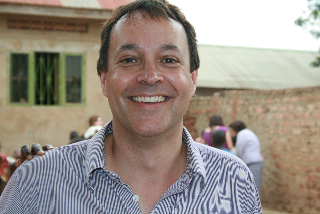
| Julian Clarke |
Jules’ Meek Speak
The first time I heard “The meek shall inherit theearth” it was sung, spliced between power-chords and drum fills, the likeof which I’d never heard before (for those who’re familiar with the Canadian band Rush, you’ll know what I mean).
As I was swung left and right in a coach climbing through the Alps (on a school skiing trip) the red Walkman introduced me to music that on reflection seemedto alter the trajectory of my adolescence. The ensuing period of my life, ironically, could be described more as care-less than care-free.
I went there, did that, bought the T-shirt and thankfully buried it with Christ just over a decade later. This was not however before being threshed by the words of 2 Timothy 3: 1-9. After I read the list it was safe to assumeI had a distinct lack of meekness.
He pushed through fear. Now does that sound like our take on “meek”to you?
Forgive me, I can’t remember who said (when considering ministers regretfullycaught in sin that so easily entangles) “We can only go as far as our character runs deep.” For me meekness encompasses that quiet quality ofcharacter that embraces perseverance – sheer bull-headed single-minded perseverance that doesn’t shout about it or perform to the camera.
![]() |
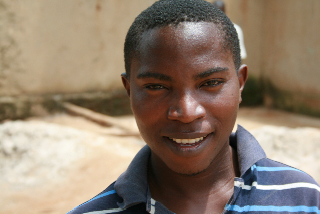
| Brendan, from the Viva Project, Kampala, Uganda |
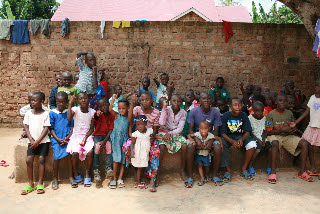
Brenden did it anyway. Not only that but every morning he opens the compound doors to another 120 children from the nearby community to share breakfast.
![]() |
| Some of the 120 children rescued by Brendan, aged 21. Kampala, Uganda |
I often say that in Uganda life seems more “alive” and I wonder why that is – the extremes of life there maybe. Or perhaps it’s because amongst the desperate ashes there is true beauty manifested by the hearts and actions of young men and women like Brendan giving up their lives to help the poor, marginalised and suffering (can you see the parallel with our Lord?)
Is that the nub of it? That meekness emanates from the cross of Christ and that the fruits and evidence of heaven can be glimpsed (inherited from his last will and testament) in the here and now. That inwardly we should aspire to meekness defined by the cross and the pull of that which we all struggle against with futility – to die to ourselves and to our preferred ways of doing life.
In summary – “Seek first the kingdom of God and all these things will beadded to you” Matthew 6v33
How will you seek it?
*The names of children and adults mentioned in this blog have been changed in accordance with Viva’s confidentiality and safety policies.
The Methodist Covenant Prayer
Rank me with whom you will;
put me to doing, put me to suffering;
let me be employed for you or laid aside for you,
exalted for you or brought low for you;
let me be full, let me be empty,
let me have all things, let me have nothing;
I freely and wholeheartedly yield all things to your pleasure and disposal.
Father, Son and Holy Spirit,
you are mine and I am yours.
So be it.
And the covenant made on earth,
let it be ratified in heaven. Amen.
I love this beautiful prayer, and was trying to pray it this evening. Big fail!! I think if things don’t work out as I hoped, I can honestly pray it. However, in the middle of doing and striving, in the middle of embarking on a challenging and joyful enterprise, it’s hard to even contemplate the possibility of its failure, as the Methodist Covenant Prayer so clear-sightedly does.
And I think it is fine to ask God to bless and prosper the work of your hands, with the understanding, of course, that you will still love him with all your heart if your plans and enterprises do not succeed.
Why, when you learn to trust God, you smile!
![]() |
| Irene at 4 |
Tom walks down the street and meets Dick, who is grinning from ear to ear.
Tom, “What are you so happy about?”
Dick, “Well, I’ve met a man who promised to do all my worrying for me for $40,000 a year.”
Tom, “40,000 dollars a year! How are you going to get that?”
Dick, grinning, “That’s HIS worry!
The Meek Shall Inherit the Earth. A Guest Post by Dr. Kaaren Mathias
![]() |
| Drs. Kaaren and Jeph Mathias, with their children, Shar, Shanti, Rohan and Jalori |
| Dr. Kaaren Mathias |
THE MEEK SHALL INHERIT THE EARTH
I think of a group of children I played with by a river ten years ago. They were leaping, splashing, flipping, jubilant, trying new tricks and scheming gleefully to dive bomb me. We were on the edge of a swathe of rainforest in the Amazon basin, just inside the Bolivian border. There were logging trucks plying across the ferry 2km downstream and there was no school, few resources and a deeply uncertain future as their families, land and homes teetered on the edge of vulnerability. Meek and powerless, yet the river was entirely for their joy and delight. They asked no questions about if they were allowed to swim there, when they had to get out or if they could float on downstream. The earth was all theirs.
I think of a friend of mine, Tej Ram who lives in a remote village in the foothills of the Indian Himalayas. We met as he accompanied his brother who was thin as a skeleton at 27 years, riddled with TB and carrying little hope of surviving. Tej Ram meekly served and supported his sick brother. Then he asked if he could help us as we ran busily around with clinic patients, our own children and training nutrition promoters. He turned out to be an excellent carpenter, cleaner, cook and driver. Tej Ram belongs to a group classified as Dalit – the lowest caste in India’s highly stratified society. In our clinic and home we had to plead with him to sit and eat with us, and even then he kept his eyes averted. But when we trekked together back to his village he stood tall and strode along the high ridge, expansively indicating the forests, fields and deep valleys: “This is our place.”
I think of a neighbour I often sat with when we lived in a crowded, grimy corner of Delhi. Mariam lives alone. She is a widow. For a living she sells chewing tobacco, a few sweets and tiny packets of salty snacks. Her story of betrayal by relatives who took over her tiny flat when her husband died, her tale of setting up house on the pavement with planks and plastics and her meek existence now on alms and scant sales seems very far from inheriting the earth. Amazingly though, she is thankful for each day, she is quick to share a hot chai cooked over her charcoal burner and she tells proudly how many different people in the neighbourhood share their evening dhal and roti with her. So OK, it’s not inheriting the earth but sitting with Mariam I realise she is more joyful and grateful, more free from rancour and more able to embrace each new morning than many of my neighbours in New Zealand.
If I am honest there are also many, many examples of meek, vulnerable, excluded, poor, disabled, marginalised people I know who aren’t anywhere near inheriting the earth – so maybe that’s where becoming part of the answer to my prayers comes in – looking for places to build justice and bring God’s kingdom on earth….
Kaaren Mathias is a mother and community health doctor living and working in North India.
Do read yesterday’s post on the same theme by Luke Tarassenko.
What do you think? Have you had similar experiences and observations? Tell us your story.
“The Meek Will Inherit the Earth” Guest post by Luke Tarassenko
This deep and thought-provoking guest post was written by Luke Tarassenko, a doctoral student in theology at the University of Oxford, and, until recently, a youth worker at St. Aldate’s Church, Oxford. Luke worked with Rolland and Heidi Baker’s Iris Ministries in Mozambique this summer.
We’d love to hear your comments and reactions. Tune in tomorrow for Dr. Kaaren Mathias, who has worked with Servants of Asia’s Poor, Doctors Without Borders etc.
“Meek” is not a cool word. Rarely, if ever, will you hear someone pay the compliment “You’re really meek,” remark “That was so meek,” or simply exclaim “Wow, meek!”
It now becomes a bit clearer why the word isn’t used so much. After all, who wants to be thought of as soft? Who wants to be gentle, humble and submissive? The world mocks such people. On the contrary, the world teaches us to be confident in ourselves, to look out for number one, to take what we can get and to make sure we don’t let people walk all over us. We are to stand up for our rights, and avoid people manipulating us or taking us for a ride at all costs by making sure we’re always in control and in charge of what’s going on. Jesus taught exactly the opposite attitude : he commended meekness. And he lived it too. Of course, he knew there was a right time for getting angry, for passionate confrontation and speaking out (like when he overturned the tables in the temple) but he also knew the value of meekness. He knew that there was actually a gargantuan power in gentleness, because exhibiting it requires faith in God, that he is in control, that he is able to transform humanly pathetic situations with resurrection glory.
Jesus was soft and gentle time and time again with people, even “sinners” who he knew were living wrongly before God (take Zacchaeus, the woman at the well, the woman caught in adultery, to name but a few). He was lovingly submissive to his Heavenly Father for his entire life, even to the point of death, when he submitted himself to the Roman authorities and allowed himself to be unfairly tried, horrifically beaten and executed on a cross.
For the great irony is that those who so un-meekly strive to dominate and possess the material things of this world will one day be robbed of even what little they really have, while those who out of humility submit themselves to Christ Jesus and consider all as loss compared with him will one day join him in the New Creation of Heaven and Earth. In this sense every Christian is someone who has to become meek and so will inherit the Earth. But, as again with the other beatitudes, the promise is not just one for a far-off time at the culmination of history but one which be fulfilled a billion times in miniature before that day comes. Just as we pray “thy Kingdom come on Earth as in Heaven”, there are instances of Heaven breaking into Earth here and now where we see the principle of the inheritance of the meek playing itself out.
Take for example Iris Ministries, a missionary organisation working in Mozambique. When their founders, Heidi and Rolland Baker, initially entered the country, the locals were extremely hostile to them and their white, Western religion. However, over time, as they witnessed the work they did and saw the fruit that it bore morally, socially and even economically, they were won over. Now the Mozambican Government actually GIVES Iris buildings to use as orphanages and development centers! The Bakers could have responded badly to the initial hostility they met with, Instead, they persisted in gently, humbly loving the people of Mozambique, in submission to them and to God. Through their meek and humble attitude, the Bakers have inherited portions of the Earth to use for God’s Kingdom.
So let us be meek. Let us be soft, gentle, humble and submissive in how we relate to God and how we relate to others, and take joy that such people will one day inherit the Earth.
For more information about NGO Iris Ministires, and to donate to them, please see

9/11 and Me: How 9/11 Changed my Life

I had to forgive.
When Poems are Handed to You Ready Made : The Mysteries of Inspiration
Of the writing of the lyrics, Howe remembers, “I went to bed that night as usual, and slept, according to my wont, quite soundly. I awoke in the gray of the morning twilight; and as I lay waiting for the dawn, the long lines of the desired poem began to twine themselves in my mind. Having thought out all the stanzas, I said to myself, ‘I must get up and write these verses down, lest I fall asleep again and forget them.’ So, with a sudden effort, I sprang out of bed, and found in the dimness an old stump of a pen which I remembered to have used the day before. I scrawled the verses almost without looking at the paper.”
* * *
I would be consumed in that overwhelming existence.
His writers’ block was broken, and The Duino Elegies flowed forth in a torrent.
* * *
My father had memorized the opening of Paradise Lost, and I remember the opening sentence with a thrill of pleasure. It’s so beautiful, so majestic, that reading it now, after some years, I almost cry with pleasure,
|
Wow! What a long amazing sentence!
Paradise Lost comes, it comes as if dictated by an angel, but it comes to the blind poet who had spent his life preparing to write it. The Duino Elegies were “overheard” by the poet who also spent a life of sacrifice in preparation.
Poetic inspiration comes suddenly, as if the unconsciously suddenly ripens, to those who had laboured long and hard,
for much of their lives to receive it.
* * * In contrast is William Blake, an untaught visionary poet
who was more in touch with Heaven than with our world. At
the age of four, the young artist “saw God” when God “put
his head to the window.”
At the age of eight or ten in Peckham, Blake claimed to have seen “a tree filled with angels, bright angelic wings bespangling every bough like stars.” Do I believe him? Yes, as it happens.
“I know that our deceased friends are more really with us than when they were apparent to our mortal part. Thirteen years ago I
lost a brother, and with his spirit I converse daily and hourly
in the spirit, and see him in my remembrance, in the region
of my imagination. I hear his advice, and even now write
from his dictate.” Blake wrote.
Blake writes “Felpham is a sweet place for Study, because it
is more spiritual than London. Heaven opens here on all sides
her golden Gates; her windows are not obstructed by vapours;
voices of Celestial inhabitants are more distinctly heard, &
their forms more distinctly seen.”
It was while he lived in Felpham, Sussex, that Blake wrote
the perfect Jerusalem. |
- « Previous Page
- 1
- …
- 47
- 48
- 49
- 50
- 51
- …
- 121
- Next Page »