Anita Mathias: Dreaming Beneath the Spires

Anita Mathias's Blog on Faith and Art

  • Home
  • My Books
  • Meditations
  • Essays
  • Contact
  • About Me

"The God of Small Things" by Arundhati Roy

By Anita Mathias

Hmm. I admire this book. It is exquisitely well-constructed. It is original. I love the way Roy plays with language and creates a language of her own. I love her vivid descriptions, and the exactitude and verisimilitude of her childhood memories. I can relate to what she mentions–the Indian childhood; the passion for “The Sound of Music;” the mean, very mean female relatives whose greed and pettiness eventually drove them crazy; the casual, mean and cruel bullying of children, especially free spirits; the repressive and pervasive smallness of mind that can drive free spirits crazy; the favouring of males. Oh overall, the sadness of it, the waste through repression and conformity of what might have been.

Having mentioned these things, it is not surprising that I found it very painful to read. The casual sacrifice and brutalizing of the lower-caste lover was unbearably painful, and then the subsequent ostracism of Ammu herself, which drove her to her early death; traumatized her son, so that he parted with his sanity; and left her daughter barely functioning, though traumatized. And then, the stereotypical vicious unmarried aunt, the villianness of the piece, who inherits all the gold–and wears it all at once, driven to a kind of craziness by her unrestrained greed.

I do recommend it, but will probably not read it again myself. It rouses a flood of anger and inchoate memories in me, all of them painful!


Filed Under: random

On Setting Down Roots in Oxford

By Anita Mathias

The plum trees that we planted in 2006 have been covered with the sweetest, most delicious plums this year. Interestingly it took them 3.5 years to bear fruit.
Hmm. My life has been marked by moves from city to city, from country to country.

Here is its trajectory–Born in Jamshedpur, India; moved to boarding school in Nainital, India when I was 9, volunteered with Mother Teresa in Orissa and Calcutta when I was 17-18, then lived in Madras,  then in Oxford, England, then Columbus, Ohio, USA; Binghamton, New York; and then I got married. As a married couple, we’ve lived in Cornell, New York; Palo Alto, California; Williamsburg, Virginia; Minnesota, Minneapolis; then back to Williamsburg, Virginia for another 11 years, then back to England, to Manchester, Lancashire; and then back to Oxford, England where we’ve lived for 5.5 years. I hope we have come full circle, that this is our metaphorical Ithaca, where we will stay for good.

We have lived in 10 homes over our married life of 20 years. So, on average, a move every 2 years!! No wonder, we have not been productive. Moving takes an enormous amount of physical and emotional energy, not to mention the necessity of making new friends, and establishing new networks. We love where we live now, and have no serious plans to move–ever.

I really enjoy slowing putting metaphorical roots into the soil of Oxford, getting to know people, a wide range of people, investing in their lives, slowly establishing friendships which steadily deepen. Getting to know this town even better, setting up rhythms, routines, and a life here. I am very happy here, and love living here.

Filed Under: random

“My Grandmothers and I” A Memoir by Diana Holman-Hunt

By Anita Mathias

“My Grandmothers and I” A Memoir by Diana Holman-Hunt


Diana was the granddaughter of the Pre-Raphaelite painter, William Holman-Hunt,and the great-niece of Millais. A more interesting lineage than most, and one which provided her a more rarefied childhood than most.


Rarefied, not necessarily happy. She was abandoned into the care of these grandmothers by a childish, selfish father, who does suddenly appear from governing the Empire, and rescue her from the boarding school at which she was desperately unhappy–then vanishes again. Her paternal grandmother was entirely selfish, and stingy to a psychopatic degree, dissolving into tears when money was demanded of her, so that Diana often lets her off. Her other grandmother was too absorbed in her pleasant country life to take much notice of Diana.


But notice things Diana did, and little of Edwardian country life, or her grandmother’s manipulations, pretensions and little stinginesses escapes her eagle eye. 


Though she escaped somehow, not unscarred, but free.


Her memoir is written in little vignettes, building up detail by detail, through significant and well-remembered episodes. Its construction is brilliant–a memoir that reads as charmingly as a novel!

Delicious Bookmark this on Delicious

Filed Under: books_blog, Reviews of Memoirs

Does Exercise Make You a Better Person?

By Anita Mathias

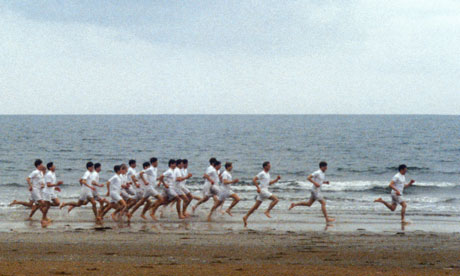
Chariots of Fire

When I had a David Lloyd, Oxford, membership, I used to be surprised by how happy everyone seemed. Smiley, happy, positive and ebullient.

Most or all of the staff were probably not Christians, so there was no spiritual explanation at work. I had to look for natural explanations for why they seemed more happy and upbeat than the average person.

Undoubtedly, it was partly because of good management. Bad and mean management hurts business because employees become disgruntled.

However, the number of exercise classes the staff led each day, and the endorphins pumping through their bodies no doubt made them feel better physically, which made them feel better emotionally. And, if they were spiritual, the glowing health, and the well-stretched muscles, would have made it easier for them to experience God.

* * *

 I used to hate PE and games at school. I am now surprised at how good I feel after vigorous exercise, like a run. How euphoric even, how tolerant of human annoyingness, how clear-headed, how able to work for long hours. So resistant to annoyance and disappointment.

It’s like an inoculation of the mind and emotions, making me able to work longer and harder, to withstand reverses, to handle rudeness or shortness with equanimity.

Exercise makes us better people. It may not change the heart, make a stingy person generous, a malicious or malevolent person benevolent. But its short-term effects improve our personalities. If persisted with, it would change our characters (not least of all, in developing discipline). We become sunnier. Happier. Easier to live with. We sleep better. Think better, more clearly and rationally. We work better and for longer.

It injects sunshine into the personality. We are much less irritable and snappish; our mood is better; we feel better about ourselves. We feel more energetic, positive, optimistic, calm, forbearing, tolerant. In other words, we feel more like Christians.

In fact, perhaps exercise makes it easier for us to take up our cross and follow Jesus. I do believe it.

I have been struggling to develop the habit of daily exercise for 22 months (during which I have lost 24 pounds!!), and it’s still not as much of a habit as writing is, say. But I do exercise at least a little most days, and am miserable and cranky when I do not.

I am convinced of its benefits, and enjoy it once I have hit my stride, and so I will persist, until it is as much of a habit as writing is.

Filed Under: In which I get serious about health and diet and fitness and exercise (really) Tagged With: Benefits of exercise

“My Grandmothers and I”: A Memoir by Diana Holman-Hunt

By Anita Mathias

Diana was the granddaughter of the Pre-Raphaelite painter, William Holman-Hunt, and the great-niece of Millais. A more interesting lineage than most, and one which provided her a more rarefied childhood than most.
Rarefied, not necessarily happy. She was abandoned into the care of these grandmothers by a childish, selfish father, who does suddenly appear from governing the Empire, and rescue her from the boarding school at which she was desperately unhappy–then vanishes again. Her paternal grandmother was entirely selfish, and stingy to a psychopatic degree, dissolving into tears when money was demanded of her, so that Diana often lets her off. Her other grandmother was too absorbed in her pleasant country life to take much notice of Diana.
But notice things Diana did, and little of Edwardian country life, or her grandmother’s manipulations, pretensions and little stinginesses escapes her eagle eye.
Though she escaped somehow, not unscarred, but free.
Her memoir is written in little vignettes, building up detail by detail, through significant and well-remembered episodes. Its construction is brilliant–a memoir that reads as charmingly as a novel!

Filed Under: In which I celebrate books and film and art Tagged With: Diana Holman-Hunt, memoir, My Grandmothers and I

When God tells you to build a ship in the desert! And He is simply outrageous

By Anita Mathias

When is it God for sure? When it is rational and commonsensical? Sometimes. Since we are made in the image of God who gave us common-sense, he presumably employs it himself.

However, what happens when God tells you to do something mind-blowing and outrageous?

What if you live in a desert, surrounded by sand and barrenness, and God tells you to build a ship? Because a flood is coming! A flood? In a desert?

There are these tests of faith along the Christian way, when God asks us to think outside the box, outside the human box. To do the humanly stupid which will be proved wise.

Passing these tests means that God can trust us with further revelation! And directions!

Filed Under: random Tagged With: Genesis, Noah

The Folly of Speed-reading literature!

By Anita Mathias

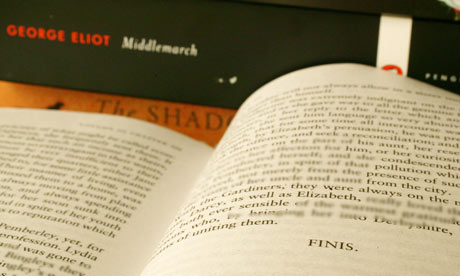
Blurred text
Get all that? … the closing lines of Pride and Prejudice given a speed read. Photograph: Frank Baron
YOU CAN’T SPEED-READ LITERATURE!
EVAN MALONEY

The celebrated academic Harold Bloom is a lightning fast reader; blink and he’s probably turned the page – twice. In his prime he could churn through 1,000 pages an hour, which means he could have digested Jane Eyre during his lunch break and still had time to chew through half of Ulysses before returning to classes. I don’t know about you, but that makes me feel like a slow, slack-jawed simian struggling in the frontal-lobe department.
The average reader snails through prose at a rate of about 250-300 words per minute, which roughly equates to about one page per minute. Bloom is surely cut from a rare cloth of reading comprehension because he whips through more than 16 pages per minute and still remembers almost everything he reads. For the rest of us, it’s not so easy. In the World Championship Speed Reading Competition the top contestants typically read around 1,000 to 2,000 words per minute, but only manage about 50% comprehension. That’s just not good enough for literature. What’s the point if you’re reading, say, Wolf Hall by Hilary Mantel, with its panoply of characters, and you only understand 50% of the text? You wouldn’t be able to understand anything much at all.
Do people really attempt to speed read literature? If so, why? I guess, most simply, it is so a person can boast about how much they’ve read – or how often. Andrew Marr claims to have read War and Peace “at least” 15 times. Not 12 or 13, but 15. I read this and thought, well, if you took out all the passages he’s skimmed over, he’s probably only read it 10. Even so, it is a remarkable achievement. I found it difficult to concentrate on certain passages of War and Peace the first (and only) time I read it. I can’t imagine reading over those same passages 15 times and paying attention.
Most speed reading courses teach people to read the words off the page without imagining the corresponding sounds in their minds (called subvocalisation). Skim reading is slightly different; it teaches people to read the keywords in a sentence and ignore all the smaller words, creating some kind of semantic register in shorthand. Anyone who has read that other Tolstoy tome, Anna Karenina, has probably been tempted to skim read certain passages, such as Levin’s theories of Russian agrarianism. I know I was tempted, quite recently, but in my efforts to pick up the reading pace I found my attention was divided: part of my mind was thinking about Levin’s thoughts and actions, as described on the page, but an equal part of my mind was devoted to the novel process of speed/skim reading. What are the keywords? I wondered. Sometimes my mind was entirely distracted by this question, and while debating which half of a subjunctive conditional I could ignore while retaining the sense of the clause, I would speed read two or three more paragraphs without taking anything in.
There is something quite unseemly about the notion of skimming over the literary canon. In some inverted, abstract sense it reminds me of liposuction: you’re putting on intellectual weight without acquiring the mental health benefits, and there’s always a downside to cutting corners.
Did the world’s great novelists really spend years agonising over the pitch and rhythm of their sentences so some time-efficient post-modern reader could skim over the text like a political spin doctor searching for soundbites in the transcript of a ministerial speech? I don’t think so. Speed reading might be an effective tool for office documents, textbooks, and letters of unrequited love, but the prose of great literature should be savoured, should it not? Part of the joy of reading comes from “hearing” our psychic palates pronouncing the words in the mind’s ear; the imagined speech, “richly flavoured like a nut or an apple”.
Compare this classic Dickensian opening line with the skimmed version that follows, and ask yourself, is it really worth tearing through great prose like Gordon Gecko tearing through the assets of a newly acquired company?
It was the best of times, it was the worst of times, it was the age of wisdom, it was the age of foolishness, it was the epoch of belief, it was the epoch of incredulity, it was the season of Light, it was the season of Darkness, it was the spring of hope, it was the winter of despair.

 
– Charles Dickens, A Tale of Two Cities (1859)
Best times/worst times, age wisdom/foolishness, epoch belief/incredulity, season Light/Darkness, spring hope, winter despair.

 
Charles Dickens, the skimmed version.
Notwithstanding the aesthetic pleasure derived from reading, how well can one appreciate the nuances of character and circumstance in a novel if one is reading 10 pages per minutes sans Bloomian comprehension skills? I’m not convinced that the average person can ever learn to read at speed and contemplate at leisure. Speed reading is a bit like trying to appreciate the sights of Paris while racing through the streets at 200 kmph.
I know this is the era in which we measure internet connection speeds in fractions of seconds and thumb SMS sentiments like “gr8 2 c u”, I know this is the era of speed-living and 20-20 cricket, but I’m not convinced that we should adapt our reading habits to fit in with the speed of modern life. Rather, reading should be seen as a pleasure where time is forgotten, if only for a moment.
Delicious Bookmark this on Delicious

Delicious Bookmark this on Delicious

Filed Under: books_blog, Reading

401 Ways to get Your Children to Work at Home by Bonnie McCullough

By Anita Mathias

401 Ways to get Your Children to Work at Home
Bonnie McCullough
I strongly recommend this book. I bought it when Zoe was three, and it gives step by step suggestions for all the tasks a child should have mastered between the age of 2 and 18–age-appropriate suggestions for what a child could do to help out in the kitchen, with the laundry, with cleaning, shopping, in the garden, mending, phone-calls re. hair-cuts, taking a bus, managing money etc.

On each of Zoe’s birthdays, we would look at what she should be able to do in terms of ironing, mending, cooking, vacuuming etc. At 15, she can cook and serve a 3 course meal to guests, (and has been able to for many years) handle her own laundry, clean if necessary (though we do have a cleaner) mend her own clothes, and do most domestic tasks. She will be supremely able to run her own little house when she is 18.

Irene has not been as enthusiastic about learning these age-appropriate tasks, but can do most  things on the 11 year old list.

I would highly recommend this book so that when kids leave home, they have all the survival skills they need. I grew up in a home with a live in cook, live in maid, and live in gardener, and got married without the faintest idea of how to cook or clean, and just a faint idea of how to do laundry. Domesticity has been an uphill battle for me–but not for the generation I have brought into the world–if I have anything to say about it!

Having everyone pitch in leads to more family time, more family fun, a less frazzled mum, and more confident, less intense, and better-rounded children!
http://www.amazon.co.uk/Ways-Your-Kids-Work-Home/dp/0312299931/ref=sr_1_1?ie=UTF8&s=books&qid=1282256543&sr=8-1


Filed Under: random Tagged With: Bonnie McCullough, Parenting, Teaching your children to work at home

  • « Previous Page
  • 1
  • …
  • 201
  • 202
  • 203
  • 204
  • 205
  • …
  • 279
  • Next Page »

Sign Up and Get a Free eBook!

Sign up to be emailed my blog posts (one a week) and get the ebook of "Holy Ground," my account of working with Mother Teresa.

Join 536 Other Readers

My Books

Rosaries, Reading, Secrets: A Catholic Childhood in India

Rosaries, Reading Secrets, B&N
USA

UK

Wandering Between Two Worlds: Essays on Faith and Art

Wandering Between Two Worlds
USA

UK

Francesco, Artist of Florence: The Man Who Gave Too Much

Francesco, Artist of Florence
US

UK

The Story of Dirk Willems

The Story of Dirk Willems
US

UK

My Latest Meditation

Anita Mathias: About Me

Anita Mathias

Read my blog on Facebook

Follow me on Twitter

Follow @anitamathias1

Recent Posts

  • At the Cross, God Forgives Us Completely
  • Using God’s Gift of Our Talents: A Path to Joy and Abundance
  • The Kingdom of God is Here Already, Yet Not Yet Here
  • All Those Who Exalt Themselves Will Be Humbled & the Humble Will Be Exalted
  • Christ’s Great Golden Triad to Guide Our Actions and Decisions
  • How Jesus Dealt With Hostility and Enemies
  • Do Not Be Afraid, but Do Be Prudent
  • For Scoundrels, Scallywags, and Rascals—Christ Came
  • How to Lead an Extremely Significant Life
  • Don’t Walk Away From Jesus, but if You Do, He Still Looks at You and Loves You
Premier Digital Awards 2015 - Finalist - Blogger of the year
Runner Up Christian Media Awards 2014 - Tweeter of the year

Categories

What I’m Reading


Wolf Hall
Hilary Mantel

Wolf Hall --  Amazon.com
Amazon.com

Amazon.co.uk

Silence and Honey Cakes:
The Wisdom Of The Desert
Rowan Williams

Silence and Honey Cakes --  Amazon.com
Amazon.com

Amazon.co.uk

The Long Loneliness:
The Autobiography of the Legendary Catholic Social Activist
Dorothy Day

The Long Loneliness --  Amazon.com
Amazon.com

Amazon.co.uk

Country Girl
Edna O'Brien

Country Girl  - Amazon.com
Amazon.com

Amazon.co.uk

Archive by month

My Latest Five Podcast Meditations

INSTAGRAM

anita.mathias

My memoir: Rosaries, Reading, Secrets https://amzn.to/42xgL9t
Oxford, England. Writer, memoirist, podcaster, blogger, Biblical meditation teacher, mum

Looking at photos from our week in beautiful Sevil Looking at photos from our week in beautiful Seville and Cordoba over New Year with Irene, who had a week off.
And, ICYMI, here’s my latest meditation on the Gospel of Matthew… I’ve recorded it, should you want a few minutes of peace.
https://anitamathias.com/2026/04/29/gods-complete-forgiveness/
Hello Friends, I'm resumed recording my meditation Hello Friends, I'm resumed recording my meditations on the Gospel of Matthew. Do click on this link to listen. 
https://anitamathias.com/.../29/gods-complete-forgiveness/
Christ is the most influential figure in the history of the world, though his life ended in shame, humiliation and failure. But he so completely turned things round in his great reversal that the cross on which he died when all seemed hopeless is now the most common, and revered, symbol in history.
He emerged from and was anchored in Judaism. And as the sins of the people were laid on the scapegoat who was sent into the wilderness to perish, Christ died as the lamb of God voluntarily bearing the guilt of the wrongdoing of the whole world. He paid the price for our forgiveness with his life-blood--in accordance with the iron law of the physical and moral universe, of sowing and reaping, cause and effect. 
And so, God, who appeared as flames of fire to Moses, can now dwell within us, purifying us, whose hearts have darkness and shards of ice. 
And now that Christ was crucified, died, but rose again, His Spirit, no longer contained within his earthly body, is poured out like living water onto all humans, at our humble request. The Spirit pours the love of God into us; he reminds us of the words of Jesus and slowly writes Christ’s sweet law on our hearts. This transfusion of grace helps us do hard things we previously couldn’t do. Our dance with the Spirit gradually breaks the power of sin over us. It transforms us.
Now we, the forgiven, protected by the blood of Jesus poured out over us, and filled with His Spirit, who sings within us, Abba, Father, are adopted by God as his children in his joyful new covenant. We are cells grafted into the vine of our new family--Father, Son, Spirit—who now live in us as we live in them. As we choose by our thoughts and actions to continue living in the vine of Jesus, their energy pulsing through us makes us fruitful. And now, all our prayers which flow in the river of God’s good purposes are kindly heard. Waves of love and power flood from the cross! 
Thank you!
Well, hello friends! Breaking radio silence to let Well, hello friends! Breaking radio silence to let you know that I have taped a meditation for you on Christ’s famous Parable of the Talents in Matthew 25. https://anitamathias.com/2025/11/05/using-gods-gift-of-our-talents-a-path-to-joy-and-abundance/
Here you are, click the play button in the blog post for a brief meditation, and some moments of peace, and, perhaps, inspiration in your day 🙂
Hi Friends, I have taped a meditation; do listen a Hi Friends, I have taped a meditation; do listen at this link: https://anitamathias.com/2025/04/08/the-kingdom-of-god-is-here-already-yet-not-yet-here-2/
It’s on the Kingdom of God, of which Christ so often spoke, which is here already—a mysterious, shimmering internal palace in which, in lightning flashes, we experience peace and joy, and yet, of course, not yet fully here. We sense the rainbowed presence of Christ in the song which pulses through creation. Christ strolls into our rooms with his wisdom and guidance, and things change. Our prayers are answered; we are healed; our hearts are strangely warmed. Sometimes.
And yet, we also experience evil within & all around us. Our own sin which can shatter our peace and the trajectory of our lives. And the sins of the world—its greed, dishonesty and environmental destruction.
But in this broken world, we still experience the glory of creation; “coincidences” which accelerate once we start praying, and shalom which envelops us like sudden sunshine. The portals into this Kingdom include repentance, gratitude, meditative breathing, and absolute surrender.
The Kingdom of God is here already. We can experience its beauty, peace and joy today through the presence of the Holy Spirit. But yet, since, in the Apostle Paul’s words, we do not struggle only “against flesh and blood, but against the rulers, against the unseen powers of this dark world and against the spiritual forces of evil,” its fullness still lingers…
Our daughter Zoe was ordained into the Church of E Our daughter Zoe was ordained into the Church of England in June. I have been on a social media break… but … better late than never. Enjoy!
First picture has my sister, Shalini, who kindly flew in from the US. Our lovely cousins Anthony and Sarah flank Zoe in the next picture.
The Bishop of London, Sarah Mullaly, ordained Zoe. You can see her praying that Zoe will be filled with the Holy Spirit!!
And here’s a meditation I’ve recorded, which you might enjoy. The link is also in my profile
https://anitamathias.com/2024/11/07/all-those-who-exalt-themselves-will-be-humbled-the-humble-will-be-exalted/
I have taped a meditation on Jesus statement in Ma I have taped a meditation on Jesus statement in Matthew 23, “For those who exalt themselves will be humbled, and those who humble themselves will be exalted.”
Do listen here. https://anitamathias.com/2024/11/07/all-those-who-exalt-themselves-will-be-humbled-the-humble-will-be-exalted/
Link also in bio.
And so, Jesus states a law of life. Those who broadcast their amazingness will be humbled, since God dislikes—scorns that, as much as people do.  For to trumpet our success, wealth, brilliance, giftedness or popularity is to get distracted from our life’s purpose into worthless activity. Those who love power, who are sure they know best, and who must be the best, will eventually be humbled by God and life. For their focus has shifted from loving God, doing good work, and being a blessing to their family, friends, and the world towards impressing others, being enviable, perhaps famous. These things are houses built on sand, which will crumble when hammered by the waves of old age, infirmity or adversity. 
God resists the proud, Scripture tells us—those who crave the admiration and power which is His alone. So how do we resist pride? We slow down, so that we realise (and repent) when sheer pride sparks our allergies to people, our enmities, our determination to have our own way, or our grandiose ego-driven goals, and ambitions. Once we stop chasing limelight, a great quietness steals over our lives. We no longer need the drug of continual achievement, or to share images of glittering travel, parties, prizes or friends. We just enjoy them quietly. My life is for itself & not for a spectacle, Emerson wrote. And, as Jesus advises, we quit sharp-elbowing ourselves to sit with the shiniest people, but are content to hang out with ordinary people; and then, as Jesus said, we will inevitably, eventually, be summoned higher to the sparkling conversation we craved. 
One day, every knee will bow before the gentle lamb who was slain, now seated on the throne. We will all be silent before him. Let us live gently then, our eyes on Christ, continually asking for his power, his Spirit, and his direction, moving, dancing, in the direction that we sense him move.
Link to new podcast in Bio https://anitamathias.co Link to new podcast in Bio https://anitamathias.com/2024/02/20/how-jesus-dealt-with-hostility-and-enemies/
3 days before his death, Jesus rampages through the commercialised temple, overturning the tables of moneychangers. Who gave you the authority to do these things? his outraged adversaries ask. And Jesus shows us how to answer hostile questions. Slow down. Breathe. Quick arrow prayers!
Your enemies have no power over your life that your Father has not permitted them. Ask your Father for wisdom, remembering: Questions do not need to be answered. Are these questioners worthy of the treasures of your heart? Or would that be feeding pearls to hungry pigs, who might instead devour you?
Questions can contain pitfalls, traps, nooses. Jesus directly answered just three of the 183 questions he was asked, refusing to answer some; answering others with a good question.
But how do we get the inner calm and wisdom to recognise
and sidestep entrapping questions? Long before the day of
testing, practice slow, easy breathing, and tune in to the frequency of the Father. There’s no record of Jesus running, rushing, getting stressed, or lacking peace. He never spoke on his own, he told us, without checking in with the Father. So, no foolish, ill-judged statements. Breathing in the wisdom of the Father beside and within him, he, unintimidated, traps the trappers.
Wisdom begins with training ourselves to slow down and ask
the Father for guidance. Then our calm minds, made perceptive, will help us recognise danger and trick questions, even those coated in flattery, and sidestep them or refuse to answer.
We practice tuning in to heavenly wisdom by practising–asking God questions, and then listening for his answers about the best way to do simple things…organise a home or write. Then, we build upwards, asking for wisdom in more complex things.
Listening for the voice of God before we speak, and asking for a filling of the Spirit, which Jesus calls streams of living water within us, will give us wisdom to know what to say, which, frequently, is nothing at all. It will quieten us with the silence of God, which sings through the world, through sun and stars, sky and flowers.
Especially for @ samheckt Some very imperfect pi Especially for @ samheckt 
Some very imperfect pictures of my labradoodle Merry, and golden retriever Pippi.
And since, I’m on social media, if you are the meditating type, here’s a scriptural meditation on not being afraid, while being prudent. https://anitamathias.com/2024/01/03/do-not-be-afraid-but-do-be-prudent/
A new podcast. Link in bio https://anitamathias.c A new podcast. Link in bio
https://anitamathias.com/2024/01/03/do-not-be-afraid-but-do-be-prudent/
Do Not Be Afraid, but Do Be Prudent
“Do not be afraid,” a dream-angel tells Joseph, to marry Mary, who’s pregnant, though a virgin, for in our magical, God-invaded world, the Spirit has placed God in her. Call the baby Jesus, or The Lord saves, for he will drag people free from the chokehold of their sins.
And Joseph is not afraid. And the angel was right, for a star rose, signalling a new King of the Jews. Astrologers followed it, threatening King Herod, whose chief priests recounted Micah’s 600-year-old prophecy: the Messiah would be born in Bethlehem, as Jesus had just been, while his parents from Nazareth registered for Augustus Caesar’s census of the entire Roman world. 
The Magi worshipped the baby, offering gold. And shepherds came, told by an angel of joy: that the Messiah, a saviour from all that oppresses, had just been born.
Then, suddenly, the dream-angel warned: Flee with the child to Egypt. For Herod plans to kill this baby, forever-King.
Do not be afraid, but still flee? Become a refugee? But lightning-bolt coincidences verified the angel’s first words: The magi with gold for the flight. Shepherds
telling of angels singing of coming inner peace. Joseph flees.
What’s the difference between fear and prudence? Fear is being frozen or panicked by imaginary what-ifs. It tenses our bodies; strains health, sleep and relationships; makes us stingy with ourselves & others; leads to overwork, & time wasted doing pointless things for fear of people’s opinions.
Prudence is wisdom-using our experience & spiritual discernment as we battle the demonic forces of this dark world, in Paul’s phrase.It’s fighting with divinely powerful weapons: truth, righteousness, faith, Scripture & prayer, while surrendering our thoughts to Christ. 
So let’s act prudently, wisely & bravely, silencing fear, while remaining alert to God’s guidance, delivered through inner peace or intuitions of danger and wrongness, our spiritual senses tuned to the Spirit’s “No,” his “Slow,” his “Go,” as cautious as a serpent, protected, while being as gentle as a lamb among wolves.
Follow on Instagram

© 2026 Dreaming Beneath the Spires · All Rights Reserved. · Cookie Policy · Privacy Policy