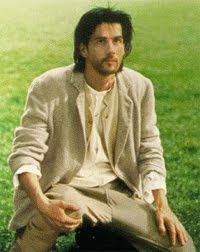

And so Daniel Coulombe (dove in French) has a resurrection!!
Anita Mathias: Dreaming Beneath the Spires
Anita Mathias's Blog on Faith and Art


And so Daniel Coulombe (dove in French) has a resurrection!!

I am actually enthralled by this year’s discipline of reading through Scripture slowly, a passage at a time. How can I be so fascinated with this slow reading of passages I have known all my life? Because there is power and depth in the passages, sparkling inner depths that yield themselves to a close and tranquil examination.
Matthew 26 6-12
6 While Jesus was in Bethany in the home of Simon the Leper, 7 a woman came to him with an alabaster jar of very expensive perfume, which she poured on his head as he was reclining at the table.
14 Then one of the Twelve—the one called Judas Iscariot—went to the chief priests 15 and asked, “What are you willing to give me if I deliver him over to you?” So they counted out for him thirty pieces of silver. 16 From then on Judas watched for an opportunity to hand him over.
The idol of Judas life was love of money. We are elsewhere told that he was a thief, and would help himself to money from the community’s money bags.
It appears that Jesus’s refusal to condemn Mary for her act of lavish and “wasteful” devotion tips Judas in his ultimate betrayal of Christ for–interestingly and significantly–money.
30 silver coins was about 120 denarius, 4 months wages, since a labourer earned about a denarius a day.
What are four months wages for you? Would getting that as a lump sum be sufficient for you to betray a close friend?
I am actually enthralled by this year’s discipline of reading through Scripture slowly, a passage at a time. How can I be so fascinated with this slow reading of passages I have known all my life? Because there is power and depth in the passages, sparkling inner depths that yield themselves to a close and tranquil examination.
Matthew 26 6-12
6 While Jesus was in Bethany in the home of Simon the Leper, 7 a woman came to him with an alabaster jar of very expensive perfume, which she poured on his head as he was reclining at the table.
Simon was likely a leper healed by Jesus, since lepers were otherwise required to live apart.
The woman is identified in John as Mary, sister of Martha and Lazarus.
Her heart welled with love for Jesus. The best she had to give was not good enough. Mark tells us the perfume was worth a year’s wages for an average worker. Let’s say something like £40,000 in today’s money–lavished on Jesus because of her love for him!
14 Then one of the Twelve—the one called Judas Iscariot—went to the chief priests 15 and asked, “What are you willing to give me if I deliver him over to you?” So they counted out for him thirty pieces of silver. 16 From then on Judas watched for an opportunity to hand him over.
Share on site of your choice … Wikio
![]() |
| Wilhelm Von Schadow, Wise and Foolish Virgins. |
1 “At that time the kingdom of heaven will be like ten virgins who took their lamps and went out to meet the bridegroom. 2 Five of them were foolish and five were wise. 3 The foolish ones took their lamps but did not take any oil with them. 4 The wise ones, however, took oil in jars along with their lamps. 5 The bridegroom was a long time in coming, and they all became drowsy and fell asleep.
6 “At midnight the cry rang out: ‘Here’s the bridegroom! Come out to meet him!’
7 “Then all the virgins woke up and trimmed their lamps. 8 The foolish ones said to the wise, ‘Give us some of your oil; our lamps are going out.’
9 “‘No,’ they replied, ‘there may not be enough for both us and you. Instead, go to those who sell oil and buy some for yourselves.’
10 “But while they were on their way to buy the oil, the bridegroom arrived. The virgins who were ready went in with him to the wedding banquet. And the door was shut.
11 “Later the others also came. ‘Lord, Lord,’ they said, ‘open the door for us!’
12 “But he replied, ‘Truly I tell you, I don’t know you.’
13 “Therefore keep watch, because you do not know the day or the hour.
Just one life. Just one. And at the end, we will meet Christ, the bridegroom.
Are we living in readiness for him? Or are we totally unprepared?
Christ says, “Be ready, because you don’t know the day or the hour. And when he returns, no one can help us out. We have to take personal responsibility for our readiness.
What it means to keep one’s lamp filled with oil varies according to our calling. For me, it would mean learning to keep my eyes on Jesus through the day. Being faithful to my calling as a writer, be it “less or more, or soon or slow, mean or high” as Milton writes about his calling in Sonnet 23.
Share on site of your choice … Wikio
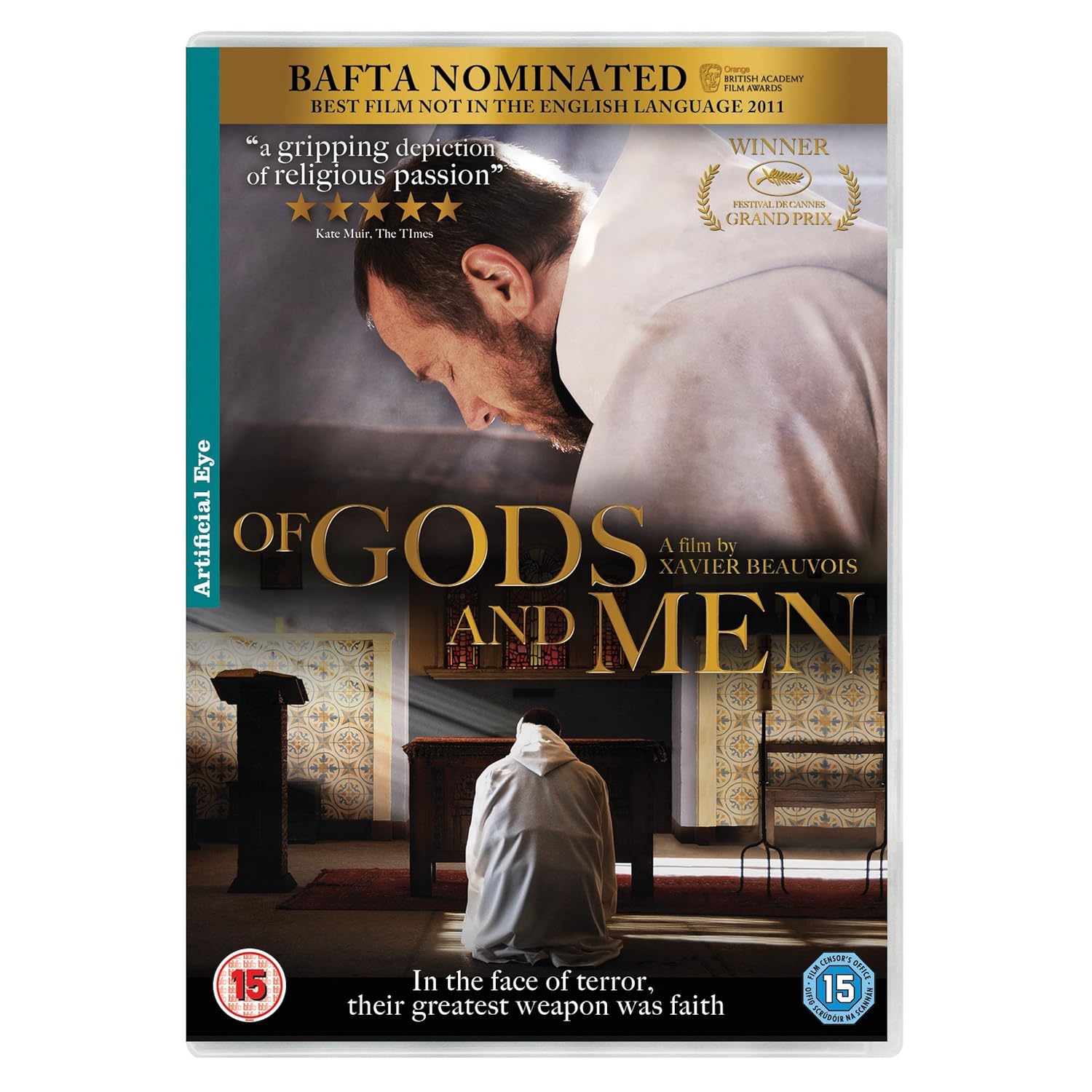
I watched this film by Xavier Beauvois last night. It is one of the most beautiful, even sublime, films I’ve seen in a long time.
It’s the true story of 9 Trappist monks in the Tibhirine Monastery in the Atlas Mountains of Algeria. They live a beautiful life of prayer, Gregorian chant, and work: medical work among the poor for Brother Luc; study of the Koran for the scholarly abbot Christian; and making honey, growing vegetables, and tending sheep for the others. They are self-sufficient, and advise, succour and provide free medical care for the local villagers, who love them.
Algeria was torn by a civil war between a corrupt government and the mujahadeen. The latter are barbarous–they murder girls without the hijab; teachers who speak of “love marriages;” harmless Croatian highway workers.
They pay the monks an armed visit. Both army and police warn the monks that it is a just a matter of time before they too are murdered. And offer armed protection.
The Abbot, Christian de Cherge refuses. He cannot have the soldiers of a corrupt government in the monastery.
* * *
![]() |
| Of Gods and Men. The Monks Vote to Stay |
The crux of the drama is the decision: Should they stay, or return to France?
The mujahadeen are illiterate and murderous. Sooner or later, they will be murdered, they all realize.
The villagers plead with them to stay. They feel safe as long as the monks stay.
And they do, madly sacrificing their one and precious life (in a decision, I feel was a mistake).
Why? Because they believed they had already died when they decided to follow Christ as a monk. That being a martyr was no less foolish than being a monk. That they had chosen to incarnate with the villagers, in their poverty and powerlessness, and to flee would not be right. That the Good Shepherd would not do that. That they should stay in the place they had committed to stay (and trust the results of that choice to God).
It is perhaps relevant that Trappists take the fourth vow of stability. They promise to stay rooted in the monastery they enter. And so these monks do.
They are taken hostage. Murdered. As they more or less foreknew.
* * *
Mad men, or saints?
Sometimes, the prudent choice would be such a denial of everything you lived for to date. Of everything you value. Of everything you hope to live for.
To betray your ideals and everything you have lived for to save your own life is just another form of death.
So fleeing would negate their commitment to love, powerlessness, trust, incarnation, service, the village of Tibhirine, Algeria, and their fourth monastic vow of stability, commitment to a place.
What then would they live for in the future if they had allowed fear to negate everything they had lived for so far–and hoped to live for?
This is the reasoning which leads men and women to die rather than deny Christ.
* * *
The Abbot Christian de Cherge belonged to a distinguished French military family and fought in the French army during the brutal Algerian war of independence. A Muslim friend, Mohammed, faced down local rebels who wanted to shoot Christian when they were taking their customary walk, and discussing their faith. The next day, the rebels shot Mohammed.
The real life Christian left a beautiful testament, in which he addresses his “friend of the last minute, who will not have known what you are doing. May we meet again, as happy thieves in Paradise.”
* * *
In the contemporary classic, Desiring God, John Piper ridicules the idea that there is an inherent beauty in the monastic life of prayer, quietness and worship.
This film shows the beauty of that life. You can almost taste the silence. The peace. The grace. The balm of the Psalms. Oh to be a contemplative! A contemplative in the world, since my life choices have closed the other path to me.
Facing a GOODBYE …
If it should happen one day — and it could be today — that I become a victim of the terrorism which now seems ready to engulf all the foreigners living in Algeria, I would like my community, my Church and my family to remember that my life was GIVEN to God and to this country.
I ask them to accept the fact that the One Master of all life was not a stranger to this brutal departure.
I ask them to associate this death with so many other equally violent ones which are forgotten through indifference or anonymity.
My life has no more value than any other. Nor any less value. In any case, it has not the innocence of childhood.
I have lived long enough to know that I am an accomplice in the evil which seems to prevail so terribly in the world, even in the evil which might blindly strike me down.
I should like, when the time comes, to have a moment of spiritual clarity which would allow me to beg forgiveness of God and of my fellow human beings, and at the same time forgive with all my heart the one who would strike me down.
I could not desire such a death. It seems to me important to state this.
I do not see, in fact, how I could rejoice if the people I love were indiscriminately accused of my murder.
It would be too high a price to pay for what will perhaps be called, the “grace of martyrdom” to owe it to an Algerian, whoever he might be, especially if he says he is acting in fidelity to what he believes to be Islam.
I am aware of the scorn which can be heaped on the Algerians indiscriminately.
I am also aware of the caricatures of Islam which a certain Islamism fosters.
It is too easy to soothe one’s conscience by identifying this religious way with the fundamentalist ideology of its extremists.
For me, Algeria and Islam are something different: it is a body and a soul.
I have proclaimed this often enough, I think, in the light of what I have received from it.
I so often find there that true strand of the Gospel which I learned at my mother’s knee, my very first Church, precisely in Algeria, and already inspired with respect for Muslim believers.
Obviously, my death will appear to confirm those who hastily judged me naive or idealistic:
“Let him tell us now what he thinks of his ideals!”
But these persons should know that finally my most avid curiosity will be set free.
This is what I shall be able to do, God willing: immerse my gaze in that of the Father to contemplate with him His children of Islam just as He sees them, all shining with the glory of Christ, the fruit of His Passion, filled with the Gift of the Spirit whose secret joy will always be to establish communion and restore the likeness, playing with the differences.
For this life lost, totally mine and totally theirs, I thank God, who seems to have willed it entirely for the sake of that JOY in everything and in spite of everything.
In this THANK YOU, which is said for everything in my life from now on, I certainly include you, friends of yesterday and today, and you, my friends of this place, along with my mother and father, my sisters and brothers and their families — you are the hundredfold granted as was promised!
And also you, my last-minute friend, who will not have known what you were doing:
Yes, I want this THANK YOU and this GOODBYE to be a “GOD BLESS” for you, too, because in God’s face I see yours.
May we meet again as happy thieves in Paradise, if it please God, the Father of us both.
AMEN! INCHALLAH!
14 “Again, it will be like a man going on a journey, who called his servants and entrusted his wealth to them. 15 To one he gave five bags of gold, to another two bags, and to another one bag,[a] each according to his ability. Then he went on his journey. 16 The man who had received five bags of gold went at once and put his money to work and gained five bags more. 17 So also, the one with two bags of gold gained two more. 18 But the man who had received one bag went off, dug a hole in the ground and hid his master’s money.
19 “After a long time the master of those servants returned and settled accounts with them. 20 The man who had received five bags of gold brought the other five. ‘Master,’ he said, ‘you entrusted me with five bags of gold. See, I have gained five more.’
21 “His master replied, ‘Well done, good and faithful servant! You have been faithful with a few things; I will put you in charge of many things. Come and share your master’s happiness!’
22 “The man with two bags of gold also came. ‘Master,’ he said, ‘you entrusted me with two bags of gold; see, I have gained two more.’
23 “His master replied, ‘Well done, good and faithful servant! You have been faithful with a few things; I will put you in charge of many things. Come and share your master’s happiness!’
24 “Then the man who had received one bag of gold came. ‘Master,’ he said, ‘I knew that you are a hard man, harvesting where you have not sown and gathering where you have not scattered seed. 25 So I was afraid and went out and hid your gold in the ground. See, here is what belongs to you.’
26 “His master replied, ‘You wicked, lazy servant! So you knew that I harvest where I have not sown and gather where I have not scattered seed? 27 Well then, you should have put my money on deposit with the bankers, so that when I returned I would have received it back with interest.
28 “‘So take the bag of gold from him and give it to the one who has ten bags. 29 For whoever has will be given more, and they will have an abundance. Whoever does not have, even what they have will be taken from them. 30 And throw that worthless servant outside, into the darkness, where there will be weeping and gnashing of teeth.’
I know from experience that if I undertake some action to create increase only for myself, there’s very little energy to it, and it doesn’t usually increase my happiness. But if I focus on creating increase for others (such as by helping people grow), then I feel great joy in doing that, and it ultimately creates increase for me too.
As Jesus implies in The Parable of the Talents, creating abundance requires you to move beyond fear. If you’re too fearful or suspicious or distrustful, you’re going to bury your talents. And this leads to “weeping and gnashing of teeth,” i.e. sorrow and depression.
You might think that fear and suspicion will keep you out of trouble, but really they’ll just cause you suffering and pain. You don’t need fear to avoid being a gullible idiot; for that you just need common sense. To live a life of abundance, you must ultimately move beyond fear and work to create abundance for others. Otherwise you’ll ultimately be cast out as worthless. Jesus doesn’t pull any punches here, youse bums.
Serve to create increase for others, and happiness is your reward. Bury your talents, and you get “weeping and gnashing of teeth.” The choice is yours.
This parable is probably the one which has intrigued me more than any other.
I know from experience that if I undertake some action to create increase only for myself, there’s very little energy to it, and it doesn’t usually increase my happiness. But if I focus on creating increase for others (such as by helping people grow), then I feel great joy in doing that, and it ultimately creates increase for me too.
As Jesus implies in The Parable of the Talents, creating abundance requires you to move beyond fear. If you’re too fearful or suspicious or distrustful, you’re going to bury your talents. And this leads to “weeping and gnashing of teeth,” i.e. sorrow and depression.
You might think that fear and suspicion will keep you out of trouble, but really they’ll just cause you suffering and pain. You don’t need fear to avoid being a gullible idiot; for that you just need common sense. To live a life of abundance, you must ultimately move beyond fear and work to create abundance for others. Otherwise you’ll ultimately be cast out as worthless. Jesus doesn’t pull any punches here, youse bums.
Serve to create increase for others, and happiness is your reward. Bury your talents, and you get “weeping and gnashing of teeth.” The choice is yours.
![]() |
| Wilhelm Von Schadow, Wise and Foolish Virgins. |
1 “At that time the kingdom of heaven will be like ten virgins who took their lamps and went out to meet the bridegroom. 2 Five of them were foolish and five were wise. 3 The foolish ones took their lamps but did not take any oil with them. 4 The wise ones, however, took oil in jars along with their lamps. 5 The bridegroom was a long time in coming, and they all became drowsy and fell asleep.
6 “At midnight the cry rang out: ‘Here’s the bridegroom! Come out to meet him!’
7 “Then all the virgins woke up and trimmed their lamps. 8 The foolish ones said to the wise, ‘Give us some of your oil; our lamps are going out.’
9 “‘No,’ they replied, ‘there may not be enough for both us and you. Instead, go to those who sell oil and buy some for yourselves.’
10 “But while they were on their way to buy the oil, the bridegroom arrived. The virgins who were ready went in with him to the wedding banquet. And the door was shut.
11 “Later the others also came. ‘Lord, Lord,’ they said, ‘open the door for us!’
12 “But he replied, ‘Truly I tell you, I don’t know you.’
13 “Therefore keep watch, because you do not know the day or the hour.
Just one life. Just one. And at the end, we will meet Christ, the bridegroom.
Are we living in readiness for him? Or are we totally unprepared?
Christ says, “Be ready, because you don’t know the day or the hour. And when he returns, no one can help us out. We have to take personal responsibility for our readiness.
What it means to keep one’s lamp filled with oil varies according to our calling. For me, it would mean learning to keep my eyes on Jesus through the day. Being faithful to my calling as a writer, be it “less or more, or soon or slow, mean or high” as Milton writes about his calling in Sonnet 23.
Share on site of your choice … Wikio
![]() |
| Wilhelm Von Schadow, Wise and Foolish Virgins. |
1 “At that time the kingdom of heaven will be like ten virgins who took their lamps and went out to meet the bridegroom. 2 Five of them were foolish and five were wise. 3 The foolish ones took their lamps but did not take any oil with them. 4 The wise ones, however, took oil in jars along with their lamps. 5 The bridegroom was a long time in coming, and they all became drowsy and fell asleep.
6 “At midnight the cry rang out: ‘Here’s the bridegroom! Come out to meet him!’
7 “Then all the virgins woke up and trimmed their lamps. 8 The foolish ones said to the wise, ‘Give us some of your oil; our lamps are going out.’
9 “‘No,’ they replied, ‘there may not be enough for both us and you. Instead, go to those who sell oil and buy some for yourselves.’
10 “But while they were on their way to buy the oil, the bridegroom arrived. The virgins who were ready went in with him to the wedding banquet. And the door was shut.
11 “Later the others also came. ‘Lord, Lord,’ they said, ‘open the door for us!’
12 “But he replied, ‘Truly I tell you, I don’t know you.’
13 “Therefore keep watch, because you do not know the day or the hour.
Just one life. Just one. And at the end, we will meet Christ, the bridegroom.
Are we living in readiness for him? Or are we totally unprepared?
Christ says, “Be ready, because you don’t know the day or the hour. And when he returns, no one can help us out. We have to take personal responsibility for our readiness.
What it means to keep one’s lamp filled with oil varies according to our calling. For me, it would mean learning to keep my eyes on Jesus through the day. Being faithful to my calling as a writer, be it “less or more, or soon or slow, mean or high” as Milton writes about his calling in Sonnet 23.