Anita Mathias: Dreaming Beneath the Spires

Anita Mathias's Blog on Faith and Art

  • Home
  • My Books
  • Meditations
  • Essays
  • Contact
  • About Me

Archives for April 2011

Heresy, History and Politics in Ravenna’s mosaiced churches

By Anita Mathias

The Arian Baptistery

Arian Baptistry from the outside

The Arian heresy, quite intuitively and reasonably I think, saw the Son as just that, a son, subordinate to the Father, in submission to him, not quite as omnipotent or omniscient as him.


Theodoric, an early ruler of Ravenna, and the Germans and Goths were Arians. The native Italians, and the Emperor in Constantiople adhered more or less to present day Christian orthodoxy.


The political power struggle between the two culminated in the Council of Chalcedon. The Arians lost and were persecuted.


Were the Goths, Ostrogoths and Germans stronger, Christian theology today might have looked different.


I took a two term course in the History of Christianity at Oxford University last year. Theology and dogma, I learnt was always formulated in the interplay of power politics, national politics, money, influence, and who detested, or was envious of whom.


No theological system, it’s likely, is right on every point–even, perhaps, whichever one we ourselves adhere to!! 

Saint Apollinaire Nuovo  on a sunny spring day.


Charming magi in the church

Female Martyrs in the Church

Neonian Baptistry, Ravenna, an orthodox baptistry
10 sided Mausoleum of Theodoric, Ravenna


Filed Under: random

The Second Coming, Blog Through the Bible Project

By Anita Mathias

Close to the end and destruction of “his world”, Jesus talks about the end of the world.
The Olivet Discourse, so called because Jesus “sat on the Mount of Olives” is the fifth and last of the great discourses in Matthew.
Matthew 24
The Destruction of the Temple and Signs of the End Times
 1 Jesus left the temple and was walking away when his disciples came up to him to call his attention to its buildings. 2 “Do you see all these things?” he asked.“Truly I tell you, not one stone here will be left on another; every one will be thrown down.”
Literally fulfilled in A.D. 70 when the Romans under Titus completely destroyed Jerusalem, and the temple buildings. Stones were even pried apart to collect the gold lead that melted from the roof when the temple was set on fire.
The road from Jerusalem to Bethany, where Jesus and his disciples stay each evening, takes one alongside the Mount of Olives, which affords a spectacular view of the temple in the distance.
 3 As Jesus was sitting on the Mount of Olives, the disciples came to him privately. “Tell us,” they said, “when will this happen, and what will be the sign of your coming and of the end of the age?”
 4 Jesus answered: “Watch out that no one deceives you. 5 For many will come in my name, claiming, ‘I am the Messiah,’ and will deceive many. 6 You will hear of wars and rumors of wars, but see to it that you are not alarmed. Such things must happen, but the end is still to come. 7 Nation will rise against nation, and kingdom against kingdom. There will be famines and earthquakes in various places. 8 All these are the beginning of birth pains.
   9 “Then you will be handed over to be persecuted and put to death, and you will be hated by all nations because of me. 10 At that time many will turn away from the faith and will betray and hate each other, 11 and many false prophets will appear and deceive many people.
There will be deception both inside and outside the church. Though it may seem hard for us to accept this, not every “Christian” prophet is either Christian or a prophet.
 12 Because of the increase of wickedness, the love of most will grow cold, 13 but the one who stands firm to the end will be saved. 14 And this gospel of the kingdom will be preached in the whole world as a testimony to all nations, and then the end will come.
   15 “So when you see standing in the holy place ‘the abomination that causes desolation,’ spoken of through the prophet Daniel—let the reader understand— 16then let those who are in Judea flee to the mountains. 17 Let no one on the housetop go down to take anything out of the house. 18 Let no one in the field go back to get their cloak. 19 How dreadful it will be in those days for pregnant women and nursing mothers! 20 Pray that your flight will not take place in winter or on the Sabbath. 21 For then there will be great distress, unequaled from the beginning of the world until now—and never to be equaled again.
22 “If those days had not been cut short, no one would survive, but for the sake of the elect those days will be shortened. 23 At that time if anyone says to you, ‘Look, here is the Messiah!’ or, ‘There he is!’ do not believe it. 24 For false messiahs and false prophets will appear and perform great signs and wonders to deceive, if possible, even the elect. 25 See, I have told you ahead of time.
Scary–signs and wonders will be performed by these false prophets. So one obviously would need a great spirit of discernment during these times.
   26 “So if anyone tells you, ‘There he is, out in the wilderness,’ do not go out; or, ‘Here he is, in the inner rooms,’ do not believe it. 27 For as lightning that comes from the east is visible even in the west, so will be the coming of the Son of Man. 28 Wherever there is a carcass, there the vultures will gather.
The Messiah will appear like a flash of lightning–sudden and visible to all.
As vultures clearly indicate carrion and are themselves clearly visible, so the coming of Christ will be obvious.
   29 “Immediately after the distress of those days
   “‘the sun will be darkened,
   and the moon will not give its light;
the stars will fall from the sky,
   and the heavenly bodies will be shaken.’
30 “Then will appear the sign of the Son of Man in heaven. And then all the peoples of the earth will mourn when they see the Son of Man coming on the clouds of heaven, with power and great glory. 31 And he will send his angels with a loud trumpet call, and they will gather his elect from the four winds, from one end of the heavens to the other.
Oh, it would be so amazing to see this–and to be one of the elect!
The nations will mourn because they now face judgment. Or perhaps with repentance.
Christ will be revealed as the eternal ruler of the kingdom of God, designated by the Ancient of Days to receive worship and to exercise dominion over the earth (Dan 7 13-14). The return of Christ is a literal event in which Christ will come in the same way that the disciples saw him go into heaven. NIV 
ESV–These will be earth-shattering events, though which creation will be radically transformed at the return of Christ. Isaiah, Peter and Revelation refer to the new heavens and the new earth. 
32 “Now learn this lesson from the fig tree: As soon as its twigs get tender and its leaves come out, you know that summer is near. 33 Even so, when you see all these things, you know that it is near, right at the door. 34 Truly I tell you, this generation will certainly not pass away until all these things have happened. 35Heaven and earth will pass away, but my words will never pass away.
Jesus’ words are more certain than the existence of the universe. He attributes divine authority and permanence to his own teaching–it is greater even than heaven and earth.
The Day and Hour Unknown
    36 “But about that day or hour no one knows, not even the angels in heaven, nor the Son, but only the Father. 37 As it was in the days of Noah, so it will be at the coming of the Son of Man. 38 For in the days before the flood, people were eating and drinking, marrying and giving in marriage, up to the day Noah entered the ark; 39 and they knew nothing about what would happen until the flood came and took them all away. That is how it will be at the coming of the Son of Man. 40 Two men will be in the field; one will be taken and the other left. 41 Two women will be grinding with a hand mill; one will be taken and the other left.
 Jesus now shares four parables to explain to his disciples how and why they should be prepared for his coming: the homeowner and the thief; the good and wicked servants, the ten virgins, and the talents. 
42 “Therefore keep watch, because you do not know on what day your Lord will come. 43 But understand this: If the owner of the house had known at what time of night the thief was coming, he would have kept watch and would not have let his house be broken into. 44 So you also must be ready, because the Son of Man will come at an hour when you do not expect him.
   45 “Who then is the faithful and wise servant, whom the master has put in charge of the servants in his household to give them their food at the proper time? 46It will be good for that servant whose master finds him doing so when he returns. 47 Truly I tell you, he will put him in charge of all his possessions. 48 But suppose that servant is wicked and says to himself, ‘My master is staying away a long time,’ 49 and he then begins to beat his fellow servants and to eat and drink with drunkards. 50 The master of that servant will come on a day when he does not expect him and at an hour he is not aware of. 51 He will cut him to pieces and assign him a place with the hypocrites, where there will be weeping and gnashing of teeth.
Since one doesn’t know when the end of our world, and the world will occur, live and act as if it is today.
With what care we would live if we knew we were going to die within the year, or the day. 

Share on site of your choice … Wikio

Filed Under: Matthew

Ravenna Mosaics, Apollinaire at Classe

By Anita Mathias


Sant Apollinare in Classe, outskirts of Ravenna.
6th-7th century AD.
Very peaceful. Like stepping into another world.


The mosaic in the apse, shown before is an allegorical representation of the Transfiguration. It is hypnotic.


Right in the centre of the cross is an image of Christ, see detail above.


Funny, how the Christian imagination has almost always represented Christ in the same way–long, lean bearded face, piercing eyes.

Robert Powell in Franco Zefferelli’s Jesus of  Nazareth


 See also Byzantine Mosaics the Mausoleum of Galla Placida
http://dreamingbeneaththespires.blogspot.com/2011/04/byzantine-art-of-mosaics-and-mausoleum.html

Filed Under: random

The Second Coming, Blog Through the Bible Project

By Anita Mathias

Close to the end and destruction of “his world”, Jesus talks about the end of the world.
The Olivet Discourse, so called because Jesus “sat on the Mount of Olives” is the fifth and last of the great discourses in Matthew.
Matthew 24
The Destruction of the Temple and Signs of the End Times
 1 Jesus left the temple and was walking away when his disciples came up to him to call his attention to its buildings. 2 “Do you see all these things?” he asked.“Truly I tell you, not one stone here will be left on another; every one will be thrown down.”
Literally fulfilled in A.D. 70 when the Romans under Titus completely destroyed Jerusalem, and the temple buildings. Stones were even pried apart to collect the gold lead that melted from the roof when the temple was set on fire.
The road from Jerusalem to Bethany, where Jesus and his disciples stay each evening, takes one alongside the Mount of Olives, which affords a spectacular view of the temple in the distance.
 3 As Jesus was sitting on the Mount of Olives, the disciples came to him privately. “Tell us,” they said, “when will this happen, and what will be the sign of your coming and of the end of the age?”
 4 Jesus answered: “Watch out that no one deceives you. 5 For many will come in my name, claiming, ‘I am the Messiah,’ and will deceive many. 6 You will hear of wars and rumors of wars, but see to it that you are not alarmed. Such things must happen, but the end is still to come. 7 Nation will rise against nation, and kingdom against kingdom. There will be famines and earthquakes in various places. 8 All these are the beginning of birth pains.
   9 “Then you will be handed over to be persecuted and put to death, and you will be hated by all nations because of me. 10 At that time many will turn away from the faith and will betray and hate each other, 11 and many false prophets will appear and deceive many people.
There will be deception both inside and outside the church. Though it may seem hard for us to accept this, not every “Christian” prophet is either Christian or a prophet.
 12 Because of the increase of wickedness, the love of most will grow cold, 13 but the one who stands firm to the end will be saved. 14 And this gospel of the kingdom will be preached in the whole world as a testimony to all nations, and then the end will come.
   15 “So when you see standing in the holy place ‘the abomination that causes desolation,’ spoken of through the prophet Daniel—let the reader understand— 16then let those who are in Judea flee to the mountains. 17 Let no one on the housetop go down to take anything out of the house. 18 Let no one in the field go back to get their cloak. 19 How dreadful it will be in those days for pregnant women and nursing mothers! 20 Pray that your flight will not take place in winter or on the Sabbath. 21 For then there will be great distress, unequaled from the beginning of the world until now—and never to be equaled again.
22 “If those days had not been cut short, no one would survive, but for the sake of the elect those days will be shortened. 23 At that time if anyone says to you, ‘Look, here is the Messiah!’ or, ‘There he is!’ do not believe it. 24 For false messiahs and false prophets will appear and perform great signs and wonders to deceive, if possible, even the elect. 25 See, I have told you ahead of time.
Scary–signs and wonders will be performed by these false prophets. So one obviously would need a great spirit of discernment during these times.
   26 “So if anyone tells you, ‘There he is, out in the wilderness,’ do not go out; or, ‘Here he is, in the inner rooms,’ do not believe it. 27 For as lightning that comes from the east is visible even in the west, so will be the coming of the Son of Man. 28 Wherever there is a carcass, there the vultures will gather.
The Messiah will appear like a flash of lightning–sudden and visible to all.
As vultures clearly indicate carrion and are themselves clearly visible, so the coming of Christ will be obvious.
   29 “Immediately after the distress of those days
   “‘the sun will be darkened,
   and the moon will not give its light;
the stars will fall from the sky,
   and the heavenly bodies will be shaken.’
30 “Then will appear the sign of the Son of Man in heaven. And then all the peoples of the earth will mourn when they see the Son of Man coming on the clouds of heaven, with power and great glory. 31 And he will send his angels with a loud trumpet call, and they will gather his elect from the four winds, from one end of the heavens to the other.
Oh, it would be so amazing to see this–and to be one of the elect!
The nations will mourn because they now face judgment. Or perhaps with repentance.
Christ will be revealed as the eternal ruler of the kingdom of God, designated by the Ancient of Days to receive worship and to exercise dominion over the earth (Dan 7 13-14). The return of Christ is a literal event in which Christ will come in the same way that the disciples saw him go into heaven. NIV 
ESV–These will be earth-shattering events, though which creation will be radically transformed at the return of Christ. Isaiah, Peter and Revelation refer to the new heavens and the new earth. 
32 “Now learn this lesson from the fig tree: As soon as its twigs get tender and its leaves come out, you know that summer is near. 33 Even so, when you see all these things, you know that it is near, right at the door. 34 Truly I tell you, this generation will certainly not pass away until all these things have happened. 35Heaven and earth will pass away, but my words will never pass away.
Jesus’ words are more certain than the existence of the universe. He attributes divine authority and permanence to his own teaching–it is greater even than heaven and earth.
The Day and Hour Unknown
    36 “But about that day or hour no one knows, not even the angels in heaven, nor the Son, but only the Father. 37 As it was in the days of Noah, so it will be at the coming of the Son of Man. 38 For in the days before the flood, people were eating and drinking, marrying and giving in marriage, up to the day Noah entered the ark; 39 and they knew nothing about what would happen until the flood came and took them all away. That is how it will be at the coming of the Son of Man. 40 Two men will be in the field; one will be taken and the other left. 41 Two women will be grinding with a hand mill; one will be taken and the other left.
 Jesus now shares four parables to explain to his disciples how and why they should be prepared for his coming: the homeowner and the thief; the good and wicked servants, the ten virgins, and the talents. 
42 “Therefore keep watch, because you do not know on what day your Lord will come. 43 But understand this: If the owner of the house had known at what time of night the thief was coming, he would have kept watch and would not have let his house be broken into. 44 So you also must be ready, because the Son of Man will come at an hour when you do not expect him.
   45 “Who then is the faithful and wise servant, whom the master has put in charge of the servants in his household to give them their food at the proper time? 46It will be good for that servant whose master finds him doing so when he returns. 47 Truly I tell you, he will put him in charge of all his possessions. 48 But suppose that servant is wicked and says to himself, ‘My master is staying away a long time,’ 49 and he then begins to beat his fellow servants and to eat and drink with drunkards. 50 The master of that servant will come on a day when he does not expect him and at an hour he is not aware of. 51 He will cut him to pieces and assign him a place with the hypocrites, where there will be weeping and gnashing of teeth.
Since one doesn’t know when the end of our world, and the world will occur, live and act as if it is today.
With what care we would live if we knew we were going to die within the year, or the day. 

Filed Under: Blog Through the Bible Project., Matthew

La Dolce Vita

By Anita Mathias

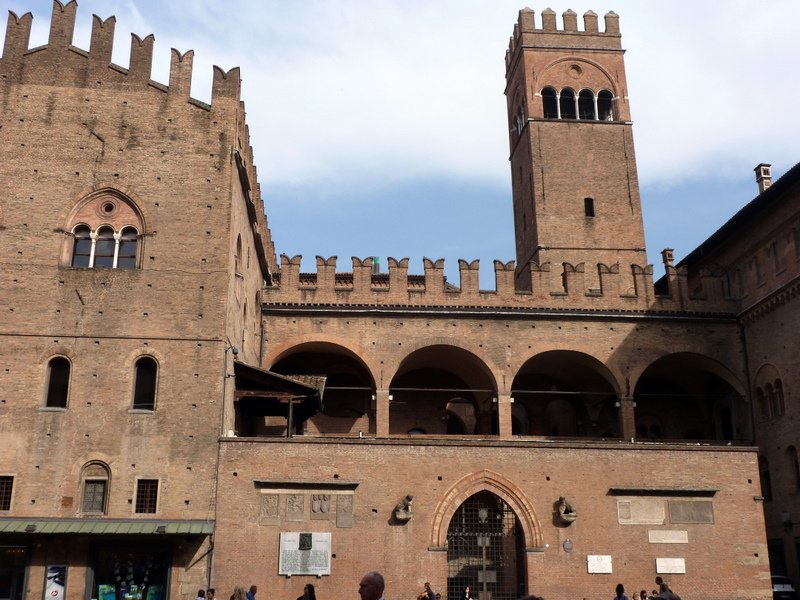
Bologna is all red; it’s known as La Rosso
Bologna has 44 km of arcades

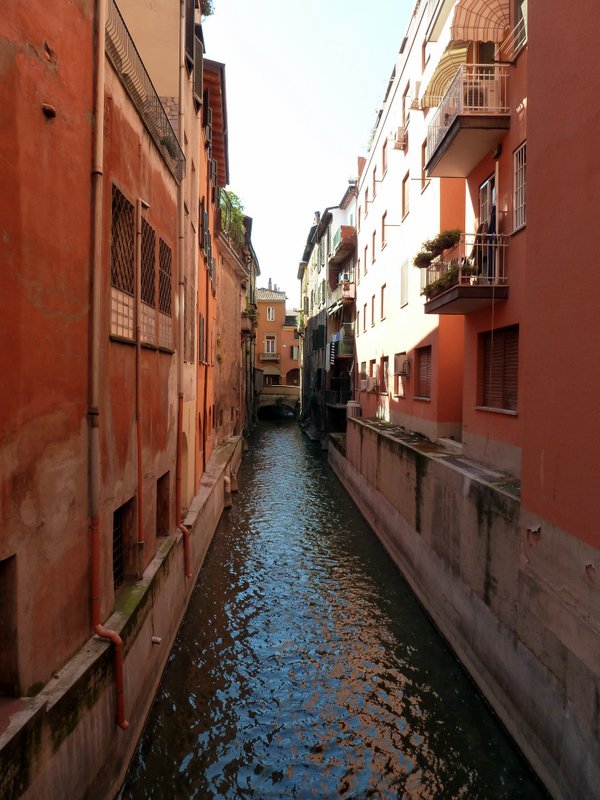
Bologna’s canals

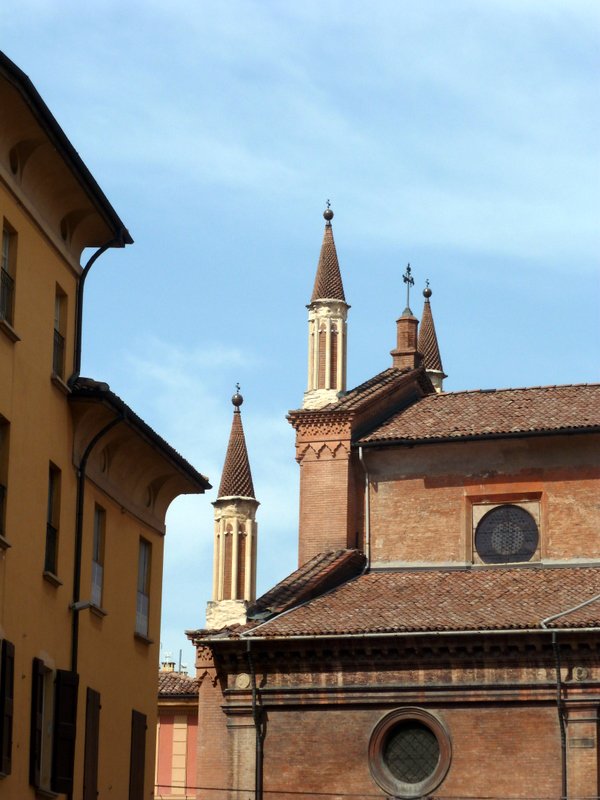
Bologna’s spires

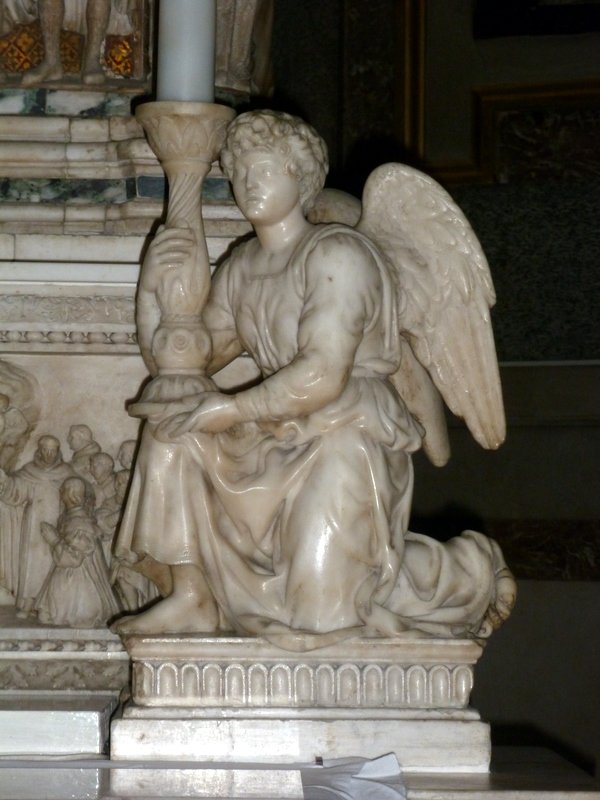
An angel sculpted by Michaelangel

Perfectly pointess towers

This is our second trip to Italy this year, and our fifth trip–previous trips were Rome (twice), Florence (twice), Venice and Val D’Aosta.


One of the things I enjoy about Italy is the friendliness, the sense of relaxation, the slow pace of life. It is considered good manners in restaurants for the waiters to take their time bringing a menu, taking your order, bring your food, bringing the bill. I cannot help smiling as I watch the voluble friendly Italians. We make friends with the local grocer and patisserie owner. He gives us a diary with his email address and phone number. “Call me from Oxford when you crave my Parma ham,” he says, “And I arrive.” “Did he mean it?” Irene asks, awed.


Food is so important here. Perhaps that makes sense. If one has to eat, why not eat good food and make it a celebration?We had the most amazing fresh tagliatelle with mushroom sauce yesterday, and gnocchi with walnuts and spinach today. The breads, the icecream, the pastries are good.


On the whole, we prize efficiency and hard work, and wouldn’t like to be on holiday forever. But for 10 days, la dolce vita is sweet. Waking late, having a breakfast of a couple of trays of delicious pastries, strolling around museums and churches and medieval city centres, lunch in an outdoor cafe.


The other thing I like about Italy is the sheer beauty. Bologna, from where I am writing this, is sheerly lovely–a maze of impossibly narrow streets with beautiful red buildings with a mass of splendid architectural details. Their 44 km. of covered arcades are a joy and marvel in themselves.


Bologna as a city is probably one of the most charming I’ve visited–up there with Venice and Oxford and the canals of Amsterdam and Bruges and Ghent. The museums and churches weren’t outstanding; what we loved was the eye-candy, the narrow red streets, houses protruding into them, the medieval architecture. The sheer beauty. I don’t think my camera did justice to it.  


We feel refreshed, and rejuvenated.


I love Europe and I love European culture. We enjoyed sitting in piazzas in the evening, watching the beautiful Italians, dressed up strolled around on their evening passegiatta, kiss each other effusively, talk volubly.


Is the European century over? Are we moving into the Chinese century of Tiger Mothers,  people studying hard, working hard, saving money while the Europeans are spending up, concerned with image and la dolce vita.


 I don’t like that thought, for there is something so sweet, and generous-spirited and gracious about the European countries we most like to travel in Italy, France, Spain, Ireland and Greece. 


Then, no, I think. It won’t be the Chinese century. It won’t be the Middle Eastern century. It won’t even be the European or the American century. It will be Christ’s century. 


As the theologian Abraham Kuyper put it, “There is not a square inch in the whole domain of our human existence over which Christ, who is Sovereign over all, does not cry: ‘Mine!’ 


And with that ownership, I am well pleased.
 s Sovereign over all, does not cry: ‘Mine!'”


Share on site of your choice … Wikio

Filed Under: In which I explore Living as a Christian

Hypocritical Preachers; and another type of greatness

By Anita Mathias

[Jesus_FordMadoxBrown.jpg]
Ford Maddox Ford, Jesus Washing Peter’s Feet

Matthew 23 1-12 Blog Through the Bible Project

How NOT to win friends and influence people.

 1 Then Jesus said to the crowds and to his disciples: 2 “The teachers of the law and the Pharisees sit in Moses’ seat. 3 So you must be careful to do everything they tell you. But do not do what they do, for they do not practice what they preach. 4 They tie up heavy, cumbersome loads and put them on other people’s shoulders, but they themselves are not willing to lift a finger to move them.


So what to do when those who preach to you are corrupt and hypocritical? Or you suspect them of being so.


 Separate the message from the man. Turn your devotion to Christ. Do the right thing for the love of Christ.


Spend more time with Christ and Scripture, and less time with the politics of your church.


Loading burdens onto people is one mark of a Pharisaical preacher (and perhaps an indicator of inner, hidden, secret sin).


(The scribes and Pharisees were two distinct groups, with some overlap. The scribes were professional interpretative experts on the Torah itself, while the Pharisees were experts in the theological matters that the Torah raised.)


  5 “Everything they do is done for people to see: They make their phylacteries wide and the tassels on their garments long; 6 they love the place of honor at banquets and the most important seats in the synagogues; 7 they love to be greeted with respect in the marketplaces and to be called ‘Rabbi’ by others.


Jesus sums up the religious hypocrite in this brilliant phrase: “Everything they do is done for people to see.”


It may be irritating to see people achieve religious or churchly respect they don’t deserve. However, this is indeed a kind of slavery and servitude–to do everything for the sake of being seen.Never to enjoy simple humble anonymous pleasures and acts of goodness. The stress and lack of freedom this involves is not worth the respect they might gain.


The Pharisees Jesus says love the places of honour at banquets, and the most important seats in the synagogues, they love the respect of men.


And here is gets troubling, for most people do love honour, and respect, significance and importance. It is one of the great conscious or unconscious human quests. 


What then are we to do? I would say that when we are aware that we are doing something mainly for the sake of appearances; when we are seeking honour and respect from others, rather than from God, it’s time to “Stop, Drop, and Repent.”


(Seating at banquets was assigned to guests according to their rank or status.


Rabbi literally meant My Lord, but it was sued generally for outstanding teachers of the law, most frequently heads of rabbinical schools.)


  8 “But you are not to be called ‘Rabbi,’ for you have one Teacher, and you are all brothers. 9 And do not call anyone on earth ‘father,’ for you have one Father, and he is in heaven. 10 Nor are you to be called instructors, for you have one Instructor, the Messiah.


 11 The greatest among you will be your servant. 12 For those who exalt themselves will be humbled, and those who humble themselves will be exalted.


And here is where Jesus’ teaching gets really challenging–and this is among the most challenging things he says. 


We are not to run after this sort of honour, recognition, praise and importance.


He urges us to follow another sort of greatness. The greatest person is the one who can serve others. 


And he is right!!


And then Jesus makes a prophetic statement which we Christians generally ignore. That the one who seeks to exalt himself–to show off, to blow his own trumpet, to be honoured– will inevitably be humbled. 


Those who seek to be humble will be exalted.


I know the former part of this saying is true–because I have seen it played out so often in my own life and the life of others


But he who humbles himself will be exalted? What does that mean? What does it mean to humble oneself? Not showing off, for starters. Taking on some “menial” tasks?


Since I have experientially proved that so many things Jesus says are true, I take the things I have not yet proved on trust.

Like his statement that those who humble themselves will be exalted. His advice to be gentle and humble. Not to show off. And that he will take responsibility for honouring the one who is humble and gentle.


ESV Jesus’s disciples should not try to gain authority over each other as teachers and masters, since Jesus is ultimately each disciples’ teacher and master to whom each disciple is accountable.

You might also like:

Share on site of your choice … Wikio

Filed Under: Matthew

Paul on homosexuality. Romans 1. Blog Through the Bible Project

By Anita Mathias

God gave them over in the sinful desires of their hearts

Hieronymus Bosch, The Garden of Earthly Delights

Romans 1: 21-27
 21 For although they knew God, they neither glorified him as God nor gave thanks to him, but their thinking became futile and their foolish hearts were darkened. 22Although they claimed to be wise, they became fools 23 and exchanged the glory of the immortal God for images made to look like a mortal human being and birds and animals and reptiles.

 24 Therefore God gave them over in the sinful desires of their hearts to sexual impurity for the degrading of their bodies with one another. 25 They exchanged the truth about God for a lie, and worshiped and served created things rather than the Creator—who is forever praised. Amen.
 26 Because of this, God gave them over to shameful lusts. Even their women exchanged natural sexual relations for unnatural ones. 27 In the same way the men also abandoned natural relations with women and were inflamed with lust for one another. Men committed shameful acts with other men, and received in themselves the due penalty for their error.

Okay, let’s read through this. Because men neither glorified God, nor thanked him, their thinking tended to futility (uselessness), their hearts were darkened, and they became fools.

Their trajectory is set away from God–and so God allows them to continue on the trajectory they have chosen.

He surrenders them to their own lust. And to be surrendered to one’s own lust, without restraint or governance from God, is a very scary thing indeed.

And some men and women experienced lust for one another. “And received in themselves the penalty for their error.” What is this referring to? A prophetic reference to AIDS–a common interpretation? Or to the health risks of gay sex?

Evangelical and Liberal Christians do not agree on their intepretation of homosexuality–is it, or is not, sinful?–and since it is not a sin, or otherwise, which I am/have been particularly tempted by–and I have plenty of my own temptations–I am not going to blog further about it.

Of course this is Paul’s letter to the Romans, not mine. He is a first century Jew; he may or may not be homophobic; and the words he uses to describe homosexuality, not surprisingly for his era are “unnatural,” and verse 27, “shameful,” which is either a reference to homosexuality, or to particular homosexual practices. 

What do you think? How do you read this passage?

Share on site of your choice … Wikio

Filed Under: random

Woe to Religious Hypocrites, Matthew 23, Blog Through the Bible Project

By Anita Mathias

Tissot, Imprécations contre les pharisiens
The woes Jesus pronounces on pseudo religious professionals, with a vested interest in their religious image, who are more concerned with image than with reality. 
The seven woes echo the criticism that Christ has repeated throughout his ministry, and stand in contrast to the seven blessings of the Sermon on the Mount, which describe Jesus’s true disciples. And here we see the upside down Kingdom. 
Christ views those who are in, accepted by religious people for their flawless appearance and pronounces woe on them. Conversely, he views those who are despised and rejected and poor and hungry for righteousness, and declares that in his eyes, they are blessed.
 It is always better to be blessed in the eyes of Christ, rather than in the eyes of the religious establishment.
Seven Woes on the Teachers of the Law and the Pharisees

    13 “Woe to you, teachers of the law and Pharisees, you hypocrites! You shut the door of the kingdom of heaven in people’s faces. You yourselves do not enter, nor will you let those enter who are trying to. 
Woe to those who do not experience the true joy of surrender of their lives to God. They do not experience Christ’s spiritual joy–and prevent others from experiencing it too.
Woe to the leaders who have drawn people away from the kingdom of heaven, rather than towards it.


15 “Woe to you, teachers of the law and Pharisees, you hypocrites! You travel over land and sea to win a single convert, and when you have succeeded, you make them twice as much a child of hell as you are.
They emphasize conversions, but have no joy or love or peace to offer their entrapped converts.


16 “Woe to you, blind guides! You say, ‘If anyone swears by the temple, it means nothing; but anyone who swears by the gold of the temple is bound by that oath.’ 17 You blind fools! Which is greater: the gold, or the temple that makes the gold sacred? 18 You also say, ‘If anyone swears by the altar, it means nothing; but anyone who swears by the gift on the altar is bound by that oath.’ 19 You blind men! Which is greater: the gift, or the altar that makes the gift sacred? 20Therefore, anyone who swears by the altar swears by it and by everything on it. 21 And anyone who swears by the temple swears by it and by the one who dwells in it. 22 And anyone who swears by heaven swears by God’s throne and by the one who sits on it.
The illogicality and hypocrisy seriously annoys Jesus.


As is typical of their belief system, they focus on misguided superficial distinctions, and overlook the higher principles of the law. Those with faith in God, who recognize their constant accountability in his presence need only give a simple “yes” or “no.”


When the teachers of the law and the Pharisees took an oath, they differentiated between what was binding, and what was not. This allowed for evasive oath-taking. Jesus rejected such subtleties by showing how foolish they were, and by insisting that people simply tell the truth. 


23 “Woe to you, teachers of the law and Pharisees, you hypocrites! You give a tenth of your spices—mint, dill and cumin. But you have neglected the more important matters of the law—justice, mercy and faithfulness. You should have practiced the latter, without neglecting the former. 24 You blind guides! You strain out a gnat but swallow a camel.
Legalism–a particular temptation of religious people–to be meticulously correct–tithing garden herbs–while one’s heart lacks justice and mercy. Who are careful to avoid small sins, but are guilty of enormous ones.


See Jesus’s vivid and easily understandable imagery and hyperbole–You strain out a gnat, but swallow a camel!!


They had become lost in the minute details of the law, while neglecting its overarching intent.


   25 “Woe to you, teachers of the law and Pharisees, you hypocrites! You clean the outside of the cup and dish, but inside they are full of greed and self-indulgence. 26 Blind Pharisee! First clean the inside of the cup and dish, and then the outside also will be clean.
The outside of their lives looks good. Inside there is greed and self-indulgence. And these are contemporary temptations for all religious people.
However, if one cleans the inside–makes sure one is motivated by love and the desire for wisdom rather than by greed; by self-control rather than self-indulgence, then one will also look good from the outside.


A moral renewal will manifest itself in righteous living.


 27 “Woe to you, teachers of the law and Pharisees, you hypocrites! You are like whitewashed tombs, which look beautiful on the outside but on the inside are full of the bones of the dead and everything unclean. 28 In the same way, on the outside you appear to people as righteous but on the inside you are full of hypocrisy and wickedness.
Woe to those whom Christ says “Woe” over. Those who look beautiful from the outside, but inside are full of hypocrisy and evil. 
One needs to focus primarily on the interior of our souls so that we are not the ones whom Christ regards, and says, “Woe.”


29 “Woe to you, teachers of the law and Pharisees, you hypocrites! You build tombs for the prophets and decorate the graves of the righteous. 30 And you say, ‘If we had lived in the days of our ancestors, we would not have taken part with them in shedding the blood of the prophets.’ 31 So you testify against yourselves that you are the descendants of those who murdered the prophets. 32 Go ahead, then, and complete what your ancestors started! 
Spoken ironically. They would bring the sin of their ancestors to completion with the crucifixion of the Son of God.

   33 “You snakes! You brood of vipers! How will you escape being condemned to hell? 34 Therefore I am sending you prophets and sages and teachers. Some of them you will kill and crucify; others you will flog in your synagogues and pursue from town to town. 35 And so upon you will come all the righteous blood that has been shed on earth, from the blood of righteous Abel to the blood of Zechariah son of Berekiah, whom you murdered between the temple and the altar. 36 Truly I tell you, all this will come on this generation.
A prophecy fulfilled in part with the destruction of Jerusalem and the temple in AD 70.
Those who have a vested interest in religion, who are interested in appearances rather than reality will always be threatened by prophets and sages and teachers who are the real thing.
In scheming to have Jesus murdered, the religious leaders show that they are following in the footsteps of their ancestors who persecuted and murdered God’s prophets. Abel was the first person murdered in the Old Testament, and Zechariah was the last. The expression was like our “From Genesis to Revelation.”


 37 “Jerusalem, Jerusalem, you who kill the prophets and stone those sent to you, how often I have longed to gather your children together, as a hen gathers her chicks under her wings, and you were not willing. 38 Look, your house is left to you desolate. 39 For I tell you, you will not see me again until you say, ‘Blessed is he who comes in the name of the Lord.’”
All Jewish religious authority will collapse with the destruction of the temple in AD 70.


Christ’s maternal heart–beautiful image, “I have longed to gather your children together, as a hen gathers her chicks under her wings.”

Filed Under: Matthew

  • « Previous Page
  • 1
  • 2
  • 3
  • 4
  • 5
  • 6
  • …
  • 8
  • Next Page »

Sign Up and Get a Free eBook!

Sign up to be emailed my blog posts (one a week) and get the ebook of "Holy Ground," my account of working with Mother Teresa.

Join 536 Other Readers

My Books

Rosaries, Reading, Secrets: A Catholic Childhood in India

Rosaries, Reading Secrets, B&N
USA

UK

Wandering Between Two Worlds: Essays on Faith and Art

Wandering Between Two Worlds
USA

UK

Francesco, Artist of Florence: The Man Who Gave Too Much

Francesco, Artist of Florence
US

UK

The Story of Dirk Willems

The Story of Dirk Willems
US

UK

My Latest Meditation

Anita Mathias: About Me

Anita Mathias

Read my blog on Facebook

Follow me on Twitter

Follow @anitamathias1

Recent Posts

  • At the Cross, God Forgives Us Completely
  • Using God’s Gift of Our Talents: A Path to Joy and Abundance
  • The Kingdom of God is Here Already, Yet Not Yet Here
  • All Those Who Exalt Themselves Will Be Humbled & the Humble Will Be Exalted
  • Christ’s Great Golden Triad to Guide Our Actions and Decisions
  • How Jesus Dealt With Hostility and Enemies
  • Do Not Be Afraid, but Do Be Prudent
  • For Scoundrels, Scallywags, and Rascals—Christ Came
  • How to Lead an Extremely Significant Life
  • Don’t Walk Away From Jesus, but if You Do, He Still Looks at You and Loves You
Premier Digital Awards 2015 - Finalist - Blogger of the year
Runner Up Christian Media Awards 2014 - Tweeter of the year

Categories

What I’m Reading


Wolf Hall
Hilary Mantel

Wolf Hall --  Amazon.com
Amazon.com

Amazon.co.uk

Silence and Honey Cakes:
The Wisdom Of The Desert
Rowan Williams

Silence and Honey Cakes --  Amazon.com
Amazon.com

Amazon.co.uk

The Long Loneliness:
The Autobiography of the Legendary Catholic Social Activist
Dorothy Day

The Long Loneliness --  Amazon.com
Amazon.com

Amazon.co.uk

Country Girl
Edna O'Brien

Country Girl  - Amazon.com
Amazon.com

Amazon.co.uk

Archive by month

My Latest Five Podcast Meditations

INSTAGRAM

anita.mathias

My memoir: Rosaries, Reading, Secrets https://amzn.to/42xgL9t
Oxford, England. Writer, memoirist, podcaster, blogger, Biblical meditation teacher, mum

Looking at photos from our week in beautiful Sevil Looking at photos from our week in beautiful Seville and Cordoba over New Year with Irene, who had a week off.
And, ICYMI, here’s my latest meditation on the Gospel of Matthew… I’ve recorded it, should you want a few minutes of peace.
https://anitamathias.com/2026/04/29/gods-complete-forgiveness/
Hello Friends, I'm resumed recording my meditation Hello Friends, I'm resumed recording my meditations on the Gospel of Matthew. Do click on this link to listen. 
https://anitamathias.com/.../29/gods-complete-forgiveness/
Christ is the most influential figure in the history of the world, though his life ended in shame, humiliation and failure. But he so completely turned things round in his great reversal that the cross on which he died when all seemed hopeless is now the most common, and revered, symbol in history.
He emerged from and was anchored in Judaism. And as the sins of the people were laid on the scapegoat who was sent into the wilderness to perish, Christ died as the lamb of God voluntarily bearing the guilt of the wrongdoing of the whole world. He paid the price for our forgiveness with his life-blood--in accordance with the iron law of the physical and moral universe, of sowing and reaping, cause and effect. 
And so, God, who appeared as flames of fire to Moses, can now dwell within us, purifying us, whose hearts have darkness and shards of ice. 
And now that Christ was crucified, died, but rose again, His Spirit, no longer contained within his earthly body, is poured out like living water onto all humans, at our humble request. The Spirit pours the love of God into us; he reminds us of the words of Jesus and slowly writes Christ’s sweet law on our hearts. This transfusion of grace helps us do hard things we previously couldn’t do. Our dance with the Spirit gradually breaks the power of sin over us. It transforms us.
Now we, the forgiven, protected by the blood of Jesus poured out over us, and filled with His Spirit, who sings within us, Abba, Father, are adopted by God as his children in his joyful new covenant. We are cells grafted into the vine of our new family--Father, Son, Spirit—who now live in us as we live in them. As we choose by our thoughts and actions to continue living in the vine of Jesus, their energy pulsing through us makes us fruitful. And now, all our prayers which flow in the river of God’s good purposes are kindly heard. Waves of love and power flood from the cross! 
Thank you!
Well, hello friends! Breaking radio silence to let Well, hello friends! Breaking radio silence to let you know that I have taped a meditation for you on Christ’s famous Parable of the Talents in Matthew 25. https://anitamathias.com/2025/11/05/using-gods-gift-of-our-talents-a-path-to-joy-and-abundance/
Here you are, click the play button in the blog post for a brief meditation, and some moments of peace, and, perhaps, inspiration in your day 🙂
Hi Friends, I have taped a meditation; do listen a Hi Friends, I have taped a meditation; do listen at this link: https://anitamathias.com/2025/04/08/the-kingdom-of-god-is-here-already-yet-not-yet-here-2/
It’s on the Kingdom of God, of which Christ so often spoke, which is here already—a mysterious, shimmering internal palace in which, in lightning flashes, we experience peace and joy, and yet, of course, not yet fully here. We sense the rainbowed presence of Christ in the song which pulses through creation. Christ strolls into our rooms with his wisdom and guidance, and things change. Our prayers are answered; we are healed; our hearts are strangely warmed. Sometimes.
And yet, we also experience evil within & all around us. Our own sin which can shatter our peace and the trajectory of our lives. And the sins of the world—its greed, dishonesty and environmental destruction.
But in this broken world, we still experience the glory of creation; “coincidences” which accelerate once we start praying, and shalom which envelops us like sudden sunshine. The portals into this Kingdom include repentance, gratitude, meditative breathing, and absolute surrender.
The Kingdom of God is here already. We can experience its beauty, peace and joy today through the presence of the Holy Spirit. But yet, since, in the Apostle Paul’s words, we do not struggle only “against flesh and blood, but against the rulers, against the unseen powers of this dark world and against the spiritual forces of evil,” its fullness still lingers…
Our daughter Zoe was ordained into the Church of E Our daughter Zoe was ordained into the Church of England in June. I have been on a social media break… but … better late than never. Enjoy!
First picture has my sister, Shalini, who kindly flew in from the US. Our lovely cousins Anthony and Sarah flank Zoe in the next picture.
The Bishop of London, Sarah Mullaly, ordained Zoe. You can see her praying that Zoe will be filled with the Holy Spirit!!
And here’s a meditation I’ve recorded, which you might enjoy. The link is also in my profile
https://anitamathias.com/2024/11/07/all-those-who-exalt-themselves-will-be-humbled-the-humble-will-be-exalted/
I have taped a meditation on Jesus statement in Ma I have taped a meditation on Jesus statement in Matthew 23, “For those who exalt themselves will be humbled, and those who humble themselves will be exalted.”
Do listen here. https://anitamathias.com/2024/11/07/all-those-who-exalt-themselves-will-be-humbled-the-humble-will-be-exalted/
Link also in bio.
And so, Jesus states a law of life. Those who broadcast their amazingness will be humbled, since God dislikes—scorns that, as much as people do.  For to trumpet our success, wealth, brilliance, giftedness or popularity is to get distracted from our life’s purpose into worthless activity. Those who love power, who are sure they know best, and who must be the best, will eventually be humbled by God and life. For their focus has shifted from loving God, doing good work, and being a blessing to their family, friends, and the world towards impressing others, being enviable, perhaps famous. These things are houses built on sand, which will crumble when hammered by the waves of old age, infirmity or adversity. 
God resists the proud, Scripture tells us—those who crave the admiration and power which is His alone. So how do we resist pride? We slow down, so that we realise (and repent) when sheer pride sparks our allergies to people, our enmities, our determination to have our own way, or our grandiose ego-driven goals, and ambitions. Once we stop chasing limelight, a great quietness steals over our lives. We no longer need the drug of continual achievement, or to share images of glittering travel, parties, prizes or friends. We just enjoy them quietly. My life is for itself & not for a spectacle, Emerson wrote. And, as Jesus advises, we quit sharp-elbowing ourselves to sit with the shiniest people, but are content to hang out with ordinary people; and then, as Jesus said, we will inevitably, eventually, be summoned higher to the sparkling conversation we craved. 
One day, every knee will bow before the gentle lamb who was slain, now seated on the throne. We will all be silent before him. Let us live gently then, our eyes on Christ, continually asking for his power, his Spirit, and his direction, moving, dancing, in the direction that we sense him move.
Link to new podcast in Bio https://anitamathias.co Link to new podcast in Bio https://anitamathias.com/2024/02/20/how-jesus-dealt-with-hostility-and-enemies/
3 days before his death, Jesus rampages through the commercialised temple, overturning the tables of moneychangers. Who gave you the authority to do these things? his outraged adversaries ask. And Jesus shows us how to answer hostile questions. Slow down. Breathe. Quick arrow prayers!
Your enemies have no power over your life that your Father has not permitted them. Ask your Father for wisdom, remembering: Questions do not need to be answered. Are these questioners worthy of the treasures of your heart? Or would that be feeding pearls to hungry pigs, who might instead devour you?
Questions can contain pitfalls, traps, nooses. Jesus directly answered just three of the 183 questions he was asked, refusing to answer some; answering others with a good question.
But how do we get the inner calm and wisdom to recognise
and sidestep entrapping questions? Long before the day of
testing, practice slow, easy breathing, and tune in to the frequency of the Father. There’s no record of Jesus running, rushing, getting stressed, or lacking peace. He never spoke on his own, he told us, without checking in with the Father. So, no foolish, ill-judged statements. Breathing in the wisdom of the Father beside and within him, he, unintimidated, traps the trappers.
Wisdom begins with training ourselves to slow down and ask
the Father for guidance. Then our calm minds, made perceptive, will help us recognise danger and trick questions, even those coated in flattery, and sidestep them or refuse to answer.
We practice tuning in to heavenly wisdom by practising–asking God questions, and then listening for his answers about the best way to do simple things…organise a home or write. Then, we build upwards, asking for wisdom in more complex things.
Listening for the voice of God before we speak, and asking for a filling of the Spirit, which Jesus calls streams of living water within us, will give us wisdom to know what to say, which, frequently, is nothing at all. It will quieten us with the silence of God, which sings through the world, through sun and stars, sky and flowers.
Especially for @ samheckt Some very imperfect pi Especially for @ samheckt 
Some very imperfect pictures of my labradoodle Merry, and golden retriever Pippi.
And since, I’m on social media, if you are the meditating type, here’s a scriptural meditation on not being afraid, while being prudent. https://anitamathias.com/2024/01/03/do-not-be-afraid-but-do-be-prudent/
A new podcast. Link in bio https://anitamathias.c A new podcast. Link in bio
https://anitamathias.com/2024/01/03/do-not-be-afraid-but-do-be-prudent/
Do Not Be Afraid, but Do Be Prudent
“Do not be afraid,” a dream-angel tells Joseph, to marry Mary, who’s pregnant, though a virgin, for in our magical, God-invaded world, the Spirit has placed God in her. Call the baby Jesus, or The Lord saves, for he will drag people free from the chokehold of their sins.
And Joseph is not afraid. And the angel was right, for a star rose, signalling a new King of the Jews. Astrologers followed it, threatening King Herod, whose chief priests recounted Micah’s 600-year-old prophecy: the Messiah would be born in Bethlehem, as Jesus had just been, while his parents from Nazareth registered for Augustus Caesar’s census of the entire Roman world. 
The Magi worshipped the baby, offering gold. And shepherds came, told by an angel of joy: that the Messiah, a saviour from all that oppresses, had just been born.
Then, suddenly, the dream-angel warned: Flee with the child to Egypt. For Herod plans to kill this baby, forever-King.
Do not be afraid, but still flee? Become a refugee? But lightning-bolt coincidences verified the angel’s first words: The magi with gold for the flight. Shepherds
telling of angels singing of coming inner peace. Joseph flees.
What’s the difference between fear and prudence? Fear is being frozen or panicked by imaginary what-ifs. It tenses our bodies; strains health, sleep and relationships; makes us stingy with ourselves & others; leads to overwork, & time wasted doing pointless things for fear of people’s opinions.
Prudence is wisdom-using our experience & spiritual discernment as we battle the demonic forces of this dark world, in Paul’s phrase.It’s fighting with divinely powerful weapons: truth, righteousness, faith, Scripture & prayer, while surrendering our thoughts to Christ. 
So let’s act prudently, wisely & bravely, silencing fear, while remaining alert to God’s guidance, delivered through inner peace or intuitions of danger and wrongness, our spiritual senses tuned to the Spirit’s “No,” his “Slow,” his “Go,” as cautious as a serpent, protected, while being as gentle as a lamb among wolves.
Follow on Instagram

© 2026 Dreaming Beneath the Spires · All Rights Reserved. · Cookie Policy · Privacy Policy