Anita Mathias: Dreaming Beneath the Spires

Anita Mathias's Blog on Faith and Art

  • Home
  • My Books
  • Meditations
  • Essays
  • Contact
  • About Me

Lead Kindly Light, by John Henry Newman

By Anita Mathias


Lead, kindly Light, amid the encircling gloom
Lead thou me on;
The night is dark, and I am far from home,
Lead thou me on.
Keep thou my feet; I do not ask to see
The distant scene; one step enough for me.

I was not for ever thus, nor prayed that thou
Shouldst lead me on;
I loved to choose and see my path; but now
Lead thou me on,
I loved the garish day, and, spite of fears,
Pride ruled my will: remember not past years.

So long thy power hath blessed me, sure it still
Will lead me on,
O’er moor and fen, o’er crag and torrent, till
The night is gone;
And with the morn those angel faces smile,
Which I have loved long since, and lost awhile.
Filed Under: Writing and Blogging Tagged With: Most Read Posts January 2013

Most Read Posts in 2012 on Dreaming Beneath the Spires

By Anita Mathias


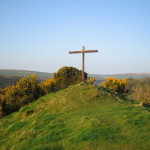
The High Cross at FFald-y-Brenin

1 When Christian celebrities fall, the proper response is mourning.

I had an extraordinary experience this summer. I heard an Anglican charismatic vicar Mark Stibbe give THE BEST sermon I ever heard—which was, oddly, on writing. He prayed for an impartation of the spiritual gift of writing, and I believe I received it. I came back full of excitement, and wrote much and well.

TEN days later, this man, genuinely insightful and spiritually gifted, leaves his wife and family for another woman, and leaves ALL ministry. His forthcoming book was cancelled.  I recently spent a couple of hours listening to his videos, and reading a book he’d written. Stibbe knows God, understands God. Oh, would the church find a way to extend grace to those who publicly fall, for all of us fall—privately. [Read more…]

Filed Under: In which I explore writing and blogging and creativity, Writing and Blogging Tagged With: Best of Dreaming Beneath the Spires 2012, Mark Stibbe, Revival Alliance, vaughan Roberts

Some Ways To Trick Yourself Into Writing When You Don’t Want To

By Anita Mathias

woman writing

credit

Writing on a laptop with WiFi is so sub-optimal. There are myriad distractions. When, every Sunday, Rescue Time, an app I use, tells me how much time I have spent on Facebook, Twitter, other people’s blogs and online newspapers and journals—“consuming ideas,” and how much time writing—“creating,”-I am totally horrified.

* * *

 Anyway, here are a few ways I trick more writing out of myself.

1 Switch Between Two Pieces of Writing

Sometimes, when I think I am mentally tired, I am not really. My conscious has worked as much as it can on what I am writing. I am bored, or have hit a wall. I need to put it aside now for an hour or two to let my unconscious mull over it.

However, taking up a new piece of work will give me fresh energy and passion.

I find I definitely get more written if I can switch between two pieces of work.

2 Set a Timer

When I don’t feel like writing, feel sleepy, tired, lethargic, sluggish, then putting a timer for just 15 minutes, or just even 5, gets me going. The timer goes off and feels like an intrusion. I want to continue writing.

The trick with writing, as with exercise is just starting.

3 Take a Short Break

After a few days of serious work, my spirit protests. I feel as if I want a break. It really, really helps to just declare a Sabbath. I garden, I exercise, I tidy up, I pray. I watch a movie. The well refills. Inchoate thoughts jell. And then, after a few hours off, I am delighted to get back to work.

If, on the whole, you love writing, and occasionally really don’t want to write, don’t. Do other things, do something physical until the underground springs bubble up again like a geyser.

What are your favourite tricks for tricking writing out of yourself?


Filed Under: In which I explore writing and blogging and creativity, Writing and Blogging Tagged With: blogging, writing

The Poet, the Albatross and the Christian

By Anita Mathias

albatross wandering1

                                                                                                           The Albatross

Sometimes, to entertain themselves, the men of the crew
Lure upon deck an unlucky albatross, one of those vast
Birds of the sea that follow unwearied the voyage through,
Flying in slow and elegant circles above the mast.

No sooner have they disentangled him from their nets
Than this aerial colossus, shorn of his pride,
Goes hobbling pitiably across the planks and lets
His great wings hang like heavy, useless oars at his side.

How droll is the poor floundering creature, how limp and weak —
He, but a moment past so lordly, flying in state!
They tease him: One of them tries to stick a pipe in his beak;
Another mimics with laughter his odd lurching gait.

The Poet is like that wild inheritor of the cloud,
A rider of storms, above the range of arrows and slings;
Exiled on earth, at bay amid the jeering crowd,
He cannot walk for his unmanageable wings.

— George Dillon, Flowers of Evil (NY: Harper and Brothers, 1936)


We saw huge, white albatrosses glide on their giant wings in New Zealand in 2009. Aloft, in their native element, they are majestic, sublime.

Once captured, and mocked by sailors who force them to waddle on deck where their giant wings hamper their walk, as Baudelaire describes, they are piteous and comic. The gigantic wings which helped them soar are now comic impediments

* * *

 God designs an ideal medium, aerial, terrestrial, submarine, for each of us, and we are at home and happy when we are in it. God determined the times set for them and the exact places where they should live (Acts 17:26). When we are in the right place, doing what we are meant to do, there is a sense of ease, a sense of soaring.

I have finally found this place. I am living in the town in which I have most longed to live, Oxford, with its heady combination of history, architecture, art, Christian and literary history, beauty, nature and stimulation.

I am beginning to get back into the work I most enjoy, creative prose, and am enjoying my blog. I am again enjoying reading. And I am enjoying the brainy, creative community in my church, St. Andrew’s, Oxford.

Of course, it took years for the pieces of the puzzle to fit together, and for me to discover work and a place which make me very happy.

Taking the time to discover the roles God has created us for, and the work which makes our souls sing—ah, these are worthwhile quests, for when we are doing the right work, and are in the right place and the right relationships, we can soar in the way we are designed to.

How about you? Have you discovered what you would like to make your life’s work? A church which permits your fullest flourishing? What are the dreams which God has placed in your heart, and are you able to work on them daily or weekly, at least a little?

What a string of personal questions! I’d love to hear your answers!


Filed Under: In which I Dream Beneath the Spires of Oxford, In which I explore writing and blogging and creativity, In which I play in the fields of poetry, Writing and Blogging Tagged With: Baudelaire, blogging, Oxford, Poetry, writing

Invaluable Advice on Creativity for Bloggers and Poets from the Poet, William Stafford

By Anita Mathias

stafford.jpg

I learnt this liberating writing tip from the poet, William Stafford, when he was a visiting writer at Ohio State University where I was doing a Masters in Creative Writing: You need to write the bad poems to get to the good poems. 

Get the bad poems out of the way; express the ideas however slight they might initially seem, for perhaps the idea you are conscious of is but the tip of the iceberg of the idea you are not conscious of. Write it down; sharpen your writing skills; improve your technique. And then you are ready for the good poems when they come.

If, however, you second-guess the poems: the subject is slight, it’s sentimental, it’s boring, it’s done before, it’s too abstract, too cliched–you become a critic, rather than a creator. More and more embryonic poems will have this shadow of judgement thrown over them. Your mind will become a self-cancelling system. Ideas will go from your mind to the waste-paper basket without ever having been written down.

And good poems may go this way too. You may begin to lose the confidence and self- belief to write them down.

William Stafford’s famous advice for dealing with writer’s block helps me as a blogger: to be willing to lower my standards. To be willing to write slight posts, express slight thoughts.

Then writing becomes as instinctive as breathing, my brain moves to my finger tips, and I keep current with the flow of my inner life and thoughts. Not being willing to post slight posts leads to perfectionism which as Ann Lamott says is the voice of the oppressor and the enemy of the people.

The willingness to fail. The willingness to take risks. The willingness to try something new, even if it is far below your usual standards. These are all essential elements of creativity.

And they keep blogging easy, pleasant and a joy, rather than one more self-imposed chore.

* * *

I love William Stafford’s liberating essay, A Way of Writing.

“A writer is not so much someone who has something to say as he is someone who has found a process that will bring about new things he would not have thought of if he had not started to say them. That is, he does not draw on a reservoir; instead, he engages in an activity that brings to him a whole succession of unforeseen stories, poems, essays, plays, laws, philosophies…

Back in school, from the first when I began to try to write things, I felt this richness. One thing would lead to another; the world would give and give. Now, after twenty years or so of trying, I live by that certain richness.

The importance of just plain receptivity… When I write, I like to have an interval before me when I am not likely to be interrupted. For me, this means usually the early morning, before others are awake.

I get pen and paper, take a glance out of the window (often it is dark out there), and wait. It is like fishing. But I do not wait very long, for there is always a nibble–and this is where receptivity comes in.

To get started I will accept anything that occurs to me. Something always occurs, of course, to any of us. We can’t keep from thinking. Maybe I have to settle for an immediate impression: it’s cold, or hot, or dark, or bright, or in between! If I put down something, that thing will help the next thing come, and I’m off. If I let the process go on, things will occur to me that were not at all in my mind when I started. These things, odd or trivial as they may be, are somehow connected. And if I let them string out, surprising things will happen.

If I let them string out…. Along with initial receptivity, then, there is another readiness: I must be willing to fail. If I am to keep on writing, I cannot bother to insist on high standards. I must get into action and not let anything stop me, or even slow me much.

By “standards” I do not mean “correctness” spelling, punctuation, and so on. These details become mechanical for anyone who writes for a while. I am thinking about such matters as social significance, positive values, consistency, etc…. I resolutely disregard these. Something better, greater, is happening!

I am following a process that leads so wildly and originally into new territory that no judgment can at the moment be made about values, significance, and so on. I am making something new, something that has not been judged before. Later others–and maybe I myself–will make judgments. Now, I am headlong to discover. Any distraction may harm the creating.

So, receptive, careless of failure, I spin out things on the page. And a wonderful freedom comes. If something occurs to me, it is all right to accept it. It has one justification: it occurs to me. No one else can guide me. I must follow my own weak, wandering, diffident impulses.

A strange bonus happens. At times, without my insisting on it, my writings become coherent; the successive elements that occur to me are clearly related. They lead by themselves to new connections.

Sometimes the language, even the syllables that happen along, may start a trend. Sometimes the materials alert me to something waiting in my mind, ready for sustained attention. At such times, I allow myself to be eloquent, or intentional, or for great swoops (Treacherous! Not to be trusted!) reasonable. But I do not insist on any of that; for I know that back of my activity there will be the coherence of my self, and that indulgence of my impulses will bring recurrent patterns and meanings again.

This attitude toward the process of writing creatively suggests a problem for me, in terms of what others say. They talk about “skills” in writing. Without denying that I do have experience, wide reading, automatic orthodoxies and manoeuvres of various kinds, I still must insist that I am often baffled about what “skill” has to do with the precious little area of confusion when I do not know what I am going to say and then I find out what I am going to say. That precious interval I am unable to bridge by skill.

What can I witness about it? It remains mysterious, just as all of us must feel puzzled about how we are so inventive as to be able to talk along through complexities with our friends, not needing to plan what we are going to say, but never stalled for long in our confident forward progress. Skill? If so, it is the skill we all have, something we must have learned before the age of three or four.

A writer is one who has become accustomed to trusting that grace, or luck, or–skill.”


Filed Under: In which I explore writing and blogging and creativity, Writing and Blogging Tagged With: "A Way of Writing", blogging, William Stafford, writing

Letter to a Young Writer (My Essay from “Letters to Me,” Edited by Dan Schmidt)

By Anita Mathias

LTM cover pdf

Letters to Me

I have an essay in Letters to Me: Conversations with a Younger Self. The other contributors include Brian McLaren, Kristin Ritzau, Tamara Lunardo, Lore Ferguson, Shawn Smucker, and Penny Nash–a total of 20 writers.

Writers remember something that happened when they were between 18 and 30, and then send a letter to themselves about that event. With the benefit of hindsight and reflection, they warn, challenge, and encourage a younger self facing a problem at work, a budding relationship, an important decision, an unexpected development…

And here’s my essay

A Letter to a Young Writer

Hi Anita,

Late one evening when you were twenty-one, as you were praying about your future, you began writing poetry. Eight poems in an evening in an ecstatic rush. So you believed that writing was your calling, your vocation, and you were not wrong.

The next week, you entered a creative writing competition for students—and won.

And so you settled on that most romantic of dreams. You decided to become a writer.

* * *

And you will now look up publishers, daydream about your first published book. Ignoring the little fact that you don’t yet have a subject you are in love with. That you haven’t yet written the book!

The dream of early success comes true for some. Scott Fitzgerald published his best-selling book, This Side of Paradise, when he was twenty-four.

But for those with a human, rather than a genius-sized gift, it takes years to master an art. Ars Longa, Vita Brevis, Horace observed, which Chaucer plaintively rendered as “Life is so short, and the craft takes so long to learn”  In Outliers, Malcolm Gladwell estimates that it takes 10,000 hours of deliberate practice—ten years of twenty hour weeks—to master an art.

10,000 hours! And it takes that long in the school of living to learn the lyrics and melody of the unique song you have to sing to the world. So learn to love the act of writing as much as the pleasure of accomplishing your writing dreams.

* * *

There are ultimately just two ways to become a writer—saturation reading, and lots of writing.

Other things help—good teachers, constructive criticism, a literary community, connections, encouragement, leisure to write–but these are secondary.

So read, read, read.  Saturation reading is the swiftest way to improve as a writer, but follow your bliss, as well as reading “the best that has been thought and said.” The most tasty fish and fowl are free-range. It’s the same with writers. What we read shapes who we become. And what we write.

And if reading proves difficult in a world of too-much distraction, be a judoka. Use the strength of your opponent to achieve your own purposes. Listen to books on tape, and you’ll subliminally pick up rhythm, pacing, style, and you’ll find that your writing will flow more easily.

* * *

Keep writing, every day you can. A writer writes. Flaubert wisely says, “Be regular and orderly in your life, so that you may be violent and original in your work.”

Develop a good schedule—prayer, scripture, exercise, reading, writing, gardening—instead of a long chain of procrastination before you begin writing. Wake earlier to increase your chance of getting work done.

* * *

Teachers are a  great shortcut, so that each writer need not re-invent the wheel. They point out ugliness, absurdity, sentimentality, and awkwardness before your ear has evolved enough to spot them yourself. They might show you your blind spots. They teach clever rhetorical tricks, and suggest writers to read who are like beacons further along the winding way, whose words take an axe to the frozen spring within you.

If you have an unkind teacher, however, they waste time by destroying your self-confidence, and making you self-conscious, so that you look at your fingers rather than listen to the music, and half-believe you know nothing at all.

Not everyone who has failed wishes you to succeed. The successful are not necessarily cheerleaders. There is a fine line between a mentor and a tormentor.

So take the criticism of teachers with a grain of salt, always listening to your inner voice, your inner wisdom, which intuitively knows the book you both want to write and can write.

Advice is a double-edged sword. Accept no advice without praying through it. For the most important, the vital voice you need to learn to hear is your heavenly Father’s.

* * *

Keep experimenting to find your unique voice, subject matter and form, something which you absolutely love. Finding this will slow down publication and success, but it will be deeper, last longer, and be more satisfying because of that.

Listen to your intuition, and write the book you want to write, even if it means self-publishing when your vision diverges from an editor’s.

* * *

Naturally, like all young writers, you will long for validation. Orwell rightly observes, This is one of the reasons writers write—Sheer egoism. Desire to seem clever, to be talked about, to be remembered after death, to get your own back on the grown-ups who snubbed you in childhood, etc.

And the world will be full of the tempting Turkish Delight of distractions. Magazines will have essay prizes; state and national arts boards will have fellowships; writers’ conferences will have scholarships for promising young writers; writers’ colonies will offer you an Arcadian idyll with lunch brought to your door, and organic suppers eaten with other artists and writers. Writing is a pyramid scheme, and so those further along the way will host classes and workshops and seminars, which will lure you with helpful criticism and praise so sweet that you will forget your tuition has partly bought it.

Time spent achieving this external validation, “playing writer,” is not entirely wasted. Your writing will sharpen; you’ll meet other writers and learn from them; you’ll be offered some useful (and some useless) criticism; and your self-confidence, that invaluable tool for a writer, will grow.

But amid this Vanity Fair of Distractions,  remember the 10,000 hour rule. Keep reading. Keep writing.  Don’t let the quest for validation distract you from the quest for mastery. For as you apply for fellowships, prizes, and grants, a few showcase chapters can get perfected, while the rest of the manuscript languishes.  Oh, privilege the first draft. Keep it moving.

* * *

As a young person seeking an unusual path, you will be tempted to seek “justification by writing”—glory and impressive achievement to slip into conversation to explain what you spend your time doing.  But remember that if you seek validation through the addictive drug of success, you will need more and more of it, for yesterday’s glories soon become yesterday’s news.

How much better to just relax and be yourself, and be liked and accepted for who you are, not what you do. To enjoy people without needing to impress them.

Remember that success will not have the haemoglobin or oxygen your heart needs. For that, you will need to soak in the love of the Father, and have his love strengthen and heal you. And validate you.

* * *

While you log your 10,000 hours towards mastery, share your ideas and experiences.  And the evolving world might offer a venue to do this which will be known by a strange word: Blogging. Blogging, writing to be read quickly and easily will teach you things that writing in hermetical isolation will not. You’ll develop a writing style which is easy to read. You’ll learn what speaks to people. You’ll be challenged and rebutted and so grow as a thinker, Christian, and writer.

The discipline of daily blogging will teach you to write swiftly and to slay the dragon of perfectionism. And blogging will bring the affirmation which counts–people who actually read your work, and return to read it, again and again. And other precious jewels—daily practice in putting your thoughts into words, stimulation, creative breakthrough, increasing confidence, connections and friendships.

* * *

Henry James famously said, “If one desires to do the best one can with one’s pen, there is one word you must inscribe upon your banner, and that word is Loneliness.”‘

You need solitude, quietness and focus to think and write. But excessive work can lead to burn-out, staleness, loneliness and lowered motivation.  As an extrovert, and human being, you also need friendship and  social support. Besides, friendship introduces you to the real stories being written in people’s lives, and informs and inspires your writing.

Keep a balance between times spent in solitude and time with friends.

* * *

You will hear that connections are the third wing of the writer’s life: reading, writing and connections. And yes, writing friends can suggest books to read, give you honest feedback, provide inspiration and open doors.

But never cultivate connections for selfish advantage. Seek friendship instead. Seek out those you find interesting, who you like and enjoy.  Then the good things friendship brings will be accidental and incidental to the goodness of friendship itself, which as the magisterial C.S. Lewis writes in “The Inner Ring,” “causes perhaps half of all the happiness in the world.”

* * *

Sometimes, connections lead to the fairy tale of the literary life–discovery by fairy godmothers: an editor and an agent. The fairy-tale wedding of publication. Happily ever after.

Don’t count on it.

Instead, write the book you really want to write, which is called forth by all the circumstances of your life and experience. Do not waste time hustling. Trust God to find a way for your words to reach the world.

For good writing is magnetic. It leaps off the page, makes its own connections, its own magic. First, write the rabbit for the magicians to flourish.

Christianity, your faith, is a fairy tale filled with reversals, redemption, and happiness ever after. And you will see a fairy tale unfold in your writing life, because a good God who loves you and called you to write is drafting the script, not you. And that fairy tale will include the archetypal element of surprise.

* * *

God made you a writer, and when you write you feel his pleasure. So don’t surrender your writing, should the time of babies and domesticity come.  Put first things first, but don’t altogether sacrifice second things, your writing.  Keep it as a little private secret Kingdom you can retreat to.

Which means you will live with tension. You will not mother perfectly; the house will not be perfectly organised; the writing not perfect, either. You will make peace with good-enough.

And the tensions of these years will drive you to your Saviour.


But eventually, children grow up. Domestic discipline is learned. And once you are at peace with God and man, words will flow easily, like honey. And tidiness and domestic order will subliminally help your creativity.

* * *

Do not feel guilty about writing when the church wants you to take meals to the sick members, pour coffee at women’s breakfasts, or work in the crèche.

Writing is a calling no less valid.  Learn to lean on your heavenly Father, and let His creative power flow through you. Entrust your writing to God. The great laws of the spiritual life operate in writing too: Do not be afraid. Trust in the Father. Hang in there as a branch in the vine.

Creativity is a gift from God which he willingly pours on all who ask for it. Keep asking for more and more of it.

* * *

Your life is a story being written by God.

He intended you to write long before you even thought of it, and wants you to write as much as you want to.

He has lovely things in mind for you to write, which you have not yet dreamed of.

He knows the lives you will touch through your writing, people you do not yet know.

He has the perfect blueprint for the writing life you so desperately longed for.

And He says, “Come, my writer. Sharpen your senses to discern my plot.

Think not of former things. See, I am doing a new thing; do you not perceive it?

Come, dance with Me in fresh woods and pastures new.”


Warmly,

Your doppelganger,

Anita


Anita Mathias has written Wandering Between Two Worlds (Benediction Classics, 2007), and blogs at Dreaming Beneath the Spires, http://dreamingbeneaththespires.blogspot.co.uk/.

Anita has a B.A. in English from Somerville College, Oxford University and an M.A. in Creative Writing from the Ohio State University. Her essays have appeared in The Washington Post, The London Magazine, Commonweal, America, The Christian Century, and The Best Spiritual Writing anthologies. She has won fellowships from The National Endowment for the Arts and The Minnesota State Arts Board


Anita lives in Oxford, England with her husband, Roy, and daughters, Zoe and Irene. Follow her on Twitter at AnitaMathias1.

Filed Under: Writing and Blogging Tagged With: writing

Most Popular Posts in October on Dreaming Beneath the Spires

By Anita Mathias

Doc5 new BLOG title script pdfAnd here are the most read posts this month on Dreaming Beneath the Spires. Sorry, a couple are a bit controversial!!

Trying to move my blog from Blogger to WordPress was my own private Hurricane, and I am now trying to get properly back into blogging!

1 On Vaughan Roberts’ Interview and the Case for Gay Christian Marriage.

 2 In which I Trace my Evolving Views on Gay Christians

3 When Christian Giants Stumble, the Proper Response is Mourning

(A September post, which was one of the most read posts in October!).

4 Blogging and Ambition: When you are NOT on a Best Blogger List

Filed Under: In which I explore writing and blogging and creativity, Writing and Blogging Tagged With: blogging, Dreaming Beneath the Spires

Stephen King’s Immensely Helpful Book “On Writing”

By Anita Mathias

StephenKingGFDL

Stephen King (2007) credit

King’s short book, On Writing, figures in many writers’ lists of the best books on writing. And deservedly so. It has motivated  me to get my writing shoes on, and get writing.

I listened to it read by King himself on my iPod, while running—on pedestrian country footpaths, and, so far, with more luck than King whose lower leg broke in nine places, spine chipped in eight places, right knee split, right hip fractured, ribs broke, and scalp lacerated during a dreadful car accident while on a muse-wooing walk.

And in “the apocalyptic pain” after this, he continued writing, and writing proved a way back to life for him.

Here are Stephen King’s answers to universal writerly questions.

How much should a writer read?

King does not bother about being cool in this book on writing. So he will tell you prescriptive things that cool writers wouldn’t.

Read a lot. How much is a lot? I have kept lists of the books I’ve read each year since I was 12—and the most I’ve ever completed in a year was 62 (not counting academic books, which one reads rapidly, selectively). And probably another 25 or so on tape, on a good year for audiobooks. Of course, I am a promiscuous speed-reader, and buy many books (non-fiction or spiritual) with the intention of ripping the heart and marrow out of them, rather than reading every page.

Well, Stephen King reads or listens to 70-80 books a year, including about a dozen audiobooks.

King: “If you don’t have the time to read, you don’t have the time or the tools to write. It’s as simple as that.”

“Reading is the creative centre of a writer’s life.”

“The real importance of reading is that it creates an ease and intimacy with the process of writing. Constant reading will pull you into a place where you can write eagerly and without self-consciousness.”

How much should a writer write?

How many words a day? Another uncool question. Well, King aims at 2000 words every morning, with revisions and reading in the evening. Some days he’s done by 11.30 a.m., some days by 1.30 p.m., and sometimes, rarely, it takes till tea.

“For me, not writing is the real work. When I’m writing, it’s all the playground, and the worst three hours I ever spent there were still pretty damned good.”

He keeps fit with long walks–well, until recently.

On Criticism

His teacher asks him about an early attempt at Sci-fi, “What I don’t understand, Stevie, is why you’d write junk like this? You are talented. Why do you want to waste your abilities?

“I had no answer to give. I have spent a good many years since—too many—being ashamed about what I write. I was forty before I realized that almost every writer of fiction or poetry who has ever published a line has been accused by someone of wasting his God-given talent. If you write (or paint or sculpt) someone will try to make you feel lousy about it.”

On Revision

“When you write, you’re telling yourself the story. When you re-write, your main job is taking out all the things that are not the story.”

“Stopping a piece of work just because it is hard, either emotionally or imaginatively, is a bad idea. Sometimes, you have to go on when you don’t feel like it, and sometimes you’re doing good work when it feel like all you’re managing is to shovel shit from a sitting position.”

He does three drafts, the first getting it all down fast; the last one closer to polishing.

He uses this rigorous and enormously difficult formula:

Second Draft= First Draft -10%.

Other Writing Tips

“The biggest aid to regular writing is working in a serene atmosphere. It’s difficult for even the most naturally productive writer to work in an environment where alarms and excursions are the rule rather than the exception.”

Write with a locked door, no TV, games or internet.  “Eliminate every possible distraction.”

Secrets of his success: “I stayed physically healthy, and I stayed married. The converse is true: My writing and the pleasure I take in it have contributed to the stability of my health and home life.”

“Life isn’t a support system for art. It’s the other way around.”

“Skills in description, dialogue and character development all boil down to seeing or hearing clearly and then transcribing what you see or hear with equal clarity.”

Do you do it for the money, honey? he’s often asked. Answer, “No. Don’t now, and never did. I did it for the buzz. I did it for the pure joy of the thing. And if you can do it for joy, you can do it forever.”

And he discovers, after his debilitating accident, “Writing is not life, but sometimes, it can be a way back to life.”

Ah, and let me quote his beautiful last paragraphs,

“On some days, the writing is a pretty grim slog. On others, I feel that buzz of happiness, that sense of having found the right words and put them in a line. It’s like lifting off in an airplane: you are on the ground, on the ground, on the ground… and then you’re up, riding on a magical cushion and prince of all you survey. That makes me happy because it’s what I was made to do.

“After my accident, writing has continued to do what it has always doe: it makes my life a brighter and more pleasant place.”

“Writing isn’t about making money, getting famous, getting laid or making friends. It’s about enriching the lives of those who will read your work, and enriching your own life, as well. It’s about getting up, getting well, and getting over.”

“Getting happy, okay? Getting happy.”

“This book is a permission slip: you can, you should, and if you are brave enough to start, you will. Writing is magic, as much the water of life as any other creative art. The water is free. So drink.”

Drink and be filled up.”

Filed Under: In which I explore writing and blogging and creativity, Writing and Blogging Tagged With: Creativity, reading, Revising, Stephen King, writing

  • « Previous Page
  • 1
  • …
  • 8
  • 9
  • 10
  • 11
  • 12
  • …
  • 17
  • Next Page »

Sign Up and Get a Free eBook!

Sign up to be emailed my blog posts (one a week) and get the ebook of "Holy Ground," my account of working with Mother Teresa.

Join 543 Other Readers

My Books

Rosaries, Reading, Secrets: A Catholic Childhood in India

Rosaries, Reading Secrets, B&N
USA

UK

Wandering Between Two Worlds: Essays on Faith and Art

Wandering Between Two Worlds
USA

UK

Francesco, Artist of Florence: The Man Who Gave Too Much

Francesco, Artist of Florence
US

UK

The Story of Dirk Willems

The Story of Dirk Willems
US

UK

My Latest Meditation

Anita Mathias: About Me

Anita Mathias

Read my blog on Facebook

Follow me on Twitter

Follow @anitamathias1

Recent Posts

  • Using God’s Gift of Our Talents: A Path to Joy and Abundance
  • The Kingdom of God is Here Already, Yet Not Yet Here
  • All Those Who Exalt Themselves Will Be Humbled & the Humble Will Be Exalted
  • Christ’s Great Golden Triad to Guide Our Actions and Decisions
  • How Jesus Dealt With Hostility and Enemies
  • Do Not Be Afraid, but Do Be Prudent
  • For Scoundrels, Scallywags, and Rascals—Christ Came
  • How to Lead an Extremely Significant Life
  • Don’t Walk Away From Jesus, but if You Do, He Still Looks at You and Loves You
  • How to Find the Freedom of Forgiveness
Premier Digital Awards 2015 - Finalist - Blogger of the year
Runner Up Christian Media Awards 2014 - Tweeter of the year

Categories

What I’m Reading


Wolf Hall
Hilary Mantel

Wolf Hall --  Amazon.com
Amazon.com

Amazon.co.uk

Silence and Honey Cakes:
The Wisdom Of The Desert
Rowan Williams

Silence and Honey Cakes --  Amazon.com
Amazon.com

Amazon.co.uk

The Long Loneliness:
The Autobiography of the Legendary Catholic Social Activist
Dorothy Day

The Long Loneliness --  Amazon.com
Amazon.com

Amazon.co.uk

Country Girl
Edna O'Brien

Country Girl  - Amazon.com
Amazon.com

Amazon.co.uk

Archive by month

My Latest Five Podcast Meditations

INSTAGRAM

anita.mathias

My memoir: Rosaries, Reading, Secrets https://amzn.to/42xgL9t
Oxford, England. Writer, memoirist, podcaster, blogger, Biblical meditation teacher, mum

Well, hello friends! Breaking radio silence to let Well, hello friends! Breaking radio silence to let you know that I have taped a meditation for you on Christ’s famous Parable of the Talents in Matthew 25. https://anitamathias.com/2025/11/05/using-gods-gift-of-our-talents-a-path-to-joy-and-abundance/
Here you are, click the play button in the blog post for a brief meditation, and some moments of peace, and, perhaps, inspiration in your day 🙂
Hi Friends, I have taped a meditation; do listen a Hi Friends, I have taped a meditation; do listen at this link: https://anitamathias.com/2025/04/08/the-kingdom-of-god-is-here-already-yet-not-yet-here-2/
It’s on the Kingdom of God, of which Christ so often spoke, which is here already—a mysterious, shimmering internal palace in which, in lightning flashes, we experience peace and joy, and yet, of course, not yet fully here. We sense the rainbowed presence of Christ in the song which pulses through creation. Christ strolls into our rooms with his wisdom and guidance, and things change. Our prayers are answered; we are healed; our hearts are strangely warmed. Sometimes.
And yet, we also experience evil within & all around us. Our own sin which can shatter our peace and the trajectory of our lives. And the sins of the world—its greed, dishonesty and environmental destruction.
But in this broken world, we still experience the glory of creation; “coincidences” which accelerate once we start praying, and shalom which envelops us like sudden sunshine. The portals into this Kingdom include repentance, gratitude, meditative breathing, and absolute surrender.
The Kingdom of God is here already. We can experience its beauty, peace and joy today through the presence of the Holy Spirit. But yet, since, in the Apostle Paul’s words, we do not struggle only “against flesh and blood, but against the rulers, against the unseen powers of this dark world and against the spiritual forces of evil,” its fullness still lingers…
Our daughter Zoe was ordained into the Church of E Our daughter Zoe was ordained into the Church of England in June. I have been on a social media break… but … better late than never. Enjoy!
First picture has my sister, Shalini, who kindly flew in from the US. Our lovely cousins Anthony and Sarah flank Zoe in the next picture.
The Bishop of London, Sarah Mullaly, ordained Zoe. You can see her praying that Zoe will be filled with the Holy Spirit!!
And here’s a meditation I’ve recorded, which you might enjoy. The link is also in my profile
https://anitamathias.com/2024/11/07/all-those-who-exalt-themselves-will-be-humbled-the-humble-will-be-exalted/
I have taped a meditation on Jesus statement in Ma I have taped a meditation on Jesus statement in Matthew 23, “For those who exalt themselves will be humbled, and those who humble themselves will be exalted.”
Do listen here. https://anitamathias.com/2024/11/07/all-those-who-exalt-themselves-will-be-humbled-the-humble-will-be-exalted/
Link also in bio.
And so, Jesus states a law of life. Those who broadcast their amazingness will be humbled, since God dislikes—scorns that, as much as people do.  For to trumpet our success, wealth, brilliance, giftedness or popularity is to get distracted from our life’s purpose into worthless activity. Those who love power, who are sure they know best, and who must be the best, will eventually be humbled by God and life. For their focus has shifted from loving God, doing good work, and being a blessing to their family, friends, and the world towards impressing others, being enviable, perhaps famous. These things are houses built on sand, which will crumble when hammered by the waves of old age, infirmity or adversity. 
God resists the proud, Scripture tells us—those who crave the admiration and power which is His alone. So how do we resist pride? We slow down, so that we realise (and repent) when sheer pride sparks our allergies to people, our enmities, our determination to have our own way, or our grandiose ego-driven goals, and ambitions. Once we stop chasing limelight, a great quietness steals over our lives. We no longer need the drug of continual achievement, or to share images of glittering travel, parties, prizes or friends. We just enjoy them quietly. My life is for itself & not for a spectacle, Emerson wrote. And, as Jesus advises, we quit sharp-elbowing ourselves to sit with the shiniest people, but are content to hang out with ordinary people; and then, as Jesus said, we will inevitably, eventually, be summoned higher to the sparkling conversation we craved. 
One day, every knee will bow before the gentle lamb who was slain, now seated on the throne. We will all be silent before him. Let us live gently then, our eyes on Christ, continually asking for his power, his Spirit, and his direction, moving, dancing, in the direction that we sense him move.
Link to new podcast in Bio https://anitamathias.co Link to new podcast in Bio https://anitamathias.com/2024/02/20/how-jesus-dealt-with-hostility-and-enemies/
3 days before his death, Jesus rampages through the commercialised temple, overturning the tables of moneychangers. Who gave you the authority to do these things? his outraged adversaries ask. And Jesus shows us how to answer hostile questions. Slow down. Breathe. Quick arrow prayers!
Your enemies have no power over your life that your Father has not permitted them. Ask your Father for wisdom, remembering: Questions do not need to be answered. Are these questioners worthy of the treasures of your heart? Or would that be feeding pearls to hungry pigs, who might instead devour you?
Questions can contain pitfalls, traps, nooses. Jesus directly answered just three of the 183 questions he was asked, refusing to answer some; answering others with a good question.
But how do we get the inner calm and wisdom to recognise
and sidestep entrapping questions? Long before the day of
testing, practice slow, easy breathing, and tune in to the frequency of the Father. There’s no record of Jesus running, rushing, getting stressed, or lacking peace. He never spoke on his own, he told us, without checking in with the Father. So, no foolish, ill-judged statements. Breathing in the wisdom of the Father beside and within him, he, unintimidated, traps the trappers.
Wisdom begins with training ourselves to slow down and ask
the Father for guidance. Then our calm minds, made perceptive, will help us recognise danger and trick questions, even those coated in flattery, and sidestep them or refuse to answer.
We practice tuning in to heavenly wisdom by practising–asking God questions, and then listening for his answers about the best way to do simple things…organise a home or write. Then, we build upwards, asking for wisdom in more complex things.
Listening for the voice of God before we speak, and asking for a filling of the Spirit, which Jesus calls streams of living water within us, will give us wisdom to know what to say, which, frequently, is nothing at all. It will quieten us with the silence of God, which sings through the world, through sun and stars, sky and flowers.
Especially for @ samheckt Some very imperfect pi Especially for @ samheckt 
Some very imperfect pictures of my labradoodle Merry, and golden retriever Pippi.
And since, I’m on social media, if you are the meditating type, here’s a scriptural meditation on not being afraid, while being prudent. https://anitamathias.com/2024/01/03/do-not-be-afraid-but-do-be-prudent/
A new podcast. Link in bio https://anitamathias.c A new podcast. Link in bio
https://anitamathias.com/2024/01/03/do-not-be-afraid-but-do-be-prudent/
Do Not Be Afraid, but Do Be Prudent
“Do not be afraid,” a dream-angel tells Joseph, to marry Mary, who’s pregnant, though a virgin, for in our magical, God-invaded world, the Spirit has placed God in her. Call the baby Jesus, or The Lord saves, for he will drag people free from the chokehold of their sins.
And Joseph is not afraid. And the angel was right, for a star rose, signalling a new King of the Jews. Astrologers followed it, threatening King Herod, whose chief priests recounted Micah’s 600-year-old prophecy: the Messiah would be born in Bethlehem, as Jesus had just been, while his parents from Nazareth registered for Augustus Caesar’s census of the entire Roman world. 
The Magi worshipped the baby, offering gold. And shepherds came, told by an angel of joy: that the Messiah, a saviour from all that oppresses, had just been born.
Then, suddenly, the dream-angel warned: Flee with the child to Egypt. For Herod plans to kill this baby, forever-King.
Do not be afraid, but still flee? Become a refugee? But lightning-bolt coincidences verified the angel’s first words: The magi with gold for the flight. Shepherds
telling of angels singing of coming inner peace. Joseph flees.
What’s the difference between fear and prudence? Fear is being frozen or panicked by imaginary what-ifs. It tenses our bodies; strains health, sleep and relationships; makes us stingy with ourselves & others; leads to overwork, & time wasted doing pointless things for fear of people’s opinions.
Prudence is wisdom-using our experience & spiritual discernment as we battle the demonic forces of this dark world, in Paul’s phrase.It’s fighting with divinely powerful weapons: truth, righteousness, faith, Scripture & prayer, while surrendering our thoughts to Christ. 
So let’s act prudently, wisely & bravely, silencing fear, while remaining alert to God’s guidance, delivered through inner peace or intuitions of danger and wrongness, our spiritual senses tuned to the Spirit’s “No,” his “Slow,” his “Go,” as cautious as a serpent, protected, while being as gentle as a lamb among wolves.
Link to post with podcast link in Bio or https://a Link to post with podcast link in Bio or https://anitamathias.com/2023/09/22/dont-walk-away-from-jesus-but-if-you-do-he-still-looks-at-you-and-loves-you/
Jesus came from a Kingdom of voluntary gentleness, in which
Christ, the Lion of Judah, stands at the centre of the throne in the guise of a lamb, looking as if it had been slain. No wonder his disciples struggled with his counter-cultural values. Oh, and we too!
The mother of the Apostles James and John, asks Jesus for a favour—that once He became King, her sons got the most important, prestigious seats at court, on his right and left. And the other ten, who would have liked the fame, glory, power,limelight and honour themselves are indignant and threatened.
Oh-oh, Jesus says. Who gets five talents, who gets one,
who gets great wealth and success, who doesn’t–that the
Father controls. Don’t waste your one precious and fleeting
life seeking to lord it over others or boss them around.
But, in his wry kindness, he offers the ambitious twelve
and us something better than the second or third place.
He tells us how to actually be the most important person to
others at work, in our friend group, social circle, or church:Use your talents, gifts, and energy to bless others.
And we instinctively know Jesus is right. The greatest people in our lives are the kind people who invested in us, guided us and whose wise, radiant words are engraved on our hearts.
Wanting to sit with the cleverest, most successful, most famous people is the path of restlessness and discontent. The competition is vast. But seek to see people, to listen intently, to be kind, to empathise, and doors fling wide open for you, you rare thing!
The greatest person is the one who serves, Jesus says. Serves by using the one, two, or five talents God has given us to bless others, by finding a place where our deep gladness and the world’s deep hunger meet. By writing which is a blessing, hospitality, walking with a sad friend, tidying a house.
And that is the only greatness worth having. That you yourself,your life and your work are a blessing to others. That the love and wisdom God pours into you lives in people’s hearts and minds, a blessing
https://anitamathias.com/.../dont-walk-away-from-j https://anitamathias.com/.../dont-walk-away-from-jesus.../
Sharing this podcast I recorded last week. LINK IN BIO
So Jesus makes a beautiful offer to the earnest, moral young man who came to him, seeking a spiritual life. Remarkably, the young man claims that he has kept all the commandments from his youth, including the command to love one’s neighbour as oneself, a statement Jesus does not challenge.
The challenge Jesus does offers him, however, the man cannot accept—to sell his vast possessions, give the money to the poor, and follow Jesus encumbered.
He leaves, grieving, and Jesus looks at him, loves him, and famously observes that it’s easier for a camel to squeeze through the eye of a needle than for a rich person to live in the world of wonders which is living under Christ’s kingship, guidance and protection. 
He reassures his dismayed disciples, however, that with God even the treasure-burdened can squeeze into God’s kingdom, “for with God, all things are possible.”
Following him would quite literally mean walking into a world of daily wonders, and immensely rich conversation, walking through Israel, Lebanon, Syria, and Jordan, quite impossible to do with suitcases and backpacks laden with treasure. 
For what would we reject God’s specific, internally heard whisper or directive, a micro-call? That is the idol which currently grips and possesses us. 
Not all of us have great riches, nor is money everyone’s greatest temptation—it can be success, fame, universal esteem, you name it…
But, since with God all things are possible, even those who waver in their pursuit of God can still experience him in fits and snatches, find our spirits singing on a walk or during worship in church, or find our hearts strangely warmed by Scripture, and, sometimes, even “see” Christ stand before us. 
For Christ looks at us, Christ loves us, and says, “With God, all things are possible,” even we, the flawed, entering his beautiful Kingdom.
Follow on Instagram

© 2025 Dreaming Beneath the Spires · All Rights Reserved. · Cookie Policy · Privacy Policy