Anita Mathias: Dreaming Beneath the Spires

Anita Mathias's Blog on Faith and Art

  • Home
  • My Books
  • Meditations
  • Essays
  • Contact
  • About Me

Genius Grows with Experience. I believe it.

By Anita Mathias

Genius grows with experience

As the John Llewellyn Rhys prize for young writers reaches 65, Derwent May argues that the best writing comes with the seasoning of old age

Poets are usually thought of as youthful figures, inspired by the first, joyous discovery of love and sex. It is not always so, however. Two of the outstanding poets of the past 100 years were inspired to write some of their greatest poems not by pretty sweetings, but by the memory of long-dead wives.
Thomas Hardy wrote some good lyrical poems when he was young, but the most moving poems of all the thousands he produced were a little batch that appeared in his Satires of Circumstance when he was 72. Suddenly, it seems, memories of the youthful sweetheart who became his first wife welled up in him, with an overpowering surge of happiness and grief. And the facility with words that he had mastered over the years, almost to the point of banality, came to his aid.
“Woman much missed, how you call to me, call to me” one of them begins, and ends with the wonderful image of “Wind oozing thin through the thorn from norward,/ And the woman calling”. Another begins in opposite vein – “Hereto I come to view a voiceless ghost… Through the years, through the dead scenes I have tracked you”, and ends with the memory of “when/ Our days were a joy, and our paths through flowers”. There are few more powerful poems in English.
And in our own time, we have Ted Hughes’s Birthday Letters. Again, of course, there were many fine earlier poems. But in this volume, where Hughes finally confronted the reality of his life with Sylvia Plath, and of her death, he found a directness and eloquence that make it the most moving of all his books. Christopher Reid, in his introduction to his edition of Hughes’s letters, suggests that all his voluminous letter-writing over the years helped him to shape these final “letters”.

Related Links

  • Write while the iron is hot
  • Straight to the top
  • Youth vs age: top authors have their say

The other great poet of old age is W. B. Yeats. As he grew old he found an ever-increasing happiness in the challenge of creating art that would endure, and in a marvellous poem that he too wrote at the age of 72, Lapis Lazuli, he draws a picture of three aged Chinamen sitting on a mountainside making music. He says “Their eyes mid many wrinkles, their eyes,/ Their ancient glittering eyes are gay.”
Many novelists have also written their greatest works at the end of a long career. Dickens’s genius flashed out in all directions, but what many people regard as his finest novel, in which all his gifts came together, is Great Expectations, which came almost at the end of his life. George Eliot started with sentimentality and social comedy in her Scenes of Clerical Life, worked her way through more heavily moral and intellectual novels, and found the right note for all these in her penultimate novel and masterpiece, Middlemarch. E.M. Forster’s novels show a similar progress, from the deft and tender comedy of Where Angels Fear to Tread to the wisdom and humanity of A Passage to India.
Among more recent writers, Evelyn Waugh is remarkable in this respect. Who could have predicted that the author of such exuberant mad comedy as Vile Bodies would have ended up writing one of the great books about the Second World War, his Sword of Honour trilogy?
There is a similar trajectory in the novels of Philip Roth, in my view the greatest novelist alive today. He burst on the world with his outrageous comedy of masturbation, Portnoy’s Complaint — but has ended up (or perhaps not yet ended) with another superb trilogy, reflecting with a perfect touch so many aspects of American life since the war — the trio of novels, I Married a Communist, American Pastoral, and finest of all The Human Stain.
Youthful excitement may produce remarkable books. But in many writers, the slow, steady practice of their art, combining with a great burst of vitality towards the end of their life, can lead to extraordinary achievements. They might observe, with Deuteronomy, “As thy days, so shall thy strength be”. Or they might prefer to say, as Joel Chandler Harris, the creator of Uncle Remus and Brer Rabbit, did: “I am in the prime of senility!”
———————

And here is the poem quoted,

151. The Voice
 
By Thomas Hardy


WOMAN much missed, how you call to me, call to me,
Saying that now you are not as you were
When you had changed from the one who was all to me,
But as at first, when our day was fair.
 
Can it be you that I hear? Let me view you, then,         5
Standing as when I drew near to the town
Where you would wait for me: yes, as I knew you then,
Even to the original air-blue gown!
 
Or is it only the breeze, in its listlessness
Travelling across the wet mead to me here,         10
You being ever consigned to existlessness,
Heard no more again far or near?
 
Thus I; faltering forward,
Leaves around me falling,
Wind oozing thin through the thorn from norward         15
And the woman calling.
 

Delicious Bookmark this on Delicious

Filed Under: books_blog, Writers

Reading Recovery

By Anita Mathias

A Reading Recovery Plan


Richard Foster said, If you are too busy to read, you are too busy. I don’t read as much as I used to–a book a day. Inspired by a Facebook friend who is reading 50 pages a day, I’ve started a reading recovery project. Start where I am, and add a page a day, until I too am reading at least 50 pages a day. It will be life and mind changing. Started on A.S. Byatt’s “Angels and Insects.” Lovely, rich writing!


Delicious Bookmark this on Delicious

Filed Under: books_blog, Reading

Beware of most Writing Workshop teachers. And get a deadline

By Anita Mathias

Here’s a good piece on why most advice from writing workshop leaders should be taken with caution. Caveat Emptor. And on how one’s learns best by deadlines. Even self-imposed deadlines like writing a blog post or two or three a day.

Forget those creative writing workshops. If you want to write, get threatened

And don’t ask me for advice. I’d prefer you to never achieve anything. Ever
  • Charlie Brooker
    • Charlie Brooker
    • The Guardian, Monday 16 August 2010
    • Article history
Cockroach
Words are like cockroaches – only once the lights are off do they feel free to scuttle around on the kitchen floor. Photograph: Alamy
One of the side-effects of having your work appear in a public forum such as this is that people often email me asking for advice on how to break into writing, presumably figuring that if a drooling gum-brain like me can scrape a living witlessly pawing at a keyboard, there’s hope for anyone.
I rarely respond; partly because there isn’t much advice I can give them (apart from “keep writing and someone might notice”), and partly because I suspect they’re actually seeking encouragement rather than practical guidance. And I’m a terrible cheerleader. I can’t egg you on. I just can’t. My heart’s not in it. To be brutally honest, I’d prefer you to never achieve anything, ever. What if you create a timeless work of art that benefits all humankind? I’m never going to do that – why should you have all the glory? It’s selfish of you to even try. Don’t you dare so much as start a blog. Seriously. Don’t.
Sometimes people go further, asking for advice on the writing process itself. Here I’m equally unhelpful. I’ve been writing for a living for around 15 years now and whatever method I practise remains a mystery. It’s random. Some days I’ll rapidly thump out an article in a steady daze, scarcely aware of my own breath. Other times it’s like slowly dragging individual letters of the alphabet from a mire of cold glue. The difference, I think, is the degree of self-awareness. When you’re consciously trying to write, the words just don’t come out. Every sentence is a creaking struggle, and staring out the window with a vague sense of desperation rapidly becomes a coping strategy. To function efficiently as a writer, 95% of your brain has to teleport off into nowhere, taking its neuroses with it, leaving the confident, playful 5% alone to operate the controls. To put it another way: words are like cockroaches; only once the lights are off do they feel free to scuttle around on the kitchen floor. I’m sure I could think of a more terrible analogy than that given another 100,000 years.
Anyway the trick (which I routinely fail to pull off) is to teleport yourself into that productive trance-state as quickly as possible, thereby minimising procrastination and maximising output. I’m insanely jealous of prolific writers, who must either murder their inner critic and float into a productive reverie with ease, or have been fortunate enough to be born with absolutely zero self-critical reflex to begin with.
As for me, I’m stuck in a loveless relationship with myself, the backseat driver who can’t stop tutting and nagging. There’s no escape from me’s relentless criticism. Me even knows what I’m thinking, and routinely has a pop at Me for that. “You’re worrying about your obsessive degree of self-criticism again,” whines Me. “How pathetically solipsistic.” And then it complains about its own bleating tone of voice and starts petulantly kicking the back of the seat, asking if we’re there yet.
Some days, when a deadline’s looming and my brain’s refusing to co-operate, I’m tempted to perform some kind of psychological cleansing ceremony. More than once I’ve wondered whether I should prepare for the writing process by wishing my inner critic inside a nearby object – a tennis ball, say – which I could then symbolically hurl out of the window before taking a seat at my desk.
It sounds like the kind of thing Paul McKenna would do. He’s massively successful and can probably levitate.
But before I can even get round to it, I’m plagued with doubts. How far should I throw it? How hard? If I toss 95% of my personality into the garden, do I have to go and retrieve it later? What if it actually works? What if I wind up utterly dependent, and need to perform this ritual every time I’m called upon to do anything – even something as simple as asking for change in a newsagent’s – and before long I’m zealously carting a trolley full of tennis balls everywhere I go, violently hurling one into the distance at the start of every sentence, breath, facial expression or bowel movement, and before I know it I’ve woken up screaming in my own filth in a hospital bed until the man comes in with the needle to make it all go away again? What if that happens?
Yes, what if? So the tennis ball remains untossed, and those typing fingers move unsurely and slowly until the deadline draws sufficiently near enough to become a palpable threat; a looming iceberg whose ominous proximity transforms whines of self-doubt into cries of abject panic. And eventually the page is filled.
So then. To everyone who has ever emailed to ask me for advice on writing, my answer is: get a deadline. That’s all you really need. Forget about luck. Don’t fret about talent. Just pay someone larger than you to kick your knees until they fold the wrong way if you don’t hand in 800 words by five o’clock. You’ll be amazed at what comes out.

Delicious Bookmark this on Delicious

Filed Under: Becoming a writer, books_blog

A Message in a Bottle. Une Bouteille a la Mer.

By Anita Mathias


What an interesting story!

I found a message in a bottle

When a Frenchwoman wrote a love letter to her dead son, put it in a bottle and threw it into the sea, she never dreamed anyone would read it. But author Karen Liebreich did and, moved by the anonymous mother’s grief, set out to find her
  • Share on facebook (74)
  • Phil Daoust
  • The Guardian, Saturday 14 August 2010
  • Article history
Karen Liebreich
Karen Liebreich with the bottle washed up by the sea on a Kent beach. Photograph: Martin Argles for the Guardian
One spring day in 2002, a French woman whose name we may never know, stood on a cross-Channel ferry and threw a bundle of clothes into the sea. After it, went some lilies and a bottle in the shape of a teardrop. The clothes had belonged to her son, Maurice, who had died at the age of 13, and the bottle held her letter to the boy “that no wind … no storm … not even death could ever destroy”.
“Forgive me for being so angry at your disappearance,” the letter went. “I still think there’s been some mistake, and I keep waiting for God to fix it … Forgive me for not having known how to protect you from death. Forgive me for not having been able to find the words at that terrible moment when you slipped through my fingers … “
The bottle vanished, the ship docked, the mourner went home to get on with her life. She never dreamed the letter would reach shore, let alone that someone would read it.
Karen Liebreich, a London-based author, did just that a few weeks later. The bottle had washed up on a beach in Kent, where it caught the eye of her friend Sioux Peto, who was walking her dogs. Inside, Peto found a thin scroll tied with a ribbon and enclosing a lock of hair. The handwriting was in French and, as Liebreich is fluent in the language, Peto sent her the letter for translation.
This was tougher than it might have been, with the anonymous writer addressing now her son, now an imagined reader, and piling watery image upon watery image. “You can’t just skim it and understand it,” Liebreich says.
As far as she could tell, the boy had died early one summer, probably by drowning. “For a long time,” his mother wrote, “he travelled between two waters, between two lights, trying tirelessly to use up the strength in his outstretched arms. He submitted to the silence, the terrors and the cold … “
She had, of course, been devastated – “My life started when he was born, and I thought it was over when he left me” – and for a while Liebreich was afraid she might be reading a suicide note. But no, the woman was ready to move on. “While God gives me life,” she wrote, “I promise you to live it to the full, to savour each instant in richness and serenity. I know that we will find one another, when the time comes.”
As she translated, Liebreich found herself crying. “I’m not a weepy person,” she says, “but the letter was very beautiful and very moving.”
Liebreich couldn’t sleep that night. In the days that followed, she found herself becoming more protective of her own children – Sam, then 10, and Hannah, eight – even, perhaps, of her husband, who is a doctor. “When your children are young, you can get lost in all the banality,” she says. “The house is full of toys and laundry and stuff from school, and in the boredom of the domestic routine you forget how precious they are. Something like this reminds you how important they are.”
Still, that could have been the end of the affair. Liebreich might have dried her tears, regained her rhythm and only occasionally thought of the woman whose story had shaken her. Instead, she set out to find her. “I was plagued by unworthy emotions,” she explains in the book she subsequently wrote about the search. “I wanted to know how Maurice had died; I wanted to know what his mother was like; I wanted to know whether I could track the origin of an unsigned letter in a bottle. I wanted the writer to know that the bottle had been found on an English shore and that I had read her letter. I wanted to reassure myself that she was all right.”
Did the woman want to be found? Wouldn’t that just rake up all that pain again? “Sending a letter in a bottle invites a stranger to pick it up and read it,” Liebreich told herself. “I think the unknown mother wanted the tale of her love for her son, the knowledge of his death and her despair, to be known.”
Liebreich has experience as an investigator, having tracked down old Nazis for the BBC series Timewatch and a previous generation of paedophile priests for her book Fallen Order. The only things she knew for sure, however, were Maurice’s first name, the age at which he died, that he was his mother’s first son, and the name of one of her friends, Christine, described in the letter as “gentleness itself”. And she soon discovered that much of this knowledge was useless, with France recording deaths not in one central register but in 36,000 local ones. There was no hint of foul play, so no reason for the police to get involved.
Over the next few years, Liebreich consulted newspapers, bottle-makers, sailors, doctors, graphologists, psychologists, psychotherapists, secret servicemen, literature professors, forensic scientists, private detectives, even clairvoyants and tarot readers. “The letter would not leave me in peace,” Liebreich writes. “But each time I considered giving up I thought I would make one more effort – one more email, one more phone call, one more visit to the library. The answer might be round the next corner.”
Experts provided various explanations. The boy had indeed drowned, said one. Water was not involved, said another. He might have overdosed on ecstasy, said a third. The mother and child were close. Unhealthily close. Estranged. The letter had been thrown from a cliff. No, a boat. The woman was dead. No, she was a survivor. She was definitely a lesbian, unless of course she wasn’t.
When others weren’t feeding her red herrings, Liebreich was doing it herself. “The fact that the letter was so opaque meant that I went off on tangents,” she admits. It took her six months to realise that perhaps Maurice hadn’t drowned at all, and the letter’s “water”, “harbour”, “vessel” and so on were nothing but metaphors. It never occurred to her that his death “at the dawn of summer” might have referred to his age rather than the calendar.
After three years, Liebreich decided enough was enough. If she couldn’t find Maurice’s mother, she could at least write about the search. “If, somewhere, the letter-writer is alive,” her book concludes, “then perhaps this book can serve as a clumsy ‘letter-in-a-bottle’ reply … I wonder if she will receive my message.”
She did. In 2009, three years after The Letter in the Bottle came out in Britain, the nameless “she” got in touch to say she felt violated. As she put it, it was as though her story, her suffering, her very intimate being no longer belonged to her.
By then, the book had been published in French, to huge media coverage. “In Britain the story was seen as a failed quest,” Liebreich recalls. “In France it was an unsolved mystery.” Years before, she had struggled to interest the media; now she was worried that Maurice’s mother would be outed by a friend or neighbour. Instead, the mother contacted Liebreich via the psychologist Olivier Roussel, who runs the website unebouteillealamer.com – A Bottle in the Sea. She apparently saw him as one of the few sympathetic voices in the book. She might be willing to talk to Liebreich directly, but she needed time.
The author, who had no intention of upsetting her any more, gave her time. Readers wrote with tips for finding the woman or stories of their own losses. One Swiss man emailed that she should be ashamed of herself: she was hunting the mother like prey. Perhaps he was right, she thought.
The two women finally met a month later, in a nameless town in northern France. “She was very pretty, slim and elegant,” Liebreich writes in the new, updated version of her book, “with a delicate face and good cheekbones … Though she later told me she was 60, she looked much younger … After searching for so many years, I could not believe I was there, face to face with the author of the letter. And so we talked.”
Largely, it seems, about the many things Liebreich and her helpers had got wrong. Maurice had not drowned, but been knocked off his bicycle. He had died in 1981, 21 years before the letter was written, not just a few. The “dawn of summer”? “Just a lyrical expression.” The talk of rupture, alienation, conflicts? “I was never in conflict with my son at all.” The claim that they had lived together “almost as a couple”? “A shocking thing to say.” The lesbianism? She had had a good laugh over that – probably one of her few while reading the book. And the medium’s claim: “I don’t think you will ever find her … she is no longer alive.” “Well, I am alive and you have found me.”
One false trail was laid by the woman herself – but she has paid the price for that. The letter’s first draft had described Maurice as “the only person in the world (with my other sons) that I was born to love for ever”. Somehow she omitted that nod to Maurice’s three brothers while writing out the fair copy. It was not deliberate; it was not because she didn’t love them. “The reason she didn’t kill herself was the other children,” Liebreich says. “She is their mother as well.” It still took some explaining.
But what about Liebreich’s own belief that the writer wanted to be found? “It never occurred to me that anyone would find my letter in the bottle,” the woman explains in a postscript to the new edition. “I thought it would smash in the waves and the fragments of glass and paper would gently disperse through the oceans. I gave it to the sea, to the universe: it was perhaps my way of talking to God.”
Maurice’s mother, who Liebreich has promised never to name, seems to have forgiven her for reopening old wounds. “It was a terrible shock that it all came out,” says Liebreich. “But I think she felt it was done sensitively. That was a great relief.”
They have met again and may even be on the way to becoming friends. “We have found other things to talk about,” Liebreich says. “We email each other. I think there’s a friendship evolving that’s not linked totally to this book and the death of the child.”
“I still have the bottle,” she adds. “We don’t know what to do with it.”
The Letter in the Bottle is published by Atlantic Books, £7.99. To order a copy for £7.49 with free UK p&p go to guardian/bookshop or call 0330 333 6846

Delicious Bookmark this on Delicious

Filed Under: books_blog

Charming, charming Annie Dillard.

By Anita Mathias

I love the writing of Annie Dillard. I suppose it is possible not to, but it is not possible for me not to–she is such a kindred spirit.


Here is the second line on her website
Now I can no longer travel, can’t meet with strangers, can’t sign books but will sign labels with SASE, can’t write by request, and can’t answer letters. I’ve got to read and concentrate. Why? Beats me.


And here’s a charming biography written by her husband

My husband Bob (Robert Richardson) is the biographer of Thoreau, Emerson, and William James.    He doesn’t write what Sontag called “pathographies.”    When Contemporary Authors needed an update in its account of me, he wanted to write it, and did.  Either the agent or the editors there gagged on all this praise and sent it back. 
Bob is 76 and has had 2 open-heart surgeries and 2 pacemakers.  He wants to see this piece of work “out there,” and requested I put it on the website, so sure
     Annie Dillard has been considered a major voice in American literature since she published Pilgrim at Tinker Creek in 1974 and won a Pulitzer Prize. Her reputation has increased steadily if bumpily since then. Scholars and critics have recognized her scope’s widening from the natural world to history, metaphysics, ever –more narratives, and theology until  Paul Roberts could say in the Toronto Globe and Mail that the 1999 publication ofFor the Time Being, “places Dillard more firmly than ever among the very greatest of American writers.”
     Dillard has written a novel, some essays, poetry, and a memoir; her most characteristic books, however, are imaginative non-fiction narratives-—witnessings or accounts, stories and speculations–- that resist classification. Her distinctive, and distinctively American, prose style has been widely recognized and openly imitated. She is, like Thoreau, a close observer; she is, like Emerson, a rocket- maker; her works’ prose structures and aims, however, are all her own. “We have less time than we knew,” she writes in Holy the Firm, “and that time buoyant, cloven, lucent, missile, and wild.”
     Dillard was born Meta Ann Doak on Apr 30, 1945, into a  Pittsburgh family with Scotch-Irish, French,  and German roots. Her father, Frank Doak, worked for some years as a  minor corporate executive, but his passions were for Dixieland jazz, for taking his boat down the Mississippi, for dancing, and above all for telling jokes. Frank Doak self-published a memoir, Something Like a Hoagie, in 1994. Dillard has written –in An AmericanChildhood— about him and about her spirited mother, Pam (Lambert) Doak, who loved dancing and had a sort of wild transgressive genius for practical joking. If the phone rang and it was a wrong number, Dillard’s mother would hand it to the nearest person; “Here, take this, your name is Cecile.”  
     Meta Ann, called Annie, was the oldest of three sisters; Amy was three years younger and Molly was ten years younger. They all grew up in Pittsburgh; the family moved from house to house in the general neighborhood of Frick Park. Summers she spent with her grandparents on the southern shore of Lake Erie. Dillard went to the Presbyterian church and to the Ellis School in Pittsburgh, and she spent four summers at Presbyterian camp; “We sang Baptist songs and had a great time,” she recalls. “It gave me a taste for abstract thought.” As a child she rode her bike all over Pittsburgh, ran flying down sidewalks with arms spread wide, and broke her nose two mornings in a row sledding belly-down and headfirst and going too fast. She threw a baseball at a strike zone drawn in red on a garage door. Ballplaying became a lifelong passion; she played second base until 1999, once making an unassisted triple play. In school she played varsity field hockey and bastketball
     She was an avid collector of both rocks and insects. She had a chemistry set and a microscope with which she found a single-celled world full of  wonders. She played “The Poet and Peasant Overture” and boogie-woogie on the piano.
     Her inner world was, if anything, more active than her outer one She took drawing and painting classes, and sat in her room for hours drawing detailed studies of remembered faces, of her left hand, of candles, of shoes, of her baseball glove. Drawing and painting were two more lifelong passions. Above all she was a reader. She read “zillions” of novels about World War II, and other novels old and new. She read field guides. Ann Haven Morgan’s A Field Guide to Ponds and Streams was a stunner. She read everything: R.L. Stevenson’s Kidnapped and Dickens’ David Copperfield and Great Expectations. She read  Desiree, Moby- Dick, The Mill on the Floss, and Mad Magazine. She read S.I. Hayakawa The Story of Language and several volumes of Freud. She read the German expressionist and French symbolist poets extensively and repeatedly. She read Rilke and Rimbaud and a fictionalized biography of Rimbaud called The Day on Fire. She read Henry Miller,  John O’Hara, Helen Keller, Hemingway, Thomas Hardy, Wilkie Collins, John Updike, By Love Possessed, Emerson’s Essays, The UglyAmerican, The Hidden Persuaders and The Status Seekers, and a biography of Fitzgerald.. She read C.S. Lewis’s broadcast talks on theology. Her teachers had little idea what was going on inside her. By the time she was 15-17, what they did know they didn’t care for. One said, according to An American Childhood,  “Here, alas, is a child of the twentieth century.”
     Dillard did everything with voracious intensity and reckless avidity. There had always been boys. Soon there were boyfriends. She bought bongo drums and hung around fancy Shadyside bars in silent solidarity with the Beat poets who were setting about the systematic derangement of their senses. She won a Charleston contest. There was rock and roll—still her favorite music—to add to her father’s Dixieland. She was suspended from school for smoking cigarettes. One day she accepted an invitation from some boys to go drag racing; she was in the front seat when the car slammed into the brick wall. She has been racing, mostly in other ways, ever since.
     The headmistress of her school, Marian Hamilton, and her parents,  wanted Dillard to go to college in the South to smooth off her rough edges. But, as she says in An American Childhood, “I had hopes for my rough edges. I wanted to use them as a can opener, to cut myself a hole in the world’s surface and exit through it.” She cut her way out of Pittsburgh and Pittsburgh society when she left home and went to Hollins College in Roanoke, Virginia. She made the decision to go there, rather than to Randolph-Macon Women’s College, after a dream about the beauty of the little creek, called Carvin’s Creek, that runs behind the old library at Hollins.
     Dillard’s teachers at Hollins included the seventeenth -century scholar John Moore, Louis Rubin, the godfather of Southern Literature, George Gordh, who has studied theology, and Richard Dillard, poet, experimental fiction writer and later director of Hollins’ famous Creative Writing program. Lee Smith was a classmate and friend. Dillard actively pursued  theology, literature, and writing. By Christmas of sophomore year she was engaged to Richard Dillard; they were married on June 5, 1964. At twenty she was a faculty wife; she finished her BA and an MA,  played softball and pinochle, and taught herself to read topographical maps. She hiked and camped on the Appalachian trail and along the Blue Ridge Parkway.  Mostly, however, she read, and lesserly wrote poetry. She and her husband lived in a quiet suburban development in Roanoke, their back yard sloping sharply to an unremarkable stream, perhaps seventeen feet wide at its widest, called Tinker Creek.
     In 1974 Dillard published a book of poems, Tickets for a Prayer Wheel, which was praised by both its reviewers for its lyrical brilliance, theological questioning and formal clarity. Dillard’s distinctive voice is already audible. “We feather our nests/ with froth: the rivers roll,/ the screens of mercy part.”
     During the late 60s and early 70s Dillard was writing prose as well. She understood, as she said in an 1989 interview with Katherine Weber in Publisher’s Weekly, that the essence of poetry “is not its pretty language, but the fact that it has the capacity for deep internal structures of meaning.” For Dillard, prose was a step up from poetry. “Poetry was a flute,” she told Weber, “and prose was the whole orchestra.” What she aimed to do in her prose was to build it on poetic structures so it could carry the same—or even a greater—burden of meaning as poetry could carry. One day in the early 1970s, Dillard was disappointed in a book she was reading. She found herself thinking ‘I can do better than this.’ A year later, while Tickets for a Prayer Wheel was in press, Dillard had a manuscript and a title;  Pilgrim at Tinker Creek was published in 1974 about two months after Tickets. One afternoon in the middle of a softball game, Harper’s Magazine called.  Dillard came in from playing second base and answered the phone to find herself “famous,” nationally published. In excitement, she ate an apple, really fast.
     In 2000, Bobby Tichenor of the Oregonian recalled that Pilgrim “stopped me in my tracks….she lures you into joining her…wonderful and stimulating company. I dip into it every few months [for 26 years!] and always find new ideas and amusements.” By the time Pilgrim appeared in 1974, New York’s publicity machine had already raised as enormous and loud a fuss as is possible with a writer who declines televised appearances. Harper’sMagazine had printed two of Pilgrim’s chapters as articles, and named her a contributing editor; Atlantic Monthly printed another chapter, and Sports Illustrated another. Kirkus Reviews bombed it while it was still in galleys. Loren Eisely bombed it, Wendell Berry said it proposed no land-use ethic whatever, C.P. Snow was appalled. Eudora Welty wrote a long piece for the New York Times Book Review faulting the book for its undeveloped characters, its abstractions, and its bookishness. Quoting the passage that begins “The world has signed a pact with the devil; it had to. The terms are clear; if you want to live, you have to die…” “I honestly do not know what she is talking about about at such times,” wrote Welty.” Pilgrim barely sold in hardback. Paperbound, it has over the years found its way into the advanced curriculum of every college in the country. Twenty-seven years after its publication, it had appeared on many “best book” lists, including Philip Zaleski’s “Best Spiritual Essays of the Twentieth Century,” and the New York Times “Best 100 Non-fiction Books of the Twentieth Century.”
     Because magazines published many chapters from Pilgrim before the book appeared, Dillard has been labelled an essayist and Pilgrim a book of essays. In fact, she has written only one volume of essays, Teaching a Stoneto Talk. Her nonfiction books are almost invariably narratives, and Pilgrim is a strictly unified and tightly structured narrative. Her energetic prose is by turns –sometimes by quick turns–  grave, splendid, slang-shot, and hilarious. One critic called her “a stand-up ecstatic.” “The secret of seeing is to sail on solar wind,” she writes. “Hone and spread your spirit till you yourself are a sail, whetted, translucent, broadside to the merest puff.” Later, of the temptation to “sulk along the rest of your days on the edge of rage,” she says “I won’t have it. The world is wilder than that in all directions, more dangerous and bitter, more extravagant and bright. We are making hay when we sould be making whoopee; we are raising tomatoes when we should be raising Cain, or Lazarus,”
     Dillard builds a vision of the way things are. Often as not she builds “the world perceived” by narrative testimony and not by analysis, by narrative symbol and not by argument.
            About five years ago I saw a mockingbird make a straight vertical descent from
            the roof-gutter of a four-story building. It was an act as careless and spontaneous
            as the curl of a stem or the kindling of a star.
                 The mockingbird took a single step into the air and dropped. His wings were
            still folded against his sides as though he were singing from a limb and not
            falling, accelerating thirty-two feet per second per second, through empty air.
            Just a breath before he would have been dashed to the ground, he unfurled his
            wings with exact deliberate care, revealing the broad bars of  white, spread his
            elegant white-banded tail, and so floated onto the grass. I had just rounded a
            corner when his insouciant step caught my eye; there was no one else in sight.
            The fact of his free fall was like the old philosophical conundrum about the tree
            that falls in the forest. The answer must be, I think, that beauty and grace are
            performed whether or not we will or sense them. The least we can do is try to be
            there.
     The structure of Pilgrim at Tinker Creek is  complex and  multi-dimensional.  It is, first of all, a narrative account of her wandering and reading life, of what she spends her days doing. It is at the same time a “meteorological journal of the mind,” a phrase she takes from Thoreau. Further, it is a supercharged and scientific account of the natural world. It is also a  “radiant” theodicy, a grave, outraged, outrageous inquiry into how it comes that a good creator has created a world of cruelty and violence.  Structurally  the book has a solid bilateral symmetry based on medieval Christian theology describing the soul’s approach to God. The first eight chapters present a modern via positiva. Chapter nine, the flood, is the pivot, and the last seven chapters present the via negativa. On the via positiva a person actively attempts to come closer to God through good works, loving God and God’s works.A soul on the via positiva climbs a ladder of good towards God. A soul on the via negativa, as Dillard describes it, approaches God by denying anything that can be said about God; “All propositions about God are untrue. Language deceives; the world deceives. God is not perfectly good, perfectly powerful, perfectly loving; these words apply to beings, and God is not a being.”
     The soul on the via negativa rejects everything that is not God; in the darkness of unknowing the soul can only hope God finds it, outside the senses and outside reason. In the first half of the book a growing sense of the rich plenitude of the world dominates. In the latter part, too much wasted creation sates the soul and the mind quarrels with death; realms of greater and greater emptiness emerge. The soul is emptying in readiness for the possible incursion of God.
     This is all done through brilliant impassioned writing that can stand comparison with Thoreau and Melville, writing that is vigorous, surprising and irreverent, habitually over the top and plunging like a roller-coaster, always in the senses, relentlessly in  the active voice, and always in narrative mode. In the last paragraph of the book Dillard invokes Emerson’s dream in which he saw the earth, spinning, far off, and an angel came  and said to him ‘this thou must eat.’ And he ate the world. “All of it.”
     Partly to avoid the press and the public after winning the 1975 Pulitzer Prize for general non-fiction, Dillard left Virginia and moved to an island near Puget sound, not far from Bellingham, Washington. Boston’s Michael J. Gross has observed that “by refusing to build a public image…Dillard has crafted a writing life of uncommon integrity.” While in Washington, she met her second husband, Gary Clevidence, a writer and anthropologist with whom she lived for twelve years. They spent long stretches of time on a remote and primitive island which had never reliquished the nineteenth century. While living in Washington and teaching part time as Distinguished Visiting Professor at Western Washington State University, she wrote the long short story called “The Living” which she would later expand into a novel. There, too, she wrote the book she likes best, Holy the Firm.
     The second in what would eventually be a trilogy of books asking why natural evil exists, Holy the Firm takes the form of a personal narrative. ‘Form’ is the important word here, not ‘personal.’ Dillard recounts events, taking what looks like a personal narrative, but reshaping it, investing or reclothing it with images and ideas from her wide reading, into a symbolic, existential excursion. It is the process by which Melville made Moby Dickout of his tale about a poor old whale-hunter. Critic Barbara Lounsberry has observed how commentators first compared Dillard’s work with that of Thoreau and Emerson, but, over time, came increasingly to compare it with that of Hawthorne and Melville.
     Holy the Firm began when Dillard took a line from a letter of Emerson’s to Margaret Fuller, “No one suspects the days to be gods,” and decided to make the next three days a test case. On the second day, an islander’s plane crashed nearby. In the book, facial burns disfigure  a young girl, Julie Norwich, whom Dillard had met making cider. What can we say of  the gods of these three days? the book asks. The first god is a pagan divinity, inhabiting all creation, inspiriting the mountains, a small naked manlike god tangled in the writer’s hair. The second day, “God’s Tooth,” is indifferent to the cruelty of physical accident—is absent. The third day’s god, revealed through a knapsack as light shines through skeletal ribs, is the holy God of mystery. The book ends with a return to the burned girl, rededication to vocation and a revealed vision of the baptism of Christ.
     The structure of the book is a complex as a late Beethoven Quartet. Holy the Firm has three parts: creation, fall, redemption. The first part is anchored in the senses, presents the new-born island world as vivid with spirit, and presents pantheism. Part two depends on mind. It proceeds –outraged—to examine the fall, the crash of the second day,  by means of  reason, which can make no sense of needless suffering. Part three is anchored in spirit, moving through ecstasy to enlightment.  The writing teeters on the limit of what can be felt and said. All of this, it cannot be too much emphasized, is accomplished through narrative, the things of this world, the island, farm, girl, books, boy. It is narrative heightened, freighted, wrought into symbol, and narrative first and last.
     The opening event illuminates the whole story, and sets out themes: a monk or artist’s life of sacrificial dedication to ego-less emptiness, fire, terror, beauty. Dillard was camped alone and reading a novel about the young French Poet, drunken Arthur Rimbaud, “that had made me want to be a writer when I was sixteen. I was hoping it would do it again.” One night a moth flies into her candle. “A golden female moth, a biggish one with a two-inch wingspan, flapped into the fire, dropped her abdomen into wet wax, stuck, flamed, frazzled and fried in a second. Her moving wings ignited like tissue paper, enlarging the circle of light in the clearing….When it was all over, her head was, so far as I could determine, gone, gone the long way of her wings and legs….All that was left was the glowing horn shell of her abdomen and thorax—a fraying, partially collapsed gold tube jammed upright in the candle’s round pool.
     And then this moth-essence, this spectacular skeleton, began to act as a wick. She kept burning. The wax rose in the moth’s body from her soaking abdomen to her thorax to the jagged hole where her head should be, and widened into flame, a safron-yellow flame that robed her to the ground like any immolating monk….
     She burned for two hours without changing, without bending or leaning—only glowing within, like a building fire glimpsed through silhouetted walls, like a hollow saint, like a flame-faced virgin gone to God, while I read by her light, kindled, while Rimbaud burned out his brains in a thousand poems, while night pooled wetly at my feet.
     In 1979, Dillard and Clevidence moved East, making home in Middletown, Connecticut, where Dillard again held a teaching position, this time as Writer in Residence at Wesleyan University. “I came to Connecticut because, in the course of my wanderings, it was time to come back east—back to that hardwood forest where the multiple trees and soft plants have their distinctive seasons” she said in a 1984 Esquire article “Why I Live Where I Live.” Their daughter, Cody Rose, was born in Connecticut in 1984. The family spent summers in South Wellfleet on Cape Cod, where two girls from Clevidence’s earlier marriage, Carin and Shelly, continued to play a large part in Dillard’s life, as they had since 1976. In 1982 Dillard published the comparatively minor Living by Fiction, and a crucial volume, Teaching a Stone to Talk.
     Living by Fiction is “metaphysics in a teacup.” Critics liked it. Contemporary modernist fiction (Borges, Coover, Nabokov) is an art of flat surfaces, like abstract expressionism. Meaning resides inside the art work’s relationships. Ultimately more compelling is traditional fiction in depth, using rounded characters, like perspective-using easel painting, because it alone can address our demand for meaning in events.
     Teaching a Stone to Talk, subtitled Expeditions and Encounters is, according to the author’s introductory note, “not a collection of occasional pieces, such as a writer brings out to supplement his real work; instead this is my real work, such as it is.” The book begins with “Total Eclipse,” one of Dillard’s finest short pieces, chosen by Joyce Carol Oates as among the twentieth century’s 100 best essays. On the surface, “Total Eclipse” is a narrative of Dillard’s trip with her husband east across the Cascade Mountains to Yakima, Washington, to see a solar eclipse. But the real story is the eclipse of more than the sun. It is the eclipse of reason, daylight faith, and the conscious mind.  An avalanche had blocked the road through the Cascades, and Dillard plunges into an avalanche tunnel bulldozed out by highway crews. In the story this entrance is the entrance to the irrational, wild, subconscious underworld. Dillard stops in a hotel, where a surreal irrationality abounds in the lobby. Reflecting on the eclipse itself-the blackness at midday—she probes what humans find in “the deeps” –violence and terror. “But if you ride these monsters deeper down, if you drop with them farther over the world’s rim, you find what our sciences cannot locate or name, the substrate, the ocean or matrix or ether that buoys the rest, that gives goodness its power for good, and evil its power for evil.” Everything depends though, on human’s being awake. Dillard’s literary role has been, and continues to be, one of dragging her readers to wakefulness. “Total Eclipse” is a brilliant description of a real eclipse, with its dark onrushing shadow of the planet, the silent and scientific watchers on the hills with their telescopes, the screams. It is also a descent into the cold nightmare world of the unconscious, a sharp probe at the hidden axis of the mind.
     “An Expedition to the Pole” consists of two cross-cut stories, a narrative of noble and ill-advised polar explorations, particularly those by Scott and Franklin, and the clumsy events of everyday church services. Its tone is both distant and hilarious; the method prefigues For the Time Being. Its subject, dignity’s obstruction of holiness, is a recurrent theme.
     In “Living like Weasels,”another Dillard story widely preserved in anthological pickle,  Dillard recalls a story Ernest Thompson Seton told about a man who “shot an eagle out of the sky. He examined the eagle and found the dry skull of a weasel fixed by the jaws to his throat. The supposition is,” Dillard says, “that the eagle had pounced on the weasel and the weasel swiveled and bit as instinct taught him, tooth to neck, and nearly won.” The piece is about commitment, about holding on, about dying aloft like any artist, perhaps. “I think it would be well, and proper, and obedient, and pure,” she concludes, “to grasp your one necessity and not let it go, to dangle from it limp wherever it takes you. Then even death, where you’re going no matter how you live, cannot you part. Seize it and let it seize you up aloft even, till your eyes burn out and drop; let your musky flesh fall off in shreds, and let your very bones unhinge and scatter, loosened over fields, over fields and woods, lightly, thoughtless, from any height at all, from as high as eagles.”
     “The Deer at Providencia,” first published in 1975, and central to Teaching a Stone to Talk, takes place in the Ecuador jungle. Dillard sees a trapped, roped, injured deer, waiting in terrible pain for death. The city men in the party watch Dillard for her woman’s reaction. It is tougher than theirs. The story concludes with the parallel story of Alan McDonald who blew himself up by accident with gasoline, then healed and got exploded on again. “Will someone please explain to Alan McDonald in his dignity, to the deer at Providencia in his dignity, what is going on?”
     The last piece in the book is a carefully structured story in which a thirty-five- year- old narrator and an unnamed young girl go off for a weekend.  Time accelerates as playing cards flap in a bike wheel’s spokes as it starts down the hill. A country weekend is a metaphor for a lifetime. The essay ends in contemplation of death as she faces the arrival of autumn in a gust of wind that “blackens the water where it passes, like a finger closing slats.”
     In 1984 Dillard published Encounters with Chinese Writers, a work of  (hilarious) journalism about her trip to China with a group of American writers and her helping to host a delegation of Chinese writers to the U.S. The book is as remarkable for its ironic insight into Chinese literary life under communism as it is for its portrayal of Allen Ginsberg and the Chinese writers at Disneyland.
     In 1987 Dillard published An American Childhood. Ostensibly a book about growing up in Pittsburgh, An American Childhood is not really a memoir in the usual sense. It is not about Dillard herself; it is about parents, sisters, the neighborhood, the world she experienced while growing up. The real subject of the book is coming to consciousness. “Children ten years old wake up and find themselves here, discover themselves to have been here all along,” she writes. “Like any child I slid into myself perfectly fitted, as a diver meets her reflection in a pool. Her fingertips enter the fingertips in the water, her wrists slide up her arms. The diver wraps herself in her reflection, wholly, sealing it at the toes, and wears it as she climbs rising from the pool, and ever after.” It is a book of intelligence and charm; the writing seems effortless; the prose, like the childhood, is utterly American. The San Francisco Examiner-Chronicle said the book “helps cement Annie Dillard’s reputation as one of our major writers.” It is very funny, and it has moments of great beauty that catch a reader by the throat. She makes an exploratory pinch of her mothers’ skin and sees how older people’s “hands are loose inside their skins like bones in bags.” She listens to her father hone the edge of a joke; “frog goes into a bar.” She sees a powerline downed by a tornado “loosing a fireball of sparks that melted the asphalt….I stood and watched the thick billion bolts swarm in the street. The cable was as full as a waterfall, never depleted; it dug itself a pit in which the yellow sparks spilled like water. I stayed at the busy Penn Avenue curb all day staring, until, late in the afternoon, someone somewhere turned off the juice.”
     One winter evening during the second week of the big snow of 1950, a neighbor girl named Jo Ann Sheehy ice skated alone under the street light outside the dining room window. “Once, the skater left the light. She winged into the blackness beyond the streetlight and sped down the street; only her white skates showed, and the white snow. She emerged again under another streetlight, in the continuing silence….Inside that second cone of light she circled backward and leaning. Then she reversed herself in an abrupt half turn—as if she had skated backward into herself, absorbed her own motion’s impetus, and rebounded from it; she shot forward into the dark street and appeared again becalmed in the first streetlight’s cone. I exhaled. I looked up. Distant over the street, the night sky was moonless and foreign, a frail, bottomless black, and the cold stars speckled it without moving.”
     By such bladed turns back into her own mind, this live wire tells about waking to baseball, boys, books, science, and snowballs. To be alive, she says, is to stand under a waterfall. “You leave the sleeping shore deliberately; you shed your dusty clothes, pick your barefoot way over the high, slippery rocks, hold your breath, choose your footing, and step into the waterfall. The hard water pelts your skull, bangs in bits on your shoulders and arms. The strong water dashes down beside you and you feel it….Can you breathe here?” Yes, she answers, “you can breathe even here.” You could learn to live this way, to live under the rush.
     In 1988 Dillard and Clevidence divorced, and Dillard married Robert  Richardson, a professor, scholar, and author of well-received biographies of Thoreau (1986) and Emerson (1995). In 1989 she published The WritingLife, a book she repudiates except for the last chapter, the true story of stunt pilot Dave Rahm. The piece spirals and dives in a narrative flight that is both heart-stopping and metaphorical; any good writer is a stunt pilot. The reviewer for the New York Times liked the part about the stunt pilot, commented that there were many such bits, then concluded, “unfortunately, the bits do not add up to a book.”
     In 1992, Dillard published her first novel, The Living. An earlier version, a long short story of the same title, appeared in Harper’s in 1978. She rewrote it as a novel. Then, in  1994 she rewrote the original story for TheAnnie Dillard Reader. Set in the Pacific Northwest in the later half of the nineteenth century, The Living is about the lives of three generations of pioneers and settlers of the region around Bellingham Bay. Reviewing the book for the New York Times, Thomas Keneally noted Dillard’s “tremendous gift for writing in a genuinely epic mode.” The book’s vast canvas takes in the sea-coast, the mountains, the forests, the rivers, the Indians, the farms, the logging, the Chinese, the coming of the railroads, the boom times, the growing towns, and  the  labor troubles.
     The first settlers come by ship in 1855 “to the rough edge of the world, where the trees came smack down to the stones….as if the corner of the continent had got torn off right here, sometime near yesterday, and the dark trees kept on growing like nothing happened.” The reader follows the lives of a group of settlers and their children from 1855 to 1897. Some survive everything the wilderness can throw at them, while others die arbitrary, hard, and sudden deaths.
     Dillard wrote The Living during the boom times of the 1990s. The main action of the novel takes place in 1893, during those earlier boom times. The dominant figure –one much praised by critics– is the antagonist, Beal Obenchain, a dark, original character driven by unfathomable malignity. Obenchain is a crazed, cruel man, a swollen distended intellectual who draws up poison from books. He lives alone inside the stump of what had been a huge Douglas fir. The protagonist is Clare Fishburn, whose name suggests ‘clear Christ aflame,’ a young man of enormous decency who was once a teacher of Obenchain’s. Obenchain decides to threaten to kill Fishburn. His idea is not actually to kill the man, but to watch how Fishburn lives under the threat of imminent death. Obenchain is widely known to be both crazy and lethal. He once tied a Chinese man to a piling at low tide, leaving him with a lighted lamp by which to watch the rising of the tide that would drown him. Walking on the mudflats by Bellingham Bay, Obenchain enjoys the interesting possibilities of not killing, but threatening to kill, Fishburn. “You tell a man his life is in your hands, and, miraculously, his life is in your hands. You own him insofar as he believes you. You own him as God owns a man, to the degree of his faith.”
     Fishburn is a family man who would do a favor for anyone; he hates anything fussy; “he enjoyed enjoyment, he sought deeds and found tasks, he was a giant in joy, racing and thoughtless, suggestible, a bountiful child.” Readers follow this man and his wife,– since Fishburn confides in her that he is going to be killed—living in the face of death. This contrast of Fishburn’s life and imminent death creates a gripping narrative focussed on the natural world and on Fishburn’s loved ones. Because Fishburn expects death, he each day observes the natural world with a sense that it will be his last vision of the place. The result of living this way is for Fishburn an awakened life.
     Fishburn constantly chooses life in the face of death, and Obenchain grows more angry and hateful toward this man “in his control.” Ultimately Obenchain exerts his “control” one more time. He arranges to meet Fishburn and tell him he is NOT going to be killed. Clare, crossing a trestle to meet Obenchain, expects his death and sees his life “burrowing in the light upstream.” Even as the earth is plowing men and horses under, no generation sees it happening, and the broken fields grow up forgetting. Fishburn’s response is the climactic realization of life in death. He rejects Obenchain’s reprieve. Of course he is going to die. That is what it means to be among the living, Fishburn now knows. Nothing, certainly not Obenchain, can take this treasure from him. “All the living were breasting into the crest of the present together. All men and women and children ran up a field as wide as earth, opening time like a path in the grass, and he was borne along with them. No, he said, peeling the light back, walking in the sky toward home; no.”
      Obenchain meets a gruesome, satisfying end. At the close of The Living, it is the next generation, Hugh Honer and his sweetheart Vinnie, who are the nephew and niece of  Clare Fishburn and his wife , who carry on the living, who work, sail, study medicine, build fires on the beach, hear about the Yukon gold strike, and go for a midnight swim. Hugh Honer climbs many rungs up an old fir tree to a platform high above a pond. A huge old thick rope hangs higher up yet and serves as a swing. The platform is crowded with dark forms, the pond is invisible below. Hugh grabs the rope and launches out. “As he swung through the air, trembling, he saw the blackness give way below, like a parting of clouds, to a deep patch of stars on the ground. It was the pond, he hoped, the hole in the woods reflecting the sky. He judged the instant and let go; he flung himself loose into the stars.”
    The Living demonstrates Dillard’s ability to use the physical scientific perspective of the nature writer and the visionary eye of the Romantic writer to convey the consummate human journey “toward the light upstream.” Fishburn, like the narrator of Pilgrim at Tinker Creek, faces upstream to the unknown future where the “wave explodes over my head…the live water and light” from “undisclosed sources” bringing renewed “world without end.”
     The critic Barbara Lounsberry has observed that “the majority of reviewers agreed with Clif Mason, who, in Western American Literature (Spring 1993) called the novel the intellectual and stylistic culmination of Dillard’s career.” Both New York Times critics praised her characters as did Booklist, Newsweek, Publisher’s Weekly, the Antioch Review and the Nation. But Louise Sweeney for the Christian Science Monitor, the Wall StreetJournal, The New Yorker, and the Atlantic found them flat. David Plante in the Yale Review found its plot wrecked its second half; other readers found only the second half alive. The Living continues to have a following in  Canada and France as well as the USA who regard it as a major contribution to the literature of North America.
      In 1994, Dillard published The Annie Dillard Reader, in which she made some minor changes to “Living Like Weasels,” rewrote the short story “The Living” into a novella, made very slight alterations to Holy the Firm, and first published some of the found poems that would later appear in the volume titled Mornings Like This, which was published the following year, 1995. The Reader was also the first and only Dillard volume to collect her piece “The Book of Luke.” In 1998 and 1999 Dillard issued, under the imprint HarperPerennial, new and slightly revised editions of several of her books. To The Living she added a cast of characters with birth and death dates, and she shortened the opening. She made changes to The Writing Life. She altered Holy the Firm slightly, changing the three part’s subheads to to clarify her intentions.
     In the late 1990s Dillard taught less and less; she and her husband spent more and more time in Key West, Florida. They still spent summers on Cape Cod, but they also spent more time in the South, some of it in North Carolina, but most of it in Key West.. Dillard left Wesleyan in 1998 after 21 years. That same year she published For the Time Being.  Critic Ira Levin of the Toronto Globe and Mail was the first to notice that Pilgrim atTinker Creek, Holy the Firm, and For the Time Being form a trilogy of narratives about natural evil.
     For the Time Being shows a wild mix of things: a visit to Israel, the life of a French paleontologist in the Gobi Desert, a series of Hasidic thinkers, science, gags, and journalism – which, as a reader progresses through seven short chapters, depict a single broad view of who we, as individuals are, and where. Its form, which grows organically from its material, is not comparable to any previous book of hers.  From these disparate  materials Dillard has welded an austere, funny, intellectually compelling book. Other writers consider it her best book. It is made up of a storm of mostly nonfiction narratives, like notes found in bottles washed up on the last beach of the twentieth century. For The Time Being sounds, in different places, like Ecclesiastes, like the Bal Shem Tov, like Simone Weils’ notebooks, like a space age version of Wind, Sand, and Stars, like a modernist Upanishad or a post-modern Anatomy of Melancholy. Dillard’s knife cuts close, following bone. “We live on mined land. Nature itself is a laid trap. No one makes it through; no one gets out. You and I  will likely die of heart disease.”  Another bit begins “Los Angeles airport has twenty-five thousand parking spaces. This is about one space for every person who died in 1985 in Colombia when a volcano erupted. This is one space each for two years worth of accidental killings from land mines left over from recent wars. At five to a car, almost all the Inuit in the world could park at LAX.” Ira Levin praised Dillard’s “sharing her expansive mind, with all its tomes and texts and memories and thoughts, and sharing her capacious heart.” Boston’s Michael Gross noted the book’s “balance of love and horror” and, like many other critics, noted her fearlessness.
     Dillard binds this book together by her ambition to write a book about the human condition. What propels it from one page to the next is the prose Dillard has been perfecting for thirty years. She uses as high a proportion of verbs as any writer in English, as many as Samuel Johnson — a full twenty percent. She almost never uses the passive voice. Finding a few passive constructions in An American Childhood, she forbade herself their use entirely after that book. She has said that what she looks for in student writing is any two words together she has never seen together. Her own readers must be able to get from Meister Eckhardt to LAX without a map. Her sentences stay relentlessly in the senses, avoiding abstraction and “theory”as one avoids cholera. When someone asked her if he could “be a writer,” she replied “Do you like sentences?”
     In For The Time Being Dillard throws everything, including a hospital sink, into her own paleontological  search. “”Spiritual path” is the hilarious popular term for these night -blind mesas and flayed hills in which people grope, for decades on end, with the goal of knowing the absolute. They discover others spread under the stars and encamped here and there by watch fires, in groups or alone, in the open landscape. They stop for a sleep, or for several years, and move along without knowing toward what or why….They don’t quit. They stick with it. Year after year they find themselves still feeling with their fingers for lumps in the dark.”  The reviewer for theNew York Times confessed to being uninterested in both religion and nature and, naturally, panned the book. Other reviewers found it “intense and humane” and “a dazzling triumph.” At the very beginning of the book, Dillard quotes Evan S. Connell, Jr. “The legend of the Traveller appears in every civilization, perpetually assuming new forms, afflictions, powers and symbols.” Once driving with a companion through Connecticut, Dillard drove under an old stone railroad bridge. On one side was painted “Jesus is Lord.” On the other side was painted “Rock till you drop.” She said, “my philosophy in a nutshell.”
     All of Annie Dillard’s books have been in print without a break since they were first published. Most have been translated into French, German, Italian, Dutch, Swedish, Chinese, Japanese, and Korean. They have been published in England. Three of her works appear on four different lists of the twentieth century’s best American books. They have, at this writing, won the Pulitzer Prize (1975, general nonfiction), twice the Coindreau (a French prize for the best book translated into French), an Academy Award in Literature from the American Academy of Arts and Letters, Guggenheim and NEA fellowships. Her work has been set to music in a dozen different forms; it has been interpreted in plays, operas, and in innumerable paintings and sculptures. She has never appeared on television or allowed herself or her work to be filmed. Her books, she says, are literature or they are nothing. Buckminster Fuller said some time ago that her writing “archingly transcends all other writers of our day in all the simple intimate and beautiful ways of the natural master.”  Almost thirty years after Pilgrim atTinker Creek her reputation has grown to the point where a permanent place in the front rank of American literature seems assured.


Delicious Bookmark this on Delicious

Filed Under: books_blog, Writers

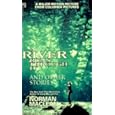
A River Runs Through it by Norman Maclean

By Anita Mathias

A River Runs Through it by Norman Maclean.
I first heard about this book from the legendary editor Ted Solotaroff whom I met at the Squaw Valley Writers Conference, California. Ted had build a career discovering new young writers. I asked him if he knew of splendid writers who published their first books later in life.
“Not many,” Ted replied, but then mentioned Norman Maclean, his teacher at the University of Chicago, who published his first book when he was 74. And that book was “A River Runs Through it.” (He published several others after that!)
Product DetailsAnd what a book! It was as if Maclean was storing up the strength and sweetness of a life-time. I love its smooth, lyrical surface, its elegiac tone, its pitch-perfect writing, its old world Scottish restraint, its depiction of the unbreakable bonds of family love in a family with very different characters.
The central character is Maclean’s troubled younger brother Paul who breaks his family’s hearts and his own heart and life—all without severing the basic bonds of family love. And a River Runs Through It—fly-fishing, Montana rivers, and the tenacious love for God, of God, and of family. The bond between the father, an old world, dignified restrained Scottish pastor and his son, who was at his most beautiful when fishing, is beautifully depicted.
It is a short book, a novella, really, and a rich, rewarding, sad and beautiful one.
http://www.amazon.co.uk/River-Runs-Through-Other-Stories/dp/0226500667/ref=sr_1_3?ie=UTF8&s=books&qid=1281634489&sr=8-3
Anita Mathias

Delicious Bookmark this on Delicious

Filed Under: Book Reviews, books_blog, Memoir

They Fuck You Up by Philip Larkin

By Anita Mathias

Philip Larkin – This Be The Verse


They fuck you up, your mum and dad.
They may not mean to, but they do.
They fill you with the faults they had
And add some extra, just for you.

But they were fucked up in their turn
By fools in old-style hats and coats,
Who half the time were soppy-stern
And half at one another's throats.

Man hands on misery to man.
It deepens like a coastal shelf.
Get out as early as you can,
And don't have any kids yourself.

Delicious Bookmark this on Delicious

Filed Under: books_blog, Poetry

Dover Beach by Matthew Arnold

By Anita Mathias


Dover Beach by Matthew Arnold

I love this poem. It is an early stream of consciousness poem, before the phrase was invented.I love the way this poem is an extended metaphor, how what appears to be a moonlight rhapsody, turns into a lament for lost faith

Arnold hears “the melancholy long withdrawing roar” of the tide ebbing from a pebbly shore. And in it, he hears “the eternal note of sadness” which, he says, Sophocles heard. (I love Arnold‘s assocations!)

It reminds him of the sea of faith which once was full, but now ebbs. It has ebbed from his own life, leaving him a world in which there is “really neither joy, nor love, nor light/ Nor certitude, nor peace, nor help for pain” a bleak world in which “ignorant armies clash by night.” Divine love and wisdom being gone, the only hope is in the fidelity of human love.

 Hey, I am so glad I am a believer. Though my world does not have joy, love, light, certidude, peace and help for pain in every moment of every day, it often does–and for that I am grateful!

Dover Beach

by Matthew Arnold 

The sea is calm tonight.
The tide is full, the moon lies fair
Upon the straits; on the French coast the light
Gleams and is gone; the cliffs of England stand,
Glimmering and vast, out in the tranquil bay.
Come to the window, sweet is the night-air!
Only, from the long line of spray
Where the sea meets the moon-blanched land,
Listen! you hear the grating roar
Of pebbles which the waves draw back, and fling,
At their return, up the high strand,
Begin, and cease, and then again begin,
With tremulous cadence slow, and bring
The eternal note of sadness in.


Sophocles long ago
Heard it on the Ægean, and it brought
Into his mind the turbid ebb and flow
Of human misery; we
Find also in the sound a thought,
Hearing it by this distant northern sea.


The Sea of Faith
Was once, too, at the full, and round earth’s shore
Lay like the folds of a bright girdle furled.
But now I only hear
Its melancholy, long, withdrawing roar,
Retreating, to the breath
Of the night-wind, down the vast edges drear
And naked shingles of the world.


Ah, love, let us be true
To one another! for the world, which seems
To lie before us like a land of dreams,
So various, so beautiful, so new,
Hath really neither joy, nor love, nor light,
Nor certitude, nor peace, nor help for pain;
And we are here as on a darkling plain
Swept with confused alarms of struggle and flight,
Where ignorant armies clash by night.

Delicious Bookmark this on Delicious

Filed Under: books_blog, Poetry

  • « Previous Page
  • 1
  • …
  • 10
  • 11
  • 12
  • 13
  • 14
  • …
  • 22
  • Next Page »

Sign Up and Get a Free eBook!

Sign up to be emailed my blog posts (one a week) and get the ebook of "Holy Ground," my account of working with Mother Teresa.

Join 544 Other Readers

My Books

Rosaries, Reading, Secrets: A Catholic Childhood in India

Rosaries, Reading Secrets, B&N
USA

UK

Wandering Between Two Worlds: Essays on Faith and Art

Wandering Between Two Worlds
USA

UK

Francesco, Artist of Florence: The Man Who Gave Too Much

Francesco, Artist of Florence
US

UK

The Story of Dirk Willems

The Story of Dirk Willems
US

UK

My Latest Meditation

Anita Mathias: About Me

Anita Mathias

Read my blog on Facebook

Follow me on Twitter

Follow @anitamathias1

Recent Posts

  • God’s Complete Forgiveness 
  • Using God’s Gift of Our Talents: A Path to Joy and Abundance
  • The Kingdom of God is Here Already, Yet Not Yet Here
  • All Those Who Exalt Themselves Will Be Humbled & the Humble Will Be Exalted
  • Christ’s Great Golden Triad to Guide Our Actions and Decisions
  • How Jesus Dealt With Hostility and Enemies
  • Do Not Be Afraid, but Do Be Prudent
  • For Scoundrels, Scallywags, and Rascals—Christ Came
  • How to Lead an Extremely Significant Life
  • Don’t Walk Away From Jesus, but if You Do, He Still Looks at You and Loves You
Premier Digital Awards 2015 - Finalist - Blogger of the year
Runner Up Christian Media Awards 2014 - Tweeter of the year

Categories

What I’m Reading


Wolf Hall
Hilary Mantel

Wolf Hall --  Amazon.com
Amazon.com

Amazon.co.uk

Silence and Honey Cakes:
The Wisdom Of The Desert
Rowan Williams

Silence and Honey Cakes --  Amazon.com
Amazon.com

Amazon.co.uk

The Long Loneliness:
The Autobiography of the Legendary Catholic Social Activist
Dorothy Day

The Long Loneliness --  Amazon.com
Amazon.com

Amazon.co.uk

Country Girl
Edna O'Brien

Country Girl  - Amazon.com
Amazon.com

Amazon.co.uk

Archive by month

My Latest Five Podcast Meditations

INSTAGRAM

anita.mathias

My memoir: Rosaries, Reading, Secrets https://amzn.to/42xgL9t
Oxford, England. Writer, memoirist, podcaster, blogger, Biblical meditation teacher, mum

Well, hello friends! Breaking radio silence to let Well, hello friends! Breaking radio silence to let you know that I have taped a meditation for you on Christ’s famous Parable of the Talents in Matthew 25. https://anitamathias.com/2025/11/05/using-gods-gift-of-our-talents-a-path-to-joy-and-abundance/
Here you are, click the play button in the blog post for a brief meditation, and some moments of peace, and, perhaps, inspiration in your day 🙂
Hi Friends, I have taped a meditation; do listen a Hi Friends, I have taped a meditation; do listen at this link: https://anitamathias.com/2025/04/08/the-kingdom-of-god-is-here-already-yet-not-yet-here-2/
It’s on the Kingdom of God, of which Christ so often spoke, which is here already—a mysterious, shimmering internal palace in which, in lightning flashes, we experience peace and joy, and yet, of course, not yet fully here. We sense the rainbowed presence of Christ in the song which pulses through creation. Christ strolls into our rooms with his wisdom and guidance, and things change. Our prayers are answered; we are healed; our hearts are strangely warmed. Sometimes.
And yet, we also experience evil within & all around us. Our own sin which can shatter our peace and the trajectory of our lives. And the sins of the world—its greed, dishonesty and environmental destruction.
But in this broken world, we still experience the glory of creation; “coincidences” which accelerate once we start praying, and shalom which envelops us like sudden sunshine. The portals into this Kingdom include repentance, gratitude, meditative breathing, and absolute surrender.
The Kingdom of God is here already. We can experience its beauty, peace and joy today through the presence of the Holy Spirit. But yet, since, in the Apostle Paul’s words, we do not struggle only “against flesh and blood, but against the rulers, against the unseen powers of this dark world and against the spiritual forces of evil,” its fullness still lingers…
Our daughter Zoe was ordained into the Church of E Our daughter Zoe was ordained into the Church of England in June. I have been on a social media break… but … better late than never. Enjoy!
First picture has my sister, Shalini, who kindly flew in from the US. Our lovely cousins Anthony and Sarah flank Zoe in the next picture.
The Bishop of London, Sarah Mullaly, ordained Zoe. You can see her praying that Zoe will be filled with the Holy Spirit!!
And here’s a meditation I’ve recorded, which you might enjoy. The link is also in my profile
https://anitamathias.com/2024/11/07/all-those-who-exalt-themselves-will-be-humbled-the-humble-will-be-exalted/
I have taped a meditation on Jesus statement in Ma I have taped a meditation on Jesus statement in Matthew 23, “For those who exalt themselves will be humbled, and those who humble themselves will be exalted.”
Do listen here. https://anitamathias.com/2024/11/07/all-those-who-exalt-themselves-will-be-humbled-the-humble-will-be-exalted/
Link also in bio.
And so, Jesus states a law of life. Those who broadcast their amazingness will be humbled, since God dislikes—scorns that, as much as people do.  For to trumpet our success, wealth, brilliance, giftedness or popularity is to get distracted from our life’s purpose into worthless activity. Those who love power, who are sure they know best, and who must be the best, will eventually be humbled by God and life. For their focus has shifted from loving God, doing good work, and being a blessing to their family, friends, and the world towards impressing others, being enviable, perhaps famous. These things are houses built on sand, which will crumble when hammered by the waves of old age, infirmity or adversity. 
God resists the proud, Scripture tells us—those who crave the admiration and power which is His alone. So how do we resist pride? We slow down, so that we realise (and repent) when sheer pride sparks our allergies to people, our enmities, our determination to have our own way, or our grandiose ego-driven goals, and ambitions. Once we stop chasing limelight, a great quietness steals over our lives. We no longer need the drug of continual achievement, or to share images of glittering travel, parties, prizes or friends. We just enjoy them quietly. My life is for itself & not for a spectacle, Emerson wrote. And, as Jesus advises, we quit sharp-elbowing ourselves to sit with the shiniest people, but are content to hang out with ordinary people; and then, as Jesus said, we will inevitably, eventually, be summoned higher to the sparkling conversation we craved. 
One day, every knee will bow before the gentle lamb who was slain, now seated on the throne. We will all be silent before him. Let us live gently then, our eyes on Christ, continually asking for his power, his Spirit, and his direction, moving, dancing, in the direction that we sense him move.
Link to new podcast in Bio https://anitamathias.co Link to new podcast in Bio https://anitamathias.com/2024/02/20/how-jesus-dealt-with-hostility-and-enemies/
3 days before his death, Jesus rampages through the commercialised temple, overturning the tables of moneychangers. Who gave you the authority to do these things? his outraged adversaries ask. And Jesus shows us how to answer hostile questions. Slow down. Breathe. Quick arrow prayers!
Your enemies have no power over your life that your Father has not permitted them. Ask your Father for wisdom, remembering: Questions do not need to be answered. Are these questioners worthy of the treasures of your heart? Or would that be feeding pearls to hungry pigs, who might instead devour you?
Questions can contain pitfalls, traps, nooses. Jesus directly answered just three of the 183 questions he was asked, refusing to answer some; answering others with a good question.
But how do we get the inner calm and wisdom to recognise
and sidestep entrapping questions? Long before the day of
testing, practice slow, easy breathing, and tune in to the frequency of the Father. There’s no record of Jesus running, rushing, getting stressed, or lacking peace. He never spoke on his own, he told us, without checking in with the Father. So, no foolish, ill-judged statements. Breathing in the wisdom of the Father beside and within him, he, unintimidated, traps the trappers.
Wisdom begins with training ourselves to slow down and ask
the Father for guidance. Then our calm minds, made perceptive, will help us recognise danger and trick questions, even those coated in flattery, and sidestep them or refuse to answer.
We practice tuning in to heavenly wisdom by practising–asking God questions, and then listening for his answers about the best way to do simple things…organise a home or write. Then, we build upwards, asking for wisdom in more complex things.
Listening for the voice of God before we speak, and asking for a filling of the Spirit, which Jesus calls streams of living water within us, will give us wisdom to know what to say, which, frequently, is nothing at all. It will quieten us with the silence of God, which sings through the world, through sun and stars, sky and flowers.
Especially for @ samheckt Some very imperfect pi Especially for @ samheckt 
Some very imperfect pictures of my labradoodle Merry, and golden retriever Pippi.
And since, I’m on social media, if you are the meditating type, here’s a scriptural meditation on not being afraid, while being prudent. https://anitamathias.com/2024/01/03/do-not-be-afraid-but-do-be-prudent/
A new podcast. Link in bio https://anitamathias.c A new podcast. Link in bio
https://anitamathias.com/2024/01/03/do-not-be-afraid-but-do-be-prudent/
Do Not Be Afraid, but Do Be Prudent
“Do not be afraid,” a dream-angel tells Joseph, to marry Mary, who’s pregnant, though a virgin, for in our magical, God-invaded world, the Spirit has placed God in her. Call the baby Jesus, or The Lord saves, for he will drag people free from the chokehold of their sins.
And Joseph is not afraid. And the angel was right, for a star rose, signalling a new King of the Jews. Astrologers followed it, threatening King Herod, whose chief priests recounted Micah’s 600-year-old prophecy: the Messiah would be born in Bethlehem, as Jesus had just been, while his parents from Nazareth registered for Augustus Caesar’s census of the entire Roman world. 
The Magi worshipped the baby, offering gold. And shepherds came, told by an angel of joy: that the Messiah, a saviour from all that oppresses, had just been born.
Then, suddenly, the dream-angel warned: Flee with the child to Egypt. For Herod plans to kill this baby, forever-King.
Do not be afraid, but still flee? Become a refugee? But lightning-bolt coincidences verified the angel’s first words: The magi with gold for the flight. Shepherds
telling of angels singing of coming inner peace. Joseph flees.
What’s the difference between fear and prudence? Fear is being frozen or panicked by imaginary what-ifs. It tenses our bodies; strains health, sleep and relationships; makes us stingy with ourselves & others; leads to overwork, & time wasted doing pointless things for fear of people’s opinions.
Prudence is wisdom-using our experience & spiritual discernment as we battle the demonic forces of this dark world, in Paul’s phrase.It’s fighting with divinely powerful weapons: truth, righteousness, faith, Scripture & prayer, while surrendering our thoughts to Christ. 
So let’s act prudently, wisely & bravely, silencing fear, while remaining alert to God’s guidance, delivered through inner peace or intuitions of danger and wrongness, our spiritual senses tuned to the Spirit’s “No,” his “Slow,” his “Go,” as cautious as a serpent, protected, while being as gentle as a lamb among wolves.
Link to post with podcast link in Bio or https://a Link to post with podcast link in Bio or https://anitamathias.com/2023/09/22/dont-walk-away-from-jesus-but-if-you-do-he-still-looks-at-you-and-loves-you/
Jesus came from a Kingdom of voluntary gentleness, in which
Christ, the Lion of Judah, stands at the centre of the throne in the guise of a lamb, looking as if it had been slain. No wonder his disciples struggled with his counter-cultural values. Oh, and we too!
The mother of the Apostles James and John, asks Jesus for a favour—that once He became King, her sons got the most important, prestigious seats at court, on his right and left. And the other ten, who would have liked the fame, glory, power,limelight and honour themselves are indignant and threatened.
Oh-oh, Jesus says. Who gets five talents, who gets one,
who gets great wealth and success, who doesn’t–that the
Father controls. Don’t waste your one precious and fleeting
life seeking to lord it over others or boss them around.
But, in his wry kindness, he offers the ambitious twelve
and us something better than the second or third place.
He tells us how to actually be the most important person to
others at work, in our friend group, social circle, or church:Use your talents, gifts, and energy to bless others.
And we instinctively know Jesus is right. The greatest people in our lives are the kind people who invested in us, guided us and whose wise, radiant words are engraved on our hearts.
Wanting to sit with the cleverest, most successful, most famous people is the path of restlessness and discontent. The competition is vast. But seek to see people, to listen intently, to be kind, to empathise, and doors fling wide open for you, you rare thing!
The greatest person is the one who serves, Jesus says. Serves by using the one, two, or five talents God has given us to bless others, by finding a place where our deep gladness and the world’s deep hunger meet. By writing which is a blessing, hospitality, walking with a sad friend, tidying a house.
And that is the only greatness worth having. That you yourself,your life and your work are a blessing to others. That the love and wisdom God pours into you lives in people’s hearts and minds, a blessing
https://anitamathias.com/.../dont-walk-away-from-j https://anitamathias.com/.../dont-walk-away-from-jesus.../
Sharing this podcast I recorded last week. LINK IN BIO
So Jesus makes a beautiful offer to the earnest, moral young man who came to him, seeking a spiritual life. Remarkably, the young man claims that he has kept all the commandments from his youth, including the command to love one’s neighbour as oneself, a statement Jesus does not challenge.
The challenge Jesus does offers him, however, the man cannot accept—to sell his vast possessions, give the money to the poor, and follow Jesus encumbered.
He leaves, grieving, and Jesus looks at him, loves him, and famously observes that it’s easier for a camel to squeeze through the eye of a needle than for a rich person to live in the world of wonders which is living under Christ’s kingship, guidance and protection. 
He reassures his dismayed disciples, however, that with God even the treasure-burdened can squeeze into God’s kingdom, “for with God, all things are possible.”
Following him would quite literally mean walking into a world of daily wonders, and immensely rich conversation, walking through Israel, Lebanon, Syria, and Jordan, quite impossible to do with suitcases and backpacks laden with treasure. 
For what would we reject God’s specific, internally heard whisper or directive, a micro-call? That is the idol which currently grips and possesses us. 
Not all of us have great riches, nor is money everyone’s greatest temptation—it can be success, fame, universal esteem, you name it…
But, since with God all things are possible, even those who waver in their pursuit of God can still experience him in fits and snatches, find our spirits singing on a walk or during worship in church, or find our hearts strangely warmed by Scripture, and, sometimes, even “see” Christ stand before us. 
For Christ looks at us, Christ loves us, and says, “With God, all things are possible,” even we, the flawed, entering his beautiful Kingdom.
Follow on Instagram

© 2026 Dreaming Beneath the Spires · All Rights Reserved. · Cookie Policy · Privacy Policy