![]() |
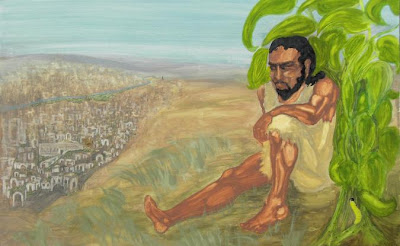
| Image credit
We’ve just finished studying Jonah in the small group I’m co-leading. I really enjoyed its complexity. Some thoughts!
Can you run away from God?
Yes, all the time. We can do precisely the opposite of what we know he wants us to do, in small things, like diet, discipline, or in global matters.
And can we get away with it?
Ummm, yes. Yes, we can go our whole lives doing the precise opposite of what God wants us to do, and may be wealthy, healthy and successful.
There will be consequences, but these may not be apparent. We will however not have the jewels of the spiritual life—peace, joy, shalom, though we many have earthly jewels.
It was “the severe mercy” of God that provided Jonah a chance to repent!
So Jonah’s in the belly of the whale? What turns things around?
He prays to the Lord with utter faith, and astonishingly, he prays in the future tense, as if what he has prayed for has already happened.
I have been banished from your sight,
Yet I will look again,
Towards your holy temple.
I, with a song of thanksgiving,
Will sacrifice to you.”
God Offers Second Chances
Then the word of the Lord came to Jonah a second time, “Go to the great city of Nineveh, and proclaim to it the message I give you.”
Jonah responds this time. He proclaims, “Forty more days, and Nineveh will be destroyed.” Surely the shortest sermon ever preached.
It elicits a disproportionate response.
Repentance Frees us from the Dreary Laws of Cause and Effect, Sowing and Reaping
God is apparently determined to destroy Nineveh because of its “wickedness.”
But the King does everything to try to avert the dark destiny which appears to hang over the city. He orders the people to fast, to pray, and to repent, “to give up their evil ways and their violence. So that God would relent, and with compassion turn from his fierce anger.”
And God does.
When we have sinned and disobeyed God, there is always this way of re-entering the force field of God’s blessing—we fast, we pray, and we repent, and stop those sinful actions.
God is concerned about both people and animals
But Nineveh has more than a hundred and twenty thousand people who cannot tell their right hand from their left, and many cattle as well. Should I not be concerned about that great city?” Jonah 4:10.
God gives us many chances, but perhaps not infinite chances. The story moves on.
If we reject God’s invitations too often, his loving story goes on, but with us outside it.
God again confronts Jonah, asking him the same question twice, “Have you any right to be angry.”
Jonah has had enough. His answer to the second question is, “I do. I am angry enough to die.”
God justifies his actions, but as far as we know, Jonah does not repent.
His gift was to be a prophet, one who heard God’s voice. His former prophecies, about the restoration of Israel’s former borders, 2 Kings 14:25, had been fulfilled. But we never hear about Jonah again. He is furious with God, with God’s ways, with God’s mercy, and if the word of the Lord ever comes to him again, we never hear of it.
It reminds me of Elijah in 1 Kings 19, who has finally had enough, as he tells us. God asks him the same question twice, “What are you doing here, Elijah?” and when he receives the same answer—after the display of God’s power: the wind, the earthquake, the fire, the whisper, which suggests that Elijah was not really listening or receptive to God’s voice, or “getting it” as prophets must—God moves on, he commissions Elisha. God’s story continues, but Elijah’s role in it is over.
God is incorrigibly merciful and often shows mercy to the undeserving. Sulking leaves us out of his continuing story of mercy and love.
Jonah amusingly tells God off for his mercy. “Isn’t this what I said, Lord, when I was still at home? That is what I tried to forestall by fleeing to Tarshish. I knew that you are a gracious and compassionate God, slow to anger and abounding in love, a God who relents from sending calamity.
Sulking that God is slow to anger, not executing judgement on those we think he should, cuts us off from the flow of God’s love, mercy and compassion, and we are the losers.
The elder brother in the parable of the Prodigal Son refuses to enter the house of dancing, music and the fatted calf. Similarly, Jonah cannot accept God’s goodness, and reproaches God. While the younger son and the people of Nineveh rejoice, the good son, and the prophet of God are outside in the fields, outside the happy city, sulking at God’s mercy to the undeserving.
We need to continue forgiving to be in God’s story of goodness and answered prayer (Mk 11:25) and to accept that is a God of mercy and compassion to us, just as much as to those we think are less deserving.
|
My Sunday walk around my garden and the Oxford countryside
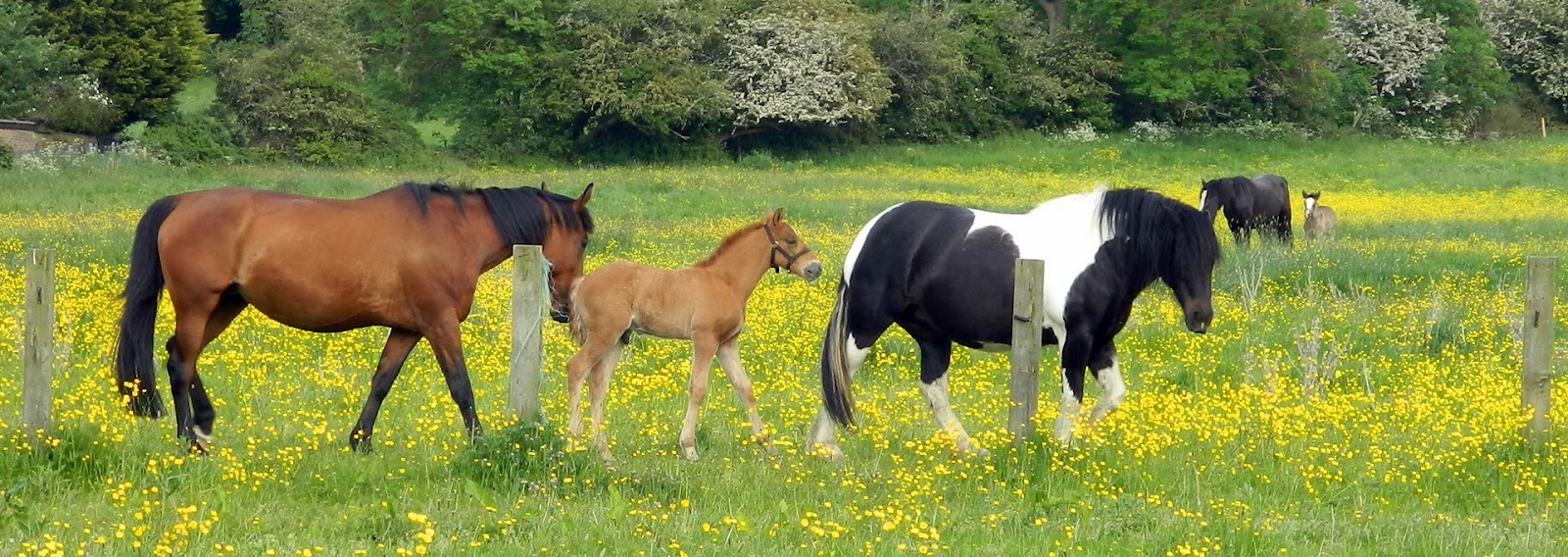
The field next to our garden has two new foals. Though still suckling, they have halters.
When He Breathes the Spirit on me
The Panic of Other People’s Success
But my late spring no bud or blossom showeth.
It shall be still in strictest measure even
To that same lot, however mean, or high,
All is, if I have grace to use it so,
As ever in my great taskmaster’s eye.
|
Oh, the sots and thralls of lust
|
|
|
Do in spare hours more thrive than I that spend,
|
|
|
Sir, life upon thy cause.
|
Blogging: The Greatest Democratisation of Writing the World Has Seen.
![]() |
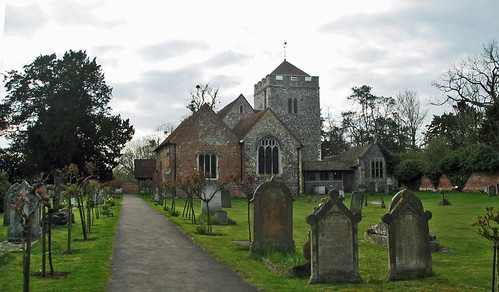
| Stoke Poges Churchyard, Buckinghamshire |
Thomas Gray who wrote “Elegy Written in a Country Churchyard” was an extremely self-critical poet, paralyzed by the fear of failure. Though he had devoted his life to a self-imposed programme of literary study, and was known as one of the most learned men of his generation, he published a mere 13 poems in his lifetime, 1000 lines, which might be mistaken for “the collected works of a flea,” he said sadly.
In the graveyard of Stoke Poges, Buckinghamshire, he ponders the graves of those whose lives were not blighted by ambition–or thwarted ambition.
But were they any less gifted then the household names of their generation? Statistically, the inhabitants of Stoke Poges should have had the same probability of producing a genius like Milton, a leader like Cromwell as any other town. They did not. Why? Gray muses
Perhaps in this neglected spot is laid
Some heart once pregnant with celestial fire;
Hands, that the rod of empire might have sway’d,
Or waked to ecstasy the living lyre:
But Knowledge to their eyes her ample page,
Rich with the spoils of time, did ne’er unroll;
Chill Penury repress’d their noble rage,
And froze the genial current of the soul.
Full many a gem of purest ray serene
The dark unfathom’d caves of ocean bear:
Full many a flower is born to blush unseen,
And waste its sweetness on the desert air.
Some village Hampden, that with dauntless breast
The little tyrant of his fields withstood,
Some mute inglorious Milton here may rest,
Some Cromwell, guiltless of his country’s blood.
Th’ applause of list’ning senates to command,
The threats of pain and ruin to despise,
To scatter plenty o’er a smiling land,
And read their history in a nation’s eyes,
Their lot forbad:
Far from the madding crowd’s ignoble strife,
Their sober wishes never learn’d to stray;
Along the cool sequester’d vale of life
They kept the noiseless tenour of their way.
He mourns these “mute inglorious Miltons,” “born to blush unseen and waste their sweetness on the desert air.”
However, with the explosion of blogging, the gatekeepers are losing their power, and anyone with a winsome voice who speaks to people can eventually find her audience, though she might live far from urban literary hubs. Miltons, particularly female ones, are no longer mute or inglorious!
In fact, “Miltons”, who live far from the madding crowd, find a voice–and an audience. The farmer’s wife Ann Voskamp in rural Canada, mother of six children who finds the sacred in the everyday. Or the nomadic Jessica Bowman, to mention at random, two blogs I enjoyed this week. Sweetness is no longer wasted on the desert air, in Gray’s phrase. It can be shared. And that is good, for sweetness should be shared.
Blogging is the greatest democratization of writing the world has seen–and probably its greatest explosion of shared knowledge and experience. That’s not to say an audience comes immediately—it still takes time, and application. However, one can gain one’s audience unmediated, based on whether your writing speaks to head, spirit and heart, without needing to convince a gatekeeper.
And that is one of the many reasons I love blogging.
The Faith of Children: Adventures in Bringing up Christian Children
![]() |
| Irene at 4 in Switzerland, thanking God for the waterfall and Zoe behind her. |
Once, when we were travelling in Switzerland with Irene aged 4, she needed the loo in a mall. The lady who left the loo held the door open for her, and she entered, omitting the 25 centime coin you pay to open the door.
Well, Irene has great faith in my prayer, since we’ve seen so much change and changed around once we started praying seriously. Her little face grew troubled, and earnest and dark.
Some links to blogs you might enjoy

“There are so many layers to the healing of the soul. One practice that has brought incredible healing is the taking of a Sabbath. Now when we read the word Sabbath, most of us think that the real issue behind the Sabbath isn’t which day of the week it is but how we live all the time.
Ten lessons from the life of Samson
- « Previous Page
- 1
- …
- 17
- 18
- 19
- 20
- 21
- …
- 121
- Next Page »