
![]() |
| Heidi Baker |
How Spiritual Blogging Keeps One Honest!
![]() |
| Image Credit |
Christians, Quit Being so Oppositional!
![]() |
| Image Credit |
So, on the 1st of August, on Chick-Fil-A Appreciation Day hundreds of thousands of Americans bought sandwiches from the popular fast food chain. Chick-Fil-A made $30 million on that day, to be donated to anti-gay groups.
And when did following Jesus become synonymous with defending “traditional marriage?” Or disapproving of gays?
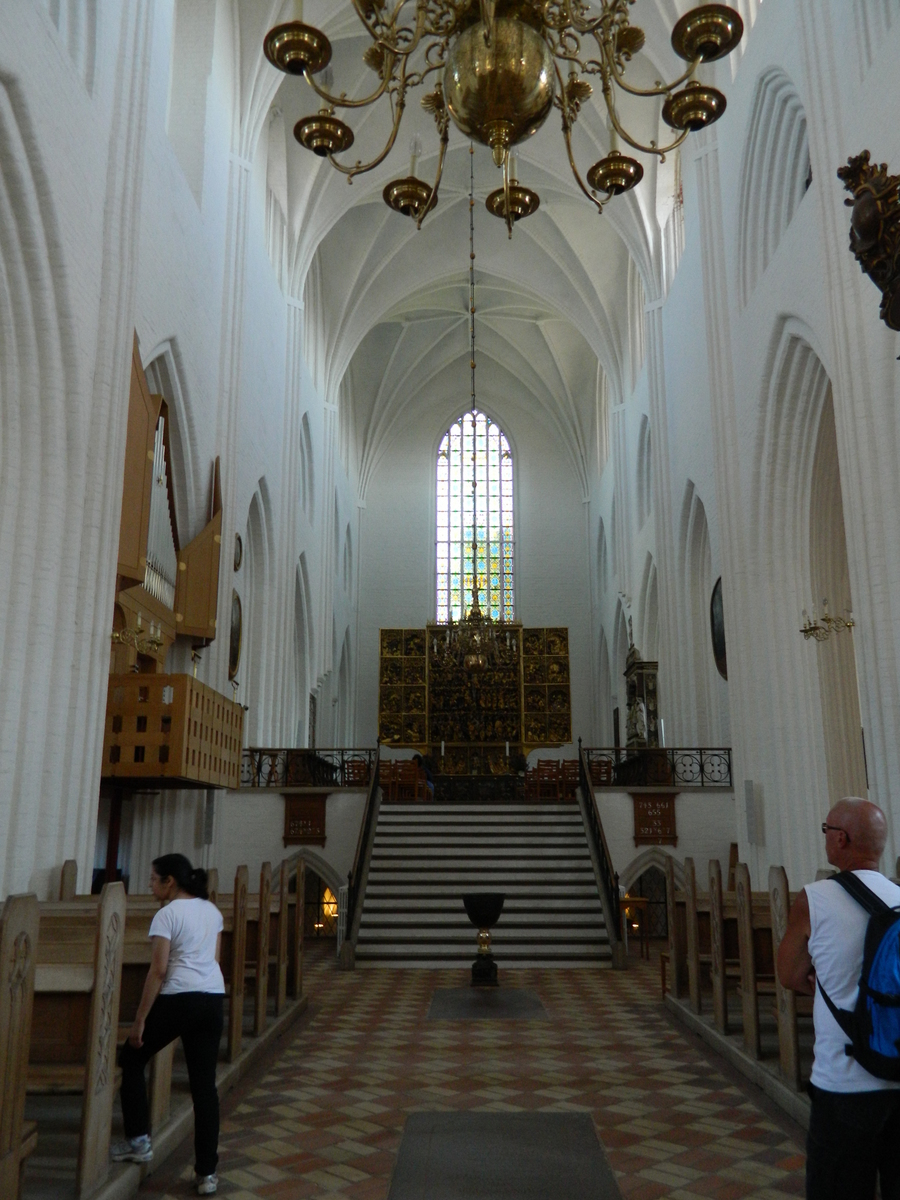
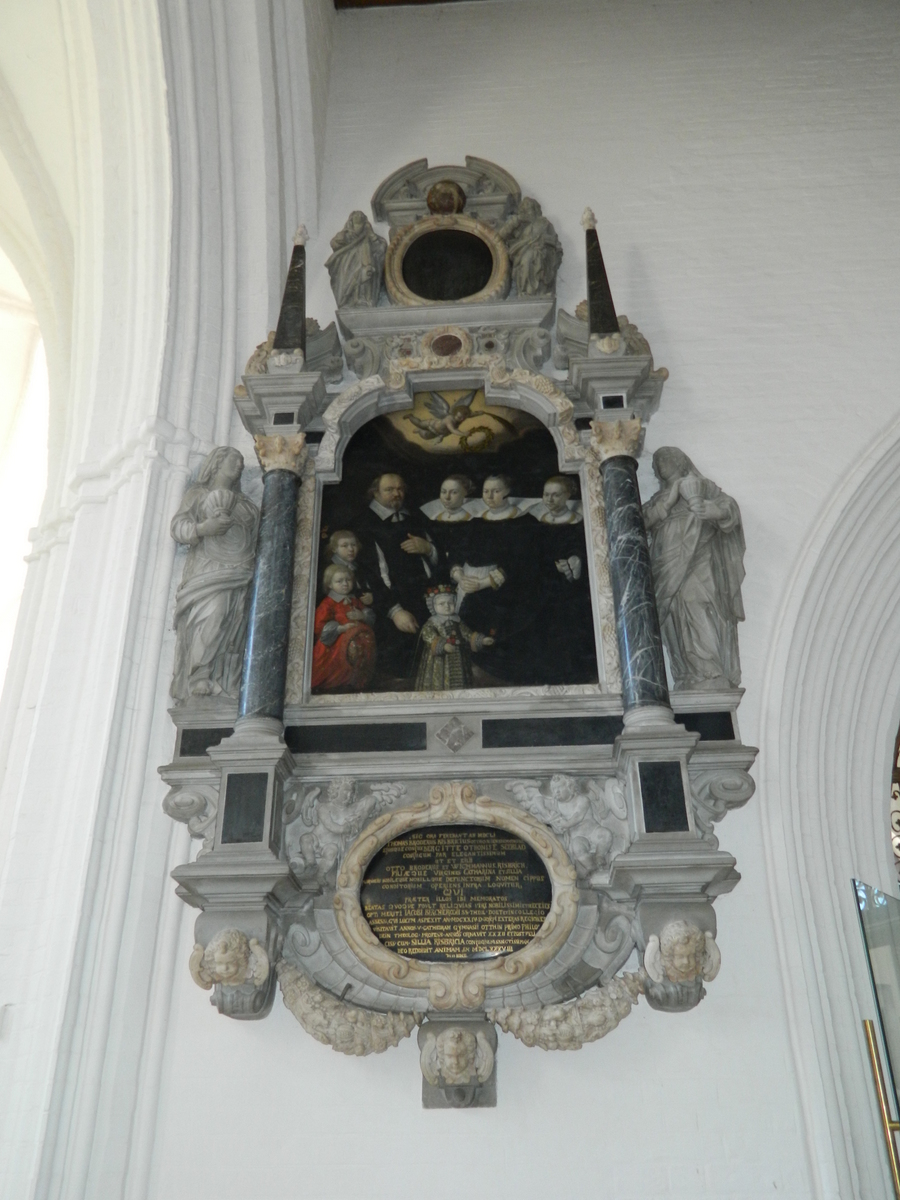
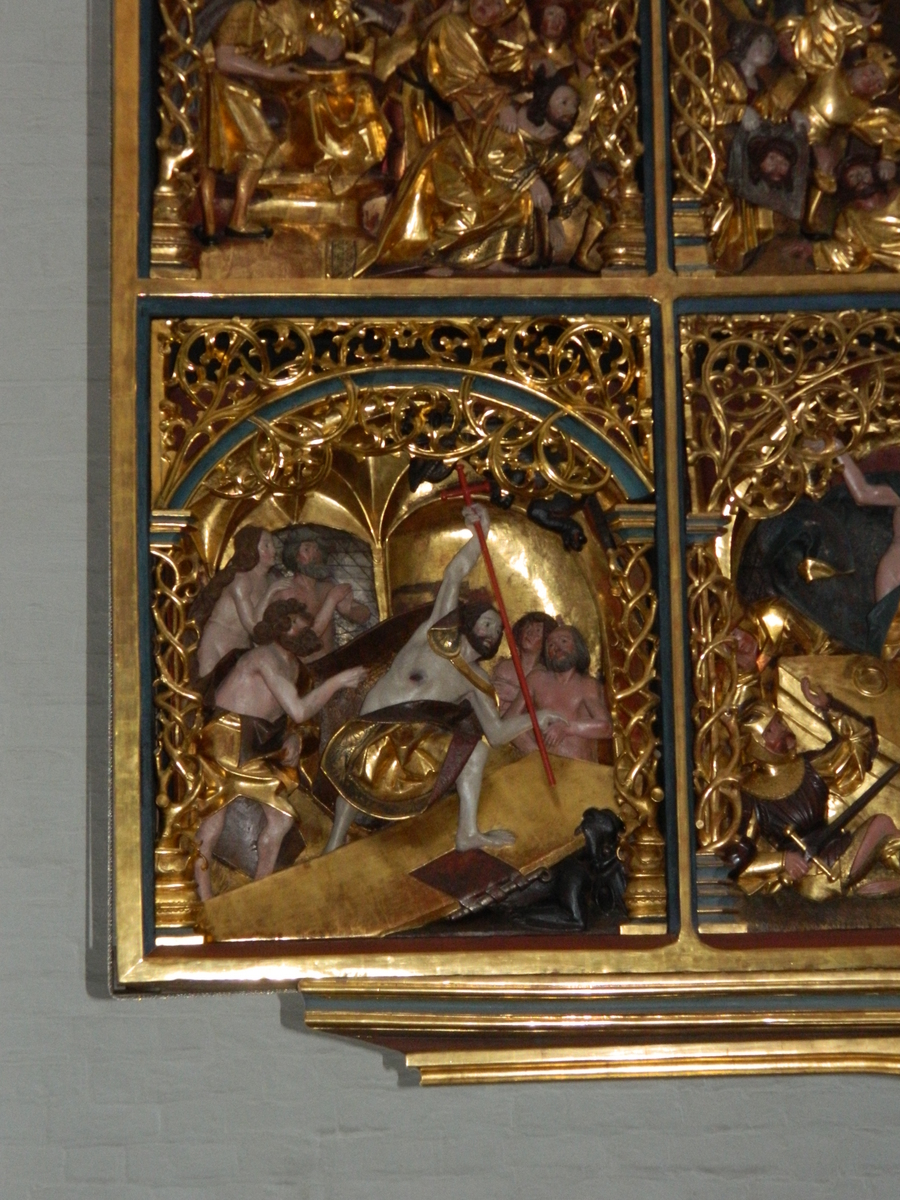
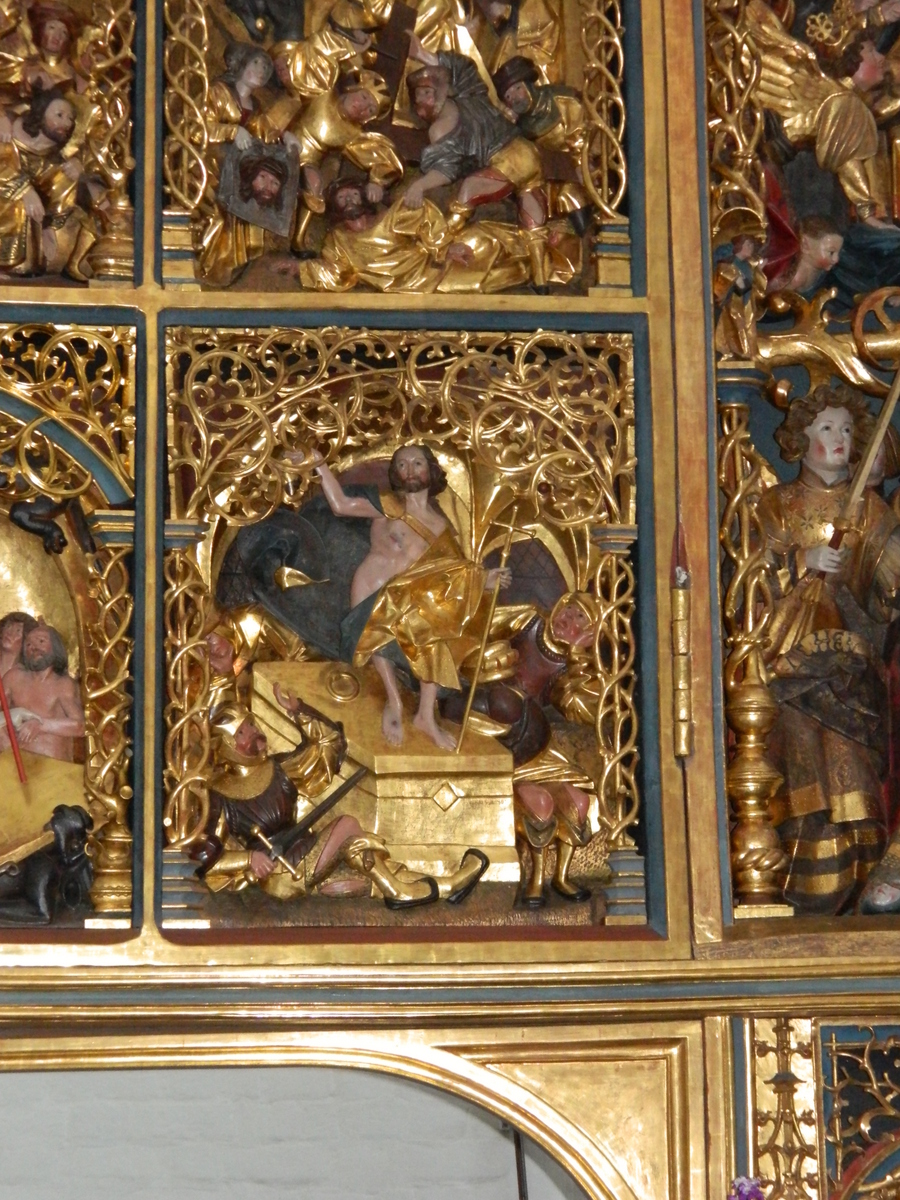
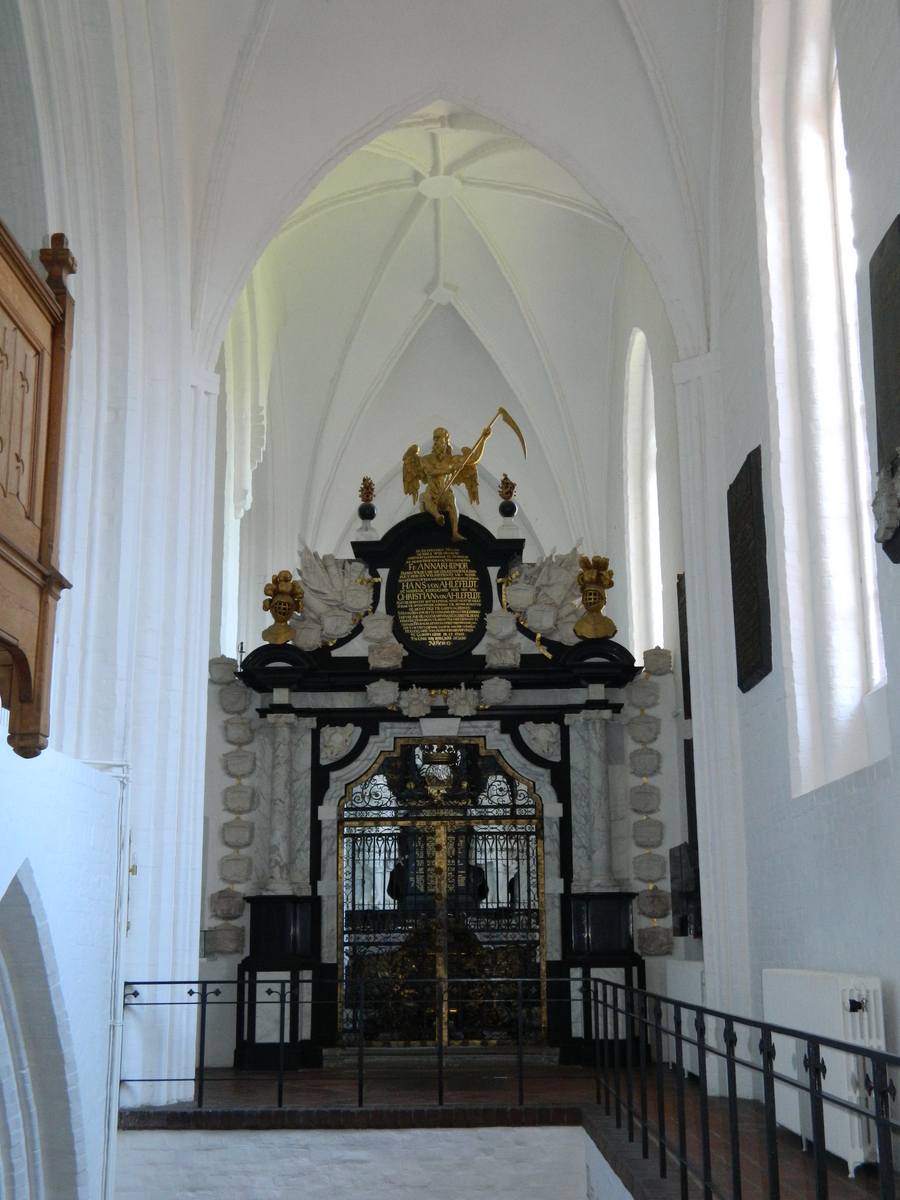
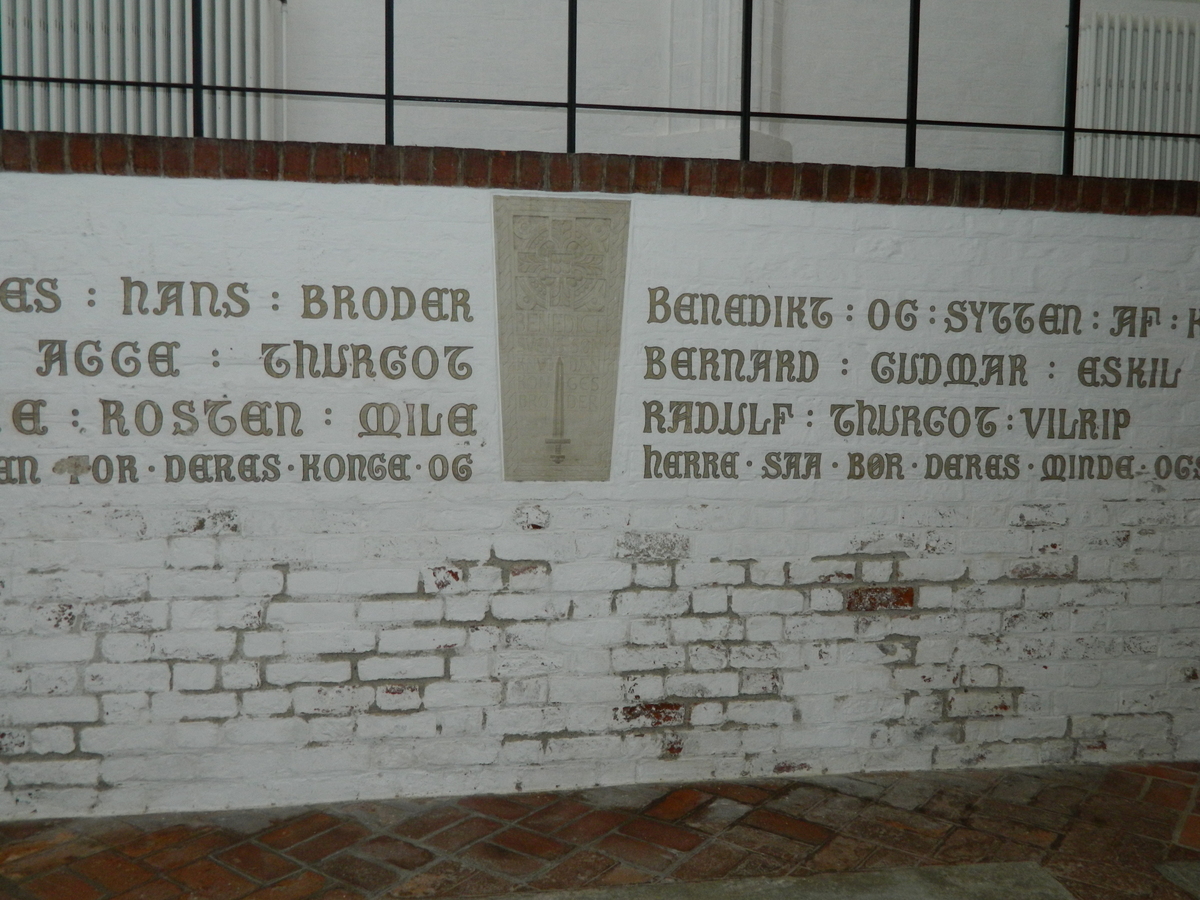
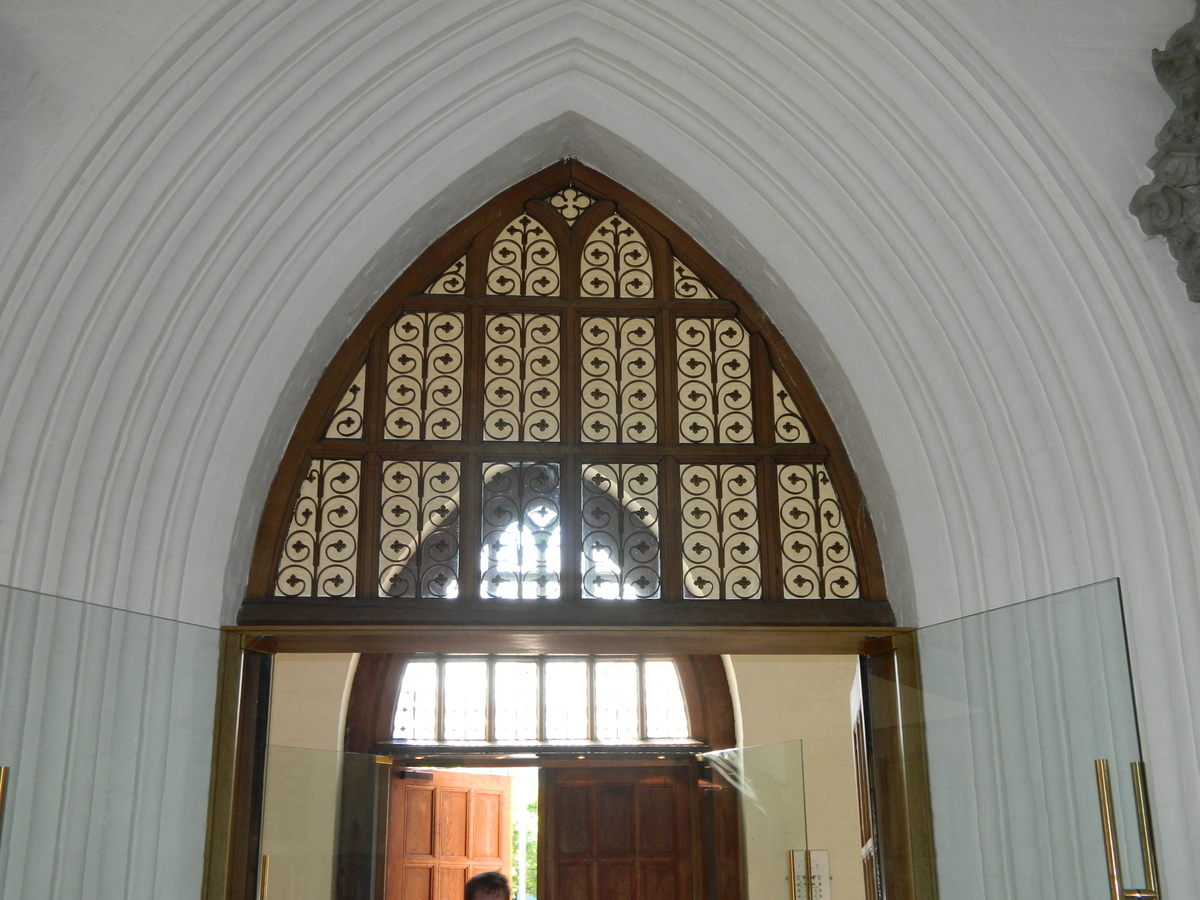
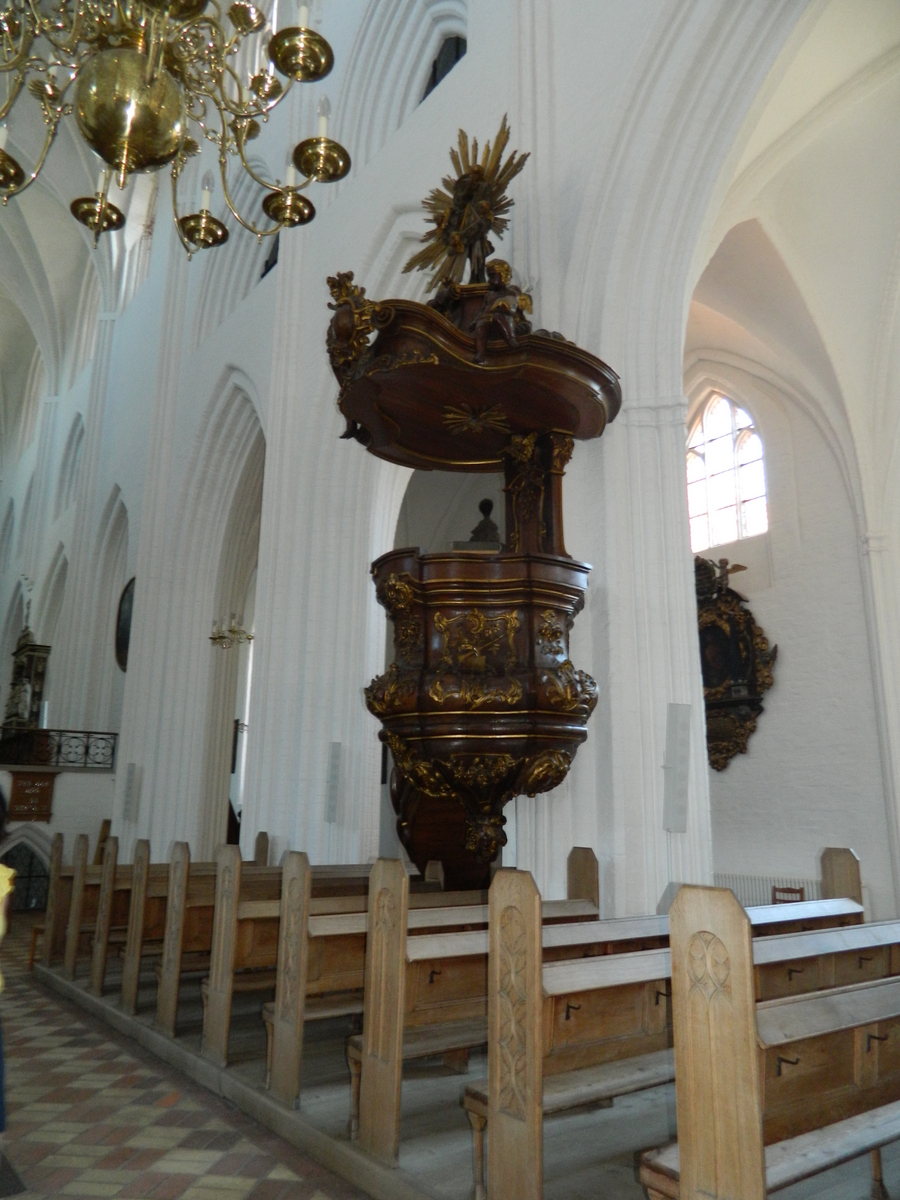
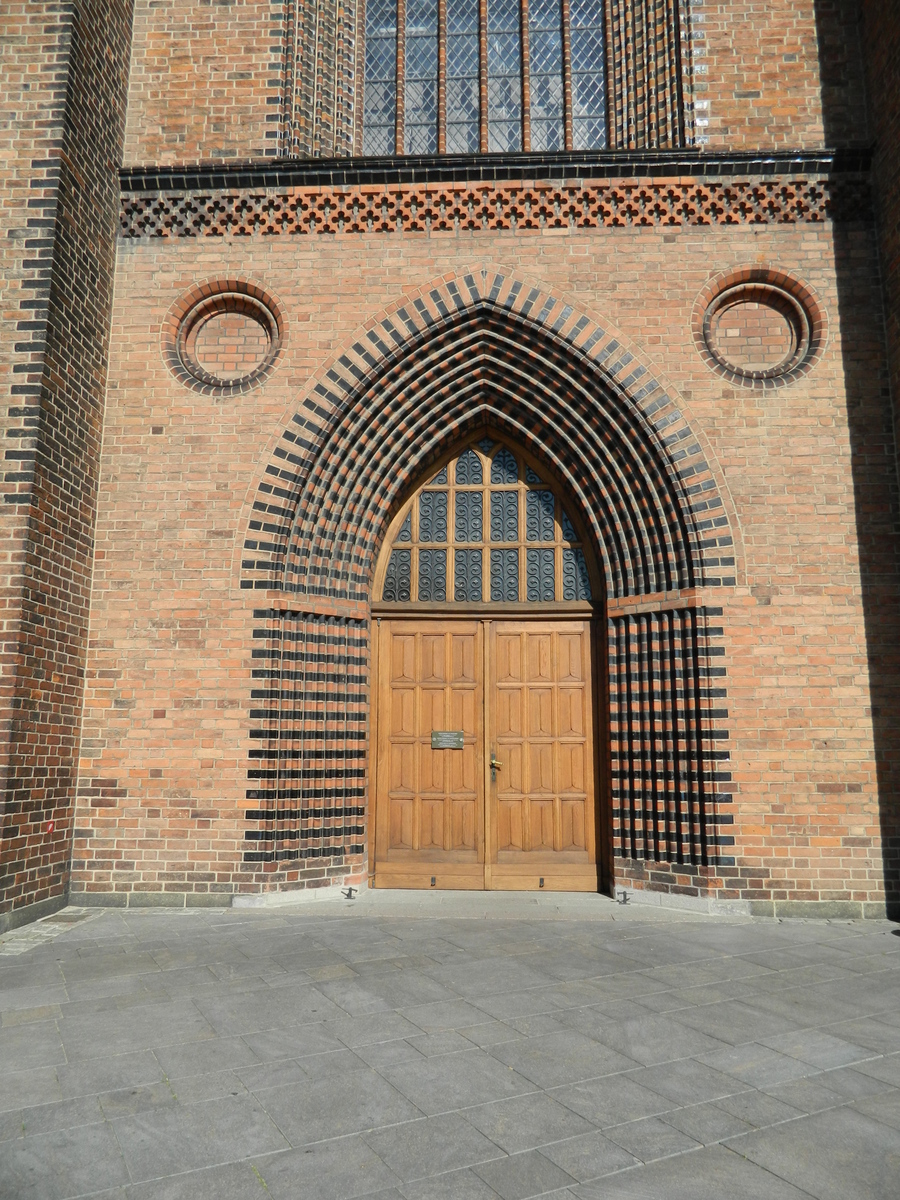
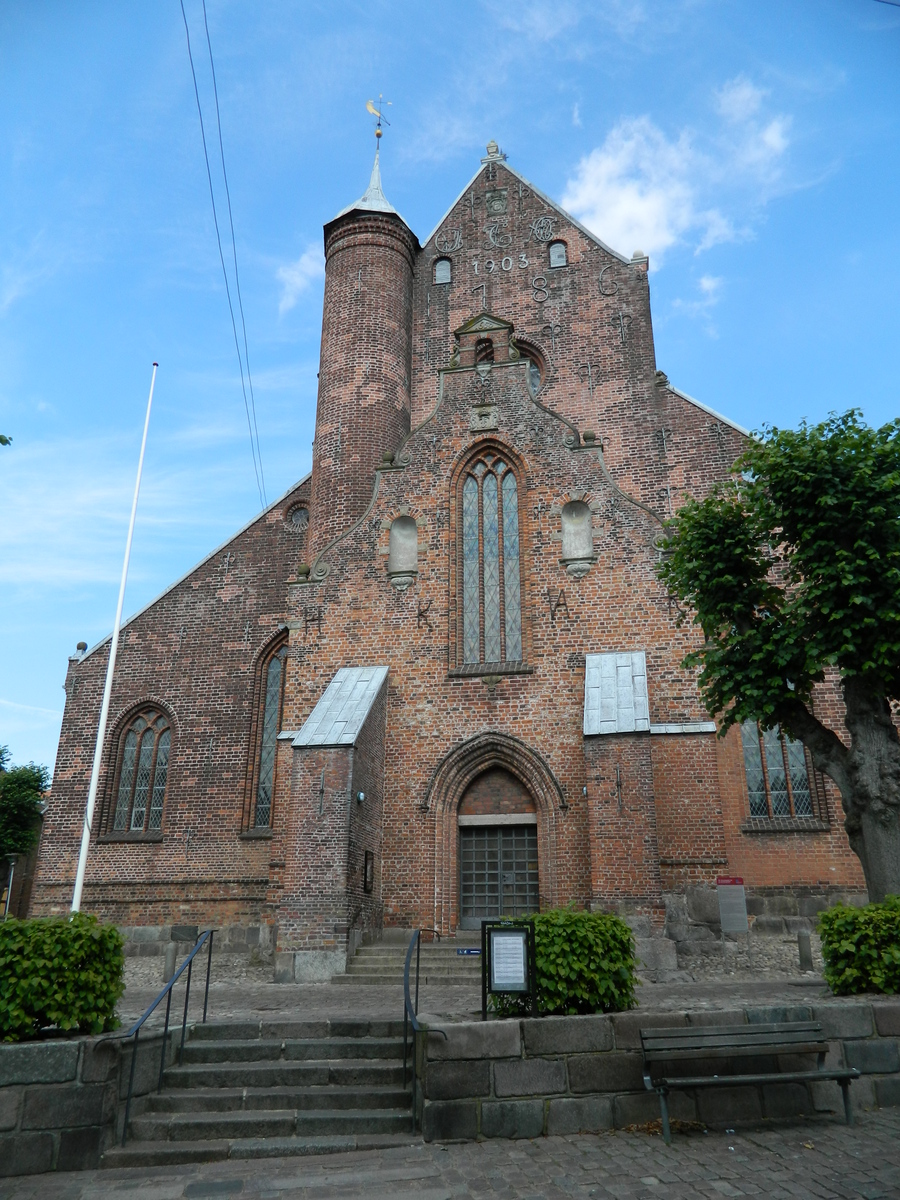
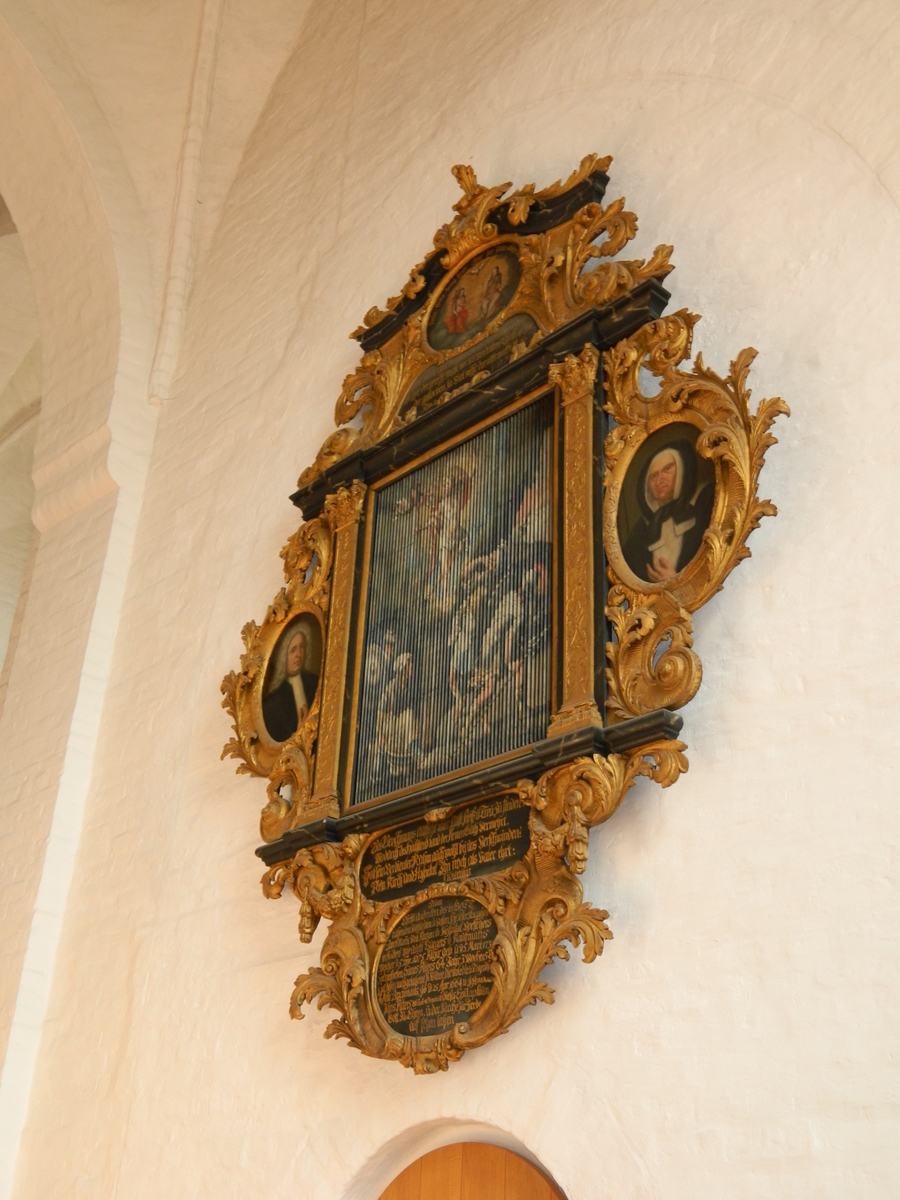
Odense Cathedral, Odense, Funen, Denmark
| Lattice work above the main entrance |
| Carved pew ends |
| Pulpit |
| The exterior is brick, with a decorations |
| Spire with a flying dragon |
His Grace is Sufficient in the Pursuit of Excellence
|
This has been a big year for sport in the UK. Andy Murray was the first Brit in the men’s singles in 74 years.
When we entered our church, St. Andrew’s, Oxford on July 8th, Wimbledon was on the big screen rather than Christian graphics.
Our sports-mad Vicar, Andrew Wingfield-Digby, was founder and National Director of Christians in Sport, chaplain at the Seoul and London Olympics, and chaplain to the England National Cricket Team. So we watched Murray play Federer while the worship leaders strummed worship songs. Very surreal!!
Everyone was gripped, so Andrew democratically asked for the vote as to who wanted to watch the final set at Wimbledon and who wanted to worship God. Wimbledon won (our family voted with the victors), so the worship leaders looking grumpy and resigned, continued strumming Be Thou My Vision, and I Surrender All, while we watched the screen, the sound now turned on, and church started at 6.20 p.m. instead of 6, with the TV switched off just as Andy Murray broke down.
I think crying is a natural, and not unmanly response to a loss made more terrible by the fact the hopes of a nation are pinned on you.
Loss in the Olympics are even sadder. Years and years of training and it’s all over in a few minutes, sometimes seconds. And only one gets the gold. 3 get medals. The rest have lost.
Is it worth it?
* * *
Yes, because the one loss at Wimbledon or the Olympics is preceded by a thousand victories. An elite athlete probably begins excelling in Kindergarten, winning numerous events in PE, for her house, her school, her town, her country, her country, internationally… Many successes for each big failure.
And so it is in anything competitive: we win some, we lose some, and when we do, we have to decide whether we are going to focus on the heartbreak of the loss or failure or rejection, or the joy of the thousand little successes that got us to the point of the big failure.
I was crushed by the rejection of a book manuscript I had written at great cost about 16 years ago. I told a kind lady who was mentoring me that I felt I was a failure. She reminded me of all my little achievements, the prizes I had won, the publications. “Many people would be green with envy to have achieved what you have,” she said kindly, but it didn’t help.
Now, years later, I have decided that, when I meet a setback, I’ll remember all the little successes which got me to the stage at which I credibly hoped for the prize, the acceptance letter. And thank God for them instead of sinking into despair.
And continue striving for excellence. For there is as much joy in the quest for excellence as attaining it.
Here’s a poem by Robert Francis called Excellence:
Excellence is millimeters and not miles.
From poor to good is great. From good to best is small.
From almost best to best sometimes not measurable.
The man who leaps the highest leaps perhaps an inch
Above the runner-up. How glorious the inch
and that split-second longer in the air before the fall.
* * *
And another thing now keeps me light-hearted. I have given my writing and blogging to God and so do not feel that I own my writing, or that it is entirely my own responsibility. I am in Jesus, a branch in the vine, and will write as his sap and juice flow through me. His grace is sufficient for me.
Here’s my favourite Max Lucado story:
Tom walks down the street and meets Dick, who is grinning from ear to ear.
Tom, “What are you so happy about?”
Dick, “Well, I’ve met a man who promised to do all my worrying for me for $80,000 a year.”
Tom, “$80,000 a year. How are you going to get that?”
Dick, grinning, “That’s HIS worry!”
This helped me hugely in my approach to money. Travel is expensive because it is all unfamiliar. One thing is guaranteed: mistakes. In the past, when I felt money haemorrhaging because of my mistakes or because I was ripped off, I would feel sad or annoyed. If it was Roy’s fault, I’d engage in mild recrimination.
Now I feel relaxed about it. I try to be wise, but have realized that stupidity is not a sin, and mistakes are part of being human. And it’s not really my money. It is God’s abundance temporarily in my hands. I am but a temporary conduit, and try to act wisely, but he will not hold mistakes and misjudgements against me.
And just as I have been blessed by other people’s errors (I own a publishing company, and people buy our books every day even though we are rarely the cheapest!) it’s okay if money flows through my hands to other people, willingly or unwittingly. It’s not really my money, but God’s and he will look after it. And me.
* * *
On this holiday, I made another cognitive shift which I sense will be important in my life.
I have unsuccessfully battled with weight for most of my life. And so, I made the sort of bargain with God which has transformed so many areas of my life. Somewhat as alcoholics say at AA, I said, “Lord, I have failed to eat healthily and exercise enough to be really fit. Lord, you step in and take over. Lord, empower and enable me to be healthy.”
And I know he’s heard my prayer, and so I am waiting to see how he will answer it.
His grace is sufficient.
|
On Travel and Copenhagen
![]() |
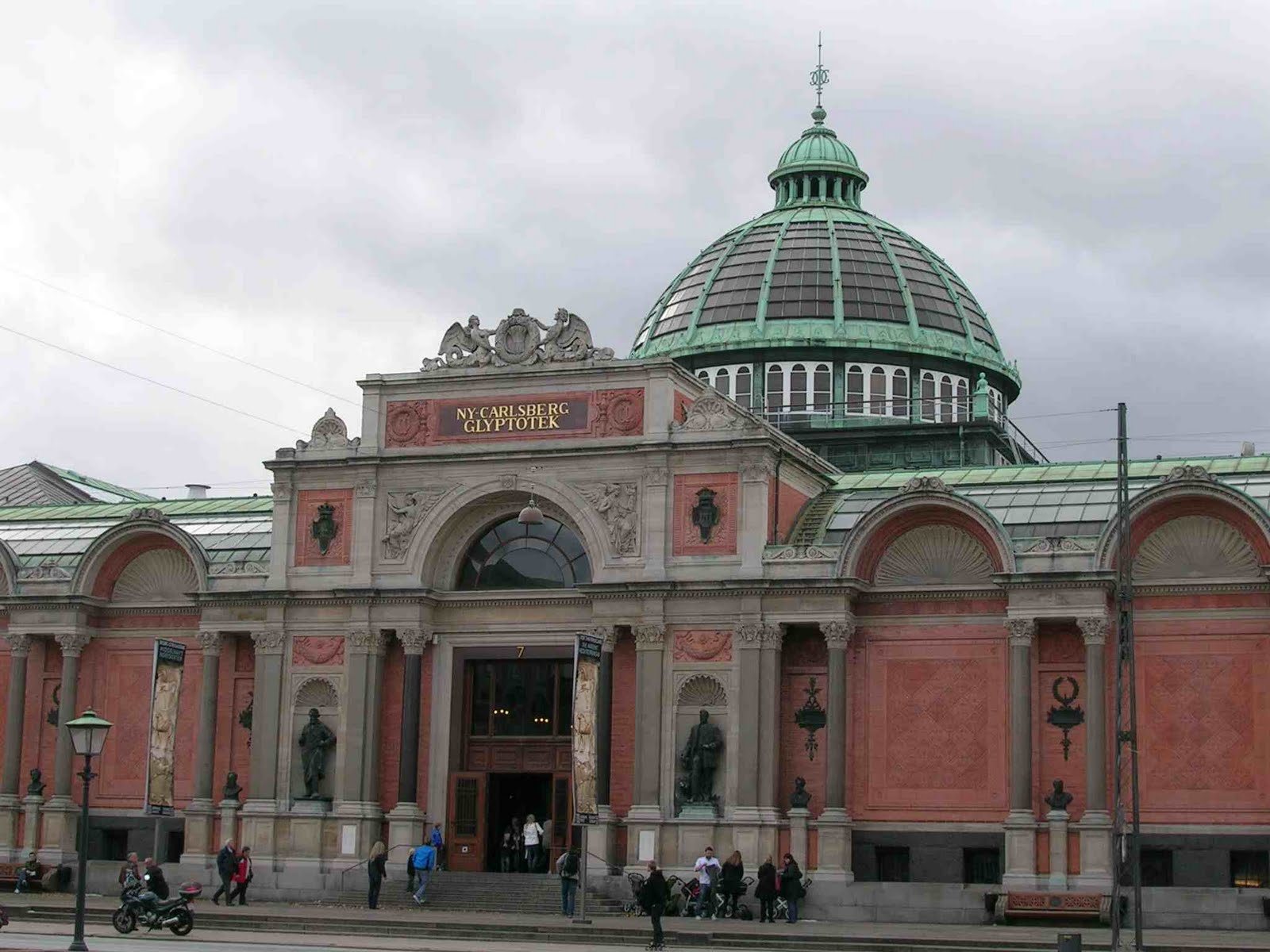
| The Carlsberg Glyptotek (Art Museum) |
Saint Augustine. The world is a book, and those who do not travel read only a page.
And the end of all our exploring
Will be to arrive where we started
And know the place for the first time. T. S. Eliot
Had a traditional Danish lunch in a traditional restaurant, a sort of smorgasbord–pickled herring, herring in a kind of sweet chutney sauce, preserved salmon, smoked salmon, fried fish, meatballs, pork dumplings, roast pork, chicken salad etc. Enjoyed some, was dubious about some offerings!! But the desserts, rum balls, and all manner of chocolate are decadent and spectacular!!

Copenhagen is a beautiful and elegant capital, surrounded by beaches. I love its domes, towers, and clock towers all in gilt or viridian. Scandinavian churches apparently have roosters instead of crosses on their steeples!!
Haderslev Cathedral, Jutland, Denmark: a photoblog
(Guest post by Roy Mathias)
Our first stop in Denmark was Haderslev — a medieval town in Jutland, the peninsula connecting Germany and Denmark. The first thing that strikes you is the whiteness of the interior:
in contrast to the red brick exterior
As you enter the cathedral, you see this large replica of of a ship, reminding you of the importance of the sea.
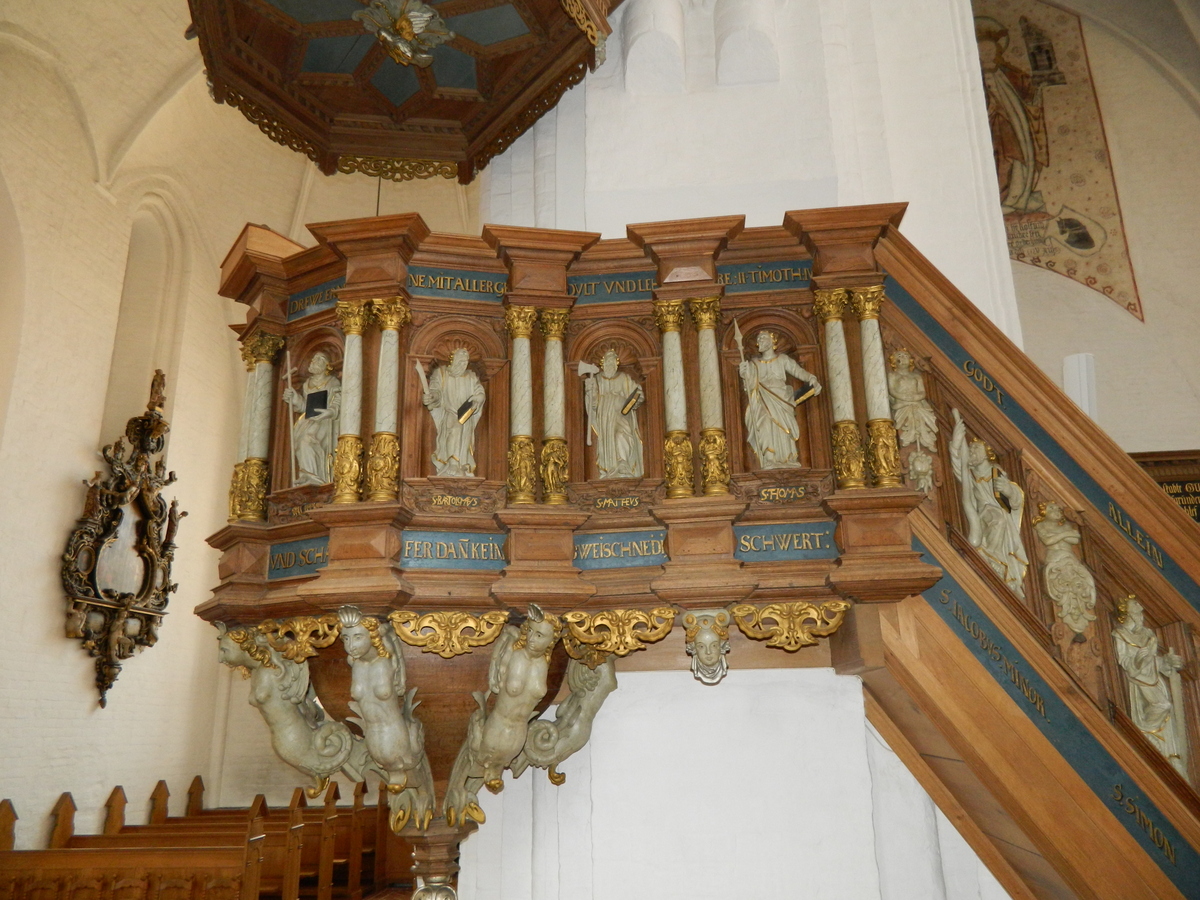
The carved pulpit, with what appears to be a baptismal font in the foreground.
A close up of the figures on the pulpit — apostles and mermaids!
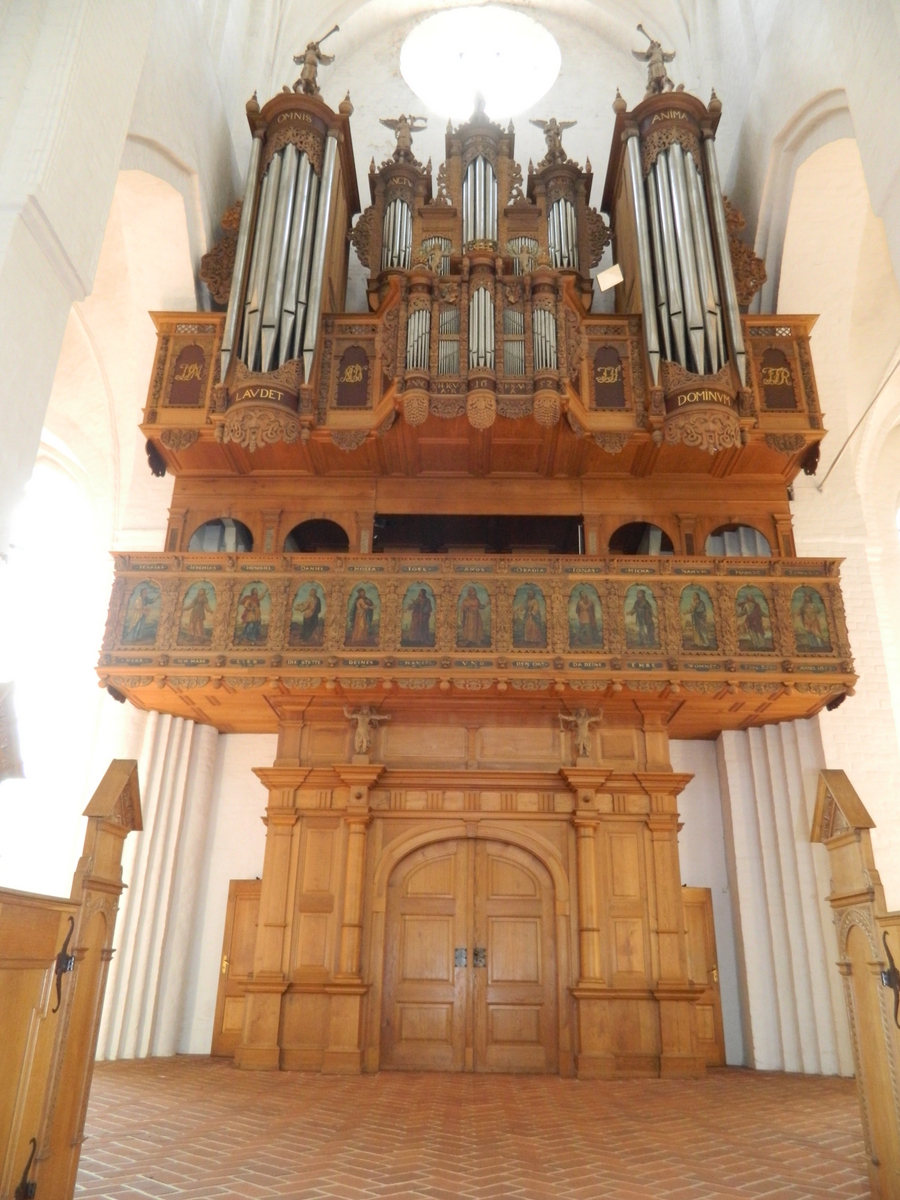
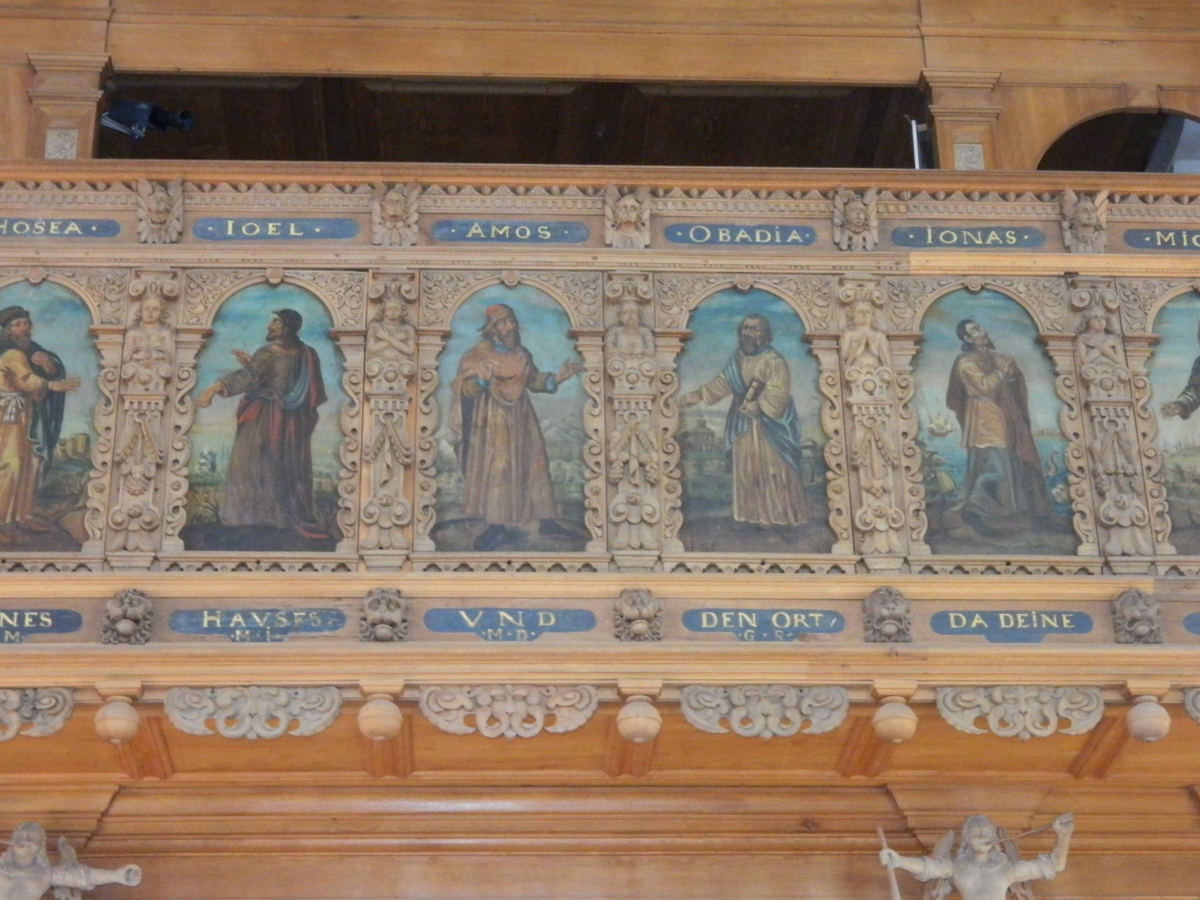
The organ with a row of Old Testament prophets:
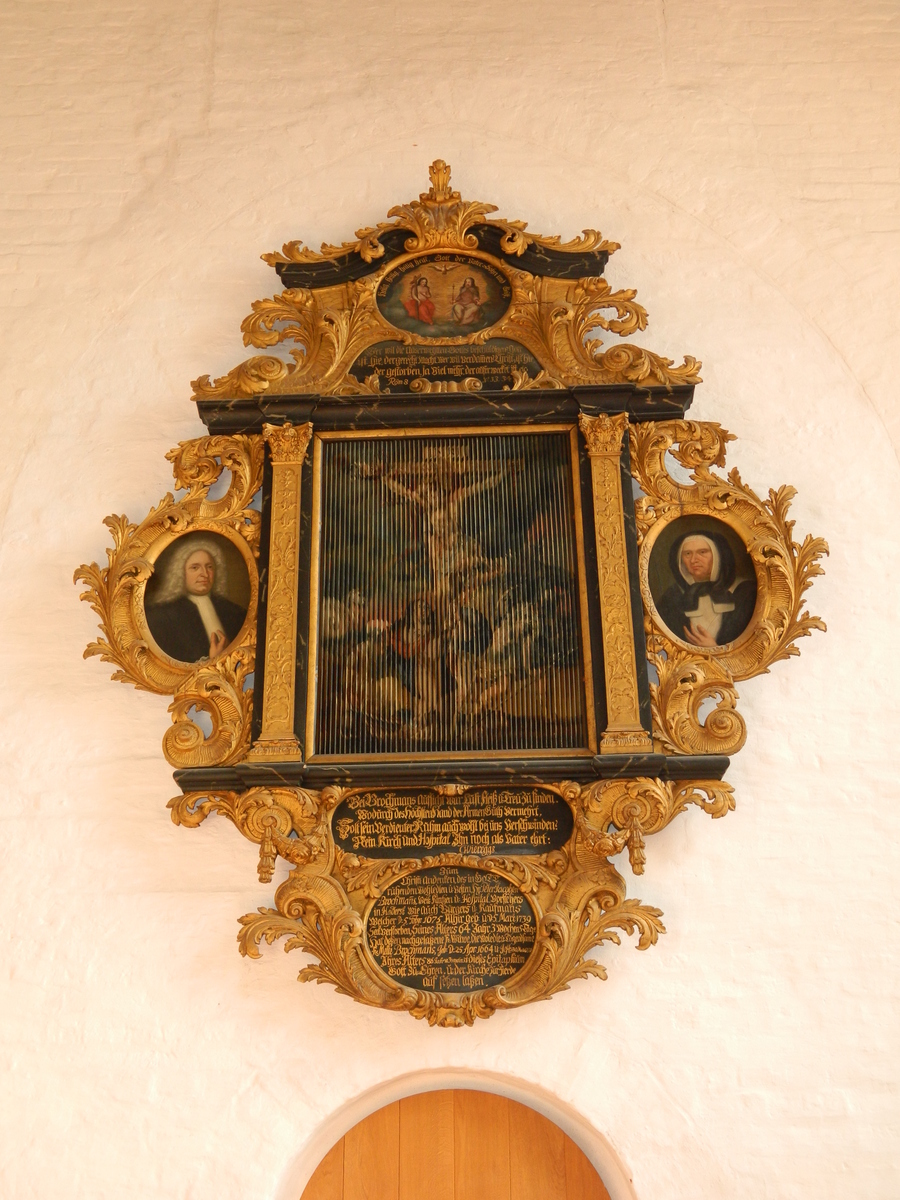
An unusual painting. When viewed from the front or left one sees the crucifixion
however, if you squeeze against the wall to the right one sees the risen Christ.
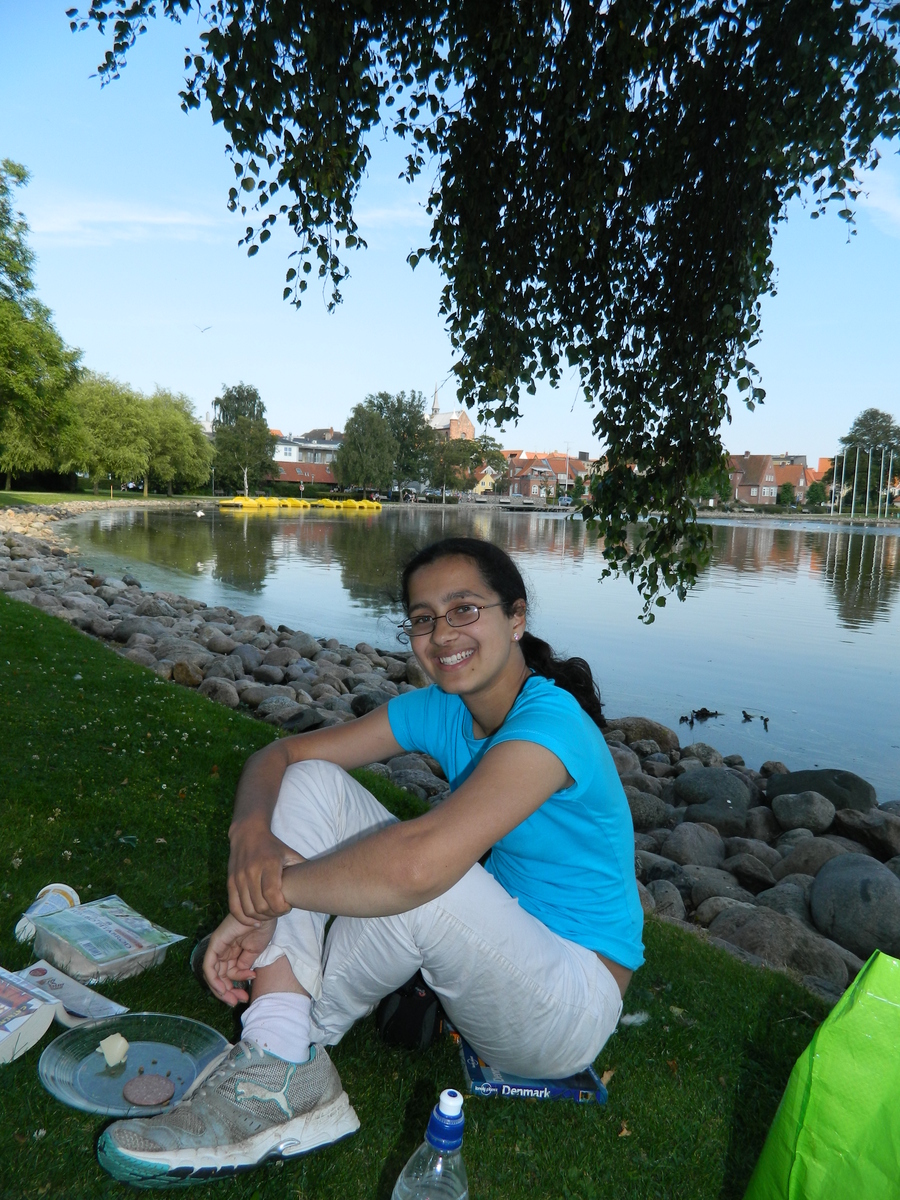
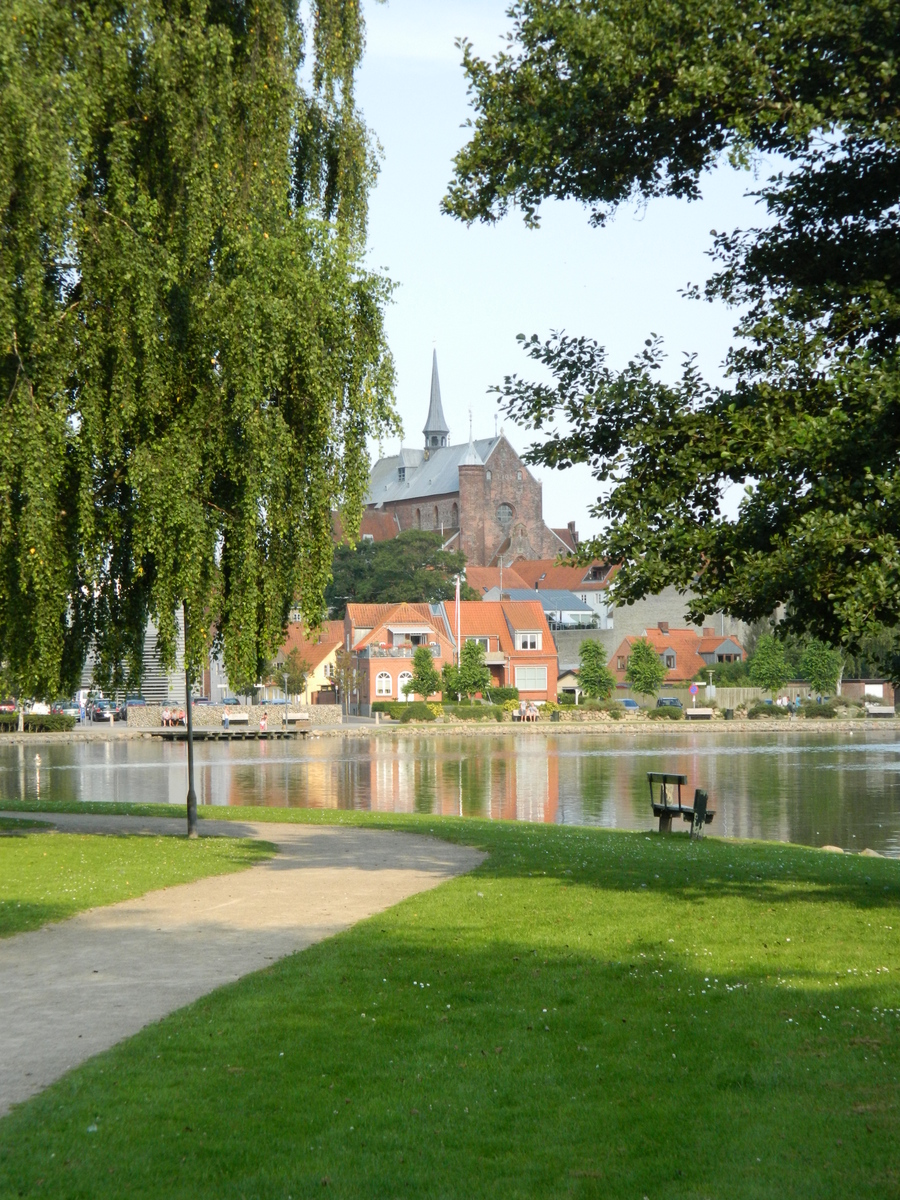
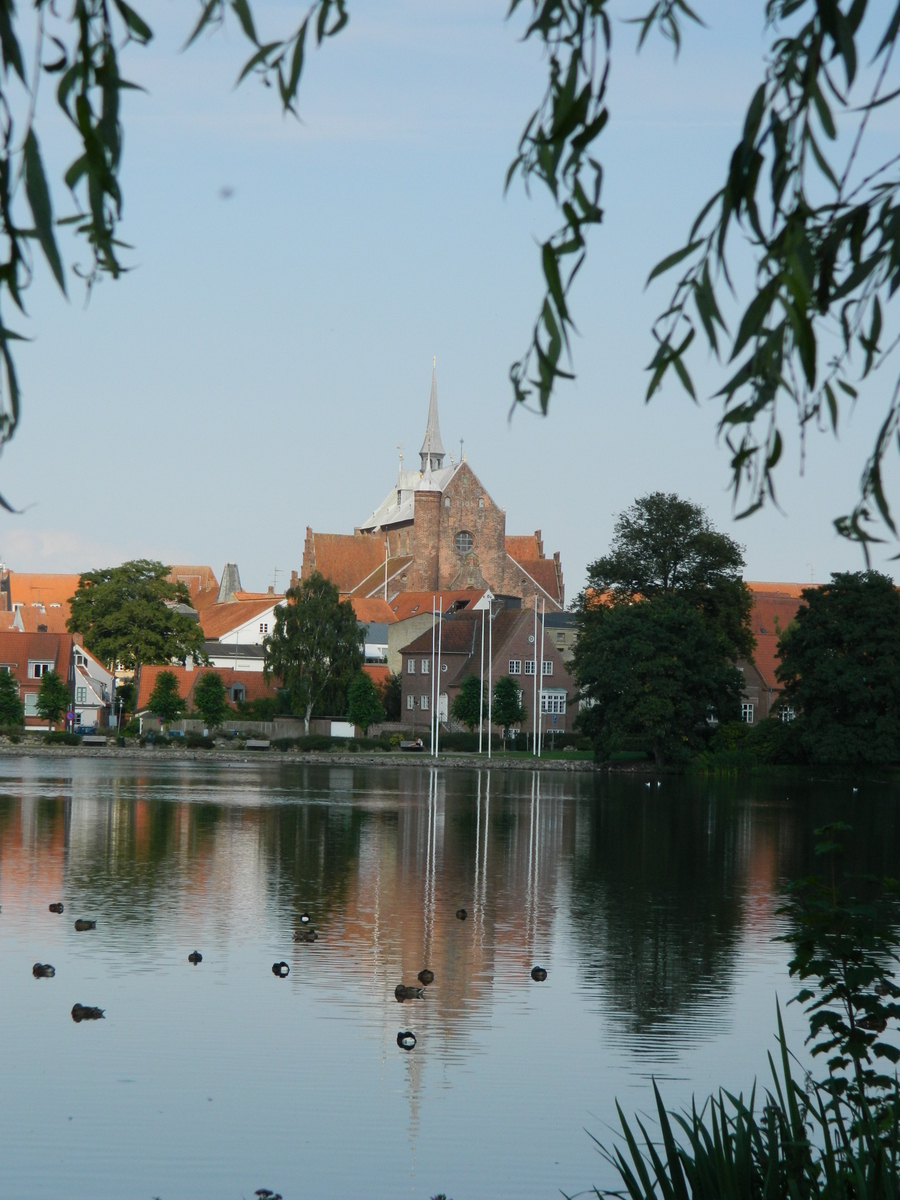
We had a picnic and walk near the cathedral. In Denmark you are never far from a body of water. Irene near in front of the lake, with the cathedral and town in the background.
The top of another nearby church, with, yes, a rooster on top!
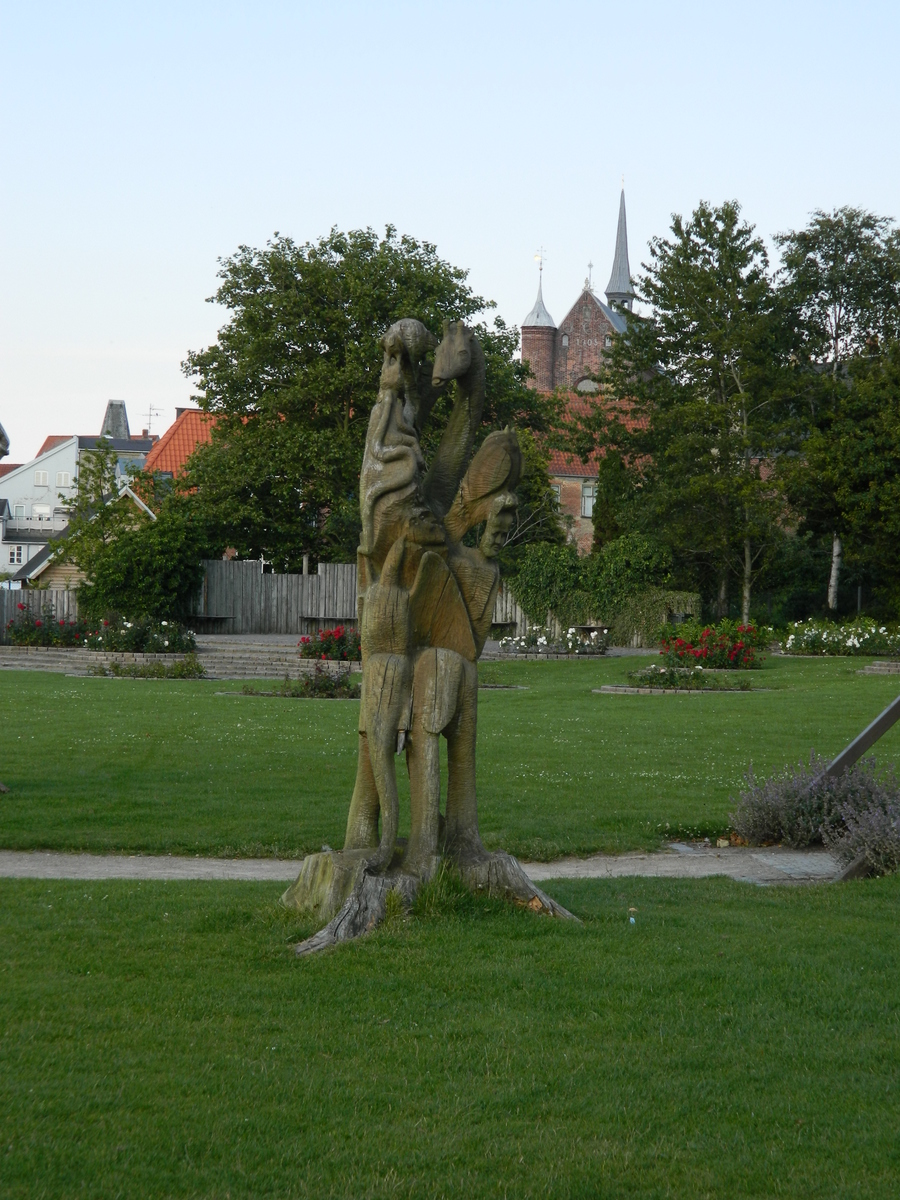
Public spaces in Denmark are an opportunity for sculpture–usually stone or metal. This one is a the stump of a tree that was already growing in the park carved into a mass of animals.
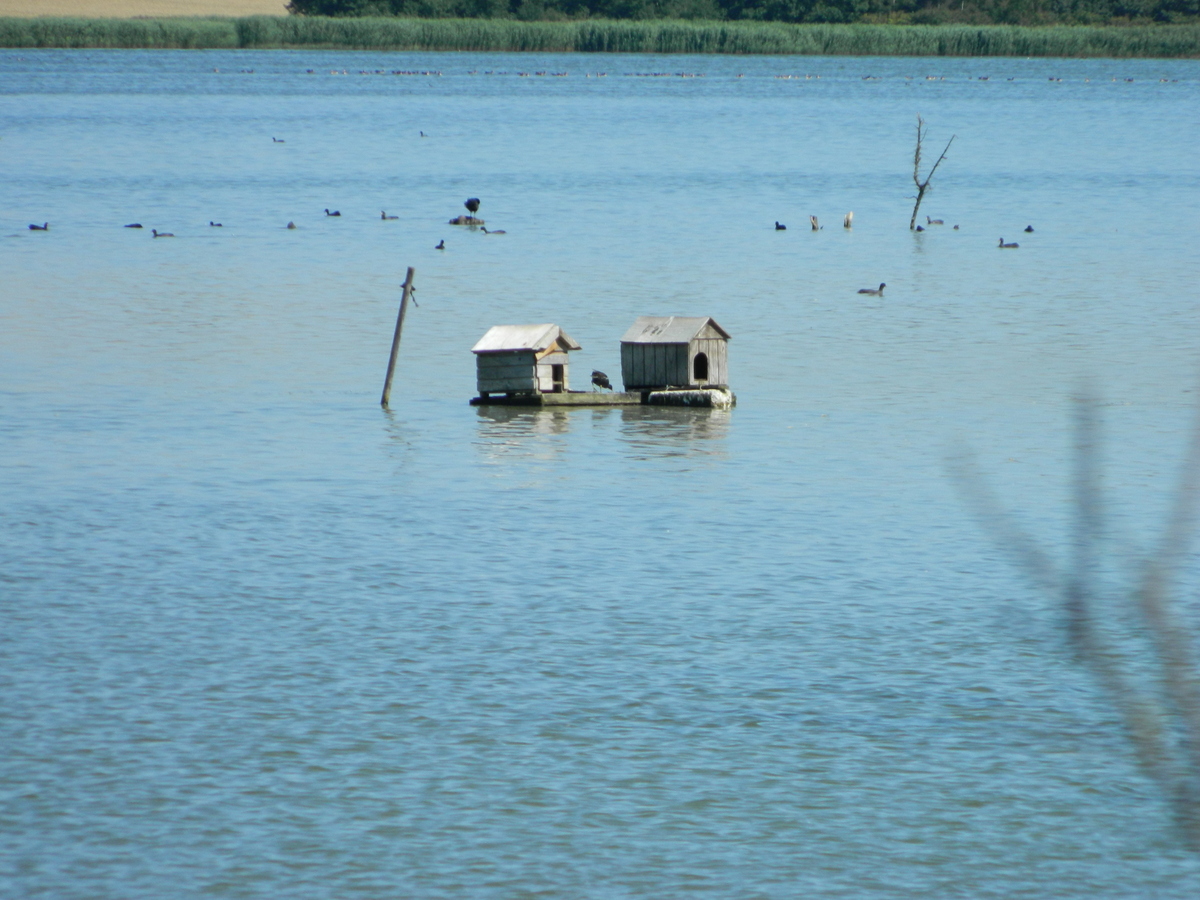
Another lake by the roadside where we had lunch the next day on the island of Funen (Fyn in Danish). Note the floating bird houses. We saw numerous coots with young, as well as cormorants and ducks.
The Tragi-Comic and Glorious Fairy Tale of Hans Christian Andersen

Last July, I spent a couple of days in Odense, the birthplace of Hans Christian Andersen–which he left as soon as he could.
Hans Christian Andersen (all three are very common and popular Danish names) was a freak genius, born to a cobbler and a (mildly alcoholic) washerwoman.
Their simple one room cottage had few books–Shakespeare, Grimm and 1001 Nights– but these the pre-teen Andersen soon almost memorized. The inmates of the mental asylum where his grandmother worked told him Danish folk tales. Even in primary school, he performed Shakespeare plays he’d memorized, with a little toy theatre with puppets, whose clothes he had designed himself. And wrote plays, poems, stories.
School was, nevertheless, full of humiliation because of his ugly, homely appearance, his large nose, and unmasculine pursuits.
His father died when he was eleven and he had to help support the family. He was sent to work in a factory, where he was humiliated by having his trousers pulled down (to check if he was a man) and then apprenticed to a tailor.
At 14, he ran away from home to Copenhagen “to become famous” as he told his mother. He approached the luminaries of the day until a composer, Weyse, who had risen from poverty himself, raised money to enable him to study at the Royal Theatre, though the only role he got was as a troll. He studied at the Ballet School but was told that his ugliness and ungainliness would prevent his getting roles.
He wrote a play, aged 17 (his last hope of having anything to do with the theatre he loved), which brought him to the attention of Jonas Collin, a powerful Court official, and financial director of the Royal Theatre, who realized that Andersen was hampered by his lack of formal education. He arranged an educational fund to be paid by the King of Denmark and sent him to a grammar school in Elsinsore with 11 year olds.
The headmaster was abusive, particularly vicious to Andersen whom he ridiculed and humiliated. Particularly crushingly, he forbade him to write, partly because he was dyslexic, (and so struggled with the long, boring days at school), and partly to crush his literary ambitions which he thought were at odds with his humble origins. Andersen thought he was going mad because of the abuse, and had nightmares of this headmaster throughout his life.
Andersen persisted for four years, determined to prove worthy of Collins and the King’s interest, but finally wrote a poem “The Dying Child” which became one of the most famous poems of the century. His headmaster pronounced this rubbish, and abused Andersen so vehemently that an alarmed teacher alerted Collin.
Collin arranged for him to return to Copenhagen, where he was given an attic room, and studied with private tutors.
* * *
A year later, aged just 22, he wrote his first book, A Walking Tour from the Holmen Canal to the Eastern Point of Anger. This book, an early Ulysees, follows a young poet through the streets of Copenhagen over the course of a single night. Unable to find a publisher, he self-published it, and it was a very successful: every copy sold.
Andersen was a prolific and endlessly creative writer, writing travelogues, fairy tales, novels plays, and three memoirs. He is, of course, best remembered for his fairy tales which he started writing in high excitement when he was 29.
* * *
Andersen’s Fairy Tales are rich and many-layered, full of humour, satire, wisdom, sharp observation and, above all, poetry. His stories are a literary melange of Danish folk tales, 1001 Nights, Grimm Fairy Tales, but are earthed and anchored in contemporary Copenhagen. His varied experience in the school of high and low life and hard knocks provided the little intimate realistic detail which make these so charming.
* * *
His writing brought him the things he desired–wealth, the friendship of other writers, entree to high society, travel, and recognition.
There is a bitter-sweet romance and fairy tale about the life of this creator of fairy tales–creative dreams fulfilled, wealth earned, much travel–29 tours of Europe, and the social success and access to high society which Andersen appeared to have craved. He achieved his ambitions and dreams, which so few people do.
“A star of fortune hangs above me,” Andersen once wrote. “Thousands have deserved it more than I; often I cannot understand why this good should have been vouchsafed to me among so many thousands. But if the star should set, even while I am penning these lines, be it so; still I can say it has shone, and I have received a rich portion.”
The star, of course, shone because of his determination and hard work, as well as his genius.
But the wounds of penury, of rejection, humiliation, abuse and exclusion never fully healed. His love, both heterosexual and homoerotic, was always unreciprocated. He was the little mermaid, (Den Lille Havfrau as signs all over Copenhagen tell us) who achieved his dreams at a high price, and then not completely.
* * *
When I was younger, I might have read his life and resolved to work relentlessly to fulfil my own literary dreams. But I now know that while creative and writing dreams fulfilled have their own sweetness, they cannot fill the heart with joy or peace or contentment. For that, I need more than literary dreams fulfilled. For that, I need the Holy Spirit. For that, I need Jesus. For that, I need God himself.
How do I know this? Because I have realized some of my dreams–I’ve studied in the University I wanted to: Oxford; my writing has won prizes and been published; like Andersen, I’ve visited over 29 countries; my little business has been successful; my little blog is growing; I live in the country outside a city I love, Oxford. I am happily married, and have two sweet, gifted children. And all these things have been satisfying.
But their satisfactions do not compare to the times of soaking in the presence of God, of revelling in Scripture, of hearing the voice of God, of prayer.
And while these times spent playing in the fields of the Lord–because of the goodness of God–might help one’s life resemble a fairy tale with a happy ending, they are, in fact, a true fairy tale in themselves.
Little Anita hangs out with God; Little Anita reads the words of God; Little Anita talks to God, and God talks back. What greater fairy tale?
- « Previous Page
- 1
- …
- 72
- 73
- 74
- 75
- 76
- …
- 279
- Next Page »